Gastric cancer remains one of the most lethal solid tumors worldwide, driven in part by aberrant activation of the Wnt/β-catenin signaling pathway. This pathway promotes tumor proliferation, invasion, and therapy resistance. Despite advancements in chemotherapy, targeted therapy, and immunotherapy, treatment options for metastatic gastric cancer remain limited, underscoring an urgent need for novel agents that can effectively target core oncogenic drivers.
DPTX3186 is a first-in-class oral condensate modulator designed to selectively disrupt oncogenic β-catenin activity. By redirecting β-catenin into an inactive, drug-induced condensate, the therapy aims to inhibit malignant signaling while preserving normal cellular function. This approach represents a new therapeutic modality targeting biomolecular condensates—subcellular structures that regulate protein function and transcriptional programs.
Fast Track Designation
In November 2025, the FDA granted Fast Track designation to DPTX3186 for the treatment of gastric cancer. Fast Track status is reserved for therapies addressing serious conditions with unmet medical needs, enabling more frequent FDA interactions, rolling review of data, and a more efficient regulatory path toward potential approval.
This designation follows the earlier orphan drug designation (October 29, 2025), reflecting the agency’s recognition of gastric cancer as a high-mortality disease and the novelty of DPTX3186’s mechanistic approach.
Mechanism of Action
DPTX3186 modulates the Wnt/β-catenin pathway, a central driver of tumorigenesis in gastric cancer:
It redistributes β-catenin into inactive condensates, preventing its nuclear accumulation.
It suppresses β-catenin–dependent transcriptional programs associated with growth and survival.
It selectively targets malignant β-catenin signaling without broadly disrupting physiological Wnt function, thereby reducing off-target toxicity.
This condensate-modulation strategy represents a new therapeutic class with potential applicability across multiple Wnt-driven tumors.
Clinical Development
The first investigational new drug (IND) application for DPTX3186 was opened in October 2025. A phase 1a/2a clinical trial is now being initiated across major U.S. cancer centers. Key goals of the study include:
Phase 1a:
Assess safety, tolerability, and pharmacokinetics
Establish the recommended phase 2 dose
Phase 2a:
Evaluate antitumor activity in metastatic gastric cancer
Explore pharmacodynamic biomarkers of β-catenin suppression
Patient enrollment is expected to begin before the end of 2025. Future expansion cohorts will study combination regimens and additional Wnt-driven tumor types.
Preclinical Evidence
Preclinical findings presented at the 2025 AACR Annual Meeting provide strong rationale for clinical development:
Closing arguments in the U.S. Justice Department’s versus Google’s ad tech case were heard on Friday (Nov. 21), marking the end of a two-year legal saga, and the start of an even more consequential one for the open web economy.
Judge Leonie Brinkema has already ruled that Google illegally monopolized publisher ad servers and ad exchanges. What she decides next will determine whether the company keeps its core infrastructure for monetizing the open web, i.e., its ad server DoubleClick For Publishers and ad exchange AdX, or is forced to give them up.
Optimists see a bright new dawn on the horizon, although pessimists some will point to recent similar cases, and proclaim, “What’s the point?” especially in an era of AI – ironically, the latter point is kind of a pillar of the Google defense argument.
DOJ’s ask: structural separation, not tweaks
In the remedies phase, the DOJ argued that only a structural remedy can fix what the court already found was an illegal tying scheme between DFP and AdX. During the remedies phase of the trial, the government’s preferred option is a divestiture of AdX — and potentially DFP as well — along with requirements to open source Google’s auction logic and hard bans on self-preferencing.
The DOJ argued that 46% of indirect open web display spend flows through Google Ads and another 21% via its demand-side platform DV360; in 60% of AdX auctions examined, Google’s tools were the only bidders, underscoring how effectively Google sealed off demand for itself.
Google’s ask: narrow, reversible changes
Google is pushing for a much narrower intervention. The company has repeatedly emphasized that Brinkema did not find its buy-side tools to be monopolies and that there was no unlawful acquisition — arguments the company used to claim the DOJ is overreaching.
Google’s preferred remedy package consists of contractual and interoperability commitments: deeper technical integrations between DFP and rival ad servers, more flexibility for publishers to route impressions to competing exchanges, and vows not to repeat the conduct found unlawful.
In court, Google pulling out a single strand of its ad stack (like AdX) would do more harm than good by destabilizing the global advertising markets — a thought not lost on some publishers. But documents surfaced during the trial undercut that narrative. Internally, Google had already explored divesting parts of the business through Project “Sunday” and Project “Monday.”
Trial highlights
During the courtroom proceedings, publishers and rival exchanges mostly aligned with the DOJ. Executives from Advance Local, News Corp, Index Exchange, and PubMatic testified that a breakup could actually be less disruptive than a laundry list of behavioral conditions that would need years of monitoring. They pointed to recurring quirks in the Google system and its overall opacity as symptoms of an unfixable incentive structure — not just bad engineering.
However, some on the stand warned that a rushed breakup could create real operational stresses. Brinkema has repeatedly probed this issue, asking witnesses about transition timelines, engineering burdens, and costs.
What now?
Closing arguments wrapped on Friday, and if the liability ruling is any guide, some expected that decision to drop by the close of 2024, only to wait until April for an answer — a remedies decision is not coming quickly. Most observers told Digiday that mid-2026 is a more realistic window for a final remedies order — followed immediately by years of appeals.
The European dimension
Concurrently, there are equally significant European developments of a similar nature. Recently, the European Commission imposed a €2.95 billion ($3.4 billion) antitrust fine for Google’s self-preferencing in ad tech — a historic penalty that explicitly calls out conflicts of interest across its stack.
The EU’s executive branch has warned that if Google’s proposed commitments fall short, it is prepared to pursue structural separation. Meanwhile, Google’s response to this ruling rings similar to the arguments it’s making in Judge Brinkema’s Virginia courtroom, i.e., it disagrees with the findings, intends to appeal, and claims its proposed changes address the Commission’s concerns without a disruptive break-up.
One slight point of differentiation worth noting is that officials in Brussels have already articulated, in far sharper terms than the DOJ, that structural separation is its likely endgame.
The bottom line
The U.S. and European tracks appear to be unfolding similarly, with government officials in both jurisdictions targeting the same conflicts of interest, arguing that Google’s vertical integration is unresolvable through behavioral remedies. The decision currently facing Judge Brinkema makes her, for the next few months at least, arguably the most influential person in ad tech.
Vietnam’s labor market is undergoing a profound transformation amid rapid economic growth and shifting workforce dynamics. With a new focus on flexible work environments and meaningful roles, organizations must adapt HR and payroll strategies to meet evolving workforce demands.
FIND BUSINESS SUPPORT
Vietnam’s dynamic economic growth and attractive investment policies for prioritized sectors have been notable perks for businesses and investors seeking opportunities in the country.
However, with only 28.8 percent of workers having formal training, significant labor quality gaps escalate competition for high-skilled personnel, especially in green and digital sectors. This shift, along with the projected changes in Vietnam’s workforce, has influenced how businesses recruit and retain talent in the country.
Simultaneously, according to a survey by Talentnet, Generation Z (Gen Z), which is projected to make up 34 percent of Vietnam’s workforce by 2030, will reshape the work environment with new perspectives and lifestyles. In addition to motivations stemming from market demands and governmental orientations, their preferences will infuse a breath of fresh air into the country’s office life.
See also: Vietnam Wages in 2025: Overview, Trends and Implications for Investors
What do Vietnam’s talents seek?
Hybrid work structures on the rise
The habit of remote work, which became customary during COVID lockdowns, has evolved into a preference for hybrid work models among many employees. Research co-published by The Sentry and Decision Lab in September 2024 revealed that 62 percent of survey respondents preferred a mix of office and remote work, compared to 15 percent who preferred working only in the office and 9 percent who preferred a fully remote role.
The trend indicates a growing desire among employees for flexible working arrangements and better work-life balance. Companies have widely acknowledged this shift. Sectors such as IT, education, and finance are implementing hybrid models to attract and retain top talent.
Open to new opportunities
FIND BUSINESS SUPPORT
A study conducted earlier this year by researchers at Adecco Vietnam found that 65 percent of professionals surveyed reported salary increases of less than 10 percent in 2024. In contrast, 15 percent received raises greater than 20 percent this year. Expectations for 2025 are even more optimistic, with 37 percent predicting raises over 20 percent.
The disparity between expectations and challenging realities has prompted many to explore new opportunities, with 72 percent of respondents open to a career change in 2025, rising from 69 percent in 2024 and 37 percent in 2023. This trend emphasizes a dynamic talent market, presenting both challenges and opportunities for employers.
While most employees decide to remain with their current companies for various factors, including earnings, career development opportunities, company culture, and work-life balance, salary stands out as the primary motivator when seeking new opportunities.
AI adoption by mid-level managers
As reported by Adecco, AI adoption in Vietnam is primarily centered on basic automation tasks like simple coding, customer service, data analysis, and content creation. Its application spans various management levels.
Mid-level managers are increasingly utilizing AI for analysis and planning, whereas senior leaders are employing it as a sophisticated tool for forecasting, aiding decision-making, and optimizing operations. Adecco’s survey reveals that 65 percent of participants recognize AI’s efficiency, 54 percent acknowledge its contribution to strategic thinking, and 35 percent emphasize the necessity for upskilling to enhance its impact.
Purposeful work prevails for Gen Z
FIND BUSINESS SUPPORT
Gen Z is transforming job roles and structures with their focus on meaningful work. According to Decision Lab’s survey, this generation places a high value on purpose, with 37 percent indicating it as their key factor for job satisfaction. Notably, 26 percent of Gen Z workers feel uneasy about monotonous tasks, while 32 percent fear they may not reach their full potential.
In response, innovative companies are adopting purpose-driven job designs that align individual tasks with broader organizational goals. For instance, objectives and key results (OKR) frameworks effectively link company missions to the contributions of individual team members. Ongoing “purpose alignment” conversations enhance traditional performance evaluations, ensuring a fit between employees’ personal values and corporate objectives.
This alignment fosters a more engaged and motivated Gen Z workforce, addressing their concerns about job satisfaction and personal development.
Top Recruitment and Retainment Strategies for the Vietnam Market
Strategy area
Key approaches
Employer considerations
Harmonized compensation, recognition, and work culture strategies
– Align compensation and benefits with industry standards – Recognize employee achievements (monetary & non-monetary) – Promote inclusive, positive culture – Encourage work-life balance, teamwork & collaboration – Implement employee appreciation programs to boost morale
– Maintain engagement with employees to understand their needs – Reinforce company values through daily operations
Leverage AI recruitment
– Use AI for job posting, sourcing & screening – Enhance operational efficiency – Balance automation with human judgment
– Train staff on ethical AI use & bias mitigation – Combine AI tools with human insight for cultural & interpersonal evaluation – Treat AI as a long-term investment
Implementing flexible working models
– Offer personalized hybrid models beyond fixed office days – Consider “window working” (flexible hours with overlap periods) – Clearly define and communicate work-model policies
– Avoid one-size-fits-all return mandates – Tailor flexibility to employee needs and local conditions
Investing in upskilling and cross-training
– Offer lateral moves and cross-functional opportunities – Promote a “career lattice” instead of a linear ladder – Highlight growth opportunities in recruitment messaging
– Link development programs to personal goals – Encourage internal mobility & reskilling – Support succession planning through skill diversification
Technology application in HR and payroll management
Benefits of HR and payroll technologies
FIND BUSINESS SUPPORT
For multinational firms, adapting HR and payroll management to various markets poses a daunting challenge that typically demands labor-intensive operations and manual data entry, leading to significant risks of inaccuracies and human errors.
The emergence of new technologies has provided a much-needed solution to these concerns, enabling businesses to effectively implement recruitment and retention strategies and optimize their talent management.
Some of the most considerable merits of technology application in HR and payroll management include:
Speeding up hiring processes: AI is transforming recruitment by optimizing operations, reducing costs, and speeding up hiring. Platforms like LinkedIn’s AI hiring assistant incorporate features to streamline the recruitment lifecycle, automating tasks like job postings, candidate sourcing, and preliminary screenings, thereby enhancing efficiency.
Enhancing accuracy: Leveraging technology enhances accuracy by linking employee and timekeeping data directly to payroll software. This automation minimizes manual input, allowing employees to quickly and accurately generate salary slips based on pre-defined formulas.
Reducing costs: Businesses nowadays can choose ready-made solutions or outsource through Software-as-a-Service (SaaS) instead of developing software in-house for their HR and payroll management. SaaS models are typically more cost-effective than traditional software licensing, as they save organizations the expense of developing, maintaining, and updating systems.
Ensuring data security: Salary information, being sensitive and confidential, faces a higher risk of data breaches when locally stored. To enhance security, payroll systems should be on cloud-based HR management platforms, allowing access only through authorized accounts and ensuring that sensitive information remains protected for verified personnel.
Securing payroll outsourcing: Technology enables centralized, cloud-based payroll systems that synchronize all salary data, enhancing security and reducing data fragmentation.
See also: Leveraging ERP for Operational Excellence in the Digital Age
Implementation of automated payroll systems
FIND BUSINESS SUPPORT
When it comes to payroll processing, most HR departments encounter the time-consuming and burdensome nature of various management tasks, such as calculating employee wages, withholding the correct amount of taxes, generating payslips, and filing tax returns. This situation has led to the growing popularity of automated software that manages payroll for businesses, serving as an effective tool to minimize human error, enhance operational efficiency, and standardize compliance.
While there is no single approach to effectively implementing payroll automation, companies should consider the following steps:
Step 1: Assess current payroll processes
Map out your existing payroll workflow.
Identify repetitive, time-consuming, or error-prone tasks (e.g, manual overtime calculations, Excel data entry).
Formula builder; HRM integration; pay cycle setup; version history; custom reports
Fully automated; integrates with Base suite; tailored config
No free trial; setup required
Conclusion
The strategic approach to HR and payroll in Vietnam is evolving, with shifting priorities. As a diverse and dynamic workforce, especially driven by younger generations, companies must adapt to these changes to succeed in the evolving economy.
Although payroll automation simplifies management, businesses must consider factors when choosing the right solution. MNCs need software that handles global payroll complexities, stays updated with tax laws, and integrates smoothly with existing HR, finance, and in-house systems.
As businesses grow, their payroll solutions should provide scalability and support multiple currencies, jurisdictions, and employee types. It is essential to recognize that payroll operates under stringent deadlines, necessitating the assurance of timely responses when processed by the automated platforms.
See also: Vietnam Work Permit Regulations: New Rules from August 2025
About Us
Vietnam Briefing is one of five regional publications under the Asia Briefing brand. It is supported by Dezan Shira & Associates, a pan-Asia, multi-disciplinary professional services firm that assists foreign investors throughout Asia, including through offices in Hanoi, Ho Chi Minh City, and Da Nang in Vietnam. Dezan Shira & Associates also maintains offices or has alliance partners assisting foreign investors in China, Hong Kong SAR, Indonesia, Singapore, Malaysia, Mongolia, Dubai (UAE),Japan, South Korea, Nepal, The Philippines, Sri Lanka, Thailand, Italy, Germany, Bangladesh, Australia, United States, and United Kingdom and Ireland.
For a complimentary subscription to Vietnam Briefing’s content products, please click here. For support with establishing a business in Vietnam or for assistance in analyzing and entering markets, please contact the firm at vietnam@dezshira.com or visit us at www.dezshira.com
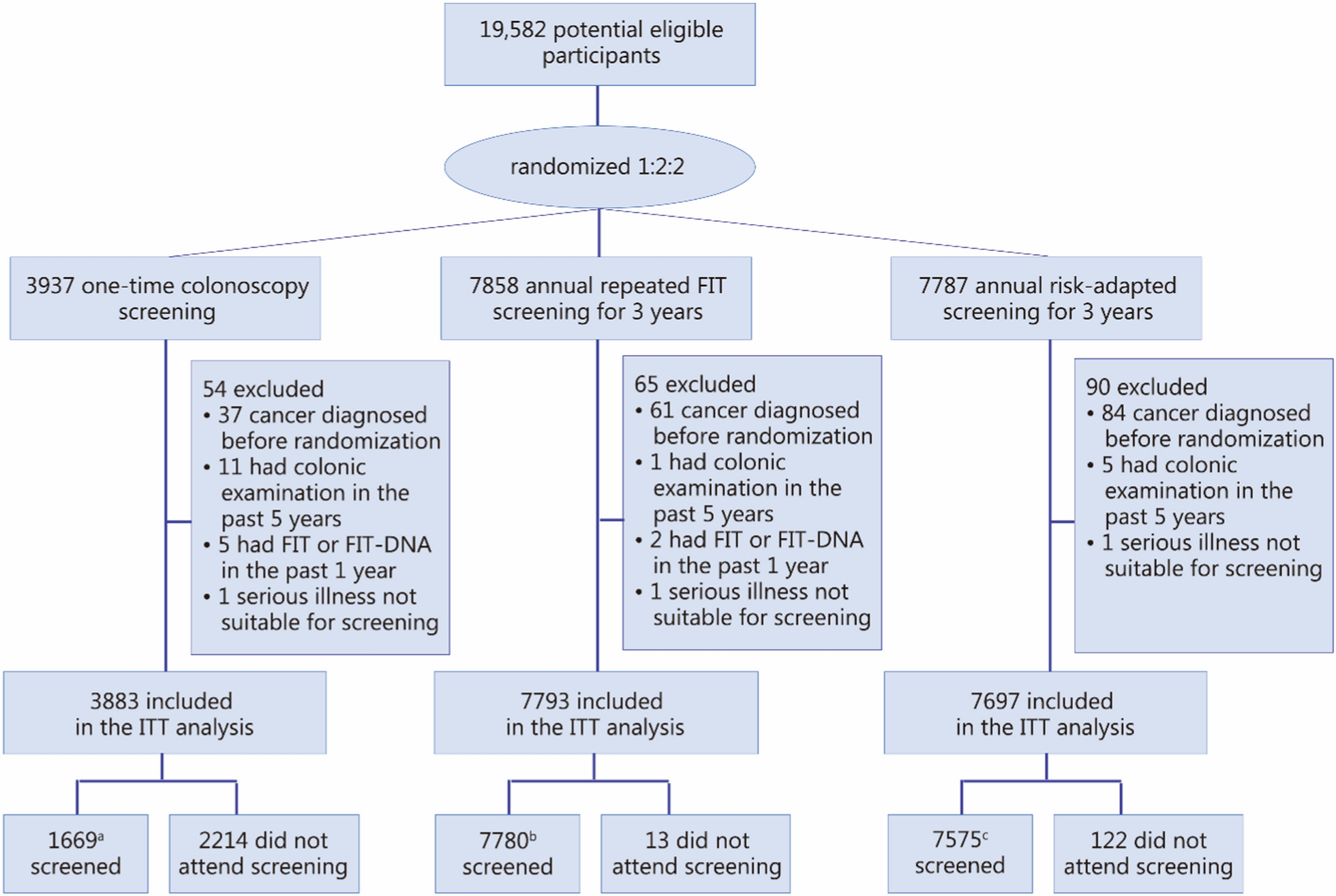
A total of 19,582 participants were recruited, of whom 209 were excluded for not meeting the inclusion criteria. The final analysis included 19,373 participants, with 3883 in the colonoscopy group, 7793 in the FIT group, and 7697 in the risk-adapted screening group (Fig. 1). Characteristics of the study population are shown in Additional file 2: Table S1. Among all participants, 8022 (41.7%) were men, with a mean age of 60.5 years. The distribution of basic characteristics was generally comparable across the 3 study arms, except for a slightly higher proportion of participants with a family history of CRC in the risk-adapted group.
Fig. 1
Flow diagram of the study participants. a1644 had colonoscopy screening per protocol at baseline, 2 had colonoscopy, and 8 had FIT at the third round of screening, 1 had colonoscopy and 14 had FIT at the fourth round of screening. b7775 had attended at least 1 round of screening per protocol, and 5 examinations without having FIT or with a negative FIT result. c7122 had attended at least 1 round of screening per protocol, 103 underwent colonoscopy screening among low-risk individuals without having FIT or with negative FIT results, and 350 had FIT screening among high-risk individuals. FIT fecal immunochemical test, ITT intention-to-treat
Participation and compliance
Additional file 2: Table S2 and Fig. S1 illustrate the participation across the 3 arms from the T0 to T3 phases. The overall participation declined for both the FIT arm and the risk-adapted screening arm. In the FIT arm, participation at baseline was 94.0% (95% CI 93.5–94.5), which gradually decreased in subsequent rounds, although it remained relatively high (> 80%). In the risk-adapted screening arm, baseline participation was 85.2% (95% CI 84.4–86.0), declining to 63.4% (95% CI 62.3–64.5) by the 4th round. Additional file 2: Table S3 illustrates the participation of the risk-adapted screening arm, categorized by risk profile, from the T0 to T3 phases. In the risk-adapted arm, FIT participation rates among low-risk individuals were similarly high, ranging from 94.0% (95% CI 93.4–94.6) at baseline to 78.8% (95% CI 77.7–79.9) in the 4th round. However, among high-risk individuals, the colonoscopy participation rate was 49.0% (95% CI 46.4–51.6) at baseline; in the following 3 rounds, this rate decreased to 6.4% (95% CI 4.8–8.5), 10.5% (95% CI 8.6–12.7), and 3.7% (95% CI 2.7–5.0). Additional file 2: Table S4 illustrates the cumulative participation across the 3 arms from the T0 to T3 phases. The overall participation rates (attending at least 1 screening round) were 42.3% (1644/3883, 95% CI 40.8–43.9) in the colonoscopy arm, 99.8% (7775/7793, 95% CI 99.6–99.9) in the FIT arm, and 92.5% (7122/7697, 95% CI 91.9–93.1) in the risk-adapted arm. Regarding colonoscopy compliance among FIT-positive participants across the 4 screening rounds, the compliance rates in the FIT arm were 76.3% (817/1071), 75.7% (258/341), 71.7% (243/339), and 66.9% (81/121) for rounds 1 through 4, respectively, yielding an overall compliance rate of 74.7% (1399/1872). In the risk-adapted screening arm, the corresponding compliance rates among low-risk participants were 76.9% (601/782), 74.6% (182/244), 60.1% (98/163), and 63.5% (66/104) across the same rounds, with an overall compliance rate of 73.2% (947/1293) (Additional file 2: Fig. S1).
Detection rate for advanced neoplasm
Screening yield results from the ITT analysis are presented in Table 1, Fig. 2a, and Additional file 2: Table S5. The cumulative detection rates of advanced neoplasms over the 4 screening rounds were 2.8% (95% CI 2.3–3.3), 2.3% (95% CI 2.0–2.6), and 2.6% (95% CI 2.3–3.0) in the colonoscopy, FIT, and risk-adapted screening arms, respectively (Fig. 2a and Additional file 2: Table S5). After adjusting for age, sex, and study center, the ORs for the cumulative detection rate of advanced neoplasms were 1.21 (95% CI 0.95–1.55, P = 0.124) for colonoscopy vs. FIT, 1.06 (95% CI 0.83–1.34, P = 0.658) for colonoscopy vs. risk-adapted screening, and 1.15 (95% CI 0.93–1.41, P = 0.197) for risk-adapted screening vs. FIT (Table 1 and Additional file 2: Table S5). We observed that the risk-adapted screening arm had a slightly higher detection rate of advanced neoplasms among men compared to the FIT arm (OR = 1.30, 95% CI 1.01–1.67, P = 0.046), while the colonoscopy arm showed a higher detection rate among women compared to the risk-adapted screening arm (OR = 1.52, 95% CI 1.00–2.28, P = 0.046) (Table 1 and Additional file 2: Table S5). No statistically significant differences were found in the detection of advanced neoplasms in the proximal or distal colon/rectum across the 3 arms. A post hoc power analysis demonstrated 82.4% power to detect the observed differences in detection rates (Cohen’s w = 0.043), with a χ2 statistic of 4.76 (df = 2, P = 0.093). The results of detection rates for any colorectal neoplasm are shown in Additional file 2: Table S6.
Table 1 Numbers and proportions of participants with detected colorectal neoplasms after 4 rounds of screening (ITT analysis)
Fig. 2
Comparison of screening yield and cost-effectiveness among different arms over 4 rounds of screening. a Detection rate for detecting advanced neoplasm or any neoplasm (ITT analysis). b Number of colonoscopies needed to be performed to detect 1 advanced neoplasm or any neoplasm. c Cost (in CNY 1000) for detecting 1 advanced neoplasm from the societal perspective and government perspective. CNY Chinese Yuan, FIT fecal immunochemical test, ITT intention-to-treat
In the PP analyses (Additional file 2: Table S7), detection rates of advanced neoplasms in the colonoscopy, FIT, and risk-adapted screening arms were 6.5%, 2.3%, and 2.7%, respectively, with an adjusted ORcolonoscopy vs. FIT of 2.42 (95% CI 1.87–3.11, P < 0.001), an adjusted ORcolonoscopy vs. risk-adapted screening of 1.90 (95% CI 1.48–2.44, P < 0.001), and an adjusted ORrisk-adapted screening vs. FIT of 1.32 (95% CI 1.07–1.63, P = 0.011).
Resource demand and costing outcomes
Detailed resource utilization and cost analysis results are shown in Fig. 2b, c, and Additional file 2: Tables S8–S10. In the colonoscopy arm, 15.4 colonoscopies were needed to detect 1 advanced neoplasm. In the FIT arm, the number of colonoscopies needed to detect 1 advanced neoplasm was 9.1, 8.3, 7.8, and 7.9 at T0, T0–T1, T0–T2, and T0–T3, respectively. In the risk-adapted screening arm, the corresponding values were 10.3, 10.5, 10.2, and 9.3 (Fig. 2b and Additional file 2: Table S8). From a societal perspective (Fig. 2c and Additional file 2: Table S9), the costs of detecting 1 advanced neoplasm were CNY 15,341 ($ 2223) for colonoscopy, CNY 21,754 ($ 3153) for FIT, and CNY 24,300 ($ 3522) for risk-adapted screening. From a government perspective (Fig. 2c and Additional file 2: Table S10), the costs for detecting 1 advanced neoplasm were comparable between the 3 strategies, with CNY 6914 ($ 1002) for colonoscopy, CNY 6313 ($ 915) for FIT, and CNY 6589 ($ 955) for risk-adapted screening.
Effectiveness on CRC incidence and mortality
Figure 3 and Additional file 2: Table S11 present the projected CRC incidence and mortality across the 3 screening arms and the no-screening scenario over 15 years. Over the 15 years, all screening strategies were associated with substantial reductions in both CRC incidence and mortality compared with no screening. Under the observed real-world adherence, the cumulative CRC incidence per 100,000 persons over 15 years was 1171, 1325, and 1293 for the colonoscopy, FIT, and risk-adapted screening arms, respectively, and 1552 for the no-screening group, corresponding to relative reductions of 24.6%, 14.6%, and 16.7%. The cumulative CRC mortality per 100,000 persons over the same period was 224, 210, and 234 for the colonoscopy, FIT, and risk-adapted screening arms, respectively, and 298 for the no-screening group, corresponding to reductions of 24.8%, 29.5%, and 21.5% relative to no screening. Therefore, in the TARGET-C trial (status quo), colonoscopy screening outperformed both FIT and risk-adapted screening. In addition, under the ideal scenario of 100% adherence, all strategies showed further improvements, with colonoscopy remaining the most effective in reducing CRC incidence and mortality. Compared with no screening, the relative reductions in CRC incidence and mortality were 41.0% and 45.3% for colonoscopy, 16.9% and 25.5% for FIT, and 37.9% and 35.9% for risk-adapted screening, respectively.
Fig. 3
Long-term predicted colorectal cancer incidence and mortality of the 3 different screening arms and no screening. a Incidence under the status quo. b Mortality under the status quo. c Incidence under 100% adherence scenario. d Mortality under 100% adherence scenario. CRC colorectal cancer, FIT fecal immunochemical test
Cost-effectiveness analysis
Table 2 presents the cost-effectiveness analyses of the screening strategies over 15 years. All screening strategies were more cost-effective than no screening, using a WTP threshold of CNY 141,784 per QALY saved. Under the current scenario, colonoscopy screening yielded the highest discounted QALY per person at 9.631 (95% UI 9.618–9.645), with an ICER of 9060 CNY/QALY compared with no screening after 15 years. Within 15 years, risk-adapted screening and FIT screening were both dominated by colonoscopy.
Table 2 Cost-effectiveness analyses of colonoscopy group, fecal immunochemical test group and the risk-adapted screening group in modeling analysis over 15 years
To explore the impact of adherence on cost-effectiveness, we varied the probabilities of colonoscopy and FIT uptake (Additional file 2: Fig. S2a, b). FIT was the most cost-effective strategy in most scenarios when colonoscopy adherence fell to 20%. As colonoscopy adherence increased to 80%, colonoscopy screening became the most cost-effective approach in a greater number of scenarios. However, under the assumption of 100% adherence for both colonoscopy and FIT, the risk-adapted screening strategy was identified as the most cost-effective. The cost-effectiveness plane plot (Additional file 2: Fig. S2c), which illustrates this specific 100% adherence scenario, confirms the cost-effectiveness of the risk-adapted strategy under this condition.
Sensitivity analysis
In the sensitivity analysis, one-way analyses revealed that the ICERs of the screening strategies were sensitive to changes in the costs of FIT and colonoscopy, as well as transition rates across different disease states (Additional file 2: Fig. S3). Probabilistic sensitivity analyses and cost-effectiveness acceptability curves showed that colonoscopy screening had the highest probability of being cost-effective at the WTP threshold of 141,784 CNY/QALY (Additional file 2: Fig. S4).
Ex-Intel CEO says the US chip renaissance will be ‘decades’ in the making
Pat Gelsinger, former CEO of Intel, says AI deployment is being held back by costs and energy constraints. (Photo by Cheng Ting-Fang)
CHENG TING-FANG and LAULY LI
November 24, 2025 13:23 JST
TAIPEI — Closer cooperation with Taiwan and Japan’s electronics ecosystems is crucial for developing next-generation computing, artificial intelligence, robotics and other advanced technologies, former Intel CEO Pat Gelsinger told Nikkei Asia in an exclusive interview.
The dollar was steady and traders wary on Monday as intervention risks swirled around the yen.
Sutthipong Kongtrakool | Moment | Getty Images
The dollar was steady and traders wary on Monday as intervention risks swirled around the yen, with the gilt market on edge ahead of a British budget in a holiday-interrupted week where a New Zealand policy meeting is also expected to deliver a rate cut.
A holiday in Tokyo lightened trade in Asia and left the yen drifting lower at 156.71 per dollar in the early morning.
Japan’s currency has been sliding on a combination of its low interest rate and looser fiscal policies, but it bounced from 10-month lows late last week when Finance Minister Satsuki Katayama ramped up verbal warnings of official yen buying.
Traders see intervention looming somewhere between 158 and 162 yen per dollar, with Thanksgiving-thinned trade later in the week a possible window for authorities to step in.
“We do not rule out a move as early as Friday, London/New York hours, ahead of 160 and if it happens the move lower can be sharp especially if liquidity is thin,” said OCBC strategists Frances Cheung and Christopher Wong in a note.
Japan can actively intervene in the currency market to mitigate the negative economic impact of a weak yen, Takuji Aida, a private-sector member of a key government panel, said in a television programe on public broadcaster NHK on Sunday.
Elsewhere the euro was held in check at $1.1506, without much of a boost despite a resurgence in wagers on a U.S. rate cut in December. That followed New York Fed President John Williams saying there is room to lower rates in the near term.
It has made no initial reaction to Ukraine peace plans, with Ukraine and the U.S. saying they had created an updated and refined framework that modifies last week’s 28-point plan.
The dollar index was steady at 100.25 and other majors were held fairly close to recent lows.
Sterling traded at $1.3093 ahead of Wednesday’s budget announcement, where finance minister Rachel Reeves seeks to tread a path between spending to support faltering growth, while showing the market Britain can meet its fiscal targets.
The New Zealand dollar was clinging on at $0.5608, having slid nearly 8% since July on a souring economic outlook.
Markets are all but certain the Reserve Bank of New Zealand will cut rates by 25 basis points on Wednesday, but are on the fence about whether a further reduction will follow next year.
The Australian dollar was at $0.6453, with traders looking ahead to Wednesday’s CPI reading, which will be the first full release of monthly price data. A Reuters poll showed weighted annual CPI is expected to be sticky at 3.6%.
“This type of result could, in our opinion, reinforce the view that the RBA may not cut interest rates again this cycle,” said Peter Dragicevich, Asia-Pacific currency strategist at payments firm Corpay.
Cryptocurrency markets steadied over the weekend, but pressure resumed on bitcoin in the Asia day, pulling it down 2% to $86,250.
Chinese semiconductor stocks fell sharply after news that the Trump administration is considering easing some restrictions on chip exports to China, which could undermine the appeal of domestically made chips.
Shares of Semiconductor Manufacturing International Corp., China's largest contract chip maker and the only one capable of making advanced chips, dropped as much as 7.4% early Monday before paring some losses. China's No.2 foundry, Hua Hong Semiconductor, declined 6.2%, while ASMPT was down 2.1%.
The Trump administration is having preliminary conversations about potentially allowing Nvidia to send its H200 AI chip to China, The Wall Street Journal reported Friday, citing people familiar with the discussions. The H200 chips would be a significant step up from the H20, which the U.S. approved earlier this year but China said it didn't want due to alleged security concerns.
Chinese semiconductor stocks tend to "trade in reverse to the tenacity of proposed U.S. rules," Morningstar analyst Phelix Lee said.
Easing U.S. export rules may diminish the appeal of domestically made AI chips and disrupt China's tech self-reliance thesis.
However, analysts think China may not be interested in the H200 chips or could mandate that state-owned enterprises buy locally made chips in support of self-sufficiency efforts.
China is more interested in buying more advanced chip-making equipment so it can expand its advanced-chip capacity and produce enough AI chips, Jefferies analysts said in a research note.
Jefferies analysts said they weren't surprised by the latest twist to the Trump administration's stance as China's rare-earth export controls, which have been suspended as part of the trade truce, gives China significant leverage in trade negotiations.
"The U.S. will need to consider easing export control in some areas against China to reach a trade deal with China," the Jefferies analysts added.
After a week away from the markets’ glare when the postponement of its results triggered speculation in the gaming world, French video game firm Ubisoft resumed trading Friday with a stock rise and finalisation of an accord with Chinese tech giant Tencent.
Tencent will become a minority shareholder in a new Ubisoft subsidiary, Vantage Studios, comprising the French group’s three flagship franchises: “Assassin’s Creed,” “Far Cry,” and “Rainbow Sky”.
The Chinese group is investing 1.16 billion euros ($1.3 billion) for a 26.3 percent stake in the subsidiary, valuing it at 3.8 billion euros.
According to a statement by Ubisoft CEO Yves Guillemot, Tencent is barred from increasing or decreasing its stake for five years, unless its partner loses its majority shareholding.
Ubisoft shares rose 4.5 percent as it resumed trading Friday following a week-long suspension.
The French company had stunned investors by postponing its results announcement without an explanation, triggering speculation in the video gaming world, including of a possible takeover.
Ubisoft said Friday the move was due to a “restatement” of its half-year results after new auditors found problems with the way it had accounted for a partnership.
Ubisoft’s stock initially soared 11.5 percent before settling back to 7.06 euros, still leaving them 40 percent lower than a year ago.
The Tencent transaction, Ubisoft said, will allow the group to reduce its debt, “while offering increased financial flexibility to support its transformation.”
Based in France, the new subsidiary, co-led by Christophe Derennes and Charlie Guillemot, son of Yves, is part of a broader reorganisation of Ubisoft into “creative houses” with further details to be revealed in January.
Antoine Fraysse-Soulier, market analyst at eToro, said the postponement “doesn’t look very serious”, though it “created uncertainty in the markets”.
Ubisoft said sales dropped 2.1 percent to 657.8 million euros in the first half Net booking rose 22.6 percent to 772.4 million at constant exchange rates, which it attributed to better than expected partnerships and a significant contribution from TV adaptations of its live-action and animated products.
It also said sales of “Assassin’s Creed” had exceeded expectations.
Ubisoft maintained its financial objectives for the year of stable revenue and operating income close to break-even.
Amid a global slowdown in the video game industry, Ubisoft has endured several setbacks in recent years, with lacklustre game launches and the premature cancellation of its online shooter “XDefiant.”
Since 2023, it has pursued a cost-cutting plan which has already seen the closure of several studios abroad and the departure of more than 3,000 employees.
The group, which had 17,097 employees at the end of September, launched a “targeted voluntary redundancy programme” and a “restructuring project” in its Northern European studios, particularly in Sweden and Finland, in October.
People shop inside Saks Fifth Avenue on Black Friday in New York City on Nov. 29, 2024. Investors will be keeping a close eye on upcoming retail data.
U.S. stock futures rose Sunday, in hopes of building on Friday’s rebound, as investors await the start of the critical holiday shopping season following a wild week on Wall Street.
Dow Jones Industrial Average futures (YM00) gained around 146 points, or 0.3%, late Sunday. S&P 500 futures (ES00) advanced 0.6% and Nasdaq-100 futures (NQ00) rose 0.8%. Crude futures (CL.1) fell, as did gold futures (GC00). The ICE U.S. Dollar Index DXY was little changed.
Stocks gained Friday, but were down sharply for the week. The tech-heavy Nasdaq COMP slid 2.7%, falling for a third straight week, while the Dow DJIA and S&P 500 SPX each dropped 1.9%. The tech sector has been beaten down amid growing worries of a potential bubble in artificial-intelligence stocks, and an upbeat earnings report from AI chipmaker Nvidia (NVDA) last Wednesday were not enough to relieve those fears.
Read more: Why the once-invincible Nvidia can’t save the AI trade
Bitcoin (BTCUSD) managed a weekend rally, though, after the leading cryptocurrency lost about a third of its value since hitting an all-time high price on Oct. 6. After bottoming out below the $83,000 level Friday, bitcoin rallied more than 4% over the weekend, and was approaching the $88,000 level Sunday night.
That may boost investor sentiment Monday, as bitcoin has, surprisingly, become a leading indicator for stocks in recent months.
With many investors taking an extended vacation before the Thanksgiving holiday Thursday, the upcoming week could see lighter, but potentially volatile, trading. All eyes will be on consumer spending as the holiday shopping season kicks off later this week with Black Friday sales.
With a dearth of economic reports due to the lingering effects of the U.S. government shutdown, any early indications of all-important retail sales data will be closely watched.
See: Why the stakes for stocks are so high in this short Thanksgiving trading week ahead
“With consumer sentiment weakening and the market starved for real-time signals, the mall becomes the macro,” Stephen Innes, managing partner at SPI Asset Management, said in a weekend note. “This makes every sniff of holiday activity – foot traffic, discount depth, card authorizations – disproportionately important. In a data desert, even a puddle looks like a lake.”
After quarterly earnings reports by big-box retailers such as Walmart (WMT), Target (TGT) and Home Depot (HD) last week, this week will see results from another batch of retailers, including Kohl’s (KSS), Dick’s Sporting Goods (DKS), Best Buy (BBY), Petco (WOOF) and Urban Outfitters (URBN).
More: Retailers try to downplay worries about lower-income shoppers, as bargains reign supreme
The stock market will be closed Thursday for Thanksgiving, and will have a shortened session Friday.
-Mike Murphy
This content was created by MarketWatch, which is operated by Dow Jones & Co. MarketWatch is published independently from Dow Jones Newswires and The Wall Street Journal.
Louwers Y-V, Laven Joop-S-E. Characteristics of polycystic ovary syndrome throughout life[J]. Ther Adv Reprod Health.2020;14:563630270.
Ozegowska K, Marcin K, Agnieszka S, et al. Heterogeneity of endocrinologic and metabolic parameters in reproductive age polycystic ovary syndrome (PCOS) women concerning the severity of Hyperandrogenemia-A new insight on syndrome Pathogenesis[J]. Int J Environ Res Public Health. 2020;17(24):9291.
Shrivastava S, Conigliaro R-L. Polycystic ovarian Syndrome[J]. Med Clin North Am. 2023;107(2):227–234.
Google Scholar
Rosenfield R-L. The pathogenesis of polycystic ovary syndrome (PCOS): the hypothesis of PCOS as functional ovarian hyperandrogenism Revisited[J]. Endocr Rev. 2016;37(5):467–520.
Google Scholar
Almhmoud H, Alatassi L, Baddoura M, et al. Polycystic ovary syndrome and its multidimensional impacts on women’s mental health: A narrative review[J]. Med (Baltim). 2024;103(25):e38647.
Google Scholar
Dilliyappan S, Kumar A-S, Venkatesalu S, et al. Polycystic ovary syndrome: recent research and therapeutic advancements[J]. Life Sci. 2024;359:123221.
Akre S, Kapil S, Swarupa C, et al. Recent advances in the management of polycystic ovary syndrome: A review Article[J]. Cureus. 2022;14(8):e27689.
Google Scholar
Miao R, Jiang C, Chang WY, et al. Gasdermin D permeabilization of mitochondrial inner and outer membranes accelerates and enhances pyroptosis[J]. Immunity. 2023;56(11):2523–2541.e8.
Google Scholar
Li Y-Y, Peng Y-Q, Yang Y-X, et al. Fundamental mechanisms of cell death for polycystic ovary syndrome[J]. Biochem Biophys Rep. 2025;43:102043.
An J, Zhou Q, Guo X-J, et al. From pathophysiology to treatment: the role of ferroptosis in PCOS[J]. Front Biosci (Landmark Ed). 2025;30(2):25586.
Google Scholar
Kobayashi H, Matsubara S, Yoshimoto C, et al. A comprehensive review of the contribution of mitochondrial DNA mutations and dysfunction in polycystic ovary Syndrome, supported by secondary database Analysis[J]. Int J Mol Sci. 2025; 26(3):1172.
Sun C, Zhao S-S, Pan Z-M, et al. The role played by mitochondria in polycystic ovary Syndrome[J]. DNA Cell Biol. 2024;43(4):158–174.
Google Scholar
Dabravolski S-A, Nikiforov N-G, Eid A-H, et al. Mitochondrial dysfunction and chronic inflammation in polycystic ovary Syndrome[J]. Int J Mol Sci. 2021; 22(8):3923.
Zhang J-S, Bao Y-G, Zhou X, et al. Polycystic ovary syndrome and mitochondrial dysfunction[J]. Reprod Biol Endocrinol. 2019;17(1):67.
Google Scholar
Lin W, Wang Y, Zheng L. Polycystic ovarian syndrome (PCOS) and recurrent spontaneous abortion (RSA) are associated with the PI3K-AKT pathway activation[J]. PeerJ. 2024; 12:e17950.
Zhu R-Y, Yang L, Li Y-L. TXNIP participates in the pathogenesis of PCOS by regulating Glycolysis in granulosa cells[J]. Biochem Biophys Res Commun, 2025, 775:152149
Mingli An Xinping Fu, Xin Meng, et al. PI3K/AKT signaling pathway associates with pyroptosis and inflammation in patients with endometriosis[J]. J Reprod Immunol. 2024;162:104213.
Gong Y-H, Qiu J-S, Jiang T, et al. Maltol ameliorates intervertebral disc degeneration through inhibiting PI3K/AKT/NF-kappaB pathway and regulating NLRP3 inflammasome-mediated pyroptosis[J]. Inflammopharmacology. 2023;3(1):369–384.
Google Scholar
Wei B-Y, Liu W-C, Jin L, et al. Dexmedetomidine inhibits gasdermin D-Induced pyroptosis via the PI3K/AKT/GSK3beta pathway to attenuate neuroinflammation in early brain injury after subarachnoid hemorrhage in Rats[J]. Front Cell Neurosci. 2022;16:899484.
Xie X-X, Shu R-N, Yu C-N, et al. Mammalian AKT, the emerging roles on mitochondrial function in Diseases[J]. Aging Dis. 2022;13(1):157–174.
Google Scholar
Kale J, Kutuk O, Brito G-C, et al. Phosphorylation switches Bax from promoting to inhibiting apoptosis thereby increasing drug resistance[J]. Embo Reports.2018;19(9): e45235.
Qin J, Wang L-L, Liu Z-Y, et al. Ezetimibe protects endothelial cells against oxidative stress through Akt/GSK-3beta Pathway[J]. Curr Med Sci. 2018;38(3):398–404.
Google Scholar
GAO M-Y, HONG Y-L, CUI M-T, et al. [Bushen Huatan recipe for treatment of polycystic ovary syndrome: therapeutic mechanism based on network Pharmacology and molecular docking][J]. Nan Fang Yi Ke Da Xue Xue Bao. 2022;42(1):1–12.
Google Scholar
Yan-Li Hong Y-L, Wu Fei. [Effect of Bushen Huatan recipe on the Akt signal pathway in polycystic ovarian syndrome model rats with insulin resistance: an experimental research][J]. Zhongguo Zhong Xi Yi Jie He Za Zhi.2014;34(2): 230–234
Xu J-B, Dun J-J, Yang J, et al. Letrozole rat model mimics human polycystic ovarian syndrome and changes in insulin signal Pathways[J]. Med Sci Monit. 2020;26:e923073.
Zhao H, Zhang J-Q, Cheng X-Y, et al. Insulin resistance in polycystic ovary syndrome across various tissues: an updated review of pathogenesis, evaluation, and treatment[J]. J Ovarian Res. 2023;16(1):9.
Google Scholar
Iervolino M, Lepore E, Forte G, et al. Natural molecules in the management of polycystic ovary syndrome (PCOS): an analytical Review[J]. Nutrients. 2021;13(5):1677.
Szukiewicz D, Trojanowski S, Kociszewska A,et al. Modulation of the inflammatory response in polycystic ovary syndrome (PCOS)-Searching for epigenetic Factors[J]. Int J Mol Sci.2022;23(23):14663.
Olaniyi K-S, Bashir A-M, Areloegbe S-E, et al. Short chain fatty acid, acetate restores ovarian function in experimentally induced PCOS rat model[J]. PLoS ONE. 2022;17(7):e272124.
Google Scholar
Begum N, Manipriya K, Veeresh B.. Role of high-fat diet on letrozole-induced polycystic ovarian syndrome in rats[J]. Eur J Pharmacol. 2022;917:174746.
Jena S, Mishra I, Baliarsinha A-K, et al. Variation in clinical Presentation, metabolic Profile, hormonal parameters and inflammatory markers in polycystic ovary syndrome women with and without polycystic ovary morphology Appearance[J]. J Hum Reprod Sci. 2023;16(2):132–139.
Google Scholar
Rakic D, Joksimovic Jovic J, Jakovljevic V, et al. High fat diet exaggerate metabolic and reproductive PCOS features by promoting oxidative stress: an improved EV model in Rats[J]. Medicina. 2023;59(6):1104.
Google Scholar
Qi S-Q, Yu H-Y, Hu W, et al. Evaluation of representativeness and sustainability of PCOS rat models induced by letrozole with or without high-fat diet[J]. Sci Rep. 2025;15(1):30754.
Google Scholar
Shen W-J, Jin B, Pan Y-J, et al. The Effects of Traditional Chinese Medicine-Associated Complementary and Alternative Medicine on Women with Polycystic Ovary Syndrome[J]. Evid Based Complement Alternat Med. 2021;2021:6619597.
Li T, Wei Y, Jiao B-B, et al. Bushen Huoxue formula attenuates lipid accumulation evoking excessive autophagy in premature ovarian insufficiency rats and palmitic acid-challenged KGN cells by modulating lipid metabolism[J]. Front Pharmacol. 2024;15:1425844.
Google Scholar
Shah MZUH, Shrivastva VK, Mir MA, et al. Effect of Quercetin on steroidogenesis and folliculogenesis in ovary of mice with experimentally-induced polycystic ovarian syndrome[J]. Front Endocrinol. 2023;14:1153289.
Google Scholar
Zhang X-Y, Zhang N, Dong Z-B , et al. The role of Chinese herbal medicine in diminished ovarian reserve management[J]. J Ovarian Res. 2025;18(1):90.
Google Scholar
Hadi S, Khoshraftar SH, Kiani Darabi AH, et al. Extracellular fluid miRNAs in PCOS[J]. Clin Chim Acta. 2025;576:120404.
Du G, Healy LB, David L, et al. ROS-dependent S-palmitoylation activates cleaved and intact gasdermin D[J]. Nature. 2024;630(8016):437–46.
Cui M-T, Hong Y-L, Huang J-Y, et al. [Efficiency of Chinese medicine Bushen Huatan formula for treatment of polycystic ovary syndrome in mice via regulating gut microbiota and PPARgamma pathway][J]. Zhejiang Da Xue Xue Bao Yi Xue Ban. 2023;52(1):33–45.
Google Scholar
Singh S, Pal N, Shubham S, et al. Polycystic ovary syndrome: Etiology, current Management, and future Therapeutics[J]. J Clin Med. 2023;12(4):1454.
Google Scholar
Chen T-Q, Xie S-Y, Cheng J, et al. AKT1 phosphorylation of cytoplasmic ME2 induces a metabolic switch to Glycolysis for tumorigenesis[J]. Nat Commun. 2024;15(1):686.
Google Scholar
Wang K-X, Li Y-H. Signaling pathways and targeted therapeutic strategies for polycystic ovary syndrome[J]. Front Endocrinol (Lausanne). 2023;14:1191759.
Deng P-J, Liu J-J-J-G. Diverse activation mechanisms of PI3Ks[J]. Nat Struct Mol Biol. 2022;29(3):185–187.
Google Scholar
He X-G, Li Y, Deng B, et al. The PI3K/AKT signalling pathway in inflammation, cell death and glial Scar formation after traumatic spinal cord injury: mechanisms and therapeutic opportunities[J]. Cell Prolif. 2022;55(9):e13275.