Category: 3. Business

  • Record Results and Leadership Changes Might Change the Case for Investing in Federated Hermes (FHI)

    Record Results and Leadership Changes Might Change the Case for Investing in Federated Hermes (FHI)

    • Federated Hermes recently reported third-quarter earnings that exceeded analyst forecasts, highlighting record assets under management, growth in equity and fixed income, and continued digital and acquisition initiatives, while announcing the planned 2026 retirement of five senior portfolio managers and insider stock sales attributed to tax obligations.

    • Amid a strong operational quarter, the company’s executive share sales were linked to tax events rather than signaling confidence or leadership changes, and succession planning was cited as the reason for the upcoming retirements.

    • Next, we examine how Federated Hermes’ earnings outperformance and operational momentum may influence its investment narrative and future outlook.

    Trump’s oil boom is here – pipelines are primed to profit. Discover the 22 US stocks riding the wave.

    Federated Hermes shareholders typically look for ongoing growth in assets under management, innovation in product offerings, and steady dividend payments. The recent news of executive stock sales cited as tax-related does not materially impact the company’s main short-term catalyst: sustained momentum in money market fund inflows. The key risk remains industry-wide fee compression and growing competition, which could eventually pressure margins despite recent operational performance, but the company’s trajectory appears unaffected by these insider sales.

    The announcement of five senior portfolio managers planning to retire by 2026, as part of a long-term succession plan, is the most relevant update in context of recent leadership transitions. This move continues to align with efforts to maintain seasoned management and ensure business continuity, important as the company seeks to expand digital assets and broaden its product distribution channels, critical parts of its ongoing growth initiatives.

    However, investors should remain alert to the potential for rising regulatory complexity, which could…

    Read the full narrative on Federated Hermes (it’s free!)

    Federated Hermes’ outlook anticipates $1.9 billion in revenue and $379.7 million in earnings by 2028. This scenario is based on a projected annual revenue growth rate of 3.3% and an earnings increase of about $29.8 million from the current $349.9 million.

    Uncover how Federated Hermes’ forecasts yield a $52.43 fair value, a 8% upside to its current price.

    FHI Community Fair Values as at Nov 2025

    Four Community members at Simply Wall St estimate Federated Hermes’ fair value between US$52.35 and US$58.69 per share. While many anticipate strong money market fund inflows, opinions vary on how competition may impact long-term earnings strength, highlighting the value in reviewing a range of perspectives.

    Explore 4 other fair value estimates on Federated Hermes – why the stock might be worth as much as 21% more than the current price!

    Disagree with existing narratives? Create your own in under 3 minutes – extraordinary investment returns rarely come from following the herd.

    Markets shift fast. These stocks won’t stay hidden for long. Get the list while it matters:

    This article by Simply Wall St is general in nature. We provide commentary based on historical data and analyst forecasts only using an unbiased methodology and our articles are not intended to be financial advice. It does not constitute a recommendation to buy or sell any stock, and does not take account of your objectives, or your financial situation. We aim to bring you long-term focused analysis driven by fundamental data. Note that our analysis may not factor in the latest price-sensitive company announcements or qualitative material. Simply Wall St has no position in any stocks mentioned.

    Companies discussed in this article include FHI.

    Have feedback on this article? Concerned about the content? Get in touch with us directly. Alternatively, email editorial-team@simplywallst.com

    Continue Reading

  • How the Nexperia chip crisis upended auto supply chains

    How the Nexperia chip crisis upended auto supply chains

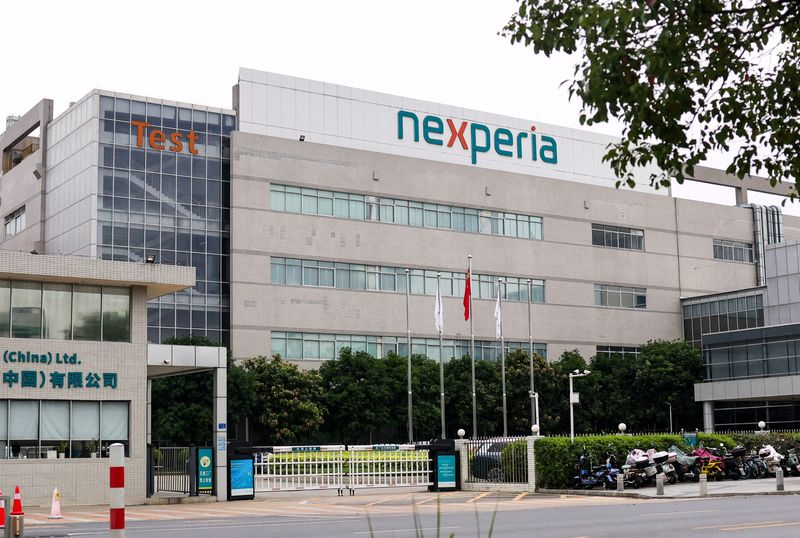
    DONGGUAN, China (Reuters) -A factory next to a weed-ridden lot in China’s industrial south has become a global choke point for automotive chips, upending a sector that just a few years ago swore it wouldn’t be caught again by supply-chain disruptions.

    Automakers vowed to strengthen supply lines after COVID-19 snarled semiconductor output in 2020 and a Japanese factory fire aggravated the shortage a year later. But the crisis engulfing Dutch chipmaker Nexperia’s plant exposed a blind spot: The industry never envisioned low-tech chips would become a ​lever for China against the West.

    “No one prepared for geopolitical disruption, and they’re still not prepared,” said Ambrose Conroy, CEO of U.S. firm Seraph Consulting, which advises automakers.

    The Dutch government took control of Netherlands-based Nexperia in late September, citing concerns its technology could ‌be passed on to Chinese owner Wingtech. Beijing retaliated by halting exports of finished Nexperia chips packaged at the plant in the Pearl River Delta.

    The Netherlands last week reversed course from its decision to take control of Nexperia, signalling a potential breakthrough.

    From its Dongguan factory, Nexperia ships semiconductors used in everything from car brakes to electric windows. They sell for fractions of a penny each, yet the shortage forced Nissan and ‌Honda to cut production and drove German supplier Bosch to curtail factory working hours.

    This account of how the industry scrambled to respond to the unforeseen crisis is based on interviews with a dozen people, including auto executives, suppliers and chip distributors, who described how just-in-time inventory practices and limited supply-chain diversification left automakers vulnerable to geopolitical shock.

    The reporting shows how China’s dominance reaches beyond cutting-edge technology and rare earths to mundane-yet-critical components and how Beijing wields that power to paralyse global production. Some details, including the size of Bosch’s exposure and companies’ struggles with requirements to trade in yuan, haven’t previously been reported.

    While the Dutch government took control of the headquarters in Nijmegen, the operations in China remained under the control of Nexperia’s Chinese parent.

    “The Dutch thought they had seized Nexperia, but they only took over an office building,” said Li Xing, a professor of international relations at the Guangdong Institute for International Strategies, a think tank.

    “What this shows is that, even in mid- and low-end segments, ⁠they depend on China. If China wants to get a grip on you, it still can. You have ‌no way out.”

    In a statement, a spokesperson for Wingtech said Nexperia has become an industry leader since being acquired. “The current crisis shows that breaking up international companies harms supply chains and puts key industries at risk,” the spokesperson said.

    China’s commerce ministry didn’t respond to requests for comment.

    A Nexperia spokesperson said the semiconductor industry’s global complexity made it hard to foresee the impact of geopolitics.

    CASE STUDY FOR POLITICAL RISK

    Nexperia’s chips were seen as so cheap and available that one European automaker didn’t ‍normally prepare alternative supplies, said one person at the carmaker. The chips are “very ordinary electronics with low prices,” said this person, who like most of those interviewed spoke on condition of anonymity to discuss sensitive information.

    The Nexperia episode shows that manufacturers’ strategic vulnerability stretches beyond high-tech components, said Alfredo Montufar-Helu, a managing director at Ankura Consulting in Beijing.

    Bosch didn’t initially have sufficient alternatives ready, despite ordering 200 million euros ($231 million) worth of Nexperia products a year, according to a person with knowledge of the matter.

    Bosch declined to comment.

    Nexperia resumed sales to some domestic distributors in late October but required payment in yuan, instead of foreign currencies used previously. The currency change was an apparent ​bid by the Chinese business to operate more independently of Dutch headquarters, Reuters has reported. Ready-to-ship chips piled up at the Dongguan plant because it wasn’t able to handle all the yuan transactions, according to two people briefed on the matter.

    The situation has since eased, they said.

    A Wingtech spokesperson said there hadn’‌t been a chip backlog or systems issues with yuan payment, but didn’t elaborate.

    China allowed some Nexperia exports to resume this month after U.S. President Donald Trump met with China’s Xi Jinping in Seoul. That came just in time for Bosch and suppliers Aumovio, ZF Group and Hella, which were days away from halting some production, according to a person briefed on the matter.

    Bosch, Aumovio and ZF declined to comment. A Hella spokesperson said it has maintained supply-chain stability.

    When Reuters visited the Dongguan plant on a recent weekday, some blinds were drawn and trucks came and went from a docking area. Dozens of scooters were parked outside.

    Austria’s Melecs and Apple supplier JABIL have managed to source chips from Nexperia. Both have used Chinese entities, allowing them to settle in yuan, the two people briefed on the matter said.

    A Melecs spokesperson declined to comment. JABIL did not respond to multiple requests for comment.

    AUTOMAKERS DIDN’T LEARN LESSON

    The chip shortage showed automakers hadn’t heeded lessons from the previous shock, said Julie Boote, autos analyst at Pelham Smithers Associates in London.

    “You would expect them to have several months’ worth of supply inventory for chips,” she said. “That’s what they said after the last crisis.”

    Nissan Chief Performance Officer Guillaume Cartier said replacing vulnerable supply chains takes time.

    “I know what everyone ⁠will tell me, ‘Ah, but you didn’t learn from the past,’” he told Reuters last month. “Yeah, OK. But do you believe you ​change all your supply in three years?”

    The Nexperia shortage forced Nissan to cut production of its top-selling Rogue SUV, Reuters has reported, and poses a continuing risk for this year.

    Conroy,​ the consultant, advises clients to hold extra inventory of critical components in the region where they’re needed. That’s a costly change for an industry that relies on “just-in-time” inventory management to minimize costs.

    Not all carmakers got whiplashed.

    Toyota instructs suppliers to stockpile several months’ supply of chips as part of the business continuity plan developed after the devastating 2011 Japan earthquake, Reuters has reported.

    A Toyota spokesperson said there were risks that could impact vehicle production and they would continue to monitor developments closely.

    THE COST OF RESILIENCE

    Another supply speedbump ‍involved how chips are integrated into vehicles. Nexperia semiconductors are widely used in components like ⁠power modules, which manage electricity, and are often soldered straight onto the components. That means they can’t just be swapped out for another chip, said Nori Chiou, investment director at White Oak Capital Partners.

    Any new vehicle component needs to undergo testing that can add months to the process of securing alternative parts, Chiou said. Nexperia’s spokesperson said substitution can’t be completed “overnight” because parts that seem identical can perform differently in vehicles.

    Germany’s Hella is considering alternative suppliers for Nexperia’s chips but testing and approvals could take up to a year, longer than initially expected, according to ⁠one person in the auto-supply industry.

    Hella’s spokesperson said it was shifting to “already qualified second sources wherever possible” to maintain stable supplies.

    Ankura Consulting’s Montufar-Helu said preparing for chip choke points will not be easy — or cheap.

    “Everyone is going to start talking once again about building resilience, about diversification,” he said. “And then they’re going to realise how expensive it ‌is.”

    ($1 = 0.8672 euros)

    (Reporting by David Kirton and Nicoco Chan in Dongguan; Che Pan, Eduardo Baptista and Laurie Chen in Beijing, Zhang Yan in Shanghai; Fanny Potkin in Singapore; Daniel Leussink in Tokyo; Additional reporting by Ilona Wissenbach in ‌Frankfurt, Toby Sterling in Amsterdam, Gilles Guillaume in Paris; Aditi Shah in Tokyo; Writing by David Dolan; Editing by David Crawshaw and Lincoln Feast.)

    Continue Reading

  • U.S. stock futures gain ahead of Thanksgiving week – and the crucial holiday shopping season

    U.S. stock futures gain ahead of Thanksgiving week – and the crucial holiday shopping season

    By Mike Murphy

    People shop inside Saks Fifth Avenue on Black Friday in New York City on Nov. 29, 2024. Investors will be keeping a close eye on upcoming retail data.

    U.S. stock futures rose Sunday, in hopes of building on Friday’s rebound, as investors await the start of the critical holiday shopping season following a wild week on Wall Street.

    Dow Jones Industrial Average futures (YM00) gained around 88 points, or 0.2%, late Sunday. S&P 500 futures (ES00) advanced 0.4% and Nasdaq-100 futures (NQ00) rose 0.6%. Crude futures (CL.1) fell, as did gold futures (GC00). The ICE U.S. Dollar Index DXY was little changed.

    Stocks gained Friday, but were down sharply for the week. The tech-heavy Nasdaq COMP slid 2.7%, falling for a third straight week, while the Dow DJIA and S&P 500 SPX each dropped 1.9%. The tech sector has been beaten down amid growing worries of a potential bubble in artificial-intelligence stocks, and an upbeat earnings report from AI chipmaker Nvidia (NVDA) last Wednesday were not enough to relieve those fears.

    Read more: Why the once-invincible Nvidia can’t save the AI trade

    Bitcoin (BTCUSD) managed a weekend rally, though, after the leading cryptocurrency lost about a third of its value since hitting an all-time high price on Oct. 6. After bottoming out below the $83,000 level Friday, bitcoin rallied more than 4% over the weekend, and was approaching the $88,000 level Sunday night.

    That may boost investor sentiment Monday, as bitcoin has, surprisingly, become a leading indicator for stocks in recent months.

    With many investors taking an extended vacation before the Thanksgiving holiday Thursday, the upcoming week could see lighter, but potentially volatile, trading. All eyes will be on consumer spending as the holiday shopping season kicks off later this week with Black Friday sales.

    With a dearth of economic reports due to the lingering effects of the U.S. government shutdown, any early indications of all-important retail sales data will be closely watched.

    See: Why the stakes for stocks are so high in this short Thanksgiving trading week ahead

    “With consumer sentiment weakening and the market starved for real-time signals, the mall becomes the macro,” Stephen Innes, managing partner at SPI Asset Management, said in a weekend note. “This makes every sniff of holiday activity – foot traffic, discount depth, card authorizations – disproportionately important. In a data desert, even a puddle looks like a lake.”

    After quarterly earnings reports by big-box retailers such as Walmart (WMT), Target (TGT) and Home Depot (HD) last week, this week will see results from another batch of retailers, including Kohl’s (KSS), Dick’s Sporting Goods (DKS), Best Buy (BBY), Petco (WOOF) and Urban Outfitters (URBN).

    More: Retailers try to downplay worries about lower-income shoppers, as bargains reign supreme

    The stock market will be closed Thursday for Thanksgiving, and will have a shortened session Friday.

    -Mike Murphy

    This content was created by MarketWatch, which is operated by Dow Jones & Co. MarketWatch is published independently from Dow Jones Newswires and The Wall Street Journal.

    (END) Dow Jones Newswires

    11-23-25 2117ET

    Copyright (c) 2025 Dow Jones & Company, Inc.

    Continue Reading

  • Catalyst Metals Limited’s (ASX:CYL) 6.7% loss last week hit both individual investors who own 59% as well as institutions

    Catalyst Metals Limited’s (ASX:CYL) 6.7% loss last week hit both individual investors who own 59% as well as institutions

    • The considerable ownership by individual investors in Catalyst Metals indicates that they collectively have a greater say in management and business strategy

    • The top 25 shareholders own 39% of the company

    • Insiders have sold recently

    AI is about to change healthcare. These 20 stocks are working on everything from early diagnostics to drug discovery. The best part – they are all under $10bn in marketcap – there is still time to get in early.

    If you want to know who really controls Catalyst Metals Limited (ASX:CYL), then you’ll have to look at the makeup of its share registry. We can see that individual investors own the lion’s share in the company with 59% ownership. Put another way, the group faces the maximum upside potential (or downside risk).

    While the holdings of individual investors took a hit after last week’s 6.7% price drop, institutions with their 30% holdings also suffered.

    In the chart below, we zoom in on the different ownership groups of Catalyst Metals.

    View our latest analysis for Catalyst Metals

    ASX:CYL Ownership Breakdown November 24th 2025

    Institutional investors commonly compare their own returns to the returns of a commonly followed index. So they generally do consider buying larger companies that are included in the relevant benchmark index.

    We can see that Catalyst Metals does have institutional investors; and they hold a good portion of the company’s stock. This suggests some credibility amongst professional investors. But we can’t rely on that fact alone since institutions make bad investments sometimes, just like everyone does. It is not uncommon to see a big share price drop if two large institutional investors try to sell out of a stock at the same time. So it is worth checking the past earnings trajectory of Catalyst Metals, (below). Of course, keep in mind that there are other factors to consider, too.

    earnings-and-revenue-growth
    ASX:CYL Earnings and Revenue Growth November 24th 2025

    We note that hedge funds don’t have a meaningful investment in Catalyst Metals. Our data shows that State Street Global Advisors, Inc. is the largest shareholder with 5.1% of shares outstanding. For context, the second largest shareholder holds about 5.0% of the shares outstanding, followed by an ownership of 4.2% by the third-largest shareholder. Additionally, the company’s CEO James de Crespigny directly holds 1.4% of the total shares outstanding.

    Our studies suggest that the top 25 shareholders collectively control less than half of the company’s shares, meaning that the company’s shares are widely disseminated and there is no dominant shareholder.

    Continue Reading

  • Indian shares set to track Asian peers higher on rising odds of US rate cut – Reuters

    1. Indian shares set to track Asian peers higher on rising odds of US rate cut  Reuters
    2. Ahead of Market: 10 things that will decide D-Street action on Monday  The Economic Times
    3. Indian Stocks Eye Fresh Highs On US Rate Cut Hopes  Finimize
    4. Trade Setup For Nov. 24: Nifty Finds Support At 26,000–25,850  NDTV Profit
    5. Trade Spotlight: How should you trade Apex Frozen, Hero MotoCorp, Tata Communications, Mahindra Finance,…  Moneycontrol

    Continue Reading

  • Assessing Valuation After Recent Share Price Rebound

    Assessing Valuation After Recent Share Price Rebound

    Republic Bancorp (RBCA.A) shares have slightly rebounded over the past week after recent declines during the past month and quarter. Investors are keeping an eye on the stock’s valuation in light of its long-term performance.

    See our latest analysis for Republic Bancorp.

    Republic Bancorp’s latest uptick has eased some of the recent pressure. However, momentum has yet to recover from this year’s declines. Despite a strong run over the past three and five years, its 1-year total shareholder return of -10.38% shows that sentiment has cooled and investors remain cautious as they reassess value at the current $67.83 share price.

    If you’re interested in where other fast-growing, high-conviction companies are headed next, this is the perfect moment to discover fast growing stocks with high insider ownership

    With recent price swings and a share price still below analyst targets, the central question is whether Republic Bancorp is currently undervalued or if the market has already factored in its growth prospects. Is there a genuine buying opportunity left?

    Republic Bancorp is trading at a price-to-earnings (P/E) ratio of 10.4x, notably below its industry peers and the wider US market. With shares last closing at $67.83, the market appears to be discounting future growth potential relative to competitors.

    The price-to-earnings ratio measures how much investors are willing to pay for each dollar of a company’s earnings. For banks like Republic Bancorp, the P/E ratio helps illustrate how the market perceives both profitability and growth prospects.

    Republic Bancorp’s multiple is lower than the US Banks industry average of 11.2x, as well as the peer group average of 12.4x. This suggests that, at current levels, the stock is more modestly valued than most rivals and could represent an attractive entry point if future performance outpaces expectations. However, compared to our estimated fair P/E ratio of 8.9x, it is still trading above what our models consider justified, so there is room for the market to adjust downward if growth disappoints.

    Explore the SWS fair ratio for Republic Bancorp

    Result: Price-to-Earnings of 10.4x (UNDERVALUED)

    However, risks remain if revenue growth continues to stall or if net income declines further. This could challenge the undervaluation thesis and limit upside.

    Find out about the key risks to this Republic Bancorp narrative.

    Looking from a different angle, our SWS DCF model values Republic Bancorp shares at $109.46, which is significantly higher than the current market price. This suggests the stock may be deeply undervalued and challenges the conclusions drawn from the P/E comparison. Could the market be missing something bigger here?

    Look into how the SWS DCF model arrives at its fair value.

    RBCA.A Discounted Cash Flow as at Nov 2025

    Simply Wall St performs a discounted cash flow (DCF) on every stock in the world every day (check out Republic Bancorp for example). We show the entire calculation in full. You can track the result in your watchlist or portfolio and be alerted when this changes, or use our stock screener to discover 928 undervalued stocks based on their cash flows. If you save a screener we even alert you when new companies match – so you never miss a potential opportunity.

    Readers who want to dig deeper or come to their own conclusions can assemble a personal narrative in just a few minutes. Do it your way

    A great starting point for your Republic Bancorp research is our analysis highlighting 3 key rewards and 1 important warning sign that could impact your investment decision.

    Ready to accelerate your portfolio? Take the next step and uncover unique investment opportunities you might miss otherwise by using the powerful Simply Wall Street Screener.

    This article by Simply Wall St is general in nature. We provide commentary based on historical data and analyst forecasts only using an unbiased methodology and our articles are not intended to be financial advice. It does not constitute a recommendation to buy or sell any stock, and does not take account of your objectives, or your financial situation. We aim to bring you long-term focused analysis driven by fundamental data. Note that our analysis may not factor in the latest price-sensitive company announcements or qualitative material. Simply Wall St has no position in any stocks mentioned.

    Companies discussed in this article include RBCAA.

    Have feedback on this article? Concerned about the content? Get in touch with us directly. Alternatively, email editorial-team@simplywallst.com

    Continue Reading

  • The shift AI startups need to win over GCC investors

    The shift AI startups need to win over GCC investors

    An article by Farid Yousefi, Founder and CEO of Founder Group AI

    Artificial intelligence is accelerating across the GCC at a pace few regions can match. Government vision, large-scale investment and a clear mandate for economic diversification have positioned Saudi Arabia, the UAE, Qatar, Kuwait, Bahrain and Oman as early global leaders in AI adoption.

    Across the region, governments are pouring billions into infrastructure, cloud capacity and data centres to power the next wave of AI-driven industries. Abu Dhabi’s G42 continues to secure major international partnerships. Saudi Arabia’s HUMAIN is building extensive AI data centre capabilities. Qatar is expanding its AI-enabled cloud services. These supply-side investments show a clear determination to embed AI into the region’s economic fabric.

    AI is also central to long-term national strategies such as Saudi Vision 2030 and the UAE’s National AI Strategy 2031. For policymakers, AI is not simply a productivity tool. It is a catalyst for new sectors across healthcare, logistics, fintech, and energy optimisation — all seen as pillars of future economic diversification.

    What investors want as 2026 approaches

    Against this backdrop, opportunities for AI innovators continue to grow—but the bar for investment is rising. As 2026 nears, investors will prioritise founders who can move beyond building “AI features” and instead create full AI narratives supported by measurable ROI, capital-efficient models, and real go-to-market execution.

    Simply put, the winners will be those who turn intelligence into economic value:

    • automation that reduces cost
    • prediction that increases revenue
    • platforms that scale with lean teams and modular architectures

    A clearer sign of this shift can be seen in the growing number of AI-driven models emerging in sectors like real estate, where companies are using automation, predictive insights and workflow optimisation to shorten transaction cycles. The recent joint venture between a UAE brokerage and the AI platform AIR reflects this broader trend: AI is being deployed not to replace industry professionals, but to enhance the speed, accuracy and efficiency of their work. It’s this type of practical, ROI-focused application—not speculative or experimental use cases— that is increasingly gaining investor attention.

    From testing tools to systems enterprises rely on

    There is no doubt that AI in the GCC is transitioning from tools we experiment with to systems enterprises depend on daily. The mainstream foundations will include:

    • agentic AI that can take actions, not just generate answers
    • autonomous workflow orchestration inside enterprises
    • real-time predictive intelligence built on multimodal data
    • AI avatars for customer engagement, education and support

    Finance, government, retail, logistics and energy will all accelerate adoptions as these capabilities mature.

    For innovators, this means building AI that assumes real operational responsibility — not simply another feature layered on top of existing workflows. Enterprises across the GCC want solutions that take on specific processes end-to-end and deliver immediate, measurable impact. Products that focus on a single high-value use case and execute it deeply and reliably will earn both enterprise adoption and investor attention.

    The rise of agentic AI ecosystems

    The defining shift in 2026 will be the rise of agentic AI ecosystems: systems that can plan, decide and act across entire business processes. This will push digital transformation from “digitising workflows” to genuinely intelligent operations.

    Enterprises will move toward a dual-intelligence model — humans setting direction, AI executing with precision. This balance will reshape how organisations recruit, produce, innovate, and interact with customers.

    As agentic AI becomes the operating layer inside enterprises, innovators will need to design products that integrate seamlessly into autonomous workflows. This means:

    • modular, API-first architectures
    • real-time data pipelines for AI agents
    • embedded predictive and autonomous actions
    • enterprise-grade transparency, control and governance
    • Products that can be orchestrated by AI — not only humans — will become the new winners of digital transformation.
    • A regional mindset ready for acceleration

    The GCC’s advantage is not just technical investment but mindset. Governments, regulators and enterprises are ready to adopt AI faster than almost any other region. This openness to change creates a rare environment where AI solutions can scale rapidly and prove commercial value in real operational settings.

    The real winners in 2026 will be the innovators who build AI products with clear purpose, deep local relevance and real global scalability. In a region moving at this speed, the opportunity is enormous — but so is the expectation for founders to build responsibly, efficiently and with focus.

    Continue Reading

  • Navigating change with leading economic data calculators

    Navigating change with leading economic data calculators

    Leveraging the Per Diem 2.0 Tool, we extracted prices for a basket of goods and standardized them by converting local currencies to USD for accurate cross-location comparisons. The analysis focuses on popular expatriate locations, offering insight into the typical expenses and shopping habits of global assignees. The locations include Beijing, Berlin, Dakar, Dubai, Hong Kong, Johannesburg, London, Los Angeles, Madrid, Mumbai, Nairobi, New York, Paris, Rome, São Paulo, Seoul, Singapore, Sydney, Tokyo, Toronto and Warsaw.

    Continue Reading

  • Australia's Monash IVF rejects $201 million buyout bid, shares soar to 6-month peak – Reuters

    1. Australia’s Monash IVF rejects $201 million buyout bid, shares soar to 6-month peak  Reuters
    2. Monash IVF Shares Soar Most Since 2014 After Takeover Offer  Bloomberg.com
    3. Scandal-ridden Monash IVF rejects $312m bid  The Australian
    4. Monash IVF shares recover 34% in morning trade  Proactive financial news
    5. Monash IVF says Genesis Capital’s $300m takeover bid is too low  AFR

    Continue Reading

  • MMG, Anglo American to Extend Deadline on Brazilian Nickel Deal

    MMG, Anglo American to Extend Deadline on Brazilian Nickel Deal

    By P.R. Venkat

    China-backed MMG and Anglo American have agreed to extend the deadline to complete the purchase of the latter's Brazilian nickel business after the European Commission extended its review of the proposed acquisition.

    "It is unclear how long the European Commission may require to complete its review," MMG said Monday.

    MMG, majority-owned by China Minmetals, and Anglo American have agreed to extend the deadline for completing the share purchase agreement from Nov. 18 to June 30, 2026.

    While all the other conditions have been satisfied, the European Commission has escalated its review to a Phase II investigation, MMG said.

    In early November, the European Commission had said it would deepen its investigation into MMG's $500 million purchase of Anglo American's Brazilian nickel business, citing competition concerns.

    The commission had said it had preliminary concerns that the deal could divert ferronickel supplies from European markets, potentially raising prices and reducing the quality of stainless steel production in the bloc.

    Anglo American announced in February that it would sell its Brazilian nickel business to MMG, as part of the U.K.-listed company's efforts to simplify operations following a failed takeover bid from rival BHP last year.

    "MMG will continue to work with Anglo-American and the European Commission to assist the European Commission in its review," MMG said Monday.

    Write to P.R. Venkat at venkat.pr@wsj.com

    (END) Dow Jones Newswires

    November 23, 2025 20:11 ET (01:11 GMT)

    Copyright (c) 2025 Dow Jones & Company, Inc.

    Continue Reading