Category: 3. Business

  • Beware buy now, pay later temptation on Black Friday, debt charities warn | Borrowing & debt

    Beware buy now, pay later temptation on Black Friday, debt charities warn | Borrowing & debt

    Black Friday bargain-hunters should be wary of the flood of “buy now, pay later” offers at the checkout, money experts have warned, amid record numbers of people seeking help with shopping debts.

    Billions of pounds will be spent online and in shops over the coming weeks, with more than one in three Britons said to be planning to use this form of credit to help stagger their Black Friday spending.

    But debt organisations and charities say shoppers should think very carefully before succumbing to the temptation of clicking on the buy now, pay later (BNPL) button.

    Citizens Advice said it was helping “more people than ever before” with BNPL-related problems. The charity added: “We urge people to take caution, especially if they are struggling with bills already.”

    Meanwhile, Money Wellness, an organisation that provides free money and debt advice, said last month had been a record month for people seeking help with BNPL debt, with another spike expected in January and February as festive spending feeds through.

    The number of shoppers turning to BNPL has increased steeply in recent years, with banking industry data showing the use of this type of credit rising from 14% to 25% of UK adults in the space of 12 months.

    The credit, which is common at online checkouts, and increasingly available at physical shops too, lets people spread payments for everything from dresses and trainers to concert tickets, takeaway pizzas and hotel rooms.

    Typically, the cost is split into three or four instalments, and if consumers keep up with their repayment plan they will not usually pay interest or charges. However, regulators and consumer bodies have long voiced worries that some people will end up taking out loans they cannot afford to pay back on time, thereby incurring charges, tipping them into debt and damaging their credit score.

    In the UK, more than 3 million customers missed payments in 2024, some of whom will have ended up being pursued by debt collectors.

    With the US-inspired Black Friday discount day on 28 November swiftly followed by Cyber Monday on 1 December and then a final burst of festive shopping, this is a bumper time of year for the BNPL industry, which in the UK is dominated by three brands: Klarna, Clearpay and PayPal.

    UK consumers will spend £6.4bn on Black Friday purchases this year – up slightly on the £6.3bn spent last year, according to a forecast from the accountancy firm PwC UK.

    The average transaction using BNPL is £114, according to the banking body UK Finance, with fashion – clothes, shoes and jewellery – accounting for almost half of all spending using this form of credit last year.

    skip past newsletter promotion

    Jane Parsons , at Citizens Advice, said it had shifted from a niche payment option to “a quick solution for people wanting to bag the latest bargains,” but it was still a form of credit, and using it “could still deal a heavy blow to your budget, with little protection if things go wrong”.

    While BNPL is often interest-free, “it’s certainly not risk-free”, said Vikki Brownridge at StepChange.

    For some shoppers, “juggling multiple BNPL payments alongside rent, bills and other debts can quickly become overwhelming”, said Sebrina McCullough at Money Wellness.

    She added: “A major issue is having multiple lines of BNPL credit with different payment dates throughout the month, which makes it hard to budget and easy to lose track. Missed or late payments often come with fees, and debt can spiral before people realise.”

    The Financial Conduct Authority will start regulating BNPL on 15 July 2026, which could require lenders to carry out affordability checks on even the smallest loans, so this will be the last Black Friday and Christmas when shoppers will not be protected by consumer legislation. From that date, BNPL loans will become regulated credit agreements.

    Continue Reading

  • Evaluating Procter & Gamble After Recent 2.2% Stock Gain and Growth Expectations

    Evaluating Procter & Gamble After Recent 2.2% Stock Gain and Growth Expectations

    • Ever wondered if Procter & Gamble stock is a hidden gem or already priced for perfection? Let’s break down whether there’s value hiding beneath the surface for thoughtful investors like you.

    • The stock just gained 2.2% in the past week, although it’s still down 0.8% this month and has slipped 9.1% year-to-date, hinting at shifting expectations and perhaps new opportunities or risks.

    • Market chatter has centered on Procter & Gamble’s expansion in emerging markets and its commitment to sustainability. Both of these factors have caught investors’ eyes recently, adding buzz and possibly some uncertainty about what’s next for the company.

    • Right now, Procter & Gamble has a valuation score of 2 out of 6. This means it screens as undervalued on just two checks out of a possible six, so there’s certainly more to uncover. We’ll explore how this score stacks up using classic valuation approaches, and at the end, I’ll show you a smarter way to think about value beyond the usual metrics.

    Procter & Gamble scores just 2/6 on our valuation checks. See what other red flags we found in the full valuation breakdown.

    A Discounted Cash Flow (DCF) model estimates a company’s intrinsic value by projecting its future cash flows and then discounting those amounts back to today’s dollars. This method provides insight into what the business may be worth, based on the money it is likely to generate in the coming years.

    For Procter & Gamble, the current Free Cash Flow stands at $15.4 Billion. Analysts forecast steady growth in these cash flows, projecting they will reach about $21.4 Billion in 2035. Notably, analysts have only made explicit forecasts through 2028 (with 2028 FCF projected at $17.0 Billion). Later years are based on cautious, methodical extrapolations. All figures are in US dollars.

    By discounting each year’s expected cash flows back to a present value, the DCF model calculates Procter & Gamble’s intrinsic value at about $185.05 per share. This is roughly 18.4% higher than the current trading price. This suggests that the stock is presently undervalued based on these long-term cash flow expectations.

    Result: UNDERVALUED

    Our Discounted Cash Flow (DCF) analysis suggests Procter & Gamble is undervalued by 18.4%. Track this in your watchlist or portfolio, or discover 917 more undervalued stocks based on cash flows.

    PG Discounted Cash Flow as at Nov 2025

    Head to the Valuation section of our Company Report for more details on how we arrive at this Fair Value for Procter & Gamble.

    The Price-to-Earnings (PE) ratio is a primary valuation tool for profitable companies like Procter & Gamble. It shows investors how much the market is willing to pay for each dollar of the company’s earnings, making it a quick way to assess whether a stock is trading at a premium or discount relative to its profits.

    A fair PE ratio depends on factors such as expected company growth and the perceived risk of its future. Higher earnings growth and lower risk tend to support a higher PE ratio, while greater uncertainty or slower growth usually warrant a lower ratio.

    Currently, Procter & Gamble trades at a PE ratio of 21.4x. This is above the Household Products industry average of 17.6x, and just slightly above the peer average of 20.5x. Although comparisons like these can be helpful, they do not always provide the full picture because each company has unique growth rates, risks, and profitability profiles.

    Simply Wall St’s “Fair Ratio” is a proprietary metric that estimates the PE you might expect for Procter & Gamble when considering its earnings growth, industry, profit margins, risks, and market cap. Instead of relying solely on averages, the Fair Ratio evaluates both the company and its environment for a more tailored benchmark.

    With a Fair Ratio of 25.8x compared to the actual 21.4x multiple, Procter & Gamble appears undervalued according to this more comprehensive approach.

    Result: UNDERVALUED

    NYSE:PG PE Ratio as at Nov 2025
    NYSE:PG PE Ratio as at Nov 2025

    PE ratios tell one story, but what if the real opportunity lies elsewhere? Discover 1422 companies where insiders are betting big on explosive growth.

    Earlier we mentioned that there’s an even better way to understand valuation, so let’s introduce you to Narratives. A Narrative is a simplified framework allowing investors to build and share their own story or perspective about a company like Procter & Gamble. This approach connects the company’s business fundamentals to future estimates and ultimately to a fair value. Instead of just crunching numbers, Narratives let you combine your assumptions about revenues, earnings growth, and margins with your take on what really drives the business. This makes the investment process more personal and insightful.

    Narratives are available to everyone on Simply Wall St’s Community page and are already used by millions of investors. They streamline the decision process by showing how your unique outlook translates into a financial forecast and a fair value estimate. You can then compare that fair value with the current market price to decide if it’s time to buy or sell. Narratives aren’t static, either. When big news or earnings updates come in, these stories and their valuations automatically adjust, so your perspective stays relevant in real time.

    For example, one investor’s Narrative for Procter & Gamble might forecast slow growth and margin pressure, leading to a low fair value estimate of $105. Another could anticipate robust innovation and buybacks, supporting a high target like $186. Narratives empower you to turn your own informed view into actionable insight.

    For Procter & Gamble, we will make it easy for you with previews of two leading Procter & Gamble Narratives:

    🐂 Procter & Gamble Bull Case

    Fair value estimate: $169.05

    Currently 10.8% undervalued compared to last close ($150.92)

    Projected revenue growth: 3.2%

    • Analyst consensus expects steady revenue growth, margin improvement, and robust earnings by 2028, supporting a fair valuation above the current market price.

    • Growth drivers include product innovation, cost efficiencies, share repurchases, and expanding presence in various consumer segments.

    • Risks include volatility in core markets, geopolitical tensions, tariffs, and currency fluctuations, all of which could impact revenue and margins if not addressed.

    🐻 Procter & Gamble Bear Case

    Fair value estimate: $119.81

    Currently 26% overvalued compared to last close ($150.92)

    Projected revenue growth: 4.7%

    • Despite strong brand strength and operational efficiency, future growth is expected to remain modest and align with inflation, causing limited upside.

    • Valuation methods such as DCF, dividend models, and historical comparisons all point towards a current trading price above estimated fair value, suggesting the stock is richly valued.

    • P&G remains a high-quality, stable dividend payer, but investors may need to be cautious about buying at current prices unless fundamental growth or margin expansion accelerates.

    Do you think there’s more to the story for Procter & Gamble? Head over to our Community to see what others are saying!

    NYSE:PG Community Fair Values as at Nov 2025
    NYSE:PG Community Fair Values as at Nov 2025

    This article by Simply Wall St is general in nature. We provide commentary based on historical data and analyst forecasts only using an unbiased methodology and our articles are not intended to be financial advice. It does not constitute a recommendation to buy or sell any stock, and does not take account of your objectives, or your financial situation. We aim to bring you long-term focused analysis driven by fundamental data. Note that our analysis may not factor in the latest price-sensitive company announcements or qualitative material. Simply Wall St has no position in any stocks mentioned.

    Companies discussed in this article include PG.

    Have feedback on this article? Concerned about the content? Get in touch with us directly. Alternatively, email editorial-team@simplywallst.com

    Continue Reading

  • Greenwich tenants had to urinate in bath when left with no loo

    Greenwich tenants had to urinate in bath when left with no loo

    Residents of a shared property in south-east London had to urinate in a bath or use the lavatories at a nearby furniture superstore for 58 days because their landlord did not fix a broken toilet, a tribunal has heard.

    The five tenants also had to put up with a faulty ventilation system that was so noisy it kept them awake at night and caused mould.

    They applied for rent repayment accusing the landlords of not holding the correct licence to run the Greenwich property and were given £5,300 back.

    The landlord accepted they were unlicensed and said it was due to the co-landlord’s memory loss which they had experienced since suffering a “severe brain injury” in 2021.

    The owners of the four-bedroom maisonette on Woolwich Road required a special licence as the property was a House in Multiple Occupation (HMO), meaning the home was shared by at least three people sharing the same kitchen and bathroom.

    The landlord told the tribunal that she had lost a letter from Greenwich Council which outlined updates to the council’s licensing policy, the Local Democracy Reporting Service reported.

    The tribunal’s impression was that both landlords’ understanding of the licensing regime was limited and “they had no real understanding of the nature of mandatory licensing”.

    The tribunal acknowledged the landlord’s health situation, but ruled they should have been aware of the need for HMO licensing as they owned and managed other HMO properties.

    One of the residents admitted to breaking the lavatory bowl in October 2023. The landlords accepted responsibility for the repair, but it was not carried out for 58 days, the tribunal heard.

    The landlords said they thought the faulty ventilation system served the whole block, but after finding out this was not the case a specialist company was contacted to have the system checked and repaired.

    The system was found to be operating at 50 per cent efficiency and vent openings within the flat were “seriously affected by mould”, according to a report from the proceedings.

    Considering the licensing, disrepair and other issues, the tribunal calculated the Rent Repayment Order to be 40 per cent of the maximum possible figure of £13,229. This was rounded to £5,300.

    Continue Reading

  • US government pullback from climate science fuels boom for private data firms

    US government pullback from climate science fuels boom for private data firms

    • Earth intelligence sector revenue to exceed $4.2 billion by 2030
    • Concerns over data accuracy and access for those unable to pay
    • Fugro partners with Esri for climate-vulnerable island mapping
    • Private satellite monitoring has grown significantly since 2005
    • GHGSat to expand satellites after raising $47 million this year

    BELEM, Brazil, Nov 22 (Reuters) – A British real estate manager overseeing 26 billion euros ($29.93 billion) in assets and concerned about flood, fire and other climate-related risks to its properties sought help from Climate X, a data analytics firm based in London.

    Climate X started crunching numbers and using its AI risk modeling tool, informed partly by U.S. scientific data, to help Savills Investment Management estimate possible damages to 300 of its assets in Europe and Asia if weather disruptions hit.

    Sign up here.

    Savills said the information helps with investment decisions and it may now use Climate X analytics to assess hundreds more properties.

    U.S. President Donald Trump’s administration has been slashing spending for science services at a time of surging demand for analytics due to escalating climate change and extreme weather. That is helping to drive a data industry boom for private data companies like Climate X that are providing everything from drought or pollution risk assessments to locations for untapped mineral reserves.

    Revenues for the earth intelligence sector should rise at least 10% to $4.2 billion by 2030, market analysis firm Gartner said, teasing the industry in July as a “new revenue growth opportunity.”

    The industry’s impact could be even more significant. The World Economic Forum has estimated earth intelligence will help reduce risk, grow opportunities, and generate jobs for a total $3.8 trillion in economic value by 2030, up from $266 billion today.

    The private data boom is also raising questions around accuracy and access for those unable to pay. Private companies can do only so much without baseline data from U.S. government agencies such as NOAA, according to officials from more than a dozen firms who spoke with Reuters.

    “Without it we wouldn’t know if our models are good or bad, frankly,” Climate X co-founder and Chief Operating Officer Kamil Kluza said.

    With U.S. datasets for climate-related information like methane plumes or flood maps possibly vanishing from the public sphere, Kluza’s company plans to lean on alternatives from the EU, Japan and UK Met Office.

    “We are huge consumers of governmental data to validate what’s happened in the past,” Kluza told Reuters. “The governments hold the past flood history … past subsidence incidents, landslides, and so on.”

    HUNTING OPPORTUNITY AND COSTS

    Gartner predicts private companies will soon account for more than half of global spending on data services, up from just 15% currently.

    The shift reflects both the private sector enthusiasm as well as downsized U.S. support for science. Executives told Reuters that private companies in the sector have never found it easier to raise capital.

    In 2025, earth intelligence companies raised some $3.2 billion across 57 funding rounds up to November 21, up sharply from $1.1 billion in 89 rounds last year and $845 million in 99 rounds in 2023, according to data from industry tracker Tracxn shared exclusively with Reuters.

    Montreal-based GHGSat, the largest provider of methane data, raised $47 million in September through convertible notes and debt. It now plans to add two more satellites to its constellation of 13 already in orbit.

    “Business is good, business is growing,” the company’s UK head Dan Wicks told Reuters.

    GHGSat is part of a trend in private satellite monitoring, with 666 commercial satellites focused on earth observation or science circling the planet in 2023, compared with just seven in 2005, according to the Union of Concerned Scientists.

    With governments and energy companies looking for GHGSat’s help in spotting leaky infrastructure they can plug to stem climate-warming methane emissions and possibly boost profits, Wicks said, “we are seeing significant growth year on year as a private company.”

    JUGGLING EQUITY, ACCESS AND PROFITS

    Public companies are also rallying. Shares for one of the largest, Planet Labs, are up 190% since January.

    In the seven decades since Dutch-based Fugro began studying soil, it has grown into a geospatial data company with annual revenues above $2.2 billion as it took on marine surveys and pushed its mapping out to sea.

    “We map, then we start modeling it, and then we start monitoring it — whether it’s the built environment or the natural environment,” Fugro CEO Mark Heine told Reuters.

    Two-thirds of its work is now offshore: building underwater maps that can help governments manage coastal environments or help ships navigate safely.

    These companies are not immune to upheaval. After posting 4% growth in 2024, Fugro took a hit partly as offshore wind clients suffered a downturn after Trump slammed the brakes on U.S. support for renewable energy. Fugro’s third-quarter revenues were down 14.5% from last year.

    Fugro, keen to offer more, is co-chairing the U.N.’s Ocean Decade Corporate Data Group aimed at unlocking marine data from industries like energy, telecoms and fisheries for public benefit.

    “We have invited 12 very large enterprises, like Shell, BP, Total, Equinor, to discuss how to release ocean data collected for commercial purposes,” Heine said.

    Fugro has also teamed up with the private GIS software company Esri to build coastal maps around climate-vulnerable island nations, starting in the Caribbean.

    “We believe rich countries have a responsibility to help small island nations protect themselves from sea-level rise,” Heine said.

    Earth Intelligence companies raise record $3.2 billion in 2025
    A record year sees a near three-fold increase in fundraising achieved over fewer rounds
    A record year sees a near three-fold increase in fundraising achieved over fewer rounds

    ($1 = 0.8688 euros)

    Reporting by Katy Daigle and Simon Jessop; Editing by David Gregorio

    Our Standards: The Thomson Reuters Trust Principles., opens new tab

    Continue Reading

  • Does Pfizer’s AI-Powered R&D Signal a New Opportunity for 2025?

    Does Pfizer’s AI-Powered R&D Signal a New Opportunity for 2025?

    • Wondering if Pfizer is a smart buy at today’s price? You are not alone, especially as value-focused investors begin to focus on the stock.

    • Pfizer’s performance has been mixed lately. Shares dipped just 0.1% in the last week, inched up 1.3% over the past month, but are still down 5.9% year to date despite a 4.7% return over the last twelve months.

    • Recent headlines about Pfizer have focused on its latest product developments and major moves in the pharmaceutical sector, generating speculation about the company’s future direction. These stories give investors plenty to consider regarding long-term growth prospects and short-term uncertainty.

    • In terms of valuation, Pfizer scores a strong 5 out of 6 on our core checklist for undervaluation, making it a notable candidate for deeper analysis. Next, let us explore the valuation methods that matter, and stay tuned for a perspective that goes beyond the numbers alone.

    Find out why Pfizer’s 4.7% return over the last year is lagging behind its peers.

    A Discounted Cash Flow (DCF) model estimates a company’s value by projecting its future cash flows and discounting them back to their value today. This helps investors see what those future dollars are worth in today’s terms.

    For Pfizer, the latest reported Free Cash Flow (FCF) stands at $9.95 Billion. Analysts forecast that FCF will grow steadily, with Simply Wall St extrapolating a projected FCF of $16.36 Billion in the year 2029. While analyst estimates usually cover the next five years, these longer-term numbers are model driven based on known cash flow trends.

    Based on these projections and the DCF methodology, the estimated intrinsic value of Pfizer’s shares comes out to $62.40. This is a striking 59.9% higher than the current market price, indicating that the stock trades at a substantial discount according to this valuation.

    Result: UNDERVALUED

    Our Discounted Cash Flow (DCF) analysis suggests Pfizer is undervalued by 59.9%. Track this in your watchlist or portfolio, or discover 917 more undervalued stocks based on cash flows.

    PFE Discounted Cash Flow as at Nov 2025

    Head to the Valuation section of our Company Report for more details on how we arrive at this Fair Value for Pfizer.

    For companies like Pfizer that consistently generate profits, the Price-to-Earnings (PE) ratio is a popular and reliable valuation tool. The PE ratio tells investors how much they are paying for each dollar of current earnings, providing a useful snapshot for comparing across companies and industries.

    It is important to remember that what counts as a “normal” or “fair” PE ratio varies depending on a company’s growth expectations and risk profile. Companies with higher expected earnings growth or lower risk typically justify a higher PE, while those with slower growth or greater risk generally trade on a lower multiple.

    At the moment, Pfizer trades on a PE ratio of 14.53x. This is noticeably below both the industry average of 19.92x and the peer group average of 17.05x. However, benchmarks like industry averages do not always tell the whole story.

    That is where the Simply Wall St Fair Ratio comes in. The Fair Ratio for Pfizer is calculated at 24.17x, reflecting a more personalized estimate based on Pfizer’s growth prospects, profit margin, industry environment, company size, and business risks. This proprietary metric offers a more tailored and holistic view of what could be considered a reasonable valuation for Pfizer compared to industry and peer averages that may not fully capture company-specific factors.

    Given that Pfizer’s current PE of 14.53x is well below its Fair Ratio of 24.17x, the evidence suggests Pfizer is undervalued on this preferred metric.

    Result: UNDERVALUED

    NYSE:PFE PE Ratio as at Nov 2025
    NYSE:PFE PE Ratio as at Nov 2025

    PE ratios tell one story, but what if the real opportunity lies elsewhere? Discover 1422 companies where insiders are betting big on explosive growth.

    Earlier we mentioned there is an even better way to understand valuation, so let us introduce you to Narratives. In investing, a Narrative is your perspective on a company’s future, connecting the story you believe about its business, such as growth in new markets, product launches, or risk factors, to your own estimates for revenue, earnings, and margins.

    Narratives make investing smarter and more personalized by linking your view of Pfizer’s story directly to a dynamic financial forecast and fair value estimate. This approach is easy to use and available to all on Simply Wall St’s Community page, where millions of investors share their views and track company progress.

    With Narratives, you can see how your fair value estimate compares to today’s market price. This makes it easier to decide when a stock might be a buying opportunity or when it may be time to take profits. Even better, as new data or news emerges, each Narrative updates automatically, keeping your analysis current without any extra effort.

    For Pfizer, some investors see fair value as high as $35.77 per share (expecting margin expansion and accelerated innovation), while others estimate as low as $24.00 (citing patent risks and margin pressure).

    For Pfizer, we’ll make it really easy for you with previews of two leading Pfizer Narratives:

    🐂 Pfizer Bull Case

    Fair Value: $29.08

    Undervalued by 13.9%

    Expected Revenue Growth Rate: -2.66%

    • Growth strategy focuses on expansion in innovative therapies and global emerging markets. The goal is to achieve margin improvement and resilience despite industry pressures.

    • Recent deals and digital investments, such as the Metsera acquisition and AI-powered R&D, are expected to drive long-term earnings growth and operational efficiencies.

    • Risks include regulatory pressures, patent expirations, and fierce competition. Consensus analyst targets indicate upside of 14.4% from current pricing.

    🐻 Pfizer Bear Case

    Fair Value: $24.00

    Overvalued by 4.3%

    Expected Revenue Growth Rate: -4.21%

    • Stricter drug price controls, ongoing patent expirations, and intensifying generic competition are expected to pressure Pfizer’s revenues and margins over the next several years.

    • Heavy reliance on bringing new R&D assets to market introduces risk, as pipeline delays or failures may not offset losses from established drugs.

    • Bears believe the company is fairly to slightly overvalued at its current price. This makes downside risks more prominent than potential upside under these assumptions.

    Do you think there’s more to the story for Pfizer? Head over to our Community to see what others are saying!

    NYSE:PFE Community Fair Values as at Nov 2025
    NYSE:PFE Community Fair Values as at Nov 2025

    This article by Simply Wall St is general in nature. We provide commentary based on historical data and analyst forecasts only using an unbiased methodology and our articles are not intended to be financial advice. It does not constitute a recommendation to buy or sell any stock, and does not take account of your objectives, or your financial situation. We aim to bring you long-term focused analysis driven by fundamental data. Note that our analysis may not factor in the latest price-sensitive company announcements or qualitative material. Simply Wall St has no position in any stocks mentioned.

    Companies discussed in this article include PFE.

    Have feedback on this article? Concerned about the content? Get in touch with us directly. Alternatively, email editorial-team@simplywallst.com

    Continue Reading

  • Assessing Merit Medical Systems After Recent Portfolio Expansion and Share Price Rebound

    Assessing Merit Medical Systems After Recent Portfolio Expansion and Share Price Rebound

    • Wondering if Merit Medical Systems is trading at a bargain or if that ship has sailed? You are not alone; it is a common question for investors sizing up this healthcare stock.

    • The stock has seen a gentle rebound lately, up 2.5% over the last week and 3.2% this month, though longer-term returns remain muted with a -17.2% drop over the last year.

    • Recent headlines highlight increased interest in the company’s expanding medical device portfolio, as well as continued partnerships in the U.S. and abroad. These developments have offered a glimmer of optimism amid a period of share price volatility.

    • On a pure numbers basis, Merit Medical Systems currently scores 0 out of 6 on our core valuation checks, suggesting it may not be undervalued by traditional metrics. Stick around, as we will break down exactly how these checks work and reveal a smarter way to evaluate value later in the article.

    Merit Medical Systems scores just 0/6 on our valuation checks. See what other red flags we found in the full valuation breakdown.

    The Discounted Cash Flow (DCF) model estimates a company’s worth by forecasting future cash flows and discounting them back to today’s value to reflect risk and the time value of money. DCF is one of the most widely used valuation tools for fundamental investors.

    For Merit Medical Systems, the DCF calculation starts with the company’s current Free Cash Flow, which is $213 million. Based on analyst forecasts, Free Cash Flow is projected to grow steadily, reaching $229 million by the end of 2027. Beyond that, future projections are extrapolated, with cash flows expected to rise gradually each year and reach roughly $295 million in 2035.

    The DCF analysis uses these cash flow projections to arrive at an intrinsic value per share of $77.71. When compared to the current share price, the result suggests the stock is trading about 12.2% above its DCF-assessed fair value. This implies it may be overvalued at recent prices.

    Result: OVERVALUED

    Our Discounted Cash Flow (DCF) analysis suggests Merit Medical Systems may be overvalued by 12.2%. Discover 917 undervalued stocks or create your own screener to find better value opportunities.

    MMSI Discounted Cash Flow as at Nov 2025

    Head to the Valuation section of our Company Report for more details on how we arrive at this Fair Value for Merit Medical Systems.

    The price-to-earnings (PE) ratio is a popular valuation metric, especially for profitable companies like Merit Medical Systems. It reflects the amount investors are willing to pay today for each dollar of the company’s earnings. Generally, a higher PE suggests expectations of stronger future growth, while a lower PE may mean slower growth or higher perceived risk.

    Continue Reading

  • Will pay-per-mile raise Reeves money or drive people away from electric vehicles? | Electric, hybrid and low-emission cars

    Will pay-per-mile raise Reeves money or drive people away from electric vehicles? | Electric, hybrid and low-emission cars

    Three pence: a small charge per mile for an electric vehicle, but a giant conceptual leap for Britain.

    Chancellors of the exchequer have long resisted any form of road pricing as politically toxic. That may be about to change next week: Rachel Reeves, perhaps inured to being pilloried for any money-raising proposal, is expected to introduce a charge explicitly linked to how far EVs drive.

    The Treasury has all but confirmed some kind of charge will be announced at next week’s budget, but the details have not been revealed. According to an initial report in the Telegraph, EV drivers could from 2028 pay a supplement based on how far they had driven that year on top of their annual road tax, or vehicle excise duty (VED). That could be a self-declared estimate of distance or a check on the odometer at an MOT.

    According to Department for Transport (DfT) figures, battery electric cars – with lower running costs than petrol – are used more: clocking up about 8,900 miles on average in 2024. At 3p a mile, that would bring in £267 a car from the 1.4m EVs currently on the road – about £375m a year in total.

    The Treasury has all but confirmed that some kind of charge on EVs will be announced when Rachel Reeves delivers the budget. Photograph: Carlos Jasso/AFP/Getty Images

    The transport secretary, Heidi Alexander, was at pains to rule out a national road pricing scheme in the face of Commons attacks on Thursday – although a later “clarification” made clear that the EV pay-per-mile was still on the table.

    The long-term picture is a looming shortfall in motoring tax revenues, as income from fuel duty evaporates in the transition to EVs. Petrol and diesel cars effectively pay a charge linked to how far they drive – but via fuel consumption at the pump.

    Fuel duty of 52.95p a litre (roughly 5p a mile in average cars) will bring in £24.4bn this financial year, according to the latest forecast from the Office for Budget Responsibility, but the billions will dwindle away from 2030, when the ban on new pure petrol and diesel cars comes in.

    The challenge is to find a fair replacement for an unsustainable system – and overcome longstanding resistance on the right to any form of road charging, bundled up in the culture wars around London’s ultra-low emission zone (Ulez) and low-traffic neighbourhoods with their claims of curtailed freedoms and increased surveillance.

    Last year London’s mayor, Sadiq Khan, ruled out considering a pricing scheme after being battered by anti-Ulez hostility. Photograph: PA Images/Alamy

    Some economists have championed schemes that would price roads by time and congestion – potentially fairer and a better tool to manage road use, but bringing in another level of tracking.

    Any scheme should be kept simple, says Steve Gooding, the director of the RAC Foundation motoring thinktank. Although, when it comes to privacy, he adds: “The amount of data being generated by the modern car is phenomenal. If the DfT or DVLA start tracking their movements, people think Big Brother is watching. But Elon [Musk] – they’re not that fussed.”

    A wider concern is that pay-per-mile would discourage drivers from switching to electric vehicles, crucial for cutting carbon emissions. Manufacturers, businesses and motoring groups such as Ford, AutoTrader and the AA have all spoken out on the timing of new charges at this point in the transition. Carmakers must, under Britain’s ZEV mandate, ensure one in three cars sold next year are zero-emission, rising to 80% by 2030 (with hybrids allowed to make up the remaining 20%).

    While grants remain of up to £3,750 on new electric vehicles and – for some – the running costs remain much cheaper, some discounts or tax and charge exemptions have already ended. Transport for London recently confirmed EVs would be liable for the capital’s congestion charge from next year, and zero-emission cars started paying VED in April.

    According to a report for the Social Market Foundation (SMF) thinktank, New Zealand provides a cautionary tale. EVs were made liable last year for its road-user charge, which previously only applied to diesel vehicles, whereby drivers buy paper permits in units of 1,000km (621 miles). The move, allied to the end of buyer grants and tax exemptions, led to a sharp drop in new EV sales – now just 4% of the market, having peak 19%.

    Electric vehicles at a charging point in Auckland, New Zealand, where EVs were made liable last year for its road-user charge. Photograph: MIchael Craig/AP

    SMF says that Iceland, which also brought EVs into pay-per-mile schemes last year, maintained incentives and differentials in pricing and had a much smaller decline in market share.

    Advocates for the new technology are alarmed. The Electric Vehicle Association England, a group representing drivers, warned in a letter to the chancellor that consumer sentiment was still sceptical about EVs.

    For many, running costs are no longer the incentive they once were – particularly for those reliant on public charging points, usually in poorer areas and without a driveway. Ginny Buckley, the chief executive of Electrifying.com, an EV reviews platform and marketplace, says: “If you can’t rely on off-peak, affordable home charging and you’re reliant on the public charging network, for many people it will cost you more per mile to run your EV than it will a petrol car.”

    Graham Parkhurst, a professor of sustainable mobility at the University of the West of England, describes the vast difference between domestic chargers and public charging points – which attract VAT at 20% on top – as a “political timebomb”, further dividing the haves and have-nots.

    Even long-term proponents of pay-per-mile such as Parkhurst warn of the need to tread carefully: “Charging according to how much a vehicle moves makes sense. Fuel duty does that. But we need time to work out how to do this in the context of wider transport taxation. To the extent we need cars, it’s much better that they are electric,” he says.

    Long-term champions of pay-per-mile warn of the need to tread carefully. Photograph: nrqemi/Getty Images/iStockphoto

    The thinktank the Resolution Foundation recommends a charge based on miles driven and weight be brought in only for future EV sales, as part of VED.

    Tanya Sinclair, the chief executive of the industry group Electric Vehicles UK, agrees that motoring taxes need fundamental reform – but the government needs to be absolutely clear it wants people to switch to EVs. “Anything that muddies that message – such as giving a grant with one hand and introducing pay-per-mile with the other – undermines that clarity for the consumer,” she says.

    A government spokesperson says it would “look at further support measures” for EVs, but adds: “Fuel duty covers petrol and diesel, but there’s no equivalent for electric vehicles. We want a fairer system for all drivers whilst backing the transition to electric vehicles.”

    For Gooding “the best time to introduce road pricing would have been a while ago – but politics has been an interesting place”. The cross-party transport select committee recommended the urgent introduction of road pricing – replacing all motoring taxes for every type of vehicle – in 2022. But no ministers have fancied it; London’s mayor, Sadiq Khan, battered by anti-Ulez hostility, last year had to rule out even considering a pricing scheme, despite once talking of it as the sensible option.

    Piloting a new policy is, Gooding says, best done “with the smallest number you can get away with – and if it’s only EVs, that’s better than trying to introduce some kind of complicated charge for the 34m cars we’ve already got”.

    For some, including Buckley and the Campaign for Better Transport, an obvious, if also politically contentious, answer remains: end the 15-year freeze on fuel duty and the temporary 5p cut in place since 2022.

    Had the levy stayed the same in real terms, almost £150bn would have accrued to the public purse, according to SMF. Whatever pay-per-mile scheme evolves, Reeves “must ensure operating taxes on EVs remain lower than on petrol”, it says. “The simplest way to maintain that difference is to raise fuel duty.”

    Continue Reading

  • Dall TM, Gallo PD, Chakrabarti R, West T, Semilla AP, Storm MV. An aging population and growing disease burden will require a large and specialized health care workforce by 2025. Health Aff (Millwood). 2013;32(11):2013–20.

    Google Scholar 

  • Schaeffer D, Hämel K. Kooperative Versorgungsmodelle. Eine international vergleichende betrachtung. In: Jungbauer-Gans M, Kriwy P, editors. Handbuch gesundheitssoziologie. Wiesbaden: Springer Fachmedien Wiesbaden; 2017. pp. 1–18.

    Google Scholar 

  • Needleman J, Buerhaus P, Pankratz VS, Leibson CL, Stevens SR, Harris M. Nurse staffing and inpatient hospital mortality. N Engl J Med. 2011;364(11):1037–45.

    Google Scholar 

  • Lang TA, Hodge M, Olson V, Romano PS, Kravitz RL. Nurse-patient ratios: a systematic review on the effects of nurse staffing on patient, nurse employee, and hospital outcomes. J Nurs Adm. 2004;34(7–8):326–37.

    Google Scholar 

  • Pickard L. A growing care gap? The supply of unpaid care for older people by their adult children in England to 2032. Aging Soc. 2015;35(1):96–123.

    Google Scholar 

  • Ehrlich H, McKenney M, Elkbuli A. The need for actions to protect our geriatrics and maintain proper care at U.S. Long-Term care facilities. J Trauma Nurs. 2020;27(4):193–4.

    Google Scholar 

  • Pruszyński J, Cianciara D, Pruszyńska I, Włodarczyk-Pruszyńska I. Staff shortages and inappropriate work conditions as a challenge geriatrics and contemporary healthcare service at large faces. J Educ Health Sport. 2022;12(7):136–47.

    Google Scholar 

  • Brivio P, Paladini MS, Racagni G, Riva MA, Calabrese F, Molteni R. From healthy aging to frailty: in search of the underlying mechanisms. Curr Med Chem. 2019;26(20):3685–701.

    Google Scholar 

  • Bierman AS, Tinetti ME. Precision medicine to precision care: managing Multimorbidity. Lancet. 2016;388(10061):2721–3.

    Google Scholar 

  • Landi F, Liperoti R, Russo A, Capoluongo E, Barillaro C, Pahor M, et al. Disability, more than multimorbidity, was predictive of mortality among older persons aged 80 years and older. J Clin Epidemiol. 2010;63(7):752–9.

    Google Scholar 

  • Ouslander JG, Berenson RA. Reducing unnecessary hospitalizations of nursing home residents. N Engl J Med. 2011;365(13):1165–7.

    Google Scholar 

  • Marcantonio ER. Delirium in hospitalized older adults. N Engl J Med. 2017;377(15):1456–66.

    Google Scholar 

  • Field MJ, Committee on Evaluating. Telemedicine: Telemedicine: A Guide to Assessing Telecommunications for Health Care. Washington, D.C.: National Academy Press; 1996. Available from: URL: http://gbv.eblib.com/patron/FullRecord.aspx?p=3377053.

  • Harst L, Lantzsch H, Scheibe M. Theories predicting End-User acceptance of telemedicine use: systematic review. J Med Internet Res. 2019;21(5):e13117.

    Google Scholar 

  • Sood S, Mbarika V, Jugoo S, Dookhy R, Doarn CR, Prakash N, et al. What is telemedicine? A collection of 104 peer-reviewed perspectives and theoretical underpinnings. Telemed J E Health. 2007;13(5):573–90.

    Google Scholar 

  • Chen W, Flanagan A, Nippak PM, Nicin M, Sinha SK. Understanding the experience of geriatric care professionals in using telemedicine to care for older patients in response to the COVID-19 pandemic: mixed methods study. JMIR Aging. 2022;5(3):e34952.

    Google Scholar 

  • Elbaz S, Cinalioglu K, Sekhon K, Gruber J, Rigas C, Bodenstein K, et al. A systematic review of telemedicine for older adults with dementia during COVID-19: an alternative to In-person health services? Front Neurol. 2021;12:761965.

    Google Scholar 

  • Donelan K, Barreto EA, Sossong S, Michael C, Estrada JJ, Cohen AB, et al. Patient and clinician experiences with telehealth for patient follow-up care. Am J Manag Care. 2019;25(1):40–4.

    Google Scholar 

  • Edirippulige S, Martin-Khan M, Beattie E, Smith AC, Gray LC. A systematic review of telemedicine services for residents in long term care facilities. J Telemed Telecare. 2013;19(3):127–32.

    Google Scholar 

  • Thaker DA, Monypenny R, Olver I, Sabesan S. Cost savings from a telemedicine model of care in Northern Queensland, Australia. Med J Aust. 2013;199(6):414–7.

    Google Scholar 

  • Sabesan S, Roberts LJ, Aiken P, Joshi A, Larkins S. Timely access to specialist medical oncology services closer to home for rural patients: experience from the Townsville teleoncology model. Aust J Rural Health. 2014;22(4):156–9.

    Google Scholar 

  • Barbosa W, Zhou K, Waddell E, Myers T, Dorsey ER. Improving access to care: telemedicine across medical domains. Annu Rev Public Health. 2021;42:463–81.

    Google Scholar 

  • Huang F, Blaschke S, Lucas H. Beyond pilotitis: taking digital health interventions to the National level in China and Uganda. Global Health. 2017;13(1):49.

    Google Scholar 

  • Wade V, Eliott J. The role of the champion in telehealth service development: a qualitative analysis. J Telemed Telecare. 2012;18(8):490–2.

    Google Scholar 

  • Moffatt JJ, Eley DS. Barriers to the up-take of telemedicine in Australia – a view from providers. RRH. 2011;11(2):1581.

  • Keenan AJ, Tsourtos G, Tieman J. The value of applying ethical principles in telehealth practices: systematic review. J Med Internet Res. 2021;23(3):e25698.

    Google Scholar 

  • Joseph V, West RM, Shickle D, Keen J, Clamp S. Key challenges in the development and implementation of telehealth projects. J Telemed Telecare. 2011;17(2):71–7.

    Google Scholar 

  • Offermann-van Heek J. Perspektiven-abhängige Wahrnehmung von Altern und Pflege verbunden mit der Akzeptanz unterstützender Technik (1st Edition). Aachen: Apprimus Verlag. [Dissertation, HCIC Center, RWTH Aachen University].

  • Kuhlmey A, Blüher S, Nordheim J, Zöllick J. Technik in der Pflege – Einstellungen von professionell pflegenden zu Chancen und Risiken neuer Technologien und technischer assistenzsysteme. Abschlussbericht für das Zentrum für Qualität in der Pflege (ZQP); 2019. https://www.zqp.de/wp-content/uploads/ZQP-Bericht-Technik-profPflege.pdf

  • Piras I, Barbieri B, Bellini D, Pibiri V, de Simone S, Mondo M, et al. Nurses’ experience with telecare: a qualitative analysis of perceptions and implications for caring and the nursing profession. BMC Nurs. 2025;24(1):908.

    Google Scholar 

  • Kamal SA, Shafiq M, Kakria P. Investigating acceptance of telemedicine services through an extended technology acceptance model (TAM). Technol Soc. 2020;60:101212.

    Google Scholar 

  • Rahimi B, Nadri H, Lotfnezhad Afshar H, Timpka T. A systematic review of the technology acceptance model in health informatics. Appl Clin Inf. 2018;9(3):604–34.

    Google Scholar 

  • Davis FD, Perceived, Usefulness. Perceived ease of Use, and user acceptance of information technology. MIS Q. 1989;13(3):319.

    Google Scholar 

  • Venkatesh V, Morris MG, Davis GB, Davis FD. User acceptance of information technology: toward a unified view. MIS Quarterly 2003:425–78. https://doi.org/10.2307/30036540

  • Livesay K, Petersen S, Walter R, Zhao L, Butler-Henderson K, Abdolkhani R. Sociotechnical challenges of digital health in nursing practice during the COVID-19 pandemic: National study. JMIR Nurs. 2023;6:e46819.

    Google Scholar 

  • Karsh B-T, Holden RJ, Alper SJ, Or CKL. A human factors engineering paradigm for patient safety: designing to support the performance of the healthcare professional. Qual Saf Health Care. 2006;15(Suppl 1):i59–65.

    Google Scholar 

  • May CR, Mair F, Finch T, MacFarlane A, Dowrick C, Treweek S, et al. Development of a theory of implementation and integration: normalization process theory. Implement Sci. 2009;4:29.

    Google Scholar 

  • Hastall MR, Dockweiler C, Mühlhaus J. Achieving end user acceptance: Building blocks for an Evidence-Based user-Centered framework for health technology development and assessment. In: Antona M, Stephanidis C, editors. Universal access in Human–Computer Interaction. Human and technological environments. Cham: Springer International Publishing; 2017. pp. 13–25. (Lecture Notes in Computer Science).

    Google Scholar 

  • Garavand A, Aslani N, Nadri H, Abedini S, Dehghan S. Acceptance of telemedicine technology among physicians: A systematic review. Inf Med Unlocked. 2022;30:100943.

    Google Scholar 

  • Ross J, Stevenson F, Lau R, Murray E. Factors that influence the implementation of e-health: a systematic review of systematic reviews (an update). Implement Sci. 2016;11(1):146.

    Google Scholar 

  • Mair FS, May C, O’Donnell C, Finch T, Sullivan F, Murray E. Factors that promote or inhibit the implementation of e-health systems: an explanatory systematic review. Bull World Health Organ. 2012;90(5):357–64.

    Google Scholar 

  • Page MJ, McKenzie JE, Bossuyt PM, Boutron I, Hoffmann TC, Mulrow CD, et al. The PRISMA 2020 statement: an updated guideline for reporting systematic reviews. BMJ. 2021;372:n71.

    Google Scholar 

  • Harrison R, Jones B, Gardner P, Lawton R. Quality assessment with diverse studies (QuADS): an appraisal tool for methodological and reporting quality in systematic reviews of mixed- or multi-method studies. BMC Health Serv Res. 2021;21(1):144.

    Google Scholar 

  • Cormi C, Chrusciel J, Fayol A, van Rechem M, Abou-Amsha K, Tixier M et al. The use of telemedicine in nursing homes: A Mixed-Method study to identify critical factors when connecting with a general hospital. Int J Environ Res Public Health 2021; 18(21):11148.

  • Kozikowski A, Shotwell J, Wool E, Slaboda JC, Abrashkin KA, Rhodes K, et al. Care team perspectives and acceptance of telehealth in scaling a Home-Based primary care program: qualitative study. JMIR Aging. 2019;2(1):e12415.

    Google Scholar 

  • Øyen KR, Sunde OS, Solheim M, Moricz S, Ytrehus S. Understanding attitudes toward information and communication technology in home-care: information and communication technology as a market good within Norwegian welfare services. Inf Health Soc Care. 2018;43(3):300–9.

    Google Scholar 

  • Toh HJ, Chia J, Koh E, Lam K, Magpantay GC, de Leon CM et al. User Perceptions of the Telemedicine Programme in Nursing Homes – The Singapore Perspective. In: Proceedings of the 1st International Conference on Information and Communication Technologies for Ageing Well and e-Health. SCITEPRESS – Science and and Technology Publications; 2015. pp. 97–105. https://www.scitepress.org/papers/2015/54369/54369.pdf

  • Appleman ER, O’Connor MK, Rockefeller W, Morin P, Moo LR. Using video telehealth to deliver Patient-Centered collaborative care: the G-IMPACT pilot. Clin Gerontol. 2022;45(4):1010–19.

  • O’Sullivan JL, Gellert P, Hesse B, Jordan L-M, Möller S, Voigt-Antons J-N et al. Exploring attitudes of healthcare professionals towards ICT-based interventions for nursing home residents with dementia: A mixed-methods approach. Contemp Nurse. 2018; 54(1):13–25. Available from: URL: https://search.ebscohost.com/login.aspx?direct=true%26;db=psyh%26;AN=2018-21753-003%26;site=ehost-live.

  • Chang J-Y, Chen L-K, Chang C-C. Perspectives and expectations for telemedicine opportunities from families of nursing home residents and caregivers in nursing homes. Int J Med Inf. 2009;78(7):494–502.

    Google Scholar 

  • Piau A, Vautier C, de Mauleon A, Tchalla A, Rumeau P, Nourhashemi F, et al. Health workers perception on telemedicine in management of neuropsychiatric symptoms in long-term care facilities: two years follow-up. Geriatr Nurs. 2020;41(6):1000–5.

    Google Scholar 

  • Plunger P, Eitenberger M, Kletecka-Pulker M, Wochele-Thoma T, Klager E, Ruf AK et al. Using telemedicine in nursing homes during the COVID-19 pandemic: A multi-perspective view on the implementation process. Nurs Open. 2022;9(2):1155-63.

  • Sävenstedt S, Bucht G, Norberg L, Sandman PO. Nurse-doctor interaction in teleconsultations between a hospital and a geriatric nursing home. J Telemed Telecare. 2002;8(1):11–8.

    Google Scholar 

  • Silsand L, Severinsen G-H, Berntsen G. Preservation of person-centered care through videoconferencing for patient follow-up during the COVID-19 pandemic: case study of a multidisciplinary care team. JMIR Form Res. 2021;5(3):e25220.

    Google Scholar 

  • van der Cingel M, Bulle-Smid L, Holterman S, Prins H, Keuning W, Hettinga M. From clinical reasoning to ehealth interventions; a study on how nurses asses care and ehealth in home care. Nurse Educ Pract. 2021;50:102925.

    Google Scholar 

  • Bagot K, Moloczij N, Arthurson L, Hair C, Hancock S, Bladin CF, et al. Nurses’ role in implementing and sustaining acute telemedicine: A Mixed-Methods, Pre-Post design using an extended technology acceptance model. J Nurs Scholarsh. 2020;52(1):34–46.

    Google Scholar 

  • Newbould L, Ariss S, Mountain G, Hawley MS. Exploring factors that affect the uptake and sustainability of videoconferencing for healthcare provision for older adults in care homes: a realist evaluation. BMC Med Inf Decis Mak. 2021;21(1):13.

    Google Scholar 

  • DelliFraine JL, Dansky KH, Rumberger JS. The use of knowledge management in telemedicine and perceived effects on patient care activities. International Journal of Healthcare Technology and Management. 2009;10(3):196–209. Available from: URL:https://www.embase.com/search/results?subaction=viewrecord&id=L354694172&from=export.

  • Eastman P, Dowd A, White J, Carter J, Ely M. Telehealth: rapid adoption in community palliative care due to COVID-19: patient and professional evaluation. BMJ Support Palliat Care; 2021;14:e438-e442.

  • Lemon C, Liu N, Lane S, Sud A, Branley J, Khadra M, et al. Changes in user perceptions of a telemedicine system over time: from initial implementation to everyday use. Telemed J E Health. 2018;24(7):552–9.

    Google Scholar 

  • Omboni S, Padwal RS, Alessa T, Benczúr B, Green BB, Hubbard I, et al. The worldwide impact of telemedicine during COVID-19: current evidence and recommendations for the future. Connect Health. 2022;1:7–35.

    Google Scholar 

  • Cresswell K, Sheikh A. Organizational issues in the implementation and adoption of health information technology innovations: an interpretative review. Int J Med Inf. 2013;82(5):e73–86.

    Google Scholar 

  • Magi CE, Longobucco Y, Amato C, Camedda C, Balestri C, El Aoufy K, et al. Enhancing the comfort of hospitalized elderly patients: pain management strategies for painful nursing procedures. Front Med (Lausanne). 2024;11:1390695.

    Google Scholar 

  • Solimini R, Busardò FP, Gibelli F, Sirignano A, Ricci G. Ethical and legal challenges of telemedicine in the era of the COVID-19 pandemic. Med (Kaunas). 2021;57(12):1314.

  • Nittari G, Khuman R, Baldoni S, Pallotta G, Battineni G, Sirignano A, et al. Telemedicine practice: review of the current ethical and legal challenges. Telemed J E Health. 2020;26(12):1427–37.

    Google Scholar 

  • Mort M, Roberts C, Pols J, Domenech M, Moser I. Ethical implications of home Telecare for older people: a framework derived from a multisited participative study. Health Expect. 2015;18(3):438–49.

    Google Scholar 

  • Langarizadeh M, Moghbeli F, Aliabadi A. Application of ethics for providing telemedicine services and information technology. Med Arch. 2017;71(5):351–5.

    Google Scholar 

  • Thomas EE, Taylor ML, Ward EC, Hwang R, Cook R, Ross J-A et al. Beyond forced telehealth adoption: A framework to sustain telehealth among allied health services. J Telemed Telecare 2022;30(3):559-69.

  • Gallegos-Rejas VM, Thomas EE, Kelly JT, Smith AC. A multi-stakeholder approach is needed to reduce the digital divide and encourage equitable access to telehealth. J Telemed Telecare. 2023;29(1):73–8.

    Google Scholar 

  • Wetzlmair L-C, O’Carroll V, O’Malley AS, Murray S. Teleconsultation in health and social care professions education: A systematic review. Clin Teach. 2022;19(5):e13519.

    Google Scholar 

  • World Health Organization. Consolidated telemedicine implementation guide; 2022. [cited 2024 Jul 21]. Available from: URL: https://iris.who.int/bitstream/handle/10665/364221/9789240059184-eng.pdf?sequence=1.

  • Orrange S, Patel A, Mack WJ, Cassetta J. Patient satisfaction and trust in telemedicine during the COVID-19 pandemic: retrospective observational study. JMIR Hum Factors. 2021;8(2):e28589.

    Google Scholar 

  • Yee V, Bajaj SS, Stanford FC. Paradox of telemedicine: Building or neglecting trust and equity. Lancet Digit Health. 2022;4(7):e480–1.

    Google Scholar 

  • Barchielli C, Marullo C, Bonciani M, Vainieri M. Nurses and the acceptance of innovations in technology-intensive contexts: the need for tailored management strategies. BMC Health Serv Res. 2021;21(1):639.

    Google Scholar 

  • Venkatesh, Thong. Xu. Consumer acceptance and use of information technology: extending the unified theory of acceptance and use of technology. MIS Q. 2012;36(1):157.

    Google Scholar 

  • Kissi J, Dai B, Dogbe CS, Banahene J, Ernest O. Predictive factors of physicians’ satisfaction with telemedicine services acceptance. Health Inf J. 2020;26(3):1866–80.

    Google Scholar 

  • Damschroder LJ, Reardon CM, Widerquist MAO, Lowery J. The updated consolidated framework for implementation research based on user feedback. Implement Sci. 2022;17(1):75.

    Google Scholar 

  • Kirk MA, Kelley C, Yankey N, Birken SA, Abadie B, Damschroder L. A systematic review of the use of the consolidated framework for implementation research. Implement Sci. 2016;11:72.

    Google Scholar 

Continue Reading

  • Republic of Colombia Announces the Expiration of the Tender Offer for its Non-U.S. Dollar Bonds and Final Results of Tender Offer

    BOGOTÁ, Colombia, Nov. 22, 2025 /PRNewswire/ — The Republic of Colombia’s (“Colombia“) previously announced tender offer (the “Tender Offer“) to purchase its outstanding global bonds listed in the table below (“Old Bonds“), on the terms and subject to the conditions contained in the Offer to Purchase, dated November 14, 2025 (the “Offer to Purchase“), expired as scheduled (i) for the U.S. Dollar Bonds at 5:00 p.m., New York City time, on Wednesday, November 19, 2025 (the “U.S. Dollar Bonds Tender Period Expiration Time“) and (ii) for the Non-U.S. Dollar Bonds at 5:00 p.m., New York City time, on Friday, November 21, 2025 (the “Non-U.S. Dollar Bonds Tender Period Expiration Time” and, together with the Non-U.S. Dollar Bonds Tender Period Expiration Time, the “Expiration Time“).

    The aggregate purchase price to be paid for the Old Bonds to be acquired in the Tender Offer (the “Maximum Purchase Amount“) is U.S.$4,004,530,326.16 in the aggregate and as set out below for each of the accepted Old Bonds, excluding accrued interest. As such, Colombia has decided to accept validly tendered Old Bonds in the amounts shown in the table below. The table below also provides the aggregate principal amount of Old Bonds tendered at or before the applicable Expiration Time. Appropriate adjustments will be made so that purchases are made in the minimum denominations set forth in the Offer to Purchase.

    Old Bonds

    Old Bonds

    Security Identifier

    Maximum Purchase

    Amount

    Aggregate Principal

    Amount of Old Bonds

    Tendered at the

    Applicable Expiration Time

    Aggregate Principal

    Amount of Old Bonds

    Accepted

    3.875% Global Bonds due 2026
    (the “EUR 2026 Global Bonds“)

    ISIN: XS1385239006

    Common Code:

    138523900

    U.S.$319,719,576.20

    €275,552,000

    €275,552,000

    9.850% Global TES Bonds due
    2027(1) (the “COP 2027 Global
    Bonds
    “, and together with the
    EUR 2026 Global Bonds, the
    Non-U.S. Dollar Bonds“)

    ISIN: XS0306322065

    Common Code:

    030632206

    U.S.$430,413,562.46

    Ps.1,599,731,000,000

    Ps.1,599,731,000,000

    3.875% Global Bonds due 2027

    CUSIP: 195325DL6

    ISIN: US195325DL65

    U.S.$0

    U.S.$342,668,000

    U.S.$0

    4.500% Global Bonds due 2029

    CUSIP: 195325DP7

    ISIN: US195325DP79

    U.S.$0

    U.S.$656,155,000

    U.S.$0

    3.000% Global Bonds due 2030

    CUSIP: 195325DR3

    ISIN: US195325DR36

    U.S.$0

    U.S.$635,568,000

    U.S.$0

    7.375% Global Bonds due 2030

    CUSIP: 195325 ER2

    ISIN: US195325ER27

    U.S.$0

    U.S.$1,193,626,000

    U.S.$0

    10.375% Global Bonds due 2033

    CUSIP: 195325BB0

    ISIN: US195325BB02

    U.S.$201,047,840.00

    U.S.$157,376,000

    U.S.$157,376,000

    8.000% Global Bonds due 2033

    CUSIP: 195325EF8

    ISIN: US195325EF88

    U.S.$0

    U.S.$804,328,000

    U.S.$0

    7.500% Global Bonds due 2034

    CUSIP: 195325EG6

    ISIN: US195325EG61

    U.S.$0

    U.S.$1,193,528,000

    U.S.$0

    8.500% Global Bonds due 2035

    CUSIP: 195325ES0

    ISIN: US195325ES00

    U.S.$1,541,757,160.00

    U.S.$1,329,101,000

    U.S.$1,329,101,000

    8.000% Global Bonds due 2035

    CUSIP: 195325EL5

    ISIN: US195325EL56

    U.S.$253,951,875.00

    U.S.$954,847,000

    U.S.$227,250,000

    7.750% Global Bonds due 2036

    CUSIP: 195325EP6

    ISIN: US195325EP60

    U.S.$0

    U.S.$1,098,921,000

    U.S.$0

    7.375% Global Bonds due 2037

    CUSIP: 195325BK0

    ISIN: US195325BK01

    U.S.$0

    U.S.$484,810,000

    U.S.$0

    6.125% Global Bonds due 2041

    CUSIP:195325BM6

    ISIN: US195325BM66

    U.S.$0

    U.S.$427,136,000

    U.S.$0

    5.000% Global Bonds due 2045

    CUSIP: 195325CU7

    ISIN: US195325CU73

    U.S.$0

    U.S.$622,372,000

    U.S.$0

    8.750% Global Bonds due 2053

    CUSIP: 195325EM3

    ISIN: US195325EM30

    U.S.$1,257,640,312.50

    U.S.$1,054,625,000

    U.S.$1,054,625,000

    8.375% Global Bonds due 2054
    (together with the other U.S.
    dollar denominated bonds listed
    above, the “U.S. Dollar Bonds“)

    CUSIP: 195325EQ4

    ISIN: US195325EQ44

    U.S.$0

    U.S.$1,085,538,000

    U.S.$0

    (1) In the case of the COP 2027 Global Bonds, the Purchase Price and related accrued interest is to be paid in U.S. dollars, in an amount determined by converting the Purchase Price and related accrued interest to U.S. dollars at a currency exchange rate equal to COP 3,716.73 per U.S. Dollar.

    The settlement of the Tender Offer is scheduled to occur on Wednesday, November 26, 2025 (the “Tender Offer Settlement Date“), subject to the conditions in the Offer to Purchase, including the Financing Condition (as defined in the Offer to Purchase) and subject to change without notice. Completion of the Tender Offer remains subject to the conditions contained in the Offer to Purchase and Colombia’s sole discretion. 

    As provided in the Offer to Purchase, in determining the amount of Old Bonds to be purchased against the Maximum Purchase Amount and available for purchases pursuant to the Offer, the aggregate U.S. dollar-equivalent purchase price of (i) the EUR 2026 Global Bonds was calculated at the exchange rate for the Euro to U.S. Dollar equal to U.S.$ 1.1537 per Euro, and (ii) the COP 2027 Global Bonds, was calculated at the exchange rate equal to COP 3,716.73 per U.S. Dollar.

    The Offer to Purchase may be downloaded from the Information Agent’s website at www.gbsc-usa.com/colombia or obtained from the Information Agent, Global Bondholder Services Corporation, at  +1 (855) 654-2014 or from any of the Dealer Managers.

    The Dealer Managers for the Tender Offer are:

    Dealer Managers


    Goldman Sachs & Co. LLC

    Attention: Liability Management

    200 West Street

    New York, New York 10282

    United States of America

    Toll Free: +1 (800) 828-3182

    Collect: +1 (212) 357-1452

    J.P. Morgan Securities LLC

    Attention: Latin American Debt Capital Markets

    270 Park Avenue

    New York, New York 10017

    United States of America

    Toll-Free: +1 (866) 846-2874

    Collect: +1 (212) 834-7279

    Santander U.S. Capital Markets LLC

    Attention: Liability Management

    437 Madison Avenue

    New York, New York 10022

    United States of America

    U.S. Toll Free: +1 (855) 404-3636

    U.S. Collect: +1 (212) 350-0660

    Email (U.S.): [email protected] 

    Email (Europe) (Banco Santander, S.A.): [email protected] 


    Questions regarding the Tender Offer may be directed to the Dealer Managers at the above contact.

    Contact information for the Tender Agent and Information Agent:
    Global Bondholder Services Corporation
    65 Broadway, Suite 404
    New York, New York 10006
    Attn: Corporate Actions Banks and Brokers call: +1 (212) 430-3774
    Toll free: +1 (855) 654-2014
    Email: [email protected]
    Website: https://www.gbsc-usa.com/colombia/ 

    Important Notice

    The distribution of materials relating to the Tender Offer and the transactions contemplated by the Tender Offer may be restricted by law in certain jurisdictions. The Tender Offer is void in all jurisdictions where it is prohibited. If materials relating to the Tender Offer come into a holder’s possession, the holder is required by Colombia to inform itself of and to observe all of these restrictions. The materials relating to the Tender Offer, including this communication, do not constitute, and may not be used in connection with, an offer or solicitation in any place where offers or solicitations are not permitted by law. If a jurisdiction requires that the Tender Offer be made by a licensed broker or dealer and a Dealer Manager or any affiliate of a Dealer Manager is a licensed broker or dealer in that jurisdiction, the Tender Offer, as the case may be, shall be deemed to be made by the Dealer Manager or such affiliate on behalf of Colombia in that jurisdiction. Owners who may lawfully participate in the Tender Offer in accordance with the terms thereof are referred to as “holders.”

    This press release shall not constitute an offer to sell or the solicitation of an offer to buy any securities nor will there be any sale of Old Bonds or any offer made pursuant to the Tender Offer in any state or other jurisdiction in which such offer, solicitation or sale would be unlawful prior to registration or qualification under the securities laws of any such state or other jurisdiction. The offering of any securities will be made only by means of a prospectus supplement and the accompanying prospectus and an offer to purchase in Canada, under applicable exemptions from any prospectus or registration requirements.

    The Tender Offer is made in Canada only to a person deemed to be a principal that is an accredited investor, as defined in National Instrument 45-106 Prospectus Exemptions or subsection 73.3(1) of the Securities Act (Ontario), and is a permitted client, as defined in National Instrument 31-103 Registration Requirements, Exemptions and Ongoing Registrant Obligations, and who is not an individual. 

    The Offer to Purchase, and any other documents or materials related to such offers have not been and will not be registered with the Italian Securities Exchange Commission (Commissione Nazionale per le Società e la Borsa, the “CONSOB“) pursuant to applicable Italian laws and regulations. The Tender Offer is being carried out pursuant to the exemptions provided for, with respect to the Tender Offer, in Article 101 bis, paragraph 3 bis of Legislative Decree No. 58 of 24 February 1998, as amended (the “Consolidated Financial Act“) and Article 35 bis, paragraph 4, of CONSOB Regulation No. 11971 of 14 May 1999, as amended.

    Holders or beneficial owners of the Old Bonds that are resident and/or located in Italy can tender the Old Bonds for purchase through authorized persons (such as investment firms, banks or financial intermediaries permitted to conduct such activities in Italy in accordance with Regulation (EU) 2017/1129, the Consolidated Financial Act, the CONSOB Regulation No. 20307 of 15 February 2018, as amended, and Legislative Decree No. 385 of September 1, 1993, as amended) and in compliance with any other applicable laws and regulations or with any requirements imposed by CONSOB or any other Italian authority. Each intermediary must comply with the applicable laws and regulations concerning information duties vis à vis its clients in connection with the bonds or the relevant offering.

    The Offer to Purchase, nor any other documents or materials relating to the Tender Offer have been approved by, or will be submitted for the approval of, the Mexican National Banking and Securities Commission (Comisión Nacional Bancaria y de Valores, the “CNBV“) and, therefore, the Old Bonds have not been, and may not be offered or sold publicly in Mexico. However, investors that qualify as institutional or qualified investors pursuant to the private placement exemption set forth in article 8 of the Mexican Securities Market Law (Ley del Mercado de Valores) may be contacted in connection with, and may participate in, the Tender Offer. The participation in the Tender Offer will be made under such investor’s own responsibility.

    The Tender Offer is not intended for any person who is not qualified as an institutional investor, in accordance with provisions set forth in Resolution SMV No. 021-2013-SMV-01 issued by Superintendency of Capital Markets (Superintendencia del Mercado de Valores) of Peru, and as subsequently amended. No legal, financial, tax or any other kind of advice is hereby being provided.

    The Offer to Purchase has not been and will not be registered as a prospectus with the Monetary Authority of Singapore. The Tender Offer constitutes an offering of securities in Singapore pursuant to the Securities and Futures Act, Chapter 289 of Singapore (the “SFA“). 

    Neither the communication of the Offer to Purchase nor any other offer material relating to the Tender Offer has been approved by an authorized person for the purposes of section 21 of the Financial Services and Markets Act 2000 (as amended, the “FSMA“). Accordingly, the Offer to Purchase is not being distributed to, and must not be passed on to, the general public in the United Kingdom (“UK“). The Offer to Purchase is only being distributed to and is only directed at (i) persons who are outside the UK; (ii) investment professionals falling within Article 19(5) of the Financial Services and Markets Act 2000 (Financial Promotion) Order 2005 (as amended, the “Order“); or (iii) high net worth entities and other persons to whom it may be lawfully communicated falling within Article 49(2)(a) to (d) of the Order (all such persons falling within (i)-(iii) together being referred to as “relevant persons”). Any investment or investment activity to which the Offer to Purchase relates is available only to relevant persons and will be engaged in only with relevant persons. Any person who is not a relevant person should not act or rely on the Offer to Purchase or any of its contents.

    SOURCE Republic of Colombia

    Continue Reading

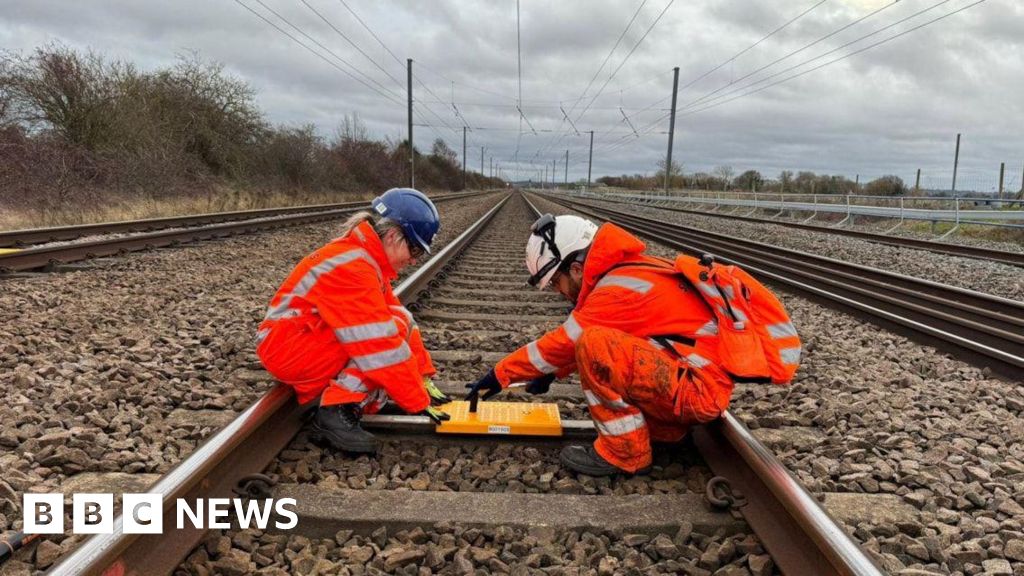
  • Weekend rail disruption warning for Network Rail works

    Weekend rail disruption warning for Network Rail works

    Passengers have been warned of train disruptions across parts of the East of England, including Bedfordshire, Hertfordshire and parts of Cambridgeshire, due to planned signalling upgrade works.

    Network Rail said a large section of the railway south of Peterborough will be closed between Saturday and Sunday.

    This was due to in-cab digital signalling being installed as part of a £1.4bn East Coast Digital Programme (ECDP), which aimed to create greener, safer and more reliable journeys for passengers.

    As a result, London North Eastern Railway (LNER) will have rail replacement coaches between Peterborough and Bedford, where customers can join train services to London St Pancras.

    Other works taking place on the same weekend include track renewal at Letchworth Garden City, rerailing at Welwyn and Wymondley and drainage improvements at Stevenage.

    This means there will be no Grand Central services, while Hull Trains will operate an amended service running to and from London St Pancras.

    In addition, there will be no Thameslink or Great Northern trains between Potters Bar and Peterborough/Royston, or between Hertford North and Stevenage.

    Additionally, before 09:40 BST on Sunday, buses will replace trains between Finsbury Park and Stevenage via Hertford North.

    Ricky Barsby, Network Rail’s head of access integration, ECDP, said: “The work taking place, including further testing, is part of our preparations for the introduction of digital in-cab signalling on the East Coast Main Line.

    “We are also taking the opportunity to carry out vital work at other East Coast locations during the same weekend.

    Further information regarding disruptions can be found on Network Rail’s website.

    Continue Reading