Item 1 of 2 American Industrial Partners logo is shown in this illustration taken August 21, 2025. REUTERS/Dado Ruvic/Illustration
[1/2]American Industrial Partners logo is shown in this illustration taken August 21, 2025. REUTERS/Dado Ruvic/Illustration Purchase Licensing Rights, opens new tab
PARIS, Nov 21 (Reuters) – U.S. investment firm American Industrial Partners plans to sell or list on the stock market Aluminium Dunkerque, France’s largest aluminium plant, a union official said on Friday.
The local management informed workers’ representatives of AIP’s plan, Johan Vlietinck, a representative of the CGT union at the site, told Reuters.
Sign up here.
Bloomberg News had reported earlier that AIP was considering a sale or listing for Aluminium Dunkerque, which it acquired four years ago following a debt default by GFG Alliance, owned by commodities tycoon Sanjeev Gupta.
A spokesperson for AIP in France said the investment fund was not denying the press reports but would not comment further.
Aluminium Dunkerque did not respond to a request for comment.
The smelter is classed as a strategic site and any non-French buyer would be subject to a special foreign investor procedure, the economy ministry said, without commenting on the reported sale process.
LONG-TERM POWER CONTRACT SECURED
Unions had anticipated a possible sale after Aluminium Dunkerque signed a 10-year power contract with utility EDF in May, providing long-term cost visibility for the energy-intensive business, Vlietinck said.
Aluminium Dunkerque, located next to the northern French port of Dunkirk, produces around 300,000 metric tons of raw aluminium per year and is one of Europe’s biggest aluminium smelters.
It has an annual power consumption roughly equivalent to that of Marseille, France’s second-largest city.
It generates annual turnover of more than 800 million euros ($921.4 million), according to its website.
No offers for the business have been communicated to workers’ representatives, Vlietinck said.
Bloomberg cited sources saying there had been non-binding offers from companies including Rio Tinto (RIO.L), opens new tab, (RIO.AX), opens new tab, Glencore (GLEN.L), opens new tab and Metlen Energy & Metals (MTLN.L), opens new tab. The three companies mentioned all declined to comment.
The CGT is opposed to any potential return of mining group Rio Tinto, which it considers to have underinvested during its ownership of the site before selling it to GFG Alliance, Vlietinck said.
The union would like the French state to invest as part of a consortium, he added.
($1 = 0.8682 euros)
Reporting by Gus Trompiz, editing by Kirsten Donovan and Alex Richardson
Our Standards: The Thomson Reuters Trust Principles., opens new tab
MUMBAI: The rupee fell to an all-time low of 89.48 against the US dollar on Friday, dragged down by weak global risk sentiment and uncertainty surrounding the US–India trade deal. A steady dollar index, which extended gains above the crucial 100 mark following stronger-than-expected US non-farm payroll data of 119,000 and hawkish Fed commentary on delaying rate cuts, further pressured the rupee.
There were also reports of an Indian company being on the list of sanctioned firms for buying Iranian crude. Traders now expect the rupee to weaken further beyond 90 level in the short term, however positive development on the US-India trade deal would relieve pressure on the rupee. The 10-year yields also fell by 4 bps to 6.57 per cent.
The currency is now among the weakest major Asian performers this year, as foreign investors have withdrawn $16.5 billion from Indian equities so far. During the financial year to date, the rupee has depreciated by around 4.4 per cent.
The rupee’s fall comes despite the RBI Governor on Thursday stating that once the US-India trade deal is done it would be positive for the rupee and the current account. But during the day, the RBI stopped defending the rupee at 88.80 (a level it has held for a long time) much to the surprise of importers and dealers.
A trader said that once the dollar-rupee broke decisively above 89, aggressive short covering kicked in across onshore and offshore markets, triggering stops and amplifying the upside move.
At the interbank foreign exchange market, the rupee opened at 88.67 and plunged 82 paise to hit its lowest-ever intra-day level of 89.50 before trading at 89.48 against the American currency. On Thursday, the rupee had depreciated 20 paise to close at 88.68 against the US dollar. The unit had recorded its previous all-time intra-day low of 88.85 on September 30. The previous lowest closing level was registered at 88.81 against the US dollar on October 14.
According to Abhishek Goenka, founder and chief executive officer at IFA Global, the RBI has already expended considerable forex reserves defending 88.80. It’s short position in forwards including NDF is likely over $ 70 billion. “The RBI would have wanted to keep some ammunition dry to intervene at higher levels rather than go all in at 88.80. Going forward we expect the Rupee to settle in a new 88.80-90.00 range. We have maintained that the Rupee will deliberate in a gradual, staircase like manner,” added Goenka.
Rahul Kalantri, vice-president commodities at Mehta Equities Ltd said, “Today’s USD-INR weekly close above 89.20 is a negative signal for the rupee. We expect the rupee to weaken further towards 90.40 and 91 levels, while the key support remains at 88.45.”
This audio is auto-generated. Please let us know if you have feedback.
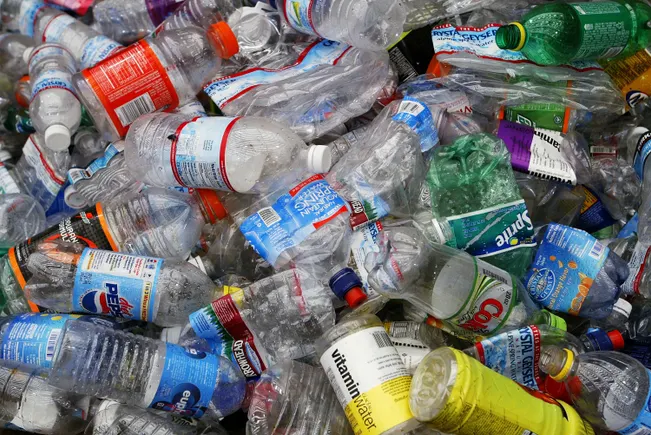
Efforts to modernize bottle bills are still hamstrung by old myths, according to advocates representing the plastics, glass and metal packaging industries. Butevolutions within the U.S. policy landscape amid the Trump administration’s emphasis on domestic manufacturing and the launch of state extended producer responsibility programs havehelped build momentum in a productive year for these bills, they say.
The myths include that MRFs won’t be able to survive alongside bottle deposit schemes and that these systems burden consumers, said leaders from the Association of Plastic Recyclers, Can Manufacturers Institute and Glass Packaging Institute during a webinar Thursday on deposit return systems. The event was organized by the National Stewardship Action Council.
Today, only 20% of U.S. states have bottle deposit programs, and many of those policies are decades old.
“We are fans of many different policies to improve plastics recycling. Bottle deposits are one of them,” said Kate Bailey, APR’s chief policy officer. “Sixty percent of what we collect for plastic recycling, in terms of PET bottles, comes from the 10 states that have bottle deposits.”
GPI President Scott DeFife noted a similar statistic – 60% of the cullet that can go back into glass bottles comes from the 10 bottle bill states, he said. Conversely, when glass is recovered in a commingled single-stream system, the glass is much more likely to end up as something other than a bottle due to quality issues, he said.
Recycling refunds, a newer moniker for these policies, are “hands down the best policy in terms of getting the consumer to see an economic incentive on their container and recycle it,” said Mike Smaha, CMI’s vice president of government affairs.
One new catalyst for bottle bill discussions this year has been the start of packaging EPR programs, led by Oregon. That’s opened more serious conversations in the beverage space about the role for recycling refunds, rather than just EPR fees, Smaha said. “I think that there is a cost savings for folks who want to utilize a recycling refund program versus an EPR program,” he said.
Bailey highlighted Oregon’s depot model. “We’re also learning so much as EPR is rolling out, that not everything is going to be collected through a curbside recycling program,” and drop-off sites will be needed for hard-to-recycle items, Bailey said. “Many of us are familiar with bringing our electronics to a depot for recycling,” which spurs the realization that “you can scale a depot program that can collect bottles.”
Strengthening circularity in the US
There’s more cheap virgin plastic than ever before, according to Bailey. What’s more, for U.S. companies that are still trying to incorporate recycled plastics, it’s often cheaper to source recycled content from Thailand, Vietnam and other parts of Asia than it is from domestic sources.
“We need to make sure the recycled content that companies are using is actually coming from our North American recycling programs,” Bailey said. This will require stronger policies to ensure recycled materials stay in the U.S. and are subsequently reused in U.S. manufacturing, she said, which would go hand in hand with placing disincentives on the use of imported materials.
Smaha described similar priorities for the can sheet manufacturing industry, which he said has invested heavily in U.S. production.
“The problem is we can’t get enough used beverage cans back to feed those plants,” Smaha said. With the current administration’s discussion of reshoring, “we’ve got all this material – whether it’s glass, it’s plastic, it’s metal – that we are consuming and we’re disposing of here in the U.S.; why are we not capturing it and remaking things from it?”
While glass is largely a regional commodity, domestic bottle businesses are still struggling to get enough recycled material, DeFife said.
“Our biggest competition is the landfill,” DeFife said. “End markets that really shouldn’t have to compete for material like this are ending up competing for material.” But circularity rates in bottle bill states are much higher.
To that end, NSAC and the Stewardship Action Foundation recently launched a “ReMade in America” pledge, calling on recycling stakeholders to support “a circular economy that truly works for America and for Americans,” ensuring that material manufactured in the U.S. is then recycled and reused domestically.
This would include commitments from recyclers to process and produce high-quality materials ready for remanufacturing by U.S. manufacturers, and from companies to use that recycled content. Signatories include Republic Services, Recology and others.
States to watch
Advocates celebrated numerous cases of legislative progress in 2025, even for bills that didn’t make it across the finish line.
Maryland and Washington ultimately passed EPR bills this year, but they also discussed bottle bills. Rhode Island ended up approving a needs assessment that calls for data that might be used to consider a possible bottle bill in the future. And a Texas bill moved out of committee before running out of time. “That’s a pretty big win,” Smaha said.
Meanwhile, New York discussed a bottle bill expansion, Iowa assessed changes on redemption access and Michigan held study meetings that could inform possible modernizations.
Illinois and Virginia could be statehouses to watch in the next couple of years, Smaha added.
Bailey expects cost to be a huge factor in upcoming government discussions the next two years. “I think there’s a real opportunity for us to talk about the cost to local governments and the cost to consumers of the problems we have today, and the opportunity to reduce those costs with new programs — like deposits, like EPR — moving forward,” Bailey said.
Additionally, “we’re talking about jobs and domestic manufacturing and a resilient domestic economy, and that message is always welcome in governments, and particularly welcome these days,” Bailey said. “Those are two themes that are really going to be beneficial for us to focus on in the next couple of years.”
EPR is poised to further shift thinking around bottle deposits. As EPR programs in the U.S. get off the ground, “eventually there’s going to get to be a performance objective that needs to be met,” DeFife said.
Examples from around the world show that combination programs have the highest recovery rates, DeFife said, and “I think there’s going to be a realization that some need to change and augment the system in order to get to the higher performance rates.” As such, these discussions will continue “for the next five to 10 years, at least.”
Another key going forward will be not just adding more bottle bills, but actually modernizing this type of policy. This requires understanding pain points in the existing 10 states, and addressing those issues in new bottle bill states, Smaha said.
The grounding of MD-11 aircraft after the deadly crash of a UPS plane earlier this month could boost air cargo rates during the peak holiday shipping season, with some capacity out of the market, but analysts aren’t expecting a big impact.
The Federal Aviation Administration on Nov. 8 prohibited flights of MD-11 planes, less than a week after a Honolulu-bound UPS aircraft crashed moments after takeoff from Louisville Muhammad Ali International Airport in Kentucky, killing the three crew members and 11 people on the ground.
Earlier this week, the TAC Index, which tracks air freight rates around the world, said the Baltic Air Freight Index gained more than 4% in the week ended Nov. 17 and that was it up 2.4% last week compared with the same period last year.
“While it is normal for rates to rise ahead of the Thanksgiving holiday in the US and Christmas in Europe, sources suggested they had been given an added boost after the grounding of all MD-11 freighters following a fatal crash in Louisville earlier this month,” it said in a note.
UPS and FedEx each said they were grounding the aircraft, which make up 9% and 5% of their fleets, respectively, according to a Bank of America note.
FedEx did not immediately respond to a request for comment.
UPS said after the crash that it has contingency plans in place to continue providing service.
“We made this decision proactively at the recommendation of the aircraft manufacturer,” UPS said on Nov. 7. “Nothing is more important to us than the safety of our employees and the communities we serve.”
In a Friday statement to CNBC, UPS said the company has not instituted any additional peak season surcharges as a result of the grounding of its 26 MD-11s. Instead, the company said it has secured additional aircraft for its fleet, similar to the leased planes that it procures for the peak season, and has consolidated flight routes to maximize air capacity.
“We have reconfigured our ground network, adding additional capacity to move more packages,” a UPS spokesperson told CNBC. “Our contingency plans give us assurance that we’ll continue to effectively move volume and deliver for our customers now and throughout peak season.”
On the company’s most recent earnings call, which occurred before the fatal crash, CEO Carol Tomé said early forecasts from its top 100 customers signaled the peak season would have a “considerable surge in volume.”
Still, because UPS has begun to phase out its work with Amazon, previously its largest customer, Tomé added that the decrease in Amazon volumes means the total peak season average daily volume in the U.S. will be down year-over-year.
Stifel predicted in a note on Wednesday that the operational and financial impact of the grounding would be “minimal.”
“Importantly, aircraft will be back flying once approved individually, rather than the entire MD-11 fleet awaiting a singular ruling, and the FAA can effectively deputize outside parties to effectuate the inspections, which have already begun, according to management,” the Stifel analysts wrote.
Air cargo volumes in October rose 4% year-over-year, with cargo supply growing an average of 3% year-over-year in the past four weeks, Bank of America said in a note Monday. The analysts said any potential disruption from the grounding was not immediately clear, but that, overall, it expected a more muted holiday shipping season compared with the past two years.
The National Transportation Safety Board, which is leading the investigation into the UPS crash, said the left engine of the jet detached from the wing during takeoff before the plane crashed into a series of businesses just outside of the airport.
In its preliminary report it released Thursday, the NTSB said it found evidence of fatigue cracks in the jet, as well as areas of overstress failure.
Though UPS is headquartered in Atlanta, the Louisville airport is home to its largest global package handling facility.
The crash occurred during the country’s longest government shutdown, which promoted disruptions to air travel due to shortages of air traffic controllers. It also limited some cargo flights. Both commercial and dedicated freight companies carry packages and other goods.
During the shutdown, Treasury Secretary Scott Bessent told ABC News that the slowdown in cargo could lead to shortages around the holiday. The shutdown officially ended last week, and air travel disruptions have largely dissipated.
CVC Credit, the fast-growing c.$57 billion (€49 billion) global credit management business of CVC, today announced it has successfully priced Apidos LV (55), a new $550 million Collateralized Loan Obligation (CLO) vehicle. This is CVC Credit’s eighth new issue CLO of 2025 and twenty eighth when including resets and refinancings.
Apidos LV priced at market tights and has a five-year re-investment and a two-year non-call period. Jefferies served as the lead arranger.
Kevin O’Meara, Partner and Co-Head of CVC Global Liquid Credit and Head of US Liquid Credit at CVC Credit, said: “We are pleased to price our eighth new issue CLO of 2025, which was well received among investors across the debt stack. Apidos LV underscores CVC’s track record through varied credit cycles and market conditions. We look forward to continuing momentum through year end.”
CVC’s Liquid Credit business manages c.$37 billion (€32 billion) in assets across more than 70 active funds, managed by a team of around 40 investment professionals in both Europe and the US.
Roula Khalaf, Editor of the FT, selects her favourite stories in this weekly newsletter.
The UK accounting regulator is weighing whether to formally investigate PwC’s auditing of WHSmith, whose chief executive resigned this week over accounting errors in the retailer’s US business.
WHSmith, which has been audited by PwC since 2015, said on Wednesday that an independent review by Deloitte had found that the company’s revenues had been overstated and that the errors had been made over several years.
After WHSmith first announced in August that it had discovered accounting errors in its US business, PwC flagged the retailer’s statement to the FRC as part of its standard practice, said people familiar with the matter.
The regulator routinely reviews situations where companies reveal problems with their accounts to determine whether to open a formal investigation. While the FRC has not decided whether to open a formal probe into PwC’s work at WHSmith, the situation is the latest to bring scrutiny to the Big Four accounting firm’s audits.
PwC has been in the regulator’s crosshairs for its audits of companies including Sanjeev Gupta’s Wyelands Bank and London Capital & Finance, which a court ruled was a Ponzi scheme. PwC also audited Tesco in the run-up to an accounting scandal that engulfed the supermarket group.
The FRC has the power to fine companies and even ban individual auditors when they fail to meet industry standards but generally gives discounts for co-operation and early engagement.
PwC and the FRC declined to comment.
PwC signed off on WHSmith’s accounts for the three years where the retailer has subsequently disclosed an overstatement of profits through booking US supplier income too early. The errors went undetected until a member of WHSmith’s finance team came forward in mid-August, the Financial Times has previously reported.
WHSmith’s disclosure of accounting errors has wiped nearly £600mn off its market capitalisation. The episode has already claimed the retailer’s group chief executive, Carl Cowling, who stepped down on Wednesday as the London-listed company revealed the top-level findings of an independent review, led by PwC’s rival Deloitte.
This blamed “a backdrop of a target-driven performance culture” in WHSmith’s North America business, which had “a limited level of group oversight of the finance processes” in the division, the retailer told the market.
Heading the US business over the relevant period was Toby Keir, who was promoted in 2021 after 19 years at WHSmith to run its Marshall Retail Group unit. Keir left the company earlier this year for family reasons, the people added.
He ran the US division out of its headquarters in Las Vegas, whereas the rest of the business — including its other global operations — reported to Cowling at WHSmith’s headquarters in Swindon, Wiltshire. Deloitte gave the rest of WHSmith’s business a clean bill of health. The group has about 1,300 stores globally located in airports, train stations and hospitals.
Keir did not respond to requests for comment.
The retailer’s entire US finance team, which has been led by Kevin Gotthard since 2022, is being replaced, a person close to the company said. The group CFO, Max Izzard, only joined the company in late 2024.
WHSmith declined to comment. Gotthard did not respond to a request to comment via LinkedIn.
The accounting issues centred around the way WHSmith recognised payments from suppliers when they ran promotions. Typically such income is recorded gradually over time to align with when the related products are sold. Deloitte found that WHSmith instead recorded the income when deals were agreed.
The move to book supplier income earlier than cash had been received gave a flattering impression that its US profits were higher than they were, and meant senior managers were able to financially benefit by hitting bonus performance targets, according to people familiar with the company.
The errors would result in a larger-than-expected hit to the retailer’s profits, Deloitte concluded. The travel retailer said it expected to have to restate full-year earnings for 2023 and 2024, and it further cut forecasts for trading profit in its US business to £5mn-£15mn for 2025, down from a reduced £25mn guidance set in August.
(Reuters) -ASOS shares fell sharply on Friday after the British fashion retailer’s 2026 profit forecast came in below expectations, even though the company reported a jump in full-year earnings.
The online retailer has been working to revive its fast-fashion appeal among its core shoppers in their 20s, while focusing on strengthening profitability by cutting costs, against a backdrop of increased competition from Chinese rivals.
“We will not take shortcuts, we will not go back to excessive discounts, we will not go back to excessive promotion,” CEO José Antonio Ramos Calamonte told journalists.
“We know the outcome of that is growth, but not sustainable growth,” he said.
The company forecast adjusted core profit for fiscal 2026 between 150 million pounds and 180 million pounds ($196.22 million and $235.46 million).
At the midpoint of 165 million pounds, the profit outlook is below consensus of 173 million pounds, according to a company-compiled poll.
The group said it was on an “improving trajectory” for gross merchandise value after reporting a 51.5% jump in profit to 131.6 million pounds for the full year to August 31.
Analysts at J.P. Morgan noted ASOS’ “strong progress” on profits, but said evidence of enough consumer re-engagement for sustainable and positive GMV growth was still limited.
ASOS shares fell as much as 11% to a low of 219.5 pence, and were down nearly as much by 1113 GMT at 222 pence.
In Britain, the group’s biggest market, people are delaying non-essential purchases amid sticky inflation, and waiting for Black Friday discounts as well as next week’s budget.
In fiscal 2025, ASOS’ total customer numbers dropped 14% from the previous year. In the new fiscal year so far, ASOS had increased its new customer base in the UK by about 10%.
The group has more than 20 million active customers in over 200 markets.
(Reporting by Pushkala Aripaka and Nithyashree R B in Bengaluru; Editing by Rashmi Aich and Jane Merriman)
Workshop participants participating in a collaborative breakout session.
The NEA Workshop on Initial Estimation of Backend Costs for Advanced Reactors and Small Modular Reactors brought together more than 120 participants to Paris, France from 18-20 November. Participants from a broad range of stakeholders from both the public sector and the private sector included individuals with experience in reactor design, waste management, decommissioning, finance, investing, cost estimation, regulation, and more.
Workshop participants at the end of the first day of the workshop.
The goal of the workshop was to help provide preliminary guidance that aids in understanding future backend and decommissioning requirements for new and advanced nuclear technologies. Such guidance would help inform those currently working on designing new reactor technologies. By providing a holistic picture of long-term costs, including those of decommissioning and backend management, the workshop aimed to inform financial and funding stakeholders for new projects. This was done through breakout sessions, high-level panels and dedicated interactive discussions.
The workshop discussed new technologies, with a variety of presentations from small modular reactor (SMR) and advanced reactor developers Aalo Atomics, Blykalla, Korea Hydro and Nuclear Power (KHNP), Orlen Synthos Green Energy (OSGE) and TerraPower. International co-operation for new technologies was highlighted through ongoing efforts such as the work being done by the European Nuclear Cogeneration Industrial Initiative, the International Atomic Energy Agency (IAEA), Nucleareurope and the NEA. One such example showcased was the NEA Small Modular Reactor Dashboard: Third Edition. Discussions further centered on current knowledge and good practices from existing strategies across waste management and decommissioning providing a strong basis for in-depth conversations on new and novel fuels, their selection and the potential impact on existing backend management strategies.
A panel session of the workshop.
By thinking with the end in mind, the workshop also explored the idea of ‘Decommissioning by Design’. This helped the inter-disciplinary group of attendees unpack not only potential decommissioning activities for new reactors but also consider how concepts of modularity and standardisation may have an impact on cost drivers. Highlighting existing backend cost estimation methodologies, such as the International Structure for Decommissioning Costing (ISDC), the workshop included discussions on the importance of cost-estimation as a means to ensure projects are economically sound – considering full lifecycle costs and holistic analysis – and help provide key stakeholders, such as policymakers and the public, with a pathway for robust long-term strategies that capture the various promises offered by these new technologies.
Building from discussion on cost estimation methods, the workshop also addressed considerations for adequate financial and funding strategies including the need to consider the backend and decommissioning costs as a key component. A large part of this conversation also highlighted the role of collaborative efforts by key stakeholders, including government, industry, regulators and the public.
A panel session on the last day of the workshop.
Participants stressed the beneficial role of international collaboration, particularly for reducing uncertainties associated with new technologies and helping enable the development of new regulatory, legal and technical approaches. Exploring these topics is important not only to foster earlier and more robust collaboration between technology vendors and the backend nuclear energy community, but also to further develop frameworks that can help streamline the licensing processes and facilitate financing.
The lessons learnt and key discussions from the workshop will be developed into preliminary guidelines. These guidelines will compile best practices to aid stakeholders build trust and confidence; guide understanding of critical decommissioning and waste management considerations and support regulatory and licensing processes.
One of the groups working during the breakout session.
CHICAGO and TOKYO, Nov. 21, 2025 /PRNewswire/ — Tokio Marine Holdings, Inc. (“Tokio Marine”), a leading global insurance group, today announced that it has signed a definitive agreement to acquire Commodity & Ingredient Hedging (“CIH”), a leading provider of risk management solutions for the agricultural and commodity sectors, from Falfurrias Capital Partners (“Falfurrias”). The transaction is expected to close during the first quarter of calendar year 2026, subject to customary regulatory approvals.
Headquartered in Chicago, CIH helps agricultural producers, grain merchandisers, and other businesses manage commodity price risk through an integrated suite of consulting, brokerage, and insurance services, all powered by a proprietary technology platform. CIH’s unique and proprietary offering combines weekly, education-driven advisory sessions with real-time execution capabilities across both insurance and derivatives markets, allowing clients to view, model, and manage exposure through a single interface. CIH’s integrated approach, deep commodity expertise, and focus on client education have made it a trusted partner across the agricultural value chain and a leading solution in technology-enabled risk management.
Tokio Marine, through this acquisition, will add a highly complementary business that will enhance its specialty offerings in the U.S. agricultural sector and expand its non-insurance risk solutions capabilities. The combination will further strengthen the capabilities of Tokio Marine HCC’s agricultural business, diversify the group’s earnings and benefit customers in the agricultural economy.
On behalf of Tokio Marine Group, “We’re excited to welcome CIH,” said Susan Rivera, CEO of TMHCC. “The team has built an impressive business that combines deep agricultural expertise with innovative technology to help clients manage price volatility. This partnership expands our ability to deliver comprehensive risk solutions beyond traditional insurance and supports Tokio Marine Group’s long-term strategy to grow through diversified, fee-based services.”
“Through our partnership with Falfurrias Capital Partners, we’ve worked together to strengthen our technology, expand our service model, and position CIH for continued growth,” said Pat Gregory, CEO of CIH. “Joining Tokio Marine will allow us to extend our reach, broaden our capabilities, and deepen the support we provide to clients navigating complex commodity markets.”
“Pat and the CIH team have built an exceptional business at the intersection of technology, risk management, and agriculture,” said Wilson Sullivan, Partner at Falfurrias. “We’re proud to have supported CIH’s growth and innovation and are confident that Tokio Marine is the ideal partner to advance the company’s next chapter.”
William Blair served as financial advisor and K&L Gates LLP served as legal counsel to Falfurrias and CIH on the transaction. Evercore served as financial advisor and Kirkland & Ellis LLP served as legal counsel to Tokio Marine.
About CIH Founded in 1999, Chicago-based CIH provides clients with the critical information, tools and skills needed to make better risk management decisions. Through a unique combination of education, regular consultation and technology tools, CIH provides comprehensive risk management services to producers, importers/exporters, elevators, traders and end users in various agriculture industries, including hog, beef, dairy, poultry/feed, ethanol and crop. Serving over a thousand clients, CIH is widely recognized as a leader in margin and risk management in the agricultural commodity markets. Visit www.cihedging.com.
About Tokio Marine Tokio Marine is one of the world’s largest global insurance and risk players with a market capitalization of approximately JPY 11.1 trillion ($74 billion) as of March 31, 2025, a network encompassing Japan and 57 countries and regions worldwide, and over 51,000 employees. Tokio Marine Group has the capabilities to drive genuine positive changes through a business model grounded in a sense of purpose and social responsibility, built on 146 years of history and an enduring culture that fosters innovation and expertise.
Composed of a diverse range of insurance and solutions businesses across the world, that bring a depth and breadth of capabilities to address and mitigate the ever-evolving risks we face, we provide our clients and communities with the security they need to move forward, while working to create more resilient societies and a better tomorrow. Its stock is publicly traded on the Tokyo Stock Exchange.
About Falfurrias Capital Partners Falfurrias Capital Partners is an operationally focused middle-market private equity fund focused on investing in growth companies. The team is comprised of investors and proven operators, as well as in-house resources across strategy & market insights, risk & integration, talent, and technology. The fund is managed by Falfurrias Management Partners, a Charlotte-based private equity firm founded in 2006 by Hugh McColl Jr., former chairman and CEO of Bank of America; Marc Oken, former CFO of Bank of America; and Managing Partner Ed McMahan. The firm has raised $3.6 billion across seven funds and invests in growing, middle-market businesses in sectors where the firm’s operational resources, relationships, and sector expertise can be employed to complement portfolio company executive teams in support of growth objectives. For more information, visit www.falfurrias.com.







 A panel session of the workshop.
  A panel session on the last day of the workshop.
 One of the groups working during the breakout session.