Category: 3. Business

  • Energy price cap to edge up as temperatures plunge

    Energy price cap to edge up as temperatures plunge

    Millions of households will see a slight rise in gas and electricity prices at the height of winter, after regulator Ofgem outlined its next price cap.

    The 0.2% increase from the current cap will take effect at the start of January, and affect those on variable tariffs in England, Wales and Scotland.

    However, prices will be slightly lower than the same period the previous year.

    Gas and electricity bills remain relatively high, and the sudden drop in temperature has brought the costs to the forefront of people’s minds.

    “While wholesale energy costs are stabilising, they still make up the largest portion of our bills which leaves us open to volatile prices,” said Tim Jarvis, from Ofgem.

    But Dame Clare Moriarty, from Citizens Advice, said: “With bills still drastically higher than before the energy crisis, and due to rise again from April, it’s high time for decisions about the longer term.”

    The cap sets the maximum price that can be charged for each unit of gas and electricity, not the total bill – so those who use more energy, pay more.

    The Ofgem cap is illustrated with a household using a “typical” amount of 11,500 kWh of gas and 2,700 kWh of electricity a year with a single bill for gas and electricity, settled by direct debit.

    This illustrative household would see a £3 rise in its annual bill from £1,755 to £1,758.

    However, the amount used varies significantly between households, so the best way to calculate the change is to work out the percentage change from your own usual annual bill.

    Charities say they are seeing people owing increasing levels of unpaid bills and charges to suppliers.

    The total amount owed has reached a record £4.4bn, prompting plans from Ofgem to ensure energy companies write off some of that debt.

    Up to £500m could be knocked off the total under plans that the regulator wants to take effect early next year.

    Dhara Vyas, chief executive of Energy UK, which represents suppliers, said anyone facing difficulties paying should contact their energy provider as soon as possible.

    “We know that far too many people are struggling to pay for the energy they need to use,” she said.

    But she added that suppliers could help with efficient appliances, tailoring the tariff to customers’ needs or ensuring people were on the correct benefits.

    The government has hinted at extra cost-of-living support in the Budget on 26 November.

    One option said to be under consideration is removing VAT from energy bills, which would cut approximately £80 from annual bills.

    Energy Minister Martin McCluskey said: “We know that energy bills remain too high. That is why we are taking immediate action, with millions more families receiving £150 off their bills through the expanded Warm Home Discount scheme this winter.”

    However, analysts say the main driver of energy bills is shifting from sky-high wholesale prices to the cost of overhauling and maintaining the country’s energy networks.

    In the meantime, as the cold weather sets in, various tips are available to keep people warm while controlling costs, including clothing, insulation and heating rooms people are in rather than the whole home.

    Continue Reading

  • UK government borrows more than expected in setback before budget | Government borrowing

    UK government borrows more than expected in setback before budget | Government borrowing

    The UK government borrowed more than expected in October, official figures show, in the final snapshot of the public finances before Rachel Reeves’s crunch budget.

    The Office for National Statistics said the government borrowed £17.4bn last month. That was lower than the same month last year, but still marked the third highest October deficit in the public finances on record. It is also higher than the £15bn City economists had forecast.

    In the fiscal year so far, borrowing is running at £116.8bn – 8.4% higher than the same period in 2024, the ONS added, underlining the challenge facing Reeves in balancing the books.

    The chancellor will deliver her second budget next Wednesday against a difficult political background, after the Treasury floated and then ditched plans to raise income tax.

    She is expected to raise taxes significantly, in response to a downgrade in economic forecasts from the Office for Budget Responsibility.

    skip past newsletter promotion

    More details soon …

    Continue Reading

  • Google and US government battle over the future of internet advertising

    Google and US government battle over the future of internet advertising

    Google will confront the U.S. government’s latest attempt to topple its internet empire in federal court on Friday as a judge considers how to prevent the abusive tactics that culminated in parts of its digital ad network being branded as an illegal monopoly.

    The courtroom showdown in Alexandria, Virginia, will pit lawyers from Google and the U.S. Department of Justice against each other in closing proceedings focused on the complex technology that distributes millions of digital ads across the internet each day.

    After a lengthy trial last year, U.S. District Judge Leonie Brinkema ruled in April that pieces of Google’s ad technology had been rigged in a way that made it an illegal monopoly. That set up another 11-day trial earlier this fall to help Brinkema determine how to remedy its anti-competitive practices.

    Friday’s closing arguments will give both Google and the Justice Department a final chance to sway Brinkema before she issues a ruling that probably won’t come until early next year.

    The Justice Department wants Brinkema to force Google to sell some of the ad technology that it has spent nearly 20 years assembling, contending a breakup is the only way to rein in a company that the agency’s lawyers condemned as a “recidivist monopolist” in filings leading up to Friday’s hearing.

    The condemnation refers not only to Google’s practices in digital advertising but also to the illegal monopoly that it unleashed through its dominant search engine. Federal prosecutors also sought a breakup in the search monopoly case, but the judge handling that issue rejected a proposal that would have required Google to sell its popular Chrome web browser.

    Although Google is still being ordered to make reforms that it’s resisting, the outcome in the search monopoly case has been widely seen as a proverbial slap on the wrist. The belief that Google got off easy in the search case is the main reason the market value of its parent company Alphabet surged by about $950 billion, or 37%, to nearly $3.5 trillion since U.S. District Judge Amit Mehta’s decision came out in early September.

    That setback hasn’t discouraged the Justice Department from arguing for a breakup of an ad tech system that handles 55 million requests per second, according to estimates provided by Google in court filings.

    The huge volume of digital ads priced and distributed through Google’s technology is one of the main reasons that the company’s lawyers contend it would be too risky to force a dismantling of the intricate system.

    “This is technology that absolutely has to keep working for consumers,” Google argues in documents leading up to Friday’s hearing. The company’s lawyers blasted the Justice Department’s proposal as a package of “legally unprecedented and unsupported divestitures.”

    Besides arguing that its own proposed changes will bring more price transparency and foster more competition, Google is also citing market upheaval triggered by artificial intelligence as another reason for the judge to proceed cautiously with her decision.

    In his decision in the search monopoly case, Mehta reasoned that AI was already posing more competition to Google.

    But the Justice Department urged the judge to focus on the testimony from a litany of trial witnesses who outlined why Google shouldn’t be trusted to change its devious behavior.

    The witnesses “explained how Google can manipulate computer algorithms that are the engine of its monopolies in ways too difficult to detect,” the Justice Department argued in court papers.

    Continue Reading

  • NTT DATA Releases “Sustainability Report 2025” Highlighting Updated Materiality and Global Initiatives

    NTT DATA Releases “Sustainability Report 2025” Highlighting Updated Materiality and Global Initiatives


    News Releases.


    The services, prices of products and services, specifications, telephone numbers, etc. for inquiries and other information included in news releases are the data available on the day of the release. This information may be changed at any time without notice. In certain circumstances, due to various risks or unexpected occurrences, actual results may also be different from the plans or projections in news releases.

    Continue Reading

  • Newsroom » Carlsberg Steps Up Renewable Energy Commitments Through Nordic PPAs « Carlsberg Group

    Newsroom » Carlsberg Steps Up Renewable Energy Commitments Through Nordic PPAs « Carlsberg Group

    Carlsberg is committed to sourcing all our electricity from new renewable assets. We are now strengthening this commitment with new Power Purchase Agreements (PPAs) across the Nordics.

    Carlsberg Group today announces the signing of long-term Power Purchase Agreements (PPAs) that will supply renewable electricity to our operations in Norway (Ringnes), Sweden (Carlsberg Sverige), and Finland (Sinebrychoff). These agreements, signed with three different energy suppliers, ensure that a large portion of the electricity use from these markets comes from new renewable assets.

    • Norway: Ringnes will buy 435 GWh over 10 years from the run-of-river hydro power plant Fennefoss, purchasing from the energy provider Å Energi. The offtake will begin in January 2026 and last 10 years. In the first year it will provide roughly 15 GWh of electricity to Ringnes Brewery, scaling up to 45 GWh after two years, when it will cover roughly 90% of their electricity consumption.
    • Sweden: Carlsberg Sverige will buy output from the Orken wind farm in Halland, Sweden, operated by the energy company, RWE. The agreement is for 8 years, starting January 2026. The Orken wind farm was built and commissioned in 2023 and has a yearly production of ca. 25 GWh. Carlsberg Sverige consumes ca. 32 GWh per year, meaning the PPA is expected to cover approximately 78% of the market’s electricity needs.
    • Finland: Sinebrychoff will buy volumes from an onshore wind farm in Paltusmaki, Finland, operated by the energy company Encavis. The agreement is for 10 years, starting January 2026. The power plant has been built and commissioned in 2021 and has a yearly production of ca. 60 GWh. Sinebrychoff consumes ca. 28 GWh per year, and the PPA is expected to cover ca. 90% of Sinebrychoff’s electricity’s needs. 

    With the three new agreements,

    And why does this matter? Signing a PPA means that the electricity will come from newly built renewable assets, like wind farms, solar parks and hydropower plants. There is growing scientific consensus that PPAs are superior to renewable energy certificates (RECs) in leading to additional renewable energy production and real emissions reductions. PPAs do this by providing long term offtake and revenue certainty for new renewable projects. With these agreements, we are actively adding renewable energy capacity to the Nordic region, helping accelerate the transition to clean energy.

    Torsten Steenholt, EVP Integrated Supply Chain, says: 

    “Securing renewable electricity through Power Purchase Agreements is a cornerstone of our sustainability programme. The new PPAs across the Nordics allow us to accelerate the green transition and support the development of additional renewable energy capacity. The three new agreements complement our existing PPAs in for example Lithuania, Denmark, and China. 

    Continue Reading

  • East Lancashire Hospitals Trust given £2m family donation

    East Lancashire Hospitals Trust given £2m family donation

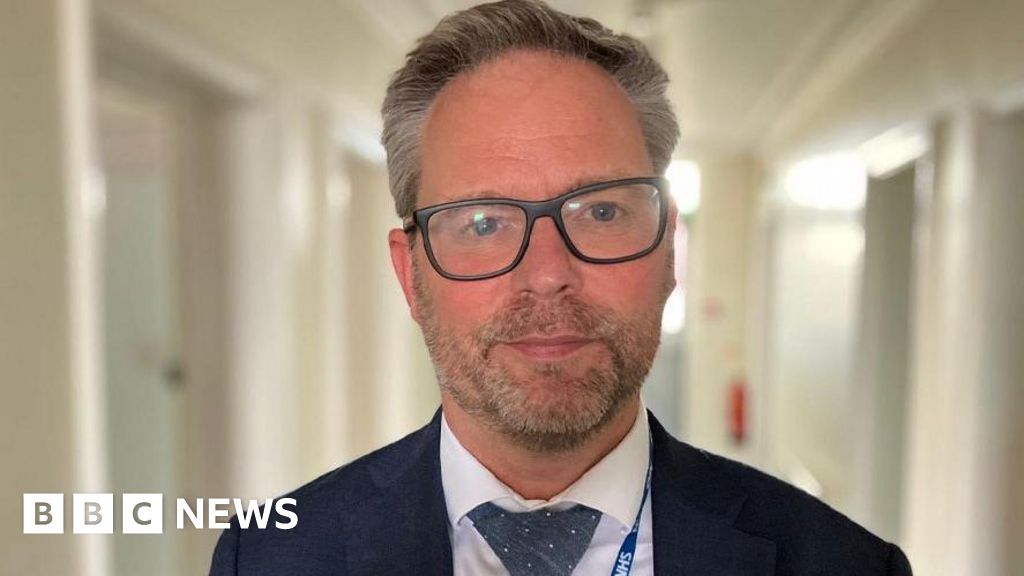
    BBC Head and shoulders picture of Martin Hodgson. He has greying hair, a short beard and glasses and is wearing a dark blue suit and tie with a white shirt and NHS lanyardBBC

    The trust’s chief executive, Martin Hodgson, said the donation would “change lives”

    A charity which supports patients and staff at the NHS said it has received its largest ever donation of £2m.

    ELHT and Me, the charity which raises money for East Lancashire Hospitals Trust, was given the donation by The Kay Family Foundation.

    The foundation said it was “proud to invest in the health and wellbeing of our local community”.

    The trust said the money would be used for items including neonatal incubators, mobile x-ray machines and a scalp cooler, which is used by patients receiving chemotherapy to help reduce hair loss.

    The trust’s chief executive, Martin Hodgson, said the “remarkable and incredibly generous donation will literally change lives”.

    He said: “From patients in pre-surgery to premature babies being cared for in NICU and those living with cancer who rely on community team support, this once-in-a-lifetime donation will make a huge difference.

    “We truly are extremely grateful.”

    ELHT The trust runs the A&E department in Blackburn as well as other urgent care servicesELHT

    The trust covers hospitals including the Royal Blackburn Hospital

    The donation will fund an extensive range of equipment across the trust’s five hospitals and community teams.

    These include:

    • Visual field machines which are crucial for diagnosis of eye diseases.
    • Thirteen advanced neonatal incubators
    • Mobile x-ray machines to help provide a faster diagnosis for bed-based patients
    • A scalp cooler, used for patients receiving chemotherapy treatment to help reduce hair loss
    • 18 community bladder scanners to enable district nurses to scan patients reducing the need for a hospital visit

    The foundation supports charities to improve people’s health and wellbeing, and promotes community activities and conservation across East Lancashire.

    Their spokesperson said: “We know the difference East Lancashire Hospitals NHS Trust makes to people’s lives, having experienced first-hand care and treatment at the hospital.

    “Our hope is that this donation will touch the lives of thousands of patients, ensuring they receive the best technology and the most comforting environment possible.

    “We are proud to invest in the health and wellbeing of our local community through a significant donation towards the latest equipment.”

    Listen to the best of BBC Radio Lancashire on BBC Sounds and follow BBC Lancashire on Facebook, X and Instagram and watch BBC North West Tonight on BBC iPlayer. You can also send story ideas via Whatsapp to 0808 100 2230.


    Continue Reading

  • TDK Investor Day 2025: Medium-term Plan Update (Conducted on November 28, 2025)

    TDK Investor Day 2025: Medium-term Plan Update (Conducted on November 28, 2025)

    The conference will be held in Japanese. The English interpretation is provided solely for the convenience of overseas investors. In light of the purpose and nature of such interpretation, the Company shall not be liable for any misinterpretation, omission and/or misunderstanding, which may result from or be related to the English interpretation.

    Go to Japanese page

    The copyrights for all text, photographs, video, audio and other content (hereinafter “Company content”) made available on this website belong to either TDK Corporation, original copyright owners or other copyright holders.
    Reproduction, adaptation, public transmission, distribution or other use of Company content is expressly prohibited by the Copyright Act without the prior permission of TDK Corporation, original copyright owners or other copyright holders unless you are an individual who is reproducing Company content for private use or the Copyright Act permits use.

    [ Cautionary Statements with Respect of Forward-Looking Statements ]

    This material contains forward-looking statements, including projections, plans, policies, management strategies, targets, schedules, understandings and evaluations, about TDK or its group companies (TDK Group). These forward-looking statements are based on the current forecasts, estimates, assumptions, plans, beliefs and evaluations of TDK Group in light of information currently available to it, and contain known and unknown risks, uncertainties and other factors. TDK Group therefore wishes to caution readers that, being subject to risks, uncertainties and other factors, TDK Group’s actual results, performance, achievements or financial position could be materially different from any future results, performance, achievements or financial position expressed or implied by these forward-looking statements, and TDK Group undertakes no obligation to publicly update or revise any forward-looking statements after the issue of this material except as provided for in applicable laws and ordinances.
    The electronics markets in which TDK Group operates are highly susceptible to rapid changes. Risks, uncertainties and other factors that can have significant effects on TDK Group include, but are not limited to, shifts in technology, fluctuations in demand, prices, interest and foreign exchange rates, and changes in economic environments, conditions of competition, laws and regulations.

    Continue Reading

  • OpenAI and Taiwan’s Foxconn to partner in AI hardware design and manufacturing in the US

    OpenAI and Taiwan’s Foxconn to partner in AI hardware design and manufacturing in the US

    TAIPEI, Taiwan — OpenAI and Taiwan electronics giant Foxconn have agreed to a partnership to design and manufacture key equipment for artificial intelligence data centers in the U.S. as part of ambitious plans to fortify American AI infrastructure.

    Foxconn, which makes AI servers for Nvidia and assembles Apple products including the iPhone, will be co-designing and developing AI data center racks with OpenAI under the agreement, the companies said in separate statements on Thursday and Friday.

    The products Foxconn will manufacture in its U.S. facilities include cabling, networking and power systems for AI data centers, the companies said. OpenAI will have “early access” to evaluate and potentially to purchase them.

    Foxconn has factories in the U.S., including in Ohio and Texas. The initial agreement does not include financial obligations or purchase commitments, the statements said.

    The Taiwan contract manufacturer has been moving to diversity its business, developing electric vehicles and acquiring other electronics companies to build out its product offerings.

    “This partnership is a step toward ensuring the core technologies of the AI era are built here,” Sam Altman, CEO of San Francisco-based OpenAI, said in the statement. “We believe this work will strengthen U.S. leadership and help ensure the benefits of AI are widely shared.”

    OpenAI has committed $1.4 trillion to building AI infrastructure. It recently entered into multi-billion partnerships with Nvidia and AMD to expand the extensive computing power needed to support its AI models and services. It is also partnering with US chipmaker Broadcom in designing and making its own AI chips.

    But its massive spending plans have worried investors, raising questions over its ability to recoup its investments and remain profitable. Altman said this month that OpenAI, a startup founded in 2015 and maker of ChatGPT, is expected to reach more than $20 billion in annualized revenue this year, growing to “hundreds of billions by 2030.”

    Foxconn’s Taiwan-listed share price has risen 25% so far this year, along with the surge in prices for many tech companies benefiting from the craze for AI.

    The Taiwan company’s net profit in the July-September quarter rose 17% from a year earlier to just over 57.6 billion new Taiwan dollars ($1.8 billion), with revenue from its cloud and networking business, including AI servers, contributing the most business.

    “We believe the importance of the AI ​​industry is increasing significantly,” Liu said during Foxconn’s earnings call this month.

    “I am very optimistic about the development of AI ​next year, and expect our cooperation with major clients and partners to become even closer,” said Liu.

    ___

    Chan reported from Hong Kong

    Continue Reading

  • A Look At The Fair Value Of ZOO Digital Group plc (LON:ZOO)

    A Look At The Fair Value Of ZOO Digital Group plc (LON:ZOO)

    • The projected fair value for ZOO Digital Group is UK£0.10 based on 2 Stage Free Cash Flow to Equity

    • Current share price of UK£0.11 suggests ZOO Digital Group is potentially trading close to its fair value

    Today we will run through one way of estimating the intrinsic value of ZOO Digital Group plc (LON:ZOO) by projecting its future cash flows and then discounting them to today’s value. We will use the Discounted Cash Flow (DCF) model on this occasion. Before you think you won’t be able to understand it, just read on! It’s actually much less complex than you’d imagine.

    We would caution that there are many ways of valuing a company and, like the DCF, each technique has advantages and disadvantages in certain scenarios. For those who are keen learners of equity analysis, the Simply Wall St analysis model here may be something of interest to you.

    This technology could replace computers: discover the 20 stocks are working to make quantum computing a reality.

    We’re using the 2-stage growth model, which simply means we take in account two stages of company’s growth. In the initial period the company may have a higher growth rate and the second stage is usually assumed to have a stable growth rate. In the first stage we need to estimate the cash flows to the business over the next ten years. Where possible we use analyst estimates, but when these aren’t available we extrapolate the previous free cash flow (FCF) from the last estimate or reported value. We assume companies with shrinking free cash flow will slow their rate of shrinkage, and that companies with growing free cash flow will see their growth rate slow, over this period. We do this to reflect that growth tends to slow more in the early years than it does in later years.

    Generally we assume that a dollar today is more valuable than a dollar in the future, and so the sum of these future cash flows is then discounted to today’s value:

    2026

    2027

    2028

    2029

    2030

    2031

    2032

    2033

    2034

    2035

    Levered FCF ($, Millions)

    US$502.7k

    US$635.7k

    US$759.2k

    US$869.2k

    US$965.2k

    US$1.05m

    US$1.12m

    US$1.19m

    US$1.24m

    US$1.30m

    Growth Rate Estimate Source

    Analyst x2

    Est @ 26.47%

    Est @ 19.42%

    Est @ 14.49%

    Est @ 11.04%

    Est @ 8.63%

    Est @ 6.94%

    Est @ 5.75%

    Est @ 4.92%

    Est @ 4.34%

    Present Value ($, Millions) Discounted @ 10.0%

    US$0.5

    US$0.5

    US$0.6

    US$0.6

    US$0.6

    US$0.6

    US$0.6

    US$0.6

    US$0.5

    US$0.5

    (“Est” = FCF growth rate estimated by Simply Wall St)
    Present Value of 10-year Cash Flow (PVCF) = US$5.5m

    Continue Reading

  • The Big Tech stock rollercoaster

    The Big Tech stock rollercoaster

    This is an audio transcript of the FT News Briefing podcast episode: ‘The Big Tech stock rollercoaster’

    Marc Filippino
    Good morning from the Financial Times. Today is Friday, November 21st, and this is your FT News Briefing. The Nasdaq rollercoaster ride is giving everybody motion sickness. And the US is finally releasing economic data again, but it’s a bit hard to parse. Plus, a peace treaty from Russia and the US isn’t getting much traction in Ukraine. I’m Marc Filippino, and here’s the news you need to start your day.

    [MUSIC PLAYING]

    It seemed like for a little bit that Nvidia’s strong earnings had bailed out the tech stock sell-off. On Wednesday, the American chipmaker reported better than expected earnings. And yesterday morning, the tech-heavy Nasdaq surged nearly 2.5 per cent, but it all went downhill from there. The index end of the day, pretty much wiping out all its earlier gains, closing down more than 2 per cent.

    [MUSIC PLAYING]

    The S&P 500, which has been mostly propped up by tech stocks, fell a little bit more than 1.5 per cent here to make sense of all this as the FT’s markets columnist, Katie Martin. Hi, Katie.

    Katie Martin
    Hey. How you doing?

    Marc Filippino
    I’m doing well. Like I mentioned, risky assets like stocks and crypto have been dipping lately since about October, but before that, they were going gangbusters. Can you give us a little context on their performance and what drove that rally?

    Katie Martin
    Yeah, so we obviously had a big shock to markets and stocks. Fell really hard in April after Donald Trump unveiled these global trade tariffs. And then pretty much the moment that he said, OK, I’m gonna backtrack on some of the more extreme elements here, it’s just been one-way traffic, this huge recovery that’s taken place. And that’s built on a few things. It’s built on this idea that, you know, we’re all familiar with this Taco trade, right? Trump always chickens out. There’s this idea that he will always back away from the more extreme stuff. There’s the fact that earnings have actually been pretty good and the US economy has been much more resilient, the effect of tariffs and to policy uncertainty than people have been expecting. So has just been an incredibly impressive rise in US and global stocks ever since April, and that just kind of ran out of steam a bit in recent weeks.

    Marc Filippino
    Yeah, let’s talk about that specifically. As I mentioned, it started around early October and there were a few things that I think combined to get investors a little worked up.

    Katie Martin
    What happened? Well, so, OK. There’s an element of cherry-picking here, but you can see reasons for caution or for alarm in lots of different parts of markets. At the moment, you look over at the private credit market where there’ve been a few blow-ups recently, and that has got people worried about lending standards in private credit, about the prevalence of fraud there.

    Marc Filippino
    This is the First Brands thing, right?

    Katie Martin
    This is First Brands tricolour. It’s just a little cluster of these things and it makes people think, hmm, I remember 2007. Is this a repeat of that? And then you just look at the valuation of some of these AI tech stocks and some of the huge deals they’re doing with each other, and it all just adds up to this picture that, hang on, is this a bubble and is it gonna pop like now?

    Marc Filippino
    Now, like I had mentioned Nvidia for a moment anyway, swooped in and kind of eased those concerns with its earnings report on Wednesday. What was it exactly in that report that got everyone, even if briefly, in such a good mood?

    Katie Martin
    It’s not just any old chipmaker, right? This is like the biggest company on the planet. It absolutely dominates the performance of all the big stocks, indices in the states and globally, and it’s just this prime example of a company that’s right in the centre of the AI trade. You know, the thinking for a lot of investors is, well, if Nvidia is OK, then that means the AI trade is OK. And Nvidia is super, OK. So it reported a 62 per cent rise in its revenues in the three months that ended in October, which was much more than investors have been anticipating, and its revenue forecasts are still like much higher than people have been thinking. And so it’s pretty clear that this company is still selling.

    A lot of chips and its chief executive Jensen Huang said there’s been a lot of talk about an AI bubble. From our vantage point, we see something very different. One thing that’s really important here to remember is that even if you accept that it’s a bubble and there are some excesses going on here, there’s no reason to think it has to pop today or tomorrow or next week. But the fact is they are still scooping up the money, cranking out the chips. Everybody’s happy. So this has certainly lightened the mood and helped some of these things to keep running towards the end of the year, but no one’s sounding the all-clear just yet.

    Marc Filippino
    That’s the FT’s Katie Martin in London. Thanks as always, Katie.

    Katie Martin
    Pleasure.

    [MUSIC PLAYING]

    Marc Filippino
    We’re getting more clues about the health of the US economy after a more than month-long delay due to the government shutdown. The labour department released the September jobs report yesterday. It showed 119,000 jobs were added to the economy, a way higher number than expected, but the unemployment rate also reached its highest level in four years. And figures for the previous two months were revised lower by a combined 33,000 jobs. Analysts say the data will complicate the Federal Reserve’s interest rate decision next month. That’s because the jobs report gives a little something to the hawks and a little something to the doves, and the Fed is already split on whether to cut rates.

    [MUSIC PLAYING]

    The war in Ukraine is still raging despite the Trump administration trying to broker a peace deal. The US and Russia drafted a new peace plan this week without Kyiv’s involvement. Here to give us an update about what’s happening on the battlefield and at the negotiating table is Chris Miller. He covers Ukraine for the FT. Hi Chris.

    Chris Miller
    Hey Marc.

    Marc Filippino
    So let’s start with an update on the war itself. Where do things stand on the battlefield?

    Chris Miller
    Well, right now the Russians are still gaining territory moving forward on the ground, specifically around a couple of hotspots in eastern Ukraine. They’re pushing ahead slowly but surely. They’re using also their missiles and drones to attack Ukraine’s critical infrastructure. And as we’re speaking, actually much of the country is without power or on these rolling blackout schedules. Some are without water, some are without heating. So the pressure really is mounting on Ukraine and you know, we’re looking at a political situation also in Ukraine that could further destabilise things or make it at least very difficult for Zelenskyy going forward amid a big corruption scandal that’s really rocked his office.

    Marc Filippino
    And you know, I mentioned this peace plan. What do we know about it?

    Chris Miller
    What we know is that this was an apparently really hastily drawn up proposal put forward by Donald Trump’s Russia envoy, Steve Witkoff, and an envoy of Vladimir Putin, Kirill Dmitriev. And it really is very much the Kremlin position and envisages major concessions by, of including the reduction of its military by more than half. The concession of territory in eastern Ukraine that Ukraine currently controls still. It also calls for Ukraine declaring its neutrality and dropping its bid to join Nato. And so these are all things that are big, clear red lines for Kyiv, meaning that they would never go along with this.

    Marc Filippino
    This is a little bit about what I was gonna ask you about next, which is, given that Ukraine is not going to agree to this, why bother drafting it in the first place? Is it just so that they can have something to bring to the negotiating table?

    Chris Miller
    Well, I think the Trump administration is getting tired of not seeing a deal done. He said repeatedly that he’s tired of the war and that he wants to see the killing stop. But he has done little actually, besides sanctioning some of Russia’s top gas companies, to really push the Russians to the negotiating table.

    We’ve seen since the beginning of Donald Trump’s presidency that the Russian position hasn’t changed. In fact, it hasn’t changed since the beginning of the war. But where the Trump administration has applied pressure and asked for concessions is on the Ukrainian side where it believes it has more leverage given the fact that the United States is the biggest political and military backer of the country.

    Marc Filippino
    And we should mention Chris, that Ukrainian officials told the FT, the Trump administration is putting a ton of pressure on Kyiv to accept the agreement. So what happens next? Do you think we could see any movement in the peace process?

    Chris Miller
    I really don’t think so. You know, there hasn’t been any movement really since Donald Trump came to office. And so what I think is likely to happen is we’re going to see the war ramp up and things get more serious on the battlefield and in the air war over the winter. It’ll be a really tough winter for Ukraine. They’ll continue to try to push counter proposals. To bring the United States more closely in line with its position and try to apply more pressure on Russia to get it to negotiate in earnest. But all of this means that I think the war is going to go on for several more months, if not through much of 2026.

    Marc Filippino
    That’s the FT’s chief Ukraine correspondent Chris Miller. Thanks Chris.

    Chris Miller
    Thanks, Marc.

    Marc Filippino
    Before we go, the news flow is so fast and furious these days, so we thought we would start a new Friday tradition where we look into our news crystal ball at some of the big stories we’re keeping tabs on over the next week. Victoria Craig, who hosts the Monday edition of the FT News Briefing is here to peer into that other dimension with me. Hi Victoria.

    Victoria Craig
    Hey, Marc.

    Marc Filippino
    All right, so what’s on tap for the week ahead?

    Victoria Craig
    Well, plenty of drama at the G20 summit in South Africa, and that’s before it even begins. It’s not because of the content, what’s gonna be happening at the summit, but because of the guest list. And that’s because until Thursday afternoon, President Trump said that the US would not participate in the summit.

    He said that America is sitting this one out because. White Afrikaners were being, quote, slaughtered in South Africa. That is a false claim that he’s made repeatedly since he returned to the White House earlier this year. If the US doesn’t send a delegation, it will be the first time any G20 member has completely boycotted the event, which has been running for almost three decades now.

    And so back to the drama, there’s been a lot of chatter about whether the United States is reconsidering its decision not to attend. South Africa says that it is. The Trump administration, though, calls it fake news. And here’s White House press secretary Caroline Levitt speaking on the issue yesterday.

    Caroline Levitt
    The representative of the embassy in South Africa is simply there to recognise that the United States will be the host of the G 20. They are receiving that send-off at the end of the event. They are not there to participate in official talks despite what the South African President is falsely claiming.

    Victoria Craig
    So Marc, President Trump has said that he’s gonna host next year’s G20 at one of his golf courses near Miami, Florida. Until then, it’s a bit of a mismatch about expectations over the United States role in this summit in Johannesburg. So we’ll have all the very latest from our correspondence at the summit, which begins on Saturday. So, you know, stay tuned to this very podcast.

    Marc Filippino
    Yeah, we’ll keep an eye out for that story and more in Monday’s edition of The Briefing. Have a good weekend, Victoria.

    Victoria Craig
    Thanks, Marc. You too.

    Marc Filippino
    You could read more on all these stories for free when you click the links in our show notes. This has been your daily FT News Briefing. Check back next week for the latest business news. The FT News Briefing was produced this week by Julia Webster, Persis Love, Lucy Baldwin, Victoria Craig, Sonja Hutson, Fiona Symon and Mischa Frankl-Duval. I’m your host and editor, Marc Filippino. Our show is mixed by Alex Higgins, Kent Militzer, and Kelly Garry.

    We had help this week from Peter Barber, Michael Lello and Gavin Kallmann. Our acting co-head of audio is Topher Forhecz and our theme song is by Metaphor Music.

    Continue Reading