Category: 3. Business

  • IBM and Cisco Announce Plans to Build a Network of Large-Scale, Fault-Tolerant Quantum Computers

    IBM and Cisco Announce Plans to Build a Network of Large-Scale, Fault-Tolerant Quantum Computers

    News Summary:

    • New collaboration plans to unite strengths of both leaders to design a connected network of large-scale, fault-tolerant quantum computers, targeted by early 2030s
    • Companies plan to deliver an initial demonstration of multiple networked quantum computers within five years
    • Distributed quantum network could lay groundwork towards quantum computing internet defined by quantum computers, sensors, and communication in the late 2030s


    NOVEMBER 20, 2025 – YORKTOWN HEIGHTS, NY and SAN JOSE, CA — Today, IBM (NYSE: IBM) and Cisco (NASDAQ: CSCO) announced an intention to collaborate on the groundwork for networked distributed quantum computing, to be realized as soon as the early 2030s. By combining IBM’s leadership in building useful quantum computers with Cisco’s quantum networking innovations, the companies plan to explore how to scale large-scale, fault-tolerant quantum computers beyond IBM’s ambitious roadmap. Additionally, they will work to solve fundamental challenges towards a quantum computing internet.

    Within five years, IBM and Cisco will aim to demonstrate the first proof-of-concept for a network that combines individual, large-scale, fault-tolerant quantum computers, enabling them to work together to run computations over tens to hundreds of thousands of qubits. This network would allow problems to be run with potentially trillions of quantum gates, the fundamental entangling operations required for transformative quantum applications such as massive optimization problems, or the design of complex materials and medicines.

    “At IBM, our roadmap includes plans to deliver large-scale, fault-tolerant quantum computers before the end of the decade,” said Jay Gambetta, Director of IBM Research and IBM Fellow. “By working with Cisco to explore how to link multiple quantum computers like these together into a distributed network, we will pursue how to further scale quantum’s computational power. And as we build the future of compute, our vision will push the frontiers of what quantum computers can do within a larger high-performance computing architecture.”

    “Getting quantum computing to useful scale is not just about building bigger individual machines, it is also about connecting them together,” said Vijoy Pandey, GM/SVP at Outshift by Cisco. “IBM is building quantum computers with aggressive roadmaps for scale-up, and we are bringing quantum networking that enables scale-out. Together, we are solving this as a complete system problem, including the hardware to connect quantum computers, the software to run computations across them, and the networking intelligence that makes them work.”

    Scaling a Distributed Quantum Computing Network

    IBM and Cisco intend to explore the development of quantum hardware and software that could physically link many large-scale, fault-tolerant quantum computers together to form networked distributed quantum computing.

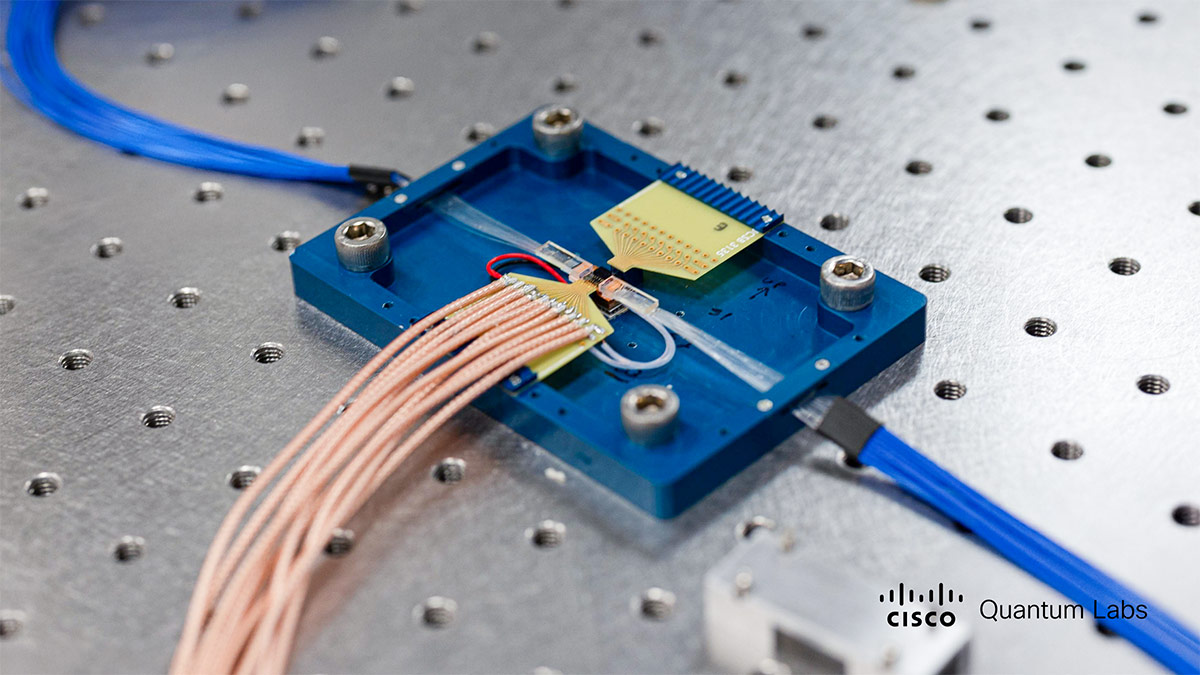
    The companies are targeting an initial proof-of-concept demonstration by the end of 2030, for which they plan to entangle qubits from multiple separate quantum computers located in distinct cryogenic environments. Doing so will require the companies to invent new connections, including microwave-optical transducers and a supporting software stack.

    The Cisco vision for a quantum data center introduces an architecture for quantum networking infrastructure that could make distributed quantum computing a reality in the near future. This vision includes a complete hardware and software stack that aims to preserve fragile quantum states, distribute entanglement resources, facilitate teleportation between quantum computers, and synchronize operations with sub-nanosecond precision.

    To scale beyond linking two quantum computers that are separate but physically close, IBM and Cisco are planning to explore how to transmit qubits over longer distances, such as between buildings or data centers. To achieve this, the companies will explore optical-photon and microwave-optical transducer technologies, as well as investigate how they can be incorporated into a quantum network to transfer quantum information as needed.

    Linking together multiple quantum computers will require an appropriate interface. IBM plans to build a quantum networking unit (QNU) to serve as the interface to a quantum processing unit (QPU), with the explicit task of taking stationary quantum information in the QPU and converting it into “flying” quantum information through the QNU to then be further linked across potentially multiple quantum computers through a network.

    Cisco’s quantum network would aim to distribute the entanglements to arbitrary pairs of these QNUs on an on-demand basis to drive the quantum information transfer required for a given quantum algorithm or application. Towards this goal, Cisco is developing a high-speed software protocol framework that can continuously and dynamically reconfigure network paths so entanglements could be distributed to the QNUs when they are done with their partial computations.

    Together, the companies plan to investigate how a network bridge, comprised of novel hardware and open-source software, could use Cisco quantum network nodes to link many IBM QPUs within a data center through its QNU interface. In the future, this approach could be extended to link QPUs across multiple data centers. This would scale a larger quantum network across even larger distances to form the groundwork for a future quantum computing internet.

    IBM quantum computers linked by this architecture could facilitate massively computationally demanding workloads, including those that require high-performance computing resources as part of a quantum-centric supercomputing framework.

    Towards this vision, IBM is also working with the Superconducting Quantum Materials and Systems Center (SQMS), led by Fermi National Accelerator Laboratory, in its role as a member of four of the U.S. Department of Energy National Quantum Information Science and Research Centers. Together, IBM and SQMS intend to investigate how many QNUs could be used within quantum data centers, and they are planning an initial demonstration of multiple connected QPUs within the next three years.

    The Foundation of a Quantum Computing Internet

    Building a distributed and scalable quantum computing network will create a pathway towards an exponentially large computational space and enable the expansion of diverse technologies, which could begin to form a future quantum computing internet by the late 2030s.

    A quantum computing internet provides a future where many distributed quantum-based technologies, such as quantum computers, quantum sensors, and quantum communications are connected and share information across distances, such as a metro region and eventually, at a planetary scale. This bold vision could facilitate new possibilities such as ultra-secure communications, or precise monitoring of climate, weather, and seismic activity.

    As another part of their current intention to collaborate, IBM and Cisco plan to co-fund academic research and collaborative projects to advance the broader quantum ecosystem, following a long history of fostering research in academic and national labs.


    About IBM

    IBM is a leading global hybrid cloud and AI, and business services provider, helping clients in more than 175 countries capitalize on insights from their data, streamline business processes, reduce costs and gain the competitive edge in their industries. Thousands of governments and corporate entities in critical infrastructure areas such as financial services, telecommunications and healthcare rely on IBM’s hybrid cloud platform and Red Hat OpenShift to affect their digital transformations quickly, efficiently and securely. IBM’s breakthrough innovations in AI, quantum computing, industry-specific cloud solutions and business services deliver open and flexible options to our clients. All of this is backed by IBM’s legendary commitment to trust, transparency, responsibility, inclusivity and service.

    For more information, visit https://research.ibm.com.


    About Cisco

    Cisco (NASDAQ: CSCO) is the worldwide technology leader that is revolutionizing the way organizations connect and protect in the AI era. For more than 40 years, Cisco has securely connected the world. With its industry leading AI-powered solutions and services, Cisco enables its customers, partners and communities to unlock innovation, enhance productivity and strengthen digital resilience. With purpose at its core, Cisco remains committed to creating a more connected and inclusive future for all. Discover more on The Newsroom and follow us on X at @Cisco.

    Cisco and the Cisco logo are trademarks or registered trademarks of Cisco and/or its affiliates in the U.S. and other countries. A listing of Cisco’s trademarks can be found at http://www.cisco.com/go/trademarks. Third-party trademarks mentioned are the property of their respective owners. The use of the word ‘partner’ does not imply a partnership relationship between Cisco and any other company.


    Media Contacts

    IBM

    Erin Angelini

    IBM Communications

    edlehr@us.bim.com

    Continue Reading

  • Diageo announces Sterling equivalent of Final Dividend at 47.91 pence per ordinary share

    Diageo announces Sterling equivalent of Final Dividend at 47.91 pence per ordinary share

    Further to the announcement on 5 August 2025 of a final dividend of 62.98 US cents per ordinary share, and as approved by shareholders at the AGM on 6 November 2025, today Diageo announces the Sterling equivalent of the dividend, amounting to 47.91 pence per ordinary share based on an exchange rate of US$1=£0.76072.

    The US$:£ conversion rate was determined by the actual rates achieved by Diageo buying forward contracts for Sterling currency, during the three working days preceding this announcement, for delivery ahead of the dividend payment date.

    The payment date of the dividend is 4 December 2025.

    Other details relating to the dividend are set out in the announcement dated 5 August 2025 and are also available to view on the Company’s website at www.diageo.com.

    James Edmunds
    Deputy Company Secretary

    20 November 2025

    For further information, please contact:

    Investor relations:
    Sonya Ghobrial
    Andy Ryan
    Grace Murphy
    [email protected]

    +44 (0) 7392 784 784
    +44 (0) 7803 854 842
    +44 (0) 7514 726 167

    Media relations:
    Rebecca Perry
    Clare Cavana
    Isabel Batchelor
    [email protected]

    +44 (0) 7590 809 101
    +44 (0) 7751 742 072
    +44 (0) 7731 988 857

    About Diageo

    Diageo is a global leader in beverage alcohol with an outstanding collection of brands across spirits and beer categories. These brands include Johnnie Walker, Crown Royal, J&B and Buchanan’s whiskies, Smirnoff, Cîroc and Ketel One vodkas, Captain Morgan, Baileys, Don Julio, Tanqueray and Guinness.

    Diageo is a global company, and our products are sold in nearly 180 countries around the world. The company is listed on both the London Stock Exchange (DGE) and the New York Stock Exchange (DEO). For more information about Diageo, our people, our brands, and performance, visit us at www.diageo.com. Visit Diageo’s global responsible drinking resource, www.DRINKiQ.com for information, initiatives, and ways to share best practice.

    Celebrating life, every day, everywhere.


    Continue Reading

  • Emirates to join Rolls-Royce global Maintenance, Repair and Overhaul network from 2027

    Emirates to join Rolls-Royce global Maintenance, Repair and Overhaul network from 2027

    Rolls-Royce (LSE: RR., ADR: RYCEY) and Emirates today signed a Memorandum of Understanding granting Emirates the rights to perform Maintenance, Repair and Overhaul on their own Trent 900 engines that power their A380 fleet. At the same time, the TotalCare agreement covering the Trent 900 fleet has also been extended to the 2040s.

    Emirates will build a new facility with the first engine induction forecast from 2027. Emirates will complete fan case repairs at the facility and Rolls-Royce will maintain module repair capability within the global network.


    Continue Reading

  • Eviden selected by the European Cybersecurity Competence Center and Network for its solutions for testing the cyber resistance of critical systems

    Eviden selected by the European Cybersecurity Competence Center and Network for its solutions for testing the cyber resistance of critical systems

    Eviden’s solutions will be integrated into a collaborative security testing platform, allowing European essential service providers to assess their cyber threat resilience strategy


    Paris, France – 20 November 2025

    Eviden, the Atos Group product brand leading in advanced computing, cybersecurity products, mission-critical systems and vision AI, today announced that it has won a call for projects from the European Cybersecurity Competence Center and Network (ECCC)[1] to improve the cyber protection and resilience of European critical infrastructures.

    This ECCC initiative aims to develop a strong and coherent community around cybersecurity issues by strengthening collaboration, knowledge sharing and the deployment of innovative cybersecurity solutions on a European scale.

    The CIPHER[2] (Cybersecurity Intelligence, Protection and Holistic Enterprise Resilience) consortium will directly contribute to the ECCC’s mission to strengthen Europe’s digital resilience by providing a standardized, collaborative facility for testing, validating, and certifying the cybersecurity posture of essential service operators.

    Led by Eviden, CIPHER brings together 13 partners from 7 European countries — including critical infrastructure operators, research organizations, and cybersecurity SMEs — ensuring a strong, multi-sectoral approach to advancing Europe’s cyber resilience.

    For more information, please click here.

    ***

    [1] ECCC https://cybersecurity-centre.europa.eu/index_en is Europe’s executive agency responsible for coordinating investments in cybersecurity research, innovation and industrial development in relation to a network of National Coordination Centres (NCCs) composed of national cybersecurity authorities, industry, start-ups and research centres. Initiated by ECCC, CIPHER strengthens detection and coordination capabilities at the European level through technological innovation and automation, meeting the objective set by ECCC to deploy concrete digital security solutions. ECCC is involved in the Digital Europe Programme (DIGITAL).

    [2] CIPHER is funded under the European Commission’s Digital Europe Programme (DEP) through the ECCC ‘Cybersecurity Deployment’ call, which supports the large-scale deployment of cybersecurity capacities across the EU.

    Continue Reading

  • Ford UK boss warns Rachel Reeves against higher taxes on electric vehicles | Electric, hybrid and low-emission cars

    Ford UK boss warns Rachel Reeves against higher taxes on electric vehicles | Electric, hybrid and low-emission cars

    The boss of Ford UK has warned Rachel Reeves against increasing taxes on electric vehicles in next week’s budget, saying it could discourage drivers from making the switch away from petrol and diesel cars.

    Lisa Brankin, the managing director of Ford UK, said it was “certainly not the right time” to introduce new levies on EVs, amid reports that the chancellor could implement a new pay-per-mile charge on electric vehicles (EVs) from 2028.

    The proposed plan would introduce a charge of 3p a mile for EVs on top of other road taxes, to help offset falling tax revenue from petrol and diesel cars.

    Lisa Brankin, the managing director of Ford UK. Photograph: Ford

    “That [policy], in the face of really fragile demand for electric vehicles, is just another brake,” Brankin told the BBC.

    “Electric vehicles in some instances have gone from being a great thing to being something that we’re trying to push people into,” she added.

    Brankin’s company, which makes the bestselling car in the UK, the Ford Puma, is among the many carmakers under pressure to meet the government’s target for 80% of new vehicle sales to be EVs by 2030.

    The government reintroduced an electric car grant worth up to £3,750 in July after intense lobbying by carmakers who argued that they were struggling to meet targets on electric sales.

    Electric car sales have been hitting record highs in the UK since, but Brankin said that without such government support Ford would not be able to achieve the 80% target.

    Brankin said Reeves should retain lower rates of ‘company car tax’ on EVs for companies ‘greening’ their fleets. Photograph: Justin Tallis/Reuters

    The market was “distorted” owing to heavy discounting and lower values for second-hand EVs, she said.

    “When that [target] was set a number of years ago, the outlook for demand around electric vehicles was buoyant and there seemed to be momentum behind electric vehicles. What we’re seeing now is that customer demand is not in line with that ambition.”

    Brankin added“It’s really easy to sell people things they want,. It’s hard to sell people things they don’t want.”

    Many new EVs are sold to businesses for their employees, who benefit from lower rates of “company car tax” compared with diesel or petrol options.

    Brankin said Reeves should retain this tax benefit for companies “greening” their fleets.

    Ford, whose world headquarters is in Michigan in the US, employs about 6,000 people in the UK, including at its diesel engine plant in Dagenham.

    Brankin said the company was yet to make any decisions about the long-term future of the Dagenham plant, which will build diesel engines up until 2030.

    “We’re working really hard on what the next life of Dagenham looks like,”she said, adding there was “nothing that we’ve settled on at the moment”.

    A spokesperson for the Treasury said: “Fuel duty covers petrol and diesel, but there’s no equivalent for electric vehicles. We want a fairer system for all drivers whilst backing the transition to electric vehicles, which is why we have invested £4bn in support, including grants to cut upfront costs by up to £3,750 per eligible vehicle.

    “Just as it is right to seek a tax system that fairly funds roads, infrastructure and public services, we will look at further support measures to make owning electric vehicles more convenient and more affordable.”

    Continue Reading

  • Orlen CEO optimistic about Venture Global arbitration after BP wins similar case – Reuters

    1. Orlen CEO optimistic about Venture Global arbitration after BP wins similar case  Reuters
    2. Shell ordered to pay Venture Global’s legal fees after arbitration loss  BOE Report
    3. MDN’s Energy Stories of Interest: Mon, Nov 17, 2025 [FREE ACCESS]  Marcellus Drilling News
    4. Shell Asks NY Court To Approve Challenge Of LNG Arbitration  Law360
    5. Shell appealing arbitration loss against Venture Global over LNG contracts  10/12 Industry Report

    Continue Reading

  • Argonaut lunar lander family grows

    Argonaut lunar lander family grows

    Science & Exploration

    20/11/2025
    127 views
    0 likes

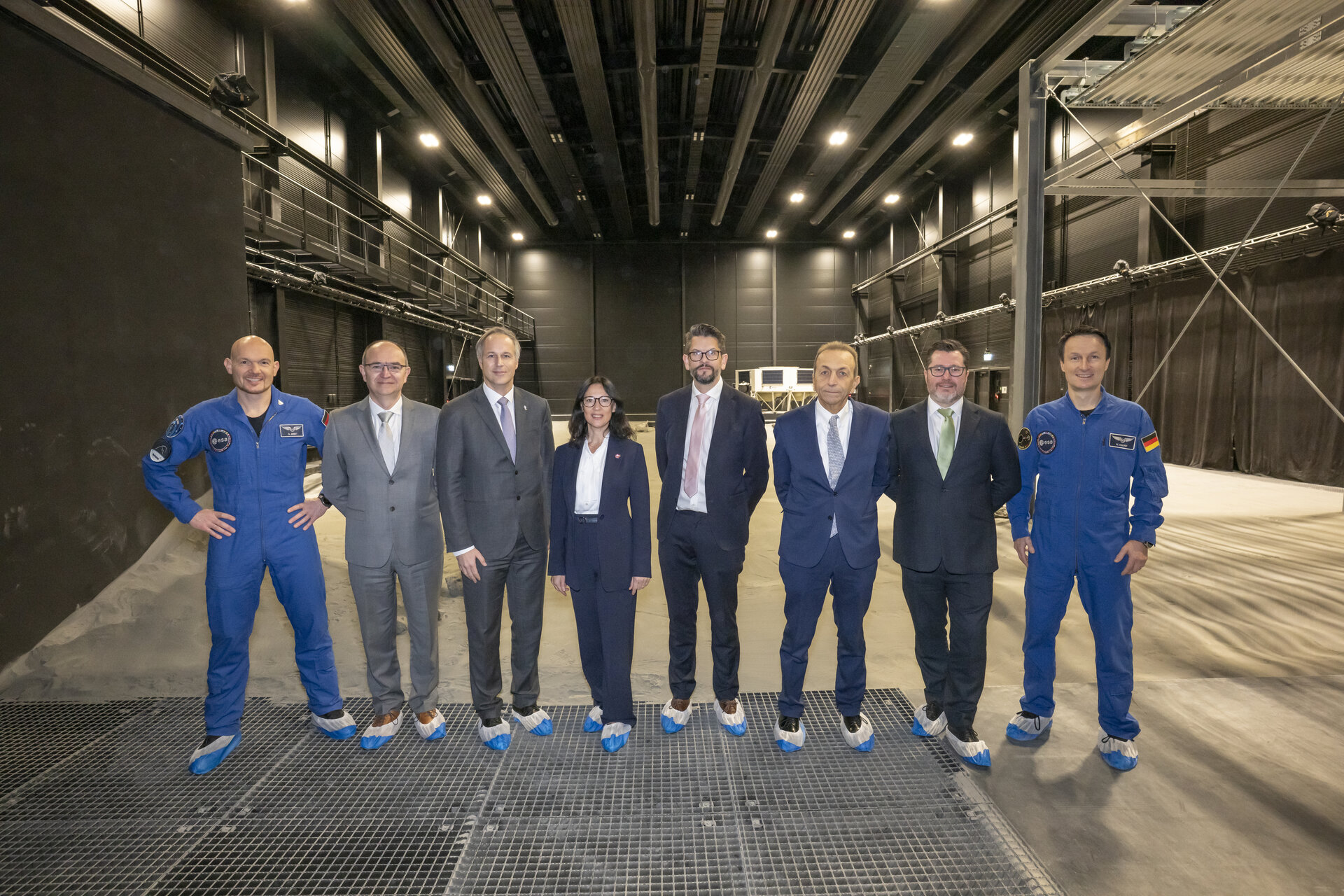
    Today, the European Space Agency’s Argonaut lunar lander programme welcomes new members to its growing family. At ESA’s European Astronaut Centre (EAC) near Cologne, Germany, Thales Alenia Space Italy – the prime contractor for Argonaut’s first lander – signed agreements with Thales Alenia Space in France, OHB in Germany, and Thales Alenia Space and Nammo in the United Kingdom.

    Argonaut

    Argonaut represents Europe’s autonomous, versatile and reliable access to the Moon. Starting with the first mission in 2030, Argonaut landers will be launched on Ariane 6 rockets, each delivering up to 1.5 tonnes of exploration-enabling cargo to the Moon’s surface, from scientific instruments and rovers to vital resources for astronauts such as food, water and air.  

    Earlier this year, ESA selected Thales Alenia Space Italy to lead the development of the first Argonaut lander, or Lunar Descent Element. Today’s signing ceremony took place in a symbolic location: the LUNA analogue facility at EAC, home to a full-scale Argonaut model – a tangible vision of Europe’s future presence on the Moon. 

    Meet the team

    The industrial team for the Argonaut Lunar Descent Element brings together expertise from across Europe: 

    • Thales Alenia Space, Italy: prime contractor and system integrator, leading the consortium building the lander and in charge of assembling and testing the structure. 
    • Thales Alenia Space, France: developing and validating the data-handling subsystem and on-board computers. 
    • OHB System AG, Germany: providing guidance, navigation and control systems as well as telecommunications, electrical power systems and key hardware such as solar arrays and batteries. 
    • Thales Alenia Space, United Kingdom: responsible for the propulsion subsystem development and procuring major components such as propellant tanks. 
    • Nammo, United Kingdom: designing and supplying the lunar lander’s main engine. 
    The Argonaut lunar lander family

    Forward to the Moon

    Argonaut family grows in LUNA

    Argonaut will play a central role in future robotic and crewed missions, supporting international efforts such as NASA’s Artemis programme to establish a sustainable human presence on the Moon. By providing Europe with independent access to our natural satellite, Argonaut reinforces Europe’s role as a trusted partner in global space exploration. 

    With today’s agreements finalising the industrial team for the first lunar lander, Europe takes a decisive step toward the Moon. The growing Argonaut family brings together expertise from across the continent, reflecting not only Europe’s ambition but also the strength of collaboration across its space industry. Argonaut will deliver essential cargo to the lunar surface, and with it new opportunities: enabling science, supporting astronauts, and paving the way for Europe’s enduring presence on the Moon. 

    Continue Reading

  • Join webinar on scaling digital higher education in Egypt

    Webinar follows the launch of the Scaling digital higher education in Egypt report last month.

    Webinar invitation: Wednesday 3 December, 12:30–13:45 (UK time)

    Following a successful closed session at Going Global 2025 – where we launched the British Council report Scaling Digital Higher Education in Egypt and hosted a high-level discussion with the Ministry of Higher Education, Jisc, the Egyptian Knowledge Bank, the University of London, and Coursera – we are pleased to invite you to a follow-up webinar designed to deepen the conversation and sustain the momentum.

    This session will open with a brief summary of the report’s key findings, followed by a discussion exploring best practice in digital partnerships, quality assurance mechanisms and student-centred design in digital learning environments.

    Speakers

    • Elizabeth Newall, Senior Sector Specialist (Digital Transformation), Jisc.
    • Dr Hala Fares, Lecturer of Economics, Director of University of London – EMFSS Programmes at Arab Academy for Science and Technology.
    • Mike Winter, Director of International Affairs, University of London.
    • Shannon Stowers, Director of International Policy & Engagement, QAA.

    Why attend?

    • Identify priority areas for UK–Egypt collaboration in digital higher education.
    • Gain insights on quality assurance, digital infrastructure and partnership delivery.
    • Understand the next phase of Egypt’s digital transformation and emerging opportunities for UK institutions.
    • Engage directly with experts shaping the future of digital higher education.

    Join us as we build on last year’s discussions and move toward concrete, sustainable partnership pathways.


    Continue Reading

  • Aviva’s Advice Report reveals increase in perceptions of advice and the value it can bring

    Aviva’s Advice Report reveals increase in perceptions of advice and the value it can bring

    • Engagement with advice increased across all consumers despite falling take-up
    • Respondents say financial advice contributes to overall wellbeing
    • Advice Index[1] is rising faster amongst women than men

    New research[1] from Aviva has revealed an increase in engagement with financial advice and also pointed to wider benefits for consumers, although the overall take-up rate has fallen from 13% to 11% over the past four years.

    In the new Appetite for Advice report, launched today, Aviva has calculated an ‘appetite for advice’ index which shows that perceptions of advice and the value it can bring to people’s lives have improved across the board.

    Although men are more likely to take advice, and rate its benefits more positively, the increase since 2021 in this measure for men has not been as steep as with women. If the relative rates of improvement continue at the same levels, we will see parity by 2042.

    The Appetite for Advice index is calculated using feedback from a nationally representative sample of 2,000 consumers and then compared to the same factors measured in a previous survey conducted in 2021.  The Index is a composite score, with a maximum possible score of 100. It brings together responses to all questions which explore perceptions of advice and the value it offers, combined with actual behaviour in relation to taking advice, and the frequency with which people interact with their adviser.

    In 2025, the overall Appetite for Advice Index measured 30, which is up from a score of 24 in 2021. This shows an overall increase in the level of engagement with advice across all consumers surveyed, advised and non-advised. For men, the score is 32, up from 26, and for women it is 29, up from 23.

    This gives us a benchmark from which we can measure changes in engagement in the future, whilst identifying the factors which have most influence over changes in the score, and what action needs to be taken to make improvements.

    Advice really delivers security and peace of mind for those who take it, and it’s important to get that message across to a wider audience, so that more people can benefit.

    Lorna Whalley, Director, Aviva Retail Platform, said: “Our research shows there has been a real shift over the last four years in the way financial advice is perceived. Even though fewer people said they are now taking advice than four years ago, the benefits of it, both for wealth and well-being, are felt much more than before. This is testament to the work advisers have been doing to help their clients with their financial, and wider, planning. Advice really delivers security and peace of mind for those who take it, and it’s important to get that message across to a wider audience, so that more people can benefit.”

    Although the research shows that fewer people are taking financial advice in 2025 compared with 2021 (11% vs 13%), perceptions towards advice and the value it brings have risen amongst those who do. Financial benefits are acknowledged, with 81% (up 9%) of men and 71% (up 6%) of women agreeing[2] that they are better off than they would be without advice. 81% of men, and 69% of women saying they have avoided mistakes they would have made without financial advice (an increase of 10% and 7% respectively).

    However, the biggest increase has been seen in the ways financial advice provides wider benefit. 82% of advised men and 78% of advised women in our survey now agree that financial advice contributes to their overall well-being, up significantly from the 72% and 67% who said this in 2021.  

    Lorna Whalley, said: “Our research shows that fewer women than men take financial advice, at 8% and 14% respectively, but it is encouraging to see that engagement with women has risen more strongly even if from a lower base. If this is sustained, engagement levels for men and women will be the same in seventeen years, but we should challenge ourselves to find effective ways to bring that date forward, by understanding how we can demonstrate the very real benefits advice can bring in a way which is meaningful to women, and in ways that resonate with them.”

    -Ends-

    References:

    1. Research carried out 21.05.2025 – 23.05.2025 by Censuswide, with 2001 nationally representative consumers. ‘Advised clients’ = those agreeing ‘I have an ongoing relationship with scheduled reviews’ in response to ‘Which of the following best describes your relationship with your adviser?’

    The research was conducted by Censuswide, among a sample of 2,028 general consumers/2001 Nationally Representative Consumers. The data was collected between 04/01/21 – 06/01/21/21.05.2025-23.05.2025 . Censuswide abides by and employs members of the Market Research Society and follows the MRS code of conduct and ESOMAR principles. Censuswide is also a member of the British Polling Council. [↑]

    2. Combines ‘Strongly agree’ and ‘Somewhat agree’ [↑]

    Enquiries:

    Continue Reading

  • Squire Patton Boggs Advises Vital Energi on £175 Million Nordic Bond Issue – One of the Largest in the UK Energy Infrastructure Sector

    Squire Patton Boggs Advises Vital Energi on £175 Million Nordic Bond Issue – One of the Largest in the UK Energy Infrastructure Sector

    Squire Patton Boggs has advised Vital Energi, a leading provider of energy infrastructure solutions, on a £175 million fundraising through a Nordic Bond issue and the acquisition of the Port Clarence biomass facility in Teesside, marking a significant milestone in the company’s strategic asset ownership growth plans. The bond is one of the largest Sterling-denominated Nordic Bond raises in the UK energy infrastructure sector.

    The multi-disciplinary Squire Patton Boggs team was led by Corporate partner James Fitzgibbon, and included Mariche Chambers, Matthew Ingram, Tom Cerdan and Caroline Morris (Financial Services), Darren Warburton, Louise Barber and Tom McClusky (Corporate), Patrick Ford and Alex Paterson (Tax Strategy and Benefits), Mark Barker, Rachel Koral and Holly Rowbottom (Real Estate), John Alderton and Vanessa Stuart (Restructuring and Insolvency), Ray O’Connor (Construction) and Kerry Lee (Intellectual Property and Technology).

    Vital Energi specialises in heat networks, renewable generation, power distribution, and energy-from-waste facilities. The £175 million Nordic Bond was issued through the Oslo Børs (Oslo Stock Exchange) in August 2025, providing flexibility for future strategic investments and partnerships. The Port Clarence biomass facility was acquired from Nuveen Infrastructure / Glenmont Infrastructure and represents the next phase of Vital Energi’s evolution from energy solutions provider to significant asset owner.

    Ashley Malin, managing director at Vital Energi, said: “Thanks to the team at Squire Patton Boggs for all of your support and going above and beyond on this fund raise and acquisition. We definitely couldn’t have done this without the support of the full team.”

    James Fitzgibbon commented: “Having worked with Vital Energi over a number of years, we are proud to assist one of the industry leaders on a milestone project that furthers its strategy to develop and own critical renewable energy generating assets and support the UK’s transition to sustainable energy.

    “This complex project involved specialist expertise from across the firm working together to structure and secure funding, manage the acquisition and development of the Port Clarence facility and assist with the company’s growth strategy. We look forward to continuing to support Vital Energi with its future plans.”

    Continue Reading