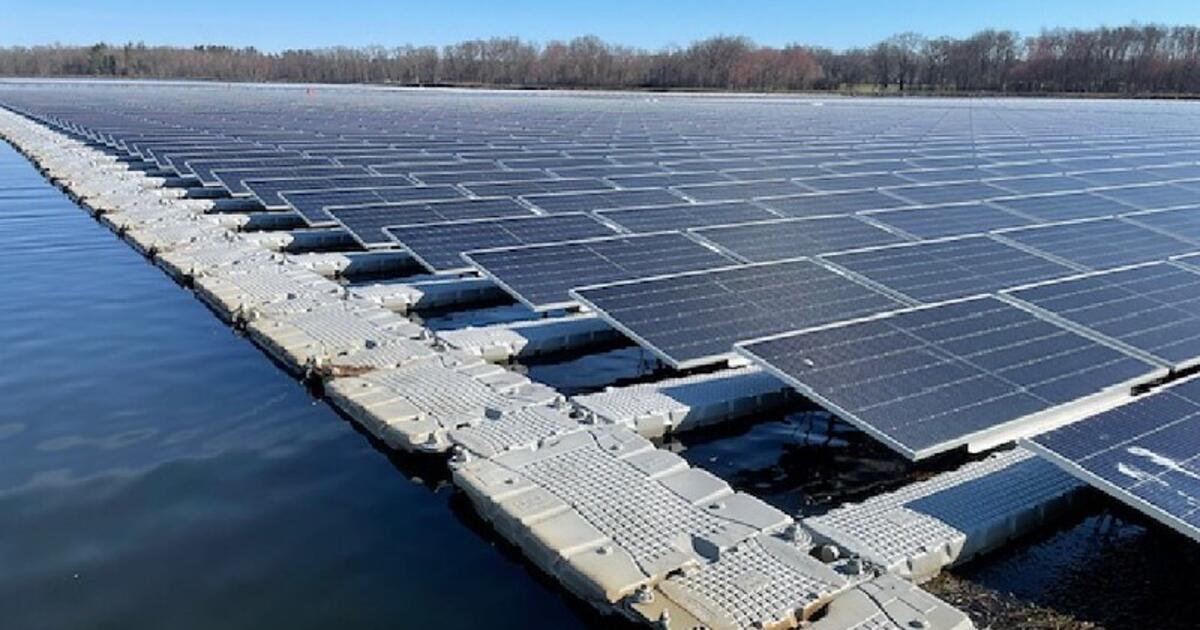
The weakest consumers are increasingly struggling, and debt investors are starting to take notice.
While many asset-backed securities tied to subprime auto lending are relatively steady, risk premiums have surged in some of the lowest-rated bonds over the last three months, widening by 0.75 percentage point over Treasuries, according to JPMorgan Chase & Co.
In the past week, Meta Platforms announced the layoff of about 600 employees from its artificial intelligence and Superintelligence divisions, following CEO Mark Zuckerberg’s push to accelerate AI development after mixed results from recent language model releases.
At the same time, Meta is moving forward with major investments in new data centers and infrastructure partnerships, highlighting a clear shift from its earlier focus on the metaverse to artificial intelligence as its central area for growth and efficiency.
We’ll examine how Meta’s simultaneous workforce restructuring and expansion of AI infrastructure could reshape its investment narrative heading into earnings season.
AI is about to change healthcare. These 33 stocks are working on everything from early diagnostics to drug discovery. The best part – they are all under $10b in market cap – there’s still time to get in early.
To own Meta Platforms, you have to believe its pivot to AI will drive sustained growth in advertising and new revenue streams, while keeping expenses and margin pressure in check. The recent layoffs in Meta’s AI and Superintelligence divisions may streamline decision-making, but do not appear material to the company’s biggest near-term catalyst, successful AI-driven ad monetization, nor to the most important risk, which remains escalating capital expenditure outpacing revenue growth.
Among the latest announcements, Meta’s joint venture with Blue Owl Capital to fund the $27 billion Hyperion data center stands out. This move reinforces Meta’s commitment to AI infrastructure and may help fuel future engagement and advertising gains, tying directly into the company’s main catalyst: enhanced AI-enabled ad performance.
By contrast, what investors should not overlook is how much Meta’s rising data center and AI spending could start to …
Read the full narrative on Meta Platforms (it’s free!)
Meta Platforms’ outlook anticipates $275.9 billion in revenue and $92.1 billion in earnings by 2028. This is based on an expected annual revenue growth rate of 15.6% and a $20.6 billion increase in earnings from the current $71.5 billion.
Uncover how Meta Platforms’ forecasts yield a $863.20 fair value, a 17% upside to its current price.
META Community Fair Values as at Oct 2025
Fair value estimates from 100 Simply Wall St Community members range from US$538 to over US$1,100 per share. Many are closely watching whether Meta’s surge in AI and data center investment translates into sustainable profit growth or places further pressure on cash flows.
Explore 100 other fair value estimates on Meta Platforms – why the stock might be worth as much as 49% more than the current price!
Disagree with existing narratives? Create your own in under 3 minutes – extraordinary investment returns rarely come from following the herd.
Our daily scans reveal stocks with breakout potential. Don’t miss this chance:
This article by Simply Wall St is general in nature. We provide commentary based on historical data and analyst forecasts only using an unbiased methodology and our articles are not intended to be financial advice. It does not constitute a recommendation to buy or sell any stock, and does not take account of your objectives, or your financial situation. We aim to bring you long-term focused analysis driven by fundamental data. Note that our analysis may not factor in the latest price-sensitive company announcements or qualitative material. Simply Wall St has no position in any stocks mentioned.
Companies discussed in this article include META.
Have feedback on this article? Concerned about the content? Get in touch with us directly. Alternatively, email editorial-team@simplywallst.com
Astera Labs recently announced a collaboration with Arm Total Design to integrate its Intelligent Connectivity Platform with Arm Neoverse Compute Subsystems, aiming to streamline custom AI infrastructure chiplet solutions for clients seeking multi-protocol connectivity.
This move highlights Arm Holdings’ expanding influence across the AI hardware supply chain, signaling growing adoption of its technologies in custom architectures beyond traditional markets.
We’ll explore how Arm’s new partnerships in AI data center hardware may impact the company’s long-term investment case and market positioning.
Rare earth metals are the new gold rush. Find out which 37 stocks are leading the charge.
To be a shareholder in Arm Holdings, you need conviction that Arm’s ongoing expansion into AI infrastructure and custom chip solutions can successfully offset potential saturation in its core smartphone markets. The recent Astera Labs collaboration strengthens Arm’s industry partnerships but does not materially change the near-term focus on ramping AI data center design wins as the main catalyst, nor does it resolve the execution risks tied to diversification and rising R&D expenses.
Among recent announcements, the partnership with Astera Labs is the most relevant because it boosts Arm’s ability to embed its Neoverse Compute Subsystems in next-generation AI hardware. This underscores Arm’s growing footprint in custom architectures, directly tying into the current catalyst of gaining AI data center share, even as execution risk, particularly in new, complex verticals, remains front of mind for investors.
Yet, it’s worth contrasting that expanded opportunity with the ongoing risk that major customers could…
Read the full narrative on Arm Holdings (it’s free!)
Arm Holdings’ narrative projects $7.4 billion revenue and $2.3 billion earnings by 2028. This requires 21.5% yearly revenue growth and a $1.6 billion earnings increase from $699 million currently.
Uncover how Arm Holdings’ forecasts yield a $155.61 fair value, a 9% downside to its current price.
ARM Community Fair Values as at Oct 2025
Compared to the consensus, the most optimistic analysts see Arm’s data center share soaring and forecast US$8.6 billion in revenues by 2028. They expect Arm’s industry partnerships and AI momentum could drive revenue and margin acceleration, though emerging competition and rising R&D costs suggest these bullish assumptions might face more volatility. As you weigh your own view, keep in mind just how wide the range of possible futures for Arm could be.
Explore 17 other fair value estimates on Arm Holdings – why the stock might be worth less than half the current price!
Disagree with existing narratives? Create your own in under 3 minutes – extraordinary investment returns rarely come from following the herd.
A great starting point for your Arm Holdings research is our analysis highlighting 2 key rewards that could impact your investment decision.
Our free Arm Holdings research report provides a comprehensive fundamental analysis summarized in a single visual – the Snowflake – making it easy to evaluate Arm Holdings’ overall financial health at a glance.
Our daily scans reveal stocks with breakout potential. Don’t miss this chance:
This article by Simply Wall St is general in nature. We provide commentary based on historical data and analyst forecasts only using an unbiased methodology and our articles are not intended to be financial advice. It does not constitute a recommendation to buy or sell any stock, and does not take account of your objectives, or your financial situation. We aim to bring you long-term focused analysis driven by fundamental data. Note that our analysis may not factor in the latest price-sensitive company announcements or qualitative material. Simply Wall St has no position in any stocks mentioned.
Companies discussed in this article include ARM.
Have feedback on this article? Concerned about the content? Get in touch with us directly. Alternatively, email editorial-team@simplywallst.com
Roula Khalaf, Editor of the FT, selects her favourite stories in this weekly newsletter.
TotalEnergies is close to restarting one of Africa’s biggest energy projects four years after it was halted by a terrorist attack, with the French group and its partners judging that it is safe to proceed.
The $20bn plan for a liquefied natural gas project in Mozambique has been on hold since 2021 when a deadly attack by Islamist militants in the Cabo Delgado province where the project is located prompted TotalEnergies to activate a contractual get-out, known as force majeure.
On Saturday, Total said that the consortium behind the project had “taken the decision to lift the Force Majeure” and that it had informed the Mozambican government.
The decision is a key step towards resuming a project that has been touted as potentially transformative for Mozambique’s economy. Also backed by Japanese energy company Mitsui, the project will have a maximum capacity of up to 43mn tons of LNG per year.
Mozambique’s government must approve updates to the budget for the project, known as MozambiqueLNG, before it is relaunched, Total added.
MozambiqueLNG has been backed with loans from countries including the US government and is strategically important project for Total, as it seeks to increase its production of LNG.
Following the 2021 attack, Mozambique’s military collaborated with Rwandan forces to restore order to the province, including protecting the Afungi Peninsula where the Total-led project and a $30bn development led by US oil company ExxonMobil are based.
Lifting of force majeure is a positive development for Exxon’s planned project. Last month the company’s chief executive Darren Woods sought reassurances from Mozambican president Daniel Chapo about security of the region.
TotalEnergies move to lift force majeure is a signal that concerns over the safety of employees and the security of the project have eased.
Despite the potential economic benefits of MozambiqueLNG, it has been dogged by controversy, including allegations of human rights abuses by Mozambican soldiers protecting the project.
This year, the FT reported that the UK government was seeking legal advice over how to pull out of its $1.15bn backing for the project, while it has also commissioned a human rights review of the development.
When I travel, I don’t just want to sample new foods, I want to see how they’re made. I love peeking into kitchens and observing the daily habits and techniques of local cooks, which always include some new-to-me gadgets or implements less common in the United States. After my first trip to France, for example, I convinced myself I needed a Nespresso machine and a breadboard for morning tartines and coffee. The habit stuck.
Nowadays, if I am shopping for souvenirs, I’m likely browsing the shelves at a local culinary store to see what I can tuck into my luggage, or I am taking mental notes for what to search for when I get back home. But you don’t need to leave the country to find inspiration or get your hands on some genius culinary tools that many Americans haven’t yet embraced. Here are some of my favorites and why chefs around the world find them indispensable.
All prices current at the time of publication.
Terracotta cazuela (Spain)
Photograph: Bernadette Machard de Gramont/The Guardian$59 at La Tienda
From pintxo and tapas bars to more elaborate restaurants, the fairly inexpensive and very versatile terracotta cazuela is one of the most commonly used vessels I saw in Spain’s restaurants. “I mostly use it for recipes that need gentle, consistent heat–like albóndigas en salsa, fabes con almejas, or even gambas al ajillo,” says Guillermo Varela de Limia Muñoz, chef at Cooking From Spain.
It can go from stovetop and oven directly to the table, and comes in a multitude of sizes. Grab a handful of petite ones for serving olives, nuts or condiments, medium ones for appetizers, or larger ones for making stews and casseroles, or simply serving as a tray for chips during a party.
Crepe pan (France)
Photograph: Bernadette Machard de Gramont/The Guardian$50.47 at Amazon
We love crepes in our house, so I lugged a large aluminum Tefal crepe pan purchased from a French supermarket back to the states in my suitcase. “The flatness of the pan will ensure even cooking, and also allows for the use of a râteau (like a tiny wooden rake) to spread your crêpes and galettes like a pro,” says Omid Tavallai, the owner of Paris-based purveyor Emperor Norton. “It may be a specialty pan, but it’s also extremely flat, so it won’t take too much storage space in the kitchen.”
It’s no one-trick pony either; the large surface can be used as a griddle for pancakes and bacon or as a comal for heating tortillas. The induction-ready pan I bought isn’t available in the US market, but I have used this Tefal Elegance pan many times at my mother-in-law’s house on a gas hob with consistently excellent results. And because it’s nonstick, a quick hand wash with warm, soapy water is all it takes to get clean.
Nakiri knife (Japan)
Photograph: Bernadette Machard de Gramont/The Guardian$163.95 at Shun $163.95 at Williams Sonoma
There is a Japanese knife for every task, and for cutting vegetables it’s a Nakiri. “The way we cut ingredients directly affects how they feel when eaten,” says Shota Nakajima, Top Chef finalist and owner of Seattle-based restaurants Taku and Kobo. “Slicing through the fibers rather than tearing or crushing them keeps vegetables crisp, helps them absorb seasoning evenly, and brings out a more delicate mouthfeel.”
Built like a miniature cleaver, its flat edge ensures full contact with the cutting board, making it perfect for straight-down, clean cuts without requiring a rocking motion (unlike western chef’s knives). The Premier Nakiri from Shun is made of 68 layers of stainless Damascus steel cladding, making it extra durable and resistant to corrosion. A full-tang blade and finished Pakkawood handle ensure optimal control, whether you’re slicing tomatoes, julienning carrots, or creating thin sheets of daikon or cucumber using a katsuramuki cut.
Stainless steel chopsticks (Korea)
Photograph: Bernadette Machard de Gramont/The Guardian$4 at Crate & Barrel
I grew up using the long, plastic chopsticks commonly found at Chinese restaurants, or Japanese lacquered wood chopsticks, which require careful hand-washing and drying. In Korea, metal chopsticks are more common, as they were originally used by royals and were eventually embraced by the general public. “Metal chopsticks are less porous than wood chopsticks and don’t absorb bacteria,” says SuYeon Lee, owner of Palace Cooking, a Korean cooking school in Seoul. “It’s considered more hygienic since communal eating is central to Korean culture.”
Since they are sturdy and easier to keep clean, I sought out a set immediately. While it is challenging to find flat stainless chopsticks in the US like those commonly seen in Seoul, the squarish shape of this pair is easier to handle for most people. High-quality stainless steel makes them dishwasher safe, ensuring that they will make it through the wash unscathed and sparkling clean.
Electric kettle (UK)
Photograph: Bernadette Machard de Gramont/The Guardian$150 at Saki $150 at Amazon
According to my British friends, microwaving water for tea is a mortal sin – they insisted I needed an electric kettle. “The only way to prepare good tea is by pouring water at the correct temperature onto the loose leaves or teabag,” says Jane Pettigrew, a tea historian and the director of studies of the UK Tea Academy. “A well-designed, reliable, temperature-controlled kettle can be set to reach the most suitable temperature for each chosen tea.”
Enter the Saki Luna Kettle Pro, with its sleek, modern design and stainless steel interior. This model checks all the boxes, with a variable temperature control and seven presets that come in handy when you’re switching between hot beverages. Additionally, you can toggle the digital display between celsius and fahrenheit, depending on your preference. I use this kettle daily, for making pour-over coffee, tea, and heating water to add when cooking, so I don’t drop the temperature of what is already in the pot.
Tortilla press (Mexico)
Photograph: Bernadette Machard de Gramont/The Guardian$95 at Masienda
I watched street taco vendors in Puerto Vallarta and Ensenada churn out little corn tortillas to order, and I decided I needed to up my tortilla game at home. “A metal tortilla press is always the best, the heavier the better,” advises Fátima Juárez, chef and co-owner of Komal in Los Angeles. “The heavy weight will help with even distribution when pressing the masa flat into your desired thickness.”
skip past newsletter promotion
after newsletter promotion
That said, the Masienda Tortilla Press is a hefty and sturdy version that is also wonderfully ergonomic, making it easy to press balls of masa into the perfect base for your favorite taco fillings. This press comes in a variety of festive colors, as well as solid black, if you’re like me and prefer to match your tools to your existing kitchen appliances. If you have a gas stove or barbecue grill, you can also pick up a Masienda x Made In Comal to cook up to four taco-sized tortillas at a time.
Moka pot (Italy)
Photograph: Bernadette Machard de Gramont/The Guardian$64.99 at Macy’s $64.99 at Amazon
If you appreciate a simple but bold cup of coffee, you may understand why the moka pot is a fixture in many Italian homes. “It produces a coffee that satisfies Italy’s espresso-loving palate,” says Alberto Polojac, Bloom Coffee School’s director and the 2018 winner of the Professional Moka Challenge. “In many ways, it bridges the gap between home brewing and the espresso bar, bringing a taste of the Italian cafe ritual into the kitchen.”
Its compact design makes it easy to store in a kitchen lacking in storage space, and it requires no special expertise to use. Just fill the bottom chamber with water, add grounds to the coffee basket, and put it on the stove, and in minutes, you’ll have a seriously strong cup ready to go.
Pepper mill (France)
Photograph: Bernadette Machard de Gramont/The Guardian$69 at Crate & Barrel
I haven’t used pre-ground black pepper in years, thanks to my Peugeot Paris Bistro Pepper Mill. I love its rounded shape and hefty weight; it has multiple grind options and looks great sitting on the countertop. “Everyone’s got room for a pepper mill,” says Tavallai. “Not only can you have freshly ground pepper on top of your dishes, you can choose what kind of pepper you want to fill your mill with. Kampot, Penja, Tellicherry, the world – or at least the global south – is your oyster.”
I bought the walnut finish version 13 years ago, and though the wood finish is a bit worn, its mechanism – backed by a lifetime warranty – is still going strong. Since I keep multiple types of black pepper on hand, I recently purchased the same model, this time in durable stainless steel.
Clay tagine (Morocco)
Photograph: Bernadette Machard de Gramont/The Guardian
Named after the North African stew that it is intended to cook, the Moroccan Cooking Tagine has been around for more than 2,000 years. “It isn’t just a cooking vessel, it’s a symbol of how we approach food: slow, generous, and deeply layered in flavor,” says Nargisse Benkabbou, chef and author of Casablanca: My Moroccan Food. Like a Dutch oven, it maintains heat well and keeps moisture and aromas contained during the cooking process.
Moroccan Cooking Tagine For Two
$60 at Verve Culture
When looking for a tagine, take note of its construction. According to Benkabbou, it needs a snug-fitting lid to trap steam, and the clay must be dense yet slightly porous, allowing the food to cook gently and evenly while keeping moisture in. This modern version doesn’t require the same curing and care as its terracotta cousin, though either option makes for a beautiful serving presentation – the conical lid helps keep food warm and also adds a little flourish when removed to reveal its contents.
Emile Henry French Ceramic Tagine
$134.95 at Amazon $149.95 at Williams Sonoma
Quality tea towels (France)
Photograph: Bernadette Machard de Gramont/The Guardian$17.97 at Amazon $23.67 at Walmart
Available in a multitude of designs, tea towels are one of my favorite souvenirs to bring home from France. Made of cotton jacquard, they are both beautiful and functional. “Torchons are plentiful in any professional French kitchen and should be at home,” says Tavallai. “They’re inexpensive and versatile, and having a neatly folded stack of them within easy reach makes any kitchen feel that much more organized.” Whether I’m drying dishes, wiping hands, covering rising bread dough or grasping a hot lid handle, I use them in some capacity every single day. Even with frequent laundering, they keep their color and shape nicely for years on end.
McGrath RentCorp (MGRC) reported forecasted earnings growth of 9.27% per year and revenue growth of 4.6% per year, both of which trail the US market’s broader expectations of 15.5% and 10%, respectively. The company’s net profit margin decreased from 25.3% last year to 15.6%, following a period of strong historical earnings growth that averaged 20.3% per year over the past five years. Most recently, it recorded negative year-over-year earnings growth. Despite these recent declines, MGRC is trading near fair value with a P/E ratio of 19.4x, below industry and peer averages, and continues to offer high-quality earnings along with an appealing dividend for investors.
See our full analysis for McGrath RentCorp.
Now, let’s see how this latest crop of numbers lines up against the widely held narratives. This provides a chance to test which stories get confirmed and which offer new surprises.
See what the community is saying about McGrath RentCorp
NasdaqGS:MGRC Earnings & Revenue History as at Oct 2025
Utilization in key rental segments fell, with Mobile Modular dropping to 73.7% from 78.4% and Portable Storage down to 61.1% from 66.1%. This highlights cyclical stress in the company’s core markets.
Bears argue that ongoing declines in utilization and weaker demand could make future growth targets harder to achieve, especially as fleet underinvestment and unpredictable order flow may limit revenue momentum.
Persistently lower utilization puts pressure on recurring rental revenues and reduces operating leverage, a risk factor cited in analysts’ consensus view.
If the recent segment softness continues, consolidated revenue growth could trend below the company’s historical averages. This underlines revenue stability concerns.
Selling and general administrative expenses have increased as the company pushes hiring and invests in digital infrastructure. This raises the risk that operating costs will remain elevated if topline growth does not accelerate.
Analysts’ consensus view sees operational investment as a double-edged sword, likely improving long-term efficiency and margin potential but threatening short-term EBITDA margin compression if demand softens.
Margin trajectory is a key debate point. While technology upgrades may help expand margins, SG&A ramp-up combined with declining utilization can offset these gains in the near-term.
This margin tension is central to the narrative that MGRC’s position is attractive only if growth and efficiency materialize ahead of the cost increases. Otherwise, margins could lag peers.
MGRC’s share price of $114.50 sits just below the DCF fair value of $115.27 and remains well under the analyst target of $145.00, signaling a potential 27% upside if consensus expectations play out.
Analysts’ consensus view highlights a striking mismatch. The market currently assigns MGRC a P/E ratio of 19.4x, well beneath the industry average (22.8x) and far below the peer average (59.2x), yet their price target assumes a premium valuation (PE of 48.9x on 2028 earnings).
This gap implies confidence that recurring revenue, market expansion, and operational improvements will offset recent profit margin declines and could warrant a rerating in valuation multiples.
If margin compression or revenue growth disappoints, however, the ambitious price target may prove out of reach and the current discount to sector multiples could persist.
📊 Read the full McGrath RentCorp Consensus Narrative.
To see how these results tie into long-term growth, risks, and valuation, check out the full range of community narratives for McGrath RentCorp on Simply Wall St. Add the company to your watchlist or portfolio so you’ll be alerted when the story evolves.
Do you interpret the data another way? Make your view known with a narrative in just a few minutes, then Do it your way
A great starting point for your McGrath RentCorp research is our analysis highlighting 4 key rewards and 3 important warning signs that could impact your investment decision.
MGRC’s declining fleet utilization, shrinking profit margins, and slowing revenue growth raise concerns about its ability to deliver reliable results during tough cycles.
If you want consistency instead, focus on companies that have shown steady revenue and earnings growth through changing markets by checking out stable growth stocks screener (2099 results).
This article by Simply Wall St is general in nature. We provide commentary based on historical data and analyst forecasts only using an unbiased methodology and our articles are not intended to be financial advice. It does not constitute a recommendation to buy or sell any stock, and does not take account of your objectives, or your financial situation. We aim to bring you long-term focused analysis driven by fundamental data. Note that our analysis may not factor in the latest price-sensitive company announcements or qualitative material. Simply Wall St has no position in any stocks mentioned.
Companies discussed in this article include MGRC.
Have feedback on this article? Concerned about the content? Get in touch with us directly. Alternatively, email editorial-team@simplywallst.com
Rejlers (OM:REJL B) reported earnings growth of just 1.8% this year, a notable deceleration from its five-year annual average of 25.3%. Despite a lower net profit margin at 4.6% and a significant one-off loss of SEK74.2 million in the last 12 months to 30th September, 2025, the company’s forecast earnings and revenue growth rates of 17.54% and 5.2% per year respectively both outpace the broader Swedish market. Investors will be weighing these robust growth projections against the softer profitability trends and non-recurring expenses that have affected earnings quality.
See our full analysis for Rejlers.
Next, we will be putting these headline results in direct context with the major narratives followed by the Simply Wall St community. We will highlight where expectations hold up and where the numbers challenge the consensus story.
Curious how numbers become stories that shape markets? Explore Community Narratives
OM:REJL B Revenue & Expenses Breakdown as at Oct 2025
Rejlers’ earnings quality was affected by a material one-off loss of SEK74.2 million in the 12 months to 30th September, 2025, which is not expected to recur but significantly reduced reported profitability in this period.
Heavily supporting the bullish case for strong earnings growth ahead, the company is still forecast to grow earnings at 17.54% per year and revenue at 5.2% per year. Both figures are well above Swedish market averages.
Bulls highlight that this impressive growth trajectory stands out despite headline results being held back by a non-recurring charge.
The broad consensus among optimists is that future profitability should normalize if such one-off events do not repeat, allowing underlying momentum to show through.
The current net profit margin has slipped to 4.6% from 4.9% last year, reflecting some pressure on underlying profitability that investors will want to see reverse in coming periods.
Challenges to the narrative of operational resilience emerge as this margin softness, combined with muted 1.8% earnings growth, serves as a reality check for investors expecting a swift rebound.
This margin compression limits near-term optimism even as top-line forecasts remain strong, giving cautious investors reason to monitor cost control and project delivery closely.
Some observers point to the impact of non-recurring expenses as a key reason for the margin dip, but emphasize that sustained improvement will require more than just their absence.
At SEK198.20, Rejlers shares are trading at a deep 63% discount to the estimated DCF fair value of SEK529.11, even though the stock’s price-to-earnings ratio of 20.8x sits slightly below the broader Professional Services industry average but above peers.
This wide disconnect between price and DCF fair value intensifies investor focus on whether growth expectations are realistic, or if persistent profit headwinds will keep the valuation gap open.
The relatively full P/E versus peers shows that investors are already paying up for earnings quality, yet the current price implies skepticism about sustaining future outperformance.
Ultimately, many investors will see the margin of safety at current levels as compelling, provided that forecast growth materializes and one-off expenses do not become a pattern.
Don’t just look at this quarter; the real story is in the long-term trend. We’ve done an in-depth analysis on Rejlers’s growth and its valuation to see if today’s price is a bargain. Add the company to your watchlist or portfolio now so you don’t miss the next big move.
Rejlers faces challenges from margin compression, one-off losses, and muted earnings growth, which raises doubts about the consistency of its future profitability.
If you want to focus on companies showing reliable revenue and earnings expansion, check out stable growth stocks screener (2099 results) to see which stocks consistently deliver stability through changing markets.
This article by Simply Wall St is general in nature. We provide commentary based on historical data and analyst forecasts only using an unbiased methodology and our articles are not intended to be financial advice. It does not constitute a recommendation to buy or sell any stock, and does not take account of your objectives, or your financial situation. We aim to bring you long-term focused analysis driven by fundamental data. Note that our analysis may not factor in the latest price-sensitive company announcements or qualitative material. Simply Wall St has no position in any stocks mentioned.
Companies discussed in this article include REJL-B.ST.
Have feedback on this article? Concerned about the content? Get in touch with us directly. Alternatively, email editorial-team@simplywallst.com
We recently published 10 Stocks Beating Wall Street’s Bets. Garrett Motion Inc. (NASDAQ:GTX) is one of the best performers on Friday.
Garrett Motion capped Friday’s trading soaring to a new all-time high as investors continued to digest impressive earnings for the past quarter, alongside a higher growth outlook.
At intra-day trading, the stock soared to a record high of $17.05 before trimming gains to finish the day up by 13.8 percent at $16.99 apiece.
In an updated report on Thursday, Garrett Motion Inc. (NASDAQ:GTX) said it grew its net income by 48 percent to $77 million from $52 million in the same period last year, on the back of a $20 million jump in gross profit, $8 million lower interest cost, and a $2 million increase in non-operating income.
Garrett Motion (GTX) Climbs to Fresh High on Impressive Earnings, Upbeat Outlook
laurel-and-michael-evans-c-KDq7nxVdQ-unsplash
Net sales, on the other hand, rose by 9.2 percent to $902 million from $826 million year-on-year, primarily driven by higher demand in gasoline and diesel, a favorable currency impact, and recoveries on enacted import tariffs.
Following the results, Garrett Motion Inc. (NASDAQ:GTX) raised its full-year net income projection to a range of $265 million to $295 million, versus the $233 million to $278 million previously.
Net sales projection was also upgraded to a range of $3.5 billion to $3.6 billion, versus the $3.4 billion to $3.6 billion prior.
While we acknowledge the potential of GTX as an investment, our conviction lies in the belief that some AI stocks hold greater promise for delivering higher returns and have limited downside risk. If you are looking for an extremely cheap AI stock that is also a major beneficiary of Trump tariffs and onshoring, see our free report on the best short-term AI stock.
READ NEXT: 30 Stocks That Should Double in 3 Years and 11 Hidden AI Stocks to Buy Right Now.
Disclosure: None. This article is originally published at Insider Monkey.
We recently published 10 Stocks Beating Wall Street’s Bets. Cipher Mining Inc. (NASDAQ:CIFR) is one of the best performers on Friday.
Cipher Mining soared by 19.73 percent on Friday to finish at $20.66 apiece as investors hunted for AI stocks amid renewed optimism supported by Oracle Corp.’s $38 billion data center expansion deal.
During the session, Cipher Mining Inc. (NASDAQ:CIFR) rallied alongside its counterparts, namely IREN Ltd. and Hut 8 Corp., as Oracle’s announcement strengthened optimism for sustained infrastructure demand to power the next-generation AI.
In other developments, investors began repositioning portfolios ahead of Cipher Mining Inc.’s (NASDAQ:CIFR) third quarter earnings results before market open on Monday, November 3. A conference call will be held to elaborate on the results.
AI aside, Cipher Mining Inc. (NASDAQ:CIFR) earlier this month announced that it was able to produce 251 Bitcoins in September, marking an increase of 10 units from 241 in August, thanks to a higher self-operating hash rate of 23.6 EH/s versus 23 EH/s in the same comparable period.
It also sold 158 Bitcoins during the period, versus 42 units in August, taking advantage of the surge in Bitcoin prices during the period.
While we acknowledge the potential of CIFR as an investment, our conviction lies in the belief that some AI stocks hold greater promise for delivering higher returns and have limited downside risk. If you are looking for an extremely cheap AI stock that is also a major beneficiary of Trump tariffs and onshoring, see our free report on the best short-term AI stock.
READ NEXT: 30 Stocks That Should Double in 3 Years and 11 Hidden AI Stocks to Buy Right Now.
Disclosure: None. This article is originally published at Insider Monkey.