Category: 3. Business

  • The tiny Greek island where EVs take charge

    The tiny Greek island where EVs take charge

    Astypalea’s Chora, or capital.

    Ed Moskalenko | Getty Images

    The tiny, butterfly-shaped Greek island of Astypalea has all the ingredients for a relaxing vacation: myriad beaches with clear waters, great seafood and a castle perched above a traditional white town with winding alleys and views across the Aegean Sea.

    It’s also less developed than its larger neighbors like Rhodes and Kos, and with a population of just 1,400, Astypalea made for a chilled holiday destination when I visited in June.

    Some of the lanes in the island’s Chora — or capital — are so small that donkeys carry construction tools to hard-to-reach building sites, but the mode of transport most noticeable on Astypalea is a fleet of electric minibuses, part of a scheme called AstyBus — an unusual sight for the Greek islands.

    It’s worth starting a trip to the island by visiting the remains of the 15th century Venetian castle high above the Chora, which was built on the site of other structures including from the Roman and Byzantine eras. From there I walked down towards the eight traditional, red-roofed windmills at the centre of the town, originally constructed to mill grain in the 13th and 14th centuries. At the bottom of the hill is the island’s small but fascinating Archaeological Museum, with artefacts from the pre-historic period to the Middle Ages.

    To begin with, I used the bus to get from the bottom of the Chora to the top when it was too hot to walk up its winding streets, before exploring further.

    Agios Dimitrios church in the village of Maltezana, Astypalea

    Lucy Handley

    My first stop was Maltezana, a winding 20-minute bus ride from the Chora, and Astypalea’s second-largest settlement. I disembarked a stop or two inland to look inside Agios Dimitros, a small church opposite Maltezana’s grocery store. While the church is painted in the traditional blue and white style on the outside, it is ornately-decorated inside, with bible scenes in blue and gold on its walls and ceiling.

    A short walk from the church, a string of restaurants line a narrow beach. Its clear, shallow waters were pleasant to wade into after lazing under one of the scrubby trees on the sand.

    Over the next few days I visited more beaches using the AstyBus: Schinonta, a quiet bay along from Maltezana, and tree-lined Livadi, which is just over the hill from the Chora, and has a few restaurants right on the beach.

    The bus initiative is part of a grand plan to turn Astypalea into a “smart and sustainable island” — a partnership between the Greek government and Volkswagen. It claims to be a first of its kind initiative for the Greek islands, and aims to replace traditional combustion-engine vehicles with electric-powered cars, and support an overall shift to renewable energy.

    Authorities want to keep the island unspoiled, putting the focus on sustainability and moderate development.

    Volkswagen supplied electric minibuses to Astypalea, part of an initiative for the island to become “smart and sustainable.”

    Lucy Handley

    Alongside the EVs, a hybrid power station is being built. In an interview with CNBC, Astypalea’s mayor Nikolaos Komineas said it will cover more than 50% of the island’s energy needs during the summer, with plans for wind generation too.

    Komineas also wants to reduce the number of single-use plastic bottles by making tap water safe to drink and having hotels and other accommodation providers offer reusable water bottles. “My dream is that by the end of 2027, early 2028, all of those new infrastructures are going to be on the island,” he said.

    An out-of-the-way beach

    Having traveled by bus to several beaches, I wanted to go somewhere more remote. I’d seen photos of Vatses, a beach on the tip of the left-hand wing of the Astypalea butterfly; a wide, sandy bay bordered by sparse, rocky cliffs. I needed a car for the trip as it was out of Astybus’s coverage area, and hired an EV — a VW ID.3 — using the AstyGO app. I uploaded my driver’s license and credit card to the app, which then uses Bluetooth to access vehicles.

    While the car was smooth to drive, getting into it was less so, with the app needing to be rebooted before the vehicle would start, and most of the instructions on the dashboard being in Greek only.

    The drive to Vatses was not for the faint-hearted: an unsealed road gave way to a narrow track with a steep drop on one side. But the beach was beautiful and resembled its photos, with a cafe on one side serving Greek salads, coffee and cocktails, plus sun loungers for rent and trees to lie under — an easy place to spend the afternoon.

    Vatses beach on Astypalea, Greece, is accessed via an unsealed road.

    George Papapostolou | Moment Open | Getty Images

    Accessing the car for the return journey also proved tricky. Having been at the beach for several hours, I’d been automatically logged out of the AstyGO app, and without 5G phone signal I couldn’t open the car door, let alone start the engine. Fortunately, the cafe had Wi-Fi, and I was able to drive back up the rocky road — trailing a goat for part of the way.

    Safely back in the Chora, I enjoyed an al-fresco dinner at Navagos, which has a tapas-style modern Greek menu that included locally-made sausages with baked potatoes and slow-cooked chickpeas with lemon sauce. For pastries or dessert, a favorite cafe was Glykia, a little way up the hill past the Chora’s beach.

    Even in June, Astypalea felt like like a local’s island, and a longtime visitor described it as being “like Santorini 20 years ago.”

    Overtourism is a big problem for some Greek islands, with the mayor of Santorini (about 100km west of Astypalea) describing the pressure of millions of visitors as becoming “unbearable,” in an interview with the Guardian last year.

    Astypalea receives around 32,000 to 36,000 tourists a year, according to the mayor’s office. Santorini, on the other hand, which is around three-quarters of the size, welcomes upwards of 3-million visitors.

    Astypalea takes a more-balanced approach towards tourism. The mayor and the local government turned down a proposal to build 200 villas on the island last year. “We don’t want a crowded island,” he said. “We don’t want to spoil the island at all. We want to keep the nature as it is.”


    Continue Reading

  • Malaysia’s start-ups shiver through a venture capital deep freeze

    Malaysia’s start-ups shiver through a venture capital deep freeze

    Once awash with venture capital, Asia’s start-up ecosystem is now weathering a deep freeze as investors reassess their risk exposure amid global economic uncertainty and China’s growth slowdown.

    For regional entrepreneurs, the flight of risk capital has turned into a crisis, with funds seeking refuge in safer markets. Malaysian venture capitalists told This Week in Asia that fierce competition for a dwindling pool of funds had become the new normal.

    “What winter? It’s the constant weather here,” said Bikesh Lakhmichand, founding partner of 1337 Ventures, a firm specialising in Malaysian and Southeast Asian start-ups. “Fundraising is hard because funds are non-existent.”

    Venture capital funding in Asia totalled just US$51.2 billion in the first nine months of this year, according to accounting firm KPMG. Data from business analytics firm Crunchbase reveals a broader trend: funding hit a decade low of US$65.8 billion last year, a far cry from the record US$194 billion raised in 2021.

    Malaysia’s government, aiming to revitalise the sector with its “KL20” start-up road map launched last year, has seen only limited success. Official figures show 6.7 billion ringgit (US$1.6 billion) flowed into start-ups in 2024. In the first half of this year, investments totalled just US$50.6 million across 32 deals, according to the Securities Commission Malaysia.

    Asia’s venture capital slowdown is affecting start-ups, with Malaysia facing funding challenges that highlight the need for local support and regional cooperation. Photo: Shutterstock

    Bikesh said Malaysia had long struggled to convince global investors of its potential as a launch pad for growing early-stage businesses into regional leaders.

    Continue Reading

  • South Eastern rail users urged to check ahead of new timetable

    South Eastern rail users urged to check ahead of new timetable

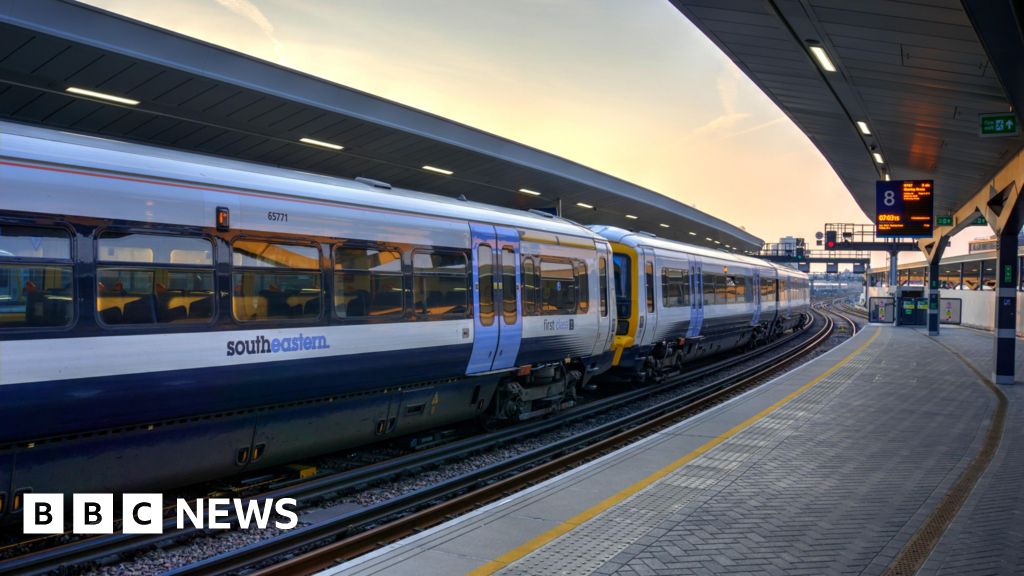
    Rail travellers using services between London and the Kent and East Sussex coast have been warned to check ahead with a new timetable pending.

    South Eastern Railway is introducing the changes on 14 December.

    It will see 29 extra services on the highspeed service between St Pancras International and Faversham.

    Three new locomotives are joining the fleet, with some services getting extra carriages added.

    Among the services to benefit will be commuter trains between Hastings and Charing Cross and Canon Street, and Dartford and Gravesend to Victoria.

    There will also be extra peak time services from Maidstone East and Ashford to London.

    The three new trains are Class 377s, bringing the total number in the operator’s fleet to 36.

    Scott Brightwell from South Eastern Railway, said: “This latest timetable change meets rising demand by increasing services where needed and adding space for extra comfort at the busiest times.

    “Customers can check their amended services now as journey planners have been updated online and full details of the changes can be found on our website.”

    Continue Reading

  • Is Taiwan Semiconductor Manufacturing (TSM) the Most Fantastic Stock to Buy Now?

    Is Taiwan Semiconductor Manufacturing (TSM) the Most Fantastic Stock to Buy Now?

    Taiwan Semiconductor Manufacturing Company Ltd. (NYSE:TSM) is among the most fantastic stocks every investor should pay attention to. The company’s shares have gained nearly 48% year-to-date, and it remains a consensus Buy, with analysts expecting the stock to rise by almost 22% further.

    Pixabay/Public Domain

    Taiwan Semiconductor Manufacturing Company Ltd. (NYSE:TSM) has been in a sweet spot amid the accelerated demand for semiconductors driven by artificial intelligence. As evidence of its importance in the AI value chain, a Bloomberg report from November 8 stated that Nvidia CEO Jensen Huang considered TSMC to be critical to Nvidia’s success and had requested that the company scale up its supplies to meet Nvidia’s ever-rising chip needs. Huang was meeting TSMC’s CEO C.C. Wei on the sidelines of the latter’s company event. At the event, Wei had said that his company would continue to see record sales every year.

    Earlier, on October 27, Needham analyst Quinn Bolton highlighted the potential for TSMC’s 3nm FinFET (N3) capacity to expand, which could lead to substantial revenue growth. He also expected higher volumes from Nvidia’s Rubin GPU in 2026, and thus increased his growth and capital expenditure forecasts for 2026. Bolton had reaffirmed his Buy price target with a $360 price target.

    Taiwan Semiconductor Manufacturing Company Ltd. (NYSE:TSM) is the world’s largest dedicated semiconductor foundry. It produces advanced integrated circuits for global industries, including technology, communications, and automotive.

    While we acknowledge the potential of TSM as an investment, we believe certain AI stocks offer greater upside potential and carry less downside risk. If you’re looking for an extremely undervalued AI stock that also stands to benefit significantly from Trump-era tariffs and the onshoring trend, see our free report on the best short-term AI stock.

    READ NEXT:  13 Best Stocks to Buy According to Citadel LLC and Goldman Sachs Defense Stocks: Top 10 Stocks to Buy.

    Disclosure: None. This article is originally published at Insider Monkey.

    Continue Reading

  • About 1m Ford diesel cars sold in UK with defective emissions controls, court told | Ford

    About 1m Ford diesel cars sold in UK with defective emissions controls, court told | Ford

    About a million Ford diesel cars were sold in the UK with serious defects in components supposed to curb toxic exhaust emissions, the high court has been told.

    The highly polluting vehicles were produced and sold between 2016 and 2018 after Ford’s engineers became aware of the issues, and many were never formally recalled or fixed, lawyers said.

    The claims came in evidence submitted in the legal action on behalf of 1.6 million diesel vehicle owners against five car manufacturers, including Ford, for allegedly using “defeat devices” to cheat emissions tests for nitrogen oxides (NOx).

    Parts of the emissions control systems as calibrated by Ford were discovered to become less effective when “poisoned” by sulphur in fuel during driving, the court heard. In 2017, when tested in service, 27 out of 27 Ford vehicles with Euro 6 engines failed the New European Driving Cycle (NEDC) emissions tests.

    Cross-examining Marcus Davies, Ford’s former calibration manager, in the high court, Thomas de la Mare KC said that the systems had not been “sufficiently tested” and that “the scale of the problem” amounted to “one million vehicles affected”. It was a “generic issue affecting the best part of a million cars”, de la Mare claimed.

    Davies played down the 1m figure. “It’s not every vehicle that would have this problem,” he said.

    New software was implemented in production lines from 2018, and some Ford customers whose cars were serviced at official dealers also received a software update to address the problem, but there was no wider recall, the court was told.

    De La Mare said: “You must have appreciated that the update would not rectify the situation.”

    Davies replied: “It would improve it.”

    “But not make it compliant with the NEDC,” de la Mare replied.

    In the broader case, the claimants argued that Ford had deliberately calibrated its engines to pass certification tests rather than reduce real world driving emissions.

    Referencing the manufacturer’s own internal documents, Ben Jaffey KC, for the claimants, said that as far back as 2012 there was “a very clear recognition that Ford wasn’t using EGR [the exhaust gas recirculation system to reduce NOx] as much as possible”.

    Jaffey said: “The reality is that it was shaped to the requirements of the test and not much else?”

    Davies said: “It was calibrated in part to the requirements of the NEDC.” Changes to trap more NOx “would have been at the expense of the capture of other gases”.

    Documents shown in court also showed that NOx emissions from a Euro 5 transit van surged well beyond regulatory limits when the engine was tested inadvertently in sixth gear. The NEDC tests were normally carried out in fifth gear.

    skip past newsletter promotion

    However, in real-world driving, Jaffey said, the vans’ gear shift indicator encouraged drivers to switch up to sixth gear, where the system to reduce NOx was ineffective, when the van reached speeds of 100km/h (62mph). “It’s hardly Grand Theft Auto, is it?” he said.

    The Ford models included as sample vehicles in the trial include the Mondeo, C-Max Fiesta and Focus cars as well as Transit vans.

    Ford denies having created defeat devices, and in its written submissions described the claim as “scientifically illiterate”.

    Its lawyers said that “a reduction in the effectiveness of NOx control may be a necessary, reasonable and justifiable engineering compromise to maintain overall system stability, protect components from damage, or control other, potentially more harmful, emissions”.

    The three-month hearing that opened last month is examining vehicles sold by Ford and five other manufacturers – Mercedes, Renault, Nissan and Peugeot/Citroën.

    The “Dieselgate” scandal came to light after US scientists said in autumn 2015 that many of Volkswagen diesel engine cars had been equipped with software meant to deliberately falsify emissions tests.

    Millions of vehicles around the world were affected by the alleged misconduct, leading to car owners facing costs that collectively ran into hundreds of millions of euros. It is estimated to have led to thousands of deaths and cases of asthma in children.

    The trial continues.

    Continue Reading

  • Light S.A. (LGSXY) Q3 2025 Earnings Call Transcript

    Light S.A. (LGSXY) Q3 2025 Earnings Call Transcript

    Operator

    Good morning, ladies and gentlemen, and welcome to the Third Quarter Earnings Call for Light. Today’s event will be in Portuguese and will be translated into English. If you would like to listen to the English language audio, you can click on the Interpretation button at the bottom of your screen. We’d like to inform you that this event is being recorded and it will be available at the company’s Investor Relations website along with the materials used in this presentation, which can be downloaded there. [Operator Instructions]

    Before we continue, I would like to state that any remarks during this presentation about the company’s business perspectives, projections, operational and financial goals are simply based on the directors’ beliefs and assumptions. They are based on information that is currently available for the company. Remarks about the future are not a guarantee of performance as they involve risks and assumptions and refer to future events that, therefore, depend on circumstances that may or may not occur. Investors should understand that the general economic conditions, industry conditions and other operating factors may affect the company’s future results and lead to results that differ materially from those expressed in these forward-looking statements.

    After that disclaimer, we will begin the company’s presentation with Mr. Alexandre Nogueira, CEO, who will make his opening remarks; and then we will hear from Rodrigo Tostes, CFO and Investor Relations Officer, who will talk about the company’s results.

    Mr. Alexandre will begin. Go ahead, sir.

    Alexandre Ferreira
    CEO & Member of Executive Board

    Good morning, everyone, and welcome to

    Continue Reading

  • Alibaba condemns FT report on firm’s alleged PLA ties as ‘completely false’, ‘malicious’

    Alibaba condemns FT report on firm’s alleged PLA ties as ‘completely false’, ‘malicious’

    “The assertions and innuendos in the article are completely false,” an Alibaba representative said. “We question the motivation behind the anonymous leak, which the FT admits that they cannot verify.”

    The Alibaba representative called the article a “malicious PR operation” that appears to “undermine President Trump’s recent trade deal with China”.

    Hangzhou-based Alibaba owns the South China Morning Post.
    The report – published early Saturday morning, Hong Kong time – cited a White House memo that claimed Alibaba provided the Chinese government and the People’s Liberation Army (PLA) with access to customer data, including internet protocol addresses, Wi-fi information, payment records and artificial intelligence services.

    Alibaba employees, according to the report, also transferred knowledge about “zero-day” vulnerabilities to the PLA.

    Continue Reading

  • Nidec Posts 82 Pct Profit Drop on Automotive Biz Losses

    Nidec Posts 82 Pct Profit Drop on Automotive Biz Losses

    Economy
    Technology

    Tokyo, Nov. 15 (Jiji Press)–Japanese motor giant Nidec Corp. has said that its consolidated operating profit fell 82.5 pct from a year earlier to 21.1 billion yen for the six months to September, hurt by massive losses at its automotive products business.

    Net profit dropped 58.6 pct to 31.2 billion yen, according to an announcement made on Friday. Nidec again stopped short of disclosing its full-year forecasts.

    For the first half of fiscal 2025, Nidec booked 36.4 billion yen in provisions for possible losses related to contracts with customers as it revised projections for motor control components for electric vehicles. Another negative factor was 31.6 billion yen in impairment losses on nonfinancial assets.

    Meanwhile, the company’s sales reached a record high of 1,302.3 billion yen, driven by strong performance of motors for hard disk drives and other devices.

    Nidec is under investigation by a third-party panel over irregularities, including trade-related problems at an Italian subsidiary and improper accounting by a Chinese unit.

    [Copyright The Jiji Press, Ltd.]

    Jiji Press

    Continue Reading

  • Warren Buffett’s Berkshire builds $4.9 billion stake in Alphabet | World News

    Warren Buffett’s Berkshire builds $4.9 billion stake in Alphabet | World News


    By Alexandre Rajbhandari


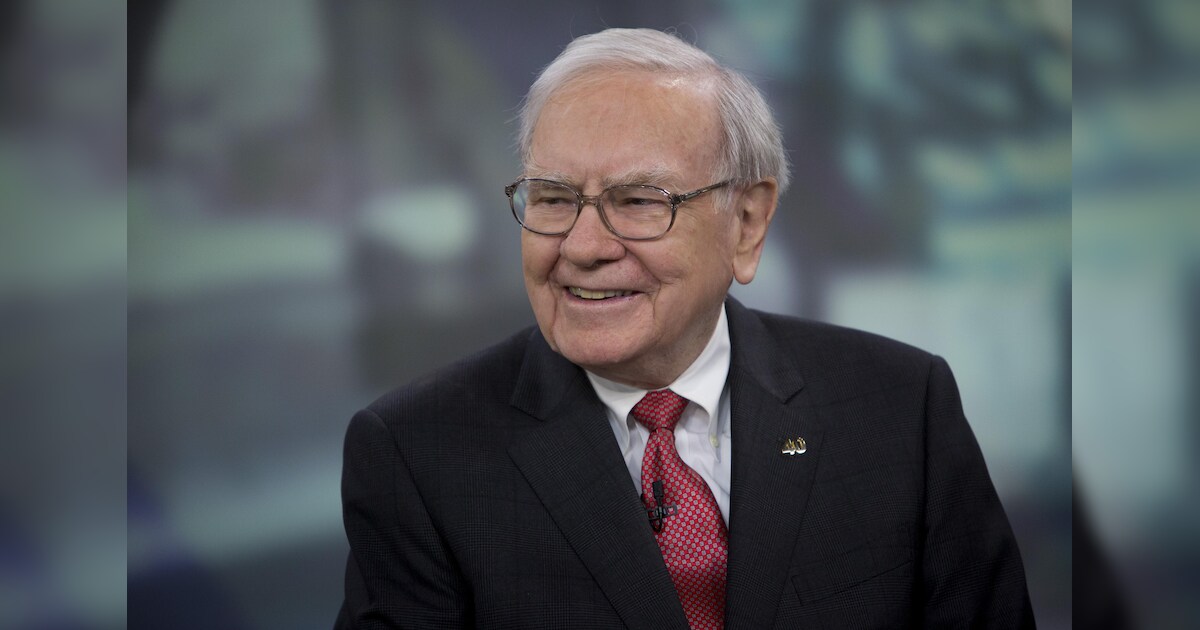
    Warren Buffett’s Berkshire Hathaway Inc. acquired 17.9 million shares of Google parent Alphabet Inc. during the third quarter, while further trimming its holdings in Bank of America Corp. and Apple Inc.


    Berkshire’s Alphabet stake, representing 0.31 per cent of the outstanding shares, according to a regulatory filing Friday, was worth about $4.9 billion as of the market close.


    Shares of Alphabet rose 1.7 per cent to $281 in extended trading at 5:05 p.m. in New York.  


    Buffett, 95, who plans to step down as chief executive officer at year-end, has been finding ways to deploy some of Berkshire’s cash pile, which rose to a record $382 billion at the end of the quarter. The Omaha, Nebraska-based conglomerate recently reached a deal to buy Occidental Petroleum Corp.’s petrochemical business for $9.7 billion and acquired a $1.6 billion stake in UnitedHealth Group Inc.


    Berkshire also added 4.3 million shares of insurer Chubb Ltd., boosting the value of that holding to $8.8 billion at the end of the quarter.


    Still, the company was a net seller of equities during the period, offloading $6.1 billion of stocks. 


    Berkshire trimmed its Apple stake by 15 per cent, leaving it with a holding valued at $60.7 billion as of Sept. 30. The Cupertino, California-based iPhone maker still accounts for almost a quarter of Berkshire’s equity portfolio. 


    The conglomerate sold 37.2 million Bank of America shares, leaving it with a 7.7 per cent stake in the Wall Street firm.


    Berkshire also exited its position in US home builder D.R. Horton Inc., while it continued to add to its holding in Lennar Corp.

    Continue Reading

  • Omda AS (CSAMF) Q3 2025 Earnings Call Transcript – Seeking Alpha

    1. Omda AS (CSAMF) Q3 2025 Earnings Call Transcript  Seeking Alpha
    2. Earnings call transcript: Omda Q3 2025 sees 14% revenue growth  Investing.com
    3. Omda reports 30% EBITDA margin in Q3 2025  TradingView
    4. Omda Q3 2025 presentation slides: Record 30% EBITDA margin despite acquisition dilution  Investing.com India

    Continue Reading