Tens of millions of cubic metres of toxic waste and mud were unleashed through communities surrounding the dam
Mining company BHP has been found liable for a 2015 dam collapse in Brazil, known as the country’s worst-ever environmental disaster, by London’s High Court.
The dam collapse killed 19 people, polluted the river and destroyed hundreds of homes.
The civil lawsuit, representing more than 600,000 people including civilians, local governments and businesses, had been valued at up to £36bn ($48bn).
BHP said it would appeal against the ruling and continue to fight the lawsuit and has said many claimants in the London lawsuit had already been paid compensation in Brazil.
The dam in Mariana, southeastern Brazil, was owned by Samarco, a joint venture between the mining giants Vale and BHP.
The claimants’ lawyers argued successfully that the trial should be held in London because BHP headquarters “were in the UK at the time of the dam collapse”.
A separate claim against Samarco’s second parent company, Brazilian mining company Vale, was filed in the Netherlands, with more than 70,000 plaintiffs.
The dam was used to store waste from iron ore mining. When it burst, it unleashed tens of millions of cubic metres of toxic waste and mud. The sludge swept through communities, destroying hundreds of people’s homes and poisoning the river.
Judge Finola O’Farrell said in her High Court ruling that continuing to raise the height of the dam when it was not safe to do so was the “direct and immediate cause” of the dam’s collapse, meaning BHP was liable under Brazilian law.
BHP is expected to appeal the ruling.
President of BHP’s Minerals Americas, Brandon Craig, said in a statement that 240,000 claimants in the London lawsuit “have already been paid compensation in Brazil”.
“We believe this will significantly reduce the size and value of claims in the UK group action,” he added.
The lawsuit has been littered with different clashes between the UK firm representing the claimants, Pogust Goodhead, and BHP.
BHP always denied liability and said the London lawsuit duplicated legal proceedings and reparation and repair programmes in Brazil.
BHP and Vale have set up an organisation called the Renova Foundation tasked with compensating victims. It has offered them either cash compensation, or a house in a new city that the foundation has built to replace the town of Novo Bento and has disbursed billions of dollars in repair and compensation actions to hundreds of thousands of people.
In June, a presentation by BHP and Vale’s Samarco venture said around 130,000 people in Brazil had reached settlements with them. In response, Pogust Goodhead alleged the companies had pressured claimants to “settle their claims at far below their true value” and that it would seek £1.3bn in unpaid fees lost as a result.
It alleged that a $30.3bn compensation agreement which Brazil signed with BHP, Vale and Samarco in October 2024 prevented claimants from discussing the deal with the firm or paying its legal fees.
The firm said it had incurred $1bn in borrowing costs to finance the English case.
BHP said it rejected Pogust Goodhead’s allegations in their entirety and dispute “their factual and legal basis.”
It said the claims were “without merit” and BHP would “vigorously contest them.” A spokesperson also said that the firm continued to believe Brazil was the most appropriate, effective, and efficient place for compensation for the dam collapse.
AFP via Getty Images
Some of those affected by the disaster travelled to the High Court last year
But there were also parallel claims that Pogust Goodhead – which promotes itself as a firm representing human rights and environmental law – had tried to profit off “vulnerable” Brazilians.
During proceedings the firm was accused of “misleading” vulnerable Brazilians for its own gain by a Brazilian judge in the state of Minas Gerais.
Pogust Goodhead rejected the accusation at the time as “without merit”.
In a claim brought by the Public Prosecutors and Public Defenders in Brazil against Pogust Goodhead, the judge criticised several “allegedly abusive clauses” in Pogust Goodhead’s contracts with Brazilians who suffered damage.
Among these, it alleges the law firm engaged in “misleading advertising” considering the “hypervulnerability of those affected”.
It also alleges “undue charging of fees on compensation amounts obtained extrajudicially in Brazil” which it said represents “illicit enrichment that diverts essential resources from those affected” and “excessive” penalties for claimants who terminated their contracts which it said “discouraged” them from joining national compensation programmes.
The former Brazilian ambassador in London and Washington, Rubens Barbosa, told the BBC earlier this year that he believed this amounted to spreading misleading information in Brazil.
Mr Barbosa said bringing the case to London “hinders efforts to resolve the matter locally” and the “extremely vulnerable Brazilians were misled” by contracts.
A leading artificial intelligence company claims to have stopped a China-backed “cyber espionage” campaign that was able to infiltrate financial firms and government agencies with almost no human oversight.
The US-based Anthropic said its coding tool, Claude Code, was “manipulated” by a Chinese state-sponsored group to attack 30 entities around the world in September, achieving a “handful of successful intrusions”.
This was a “significant escalation” from previous AI-enabled attacks it monitored, it wrote in a blogpost on Thursday, because Claude acted largely independently: 80 to 90% of the operations involved in the attack were performed without a human in the loop.
“The actor achieved what we believe is the first documented case of a cyber-attack largely executed without human intervention at scale,” it wrote.
Anthropic did not clarify which financial institutions and government agencies had been targeted, or what exactly the hackers had achieved – although it did say they were able to access their targets’ internal data.
It said Claude had made numerous mistakes in executing the attacks, at times making up facts about its targets, or claiming to have “discovered” information that was free to access.
Policymakers and some experts said the findings were an unsettling sign of how capable certain AI systems have grown: tools such as Claude are now able to work independently over longer periods of time.
“Wake the f up. This is going to destroy us – sooner than we think – if we don’t make AI regulation a national priority tomorrow,” the US senator Chris Murphy wrote on X in response to the findings.
“AI systems can now perform tasks that previously required skilled human operators,” said Fred Heiding, a computing security researcher at Harvard University. “It’s getting so easy for attackers to cause real damage. The AI companies don’t take enough responsibility.”
Other cybersecurity experts were more sceptical, pointing to inflated claims about AI-fuelled cyber-attacks in recent years – such as an AI-powered “password cracker” from 2023 that performed no better than conventional methods – and suggesting Anthropic was trying to create hype around AI.
“To me, Anthropic is describing fancy automation, nothing else,” said Michal Wozniak, an independent cybersecurity expert. “Code generation is involved, but that’s not ‘intelligence’, that’s just spicy copy-paste.”
Wozniak said Anthropic’s release was a distraction from a bigger cybersecurity concern: businesses and governments integrating “complex, poorly understood” AI tools into their operations without understanding them, exposing them to vulnerabilities. The real threat, he said, were cybercriminals themselves – and lax cybersecurity practices.
skip past newsletter promotion
after newsletter promotion
Anthropic, like all leading AI companies, has guardrails that are supposed to stop its models from assisting in cyber-attacks – or promoting harm generally. However, it said, the hackers were able to subvert these guardrails by telling Claude to role-play being an “employee of a legitimate cybersecurity firm” conducting tests.
Wozniak said: “Anthropic’s valuation is at around $180bn, and they still can’t figure out how not to have their tools subverted by a tactic a 13-year-old uses when they want to prank-call someone.”
Marius Hobbhahn, the founder of Apollo Research, a company that evaluates AI models for safety, said the attacks were a sign of what could come as capabilities grow.
“I think society is not well prepared for this kind of rapidly changing landscape in terms of AI and cyber capabilities. I would expect many more similar events to happen in the coming years, plausibly with larger consequences.”
Retailers Confront Tariff Whiplash: CBS’s “Next Frontier in Retail” Discussion Focuses on Resilient, Regenerative Supply Chains Columbia Business School
Data Quality and Skill Gaps Pose Major Barriers to AI Adoption Pharmaceutical Commerce
How to manage manufacturing amid changes to the global trade landscape Crain’s Detroit Business
The Chinese government has expressed “extreme disappointment” with the Dutch minister at the heart of a row over chip supply to the car industry.
A spokesperson for the ministry of commerce was responding to an interview by Vincent Karremans on Thursday in which he described the standoff between China and the European Union as a “wake-up call” for western leaders.
The spokesperson said: “China has noted the recent remarks made by Dutch minister of economic affairs Karremans in media interviews. China expresses extreme disappointment and strong dissatisfaction with such remarks that confuse right and wrong, distort facts and persist in a single-minded course.
“The profound lesson this semiconductor supply chain crisis has taught the world is that administrative measures should not be used to improperly interfere with corporate operations.”
Beijing imposed a worldwide ban on exports of chips from Nexperia at the beginning of the October, almost bringing the global car industry to a halt.
Its drastic action followed a decision by the Dutch government to take supervisory control of the Chinese-owned company at the end of September citing economic security issues.
In the interview Karremans said the Dutch government had received intelligence that the Chinese CEO was “moving away intellectual property rights, they were firing people and they were looking to relocate production to China” from its subsidiary factory in Hamburg.
Nexperia is a subsidiary of Wingtech Technology, a Shanghai-listed company, which bought the Dutch chip maker in 2018.
Karremans said he had no regrets about the steps his government took, saying on the basis of the information he had now, he would do it all over again.
But his actions have infuriated China, which instead of entering a bilateral battle on behalf of Wingtech, ordered a global ban on exports of Nexperia chips which are all finished in China.
The spokesperson for the Chinese ministry described a court decision to suspend the Chinese boss of Nexperia as “erroneous” and blamed the export ban directly on the Dutch.
“This unwise and impulsive act, which violates the spirit of contract, is the root cause of the turmoil and chaos in the global semiconductor supply chain,” it said.
A delegation from the Netherlands is travelling to Beijing next week in an effort to find a long-term resolution to the row, with Karremans expected to travel there next month on a pre-scheduled trade trip.
The cyber-attack that closed Jaguar Land Rover factories has pushed the company from profit into a quarterly loss of almost £500m, the carmaker has revealed.
JLR made pre-tax losses of £485m in the three months to 30 September, with production shut down throughout September due to the hack – a brutal turnaround from the £398m profit it recorded in the same period a year earlier, and ending 11 consecutive quarters of profit.
With factories only now returning to full output after a phased restart in October, the total financial impact of the hack on JLR is yet to be quantified.
The hack has been estimated to have cost the wider UK economy up to £1.9bn, and was blamed by the government for dragging down the quarterly GDP growth figures, announced earlier on Friday, to 0.1%.
JLR reported £196m of exceptional direct costs in addressing the hack, including hiring in global IT expertise as it restarted its systems.
The manufacturer confirmed that car production had returned to normal levels, with all plants “at or approaching capacity”, after it closed its plants in the UK and elsewhere immediately after the hack.
The carmaker said that the impact of Trump’s tariffs, which led briefly to a pause in exports to the US and are now set at 10% under the UK-US trade deal, had contributed to the unprecedented losses.
The winding down of the manufacture of older Jaguar models was another factor, JLR said. More than 150 prototypes of its new electric Jaguar had been completed, it added, with testing continuing.
The outgoing JLR chief executive, Adrian Mardell, said: “JLR has made strong progress in recovering its operations safely and at pace after the cyber incident. In our response we prioritised client, retailer and supplier systems and I am pleased to confirm that production of all our luxury brands has resumed.
“The speed of recovery is testament to the resilience and hard work of our colleagues. I am extremely grateful to all our people who have shown enormous commitment during this difficult time.”
Mardell, who will hand over to ex-Tata Motors chief financial officer, PB Balaji, said JLR was poised to deliver the outcome of “an extraordinary period of British design and engineering”, with the arrival of the new electric Range Rover and Jaguar models, whose launch has been delayed until at least 2026.
The JLR chief financial officer, Richard Molyneux, declined to confirm a launch date, adding: “We will launch it when it is perfectly right.”
He said the investigation into the cyber incident was still live, and the company was continuing to work closely with law enforcement agencies.
JLR had been able to process some sales and registrations manually in September, which is normally the car industry’s busiest month. Molyneux declined to put a single figure on the financial impact of the hack, adding: “Some of the volume we will get back, some we will not.”
skip past newsletter promotion
after newsletter promotion
But he said the company had “used the downtime wisely”, including accelerating development and testing work for electrification.
The wider supply chain was also severely affected. The business secretary, Peter Kyle, on Thursday rejected criticisms from some in the car industry that the government had not provided help to companies in JLR’s supply chain.
The government offered JLR a guarantee on a loan facility worth up to £1.5bn. However, the Guardian revealed that JLR has not drawn down any of the money.
Molyneux said JLR had so far drawn down £500m from a separate £2bn bank facility it had earlier agreed.
Kyle said the guarantee “gave the space for JLR to focus on resumption and not constantly just panic about money”, but added that it should be responsible for helping its suppliers. He added that “any company in the supply chain that is in extreme distress and is not being supported by JLR should contact my department”.
JLR has paid upfront for parts from 56 suppliers in an effort to prevent a cash crunch.
Two separate consultations have been launched on how inflation is adjusted annually for the Renewables Obligation (RO) and the Feed-In Tariff (FiT) schemes by the UK government’s Department for Energy, Security and Net Zero (DESNZ).
The RO has incentivised UK renewable electricity generation since 2002 via a system of tradable ‘Renewables Obligation Certificates’ (ROCs). Although the RO scheme closed to new projects completely in 2019, generators will continue to receive payments until they come off it in a decade-long transition period starting in 2027.
Three separate but complementary RO schemes cover the UK. The UK government is responsible for RO legislation in England and Wales, while Holyrood and Stormont are responsible for the legislation of their respective schemes, all of which come under the administration of regulator Ofgem.
Meanwhile the FiT scheme ran between 2010 and 2019 to support small scale electricity generation (up to 5 MW), with a view to helping organisations, businesses, communities and individuals via solar PV, onshore wind, hydropower, anaerobic digestion, and microcombined heat and power (less than 2 kW). It provides fixed payments for the electricity they generate and export to the grid, with support continuing to be provided to generators until 2043.
But as part of a UK-wide drive to cut energy bills for consumers, DESNZ is running consultations into how to decrease costs of both schemes – including shifting how inflation increases are calculated by using the consumer prices index (CPI) instead of the retail prices index (RPI).
Ronan Lambe, a renewable energy expert at Pinsent Masons, explained this change could undermine confidence in the schemes from both consumers and energy generators.
“The changes under consultation are likely to be seen by the developer and investor community as a moving of the goalposts by the government,” he said.
“If implemented, the changes would have significant impact on the economics of existing projects, not just a reduction in the value of FiT or ROC revenue. Many projects will have ongoing operating expenses, the cost of which is indexed in accordance with RPI. If project revenues no longer attract RPI indexation, there’s an immediate mismatch between operating expenses and project revenues.
“While reducing electricity bills for industry and domestic consumers is a laudable aim, it shouldn’t come at the cost of reducing confidence in the UK as a destination for key energy investments.”
CPI has been used since 2003 as the official way to measure inflation, tracking the change in costs of goods and services annually, and tracks the prices of items in a representative shopping basket of household items. RPI, however, uses a different formula to calculate inflation rates, and also includes household costs such as council tax or mortgage repayments, which means it usually tracks higher than CPI figures.
A move to using the CPI for the ventures would bring them into line with other schemes, such as the government’s Green Gas Support Scheme.
Martin McGuinness, an energy expert at Pinsent Masons, said any potential switch to the previous agreed terms for either or both schemes could have longer term repercussions.
He added: “Although these consultations are not too much of a surprise following the focus on reducing bills and the terms of the recent Green Gas Support Scheme, it remains to be seen whether generators and their backers will accept this shift without putting markers down, whether in terms of strongly worded consultation responses or even legal challenges.
“Any adverse impact on forecasted revenues could be difficult to forget among the generator and investor communities.”
The RO consultation runs until 28 November, with the FiT one open until 12 December.
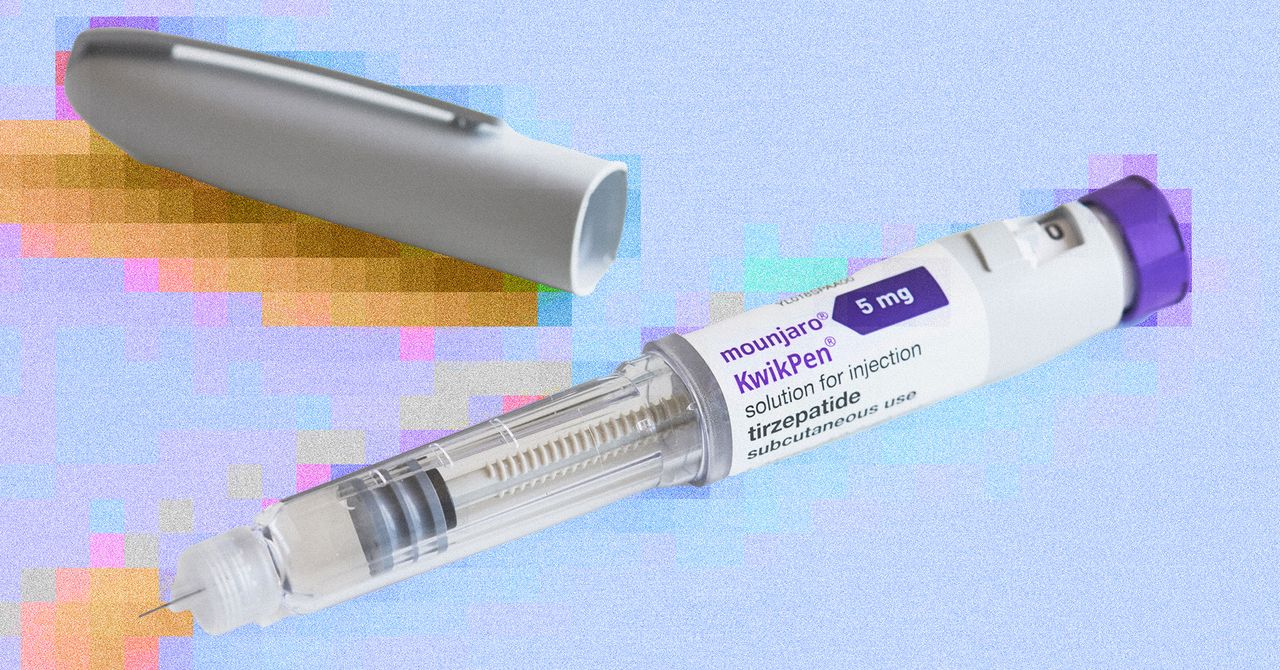
Obesity wonder drugs Wegovy and Zepbound are already showing that they can reduce the risk of cardiovascular and chronic kidney disease in addition to helping people lose weight. Now, a US-wide trial will test whether tirzepatide, the active ingredient in Zepbound, may be an effective treatment for people with long Covid.
Part of a class of drugs known as GLP-1s, tirzepatide acts on receptors in the gut and the brain to regulate appetite. As a result, people shed pounds by eating less. But decreased body weight doesn’t fully explain the positive effects on the heart and kidney. Mounting evidence suggests that the drugs have a broad anti-inflammatory effect on the body—a mechanism that’s of interest for treating long Covid.
As many as 20 million people in the US have experienced long Covid, a chronic condition that lasts for at least three months after an initial infection. While more than 200 symptoms of long Covid have been documented, some of the most common include coughing, shortness of breath, brain fog, fatigue, mood changes, trouble sleeping, and body aches.
Scientists still don’t fully understand how and why long Covid occurs, but they’ve found persistent inflammation in many patients. This chronic inflammation may be caused by lingering traces of virus in the body or by misdirected antibodies, known as autoantibodies, that attack a person’s own cells and tissues. The hope is that tirzepatide could tamp down this inflammation to improve patients’ symptoms.
“The rationale for a GLP-1 drug is its powerful body-wide and brain anti-inflammatory properties,” says Eric Topol, a cardiologist and the director of the La Jolla, California-based Scripps Research Translational Institute, which is sponsoring the trial.
Scripps researchers are recruiting 1,000 people across the country who are 18 years of age or older and have medical documentation of long Covid. Unlike most medical studies, which typically require multiple in-person visits, the Scripps trial is fully remote. Participants will be randomized to receive either tirzepatide or a placebo by mail and will take it for a year. They’ll receive a fitness tracker so that researchers can measure their step count, an important indicator of fatigue. Participants will also get a smart scale and will weigh in regularly. Since GLP-1s are used for weight management, study investigators want to make sure participants don’t lose too much weight during the trial.
Julia Moore Vogel, coprincipal investigator of the trial who herself has long Covid, says the remote design of the trial was intentional. “For the long Covid population, it’s so crucial, because if you’re requiring people to come into a clinic, you’re systematically excluding the most severely affected folks who are housebound or bedbound. It was really important to us to make sure that those people are included.”
On 23 October 2025, the Court of Justice of the European Union (CJEU) upheld the Commission’s 2020 decision fining Teva and Cephalon a total of €60.5m for entering into a patent settlement agreement that delayed the market entry of a generic version of the sleep-disorder drug Provigil. The judgment serves to cement the approach to so-called “pay-for-delay” agreements set out in recent high-profile judgments, as well as to highlight the risks that can arise where parties conclude commercial side-agreements as part of a patent settlement.
Background
The case centred on Cephalon’s Provigil product (the active ingredient in which is modafinil), which accounted for 40% of Cephalon’s global turnover. Although the main patents expired in 2005, Cephalon relied on secondary formulation patents to preserve its exclusive right to market the product.
Teva developed its own process patents and launched a generic modafinil in the UK in mid-2005, prompting infringement proceedings from Cephalon. The dispute was settled that December, and the terms of the settlement later became the focus of the Commission’s investigation. In 2011, Cephalon was acquired by Teva after the transaction was notified to and approved by the Commission.
The Commission’s findings: a transfer of value with a restrictive purpose
According to the Commission, the settlement contained two key restrictive clauses:
a non-compete clause, pursuant to which Teva agreed not to market generic modafinil in the EEA until 2012; and
a non-challenge clause, pursuant to which Teva agreed not to contest Cephalon’s modafinil patents.
In return, Cephalon provided Teva with several financial and commercial benefits, including in the form of an up-front payment for avoided litigation costs, and agreements to: (i) purchase modafinil API from Teva at a premium; (ii) grant Teva UK distribution rights for Cephalon’s products; (iii) grant Teva access to Cephalon’s clinical data for a separate product; and (iv) grant Teva a licence to market generic modafinil in the EEA starting in 2012.
The Commission found that these transactions represented a transfer of value with no legitimate business rationale beyond inducing Teva to stay out of the market. This eliminated potential competition, allowing Cephalon to maintain supra-competitive prices after patent expiry.
The Commission therefore concluded that the settlement arrangements comprised an agreement whose object and effect was to restrict competition, in breach of Article 101 of the Treaty on the Functioning of the European Union (TFEU). In doing so, it applied the principles established in the leading case of Generics (UK), which articulated the following two-limb test for determining whether a patent settlement agreement amounts to a restriction of competition “by object”.
i. First, authorities must assess whether the transfers of value provided for by the agreement have any explanation other than the parties’ shared commercial interest not to compete on the merits. If they do not, a by-object restriction is prima facie established.
ii. Even where that first limb is met, the agreement will not be a by-object restriction if it has proven pro-competitive effects capable of creating reasonable doubt that it causes a sufficient degree of harm to competition.
The Commission imposed fines of €30m on Teva and €30.5m on Cephalon.
Appeal before the General Court
Teva and Cephalon appealed. In October 2023, the General Courtdismissed the challenge, confirming that the Commission had correctly applied the framework from Generics (UK).
The General Court found that the side-deals were economically irrational for Cephalon absent Teva’s agreement not to compete, and formed a single contractual framework whose object was to restrict competition. Assessing whether the arrangements would have been concluded on similar terms without the restrictive clauses was, according to the General Court, a legitimate part of the “by-object” analysis. Claimed efficiencies – such as litigation cost savings or supply stability – were deemed to be unsubstantiated.
The CJEU confirms the finding of infringement
Teva and Cephalon submitted two grounds in support of their further appeal, alleging that the General Court had erred when: (i) applying the legal test from Generics (UK) to establish that there was a restriction of competition by object; and (ii) assessing whether there was a restriction of competition by effect.
In short, the CJEU dismissed Teva and Cephalon’s appeal in full, upholding the General Court’s conclusion that the parties’ settlement agreement was a restriction of competition by object. The CJEU’s findings on each ground of appeal were as follows.
Ground 1: Alleged errors of law in classifying the settlement as a restriction by object
The appellants claimed that the General Court had misapplied both parts of the test in Generics (UK).
In relation to the first limb of the test, the parties’ arguments and the CJEU’s conclusions were as follows:
By comparing what was concluded in the settlement with what would have been agreed between the parties absent the restrictive non-compete and non-challenge clauses, the General Court had conducted a counterfactual analysis – something that should be done when assessing whether an agreement has restrictive effects, rather than a restrictive object. This amounted to an error of law on the General Court’s part, including because it had failed to establish that each of the commercial transactions in the settlement would not have been agreed absent the restrictive clauses.
The CJEU noted that, when deciding whether a patent settlement amounts to a by-object restriction, it is necessary to conduct a detailed, overall assessment of the agreement and its context – including the parties’ interests and the incentive effect of any transfers of value. The presence of restrictive clauses, such as non-compete and non-challenge clauses, is not in itself sufficient.
That being the case, whilst the General Court’s assessment of the incentives flowing from the settlement agreement involved a hypothetical scenario, that didn’t mean it was actually carrying out a counterfactual assessment of anticompetitive effects. Rather, the General Court was seeking to establish that, as a whole, the value-transfers to Teva could be explained only as an inducement for it to stay out of the market, in line with limb one of the Generics (UK) test. Further, there was nothing to prevent counterfactual elements being taken into account when making a finding of infringement by object.
a. The General Court formulated a stricter legal standard than the test in Generics (UK) and reversed the burden of proof, by requiring the appellants to show that they would have entered into the same commercial arrangements, on equally favourable terms, absent the restrictive clauses.
The CJEU concluded that the General Court had made no such error of law in its assessment. Rather, the appellants having argued that each of the side-deals could legitimately be explained, the General Court had examined whether their purpose was in fact to serve as consideration for Teva’s non-compete and non-challenge commitments. This examination led the General Court to conclude that, by establishing that the value-transfers to Teva had no purpose other than to induce it to agree to the restrictive clauses, the Commission had duly discharged the burden of demonstrating that the side-deals had no plausible explanation other than the interest of both parties not to compete on the merits.
b. By considering the conclusion of the commercial transactions in isolation from Cephalon and Teva’s patent dispute, the General Court had applied a test that was effectively impossible for the appellants to meet.
The CJEU concluded this complaint was unfounded. The General Court had not, as the appellants argued, required them to justify the side-deals on a standalone basis, absent the patent settlement. Rather, the General Court had evaluated the relevant commercial transactions against the context of the settlement of the parties’ disputes and found, on the facts, that these transactions increased the overall transfer of value to Teva, in order to induce acceptance of the restrictive clauses. This assessment was in line with the correct legal test.
In relation to the second limb of the Generics (UK) test, the appellants submitted that the General Court had failed adequately to address their arguments that the settlement’s pro-competitive effects cast reasonable doubt on the degree of harm it caused to competition. In this regard the parties pointed to the Teva/Cephalon merger clearance decision, in which the Commission stated that the settlement agreement between the parties had removed the IP barriers preventing entry and would enable Teva to become Cephalon’s most significant competitor on the modafinil market (once the licence between them took effect in 2012).
The CJEU found that the appellants’ arguments were: (i) inadmissible, as new arguments; and (ii) ineffective, as they blurred the distinction between the analytical framework for merger control and for assessments under Article 101 TFEU. Additionally, the General Court had in effect previously examined and rejected this argument, classifying Teva’s entry to the modafinil market as “delayed, controlled and limited”, as a result of the patent settlement.
Ground 2: Alleged errors in finding a restriction by effect
Given that a restriction of competition by object was established, the CJEU found it was not necessary to then examine the anticompetitive effects of the concerned agreement.
Key takeaways
The CJEU’s judgment further consolidates the Generics (UK) framework as the governing standard when assessing reverse-payment patent settlements under EU competition law.
The judgment also reaffirms that, where value-transfers to a potential generic entrant take the form of favourable commercial side-agreements rather than a monetary payment, they will be assessed in their totality with a view to determining whether their value is such that they can only be explained as an inducement for the generic manufacturer to stay out of the market. In this regard, the CJEU again emphasised (as it did in last year’s Perindopril judgment) that value-transfers that exceed what is necessary to compensate the generic manufacturer for litigation expenses and disruption and/or for the supply of goods or services are unlikely to be capable of being justified.
Therefore, whilst the CJEU affirmed in the judgment that the Generics (UK) test does not preclude the conclusion of commercial side-agreements as part of an overall patent settlement, parties entering into such agreements should take care when assessing and documenting their value and rationale – even where the settlement itself does not provide for a cash payment to the potential entrant.

 AFP via Getty Images
 AFP via Getty Images