The Australian market is poised for a quiet end to the week, with futures indicating a slight decline of around 0.5%, following a turbulent period influenced by high job cuts in the US and ongoing concerns about AI valuations. Despite these broader market challenges, investors often seek opportunities in lesser-known areas like penny stocks, which can offer affordability and potential growth. Although the term “penny stocks” might seem outdated, it still holds significance as these smaller or newer companies can present unique investment opportunities when backed by strong financial health.
Name
Share Price
Market Cap
Financial Health Rating
Alfabs Australia (ASX:AAL)
A$0.475
A$136.13M
★★★★★☆
EZZ Life Science Holdings (ASX:EZZ)
A$2.42
A$114.16M
★★★★★★
Dusk Group (ASX:DSK)
A$0.88
A$54.8M
★★★★★★
IVE Group (ASX:IGL)
A$2.92
A$448.77M
★★★★★☆
MotorCycle Holdings (ASX:MTO)
A$3.69
A$272.35M
★★★★★★
West African Resources (ASX:WAF)
A$3.04
A$3.47B
★★★★★★
Service Stream (ASX:SSM)
A$2.14
A$1.31B
★★★★★★
Fleetwood (ASX:FWD)
A$2.77
A$256.45M
★★★★★★
Perenti (ASX:PRN)
A$2.57
A$2.42B
★★★★★★
GWA Group (ASX:GWA)
A$2.38
A$625.38M
★★★★★☆
Click here to see the full list of 416 stocks from our ASX Penny Stocks screener.
Here we highlight a subset of our preferred stocks from the screener.
Simply Wall St Financial Health Rating: ★★★★★★
Overview: EZZ Life Science Holdings Limited is involved in the formulation, production, marketing, and sale of health and wellbeing products across Australia, New Zealand, Mainland China, and South-East Asia with a market cap of A$114.16 million.
Operations: The company’s revenue is primarily derived from its Company Owned segment, which generated A$63.21 million, and the Brought in Lines segment, contributing A$3.66 million.
Market Cap: A$114.16M
EZZ Life Science Holdings has demonstrated financial resilience with A$66.87 million in sales for the year ending June 2025, maintaining steady revenue growth despite a slight decline in net income to A$6.73 million. The company boasts strong liquidity, with short-term assets of A$33 million comfortably covering both short and long-term liabilities. EZZ’s debt-free status enhances its financial stability, while its high Return on Equity at 24% indicates efficient management of shareholder funds. However, recent removal from the S&P/ASX Emerging Companies Index may signal challenges ahead amidst negative earnings growth over the past year compared to industry averages.
ASX:EZZ Financial Position Analysis as at Nov 2025
Simply Wall St Financial Health Rating: ★★★★★☆
Overview: Mayne Pharma Group Limited is a specialty pharmaceutical company that commercializes women’s health and dermatology pharmaceuticals across Australia, New Zealand, the United States, Canada, Europe, Asia, and other international markets with a market cap of A$398.10 million.
Operations: The company’s revenue is derived from three main segments: A$154.09 million from dermatology, A$75.64 million from international markets, and A$178.37 million from women’s health pharmaceuticals.
Market Cap: A$398.1M
Mayne Pharma Group’s recent earnings report for the year ending June 2025 shows revenue of A$408.1 million, up from A$388.4 million the previous year, with a reduced net loss of A$93.84 million compared to A$174.23 million prior. Despite this improvement, the company remains unprofitable with a negative return on equity of -24.32%. Short-term assets exceed short-term liabilities by over A$90 million but fall short against long-term liabilities by approximately A$30 million. The management and board are experienced, with average tenures exceeding three years, while debt levels have decreased significantly over five years.
ASX:MYX Revenue & Expenses Breakdown as at Nov 2025
Simply Wall St Financial Health Rating: ★★★★★★
Overview: Spheria Emerging Companies Limited is an Australian investment company with a market cap of A$169.43 million.
Operations: The company’s revenue segment consists solely of Investment Activities, generating A$24.25 million.
Market Cap: A$169.43M
Spheria Emerging Companies Limited, with a market cap of A$169.43 million, has shown robust financial performance. Its earnings surged by 116% over the past year, significantly outpacing the industry average. The company maintains a strong balance sheet with no debt and short-term assets of A$146.8 million covering both short and long-term liabilities comfortably. Despite a low return on equity at 11.5%, its price-to-earnings ratio of 10.3x suggests good value compared to the broader Australian market average of 20.7x. Recent board changes include Marcus Burns’ appointment as director, enhancing strategic leadership with his extensive financial markets experience.
ASX:SEC Financial Position Analysis as at Nov 2025
This article by Simply Wall St is general in nature. We provide commentary based on historical data and analyst forecasts only using an unbiased methodology and our articles are not intended to be financial advice. It does not constitute a recommendation to buy or sell any stock, and does not take account of your objectives, or your financial situation. We aim to bring you long-term focused analysis driven by fundamental data. Note that our analysis may not factor in the latest price-sensitive company announcements or qualitative material. Simply Wall St has no position in any stocks mentioned.
Companies discussed in this article include ASX:EZZ ASX:MYX and ASX:SEC.
This article was originally published by Simply Wall St.
Have feedback on this article? Concerned about the content? Get in touch with us directly. Alternatively, email editorial-team@simplywallst.com
Drax power plant has continued to burn 250-year-old trees sourced from some of Canada’s oldest forests despite growing scrutiny of its sustainability claims, forestry experts say.
A new report suggests it is “highly likely” that Britain’s biggest power plant sourced some wood from ecologically valuable forests as recently as this summer. Drax, Britain’s single biggest source of carbon emissions, has received billions of pounds in subsidies from burning biomass derived largely from wood.
The report, by Stand.earth, a Canadian environmental non-profit, claims that a subsidiary of Drax Group received hundreds of truckloads of whole logs at its biomass pellet sites throughout 2024 and into 2025, which were likely to have included trees that were hundreds of years old.
The report could raise fresh questions for the owner of the North Yorkshire power plant, which has been forced in recent years to defend its sustainability claims while receiving more than £2m a day in green energy subsidies from UK bill payers.
The report’s findings suggest that the power plant was burning “irreplaceable” trees even as its owners lobbied the UK government for the additional green energy subsidies, which were granted earlier this week.
Logs at the Burns Lake plant. Drax has been forced to defend its sustainability claims. Photograph: Desiree Wallace/Stand.earth
The company has claimed that it sources wood only from “well‐managed, sustainable forests” to manufacture the pellets that are shipped from its sites in Canada and the US to be burned at its UK power plant.
But these claims have been questioned by Britain’s energy regulator and the Financial Conduct Authority after a BBC Panorama documentary in 2022 reported that Drax had cut down primary forests in Canada to turn into wood pellets.
The latest investigation into the company’s green credentials, seen by the Guardian, uses official data from the government of British Columbia, along with satellite monitoring, to back claims that a Canadian subsidiary owned by Drax sourced 250-year-old trees to manufacture biomass pellets as recently as this year.
‘Old-growth’ forests at risk
The report claims that the company received 90 truckloads of logs sourced from “old-growth forests” in the Skeena region of British Columbia, home to some of Canada’s largest undeveloped wilderness areas.
Old-growth forests are defined by the local government as areas that include trees older than 250 years in slow-growth ecosystems, or older than 140 years in ecosystems in which trees are replaced more quickly.
Drax said in October 2023 it had stopped sourcing wood from areas designated by the government of British Columbia as “protected” or “deferred” old-growth forest stands, but it did not dispute that it was still sourcing wood from other sites containing old growth.
Responding to the Stand.earth report, a spokesperson for Drax said: “Our sourcing policy means Drax does not source biomass from designated areas of old growth and only sources woody biomass from well-managed, sustainable forests.”
These designated areas of old growth amount to less than half of the total old-growth forest areas in British Columbia. Figures from the BC government show that designated areas total 5.3m hectares, while the total area of old-growth forest in the province spans 11.1m hectares. Another 3.7m hectares are protected under separate designation schemes.
Stand.earth claims that in 2024 and 2025 Drax received at least an additional 425 truckloads of whole logs from “cutblocks” – areas of forest land designated for timber harvesting – which contained old-growth forests.
The report claims that 63 of these loads came from three cutblocks that contained more than 90% old-growth forest, “meaning that this purchase almost certainly contained old growth”.
It added that the remaining 362 lorry loads of whole logs came from 22 cutblocks in the Skeena region that were more than 80% old growth, meaning that it was “likely” they contained old growth.
“The true volume of old growth sourced by Drax is likely higher than what our research was able to track, because of spatial data limitations,” the report said.
skip past newsletter promotion
after newsletter promotion
‘A tree standing up in a forest is not waste’
Tegan Hansen, the lead author of Stand.earth’s report, told the Guardian that the loss of British Columbia’s old-growth trees was “a big problem that’s getting bigger”.
“The region where Drax is operating is an area where we’ve tracked a disproportionate amount of logging in high-risk forests with our satellite monitoring system Forest Eye. With how logging works here in BC, there isn’t really a way for Drax to be operating in these areas and not include old-growth forests in their wood supply. The people of the UK should know that the risk of old-growth trees being cut down to produce wood pellets is higher than ever,” Hansen said.
As part of the investigation, Hansen visited a biomass pellet production site, owned by a Canadian subsidiary of Drax, where the company’s reliance on whole logs was apparent.
“It was quite stark. The yards are sprawling and there were huge piles of logs there. These were large, healthy trees of different ages. We saw some trees which had been scorched by fire, but they were still alive when they were cut, which was apparent by the oozing sap,” she said.
Stand.earth says that Drax received 425 truckloads of whole logs from ‘cutblocks’ that contained old-growth forests. Photograph: Desiree Wallace/Stand.earth
Drax said the “low-grade” wood used to make biomass pellets had typically been rejected by commercial sawmills and either sold to the biomass industry as waste wood or burned to prevent wildfires. A spokesperson said it was “far better to use [waste wood] to generate renewable electricity rather than leaving it to burn”.
The rules that allow companies in the forestry industry to disregard old growth as commercial waste are part of the problem, Hansen said.
“Even exceptionally old trees can rot in the middle, which is one of their features that makes them so important for wildlife, but could mean the tree is called defective by the logging industry. This could mean that the tree is dismissed as waste wood. But a tree standing up in a forest is not waste,” she said.
“Drax has come into British Columbia claiming to solve some of the problems that our forestry industry has, but they have not. It’s very disheartening, and offensive, to hear Drax claiming to be solving these problems when really they’re entrenching some of the problems that we have in forestry here,” Hansen said.
Quick Guide
Contact Guardian Business about this story
Show
The best public interest journalism relies on first-hand accounts from people in the know.
If you have something to share on this subject you can contact the Business team confidentially using the following methods.
Secure Messaging in the Guardian app
The Guardian app has a tool to send tips about stories. Messages are end to end encrypted and concealed within the routine activity that every Guardian mobile app performs. This prevents an observer from knowing that you are communicating with us at all, let alone what is being said.
If you don’t already have the Guardian app, download it (iOS/Android) and go to the menu. Scroll down and click on Secure Messaging. When asked who you wish to contact please select the Guardian Business team.
SecureDrop, instant messengers, email, telephone and post
If you can safely use the tor network without being observed or monitored you can send messages and documents to the Guardian via our SecureDrop platform.
Finally, our guide at theguardian.com/tips lists several ways to contact us securely, and discusses the pros and cons of each.
BETHESDA, Md., Nov. 9, 2025 /PRNewswire/ — Marriott International, Inc. (NASDAQ: MAR) today announced that its licensing agreement with Sonder Holdings Inc. (NASDAQ: SOND, “Sonder”) is no longer in effect due to Sonder’s default. As a result, Sonder is no longer affiliated with Marriott Bonvoy, and Sonder properties are not available for new bookings on Marriott’s channels.
Marriott’s immediate priority is supporting guests currently staying at Sonder properties and those with upcoming reservations. Marriott will be contacting guests who booked directly through Marriott channels, including marriott.com, the Marriott Bonvoy App and Marriott’s worldwide reservation centers, to address their reservation and booking needs. Guests who booked through a third-party online travel agency should contact those organizations. Marriott remains committed to minimizing disruption to guests’ travel plans.
Guests with questions about current or future reservations at a Sonder property booked through Marriott channels can contact Marriott customer service here.
ABOUT MARRIOTT INTERNATIONAL Marriott International, Inc. (Nasdaq: MAR) is based in Bethesda, Maryland, USA, and encompasses a portfolio of over 9,700 properties across more than 30 leading brands in 143 countries and territories, as of September 30, 2025. Marriott operates, franchises, and licenses hotel, residential, timeshare, and other lodging properties all around the world. The company offers Marriott Bonvoy®, its highly awarded travel platform. For more information, please visit our website at www.marriott.com, and for the latest company news, visit www.marriottnewscenter.com. In addition, connect with us on Facebook and @MarriottIntl on X and Instagram.
NOTE ON FORWARD-LOOKING STATEMENTS This press release contains “forward-looking statements” within the meaning of United States federal securities laws, including statements related to Marriott International, Inc.’s plans and expectations following the termination of its licensing agreement with Sonder Holdings Inc.; Marriott’s plans to support impacted guests and minimize disruption to travel plans; and similar statements concerning anticipated future actions and expectations that are not historical facts. We caution you that these statements are not guarantees of future performance and are subject to numerous evolving risks and uncertainties that we may not be able to accurately predict or assess, including the risk factors identified in our U.S. Securities and Exchange Commission filings, including our most recent Annual Report on Form 10-K or Quarterly Report on Form 10-Q. Any of these factors could cause actual results to differ materially from the expectations we express or imply in this press release. We make these forward-looking statements as of the date of this press release and undertake no obligation to publicly update or revise any forward-looking statement, whether as a result of new information, future events or otherwise.
MEDIA CONTACT Maggie McNerney Director, Media Relations Marriott International [email protected]
Artificial general intelligence is still years away and far from the breakthroughs some tech leaders predict, former Tesla Inc. (NASDAQ:TSLA) senior director of AI and OpenAI founding member Andrej Karpathy said.
“We’re at this intermediate stage,” he told host Dwarkesh Patel on the “Dwarkesh Podcast” in October. “The models are amazing. They still need a lot of work.”
Karpathy said the rapid growth of large language models has created unrealistic expectations. “Overall, the models are not there,” he said. “I feel like the industry is making too big of a jump and is trying to pretend like this is amazing, and it’s not.”
Don’t Miss:
He said some companies promote “AI agents” — systems that write code, search the web, or complete office tasks — as if they are truly autonomous. He told Patel such systems still lack reliability and genuine understanding.
His view contrasts sharply with that of OpenAI CEO Sam Altman, who told German newspaper Die Welt in Berlin in September that he would be “very surprised” if by 2030 the world didn’t have “extraordinarily capable models that do things that we ourselves cannot do.”
Karpathy said in the podcast AI still struggles with structured reasoning, long-term memory, and safety. He said that many demonstrations show narrow skills rather than true general intelligence.
“I’m very unimpressed by demos,” Karpathy said. “Whenever I see demos of anything, I’m extremely unimpressed by that.” He said that polished demonstrations rarely capture real-world complexity.
Trending: Missed Nvidia and Tesla? RAD Intel Could Be the Next AI Powerhouse — Just $0.81 a Share
He called his outlook “five to 10 times pessimistic” compared with public forecasts but said a decade-long path should still be considered optimistic. “Ten years should otherwise be a very bullish timeline for AGI,” he wrote later on X.
The contrast in timelines underscores how divided the tech world remains over AI’s progress. Tesla CEO Elon Musk wrote on X last month that his company’s upcoming model, Grok 5, “will be AGI or something indistinguishable from AGI,” adding that there’s a “10% chance of achieving AGI and rising.”
Meanwhile, Microsoft Corp. (NASDAQ:MSFT) CEO Satya Nadella told developers at GitHub Universe 2025 in San Francisco last month that “a new toolchain is evolving and is being born right now,” as AI agents transform how software is built.
See Also: If there was a new fund backed by Jeff Bezos offering a 7-9% target yield with monthly dividends would you invest in it?
Karpathy offered a more cautious perspective, saying current AI systems remain far from general intelligence. “We have some very early agents … but I still feel there’s so much work to be done,” he said on the podcast.
Still, he remains confident the hurdles can be overcome. “I feel like the problems are tractable, they’re surmountable,” he said. “But they’re still difficult.”
Read Next: 7 Million Gamers Already Trust Gameflip With Their Digital Assets — Now You Can Own a Stake in the Platform
Image: Shutterstock
UNLOCKED: 5 NEW TRADES EVERY WEEK. Click now to get top trade ideas daily, plus unlimited access to cutting-edge tools and strategies to gain an edge in the markets.
Get the latest stock analysis from Benzinga:
This article ‘We’re At This Intermediate Stage’: Ex-Tesla AI Chief Andrej Karpathy Says AGI Is Still A Decade Away originally appeared on Benzinga.com
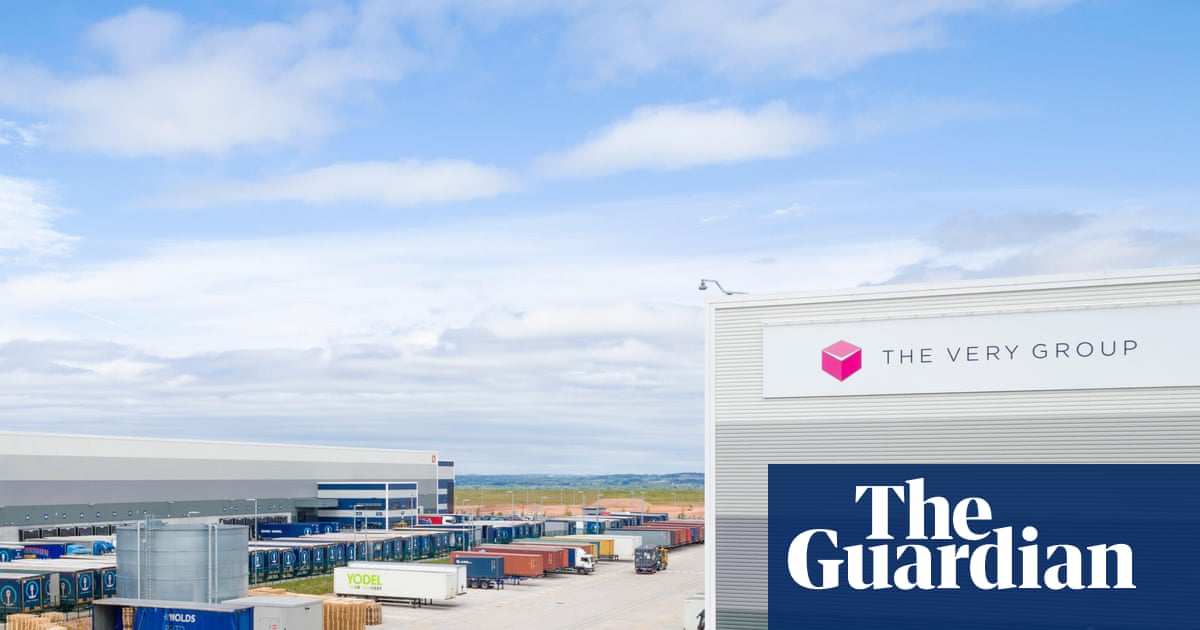
The Barclay family is set to lose control of another part of their former business empire with a US private equity firm taking control of online retailer the Very Group.
Washington-headquartered Carlyle Group is expected to announce it has taken over the retailer as soon as Monday morning.
The change of control will bring to an end more than 20 years under the ownership of the Barclay family, which has been forced to give up a series of businesses – including the Telegraph newspaper, London’s Ritz hotel, and delivery company Yodel – that made them into billionaires, and one of the richest families in Britain.
The Very Group’s board, chaired by former Conservative chancellor Nadhim Zahawi, met on Sunday to confirm the change of ownership, according to Sky News, which first reported the move.
The Barclay family, led by identical twins David and Frederick, had owned Very since buying it in 2002 – when it was a catalogue retailer known as Littlewoods – for £750m. That business merged with Shop Direct in 2004. David Barclay died in 2021.
However, the Barclay family’s fortunes appear to have worsened in recent years. They lost control of the Telegraph newspapers after the family struggled to repay large loans.
Carlyle first became a lender to the Very Group in 2021 with a loan of undisclosed size. The investor followed that up in 2024 with about £85m out of a £125m debt package. Carlyle’s total financing to the business is thought to be more than £500m.
Abu Dhabi-based investment fund International Media Investments (IMI), which also lent to Very, is expected to remain a lender.
Very itself is not thought to be struggling financially. The retailer last month reported increased profitability, with £307m in earnings before interest, taxes, depreciation and amortisation in the year to 28 June. It made sales of £2.1bn in the year.
skip past newsletter promotion
after newsletter promotion
The Very Group and Carlyle both declined to comment.
When a Gen Z Redditor asked Millennials how they survived the recession in their 20s, the responses painted a stark picture of economic desperation that feels eerily relevant as today’s young workers face what some are calling the “AI takeover” of entry-level jobs.
The discussion on r/Millennials revealed survival strategies that ranged from pragmatic to desperate, offering a roadmap for navigating economic chaos that Gen Z might need sooner than anyone wants to admit.
Don’t Miss:
According to posters on the thread, the most common survival tactic during the Great Recession was simply avoiding the job market entirely. Millennials flooded back into graduate schools and community colleges, waiting out the economic storm while racking up student loan debt that many are still paying off today.
“Ride out the recession in academia” was the prevailing wisdom, though this strategy came with its own long-term consequences. The generation ended up with more advanced degrees than any before it, but also unprecedented debt burdens that delayed homeownership and family formation for years.
For those who couldn’t afford more school, the options were grimmer. Many moved back in with parents, sometimes for years, while working multiple low-wage jobs. One poster noted the phenomenon of experienced, laid-off professionals competing with new graduates for entry-level positions, creating what they described as a “massive wage suppression event” that set careers back by years.
Some chose to leave the country entirely, with teaching English in South Korea, Japan, or Taiwan becoming a popular escape route from the devastated domestic job market.
Trending: 7 Million Gamers Already Trust Gameflip With Their Digital Assets — Now You Can Own a Stake in the Platform
The Reddit thread didn’t shy away from the darker realities. Multiple posters reported surviving on Top Ramen and fast-food dollar menus, which at least remained affordable during that era. Others described “flirting with homelessness and hunger,” relying on food banks, or resorting to illegal work to stay afloat.
The mental health toll was severe, with references to “deaths of despair” and heavy substance use as coping mechanisms. Yet the experience also fostered unexpected resilience and community, with many Millennials forming tight-knit “tribes” of friends who supported each other through the crisis.
For the lucky few who maintained stable employment, the housing collapse presented a silver lining. Some were able to purchase homes for “dirt cheap” in 2009, using federal programs like the $8,000 housing credit, building wealth that has compounded significantly over the past 16 years.
When comparing 2008 to today’s economy, posters agreed on one chilling point: Gen Z faces challenges that are arguably more severe.
See Also: This Jeff Bezos-backed startup will allow you to become a landlord in just 10 minutes, with minimum investments as low as $100.
Food and housing costs that remained relatively affordable during the Great Recession are now “insane,” according to multiple posters. But the real terror is something Millennials never confronted: the threat of artificial intelligence eliminating entry-level white-collar jobs entirely.
“The AI takeover of entry level white collar jobs” represents an existential threat that goes beyond cyclical economic downturns. Unlike the 2008 crisis, which eventually resolved as markets recovered, AI-driven job displacement could be permanent for certain career paths.
The prevailing sentiment from those who lived through 2008? Lower your expectations dramatically. Forget rigid career timelines and traditional measures of success. Focus on basic survival first.
As one Redditor summarized the generation’s experience: “Surviving, not thriving” became the Millennial anthem. For Gen Z staring down both economic uncertainty and technological disruption, that same mantra might be the most honest advice available.
The message is clear: build your tribe, stay flexible, take any job that pays the bills, and remember that the goal isn’t to win during a recession—it’s simply to still be standing when it’s over.
Read Next: The ‘ChatGPT of Marketing’ Just Opened a $0.81/Share Round — 10,000+ Investors Are Already In
Image: Shutterstock
Up Next: Transform your trading with Benzinga Edge’s one-of-a-kind market trade ideas and tools. Click now to access unique insights that can set you ahead in today’s competitive market.
Get the latest stock analysis from Benzinga:
This article Millennials Who Survived 2008 Have Brutal Advice for Gen Z Facing The ‘AI Recession’—And It’s Not Pretty originally appeared on Benzinga.com
Traders of Shiba Inu (CRYPTO: SHIB) have locked a staggering 7.38 trillion SHIB tokens into the derivatives market. This move has triggered a price surge and a renewed wave of optimism among the SHIB community.
As per data from CoinGlass, the SHIB tokens locked in are valued at over $76 million. This action aligns with a wider crypto market resurgence, suggesting a growing confidence in the future of SHIB.
Information from the CoinGlass indicates that momentum is making a comeback in the SHIB ecosystem, with investors placing substantial bets on the Shiba Inu futures market.
As of Saturday, SHIB’s open interest has skyrocketed by more than 15%, with a colossal 7.38 trillion SHIB recorded as open interest across all supported exchanges.
Also Read: Nearly 8 Million Shiba Inu Vanish After First SHIB ETF Filing Shakes Market
After a phase of high volatility and sideways movement, SHIB’s price has jumped by over 10.43% in the last day, eliminating a zero from its price. This significant price movement has rekindled optimism and momentum within the SHIB community.
According to CoinMarketCap data, SHIB’s price hit an intraday high of $0.00001032, breaking past key resistance levels. The bulk of Shiba Inu’s open interest capital originated from traders on the Gate.io exchange, accounting for 47.13% of the total open interest, which equates to about $36.63 million in SHIB.
Why It Matters: The recent surge in SHIB’s price and the substantial amount of tokens locked in the derivatives market underscore the growing confidence in Shiba Inu’s potential. This development, coupled with the broader crypto market resurgence, could signal a positive trend for SHIB and its investors.
The significant increase in open interest across exchanges also indicates a renewed interest and optimism in the SHIB community, potentially leading to further price appreciation in the future.
Read Next
Shiba Inu Burn Skyrockets 2,033%, 5.7 Million SHIB Sent to Dead Wallets
Image: Shutterstock/Robert Way
UNLOCKED: 5 NEW TRADES EVERY WEEK. Click now to get top trade ideas daily, plus unlimited access to cutting-edge tools and strategies to gain an edge in the markets.
This article $76 Million Worth of Shiba Inu Tokens Locked Into Derivatives Market Amid Rising Activity originally appeared on Benzinga.com
Vertiv Holdings Co (VRT) is making waves after unveiling new gigawatt-scale reference architectures for the NVIDIA Omniverse DSX Blueprint. This move directly taps into surging AI-related demand across the data center sector.
See our latest analysis for Vertiv Holdings Co.
Vertiv’s latest AI-driven momentum is catching the market’s attention, with a 6.4% share price return over the past month and year-to-date gains near 52%. Its 12-month total shareholder return of 43% and a remarkable 3-year total return above 1,070% highlight how sustained demand and recent wins, such as strong earnings and growing project backlogs, are keeping bullish sentiment alive around this data center innovator.
Curious what other tech leaders might be fueling the next wave of digital infrastructure? Use our screen to discover See the full list for free..
Investors are now asking whether Vertiv’s rapid gains and bullish outlook suggest more upside ahead, or if the stock’s recent performance already reflects all the optimism around its AI-driven growth story.
With Vertiv’s fair value narrative coming in at $192.66 per share, and the stock closing at $179.80, there is a noticeable gap between where the market sits and where the consensus outlook is pointing. This narrative’s latest estimate suggests the current rally has not pushed prices ahead of fundamentals just yet.
Ongoing investments in R&D and engineering, highlighted by collaborations with industry leaders (e.g., CoreWeave, Dell, Oklo), position Vertiv to deliver next-generation solutions ahead of technology refresh cycles. These efforts create recurring upgrade opportunities and sustain top-line and earnings growth.
Read the complete narrative.
What keeps this fair value so high? The most popular narrative is betting on an aggressive growth engine, powered by relentless innovation and industry partnerships. But what key financial levers do analysts think will fuel Vertiv’s next leap? Unpack the narrative to see the surprisingly bullish projections driving that price estimate.
Result: Fair Value of $192.66 (UNDERVALUED)
Have a read of the narrative in full and understand what’s behind the forecasts.
However, ongoing supply chain disruptions and execution challenges in key regions could have a negative impact on Vertiv’s margin expansion and threaten sustained earnings growth.
Find out about the key risks to this Vertiv Holdings Co narrative.
Looking at Vertiv’s valuation from a different perspective, its price-to-earnings ratio sits at 66.5x, which stands notably higher than both the US Electrical industry average of 29.9x and the peer average of 37x. Even against the fair ratio of 63.6x, Vertiv looks a touch expensive. This gap suggests investors are paying a premium for growth. Could the company’s story justify keeping up with that price, or does this introduce added risk if sentiment cools?
See what the numbers say about this price — find out in our valuation breakdown.
NYSE:VRT PE Ratio as at Nov 2025
If you see Vertiv’s story unfolding differently or want to put your own research to the test, you can easily craft your own analysis in just a few minutes, and Do it your way.
A great starting point for your Vertiv Holdings Co research is our analysis highlighting 2 key rewards and 1 important warning sign that could impact your investment decision.
Want to beat market trends and find overlooked opportunities? Check out these unique investment angles that savvy investors are acting on right now. Don’t get left behind:
This article by Simply Wall St is general in nature. We provide commentary based on historical data and analyst forecasts only using an unbiased methodology and our articles are not intended to be financial advice. It does not constitute a recommendation to buy or sell any stock, and does not take account of your objectives, or your financial situation. We aim to bring you long-term focused analysis driven by fundamental data. Note that our analysis may not factor in the latest price-sensitive company announcements or qualitative material. Simply Wall St has no position in any stocks mentioned.
Companies discussed in this article include VRT.
Have feedback on this article? Concerned about the content? Get in touch with us directly. Alternatively, email editorial-team@simplywallst.com