Category: 3. Business

  • Can tech help cardamom farmers?

    Can tech help cardamom farmers?

    Priti GuptaTechnology Reporter, Mumbai

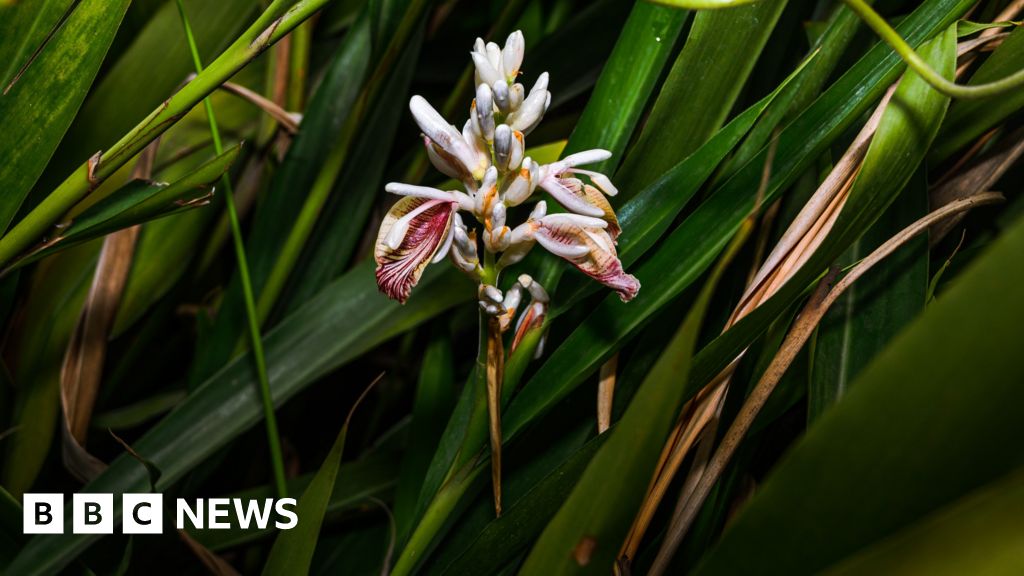
    Getty Images A close-up of a cardamom flower, which looks a little like an orchid. Getty Images

    Beautiful but delicate, cardamom is a demanding crop

    “People often think cardamom is a lucrative crop – it may be. But it’s also the toughest crop a farmer can cultivate,” says Stanley Pothan, who has been farming cardamom in the southern Indian state of Kerala for decades.

    Prized for centuries for its complex, aromatic flavour, cardamom is fiendishly difficult to grow.

    “Cardamom is a very delicate plant – prone to diseases and pest attacks. You have to be constantly in the field, watching every leaf, every flower. It demands attention every single day,” says Mr Pothan.

    It’s also extremely sensitive to weather conditions.

    “Last year’s summer was brutal – we lost a significant portion of our crop to the heat. Guatemala, the world’s largest cardamom producer, lost almost 60% of its crop that season, and we too suffered badly here in Kerala,” he adds.

    That poor harvest contributed to a 70% jump in cardamom prices last year to 1,178 rupees (£10; $13) per kilo, up 70% compared to the previous year, according to figures from India’s Spice Board.

    Cardamom has always been expensive, usually the third costliest spice by weight, after saffron and vanilla.

    Farmers would be keen to raise their output, but it’s not easy.

    “One bad summer or unexpected rain can wipe away the entire effort. That’s the harsh reality of cardamom farming,” says Mr Pothan.

    Stanley Pothan Stanley Pothan points at a cardamom plant at his farm in KeralaStanley Pothan

    Stanley Pothan says cardamom is the “toughest” crop to grow

    The government-funded Indian Cardamom Research Institute (ICRI) is trying to ease the burden of tending to cardamom’s needs.

    “Our focus is on crop improvement, pest and disease surveillance, soil management, capacity building, and technology transfer related to cardamom,” says A.B. Rameshwari, Director of the ICRI, which is part of the government’s Spices Board of India.

    One of its tools is an app that farmers can use to monitor the health of their soil and gives them tailored recommendations on how to best manage it.

    “Technology is no longer separate from farming. It is now a daily tool for cardamom growers, from checking soil health on an app, to monitoring rainfall and disease alerts on their phones,” says Dr Rameshwari.

    “Even small farmers today are using digital tools. They don’t have to depend only on local advice, they can check the soil quality, moisture, and even disease symptoms right from their field.”

    Meanwhile, scientists are looking for hardier cardamom varieties.

    “We are mainly focusing on developing cardamom varieties that are tolerant to major diseases and pests, while also being high yielding and climate resilient,” says Preity Chetty, assistant professor at the Department of Plant Breeding and Genetics, Kerala Agricultural University.

    They have made one breakthrough, by finding a cardamom variety that can grow with limited water.

    The researchers are also delving into the genetic make-up for cardamom to find genetic markers for desirable traits. That knowledge should speed up the breeding of more productive plants.

    “Unlike other spices, studies on cardamom are limited, especially at the molecular level. There’s a lack of molecular markers for reproductive or yield traits, which we are now trying to address,” says Dr Chetty.

    Graayma Green cardamom pods in a bowlGraayma

    Only saffron and vanilla are more expensive than cardamom by weight

    One key process in cardamom farming is drying the pods once they have been harvested.

    Traditionally only the larger farms could afford to set up their own dryers, often fueled by wood.

    “Smaller farmers had to depend on middlemen or neighbours for drying, which often affected the quality,” says Annu Sunny, who founded the social enterprise, Graamya, in 2016 to help farmers in Kerala.

    “As cardamom is the queen of spices and a cash crop lot of people have started get in to cultivation,” she says.

    “It’s a very tricky crop. It takes 10 to 12 years to really understand cardamom, how it behaves, what it needs, when to act and when to wait. Every season is like a new experiment,” she adds.

    To help farmers with the drying process, Graayma has introduced heat-pump dryers.

    Graayma charges 10 rupees per kilo, which is significantly cheaper than wood drying which cost around 14 rupees per kilo.

    “The finish of the product is much better, there’s no smoke, no uneven heating, and the pods retain their natural green colour. That’s very important because colour decides the price.”

    Mathews Geroge Mathews Geroge stands among cardamom plantsMathews Geroge

    Mathews Geroge switched from banking to organic farming

    Growing cardamom with the help of fertilisers and pesticides is hard enough, but some farmers are going a step further, by taking an organic approach to cultivation.

    “When I first started, I had no idea what I was getting into,” says Mathews Geroge, formerly a banker who turned to farming in Kerala in 2020.

    “When I first spoke to scientists at the Cardamom Research Institute, they discouraged me. They said cardamom is too sensitive and difficult to grow organically.”

    Initially they appeared to be right – around 90% of his first crop was destroyed by pests and local traders rejected his cardamom because, to them, it looked in poor condition.

    After two years of experimentation he turned to the ancient Indian cultivation methods of Vrikshayurveda, which he says has bought more success. But it’s still not easy.

    “Even today, I wouldn’t say I’ve mastered cardamom farming. It’s still a challenge. Some seasons are good, some aren’t. But now I understand the rhythm of the crop – when to act, when to wait, when to let nature do its job.”

    Ultimately, Mr Geroge thinks organic farming will be able to compete with traditional methods.

    “Sustainable farming begins with reducing input costs. Many farmers think organic means expensive, but if you make your own inputs and understand your soil, you can actually earn better with less dependence on chemicals.”

    One aspect of cardamom farming that is unlikely to change soon is the need for skilled workers.

    Mr Pothan estimates that labour accounts for 75% of his costs and most of that is spent at harvest time.

    “Harvesting is a skilled job – mostly done by women. They know exactly which capsule is ready and which isn’t. They may pluck one or two from a bunch and return to the same plant after 45 days for the next round. That’s why it’s so labour-intensive,” Mr Pothan says.

    Ms Sunny says those jobs are likely to be secure.

    “Mechanisation in cardamom is limited. You can mechanise spraying or de-weeding, but not pruning or harvesting. Every innovator who visits our farm looks at cardamom and says ‘we’ll solve this’. But nothing concrete has come out yet.”

    Mr Pothan agrees and adds that cardamom demands more than just good process.

    “In cardamom, there’s no shortcut. You can’t automate everything. It’s one of those crops that needs both science and soul.”

    More Technology of Business

    Continue Reading

  • Alleged AI chip smuggling to China leads to US calls for chip tracking – Reuters

    1. Alleged AI chip smuggling to China leads to US calls for chip tracking  Reuters
    2. Feds charge 4 in plot to export restricted Nvidia chips to China, Hong Kong  CNBC
    3. Justice Department charges 4 men in U.S. in scheme to export AI chips to China  CBS News
    4. Two Americans, 2 Chinese nationals accused of illegally exporting Nvidia GPUs to China  Fox Business
    5. US companies are still targets of China espionage, court developments show  Yahoo

    Continue Reading

  • SoftBank plunges over 10% as Asia markets track Wall Street’s stunning reversal in AI stocks

    SoftBank plunges over 10% as Asia markets track Wall Street’s stunning reversal in AI stocks

    A woman uses her mobile phone as she walks past the logo of Japan’s telecommunications giant SoftBank in Tokyo on December 25, 2013.

    Toru Yamanaka | Afp | Getty Images

    Tech conglomerate SoftBank plunged more than 10% Friday amid losses across the region, after U.S. tech stocks lost ground and investors’ hopes dimmed of a December rate cut by the Federal Reserve.

    Japan’s Nikkei 225 tumbled 1.57% at the open, while the Topix index lost 0.72%. Other tech stocks on the index fell, with Advantest losing more than 9%, Tokyo Electron retreating nearly 6%, Lasertec falling nearly 5%, and Renesas Electron down 1.95%.

    Japan’s core inflation in October rose at its sharpest rate since July, in line with market estimates on Friday, supporting the case for interest rate hikes by the Bank of Japan.

    South Korea’s Kospi index plunged 4.09%, and the small-cap Kosdaq retreated 3.01%. Kospi’s heavyweights Samsung Electronics and SK Hynix tumbled as much as 4% and 9%, respectively.

    Australia’s S&P/ASX 200 fell 1.3%.

    Hong Kong Hang Seng index futures were at 25,460, lower than the HSI’s last close of 25,835.57.

    Overnight in the U.S., Oracle and AMD were among the first AI plays to fall into the red on the session, followed by Nvidia, which reversed gains and closed nearly 3% lower.

    Stronger-than-expected U.S. jobs data renewed doubts about whether the central bank will lower its benchmark overnight rate. Traders were pricing roughly a 40% chance of a quarter-point cut next month, according to the CME FedWatch Tool, a setback for investors hoping for lower borrowing costs.

    On Thursday stateside, the Nasdaq Composite fell 2.16%, down from a 2.6% advance at one point in the session.

    Other major indexes also slipped, with the Dow Jones Industrial Average down 0.84%. The S&P 500 shed 1.56%, despite rising as much as 1.9% earlier in the day.

    —CNBC’s Liz Napolitano, Pia Singh, and Alex Harring contributed to this report.

    Continue Reading

  • Japan’s core inflation in October rises to a 3-month high, supporting the case for rate hikes

    Japan’s core inflation in October rises to a 3-month high, supporting the case for rate hikes

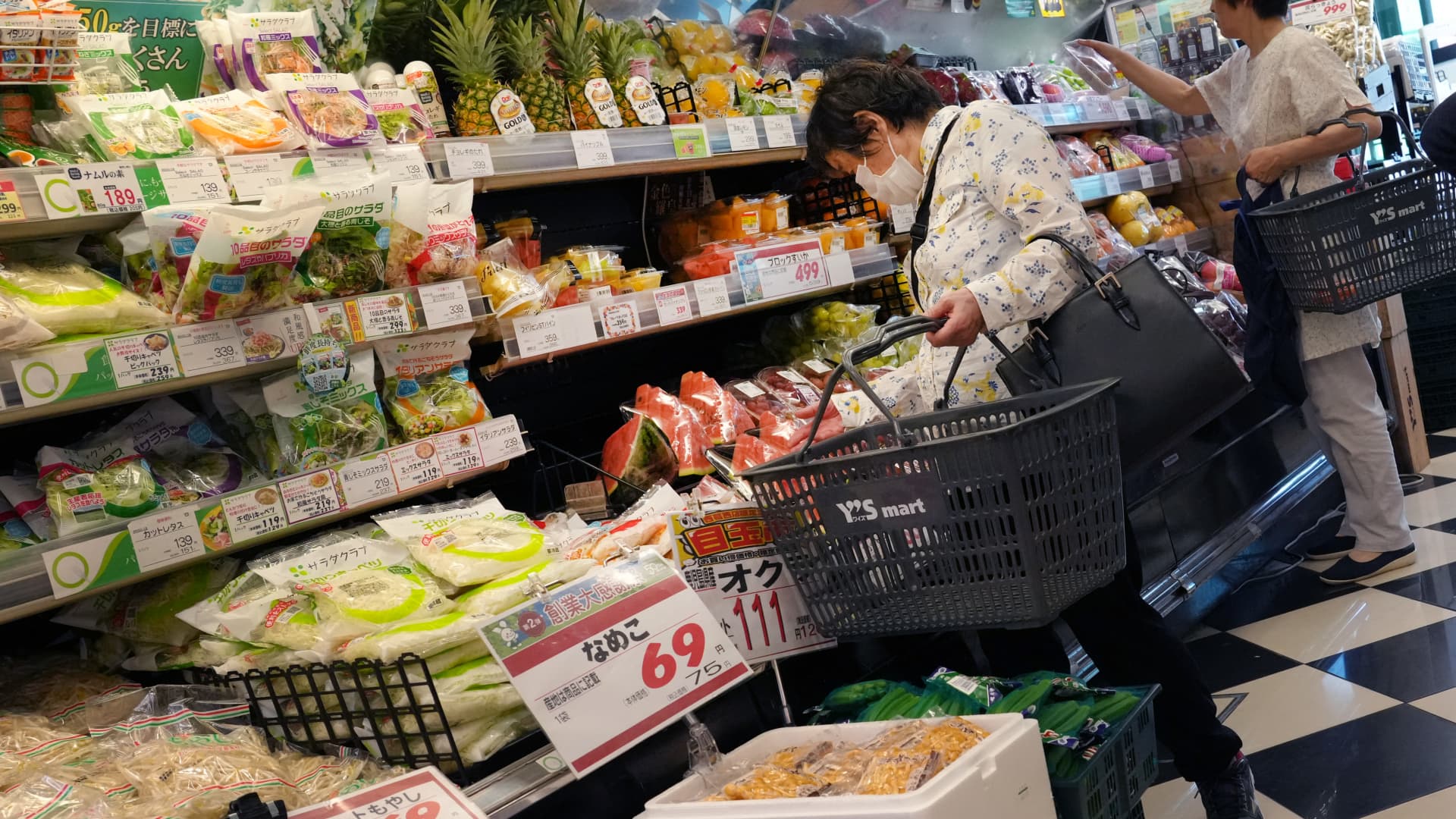
    Customers check out vegetables and other groceries at a supermarket in Tokyo on June 20, 2025.

    Kazuhiro Nogi | Afp | Getty Images

    Japan’s core inflation in October rose at its sharpest rate since July, in line with market estimates on Friday, supporting the case for interest rate hikes by the Bank of Japan.

    Core inflation, which strips out prices of fresh food, came in at 3% as expected by economists polled by Reuters.

    The headline inflation rate rose to 3%, marking the the 43rd month in a row that it has run above the BOJ’s 2% target.

    The so-called “core-core” inflation rate, which strips out prices of fresh food and energy, crept up to at 3.1%, compared to 3% in September.

    The data comes as BOJ governor Kazuo Ueda reportedly had his first bilateral meeting with newly elected Prime Minister Sanae Takaichi earlier this week.

    During the meeting, Ueda told Takaichi the central bank was “gradually raising interest rates to guide inflation smoothly towards its 2% target and ensure the economy achieves sustainable growth,” Reuters reported.

    Takaichi has been an advocate of loose monetary policy, and had said on Nov. 12 to the country’s parliament that she hopes that the BOJ “conducts policy appropriately” so that the 2% inflation target is achieved by wage gains instead of cost-push factors.

    “The type of inflation we’re seeing now is not good,” Takaichi reportedly said. The BOJ governor also said that Takaichi did not make any request related to monetary policy.

    The central bank is currently caught between a rock and a hard place, with inflation running above target and GDP growth figures weakening as Japan takes a hit from U.S. tariffs.

    Japan’s GDP in the three months to September contracted for the first time in six quarters, falling 0.4% sequentially, and dipping 1.8% on an annualized basis

    Continue Reading

  • Gold Steadies After US Jobs Data Damp Prospects for Rate Cut – Bloomberg.com

    1. Gold Steadies After US Jobs Data Damp Prospects for Rate Cut  Bloomberg.com
    2. Gold falls as strong US jobs data dims prospects for December rate cut  Reuters
    3. Gold prices steady after payrolls data; Dec rate cut bets in focus  Investing.com
    4. Gold resilient despite dollar rally while Fed signals uncertainty over December rate decision  KITCO
    5. Gold tanks to $4,061 as blowout NFP and hawkish Fed spark mass exit from havens  FXStreet

    Continue Reading

  • TESARO, a GSK subsidiary, initiates litigation against AnaptysBio, Inc.

    TESARO, a GSK subsidiary, initiates litigation against AnaptysBio, Inc.

    Issued: London UK

    GSK subsidiary, TESARO, Inc., confirms it has initiated litigation against AnaptysBio, Inc. in the Delaware Chancery Court. This action contends that recent conduct by AnaptysBio is in material breach of the existing license agreement with TESARO regarding the oncology treatment Jemperli (dostarlimab). The breach entitles TESARO to terminate the current license agreement, obtain a perpetual and irrevocable license to dostarlimab, and to reduce the royalties and milestone payments due by TESARO to AnaptysBio by 50%. 

    TESARO has initiated this litigation following allegations made by AnaptysBio that TESARO has not fulfilled certain requirements of the license agreement entered in March 2014 and that AnaptysBio intends to revoke TESARO’s licence for dostarlimab. GSK and TESARO are firmly of the view that these allegations are entirely without merit.

    Jemperli is currently approved in over 35 countries for use in certain endometrial cancers, the most common gynaecologic cancer in the United States. GSK and TESARO have reported significant growth for Jemperli driven by label expansions in endometrial cancer, including in the US and EU. A robust and ambitious clinical trial programme to evaluate the potential use of dostarlimab in additional cancers, including rectal, colon and head and neck, is ongoing.

    About GSK

    GSK is a global biopharma company with a purpose to unite science, technology, and talent to get ahead of disease together. Find out more at gsk.com.

    Cautionary statement regarding forward-looking statements

    GSK cautions investors that any forward-looking statements or projections made by GSK, including those made in this announcement, are subject to risks and uncertainties that may cause actual results to differ materially from those projected. Such factors include, but are not limited to, those described in the “Risk Factors” section in GSK’s Annual Report on Form 20-F for 2024, and GSK’s Q3 Results for 2025.

    Continue Reading

  • Flash Report: Unemployment and Payroll Both Rise in September – Federal Reserve Bank of St. Louis

    1. Flash Report: Unemployment and Payroll Both Rise in September  Federal Reserve Bank of St. Louis
    2. U.S. employers added surprisingly solid 119,000 jobs in September, government says in delayed report  AP News
    3. US posts solid job growth in September, but unemployment rate rises  Reuters
    4. Fed likely to not cut rates in December following delayed September data, according to market odds  CNBC
    5. Dollar holds strength vs yen  Business Recorder

    Continue Reading

  • Scramble to 'sell Japan' sounds fiscal warning bells – Reuters

    1. Scramble to ‘sell Japan’ sounds fiscal warning bells  Reuters
    2. Japan’s stimulus to be worth $135 billion, largest since pandemic, draft shows  Reuters
    3. Japan’s borrowing costs at highest in decades on fears of public spending surge  Financial Times
    4. Market Euphoria Ends for Takaichi as Yen, Japan Bonds Sink  Bloomberg.com
    5. Japan just blew up a 30-year money machine and global markets may not be ready  Business Today

    Continue Reading

  • Paramount, Comcast and Netflix submit bids for Warner Bros Discovery, NYT reports – Reuters

    1. Paramount, Comcast and Netflix submit bids for Warner Bros Discovery, NYT reports  Reuters
    2. Paramount held talks with Saudi wealth fund over potential Warner Bros Discovery bid  Financial Times
    3. Paramount Skydance Denies That Its Warner Bros. Discovery Bid Involves Arab Sovereign Wealth Funds  Variety
    4. Dinner at Zaslav’s: Oprah Winfrey, Margot Robbie, Al Pacino, Lorne Michaels Join Warner Bros. Discovery Chief on Night Before Initial Bids Landed (Exclusive)  IMDb
    5. HBO’s Casey Bloys Says He’s ‘Not Concerned’ About WBD Sale: ‘A Lot of It Is Out of Our Hands’  TheWrap

    Continue Reading

  • US banks shelve $20 billion bailout plan for Argentina, WSJ reports – Reuters

    1. US banks shelve $20 billion bailout plan for Argentina, WSJ reports  Reuters
    2. Hand of God: America’s $40 billion bet  The Michigan Daily
    3. The ‘JPMorgan Boys’ Behind the U.S. Bailout for Argentina  The Wall Street Journal
    4. The Trump administration’s $40 billion bailout to Argentina comes at the expense of American farmers  tcnjsignalnews.com
    5. U.S. banks shelve $20 billion bailout plan for Argentina – WSJ  MarketScreener

    Continue Reading