Category: 3. Business

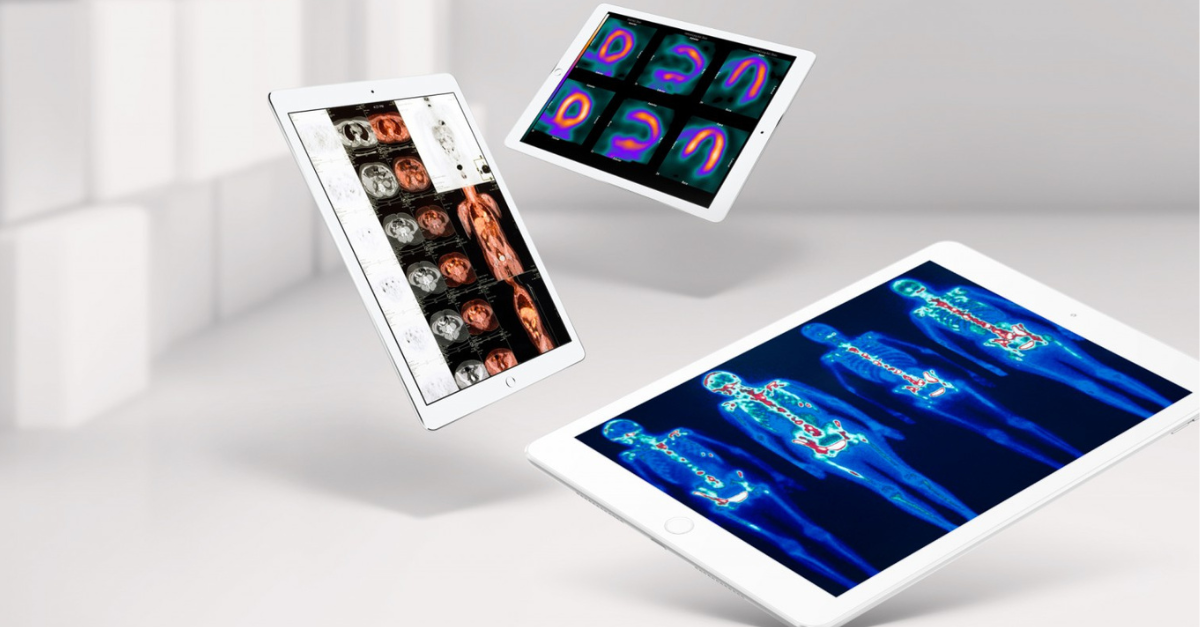
  • CapVest recapitalizes Curium to accelerate its growth strategy, marking the largest transaction in nuclear medicine globally

    CapVest recapitalizes Curium to accelerate its growth strategy, marking the largest transaction in nuclear medicine globally

    • Curium and CapVest have announced the recapitalization of Curium via a new Continuation Vehicle
    • The transaction values Curium at circa $7 billion, representing the largest transaction in nuclear medicine globally
    • The recapitalization will accelerate Curium’s strategy to launch innovative, life-changing diagnostic and therapeutic solutions for patients with cancer globally  

    Curium, a leading producer of radiopharmaceuticals, and CapVest Partners LLP (CapVest), a global investment firm, have announced the recapitalization of Curium via a new Continuation Vehicle (CV).  The CV values Curium at circa $7 billion, representing the largest transaction in nuclear medicine globally.

    The transaction elicited wide support from existing and new institutional investors across the US, Europe, the Middle East and APAC. This includes lead investors ICG, TPG GP Solutions, CVC Secondary Partners and other investors such as Goldman Sachs Alternatives, Lunate, Pantheon, and Ardian. Curium also secured a minority investment from TPG Life Sciences Innovations, TPG’s life sciences platform focused on innovative companies developing disruptive science to improve outcomes for patients in areas of high unmet medical needs. The high caliber of this investor base represents a strong endorsement of Curium’s track record of growth and innovation, as well as a strong belief in the future trajectory of the company in a market poised for exponential growth in the next 15 years.

    Over the last decade, Curium has positioned itself as a global leader in nuclear medicine. Its vertically integrated, global supply chain reliably delivers diagnostic and therapeutic radiopharmaceuticals to more than 14 million patients in over 70 countries across 6 continents every year. Curium boasts a broad portfolio of diagnostic radiopharmaceuticals and has an exciting, late-stage pipeline of Radioligand Therapies (RLTs) targeting neuroendocrine and prostate cancers, the two largest indications in nuclear medicine.

    The new CV broadens Curium’s investor base, increasing the financial resources available to support Curium in the next phase of its growth. Going forward, the company will continue to launch innovative, life-changing diagnostic and therapeutic solutions for cancer patients, whilst building its pipeline of “next-generation” radiopharmaceuticals through internal development and strategic acquisitions or partnerships.  

    The completion of the Transaction is expected in Q1 2026 and is subject to customary regulatory approvals.  CapVest will remain the controlling shareholder of Curium.  

    Renaud Dehareng, CEO of Curium, said “We are delighted to have successfully agreed this transaction with our partners at CapVest in record time.  We are also proud to have received such strong investor interest, which endorses our unique positioning as the largest independent platform in nuclear medicine, with strong end-to-end capabilities across development, manufacturing, logistics and market access. This transaction positions us to accelerate the roll-out of our ambitious global strategy and drive further product launches, innovation and growth – all true to our passion to deliver life-changing solutions for healthcare professionals and millions of patients around the world.”

    Kate Briant, Senior Partner at CapVest, said: “We are proud to continue supporting Curium on what has been a phenomenal journey since 2016. We are grateful to our existing investors for their continued partnership and are also very pleased to welcome new investors into Curium, for what we believe will be a compelling investment opportunity. Building on our successes delivered to date, we are confident that Curium is exceptionally positioned to continue to play a major role in an industry that we expect to double in size over the next 5 years and then double again.”

    PJT Partners acted as lead financial advisor on the transaction, with Kirkland & Ellis acting as lead legal advisor.


    Continue Reading

  • Prada heir Lorenzo Bertelli will have strategic role at Versace as executive chairman

    Prada heir Lorenzo Bertelli will have strategic role at Versace as executive chairman

    MILAN — MILAN (AP) — Prada heir Lorenzo Bertelli will have a major strategic role as executive chairman of Versace after the Prada Group completes its 1.25 billion-euro ($1.4 billion) deal to buy its rival, expected in the coming weeks, the Prada Group confirmed Thursday.

    Bertelli, 37, has been previously announced as the future leader of the Prada Group, where he has been marketing director since 2019 and head of corporate responsibility since 2020. The elder son of acclaimed designer Miuccia Prada and Prada Group chairman Patrizio Bertelli joined the group in 2017 as head of digital communication.

    Bertelli made the announcement about his next role on an Italian-language Bloomberg podcast Wednesday.

    He said he doesn’t expect any big shake-ups at Versace at least for the first year after the acquisition is complete as he gets to know the company and its executive team. But he underlined that the 47-year-old fashion house founded by the late Gianni Versace has been underperforming its potential.

    “The brand is much bigger than the revenue that it is generating,’’ Bertelli said, noting that Versace remains among the top global fashion brands.

    The Prada Group announced in April the deal to buy crosstown fashion rival Versace from the U.S. luxury group Capri Holding, putting Versace’s sexy silhouettes under the same roof as Prada’s “ugly chic” aesthetic and Miu Miu’s youth-driven market.

    Versace represented 20% of its current owner’s 2024 revenue of 5.2 billion euros.

    In a presentation on the deal last spring, Prada estimated that Versace would make up 13% of the Prada Group’s pro-forma revenues, with Miu Miu coming in at 22% and Prada at 64%. The Prada Group, which also includes the Church’s and Car Shoe brands, reported a 17% boost in revenues to 5.4 billion euros last year.

    Continue Reading

  • Biogen to Highlight New Lecanemab Data and Scientific Advances at the 18th Clinical Trials on Alzheimer’s Disease Conference – Biogen

    1. Biogen to Highlight New Lecanemab Data and Scientific Advances at the 18th Clinical Trials on Alzheimer’s Disease Conference  Biogen
    2. Two Alzheimer Disease Therapies to Watch at CTAD 2025: Lecanemab and Sabirnetug Updates  Patient Care Online
    3. How New Lecanemab Data Releases at CTAD 2023 Could Shape BioArctic’s (OM:BIOA B) Investment Case  simplywall.st
    4. Bioarctic’s Partner to Present New Lecanemab Results at CTAD Conference  MarketScreener
    5. Eisai to Present Data on Lecanemab Continued Treatment, Subcutaneous Initiation Dosing, and Real-World Experience at the 18th Clinical Trials on Alzheimer’s Disease (CTAD) Conference  BioSpace

    Continue Reading

  • IATA Urges ITU to Strengthen Safeguards for Aircraft Safety Systems as 5G/6G Expands

    IATA Urges ITU to Strengthen Safeguards for Aircraft Safety Systems as 5G/6G Expands

    Geneva – The International Air Transport Association (IATA) urged the International Telecommunication Union (ITU) and national telecommunications regulators to ensure that 5G and future 6G networks operating near aviation frequencies do not impair radio altimeters and other avionic systems.

    Ahead of the World Radiocommunication Conference 2027 (WRC-27), the ITU is conducting detailed studies to determine the technical conditions for global 5G/6G deployment. This guidance, developed with national telecom regulators and aviation safety authorities, will set the long-term framework for protecting essential aviation systems while enabling future telecom connectivity.

    To support this process, IATA submitted a working paper—being presented at the ITU WP5B Meeting (Geneva, 18-27 November 2025) outlining the operational scenarios and safety requirements that must guide future spectrum policy.

    IATA’s Call to Action


    IATA’s paper calls for future spectrum policy to take into consideration all key safety scenarios, including take-off, landing, taxi, and go-arounds; adverse weather conditions (turbulence and windshear); and emergency or off-nominal situations. Radio altimeters, which rely on spectrum availability, provide essential height information in all these conditions and support both flight crews and automated safety systems. IATA also reaffirmed the importance of maintaining a minimum separation of 35 ft (11 m) between aircraft and terrestrial 5G transmitters.

    “The benefits of 5G and 6G can never come at the cost of aviation safety. Spectrum decisions must be based on real-world aircraft operations, not idealized telecommunications industry modeling. That means ensuring ITU studies fully reflect the most demanding conditions pilots face. With input from aviation users, WRC-27 must deliver clear global rules to ensure the safe coexistence of radio altimeters and other safety-critical avionic systems with next-generation telecom networks across all phases of flight,” said Nick Careen, IATA Senior Vice President Operations, Safety and Security.

    Persistent 5G Challenges


    5G networks use a variety of frequency bands and power levels. Of particular importance to aviation is the 5G band located adjacent to the Radio Altimeter (RAD ALT) allocation (4.2–4.4 GHz). In several countries, telecommunications providers have voluntarily implemented 5G mitigation strategies to mitigate potential interference with RAD ALT systems, including reducing transmission power, applying runway exclusion zones, and tilting antenna downwards.

    Some of these temporary measures are now approaching expiry. In Canada (1 January 2026) and Australia (1 April 2026), key mitigations will lapse within months. In the US, plans to auction the Upper C-Band (3.98-4.2 GHz)—immediately adjacent to the 4.2 GHz altimeter band—are advancing this month, and existing 5G mitigations are scheduled to be removed in 2028.

    However, next-generation radio altimeters that are more resistant to 5G are not expected to be available to airlines before the early 2030s. This creates a mitigation gap which adds to the complexity of maintaining safe airline operations.

    “Current 5G mitigations were never designed as a long-term solution and several will expire within months. At the same time, more resilient radio altimeters will not reach airlines until the next decade. That leaves a significant mitigation gap. With new spectrum auctions underway and protections being lifted in key markets, regulators must not assume safety will take care of itself. The industry needs clear, consistent safeguards to bridge the period before new altimeters are available,” said Careen.


    For more information, please contact:

    Corporate Communications

    Tel: +41 22 770 2967

    Email: corpcomms@iata.org

    Notes for Editors:

    • IATA (International Air Transport Association) represents some 350 airlines comprising over 80% of global air traffic.
    • You can follow us on X for announcements, policy positions, and other useful industry information.
    • Fly Net Zero

    Continue Reading

  • There’s no turning back on AI now, this firm says as it boosts S&P 500 forecast

    There’s no turning back on AI now, this firm says as it boosts S&P 500 forecast

    By Barbara Kollmeyer

    ‘This is a truly game-changing technology that will reshape the world economy in the years to come,’ says the bank.

    For investors, there’s no ‘turning back’ on AI now, says Barclays.

    On a day of blowout results and forecasts from Nvidia, our call of the day says investors have reached the point of no return with AI, which is all that matters heading into 2026 and beyond.

    “We expect AI to be the most important macro factor in 2026, as traditional drivers such as monetary policy and trade policy fade,” writes Ajay Rajadhyaksha, global chairman of research at Barclays in the bank’s 2026 outlook – “As Goes AI.”

    “We think fears of a collapse in the AI narrative are overdone and expect the economic expansion to continue for yet another year,” Rajadhyaksha adds. The U.K. bank that is one of Treasury dealers says its outlook includes a boosted 2026 forecast for the S&P 500 SPX to 7400 from 7000.

    Fears that AI companies may not be able to deliver on the vast amounts of spending on the technology have been a major driver of hiccups for stocks in recent weeks. That’s as investors also fret over waning expectations the Fed will make one last rate cut this year.

    Driving home AI importance, Rajadhyaksha estimates about 1% of U.S. growth in 2025 came from spending on the technology, with “old” economy spillover for construction on data centers, telecoms firms putting down networking equipment, etc.

    “The scale of the build-out will probably dwarf the telecom rollout; the U.S. is likely in the middle of its biggest capex cycle in many decades,” Rajadhyaksha says.

    AI has also been playing a massive role in boosting stock markets and investor wealth, he says, estimating that since end-2022, AI-related equities have driven 75% to 80% of the S&P 500’s earnings and total performance. That’s as the U.S. consumer has faced down trade worries, job uncertainty and housing market troubles.

    “Strong wealth gains, powered by AI-sensitive equities, are a large part of why. AI spending helped investment, and AI equities helped consumption,” says Rajadhyaksha.

    The biggest risk to investors and the U.S. is the AI revolution running out of steam, he says. With households holding $45 to $47 trillion in equities, a 30% fall in valuations, for example, would lead to a household hit of $15 trillion, hitting that wealth effect and consumption, collapsing AI capex and likely triggering a recession, says the strategist.

    “We remain believers; we think comparisons to 2000-02 are exaggerated, even if total spending will likely be greater,” he says. Supporting that view he notes that markets have rebounded from each AI-related scare, such as DeepSeek, as hyperscalers margins and profits are strong and AI use cases are increasingly showing up.

    The firm forecasts 2.1% U.S. growth next year, as tariff drags fade and the One Big Beautiful Bill’s fiscal boost kicks in. They don’t expect material AI-caused job losses but do expect productivity will drive the next four quarters of growth.

    So how to play the AI revolution? Barclays has shifted to a positive view on the whole technology, media and telecom sector as a secular growth story, with expectations for AI-driven capex and double-digit growth for cloud and digital advertising businesses.

    Other themes Barclays likes: cyclical/growth equities that would benefit from Fed rate cuts; potential for deal activity driven by easier financial conditions; and financials owing to U.S. economic resiliency. The bank also lifted utilities to positive, on expectations of a boost from lower rates, plus data-center power demand. Consumer, commodity-linked and healthcare sectors will lag behind the S&P 500, due to inflation firming up, commodity oversupply and regulatory headwinds, says the strategist.

    Style-wise, they are betting on growth over value, helped by tech-led earnings strength.

    Barclays also recommends exposure to 2-year Treasury yields, with Fed cuts unlikely to go away. Elsewhere, Chile, Peru, Australia and South Africa will likely benefit from demand for metals and critical minerals by AI.

    Read: While Nvidia is thriving, this CEO hails an anti-AI bet – and is winning

    The markets

    U.S. stock futures (ES00) (YM00) (NQ00) are stronger, led by tech, Treasury yields BX:TMUBMUSD10Y are steady, gold (GC00) is lower and bitcoin (BTCUSD) is rising.

       Key asset performance                                                Last       5d      1m      YTD      1y 
       S&P 500                                                              6642.16    -3.05%  -0.85%  12.93%   12.25% 
       Nasdaq Composite                                                     22,564.23  -3.60%  -0.77%  16.85%   18.97% 
       10-year Treasury                                                     4.144      1.80    13.90   -43.20   -28.10 
       Gold                                                                 4065.8     -2.60%  -1.87%  54.05%   52.15% 
       Oil                                                                  59.41      1.38%   -3.79%  -17.34%  -15.29% 
       Data: MarketWatch. Treasury yields change expressed in basis points 

    The buzz

    Walmart (WMT) earnings are ahead, with Ross Stores (ROST) after the close.

    Nvidia shares (NVDA) are up 6% after the AI-chipmaker beat revenue expectations by more than $2 billion, and its outlook exceeded consensus by nearly $3 billion. And from CEO Jensen Huang: “AI is going everywhere, doing everything, all at once.”

    Datacenter operators Super Micro Computer (SMCI) and CoreWeave (CRWV) are getting a Nvidia-fueled boost, along with Vertiv (VRT), a maker of air conditioning systems for server racks.

    Palo Alto Networks shares (PANW) are falling after the cybersecurity group’s earnings just beat forecasts and its outlook was in line.

    IBM (IBM) and Cisco Systems (CSCO) announced a new partnership over quantum computers.

    September jobs data is due at 8:30 a.m., with economists forecasting 50,000 jobs created after just 22,000 gains in August. Other data on tap: Weekly jobless claims and the Philly Fed survey, followed by existing-home sales at 10 a.m.

    Federal Reserve Governor Lisa Cook speaks at 11 a.m., Chicago Fed President Austan Goolsbee at 1:40 p.m. and Philly Fed President Anna Paulson at 6:45 p.m.

    Best of the web

    How Americans’ nest eggs built a private-equity loan revolution.

    Help wanted: The changing face of job listings from the 1970s to now.

    Opinion: If robots replace workers, what happens to Social Security?

    The chart

    Nike shares (NKE) have entered a so-called “death cross,” a pessimistic setup that bodes for tougher times ahead for the stock. The definition of a death cross is when the 50-day average of the stock falls below the 200-day and the worry is that the decline could keep going. Tariffs and a tough China market are issues for the stock that has lost 17% so far in 2025. Read more here.

    Top tickers

    These were the top-searched tickers on MarketWatch as of 6 a.m.:

       Ticker  Security name 
       NVDA    Nvidia 
       TSLA    Tesla 
       AMD     Advanced Micro Devices 
       PLTR    Palantir 
       TSM     Taiwan Semiconductor Manufacturing 
       GME     GameStop 
       AMZN    Amazon 
       AAPL    Apple 
       MSFT    Microsoft 
       GOOGL   Alphabet 

    Random reads

    The fight to save the “Dazed and Confused” middle school.

    A record $2.6 million sale – for the most “complicated pocketwatch ever made.

    What you can’t say on the internet.

    -Barbara Kollmeyer

    This content was created by MarketWatch, which is operated by Dow Jones & Co. MarketWatch is published independently from Dow Jones Newswires and The Wall Street Journal.

    (END) Dow Jones Newswires

    11-20-25 0655ET

    Copyright (c) 2025 Dow Jones & Company, Inc.

    Continue Reading

  • FOMC notes show Powell facing a divided Fed as odds of interest cut falls

    FOMC notes show Powell facing a divided Fed as odds of interest cut falls

    It’s looking increasingly likely that Jerome Powell’s Christmas gift to markets will be an economic lump of coal, rather than what’s on Wall Street’s wish list. Odds for a December cut to interest rates at the Federal Open Market Committee’s (FOMC) final meeting of the year are fading fast, despite hopes all year for one last reduction. At the time of writing, CME’s FedWatch barometer shows a 32% probability of a 25bps cut next month. That’s compared to a 98.9% conviction of a cut a month ago.

    The general consensus is now for the Fed to keep rates hold, with the base rate sitting at 3.75% to 4%. This will likely infuriate the White House, which has been pushing throughout 2025 for significant reductions—with President Trump blaming “Too Late Powell” for a housing crisis in the U.S.

    While Wall Street won’t love a hold, it does have some justification for betting on one in advance of the U.S. Federal Reserve decision. Notes from the FOMC’s most recent meeting in October, released yesterday, painted a picture of a divided committee.

    Fed members were split on inflation, which should be at 2%, but currently sits at 3%. The notes described how several members were comfortable with current levels, arguing it’s “close” to target.

    “Close” isn’t close enough for others, the report adds: “Many participants, however, remarked that overall inflation had been above target for some time and had shown little sign of returning sustainably to the 2% objective in a timely manner.”

    This split in opinion was the running theme of the meeting, it seems, with the notes observing there were “strongly differing views” about the appropriate action for monetary policy at the December meeting. “Several participants” called for a December cut, while “many participants” said it would be appropriate to leave the rate unchanged. The one thing they agreed on? “Monetary policy was not on a preset course.”

    While it’s Powell’s job to rally the committee toward as great a consensus as possible, it’s clear where the outliers in December may be. Trump appointee Stephen Miran, for example, advocated for a 50bps reduction in October.

    The Fed’s dual mandates—control inflation and aim for full employment—are now in contradiction to each other: While inflation is a check in the box for a rate hold, the deteriorating employment situation runs counter to that, tempting the FOMC toward another cut.

    The committee said it is “attentive to the risks to both sides of its dual mandate and that downside risks to employment had risen in recent months.” America’s labor market has stagnated into a low-hire, low-fire economy, according to Chairman Powell, the full details of which have been obscured by a data blackout during the government shutdown.

    Even without this information, the FOMC expects the jobs landscape to deteriorate gradually in the coming months, with a less dynamic market into next year.

    “Participants generally attributed the slowdown in job creation to both reduced labor supply—stemming from lower immigration and labor force participation—and less labor demand amid moderate economic growth and elevated uncertainty,” the notes add. “Many participants remarked that structural factors such as investment related to AI and other productivity-enhancing technologies may be contributing to softer labor demand.”

    Jobs report furthers hold bets

    Despite the gloomy outlook for the jobs market—which would be a motivator for a cut if it worsened—economists are widely expecting an increase in reported roles in today’s jobs report.

    Goldman Sachs’s David Mericle wrote in a note to clients overnight that he expects the employment rate to hold steady at 4.3%. He wrote: “Our job growth tracker based on alternative data rose in September to a pace of 85,000 private sector jobs. We expect a 5,000 decline in government payrolls, reflecting a 10,000 decline in federal payrolls. 

    “We also expect the usual upward revision to August payroll growth, where the seasonal factors appear to be inappropriate for the initial print. August has been revised up by an average of 38,000 on the second release and about 60,000 on the second and third releases combined.”

    This minimally upward trajectory was echoed by RSM chief economist Joe Brusuelas, who wrote in a note shared with Fortune this week he expects a 50,000 increase in the September report. He also anticipates upward revisions to both the July and August jobs estimates, increasing employment to near 100,000 roles in the report.

    This, in turn, will “likely further dampen expectations of any prospective rate cut at the Fed December policy meeting.”

    Continue Reading

  • AI godfather Yann LeCun to leave Meta and start own firm

    AI godfather Yann LeCun to leave Meta and start own firm

    Liv McMahonTechnology reporter

    Getty Images A close-up of Yann LeCun wearing thick rimmed black glasses, a navy suit with a dark blue bowtie standing in an opulent room at Buckingham Palace.Getty Images

    Prof LeCun is known for advancing the deep learning field of AI, and for his jazzy bowties

    Just a couple of weeks ago, one of the “godfathers” of artificial intelligence was in St James’s Palace being handed an award from King Charles for his work in artificial intelligence (AI).

    Professor Yann LeCun was being honoured along with six other recipients for his contributions to the field, which have been credited as advancing deep learning.

    But Mr LeCun is at odds with some of the AI world over the future of the generation-defining technology.

    And now he is going all-in on his idea of “advanced machine intelligence” after announcing he is leaving his role as Meta’s chief AI scientist to start a new firm.

    During his 12 years at the company, Prof LeCun won the prestigious Turing Award and witnessed several flurries of excitement around AI – not least the most recent boom in generative AI accelerated by rival OpenAI’s launch of ChatGPT in late 2022.

    But his departure comes amid speculation the AI boom could meet an abrupt end should the so-called “AI bubble” of ballooning valuations and soaring spending burst.

    Investors, analysts and even big tech bosses like Google’s chief executive Sundar Pichai have said a market correction to the AI sector would ripple across the wider economy.

    What LeCun thinks the AI world gets wrong

    Prof LeCun announced his planned departure from Meta on Wednesday after more than a week of rumours and reports of his exit.

    In a series of posts on Threads, he thanked the company’s founder Mark Zuckerberg and highlighted its Fundamental AI Research (FAIR) lab as his “proudest non-technical accomplishment”.

    “As many of you have heard through rumours or recent media articles, I am planning to leave Meta after 12 years: 5 years as founding director of FAIR and 7 years as Chief AI Scientist,” he wrote.

    “The impact of FAIR on the company, on the field of AI, on the tech community, and on the wider world has been spectacular.”

    The lab has over the years focused on developing systems and techniques to advance machine learning and translation.

    But, like large parts of the sector, Meta has looked to concentrate much of the company’s research and spending on large language models (LLMs) – the systems at the heart of generative AI tools such as chatbots and image generators.

    Prof LeCun has suggested LLMs will be less useful in attempting to create AI systems that can match human intelligence.

    Instead, he wants to pursue what he called “advanced machine intelligence”.

    It trains AI models primarily by using visual learning – trying to replicate how a child or a baby animal learns.

    That differs to LLMs, which are fed vast amounts of existing data, and then asked to generate a result based on the data and a prompt.

    Prof LeCun will still have a relationship with Meta once he sets up his new company, he said – adding in posts about his departure it would be a partner of his new firm.

    But reports suggest he has been increasingly moving away from the approach the company wants to take.

    Unlike his fellow AI godfathers Geoffrey Hinton and Yoshua Bengio, Prof LeCun has cast doubt on the idea AI might pose an existential threat to humanity.

    In 2023, he called such fears “preposterously ridiculous”.

    “Will AI take over the world? No, this is a projection of human nature on machines,” he told the BBC.

    But some have also questioned Prof LeCun’s characterisation as an outlier or visionary in the industry.

    “Yann LeCun has, without a doubt made genuine contributions to AI, and I am pleased to see him speak out again the limits on LLMs,” said AI expert and professor Gary Marcus in a recent blog.

    “But he has also systematically dismissed and ignored the work of others for years,” he added, including himself among those whose work he suggested Prof LeCun had often overlooked.

    A green promotional banner with black squares and rectangles forming pixels, moving in from the right. The text says: “Tech Decoded: The world’s biggest tech news in your inbox every Monday.”

    Continue Reading

  • Are businesses staying silent about climate pledges?

    Are businesses staying silent about climate pledges?

    A wave of coverage suggested that the US president was giving cover to companies to end their green pledges. And several headlines suggested that others were keeping their climate polices on the down-low to avoid the president’s wrath.

    The latter trend has been dubbed “greenhushing” – deliberately downplaying climate pledges. But experts and researchers working in the field say the full picture is much more complicated, and pre-dates last year’s US presidential election.

    In fact, the idea of greenhushing first got widespread popular attention back in 2022, when Switzerland-based climate consultancy South Pole identified it as a trend in their annual report, finding that a quarter of the companies they surveyed set “science-based emission reduction targets” – but did not plan to publicly talk about them.

    It’s been a running theme since then. In early 2024 – a full year before Trump took office – South Pole found that nearly half of companies were struggling to communicate their climate pledges, due to new regulations, compliance schemes and lack of confidence.

    South Pole’s most recent report, released earlier this year and focused on financial institutions, notes that general risk statements have supplanted more detailed climate risk plans. But tricky regulation – not pro-oil drilling policies – might be to blame. Companies, the consultancy says, “navigate a complex landscape where they can be sued for saying too little – and sued for saying too much.”

    Continue Reading

  • WFW advises Calik Enerji Swiss on PLN1.17bn SERV-backed guarantee facility for Kozienice Combined- Cycle Power Plant in Poland

    WFW advises Calik Enerji Swiss on PLN1.17bn SERV-backed guarantee facility for Kozienice Combined- Cycle Power Plant in Poland

    Watson Farley & Williams (“WFW”) advised Çalik Enerji Swiss AG (“Çalık Enerji Swiss”), a Swiss subsidiary of Çalık Enerji Sanayi ve Ticaret A. Ş, on a PLN1.17bn (€265m) committed guarantee facility arranged by Commerzbank AG. The facility supports the advance payment bond for the turnkey construction of the 1.336 GW hydrogen-ready Kozienice Combined-Cycle Power Plant in Poland.

    Partially covered by Swiss Export Risk Insurance (“SERV”) the transaction represents a landmark development in Poland’s energy transition. As one of the largest projects of its kind in the region, Kozienice is expected to significantly reduce national CO₂ emissions and lay the groundwork for future hydrogen integration.

    Calik Enerji Swiss based in Lucerne, constructs and implements sustainable and reliable turn-key contracting (EPC) projects across the Middle East, Central Asia, Africa and the Balkans. The company plays a key role in delivering international energy and infrastructure projects, leveraging the strength of the Swiss supply chain.

    The WFW Germany Infrastructure team that advised Çalık Enerji was led by Frankfurt Project and Structured Finance Partner Riko Vanezis, supported by Associate Alkistis Vallianatou.

    Riko commented: “We are pleased to have advised Çalık Enerji on this strategically important transaction, which makes a meaningful contribution to Poland’s energy transition. The project demonstrates how innovative financing and cross-border collaboration can advance large-scale, sustainable infrastructure. Our involvement reflects our deep expertise in complex, multi-jurisdictional energy projects and our longstanding track record in advising on SERV-backed financings”.

    Continue Reading

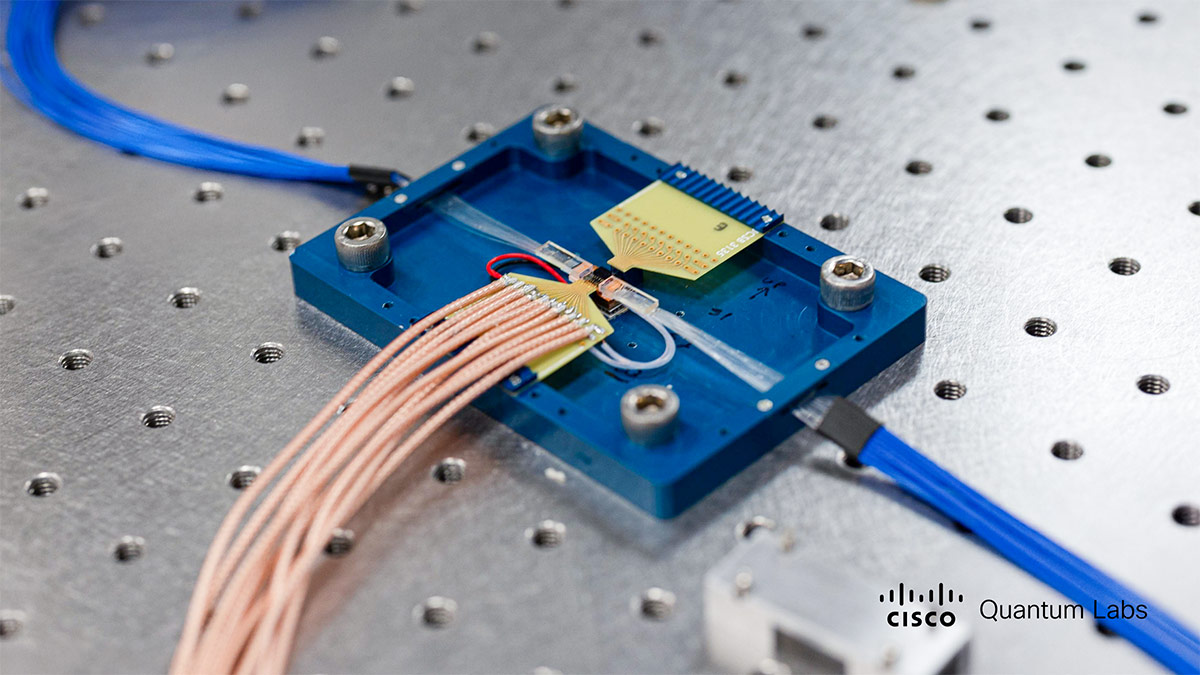
  • IBM and Cisco Announce Plans to Build a Network of Large-Scale, Fault-Tolerant Quantum Computers

    IBM and Cisco Announce Plans to Build a Network of Large-Scale, Fault-Tolerant Quantum Computers

    News Summary:

    • New collaboration plans to unite strengths of both leaders to design a connected network of large-scale, fault-tolerant quantum computers, targeted by early 2030s
    • Companies plan to deliver an initial demonstration of multiple networked quantum computers within five years
    • Distributed quantum network could lay groundwork towards quantum computing internet defined by quantum computers, sensors, and communication in the late 2030s


    NOVEMBER 20, 2025 – YORKTOWN HEIGHTS, NY and SAN JOSE, CA — Today, IBM (NYSE: IBM) and Cisco (NASDAQ: CSCO) announced an intention to collaborate on the groundwork for networked distributed quantum computing, to be realized as soon as the early 2030s. By combining IBM’s leadership in building useful quantum computers with Cisco’s quantum networking innovations, the companies plan to explore how to scale large-scale, fault-tolerant quantum computers beyond IBM’s ambitious roadmap. Additionally, they will work to solve fundamental challenges towards a quantum computing internet.

    Within five years, IBM and Cisco will aim to demonstrate the first proof-of-concept for a network that combines individual, large-scale, fault-tolerant quantum computers, enabling them to work together to run computations over tens to hundreds of thousands of qubits. This network would allow problems to be run with potentially trillions of quantum gates, the fundamental entangling operations required for transformative quantum applications such as massive optimization problems, or the design of complex materials and medicines.

    “At IBM, our roadmap includes plans to deliver large-scale, fault-tolerant quantum computers before the end of the decade,” said Jay Gambetta, Director of IBM Research and IBM Fellow. “By working with Cisco to explore how to link multiple quantum computers like these together into a distributed network, we will pursue how to further scale quantum’s computational power. And as we build the future of compute, our vision will push the frontiers of what quantum computers can do within a larger high-performance computing architecture.”

    “Getting quantum computing to useful scale is not just about building bigger individual machines, it is also about connecting them together,” said Vijoy Pandey, GM/SVP at Outshift by Cisco. “IBM is building quantum computers with aggressive roadmaps for scale-up, and we are bringing quantum networking that enables scale-out. Together, we are solving this as a complete system problem, including the hardware to connect quantum computers, the software to run computations across them, and the networking intelligence that makes them work.”

    Scaling a Distributed Quantum Computing Network

    IBM and Cisco intend to explore the development of quantum hardware and software that could physically link many large-scale, fault-tolerant quantum computers together to form networked distributed quantum computing.

    The companies are targeting an initial proof-of-concept demonstration by the end of 2030, for which they plan to entangle qubits from multiple separate quantum computers located in distinct cryogenic environments. Doing so will require the companies to invent new connections, including microwave-optical transducers and a supporting software stack.

    The Cisco vision for a quantum data center introduces an architecture for quantum networking infrastructure that could make distributed quantum computing a reality in the near future. This vision includes a complete hardware and software stack that aims to preserve fragile quantum states, distribute entanglement resources, facilitate teleportation between quantum computers, and synchronize operations with sub-nanosecond precision.

    To scale beyond linking two quantum computers that are separate but physically close, IBM and Cisco are planning to explore how to transmit qubits over longer distances, such as between buildings or data centers. To achieve this, the companies will explore optical-photon and microwave-optical transducer technologies, as well as investigate how they can be incorporated into a quantum network to transfer quantum information as needed.

    Linking together multiple quantum computers will require an appropriate interface. IBM plans to build a quantum networking unit (QNU) to serve as the interface to a quantum processing unit (QPU), with the explicit task of taking stationary quantum information in the QPU and converting it into “flying” quantum information through the QNU to then be further linked across potentially multiple quantum computers through a network.

    Cisco’s quantum network would aim to distribute the entanglements to arbitrary pairs of these QNUs on an on-demand basis to drive the quantum information transfer required for a given quantum algorithm or application. Towards this goal, Cisco is developing a high-speed software protocol framework that can continuously and dynamically reconfigure network paths so entanglements could be distributed to the QNUs when they are done with their partial computations.

    Together, the companies plan to investigate how a network bridge, comprised of novel hardware and open-source software, could use Cisco quantum network nodes to link many IBM QPUs within a data center through its QNU interface. In the future, this approach could be extended to link QPUs across multiple data centers. This would scale a larger quantum network across even larger distances to form the groundwork for a future quantum computing internet.

    IBM quantum computers linked by this architecture could facilitate massively computationally demanding workloads, including those that require high-performance computing resources as part of a quantum-centric supercomputing framework.

    Towards this vision, IBM is also working with the Superconducting Quantum Materials and Systems Center (SQMS), led by Fermi National Accelerator Laboratory, in its role as a member of four of the U.S. Department of Energy National Quantum Information Science and Research Centers. Together, IBM and SQMS intend to investigate how many QNUs could be used within quantum data centers, and they are planning an initial demonstration of multiple connected QPUs within the next three years.

    The Foundation of a Quantum Computing Internet

    Building a distributed and scalable quantum computing network will create a pathway towards an exponentially large computational space and enable the expansion of diverse technologies, which could begin to form a future quantum computing internet by the late 2030s.

    A quantum computing internet provides a future where many distributed quantum-based technologies, such as quantum computers, quantum sensors, and quantum communications are connected and share information across distances, such as a metro region and eventually, at a planetary scale. This bold vision could facilitate new possibilities such as ultra-secure communications, or precise monitoring of climate, weather, and seismic activity.

    As another part of their current intention to collaborate, IBM and Cisco plan to co-fund academic research and collaborative projects to advance the broader quantum ecosystem, following a long history of fostering research in academic and national labs.


    About IBM

    IBM is a leading global hybrid cloud and AI, and business services provider, helping clients in more than 175 countries capitalize on insights from their data, streamline business processes, reduce costs and gain the competitive edge in their industries. Thousands of governments and corporate entities in critical infrastructure areas such as financial services, telecommunications and healthcare rely on IBM’s hybrid cloud platform and Red Hat OpenShift to affect their digital transformations quickly, efficiently and securely. IBM’s breakthrough innovations in AI, quantum computing, industry-specific cloud solutions and business services deliver open and flexible options to our clients. All of this is backed by IBM’s legendary commitment to trust, transparency, responsibility, inclusivity and service.

    For more information, visit https://research.ibm.com.


    About Cisco

    Cisco (NASDAQ: CSCO) is the worldwide technology leader that is revolutionizing the way organizations connect and protect in the AI era. For more than 40 years, Cisco has securely connected the world. With its industry leading AI-powered solutions and services, Cisco enables its customers, partners and communities to unlock innovation, enhance productivity and strengthen digital resilience. With purpose at its core, Cisco remains committed to creating a more connected and inclusive future for all. Discover more on The Newsroom and follow us on X at @Cisco.

    Cisco and the Cisco logo are trademarks or registered trademarks of Cisco and/or its affiliates in the U.S. and other countries. A listing of Cisco’s trademarks can be found at http://www.cisco.com/go/trademarks. Third-party trademarks mentioned are the property of their respective owners. The use of the word ‘partner’ does not imply a partnership relationship between Cisco and any other company.


    Media Contacts

    IBM

    Erin Angelini

    IBM Communications

    edlehr@us.bim.com

    Continue Reading