Category: 3. Business

  • Disney (DIS) earnings Q4 2025

    Disney (DIS) earnings Q4 2025

    A statue of Walt Disney and Mickey Mouse stands in a garden in front of Cinderella’s Castle at the Magic Kingdom Park at Walt Disney World on May 31, 2024, in Orlando, Florida.

    Gary Hershorn | Corbis News | Getty Images

    Disney will report quarterly earnings on Thursday, and Wall Street will once again be focused on updates from the company’s media business — particularly when it comes to traditional TV and streaming.

    Here is what Wall Street is expecting Disney to report for its fiscal fourth quarter, according to LSEG:

    • Earnings per share: $1.05 expected
    • Revenue: $22.75 billion expected

    This will mark the last time the company reports subscriber numbers and the average revenue per unit, or ARPU, for its streaming services, which includes Disney+ and Hulu.

    Disney will follow in the footsteps of streaming behemoth Netflix, which earlier this year stopped updating investors on its subscriber count.

    In August, Disney said it had nearly 128 million Disney+ subscribers, and Hulu had 55.5 million. That same month the company also launched the ESPN direct-to-consumer app, which includes all of the content from its TV networks.

    The company also said it would no longer report subscriber and ARPU metrics for ESPN+ beginning in the fiscal fourth quarter.

    The company also once again hiked prices on its streaming offerings in October.

    The final subscriber report will also shed light on whether Disney’s streaming subscriptions were affected by its decision in September to temporarily suspend late night program “Jimmy Kimmel Live!”

    Disney had pulled the show from the air following comments Kimmel made about Charlie Kirk’s killing and President Donald Trump’s MAGA movement. Following the decision to pause the program — which lasted less than a week — media outlets reported Disney experienced an exodus of subscribers.

    While streaming remains the key area of focus for investors given its consistent growth, eyes will also be on Disney’s traditional TV networks, which include the broadcast network ABC and cable TV channels like ESPN and FX.

    Media peers like Warner Bros. Discovery have recently reported quarterly earnings which showcase continued declines at TV networks, particularly when it comes to advertising revenue, as more consumers shift from the TV bundle to streaming options. Disney has reported operating income and ad revenue declines for the linear networks in prior quarters.

    Continue Reading

  • MHI Thermal Systems Launches Magnetic Bearing Centrifugal Chiller “ETI-N” Series for Japanese Market

    MHI Thermal Systems Launches Magnetic Bearing Centrifugal Chiller “ETI-N” Series for Japanese Market

    Magnetic Bearing Centrifugal Chiller “ETI-N” Series

    Tokyo, November 13, 2025 – Mitsubishi Heavy Industries Thermal Systems, Ltd. (MHI Thermal Systems), a part of Mitsubishi Heavy Industries (MHI) Group, is pleased to announce the launch of its newly developed magnetic bearing centrifugal chiller, the “ETI-N” series, for the Japanese market.

    The magnetic bearing centrifugal chiller the “ETI-N” series features a magnetic bearing compressor that levitates and supports the rotating shaft inside the compressor using magnetic levitation forces. This oil-free design eliminates the lubrication oil system and prevents sliding parts from being worn, thereby removing the necessity for periodic oil replacement work. As a result, the series significantly reduces maintenance work.

    At the same time, the necessary procedures in conventional centrifugal chillers to start the oil pump and the time needed for the lubricating oil film to be formed have been eliminated. As a result, the ETI-N realizes the quick start, contributing to improved operational efficiency for our customers.

    The ETI-N series offers compact small to medium capacity models ranging from 150 to 700 refrigeration tons(Note1). Equipped with a built-in inverter as standard on the chiller unit, the series reduces transportation and installation work. It delivers high efficiency with a rated COP(Note2) of 6.4 and an IPLV(Note3) of 9.1. The refrigerant, HFO-1233zd(E), a non-flammable, non-ozone-depleting refrigerant with a global warming potential (GWP)(Note4) of 1 is used, underscoring the product’s commitment to reducing environmental impact.

    MHI Thermal Systems has a proven track record of delivering products that combine greener environmental performance and higher equipment performance, including the ETI-Z series launched in 2015 using HFO-1233zd(E), the GART-ZE/ZEI series introduced in 2017 with HFO-1234ze(E), and the JHT-Y/YI series released in 2022 using HFO-1234yf. The addition of the magnetic bearing centrifugal chiller “ETI-N” series further enriches the product lineup, providing customers with a wider range of options tailored to their specific applications.

    As part of the Mitsubishi Heavy Industries Group, which has declared its goal of achieving carbon neutrality by 2040, MHI Thermal Systems is actively engaged in reducing CO2 emissions from its production facilities as well as from customer operations through its products. MHI Thermal Systems is leading domestic market share for centrifugal chillers used in general air conditioning, industrial air conditioning, factory processes, and district heating and cooling. Moving forward, MHI Thermal Systems will continue to meet customer needs while contributing to a carbon-neutral society by delivering environmentally friendly centrifugal chillers and thermal solution products.

    • 1Refrigeration ton (RT) is a unit of cooling capacity, with 1 RT = approx. 3.516 kilowatts (kW).
    • 2Coefficient of performance (COP) is a performance coefficient calculated based on Japanese Industrial Standards (JIS). Higher values indicate greater energy efficiency.
    • 3Integrated part load value (IPLV) is the period coefficient of performance, calculated considering load fluctuations throughout the year, under load ratio and cooling water temperature conditions close to actual use.
    • 4Global Warming Potential (GWP) is a coefficient expressing the greenhouse effect of a gas relative to carbon dioxide (CO2), which has a fixed GWP of 1.0. Smaller values indicate better environmental performance.

    Continue Reading

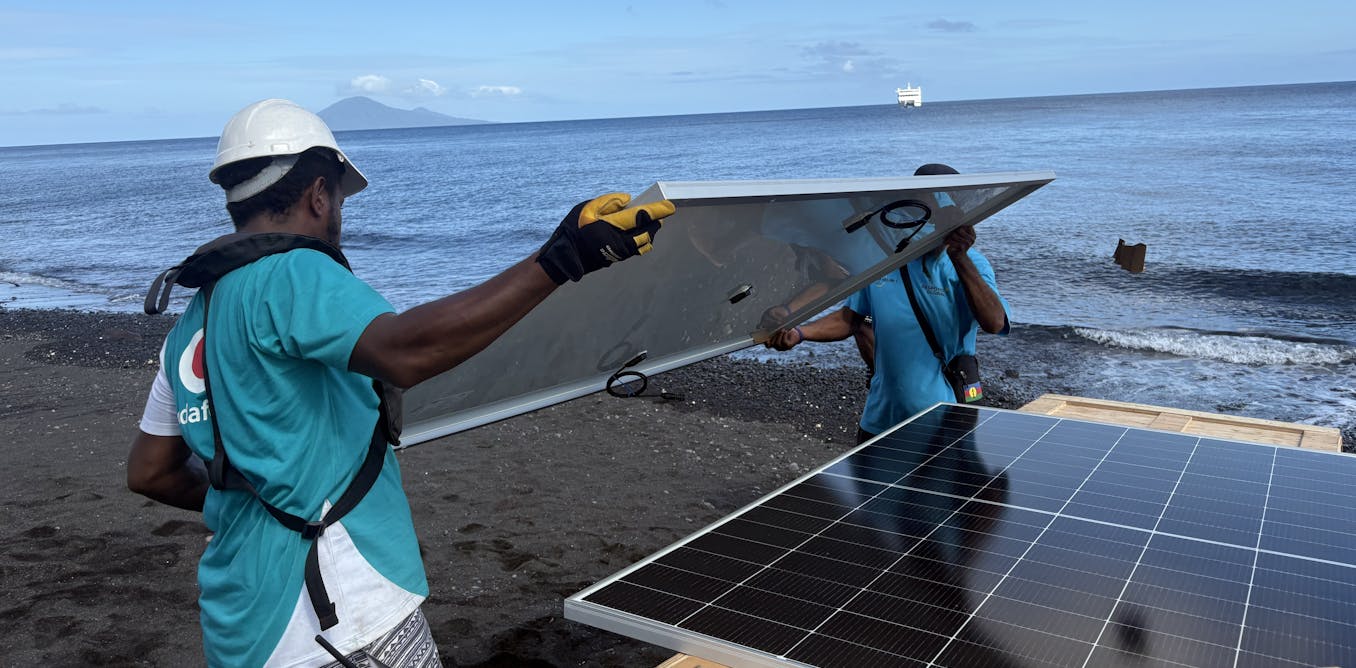
  • How Pacific nations plan to go from spending up to 25% of GDP on fossil fuels to running on 100% renewables

    How Pacific nations plan to go from spending up to 25% of GDP on fossil fuels to running on 100% renewables

    Picture dusk falling somewhere in the Solomon Islands. A fisher’s skiff glides home using a whisper-quiet electric outboard motor. In the Cook Islands, a big battery steadies the island grid. In Papua New Guinea’s highlands, solar kits bring electric light to homes for the first time.

    These aren’t prototypes – they’re already up and running across the Pacific. Put together, these stories of quiet change point to something bigger.

    For decades, Pacific island countries have led the global fight on climate change. These nations are highly exposed to the damage from rising sea levels, acidifying oceans and bleached coral reefs. Pacific leaders helped secure the 2015 Paris Agreement and the global goal of holding warming to 1.5°C.

    Now the Pacific is leading the way again. Island leaders have a bold plan to become the world’s first region powered entirely by renewables and energy storage.

    The move isn’t symbolic. It’s extremely practical. Pacific nations spend an eye-watering percentage of their GDP (10–25%) buying fossil fuels to run power plants, generators and vehicles. Ending reliance on imports and becoming energy independent will bring major dividends. Despite widespread support, the Pacific’s clean energy transition has not yet taken off in earnest due to transport costs and gaps in financing, skills and regulation.

    Leaders will formally release a renewable roadmap next week at the COP30 climate conference in Brazil. Pacific nations and Australia are bidding to host the next climate talks in 2026. Island leaders hope to leverage the global summit to attract investment in their own energy transition.

    Electric outboard motors, like this one in the Solomon Islands, make it possible for the banana boats common across the Pacific to run without fossil fuels.
    DFAT, CC BY-NC-ND

    Slashing fossil fuel imports will save billions

    Right now, Pacific countries spend A$9–14 billion a year importing diesel for generators and fuel for vehicles and boats.

    Sharp falls in renewable costs mean solar and battery systems are now clearly cheaper than fossil fuels for electricity generation.

    Even with the Pacific’s logistical challenges, installed costs for solar have fallen more than five-fold since 2010. The cost of grid-scale and home batteries is falling quickly.

    Replacing diesel generation with solar and batteries would cost an estimated $3–4 billion. These costs would be quickly recouped, given annual savings would be around $610–840 million.

    The biggest challenge will be financing for large-scale renewables, grid infrastructure and energy storage. Many outer islands can move ahead faster by replacing diesel generators with solar and batteries. A rapid shift to electric vehicles (EVs) and vessels is also possible. Government incentives have triggered rapid uptake of EVs and hybrids in Fiji. Electric outboard motors are also ready for prime time.

    Cost savings would free up funds for essential infrastructure, health, education and climate resilience. Renewables represent a powerful development strategy for the Pacific.

    man standing in front of electric taxi.
    Electric vehicles are slowly appearing on Pacific roads, such as this electric taxi in Fiji.
    Leaf.Com, CC BY-NC-ND

    Global renewable uptake is key to survival for Pacific nations

    Individual Pacific countries have set ambitious renewable energy targets in national commitments under the Paris Agreement. Fiji plans to be powered 100% by renewables by 2035, while Tuvalu is aiming to get there by 2030.

    These national goals can contribute to a regional target for 100% renewable energy. Pacific leaders have agreed to establish a Pacific Energy Commissioner to coordinate the transition.

    Pacific island countries are not major polluters, contributing just 0.02% of global emissions. Cutting the region’s emissions will do very little to limit warming.

    The importance of this new plan is showing 100% renewables is now doable.

    As Vanuatu climate and energy minister Ralph Regenvanu states:

    if we can manage the rapid transition of our energy systems in the Pacific Islands, it can be a beacon for the rest of the globe. Our survival depends on it.

    Holding warming to 1.5°C is critical for low-lying atoll nations. Climate resettlement is already under way, as Tuvalu residents enter ballots to move to Australia while Fijian villages are relocating to higher ground.

    Two years ago, nearly 200 countries agreed to triple global renewable capacity and accelerate the transition away from fossil fuels. Reaching this goal is crucial to keep 1.5°C within reach. Pacific nations can show the way. But their survival isn’t in their hands – it depends on the world following suit.

    grid battery installation in Pacific islands.
    Plunging costs of battery storage mean running on 100% renewables is increasingly possible.
    Te Aponga Uira (Rarotonga Power Authority), CC BY-NC-ND

    Next year’s climate talks could drive the change

    For several years, Pacific nations and Australia have been bidding to host the 2026 COP31 climate summit. But Turkey has a rival bid. A final decision is expected next week.

    As Palau President Surangel Whipps has said, hosting COP31 in the Pacific cannot just be about symbolism – it must demonstrate “tangible benefits” to Pacific peoples.

    If the joint bid for COP31 gets up, Pacific leaders will be pressing for progress on their 100% renewable plan by seeking investors and technology partners.

    The COP talks are more than climate negotiations – they’ve become the world’s biggest trade fair. Thousands of delegates will be looking to invest in renewable energy. More than 70% of investment in renewables in Australia comes from abroad and COP31 could attract finance for both Australia and the Pacific.

    Palau will host regional leaders next year at the annual Pacific Islands Forum leaders’ meeting. Whipps, the incoming chair, will focus on building a regional renewable Pacific partnership and is planning an investment meeting next year to help attract international investment ahead of COP31.

    Some investment is likely to come from Australia, both private and public. Australia is rapidly replacing coal-fired power with renewables and storage at home and is already supporting Pacific clean energy projects. But Pacific leaders have also called on Australia to “stop approving new gas and coal projects” and stop subsidising fossil fuel production.

    The Pacific’s plan to run on clean power makes clear sense on financial, energy security and climate leadership grounds. The question now is – will it happen?

    Continue Reading

  • Oil prices edge down on US inventory build, OPEC forecast shift – Reuters

    1. Oil prices edge down on US inventory build, OPEC forecast shift  Reuters
    2. Oil prices decline  Business Recorder
    3. Oil extends losses on US inventory build, OPEC forecast shift  MSN
    4. OPEC sees balanced oil market in 2026, moves further away from deficit projection  Yahoo Finance
    5. OPEC Flips Third-Quarter Oil Market View to Surplus on US Growth  Bloomberg.com

    Continue Reading

  • The shutdown has ended – but this economist isn’t rejoicing quite yet

    The shutdown has ended – but this economist isn’t rejoicing quite yet

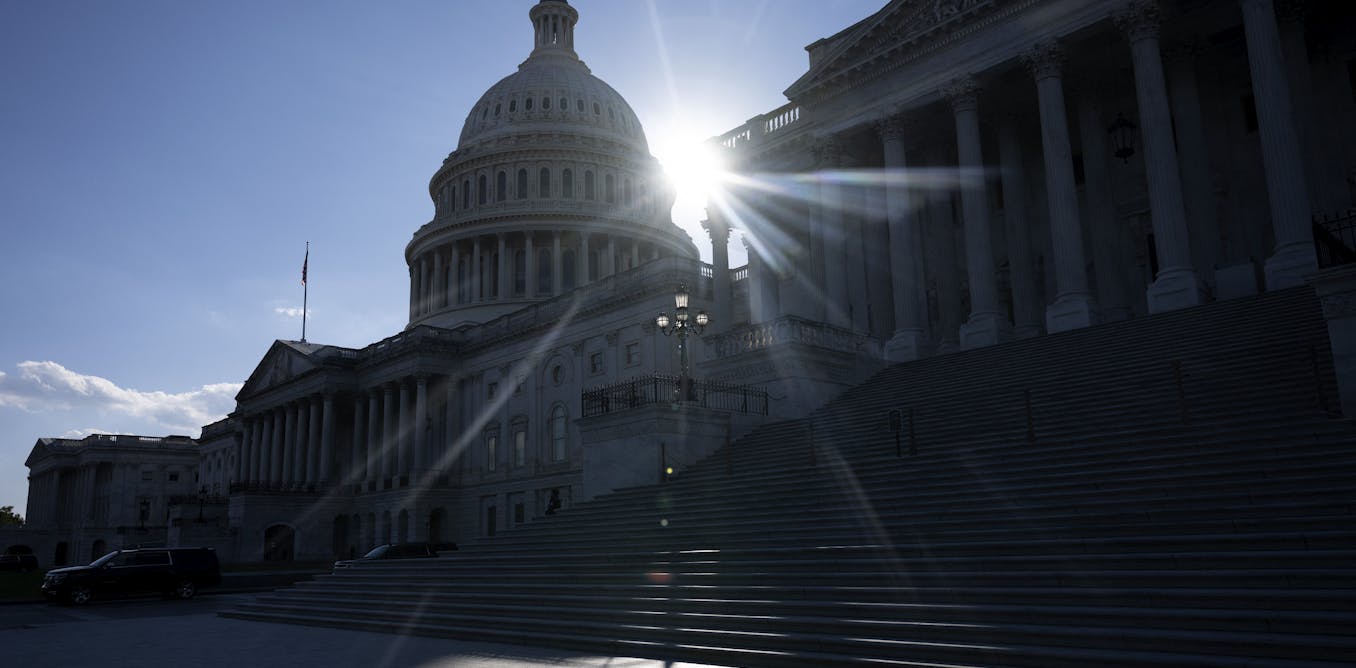
    After 43 days, the U.S. government shutdown finally came to an end late on Nov. 12, 2025, when Congress voted through a long-overdue funding bill, which President Donald Trump promptly signed.

    But the prolonged gap in government-as-usual has come at a cost to the economy.

    The Conversation spoke with RIT economist Amitrajeet A. Batabyal on the short- and long-term impact that the shutdown may have had on consumers, on the gross domestic product and on international trust in U.S. stewardship of the global economy.

    What is the short-term economic impact of the shutdown?

    Having some 700,000 government workers furloughed has hit consumer spending. And a subset of those workers believed they may not have a job to come back to amid efforts by the Trump administration to lay them off permanently.

    In fact, the University of Michigan’s monthly index on consumer sentiment tumbled to a near record low in November – a level not seen since the depth of the pandemic. Because lower consumer sentiment is related to reduced spending, that has a short-term impact on retailers, too.

    And because parks and monuments have been closed throughout the shutdown, tourism activity has been down – a decline no doubt worsened by the reduction in flights enforced due to shortages in air traffic controllers.

    The effect was particularly pronounced in places like Washington D.C. – one of the most popular destination for tourists – and Hawaii. This short-term effect will likely extend to secondary businesses, such as hotels. Indeed, prior to the shutdown, the U.S. Travel Association warned that such an event would cost the total travel industry around US$1 billion a week.

    And the longer-term impact?

    Estimates range, but the nonpartisan Congressional Budget Office has said that the cost to America’s gross domestic product in lost productivity is in the range of $7 billion to $14 billion – and that is a cost from a self-imposed wound that will never be recovered.

    And from an international macroeconomic point of view, trust in the U.S. has been hit. Even before the shutdown, political dysfunction in Washington contributed to a downgrade in the U.S. credit rating – something that could result in higher borrowing costs.

    The shutdown further erodes the United States’ standing as the global leader of the free market and rules-based international order. Accompanied by the economic rise of China, this shutdown further erodes international investors’ impression of the U.S. as an arbiter and purveyor of the established trade and finance system – and that can only hurt Washington’s global economic standing.

    Has the economic pain been felt evenly?

    Certainly not. Large numbers of Americans have been hit, but the shutdown affected regions and demographics differently.

    Those on the lower end of the income distribution have been hit harder. This is in large part due to the impact the shutdown has had on the Supplemental Nutrition Assistance Program, also known as food stamps. Some 92% of SNAP benefits go to American households below the federal poverty line.

    More than 42 million Americans rely on SNAP payments. And they were caught up in the political maelstrom – left not knowing if their SNAP payments will come, if they will be fully funded and when they will appear.

    There is also research that shows Black Americans are affected more by shutdowns than other racial groups. This is because traditionally, Black workers have made up a higher percentage of the federal workforce than they do the private sector workforce.

    Geographically, too, the impact of this shutdown has been patchy.

    California, Washington D.C. and Virginia have the highest proportion of federal employees, so that means a larger chunk of the workers in those regions were furloughed. Hawaii has also been disproportionately hit due to the large number of military there. One analysis found that with 5.6% of people in the state federally employed, and a further 12% in nonprofit jobs supported by federal funding, Hawaii was the second-hardest-hit state during the shutdown.

    How easy is it for the US to recover from a shutdown?

    Because shutdowns are always temporary, recovery depends on how long it has gone on for. Traditionally, the long-term economic trend is not badly affected by the short-term pain of shutdowns.

    But it may be slightly different this time around. This shutdown went on longer than any other shutdown in U.S. history.

    Also, the nature of this shutdown raises some concerns. This was the first shutdown in which a president said that backpay was not a sure thing for all furloughed federal employees. And the uncertainty over those threatened with layoffs again broke from past precedent. Both matters seemed to have been settled with the deal ending the shutdown, but even so, the ongoing uncertainly may have affected the spending patterns of many affected.

    And we also do not know what the economic impact of the reduction of domestic flights will be.

    Have other economic factors exacerbated the shutdown affect?

    While the shutdowns in Trump’s first administration did take place while tariffs were being used as a foreign policy and economic tool, this year is different.

    Trump’s tariff war this time around is across the board, hitting both adversaries and allies. As a result, the U.S. economy has been more tentative, resulting in greater uncertainty on inflation.

    Related to that is the rising grocery prices that have contributed to an upward tick in inflation.

    This all makes the job of the Federal Reserve harder when it is trying to fine-tune monetary policy to meets its dual mandates of full employment and price stability. Add to that the lack of government data for over a month, and it means the Fed is grasping in the dark a little when it comes to charting the U.S. economy.


    Continue Reading

  • DBS and Ant International Enhance Strategic Partnership to Scale Innovative Cross-Border Payment and Fintech Solutions to Drive Inclusive Growth

    DBS and Ant International Enhance Strategic Partnership to Scale Innovative Cross-Border Payment and Fintech Solutions to Drive Inclusive Growth

    SINGAPORE–(BUSINESS WIRE)–DBS and Ant International have agreed to deepen their existing strategic collaboration to jointly explore innovative payments, digitisation and fintech solutions aimed at providing more inclusive services for regional businesses of all sizes and individual consumers.

    The collaboration will leverage DBS’ digital banking capabilities and Ant International’s cutting-edge financial technologies such as AI and blockchain, to scale cross-border payments, strengthen connectivity and drive innovations in the financial ecosystem.

    The Memorandum of Understanding (MoU) was inked on the sidelines of the Singapore Fintech Festival 2025, committing DBS and Ant International’s key businesses – Alipay+, Antom, WorldFirst and Bettr Platform Tech – to a comprehensive partnership spanning several areas of strategic cooperation. These areas of collaboration include:

    • Boosting cross-border payments connectivity: DBS PayLah! will join the Alipay+ payments ecosystem, enabling over three million DBS PayLah! users to make QR codes payments to more than 150 million merchants in over 100 markets.

    • Exploring near-instant remittances to 1.8 billion consumer accounts on Alipay+: Ant International and DBS are currently exploring a bank-to-wallet solution that enables real-time remittances between DBS customers and more than 1.8 billion user accounts on the Alipay+ ecosystem. The solution will use ISO 20022 messaging standards and leverage the SWIFT network. Both organisations are also exploring further innovative solutions to enhance and simplify remittances between DBS customers and Alipay+ ecosystem users.

    • Supporting small and medium enterprises (SMEs) on their digital transformation journey: DBS will partner with Antom, Ant International’s unified merchant payment and digitisation services provider, to explore potential solutions that can meaningfully support SMEs in advancing their digital transformation journey. An example being considered includes the Model Context Protocol (MCP)-based Antom Agentic Payment solution, which integrates Antom’s unique Alternative Payment Method checkout capabilities, industry-leading payment mandate model, and trusted AI technologies. DBS will also work with WorldFirst to scale up same-day and near-instant cross-border payments solutions for SME clients.

    • Fostering innovation in regional fintech ecosystems: DBS and Ant International further reiterated their shared commitment to driving innovation in the financial sector, by deepening their existing collaboration on tokenised deposits1.

    Peng Yang, CEO of Ant International, said: “We are proud to deepen our partnership with DBS, whom we have already been working closely with since 2013, on various initiatives including SME payment solutions and most recently, tokenised deposits. With a shared vision on enhancing inclusive growth for local and regional commerce, as well as nurturing local innovation and talent, we look forward to bringing our know-how in payments and digitalisation together to create even stronger synergy to continuously boost the digital economy in this region. Together, we’ll make a difference to the region by driving inclusive and sustainable growth.”

    Tan Su Shan, CEO of DBS, said: “DBS is pleased to have the privilege to expand our partnership with Ant International. They are a truly like-minded partner in purpose-driven innovation, having demonstrated a shared vision for leveraging cutting-edge technology to create more efficient and inclusive financial ecosystems. By synergising our strengths, we can unlock new avenues for growth, accelerate future-ready solutions like tokenised deposits and agentic payments – and reimagine the future of finance to drive greater impact for our clients and customers.”

    About DBS

    DBS is a leading financial services group in Asia with a presence in 19 markets. Headquartered and listed in Singapore, DBS is in the three key Asian axes of growth: Greater China, Southeast Asia and South Asia. The bank’s “AA-” and “Aa1” credit ratings are among the highest in the world.

    Recognised for its global leadership, DBS has been named “World’s Best Bank” by Global Finance, “World’s Best Bank” by Euromoney and “Global Bank of the Year” by The Banker. The bank is at the forefront of leveraging digital technology to shape the future of banking, having been named “World’s Best Digital Bank” by Euromoney and the world’s “Most Innovative in Digital Banking” by The Banker. In addition, DBS has been accorded the “Safest Bank in Asia“ award by Global Finance for 17 consecutive years from 2009 to 2025.

    DBS provides a full range of services in consumer, SME and corporate banking. As a bank born and bred in Asia, DBS understands the intricacies of doing business in the region’s most dynamic markets.

    DBS is committed to building lasting relationships with customers, as it banks the Asian way. Through the DBS Foundation, the bank creates impact beyond banking by uplifting lives and livelihoods of those in need. It provides essential needs to the underprivileged, and fosters inclusion by equipping the underserved with financial and digital literacy skills. It also nurtures innovative social enterprises that create positive impact.

    With its extensive network of operations in Asia and emphasis on engaging and empowering its staff, DBS presents exciting career opportunities. For more information, please visit www.dbs.com.

    About Ant International

    With headquarters in Singapore and main operations across Asia, Europe, the Middle East and Latin America, Ant International is a leading global digital payment, digitisation and financial technology provider. Through collaboration across the private and public sectors, Ant International’s unified techfin platform supports financial institutions and merchants of all sizes to achieve inclusive growth through a comprehensive range of cutting-edge digital payment and financial services solutions. To learn more, please visit https://www.ant-intl.com/

    1https://www.dbs.com/newsroom/DBS_launches_blockchain_powered_Treasury_Tokens_pilot_with_Ant_International_for_247_treasury_and_liquidity_management

    Continue Reading

  • Rupee to hold in narrow range on flows pressure, RBI barrier – Reuters

    1. Rupee to hold in narrow range on flows pressure, RBI barrier  Reuters
    2. INR vs USD: India-US trade deal may strengthen Rupee to 83 per Dollar; analysts assess impact of trade pact on currency  livemint.com
    3. Yawning gulf in importer, exporter hedging heightens Indian rupee’s reliance on RBI  MSN
    4. India’s RBI Shields Currency, Bond Markets as US Tariffs Bite  Bloomberg.com
    5. Rupee swings shrink to 60 paise amid active support from RBI  The Economic Times

    Continue Reading

  • India boosts homegrown WhatsApp rival in tech nationalism drive – Financial Times

    India boosts homegrown WhatsApp rival in tech nationalism drive – Financial Times

    1. India boosts homegrown WhatsApp rival in tech nationalism drive  Financial Times
    2. Sridhar Vembu just dropped a big warning for Arattai users ahead of new update: here’s what to know  livemint.com
    3. “Only way to answer critics is to last long enough and win”: Sridhar Vembu on Zoho apps being compared to Koo, Hike  ANI News
    4. ‘Nothing Wrong’: Sridhar Vembu On Zoho Arattai’s Dip From Top 100 Apps List  NDTV
    5. Sridhar Vembu: Arattai’s Positioning and AI Realities  Devdiscourse

    Continue Reading

  • Disney projected to lose $4.3M per day; YouTube TV 24% of subscribers

    Disney projected to lose $4.3M per day; YouTube TV 24% of subscribers

    Nov. 12 (UPI) — A carriage dispute between Disney and YouTube TV costs Disney about $4.3 million per day and could cause YouTube TV to lose a fourth of its subscribers.

    The dispute is in its 13th day on Thursday and would cost Disney about $30 million per week as Google-owned YouTube TV refuses to air ABC, ESPN and other programming, according to Morgan Stanley analyst Benjamin Swinburne, as reported by The Wrap.

    Swinburne initially estimated the dispute would last for 14 days and cost a total of $60 million, but that timeframe is about to expire.

    The YouTube TV blackout of Disney-owned programming started on Oct. 31 after Disney demanded more money from YouTube TV to carry more than 20 of its channels.

    YouTube TV officials refused and have said they will give subscribers a $20 credit.

    Disney says YouTube TV refuses to pay a fair rate for Disney-owned programming, while YouTube TV says Disney wants to levy an unreasonable rate hike.

    Morgan Stanley analysts said they expect Disney and YouTubeTV to resolve their differences by the end of the week, Variety reported.

    In addition to Disney’s lost revenue, YouTube TV is poised to lose nearly a fourth of its subscribers, according to a survey conducted earlier this week.

    YouTube TV on Sunday began notifying subscribers of how to obtain the $20 credit to their accounts to try to reduce the amount of service cancellations.

    Continue Reading

  • Yen squeezed, stocks firm as US shutdown set to lift – Reuters

    1. Yen squeezed, stocks firm as US shutdown set to lift  Reuters
    2. Stock market today: Dow closes above 48,000 for first time, Nasdaq slips with government shutdown vote on deck  Yahoo Finance
    3. Equities rise modestly, US bond yields dip with government reopen, interest rates in focus  Reuters
    4. European Shares Hit Record as U.S. Shutdown Hopes Lift Markets  Modern Diplomacy
    5. Yen squeezed, stocks firm as US shutdown set to lift By Reuters  Investing.com

    Continue Reading