Category: 2. World

  • What are superinjunctions and why was one imposed in Afghan case? | Superinjunctions

    What are superinjunctions and why was one imposed in Afghan case? | Superinjunctions

    A data breach that led the UK government to offer relocation to 15,000 Afghans in a secret scheme with a potential cost of more than £2bn escaped parliamentary and media scrutiny until Tuesday when a superinjunction was lifted more than 600 days after it had taken effect. Here, the Guardian explains the legal background to the controversy.


    What is a superinjunction?

    A regular injunction is a court order that prevents certain details of a case from being made public. A superinjunction prohibits disclosure not only of the underlying information but also of the existence of the order itself.

    One of the earliest known superinjunctions was obtained by the oil-trading company Trafigura in 2009 to prevent the Guardian from reporting details of toxic waste dumping in Ivory Coast.

    They have also been used by celebrities such as the footballers John Terry and Ryan Giggs to try to stop reporting about their private lives. Superinjunctions are used very rarely by governments.


    How did the superinjunction in the Afghan case come about?

    The Daily Mail said that after its reporter approached the Ministry of Defence (MoD) about the breach, the D-notice committee (formally the Defence and Security Media Advisory Committee) was activated, which advises the press on threats to national security. Compliance with the committee is not obligatory but the Mail said it agreed not to publish the story. It said the government applied for a binding court order after others became aware of the breach.

    Ben Wallace, who was defence secretary at the time, told BBC Radio 4’s Today that when ministers went to the high court “we applied for a four-month injunction, a normal injunction,” and that he did not know why it was converted into a superinjunction in September 2023. He said his priority “was to protect those people who could have been or were exposed by this data leak”.

    Mr Justice Robin Knowles said in his 2023 judgment that he had gone further than what the MoD had requested. “Although it was proposed that the order (not the hearing) should be in public and published on the court website, I have decided it should be in private and not published on the website, at least at this stage,” he said.


    How did the the superinjunction come to be lifted?

    After Paul Rimmer, a former civil servant, carried out a review for the MoD, Mr Justice Chamberlain ordered on 26 June that the injunction be lifted from noon on Tuesday 16 July because Rimmer’s conclusions “fundamentally undermine the evidential basis on which [the courts previously] relied in deciding that the superinjunction should be continued”. This time there was no appeal.

    In his review, Rimmer said: “It appears unlikely that merely being on the dataset would be grounds for targeting. It is therefore also unlikely that family members – immediate or more distant – will be targeted simply because the ‘principal’ appears in the dataset. Should the Taliban wish to target individuals, the wealth of data inherited from the former government would already enable them to do so.”


    Was it right to use a superinjunction?

    The aim was ostensibly to prevent risk to life, but in a judgment in May last year ordering that the superinjunction be lifted – which was subsequently overturned by the court of appeal – Chamberlain said: “It is fundamentally objectionable for decisions that affect the lives and safety of thousands of human beings, and involve the commitment of billions of pounds of public money, to be taken in circumstances where they are completely insulated from public debate.”

    He said the superinjunction was likely to have an adverse effect on those not being relocated as they would not be able to react to any threat or benefit from public pressure on the government to do more for them.

    In last month’s final judgment, Chamberlain said: “The assessments in Mr Rimmer’s report are very different from those on which the superinjunction was sought and granted. The change is in part due to the passage of time … It will be for others to consider whether lessons can be learned from the way the initial assessments in this case were prepared and whether the courts were, or are generally, right to accord such weight to assessments of this kind.

    Mark Stephens, a partner at Howard Kennedy and a trustee of Index on Censorship, said it may have been justified by the exceptional circumstances, but added: “The difficulty here is, I think you’re only entitled to the superinjunction for as long as it is necessary, essentially to preserve life, and it’s not clear that this didn’t run on a bit longer.”

    Continue Reading

  • Syria's Druze reach new ceasefire deal with government in Sweida, religious leader says – Reuters

    1. Syria’s Druze reach new ceasefire deal with government in Sweida, religious leader says  Reuters
    2. LIVE: Israel attacks Syria’s Damascus amid fighting in Suwayda  Al Jazeera
    3. Israel strikes Damascus military HQ as fighting between Syrian forces and Druze continues – live updates  BBC
    4. Series of airstrikes hit Syria’s capital  CNN
    5. UN chief urges de-escalation, protection of civilians as conflict roils Syria  Ptv.com.pk

    Continue Reading

  • World reacts to Israeli attacks on Syria’s Damascus | Syria’s War News

    World reacts to Israeli attacks on Syria’s Damascus | Syria’s War News

    A roundup of key international reactions after Israeli air strikes near the defence ministry and presidential palace in Syria’s capital.

    Israel has launched several air strikes in the heart of the Syrian capital, Damascus, as clashes continued in the southwestern city of Suwayda after a truce between government forces and Druze armed groups collapsed.

    Defence Minister Israel Katz said Israeli forces struck near the entrance to the Syrian Ministry of Defence on Wednesday, hours after he had demanded Syrian government forces withdraw from Suwayda.

    Another strike hit near the presidential palace, on the outskirts of the city.

    At least one person was killed and 18 others were wounded in the attacks, Syrian state media reported, citing the Ministry of Health.

    The attacks on Syria’s capital come amid continuing unrest in the city of Suwayda, where local Sunni Bedouin tribes have been engaged in fierce clashes in recent days with fighters from Syria’s Druze minority, whom Israel views as a potential ally in Syria and claims to be intervening to protect.

    Damascus deployed its forces to the city on Tuesday and declared a ceasefire, but the fighting quickly resumed.

    Here is how the world is reacting to Israel’s attacks on Damascus:

    United States

    Secretary of State Marco Rubio said the US was “very concerned” about the escalation in violence.

    “We’re going to be working on that issue … I just got off the phone with the relevant parties. We’re very concerned about it, and hopefully, we’ll have some updates later today. But we’re very concerned about it,” Rubio said

    Turkiye

    Turkiye’s Ministry of Foreign Affairs condemned the attacks and said they were an attempt to sabotage Syria’s efforts to achieve peace, stability and security.

    “The Syrian people have a historic opportunity to live in peace and integrate with the world,” the ministry said.

    “All stakeholders who support this opportunity should contribute to the Syrian government’s efforts to restore peace.”

    Omer Celik, spokesperson for President Recep Tayyip Erdogan’s governing AK Party, also condemned the attacks.

    “Israel’s attacks pose a security threat to the entire region and the world,” Celik wrote on X.

    GCC

    The Gulf Cooperation Council (GCC) – comprising Bahrain, Kuwait, Oman, Qatar, Saudi Arabia and the United Arab Emirates – condemned the attacks in the “strongest terms”.

    In a statement, GCC Secretary-General Jasem Mohamed Albudaiwi said the Israeli attacks were a “flagrant violation” of Syria’s sovereignty, “a breach of international laws and norms, and a serious threat to regional security and stability”.

    Albudaiwi reiterated the GCC’s support for Syria’s territorial integrity, adding that the continuation of Israeli attacks constituted an “irresponsible escalation” and disregarded international efforts to achieve stability in Syria and the region.

    Norway

    The Norwegian foreign minister said that Israel’s recent strikes could undermine efforts towards a peaceful transition of power in Syria.

    “Deeply concerned about recent Israeli airstrikes and rising domestic tensions. The escalation risks undermining efforts towards a peaceful, Syrian-owned transition,” Espen Barth Eide wrote on X.

    He said he was “alarmed” by the “escalating violence” in Syria and urged all actors to exercise “maximum restraint”.

    Continue Reading

  • Israel strikes Syria’s defence ministry in third day of attacks | Syria

    Israel strikes Syria’s defence ministry in third day of attacks | Syria

    The Israeli military struck the Syrian defence ministry in Damascus twice on Wednesday as it intervened in the clashes between the Syrian army and Druze fighters in southern Syria in the country’s deadliest violence in months.

    The strikes collapsed four floors of the ministry and ruined its facade. The strikes killed one person and injured 18, Syrian officials said.

    It was the first time Israel had targeted Damascus since May and the third day in a row it had conducted airstrikes against the Syrian military.

    A spokesperson for the Israeli military said the strike on the defence ministry had been a message to the Syrian president, Ahmed al-Sharaa “regarding the events in Suweida”. The Israeli military struck Syrian tanks on Monday and has continued to conduct dozens of drone strikes on troops, killing some soldiers.

    Israel has said it will not allow the Syrian army to deploy in the south of the country, and that it would protect the Druze community from the Damascus government. Many in the Druze community have rebuffed Israel’s claim of patronage for fear of being viewed as a foreign proxy.

    The Israeli bombing added another complication to an already escalating conflict between Syrian government forces, Bedouin Arab tribes and Druze fighters. More than 250 people have been killed in four days of clashes, according to the UK-based Syrian Observatory for Human Rights (SOHR).

    On Wednesday, the Syrian government and one of the three spiritual leaders of the Syrian Druze community announced a ceasefire. It was unclear if the truce would hold, however, as another spiritual leader, Sheikh Hikmat al-Hijri, vowed to keep fighting, calling the government a collection of “armed gangs”.

    A ceasefire announced on Tuesday broke down in similar circumstances.

    On Wednesday night, Reuters reported that the UN security council would meet on Thursday to discuss the situation.

    The clashes pitting mostly Sunni government forces against Druze fighters have prompted fears of a wider sectarian conflict. An attack in March by remnants of the ousted regime of Bashar al-Assad on security forces led to violence in which more than 1,500 people were killed, most of them from the minority Alawite community.

    The violence is the most serious challenge to Damascus’s rule since the coastal massacres and has threatened to further push away everyday Druze from the state.

    The Druze, a religious minority in Syria and the wider Middle East, make up the majority of the population of Suweida province in the south of the country. They have been negotiating with the Islamist-led authorities in Damascus since the fall of Assad, in an attempt to achieve some form of autonomy. They have yet to reach an agreement that defines their relationship with the new Syrian state.

    Syrian security forces deploy during clashes in Suweida city on Wednesday. Photograph: Sam Hariri/AFP/Getty Images

    The Syrian army entered Suweida on Sunday in an attempt to restore calm between Druze fighters and Arab Bedouin tribes.

    Fighting broke out after Bedouin tribe members robbed a Druze man on the main road south of Damascus, kicking off a cycle of retaliatory violence between the two groups. Intermittent violence between members of the Druze and Bedouin communities has been common in the area in recent years.

    Some Druze militias have vowed to prevent Syrian government forces entering Suweida and have attacked them, leading to escalating clashes.

    As government forces entered Suweida, accounts of human rights abuses began to emerge.

    On Tuesday around noon, armed gunmen entered a reception hall belonging to the Radwan family in Suweida and killed 15 unarmed men and one woman, three members of the family told the Guardian. The SOHR also reported the killings, though put the number of dead at 12.

    “I just lost nine close friends and relatives. It just makes me feel so sad. There are no weapons allowed in the [hall], it’s not like it’s a military base,” said Maan Radwan, a 46-year-old London resident whose relatives were killed in the shooting.

    Video of the aftermath of the shooting showed unarmed men strewn across a room lying in pools of blood. Family members said men in army fatigues prevented ambulances from reaching the reception hall, which they thought was meant to ensure the wounded died from blood loss.

    “We don’t know who is with general security, who are jihadists, who are Bedouin tribespeople. It’s impossible to tell who is killing us,” a 52-year old teacher and relative of the Radwan family in Suweida told the Guardian by phone.

    A surgeon at the Suweida national hospital said that the bodies of those killed in the Radwan house bore close-range gunshot wounds, adding that they knew many of those who were killed in the shootings personally.

    Sharaa issued a statement on Wednesday condemning the human rights violations.

    “These criminal and illegal actions cannot be accepted under any circumstances and completely contradict the principles that the Syrian state is built on,” the statement said, adding that perpetrators would be held accountable.

    The US special envoy for Syria, Tom Barrack, posted on X saying: “Actions must follow to end violence, ensure accountability and protect all Syrians.”

    It was unclear who was committing the abuses against civilians, and witnesses said they could not distinguish between state security forces and militia fighters.

    On their private social media, two members of the government forces posted sectarian hate speech against Druze.

    One member of the government forces posted a video of him and two other soldiers driving through Suweida laughing as he said: “We are on our way to distribute aid,” while brandishing a machete to the camera. He filmed himself inside a house in Suweida ripping a picture of Druze spiritual leaders off a wall and trampling it with his boots.

    “If God grants you victory, none can defeat you. We are coming for you with sectarianism,” he continued.

    The Syrian defence ministry said it was “adhering to rules of engagement to protect residents”.

    Several civilians in Suweida city described being locked inside their home as fighting continued outside, while electricity and other basic supplies have been cut off.

    One 52-year-old English teacher said they had watched as their neighbour was shot dead by a hidden sniper, and that no one could collect the body for fear of being shot.

    A 31-year-old resident of Suweida said he watched as armed men burned the shop below his house, calling the Druze “swine” as they ransacked the neighbouring building.

    The Syrian interior ministry said the continued fighting could only be solved by integrating the Druze-majority province into the state and said it came “in the absence of relevant official institutions”.

    The killings in Suweida provoked anger among the wider Druze community in the Middle East. Some Israeli Druze in the occupied Golan Heights managed to cross the fence into Syria before being retrieved by the Israeli army. The Israeli military also said that it had reinforced its presence along the Syria-Israel border.

    Members of the Israeli Druze community gather at the border fence separating the Israeli-controlled Golan Heights and Syria. Photograph: Léo Corrêa/AP

    The Israeli prime minister, Benjamin Netanyahu, issued a statement urging people not to try to cross the border into Syria.

    “Do not cross the border. You are risking your lives; you could be murdered, you could be taken hostage, and you are impeding the efforts of the IDF,” he said.

    Relations between Israel and Syria had begun to thaw before this week, with Israeli and Syrian officials engaging in security discussions and military coordination. Syria’s leadership has hinted it could eventually normalise relations with its southern neighbour.

    After the fall of Assad, the Israeli military launched hundreds of airstrikes against military assets in Syria and invaded the country’s south, where it continues to occupy large swathes of territory.

    Continue Reading

  • Afghan Women and Girls Deported From Iran Fear Returning to Afghanistan – The New York Times

    1. Afghan Women and Girls Deported From Iran Fear Returning to Afghanistan  The New York Times
    2. As Iran Deports a Million Afghans, ‘Where Do We Even Go?’  The New York Times
    3. Special Interview with UNHCR Representative in Afghanistan  TOLOnews
    4. The Take: Why are Afghan refugees being sent back to Taliban rule?  Al Jazeera
    5. Iranian Govt. Spokesperson Says Regulation Of Foreign Nationals Key To Economic Relief – Iran Front Page  Iran Front Page

    Continue Reading

  • Russia monitoring Western weapons deliveries to Ukraine, Kremlin says | Russia-Ukraine war News

    Russia monitoring Western weapons deliveries to Ukraine, Kremlin says | Russia-Ukraine war News

    Moscow is closely monitoring the West’s supply of weapons to Ukraine, the Kremlin’s spokesperson says shortly after United States President Donald Trump announced the resumption of arms deliveries to Kyiv.

    Dmitry Peskov also noted on Wednesday that a new phone call between Trump and Russian President Vladimir Putin was not currently planned but could quickly be arranged, according to Russian news reports.

    The comments from the Kremlin came two days after the US president showed growing impatience with Russia over its war in Ukraine.

    In his sharpest rebuke of Moscow so far, Trump announced on Monday that Putin had until early September, 50 days, to accept a peace deal or his country would face steep US sanctions.

    Trump said they would be secondary tariffs targeting Russia’s trading partners in a bid to isolate it from the global economy.

    Russia’s approach, in the meantime, is to “keep calm and carry on” in the face of Trump’s threats, experts said. There’s no certainty the pressure will push Putin towards ending the war.

    On the campaign trail before November’s presidential election, Trump boasted that he would end the war in Ukraine within 24 hours of taking office.

    However, after at least six phone conversations between Trump and Putin as well as several meetings between US officials and officials from Russia and Ukraine, no ceasefire has been reached.

    “My conversations with him are very pleasant, and then the missiles go off at night,” Trump said of his frustration with Putin.

    The US leader added that he would supply more weapons to Ukraine with European allies buying “billions and billions” of dollars of US military equipment to be transferred to Kyiv.

    Patriot air defence systems are included in the plan, which Ukraine needs to defend itself against Russian missile and drone attacks.

    Trump, however, has said Ukraine should not target Moscow after he reportedly asked Ukrainian President Volodymyr Zelenskyy if Kyiv could strike the Russian capital if he provided long-range weaponry.

    Trump made the comments after The Financial Times on Tuesday reported that Trump had encouraged Zelenskyy to step up strikes deep inside Russian territory during their phone call on July 4.

    The report, which quoted two unnamed people familiar with the discussion, said Trump had also asked his Ukrainian counterpart whether he could hit Moscow and St Petersburg if supplied with weapons with enough range.

    In response to a question on Tuesday about whether Zelenskyy should target Moscow, Trump told reporters at the White House that he should not.

    Overnight, the Russian military launched 400 drones and one ballistic missile, targeting cities across Ukraine, including Kharkiv, Kryvyi Rih and Vinnytsia.

    The strikes injured at least 15 people and damaged energy infrastructure, the Ukrainian authorities said on Wednesday.

    Power was down for 80,000 families in Kryvyi Rih and other parts of the Dnipropetrovsk region, Ukraine’s private energy company DTEK said on Telegram.

    The Ukrainian air force stated it had successfully shot down most of the drones but 12 targets were hit by 57 drones and the missile.

    In recent weeks, Moscow has increased its aerial bombardments against Ukraine with daily record numbers of drones and missiles being fired.

    “Russia does not change its strategy, and to effectively counter this terror, we need a systemic strengthening of defences: more air defences, more interceptor [missiles], more determination to make Russia feel our response,” Zelenskyy wrote on X on Wednesday.

    After starting his second presidential term in January, Trump sought to portray Washington’s support for Ukraine as a drain on US resources.

    Despite Trump’s more critical stance against Moscow this week, some American politicians continue to express concerns about his approach, warning that Putin could use the 50-day tariff deadline to capture more Ukrainian territory.

    In a report that has yet to be independently verified, Russia’s Ministry of Defence said on Wednesday that its army seized the settlement of Novokhatske in the Donetsk region of eastern Ukraine.

    Continue Reading

  • ‘Serious questions to answer’ over Afghan data breach, says Keir Starmer | Ministry of Defence

    ‘Serious questions to answer’ over Afghan data breach, says Keir Starmer | Ministry of Defence

    Conservative former ministers have “serious questions to answer” over the secret scheme to resettle Afghan nationals named in a data breach under the previous government, Keir Starmer has said.

    In his first comment on the subject since news of the £850m programme emerged after an unprecedented superinjunction blocking discussion about it was lifted on Tuesday, the prime minister welcomed a planned inquiry into what happened led by the Commons defence committee.

    “There has always been support across this house for the United Kingdom fulfilling our obligations to Afghans who served alongside British forces,” Starmer said at the start of prime minister’s questions.

    “We warned in opposition about Conservative management of this policy, and yesterday, the defence secretary set out the full extent of the failings that we inherited: a major data breach, a superinjunction, a secret route that has already cost hundreds of millions of pounds.”

    He added: “Ministers who served under the party opposite have serious questions to answer about how this was ever allowed to happen. The chair of the defence committee has indicated that he intends to hold further inquiries. I welcome that and hope that those who were in office at the time will welcome that scrutiny.”

    Kemi Badenoch, the Conservative leader, did not mention the Afghan scheme at prime minister’s questions, instead focusing her questions on the economy.

    Speaking after PMQs, Starmer’s press secretary said Badenoch had been offered a security briefing about the situation in March, but refused.

    Badenoch’s spokesperson said that as opposition leader she received “innumerable” offers of security briefings, and refused this one as it was not marked as urgent. In June the issue was listed as urgent, so she sought a briefing, and was informed about the scheme on Monday, he added.

    Badenoch’s spokesperson was unable to say precisely how many briefings were offered, or to confirm if another shadow minister went in the Tory leader’s place, and was then unable to brief her because of the superinjunction.

    Downing Street refused to say if Starmer accepted the need for secrecy, but said the bar for such injunctions should be set “exceptionally high”. The prime minister’s press secretary said: “It should never be used to hide inconvenient facts or save ministers from embarrassment.” The data leak had highlighted “the total incompetence at the top of government” under the Conservatives, she added.

    Asked about calls for a full public inquiry into what happened, Starmer’s official spokesperson did not rule this out, but said it was “right that parliament is able to scrutinise this issue in the first instance”.

    News about the previously secret Afghanistan Response Route (ARR) emerged after a high court judge said the superinjuction had the effect of concealing discussions about spending “the sort of money which makes a material difference to government spending plans and is normally the stuff of political debate”.

    The ARR was created in haste after it emerged that personal information about 18,700 Afghans who had applied to come to the UK had been leaked in error by a British defence official in early 2022, potentially putting them at risk of reprisals from the Taliban.

    Ministers and officials at the Ministry of Defence learned of the breach in August 2023 after data was posted to a Facebook group, and applied to the high court for an injunction, the first sought by a British government – to prevent any further media disclosure.

    Setting out the details of the scheme to the Commons on Tuesday, John Healey, the defence secretary, said Labour would halt the ARR, which will cost a total of £850m and will help an estimated 6,900 people.

    The decision to end the scheme came after a review into the repercussions of the data leak, led by Paul Rimmer, a retired civil servant, said that the acquisition of the data by the Taliban was “unlikely to substantially change an individual’s existing exposure given the volume of data already available”. It was unlikely, Rimmer said, that “merely being on the dataset would be grounds for targeting”.

    Continue Reading

  • What retaliatory action is the EU planning over Trump’s tariffs? | Donald Trump News

    What retaliatory action is the EU planning over Trump’s tariffs? | Donald Trump News

    The European Union is readying a package of tariffs to be levied on 72 billion euros’ ($84bn) worth of goods against the US, even as it steps up efforts to reach a trade deal and avert a transatlantic trade war with President Donald Trump.

    The European Commission, which oversees EU trade policy, is understood to have drawn up a list of duties for various US imports, ranging from cars to bourbon, after Trump declared on Sunday that he would levy a 30 percent “reciprocal” tariff on European imports from August 1.

    The EU and the US have been locked in trade negotiations for months, after Trump set a reciprocal tariff of 20 percent on EU goods in April. Those were dropped to 10 percent shortly afterwards, pending a three-month pause, before the president’s latest 30 percent salvo.

    Following Trump’s announcement, French and German government bond prices fell to lows seldom seen since the eurozone debt crisis of 2009-11, as traders fretted about whether the $1.7 trillion transatlantic trade relationship could remain intact.

    What tariffs has Trump announced for the EU?

    President Trump said he would impose a 30 percent tariff on goods imports from the EU starting on August 1. He says he wants to rebalance the $235.6bn trade deficit – whereby imports exceed exports – that the US has with the EU.

    EU officials had been hoping they could limit the damage by agreeing a baseline tariff of about 10 percent – the level of the one currently in place – with additional carve-outs for key sectors like cars. But Trump’s recent announcement, which came via a letter, dashed those hopes.

    Trump has sent similar letters to 23 other trading partners over the past eight days, including Canada, Japan and Brazil, setting blanket tariff rates ranging from 20 percent to 50 percent, as well as a blanket 50 percent tariff on copper imports from all countries.

    Earlier this year, Trump also slapped a 25 percent tariff on European steel and aluminium as well as cars, in an effort to reduce US dependence on imports and encourage more domestic production.

    In response to that, the EU announced retaliatory tariffs on $23.8bn worth of US goods (totalling 6 percent of US imports), with EU officials describing the US tariffs as “unjustified and damaging”. The implementation of these EU tariffs was delayed, however, as a gesture of goodwill during ongoing trade talks.

    On April 7, the head of the European Commission, Ursula Von der Leyen, offered Trump an alternative in the form of a zero-for-zero tariffs deal on industrial goods, including cars. But Trump said her proposal did not address US concerns about the trade deficit.

    How has the EU responded to the new US tariff?

    Von der Leyen has previously indicated that the 27-member bloc will continue negotiating until the August 1 deadline.

    On Monday, however, the EU commissioner for trade, Maros Sefcovic, said there was still a “big gap” between the two sides and it would be “almost impossible to continue the trading as we are used to in a transatlantic relationship”, with the new 30 percent rate. “Practically, it prohibits the trade,” he said.

    The EU, therefore, is now readying retaliatory tariffs in the event that talks break down before the deadline, Sefcovic said. “We have to protect the EU economy, and we need to go for these rebalancing measures.”

    Before a meeting with EU ministers to discuss trade, he told reporters: “Therefore I think we have to do, and I will definitely do, everything I can to prevent this super-negative scenario.”

    The EU’s latest tariff list, which covers 72 billion euros’ ($84bn) worth of goods, has been seen by Politico and Bloomberg.

    Though tariff rates are as yet unknown, they will apply to 11 billion euros’ ($13bn) worth of US aircraft and parts. Other items include cars, machinery, electrical products and chemicals.

    The list also covers agricultural products, including fruit and vegetables, as well as alcoholic drinks, such as bourbon and rum. Looking ahead, the Commission’s trade policy committee will have to formally approve the list before any retaliatory measures can be applied.

    The bloc is understood to be rife with disagreement over US trade, however. While Germany has urged a quick deal to safeguard its industries, other EU members – particularly France – insist that EU negotiators must not cave in to an “asymmetric” deal in favour of the US.

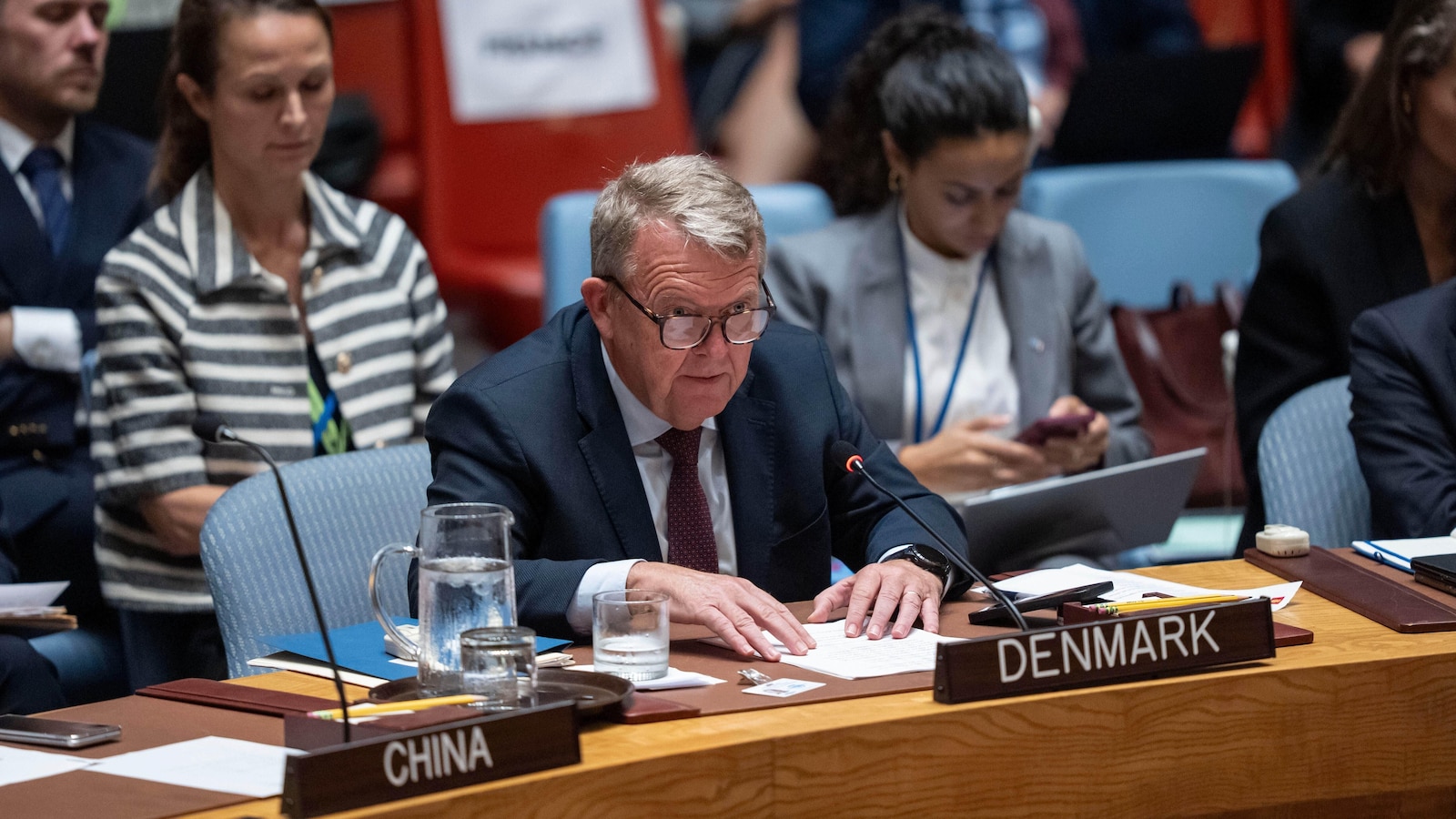
    On Monday, Danish Foreign Minister Lars Lokke Rasmussen told reporters in Brussels it was too early to impose countermeasures, “but we should prepare to be ready to use all the tools”. He added: “If you want peace, you have to prepare for war. And I think that’s where we are.”

    What and how much does Europe sell to the US?

    In 2024, the US-EU goods trade reached nearly $1 trillion, making the EU the biggest trading partner of the US.

    Overall, the US bought $235.6bn more in goods than it sold to the 27 countries that make up the EU. Trump has made no secret of wanting to reduce that trade deficit. On the other hand, the US earns a surplus on services with the EU.

    The US mainly buys pharmaceutical products from the EU, as well as mechanical appliances, cars and other non-railway vehicles – totalling roughly $606bn. The US alone accounts for 21 percent of EU goods exports.

    For its part, the US mainly exports fuel, pharmaceutical products, machinery and aircraft to the EU – to the tune of some $370bn.

    How would tariffs affect the US and Europe’s economies?

    Economists at Barclays estimate that a US tariff on EU goods of 35 percent, covering both reciprocal and sectoral duties, along with a combined 10 percent theoretical retaliation from Brussels, would shave 0.7 percent from the eurozone output, lowering it to just 0.4 percent annual growth.

    This could derail much of the eurozone’s already meagre growth. The EU struggled to regain its footing in the wake of the COVID-19 pandemic, and the surge in energy prices following Russia’s invasion of Ukraine has added to the strain.

    The economic forecasting consultancy, Oxford Economics, estimated on Monday that a 30 percent tariff could push the EU “to the edge of recession”.

    An April estimate, meanwhile, by German economic institute IW, found that reciprocal and sectoral tariffs ranging from 20 percent to 50 percent would cost Germany’s 4.3 trillion euro ($5 trillion) economy – the largest in the Eurozone – more than 200 billion ($232bn) euros between now and 2028.

    “We would have to postpone large parts of our economic policy efforts because it would interfere with everything and hit the German export industry to the core,” German Chancellor Friedrich Merz said of the potential US 30 percent reciprocal rate.

    Meanwhile, countermeasures from the EU would hit certain US industries hard. As Europe is a top-five market for US agriculture (particularly soya and corn), European tariffs could reduce US farm incomes and anger a key Trump constituency. The same is also true for the auto and plane parts sectors.

    Continue Reading

  • Israel strikes Damascus military HQ as fighting between Syrian forces and Druze continues – live updates

    Israel strikes Damascus military HQ as fighting between Syrian forces and Druze continues – live updates

    Israel defence minister: ‘Warnings have ended and painful blows to come’published at 14:05 British Summer Time

    Image source, Reuters

    Shortly after Israeli strikes on Damascus began, Israel’s defence minister shared a statement of intent on social media.

    “The warnings in Damascus have ended – now painful blows will come,” Israel Katz writes.

    Katz says the Israeli military will “continue to operate forcefully” in Suweida, the area of southern Syria where Israel has recently intervened in clashes between the minority Druze community and other armed groups.

    He then speaks directly to the Druze community in Israel, saying the Israel Defense Forces will protect the Syrian Druze population.

    “Prime Minister Netanyahu and I, as Minister of Defence, have made a commitment – and we will uphold it,” he adds.

    Katz also shared a video of a live TV news broadcast, showing a building in Damascus being hit by a strike and the on-air newsreader ducking for cover.

    Continue Reading

  • Trump tariffs threaten US economy as much as European one, says German finmin – Reuters

    1. Trump tariffs threaten US economy as much as European one, says German finmin  Reuters
    2. EU threatens €72 billion tariffs on US goods amid Stalled Trade Talks  Ptv.com.pk
    3. In Trump’s game of chicken, the EU cannot afford to back down | Nathalie Tocci  The Guardian
    4. Statement by President von der Leyen on EU-U.S. trade  European Commission
    5. EU warns that its trade with the US could be effectively wiped out if Trump follows through on his threat  CNN

    Continue Reading