Category: 2. World

  • Putin and Modi in China for summit overshadowed by trade wars with US

    Putin and Modi in China for summit overshadowed by trade wars with US

    Russian President Vladimir Putin and Indian Prime Minister Narendra Modi are among the twenty world leaders attending a regional security summit in China.

    Ahead of the annual gathering of the Shanghai Cooperation Organisation (SCO) in the port city of Tianjin, Modi is holding talks with China’s president, Xi Jinping. It is Modi’s first time in China in seven years.

    Putin, who is a close ally of China, arrived to a rolled out red carpet in Tianjin on Sunday.

    The summit comes as US President Trump has imposed steep tariffs on Indian goods as punishment for Delhi’s continued purchase of Russian oil, and Putin faces threats of sanctions for his ongoing war on Ukraine.

    There are 10 member states in the Beijing backed SCO – including Pakistan, Iran – and 16 dialogue partners and observers.

    The summit itself is largely symbolic but will allow leaders to air common grievances and shared interests – and this year the gathering will be overshadowed by trade wars with the US.

    The organisation was created by China, Russia and four Central Asian countries in 2001 as a countermeasure to limit the influence of Western alliances such as Nato.

    This year’s gathering is the largest since the organisation was founded.

    For Tianjin, the summit has become a major event with banners and billboards promoting it throughout the northern port city.

    At night tens of thousands of local spectators have been cramming into the riverside area to see a lightshow displayed on tower blocks while the gathering is taking place.

    The streets have been heavily crowded – making it difficult for people to even move, especially on and around the historic Jiefang Bridge.

    During the day pedestrians are at times being made to wait as roadblocks go up to allow the motorcades of visiting world leaders to pass by quickly.

    Taxis and other hire car services have been suspended in the downtown area, but this has not dampened the enthusiasm of crowds of people wanting to be part of what has been described as a historic meeting.

    However, police have advised Tianjin’s more than 13 million residents to avoid moving around the city if possible and to stick to shops nearby them to purchase any immediate necessities.

    The meeting comes days before the massive military parade that will mark 80 years since the end of World War II.

    Continue Reading

  • Infamous Hamas spokesman Abu Obeida said targeted and likely killed in IDF strike on Gaza

    Infamous Hamas spokesman Abu Obeida said targeted and likely killed in IDF strike on Gaza

    The notorious spokesperson for Hamas’s military wing in the Gaza Strip was said to have been the target of an Israeli airstrike on Saturday, the results of which were not immediately clear but which left Israeli officials feeling cautiously optimistic.

    The Israel Defense Forces and Shin Bet said in a statement on Saturday evening that they had carried out an airstrike on a senior Hamas operative in the Gaza City area, in the northern Gaza Strip.

    While the statement did not provide the identity of the targeted terror operative, multiple Hebrew media outlets reported that it was the longtime Hamas spokesman, Hudayfa Samir Abdallah al-Kahlout, more widely known by his nom de guerre Abu Obeida.

    Abu Obeida is always masked in his statements to the media, and he is viewed as something of a symbol in the Gaza Strip and elsewhere in the Arab world. During the current war, the IDF published an estimation of what his face looks like.

    While his fate was not immediately known, unnamed Israeli security sources cited by Hebrew media expressed cautious optimism about the outcome of the strike.

    “There is optimism, we have cautiously assessed that the direction is positive,” one security source told Channel 12, while another told the Kan public broadcaster that the outcome was “looking good.”

    Hamas spokesman Abu Obeida exposed as Hudayfa Samir Abdallah al-Kahlout, in footage released by the IDF in October 2023. (Israel Defense Forces)

    On Sunday morning, the Saudi channel Al-Arabiya quoted a Palestinian source as saying that he had been killed, along with all the other people who were in the apartment at the time.

    The source said that senior Hamas officials and his family members confirmed his death after examining the body.

    Reports in Gaza indicated that some 11 people, including children, were killed in the strike on the apartment building that the senior Hamas operative was believed to have been sheltering in.

    The IDF said precautions had been taken to minimize civilian harm, including the use of precision munitions and aerial surveillance, along with additional intelligence.

    Abu Obeida, spokesman of the Hamas military wing, speaks during a memorial in the southern Gaza Strip town of Rafah on January 31, 2017. (AFP/ Said Khatib/ File)

    Hamas swiftly shot down reports of Abu Obeida’s death and published a statement warning that the rumors were simply an attempt at “psychological warfare,” Jordanian news outlet Roya News reported.

    According to the news outlet, Hamas warned Palestinians against spreading rumors of his death, as it would assist Israel in its “deliberate” psychological campaign and undermine public trust and unity.

    Abu Obeida has been the spokesman of the Izz ad-Din al-Qassam Brigades since 2004. He rose to prominence in 2006 as he announced the kidnapping of IDF soldier Gilad Shalit.

    He has since been the face of the terror group’s higher-profile statements and its psychological warfare.

    Abu Obeida’s last statement was issued on Friday evening, warning Israel that its planned offensive to conquer Gaza City would subject hostages in the area to the “same risks” as the terror group’s fighters.

    “We will take care of the prisoners the best we can, and they will be with our fighters in the combat and confrontation zones, subjected to the same risks and the same living conditions,” he said.

    His last video statement was aired some two weeks ago, in which he attempted to pressure Israel to agree to a hostage-ceasefire deal accepted by the terror group.


    Is The Times of Israel important to you?

    If so, we have a request. 

    Every day, even during war, our journalists keep you abreast of the most important developments that merit your attention. Millions of people rely on ToI for fast, fair and free coverage of Israel and the Jewish world. 

    We care about Israel – and we know you do too. So today, we have an ask: show your appreciation for our work by joining The Times of Israel Community, an exclusive group for readers like you who appreciate and financially support our work. 


    Yes, I’ll give


    Yes, I’ll give

    Already a member? Sign in to stop seeing this


    You appreciate our journalism

    You clearly find our careful reporting valuable, in a time when facts are often distorted and news coverage often lacks context.

    Your support is essential to continue our work. We want to continue delivering the professional journalism you value, even as the demands on our newsroom have grown dramatically since October 7.

    So today, please consider joining our reader support group, The Times of Israel Community. For as little as $6 a month you’ll become our partners while enjoying The Times of Israel AD-FREE, as well as accessing exclusive content available only to Times of Israel Community members.

    Thank you,
    David Horovitz, Founding Editor of The Times of Israel


    Join Our Community


    Join Our Community

    Already a member? Sign in to stop seeing this


    Continue Reading

  • Xi meets Modi as China and India seek to rebuild ties

    Xi meets Modi as China and India seek to rebuild ties

    TIANJIN, China — Chinese leader Xi Jinping met with Indian Prime Minister Narendra Modi ahead of the opening of a regional summit on Sunday in Tianjin, in a formal thaw between the two nuclear-armed powers.

    Modi is on his first visit to China since relations between the two sides deteriorated after Chinese and Indian soldiers engaged in deadly border clashes in 2020. Modi is visiting as part of India’s membership into the Shanghai Cooperation Organization, a regional political, economic and security group founded by China.

    Ahead of Modi’s visit, China’s top diplomat Wang Yi flew to New Delhi earlier in August, as the two sides announced their rapprochement. Both governments pledged to restart border talks, and resume issuing visas and direct flights.

    Wang’s visit coincided with U.S. President Donald Trump’s decision to impose 50% tariffs on India for its purchase of Russian oil, but Delhi’s process of rebuilding ties with China had been in the works for months.

    China and India this year have increased official visits and discussed easing some restrictions on trade and the movement of people across the border. In June, Beijing allowed pilgrims from India to visit holy sites in Tibet.

    Continue Reading

  • Putin and Modi in China for summit hosted by Xi – Arab News

    Putin and Modi in China for summit hosted by Xi – Arab News

    1. Putin and Modi in China for summit hosted by Xi  Arab News
    2. Putin and Modi in China for summit overshadowed by trade wars with US  BBC
    3. India committed to improving ties with China, Modi tells Xi before SCO meet  Al Jazeera
    4. SCO summit: World leaders gather in China’s Tianjin  DW
    5. India’s Modi meets Xi on his first China trip in seven years as Trump’s tariffs bite  CNN

    Continue Reading

  • China and India attempt to repair strained ties

    China and India attempt to repair strained ties

    Suranjana TewariBBC Asia business correspondent

    Getty Images Indian Prime Minister Narendra Modi (L) shakes hands with Chinese President Xi Jinping (R) prior to the dinner on September 4, 2017Getty Images

    Modi and Xi last had a bilateral meeting in 2017

    India’s Prime Minister Narendra Modi landed in China on Sunday with the sting of Donald Trump’s US tariffs still top of mind.

    Since Wednesday, tariffs on Indian goods bound for the US, like diamonds and prawns, now stand at 50% – which the US president says is punishment for Delhi’s continued purchase of Russian oil.

    Experts say the levies threaten to leave lasting bruises on India’s vibrant export sector, and its ambitious growth targets.

    China’s Xi Jinping, too, is trying to revive a sluggish Chinese economy at a time when sky-high US tariffs threaten to derail his plans.

    Against this backdrop, the leaders of the world’s two most populous countries may both be looking for a reset in their relationship, which has previously been marked by mistrust, a large part of it driven by border disputes.

    “Put simply, what happens in this relationship matters to the rest of the world,” Chietigj Bajpaee and Yu Jie of Chatham House wrote in a recent editorial.

    “India was never going to be the bulwark against China that the West (and the United States in particular) thought it was… Modi’s China visit marks a potential turning point.”

    What would a stronger relationship mean?

    India and China are economic powerhouses – the world’s fifth and second largest, respectively.

    But with India’s growth expected to remain above 6%, a $4tn (£3tn) economy, and $5tn stock market, it is on the way to moving up to third place by 2028, according to the International Monetary Fund (IMF).

    “While the world has traditionally focused on the single most important bilateral relationship in the world, US and China, it is time we shift more focus on how the second and would-be third largest economies, China and India, can work together,” says Qian Liu, founder and chief executive of Wusawa Advisory, based in Beijing.

    But the relationship is deeply challenging.

    The two sides have an unresolved and long-standing territorial dispute – that signifies a much broader and deeper rivalry.

    Violence erupted across Ladakh’s Galwan Valley in June 2020 – the worst period of hostility between the two countries in more than four decades.

    The fallout was largely economic – a return of direct flights was taken off the table, visas and Chinese investments were put on hold leading to slower infrastructure projects, and India banned more than 200 Chinese apps, including TikTok.

    “Dialogue will be needed to help better manage the expectations of other powers who look to India-China as a key factor of Asia’s wider stability,” Antoine Levesques, senior fellow for South and Central Asian defence, strategy and diplomacy at IISS, says.

    There are other fault lines too, including Tibet, the Dalai Lama, and water disputes over China’s plans to build the world’s largest hydroelectric power project across a river shared by both nations, as well as tensions with Pakistan after the Pahalgam attack.

    India also does not currently enjoy good relations with most of its neighbours in South Asia, whereas China is a key trading partner for Pakistan, Bangladesh, Sri Lanka and Afghanistan.

    “I would be surprised if a BYD factory is coming to India, but there may be some soft wins,” Priyanka Kishore, founder and principal economist at research company Asia Decoded, says.

    It’s already been announced that direct flights will resume, there may be more relaxations on visas, and other economic deals.

    India’s position has changed

    However, the relationship between Delhi and Beijing is “an uncomfortable alliance to be sure”, notes Ms Kishore.

    “Remember at one point, the US and India were coming together to balance China,” she adds.

    But India is completely perplexed with the US and its position: “So it’s a smart move – and feeds into the multipolar narrative that both India and China believe in.”

    Modi is travelling to China for the Shanghai Cooperation Organisation (SCO) – a regional body aimed at projecting an alternative worldview to that of the West. Members include China, India, Iran, Pakistan and Russia.

    In the past, India has downplayed the organisation’s significance. And critics say it hasn’t delivered on substantial outcomes over the years.

    The June SCO defence ministers’ meeting failed to agree on a joint statement. India raised objections over the omission of any reference to the deadly 22 April attack on Hindu tourists in Indian-administered Kashmir, which led to the worst fighting in decades between India and Pakistan.

    But experts say the downturn in Delhi’s relations with Washington has prompted India to rediscover the utility of the SCO.

    China, meanwhile, will value the optics of Global South solidarity amid Trump’s tariff chaos.

    The Brics grouping – of which China, India, Russia, Brazil and South Africa are the founding members – has drawn the ire of Trump, who has threatened to slap additional tariffs on group members on top of their negotiated rates.

    Getty Images Employees work on the SMT (surface mount technology) shop floor where components are mounted on a PCB (printed circuit board) at Padget Electronics Pvt., a subsidiary of Dixon Technologies Ltd., in Noida, India.Getty Images

    Chinese smartphones manufactured in India hold a significant market share too.

    Modi last met Xi and Russia’s Vladimir Putin at the Brics summit in Russia in October 2024. Last week, Russian embassy officials said Moscow hopes trilateral talks with China and India will take place soon.

    “Leveraging each of their advantages – China’s manufacturing prowess, India’s service sector strengths, and Russia’s natural resource endowment – they can work to reduce their dependence on the United States to diversify their export markets and ultimately reshape global trade flows,” Bajpaee and Yu said in their editorial.

    Delhi is also leveraging other regional alliances, with Modi stopping in Japan on the way to China.

    “Asean and Japan would welcome closer co-operation between China and India. It really helps in terms of supply chains and the idea of Make in Asia for Asia,” Ms Kishore says, referring to the political grouping comprising 10 Southeast Asian economies.

    How can China and India co-operate economically?

    India continues to be reliant on China for its manufacturing, because it sources raw materials and components from there. It will likely be looking for lower import duties on goods.

    India’s strict industrial policies have so far held it back from benefiting from the supply chain shift from China to South East Asian countries, according to experts.

    There is a case for partnership, a strong one, says Ms Kishore, where India pitches to manufacture more electronics.

    She points out that Apple makes airpods and wearables in Vietnam, and iPhones in India, and so there would be no overlap.

    “Faster visa approvals would be an easy win for China as well. It wants market access in India either directly or through investments. It’s dealing with a shrinking US market, it’s already flooded Asean markets, and a lot of Chinese apps like Shein and TikTok are banned in India,” says Ms Kishore.

    “Beijing would welcome the opportunity to sell to 1.45 billion people.”

    Given the complexity of the relationship, one meeting is unlikely to change much. There is a long way to go on improving China-India ties.

    But Modi’s visit to China could repair some animosity and send a very clear signal to Washington that India has options.

    Continue Reading

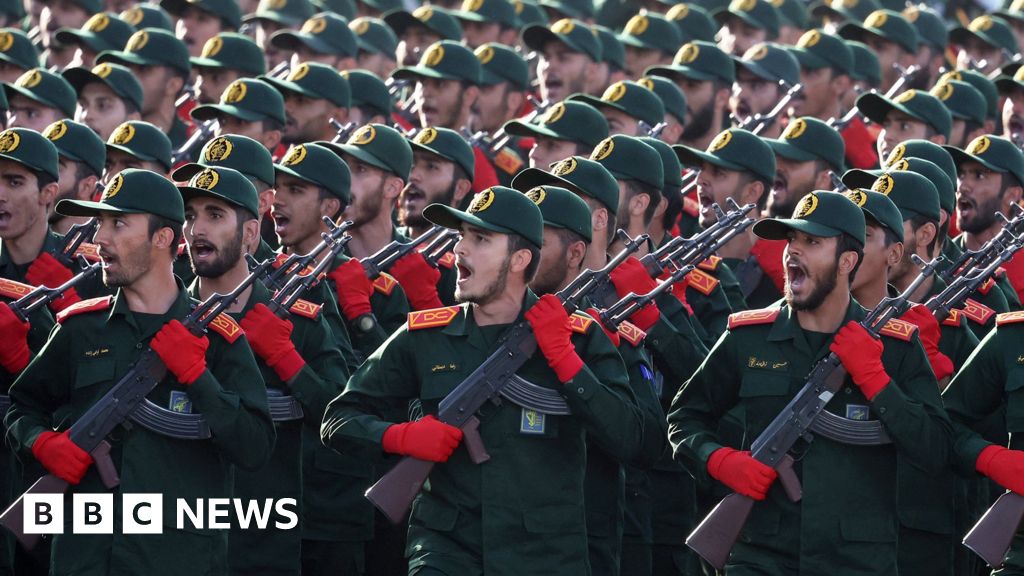
  • Iran nabs 8 over Mossad spy plot during 12-day war – samaa tv

    1. Iran nabs 8 over Mossad spy plot during 12-day war  samaa tv
    2. Iran arrests eight suspected of spying for Israel’s Mossad in 12-day war  Al Jazeera
    3. Iran says eight arrested for suspected links to Israel’s Mossad spy agency  Reuters
    4. Iran’s Revolutionary Guard: We dismantled a cell linked to Mossad that planned to target civilian and military officials  وكالة صدى نيوز
    5. Spy Versus Spy: Iran’s Playbook for Espionage in Israel  The Washington Institute

    Continue Reading

  • China's Xi meets India's Modi in Tianjin – Reuters

    1. China’s Xi meets India’s Modi in Tianjin  Reuters
    2. SCO summit in China: Who’s attending, what’s at stake amid Trump tariffs?  Al Jazeera
    3. SCO summit: China’s Xi rolls out the red carpet for Putin and Modi as Trump upends global relations  CNN
    4. Modi looking for China bailout  Dawn
    5. A China-India Reset? What to Know About the Modi-Xi Summit  Council on Foreign Relations

    Continue Reading

  • India’s Modi meets Xi on his first China trip in seven years as Trump’s tariffs bite

    India’s Modi meets Xi on his first China trip in seven years as Trump’s tariffs bite


    Tianjin, China
     — 

    A much-anticipated meeting of the leaders of the world’s two most populous nations is underway, with China’s Xi Jinping welcoming India’s Narendra Modi on the sidelines of regional summit in Tianjin – as the neighbors explore a rapprochement accelerated by their shared frictions with the US.

    Xi and Modi began their meeting at the Tianjin Guest House around noon on Sunday, Chinese state media reported, in the Indian leader’s first visit to China in seven years.

    Modi is attending a meeting of the Shanghai Cooperation Organization, a Beijing-and Moscow-backed regional security grouping that has emerged as a cornerstone of Xi and Russian President Vladimir Putin’s drive to rebalance global power in their favor.

    The visit will also give Modi an opportunity to meet with Russian President Vladimir Putin, with the two expected to hold bilateral talks on Monday, according to Russian state media – talks that come just after hefty US tariffs on Indian exports kicked in, linked to Indian purchases of Russian oil.

    Modi’s visit marks a milestone in relations between Beijing and New Delhi, which have begun to ease frictions elevated since a deadly border skirmish in 2020 – a shift that becomes more valuable to India in the wake of a surprise turn in US-India ties in recent weeks.

    US President Donald Trump earlier this month levied significant economic penalties on India, initially placing its imports into the US under 25% tariffs and then slapping an additional 25% duties on the country as punishment for importing Russian oil and gas – which the Trump administration views as helping Russia wage war on Ukraine.

    Those frictions threaten what has been decades of effort from US diplomats to drive a wedge between New Delhi and Moscow and a more recent push to cultivate India as a key counterweight in Asia to a rising and increasingly assertive China.

    Beijing is widely seen as happy for those newfound frictions to reduce security ties between the two partners. Chinese officials have watched with unease the elevation of the Quad security dialogue between India, the US and its allies Australia and Japan, widely seen as a bid to counter China.

    There has been a gradual normalization of ties between India and China after Modi and Xi met on the sidelines of the BRICS summit in Russia last October, which came as the two sides reached an agreement on military disengagement along their disputed border.

    In recent months, the countries agreed to restart direct flights cancelled since the Covid-19 pandemic, Beijing also recently agreed to reopen two pilgrimage sites in western Tibet to Indians for the first time in five years, and both started re-issuing tourist visas for each other’s citizens.

    Earlier this month, following a visit from China’s top diplomat Wang Yi to New Delhi, the two announced “ten points of consensus” on the issue to further reduce tensions.

    But observers say that even as the two leaders seek stability in their relationship, both in terms of trade and security, it will be hard for Xi and Modi to overcome their longstanding lack of personal trust.

    Underlying tensions between India and China spiked in 2020 following a deadly conflict along their disputed Himalayan border, in which 20 Indian and four Chinese soldiers were killed in hand-to-hand combat.

    Both nations maintain a heavy military presence along their 2,100-mile (3,379-kilometer) de facto border, known as the Line of Actual Control (LAC) – a boundary that remains undefined and has been a persistent source of friction since their bloody 1962 war.

    Since joining the SCO in 2017, India has appeared to some observers as an uneasy member of the group; placing the world’s largest democracy in a club that includes a number of autocrats and one that the key partners – Beijing and Moscow – have sought to shape into a force to counter a US-led world order – an aim at odds with New Delhi’s more non-aligned foreign policy.

    India also sits in SCO alongside its rival Pakistan. The Tianjin summit will serve as the first time Modi will gather alongside Pakistan’s Prime Minister Shehbaz Sharif since the two countries engaged in a deadly, four-day conflict earlier this year.

    The summit will also give Modi a key opportunity to sit down with long-term partner Putin, at a moment when India’s purchases of Russian oil are under pressure from the American tariffs.

    Chinese refineries have placed new orders for Russian crude that will be shipped from ports that typically supply India, as demand from the South Asian country for Moscow’s crude slipped following the tariffs, CNN reported earlier this month.

    The Indian leader has been performing a tricky balancing act since Putin’s invasion of Ukraine in February 2022, maintaining ties with both Washington, Moscow and Kyiv. India maintains neutrality in the war.

    After his arrival in Tianjin, Modi said he spoke with Ukraine’s President Volodymyr Zelensky in a phone call on Saturday.

    “We exchanged views on the ongoing conflict, its humanitarian aspect, and efforts to restore peace and stability. India extends full support to all efforts in this direction,” Modi wrote on X late Saturday.


    Continue Reading

  • Aid flotilla with Greta Thunberg set to sail for Gaza to ‘break illegal siege’ | Greta Thunberg

    Aid flotilla with Greta Thunberg set to sail for Gaza to ‘break illegal siege’ | Greta Thunberg

    A flotilla carrying humanitarian aid and activists, including Swedish climate campaigner Greta Thunberg, is due to leave from Barcelona on Sunday to try to “break the illegal siege of Gaza”, organisers said.

    The vessels will set off from the Spanish port city to “open a humanitarian corridor and end the ongoing genocide of the Palestinian people”, said the Global Sumud Flotilla.

    They did not say how many ships would set sail or the exact time of departure.

    The flotilla is expected to arrive at the war-ravaged coastal enclave in mid-September.

    “This will be the largest solidarity mission in history, with more people and more boats than all previous attempts combined,” Brazilian activist Thiago Ávila told journalists in Barcelona last week.

    Organisers say that dozens of other vessels are expected to leave Tunisian and other Mediterranean ports on 4 September.

    Activists will also stage simultaneous demonstrations and other protests in 44 countries “in solidarity with the Palestinian people”, Thunberg, who is part of the flotilla’s steering committee, wrote on Instagram.

    As well as Thunberg, the flotilla will include activists from several countries, European lawmakers and public figures such as former Barcelona mayor Ada Colau.

    “We understand that this is a legal mission under international law,” leftwing Portuguese lawmaker Mariana Mortágua, who will join the mission, told journalists in Lisbon last week.

    Israel has already blocked two attempts by activists to deliver aid by ship to Gaza, in June and July.

    In June, 12 activists on board the sailboat Madleen were intercepted by Israeli forces 185km west of Gaza. Its passengers, who included Thunberg, were detained and eventually expelled.

    In July, 21 activists from 10 countries were intercepted as they tried to approach Gaza in another vessel, the Handala.

    Continue Reading

  • Russia's Putin arrives in China's Tianjin for security summit – Reuters

    1. Russia’s Putin arrives in China’s Tianjin for security summit  Reuters
    2. Russia’s Putin denounces financial ‘neo-colonialism’ on eve of China visit  Al Jazeera
    3. Putin embarks on China visit with Ukraine war top of agenda  The Guardian
    4. Putin lambasts trade sanctions on eve of visit to China  Reuters
    5. Putin to push for multipolar world during China visit | Daily Sabah  Daily Sabah

    Continue Reading