Blog

  • 29,000 Servers Remain Unpatched Against Microsoft Exchange Flaw

    29,000 Servers Remain Unpatched Against Microsoft Exchange Flaw

    More than 29,000 Microsoft Exchange servers exposed to the internet have remained unpatched against a high-severity vulnerability that could allow attackers to seize control of entire domains in hybrid cloud environments.

    The flaw, tracked as CVE-2025-53786, affects Exchange Server 2016, Exchange Server 2019 and Microsoft Exchange Server Subscription Edition. It enables attackers with administrative access to on-premises Exchange servers to escalate privileges in connected Microsoft 365 environments by forging trusted tokens or API calls, a method that leaves few traces.

    “This is a serious vulnerability in Exchange and security teams should give it immediate attention,” said Thomas Richards, infrastructure security practice director at Black Duck.

    “Patching the server is not enough, and since it is difficult to detect compromise, Microsoft has provided actions for teams to take to make sure any compromised trust tokens are rotated.”

    Recent scans by threat monitoring group Shadowserver found 29,098 vulnerable servers worldwide. The most significant numbers are in:

    • US: 7296

    • Germany: 6682

    • Russia: 2513

    • France: 1558

    • UK: 955

    • Austria: 928

    • Canada: 860

    Microsoft disclosed the flaw last week, though a hotfix was issued in April 2025 under its Secure Future Initiative. This update replaced the insecure shared identity model used between on-premises and cloud Exchange services with a dedicated hybrid application in Microsoft Entra ID.

    The company has found no evidence of active exploitation so far, but warned that reliable attack code could be developed.

    Read more on Microsoft Exchange security risks: Russian APT28 Exploits Outlook Bug to Access Exchange

    CISA Orders Urgent Federal Action

    The US Cybersecurity and Infrastructure Security Agency (CISA) issued Emergency Directive 25-02 last week, ordering all Federal Civilian Executive Branch agencies to mitigate the flaw by 9:00am EDT on August 11.

    “This vulnerability poses a grave risk to all organizations operating Microsoft Exchange hybrid-joined configurations that have not yet followed the April 2025 patch guidance, and immediate mitigation is critical,” CISA said.

    Agencies must:

    • Inventory their Exchange environments using Microsoft’s Health Checker script

    • Disconnect any public-facing servers not supported by the April 2025 hotfix, including end-of-life versions

    • Apply the latest cumulative updates (CU14 or CU15 for Exchange 2019, CU23 for Exchange 2016) and install the April 2025 hotfix

    “In modern hybrid IT environments, there can often be hidden paths to privilege opened up by often long-forgotten service accounts,” explained James Maude, field CTO at BeyondTrust.

    “Having visibility of the true privilege of all identities, human and non-human, is of ever-increasing importance as NHIs, including AI, rapidly outpace human identities in scale and privilege.”

    Risks Beyond Government Systems

    Although the directive is binding only for federal agencies, CISA urged all organisations to follow the same process. Security experts have also urged caution.

    “To reduce the risks associated with non-human identities, security teams need to implement modern identity management practices, strong governance and proactive security controls,” said Elad Luz, head of research at Oasis Security.

    With thousands of servers still exposed just hours before the government’s deadline, experts warn the flaw could be weaponised quickly if patching and security measures are delayed.

    Image credit: gguy / Shutterstock.com

    Continue Reading

  • Google Rolls Out ‘Preferred Sources’ For Top Stories In Search

    Google Rolls Out ‘Preferred Sources’ For Top Stories In Search

    Google is rolling out a new setting that lets you pick which news outlets you want to see more often in Top Stories.

    The feature, called Preferred Sources, is launching today in English in the United States and India, with broader availability in those markets over the next few days.

    What’s Changing

    Preferred Sources lets you choose one or more outlets that should appear more frequently when they have fresh, relevant coverage for your query.

    Google will also show a dedicated From your sources section on the results page. You will still see reporting from other publications, so Top Stories remains a mix of outlets.

    Google Product Manager Duncan Osborn says the goal is to help you “stay up to date on the latest content from the sites you follow and subscribe to.”

    How To Turn It On

    Image Credit: Google
    1. Search for a topic that is in the news.
    2. Tap the icon to the right of the Top stories header.
    3. Search for and select the outlets you want to prioritize.
    4. Refresh the results to see the updated mix.

    You can update your selections at any time. If you previously opted in to the experiment through Labs, your saved sources will carry over.

    In early testing through Labs, more than half of participants selected four or more sources. That suggests people value seeing a range of outlets while still leaning toward publications they trust.

    Why It Matters

    For publishers, Preferred Sources creates a direct way to encourage loyal readers to see more of your coverage in Search.

    Loyal audiences are more likely to add your site as a preferred source, which can increase the likelihood of showing up for them when you have fresh, relevant reporting.

    You can point your audience to the new setting and explain how to add your site to their list. Google has also published help resources for publishers that want to promote the feature to followers and subscribers.

    This adds another personalization layer on top of the usual ranking factors. Google says you will still see a diversity of sources, and that outlets only appear more often when they have new, relevant content.

    Looking Ahead

    Preferred Sources fits into Google’s push to let you customize Search while keeping a variety of perspectives in Top Stories.

    If you have a loyal readership, this feature is another reason to invest in retention and newsletters, and to make it easy for readers to follow your coverage on and off Search.

    Continue Reading

  • New Pluto mission could uncover dwarf planet’s hidden ocean — if the ‘queen of the underworld’ gets to fly

    New Pluto mission could uncover dwarf planet’s hidden ocean — if the ‘queen of the underworld’ gets to fly

    When NASA’s New Horizons spacecraft sped by Pluto in 2015, it revealed an incredible world of ice and haze carved by various geological processes — hinting that an ocean may have played a role in the dwarf planet’s recent history. The bounty of scientific riches has left researchers working to solve some of the tiny world’s mysteries a decade after the spacecraft’s flyby.

    “There’s still a lot of questions that are open,” Carly Howett, a planetary scientist at the University of Oxford and a New Horizons team member, said last month at the Progress in Understanding the Pluto Mission: 10 Years after Flyby conference in Laurel, Maryland. With such questions lingering, Howett and her colleagues designed a follow-up mission in hopes of finally solving some of Pluto’s mysteries.

    Continue Reading

  • AI Challenge Models Performance | RSNA

    Algorithms submitted for the AI Challenge hosted by RSNA have shown excellent performance for detecting breast cancers on mammography images, increasing screening sensitivity while maintaining low recall rates, according to a study published in Radiology.

    The RSNA Screening Mammography Breast Cancer Detection AI Challenge was a crowdsourced competition that took place in 2023, with more than 1,500 teams participating. The Radiology article details an analysis of the algorithms’ performance, led by Yan Chen, PhD, a professor in cancer screening at the University of Nottingham in the United Kingdom. 

    “We were overwhelmed by the volume of contestants and the number of AI algorithms that were submitted as part of the Challenge,” Prof. Chen said. “It’s one of the most participated-in RSNA AI Challenges. We were also impressed by the performance of the algorithms given the relatively short window allowed for algorithm development and the requirement to source training data from open-sourced locations.” 

    The goal of the Challenge was to source AI models that improve the automation of cancer detection in screening mammograms, helping radiologists work more efficiently, improving the quality and safety of patient care, and potentially reducing costs and unnecessary medical procedures. 

    RSNA invited participation from teams across the globe. Emory University in Atlanta, Georgia, and BreastScreen Victoria in Australia provided a training dataset of around 11,000 breast screening images, and Challenge participants could also source publicly available training data for their algorithms. 

    Prof. Chen’s research team evaluated 1,537 working algorithms submitted to the Challenge, testing them on a set of 10,830 single-breast exams—completely separate from the training dataset—that were confirmed by pathology results as positive or negative for cancer.  

    Altogether, the algorithms yielded median rates of 98.7% specificity for confirming no cancer was present on mammography images, 27.6% sensitivity for positively identifying cancer, and a recall rate—the percentage of the cases that AI judged positive—of 1.7%. When the researchers combined the top 3 and top 10 performing algorithms, it boosted sensitivity to 60.7% and 67.8%, respectively. 

    “When ensembling the top performing entries, we were surprised that different AI algorithms were so complementary, identifying different cancers,” Prof. Chen said. “The algorithms had thresholds that were optimized for positive predictive value and high specificity, so different cancer features on different images were triggering high scores differently for different algorithms.” 

    According to the researchers, creating an ensemble of the 10 best-performing algorithms produced performance that is close to that of an average screening radiologist in Europe or Australia.  

    Continue Reading

  • NSF VLBA Peers Into the “Eye of Sauron” to Solve Cosmic Neutrino Mystery

    NSF VLBA Peers Into the “Eye of Sauron” to Solve Cosmic Neutrino Mystery

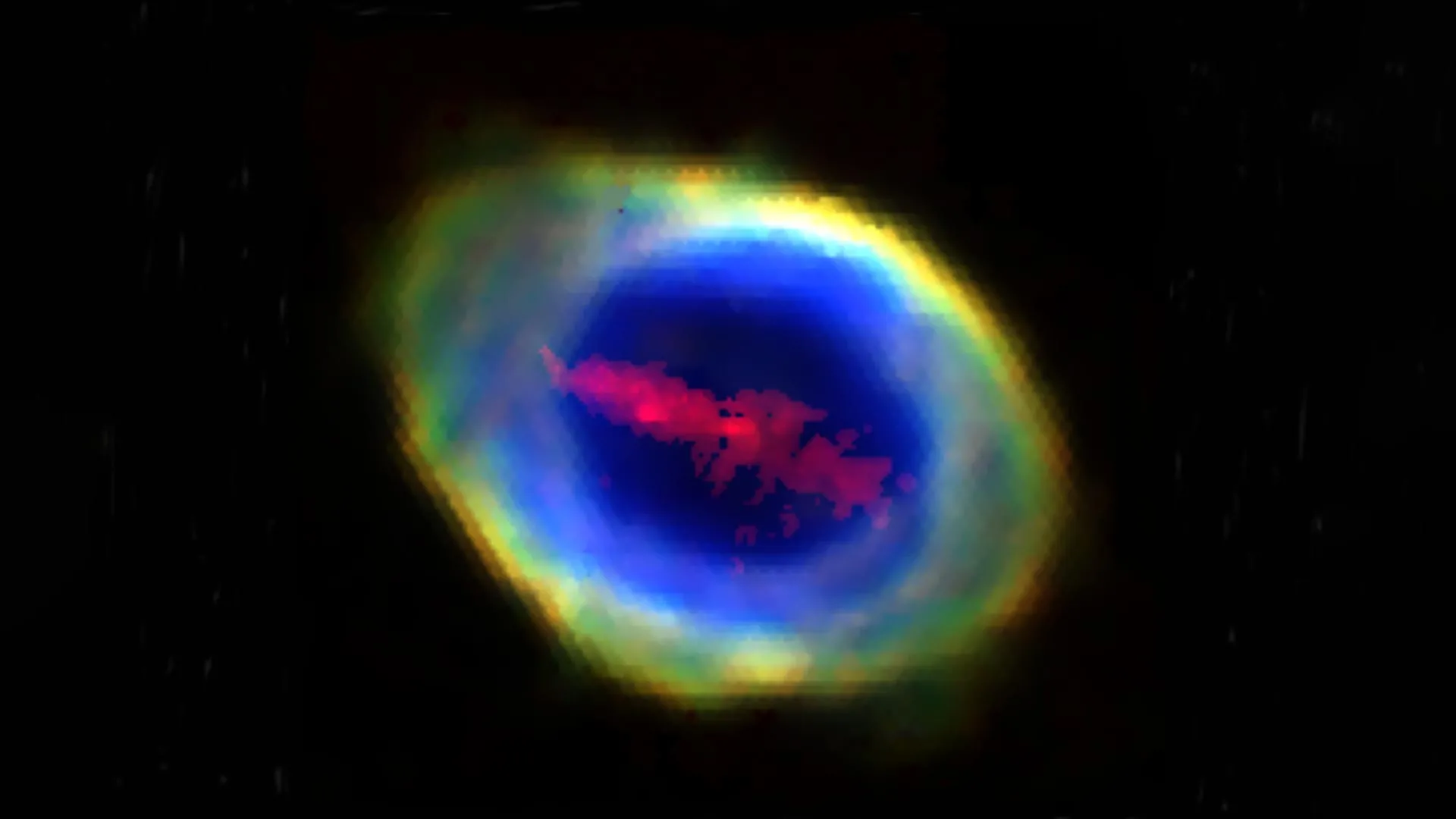
    Using the U.S. National Science Foundation National Radio Astronomy’s Very Long Baseline Array (NSF NRAO VLBA), an international team of astronomers has solved a decade-long puzzle about one of the brightest cosmic neutrino sources in the sky. Their findings, published today in Astronomy & Astrophysics Letters, reveal that the blazar PKS 1424+240 – dubbed the “Eye of Sauron” for its striking appearance – points its powerful jet almost directly at Earth, creating an extreme cosmic lighthouse effect.

    Located billions of light-years away, PKS 1424+240 had long baffled astronomers. Despite appearing to have a slow-moving plasma jet in radio observations, it blazes as one of the brightest sources of high-energy gamma rays and cosmic neutrinos ever detected. This contradiction, known as the “Doppler factor crisis,” has challenged scientists’ understanding of how these extreme cosmic accelerators work.

    “The NSF VLBA’s extraordinary resolution has allowed us to peer directly into the heart of this cosmic monster,” said Yuri Kovalev, lead author of the study and Principal Investigator of the ERC-funded MuSES project at the Max Planck Institute for Radio Astronomy. “We discovered that this blazar’s jet is aimed at us with pinpoint precision – within just 0.6 degrees of our line of sight.”

    The breakthrough came from 15 years of ultra-high-resolution observations using the NSF VLBA, which consists of ten 25-meter radio telescopes stretching from Hawaii to the U.S. Virgin Islands. By combining 42 separate images collected from 2009 to 2025 as part of the MOJAVE (Monitoring Of Jets in Active galactic nuclei with VLBA Experiments) program, the team created an unprecedented deep view of the blazar’s inner structure.

    “This is like looking at car headlights from the Moon – the NSF VLBA’s incredible precision made it possible,” said Jack Livingston, a co-author at the Max Planck Institute for Radio Astronomy. “What we found was a nearly perfect toroidal magnetic field structure threading the jet of plasma,” added Daniel Homan, co-author and professor of Denison University. Alexander Plavin, co-author and research fellow of Harvard University, continued, “It’s creating what looks remarkably like the Eye of Sauron from Tolkien’s Lord of the Rings.” 

    The extreme alignment of PKS 1424+240’s jet toward Earth creates a relativistic “searchlight” effect, amplifying its brightness by a factor of 30 or more through special relativity. This explains why the source appears as one of the brightest neutrino emitters detected by the IceCube Neutrino Observatory in Antarctica, despite its plasma jet appearing to move slowly in radio images.

    The discovery demonstrates the critical role of Very Long Baseline Interferometry (VLBI) in solving cosmic mysteries. The NSF VLBA connects radio telescopes across a continent-sized baseline, creating a virtual telescope with the highest resolution available in astronomy – sharp enough to read a newspaper in New York from Los Angeles.

    The research strengthens the connection between relativistic plasma jets, high-energy neutrinos, and the magnetic fields that shape cosmic particle accelerators, marking a significant milestone in multimessenger astronomy – the study of the universe using multiple types of cosmic signals.

    You can read the press release from the Max-Planck Institute for Radio Astronomy here.


    Background Information:

    A blazar is a type of active galactic nucleus powered by a supermassive black hole that launches jets of plasma moving at nearly the speed of light. What makes blazars special is their orientation: one of their jets points within about 10 degrees of Earth, making them appear exceptionally bright and allowing scientists to study extreme physical processes.


    The original paper:

    1. Y. Kovalev, A. B. Pushkarev, J. L. Gomez, D. C. Homan, M. L. Lister, J. D. Livingston, I. N. Pashchenko, A. V. Plavin, T. Savolainen, S. V. Troitsky: Looking into the Jet Cone of the Neutrino-Associated Very High Energy Blazar PKS 1424+240, A&A Letters, August 12, 2025 (DOI: 10.1051/0004-6361/202555400)

    https://doi.org/10.1051/0004-6361/202555400

    Preprint: https://arxiv.org/abs/2504.09287


    Further Information/Links:

    Multi-messenger Studies of Extragalactic Super-colliders (MuSES), ERC Grant: https://www.mpifr-bonn.mpg.de/muses 

    Monitoring Of Jets in Active galactic nuclei with VLBA Experiments (MOJAVE) program: https://www.cv.nrao.edu/MOJAVE/ 

    Max Planck Institute for Radio Astronomy (MPIfR): http://www.mpifr-bonn.mpg.de/2169/en

    Center for Astrophysics – Harvard & Smithsonian (CFA): https://www.cfa.harvard.edu/ 

    Denison University (DU): https://denison.edu/academics/astronomy 

    Very Long Baseline Array (VLBA): https://science.nrao.edu/facilities/vlba 

    European Research Council (ERC): https://erc.europa.eu/homepage 


    About NRAO:

    The U.S. National Radio Astronomy Observatory is a facility of the National Science Foundation, operated under cooperative agreement by Associated Universities, Inc.

    About the VLBA:

    The NSF Very Long Baseline Array is a system of ten identical 25-meter radio telescopes operating as a single instrument. Stretching 5,000 miles from Mauna Kea, Hawaii, to St. Croix in the U.S. Virgin Islands, the VLBA provides the highest resolution images available in astronomy.

    Images and additional resources are available at: https://public.nrao.edu/news/ 


    Continue Reading

  • Small caps and low quality

    Small caps and low quality

    Continue Reading

  • ‘It felt like a scene from The Handmaid’s Tale’: US comics on the dangers of political satire | Edinburgh festival 2025

    ‘It felt like a scene from The Handmaid’s Tale’: US comics on the dangers of political satire | Edinburgh festival 2025

    In April, comedian Jena Friedman had a strange encounter in Vancouver airport. She had just performed a Ted talk about the future of comedy and was heading home to the US, when someone she thought worked for airport security quizzed her about her visit.

    Thinking he was probing for visa infringements, “I just said I was doing comedy. Then he asked: ‘What do you joke about?’ Stupidly, I lightly flirted with him, and was like: ‘Everything other than airport security!’ He didn’t react at all. Then I realised he was US border control. He asked again: ‘What do you joke about?’”

    Friedman is a veteran of The Daily Show and The Late Show, and her standup comedy often features excoriating routines at the expense of the political establishment. “I just froze because I am a political comedian and I didn’t know what to say. Then he said: ‘Do you joke about politicians?’”

    She made it home, but the incident stuck with her. Friedman lives in LA, and the recent actions of the US Immigration and Customs Enforcement “detaining anyone and everyone who looks a certain way” put her on high alert. “It was such a quick, on its face benign, interaction,” she says. “But it did feel like a scene out of The Handmaid’s Tale. I’m a blonde, white woman who looks like a Republican’s wife and I have an American passport. But what if I had said ‘Yes?’ Don’t we want to live in a country where we can joke about politicians, where we can joke about anything?”

    ‘Don’t we want to live in a country where we can joke about politicians?’ … Jena Friedman. Photograph: Peacock/Heidi Gutman/Getty Images

    Friedman incorporated that moment into her new standup show, Motherf*cker, which she’s performing at the Edinburgh fringe. The show is a change of pace. She’s generally resisted getting personal on stage, resenting the idea that women have to be relatable to succeed in comedy, but this time it felt unavoidable, as she explores the life-changing experience of becoming a parent while her own mother was dying. “It’s about grief, but it’s also political,” she says. “The vibe in certain circles does feel like we’re grieving. So there’s something about my show that’s connecting to the larger moment.”

    Friedman is among a crop of US comedians with roots in topical comedy appearing at this year’s fringe. Another stalwart of US political comedy, Michelle Wolf, is back, too, while standup and former Saturday Night Live writer Sam Jay is making her festival debut.

    Wolf earned her stripes on The Daily Show and Late Night with Seth Myers, and gained notoriety with her 2018 set at the White House Correspondents’ Dinner, in which she roasted Trump and his collaborators. These days, she lives in Barcelona, although returns to the US regularly for comedy work. She’s yet to encounter border trouble but, with reports of people with green cards and citizens being detained, she says: “I’m keeping an eye on it.”

    Comedians Rosie O’Donnell and Ellen DeGeneres have both said that the state of US politics has forced them out of the country – O’Donnell to Ireland and DeGeneres to England. O’Donnell has written a show on just that, which she performed for the first week of the fringe. Wolf is happy with her move to Barcelona, and feels her comedy has benefited from other cultural perspectives, but returns to the US because “the audiences are great” and there’s plenty of work. While other US comedians have also discussed the idea of moving to Europe, she thinks it won’t happen until there’s “an impetus to go, something I don’t think is far off, like: you can’t talk about this any more, you can’t talk about that any more”.

    Last month, satirist Stephen Colbert announced that network CBS had cancelled The Late Show after 33 years. Many thought the timing, three days on from Colbert criticising CBS parent company Paramount for settling a lawsuit with Donald Trump, was suspect. Fellow late-night talkshow host Jon Stewart criticised the move on his podcast and pointed to wider fear across the industry.: “There are a lot of things that will never be made, that you will never know about, that will be killed in the bed before they ever had a chance because of this chilling effect.”

    Friedman’s glad to see Colbert and Stewart speaking out against Trump and his administration – and agrees there’s a “chill”. “The industry has already been less supportive of political comedy than they were under Biden and Obama. However, “seeing the most prominent comedians taking [Trump] to task, like Matt [Stone] and Trey [Parker] from South Park, Colbert and Stewart, that gives me hope”.

    Michelle Wolf’s standup explores society through the ‘lens of being a mom’. Photograph: Stephen Keable/Alamy

    Meanwhile, Michelle Wolf’s standup merges the personal and political and her podcast, Wolf’s Thought Box, tackles current affairs. Her new show, which she’s performing while eight months pregnant at the fringe, explores life and society “through the lens of being a mom now”. There are punchlines on societal pressures for working mothers, home birth, momfluencers, gender inequalities and more. “We’re in an era now where people are talking about motherhood realistically and that’s very refreshing,” she says.

    Still, political comedy isn’t absent. “I feel like I have to address the whole America and Trump thing … people expect me to say something about it.” She plans to tailor topical jokes to the day’s news but, “I don’t like making it a large part of my set, because it bores me. There’s always something crazy happening, but it’s hard to come up with creative angles other than: can you believe this?”

    It’s been nine years since she first started writing jokes about Trump and, in that time, her life has transformed – she met her partner, moved abroad, and is about to have her second child. Her main feeling now is: “How are we still talking about him? How are we still in the same spot?”

    Jay reflects that slow build in her show, We the People, in which she explores the state of America – looking back to the “unconfident whites” who founded the nation. She describes the show as “a fun, risky little ride” as she tries to get to the root of why the US feels so divided, and what we can do to better understand one another. “It’s this broader conversation I’ve been having about America and race,” Jay says.

    The whole world feels unsettled right now and there’s an inability to consider other perspectives, Jay says. “How did we get here as Americans? Of course, I think race plays a large part in it. And how did these race relations get to the way they are? Not just blaming white people, but exploring the type of white people we’re dealing with, why they might be the way they are, their roots in England.”

    Trump came up plenty during Jay’s time on SNL and appears in her fringe show as a “braggadocious” fool, unable to keep state secrets, yet smartly appealing to the frustrations of America’s poor white communities. But the conditions that created and elevated Trump are more interesting to Jay: “He’s the symptom of this, not the cause. This is a result of years and years of us doing it wrong … it’s been building for a long time and for a lot of different reasons.”

    Friedman agrees: “I started working at the Daily Show in 2012, I was at Letterman before that, so I started looking at politics on a daily basis since 2010, and this is a long time coming.” This also means that, among US audiences, not everyone wants political comedy. “They’re always looking for escapism. In the first term, there was definite Trump fatigue,” Friedman says. “As a political comic, I’ve always done better in the UK than the US. It’s the UK audiences who are like: what the hell’s going on over there?” says Friedman.

    The mood in US comedy is, Jay says, “the mood in America … chaos. There’s no way to keep up. People are also very desensitised. Shit just keeps happening in more extreme ways that people are losing a metric for it.”

    All three agree that comedy can help share differing worldviews. “Even if it’s people we disagree with, the sign of a healthy democracy is when people can safely be on stage saying whatever we want, ideally in good faith,” Friedman says. “I support all comedians, I support freedom of expression and I want to see more of it. I want to see people more open to people they disagree with. Whenever I do political comedy, the goal is not to preach to the choir, it’s to get people to see things slightly differently.”

    Jay has said that comedy can be a tool for empathy. “I look at it as a conversation. It can serve a purpose of actual understanding, understanding that we’re all humans trying to figure out a thing that doesn’t make a lot of sense – existing. Everybody is grappling with these things in their own way.”

    What does the future hold for US comedians? “It’s too soon to tell,” says Friedman. “But I think everybody exercising the US first amendment in a way that’s funny and disarming is really important right now.”

    Jay says: “Once I’m on stage, I’m gonna say what I’m gonna say. If I can’t come back as a result, I’ll just have to have my girlfriend come meet me in Scotland.”

    Jena Friedman: Motherf*cker is at Hive 1 at Monkey Barrel Comedy until 24 August. Michelle Wolf is at various venues until 17 August. Sam Jay: We the People is at Pleasance Courtyard until 24 August

    Continue Reading

  • Could your voice reveal cancer before you know it? Scientists say AI might soon make it possible

    Could your voice reveal cancer before you know it? Scientists say AI might soon make it possible

    Published on

    ADVERTISEMENT

    A simple voice recording could one day help doctors spot early signs of throat cancer, according to new research.

    In a study published in Frontiers in Digital Health, scientists found that artificial intelligence (AI) could potentially detect abnormal growths on the vocal cords, from benign nodules to early-stage laryngeal cancer, by analysing short voice recordings.

    The findings could support efforts to find an easier, faster way to diagnose cancerous lesions on the vocal cords, also known as folds.

    “With this dataset we could use vocal biomarkers to distinguish voices from patients with vocal fold lesions from those without such lesions,” said Phillip Jenkins, the study’s lead author and a postdoctoral researcher in clinical informatics at Oregon Health and Science University in the United States.

    Why early detection of throat cancer matters

    Cancer of the voice box, or larynx, affects more than a million people worldwide and kills roughly 100,000 every year. It is the 20th most common cancer in the world.

    Smoking, alcohol use, and certain strains of HPV (human papillomavirus) are key risk factors, and survival rates vary from around 35 per cent to 90 per cent depending on how early the disease is diagnosed, according to Cancer Research UK.

    One of the most common warning signs for laryngeal cancer is hoarseness or changes in the voice that last more than three weeks. Other symptoms include a persistent sore throat or cough, difficulty or pain when swallowing, a lump in the neck or throat, and ear pain.

    Early detection of laryngeal cancer is crucial because it significantly improves survival rates and treatment outcomes.

    Yet current diagnostic methods, including nasal endoscopies and biopsies, are invasive, uncomfortable, and often slow, requiring specialist equipment and expertise that many patients struggle to access quickly.

    Developing a simple tool to flag early signs of vocal fold abnormalities through a quick voice recording could transform how throat cancer is detected – making it faster, more affordable and accessible to a wider population.

    The next steps for AI-driven diagnosis

    The research team examined about 12,500 voice recordings from 306 people across North America. They looked for subtle acoustic patterns, such as changes in pitch, loudness, and harmonic clarity.

    The team identified clear differences for men in the harmonic-to-noise ratio and pitch between those with healthy voices, benign lesions, and cancer. No significant patterns were found in women, but the researchers say this may be due to the smaller dataset.

    Jenkins said that the results indicate large datasets “could soon help make our voice a practical biomarker for cancer risk in clinical care”.

    The next step is to train AI models on larger, professionally labelled datasets and test them in clinical settings. The team would also need to test the system to make sure it works well for both men and women, he said.

    “Voice-based health tools are already being piloted,” Jenkins said.

    “Building on our findings, I estimate that with larger datasets and clinical validation, similar tools to detect vocal fold lesions might enter pilot testing in the next couple of years”.

    Continue Reading

  • Baden winners touch new highs in World Ranking

    The other two medalists from Baden also gained ground in the World Ranking and are situated just above Bock & Lippmann in the table. Runners-up Mila Konink & Raisa Schoon of the Netherlands are in number 25 and bronze medalists Valentyna Davidova & Anhelina Khmil of Ukraine are in number 26.

    Baden quarterfinalists Monika Paulikiene & Aine Raupelyte of Lithuania moved two positions up the ranking, to number 10, and that was the only change in the women’s top 10, in comparison to last week. The Lithuanian Olympians took the top 10 spot from French Olympians Clemence Vieira & Aline Chamereau, who dropped to 11th.

    Brazil’s Thamela Coradello & Victoria Lopes are the convincing leaders with a score of 7,720 points. Muller & Tillmann are second with 5,760, and Austria’s Dorina Klinger & Ronja Klinger – third with 5,440.

    Continue Reading

  • Scientists May Have Finally Found the Strange, Frozen Hideout of Missing Sulfur – SciTechDaily

    1. Scientists May Have Finally Found the Strange, Frozen Hideout of Missing Sulfur  SciTechDaily
    2. NASA and Japan’s XRISM just found sulfur hiding between the stars  ScienceDaily
    3. X-Ray Spacecraft Uncovers Missing Sulfur in the Milky Way  SciTechDaily
    4. Cosmic mystery solved with discovery of sulfur by University of Mississippi scientist  supertalk.fm
    5. Confirmed – the missing sulfur in the universe has finally been detected and XRISM mission reveals it in interstellar dust and gas  Pedirayudas

    Continue Reading