Category: 3. Business

  • GSK delivers strong 2025 performance and re-affirms long-term outlooks

    GSK delivers strong 2025 performance and re-affirms long-term outlooks

    Luke Miels, Chief Executive Officer, GSK:

    “GSK delivered another strong performance in 2025, driven mainly by Specialty Medicines, with double-digit sales growth in 
    Respiratory, Immunology & Inflammation (RI&I), Oncology and HIV. Good R&D progress also continued, with 5 major product 
    approvals achieved and several acquisitions and new partnerships completed to strengthen the pipeline further in oncology and RI&I. We expect this positive momentum to continue in 2026, which will be a key year of execution and operational delivery with strong focus on commercial launches and accelerating R&D. We are well placed to move forward in this next phase for GSK – to deliver our outlooks – and to create new value for patients and shareholders.”

    Assumptions and cautionary statement regarding forward-looking statements

    The Group’s management believes that the assumptions outlined above are reasonable, and that the guidance, 
    outlooks, and expectations described in this report are achievable based on those assumptions. However, given the 
    forward-looking nature of these guidance, outlooks, and expectations, they are subject to greater uncertainty, including 
    potential material impacts if the above assumptions are not realised, and other material impacts related to foreign 
    exchange fluctuations, macro-economic activity, the impact of outbreaks, epidemics or pandemics, changes in 
    legislation, regulation, government actions and policies, including the impact of any potential tariffs or other restrictive 
    trade policies on the Group’s products, or intellectual property protection, product development and approvals, actions 
    by our competitors, and other risks inherent to the industries in which we operate.

    This document contains statements that are, or may be deemed to be, “forward-looking statements”. Forward-looking 
    statements give the Group’s current expectations or forecasts of future events. An investor can identify these 
    statements by the fact that they do not relate strictly to historical or current facts. They use words such as ‘anticipate’, 
    ‘estimate’, ‘expect’, ‘intend’, ‘will’, ‘project’, ‘plan’, ‘believe’, ‘target’, ‘outlook’, ‘aim’, ‘ambition’, ‘could’, ‘goal’, ‘may’, 
    ‘seek’, ‘should’ and other words and terms of similar meaning in connection with any discussion of future operating or 
    financial performance. In particular, these include statements relating to future actions, prospective products or 
    product approvals, future performance or results of current and anticipated products, sales efforts, expenses, the 
    outcome of contingencies such as legal proceedings, dividend payments and financial results. Other than in 
    accordance with its legal or regulatory obligations (including under the Market Abuse Regulation, the UK Listing Rules 
    and the Disclosure Guidance and Transparency Rules of the Financial Conduct Authority), the Group undertakes no 
    obligation to update any forward-looking statements, whether as a result of new information, future events or 
    otherwise. The reader should, however, consult any additional disclosures that the Group may make in any documents 
    which it publishes and/or files with the SEC. All readers, wherever located, should take note of these disclosures. 
    Accordingly, no assurance can be given that any particular expectation will be met and readers are cautioned not to 
    place undue reliance on the forward-looking statements.

    All guidance, outlooks and expectations should be read together with the guidance and outlooks, assumptions and 
    cautionary statements in this full year and Q4 2025 earnings release and in the Group’s 2024 Annual Report on Form 
    20-F.

    Forward-looking statements are subject to assumptions, inherent risks and uncertainties, many of which relate to 
    factors that are beyond the Group’s control or precise estimate. The Group cautions investors that a number of 
    important factors, including those in this document, could cause actual results to differ materially from those expressed 
    or implied in any forward-looking statement. Such factors include, but are not limited to, those discussed under ‘Risk 
    Factors’ in the Group’s Annual Report on Form 20-F for 2024. Any forward-looking statements made by or on behalf of 
    the Group speak only as of the date they are made and are based upon the knowledge and information available to 
    the Directors on the date of this report.

    Continue Reading

  • Liu, Y., James, J. Q., Kang, J., Niyato, D. & Zhang, S. Privacy-preserving traffic flow prediction: A federated learning approach. IEEE Internet Things J. 7 (8), 7751–7763. https://doi.org/10.1109/JIOT.2020.2974820 (2020).

    Google Scholar 

  • Peng, H. et al. Dynamic graph convolutional network for long-term traffic flow prediction with reinforcement learning. Inf. Sci. 578, 401–416. https://doi.org/10.1016/j.ins.2021.06.053 (2021).

    Google Scholar 

  • Djenouri, Y., Belhadi, A., Srivastava, G. & Lin, J. C. W. Hybrid graph convolution neural network and branch-and-bound optimization for traffic flow forecasting.Future Generation Comput. Syst. 139: 100–108. https://doi.org/10.1016/j.future.2022.09.032. (2023).

  • Williams, B. M. & Hoel, L. A. Modeling and forecasting vehicular traffic flow as a seasonal ARIMA process: Theoretical basis and empirical results. Journal of Transportation Engineering 129(6), 664–672. https://doi.org/10.1061/(ASCE)0733-947X (2003).

  • Zhang, Q., Li, C., Su, F. & Li, Y. Spatiotemporal residual graph attention network for traffic flow forecasting. IEEE Internet Things J. 10 (13), 11518–11532. https://doi.org/10.1109/JIOT.2023.3248874 (2023).

    Google Scholar 

  • Yu, B., Yin, H. & Zhu, Z. Spatio-temporal graph convolutional networks: A deep learning framework for traffic forecasting.Proceedings of the 27th International Joint Conference on Artificial Intelligence. 3634–3640. https://doi.org/10.24963/ijcai.2018/505 (2018).

  • Li, Y., Yu, R., Shahabi, C. & Liu, Y. Diffusion convolutional recurrent neural network: data-driven traffic forecasting. InternationalConference on Learning Representations (ICLR 2018). Vancouver, Canada. https://doi.org/10.48550/arXiv.1707.01926 (2018).

  • Cai, L., Janowicz., K., Mai., G., Yan., B. & Zhu, R. Traffic transformer: capturing the continuity and periodicity of time series for traffic forecasting. Trans. GIS. 24 (3), 736–755. https://doi.org/10.1111/tgis.12644 (2020).

    Google Scholar 

  • Liu, H. et al. STAEformer: Spatio-Temporal adaptive embedding makes vanilla transformer SOTA for traffic forecasting. Proc. 32nd ACM Int. Conf. Inform. Knowl. Manage. (CIKM). 4125-4129 https://doi.org/10.48550/arXiv.2308.10425 (2023).

  • Kazemi, S. M. et al. Representation learning for dynamic graphs: A survey. J. Mach. Learn. Res. 21 (70), 1–73 (2020).

    Google Scholar 

  • Zhao, L. et al. T-GCN: A Temporal graph convolutional network for traffic prediction. IEEE Trans. Intell. Transp. Syst. 21 (9), 3848–3858. https://doi.org/10.1109/TITS.2019 (2019).

    Google Scholar 

  • Peng, H. et al. Spatial Temporal incidence dynamic graph neural networks for traffic flow forecasting. Inf. Sci. 521, 277–290. https://doi.org/10.1016/j.ins.2020.02.006 (2020).

    Google Scholar 

  • Vaswani, A. et al. Attention is all you need. Adv. Neural. Inf. Process. Syst. 30, 1–11 (2017).

    Google Scholar 

  • Cai, L., Janowicz, K., Mai, G., Yan, B. & Zhu, R. Traffic transformer: capturing the continuity and periodicity of time series for traffic forecasting. Trans. GIS. 24 (3), 736–755. https://doi.org/10.1111/tgis.12607 (2020).

    Google Scholar 

  • Zheng, C. et al. Spatio-temporal joint graph convolutional networks for traffic forecasting. IEEE Trans. Knowl. Data Eng. 36 (1), 372–385. https://doi.org/10.1109/TKDE.2022 (2023).

    Google Scholar 

  • Han, L., Du, B., Sun, L., Fu, Y. & Lv, Y. and H. Dynamic and multi-faceted spatio-temporal deep learning for traffic speed forecasting. Proceedings of the 27th ACM SIGKDD Conference on Knowledge Discovery & Data Mining. 547–555 https://doi.org/10.1145/3447548.3467118 (2021).

  • Kong, J., Fan, X., Zuo, M., Deveci, M., Zhong, K. & X., and ADCT-Net: adaptive traffic forecasting neural network via dual-graphic cross-fused transformer. Inform. Fusion. 103, 102122. https://doi.org/10.1016/j.inffus.2023.102122 (2024).

    Google Scholar 

  • Wu, C. H., Ho, J. M. & Lee, D. T. Travel-time prediction with support vector regression. IEEE Trans. Intell. Transp. Syst. 5 (4), 276–281. https://doi.org/10.1109/TITS.2004.837813 (2004).

    Google Scholar 

  • Liu, A. & Zhang. Y Spatial–Temporal dynamic graph convolutional network with interactive learning for traffic forecasting. IEEE Trans. Intell. Transp. Syst. 25 (7), 7645–7660. https://doi.org/10.1109/TITS.2024.3362145 (2024).

    Google Scholar 

  • Wu, Y., Tan, H., Qin, L., Ran, B. & Jiang, Z. A hybrid deep learning based traffic flow prediction method and its Understanding. Transp. Res. Part. C: Emerg. Technol. 90, 166–180. https://doi.org/10.1016/j.trc.2018.03.001 (2018).

    Google Scholar 

  • Li, M. & Zhu, Z. Spatial-temporal fusion graph neural networks for traffic flow forecasting. Proceedings of the AAAI Conference on Artificial Intelligence 35(5), 4189–4196 https://doi.org/10.1609/aaai.v35i5.16550 (2021).

  • Fang, Z., Long, Q. & Song, G. and K. Spatial-temporal graph ODE networks for traffic flow forecasting. Proceedings of the 27th ACM SIGKDD Conference on Knowledge Discovery & Data Mining: 364–373. (2021). https://doi.org/10.1145/3447548.3467141

  • Xu, Y. et al. Generic dynamic graph convolutional network for traffic flow forecasting. Inform. Fusion. 100, 101946. https://doi.org/10.1016/j. inffus.2023.101946 (2023).

    Google Scholar 

  • Fang, Y., Zhao, F., Qin, Y., Luo, H. & Wang, C. Learning all dynamics: traffic forecasting via locality-aware spatio-temporal joint transformer. IEEE Trans. Intell. Transp. Syst. 23 (12), 23433–23446. https://doi.org/10.1109/TITS.2022 (2022).

    Google Scholar 

  • Lin, L., Li, W., Bi, H. & Qin, L. Vehicle trajectory prediction using LSTMs with spatial-temporal attention mechanisms. IEEE Intell. Transp. Syst. Mag. 14 (2), 197–208. https://doi.org/10.1109/MITS.2021.3058034 (2021).

    Google Scholar 

  • Guo, S., Lin, Y., Wan, H., Cong, G. & L., and Learning dynamics and heterogeneity of spatial-temporal graph data for traffic forecasting. IEEE Trans. Knowl. Data Eng. 34 (11), 5415–5428. https://doi.org/10.1109/TKDE.2021.3081562 (2021).

    Google Scholar 

  • Zhu, J. et al. KST-GCN: A knowledge-driven spatial-temporal graph convolutional network for traffic forecasting. IEEE Trans. Intell. Transp. Syst. 23 (9), 15055–15065. https://doi.org/10.1109/TITS.2021.3137177 (2022).

    Google Scholar 

  • Kong, X., Wang, K., Hou, M., Karmakar, F., Li, J. & G., and Exploring human mobility for multi-pattern passenger prediction: A graph learning framework. IEEE Trans. Intell. Transp. Syst. 23 (9), 16148–16160. https://doi.org/10.1109/TITS.2021 (2022).

    Google Scholar 

  • Chen, Y., Segovia, I. & Gel, Y. R. Z-GCNETs: Time zigzags at graph convolutional networks for time series forecasting. Proceedings of the 38th International Conference on Machine Learning 139: 1684–1694. (2021).

  • Lee, K. & Rhee, W. DDP-GCN: Multi-graph convolutional network for Spatiotemporal traffic forecasting. Transp. Res. Part. C: Emerg. Technol. 134, 103466. https://doi.org/10.1016/j.trc.2021.103466 (2022).

    Google Scholar 

  • Shin, Y. & Yoon, Y. Incorporating dynamicity of transportation network with multi-weight traffic graph convolutional network for traffic forecasting. IEEE Trans. Intell. Transp. Syst. 23 (3), 2082–2092. https://doi.org/10.1109/TITS.2021 (2022).

    Google Scholar 

  • Bai, L., Yao, L., Li, C., Wang, X. & Wang, C. Adaptive graph convolutional recurrent network for traffic forecasting. Adv. Neural. Inf. Process. Syst. 33, 17804–17815 (2020).

    Google Scholar 

  • Wu, Z., Pan, S., Long, G., Jiang, J. & Zhang, C. Graph WaveNet for deep spatial-temporal graph modeling. Proceedings of the 28th International Joint Conference on Artificial Intelligence: 1907–1913. (2019). https://doi.org/10.24963/ijcai.2019/264

  • Wang, W. D. P. K. Spatial–Temporal graph attention gated recurrent transformer network for traffic flow forecasting. IEEE Internet Things J. 11 (8), 14267–14281. https://doi.org/10.1109/JIOT.2023.3340182 (2024).

    Google Scholar 

  • Shin, Y. & Yoon. Y PGCN: progressive graph convolutional networks for Spatial-Temporal traffic forecasting. IEEE Trans. Intell. Transp. Syst. 25 (7), 7633–7644. https://doi.org/10.1109/TITS.2024.3349565 (2024).

    Google Scholar 

  • Fang, Y. et al. Efficient large-scale traffic forecasting with transformers: A Spatial data management perspective. KDD ‘25: Proc. 31st ACM SIGKDD Conf. Knowl. Discovery Data Min. 307-317 https://doi.org/10.1145/3690624.3709177 (2024).

  • Fang, Y. et al. Unraveling spatio-temporal foundation models via the pipeline lens: A comprehensive review. Inf. Fusion. 115, 102346. https://doi.org/10.48550/arXiv.2506.01364 (2025).

    Google Scholar 

  • Yang., S., Wu., Q., Wang., Y. & Lin, T. SSGCRTN: A space-specific graph convolutional recurrent transformer network for traffic prediction. Appl. Intell. 54 (22), 11978–11994. https://doi.org/10.1007/s10489-024-05815-1 (2024).

    Google Scholar 

  • Yang., S., Huang., Z., Wu., Q. & Zhuo, Z. MSTDFGRN: A multi-view spatio-temporal dynamic fusion graph recurrent network for traffic flow prediction. Comput. Electr. Eng. 123, 110046. https://doi.org/10.1016/j.compeleceng.2024.110046 (2025).

    Google Scholar 

  • Yang, S., Wu, Q., Li, Z. & Wang, K. PSTCGCN: principal spatio-temporal causal graph convolutional network for traffic flow prediction. Neural Comput. Appl. 1-14, https://doi.org/10.1007/s00521-024-10769-6 (2024).

  • Yang., S., Wu., Q., Li., M. & Sun, Y. Temporal identity interaction dynamic graph convolutional network for traffic forecasting. IEEE Internet Things J. 12 (11), 15057–15072. https://doi.org/10.1109/JIOT.2025.3503328 (2025).

    Google Scholar 

  • Yang., S. & Wu, Q. SDSINet: A Spatiotemporal dual-scale interaction network for traffic prediction. Appl. Soft Comput. 112892. https://doi.org/10.1016/j.asoc.2025.112892 (2025).

    Google Scholar 

  • Yang., S. & Wu, Q. MTEGCRN: Multi-scale Temporal enhanced graph convolutional recurrent network for traffic prediction. Neurocomputing 131064 https://doi.org/10.1016/j.neucom.2025.131064 (2025).

  • Yang., S., Wu., Q., Huang., Z. & Zhuo, Z. General Decoupled Graph Convolutional Recurrent Network for Traffic Prediction. IEEE Sensors J. (2025).

  • Yang., S., Wu., Q. & Li, M. Decoupled Multi-Spatio-Temporal Fusion Graph Convolutional Recurrent Network for Traffic Prediction. Eng. Appl. Artif. Intell. 163: 112956. https://doi.org/10.1016/j.engappai.2025.112956. (2025).

  • Guo, S., Lin, Y., Feng, N., Song, C. & Wan, H. Attention based spatial-temporal graph convolutional networks for traffic flow forecasting. Proceedings of the AAAI Conference on Artificial Intelligence 33(01): 922–929. (2019). https://doi.org/10.1609/aaai.v33i01. 3301922.

  • Lan, S., Huang, M. Y., Wang, W., Yang, W. & Li, H. P. DSTAGNN: Dynamic spatial-temporal aware graph neural network for traffic flow forecasting. in: International Conference on Machine Learning, PMLR, 11906–11917. (2022).

  • Li, J. D. S. J. W. R. & Huang, Y. Y., Yang. Y.-B. Trafformer: unify time and space in traffic prediction. in: Proceedings of the AAAI Conference on Artificial Intelligence, 37(7): 8114–8122. (2023).

  • Shao, Z., Zhang, Z., Wang, F., Wei, W. & Xu, Y. Spatial-temporal identity: A simple yet effective baseline for multivariate time series forecasting. Proceedings of the 31st ACM International Conference on Information & Knowledge Management: 4454–4458. (2022). https://doi.org/10.1145/3511808.3557410

  • Cui, Z., Henrickson, K., Ke, R. & Wang, Y. Traffic graph convolutional recurrent neural network: A deep learning framework for network-scale traffic learning and forecasting. IEEE Trans. Intell. Transp. Syst. 21 (11), 4883–4894. https://doi.org/10.1109/TITS.2019.2950416 (2020).

    Google Scholar 

  • Pan, Z. et al. Spatio-temporal meta learning for urban traffic prediction. IEEE Trans. Knowl. Data Eng. 34 (3), 1462–1476. https://doi.org/10.1109/TKDE.2020.2989138 (2020).

    Google Scholar 

  • Chen, C., Liu, Y., Chen, L. & Zhang, C. Bidirectional spatial-temporal adaptive transformer for urban traffic flow forecasting. IEEE Trans. Neural Networks Learn. Syst. 34 (10), 6913–6925. https://doi.org/10.1109/TNNLS.2022.3156673 (2022).

    Google Scholar 

  • Al-Huthaif, R., Li, T., Al-Huda, Z. & Li, C. FedAGAT: Real-time traffic flow prediction based on federated community and adaptive graph attention network. Inf. Sci. 667 (2024), 120482. https://doi.org/10.1016/j.ins.2024.120482 (2024).

    Google Scholar 

  • Lai, Q. & Chen, P. LEISN: A long explicit-implicit spatio-temporal network for traffic flow forecasting. Expert Syst. Appl. 245 (2024), 123139. https://doi.org/10.1016/j.eswa.2024.123139 (2024).

    Google Scholar 

  • Wang., R., Xi., L., Ye., J., Zhang., F. & Xu, X. Y. L. Adaptive Spatio-Temporal relation based transformer for traffic flow prediction. IEEE Trans. Veh. Technol. 74 (2), 2220–2230. https://doi.org/10.1109/TVT.2024.3390997 (2025).

    Google Scholar 

  • Fan., J., Weng., W., Chen., Q., Wu., H. & Wu, J. Pdg2seq: periodic dynamic graph to sequence model for traffic flow prediction. Neural Netw. 183, 106941. https://doi.org/10.1016/j.neunet.2024.106941 (2025).

    Google Scholar 

  • Wu, B. et al. DT-CTFP: 6 g-enabled digital twin collaborative traffic flow prediction. IEEE Trans. Intell. Transp. Syst. 26 (10), 18129–18144. https://doi.org/10.1109/TITS.2025.3582356 (2025).

    Google Scholar 
Continue Reading

  • Airbus and Thai Airways extend A321neo FHS

    Airbus and Thai Airways extend A321neo FHS

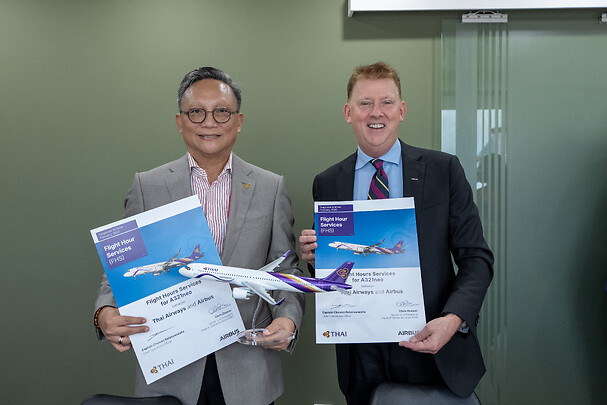
    Singapore, 4 February 2026 – Airbus and Thai Airways International (THAI) have strengthened their long-standing partnership with an agreement to extend their FHS component support to cover the airline’s new A321neo fleet, which has progressively been joined THAI operations from 2025.

    The long-term agreement covers a wide range of component services, including on-site stock, pool access and component repair services at their main base in Bangkok, Thailand. In addition, THAI will benefit from Airbus’ engineering expertise and dedicated FHS regional representatives, providing close operational support for the airline’s daily maintenance activities and enhancing fleet availability and cost predictability.

    THAI’s first FHS agreement came in 2012, signing a component support to cover 20 A320ceo aircraft. The two parties have now agreed to extend the scope of the agreement to include 32 A321neo aircraft, reflecting Thai Airways’ continued confidence in Airbus’ comprehensive and reliable maintenance support solutions.

    “Extending our FHS agreement with THAI to support their A321neo fleet demonstrates the strength of our long-standing relationship and our commitment to supporting the airline’s fleet modernisation strategy,” said Anand Stanley, President Airbus Asia-Pacific. “Through comprehensive component support and local engineering presence, we are helping THAI optimise operations as it introduces the next generation of single-aisle aircraft.”

    Airbus FHS provides flexible, comprehensive maintenance solutions designed to help airlines maximise fleet performance while minimising total operating costs. Drawing on Airbus’ global expertise, advanced digital capabilities and data-driven insights, FHS enhances operational efficiency and reliability. Airbus FHS is a worldwide leader in Power-by-the-Hour component support, supporting airlines with predictable, long-term maintenance solutions.


    @THAI @Airbus #A321neo #FHS 

    Continue Reading

  • Mitsubishi Heavy Industries Announces Large Order Intake, Revenue, and Profit Growth in First Three Quarters, Raises Full-Year Guidance

    Mitsubishi Heavy Industries Announces Large Order Intake, Revenue, and Profit Growth in First Three Quarters, Raises Full-Year Guidance

    Tokyo – Mitsubishi Heavy Industries, Ltd. (MHI, TSE Code: 7011) announced that order intake increased 12.6% year-on-year to ¥5,029.1 billion in the three quarters ended December 31, 2025. Revenue rose 9.2% year-on-year to ¥3,326.9 billion, resulting in profit from business activities (business profit) of ¥301.2 billion, a 25.5% increase over the previous fiscal year, which represented a business profit margin of 9.1%. Profit attributable to owners of parent (net income) was ¥210.9 billion, an increase of 22.6% year-on-year, with a net income margin of 6.3%. EBITDA was ¥393.1 billion, a 21.0% increase over Q1-3 FY2024, with an EBITDA margin of 11.8%.

    (billion yen, except where otherwise stated)

    Q1-3 FY2025 Financial Results Q1-3 FY2024 (Note) Q1-3 FY2025 YoY YoY%
    Order Intake 4,468.1 5,029.1 +561.0 +12.6%
    Revenue 3,047.0 3,326.9 +279.9 +9.2%

    Profit from Business Activities

    Profit Margin

    240.1

    7.9%

    301.2

    9.1%

    +61.1

    +1.2 pts

    +25.5%

    Profit Attributable to Owners of Parent

    Profit Margin

    172.1

    5.6%

    210.9

    6.3%

    +38.8

    +0.7 pts

    +22.6%

    EBITDA

    EBITDA Margin

    324.9

    10.7%

    393.1

    11.8%

    +68.1

    +1.1 pts

    +21.0%

    FCF -143.7 167.6 +311.4
    • Q1-3 FY2024 results have been retroactively adjusted to reflect the planned sale of Mitsubishi Logisnext (ML) shares.
      For more information on the ML sale, please refer to the following press release published on September 30, 2025:
      ML Sale Announcement


    (billion yen, except where otherwise stated)

    Q1-3 FY2025 Financial Results by Segment Order Intake Revenue Business Profit
    Q1-3
    FY2025
    YoY (Note) Q1-3
    FY2025
    YoY (Note) Q1-3
    FY2025
    YoY (Note)
    Energy Systems (Energy) 2,857.0 +889.9 1,354.7 +75.9 146.7 -7.7
    Plants & Infrastructure Systems (P&I) 891.3 +77.7 633.9 +47.4 64.9 +25.2
    Logistics, Thermal & Drive Systems (LT&D) 444.3 -46.6 437.0 -27.6 18.4 +1.2
    Aircraft, Defense & Space (ADS) 837.0 -345.0 891.2 +201.6 105.3 +35.6
    Others, Corporate & Eliminations (OC&E) -0.6 -15.0 9.9 -17.4 -34.2 +6.8
    Total 5,029.1 +561.0 3,326.9 +279.9 301.2 +61.1
    • Q1-3 FY2024 results on which YoY figures are based have been retroactively adjusted to reflect the planned sale of ML shares.


    In Energy, order intake increased by ¥889.9 billion YoY mainly due to continued strong demand in Gas Turbine Combined Cycle (GTCC). Contracts for 31 large frame gas turbine units—up 15 units YoY—were concluded during Q1-3, the majority of which were from customers in North America and Asia. Revenue increased by ¥75.9 billion YoY; the largest gains were seen in GTCC, which continued to execute its sizeable backlog. Segment business profit decreased by ¥7.7 billion YoY mainly due to one-time expenses in Steam Power, which offset strong performance in GTCC from higher revenue and improved margins.

    In P&I, order intake increased by ¥77.7 billion YoY due to the booking of a large project in Engineering. Revenue grew by ¥47.4 billion. Improved margins in Metals Machinery and Machinery Systems helped to raise segment business profit by ¥25.2 billion YoY.

    In LT&D, revenue decreased by ¥27.6 billion YoY due to a decline in units sold in Turbochargers and Heating, Ventilation & Air Conditioning (HVAC). Steady performance in Engines on the back of strong demand in Asia, combined with the rebound from one-time expenses associated with a supply chain disruption in Turbochargers during the previous fiscal year, resulted in a ¥1.2 billion YoY increase in segment business profit.

    In ADS, order intake decreased by ¥345.0 billion YoY due to a high base effect from large orders booked in Defense & Space during the previous fiscal year. Revenue increased by ¥201.6 billion YoY, mainly in Defense & Space, where steady progress in backlog execution continued. Increased revenue and higher margins in Defense & Space and Commercial Aviation served to increase segment business profit by ¥35.6 billion YoY.


    FY2025 Earnings Forecast

    MHI revised its guidance for the period ending March 31, 2026, increasing the forecasts for order intake, business profit, net income, EBITDA, and FCF over the previous announcement made November 7, 2025, based on stronger-than-anticipated performance through Q3. The full-year dividend forecast of 24 yen per share was unchanged.

    (billion yen, except where otherwise stated)

    FY2025 Earnings Forecast FY2024
    Actual (Note)
    FY2025
    Forecast
    (Previous)
    FY2025
    Forecast
    (Revised)
    Revised vs.
    Previous
    Order Intake 6,405.1 6,100.0 6,700.0 +600.0
    Revenue 4,361.1 4,800.0 4,800.0

    Profit from Business Activities

    Profit Margin

    354.9

    8.1%

    390.0

    8.1%

    410.0

    8.5%

    +20.0

    +0.4 pts

    Profit Attributable to Owners of Parent

    Profit Margin

    245.4

    5.6%

    230.0

    4.8%

    260.0

    5.4%

    +30.0

    +0.6 pts

    ROE 10.7% 10% 10%

    EBITDA

    EBITDA Margin

    469.9

    10.8%

    510.0

    10.6%

    530.0

    11.0%

    +20.0

    +0.4 pts

    FCF 342.7 0.0 200.0 +200.0
    Dividends 23 yen 24 yen 24 yen
    • FY2024 results have been retroactively adjusted to reflect the planned sale of ML shares.


    (billion yen, except where otherwise stated)

    FY2025 Earnings Forecast by Segment Order Intake Revenue Business Profit
    Previous Revised Previous Revised Previous Revised
    Energy 3,200.0 3,600.0 2,000.0 2,000.0 240.0 240.0
    P&I 900.0 1,100.0 850.0 850.0 70.0 80.0
    LT&D 600.0 600.0 600.0 600.0 20.0 20.0
    ADS 1,400.0 1,400.0 1,350.0 1,350.0 140.0 140.0
    OC&E 0.0 0.0 0.0 0.0 -80.0 -70.0
    Total 6,100.0 6,700.0 4,800.0 4,800.0 390.0 410.0


    CFO Message

    “In the first three quarters of this fiscal year, we continued to build on the strong performance I shared with you in our last release, with all major financial indicators up year-on-year, especially order intake and business profit,” MHI Chief Financial Officer Hiroshi Nishio commented. Nishio continued, “Looking at individual businesses, GTCC drove strong order intake performance, booking 31 large frame gas turbine units mainly in North America and Asia. Demand for gas turbines remains high, particularly in the U.S., as communicated previously. Revenue was up especially in GTCC and Defense & Space, which are both executing some of the largest backlogs ever seen in our history. We also achieved remarkable growth in business profit as we offset one-time expenses in Steam Power with success in other businesses.”

    “On the back of this excellent progress through Q3,” Nishio went on, “we have made upward revisions to our full-year order intake, business profit, net income, and FCF guidance. We are entering the final stretch of this fiscal year with renewed confidence, leveraging our historically high backlog to grow profit while continuing to win new orders—the source of future earnings expansion. As we aim to meet these updated targets, we ask our shareholders and other stakeholders to look forward to our next release later this year.”


    Attachment 1: Q1-3 FY2025 Financial Results

    Attachment 2: Presentation Materials of Financial Results

    Downloadable PDF of this press release


    Note regarding forward looking statements:

    Forecasts regarding future performance outlined in these materials are based on judgments made in accordance with information available at the time they were prepared. As such, these projections include risk and uncertainty. Investors are recommended not to depend solely on these projections when making investment decisions. Actual results may vary significantly from these projections due to a number of factors, including, but not limited to, economic trends affecting the Company’s operating environment, fluctuations in the value of the Japanese yen to the U.S. dollar and other foreign currencies, and trends in Japan’s stock markets. The results projected here should not be construed in any way as a guarantee by the Company.
    In response to U.S. tariff policy, the Company is pursuing mitigation strategies focused on cost passthroughs. As of the date of this release, the Company expects any impact on performance to be limited in nature.

    Continue Reading

  • Pinsent Masons advises on sale of VLocker to Venu+

    Pinsent Masons advises on sale of VLocker to Venu+

    VLocker currently serves more than 700 high‑traffic venues worldwide, delivering secure, cashless and technology‑driven storage solutions. The transaction, which involved VLocker’s operations across multiple jurisdictions, completed on 30 January 2026. 

    The Pinsent Masons team advising on the matter was led by Sydney corporate partner James Stewart, with support from special counsel Madison Smith, associate Kaitlin Pert and graduate lawyer Eve Rayner. 

    Commenting on the matter, James Stewart said: ‘We are very pleased to have advised on this strategically important transaction and to have supported the founders and management team of VLocker as the business moves into its next phase of growth with Venu+.’ 

    The deal reflects the strong appetite among international investors for technology‑enabled infrastructure businesses with scalable, cross‑border platforms. It also underlines our team’s experience in guiding founder‑led and management‑owned businesses through complex private equity‑backed exits, from initial structuring through to completion.’ 

    Continue Reading

  • Honda Co-developing Automobile SoC with U.S.-based Mythic to Accelerate Research to Enhance AI Computing Performance and Energy Efficiency

    Honda Co-developing Automobile SoC with U.S.-based Mythic to Accelerate Research to Enhance AI Computing Performance and Energy Efficiency

    TOKYO, Japan, February 4, 2026 – Honda Motor Co., Ltd. (Honda) today announced plans to co-develop system-on-a-chip (SoC) for its software-defined vehicles (SDVs), with Mythic, a Texas, U.S.-based technology company.

    Honda has invested in Mythic, which has original technologies and a proven track record in this field of technologies, to establish technologies to enhance the computing performance and energy efficiency of AI to be used for automated driving and other features of its SDVs. Today, Honda announced plans for Honda R&D Co., Ltd., the R&D subsidiary of Honda, to co-develop automobile SoC with Mythic.

    In order to continue offering the “joy and freedom of mobility” in a sustainable manner, Honda has been placing the highest priority on addressing environmental and safety challenges. In particular, enhanced application of intelligent technology will be the key to addressing safety issues. This makes the advancement of high-performance SoC for SDVs essential; therefore, Honda is conducting research and development of digital computing*1 technologies.

    Looking ahead, as AI technologies continue to advance, further innovation is required in technologies to enhance computing performance and energy efficiency. With a view to building computing infrastructures which will contribute to the application of next-generation intelligent technologies, Honda is actively exploring neuromorphic*2 SoC technology, that draws inspiration from how the human brain works.

    Mythic is a startup company with strong expertise in semiconductor technologies that leverage analog computing, which achieves high-efficiency AI processing with low power consumption. For the development of neuromorphic SoC, Mythic has original analog compute-in-memory (CiM)*3 technology and a proven track record in software implementation using tools such as software development kit (SDK)*4. With its analog CiM, Mythic is working to minimize data movement for computation and achieve both high computing performance and energy efficiency.

    Honda has invested in Mythic to pay close attention to original technologies of Mythic and respond flexibly to future changes in the technological environment and societal trends. Moreover, Honda R&D will leverage its expertise and technologies amassed through the design of its original AI models and the research and development of electronic control units and integrate the original technology of Mythic into AI computing functions that consist of SoC. With that, Honda R&D will further accelerate the research and development of SoC for next-generation SDVs, to further enhance computing performance and energy efficiency.

    Continue Reading

  • What the RBA wants Australians to do next to fight inflation – or risk more rate hikes

    What the RBA wants Australians to do next to fight inflation – or risk more rate hikes

    When the Reserve Bank of Australia (RBA) board voted unanimously to lift the cash rate to 3.85% on Tuesday, the decision was driven by one overriding concern. It wants to stop the rising cost of living from becoming entrenched.

    For some, like self-funded retirees, the rate rise was good news. Higher interest means their savings and term deposits will earn more. But for many others, including first home buyers who might have stretched themselves just to get a foot into the housing market, it was a very bad day.

    RBA Governor Michele Bullock acknowledged that, saying:

    I know this is not the news that Australians with mortgages want to hear, but it is the right thing for the economy.

    She warned the alternative – letting inflation keep rising – would be even harder for more Australians.

    So what’s the psychology behind the RBA raising rates now and leaving the door open to further hikes if needed? And what does the central bank hope Australians will do in response?

    The price squeeze you’re feeling

    There’s a striking gap between how the RBA describes the economy and how most Australians experience it.

    On paper, things look healthy: unemployment is low, wages are growing.

    But as Bullock acknowledged on Tuesday, the daily reality has felt very different.

    The price level has gone up 20% to 25% over the last few years, and people see that every time they walk into a supermarket, or they go to the doctor, or whatever – that’s I think what’s hurting people.

    That relentless price squeeze is not something you forget, even when the rate of increase starts to slow.

    What’s driving inflation up?

    The headline consumer price index (CPI) hit 3.8% in the year to December, well above the RBA’s target band of 2–3%. The “trimmed mean” – the underlying measure the RBA watches most closely – rose to 3.3%. Both are too high and moving in the wrong direction.

    Bullock singled out three factors contributing to inflation. Each behaves differently and requires a different response.

    Housing was the single largest contributor to inflation in December, up 5.5% over the year. That includes rents, which rose 3.9% (or 4.2% stripping out government rent assistance), as well as insurance, utilities, and new construction costs, which rose 3% as builders passed through higher labour and material costs.

    There is an irony here. Rising interest rates are intended to cool demand, but they slow housing construction. Limited supply of housing is what’s pushing rents up in the first place.

    “Durable goods” are the things we buy to last, such as cars, refrigerators, washing machines, televisions and furniture. Demand for many of those has been higher in the past year.

    “Market services” are items such as restaurant meals, taxis, haircuts, gym memberships, medical appointments and holiday travel.

    The RBA watches these carefully, because these are services priced by supply and demand in the domestic market. Those prices tend to be “sticky”: once they start rising, they don’t come back down easily.

    Wages are also a big part of market services inflation. If the people providing those services are earning more, the cost goes up.


    Read more:
    RBA raises interest rates as inflation pressures remain high


    How rate cuts made shoppers relax

    This is where the behavioural psychology gets interesting.

    The RBA cut interest rates three times in 2025. Each cut sent a signal, whether intentionally or not: it’s OK to spend a bit more.

    And spend we did. CommBank data shows Australians spent A$23.8 billion over the two-week Black Friday period, up 4.6% on the year before.

    It’s a cautionary tale about “rational expectations”. Each rate cut potentially fuelled the belief that more would follow.

    If people feel like they can afford to spend, then they spend. Businesses, sensing demand, may raise their prices to match. That’s exactly the self-fulfilling dynamic central banks worry about.


    Read more:
    Here’s what Black Friday sales shopping does to your brain


    The 3 ways the RBA hopes we’ll react

    When prices go up, as they have been, workers ask for bigger wage rises to keep up. To pay higher wages, businesses lift prices to protect their profit margins. Together, that can create a “wage-price spiral” that becomes very hard to break.

    The RBA will be hoping Australians respond to this rate rise in three ways:

    RBA Governor Michele Bullock described raising interest rates as “a very blunt instrument” to bring inflation down, and noted setting rates is “not a science. It’s a bit of an art, really […] We’ve just got to respond as best we can.”

    The RBA can’t undo the price rises that have already happened. It can only try to slow down further increases.

    Continue Reading

  • Harbour BioMed Announces Positive Profit Alert for 2025 Annual Results

    Harbour BioMed Announces Positive Profit Alert for 2025 Annual Results

    CAMBRIDGE, Mass., ROTTERDAM, Netherlands and SHANGHAI, Feb. 3, 2026 /PRNewswire/ — Harbour BioMed (the “Company”; HKEX: 02142), a global biopharmaceutical company focused on the discovery and development of novel antibody therapeutics in immunology and oncology, today announced a positive profit alert for the year ended December 31, 2025.

    Based on a preliminary review of the Company’s unaudited management accounts for the Reporting Period, total profit is expected to range between US$88 million (equivalent to approximately HK$685 million) and US$95 million (equivalent to approximately HK$739 million), as compared to a profit of approximately US$2.7 million for the year ended December 31, 2024. Total adjusted profit[1] is expected to range between US$91 million (equivalent to approximately HK$708 million) and US$98 million (equivalent to approximately HK$763 million).

    The anticipated increase in profit is primarily attributable to:

    • Continued growth of recurring revenue stream of the Company, such as the platform-based research collaboration with AstraZeneca and Bristol Myers Squibb.
    • Accelerated expansion of global partner network, as the revenue generated from out-licensing and collaboration of innovative products has transformed into recurring revenue stream of the Company, such as the licensing collaboration with Otsuka, the licensing collaboration with Windward Bio.
    • Rapid business growth of Nona Biosciences, such as the revenue generated from both technology license and platform-based service, as well as the milestone inflow from existing collaborations, such as the research and technology license collaboration with Pfizer.

    Dr. Jingsong Wang, Founder, Chairman and CEO of Harbour BioMed, commented: “This anticipated profit marks a key milestone for Harbour BioMed, validating the value of our unique business model. The strength of our proprietary technology platforms is being recognized through a growing number of deep, strategic collaboration with global leaders. Most importantly, these partnerships are not one-time events; they are evolving into a sustainable financial foundation that fuels our mission to discover and develop novel antibody therapeutics for patients worldwide. Looking ahead, we will build on this momentum through continued innovation and high-impact collaborations to deliver sustainable growth.”

    [1] Adjusted items of total profit are ESOP-related expenses.

    About Harbour BioMed

    Harbour BioMed (HKEX: 02142) is a global biopharmaceutical company committed to the discovery and development of novel antibody therapeutics in immunology and oncology. The company is building a robust and differentiated pipeline through internal R&D capabilities, strategic global collaborations in co-discovery and co-development, and selective acquisitions.

    Harbour BioMed’s proprietary antibody technology platform, Harbour Mice®, generates fully human monoclonal antibodies in both the conventional two heavy and two light chain (H2L2) format and the heavy chain-only (HCAb) format. Building upon HCAb antibodies, the HCAb-based immune cell engagers (HBICE®) bispecific antibody technology enables tumor-killing effects that traditional combination therapies cannot achieve. Additionally, the HCAb-based bispecific immune cell antagonist (HBICATM) technology empowers the development of innovative biologics for immunological and inflammatory diseases. By integrating Harbour Mice®, HBICE®, and HBICATM with a single B-cell cloning platform, Harbour BioMed has built a highly efficient and distinctive antibody discovery engine for developing next-generation therapeutic antibodies. For more information, please visit www.harbourbiomed.com.

    Statement

    The information contained in this press release is only a preliminary assessment by the Board based on the unaudited consolidated management accounts of the Company and its subsidiaries for the year ended December 31, 2025 currently available to the Company, and is not based on any figures or information which have been reviewed or confirmed by the audit committee of the Board, or reviewed or audited by the auditors of the Company. The actual results for the year ended December 31, 2025 may differ from those disclosed in this press release. As such, the above figures are strictly for information only and not for any other purposes.

    SOURCE Harbour BioMed

    Continue Reading

  • [Infographic] Manage Commercial Displays With Ease Across Industries With Samsung VXT and LYNK Cloud – Samsung Global Newsroom

    [Infographic] Manage Commercial Displays With Ease Across Industries With Samsung VXT and LYNK Cloud – Samsung Global Newsroom

    Digital signage has long been proven to boost sales, increase brand recall and enhance customer and guest experiences. Over the years, businesses have expanded how they use this signage across different environments, managing more screens than ever before. Samsung digital signage has evolved alongside those needs, drawing on 17 consecutive years as the world’s No.1 commercial display provider.1

    With cloud-based display solutions such as Samsung VXT and LYNK Cloud, Samsung supports centralized content and display management tailored to different business roles and environments.

    Samsung VXT is designed for marketing managers, store managers, and IT managers who need an easier way to create, update and manage digital signage across multiple locations. The platform brings content creation and management together in one place and now features AI Studio, an AI-powered content app that helps simplify digital signage content creation. When used with Samsung Spatial Signage, AI Studio automatically optimizes content to enhance depth and spatial presence, making visuals feel more dimensional and immersive.2

    In hospitality settings, LYNK Cloud supports hotel IT managers, hotel operators and hotel service managers by helping them manage hotel TVs, on-screen services and guest-facing content from a central platform. It also helps hotels gain insight into how guests interact with in-room TV services to support more relevant offerings and identify new revenue opportunities.

    Explore the infographic below for additional features and benefits of Samsung VXT and LYNK Cloud to see how they power more efficient content and display management.


    Continue Reading

  • Partners Andrew Rankin and David McGimpsey discuss impact of Opportunity Zone Program changes on clean energy projects – Dentons

    1. Partners Andrew Rankin and David McGimpsey discuss impact of Opportunity Zone Program changes on clean energy projects  Dentons
    2. OZs 2.0 Alert: Data Expected to Determine Eligibility Now Available  Economic Innovation Group
    3. Opportunity Zones 2.0 is coming. How did the first version affect Birmingham home values?  The Business Journals
    4. OZ Office Hours: Which Census Tracts Qualify For OZ 2.0?  OpportunityZones.com
    5. Opportunity Zones 2.0: What Real Estate Professionals Should Know  CBIZ

    Continue Reading