- Kirkland Advises Blackstone Tactical Opportunities on Investment in Sunotec Kirkland & Ellis LLP
- Sunotec Announces Partnership Structured Equity Investment from Blackstone to Accelerate Renewable Infrastructure Expansion mynewsdesk.com
- Blackstone Tactical Opportunities backs Sunotec Balkan Green Energy News
- Sunotec Forms New Partnership Backed By Blackstone Investment To Accelerate Solar And Battery Storage Growth Across Europe SolarQuarter
Category: 3. Business
-

Kirkland Advises Blackstone Tactical Opportunities on Investment in Sunotec – Kirkland & Ellis LLP
-

Saudi firms should reassess practices following update to payment system framework
The updated supervisory framework for payment systems and operators replaces the previous framework, introduced in April 2021. It creates clearer classification of payment systems, enhanced supervisory tools for SAMA and more detailed obligations for payment system operators to meet.
By tightening rules while incorporating feedback from a 2025 public consultation, the changes will encourage competition and innovation without compromising consumer protection or financial stability, according to SAMA.
Marie Chowdhry, a financial regulation expert at Pinsent Masons, said: “The updated supervisory framework marks a nuanced shift in how payment systems are regulated in KSA.”
“By anchoring supervisory expectations directly to the Payments and Services Law and its executive regulations, SAMA has moved from a largely principles‑based approach to a more structured and prescriptive supervisory regime,” she said.
“For payment system operators, this means greater regulatory certainty but also heightened accountability. The framework contemplates independent supervisory evaluation and, where needed, SAMA can require an independent third‑party assessment of the system. In my opinion, that’s a signal that assurance and evidence are central to the regime.
Operators labelled ‘systemically important’ must now carry out mandatory self‑assessments, while SAMA will conduct independent oversight using standardised tools and benchmarks.
Jessa White, an expert in fintech at Pinsent Masons, said: “What has changed is not the concept of classification, but its consequences. Systemically important operators now face mandatory self‑assessments, potential public disclosure, and heightened supervisory scrutiny, embedding transparency and accountability at the core of the regime.”
“The framework also reflects Saudi Arabia’s broader policy objective of aligning its financial market infrastructure with international standards while supporting innovation and competition in the payments sector,” she said.
“Early engagement with the regulator and proactive compliance planning will be key for firms seeking to scale payment services in the Kingdom while managing regulatory risk.”
The changes highlight the importance of firms reviewing both their current operating models and future growth strategies in the Saudi payments market, the experts said.
Continue Reading
-

Adebrelimab and Bevacizumab Plus Platinum Chemotherapy in Triple-Negative Breast Cancer With Brain Metastases
By Matthew Stenger
Posted: 4/7/2026 10:11:00 AM
Last Updated:4/7/2026 9:44:10 AM
In a Chinese phase II study (ABC) reported in the Journal of Clinical Oncology, Li et al found that the combination of the PD-L1 inhibitor adebrelimab, bevacizumab, and cisplatin or carboplatin showed high intracranial activity and progression-free survival in patients with triple-negative breast cancer with active brain metastases.
Study Details
In the trial, 35 patients enrolled at Fudan University Shanghai Cancer Center between July 2020 and October 2024 received adebrelimab at 20 mg/kg, bevacizumab at 7.5 mg/kg, and cisplatin at 75 mg/m2 (n = 30) or carboplatin AUC = 5 (n = 5) on day 1 in 3-week cycles. Patients had received a median of 2 prior treatments (range = 0–4) for metastatic disease. The primary outcome measure was central nervous system (CNS) objective response rate.
Key Findings
Confirmed CNS objective response was observed in 27 (77.1%, 95% confidence interval [CI] = 59.9%–89.6%) of 35 patients, with complete response in 5.
Among secondary outcome measures, the CNS clinical benefit rate was 80.0% (95% CI = 63.1%–91.6%). Median overall progression-free survival was 8.3 months (95% CI = 5.8–11.5 months). Median CNS progression-free survival was 10.3 months (95% CI = 7.4–14.3 months). Median overall survival was 21.1 months (95% CI = 13.2 months to not reached).
Among the 28 patients with progression, it was intracranial-only in 9 patients (32.1%), extracranial-only in 10 (35.7%), and both in 9 (32.1%).
The most common treatment-related adverse events of any grade were anemia (80.0%), hypomagnesemia (74.3%), neutropenia (71.4%), and asthenia (62.9%). Grade ≥ 3 treatment-related adverse events occurred in 65.7% of patients, most commonly thrombocytopenia (11.4%) and neutropenia, peripheral sensory neuropathy, and hypertension (8.6% each). No treatment-related deaths were observed.
The investigators concluded: “The combination of adebrelimab, bevacizumab, and cisplatin/carboplatin was the first regimen to demonstrate promising intracranial antitumor activity and prolonged [progression-free survival] and CNS [progression-free survival], along with a manageable safety profile, warranting further investigation.”
Jian Zhang, PhD, of the Department of Medical Oncology, Fudan University Shanghai Cancer Center, Shanghai, China, is the corresponding author for the Journal of Clinical Oncology article.
DISCLOSURE: The study was supported by the National Natural Science Foundation of China, Shanghai Science and Technology Innovation Action Plan, and Jiangsu Hengrui Pharmaceuticals. For full disclosures of the study authors, visit ascopubs.org.
Continue Reading
-

BP shareholders advised to vote against chair over climate resolution exclusion | BP
BP shareholders should vote against its new chair over his decision to exclude a climate resolution from the company’s next annual meeting, a major proxy adviser recommends.
Glass Lewis has advised investors to vote against Albert Manifold, who has been in his post for just six months, according to a note seen by Reuters.
The institution, which advises some of the world’s biggest investors, said its recommendation was based on BP’s decision to exclude a proposal to share its longer-term strategy under scenarios of declining oil and gas demand.
The resolution was tabled by the climate activist shareholder group Follow This, which would have prompted the company and its shareholders to discuss the issue at BP’s annual general meeting on 23 April.
BP, one of the biggest oil companies in the world, is in the process of pivoting its focus back to oil and gas after an ill-received foray into renewables.
Manifold, who previously ran the building material company CRH, joined in October with a promise to help BP “reach its full potential”. This month Meg O’Neill, a former executive at the US oil company ExxonMobil, became chief executive – BP’s fourth boss since 2023 and the first woman to fill the role.
Glass Lewis said the board’s decision to exclude the resolution from its AGM “further raises questions about transparency, shareholder communication, and responsiveness to shareholder concerns”, Reuters reported.
Manifold said on BP’s website that the board had concluded the proposal by Follow This was not valid and would be ineffective if it were to pass at the AGM.
A spokesperson said BP was focused on building a simpler company following investor engagement. They said: “That’s why we are making these recommendations, to provide transparent, standardised disclosures that support clear comparisons across companies.”
The note from Glass Lewis comes after another advisory firm, ISS, recommended investors vote against BP’s board request to retire two proposals on how it reported its climate impact.
BP argued the proposals, made in 2015 and 2019, were no longer relevant because of a more standardised reporting framework.
Glass Lewis has also recommended shareholders vote against BP’s request to scrap the climate reporting resolutions, Reuters reported.
Glass Lewis and BP were approached for comment.
Continue Reading
-

Fastmarkets proposes reset of European, North American pulp prices
The proposal follows extensive engagement with market participants about observed increases in discount levels to existing prices in the hardwood and softwood pulp markets in Europe and North America.
Fastmarkets has a duty to ensure its price series remain reasonably aligned with prevailing transaction levels and seeks to address observed and growing discount levels in the market.
Fastmarkets therefore proposes to reset these benchmark prices to levels closer to actual transacted volumes.
New European gross and North American effective list prices
Upon launch, the new European gross and North American effective list prices would represent contract prices before customer-specific discounts averaged at 10%, representing the midpoint of a range of discounts depending on grade and geography. The existing and new European gross and North American effective list prices would continue to run concurrently for one year.
Practical sample (illustrative data – not actual market figures)
Should buyers and sellers agree to new discount levels in 2027 and beyond, the new gross and effective list prices would reflect the updated discount levels.
Below is the list of European gross and North American effective list prices concerned:
-PIX Pulp NBSK (FP-PLP-0039 and FP-PLP-0037)
-PIX Pulp BHKP (FP-PLP-0040 and FP-PLP-0038)
-Pulp, northern bleached softwood kraft, from Canada, delivered US East (FP-PLP-0013)
-Pulp, southern bleached softwood kraft, from US, delivered US East, $/tonne (FP-PLP-0014)
-Pulp, northern and southern mixed bleached hardwood kraft (Canadian/US), delivered US East (FP-PLP-0026)
-Pulp, bleached hardwood kraft, eucalyptus, delivered in place Brazil to US East, (FP-PLP-0018)
-Pulp, unbleached softwood kraft, from Canada/US, delivered US East, (FP-PLP-0015)
-Pulp, fluff (US southern kraft, untreated, rolls), delivered US East, (FP-PLP-0016)
-Pulp, fluff, US southern kraft untreated rolls, cif Europe, $/tonne, (FP-PLP-0009)*
*Price for US material delivered to Europe and featured in European price tables.
Calculation procedure
Contributors can calculate the new gross/effective list prices as follows:
New gross/effective list price = net price ÷ .9
Example: net price = $900 ÷ .9 = $1,000 new gross/effective list price
Prices reported at the existing higher discount levels will continue to be used for the legacy gross/effective list prices and can be mathematically converted to the new gross/effective list levels.
Fastmarkets is also proposing time and price thresholds to review the new gross and effective list prices. Fastmarkets would review these prices at minimum once per year or if observed average discount levels become greater than 25% of gross prices. These reviews may or may not result in future proposed resets. Any future proposed reset would also be conducted through a public consultation.
The new indices and effective list prices would have the same specification, methodology and price formation approach as the existing indices and effective list prices they would replace. Additionally, Fastmarkets would include upon launch backfilled data, from January 1, 2026 onward, for all new indices and effective list prices.
To provide feedback on this proposal or if you would like to provide price information by becoming a data submitter, please send feedback by May 15, 2026, to pricing@fastmarkets.com and pulp@fastmarkets.com. Please add the subject heading “re: Pulp index resets.”
The launch of new indices and effective list prices will take place, subject to market feedback, on June 1, 2026. The discontinuation of existing indices and assessments would take place on June 1, 2027.
Please indicate if comments are confidential. Fastmarkets will consider all comments received and will make comments not marked as confidential available upon request.
Continue Reading
-

When Every Beat Matters, BD Helps Clinicians Eliminate Blind Spots with Continuous, Noninvasive Blood Pressure Insight
When Every Beat Matters, BD Helps Clinicians Eliminate Blind Spots with Continuous, Noninvasive Blood Pressure Insight
New HemoSphere Stream™ Module expands access to continuous, noninvasive arterial waveform data across compatible bedside monitors and broader care settings, giving more clinicians real-time insight into more patients.
FRANKLIN LAKES, N.J. , April 7, 2026 /PRNewswire/ — BD (Becton, Dickinson and Company) (NYSE: BDX), a leading global medical technology company, today announced the launch of the HemoSphere Stream™ Module, a new innovation which gives clinicians continuous, noninvasive visibility into patients’ blood pressure. The module delivers real-time, beat-to-beat arterial waveform data from a noninvasive finger cuff directly to compatible multiparameter patient monitors, helping clinicians close gaps between intermittent readings.
“We’re delivering real-time visibility of hemodynamic changes to more patients and care settings by making continuous, noninvasive monitoring available on compatible multiparameter monitors.” said Tim Patz, worldwide president of Advanced Patient Monitoring at BD. “Patients who may not require an invasive arterial line can now benefit from continuous blood pressure monitoring, rather than intermittent checks.”
The compact HemoSphere Stream™ Module mounts easily to an IV pole, taking no additional footprint in clinical environments. When used with the VitaWave™ Plus Finger Cuff, the HemoSphere Stream™ Module serves as the interface that delivers continuous, noninvasive arterial blood pressure waveform data to compatible multiparameter monitors. Together with the finger cuff and supporting accessories, it comprises the VitaWave™ Plus System, which is designed for accuracy using technology validated against arterial line measurements.
“Monitoring blood pressure and perfusion during and after surgery is key to reducing major complications after surgery. Anesthesia providers have been waiting for the availability of a simple way to measure continuous blood pressure noninvasively. This is a landmark technology to improve global patient safety,” said Michael Scott, MD, Chair APSF Clinical Deterioration Committee.
Continuous blood pressure helps reveal hemodynamic changes that may occur between intermittent blood pressure checks, which are typically taken every 3–5 minutes in the operating room. By providing a real-time view into blood pressure trends on any compatible patient monitor, the VitaWave™ Plus System supports the Anesthesia Patient Safety Foundation’s (APSF) recommendations for continuous noninvasive hemodynamic monitoring to detect and treat intraoperative hypotension sooner.
Visit www.bd.com/HemoSphereStream for more information about BD’s Advanced Patient Monitoring solutions including HemoSphere Stream™ Module and VitaWave™ Plus System.
About BD
BD is one of the world’s largest pure-play medical technology companies with a Purpose of advancing the world of health™ by driving innovation across medical essentials, connected care, biopharma systems and interventional. The company supports those on the frontlines of healthcare by developing transformative technologies, services and solutions that optimize clinical operations and improve care for patients. Operating across the globe, with more than 60,000 employees, BD delivers billions of products annually that have a positive impact on global healthcare. By working in close collaboration with customers, BD can help enhance outcomes, lower costs, increase clinical efficiency, improve safety and expand access to healthcare. For more information on BD, please visit bd.com or connect with us on LinkedIn at www.linkedin.com/company/bd1/, X @BDandCo or Instagram @becton_dickinson.CAUTION: Federal (United States) law restricts this device to sale by or on the order of a physician.
See instructions for use for full prescribing information, including indications, contraindications, warnings, precautions and adverse events.© 2026 BD. All Rights Reserved. BD, the BD Logo, HemoSphere, HemoSphere Stream, VitaWave and VitaWave Plus are trademarks of Becton, Dickinson and Company or its affiliates. BD-171978

SOURCE BD (Becton, Dickinson and Company)
Continue Reading
-
Logistic issues, tight supply strain Middle East steel market; May could get worse: AGSI CEO
Key takeaways:
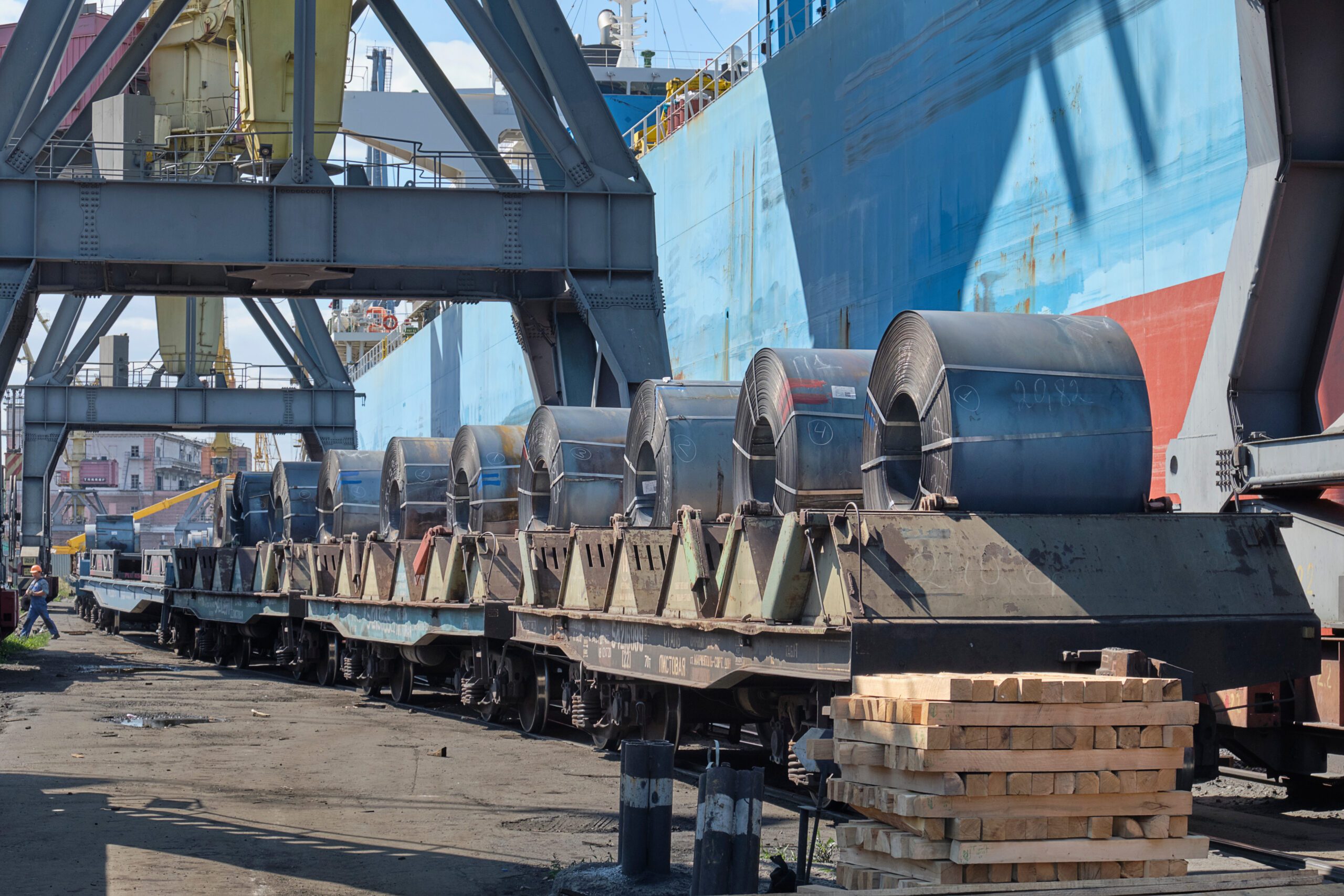
- Geopolitical tensions have severely disrupted Gulf steel supply chains, with shipping through the Strait of Hormuz and access to Jebel Ali port curtailed, driving freight costs sharply higher and limiting billet availability.
- Shortages and rising logistics costs have pushed UAE rebar prices higher, while alternative ports and regional suppliers cannot fully replace lost Asian and Iranian supply, keeping the market tight.
- Mills face operational and production risks in Q2, with potential slowdowns or suspensions due to billet shortages and high costs, even as AGSI presses ahead with its rebar capacity expansion plans.
Hussain said while market may look calm on the surface, it has been extremely strained underneath, adding that for steelmakers in the region, even the Covid crisis was not as challenging as the current situation.
AGSI’s position in the UAE steel market
AGSI is one of the leading steelmakers in the United Arab Emirates. The company produces net-zero-carbon steel using a fully electric steelmaking route based on 100% recycled raw materials sourced locally, making it one of the region’s largest recyclers of locally sourced scrap, according to market information.
Conflict escalation, logistics disruption
Tensions in the Middle East escalated on February 28, following a series of military attacks involving the US, Israel and Iran, with further military actions reported across parts of the Gulf Cooperation Council (GCC) region.
The biggest shock to the steel market came when shipping through the Strait of Hormuz was disrupted. According to latest market information, the route remains high risk for cargoes moving from Asia to the eastern Arabian Peninsula, including the UAE, Qatar, Kuwait and eastern Saudi Arabia.
Nearly a month after the conflict began, on Friday March 27, Israeli strikes hit two major Iranian steel plants, Khouzestan Steel and Mobarakeh Steel, according to media reports. Iranian media later published a list of steel producers in Israel and five countries in the GCC region that were warned they could be targeted in potential attacks.
Jebel Ali disruptions and soaring freight costs
Following the conflict escalation and delivery disruption, the Jebel Ali port in Dubai, previously a key destination for cargoes from Asia, had effectively become non-operational for steel imports, according to market sources.
“For years, we’ve had such wonderful port logistics and frequency of vessels in the region — Chinese vessels, Indian vessels, the supply chain has been so seamlessly integrated,” Hussain said. “We just relied on it, but costs have exploded.”
Before the conflict, container prices from India were around $300 per container, according to the executive, later reaching $3,500 per container, while vessel frequency has dropped from four ships per week to one, maybe two. Prices from China increased from $800-900 per container to $6,500-7,000 per container, he said.
Limited steel billet supply; alternative ports under pressure
AGSI is one of the major participants in the UAE rebar market, which has been affected by a shortage of imported steel billet. The country has previously relied on billet supplies from China and Indonesia, while Iran has also been a major regional exporter of billet and slab. But the disruption to shipping routes has raised questions about alternative sources.
“I don’t think any of these producers can give the volume historically given from Asia,” Hussain said, when asked whether mills in Oman or Qatar could fill the supply gap.
According to the executive, there is currently very little visible billet trade into the Gulf, with only a couple of container vessels arriving. He said that food and essential goods were being prioritized, while steel and raw materials were very low in the order of importance.
Fastmarkets weekly price assessment for steel billet import, cpt Jebel Ali, UAE was unchanged at $460-480 per tonne on Tuesday March 31. The price has been static since February 24.
Alternative ports under pressure
The steel market has been forced to consider alternative ports for deliveries from Asia, such as Sohar in Oman and Fujairah in the UAE. But those ports are not designed to handle such large volumes, Hussain said, with Fujairah lacking sufficient bulk handling capacity and shore cranes.
He added that only self‑geared vessels can discharge in Fujairah, but some are still turned away because they lack sufficient equipment and would block the port for too long.
Even where cargo can be discharged, logistics costs remain high, the CEO said. Internal transportation costs have more than doubled in March due to higher diesel prices, while importers in the UAE now face additional costs of around $40 per tonne to move cargo from Sohar, including $25 per tonne for inland trucking and $15 per tonne discharge fees.
Fastmarkets amended the calculation of its price assessments for rebar and steel billet imports into Jebel Ali from a CFR basis to a CPT basis on March 23 to reflect delivery changes in the region.
Increasing rebar prices; more challenges in Q2
The disruptions have impacted rebar prices in the UAE, pushing levels up both for the domestic material and imports, market sources have told Fastmarkets.
Emirates Steel, the leading steel producer in the country, rolled over its official rebar offer for April at 2,721 dirhams ($741) per tonne ex-works to support market stability. Other mills, however, announced price increases due to rising cost pressures, market participants said on March 31.
Industry sources reported that a large producer sold around 160,000-170,000 tonnes of rebar at 2,673 dirhams per tonne ex-works for April, while a second major producer raised its April offer to 2,700-2,715 dirhams per tonne ex-works, up by 200-215 dirhams per tonne from March levels at 2,500 dirhams per tonne ex-works.
A trader told Fastmarkets on Tuesday that while “Emirates Steel has been responsible in its pricing, others [are maybe being] opportunistic.”
Fastmarkets’ weekly price assessment for steel reinforcing bar (rebar) domestic, exw UAE was 2,673-2,700 dirhams per tonne on March 31, up from 2,470-2,690 dirhams per tonne a week earlier.
Rebar imports from Oman were heard at $724 per tonne CPT for April, with offers reaching $730 per tonne CPT, up from latest deals at $682 per tonne CPT in March.
Demand outlook and operational risks
The trader expected lower rebar consumption in the UAE in April, around 450,000 tonnes including imports, down from 525,000 tonnes in March and 550,000 tonnes in February and January. Other market sources also stressed that supply of material in the region was uncertain due to the logistics difficulties.
Fastmarkets’ weekly price assessment for steel reinforcing bar (rebar) import, cpt Jebel Ali, UAE was $724-730 per tonne on March 31, up from $673-682 per tonne a week earlier.
Despite construction activity still being quite strong in the UAE, with everyone trying to finish what they have started, Hussain said he expects demand and supply to rebalance as delivery constraints limit production.
According to the executive, no producers reported halted operations in March, but slowdowns and closures could emerge in April and May, with the second expected to be the most challenging month. Mills across the region may operate at around 50% of their full capacity due to higher costs and limited raw materials availability, the CEO said, as idling one mill costs around $1 million per month.
AGSI expansion plans remain on track
Despite the situation in the region, AGSI’s rebar expansion plans remain on track, Hussain told Fastmarkets, confirming that the new HRM3 rolling mill is awaiting final acceptance and expected to be fully operational in April.
In January, AGSI announced that HRM3 will have rolling capacity for 600,000 tonnes per year of rebar, while the older HRM1 mill is being upgraded to double its capacity to 800,000 tpy. It is planned to be shut down in the second quarter of 2026 and back up in the third quarter, after the upgrade is done.
Once the expansion plans are completed, AGSI’s total rebar capacity would rise to around 1.64 million tpy, according to its previous announcement. The producer currently makes around 55,000-60,000 tonnes of billet per month, but once the upgrades are completed it will need to purchase an additional 60,000 tonnes of billet per month to fully utilize its three rolling mills, the executive said on Wednesday.
According to Hussain, AGSI has already paused one rolling mill and may suspend the rest if billet supply does not improve in the short term, but plans are still under discussion.
Understand current steel price trends and access hundreds of historical steel prices in one place. Find out more about Fastmarkets’ steel prices here.
Continue Reading
-
SI Re hires Simon Parten from Schroders Capital as ILS Portfolio Manager
Signal Iduna Reinsurance Ltd. (SI Re), the Swiss based reinsurer that also invests in insurance-linked securities (ILS) for their diversification and return effects, has hired Simon Parten from Schroders Capital ILS as ILS Portfolio Manager, who will join the company on June 1st, 2026.
In his new role, Parten will help further develop SI Re’s Insurance Linked Securities portfolio, which serves as a key diversifier within the firm’s reinsurance book.Parten’s vast expertise in the allocation of catastrophe bonds, collateralized reinsurance, quota shares, and leveraged facilities, along with his strong technological and quantitative advantages, will help to enhance SI Re’s expanding ILS portfolio.
Parten joins SI Re from Schroders Capital’s ILS business, where he most recently served as Senior Underwriter & Analyst for the firm’s extensive ILS portfolio.
Parten has also previously held pricing actuary positions at Zurich Financial Services, worked at both Allianz Risk Transfer and Towers Watson, and gained initial experience across the industry with Tindall Riley at Britannia P&I.
Dr. Arnold Löw, CEO of SI Re, commented: “We are excited to welcome Simon Parten to our dedicated ILS team. Our ILS book is central to SI Re’s dual strategy of complementing our traditional reinsurance risks with a strong ILS portfolio.
“With his long-standing experience in the ILS market, Simon will further advance our ILS book, leveraging his profound technical expertise in portfolio allocation and construction.”
ILS have been a strategic pillar of SI Re since 2010. Over the years, the company has steadily expanded its ILS portfolio, deepened its expertise in this asset class, and grown its specialised team over this period.
In 2025, SI Re grew its ILS portfolio investments which include catastrophe bonds to USD $111.5 million, up from USD $89.5 million at year-end 2024.
The reinsurer also recently hired Sebastian Schulz as an ILS Analyst.

Continue Reading
-

Universal Music receives takeover offer from Bill Ackman’s Pershing Square | Music industry
Billionaire Bill Ackman’s hedge fund has offered to buy Universal Music Group (UMG) in a deal that values the world’s biggest music company at more than €50bn (£44bn).
Pershing Square, the New-York based hedge fund, has offered to buy the business, which is home to artists including Taylor Swift and Elton John, in a cash and stock deal.
Ackman said in a statement that while the company, which is led by the British-born Sir Lucian Grainge, had done “an excellent job nurturing and continuing to build a world-class artist roster and generating strong business performance”, its share price had lagged owing to issues “unrelated to the performance of its music business”.
Shares in UMG, which have been listed in Amsterdam since 2021, have lost more than a quarter of their value in the past year alone.
The company is one of the “big three” record labels, alongside Sony Music Entertainment and Warner Music Group. Its roster ranges from classical music to stars such as Adele, Drake and Ariana Grande.
Ackman blamed its poor share price performance partly on the delay of UMG’s listing in the US, underutilisation of its balance sheet and uncertainty around the French conglomerate Bolloré Group’s 18% stake in the company.
He also cited a “lack of investor credit” in the company’s valuation of its €2.7bn stake in the music streaming service, Spotify.
Pershing Square, which Ackman set up in 2004, controls more than $26bn in assets. The fund bought a 10% stake in UMG in 2021.
While Ackman said Grainge and his management team had done an “excellent job” at the company, as part of the proposed deal the hedge fund would add Michael Ovitz, a veteran talent agent, as chair, as well as two representatives from Pershing Square to the company’s board.
The deal would also be subject to a “new employment contract and compensation arrangement for Sir Lucian Grainge”, Ackman said in a letter to the board of directors at UMG.
Grainge was paid a package of more than €41m last year. That included a €4.4m base salary and more than €30m in bonuses.
Under the proposed deal, UMG would merge with a blank-cheque company set up by Pershing Square, and then list on the New York Stock Exchange. Shareholders would receive a total of €9.4bn in cash and 0.77 shares in the new company for every Universal share they own. Together, that would represent a 78% premium compared with the company’s closing share price on Thursday, Pershing said.
UMG was approached for comment.
Continue Reading