Category: 3. Business

  • WFW advises Dorian on US$62.9m ECA-backed newbuild VLGC financing

    WFW advises Dorian on US$62.9m ECA-backed newbuild VLGC financing

    Watson Farley & Williams (“WFW”) advised Dorian LPG (“Dorian”) on a US$62.9m ECA-backed term loan facility for the financing of the newbuild dual-fuel LPG and ammonia very large gas carrier (VLGC) Areion, delivered by South Korean Hanwha Ocean Heavy Industries (“Hanwha Ocean”).

    Founded in 2013 and headquartered in Stamford, CT, USA and with additional offices in Copenhagen and Athens, Dorian is a leading owner-operator of modern VLGCs transporting LPG globally. It provides full in‑house commercial and technical management across its fleet, ensuring safe, reliable and environmentally responsible transportation with a commitment to delivering the highest standards of customer care.

    Hanwha Ocean is a leading South Korean shipbuilding and offshore engineering company acquired by Hanwha Group in 2023. It specialises in high‑value vessels such as LNG carriers, submarines, destroyers and offshore units including FPSOs and FLNGs, as well as expanding its capabilities in eco‑friendly marine technology and US naval maintenance.

    The cross-border WFW Maritime team that advised Dorian was led by Athens Assets & Structured Finance Partner Marsila Karpida, supported by New York Counsel Maxi Adamski-de Visser and Paralegal Vasso Kanellopoulou.

    Marsila commented: “We’re delighted to have assisted on the financing for this landmark project for Dorian. This exceptional transaction represents an important step forward in the development of green fuels and the reduction of carbon emissions, supporting more sustainable and innovative industry practices. WFW continues to be at the forefront of shipping finance, offering full-service capabilities for sustainable shipping practices and serving as a trusted partner for our clients seeking innovative and future‑focussed solutions”.

    Continue Reading

  • Risks for Europe of US dominance of global asset management

    Risks for Europe of US dominance of global asset management

    Executive summary

    Asset managers work on behalf of asset owners, such as pension funds and insurance companies, allocating their holdings of household or other savings. In Europe, the market share of United States asset managers is rising, while that of their European counterparts is declining. US asset managers may even be about to overtake European asset managers in Europe.

    However, there are differences between US and European asset managers, and these could play out in the context of the European Union’s savings and investment union plan. On environmental, social and governance (ESG) engagement, European asset managers remain active, while their US counterparts increasingly vote against social and environmental resolutions. This is counterproductive for Europe’s sustainable finance agenda.

    To preserve the efficiency and efficacy of the EU asset management market, three steps should be taken: 1) strengthen stewardship policies, 2) create a central supervisor and 3) enhance strategic autonomy.

    Stewardship policies should be tightened and asset managers should highlight how their ESG policies aligns with those of the asset owners for which they work. A major element of this tightening would be the requirement to publish a detailed record of voting on shareholder resolutions.

    Strong supervision by the European Securities and Markets Authority should ensure that US asset managers are appropriately supervised across the EU. Asset managers apply a hub-and-spoke model, operating from Dublin and Luxembourg. National supervisors cannot effectively oversee the Europe-wide operations, which may create blind spots.

    A successful savings and investment union needs strong European players to allocate European savings to European investments. The European Commission should act to counter a home bias towards US investments. When hiring asset managers, pension funds and insurers should evaluate not only the lowest cost in the short term, but also financial and ESG performance in the long term.

    The author thanks Catherine Howarth of ShareAction, Nathan de Arriba-Sellier of Erasmus University, and Rebecca Christie, Nicolas Véron and Stavros Zenios of Bruegel for excellent comments and suggestions.

    1 Introduction

    The global asset management industry is simultaneously growing and consolidating. Three firms – BlackRock, Vanguard and State Street, all from the United States – have emerged as the dominant players. They oversee $26 trillion of assets under management. Their share of the European market is also rising, surpassing the growth of European players. Does that matter for Europe?

    Meanwhile, the European Commission is rejuvenating plans for what was known as the capital markets union under a new name, the savings and investments union, with the goal of creating an integrated European Union capital market. Investment banks and asset managers play a central role in the allocation of savings from households to investments in firms. US investment banks are already taking a growing share of the European capital market (Goodhart and Schoenmaker, 2016) and the same dynamics are being seen in asset management, with European players being taken over by their US rivals.

    This Policy Brief documents the market share of US and European asset managers in the European capital market and then explores three issues of concern for policymakers:

    1. Asset managers play a major role in environmental, social and governance (ESG) engagement by firms and in voting on shareholder resolutions. US asset managers seem to be increasingly voting against social and environmental resolutions, while European asset managers continue to vote in favour.

    2. Can the current system of national securities supervision cope with these large and growing asset managers operating across Europe (and the world)?

    3. The EU discussion on strategic autonomy – or ensuring the capacity to act in crucial areas without relying on outside help – suggests that Europe should have and retain capacity to operate key functions and ensure capital allocation to European investments. Is asset management such a key function? If so, what can the European Commission and the financial sector do to maintain that capacity?

    In examining these policy concerns, we take the overriding policy goal of establishing an integrated capital market as given. We start in section 2 by documenting the rise of US asset management in Europe. In section 3, we examine how US asset managers operate. In section 4, we set out recommendations for policy.

    2 US rise; European decline

    2.1 The function of asset management

    Asset managers manage investments on behalf of pension funds, insurance companies, sovereign wealth funds, companies and households, with the objective of growing wealth while managing risk. In this way, asset managers play a core role in the EU savings and investments union (SIU), which aims to improve access to funding for investors, allocation of capital and prospects for EU savers (Véron, 2025). The European Commission, which is behind the SIU initiative, thus has a keen interest from an economic perspective in the proper functioning of asset managers.

    Pension funds (34 percent of assets under management) and insurance companies (22 percent of assets under management) are the largest institutional clients for asset managers (IPE, 2025). These pension funds and insurance companies are considered ‘universal owners’ – they own diversified slices of the entire global economy (Quigley, 2026). Because they cannot diversify away from systemic risks, such as climate change, biodiversity loss and rising inequality, they focus on enhancing long-term, sustainable market returns rather than just individual asset performance. Their investment choices affect the likely future economic and societal performance of countries and sectors. And this relationship is a two-way street: asset owners are important for achieving and maintaining flourishing economies and their long-term performance also depends on having flourishing economies in the future (Lukomnik and Burckart, 2026). In a symbiotic relationship, pension funds can pay out good pensions in a thriving, liveable world exactly because their investments have contributed to that thriving, liveable world.

    Asset management starts with investment planning to understand a client’s financial and, increasingly, sustainability goals and to assess its risk tolerance. Based on these parameters, asset managers build portfolios for their clients. Portfolio construction involves selection of an appropriate asset mix of stocks, bonds, real estate and alternative assets, such as private equity and infrastructure. Assets are allocated across sectors, regions and asset classes to create diversified portfolios.

    The final step in asset management is monitoring portfolio performance. Are companies realising profit and impact? Are adjustments needed in response to a changing environment? Asset managers also aid universal owners in their roles as stewards of long-term capital. That means supporting companies in good and bad times, and steering them on their impact journey through engagement. But if companies renege on their impact commitments and thus put the long-term relationship at risk, there may be justification for divestment (a tool of last resort). Stewardship of companies means working together on long-term value creation and thereby futureproofing the economy.

    2.2 The market shares of US and European asset managers in Europe

    Asset managers are generally ranked by assets under management. Table 1 shows the European market shares of the top 20 asset managers. It appears that the top 20 cover over 60 percent of the European asset management market. Figure 1 summarises the results. The European market share of European (EU, United Kingdom and Swiss) asset managers has declined since 2021, while the share of US asset managers has increased from 40 percent in 2021 to 47 percent in 2026.

    Note that 2026 is an estimate, reflecting the recent takeover of UK-based Schroders by US-based Nuveen. This takeover fits into a broader pattern: Goldman Sachs (US) took over NN Investment Partners (the Netherlands) in 2022, and Bank of New York (US) acquired Insight Investment (UK) in 2009. Figure 1 shows an underlying structural trend of European asset managers downsizing or being taken over. If the trend continues, the European market share of US asset managers will soon exceed that of their European counterparts.

    The dynamics among European asset managers are also interesting. Figure 2 shows that French asset managers are on the rise, from 31 percent of European asset managers in 2021 to 37 percent in 2026, while the UK share of European asset managers has declined from 43 percent in 2021 to 29 percent in 2026. German asset managers hover around 18 percent to 20 percent of European asset managers. French asset managers, similarly to French investment banks, are dominant within the European sub-segment of the European capital market. This confirms the important position of Paris in the EU capital market.

    Table 1: Top 20 asset managers, % of European assets under management

    Asset manager

    Country

    2021

    2022

    2023

    2024

    2025

    2026*

    1. BlackRock

    US

    9.8%

    9.3%

    9.6%

    11.2%

    12.5%

    12.5%

    2. Legal & General

    UK

    7.9%

    7.8%

    7.1%

    8.6%

    6.1%

    6.1%

    3. Amundi

    France

    3.7%

    3.6%

    4.2%

    5.3%

    5.4%

    5.4%

    4. Insight Investment (BNY)

    US

    6.3%

    5.9%

    4.9%

    5.2%

    4.8%

    4.8%

    5. Goldman Sachs

    US

    1.0%

    1.1%

    3.2%

    3.7%

    4.6%

    4.6%

    6. Natixis

    France

    3.2%

    3.4%

    3.6%

    4.2%

    4.3%

    4.3%

    7. State Street

    US

    2.3%

    2.4%

    2.5%

    3.6%

    3.7%

    3.7%

    8. Deutsche Bank

    Germany

    2.1%

    2.2%

    2.4%

    2.8%

    2.8%

    2.8%

    9. Schroders / Nuveen (2026)

    UK / US

    0.5%

    2.0%

    2.5%

    2.9%

    2.7%

    2.7%

    10. Aberdeen

    UK

    3.0%

    2.7%

    2.4%

    2.5%

    2.6%

    2.6%

    11. Allianz

    Germany

    2.4%

    0.7%

    0.9%

    2.5%

    2.5%

    2.5%

    12. BNP Paribas

    France

    1.9%

    1.7%

    2.0%

    2.5%

    2.4%

    2.4%

    13. Swisscanto

    Switzerland

    1.2%

    1.2%

    1.5%

    2.1%

    2.4%

    2.4%

    14. J.P. Morgan

    US

    1.6%

    1.6%

    2.1%

    2.0%

    2.0%

    2.0%

    15. Union Investment

    Germany

    1.3%

    1.3%

    1.6%

    1.8%

    1.8%

    1.8%

    16. Aegon

    Netherlands

    1.6%

    1.5%

    1.1%

    1.5%

    1.6%

    1.6%

    17. HSBC

    UK

    0.9%

    1.0%

    1.1%

    1.4%

    1.6%

    1.6%

    18. Achmea

    Netherlands

    1.2%

    1.2%

    1.1%

    1.4%

    1.4%

    1.4%

    19. Northern Trust

    US

    0.7%

    0.8%

    0.9%

    0.8%

    1.3%

    1.3%

    20. AXA

    France

    1.0%

    0.9%

    1.1%

    1.1%

    1.0%

    1.0%

    Total top 20


    53.5%

    52.1%

    55.6%

    67.0%

    67.5%

    67.5%

    Share of top 20:


    Share US asset managers

    US

    40.3%

    40.3%

    41.7%

    39.6%

    42.8%

    46.8%

    Share French asset managers

    France

    18.4%

    18.3%

    19.6%

    19.5%

    19.5%

    19.5%

    Share UK asset managers

    UK

    22.9%

    25.8%

    23.4%

    23.1%

    19.3%

    15.3%

    Share German asset managers

    Germany

    10.9%

    8.1%

    8.6%

    10.5%

    10.4%

    10.4%

    Share Dutch asset managers

    Netherlands

    5.3%

    5.1%

    3.9%

    4.2%

    4.4%

    4.4%

    Share Swiss asset managers

    Switzerland

    2.2%

    2.3%

    2.8%

    3.1%

    3.5%

    3.5%

    Total shares


    100%

    100%

    100%

    100%

    100%

    100%

    Source: Bruegel based on Investments & Pensions Europe. Note: * shares for 2026 are estimated, including the takeover of Schroders by Nuveen.

    Figure 1: Asset managers by origin, European market shares

    Source: Bruegel.

    Figure 2: Division among European asset managers of the European sub-segment

    Source: Bruegel.

    2.3 Global asset management

    We have also calculated market shares for global asset management. Figure 3 shows the global share of North American (US and Canadian) asset managers increased from 73 percent in 2021 to 78 percent in 2025, while the share of European (EU, UK and Swiss) players decreased from 21 to 17 percent over the same period. The share of Asian asset managers is stable at 5 percent. This confirms the general picture of the rise of primarily US asset managers and the decline of their European counterparts.

    Figure 3: Global asset management shares by region

    Source: Bruegel based on Investments & Pensions Europe. Note: refers to market shares by assets under management.

    3 How do US asset managers operate?

    How US asset managers operate is an interesting question. At the global level, the asset management industry is consolidating, led by US players. This consolidation has consequences for corporate governance and stewardship, raising questions about what incentives large asset managers have to discipline investee companies. In Europe, US asset managers apply the hub-and-spoke model, which poses a challenge for effective supervision and oversight.

    3.1 A winner-takes-all market

    The asset management industry is increasingly characterised by a ‘winner-takes-all’ structure (Philippon, 2019). A small number of dominant firms, primarily BlackRock, Vanguard and State Street (collectively known as the Big Three), capture the vast majority of net inflows, driven by economies of scale, passive investing and technology. The economies of scale are particularly large for passively managed assets and publicly traded assets, such as stocks and bonds (De Vries et al, 2024). This competition has substantially reduced asset management fees. While standard, active or personalised wealth management fees typically range from 0.2 percent to 2 percent, the Big Three offer passive index funds with expense ratios well below 0.1 percent.

    These substantial economies of scales in asset management spur consolidation. The global market share of the Big Three increased from 18 percent in 2021 to 21 percent in 2025 and is expected to rise further (IPE, 2025; Bebchuk and Hirst, 2022). The dominance of the Big Three is also reflected in their voting power: they hold a median stake of 24 percent in S&P 500 companies and five percent to 16 percent in European companies as of 2025,. This difference in holdings reflects a home bias in investments (Gaar et al, 2020). There is a bias in Big Three holdings towards US rather than European companies. The difference is only partly explained by a difference in free float of shares: 88 percent for US companies versus 71 percent for European companies (OECD, 2021). Finally, the competitive nature of asset management also leads to pressure on costs, including governance and stewardship expenditures.

    3.2 Little incentive for stewardship

    Value maximisation can refer to the goal of generating the greatest possible positive economic, social and environmental benefits from activities, while minimising negative impacts from those activities (Schoenmaker and Schramade, 2023). For asset management, this means that asset owners and their managers should focus their stewardship of companies on maximising the long-term value of their investment portfolios. However, asset managers face two incentive problems (Bebchuk and Hirst, 2022).

    First, low fees mean an incentive to underinvest in stewardship activities. An asset manager’s return from stewardship is a potential increase in its fee income from the assets they manage. This fee may be only about 20 basis points (section 3.1). So, a €1 million increase in portfolio value as a result of stewardship actions would earn an asset manager only €2,000 in fees per year. Assuming the investment mandate is held for a rather long period of five years, the asset manager would only be willing to invest up to €10,000 in stewardship. From the perspective of the asset owner, it would be optimal to invest up to €1 million to produce the €1 million increase in portfolio value.

    Second, asset managers may also have an incentive to be excessively deferential to corporate managers, compared to what would be optimal for their asset owners. Many of the stewardship decisions of asset managers involve choices about whether or not to defer to the views of the corporate managers of their investee companies. These choices can relate to, for example, governance matters, such as director elections and pay, and shareholder proposals on social and environmental issues. Asset managers have an incentive to vote with, rather than against, corporate management, as they may have business ties with the companies (eg revenues from administering and managing their pension plans). This is particularly the case for US asset managers (Bolton et al, 2020; and Bebchuk and Hirst, 2022)

    This contention is disputed by asset managers (Bebchuk and Hirst, 2022). Revealed-preference theory suggests that preferences can be determined by analysing actual behaviour rather than stated intentions. ShareAction (2025) publishes the voting record of major asset managers on shareholder resolutions, which typically ask for companies to take more action than wished for by corporate management.

    Table 2 shows a clear dividing line between US and European asset managers in this respect. US asset managers (in particular the larger ones, including BlackRock, State Street and Goldman Sachs) tend to vote against social and environmental resolutions, while European asset managers vote largely in favour. Figure 4 shows that European asset managers have a track record of voting in favour around 80 percent of the time, while voting in favour by US asset managers dropped from 49 percent in 2021 to 17 percent in 2024. This may, of course, also be a consequence of the anti-ESG movement in the US. But Bolton et al (2020) also reported that asset managers vote in more ‘money-conscious’ and less socially and environmentally friendly ways than pension funds (these findings were based on 2012 data, well before the anti-ESG movement in the US started).

    Table 2: Votes in favour of social and environmental resolutions, 2024, %

    Asset manager

    Country

    Environmental

    Social

    Total

    1. BlackRock

    US

    4%

    4%

    4%

    2. Legal & General

    UK

    90%

    87%

    89%

    3. Amundi

    France

    93%

    96%

    95%

    4. Insight Investment (BNY)

    US

    n.a.

    n.a.

    n.a.

    5. Goldman Sachs

    US

    9%

    6%

    8%

    6. Natixis

    France

    n.a.

    n.a.

    n.a.

    7. State Street

    US

    13%

    7%

    10%

    8. Deutsche Bank

    Germany

    92%

    93%

    93%

    9a. Schroders (till (2025)

    UK

    80%

    76%

    78%

    9b. Nuveen (from 2026)

    US

    45%

    38%

    42%

    10. Aberdeen

    UK

    51%

    43%

    47%

    11. Allianz

    Germany

    87%

    94%

    91%

    12. BNP Paribas

    France

    97%

    99%

    98%

    13. Swisscanto

    Switzerland

    68%

    81%

    75%

    14. J.P. Morgan

    US

    15%

    13%

    14%

    15. Union Investment

    Germany

    92%

    99%

    96%

    16. Aegon

    Netherlands

    88%

    90%

    89%

    17. HSBC

    UK

    88%

    91%

    90%

    18. Achmea

    Netherlands

    96%

    97%

    97%

    19. Northern Trust

    US

    29%

    24%

    27%

    20. AXA

    France

    84%

    73%

    79%

    US average

    US

    19%

    15%

    17%

    European average

    Europe

    85%

    86%

    86%

    Source: Bruegel based on ShareAction.

    Figure 4: Voting on social and environmental resolutions 

    Source: Bruegel.

    The Big Three’s significant and growing power and influence potentially poses a challenge for corporate governance. According to Bebchuk and Hirst (2022), the promise of large investors disciplining corporate managers goes unfulfilled. An additional concern for Europe is the retreat of US asset managers from stewardship on social and environmental issues.

    3.3 A hub-and-spoke model in Europe

    Asset management groups apply the hub-and-spoke model in their European operations. Luxembourg and Ireland host most of the funds managed by these groups, serving as important hubs that connect asset owners and markets across the EU (Ceh et al, 2026). This is not only the case for US asset managers, but also for European asset managers (which are often bank-owned). The preference of asset managers for the hub-and-spoke model is reinforced by the drive towards supervisory efficiency (Ceh et al, 2026).

    National securities supervisors supervise asset management operations under the EU’s Markets in Financial Instruments Directive II (MiFID II; 2014/65/EU), and offer a European passport for these activities. MiFID II has requirements on portfolio management, investment advice and product governance. Insofar as the US asset managers have additional subsidiaries across the EU, the respective national securities supervisors exercise supervisory control over those subsidiaries. Meanwhile, the Sustainable Finance Disclosure Regulation (SFDR; 2019/2088/EU) imposes mandatory sustainability disclosures for asset managers, and the Shareholder Rights Directive II (SRD II; 2017/828/EU) enhances transparency and engagement between asset managers and investee companies. Coordination and guidance is provided by the European Securities and Markets Authority (ESMA) in Paris.

    Asset management groups prefer to deal with a single securities supervisor – the one in their main hub – for their European operations. The supervisors in Luxembourg and Ireland are specialised in asset and fund management (Ceh et al, 2026), backed up by robust legal and regulatory frameworks and mazes of taxation treaties to prevent double taxation. But this predominantly national model of supervision for EU-wide operations has shortcomings. National supervisors tend to focus more on an asset manager’s operations in their national market and may thus overlook potential spillover effects to other countries (Schoenmaker, 2011). Another concern is whether any national supervisor can deal with the sheer size and complexity of asset managers with European or even global reach (Goodhart and Schoenmaker, 2016).

    Moreover, countries that could be affected by stress in the investment fund sector are often not responsible for supervising the relevant funds and therefore lack the ability to pre-empt emerging risks (Ceh et al, 2026). Given the increasingly important role of fund managers, there are concerns that disruption in this sector can lead to significant disruption in broader financial markets. These concerns materialised in March 2020 when the bond mutual fund sector suffered exceptionally large outflows because of the COVID-19 pandemic shock. The runs on these bond funds threatened to destabilise bond markets, as funds fire-sold assets, scrambling for liquidity (Breckenfelder and Hoerova, 2023). A more European supervisory framework, Ceh et al (2026) argued, would reduce supervisory blind spots and strengthen the sector’s resilience, helping to preserve credit and liquidity flows during stress.

    3.4 Politics in asset management

    The anti-ESG movement is a politically driven backlash, primarily led by the US Republican Party, that argues ESG investing may undermine fiduciary duty and distort markets, while proponents see ESG as a legitimate tool for managing long-term financial risks and opportunities (Harmes, 2025). In a broad study covering more than 16,000 stocks in 48 countries, Alves et al (2025) showed that ESG investing has not systemically affected investment performance in the last two decades. So, ESG does not lead to higher (as some proponents may claim) or lower (as some anti-ESG adherents claim) financial returns. Alves et al (2025) referred to current financial returns. By contrast, stewardship (see section 3.2) is about long-term value creation.

    US asset managers frequently hire prominent politicians, former government officials and high-level policy aides to navigate regulatory landscapes, manage geopolitical risks, lobby on government policies and gain privileged access to government opportunities. These hires, often referred to as ‘revolving door’ appointments, bridge the gap between financial firms and Washington DC. Some large US asset managers in Europe also hire prominent politicians and central bankers in their most important markets (‘spokes’ in the hub-and-spoke model) to enhance corporate profitability and protect corporate interests. Examples of such hires for BlackRock include former UK Chancellor of the Exchequer George Osborne, former Swiss National Bank Governor Philipp Hildebrand, current Chancellor of Germany Friedrich Merz and a former economic advisor to the French President Jean-François Cirelli. For Goldman Sachs, examples include former European Commission President José Manuel Barroso and former UK Prime Minister Rishi Sunak. The revolving door exists also in Europe, but is less prominent and less structurally embedded than in the US (Belli and Stevens, 2024).

    4 Policy recommendations

    To overcome the challenges outlined in section 3, we propose a more robust policy framework across three linked areas: 

    1. Stewardship: strengthening not only disclosure, but also incentives and accountability for long-term value creation;

    2. Supervision: ensuring consistent and effective enforcement through a centralised European supervisor; 

    3. Strategic autonomy: maintaining Europe’s capacity to shape how capital is allocated and stewarded in line with its economic and societal objectives.

    These three areas are interdependent: stronger stewardship expectations require effective supervision, and both depend on maintaining sufficient European capacity in asset management.

    4.1 Stewardship for long-term value creation 

    Effective shareholder engagement is a cornerstone of corporate governance. However, as discussed in section 3, the current market structures create weak incentives for asset managers to invest in stewardship. Policy should therefore go beyond disclosure and address incentives, accountability and the role of asset owners. The SRD II and SFDR should be adjusted (ShareAction, 2026) in order to:

    4.1.1 Strengthen accountability for voting and engagement

    Transparency could be enhanced through:

    • A requirement for institutional investors and asset managers to publish detailed voting records, with clear explanations for significant votes;

    • The introduction of ‘say on climate’ votes at annual general meetings to ensure systematic investor scrutiny of transition plans.

    However, transparency alone is unlikely to be sufficient. Disclosure should be designed to enable meaningful assessment of whether stewardship activity supports long-term value creation.

    4.1.2 Align mandates and incentives with stewardship objectives

    Asset owners should play a more central role in setting and enforcing stewardship expectations. In particular:

    • Pension funds and insurers should be required to define clear stewardship objectives as part of the mandates they issue to asset managers;

    • Asset managers should report against these objectives in a consistent and comparable way;

    • Mandate renewal and fee structures should reflect stewardship performance, not only short-term financial returns.

    This would help address the principal–agent problem identified in section 3.

    4.1.3 Require escalation frameworks

    Stewardship should be understood as a process with defined escalation steps: dialogue with management, formalising concerns (writing formal engagement letters with clear expectations and timelines), collaborative action through investor coalitions, voting against directors and supporting ESG-related resolutions and, as last resort, divestment. Asset managers should:

    This would strengthen the credibility of engagement and reduce the risk of overly deferential voting behaviour.

    4.1.4 Strengthen accountability of asset owners to beneficiaries

    Pension funds and insurers are typically treated as the principals in the investment chain. However, they are themselves agents acting on behalf of underlying members (or beneficiaries). Strengthening stewardship therefore requires reinforcing accountability at this level as well.

     (a) Ascertaining beneficiary preferences

    Pension funds and insurers should be required to make reasonable efforts to understand the sustainability preferences of their members, including on issues such as climate transition, biodiversity and social impacts. This could include:

    • Structured surveys of member preferences;

    • Deliberative processes, such as member panels or assemblies;

    • Integration of these preferences into investment beliefs and stewardship policies.

    This would provide a clearer mandate for long-term value creation that reflects members’ interests over multi-decade horizons.

     (b) Enabling member scrutiny and accountability

    Pension funds should also be required to enable meaningful scrutiny of their stewardship activities by their members. This could include:

    • Publishing accessible reports on voting and engagement outcomes;

    • Providing clear explanations of how stewardship aligns with stated member preferences;

    • Establishing mechanisms for member challenge and feedback.

    Such measures would make asset owners more accountable while reducing the risk that stewardship becomes a purely technocratic exercise.

    4.1.5 Maintain robust sustainability disclosure frameworks

    Frameworks such as SRD II and SFDR should not be weakened. In particular:

    • Entity-level disclosure of principal adverse impacts should be retained;

    • Basic sustainability disclosures should be required across all funds, reducing the current asymmetry between ‘sustainable’ and ‘non-sustainable’ products.

    4.2 Credible and strong supervision by ESMA

    Enhancing stewardship regulations is only useful if there is also a strong supervisor enforcing adherence to these regulations. As discussed in section 3, the current system of national supervisors falls short of effective supervision of large and complex asset managers. With the move to the savings and investments union, the EU supervisory architecture should be capable of handling the main players, which are becoming more concentrated and are US dominated. ESMA has already direct supervisory powers under the Credit Rating Agencies Regulation (Regulation (EC) No 1060/2009). These powers can be extended to institutional investors and asset managers under MiFID II. Moving supervision to a well-resourced ESMA would improve the quality of supervision of the major players that pose a systemic risk, while closing blind spots and harmonising the supervisory approach, bringing an end to forum shopping.

    Véron (2025) argued that a single supervisor could unshackle the SIU. Supervisory integration should be the priority for the EU legislative plan for SIU. ESMA, the EU-level hub for capital markets supervision, would become the single securities supervisor, similar to the European Central Bank’s role in banking supervision.

    4.3 Strategic autonomy in a vibrant European capital market

    The European capital market facilitates the allocation of European savings to European investments. It will gain in importance and size with widely expected national pension reforms (Véron, 2025). Given the home bias of asset managers (discussed in section 3), a critical mass of Europe-based asset management is needed to ensure that European investment needs are met. 

    The growing dominance of US asset managers raises questions about Europe’s ability to shape how its capital is allocated and stewarded. Strategic autonomy in this context should not be understood as protectionism, but as ensuring that Europe retains sufficient capacity to:

    • Support its own capital markets;

    • Uphold its regulatory and policy objectives;

    • Promote long-term value creation consistent with its economic and societal goals.

    For strategic autonomy, two overarching recommendations can be made:

    4.3.1 Strengthen European capacity

    Policy options to support European asset management capacity could include:

    • Facilitating scale among European asset managers;

    • Ensuring that public and quasi-public asset owners take into account long-term system outcomes, not only short-term cost, when allocating mandates.

    Supporting European investment platforms or vehicles that embed strong stewardship standards.

    4.3.2 Role of institutional investors

    Institutional investors themselves have a role in managing concentration and alignment risks. This goes beyond diversification for its own sake. They should:

    • Evaluate the stewardship approach and long-term alignment of asset managers alongside fees;

    • Avoid excessive reliance on a small number of global providers where this may weaken effective stewardship: bigger institutional investors typically hire several asset managers to avoid concentration risk; European institutional investors should include at least one large European asset manager;

    • Engage collectively, where appropriate, to shape market practices: coordinated engagement is found to be more effective (Dimson et al, 2026).

    Taking together, these recommendations would ensure that Europe maintains its capacity to allocate and govern its investments in line with its economic and societal objectives.

    References

    Alves, R., P. Krüger and M. van Dijk (2025) ‘Drawing up the bill: Are ESG ratings related to stock returns around the world?’ Journal of Corporate Finance 93: 102768, available at https://doi.org/10.1016/j.jcorpfin.2025.102768

    Bebchuk, L. and S. Hirst (2022) ‘Big Three Power, and Why It Matters’, Boston University Law Review 102(5): 1547-1600, available at https://ssrn.com/abstract=4300447

    Belli, S. and F. Stevens (2024) ‘Revolving doors in Europe: does hiring from the public sector facilitate access?’ Journal of Public Policy 44(4): 679-696, available at https://doi.org/10.1017/S0143814X2400014X

    Breckenfelder, J. and M. Hoerova (2023) ‘Do non-banks need access to the lender of last resort? Evidence from fund runs’, Working Paper Series No 2805, European Central Bank, available at https://dx.doi.org/10.2139/ssrn.3843356

    Bolton, P., T. Li, E. Ravina and H. Rosenthal (2020) ‘Investor ideology’, Journal of Financial Economics 137(2): 320-352, available at https://doi.org/10.1016/j.jfineco.2020.03.004

    Ceh, A., P. Daly, J. Evrard, M. Grill, A. Martino, M. Wedow and C. Weistroffer (2026) ‘Why we need an EU perspective in the supervision of large asset managers’, The ECB Blog, 13 February, European Central Bank, available at https://www.ecb.europa.eu/press/blog/date/2026/html/ecb.blog20260213~971ac2c623.en.html

    De Vries, T., S. Kalfa, A. Timmermann and R. Wermers (2024) ‘Scale economies, bargaining power, and investment performance: evidence from pension plans’, FEB-RN Research Paper 10/2024, Finance, Economics and Banking Research Network, available https://ssrn.com/abstract=4633444

    Dimson, E., O. Karakaş and X. Li (2026) ‘Coordinated engagements’, Journal of Finance, forthcoming

    Gaar, E., D. Scherer and D. Schiereck (2022) ‘The home bias and the local bias: A survey’, Management Review Quarterly 72(1): 21-57, available at https://doi.org/10.1007/s11301-020-00203-8

    Goodhart, C. and D. Schoenmaker (2016) ‘The United States dominates global investment banking: Does it matter for Europe?’ Policy Contribution 2016/16, Bruegel, available at https://www.bruegel.org/system/files/wp_attachments/pc_2016_06-1.pdf

    Harmes, A. (2025) ‘The Anti-ESG Backlash and Asset Manager Capitalism’, Politics & Society 53(4): 603-629, available at https://doi.org/10.1177/00323292251346266

    IPE (2025) Top 500 Asset Managers, Investments & Pensions Europe

    Lukomnik, J. and W. Burckart (eds) (2026) Handbook of System-Level Investing, Miniver Press

    OECD (2021) The Future of Corporate Governance in Capital Markets Following the COVID-19 Crisis, Organisation for Economic Co-operation and Development, available at https://doi.org/10.1787/efb2013c-en

    Philippon, T. (2019) The Great Reversal: How America Gave Up on Free Markets, Harvard University Press

    Schoenmaker, D. (2011) ‘The financial trilemma’, Economics Letters 111(1): 57-59, available at https://doi.org/10.1016/j.econlet.2011.01.010

    Schoenmaker, D. and W. Schramade (2023) Corporate Finance for Long-Term Value, Springer

    ShareAction (2025) Voting Matters 2024: Are asset managers using their proxy votes for action on environmental and social issues? available at https://shareaction.org/policies/voting-matters-2024-eu

    ShareAction (2026) ‘SFDR 2.0, Reinforcing stewardship to support a credible sustainable finance framework’, Policy Briefing, available at https://shareaction-api.files.svdcdn.com/production/resources/reports/SFDR-Policy-Briefing_FINAL.pdf

    Quigley, E. (2026) Universal Ownership in Practice: A Guide for Asset Owners, Cambridge University Press, forthcoming

    Véron, N. (2025) Breaking the deadlock: a single supervisor to unshackle Europe’s capital markets union, Blueprint 35, Bruegel, available at https://www.bruegel.org/sites/default/files/2025-07/Bruegel%20Blueprint%2035_0.pdf


    Continue Reading

  • Metalor Precious Metals Hong Kong Ltd. Added to LBMA’s Silver Good Delivery List

    The silver refinery of Metalor Precious Metals Hong Kong Ltd. has been added to LBMA’s Good Delivery List for silver with effect from Wednesday, 8 April 2026.

    Metalor Precious Metals Hong Kong Ltd. has satisfied LBMA as to its ownership, history, production capability, and financial standing.  It has also passed LBMA’s exhaustive testing procedures, under which its silver bars were examined and assayed by independent referees, and its own assaying capabilities were tested.

    Metalor Precious Metals Hong Kong Ltd., part of the global Metalor Group, is a leading precious metals refiner with a long-standing presence in Asia. The Hong Kong refinery supports the region with high quality refining, advanced assay services and responsibly sourced production.

    It processes a broad range of precious metal-bearing materials, from industrial residues to by-products from electronics and manufacturing, producing gold and silver refined to international standards.

    Metalor is committed to responsible sourcing, strong environmental and safety performance, and continuous technological improvement. With robust governance, traceability, and adherence to LBMA Responsible Sourcing requirements, the Hong Kong refinery upholds Metalor’s reputation as one of the world’s most trusted precious metals refiners.

    Continue Reading

  • How Dutch union VVCS is fighting to protect players from country’s growing gambling crisis

    How Dutch union VVCS is fighting to protect players from country’s growing gambling crisis

    • Online gambling’s rapid expansion in the Netherlands since its legalisation in 2021 has exposed footballers to greater risks
    • Easy access and dressing-room pressure are fuelling welfare concerns, from addiction to declining performance
    • Dutch union VVCS is strengthening education and confidential support to protect players and their careers

    When the Netherlands legalised online sports gambling in October 2021, the doors to a new and largely unregulated world swung open almost overnight. For professional footballers, the consequences were swift and, in many cases, troubling.

    Evgeniy Levchenko, Chairperson of Dutch player union VVCS, is working to protect players from those consequences.

    “Suddenly gambling was everywhere. It changed a lot,” Levchenko said of the legalisation. “It started as fun. Five euros here, a small bet there. But the access is constant, and there is pressure in the dressing room: players talking about odds, about tips from friends at other clubs, about what they’ve won or lost.”

    The speed with which gambling culture embedded itself inside Dutch football caught many off guard: clubs accepted sponsorship deals with multiple gambling operators and television broadcasts became saturated with advertisements.

    Bored after training, with phone in hand, and with easy access to gambling platforms that could be set up in minutes, some players found themselves drawn in not necessarily by greed, but by the desire for stimulation – “a positive stress”, as Levchenko describes it.

    “They are competitive by nature,” he said. “And don’t forget the minds of young players are not fully developed. For me, this is the biggest threat.”

    Levchenko added: “The moment it becomes a welfare issue is when behaviour changes. Borrowing money. Hiding it. Fear. Form dropping. Relationships breaking down. We’ve seen divorces, financial collapse, mental health struggles.”

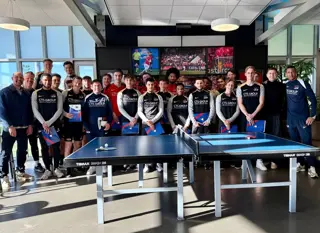
    VVCS meet with players of AZ Alkmaar to discuss gambling. Evgeniy Levchenko is pictured second from far right (Credit: VVCS)

    A changing room culture nobody talks about

    One of the most striking elements of the gambling issue in Dutch football is how normalised it has become in the spaces where players spend much of their time. Arne Nilis, a former professional footballer and son of PSV and Belgium legend Luc Nilis, battled a gambling addiction during his own playing career and now works as a recovery coach and speaker on problem gambling. “From personal experience, I know that online gambling is normalised in dressing rooms,” Nilis has publicly said.

    It is that normalisation that makes the issue difficult to confront – and those who develop a problem rarely feel they can speak openly about it. Levchenko has seen this silence manifest in alarming ways. “You see some of them getting divorced because they spend a lot of money on gambling. Their sporting performance goes down. It’s not only about money – it’s also your mindset, your performance as a footballer.”

    Helplines, captains’ network and education

    VVCS is tackling this issue via different methods. Their education programme visits all of the Netherlands’ first and second division men’s sides. 

    Former professional players are central to this outreach, bringing authenticity that official presentations rarely can. One of those ex-professionals is Glenn Helder, the former Arsenal and Dutch international winger, whose career unravelled under the weight of gambling problems.

    “When Glenn tells his story about losing everything, sleeping in his car, his family breaking apart – players listen. It becomes real.”

    VVCS Imago1013830083
    Players of FC Volendam under a sign that says: ‘How much does gambling cost you? Stop in time. 18+’ (Credit: Imago)

    Alongside this work, the VVCS has also integrated FIFPRO’s Red Button, an anonymous reporting tool of match-fixing approaches, into its club visits.

    The union understands players find it difficult asking for help if it means identifying themselves. The solution, then, is to build a support structure that does not require them to.

    At the heart of the system is a network of psychologists accessible online. Players can make appointments discreetly, with the first conversation typically happening remotely, with the psychologist then assessing whether further support is needed. The entire process is confidential.

    “Some players want to go online and talk to a psychologist without knowing that I or the union knows,” said Levchenko. “And that’s fine. What matters is that they get help.”

    Equally important is the union’s captain ambassador network at Dutch clubs. VVCS empowers them to act as a first point of contact, creating a trusted channel through which players can begin to seek support without the exposure of going directly to an official body.

    “The captains are so important for us to gain confidence, to gain confidentiality, so that young players can freely talk to them first. And when you have that bond, you can show them the way.”

    VVCS Visit
    VVCS visit players of MVV Maastricht (Credit: VVCS)

    Are clubs doing enough?

    Despite the growing problem, Levchenko believes most clubs still underestimate the risks. “Many look away. They say it’s players’ free time, their personal choice. But sooner or later it shows on the pitch.”

    He also questions how effectively betting regulations protect footballers, pointing out loopholes that allow players to gamble on leagues where they still have contacts and inside knowledge.

    “The rules exist, but they are not strict enough. And education often falls on the union alone.”

    For VVCS, the end goal is not control but protection. “We want players to have long careers, healthy lives and strong futures. If we can reduce stigma, educate early and offer real support, we can prevent so much pain.”

    Levchenko is careful not to moralise. “I’m not here to say gambling is evil,” he said. “But players must understand what it can do – not just to money, but to the mind, to performance, to careers.”

    His advice is simple: talk early, listen to those who have lived it, and don’t face it alone. “Addiction is not something you can always fix by yourself. The sooner you speak, the easier it is to stop it becoming destructive.”

    Continue Reading

  • Garrett at China Refrigeration Expo 2026

    Garrett at China Refrigeration Expo 2026

    High-performance cooling technologies set new performance benchmarks for data center and battery energy storage cooling efficiency

    PLYMOUTH, MI. and ROLLE, Switzerland, Apr. 8, 2026 — Garrett Motion Inc. (Nasdaq: GTX), a global leader in differentiated turbocharging and electrification technologies, is showcasing its breakthrough oil-free centrifugal compressors engineered for data centers, battery energy storage systems (BESS), and wider industrial and commercial cooling applications at China Refrigeration Expo 2026 (April 8–10).

    Garrett is launching a comprehensive portfolio of oil-free centrifugal compressors covering cooling demands from 7 to 500 tons (25 to 1,750 kWc), enabling scalable, high-efficiency cooling architectures. The platform combines high-speed centrifugal turbomachinery, oil-free foil bearings and model-based control algorithms, outperforming traditional scroll and screw designs. The portfolio, enabling reduced maintenance demands and superior total cost of ownership, marks Garrett’s expansion into next-generation ultra-low-GWP and high-efficiency industrial cooling solutions for the most demanding operating environments.

    Among the lineup is a new large-capacity, 1,250 kWc compressor for high-performance data-center and industrial cooling systems, making its public debut at the show.

    “Global demand for high-efficiency, low-environmental-impact cooling technologies is accelerating, and China remains one of the fastest-growing HVAC markets,” said Olivier Rabiller, President & CEO of Garrett Motion. “Garrett is leveraging its differentiated technologies, proven in demanding automotive applications, to deliver disruptive solutions that provide unique value for the next generation of HVAC systems.”

    China’s rapidly expanding data center, BESS, and broader industrial and commercial refrigeration sectors are driving demand for higher-performance and eco-responsible thermal solutions. Garrett’s compressors deliver more than 10% real-world energy savings, support ultra-low-GWP refrigerants, and have a compact, retrofit-ready design for rooftop and unitary systems, (modular) chillers, and BESS applications.

    Garrett will also present its oil-free cooling compressor for electric truck and bus applications, which is 50% smaller and 30% lighter than traditional solutions, and delivers efficient, low-vibration thermal management. Launch is planned with Cling for 2027.

    Garrett welcomes OEMs, integrators, and industry partners to visit its booth (B2F86) at China Refrigeration Expo to explore collaboration opportunities across industrial, commercial, and mobility cooling markets.


    About Garrett Motion Inc.

    A differentiated technology leader, Garrett Motion has a 70-year history of innovation in the automotive sector (cars, trucks) and beyond (off-highway equipment, marine, power generators). Its well-recognized expertise in turbocharging has enabled significant reductions in engine size, fuel consumption, and CO2 emissions. Garrett is committed to advancing turbo applications while leveraging its unique technology solutions, such as fuel cell compressors for hydrogen fuel cell vehicles, as well as electric propulsion and thermal management systems for automotive and industrial applications. Garrett has six R&D centers, 13 manufacturing facilities and a team of more than 8,700 employees in more than 20 countries. For more information, please visit www.garrettmotion.com.

    About Garrett Motion China

    Garrett established its presence in China in 1994 and was among the first global companies to introduce turbocharging technology into the country. Headquartered in Shanghai, Garrett has two world-class, advanced manufacturing facilities in Shanghai and Wuhan, as well as 2 innovation centers. The company employs more than 1,000 people, including a China R&D team of over 200 specialists with end-to-end engineering and service capabilities. Garrett boasts lasting partnerships with more than 30 global and Chinese automakers. It offers a comprehensive portfolio of turbocharging technology for gasoline, diesel, natural gas, hybrid and zero emission technology for battery electric vehicles in automotive sector and beyond.


    Continue Reading

  • Shionogi Receives Contract with U.S. Government Through BARDA’s Project BioShield to Enhance National Preparedness for Drug-Resistant Bacterial Threats

    Program Includes Establishing Pharmaceutical Manufacturing in the U.S., Procurement and Development of Treatment for Infections Caused by Biothreat Pathogens


    OSAKA, Japan, April 8, 2026 Shionogi & Co., Ltd. (Head Office: Osaka, Japan; Chief Executive Officer: Isao Teshirogi, Ph.D.; hereafter “Shionogi”) announced that Shionogi Inc., a New Jersey-based subsidiary of Shionogi, has been awarded a contract through the Biomedical Advanced Research and Development Authority’s (BARDA) Project BioShield related to Fetroja® (cefiderocol) as a critical countermeasure against difficult-to-treat Gram-negative bacterial infections and pathogens that present a high-priority biothreat to national health security. The contract is initially funded at $119 million with multiyear options for a total of up to $482 million.


    The contract will bolster the U.S. government’s ability to respond to national health security threats and strengthen domestic manufacturing capabilities and supply readiness by funding Shionogi Inc. to: 

    ·       Establish a U.S. drug product manufacturing site for Fetroja.

    ·       Support procurement of Fetroja.

    ·       Advance Fetroja for the treatment of infections caused by high priority biothreat pathogens, including Burkholderia pseudomallei (melioidosis) and Yersinia pestis (plague).   

    ·       Expand the utility of Fetroja for HABP/VABP in pediatric patients with a U.S. Food and Drug Administration (FDA) Supplemental New Drug Application (sNDA).  


    “Since the 1950s, Shionogi has been researching, developing and partnering to deliver innovative antibiotics to patients worldwide,” said John Keller, Ph.D., Director of the Board, Senior Vice President, R&D Supervisory Unit, Shionogi. “Fetroja, the world’s first siderophore cephalosporin antibiotic, is a prime example of our in-house innovation and this contract is a continuation of the way we collaborate with global government and non-governmental organizations to drive innovation.”


    “Shionogi is proud of our ongoing commitment to combating antimicrobial resistance, as shown by the continued investment in Fetroja since its introduction in 2020, expanding our portfolio with the acquisition of Qpex Biopharma, Inc. in 2023, and further investing in Qpex to establish a new research facility dedicated to advancing antimicrobial research and development in 2025,” said Nathan McCutcheon, MBA, President and CEO, Shionogi Inc. “This contract complements our existing work with the U.S. government and enables us to advance our ongoing expansion efforts in the U.S. at greater pace and scale.”


    This project has been funded with Federal funds from the U.S. Department of Health and Human Services; Administration for Strategic Preparedness and Response; Biomedical Advanced Research and Development Authority, under Contract No. 75A50126C00004.


    BARDA’s Project BioShield accelerates the research, development, procurement and availability of effective medical countermeasures against chemical, biological, radiological and nuclear (CBRN) agents.   


    In the U.S. Fetroja is approved by the FDA for the treatment of hospital-acquired bacterial pneumonia (HABP), ventilator-associated bacterial pneumonia (VABP), and complicated urinary tract infections caused by certain susceptible Gram-negative microorganisms. In Japan cefiderocol is commercially available under the brand name Fetroja® for various infections caused by strains resistant to carbapenem antibiotics. In Europe cefiderocol is commercially available under the brand name Fetcroja® for the treatment of infections due to aerobic Gram-negative organisms in adults with limited treatment options. See Fetroja U.S. full indications and important safety information below in the About Cefiderocol section.


    For Full U.S. Prescribing Information for Fetroja® (cefiderocol), including approved indications and safety information, please visit Fetroja Prescribing Information.


    About Shionogi in Infectious Disease

    Over the past 70 years, Shionogi has discovered and commercialized six novel antibiotics. Today, our R&D story extends beyond antibiotics to include novel medications for HIV and influenza. Our global pipeline includes investigational agents to address global health challenges including antimicrobial resistance, COVID-19, influenza, rare fungal diseases and respiratory syncytial virus.


    As part of our commitment to addressing unmet medical needs, Shionogi partners with several non-governmental organizations to increase equitable access to our medications worldwide. Shionogi and Global Antibiotic Research and Development Partnership (GARDP) have a license and technology transfer agreement and Shionogi and GARDP have a collaboration agreement with the Clinton Health Access Initiative (CHAI) that aim to transform the landscape of access to antibiotics in many low-income countries, most lower middle- and upper middle-income countries, and select high-income countries. 


    Shionogi’s ongoing efforts to address current and emerging health threats include a U.S.-based drug discovery laboratory in the U.S. with Qpex Biopharma, Inc., a Shionogi Group Company. Through Qpex, we are advancing a robust portfolio of potential best-in-class, clinical-stage antimicrobial compounds. Learn more about the Qpex lab here.


    Shionogi ranked #2 among large research-based pharmaceutical companies in the Access to Medicine Foundation’s 2026 Antimicrobial Resistance (AMR) Benchmark, a global assessment of how leading pharmaceutical companies are tackling antimicrobial resistance and expanding responsible access to antibiotics worldwide.


    About Shionogi & Co. Ltd. 

    Shionogi & Co., Ltd. is a 148-year-old global, research-driven pharmaceutical company headquartered in Osaka, Japan, that is dedicated to bringing benefits to patients based on its corporate philosophy of “supplying the best possible medicine to protect the health and wellbeing of the patients we serve.” The company currently markets products in several therapeutic areas including anti-infectives, pain, CNS disorders and cardiovascular diseases. Shionogi’s research and development currently targets two therapeutic areas: infectious diseases and diseases with unmet medical needs in pain/CNS, including Alzheimer’s disease, oncology, rare diseases, and sleep apnea. For more information on Shionogi & Co., Ltd., please visit https://www.shionogi.com/global/en.


    About Cefiderocol

    In the U.S., cefiderocol is commercially available under the brand name Fetroja® and is indicated in patients 18 years of age or older for the treatment of hospital-acquired bacterial pneumonia, ventilator-associated bacterial pneumonia and complicated urinary tract infections caused by certain susceptible Gram-negative microorganisms. In Europe, cefiderocol is commercially available under the brand name Fetcroja® for the treatment of infections due to aerobic Gram-negative organisms in adults with limited treatment options. In Japan, cefiderocol is commercially available under the brand name Fetroja® and received manufacturing and marketing approval from the Ministry of Health, Labour and Welfare for various infections caused by strains resistant to carbapenem antibiotics among sensitive strains of Escherichia coli, Citrobacter species, Klebsiella pneumoniae, Enterobacter species, Serratia marcescens, Proteus species, Morganella morganii, Pseudomonas aeruginosa, Burkholderia species, Stenotrophomonas maltophilia, and Acinetobacter species.  


    U.S. INDICATIONS

    Fetroja® (cefiderocol) is indicated in patients 18 years of age or older for the treatment of complicated urinary tract infections (cUTIs), including pyelonephritis caused by the following susceptible Gram-negative microorganisms: Escherichia coli, Klebsiella pneumoniae, Proteus mirabilis, Pseudomonas aeruginosa, and Enterobacter cloacae complex.  


    Fetroja is indicated in patients 18 years of age or older for the treatment of hospital-acquired bacterial pneumonia and ventilator-associated bacterial pneumonia (HABP/VABP), caused by the following susceptible Gram-negative microorganisms: Acinetobacter baumannii complex, Escherichia coli, Enterobacter cloacae complex, Klebsiella pneumoniae, Pseudomonas aeruginosa, and Serratia marcescens.


    USAGE

    To reduce the development of drug-resistant bacteria and maintain the effectiveness of Fetroja and other antibacterial drugs, Fetroja should be used only to treat or prevent infections that are proven or strongly suspected to be caused by bacteria.


    IMPORTANT SAFETY INFORMATION  

    CONTRAINDICATIONS  

    Fetroja is contraindicated in patients with a known history of severe hypersensitivity to cefiderocol or other beta-lactam antibacterial drugs, or any other component of Fetroja.  


    WARNINGS AND PRECAUTIONS  

    Increase in All-Cause Mortality in Patients with Carbapenem-Resistant Gram-Negative Bacterial Infections  

    An increase in 28-day all-cause mortality was observed in Fetroja-treated nosocomial pneumonia, bloodstream infections, or sepsis patients compared to those treated with best available therapy (BAT) in a clinical study (NCT02714595). Most BAT regimens contained colistin. All-cause mortality remained higher in patients treated with Fetroja than in patients treated with BAT through Day 49.  


    Generally, deaths were in patients with infections caused by Gram-negative organisms, including non-fermenters such as Acinetobacter baumannii complex, Stenotrophomonas maltophilia, and Pseudomonas aeruginosa, and were the result of worsening or complications of infection, or underlying comorbidities. The cause of the increase in mortality has not been established. Closely monitor the clinical response to therapy in patients with cUTI and HABP/VABP.  


    Hypersensitivity Reactions  

    Serious and occasionally fatal hypersensitivity (anaphylactic) reactions and serious skin reactions have been reported in patients receiving beta-lactam antibacterial drugs. Hypersensitivity was observed with Fetroja. Before Fetroja is instituted, inquire about previous hypersensitivity to cephalosporins, penicillins, or other beta-lactam drugs. If an allergic reaction occurs, discontinue Fetroja.  


    Clostridioides difficile-associated Diarrhea (CDAD)  

    CDAD has been reported with nearly all systemic antibacterial agents, including Fetroja. Careful medical history is necessary because CDAD has been reported to occur more than 2 months after the administration of antibacterial agents. If CDAD is suspected or confirmed, antibacterial drugs not directed against C. difficile may need to be discontinued.  


    Seizures and Other Central Nervous System (CNS) Adverse Reactions  

    Cephalosporins, including Fetroja, have been implicated in triggering CNS adverse reactions such as seizures. Encephalopathy, coma, asterixis, and neuromuscular excitability have been reported with cephalosporins, particularly in patients with a history of epilepsy and/or when recommended dosages of cephalosporins were exceeded due to renal impairment. Adjust Fetroja dosing based on creatinine clearance. If focal tremors or seizures occur, evaluate patients to determine whether Fetroja should be discontinued.  


    Development of Drug-Resistant Bacteria  

    Prescribing Fetroja in the absence of a proven or strongly suspected bacterial infection or a prophylactic indication is unlikely to provide benefit to the patient and increases the risk of the development of drug-resistant bacteria.  


    ADVERSE REACTIONS  

    The most common adverse reactions occurring in ≥2% of patients receiving Fetroja in the cUTI trial were: diarrhea (4%), infusion site reactions (4%), constipation (3%), rash (3%), candidiasis (2%), cough (2%), elevations in liver tests (2%), headache (2%), hypokalemia (2%), nausea (2%), and vomiting (2%). The most common adverse reactions occurring in ≥4% of patients receiving Fetroja in the HABP/VABP trial were: elevations in liver tests (16%), hypokalemia (11%), diarrhea (9%), hypomagnesemia (5%), and atrial fibrillation (5%).  


    Please click here for Full U.S. Prescribing Information for Fetroja® (cefiderocol).   


    Forward-Looking Statements   

    This announcement contains forward-looking statements. These statements are based on expectations in light of the information currently available, assumptions that are subject to risks and uncertainties which could cause actual results to differ materially from these statements. Risks and uncertainties include general domestic and international economic conditions such as general industry and market conditions, and changes of interest rate and currency exchange rate. These risks and uncertainties particularly apply with respect to product-related forward-looking statements. Product risks and uncertainties include, but are not limited to, completion and discontinuation of clinical trials; obtaining regulatory approvals; claims and concerns about product safety and efficacy; technological advances; adverse outcome of important litigation; domestic and foreign healthcare reforms and changes of laws and regulations. Also for existing products, there are manufacturing and marketing risks, which include, but are not limited to, inability to build production capacity to meet demand, lack of availability of raw materials and entry of competitive products. The company disclaims any intention or obligation to update or revise any forward-looking statements whether as a result of new information, future events or otherwise.   


    For Further Information, Contact: 


    U.S. Media: ShionogiCommunications@shionogi.com 

    SHIONOGI Website Inquiry Form: https://www.shionogi.com/global/en/contact.html

    SEU Press Office: pressoffice@shionogi.eu 


    Continue Reading

  • Robot Density Surges in Europe, Asia, and Americas

    New World Robotics Data by IFR reveal


    Frankfurt, Apr 08, 2026 — Economies worldwide are prioritising the integration of factory robots, as automation becomes a critical tool for boosting productivity. In the global automation race, the Western European countries reached a record 267 robots per 10,000 employees in the manufacturing industry 2024 – ahead of North America with 204 units and Asia with 131 units. This is according to the World Robotics 2025 report, presented by the International Federation of Robotics (IFR).

    Robot density surges in Europe, Asia and Americas © International Federation of Robotics

    “The robot density metric provides a uniform basis for comparison by relating the total number of robots used in a country to its economic size, as measured by its workforce,” says Takayuki Ito, President of the International Federation of Robotics.

    Robot density by region

    The Western European countries recorded a robot density increase of 3% year-on-year. Eight countries are within the global top 20, which are Germany, Switzerland, The Netherlands, Austria, Italy, Belgium & Luxembourg, France, and Spain. The European Union (EU-27) has a robot density of 231 units, which is above the global average of 132 units per 10,000 employees.

    North America´s robot density rose by 4%. The United States ranks 8th worldwide with 307 units per 10,000 employees. Canada follows with 241 units and Mexico with 62 units.

    Asia has an average robot density of 131 units per 10,000 persons employed in manufacturing – an increase of 11%. The economies of the Republic of Korea, Singapore, Japan and Chinese Taipei are among the top ten most automated worldwide.

    Based on updated labor market data issued by China’s National Bureau of Statistics, China ranks 6th in Asia and 22nd worldwide. It has 166 robots for every 10,000 people employed, which is a year-on-year increase of 17%.

    As a large country with a huge manufacturing workforce, China requires a significant operational stock, with a presence not only in its manufacturing hubs, but also in its rural regions, in order to achieve high robot density. China’s outstanding position in the field of industrial robotics is clearly demonstrated by its impressive operational stock, which is the largest in the world:

    The country counts around 2 million units — approximately 4.5 times more than Japan, which is in second place. The annual installation numbers are impressive too: 54% of all robots installed worldwide in 2024 were deployed in China (295,000 units). 

    Top countries & territories

    The Republic of Korea records the world´s highest robot density with 1,220 robots per 10,000 employees, growing by 7% on average annually since 2019. With its globally recognized electronics industry and a distinct automotive industry, the Korean economy benefits from these two largest customers for industrial robots.

    Singapore follows second, with 818 units. As a small country with a low number of manufacturing employees, Singapore can achieve a high robot density with a relatively small operational stock. The country’s robot density had been growing by 13% annually since 2019.

    Germany ranks third, with 449 units per 10,000 employees. The robot density of Europe´s largest economy has grown by 5% per year since 2019.

    Japan is in fourth place with 446 units. Robot density of the world´s predominant robot manufacturing country had been growing by 5% annually since 2019.

    Sweden (377), Denmark (329), Slovenia (315), the United States (307), and Chinese Taipei (302) and Switzerland (294) complete the top 10.

    About Robot density

    Robot density is the number of operational industrial robots relative to the number of employees. It can cover the whole manufacturing industry or just specific industrial branches. The number of employees serves as a measure of economic size, so the quotient of operational stock over employees puts the operational stock on a uniform base.

    Contact

    International Federation of Robotics
    PRESS OFFICER
    Carsten Heer
    phone +49 (0) 40 822 44 284
    E-Mail: [email protected]

    Downloads

    Continue Reading

  • Turkey’s gold sales deepen bullion slump – Financial Times

    1. Turkey’s gold sales deepen bullion slump  Financial Times
    2. Gold SWOT: Turkey sold or swapped nearly 70 tons of gold in the week to March 27  KITCO
    3. Turkey gold reserves tumble nearly 120 tonnes in two weeks, data shows  Mining.com
    4. Central banks are selling gold to raise cash. Is Turkey’s 50-tonne sale is just the start?  The Financial Express
    5. Gold price forecast amid relentless Turkish Central Bank selling  Invezz

    Continue Reading

  • A Look At Cooper Companies (COO) Valuation As Shares Face Recent Price Pressure

    A Look At Cooper Companies (COO) Valuation As Shares Face Recent Price Pressure

    Track your investments for FREE with Simply Wall St, the portfolio command center trusted by over 7 million individual investors worldwide.

    Cooper Companies (COO) has seen share price pressure recently, with a 0.9% decline over the past day, 2.6% over the past week, about 9% over the past month, and roughly 17% over the past 3 months.

    At a recent close of US$69.66 and a market value of about US$13.7b, the company is built on two main businesses that follow different healthcare spending patterns and risks.

    • CooperVision (CVI) generated revenue of US$2.79b, focused on contact lenses for conditions such as astigmatism, presbyopia, and myopia.

    • CooperSurgical (CSI) contributed US$1.36b, tied to women’s and family health, including fertility products and services, medical devices, contraception, and cryostorage.

    Reported revenue across regions was US$2.75b from the United States and US$2.42b from Europe, with a segment adjustment of US$1.02b that investors may want to understand when comparing totals across disclosures.

    At the bottom line, Cooper Companies reported net income of US$401.4m alongside annual revenue of US$4.15b, with reported annual revenue growth of 5.1% and net income growth of 16.6%.

    See our latest analysis for Cooper Companies.

    Recent trading suggests momentum is fading, with a 30 day share price return of 9% and a 3 month share price return of 17%, while the 3 year total shareholder return of 25.1% and 5 year total shareholder return of 28.7% point to a challenging longer term picture.

    If you are reassessing healthcare exposure after Cooper Companies’ recent moves, this can be a good moment to widen your search to 37 healthcare AI stocks

    With the share price under pressure, net income of US$401.4m on US$4.15b of revenue, and a discount to some valuation estimates, the key question is whether Cooper Companies is still mispriced or if the market already reflects its future growth.

    The most followed narrative puts Cooper Companies’ fair value at $91.80, well above the last close of $69.66, and builds that gap on detailed forecasts for earnings, margins, and buybacks.

    Free cash flow is poised to inflect higher as a multi-year capital expenditure cycle winds down following the ramp-up of MyDAY capacity, with management guiding for approximately $2 billion in free cash flow over the next three years. This improved cash generation, tied to strong cost discipline and revenue momentum, will further benefit shareholders via debt reduction and share repurchases.

    Read the complete narrative.

    Curious what kind of revenue run rate, margin profile, and earnings multiple have to come together to support that valuation gap? The narrative sets out a tight mix of growth, profitability and shrinking share count that has to line up almost perfectly.

    Result: Fair Value of $91.80 (UNDERVALUED)

    Have a read of the narrative in full and understand what’s behind the forecasts.

    However, this hinges on MyDAY’s ramp converting efficiently into sustained sales, and on fertility and PARAGARD demand not weakening further, both of which could derail that upside.

    Find out about the key risks to this Cooper Companies narrative.

    The analyst-led narrative points to a fair value of $91.80, but the current P/E of 33.9x tells a different story. It sits well above peers at 22.2x, the US Medical Equipment average at 26.7x, and even a fair ratio of 28.2x, which suggests less room for error if growth underdelivers.

    That kind of premium can reflect confidence in future earnings, or it can mean you are paying up for expectations that are already well known. Which side of that line do you think Cooper Companies sits on today, and how comfortable are you with the valuation gap if sentiment shifts?

    See what the numbers say about this price — find out in our valuation breakdown.

    NasdaqGS:COO P/E Ratio as at Apr 2026

    If the mixed signals here leave you unsure, that is a useful starting point rather than a problem, so take a closer look at the company’s 3 key rewards

    If Cooper Companies sits on your watchlist, do not stop there. Casting a wider net now can help you spot opportunities others overlook or only notice later.

    This article by Simply Wall St is general in nature. We provide commentary based on historical data and analyst forecasts only using an unbiased methodology and our articles are not intended to be financial advice. It does not constitute a recommendation to buy or sell any stock, and does not take account of your objectives, or your financial situation. We aim to bring you long-term focused analysis driven by fundamental data. Note that our analysis may not factor in the latest price-sensitive company announcements or qualitative material. Simply Wall St has no position in any stocks mentioned.

    Companies discussed in this article include COO.

    Have feedback on this article? Concerned about the content? Get in touch with us directly. Alternatively, email editorial-team@simplywallst.com

    Continue Reading

  • MHI and Algomatic Win Second Place in the NEDO GENIAC‑PRIZE Program– Joint Project to Utilize Generative AI —

    MHI and Algomatic Win Second Place in the NEDO GENIAC‑PRIZE Program– Joint Project to Utilize Generative AI —

    Tokyo, April 8, 2026 – Mitsubishi Heavy Industries, Ltd. (MHI) and Algomatic Co., Ltd. won second prize at GENIAC-PRIZE,(Note1) a prize competition organized by Japan’s New Energy and Industrial Technology Development Organization (NEDO), for a joint project centered on the theme of “Formalizing tacit knowledge in manufacturing.”

    MHI and Algomatic jointly submitted a proposal to formalize tacit knowledge by examining videos of expert and novice workers, using TIG welding(Note2) as an example. TIG welding is a high-quality welding method that underpins a wide range of MHI products, from energy plants to rockets. However, it is difficult to master, with quality and work time varying depending on the skill level of the welder, and skill transfer is an issue. The project proposal involved simply shooting and uploading videos of welding work conducted by expert and novice welders, and having an agent AI automatically analyze the difference. The optimal approach was selected from among multiple analysis modules to extract and illustrate differences in skills, including embodied knowledge, from multiple perspectives. The use of AI allows skills that are difficult to articulate to be systematically accumulated as explicit knowledge, while also enabling technical evaluation and feedback for less skilled welders.

    In the manufacturing industry, experienced workers accumulate skills as tacit knowledge, and the communication and standardization of such knowledge has long been an issue. This project, by comparing the work of expert and novice welders, aims to elucidate embodied knowledge, and is expected to contribute to more efficient transfer of skills, and improve productivity in manufacturing. It is an important first step towards practical application of this technology in the future.

    Based on its Innovative Total Optimization (ITO) corporate strategy, MHI is working to halve lead times and improve business productivity based on a concept of “overall optimization,” while also establishing material targets for the growth strategy of each business from the perspective of domain expansion. Going forward, MHI will pursue the practical application of this technology, and contribute to the transfer of skills and productivity improvement in manufacturing.

    • 1The GENIAC-PRIZE is a prize competition run by NEDO aimed at accelerating the real-world application of generative AI. A total of about 800 million yen is awarded under four themes of “Formalizing tacit knowledge in manufacturing”, “Improving customer support productivity”, “Development of generative AI to streamline administrative review tasks”, and “Development of technologies for risk discovery and mitigation in generative AI”. At the final judging and awards ceremony held on March 24, 2026, 42 projects were awarded prizes from more than 200 entries. See the following website for details.
      https://geniac-prize.nedo.go.jp/(Japanese Only)
    • 2Tungsten Inert Gas (TIG) welding is a type of arc welding using a tungsten electrode and an inert shielding gas such as argon.

    Continue Reading