Category: 3. Business

  • Gold edges higher above $4,100 ahead of delayed US September NFP report

    Gold edges higher above $4,100 ahead of delayed US September NFP report

    Gold price (XAU/USD) attracts some buyers to around $4,110 during the early Asian session on Thursday. The precious metal gains momentum amid the cautious mood and uncertainty over the US economy. Traders will closely monitor the US September Nonfarm Payrolls (NFP) later on Thursday. 

    Heightened economic uncertainty, including a delay in key jobs reports due to a recent government shutdown, has complicated the Federal Reserve’s (Fed) assessment of the labor market. This, in turn, boosts the safe-haven asset like Gold. All eyes will be on the delayed September jobs report, which could provide insight into the health of the US labor market and offer more clues about the path of US interest rates. 

    A weaker-than-expected report might increase the likelihood of a December rate cut and lift the yellow metal. Lower interest rates could reduce the opportunity cost of holding Gold, supporting the non-yielding precious metal.

    On the other hand, waning expectations of a Federal Reserve (Fed) rate cut next month could exert some selling pressure on the non-yielding gold. The minutes from the Federal Open Market Committee’s (FOMC) October 28-29 meeting showed that Fed officials are divided and cautious about the path forward for interest rates. 

    While the committee decided on a 25 basis point (bps) rate cut, it was a divided decision, with some members leaning against another reduction in the December meeting. Markets are now pricing in nearly a 30% chance of a Fed rate cut next month, down from around 60% odds last week, according to the CME FedWatch tool. 

    Gold FAQs

    Gold has played a key role in human’s history as it has been widely used as a store of value and medium of exchange. Currently, apart from its shine and usage for jewelry, the precious metal is widely seen as a safe-haven asset, meaning that it is considered a good investment during turbulent times. Gold is also widely seen as a hedge against inflation and against depreciating currencies as it doesn’t rely on any specific issuer or government.

    Central banks are the biggest Gold holders. In their aim to support their currencies in turbulent times, central banks tend to diversify their reserves and buy Gold to improve the perceived strength of the economy and the currency. High Gold reserves can be a source of trust for a country’s solvency. Central banks added 1,136 tonnes of Gold worth around $70 billion to their reserves in 2022, according to data from the World Gold Council. This is the highest yearly purchase since records began. Central banks from emerging economies such as China, India and Turkey are quickly increasing their Gold reserves.

    Gold has an inverse correlation with the US Dollar and US Treasuries, which are both major reserve and safe-haven assets. When the Dollar depreciates, Gold tends to rise, enabling investors and central banks to diversify their assets in turbulent times. Gold is also inversely correlated with risk assets. A rally in the stock market tends to weaken Gold price, while sell-offs in riskier markets tend to favor the precious metal.

    The price can move due to a wide range of factors. Geopolitical instability or fears of a deep recession can quickly make Gold price escalate due to its safe-haven status. As a yield-less asset, Gold tends to rise with lower interest rates, while higher cost of money usually weighs down on the yellow metal. Still, most moves depend on how the US Dollar (USD) behaves as the asset is priced in dollars (XAU/USD). A strong Dollar tends to keep the price of Gold controlled, whereas a weaker Dollar is likely to push Gold prices up.

    Continue Reading

  • UK consumer sentiment slides ahead of budget, retailers say – Reuters

    1. UK consumer sentiment slides ahead of budget, retailers say  Reuters
    2. Rachel Reeves sparks fear as Brits already ‘living on the edge’ before Budget  Daily Express
    3. UK consumer sentiment slides ahead of budget, retailers say By Reuters  Investing.com
    4. Budget 2025: Household confidence slumps as uncertainty over tax rises fuels financial anxiety  GB News
    5. Consumer confidence slumps to a four-month low as households are gripped by a ‘sense of unease’  This is Money

    Continue Reading

  • Chinese manufacturers’ shift to flexibility leaves gig labourers exposed

    Chinese manufacturers’ shift to flexibility leaves gig labourers exposed

    Every morning, Zhou sifts his way through the crowds of hopeful workers, factory owners and snake oil sellers that throng the open air labour market in Datang, Guangzhou in the hope of finding suitable work.

    Wading into a crowd of hopefuls surrounding a clothing factory manager perched on a bicycle one day last month, he picks up the half-finished lace top on display, weighs it in his hands and shakes his head: the pay per item is too low for a work that intricate.

    Zhou, who declined to give a full name, is one of at least 200mn people in China working in the “gig economy”, a growing, informal sector of the labour market that spans everything from delivery drivers to construction workers. And while China’s fast fashion industry has long relied on nimble day labourers like Zhou, analysts say the increasing use of short-term labour in manufacturing is harming the country’s human capital and putting workers at risk.

    “We’re a new generation of workers with a new generation of thinking,” says Zhou, a wiry and moustachioed worker in his 30s who moved to the garment production hub of Guangzhou eight years ago from the central province of Hubei. Although more flexible, he ends up working 12 hours a day, often seven days a week. “We wake up, work, finish work, sleep: it’s a two-point line.”

    Officially, Chinese companies are only supposed to employ a maximum 10 per cent of their staff on a short-term basis. But analysts say that in recent years, the proportion of temporary workers in the manufacturing sector has crept up, making life more precarious for a huge swath of the workforce and undermining labourers’ ability to learn new skills.

    Textile workshop in Datang. Analysts say that in recent years, the proportion of short-term workers in the manufacturing sector has crept up © Qilai Shen/Bloomberg

    For instance, a study by Peking University academic Zhang Dandan estimated that there were approximately 40mn short-term workers in the manufacturing sector by 2024, or about 31 per cent of the total. Previous surveys from five provinces suggested that the proportion of flexible workers was 20 per cent in 2017, after exhibiting a “significant upward trend” in the previous seven years, she wrote.

    Many Chinese factory workers are employed in long-term, full-time roles and sometimes remain at individual factories for decades. Under such conditions, they are entitled to workplace and health insurance, protection from unfair dismissal, a degree of training and, after a certain period of service, retirement and other benefits.

    Hiring temporary workers, either through contract labour agencies or via open air markets such as the one in Datang, can give factory managers more flexibility and lower costs by reducing payments for training and other benefits. For workers, it can mean greater choice over where to work and, in the short term, higher pay, as many receive bonuses for completing stints at each plant.

    But it also leaves them exposed. Most day workers and many agency labourers do not have contracts or workplace insurance and are clustered in the most low-skilled part of the production process, such as the final assembly of electronics.

    Analysts warn that the funnelling of large numbers of workers into tedious jobs that offer little chance of training or career advancement could create a skills deficit in the future and impede social mobility.

    “Contract labour becomes this very convenient way of just having this flexibility without the risk of any long-term commitments, without the risks of paying compensation, or the difficulties of firing people,” says Dmitri Kessler, founder of the Economic Rights Institute.

    Kessler says that using short-term labourers in electronics manufacturing also allows factories quickly to replace workers hurt when performing physically arduous tasks or exposed to harmful activities. “From our perspective, it’s extremely problematic,” he says.

    31%

    Estimated share of short-term workers in manufacturing sector by 2024

    Moreover, because hourly wages for temporary roles are often higher than for fixed work — though still cost the employer less given reduced additional benefits — many workers end up opting for short-term roles with little prospect of advancement and do not care about the companies they work for.

    “You develop a kind of a dependence on the most base level of employment . . . that has an impact on the productivity of the workers themselves,” says Kessler.

    Jenny Chan, a sociologist at the Hong Kong Polytechnic University, says that some factories can employ as many as 70 per cent of their workers on a temporary basis during peak seasons, although an absolute number is difficult to pin down. “This is definitely a more precarious, very fluid form of labour,” she says.

    The proportion of workers employed on a temporary basis has increased since about 2008, following both the global financial crisis and China’s introduction of a stricter labour law that offers greater protections to full-time workers, she says.

    As the growing usage started to attract greater government scrutiny, some factories turned to the country’s network of vocational schools to send trainees or interns to meet their staffing needs. Renewed scrutiny of the use of vulnerable student workers has only pushed the practice underground, she says. “They have been continuing the practice . . . they just made it more difficult to identify.”

    Mo, a temporary garment factory worker in his 30s who declined to give a full name, says he went through a variety of short-term roles in the services sector before arriving in the Datang garment manufacturing district to find work.

    Nowadays, he adds, outside of the most skilled jobs, lots of employment in China is offered on a flexible basis.

    “You just make yourself OK from one day to the next. But if you want to get married, have a family, you definitely can’t think like this,” Mo says of his life as a day labourer while he peruses yellow posters advertising roles in Datang. “Doing this kind of work is a rotten state of affairs.”

    Continue Reading

  • India aims to train vast pool of poorly skilled workers

    India aims to train vast pool of poorly skilled workers

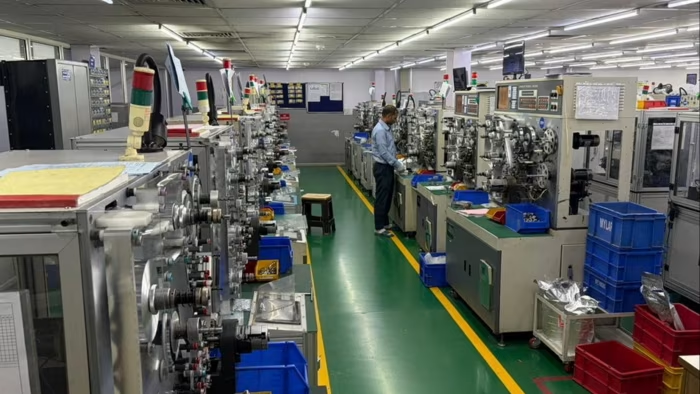
    In a factory complex in Noida, an industrial hub outside New Delhi, Vinod Sharma, the managing director of an Indian electronic component maker, is trying to improve the skills of a small part of India’s vast but poorly trained workforce.

    “We teach people from zero,” says Sharma at Deki Electronics, which supplies capacitors to an array of industries in Asia, Europe and the Middle East.

    Even day-to-day life in the workplace has to be taught, he says. “We have to go to the extent of teaching them how to walk on the stairs, how to walk in the corridor, because they have never been in a building like this,” says Sharma.

    With Prime Minister Narendra Modi focused on boosting Swadeshi — locally made products — as punitive US tariffs squeeze export industries and threaten to put a damper on the world’s fastest-growing large economy, the opportunities for India’s workforce of more than 600mn have rarely been greater.

    Yet government officials and leaders in industries from services to manufacturing to energy lament a critical shortfall of practical training, digital literacy and soft skills.

    Some content could not load. Check your internet connection or browser settings.

    Modi has said that “skill development and employment are crucial needs in India”, at a time when he is luring in multinationals such as Apple, as he seeks to establish India as a manufacturing and services hub to rival the likes of China.

    The UN’s most recent estimates from June have put the country’s population at 1.46bn, comfortably ahead of China’s 1.41bn, with nearly 68 per cent of Indians falling within the working age group of 15 to 64.

    But only 4.4 per cent of its workforce aged 15 to 29 is formally skilled, according to India’s finance ministry, while the skill development ministry acknowledged that only just over half of India’s graduates have the “skills needed by a modern economy”.

    This is “significantly lower than other large Asian economies”, noted a World Bank report last year, adding that “although India’s education system is of high quality, the supply of skilled labour is mediocre”.

    300mn

    Farm and non-farm workers in need of more training

    According to the International Labour Organization, India’s “industry involvement in training is still low” with only 36 per cent of companies participating in upskilling programmes, against 85 per cent in China, 52 per cent in Russia, and 51 per cent in Brazil.

    This year Modi kicked off several training and internship schemes, including a flagship government project with India’s top 500 public and private companies — including Jindal, Reliance and Tata — aimed at addressing the yawning skills gap. It has a five-year goal of placing 10mn young workers in industries including energy, automotive, food and banking.

    Anil Bahuguna, chief of skill development at state-run energy company ONGC, which is participating in one of the government’s programmes, says that when it comes to oil and gas, the available labour force has “low technical exposure to field machinery and this adversely impacts the time and cost of a project”.

    As India “navigates rapid technological and economic change, skills gaps, cited by 65 per cent of organisations as a major barrier, threaten to slow progress”, the government said when it rolled out “India Skills Accelerator” this year, the latest in a string of training programmes aimed at boosting employability.

    These programmes form part of a drive to move away from India’s traditional placement landscape where workers used to get basic training through jobs in small and medium-sized enterprises.

    Some content could not load. Check your internet connection or browser settings.

    “India’s skilling infrastructure has always been very, very small,” says Pronab Sen, an economist and former principal economic adviser to India’s Planning Commission, adding that as the economy expands and grows more sophisticated, “we need to meet the demands of the organised sector, the big companies”.

    Abhinav Baliyan, managing director of Educator Extraordinaire, a company that runs vocational training centres in Jharkhand, says India has been unable to cash in fully on its “demographic dividend” of a vast growing working-age population.

    This is partly because of a poorly skilled workforce. Four-in-five employers have reported difficulty finding the skilled talent they need in 2025, says recruiter Manpower, more than the global average, even as India has a higher demand for workers with IT and data skills than in China and Singapore.

    While the Confederation of Indian Industry estimates that 10mn to 12mn young people enter the labour market annually, some 300mn farm and non-farm workers are already in need of being skilled, reskilled or upskilled to “achieve higher productivity”, says Manish Sabharwal of recruitment company Teamlease.

    But the growing population could also put further pressure on fast-skilling the workforce. For Sourav Roy, chief of corporate social responsibility at Tata Steel, “there are more people that need skills than what we can actually offer in general” in India.

    Rituparna Chakraborty, a board member at the Goa Institute of Management, says: “I don’t think we’ll ever have enough skilled people because India is in a position where more and more jobs will come dragging more people into the workforce, which means skilled workforce demand will keep on going up.”

    Online skilling platform upGrad’s chair Ronnie Screwvala says that at the moment, India has a large pool of well-trained engineers and graduate-level workers in technology and computer sciences, but not enough focus has been put on practical skills. Indians now need training that “can offer immediate relevance”.

    That much is clear to Ayush Tiwari, a graduate in biotechnology and beneficiary of the latest government programme. He is now an intern at the waste management unit of listed chemical company DCM Shriram in the state of Uttar Pradesh: “In the past six months, I have learned practically what I yearned for when I was studying.”

    Back in Noida, 18-year-old Sachin Kumar, who travelled 700km to take a placement at what Deki calls its “Garden of Knowledge” training centre, is one beneficiary of India’s latest push on skills development. “I am not just learning to be a machine operator, but pretty much how to do anything at all,” he says.

    Continue Reading

  • South Korean banks take the lead to bridge gender inequalities

    South Korean banks take the lead to bridge gender inequalities

    MJ Song, a South Korean working mother with a four-year-old son, considers herself lucky because she has been able to work for one company for more than 15 years without her career being hindered by starting a family.

    Her employer, a unit of Shinhan Financial Group, offers generous pay and benefits such as baby bonuses, childcare allowances and flexible working, allowing her to balance work and family life in a country notorious for long working hours and rigid corporate cultures.

    Song took two years of maternity leave after her son was born then worked for four hours a day for a year, receiving half her normal salary. Shinhan also allows women to work two hours fewer a day during pregnancy and employees with children in their first two years of primary school to start work an hour later.

    “I am satisfied with my job as the salary is high with a lot of benefits for working moms,” says Song. “The workload is heavy, but my PC gets automatically turned off after 6pm. It has been relatively easy to balance work and family life, while most of my friends have quit their jobs after childbirth.”

    Korean financial groups have been one of the most coveted workplaces among female graduates, thanks to their competitive pay and childcare-related perks, despite technology causing wider cuts to the industry’s workforce.

    Financial groups are also notable for their relatively high number of female workers in the male-dominated, manufacturing-driven economy. Female workers account for more than half of the financial sector workforce, about double the average in South Korea’s 500 biggest companies by sales, according to research group Leaders Index.

    Labour expert Bae Kyu-shik says: “Financial companies have become good employers for women, thanks to their high pay and strong internal welfare benefits.”

    Some content could not load. Check your internet connection or browser settings.

    Women boast an average 14.5 years of service at Korean banks versus men’s 15.4 years, while women’s annual salaries average Won96.9mn ($66,100), compared with Won128.4mn for men, Leaders Index data shows. Similar to the manufacturing sector, most Korean bank staff retire in their mid-fifties, but they usually receive generous severance pay and packages that amount to several years’ salary if they retire early.

    Foreign lenders in Korea, such as Citibank and Standard Chartered, also offer flexible work for parents with young children, reduced hours for pregnant women and longer paternity leave. They also offer baby bonuses, although these are less generous than those from local counterparts.

    As the country addresses the world’s lowest fertility rate of 0.75 per cent, Korean banks have been at the forefront of the government-led initiative to solve it by offering various childcare benefits. The demographic crisis poses a huge challenge for sustaining economic growth and providing pensions and healthcare for an ageing population.

    But economic and cultural discrimination means many Korean women remain reluctant to marry and have children. South Korea has the highest gender pay gap among rich countries, with women paid almost a third less than men, despite their above-average level of tertiary education, reports the OECD.

    South Korea’s male-oriented corporate culture and working hours — some of the longest in the OECD — remain a barrier to women’s labour participation, with more than 15 per cent of married women quitting jobs after having children, according to government data, while those who keep working struggle to progress in their careers.

    The government has been spending heavily to counter the low birth rate, with financial groups going beyond national requirements by offering baby bonuses worth tens of thousands of dollars and up to three years of maternity leave, as well as flexible working for parents with children aged below 10 at school. Statutory leave is up to a year and a half.

    Banks such as KB Kookmin and Woori last year started offering up to three years of “parental resignation” programmes for employees with children aged below seven, on top of a two-year childcare leave, with the guarantee of returning to the same position.

    There are limits, however. Despite the government policy to support paternity leave — a father with a child under eight can take up to a year and a half off — men taking the leave remains at a single-digit rate at most banks because of social norms that still regard childcare and household duties as a woman’s job.

    Some content could not load. Check your internet connection or browser settings.

    Despite the high proportion of female workers, few are at executive level in the financial sector, as most women work in retail banking, rather than higher-margin businesses such as corporate and investment banking, which are seen as better for promotions.

    “There are equal opportunities for hiring, but they are not equal positions,” says Park Ju-geun, head of Leaders Index, noting there is still a 30 per cent pay gap in banking. “Women still don’t have many opportunities for promotions as they are barred from key operations like strategic planning, sales, marketing and treasury departments.”

    The number of female executives is increasing after legislation in 2022 banned single-gender boards at companies with assets of more than Won2tn. But women still hold only 12.7 per cent of executive positions at South Korean banks, although this is higher than the 8.1 per cent average across the country’s 500 biggest companies, according to Leaders Index.

    There are signs of improvement, however. Internet-only lender Toss Bank and the South Korean unit of Citibank both have female chief executives, while some banks offer leadership and mentoring programmes for women.

    “Women are often hired for supplementary positions, so most fail to move up the ladder,” says Oh Hee-jung, deputy head of the Korean Finance & Service Workers’ Union. “Like in other sectors, the glass ceiling still exists in the financial sector, with most women struggling to shatter it.”

    Continue Reading

  • Mazdutide 9 mg Achieves Up to 20.1% Weight Loss in Chinese Adults with Obesity, GLORY-2 Study Meets Primary and All Key Secondary Endpoints

    SAN FRANCISCO and SUZHOU, China, Nov. 19, 2025 /PRNewswire/ — Innovent Biologics, Inc. (“Innovent”) (HKEX: 01801), a world-class biopharmaceutical company that develops, manufactures and commercializes high-quality medicines for the treatment of oncologic, autoimmune, cardiovascular and metabolic, and ophthalmologic diseases, announces that the Phase 3 clinical trial of mazdutide, a first-in-class dual glucagon (GCG)/glucagon-like peptide-1 (GLP-1) receptor agonist, in Chinese adults with obesity (GLORY-2) met the primary endpoints and all key secondary endpoints. Innovent plans to submit the new drug application (NDA) of mazdutide 9 mg for weight management to the Center for Drug Evaluation (CDE) of China’s National Medical Products Administration (NMPA) in the near term.

    GLORY-2 (NCT06164873) is a Phase 3 clinical study to evaluate the efficacy and safety of mazdutide 9 mg combined with lifestyle intervention versus placebo in Chinese adults with obesity (BMI ≥30 kg/m²). The study enrolled 462 participants (including 16% with type 2 diabetes), randomized in a 2:1 ratio to receive mazdutide 9 mg group or placebo in the 60-week double-blind treatment period (mean baseline weight: 94.0 kg; mean BMI: 34.3 kg/m²).

    During the treatment period, participants in the mazdutide group exhibited continuous weight loss, with no plateau observed in Week 60. At Week 60, the mazdutide 9 mg group achieved a mean weight reduction of 18.55%, compared to 3.02% in the placebo group. 44.0% of participants in the mazdutide 9 mg group achieved a weight reduction of 20% or more, versus 2.6% in the placebo group (P<0.0001 for all comparisons). The key secondary endpoints demonstrated that among participants without type 2 diabetes, the mazdutide 9 mg group showed a mean weight reduction of 20.08% at Week 60 (placebo: 2.81%), with 48.7% of participants achieving a weight reduction of 20% or more (placebo: 3.1%; P<0.0001).

    Furthermore, all key secondary endpoints of the study were met, including other body weight endpoints, waist circumference, systolic blood pressure, triglycerides, non-HDL cholesterol, LDL cholesterol, and serum uric acid levels. Mazdutide 9 mg demonstrated superiority to placebo in all the above weight-loss and cardiometabolic endpoints.

    This study also evaluated liver fat content using MRI-PDFF in a subset of participants. Among participants (without type 2 diabetes) with baseline liver fat content ≥10%, the mean percent change in liver fat content from baseline to week 60 was -71.9% in the mazdutide 9 mg group compared with 5.1% in the placebo group.

    Mazdutide 9 mg demonstrated favorable tolerability and safety profiles, with no new safety signals identified. The majority of gastrointestinal adverse events were mild to moderate in severity and transient in nature. The proportion of participants who discontinued treatment prematurely due to adverse events was 2.9% in the mazdutide 9 mg group and 0% in the placebo group.

    Professor Linong Ji, the leading principal investigator of the study, Peking University People’s Hospital, stated, “As a chronic disease with a complex etiology, obesity requires public awareness of long-term treatment and management. China faces a high prevalence of obesity, with obese individuals bearing a significant burden of cardiometabolic diseases. Those with a BMI exceeding 32.5 kg/m², often experience an even greater cardiometabolic burden. This patient population requires special attention in clinical weight management and metabolic syndrome prevention. According to current Chinese clinical guidelines, metabolic surgery is often considered a first-line treatment for such patients. Extensive clinical evidence on GLP-1 receptor agonists demonstrates that the weight-loss efficacy of these drugs is dose-dependent. Therefore, developing pharmacological treatments tailored to moderate-to-severe obesity could offer new therapeutic options for this group. The investigators of this study and I are delighted that this study met both its primary endpoints and all key secondary endpoints. Mazdutide 9 mg has once again demonstrated outstanding weight-loss efficacy, multiple metabolic benefits and favorable safety. We hope mazdutide 9 mg will successfully achieve regulatory approval, supporting stratified weight management for China’s obese population and enabling more personalized treatment approaches.”

    Dr. Lei Qian, Chief R&D Officer of General Biomedicine of Innovent, stated, “Mazdutide 9 mg is currently the only GLP-1 receptor agonist that achieves over 20% weight loss in obese adults without T2D after 1 year of treatment with just a 2-step dose titration. Its development provides evidence-based medical support for effective weight management in Chinese patients with moderate-to-severe obesity, offering an alternative to metabolic surgery. We plan to submit a supplemental application for mazdutide 9 mg in the near future, aiming to deliver this innovative treatment to patients as soon as possible. Concurrently, the lifecycle management plan for mazdutide continues to expand its boundaries, exploring further therapeutic potentials. We are developing mazdutide for other indications on the basis of scientific evidence and unmet medical needs. Innovent will continue to strategically build our next-generation product pipeline in the cardiovascular and metabolic (CVM) field, and help people’s pursuit of a healthy life.”

    Mazdutide has earned widespread recognition supported by robust data set. Its Phase 2 clinical trial in Chinese subjects with overweight or obesity was selected by Nature Communications as one of the 50 most important studies in translational and clinical research and highlighted as Editor’s Choice. Additionally, mazdutide was listed among the “Top 10 Most Anticipated Drug Launches of 2025” by the FIERCE Pharma.

    Furthermore, clinical findings on mazdutide have been featured in top-tier international journals such as The New England Journal of Medicine, Nature Communications, Diabetes Care, and eClinicalMedicine, as well as presented at leading scientific conferences including the American Diabetes Association (ADA) and the European Association for the Study of Diabetes (EASD) annual meetings. Notably, mazdutide is the first innovative drug in China’s endocrinology and metabolism field to have clinical results published in The New England Journal of Medicine, underscoring its significant clinical value.

    About Mazdutide

    Innovent entered into an exclusive license agreement with Eli Lilly and Company (Lilly) for the development and potential commercialization of mazdutide, a dual GCG/GLP-1 receptor agonist, in China. As a mammalian oxyntomodulin (OXM) analogue, in addition to the effects of GLP-1 receptor agonists on promoting insulin secretion, lowering blood glucose and reducing body weight, mazdutide may also increase energy expenditure and improve hepatic fat metabolism through the activation of glucagon receptor. Mazdutide has demonstrated excellent weight loss and glucose-lowering effects in clinical studies, as well as reducing waist circumference, blood lipids, blood pressure, serum uric acid, liver enzymes, liver fat content and improved insulin sensitivity.

    Innovent has currently conducted or completed seven Phase 3 clinical studies of mazdutide, including:

    • GLORY-1: A Phase 3 clinical study conducted in Chinese adults with overweight of obesity;
    • GLORY-2: A Phase 3 clinical study conducted in Chinese adults with moderately to severely obesity;
    • DREAMS-1: A Phase 3 clinical study conducted in Chinese adults with untreated type 2 diabetes;
    • DREAMS-2: A Phase 3 clinical study comparing mazdutide versus dulaglutide in Chinese adults with type 2 diabetes who have poor glycemia control with oral medication;
    • DREAMS-3: A Phase 3 clinical study comparing mazdutide versus semaglutide in Chinese adults with type 2 diabetes and obesity;
    • GLORY-3: A Phase 3 clinical study comparing mazdutide versus semaglutide 2.4mg in Chinese adults with overweight of obesity accompanied metabolic-associated fatty liver disease (MAFLD);
    • GLORY-OSA: A Phase 3 trial in Chinese participants with obstructive sleep apnea (OSA) and obesity;

    Among these, the first five Phase 3 clinical studies have all met their primary endpoints, while the remaining two Phase 3 studies are still ongoing.

    In addition, several clinical studies of mazdutide are ongoing in adolescents with obesity, patients with metabolic dysfunction-associated steatohepatitis (MASH),heart failure with preserved ejection fraction (HFpEF) etc.

    Mazdutide has received NMPA approval for two indications:

    First Indication: As an adjunct to a reduced-calorie diet and increased physical activity for chronic weight management in adult patients with an initial Body Mass Index (BMI) of:

    • BMI ≥ 28 kg/m² (obesity); or
    • BMI ≥ 24 kg/m² (overweight) in the presence of at least one weight-related comorbid condition (e.g., hyperglycemia, hypertension, dyslipidemia, fatty liver, or obstructive sleep apnea syndrome).

    Second Indication: For glycemic control in adults with type 2 diabetes.

    Monotherapy:

    For adults with type 2 diabetes who have inadequate glycemic control despite diet and exercise interventions.

    Combination Therapy:

    For adults with T2D who still have poor glycemic control despite:

    • Diet and exercise, plus Metformin and/or sulfonylureas;
    • Diet and exercise, plus Metformin and/or SGLT2 inhibitors (SGLT2i).

    About Innovent Biologics

    Innovent is a leading biopharmaceutical company founded in 2011 with the mission to empower patients worldwide with affordable, high-quality biopharmaceuticals. The company discovers, develops, manufactures and commercializes innovative medicines that target some of the most intractable diseases. Its pioneering therapies treat cancer, cardiovascular and metabolic, autoimmune and eye diseases. Innovent has launched 16 products in the market. It has 2 new drug applications under regulatory review, 4 assets in Phase 3 or pivotal clinical trials and 15 more molecules in early clinical stage. Innovent partners with over 30 global healthcare companies, including Eli Lilly, Roche, Takeda, Sanofi, Incyte, LG Chem and MD Anderson Cancer Center.

    Guided by the motto, “Start with Integrity, Succeed through Action” Innovent maintains the highest standard of industry practices and works collaboratively to advance the biopharmaceutical industry so that first-rate pharmaceutical drugs can become widely accessible. For more information, visit www.innoventbio.com, or follow Innovent on Facebook and LinkedIn.

    Statement: Innovent does not recommend the use of any unapproved drug (s)/indication (s).

    Forward-looking statement

    This news release may contain certain forward-looking statements that are, by their nature, subject to significant risks and uncertainties. The words “anticipate”, “believe”, “estimate”, “expect”, “intend” and similar expressions, as they relate to Innovent, are intended to identify certain of such forward-looking statements. Innovent does not intend to update these forward-looking statements regularly.

    These forward-looking statements are based on the existing beliefs, assumptions, expectations, estimates, projections and understandings of the management of Innovent with respect to future events at the time these statements are made. These statements are not a guarantee of future developments and are subject to risks, uncertainties and other factors, some of which are beyond Innovent’s control and are difficult to predict. Consequently, actual results may differ materially from information contained in the forward-looking statements as a result of future changes or developments in our business, Innovent’s competitive environment and political, economic, legal and social conditions.

    Innovent, the Directors and the employees of Innovent assume (a) no obligation to correct or update the forward-looking statements contained in this site; and (b) no liability in the event that any of the forward-looking statements does not materialize or turn out to be incorrect.

    SOURCE Innovent Biologics

    Continue Reading

  • Lenovo Delivers Record Quarterly Results, Marking Significant Progress in Hybrid AI

    Lenovo Delivers Record Quarterly Results, Marking Significant Progress in Hybrid AI

    November 20, 2025 – Lenovo Group Limited (HKSE: 992) (ADR: LNVGY), together with its subsidiaries (‘the Group’), today reported record results for the second quarter of fiscal year 2025/26, with overall group revenue reaching an all-time high of US$20.5 billion, up 15% year-on-year. Adjusted net income[1] grew 25% year-on-year to US$512 million, and adjusted net income margin expanded to 2.5%, driven by higher revenues. Together, these reflect the strength of the Group’s operational performance as they exclude the impact of non-cash fair value loss on warrants, notional interest on convertible bonds, and other non-cash items.

    The Group delivered double-digit year-on-year revenue growth across all main business groups and sales geographies. The AI-related revenue mix increased by 13 percentage points year-on-year, accounting for 30% of the Group’s total revenue this quarter. The growth was driven by high-double-digit revenue growth in AI Servers and triple-digit revenue growth in AI PCs, AI smartphones, and AI Services.

    These results are a testament to the Group’s clear strategy, operational excellence, and relentless innovation, reflecting not only the strength of its business today but also the resilience of its unique ‘Global/Local’ model and the vision of a company built to lead in the AI era. With the initial wave of infrastructure build-out in the AI era, the trend is evolving toward a more human- and enterprise-centric phase, as large language models become commoditized and user priorities shift toward personalization and private domain. This evolution is unlocking new opportunities across devices, hybrid infrastructure, and tailored solutions, and enabling the Group to expand its leadership in Personal AI and further deliver its value proposition in Enterprise AI.

    As the macroeconomic environment stabilizes, Lenovo remains committed to executing its Hybrid AI strategy and investing in innovation to deliver sustainable long-term returns to shareholders and make AI truly personalized.

    Lenovo’s Board of Directors declared an interim dividend of 8.50 HK cents per share.

    Chairman and CEO quote – Yuanqing Yang:

    “Capitalizing on the AI democratization trend, and thanks to our clear strategy, operational excellence and relentless innovation, Lenovo delivered another quarter of record performance, while making important progress in both Personal AI and Enterprise AI. We will continue to leverage our unique Global/Local model to navigate uncertainties and capture the tremendous Hybrid AI opportunities, and in doing so not only deliver sustainable long-term returns to our shareholders, but also make AI truly personalized for every individual and every enterprise.”

    Financial Highlights:

    Personal AI: Innovation strengthened market leadership, enriching ecosystem

    Lenovo is meeting growing consumer demand for hyper-personalization with its Personal AI strategy, ‘One Personal AI, Multiple Devices’. Launching globally at Tech World on January 6, 2026, Lenovo’s Personal AI super agent will seamlessly orchestrate across wearable and ambient devices to perceive, learn, and act like its user – ultimately becoming a true Personal AI Twin.

     Intelligent Devices Group (IDG) as the core engine for Lenovo’s Personal AI strategy, delivered strong Q2 FY25/26 results:

    • Overall IDG revenue grew nearly 12% year-on-year to US$15.1
    • PC market leadership was strengthened with a record 25.6% market share, further widening the lead over the number two player.
    • The PCs and smart devices business maintained its industry-leading profitability, driven by solid performance from high-margin segments.
    • AI PC penetration accelerated, accounting for 33% of all Lenovo PC shipments. Lenovo ranks #1 globally in the Windows AI PC segment with a 31.1% market share. Motorola smartphones delivered record volumes.
    • AI device momentum is particularly encouraging, with revenue mix from AI devices up 17 points year-on-year to 36%.

    Enterprise AI: Unleashing Hybrid AI Advantage, from infrastructure to solutions and services

    Lenovo is advancing its Enterprise AI strategy to help customers turn data and knowledge into actionable insights and value. The Group is well-positioned to drive Enterprise AI transformation and develop an AI Twin for customers. The shift from cloud-based AI training to on-premises and edge inferencing is expected to fuel greater growth in AI devices and AI applications, further expanding the company’s total addressable market.

     Infrastructure Solutions Group (ISG) as the key driver of Lenovo’s hybrid infrastructure, delivered strong growth in Q2 FY25/26:

    • Revenue grew 24% year-on-year to US$4.1 billion through the continued strong execution of its CSP (Cloud Service Provider) and Enterprise SMB dual strategy.
    • CSP business delivered record fiscal Q2 revenue.
    • The AI infrastructure business revenue achieved high double-digit year-on-year growth with a strong
    • Revenue from industry-leading liquid cooling solutions grew 154% year-on-year.
    • By optimizing Enterprise SMB business models to better serve the distinct needs of enterprise and SMB customers, the Group is confident that the infrastructure business will return to profitable growth soon.

     Solutions and Services Group (SSG) delivered solid growth in Q2 FY25/26, providing solutions and services for enterprises that leverage the Lenovo Hybrid AI Advantage:

    • SSG’s overall revenue grew 18% year-on-year to US$2.6 billion – marking 18 consecutive quarters of year-on-year revenue growth.
    • Operating margin was up 1.9 points year-on-year to over 22%.
    • Revenue from Support Services accelerated with double-digit year-on-year growth; Managed services and Projects and Solutions revenue mix was up 1 point year-on-year to almost 60% of SSG’s total revenue.
    • SSG is unleashing the power of Lenovo Hybrid AI Advantage, combining the AI factory, AI services, and the AI library of repeatable, scalable AI solutions for selected vertical industries and horizontal functions.

    Corporate and ESG highlights

    Achievements, announcements, and notable commitments over the past quarter include:

    [1] Note on adjusted net income:Adjusted measure was defined as financial metric by excluding net fair value changes on financial assets at fair value through profit or loss, amortization of intangible assets resulting from mergers and acquisitions, impairment and write-off of intangible assets, dilution gain on interest in an associate, fair value change on derivative financial liabilities relating to warrants, and notional interest on convertible bonds; and the corresponding income tax effects, if any.

    About Lenovo

    Lenovo is a US$69 billion revenue global technology powerhouse, ranked #196 in the Fortune Global 500, and serving millions of customers every day in 180 markets. Focused on a bold vision to deliver Smarter Technology for All, Lenovo has built on its success as the world’s largest PC company with a full-stack portfolio of AI-enabled, AI-ready, and AI-optimized devices (PCs, workstations, smartphones, tablets), infrastructure (server, storage, edge, high performance computing and software defined infrastructure), software, solutions, and services. Lenovo’s continued investment in world-changing innovation is building a more equitable, trustworthy, and smarter future for everyone, everywhere. Lenovo is listed on the Hong Kong stock exchange under Lenovo Group Limited (HKSE: 992) (ADR: LNVGY). To find out more visit https://www.lenovo.com, and read about the latest news via our StoryHub. 

    Continue Reading

  • Asana Launches Asana Gov, a Secure Platform for Delivering Mission-Critical Programs • Asana, Inc.

    Asana Launches Asana Gov, a Secure Platform for Delivering Mission-Critical Programs • Asana, Inc.

    Purpose-built work management platform to help agencies manage complex programs, meet compliance standards, and collaborate across teams securely

    SAN FRANCISCO–(BUSINESS WIRE)–Nov. 19, 2025–
    Asana, Inc. (NYSE: ASAN), a leading work management platform for human + AI collaboration, today announced Asana Gov, a FedRAMP-in-process platform designed to help government agencies, regulated industries, and public sector partners plan, execute, and collaborate on mission-critical work with clarity and accountability – while meeting strict federal security and compliance standards.

    The stakes in government work are high—measured in mission success and public trust. Yet many agencies still rely on siloed data, manual workflows, and legacy systems that slow program execution and make collaboration harder. Asana Gov connects teams, tools, and mission objectives in one secure workspace—breaking down silos, driving change, and making it easy to execute on mandates securely and in compliance with federal standards.

    How Asana Gov Supports Mission-Critical Work

    Designed for government organizations with multiple departments and programs, Asana Gov uses the Asana Work Graph® to map who is doing what work, by when, how, and why—giving teams a clear, connected view of work and ownership across initiatives. With this context, agencies can:

    • Turn goals into action: Connect all work to strategic goals with clear owners, timelines, and progress tracking, so teams can see how their efforts ladder up across departments and programs.

    • Enable cross-department execution: Manage work across agency teams, such as through work intake and program management, across departments and delivery teams in one secure workspace built for collaboration and compliance.

    • Respond quickly to change: Adapt to new mandates, leadership shifts, or evolving needs with real-time dashboards and AI-powered updates that surface progress, risks, and dependencies—so teams can stay aligned and keep programs on track.

    “Government work is among the most consequential in the world, yet the tools public servants rely on often slow them down,” said Arnab Bose, Chief Product Officer at Asana. “Asana Gov is built to remove that barrier. It empowers teams to not just manage work, but to execute on their mission with the clarity, speed, and security today’s public sector demands. When we free public servants from administrative complexity, they can focus on what truly matters: serving the public.”

    Built for Secure, Scalable Collaboration

    Asana Gov is built to meet federal security standards and is targeted to operate in a FedRAMP Moderate environment (currently designated “In Process”). Cloud-based and quick to deploy, it helps agencies plan, track, and report on work with shared visibility and built-in safeguards such as role-based access controls, audit trails, and multi-factor authentication. Teams can start small—with a single workflow or project—and expand securely across departments and programs as adoption and use cases grow.

    Expert Perspectives

    “The hardest part of innovation in government isn’t always technology—it’s getting buy-in across leadership, IT, and program offices. A FedRAMP-compliant, easy-to-use platform like Asana Gov bridges that divide. It gives IT leaders the security they need while giving employees a tool they’ll actually adopt, turning modernization from aspiration into measurable progress.”

    Jacques Newgen, Chief Service Delivery Officer of Definitive Innovative Solutions; Founder and CEO of Fluidity Concepts LLC.

    “Modern government isn’t just about doing the work—it’s about building public trust. When work, goals, and outcomes are visible in one place like Asana, it empowers every government employee to tell the story of how their day-to-day work delivers for citizens and society.”

    Paul Kruchoski, Director, Guidehouse.

    Availability

    Asana Gov is expected to be available beginning mid-December 2025 to U.S. federal, state, and local government agencies, as well as government contractors, education institutions, and global organizations in regulated industries. It’s listed on the FedRAMP Marketplace as “In Process” and is expected to be available via GSA Schedule contracts through partners including Carahsoft. In addition to platform licenses, rollout support and flexible plans tailored to government needs will be available. To learn more or request access for your agency or organization, visit asana.com/product/asana-gov.

    About Asana

    Asana is a leading work management platform for human + AI collaboration. Over 170,000 customers like Accenture, Amazon, Anthropic and Suzuki rely on Asana to align teams and accelerate organizational impact. Whether it’s managing strategic initiatives, cross-functional programs, or company-wide goals, Asana helps organizations bring clarity to complexity—turning plans into action with AI working alongside teams every step of the way. To learn more, visit www.asana.com.

    Press Inquiries:
    Claire Cameron-Johnson
    press@asana.com

    Source: Asana, Inc.

    Continue Reading

  • Nvidia shares jump after revenue and outlook beat estimates

    Nvidia shares jump after revenue and outlook beat estimates

    Danielle KayeBusiness reporter

    Reuters Jensen is wearing a black leather jacket. He is gesturing with both hands while standing next to a large, computer server or data centre hardware on a dark stage. The equipment features metallic panels and visible internal components, suggesting advanced computing technology.Reuters

    Chief executive Jensen Huang said sales for some of Nvidia’s AI components were “off the charts”

    Chip giant Nvidia beat Wall Street’s expectations for revenue and upcoming sales, easing investor concerns about heavy artificial intelligence (AI) spending that have unsettled markets.

    In its quarterly earnings report on Wednesday, the firm said revenue for the three months to October jumped 62% to $57bn, driven by demand for its chips used in AI data centres. Sales from that division rose 66% to more than $51bn.

    Fourth-quarter sales forecasts in the range of $65bn also topped estimates, sending shares in Nvidia about 4% higher in after-hours trading.

    Nvidia, the world’s most valuable company, is seen as a bellwether for the AI boom. The chip-maker’s results could inform market sentiment.

    Chief executive Jensen Huang said in a statement that sales of its AI Blackwell systems were “off the charts” and that “cloud GPUs [graphics processing units] are sold out”.

    “There’s been a lot of talk about an AI bubble. From our vantage point, we see something very different,” he said, on a call with analysts.

    “We excel at every phase of AI.”

    The chip-maker’s quarterly report garnered even more attention than usual on Wall Street amid mounting concern that AI stocks are overvalued – fears that may persist despite Nvidia’s blockbuster results.

    Those fears had fueled four consecutive daily drops in the S&P 500 index leading up to Wednesday, as questions swirl about returns on AI investments. The benchmark index has fallen nearly 3% so far in November.

    The bar was high heading into Nvidia’s results.

    Adam Turnquist, chief technical strategist for LPL Financial, said the question was not whether the company would beat expectations, “but by how much”.

    “While AI valuations are dominating the news feeds, Nvidia is going about its business in style,” said Matt Britzman, senior equity analyst at Hargreaves Lansdown.

    He said valuations for certain areas of the AI sector “needed to take a breather, but Nvidia is not in that camp”.

    Mr Huang had previously said he expected $500bn in AI chip orders through next year. Investors were looking for details about when the company expects those revenues will come to fruition, and how it plans to fulfill the orders.

    Colette Kress, Nvidia’s chief financial officer, told analysts the company would “probably” be taking more orders on top of the $500bn that had already been announced.

    But she also expressed disappointment about regulatory limits that stymie the company’s ability to export its chips to China, saying the US “must win the support of every developer” including those in China.

    She said Nvidia was “committed to continued engagement” with the American and Chinese governments.

    Earlier Wednesday at the US-Saudi Investment Forum in Washington, Mr Huang joined Elon Musk to announce a massive data centre complex in Saudi Arabia that will have Musk’s AI company, xAI, as its first customer.

    The facility will be outfitted with hundreds of thousands of Nvidia chips.

    The Wall Street Journal reported the US Commerce Department has approved the sale of up to 70,000 advanced AI chips to state-backed companies in Saudi Arabia and the United Arab Emirates, reversing an earlier decision.

    The agreement was brokered following talks between US President Donald Trump and Saudi Arabia’s Crown Prince, Mohammed bin Salman, who visited the White House this week.

    EPA/Shutterstock A sign reads "Nvidia" next to a green logo, in front of a modern building.EPA/Shutterstock

    Last month Nvidia became the first company to be valued at $5tn

    The titans of the technology sector are ramping up their spending on AI, as they rush to reap the benefits of a boom that has pushed stocks to record highs.

    Earnings reports from Meta, Alphabet and Microsoft last month reaffirmed the colossal amounts of money these firms are shelling out for everything from data centres to chips.

    Sundar Pichai, the head of Google’s parent firm Alphabet, told the BBC that while the growth of AI investment had been an “extraordinary moment”, there was some “irrationality” in the current AI boom. His comments came amid other warnings from industry leaders.

    Nvidia, which makes chips that are crucial for AI data centres, is at the heart of a web of deals among key players in the AI space such as OpenAI, Anthropic and xAI.

    The deals have drawn scrutiny for their circular nature, as AI firms increasingly invest in one another. The agreements include Nvidia’s $100bn investment in OpenAI, the firm behind ChatGPT.

    Continue Reading

  • IMF Executive Board Concludes the Fifteenth Periodic Monitoring Report on the Status of Management Implementation Plans in response to Board-Endorsed IEO Recommendations

    IMF Executive Board Concludes the Fifteenth Periodic Monitoring Report on the Status of Management Implementation Plans in response to Board-Endorsed IEO Recommendations

    Washington, DC: The Executive Board of the International Monetary Fund (IMF) concluded the Fifteenth Periodic Monitoring Report (PMR) on the Status of Management Implementation Plans (MIPs) in Response to Board-Endorsed Independent Evaluation Office (IEO) Recommendations. The Board meeting was held on November 12, 2025.

    Since being instituted in January 2007, the PMR has been reporting on the status of implementation of Board-endorsed IEO recommendations. The Fifteenth PMR assessed the progress made over the past year on 48 actions contained in 11 MIPs. These include one new MIP issued in response to an IEO evaluation issued after the Fourteenth PMR.

    The Fifteenth PMR concluded that substantial progress has been made, since the last PMR, with the implementation of management actions despite persistent work pressures. The pace of implementation observed in the Fifteenth PMR, with the closure of 24 actions (or 50 percent implementation rate), was comparable to that of the previous PMR (54 percent implementation rate) and much higher than that of the average of 35 percent per year over the last seven PMR monitoring cycles. Overall progress has been made largely across the board with implementation being particularly faster on actions envisaged in more recent MIPs, such as the MIPs in response to IEO Evaluations on the IMF’s Emergency Response to the COVID-19 Pandemic and IMF Engagement with Small Developing States. Four MIPs—IMF Collaboration with the World Bank on Macro-structural Issues, Behind the Scenes with Data at the IMF, the Role of the IMF as Trusted Advisor and the Board Categorization of Open Actions in Management Implementation Plans—will be retired from the PMR monitoring after the current cycle. The prototype slippages framework, which is anchored in the Fund’s Enterprise Risk Management Framework (ERM) and utilizes ERM tools and processes, has been formally adopted. This framework together with the Framework to Address Open Management Actions in Response to Board-endorsed IEO Recommendations approved in 2019 will further strengthen the evaluation follow-up process.


    Executive Board Assessment[1]

    Executive Directors welcomed the opportunity to discuss the Fifteenth Periodic Monitoring Report (PMR) on the Status of Management Implementation Plans (MIPs) in Response to Board Endorsed Independent Evaluation Office (IEO) Recommendations, and broadly endorsed the assessment contained in the PMR.

    Noting persistent workload and budgetary pressures, Directors appreciated the pace of implementation of management actions, comparable to the last PMR and much higher than over the previous seven monitoring cycles. They also welcomed that the action plans are integrated in ongoing workstreams and reviews and acknowledged that the actions implemented are a balance of strategic and operational in nature. Directors noted that since the last PMR, overall progress has been made largely across the board, with implementation being particularly faster on actions envisaged in more recent MIPs and four MIPs to be retired from PMR monitoring after the current cycle. At the same time, some Directors saw scope for a more qualitative, risk based assessment of progress in implementing management actions.

    Directors commented on some areas with completed actions that require continued attention. They broadly echoed the IEO’s concerns about whether the new mission chief and country team tenure metric sufficiently address continuity and tailored advice, particularly for FCS and SDS. Ensuring sufficiently long tenures was emphasized as vital for fostering trust and providing effective, country specific support. Some Directors stressed the need for continued progress in budget reporting to support strategic decision making and prioritization by the Board. A number of other Directors also encouraged continued efforts to enhance collaboration with the World Bank on macro structural issues. A few Directors also asked to revisit when resources allow the decision not to publish indices on CFMs, while a number of others expressed concerns about the retired action on the share of underrepresented nationals and women at senior levels. These Directors underscored the need for follow up across other workstreams to ensure the successful achievement of diversity targets.

    Directors noted the progress made over the past year on overdue actions, and that over half of them are newly overdue. They stressed that continued prioritization of implementation efforts will be key to maintaining the high pace of implementation in an environment characterized by elevated workloads and multiple demands on Fund staff. Directors encouraged timely completion of overdue actions linked to the Capacity Development Guidance Note and the Review of Conditionality. A number of Directors also emphasized the need to ensure that the reformulated overdue action on social protection achieves the objective of effectively guiding the Fund’s involvement in this area.

    Directors welcomed the proposal to implement permanently the prototype slippages framework which is anchored in the Fund’s Enterprise Risk Management (ERM) framework and utilizes ERM tools and processes. The Slippages Framework, together with the Framework to Address Open Management Action in Response to Board endorsed IEO Recommendations approved in 2019, will further strengthen the evaluation follow up process. 


    [1] At the conclusion of the discussion, the Managing Director, as Chairman of the Board, summarizes the views of Executive Directors, and this summary is transmitted to the country’s authorities. An explanation of any qualifiers used in summing up can be found here: http://www.IMF.org/external/np/sec/misc/qualifiers.htm.


    Continue Reading