Fitch Upgrades Public Property Invest to ‘BBB+’/Stable on Acquisition of SBB Assets Fitch Ratings
Announcing landmark acquisition of NOK 37bn social infrastructure real estate portfolio, becoming the largest listed social infrastructure company in Europe Placera.se
Fitch Upgrades Public Property Invest to ‘BBB+’/Stable on Acquisition of SBB Assets TradingView
SBB has entered into three agreements with Public Property Invest ASA regarding the transfer of SBB’s community portfolio at a value of SEK 32 billion and will convene an Extraordinary General Meeting Placera.se
Public Property Invest : Fitch Upgrades Public Property Invest to BBB+ /Stable on Acquisition of SBB Assets MarketScreener
A court in Munich has ruled that OpenAI’s chatbot ChatGPT violated German copyright laws by using hits from top-selling musicians to train its language models in what creative industry advocates described as a landmark European ruling.
The Munich regional court sided in favour of Germany’s music rights society GEMA, which said ChatGPT had harvested protected lyrics by popular artists to “learn” from them.
Collecting society GEMA, which manages the rights of composers, lyricists and music publishers and has approximately 100,000 members, filed the case against OpenAI in November 2024.
The lawsuit was seen as a key European test case in a campaign to stop AI scraping of creative output. OpenAI can appeal against the decision.
ChatGPT allows users to ask questions and type commands into a chatbot which responds with text that resembles human language patterns. The model underlying ChatGPT is trained on widely available data.
The case revolved around nine of the most recognisable German hits of recent decades, which were used by ChatGPT to hone its language capabilities.
They included Herbert Grönemeyer’s 1984 synth-pop sendup of masculinity, Männer (Men), and Helene Fischer’s Atemlos Durch die Nacht (Breathless Through the Night), which was the unofficial anthem of the German side during the 2014 football World Cup.
The presiding judge ordered OpenAI to pay undisclosed damages for using copyrighted material without permission.
GEMA legal adviser Kai Welp said the organisation now hoped to negotiate with OpenAI on how rights holders can be compensated.
The San Francisco-based company, whose founders include Sam Altman and Elon Musk, had said its language learning models absorbed entire training sets of data rather than storing or copying specific songs, the Munich court said.
Because its output is generated by users of the chatbot via their prompts, OpenAI said, they are the ones who should be held legally liable for it – an argument rejected by the court.
GEMA welcomed the decision as “the first landmark AI ruling in Europe”, saying it could have implications for other types of creative output.
Its chief executive, Tobias Holzmüller, said the decision proved “the internet is not a self-service store and human creative achievements are not free templates”.
“Today, we have set a precedent that protects and clarifies the rights of authors: even operators of AI tools such as ChatGPT must comply with copyright law. Today, we have successfully defended the livelihoods of music creators.”
Berlin law firm Raue, which represented GEMA, said in a statement that the court’s decision “sets an important precedent for the protection of creative works and sends a clear signal to the global tech industry” while creating “legal certainty for creators, music publishers and platforms across Europe”.
The ruling “is likely to have an impact far beyond Germany as a precedent”.
The German Journalists’ Association also hailed the ruling as “a milestone victory for copyright law”.
OpenAI said in a statement it would weigh an appeal. “We disagree with the ruling and are considering next steps,” it said.
“The decision is for a limited set of lyrics and does not impact the millions of people, businesses and developers in Germany that use our technology every day.”
It added: “We respect the rights of creators and content owners and are having productive conversations with many organisations around the world, so that they can also benefit from the opportunities of this technology.”
OpenAI has faced litigation in the US from authors and media groups claiming ChatGPT has been trained on their work without permission.
Two of China’s most popular gay dating apps have disappeared from app stores in the country, raising fears of a further crackdown on LGBT communities.
As of Tuesday, Blued and Finka were unavailable on Apple’s app store and several Android platforms. Users who had already downloaded the apps appeared to still be able to use them.
Both apps were still available for download from their official websites. The apps have not released public statements about the removals.
In a statement to Wired, Apple said: “We follow the laws in the countries where we operate. Based on an order from the Cyberspace Administration of China, we have removed these two apps from the China storefront only.”
In accordance with the country’s laws, Apple operates a separate app store in China. Several popular apps such as Facebook, Instagram and other western social media platforms are unavailable to Chinese users. International dating apps such as Grindr and Tinder are also blocked.
Founded in 2012 in China, Blued is the country’s most popular dating app for gay men. It has more than 40 million registered users worldwide. In recent years, it has diversified into other services such as livestreaming, but it is still primarily considered an app for gay men.
In 2020, Blued’s parent company acquired Finka.
Homosexuality is legal in China. But after decades of opening and liberalisation, open displays of LGBT identity have been pushed further underground. LGBT civil society organisations have been forced to close and Shanghai Pride, the country’s biggest pride event, was suspended in 2020. In September, a horror film was digitally altered to turn a gay couple into a straight couple for its release in China.
A founder of an LGBT community organisation, who asked to remain anonymous over fears about his safety, said he was “extremely shocked” to see Blued and Finka removed from the app stores.
“The living space for sexual minorities has been shrinking over the past few years … but hearing this news now, it caught me off guard that online spaces are also shrinking,” he said.
“Don’t apps like Blued contribute to social stability and harmony? Why remove them from app stores? I find it difficult to understand their underlying thinking,” he added.
It is not clear why the apps were removed or whether it is to be a permanent move. But internet users immediately expressed their concern.
One WeChat user wrote that Blued “made countless people realise for the first time that they weren’t alone; it brought a group from the margins to being seen”.
The Cyberspace Administration of China could not be reached for comment.
The Japanese technology investor SoftBank intensified the debate about valuations in the artificial intelligence world on Tuesday by revealing it had sold its stake in the chipmaker Nvidia.
In its latest quarterly results, SoftBank showed it had sold its shares in Nvidia for $5.8bn (£4.4bn) in October, as it doubles down on its bets on OpenAI, the group behind the ChatGPT chatbot. It also reported that second-quarter net profit more than doubled to 2.5tn yen (£12.2bn), driven by valuation gains in its OpenAI holdings.
SoftBank also sold part of its stake in T-Mobile, as it assembled funds to bankroll its AI investments.
Asked about the timing of the sale of the Nvidia stake, the chief financial officer, Yoshimitsu Goto, told reporters that because SoftBank’s investment in OpenAI was very substantial, the company had to use its existing assets to finance new investments.
“This year our investment in OpenAI is large – more than $30bn needs to be made – so for that we do need to divest our existing portfolios,” Goto said. “We did not have a specific [reason to sell] in October and it was nothing to do with Nvidia itself.”
Shares in Nvidia, whose high-powered chips are in hot demand to power AI datacentres, fell by 3.5% in morning trading in New York after SoftBank’s announcement.
Other tech shares also slipped, pulling the Nasdaq Composite index down by 0.85% in early trading. Arm, the Cambridge-based chip designer, fell 5.1%, as did the computer memory and storage developer Micron.
Russ Mould, the investment director at AJ Bell, said: “People are looking for clues that the tech rally is close to the top, and SoftBank’s profit-taking in the chip giant is significant.
“Investors typically sell out of positions when they believe the valuation is too rich, the growth prospects for the company are less attractive than before, or they’ve found something better to back and need cash to make that investment.”
Nvidia’s market value had soared during 2024 and 2025, helping to fuel concerns in recent months that an AI bubble was forming. At the end of October it became the world’s first $5tn company but has since fallen back from that high.
Mould suggested SoftBank had topped up its war chest for the next wave of AI-related investments by cashing in its stake in Nvidia.
skip past newsletter promotion
after newsletter promotion
“Nvidia has had a storming run on the markets and SoftBank might think it is prudent to cash in while the going is good.
“Nvidia’s role in an AI world is already well known, yet OpenAI’s position is still evolving, so it might simply be that SoftBank sees the latter as a better way of profiting from the tech explosion going forward, rather than sticking with yesterday’s trailblazer.
“What’s important for markets is the fact that SoftBank’s exit from Nvidia isn’t the Japanese group washing its hands completely of all things AI,” Mould said.
New design could make augmented reality glasses more power-efficient and practical for everyday wear.
Researchers at the University of Rochester have designed and demonstrated a new optical component that could significantly enhance the brightness and image quality of augmented reality (AR) glasses. The advance brings AR glasses a step closer to becoming as commonplace and useful as today’s smartphones.
“Many of today’s AR headsets are bulky and have a short battery life with displays that are dim and hard to see, especially outdoors,” says research team leader Nickolas Vamivakas, the Marie C. Wilson and Joseph C. Wilson Professor of Optical Physics with URochester’s Institute of Optics. “By creating a much more efficient input port for the display, our work could help make AR glasses much brighter and more power-efficient, moving them from being a niche gadget to something as light and comfortable as a regular pair of eyeglasses.”
In the journal Optical Materials Express, the researchers describe how they replaced a single waveguide in-coupler—the input port where the image enters the glass—with one featuring three specialized zones, each made of a metasurface material, to achieve improved performance.
“We report the first experimental proof that this complex, multi-zone design works in the real world,” says Vamivakas. “While our focus is on AR, this high-efficiency, angle-selective light coupling technology could also be used in other compact optical systems, such as head-up displays for automotive or aerospace applications or in advanced optical sensors.”
Metasurface-powered AR
In augmented reality glasses, the waveguide in-coupler injects images from a micro-display into the lenses so that virtual content appears overlaid with the real world. However, the in-couplers used in today’s AR glasses tend to reduce image brightness and clarity.
To overcome these problems, the researchers used metasurface technology to create an in-coupler with three specialized zones. Metasurfaces are ultra-thin materials patterned with features thousands of times smaller than a human hair, enabling them to bend, focus or filter light in ways conventional lenses cannot.
“Metasurfaces offer greater design and manufacturing flexibility than traditional optics,” says Vamivakas. “This work to improve the in-coupler, a primary source of light loss, is part of a larger project aimed at using metasurfaces to design the entire waveguide system, including the input port, output port and all the optics that guide the light in between.”
For the new in-coupler, the researchers designed metasurface patterns that efficiently catch incoming light and dramatically reduce how much light leaks back out. The metasurfaces also preserve the shape of the incoming light, which is essential for maintaining high image quality.
This research builds on earlier theoretical work by the investigators that showed a multi-zone in-coupler offered the best efficiency and image quality. Vamivakas says that advances in metasurface gratings enabled the design flexibility to create three precisely tailored zones while state-of-the-art fabrication methods—including electron-beam lithography and atomic layer deposition—provided the precision needed to build the complex, high-aspect-ratio nanostructures.
“This paper is the first to bridge the gap from that idealized theory to a practical, real-world component,” says Vamivakas. “We also developed an optimization process that accounts for realistic factors like material loss and non-ideal efficiency sums, which the theory alone did not.”
Three-zone performance test
To demonstrate the new in-coupler, the researchers fabricated and tested each of the three metasurface zones individually using a custom-built optical setup. They then tested the fully assembled three-zone device as a complete system using a similar setup to measure the total coupling efficiency across the entire horizontal field of view from -10 degrees to 10 degrees.
The measurements showed strong agreement with simulations across most of the field of view. The average measured efficiency across the field was 30 percent, which closely matched the simulated average of 31 percent. The one exception was at the very edge of the field of view, at -10 degrees, where the measured efficiency was 17 percent compared to the simulated 25.3 percent. The researchers attribute this to the design’s high angular sensitivity at that exact angle as well as potential minor fabrication imperfections.
The researchers are now working to apply the new metasurface design and optimization framework to other components of the waveguide to demonstrate a complete, high-efficiency metasurface-based system. Once this is accomplished, they plan to expand the design from a single color (green) to full-color (RGB) operation and then refine the design to improve fabrication tolerance and minimize the efficiency drop at the edge of the field of view.
The researchers point out that for this technology to be practical enough for commercialization, it will be necessary to demonstrate a fully integrated prototype that pairs the in-coupler with a real micro-display engine and an out-coupler. A robust, high-throughput manufacturing process must also be developed to replicate the complex nanostructures at a low cost.
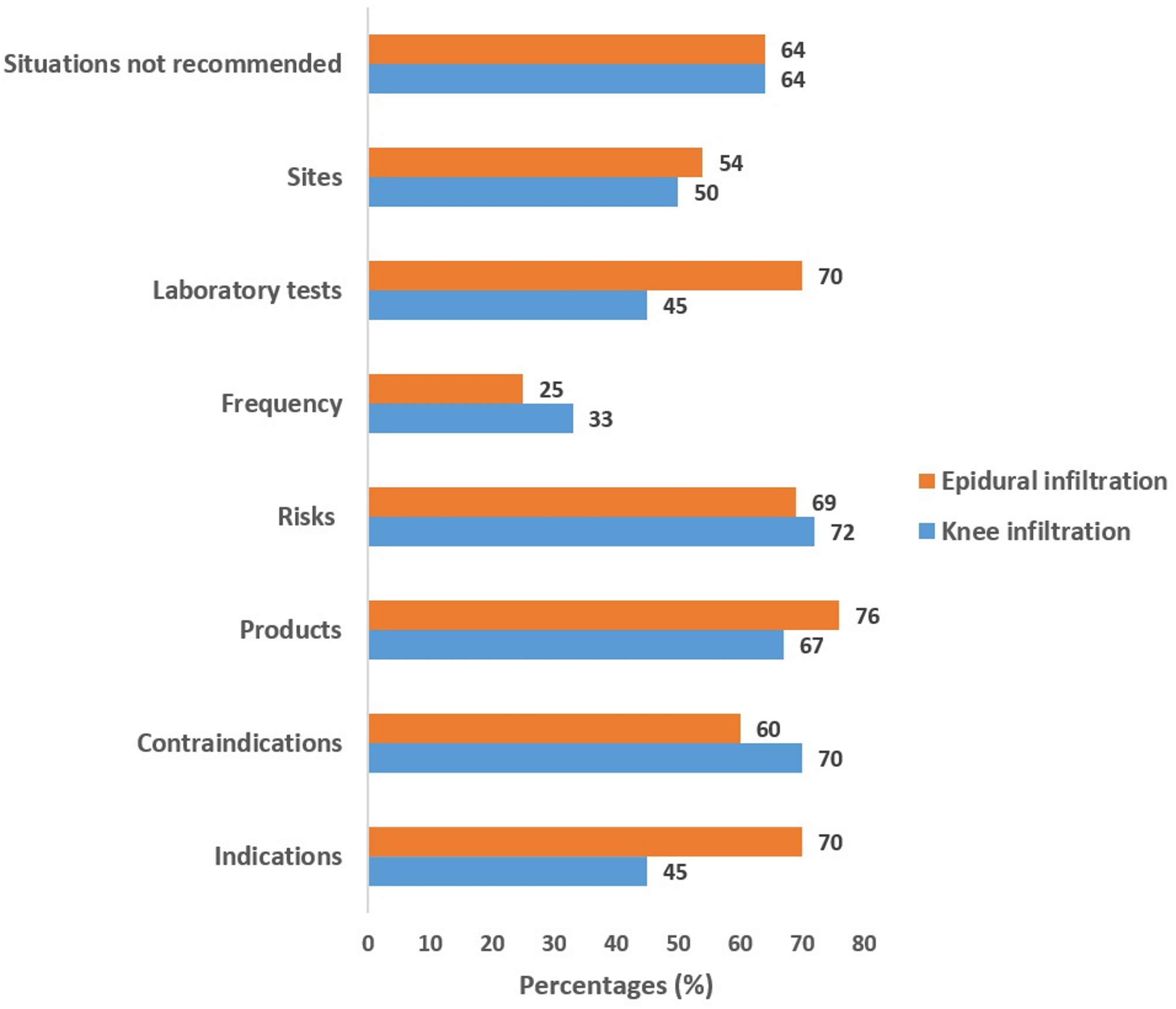
Knee and epidural infiltrations are among the most common rheumatological procedures. Due to the shortage of rheumatologists in Cameroon (Sub-Saharan Africa), GPs play a vital role in treating patients with rheumatic diseases. However, before recommending this routine practice to GPs, it is necessary to assess their knowledge and practices, which was the aim of our study. There is little data available on this subject in sub-Saharan Africa, despite the recognized importance of GPs in the management of many rheumatic diseases [14]. Our study found that infiltration practices among GPs in Cameroon were performed in 23.2% of cases for the knee and 8.5% for the epidural. Knowledge and practice scores for these procedures are average and are linked to certain factors related to undergraduate and postgraduate training.
We found that GPs performed 23.2% of knee infiltrations and 8.5% of epidural infiltrations. The use of knee and epidural infiltrations by GPs varies according to geographical context. In high-income countries such as France, studies indicate that 15 to 30% of cases of knee osteoarthritis are managed with infiltrations by GPs, while epidurals predominantly remain the responsibility of specialists [15]. Key determinants include access to ultrasound guidance, which reduces failure rates for knee infiltrations, and ongoing training [15, 16]. Conversely, in sub-Saharan Africa, where rheumatologists are scarce, GPs perform these procedures more frequently despite the risks [17, 18]. This is also due to a lack of accessible therapeutic alternatives, such as surgery, competent physiotherapy, and the limited technical resources available [18]. Certain patient-related factors may also influence the use of infiltrations, notably obesity, as reported by Bello et al. [18].
We reported average scores for knowledge of knee and epidural infiltration, as well as for practice. There is a lack of literature on GPs’ knowledge of infiltration. This includes indications and absolute contraindications, such as active joint infection, anticoagulation and unbalanced diabetes, as well as the management of side effects, such as post-corticoid hypertensive flare-ups. A French study reported that only 40% of GPs were familiar with contraindications [15]. Factors influencing this poor level of knowledge and practice included gender; undergraduate rheumatology training of less than four weeks; having been in practice for less than three years; and never having attended a workshop or training course on infiltration. These data are consistent with literature. Liddell et al., in a study of 251 GPs in the United Kingdom, found that gender (male), experience (more than 10 years), specialized training (interest in rheumatology or orthopedics), and those practicing in rural areas were significant determinants of performing intra-articular injections, particularly in the knee, shoulder, and elbows [19]. In Germany, Spruit et al. found that 81% of GPs surveyed felt competent in performing musculoskeletal injections, particularly due to a lack of confidence in injection procedures, a lack of practical training, and little confidence in the diagnosis and therapeutic benefits of these procedures. They also reported a high referral rate after the procedure [20]. In a study of 204 GPs in Ireland, Farrell et al. found that 72% performed intra-articular injections, particularly in the knee and shoulder, with barriers such as their skills and medico-legal concerns [21]. Moore et al., in an interview with primary care physicians, found that barriers included a lack of confidence and discomfort with these procedures, the risk of side effects, incertitude regarding evidence and guidelines, and technical uncertainties [22].
Specialized training (e.g. workshops, echoguidance), access to contextualized recommendations, and clinical experience can significantly improve GPs’ knowledge and skills in rheumatology procedures [15, 16, 23]. Improving the training of GPs would likely reduce patient waiting times for these procedures and decrease the rate of referrals after the procedure [19]. Conversely, poor knowledge is associated with professional isolation, a lack of interaction with rheumatologists, and a scarcity of continuing training courses adapted to the local context, particularly in sub-Saharan Africa [17, 24]. It should also be noted that logistical constraints in Sub-Saharan Africa lead to non-standardized practices and higher rates of complications [18].
In order to improve the current situation in Cameroon, a number of important lessons need to be learned. With regard to training, we should advocate improving exposure to rheumatology during undergraduate internships and developing short training modules on rheumatology procedures (including punctures and infiltrations), as well as simplified protocols for GPs to use [25]. Telemedicine should be used to mentor young GPs, especially in rural areas [18]. Finally, reinforce practical teaching during undergraduate courses and encourage postgraduate training in rheumatology procedures.
Interpretation of the data from this study must take into account a number of limitations. Firstly, there is the common bias in data collection associated with online studies. Nevertheless, this is an important means of obtaining data for this type of study. Another limitation is the small sample size, as 80% of the 500 GPs trained annually in Cameroon leave the country, making them ineligible for the study. Additionally, this study focused on young GPs with no more than 5 years’ experience, due to the harmonization of undergraduate training programs in Cameroon 12 years ago, with the first cohort graduating 5 years ago. Nevertheless, this study enables us to establish the current situation and identify the key determinants on which it will be crucial to act. These data are consistent with those reported in the literature. Further studies are needed to assess teaching methods related to these procedures for undergraduate students and to evaluate the impact of workshops and courses on the current level of knowledge and practice of postgraduate GPs.
Subcellular localization of NnWOX1-1 and NnDREB2C transcription factors
The pCAMBIA1300 vector containing green fluorescent protein (GFP) was used as the overexpression vector, and GFP fusion expression was employed to identify “positive” transgenic plants. The full-length CDS of NnWOX1-1 and NnDREB2C were cloned, and then inserted into the pCAMBIA1300 vector. The positive plasmid was then transformed into Agrobacterium tumefaciens GV3101 (Weidi Biotechnology Co., Ltd., Shanghai, China). After verification by PCR method, bacterial cultures containing the target genes were obtained. Single colony was selected and cultured overnight to prepare the tobacco leaf infection solution. The pCAMBIA1300 vector carrying an empty plasmid was used as the control. The bacterial suspension containing the pCAMBIA1300 vector with the target gene was used to infect Nicotiana benthamiana leaves aging 35–45 days. Before infection, the tobacco plants were exposed to strong light for 10 min to promote stomatal opening. A 1 mL syringe was used to draw the infection solution, and the abaxial side of the tobacco leaves (avoiding the veins) was infiltrated. After 2–3 days of dark cultivation, the infiltrated epidermal tissue was sampled and examined under a super-resolution laser confocal microscope (LSM 880NLO, Carl Zeiss, Germany) to observe GFP fluorescence signals.
Vectors construction of NnWOX1-1 and NnDREB2C transcription factor
For the overexpression vector construction, the laboratory had previously successfully constructed the NnWOX1-1 overexpression vector and preliminarily validated the gene’s function in Arabidopsis [27]. For the NnDREB2C overexpression vector construction, the cloning vector harboring the target gene and the overexpression vector pCAMBIA1300 were subjected to double digestion with BamHI and XbaI.
restriction enzymes. Following digestion, DNA fragments of the desired size were excised from the agarose gel and purified using a commercial DNA gel extraction kit. The purified target fragment and the linearized vector backbone were ligated using T4 DNA ligase at 16 °C for cohesive-end assembly.
The ligation product was transformed into chemically competent E. coli (DH5α) cells, which were subsequently plated onto LB agar supplemented with 100 µg/mL ampicillin (1‰ Amp). After overnight incubation at 37 °C, single colony was inoculated into LB liquid medium containing ampicillin, and incubated with shaking (37 °C, 12 h). For confirmation of correct assembly, the recombinant plasmid was re-digested with BamHI/XbaI, and the restriction pattern was analyzed. Final validation was performed through full-length sequencing by Nanjing Qingke Biotechnology Co., Ltd.
For the RNAi vector construction of NnWOX1-1 and NnDREB2C, the RNAi interference fragment was derived from a partial nucleotide sequence spanning the coding region and the 3′ untranslated region (UTR). The forward primer sequences of NnWOX1-1 were: upstream, 5′-GGGGTACCAAGGAGACTGAGGTGCCGAA-3′; downstream, 5′-CGGGATCCATGTAAGCTTCACCCATTAA-3′. The reverse primer sequences were: upstream, 5′-GCGTCGACAAGGAGACTGAGGTGCCGAA-3′; downstream, 5′-GCTCTAGAATGTAAGCTTCACCCATTAA-3′. The forward primer sequences of NnDREB2C were: upstream, 5′- GGGGTACCGCCTTAGAGC.
TGCCGGAGTG − 3′; downstream, 5′- CGGGATCCATATATATAATATTTACAAT − 3′. The reverse primer sequences were: upstream, 5′- GCGTCGACGCCTTAGAGCT.
GCCGGAGTG − 3′; downstream, 5′- GCTCTAGAATATATATAATATTTACAAT − 3′. The cloning vector containing the target gene and the overexpression vector pCAMBIA1300 were subjected to double digestion with BamHI and XbaI restriction enzymes. The digestion products were separated by agarose gel electrophoresis. The desired gene fragment and linearized vector were excised from the gel and purified using a commercial DNA gel extraction kit. The purified target fragment and digested vector were ligated with T4 DNA ligase at 16 °C for 16–18 h. The ligation mixture was transformed into chemically competent E. coli (DH5α) cells and plated onto LB agar supplemented with 100 µg/mL ampicillin (Amp). After overnight incubation at 37 °C, individual colony was selected, and then inoculated into LB liquid medium containing 100 µg/mL Amp for culture with shaking (200 rpm) at 37 °C for 12 h.
Plasmid DNA was extracted from the cultures and verified by Sanger sequencing to confirm correct insert orientation and sequence integrity. Recombinant plasmids were transformed into E. coli (DH5α), and “positive” clones were selected for amplification. Colony PCR was performed to validate successful insertion, followed by plasmid extraction and sequencing. The confirmed recombinant plasmids (NnWOX1-1 and NnDREB2C overexpression and RNAi constructs) were introduced into Agrobacterium tumefaciens GV3101 via freeze-thaw transformation. Transformed colonies were screened by colony PCR to confirm plasmid integration. Validated Agrobacterium strains were stored at − 80 °C for subsequent plant transformation experiments.
Transient transformation of NnWOX1-1 and NnDREB2C in lotus root and S. trifolia
Preparation of materials of lotus root and S. trifolia
Lotus seeds and S. trifolia corms of similar size were selected, and the plumules of lotus and S. trifolia buds were used as tissue culture materials. After rinsing the surface mucus with clean water, the materials were disinfected with 75% alcohol, and then soaked in sterilized water with Shannong No. 1 Type I for 12 h. Subsequently, these materials were inoculated onto MS medium (containing 30 g/L sucrose, 7 g/L agar, 0.15% Shannong No. 1 Type III, 1 g/L activated charcoal, pH 5.8) and cultured aseptically for one month. Tissue culture seedlings of lotus and S. trifolia with similar growth vigor were selected for infection experiment.
The steps of instantaneous transformation
The recombinant plasmids of the NnWOX1-1 and NnDREB2C overexpression vector and RNAi vector were transformed into Agrobacterium rhizogenes K599 competent cells using the freeze-thaw method. Subsequently, the plasmids were introduced into lotus root (Nelumbo nucifera) and S. trifolia following the protocol. The Agrobacterium strains carrying the pCAMBIA1300 empty vector, overexpression vectors and RNAi vectors were activated on YEB solid medium (containing 50 mg·L⁻¹ kanamycin and 50 mg·L⁻¹ rifampicin). Single colony was selected, and subcultured on fresh YEB solid medium for expansion. Colonies were collected into a 50 mL centrifuge tube, resuspended in 20 mL YEB liquid medium, and incubated overnight at 28 °C with shaking at 200 rpm. The overnight culture was centrifuged (5 min, 6000 rpm, 4 °C), and the supernatant was discarded. The pellet was resuspended in 2 mL MES buffer (20 mM MgCl₂ + 10 mM MES), centrifuged again under the same conditions, and the supernatant was discarded. The pellet was resuspended in 1 mL MS medium, and then transferred to a sterile 50 mL tube, adjusted to 20 mL with MS medium, and supplemented with 200 µL acetosyringone (AS, 20 mg/mL). The suspension was incubated overnight at 28 °C with shaking (200 rpm) until the OD₆₀₀ reached 0.7–0.9. Sterilized lotus root and S. trifolia seedlings were wounded at internodal regions and immersed in the Agrobacterium suspension for overnight infection. Infected plants were transferred to MS liquid medium (MS + 3% sucrose + 20 mg/L AS, pH 5.8), and cultured in a growth chamber under the following conditions: 28 °C/12 h (day) and 22 °C/12 h (night), with a light intensity of 30,000 lx. After 5 days, infected plants were rinsed three times with sterile water, and the medium was replaced. Three days later, plants were washed 3–5 times with cefotaxime solution (400 mg/L) to eliminate residual Agrobacterium. Plants were transferred to fresh MS liquid medium (MS + 3% sucrose + 300 mg/L carbenicillin, pH 5.8), and maintained in the growth chamber under the same conditions.
Identification of “positive” transgenic seedlings
The leaves, stems, roots, and nodes of the transformed plants were selected for identification of “positive” plants. Confocal fluorescence microscopy was used to observe the eGFP green fluorescence in both overexpression and interference vectors. Additionally, real-time quantitative PCR was also employed to detect “positive” seedlings. For PCR identification, the extraction of RNA and synthesis of the first strand of cDNA followed the same method as described above. The upstream primer sequence for NnWOX1-1 was 5′-TCCTCAGCAATGGCGAAGAACG-3′, and the downstream primer sequence was 5′-TCGGCACCTCAGTCTCCTTCTC-3′. The upstream primer sequence for NnDEEB2C was 5′- GCAACAGACCGTCAGAC.
CATCC − 3′, and the downstream primer sequence was 5′-GGATTGTCATCTCAC.
CACGGAAG-3′. β-actin was used as the internal reference, with the upstream primer sequence 5′-GACTCTGGTGATGGTGT-3′ and the downstream primer sequence 5′-CACTTCATGATGGAGTTGT-3′. The PCR reaction system (20 µL) included: 0.8 µL each of upstream and downstream primers, 10 µL of 2× ChamQ SYBR qPCR Master Mix, 2 µL of cDNA template (200 ng/µL), and 6.4 µL of ddH2O. The PCR protocol comprised 40 cycles: 30 s at 95 °C (initial denaturation), followed by 10 s at 95 °C (denaturation), 30 s at 60 °C (annealing/extension), and a final melt curve analysis step (30 s at 95 °C, 60 s at 60 °C, and 15 s at 95 °C).
Identification downstream gene regulated by NnWOX1-1
Yeast one-hybrid
NnWOX1-1-pGADT7 was employed as bait to screen a yeast one-hybrid motif library. Following identification of “positive” clones through auxotrophic selection, DNA sequencing and multiple sequence alignment (Clustal Omega) revealed motifs interacting with NnWOX1-1. Three plasmid combinations included pGADT7-NnWOX1-1, pGADT7-NnWOX1-1 + pHIS2-p53, pGAD53m + pHIS2-p53 were independently transformed into Y187 competent cells and plated on SD/-Trp/-Leu selection medium. After 3–5 days incubation at 30 °C, six colonies were subjected to colony PCR verification. Three randomly selected clones were pooled, normalized to OD600 = 0.002, and serially diluted (0, 10, 20, 30, 40, 50, 75, and 100 mM) for spot assay on 3-amino-1,2,4-triazole (3AT)-supplemented plates. For library screening, Y187 cells pre-transformed with NnWOX1-1-pGADT7 were co-transformed with motif library plasmids, and plated on SD/-Trp/-Leu/-His medium containing 100 mM 3AT. “positive” clones from 100 mM 3AT SD-TLH plates were submitted to Nanjing Ruiyuan Biotechnology Co., Ltd. for sequencing. Consensus motif sequences were subsequently mapped to the Nelumbo nucifera genome using BLASTn tool to retrieve full-length candidate gene (NnDREB2C).
EMSA binding assay validation
The electrophoretic mobility shift assay (EMSA) for protein-DNA interaction was conducted by Nanjing Ruiyuan Biotechnology Co., Ltd. The NnWOX1-1 was expressed and secreted using the Pichia pastoris secretory expression system, followed by purification and quantification via the BCA method. A biotin-labeled DNA probe was synthesized based on a specific sequence fragment of NnDREB2C (CAATTCTGTTCTCAAATTATCTCTCCTCTCCCAACAGCGTCACCTTATCCACGTGGGAAACGTCAACCAAACGAC). The interaction between NnWOX1-1 and NnDREB2C was further validated via a series of experimental steps, including 4% native polyacrylamide gel electrophoresis (PAGE), electrophoretic transfer to a nylon membrane, membrane washing, and chemiluminescent detection of probe-protein binding signals.
Cloning of NnDREB2C
The seeds of Space Lotus 36 were dehulled and soaked in sterile water for germination. Following seed sprouting, total RNA was isolated from the leaves of lotus seedlings, and cDNA synthesis was carried out using a commercial cDNA synthesis kit according to the manufacturer’s protocol (Thermo Fisher Scientific, Waltham, US). Primers of the NnDREB2C were designed with Primer 5.0 software based on the published lotus genome sequence, and subsequently synthesized by Shanghai Sangon Biotech Co., Ltd. The primer sequences were as follows:
Reverse primer: 5′-GCTCTAGACTAGGAATCCCAACCCAAAATATC-3′. The PCR amplification reaction (50 µL total volume) consisted of: 25 µL of 2× Phanta Flash Master Mix, 2 µL each of forward and reverse primers (10 µM), 2 µL cDNA template. Nuclease-free water was used to adjust the final volume. Thermal cycling conditions included: 98 °C for 30 s for initial denaturation, 35 amplification cycles of 98 °C for 30 s, 66 °C for 5 s, 72 °C for 5 s. Final extension was 72 °C for 1 min. PCR products were purified and sequenced by Nanjing Qingke Biotechnology Co., Ltd.
Expression profiling analysis of NnDREB2C
Seeds of Space Lotus 36 were dehulled and germinated in sterile water. Uniformly sized seedlings were selected and treated for 3 days with a solution containing 200 mg/L ethephon (An ethylene-releasing agent, ethephon is typically a solid that release ethylene under certain conditions), 20 µL auxin, and 20 mg/L sucrose. After treatment, seedlings were transferred to fresh water for continued cultivation. Hypocotyl tissues were selected at 0 h, 18 h, and 36 h post-transfer. Total RNA was extracted using the method described in previous protocols. To investigate tissue-specific expression patterns, samples were collected from internodes, leaves, seeds, petioles, and flowers of lotus. Reverse transcription of total RNA was performed using HiScript® III RT SuperMix. For qRT-PCR of NnDREB2C, primers were designed as follows: Forward: 5′-GCAACAGACCGTCAGACCATCC-3′, Reverse: 5′-CGGATTGTCATCTCACCACGGAAG-3′. β-actin was used as internal standard.
Forward: 5′-GACTCTGGTGATGGTGT-3′, Reverse: 5′-CACTTCATGATGGAGTTGT-3′. The qPCR reaction mixture (20 µL total volume) included: 10 µL 2× ChamQ SYBR qPCR Master Mix, 0.8 µL each of forward and reverse primers, 2 µL cDNA template, 6.4 µL RNase-free ddH₂O. PCR reaction program was 40 cycles of 94 °C for 30 s, 95 °C for 5 s, 60 °C for 60 s. Relative mRNA levels were calculated using the 2–ΔΔCtmethod. All experiments included three biological replicates to ensure reproducibility.
Determination of ethylene and auxin content
Measurement of ethylene content in transgenic plants
NnWOX1-1 and NnDREB2 overexpression and RNAi plants were thoroughly rinsed with distilled water, and the plant materials were weighed. The samples were promptly placed into 50 mL glass vials, which were immediately tightly sealed and stored in a foam box to avoid light for 7 h. Prior to sample analysis, 500 µL of a 0.5 × 10⁻⁶ mol/L ethylene standard was drawn using a 1 mL gas-tight microsyringe, and injected into a gas chromatograph (GC-7890 A, Agilent, USA) for measurement. The samples were analyzed only after the peak height of the standard ethylene stabilized. The GC conditions were as follows: 45 °C, 120 °C and 200 °C of column temperature, injector temperature, and FID detector temperature respectively; column head pressure flow rate was 40 mL/min with 2.8 mL/min column flow rate, and makeup gas flow rate was 2.5 mL/min; split ratio was 10:1, and injection volume was 500 µL. Ethylene release rates was calculated according to following formula: Ethylene concentration (µL/L) = (sample peak height/standard ethylene peak height) × standard concentration. Ethylene release rate [nL/(g·h)] = [ethylene concentration (nL/L) × container volume (mL)]/[fresh weight of sample (g) × sealing time (h)].
Measurement of IAA content in transgenic plants
The overexpression and RNAi lines of NnWOX1-1 and NnDREB2B were washed in clean water before endogenous hormone determination. Empty vector-infected lines were used as controls. 0.5 g of freeze-dried sample was ground in liquid nitrogen, and powder was transferred to 2.5 ml centrifuge tubes. A total of 500 µl extraction buffer (isopropanol: water: formic acid = 2:1:0.002) was added, followed by incubation at −20 °C for 20 min. These tubes were treated with ice-water bath sonication for 30 min. After adding 1 ml chloroform, the samples were incubated at −20 °C for 20 min, and then sonicated in ice-water bath for 5 min. The tubes were vortexed for 1 min, and centrifuged at 13,000 rpm for 5 min at 4 °C. The lower layer (900 µL, collected in two aliquots of 450 µL each into 1.5 ml centrifuge tubes) was freeze-dried. The residue was redissolved in 200 µl 80% methanol, followed by ice-water bath sonication for 1 min and vortexing for 1 min. The solution was filter-sterilized and 100 µL was transferred to insert tubes. IAA content was determined using liquid chromatography (Sigma, Shanghai, China) reported by Li et al., (2022).
Ethylene treatment
The coat of lotus root seeds was cracked and soaked in distilled water for germination. After germination, a sterile blade was used to make incisions at the hypocotyl of the seedlings. Interference vectors of NnWOLX1-1 and NnDREB2C were introduced into the lotus plants via Rhizobium rhizogenes-mediated transformation, which was followed with previously described method. Transgenic plants were treated with 300 mg/L ethephon for 48 h, and then transfered to distilled water for cultivation. The number and length of adventitious roots were measured 10 days later.
Determination of root number and length of transgenic plants
The overexpression and interference vectors were introduced into seedlings. Tissue sections were prepared, mounted on glass slides, and examined for eGFP green fluorescence using a confocal laser scanning microscope. Additionally, the relative gene expression level in “positive” seedlings was quantified by real-time quantitative PCR (qRT-PCR), and the data was analyzed and visualized using GraphPad Prism. For both the transgenic and control groups, about 6 eGFP-“positive” seedlings with comparable growth vigor were selected. The number and length of adventitious roots exceeding 1 mm were measured, and the mean values were calculated and recorded.
Analysis of fresh weight and dry weight in transgenic plants
After measuring the fresh weight of transgenic and control plants using an analytical balance, the samples had been oven-dried at 65 °C until the weight were not changed. Their dry weight was then measured to calculate the dry matter content, with averages determined.
Data analysis
The experimental data were analyzed using one-way ANOVA in GraphPad Prism 9, and bar graphs were generated. The results represent means ± SE from three independent biological experiments, and each with more than ten plants. Statistical significance was indicated as follows: “* ”represents p < 0.05; “** ”represents p < 0.01; “*** ” represents p < 0.001; “****” represents p < 0.0001.
Vanu will integrate Kuiper backhaul services into its product and services portfolio and create opportunities to expand rural coverage.
At the Africa Tech Event 2025, held in Cape Town, South Africa, on November 11, 2025, Vanu, Inc., a provider of equipment, tools, and services that enable mobile network operators to serve rural communities profitably, announced a strategic agreement with Amazon’s low Earth orbit satellite network, Project Kuiper. The partnership aims to bring low-cost, high-quality mobile connectivity to rural and underserved communities in Africa, with an initial focus on Southern Africa.
Vanu’s mission is to help close the global digital divide by connecting the unconnected. The company’s innovative coverage solutions already provide mobile connectivity to millions of people in remote regions across multiple continents. By integrating Amazon’s advanced satellite network into its product and services portfolio, Vanu will be able to significantly expand its reach while working alongside a globally trusted brand.
Project Kuiper already has more than 150 satellites in space and is quickly expanding its satellite constellation. Vanu will deploy its Coverage as a Service, leveraging Amazon’s low-latency connectivity to provide mobile broadband to rural communities starting in 2026. Using backhaul connectivity to avoid the cost and complexity of expanding the reach of traditional telecom infrastructure, Vanu will drive digital inclusion for rural unconnected communities, unlocking high-speed communications for education, healthcare, commerce, and emergency response.
“We are energized by this opportunity to accelerate our mission,” said Andrew Beard, CEO of Vanu. “Amazon’s low Earth orbit constellation gives us the scale, reliability, and performance to reach areas that have been technologically excluded for far too long. Together, we can reshape what is possible for rural connectivity worldwide.”
“Project Kuiper was created to help connect customers and communities beyond the reach of existing networks, and our backhaul solutions are an important part of that vision,” said Chris Weber, Vice President of Consumer and Enterprise for Project Kuiper. “Vanu has a proven track record connecting some of the hardest-to-reach places on the planet. Using satellite-based connectivity from Amazon, they can enable mobile network operators to reach more subscribers in more places.”
Starting in Southern Africa, Vanu and Amazon aim to demonstrate that a sustainable, scalable model for rural coverage is not only achievable but also repeatable and ready to expand. By combining disruptive terrestrial technology with global satellite broadband capabilities, the agreement sets the stage for long-term global impact.
Africa Tech Event 2025 attendees can learn more about the new partnership by visiting Vanu at stand E82.
About Vanu, Inc.
Vanu provides equipment, tools and services that enable MNOs to profitably serve the 1.2 billion people who do not have connectivity today. Vanu’s solutions combine technology and business model innovations to reduce the total cost of ownership of wireless networks. The company grew out of groundbreaking research in software radio at MIT and was founded in 1998. Vanu is the developer of the Anywave™Base Station. Anywave was the first commercial Radio Access Network (RAN) product to simultaneously support multiple cellular radio standards on the same platform and the first U.S. Federal Communications Commission (FCC)-certified software-defined radio. Vanu is headquartered in Lexington, MA, with offices in Gurgaon, India, and in Kigali, Rwanda.
This year’s pavilion also featured the exclusive 8th CIIE New Product Release Platform, which highlights the Maisons’ dedication to blending heritage and innovation.
Debuting at CIIE for the China market, the Montblanc High Artistry A Journey through Château de Versailles collection marks a new chapter for the High Artistry collection, transforming writing instruments into objets d’art. Drawing on the rich history, iconic artistry, and baroque architecture of the Palace of Versailles, the five masterpieces represent the pinnacle of craftsmanship and creativity, showcasing intricate details, inspired design, and the rare métiers d’art and mastery of Montblanc artisans. Meanwhile, Vacheron Constantin continued to pay tribute to the Chinese culture through the Métiers d’Art The Legend of the Chinese Zodiac collection, introducing two 25-piece limited editions dedicated to the Year of the Horse. Set in a 40mm case, the complex and technically sophisticated Calibre 2460 G4 is placed at the service of aesthetics, giving free rein to the artistry of the Maison’s métiers d’art specialists. In parallel, Van Cleef & Arpels presented the Lady Arpels Bal des Amoureux Automate Watch, depicting a 19th century charming guinguette through exquisitely refined grisaille enamel for the young couple’s rendezvous. At noon and midnight, the couple gets closer to each other, dancing in perfect harmony – a fleeting romance captured in motion.
“Cultural and artistic heritage has always been central to Richemont. The ‘Stories about Beauty, Elegance, and Timeless Style’ pavilion we presented at this year’s CIIE reflects this commitment.” stated Jenny Gu, CEO of Richemont China. “We are proud to stand alongside our Maisons in preserving the spirit of craftsmanship and dedicating ourselves to safeguarding and promoting both the heritage and development of our Maisons’ culture.”
Through its presence at this year’s CIIE, Richemont reaffirmed the Group’s steadfast commitment to nurturing the future of its Maisons and championing cultural heritage. Richemont remains dedicated to relentlessly pursuing excellence and innovation. Looking ahead, Richemont will further strengthen its connection with the global luxury ecosystem, continuing the legacy of its iconic creations while opening new chapters of creativity and timeless elegance.
Alexander Dennis, a subsidiary of NFI Group Inc., a leader in propulsion-agnostic bus and coach mobility solutions, today announced that its Cyber Security Management System (CSMS) has been re-certified and its Software Update Management System (SUMS) certified by the United Kingdom’s Vehicle Certification Agency (VCA) in accordance with UNECE Regulations 155 and 156 respectively.
Alexander Dennis’s commitment to the highest standards of cybersecurity encouraged the company to introduce comprehensive business-wide systems in support of the development of its next-generation electric buses, ensuring that their design, production and ongoing support is underpinned by robust protections.
UNECE Regulation 155 provides internationally recognised requirements for vehicle cybersecurity and vehicle cybersecurity management systems. The successful re-certification of Alexander Dennis’s CSMS follows an audit by VCA experts that analysed the manufacturer’s documents, tools, templates and processes against the requirements of the regulation alongside interviews with key members of staff involved in the operation of the processes.
The Alexander Dennis team has also used ISO/SAE 21434 on cybersecurity engineering for road vehicles to develop the CSMS, further following internationally recognised best practice.
Similarly, UNECE Regulation 156 defines provisions for vehicle software update management systems. Alexander Dennis’s SUMS has received initial certification following an in-depth audit by the VCA experts, underpinned by further best practice using ISO 24089 on software update engineering for road vehicles in its development.
The SUMS enables Alexander Dennis to develop and maintain software used on its buses to increase functionality where required whilst ensuring the vehicles’ safety and cybersecurity. It also helps to ensure that Alexander Dennis and its zero-emission buses are prepared for future innovations and regulatory requirements.
The dual certification follows over £1m in cybersecurity engineering investment by Alexander Dennis over the past four years.
Chris Gall, Group Engineering Director for Alexander Dennis, said: “Achieving certification under UNECE Regulations 155 and 156 is a significant milestone that reflects our unwavering commitment to cybersecurity and software integrity.
“We are proud to have put robust cybersecurity and software update management systems in place and have their compliance recognised by the VCA. This gives us a solid framework to protect our and our customers’ data, assets and technology.”