As a lonely, bedridden child, Ory Yoshifuji wanted nothing more than a second body he could use to attend school and see his friends.
For three and a half years, sickness forced Ory to stay at home, his bedroom becoming his prison.
“All I could do was stare at the ceiling day after day. The stress of loneliness at that time became so unbearable,” he says.
“I wondered, why couldn’t I have a second body?
“I might have been able to attend school with the other body.”
Years later — after studying robotics at university — he turned his dream into a reality by opening Dawn Avatar Robot Cafe in Tokyo, where cute robot avatars welcome and entertain guests, as well as serve drinks and food.
Ory Yoshifuji fulfilled his childhood room of creating a second body for himself through robot technology. (ABC News: James Oaten)
But unlike the competition, these robots are not powered through artificial intelligence.
Instead, they are operated by real people, housebound and disabled, just like Ory was.
“We’ve managed to create a situation where people, even if they can’t physically move around much, can still participate as members of society and as productive members of the workforce,” Ory says.
‘A role in society’
The robot café has been a hit, growing from about 10 to 100 robot operators, known as pilots.
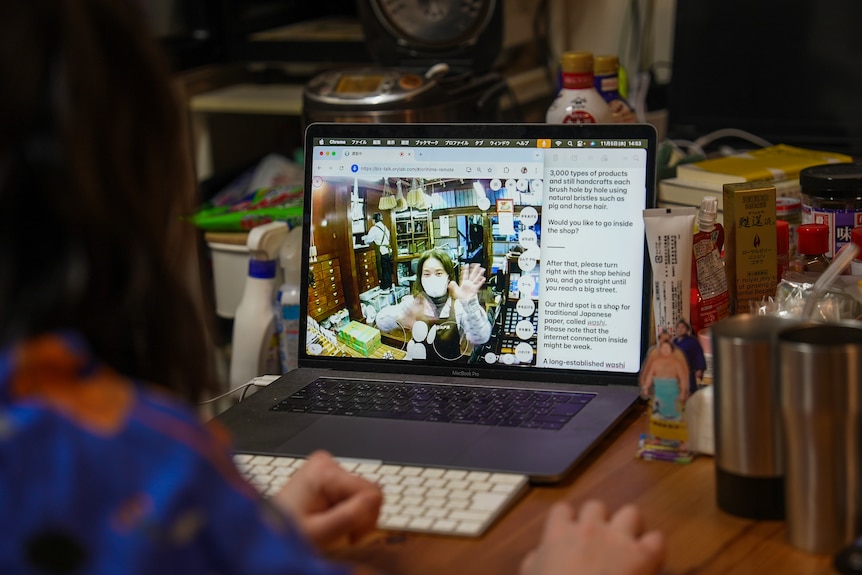
Each pilot moves the robot through a specialised program on their home computer, and can see and speak to guests.
Customers are served by people-operated robots at Dawn Avatar Robot Cafe. (ABC News: James Oaten)
The project has now begun a new venture, tapping into Tokyo’s tourism boom.
Instead of just serving guests at the café, customers can also carry a robot on their back for a personalised tour of the local area.
Ory says the idea came after many of the robot pilots joked about escaping the café.
“[The robots] approach the automatic doors, head outside, and the wi-fi signal would cut out,” he says.
“They’d often play around like that as a joke.
“But, of course, they actually wanted to go outside too.”
One pilot is Machun, who has multiple sclerosis.
Machun started working at the cafe after losing her previous job at a bank. (ABC News: James Oaten )
She lost her job at a banking think tank when her condition worsened after contracting COVID.
“I couldn’t stay awake,” she says.
“I used to be able to walk, but [then] I couldn’t do that either.”
For her, working as a robot pilot has given her a second life. Her mental health has flourished, she adds.
“Someone who could barely sit for an hour can now work six or seven hours a day with breaks,” she says.
“I now feel like I have a role in society. I really feel that.”
It is not just the pilots who enjoy the new-found freedom, but the tourists too.
Canadian tourists in Tokyo. (ABC News: James Oaten )
“What I loved about having our tour guide right on our shoulder is I feel like it was really flexible,” Canadian tourist Andrea Wheaton says.
“Especially with having young kids.”
Her husband, Dave Schultz, enjoyed the human aspect.
“You can hear the warmth through their voice and some giggles on their end,” he says.
‘Working while teleporting’
The rise of artificial intelligence and robotics has sparked debate about how such technology may destroy jobs and lead to fewer connections between people.
Ory is proud that his technology is doing the opposite.
“We are creating a society where we can live without needing to ask anyone for help,” he says.
“This also means we are creating a society where no-one is needed.”
He hopes to expand the robot tour guides to cover more areas of Tokyo.
But one of the biggest challenges is that crowded hotspots can have patchy internet, which would disrupt the robot’s connection to the pilot.
A worker operates a robot that works at Dawn Avatar Robot Cafe in Tokyo. (ABC News: James Oaten )
“I hope we can create this way of working in other locations, or even beyond Japan,” Orly says.
“It enables working while teleporting.”
And that, he adds, would help create a “society without loneliness”.
For beer brewer Richard Jeffares, his business is personal.
After a diagnosis of coeliac disease, the craft beer enthusiast mourned that he could no longer have a schooner at the pub with friends, given that a key ingredient in most traditional beers, barley, contains gluten.
“Somebody said to me, ‘Why don’t you start a gluten-free brewery?’” Mr Jeffares recalled.
Eight years on, the businessman is on a mission to “ensure that every liquor licence in the country offers their consumer a gluten-free beer”.
To grow its sales team to achieve that dream, his Victorian company raised about $2.5 million from 993 investors in a matter of days through a method called crowd-sourced funding, also known as equity crowdfunding.
As the name suggests, it works like a crowdfunding platform (think Kickstarter or GoFundMe), but instead of a donation, contributors invest.
It’s a way for smaller, private companies that aren’t listed or floating on the stock exchange to raise money by selling shares during a limited campaign period.
CSF, as it’s known, has only existed in Australia since 2017.
In the age of social media, it’s a method that thrives on brand strength and popularity.
Many of those who tipped into Mr Jeffares’s company, TwoBays Brewing, are diehard fans and keen drinkers of the beers themselves.
To Mr Jeffares, they’re not just investors but “brand ambassadors for us all around the country”.
“I had a gentleman from Orange yesterday giving me leads into two venues in Orange and in New South Wales,” he said.
“So they are [trying to] get our product – and I, when I talk to them, I tell them, ‘It’s your product now as well’ – into local venues so they can have a beer with their friends.”
A bid to bust business archetypes
Kirstin Hunter, the CEO of Birchal – one of the larger CSF platforms in Australia, the other being OnMarket, which carried the TwoBays campaign – champions crowd-sourced funding as an equaliser in the stereotypically male-dominated world of start-up businesses and the firms that fund them.
Australia, she says, has “a bit of a problem in the venture capital ecosystem when it comes to allocating funding to founders who are outside of a particular kind of narrow archetype”.
Birchal chief executive Kirstin Hunter. (ABC News: John Gunn)
As an example of the difficulties some entrepreneurs face, Birchal detailed a recent campaign for sex toy brand Normal Co.
Its founder, Lucy Wark, says the business couldn’t hurdle investment house internal policies “designed to restrict socially harmful investments” even though the company aimed to have a positive social impact.
“The free online sex education resources which are funded by our toys have now been viewed tens of millions of times in over 40 countries,” Ms Wark said.
“But when we actually passed the investment committee at a major VC fund, we ended up being blocked by vice clause concerns.”
According to Birchal’s annual report on the Australian crowdfunding landscape, 32 per cent of all crowdfunding capital went to teams with at least one woman founder, more than double the 15 per cent representation seen in venture capital.
The report also shows that the food and beverage sector is the largest in terms of funds raised this way.
Richard Jeffares’s company TwoBays is one of many alcohol brands, including craft brewery Philter and distillery Prohibition Liquor, to bring their fans on board.
But Birchal reports the sector has been volatile since the 2022 tech boom, when total funds raised across all platforms peaked at $86 million.
It suffered a crash in the 2024-25 financial year, falling from $65 million in the previous period to $33 million.
Kirstin Hunter said that echoed a tightening across the broader venture capital landscape due to the cost of living, but that the second half of the 2026 financial year was “looking much, much stronger”.
Meanwhile, not every crowdfunding campaign ends with a success story.
Big raises don’t always translate to big business
When Clinton Schultz launched a crowdfunding campaign for his alcohol-free brewery Sobah, he said he had the best of intentions.
As an Indigenous business owner seeking backing for his brand, which utilises native ingredients, he said it was difficult to “attract mainstream investment (and] get non-Indigenous entities to believe in and back” his business.
“Equity crowdfunding gives people an opportunity to dip their toes in (to investing) in a way that’s reasonable and affordable,” he said.
Sobah co-founder Clinton Schultz. (Supplied )
Sobah’s campaign raised more than a million dollars from the brand’s supporters.
But Mr Schultz said the notoriously competitive craft beer landscape – “dominated by the duopoly” of beer giants Kirin and Asahi – brought Sobah undone, with the company going into administration in September.
“It’s been very stressful,” Mr Schultz said.
“We’re trying to find a way forward.“
He said he was hopeful of reviving the company.
But in the meantime, it’s not yet clear how much creditors will get back, including those who tipped into Sobah’s crowdfunding campaign.
This year, Australian Distilling Co. also went under and has been forced to put its South Australian property – where it had plans to build a “Cathedral of Gin” under its Old Young’s brand – up for sale.
The company had crowdfunded nearly $2.7 million to support the project, but administrators anticipate that those unsecured investors are likely to receive “approximately 3 to 17 cents in the dollar”.
It comes after the demise of Zero Co, the laundry and soap company which closed this year after six years in business and Australia’s largest crowd-sourced raise to date, which hauled in $5 million.
“Any kind of investing is always risky, and crowd-sourced funding is no exception,” Kirstin Hunter said.
“As the licensed intermediary, we remind them on multiple occasions, and the crowdsourced funding offer document has a long risk disclosure as well.”
Buyer – and business – beware
Daniel Eason is the accounting director at BlueRock, a firm that previously worked for Birchal and continues to help businesses run crowd-sourced funding campaigns.
He believes CSF can work well for businesses, provided companies have made the right preparations.
BlueRock accounting director Daniel Eason. (ABC News: Patrick Stone)
That includes locking in 60 to 70 per cent of their fundraising target before the campaign even goes live – a task that involves some serious networking.
Then there are greater accounting costs to manage.
“The minute you go CSF, you effectively become an unlisted public company (in that you have] obligations under the corporations act to prepare general purpose financial statements and have them audited,” he said.
“Everyone thinks the raise is going to blow their socks off … but they’re [also] putting themselves into a higher cost environment going forward.”
Mr Eason said it was “the price of success, with his advice to companies looking to raise funds using CSF: go big or go home.
“The real shame is the ones who go into it who only raise 200k and go insolvent two years after,”
he said.
He also said there was a level of “buyer beware” for people looking to invest in crowdfunding campaigns.
Unlike buying shares in the more traditional way on the stock market, it often takes longer for CSF investors to see a dividend after they invest, as the companies tend to reinvest profits.
“They deploy the capital to buy that new bottling line … until they can [eventually] build that market share, make a profit and start paying dividends,” Mr Eason explained.
It can be appealing for people looking for a quick and easy way to invest, he said, “but the liquidity is also not there if, in two years, they need to sell those shares.
“That’s why CSF works better for brands that you know and love, or products that you can get behind, or industries that you understand.”
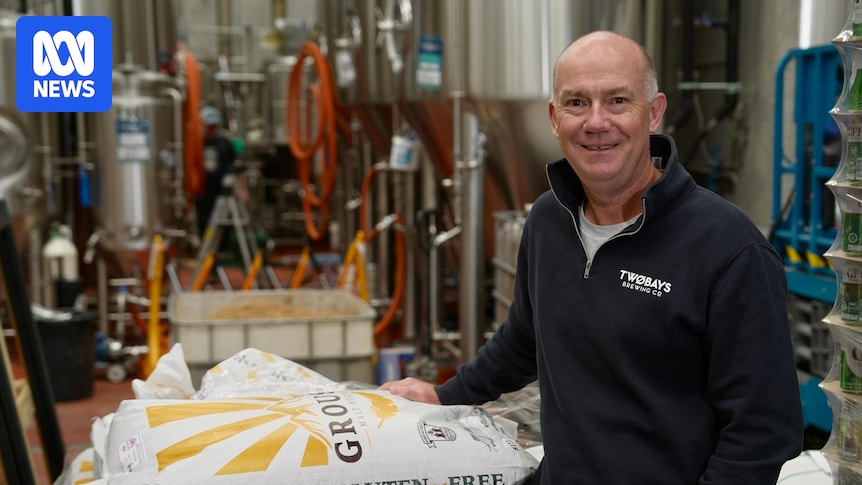
TwoBays Brewing founder Richard Jeffares. (ABC News: Darryl Torpy)
Richard Jeffares said his crowdfunding campaign took years of careful calculations, waiting for the business to reach the right level of growth, securing support in advance of the raise, and heavy marketing investment.
“It’s not a cheap exercise to go through this, from dealing with PR companies, dealing with the intermediary, and campaign managers,” he said.
“So we really felt we wanted to lean into it strongly and ensure that we didn’t leave any stone unturned.”
He acknowledges that achieving his dream of a gluten-free beer in every Australian watering hole could mean one day being bought by a larger company – which would see shareholders take their cut – but he believes his business has more room to grow first.
“We hope that these investors coming on board are proud of their shareholding and that with that growth in the business, we’re able to give them a return at some point in the future.”
Several of Carnival Corporation’s eight world-class cruise lines made a big splash at this year’s Travel Weekly Readers Choice Awards, earning top honors across a variety of categories that celebrate excellence in cruising. From short itineraries to world voyages, from tech innovation to advisor programs, trusted travel advisors who are instrumental to the industry’s success chose winners based on the cruise lines’ excellence in service, product, and overall performance.
We proudly took home industry-best recognition in the following categories:
Best in Cruise Lines
Domestic: Carnival Cruise Line
Alaska: Princess Cruises
Under 1,000 Berths: Seabourn
World Cruise Itinerary: Holland America Line
Group Program: Carnival Cruise Line
Shipboard Tech: Princess Cruises
Short Itinerary: Carnival Cruise Line
Transatlantic Sailing: Cunard
Best Travel Advisor Educational Program
Best Advisor Loyalty Program
These awards are a testament to the incredible experiences our cruise lines deliver every day – and to the dedication of our teams and partners who make it all possible.
You don’t have permission to access “http://www.mountsinai.org/about/newsroom/2025/mount-sinai-health-system-ceo-named-to-modern-healthcares-100-most-influential-people-in-healthcare” on this server.
The minimum piece rates for hand harvesting of specified farm crops will increase by 2.6% on Wednesday, Dec. 31, 2025.
The increase applies to 15 agricultural crops harvested by hand, as specified in the Employment Standards Regulation. The hand-harvested crops are peaches, apricots, brussels sprouts, daffodils, mushrooms, apples, beans, blueberries, cherries, grapes, pears, peas, prune plums, raspberries and strawberries.
This is an annual increase based on B.C.’s average annual inflation rate in 2024 and is consistent with the 2.6% increase to the general minimum hourly wage that came into effect June 1, 2025.
After legislative changes were made to the Employment Standards Act in spring 2025, increases to the general minimum wage for piece rates will come into effect each year on Dec. 31, based on the previous year’s average inflation rate.
Quick Facts:
Each of the 15 hand-harvested crops has its own minimum pay rate.
Farm-worker piece rates in B.C. were increased by 11.5% in January 2019 and 6.9% in December 2024.
B.C.’s farm-worker minimum piece-rate system has been in place since 1981.
Southern Water has secured additional equity investment to fund its ambitious £6bn investment programme over 5 years.
This investment programme includes, amongst other things, the complete rebuilding of our 5 largest water treatment plants, new nutrient treatment at 40% of all treatment plants to improve river quality treatment plants, new water supply and resilience measures including the new reservoir being constructed with Portsmouth Water and 5 new water recycling plants, and overflow reductions at 170 sites.
Overall, this will provide additional capacity and resilience in response to new legislation and regulatory targets and to support forecast population growth, as well as improvement in services for customers.
Funds managed by Macquarie Asset Management have committed a further £245m of equity, taking the equity committed by our shareholder since July 2025 to £900m, and the total invested since its entry in 2021 to £2.55bn. Over that period, no dividend has been paid — and none will be paid before 2030.
The £900m equity commitment is unconditional and is expected to be fully drawn by 30 June 2026.
Funds managed by Macquarie Asset Management have also reconfirmed their intention to provide up to a further £300m of binding equity commitments by June 2026.
Southern Water CEO, Lawrence Gosden, said: “We are pleased to have confirmation of £245 million of incremental equity support from funds managed by Macquarie Asset Management.
“This support is vital for us to meet the needs of our customers, the environment and meet new legislative requirements. It enables our largest ever investment programme, including more than £6 billion of growth investment in the 2025-30 AMP8 period, to reduce overflows, meet new environmental standards on river quality, re-build aging water plants and provide additional capacity and resilience.”
The incremental £245 million equity commitment takes our shareholders’ total investment in the Southern Water group since 2021 to over £2.5 billion.
Herein, we have demonstrated that the increased capacity of local antigen experienced TRM to persist in the epidermis when levels of TGFβ are limited is mediated by increased expression of TGFβRIII. We also show that local antigen experienced TRM have increased proliferative capacity during repeated antigen recalls. In addition, the increased proliferative capacity was directly correlated with the strength of TCR stimulation during TRM development. Finally, we found that local antigen experienced TRM appear more transcriptionally related to fully differentiated TRM. Taken together, these data support a model in which TCR engagement by cognate antigen in the skin is a required final step in TRM differentiation resulting in their increased fitness exemplified by increased proliferative capacity and the ability to persist in the epidermis when active TGFβ is limited.
We propose that the augmented fitness of local antigen experienced TRM represents a mechanism to enrich for high avidity TCR clones in the epidermis. Skin inflammation recruits TEFF into the skin, some of which develop into TRM. In the absence of competition with pre-existing TRM, TRM form comparably in the presence or absence of cognate antigen. Thus, we found equivalent numbers of bystander TRM at the DNFB and local antigen experienced TRM at the VV sites with both TCR transgenic and endogenous T cells. In contrast, when new TEFF are recruited into sites with pre-existing TRM, there is clonal competition for limited amounts of active TGFβ, resulting in enrichment of fitter, local antigen experienced TRM (Hirai et al., 2021). We now find that this enrichment likely results from 2 different competitive advantages. First, antigen encounter in the skin results in increased expression of TGFβRIII, which increases TGFβ avidity for the signaling by the TGFβ receptor. Since TGFβ signaling is required for epidermal persistence, this would provide an advantage for local antigen experienced TRM over bystanders. Second, local antigen experienced TRM have increased proliferation when re-encountering antigen in the epidermis. Following repeated challenges which would be expected outside of SPF conditions, the combination of improved expansion and persistence would work together to enrich for high avidity clones, thereby shaping the epidermal CD8+ T cell memory pool. Recently, it has been observed that TRM can contribute significantly to the pool of circulating memory cells (Steinert et al., 2015; Beura et al., 2018b; Fonseca et al., 2020; Wijeyesinghe et al., 2021; Behr et al., 2020). Thus, mechanisms augmenting epidermal TRM fitness that shape the pool of epidermal TRM may also affect the pool of systemic memory cells and represent an example of extra-thymic clonal section.
When TRM were challenged in a primary antigen recall response, we noted that local antigen experienced TRM expanded to a greater extent than bystanders. This expansion resulted from increased in-situ proliferation with minimal contribution from newly recruited TEFF, consistent with prior reports (Park et al., 2018; Beura et al., 2018a; Çuburu et al., 2012). Interestingly, a similar phenomenon occurred following a second encounter with antigen. This indicates that an encounter with peptide at a late time point after TRM differentiation (>50 days) is insufficient to convert bystander TRM into local antigen experienced TRM. Thus, there appears to be a window during TRM development when TCR engagement can allow for full differentiation. We also observed after a single recall response that TRM contracted to an elevated baseline, suggesting an increase in the epidermal niche. We speculate this may result from a reduced T cell intrinsic requirement for survival and/or homeostatic proliferation factors, such as IL-7 or IL-15 or increased expression of these factors by keratinocytes (Richmond et al., 2018; Adachi et al., 2015). Altered sensitivity or availability of TGFβ is unlikely to explain the increased niche size, as this would be predicted to vary between local antigen experienced and bystander.
Transcriptional analysis of TRM isolated from the small intestine have revealed intra-organ heterogeneity, with unique transcriptional populations arising early during TRM development (Milner et al., 2020; Kurd et al., 2020; Fitz Patrick et al., 2021). This aligns well with our identification of 6 distinct transcriptional clusters of epidermal TRM. Cluster 3 appears to represent fully differentiated TRM based on comparison with other TRM datasets. In addition, cluster 3 cells more highly expressed the activation and proliferation-associated genes Junb, Fos and Dusp1 as well as Nr4a1. Increased basal expression of the AP-1 family members Junb and Fos could contribute to the enhanced proliferation of antigen-experienced epidermal TRM during a recall response. Intriguingly, memory CD8 T cells lacking the transcription factor Zbtb20 manifest elevated expression of AP-1 family members and mount more robust antitumor responses (Hao et al., 2024). The Nr4a1 gene encodes for Nur77, which is induced by TCR signaling and its expression correlates with peptide avidity. Notably, Nur77 is required for TRM formation in the liver (Mackay et al., 2013; Mackay et al., 2015; Aluwihare et al., 2009; Jennings et al., 2020; Boddupalli et al., 2016). Interestingly, cells in cluster 3 only accounted for 27% of TRM that had the opportunity to encounter their cognate antigen in the VV-treated flank. We speculate that not all clones at the VV site fully develop into fitter TRM due to lower TCR avidity or specificity to viral antigens only expressed early during infection, which would be absent once the clones arrived into skin.
In sum, TCR signaling during TRM differentiation represents a previously unappreciated final step in TRM differentiation. This results in fitter TRM with a lower requirement for TGFβ transactivation due to increased expression of TGFβRIII and enhanced proliferation in response to peptide stimulation. Moreover, the differing responses to altered peptide ligands indicate that the degree of fitness depends on TCR signal strength. Thus, polyclonal TRM likely develop into a spectrum of bystander to local antigen experienced cells based on TCR avidity. Though we have focused entirely on epidermal T cells, we suspect that these mechanisms may play a role in other epithelial tissues where residency is also dependent upon TGFβ. Additionally, we have solely investigated memory CD8+ T cells after acute inflammation; the role of ongoing TCR-engagement during chronic antigen encounter remains unexplored.
Rapid evolution of protein binding interfaces has frequently been observed in viral protein complexes, notably in the virus-host interface, including viral surface glycoproteins as well as ribonuclear proteins and non-structural proteins, with fitness advantages being accomplished, for example, through reshaping the binding interfaces, modulating protein structural dynamics, or altering physicochemical properties (Barozi et al., 2022; Evseev and Magor, 2021; Focosi et al., 2024; Planchais et al., 2022; Rochman et al., 2022). Also, entirely new interactions can arise through the viral mimicry of eukaryotic short linear motifs as a result of frequent mutations in the viral protein intrinsically disordered regions, which can greatly augment the virus-host interface (Davey et al., 2015; Schuck and Zhao, 2023). The mutations we have studied here are of a different category, impacting the interactions among viral proteins that enhance viral multi-protein complexes. Previous examples include the intra-host diversity of polymerase subunit interfaces in H5N1 influenza viruses (Welkers et al., 2019). While such mutations are not directly targeted towards the host, they may still contribute to host adaptation or be balancing other mutation effects in an epistatic network, conceivably involving modulation of local effective protein concentrations (Li et al., 2023b). Irrespective of their complete context, they can provide valuable insights into viral protein mechanisms.
Specifically, we have described three different mutations of SARS-CoV-2 N-protein that, in convergent evolution, strengthen the formation of RNPs and enhance viral assembly. N:G214C, N:G215C, and N:P13L have been independently introduced (as highlighted in the phylogenetic trees Figure 9; Figure 10; Figure 11), and persisted in the defining set of mutations in their respective variants of concern (Lambda, Delta, and Omicron, respectively). We have shown here that N:P13L confers a fitness advantage in cell lines, and similarly, N:G215C was shown by Kubinski et al., 2024 to impart improved viral growth. This correlates well with our results studying their molecular mechanisms.
Mutations of N:P12 across the phylogenetic tree of SARS-CoV-2.
Shown are all-time global sequence samples with clade labels and color-coded amino acid at position 13, with the ancestral P13 in green and P13L in yellow. The blue arrow points to the Lambda sequences. Additionally, a cluster of P13L mutations occurred in India in clade 19 A. The phylogenetic tree was generated by Nextstrain (Hadfield et al., 2018).
Mutations of N:G215 across the phylogenetic tree of SARS-CoV-2.
Shown are all-time global sequence samples with clade labels and color-coded amino acid at position 215, with the ancestral G215 in green and G215C in yellow. The phylogenetic tree was generated by Nextstrain (Hadfield et al., 2018).
Mutations of N:G214 and N:G215 across the phylogenetic tree of SARS-CoV-2.
Shown are all-time sequence samples in South America with clade labels and color-coded amino acid at position 214 and 215. The combination of 214 C/G215 strain 21 G (Lambda) is shown in blue, whereas the combination G214/215 C of strain 21 J (Delta) is shown in yellow. The phylogenetic tree was generated by Nextstrain (Hadfield et al., 2018).
For both of the cysteine mutants, molecular dynamics simulations and biophysical studies show how cysteines augment self-association interfaces by extending and redirecting the transiently formed helical coiled-coils in the intrinsically disordered LRS, which play a central role in the assembly of RNPs. By contrast, for N:P13L, unexpectedly, the evolution of RNP stability goes beyond modulation of a previously existing binding interface, and instead, we observe the de novo formation of an additional dynamic self-association interface in the distant disordered N-arm through the stabilization and stacking of transient β-sheets, that we hypothesize cooperatively contributes to the stability of RNPs. Even though the solution affinity of the N-arm P13L interface is ultra-weak, the average local concentration of N-arm chains across the RNP volume (in a back-of-the-envelope calculation assuming a ≈14 nm cube Klein et al., 2020 with a dodecameric N cluster) is ≈7.4 mM, such that disordered N-arm peptides could well create populations of N-arm clusters stabilizing RNPs through this interface.
However, besides the RNP-stabilizing mutants, we have also observed unexpected RNP destabilization by the ubiquitous R203K/G204R double mutation, which may be caused by the introduction of additional charges close to the self-association interface in the LRS. In our experiments, this destabilization is more than compensated for by the P13L mutation. (Another scenario where ultra-weak interactions can have a critical impact is in molecular condensates. We previously reported the suppression of LLPS by the R203K/G204R mutation, which is rescued by the additional P13L/Δ31–33 mutation (Nguyen et al., 2024). This is consistent with compensatory weak stabilizing and destabilizing impacts of weak interactions on the RNP observed here.)
We arrive at a picture of SARS-CoV-2 RNPs that is far from structurally well defined, matching the concept of fuzzy complexes (Wu and Fuxreiter, 2016). On a molecular level, large portions of the SARS-CoV-2 N-protein (the N-arm, C-arm, and linker) are intrinsically disordered and highly flexible (Cubuk et al., 2021; Różycki and Boura, 2022), which persists in the presence of bound nucleic acid (Cubuk et al., 2024; Guseva et al., 2021; Schiavina et al., 2022). It appears that conformational freedom is also retained to a significant degree in the RNPs. This flexibility could be advantageous for accommodating various RNA secondary structures (Carlson et al., 2022; Landeras-Bueno et al., 2025) and favorably balance the energetic cost of RNP disassembly that is required immediately after viral entry. Also, this serves to accommodate significant sequence variation (Davey et al., 2011; Duro et al., 2015; Schuck and Zhao, 2023). SARS-CoV-2 RNPs appear highly heterogeneous in EM (Carlson et al., 2022; Landeras-Bueno et al., 2025; Yao et al., 2020), and this is reflected in the polymorphic oligomeric states of RNP species we observe in SV-AUC and MP, that we believe is driven by promiscuous self-association or clustering of transient LRS helices (Zhao et al., 2022). Extending previously described characteristics of fuzziness in protein complexes (Duro et al., 2015; Fuxreiter, 2018; Tompa and Fuxreiter, 2008), plasticity seems to involve even basic architectural principles, considering not only the emergence of new distant stabilizing interfaces such as described here in the N-arm, but also the possibility of RNP assembly of truncated N210-419* lacking one of the major nucleic acid binding interfaces (Adly et al., 2023; Bouhaddou et al., 2023; Mears et al., 2025; Mulloy et al., 2025; Syed et al., 2024) (see below).
Unfortunately, this intrinsic heterogeneity poses significant methodological hurdles. Nonetheless, salient structural features and assembly principles may be derived from constraints of known binding interfaces and oligomeric states of the RNP and its subunits, as observed in SV-AUC and MP. While the arrangement sketched in Figure 1C satisfies these requirements, alternate less symmetrical configurations can be conceived that seem at least equally likely and may coexist in polydisperse mixtures of RNPs. For example, there is no evidence to exclude the possibility of anti-parallel LRS helices pointing the folded nucleic acid -binding domains in different relative orientations, or of mixed co-assemblies with N210-419* subunits lacking the NTD (Figure 1—figure supplement 1). Uniformity of N-protein/RNA clusters may not be relevant for adequate gRNA condensation.
Beyond the structural model, to study the effect of a larger number of N-protein mutations derived from variants of concern side-by-side in the context of virus assembly, we have carried out experiments using a VLP assay (Syed et al., 2021; Figure 7). In these experiments, all four structural proteins are transfected into 293T cells to package a reporter RNA into VLPs, and their infection of receiver cells can be compared. While this assay has been widely used for rapid assessment of spike protein and N variants (Syed et al., 2021), it has limitations due to the addition of non-genomic RNA and the lack of double membrane vesicles from which gRNA emerges through the NSP3/NSP4 pore complex potentially poised for packaging (Bessa et al., 2022; Ke et al., 2024; Ni et al., 2023). It should also be recognized that the results do not directly reflect the relative efficiency of RNP assembly only, since protein expression levels, their localization, and their posttranslational modifications are not controlled for. Susceptibility to such factors might be exacerbated with mutations that modulate weak protein interactions. For example, as shown previously (Syed et al., 2024; Zhao et al., 2024), a GSK3 inhibitor inhibiting N-protein phosphorylation significantly enhances VLP formation and eliminates the advantage provided for by the N:G215C mutation relative to the ancestral N – presumably due to an increase in assembly-competent, non-phosphorylated N-protein erasing an affinity advantage. A similar process may be underlying the absent or marginal improvement in VLP readout from the cysteine LRS mutants and P13L at the achieved transfection level in the present work, and the enhanced signal from R203K/G204R and R203M (the latter being consistent with previous reports Li et al., 2025; Syed et al., 2021) modulating protein phosphorylation. Nonetheless, mirroring the results of the biophysical in vitro experiments, the addition of RNP-stabilizing P13L and G214C mutations on top of R203K/G204R led to a significantly larger VLP signal.
The VLP assay may also be limited in sensitivity to mutation effects due to its restriction to a single round of infection. To avoid this and other potential limitations of the VLP assay for the study of viral packaging, for the key mutation N:P13L, we carried out reverse genetics experiments. These showed the sole N:P13L mutation significantly increases viral fitness (Figure 8).
Regarding the cysteine mutations that have been repeatedly introduced in the LRS prior to the rise of the Omicron variants of concern, it is an open question whether they lead to covalent bonds in vivo or in the VLP assay. While examples of disulfide-linked viral nucleocapsid proteins have been reported (Kubinski et al., 2024; Prokudina et al., 2004; Wootton and Yoo, 2003), a methodological difficulty in their detection is artifactual disulfide bond formation post-lysis of infected cells (Kubinski et al., 2024; Wootton and Yoo, 2003). However, our results clearly show that a major effect of the cysteines already arises in reduced conditions without any covalent bonds, through extension of the LRS helices and concomitant redirection of the disordered N-terminal sequence. While oxidized tetrameric N-proteins of N:G214C and N:G215C can be incorporated into RNPs, the covalent bonds provided only marginally improved RNP stability. Interestingly, the introduction of cysteines imposes preferences of RNP oligomeric states dependent on oxidation state, consistent with our MD simulations highlighting the impact of cysteine orientation of 214 C versus 215 C relative to the hydrophobic surface of the LRS helices. Overall, considering potentially detrimental structural constraints from covalent bonds on LRS clusters seeding RNPs, energetic penalties on RNP disassembly, as well as the required monomeric state of the LRS helix for interaction with the NSP3 Ubl domain (Bessa et al., 2022), at present, it is unclear to what extent the formation of disulfide linkages between LRS helices would be beneficial or detrimental in the viral life cycle.
Recent work by the Soranno laboratory has identified an additional function of the disordered N-arm in transiently interacting with the NTD (Cubuk et al., 2021) and dynamically enhancing the affinity of the NTD for RNA (Cubuk et al., 2024). Using single-molecule Förster Resonance Energy Transfer (smFRET), a fourfold modulatory effect of the P13L/Δ31-33 mutation on the NTD RNA binding affinity was observed in N-arm-NTD constructs. Through MD simulations, the reduced NTD affinity for RNA was attributed to the N-arm Δ31-33 deletion (Cubuk et al., 2024). Superficially, this may seem in slight conflict with our results of similar T10 affinity of full-length ancestral N with and without the P13L/Δ31-33 mutation, but results were obtained in different buffer conditions (50 mM TRIS, pH 7.4 in Cubuk et al., 2024 versus 20 mM HEPES, 150 mM NaCl, pH 7.5 in the present work). In any event, RNA binding of NTD and stabilization of the RNP are different processes; any modulation of N-arm contributions to NTD-RNA interactions through Omicron N-arm mutations Δ31-33 may coexist and be over-compensated for by N-arm self-association interfaces through P13L modulating RNP subunit interactions in the high local N-arm density of the RNP.
The double mutant R203K/G204R arose early in the pandemic and was adopted in several variants of concern (including Alpha, Gamma, Lambda, Zeta, and Omicron BA.1) with the triple nucleotide changes G28881A, G28882A, and G28883C (Mears et al., 2025; Syed et al., 2024; Figure 12). As mentioned above, on the protein level, N:R203K/G204R has been shown to alter phosphorylation (although in different ways in in vitro VLP or in vivo reverse genetics experiments; Johnson et al., 2022; Syed et al., 2024; Yun et al., 2022), and phosphorylation in turn reduces nucleic acid binding and promotes viral replication as opposed to assembly functions (Botova et al., 2024; Bouhaddou et al., 2023; Carlson et al., 2020; Syed et al., 2024). Adding to such a switch, in the present work, we observed the loss of RNP stability of N:R203K/G204R relative to the ancestral N, extending the previous observation of reduced LLPS propensity of N:R203K/G204R (Nguyen et al., 2024). Simultaneously, on the RNA level, the N:R203K/G204R mutations also lead to the new formation of a TRS sequence ACGAAC underlying the expression of N210-419* in virus-infected cells (though not expected to occur with N:R203K/G204R in the VLP assay lacking the viral RNA-dependent RNA polymerase). It has been hypothesized that N210-419* confers increased viral fitness through the suppression of the host anti-viral response (Mears et al., 2025; Mulloy et al., 2025), and that it can assist RNP formation (Bouhaddou et al., 2023; Syed et al., 2024). However, the contribution of N210-419* to assembly is still unclear: although it is remarkably capable of forming RNPs in vitro and VLP assays (Adly et al., 2023; Bouhaddou et al., 2023; Syed et al., 2024), in infected cells and virions, N210-419* has been detected only as a minority species (Mears et al., 2025; Mulloy et al., 2025). Also, the recent major Omicron XEC variant (Scarpa et al., 2025; which had close to 60% global frequency at the beginning of 2025; Figure 12) exhibits a fourth consecutive nucleotide change G28884C that maintains a similar RG mutation forming R203K/G204P but ablates the canonical TRS sequence, such that continued expression of N210-419* in XEC is in question. We propose that an alternative or additional mechanism to retain viral assembly functions may be presented by the accompanying P13L mutation, which our data suggest can more than restore loss of RNP stability in the combination of RG mutations with P13L. This combination occurs in No and all Omicron variants so far and was even further stabilized with a cysteine in the LRS in Nλ.
Mutations of N:R203 and N:G204 across the phylogenetic tree of SARS-CoV-2.
Shown are global sequence samples mostly representing sequences of the recent 6 months, with clade labels and color-coded amino acid at positions 203 and 204. The ancestral combination of R203/G215 is shown in green, the mutation 203 M of the Delta VOC in blue, the combination 203 K/204 R common to Alpha and Omicron VOCs in yellow, and the combination 203 K/204 P defining in the Omicron XEC variant in orange. The phylogenetic tree was generated by Nextstrain (Hadfield et al., 2018).
In conclusion, it has been proposed that mutations in SARS-CoV-2 N protein that affect viral assembly can impact infectivity and fitness (Bouhaddou et al., 2023; Syed et al., 2024; Wu et al., 2021; Zhao et al., 2022). We believe the observed modulations of the RNP assembly and stability studied here highlight a key mechanism for this. Although effects on fitness of viruses carrying N mutations are most likely multi-factorial, they have been observed in reverse genetics tissue culture experiments previously for N:R203K/G204R (Johnson et al., 2022; Mears et al., 2025; Wu et al., 2021), N:G215C (Kubinski et al., 2024), and in the present work for N:P13L. On the other hand, the rise of new variants of concern was usually dominated by their spike protein mutations (with the exception of 21I replacement by 21J which has identical spike mutations but acquired N:G215C Marchitelli et al., 2021; Stern et al., 2021; Zhao et al., 2022 in the rise of Delta variant), and in many cases, N mutations of previously dominant variants were completely replaced by another set of N mutations (dramatically exemplified in the displacement of Delta by Omicron variants). This reinforces the view that these N mutations are secondary to alterations in the immune landscape and transmissibility as the primary driver of evolution (Markov et al., 2023). Nonetheless, the remarkable plasticity of RNPs offers multiple avenues to modulate stability and to compensate for potentially RNP-destabilizing effects of mutations that are beneficial in other ways. In convergent evolution, this has been a constant theme of N protein mutations throughout the SARS-CoV-2 pandemics up until today. We hypothesize that the ‘fuzziness’ and pleomorphic ability of RNP assembly, with its variable distribution of overall binding energy into several different weak or ultra-weak protein interfaces, and the poor structural definition ranging from flexible chain configurations to polydisperse oligomeric states, provides an evolutionary advantage of orchestrated disorder to promote epistatic interactions and facilitate host adaptation.