- SBP shortlists applicants for regulatory sandbox Dawn
- SBP shortlists six firms for digital finance Regulatory Sandbox Mettis Global
- State Bank of Pakistan unveils first cohort of regulatory sandbox applicants Open Banking Expo
- 1st cohort of Regulatory Sandbox: SBP announces short-listed applicants Business Recorder
- SBP shortlists firms for first regulatory sandbox cohort Pakistan Today
Category: 3. Business
-
SBP shortlists applicants for regulatory sandbox – Dawn
-
Six die in weather accidents as cold snap grips Europe – Dawn
- Six die in weather accidents as cold snap grips Europe Dawn
- Six dead in weather accidents as cold snap grips Europe Dawn
- Six dead and hundreds of flights cancelled as snow causes chaos across Europe BBC
- Six people die as snow, ice and freezing temperatures wreak havoc in Europe The Guardian
- Dutch train traffic halted due to snow and ice Business Recorder
Continue Reading
-
UBL becomes top listed firm – Dawn
- UBL becomes top listed firm Dawn
- UBL enters four-billion-dollar club, becomes Pakistan’s largest-listed company Business Recorder
- UBL Becomes Pakistan’s Largest Listed Company on PSX ProPakistani
- United Bank Limited Rises to the Top of Pakistan Stock Exchange Rankings TechJuice
- UBL becomes Pakistan’s largest listed company with $4 billion market cap Pakistan Today
Continue Reading
-
Stocks cross 185,000-point milestone – Dawn
- Stocks cross 185,000-point milestone Dawn
- PSX soars past 182,000-barrier despite economic woes Dawn
- Stocks hit record, KSE-100 settles above 185,000 Business Recorder
- Stock market’s record-breaking run continues The Nation (Pakistan )
- PSX surges past 185,000 as bullish momentum persists The Express Tribune
Continue Reading
-

Global aviation emissions could be halved through maximising efficiency gains, new study shows
Published today in Nature Communications Earth & Environment, the researchers analysed more than 27 million commercial flights in 2023, covering 26,000 city pairs and nearly 3.5 billion passengers. This revealed enormous variability in emissions efficiency, with some routes producing nearly 900 grams of CO₂ per kilometre for each paying passenger – almost 30 times higher than the most efficient, at around 30 grams of CO₂ per kilometre.
Our results clearly show that efficiency-focused policy could swiftly reduce aviation emissions by more than half, without reducing flight numbers or waiting for future fuels. These are tools that we can use right now.
Co-author Dr Milan Klöwer, Department of Physics, University of Oxford
Globally, average aviation emissions were 84.4 grams of CO₂ per kilometre for each paying passenger in 2023. But the study identifies three practical levers to reduce this figure: operating only the most fuel-efficient aircraft, removing premium-class seating to carry more passengers, and raising passenger loads to 95%.
Aircraft model alone was found to make a significant difference, with emissions ranging from 60–360 gram CO₂ per kilometre for each passenger. According to the analysis, replacing all aircraft with the most efficient models – the Boeing 787-9 (long-haul) and the Airbus A321neo (short and medium-haul) – would result in fuel savings of 25% to 28%.
Co-author Dr Milan Klöwer (Department of Physics, University of Oxford) said: ‘While economically and practically unfeasible to replace all older aircraft short term, this analysis shows the potential more efficient aircraft have in comparison to other efficiency gains. Realistically, this would be a long-term transition – one that could be promoted by policies that reward efficiency, so that the most efficient aircraft are favoured whenever replacement decisions are made.’
Seating configurations also matter, since business and first-class seats are up to 5 times more CO₂-intense than economy class seats. The researchers found that increasing passenger numbers to the maximum seating configuration for the most efficient aircraft would further reduce emissions by 22% to 57%.
In 2023, aircraft passenger occupancy ranged from 20% to 100%, with an average of 79%. According to the analysis, increasing average occupancy to 95% would further reduce emissions by 16%.
If these three measures were applied globally, the study estimates that emissions could be reduced by between 50% and 75% -though this full reduction would require systemic changes. Nevertheless, the analysis found that airlines could reduce emissions by around 11% right now by flying their most efficient aircraft on routes where they already operate.
Increasing the average occupancy of flights could significantly reduce aviation emissions. Image credit: StockSnap, Pixabay.
Lead author Professor Stefan Gössling (Linnaeus University) said: ‘Efficiency-based policies have a great potential to curb aviation emissions, and can be in airlines’ own economic interest. But the reality is that many airlines continue to fly with old aircraft, low passenger occupancies, and growing proportions of premium-class seating.’
The researchers suggest that efficiency improvements could be promoted using policy tools and market-based measures, such as emissions ratings for airlines, adjusted landing fees based on aircraft performance, and carbon intensity caps – drawing parallels to standards used in sectors like household appliances and vehicles.
The study was based on data from Airline Data, the International Civil Aviation Organization, and the International Air Transport Association. This showed that the regions with the most inefficient flights were Africa, Oceania, the Middle East, Central Asia, and North America. The regions with the most efficient flights were Brazil, India, and Southeast Asia.
The study also involved researchers from atmosfair providing data and the Munich University of Applied Sciences.
The study ‘Large carbon dioxide emissions avoidance potential in improved commercial air transport efficiency’ has been published in Nature Communications Earth & Environment.
For more information about this story or republishing this content, please contact [email protected]
Continue Reading
-
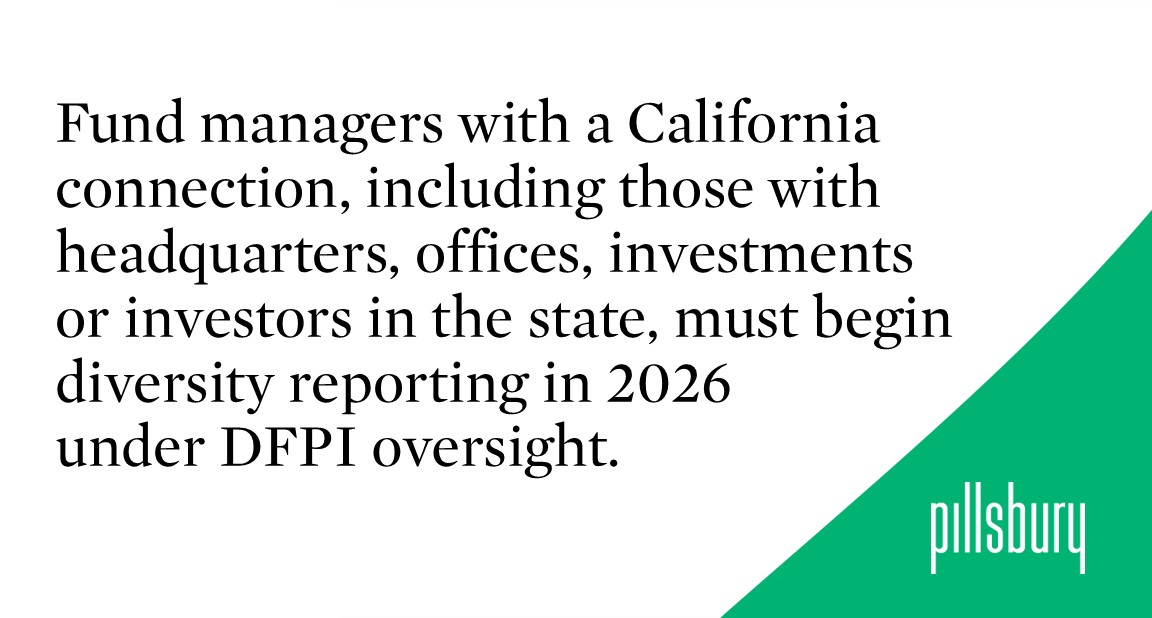
VC Firms Face New California Reporting Mandate
The amendments in SB 164 narrow certain definitions, expand reporting fields, impose additional governance and record-retention obligations, and clarify timing and compliance expectations for 2026 and beyond.
DFPI Oversight and Timeline
SB 54 originally tasked the California Civil Rights Department with collecting and publishing demographic information about startup founders. Under the 2024 amendments, this responsibility shifted to the DFPI, which will now administer and enforce the program. DFPI representatives have indicated that they are drafting a standardized survey form that fund managers must distribute to portfolio-company founding teams after investments close.The following are the key dates for compliance:
- March 1, 2026: Fund managers must register with the DFPI, identifying themselves as covered entities.
- April 1, 2026: Fund managers must file their first annual diversity-reporting form, covering investments made in 2025.
The registration filing must also include covered-entity-level information, including the legal name of the fund, physical address, website, and the name, title and email address of a designated compliance contact, per SB 164. The DFPI intends to allow a post-deadline grace period (approximately 60 days from notice of non-compliance) during which covered entities may cure a late or missing filing before penalties of up to $5,000 per day of non-compliance are assessed. As of the date of this alert, DFPI has not yet released the standardized survey form or reporting template, and covered entities should continue to monitor DFPI guidance for further updates.
Who Is Covered
The law applies to “covered entities,” defined broadly to include venture capital firms and similar investment vehicles that:- Qualify as a “venture capital company” under California Corporations Code § 27500 and related regulations;
- Are primarily engaged in investing in or financing startup, early-stage or emerging-growth companies; and
- Maintain a California nexus, including:
– Being headquartered or having a significant presence or operating in California,
– Investing in California-based portfolio companies, or
– Soliciting or receiving investments from California residents or entities.
Because the “California nexus” standard is broad, even firms without a physical presence in the state may fall within scope if they raise capital from even a single California investor.
What Fund Managers Must Do
The DFPI survey, expected to be released in early 2026, will require fund managers to collect demographic information from founders after signing definitive investment documents and funding such investments. Founders must be informed that:- Participation is voluntary,
- Responses will be anonymized and reported only in the aggregate, and
- No identifying information will be disclosed.
The amended law specifies the full set of demographic fields that must be made available to founders, including gender identity (with nonbinary and gender fluid options), race, ethnicity, disability status, LGBTQ+ status, veteran or disabled-veteran status, and California residency, as well as a “decline-to-provide” option.
SB 164 also narrowed and clarified the definition of “founding team member.” A reportable founding team member is someone who (1) owned initial shares or similar ownership interests in the business, contributed to the company’s concept or development before the issuance of initial shares, and is not a passive investor in the business, or (2) is designated as chief executive officer or president.
Covered managers must aggregate the information received and report it annually to the DFPI. If no founders respond, the manager must affirmatively indicate that no information was available.
In addition to the demographic data, the fund manager must report investment-level details, including the total amount of money invested into each business during the prior year, the principal place of business of each company and the percentage of venture capital investment made by the covered entity.
Practical Implications
Nearly all venture-focused funds with at least one California investor are likely to be covered. Because survey participation by founders is voluntary, some reports may contain limited or no demographic data, but fund managers are still expected to register and file.Firms covered should consult with their counsel and:
- Assess coverage under § 27500 and related DFPI guidance.
- Design internal processes for tracking California investments and founder-team outreach.
- Prepare to register with DFPI by March 1, 2026.
- Monitor DFPI updates and the release of the official survey form.
- Update internal privacy and data-governance systems, as SB 164 requires covered entities to retain all records related to each report for at least five years and involves sensitive personal information.
- Be aware of ongoing uncertainty, as SB 164 does not define several key terms (e.g., “emerging growth company,” “significant presence,” “diverse founded”), and further DFPI guidance will be needed.
Conclusion
California’s SB 54 represents a new stage in venture capital transparency regulation aimed at increasing disclosure with respect to diversity of founding teams. With DFPI now leading implementation and the first filings due at the beginning of Q2 of 2026, fund managers should begin compliance planning well before the survey form is released.Pillsbury’s Investment Funds team is actively tracking DFPI updates and can assist in assessing coverage and preparing filings once the reporting framework is finalized.
Continue Reading
-

FRCP 16.1 Arrives: Will MDL Courts Embrace Its Tools? | HUB
Effective 1 December 2025, Federal Rule of Civil Procedure 16.1 introduces the first formal procedural framework tailored to multidistrict litigation (MDL) proceedings, aiming to address longstanding challenges in the management of complex, high-volume federal litigation.
Key Takeaways
Rule 16.1’s Purpose
The new rule provides MDL transferee courts with an optional roadmap for early case management. After the Judicial Panel on Multidistrict Litigation (JPML) consolidates actions into an MDL, the transferee court is encouraged (but not required) to take three actions aimed at effective MDL case management. First, the transferee court “should schedule an initial management conference to develop an initial plan for orderly pretrial activity in the MDL Proceedings.” Fed. R. Civ. P. 16.1(a). Second, prior to the initial management conference, the transferee court “should” order the parties to submit a pre-conference report that addresses critical issues such as consolidating pleadings, discovery, pretrial motions, and the appointment of leadership counsel. Fed. R. Civ. P. 16.1(b). Third, after the initial conference, the transferee court “should” enter an initial case management order addressing the matters in the pre-conference report. Fed. R. Civ. P. 16.1(c).
Early Vetting of Claims
Rule 16.1 sets the stage for early scrutiny of claims by requiring parties to outline how and when they will exchange information supporting their claims and defenses. This is designed to curb the widespread filing of unverified or unsupportable claims that have plagued MDL dockets in recent years. Indeed, as explained in the Committee Notes, “after taking account of whether the party whose claim or defense is involved has reasonable access to needed information—the court may find it appropriate to employ expedited methods to resolve claims or defenses not supported after the required information exchange.”
Perspective of the Parties
The rule specifically calls for the “parties’ initial views on various matters” in the pre-conference report. Fed. R. Civ. P. 16.1(b)(3). This includes the parties’ views on “discovery, including any difficult issues that may arise,” pretrial motions, and “whether the court should consider any measures to facilitate resolving some or all actions before the court.” Fed. R. Civ. P. 16.1(b)(3). By soliciting counsel’s input on matters during the initial stages of litigation, the rule ensures that considerations from both sides inform the transferee court’s initial case management order.
Judicial Discretion
While Rule 16.1 provides a helpful framework, it does not impose mandatory obligations on transferee courts. Indeed, the rule uses conditional phrases such as “should” and “in the court’s discretion” throughout, and the Committee Notes confirm the rule is intended as guidance rather than a mandate. See Fed. R. Civ. P. 16.1(a), (c), and Committee Notes. Its effectiveness, then, will depend on judicial willingness to implement the rule’s recommendations.
Looking Ahead
As of December 2025, there were over 340,000 cases consolidated across 157 active federal MDLs.1 For years, the absence of clear procedural rules in MDLs led to ad hoc management and inconsistent vetting of individual claims. Rule 16.1 changes that dynamic. By introducing a structured framework and equipping transferee courts with tools to enhance case oversight from the outset, Rule 16.1 is a positive step in bringing order and efficiency to MDL proceedings. However, because the rule is discretionary, its effectiveness will ultimately depend on whether the transferee court chooses to enforce its provisions and turn optional guidance into meaningful action.
Continue Reading
-

Gold prices in Pakistan reverse trend, drop by Rs1,200 per tola
KARACHI (Dunya News) – Gold prices recorded a decline in both local and international markets on Wednesday, bringing relief to buyers after recent gains.
According to the All Pakistan Gems and Jewellers Association (APGJA), the price of gold per tola fell by Rs1,200, settling at Rs466,762 in the domestic market.
Similarly, the price of 10 grams of gold decreased by Rs1,028, reaching Rs400,173.
The association also reported a downturn in the international market, where gold prices dropped by $12 per ounce, bringing the global rate down to $4,444 per ounce.
Market analysts attribute the decline to fluctuations in the international bullion market and changing investor sentiment. Further movement in gold prices is expected to depend on global economic indicators and currency trends.
Related Topics
‘ ; r_text[1] = ” ; r_text[2] = ” ; r_text[3] = ” ; r_text[4] = ” ; r_text[5] = ” ; r_text[6] = ” ; var i = Math.floor(r_text.length * Math.random()); document.write(r_text[i]);
Continue Reading
-

Holocaust survivor descendant ‘stripped’ by Grok AI tool on X – The Times
- Holocaust survivor descendant ‘stripped’ by Grok AI tool on X The Times
- Elon Musk’s Grok AI floods X with sexualized photos of women and minors Reuters
- Explainer: Elon Musk’s Grok AI chatbot is facing widespread backlash on X for sexualised images. Here’s what happened Dawn
- France to investigate deepfakes of women stripped naked by Grok politico.eu
- Elon Musk’s X faces probes in Europe, India, Malaysia after Grok generated explicit images of women and children CNBC
Continue Reading
-

Orange successfully prices a bond issuance in 5 tranches for a total amount of 6 billion US dollars
Orange plans to use the proceeds for general corporate purposes, which may include the repayment of certain outstanding indebtedness of MasOrange to be assumed in connection with Orange’s acquisition of the remaining 50% of MasOrange.
With a weighted average coupon of 4.72% for an average maturity of 9 years, this first US dollars issuance since 2016 allows Orange to benefit from diversification in its pool of credit investors.
CAUTION: NOT FOR DISTRIBUTION IN CANADA, AUSTRALIA OR JAPAN
This press release may not be published, distributed or transmitted in Canada, Australia or Japan. This release does not constitute an offer of securities for sale or a solicitation of an offer to purchase these securities in the United States, Australia, Canada, Japan or any other jurisdiction in which such offer or solicitation is unlawful. The securities may not be offered or sold in the United States or to, or for the account or benefit of, U.S. persons, absent registration or an exemption from registration under the U.S. Securities Act of 1933, as amended (the “Securities Act”). There will be no public offering of the securities in the United States. The securities have not been, and will not be, registered under the Securities Act. The securities referred to herein may not be offered or sold in Australia, Canada or Japan or to, or for the account or benefit of, any national, resident or citizen of Australia, Canada or Japan subject to certain exceptions.The company has not authorized any offer of the securities to retail investors (as such term is defined in the regulation) in any member state of the European Economic Area. No action has been undertaken or will be undertaken to make an offer of the securities to retail investors requiring publication of a prospectus in any EEA Member State. As a result, the securities may only be offered in EEA Member States (i) to any legal entity that is a qualified investor as defined in the Prospectus Regulation (EU) No 2017/1129, as amended or (ii) in any other circumstances falling within Article 1(4) of the Prospectus Regulation.
This press release is an advertisement and not a prospectus within the meaning of the Prospectus Regulation and does not constitute an offer to acquire securities. No Prospectus Regulation compliant prospectus has been or will be published.
In the United Kingdom, this release may only be distributed to, and is only directed at, persons who are “qualified investors” within the meaning of Article 2 of Regulation (EU) 2017/1129 as it forms part of domestic law by virtue of the European Union (Withdrawal) Act 2018, as amended, and who are also (i) investment professionals falling within Article 19(5) of the Financial Services and Markets Act 2000 (Financial Promotion) Order 2005, as amended (the “Order”), or (ii) persons falling within Article 49(2)(a) to (d) of the Order (high net worth companies, unincorporated associations, etc.) (all such persons referred to in (i) and (ii) above are together being referred to as “Relevant Persons”). This release is directed only at Relevant Persons and must not be acted on or relied on by persons who are not Relevant Persons. Any investment or investment activity in securities of the Company is available only to Relevant Persons and will be engaged in only with Relevant Persons.
Continue Reading