Category: 3. Business

  • Rolls-Royce strengthens defence capabilities: 350 mtu engines for Boxer wheeled armoured vehicles

    Rolls-Royce strengthens defence capabilities: 350 mtu engines for Boxer wheeled armoured vehicles

    The Boxer armoured transport vehicle and the mtu Series 199 have been a joint success story for years. Further orders were added in 2025, bringing the total number of 8V199 engines to around 400 in 2025. The modular vehicle consists of an eight-wheeled drive module onto which mission modules are mounted depending on the intended use. This has resulted in a large number of variants for European and non-European armies in a short period of time. What they all have in common is the drive: all of the more than 2,000 Boxer vehicles ordered or already delivered and their derivatives are powered by mtu 8V199 engines.

    With over 4,500 engines delivered, the mtu 199 series is the world’s most successful programme in its performance class for military land vehicles used by the armies of NATO members and allied states. It stands for high-performance engines with low space requirements and high power density, which can be used to power new weapon systems and to re-engine existing vehicle fleets with high efficiency.

    Building on this concept, Rolls-Royce is expanding the 199 series into a larger family to meet the increasing performance requirements of the troops and the limited budgets of the armies. Rolls-Royce recently announced performance upgrades of the existing variants of the mtu Series 199 and the development of a 10-cylinder variant with up to 1,100 kW and a 12-cylinder variant with over 1,300 kW of power.


    Continue Reading

  • Scott Bessent ‘not concerned’ by sell-off: Denmark is irrelevant

    Scott Bessent ‘not concerned’ by sell-off: Denmark is irrelevant

    “Denmark’s investment in U.S. Treasury bonds, like Denmark itself, is irrelevant,” U.S. Treasury Secretary Scott Bessent told reporters at Davos on Wednesday.

    The “sell America” trade was in full swing Tuesday after President Donald Trump and European leaders escalated tensions over Greenland. U.S. stocks and bond prices tumbled, sending yields spiking.

    It comes as Trump’s threats to impose 10% tariffs on eight European countries as part of his push to take over Greenland spooked markets. The levies would come into force on Feb. 1, Trump said, and later rise to 25%.

    Europe’s holdings in U.S. treasuries, however, have been tipped as a potential countermeasure.

    Danish pension operator AkademikerPension said Tuesday it was selling $100 million in U.S. Treasurys. The decision was driven by “poor [U.S.] government finances,” said Anders Schelde, AkademikerPension’s investing chief.

    When Bessent was asked how concerned he is about European investors pulling out of treasuries, Bessent said at a press conference at the World Economic Forum: “Denmark’s investment in U.S. Treasury bonds, like Denmark itself, is irrelevant.”

    “That is less than $100 million. They’ve been selling Treasuries for years, I’m not concerned at all.”

    Bessent added that the U.S. has had “record foreign investment” in its Treasurys.

    He suggested that the Japanese bond sell-off following the announcement of a snap election in the island state, has “spilled over to other markets.”

    The “notion that Europeans would be selling U.S. assets came from a single analyst at Deutsche Bank,” Bessent said, which was then amplified by “the fake news media.”

    “The CEO of Deutsche Bank called to say that Deutsche Bank does not stand by that analyst report,” he added. CNBC has reached out to Deutsche Bank for comment.

    Deutsche Bank says Europe has one big advantage as Trump threatens tariffs over Greenland

    The U.S. has deemed Greenland a national security concern as the Arctic warms and new trade routes emerge, opening the floor for a potential power play between the U.S., Russia and China. The Trump Administration has said it wants to avoid that conflict.

    “We are asking our allies to understand that Greenland needs to be part of the United States,” Bessent told reporters.

    He added that U.S. bought the U.S. Virgin Islands from Denmark during the First World War because they “understood” the islands’ importance.

    Follow CNBC International on Twitter and Facebook. 


    Continue Reading

  • UK inflation December 2025

    UK inflation December 2025

    A shopper browses fruit and vegetables for sale at an indoor market in Sheffield, UK. The OECD recently predicted that the UK will experience the highest inflation among all advanced economies this year.

    Bloomberg | Bloomberg | Getty Images

    The U.K. inflation rate rose to 3.4% in December, above forecasts of 3.3% from economists polled by Reuters.

    The inflation rate had cooled sharply to 3.2% in the twelve months of November, with the data encouraging the Bank of England to cut interest rates at its final meeting of the year last month.

    Core inflation, excluding energy, food, alcohol, and tobacco, stood at 3.2% in December, unchanged from November, according to the latest figures from the Office for National Statistics.

    The figures, coming after employment data on Monday which showed further cooling in the labor market, raise doubts over whether the BOE will proceed with its expected February rate cut.

    “We expect the Bank of England to remain on hold for at least the next couple of meetings,” Matthew Ryan, head of Market Strategy at Ebury, commented Monday.

    “The hawks on the committee have long emphasised upside risks to U.K. inflation, but these arguments are losing steam amid the deteriorating employment picture and the moderation in wage pressures,” he noted.

    This is a breaking news story, please check for further updates.

    Continue Reading

  • MHI and ITB Deepen Research Collaboration on Ammonia-Based Clean Power in Indonesia

    MHI and ITB Deepen Research Collaboration on Ammonia-Based Clean Power in Indonesia

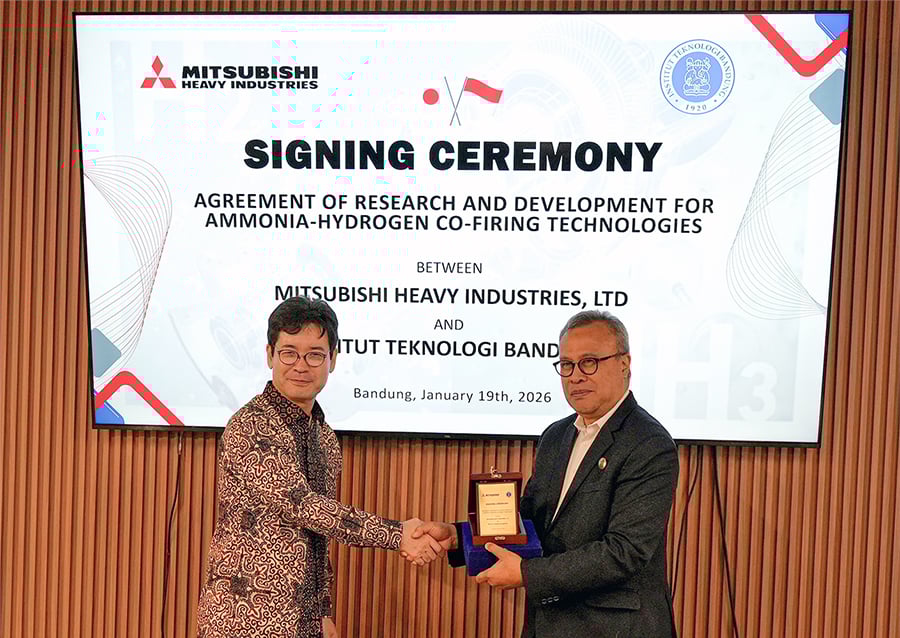
    Satoshi Hada (Senior Vice President, GTCC Business Division/MHI) and Prof. Dr. Ir. Ari Darmawan Pasek., (ITB) at signing of joint R&D agreement

    Tokyo, January 21, 2026 – Mitsubishi Heavy Industries, Ltd. (MHI) and Indonesia’s Institut Teknologi Bandung (ITB) have signed a new research agreement to extend their long-standing collaboration on the exploration of clean power generation, further advancing research related to ammonia-based fuel applications.

    Building on earlier joint studies, the extended agreement continues research into ammonia combustion, with a focus on strengthening understanding of how ammonia can be applied safely and effectively in gas turbine systems. Through sustained collaboration, MHI and its power solutions brand, Mitsubishi Power, together with ITB, aim to reinforce the technical knowledge needed to support the practical use of ammonia in power generation and contribute to Indonesia’s long-term decarbonization goals.

    During the signing ceremony in Bandung, Indonesia, Satoshi Hada, Senior Vice President of the GTCC Business Division at MHI, said: “Research and development are central to MHI and to our power solutions brand, Mitsubishi Power, as we work to advance cleaner power technologies. We are pleased to continue the momentum of our long-standing collaboration with ITB. Ammonia is increasingly recognized as a promising carbon-free fuel, but realizing its potential requires a deep and careful understanding of its unique properties. By building on the progress achieved together, we look forward to strengthening the technical foundations that can support cleaner and more sustainable power generation in Indonesia.”

    Prof. Dr. Ir. Ari Darmawan Pasek, of ITB, said: “The transition to cleaner energy is essential in addressing climate change. Our collaboration with MHI reflects the importance of combining academic research with industrial expertise to advance cleaner fuel technologies. We are confident that this continued partnership will contribute valuable insights to support the future role of ammonia in power generation and Indonesia’s decarbonization journey.”

    MHI and ITB first concluded a memorandum of understanding in 2020 to collaborate on research into next-generation clean energy solutions and analysis of big data relating to power plants. This partnership was extended in 2022 and has since progressed through multiple research initiatives focused on ammonia-fired power generation. The latest agreement continues this long-standing collaboration, building steadily on the work undertaken to date.

    With support from its power solutions brand, Mitsubishi Power, MHI remains committed to contributing to Indonesia’s scientific and technological development in the energy sector, in line with the country’s ambition to achieve net-zero emissions by 2060.

    Continue Reading

  • From Ambition to Activation: Organizations Stand at the Untapped Edge of AI's Potential, Reveals Deloitte Survey – PR Newswire

    1. From Ambition to Activation: Organizations Stand at the Untapped Edge of AI’s Potential, Reveals Deloitte Survey  PR Newswire
    2. WEF report spotlights real-world AI adoption across industries  arabnews.jp
    3. Rise of GenAI represents a fundamental shift: TCS CEO  Awaz The Voice
    4. The forward-deployed engineer: Why talent, not technology, is the true bottleneck for enterprise AI  cio.com
    5. Tech Mahindra Recognized Amongst MINDS 2nd Cohort By World Economic Forum for Advancing Linguistic and Digital Equity Through AI | Corporate  EQS News

    Continue Reading

  • Analyzing Regulatory Gaps Revealed by India’s Response to the Grok Debacle

    Analyzing Regulatory Gaps Revealed by India’s Response to the Grok Debacle

    Union Minister Ashwini Vaishnaw briefs the media in New Delhi on Wednesday, March 5, 2025. (Kamal Singh/PTI via AP)

    What happens when powerful AI tools are released without safeguards into platforms used by millions? This question has occupied headlines after Grok, the generative AI chatbot integrated into the social media platform X was weaponized to non-consensually create and share sexually explicit and degrading images of women and children. The proliferation of such images on X was a direct result of the introduction of an image generation and editing feature to Grok in December 2024. Grok’s subsequent integration with X and the introduction of a “spicy mode” last year exacerbated the abuse by enhancing access and dissemination of such non-consensual intimate imagery (NCII).

    The Grok incident has rightly triggered widespread outrage across jurisdictions, and regulators around the world are taking action, with responses ranging from blocking Grok entirely, such as in Indonesia, to launching an investigation into its functioning, as in the United Kingdom.

    In India, the Ministry of Electronics and Information Technology (MeitY) issued a letter to X on January 2, 2026, citing a failure to comply with statutory due diligence obligations under the Information Technology Act, 2000 and the Information Technology (Intermediary Guidelines and Digital Media Ethics Code) Rules, 2021. Apart from adherence to the legal framework, MeitY demanded a report on the steps being taken by X to address the issue within 72 hours from the issuance of the letter. However, while the ministry’s response has been relatively swift, there are several deeper and systemic issues that it has exposed.

    First, this response reveals structural problems in how India is currently attempting to govern AI-driven harms. MeitY has not initiated a dedicated regulatory or investigative process for Grok as an AI system. Instead, it has relied almost entirely on the existing intermediary liability framework under the IT Act and the IT Rules to look into the matter. Earlier, MeitY issued an advisory to social media intermediaries on December 29, 2025 which warned against the hosting, uploading, and transmission of obscene, pornographic and other unlawful content and advised them to undertake a review of their internal compliance frameworks. Through both the advisory and its January 2 letter to X, it is evident that MeitY’s approach to this incident is that of a failure of platform compliance with legal obligations and due diligence requirements. Simply put, the government response is built around takedowns and platform enforcement routed through the intermediary liability regime.

    Additionally, the government is currently deliberating on introducing the Draft Information Technology (Intermediary Guidelines and Digital Media Ethics Code) Amendment Rules, 2025, to combat the rise of deepfakes. These rules would make labelling of all synthetically generated information mandatory. While this step is well-intentioned, concerns related to compelled speech, ambiguous definitions as to what constitutes “synthetic content,” and fears over increased censorship powers that would add to the existing safe harbor framework have been raised. This approach reflects a broader reluctance to regulate and place binding obligations on AI systems and stakeholders within the AI ecosystem. The general sentiment of anti-AI regulation prevalent in India points to apprehensions that the imposition of ‘bureaucratic fetters’ will hinder the development and adoption of AI in India.

    The government’s attitude on wider AI regulation can be seen in the India AI Governance Guidelines released in November 2025. While the Guidelines, which were released under the India AI Mission, acknowledge the risks posed by AI, they largely defer to the extant legal regime, stating that “a separate law to regulate AI is not needed given the current assessment of risks” and that the risks associated with AI can be addressed through voluntary measures and “existing laws.” However, if there’s one thing that the Grok episode highlights, it is that not only has the market failed to regulate itself, but the existing laws which address platform governance have failed to effectively address AI driven harms such as sexualized deepfakes. This has, in turn, exposed a dire need for regulation.

    Grok, as a generative AI model capable of producing illegal and abusive content on demand, is not directly regulated as an AI system, but is only regulated indirectly through X’s obligations as a social media intermediary. If similar harm were to occur on stand-alone AI platforms that are not intermediaries under the IT Act, for instance on other generative AI chatbots, there is a real risk that this would fall into a regulatory grey zone. This leaves India without a clear legal framework to require pre-deployment testing, built-in safety and consent guardrails, or any independent oversight of high-risk generative AI tools.

    At the outset, to drive constructive conversations around AI, the Indian government needs to drop apprehensions that a regulatory approach is likely to be perceived as a backward response to emerging technologies. Further, there is an urgent need to move past the reductive, binary narrative that regulation strangles innovation, as this line of thinking leads to the adoption of a light-touch regulatory and self-regulatory codes administered by industry without oversight, an approach that results in episodes such as the Grok incident. Instead, the way forward ought to be one that embraces regulatory responses that lead to tangible accountability from all stakeholders in the AI value chain. To do this, a participatory approach to AI governance is essential. The government ought to consider conducting an open, public, multi-stakeholder consultation that would expand the conversation of AI regulation beyond the framework of the IT Act as a good first step in this direction.

    Unless it is accepted that systemic changes need to be made to address AI-enabled harms such as NCII, a platform moderation approach is likely to change little. What is necessary is prioritizing ‘Safety by Design’ and mandates for adversarial testing (so-called red teaming), adherence to technical standards (like C2PA) to label AI-generated content, addressing the existence of NCII and Child Sexual Abuse Material (CSAM) in training data sets, and an investment in the development of tools that detect and report such content. Otherwise, any promises to tackle AI-generated sexual abuse would ring hollow.

    Lastly, it is also important to touch upon another issue that plagues the content moderation approach for NCII in India, that of framing the issue merely in terms of “obscene” or “vulgar” content. This approach misses the core harm involved in image-based sexual abuse: a complete lack of consent. The defining feature of NCII is not the subjective assessment of whether a particular image or video crosses the threshold to be deemed as “obscene” or “vulgar.” Instead, the primary violation is the creation of such an image in the absence of any meaningful consent of the person who is depicted. This violation continues to subsist regardless of whether the content is considered to be obscene in nature or not. Reducing such abuse to a question of obscenity collapses this distinct harm with the imposition of moral and socio-cultural standards. Therefore, a framework based on consent and a rights-based understanding arguably offers a better path forward that safeguards the interests of victims. It would allow regulators and platforms to respond to abuse in a victim-focused way while still respecting constitutional free speech protections.

    The Grok incident was an easily predictable outcome of a governance model that allows powerful AI systems to be deployed at scale without enforceable, ex-ante safety obligations. When such tools which have the capacity to shape behavior, reputation, personal autonomy, dignity and safety are made available in the mainstream, the harm they can cause is not confined to a few users but has a ripple effect that is difficult to contain. While X admitted to failures and stated that it had taken down the offending content, this was a reactive measure taken only after large volumes of harmful material had already been generated and widely circulated. Moreover, neither the full scale of the harm, the number of victims who were affected, nor the adequacy of the fixes has been independently verified.

    Reportedly, MeitY was dissatisfied with the platform’s initial response as well. Meanwhile the broader issue of the dissemination of NCII and CSAM continues to remain unresolved and risks being forgotten. We await MeitY’s further action on this matter.

    Continue Reading

  • A stooge in the US Fed could blow out inflation in Australia – but Trump is unlikely to get his way | Australian economy

    A stooge in the US Fed could blow out inflation in Australia – but Trump is unlikely to get his way | Australian economy

    The Reserve Bank of Australia could lose some control over its ability to set interest rates independently if Donald Trump is successful in his bid to take control of the US central bank, experts warn.

    Ten days after the US Department of Justice announced a criminal investigation into the Federal Reserve’s chair, Jerome Powell, the supreme court on Wednesday will hear arguments in a legal case that will determine whether the president has the power to fire Lisa Cook, a member of the Fed’s board of governors.

    National Australia Bank’s chief economist, Sally Auld, said if the court upholds Trump’s efforts to sack Cook then that could spell the beginning of the end of the central bank’s independence.

    The consequences of Washington DC wresting control over monetary policy could be severe, and ultimately lead to higher inflation.

    It would likely trigger a crisis in confidence in the American currency and financial assets, such as stocks and bonds, Auld said, with ramifications for other central banks.

    In this worst case scenario, “the magnitude of the depreciation of the US dollar would be quite significant”.

    “If the Aussie dollar jumped 15%, that would make our currency expensive and that in itself might be enough to demand the RBA cut rates. Their hand could be forced.”

    So far, investors remain untroubled with the unprecedented attack on the Fed, and this calmness in financial markets “feels a little bit out of sync with the way people are sensing the world at the beginning of 2026”, Auld said.

    Sign up: AU Breaking News email

    There are 12 members of the Federal Open Market Committee who have a vote on rate decisions.

    They include the seven members of the Washington DC-based board of governors, the president of the Federal Reserve Bank of New York, and four of the remaining 11 presidents of the regional reserve banks (who serve one-year terms on a rotating basis).

    The Fed’s next rate decision is due early on 29 January, Australian time, and will be the first made in the shadow of the looming threat of a Department of Justice criminal investigation into Powell.

    Even if Trump is unable to gain direct power over the central bank, as is likely, the political pressure and threats have already chipped away at the image of an independent institution.

    The chief economist at AMP, Shane Oliver, said a politically controlled Fed could keep rates lower for longer and “end up with an inflation blowout” that could smash the US dollar and drive Wall Street lower.

    Like Auld, Oliver believes the “upshot could mean lower rates” in Australia.

    “A stronger Aussie dollar and lower interest rates; some Australians would think that’s not a bad outcome. But the risk would ultimately be more inflation.”

    Oliver said the prospect remained relatively distant.

    “To get to that point you’d need to have Trump gaining complete control over the Fed. If he gets control of four of the seven governors, then he gets some control over who sits as president. That’s when the guardrails around the Fed weaken.”

    Successful or not, Oliver said Trump’s push to overturn decades of political support for central bank independence would set a precedent for other populists around the world.

    “For Australia, the problem is that this is the world’s most significant central bank. If the threats to independence are happening there, then it would happen here.”

    There is already a constituency on the left who would be happy to abandon the principle of central bank independence.

    The Greens’ economic spokesperson, Nick McKim, in September last year demanded Jim Chalmers “show some courage” and exercise his legislative powers to “directly override” the RBA and force it to cut rates.

    Populist figures on the right, such as rising Liberal figures like Andrew Hastie and Senator Jacinta Nampijinpa Price, may choose to follow Trump’s lead, especially should the RBA raise interest rates this year.

    Unions have been deeply critical of the RBA for keeping rates too high at the expense of jobs, but still publicly back its independence.

    Oliver said “in some ways [Australia’s institutional settings] are already weaker than the Fed”.

    “To get a governor appointed in the US you have to go through a committee, whereas here you are just appointed by the Treasurer.”

    Luci Ellis, Westpac’s chief economist and a former senior RBA official, said Australia should still be able to pursue an independent monetary policy even in a world where the American central bank has been suborned by political interests.

    “There’s no particular reason we have to follow what the Fed does,” Ellis said, pointing to recent evidence of how the two countries’ monetary policy paths have diverged.

    “It would be bad if the biggest and most powerful central bank lost some of its operational independence, but it would not in and of itself change how the RBA would need to behave.”

    Continue Reading

  • MHI-TC Delivers Self-Propelled Mobile Seaport Passenger Boarding Bridge to Yokohama City, Entering Service on January 13th– Capable of Connecting to Large Luxury Cruise Ships Docking at Osanbashi Yokohama International Passenger Terminal —

    MHI-TC Delivers Self-Propelled Mobile Seaport Passenger Boarding Bridge to Yokohama City, Entering Service on January 13th– Capable of Connecting to Large Luxury Cruise Ships Docking at Osanbashi Yokohama International Passenger Terminal —

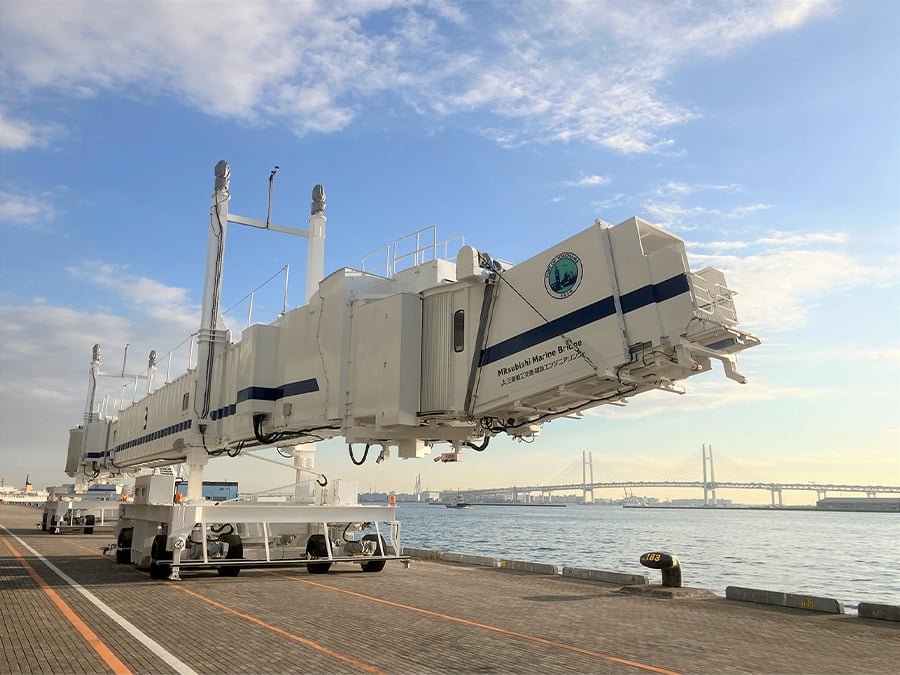
    “Mitsubishi Marine Bridge (MMB)” – a Self-Propelled Mobile SPBB

    Tokyo, January 21, 2026 – Mitsubishi Heavy Industries Transportation and Construction Engineering, Ltd. (MHI-TC), a part of Mitsubishi Heavy Industries (MHI) Group, has built and completed delivery to Yokohama City of the Mitsubishi Marine Bridge (MMB), a self-propelled mobile seaport passenger boarding bridge (SPBB). Manufactured at MHI’s Mihara Machinery Works in Hiroshima Prefecture, the MMB was put into service at Osanbashi Yokohama International Passenger Terminal on January 13. Capable of connecting to the large cruise ships that dock at Osanbashi, this is MHI-TC’s first delivery of a mobile MMB.

    The MMB protects passengers from inclement weather and temperature, ensuring safe, secure, and comfortable passenger movement. In addition, passengers do not need to descend to the wharf, enhancing security and making more effective use of wharf space. The autonomous driving function of the mobile MMB was designed by MHI-TC by applying technology developed for the company’s fully automated docking system for airport passenger boarding bridges (PBBs). The main characteristics are as follows.

    Features of the Mobile MMB Developed by MHI-TC

    1. 16-wheel independent steering control
      Mobility is made possible by eight-wheeled, independently controlled steering units at the front and rear of the MMB. These steering controls allow the bridge to turn at the end of the pier, so it can potentially operate on both the Shinko side and Yamashita side of the wharf.
    2. GNSS (Global Navigation Satellite System) automated driving
      The mobile MMB is equipped with an automated driving function utilizing GNSS. This autonomous driving function is based on technology developed for the fully automated docking system for airport PBBs.
    3. Flexible docking system
      The flexible docking system is adaptable to different docking positions on the terminal side, and different passenger access door positions on the ship side.
    4. Self-generated power
      The front and rear driving units on the MMB are each equipped with generators, making an external power supply unnecessary. As an environmental feature, it is possible to switch to a land-based power supply when in use as a bridge.
    5. Trackless driving
      Since the MMB does not need rails or other tracks, the wharf can be used efficiently for cargo handling and the passage of related vehicles.
    6. Move/Standby function
      When not in use, the MMB can move to a position where it will not be in the way.
    7. Universal Design
      Following the design philosophy of passenger boarding bridges, the mobile MMB has a gently sloping ramp for passengers to move between the terminal and the ship.


    The Port of Yokohama opened in 1859, and the current Osanbashi Yokohama International Passenger Terminal was completed in 2002. It is the port of registry for the cruise ships ASUKAⅡand ASUKAⅢ, and one of the top ports in Japan for the number of cruise ship visits. Osanbashi Yokohama International Passenger Terminal is also a tourist attraction, visited by more than three million people annually.

    MHI-TC will continue to contribute to the safe and smooth operation of ships through the manufacture and delivery of mobile MMBs.

    The MMB in action at Osanbashi Terminal

    The MMB in action at Osanbashi Terminal

    Continue Reading

  • Snap settles social media addiction lawsuit ahead of trial

    Snap settles social media addiction lawsuit ahead of trial

    Snapchat’s parent Snap has settled a social media addiction lawsuit just days before the landmark case was due to go to trial in Los Angeles.

    Terms of the deal were not announced as it was revealed by lawyers at a California Superior Court hearing, after which Snap told the BBC the parties were “pleased to have been able to resolve this matter in an amicable manner”.

    Other defendants in the case include Instagram parent Meta, ByteDance’s TikTok and Alphabet’s YouTube, none of which have settled.

    The plaintiff, a 19-year old woman identified by the initials K.G.M., alleged that the algorithmic design of the platforms left her addicted and affected her mental health.

    In the absence of a settlement with the other parties, the trial is scheduled to go forward against the remaining three defendants, with jury selection due to begin on 27 January.

    Meta boss Mark Zuckerberg is expected to testify, and until Tuesday’s settlement, Snap CEO Evan Spiegel was also set to take the stand.

    Meta, TikTok and Alphabet did not respond to BBC inquiries seeking reaction to the settlement.

    Snap is still a defendant in other social media addiction cases that have been consolidated in the court.

    The closely watched cases could challenge a legal theory that social media companies have used to shield themselves.

    They have long argued that Section 230 of the Communications Decency Act of 1996 protects them from liability for what third parties post on their platforms.

    But plaintiffs argue that the platforms are designed in a way that leaves users addicted through choices that affect their algorithms and notifications.

    The social media companies have said the plaintiffs’ evidence falls short of proving that they are responsible for alleged harms such as depression and eating disorders.

    Continue Reading

  • Teck Announces 2025 Production and Sales Update and Reaffirms Outlook

    Teck Announces 2025 Production and Sales Update and Reaffirms Outlook

    Vancouver, B.C. – Teck Resources Limited (TSX: TECK.A and TECK.B, NYSE: TECK) (“Teck”) today provided select unaudited fourth quarter 2025 production and sales volumes and positive settlement pricing adjustments, annual production volumes for 2025, and reaffirmed previously disclosed production and unit cost guidance for 2026 to 2028 for Teck-operated sites.

    Our fourth quarter 2025 financial results are scheduled for release on February 18, 2026.

    2025 Production Results
    The table below shows a summary of Teck’s share of unaudited production and sales of principal products for the fourth quarter of 2025, and 2025 annual production as compared to our previously disclosed annual guidance. 

    Our 2025 annual copper production of 453,500 tonnes, in line with our previously disclosed guidance, was supported by strong operational performance across all assets in Q4. Performance at Quebrada Blanca (QB) in Q4 was strong with copper production of 55,400 tonnes as we continued the development of the tailings management facility and remained focused on operational stability and progress towards steady state. Copper sales in Q4 2025 were lower than production, primarily due to a short-term build-up in inventory at QB resulting from weather and sea conditions in December, which delayed shipments into early 2026. 

    Our 2025 annual zinc in concentrate production of 565,000 tonnes was at the higher end of our previously disclosed guidance range. Zinc in concentrate sales were 157,200 tonnes in the fourth quarter, with all Red Dog shipments completed early in the quarter, in line with the normal seasonality of sales. 

    Our 2025 annual refined zinc production of 229,900 tonnes was at the high end of our previously disclosed guidance, as we continue to focus on improving profitability and cash generation through prioritizing processing of residues over maximizing refined zinc production.

    (Units in 000 tonnes) Q4 2025 2025 2025 Guidance 
    Production Sales Production Production
    Copper
    Quebrada Blanca 55.4 41.6 190.0 170 – 190
    Highland Valley Copper 37.1 33.6 127.1 120 – 130
    Antamina (22.5%) 26.4 27.9 85.9 80 – 90
    Carmen de Andacollo 15.2 15.5 50.5 45 – 55
      134.1 118.6 453.5 415 – 465
    Zinc
    Red Dog 87.3 136.6 462.7 430 – 470
    Antamina (22.5%) 21.3 20.6 102.3 95 – 105
      108.6 157.2 565.0 525 – 575
    Refined zinc
    Trail Operations 68.1 59.4 229.9 190 – 230


    Pricing Adjustments
    As a result of an increase in base metals prices, we expect to report positive settlement pricing adjustments of $295 million in the fourth quarter.

    Guidance
    There have been no changes to our previously disclosed annual production guidance for 2026–2028, issued on October 7, 2025, for all Teck-operated sites. Our previously disclosed 2026 annual zinc in concentrate production guidance for Antamina of 55,000– 65,000 tonnes has decreased to 35,000–45,000 tonnes, reflecting an updated mine plan, finalized in the fourth quarter of 2025. There has been no change in our previously disclosed 2026 annual copper production guidance for Antamina of 95,000–105,000 tonnes.

    There has been no change to our previously disclosed annual 2026 net cash unit cost1 guidance for our copper or zinc segments, issued on October 7, 2025.

    1 This is a non-GAAP financial measure. See “Use of Non-GAAP Financial Measures and Ratios” for further information.

    Use of Non-GAAP Financial Measures and Ratios
    Our financial results are prepared in accordance with International Financial Reporting Standards as issued by the International Accounting Standards Board. This document includes reference to certain non-GAAP financial measures and non-GAAP ratios, which are not measures recognized under IFRS, do not have a standardized meaning prescribed by IFRS and may not be comparable to similar financial measures or ratios disclosed by other issuers. These financial measures and ratios have been derived from our financial statements and applied on a consistent basis, as appropriate. We disclose these financial measures and ratios because we believe they assist readers in understanding the results of our operations and financial position and provide further information about our financial results to investors. These measures should not be considered in isolation or used in substitute for other measures of performance prepared in accordance with IFRS. For more information on our use of non-GAAP financial measures and ratios, see the section titled “Use of Non-GAAP Financial Measures and Ratios” in our most recent Management Discussion Analysis, which is available on SEDAR+ (www.sedarplus.ca). Additional information on certain non-GAAP ratios is below.

    Total cash unit costs – Total cash unit costs for our copper and zinc operations includes adjusted cash costs of sales, as described below, plus the smelter and refining charges added back in determining adjusted revenue. This document allows a comparison of total cash unit costs, including smelter charges, to the underlying price of copper or zinc in order to assess the margin for the mine on a per unit basis.

    Net cash unit costs – Net cash unit costs of principal product, after deducting co-product and by-product margins, are also a common industry measure. By deducting the co- and by-product margin per unit of the principal product, the margin for the mine on a per unit basis may be presented in a single metric for comparison to other operations. 

    Adjusted cash cost of sales – Adjusted cash cost of sales for our copper and zinc operations is defined as the cost of the product delivered to the port of shipment, excluding depreciation and amortization charges, any one-time collective agreement charges or inventory write-down provisions and by-product cost of sales. It is common practice in the industry to exclude depreciation and amortization as these costs are non-cash and discounted cash flow valuation models used in the industry substitute expectations of future capital spending for these amounts. 

    Adjusted site cash cost of sales – Adjusted site cash cost of sales for our steelmaking coal operations is defined as the cost of the product as it leaves the mine excluding depreciation and amortization charges, out-bound transportation costs and any one-time collective agreement charges and inventory write-down provisions.

    Cautionary Statement on Forward-Looking Statements 
    This news release contains certain forward-looking information and forward-looking statements as defined in applicable securities laws (collectively referred to as forward-looking statements). These statements relate to future events or our future performance. All statements other than statements of historical fact are forward-looking statements. The use of any of the words “anticipate”, “can”, “could”, “plan”, “continue”, “estimate”, “expect”, “may”, “will”, “would”, “project”, “predict”, “likely”, “potential”, “should”, “believe” and similar expressions is intended to identify forward-looking statements. These statements involve known and unknown risks, uncertainties and other factors that may cause actual results or events to differ materially from those anticipated in such forward-looking statements. These statements speak only as of the date of this news release.

    These forward-looking statements include, but are not limited to, statements concerning: all guidance appearing in this document, including, but not limited to, the production, sales, costs, unit costs, capital expenditures, transportation costs, cost reduction and other guidance under the heading ”Guidance” and elsewhere in this news release. 

    These statements are based on a number of assumptions, including, but not limited to, assumptions regarding general business and economic conditions, interest rates and commodity and power prices; acts of foreign or domestic governments and the outcome of legal proceedings; our ability to operate our operations in accordance with our expectations; our ability to advance QB tailings management facilities development initiatives as expected and the timing, occurrence and length of any potential maintenance downtime; expectations with respect to the repair and restart of the ship loader at QB and with respect to continued availability of alternative port arrangements; the possibility that our business may not perform as expected or in a manner consistent with historical performance; the supply and demand for, deliveries of, and the level and volatility of prices of copper and zinc and our other metals and minerals, as well as steel, crude oil, natural gas and other petroleum products; our costs of production and our production and productivity levels; our ability to procure equipment and development and operating supplies in sufficient quantities and on a timely basis; the availability of qualified employees and contractors for our operations; engineering and construction timetables and capital costs for our initiatives; the accuracy of our mineral reserve and resource estimates (including with respect to size, grade and recoverability) and the geological, operational and price assumptions on which these are based; the outcome of the planning, forecasting and reconciliation processes underway; and that operating, development, and capital plans will not be disrupted by issues such as mechanical failure, unavailability of parts and supplies, labour disturbances, interruption in transportation or utilities, or adverse weather conditions. The foregoing list of assumptions is not exhaustive. Events or circumstances could cause actual results to vary materially. 

    Factors that may cause actual results to vary materially including, but not limited to, risks related to the operation of QB and our other operations in accordance with our expectations; risks related to our ability to advance QB tailings management facility development initiatives as expected and the timing, occurrence and length of any potential maintenance downtime; changes in commodity and power prices; changes in market demand for our products; changes in interest and currency exchange rates; unanticipated operational difficulties (including failure of plant, equipment or processes to operate in accordance with specifications or expectations, cost escalation, unavailability of labour, materials and equipment); unplanned or extended operational shutdowns; risks related to the repair and restart of the ship loader at QB and with respect to continued availability of alternative port arrangements; risks related to business performance as expected or in a manner consistent with historical performance; the accuracy of geological and metallurgical assumptions (including with respect to the size, grade and recoverability of mineral reserves and resources); the actual grades of materials; adverse weather conditions; acts of foreign and domestic governments and the outcome of legal proceedings; risks related to general business, economic and market conditions; and unanticipated events related to health, safety and environmental matters. 

    We assume no obligation to update forward-looking statements except as required under securities laws. Further information concerning risks, assumptions and uncertainties associated with these forward-looking statements and our business can be found in our Annual Information Form for the year ended December 31, 2024, filed under our profile on SEDAR+ (www.sedarplus.ca) and on EDGAR (www.sec.gov) under cover of Form 40-F, as well as subsequent filings that can also be found under our profile.

    About Teck
    Teck is a leading Canadian resource company focused on responsibly providing metals essential to economic development and the energy transition. Teck has a portfolio of world-class copper and zinc operations across North and South America and an industry-leading copper growth pipeline. We are focused on creating value by advancing responsible growth and ensuring resilience built on a foundation of stakeholder trust. Headquartered in Vancouver, Canada, Teck’s shares are listed on the Toronto Stock Exchange under the symbols TECK.A and TECK.B and the New York Stock Exchange under the symbol TECK. Learn more about Teck at www.teck.com or follow @TeckResources.

    Investor Contact:
    Emma Chapman
    Vice President, Investor Relations 
    +44.207.509.6576
    emma.chapman@teck.com
     
    Media Contact:
    Dale Steeves
    Director, External Communications
    236.987.7405 
    dale.steeves@teck.com

    26-01-TR

    Continue Reading