Buying shares in the best businesses can build meaningful wealth for you and your family. While the best companies are hard to find, but they can generate massive returns over long periods. Just think about the savvy investors who held Channel Infrastructure NZ Limited (NZSE:CHI) shares for the last five years, while they gained 453%. And this is just one example of the epic gains achieved by some long term investors. Also pleasing for shareholders was the 13% gain in the last three months.
So let’s investigate and see if the longer term performance of the company has been in line with the underlying business’ progress.
Trump has pledged to “unleash” American oil and gas and these 15 US stocks have developments that are poised to benefit.
In his essay The Superinvestors of Graham-and-Doddsville Warren Buffett described how share prices do not always rationally reflect the value of a business. One way to examine how market sentiment has changed over time is to look at the interaction between a company’s share price and its earnings per share (EPS).
During the five years of share price growth, Channel Infrastructure NZ moved from a loss to profitability. Sometimes, the start of profitability is a major inflection point that can signal fast earnings growth to come, which in turn justifies very strong share price gains. Given that the company made a profit three years ago, but not five years ago, it is worth looking at the share price returns over the last three years, too. We can see that the Channel Infrastructure NZ share price is up 106% in the last three years. Meanwhile, EPS is up 77% per year. This EPS growth is higher than the 27% average annual increase in the share price over the same three years. So you might conclude the market is a little more cautious about the stock, these days.
You can see how EPS has changed over time in the image below (click on the chart to see the exact values).
NZSE:CHI Earnings Per Share Growth January 17th 2026
It is of course excellent to see how Channel Infrastructure NZ has grown profits over the years, but the future is more important for shareholders. It might be well worthwhile taking a look at our free report on how its financial position has changed over time.
As well as measuring the share price return, investors should also consider the total shareholder return (TSR). The TSR is a return calculation that accounts for the value of cash dividends (assuming that any dividend received was reinvested) and the calculated value of any discounted capital raisings and spin-offs. So for companies that pay a generous dividend, the TSR is often a lot higher than the share price return. We note that for Channel Infrastructure NZ the TSR over the last 5 years was 602%, which is better than the share price return mentioned above. This is largely a result of its dividend payments!
It’s nice to see that Channel Infrastructure NZ shareholders have received a total shareholder return of 60% over the last year. And that does include the dividend. That gain is better than the annual TSR over five years, which is 48%. Therefore it seems like sentiment around the company has been positive lately. In the best case scenario, this may hint at some real business momentum, implying that now could be a great time to delve deeper. I find it very interesting to look at share price over the long term as a proxy for business performance. But to truly gain insight, we need to consider other information, too. Take risks, for example – Channel Infrastructure NZ has 1 warning sign we think you should be aware of.
For those who like to find winning investments this free list of undervalued companies with recent insider purchasing, could be just the ticket.
Please note, the market returns quoted in this article reflect the market weighted average returns of stocks that currently trade on New Zealander exchanges.
Have feedback on this article? Concerned about the content?Get in touch with us directly. Alternatively, email editorial-team (at) simplywallst.com.
This article by Simply Wall St is general in nature. We provide commentary based on historical data and analyst forecasts only using an unbiased methodology and our articles are not intended to be financial advice. It does not constitute a recommendation to buy or sell any stock, and does not take account of your objectives, or your financial situation. We aim to bring you long-term focused analysis driven by fundamental data. Note that our analysis may not factor in the latest price-sensitive company announcements or qualitative material. Simply Wall St has no position in any stocks mentioned.
Theft of signalling cables has caused “major disruption” on parts of the train network, National Rail said.
The cables were stolen at Napsbury, resulting in a fault with the signalling system at St Albans, Hertfordshire.
National Rail said East Midlands Railway services between Sheffield, Nottingham, Corby and London St Pancras were affected as well as Thameslink services between Bedford and East Croydon, and also between Luton and Rainham, in Kent.
A spokeswoman said work to replace the cables was taking place overnight and normal services were expected to resume at about 06:00 GMT on Sunday.
The company said the theft resulted in “major disruption” meaning that “trains running between Luton and London St Pancras International may be cancelled, severely delayed by up to 60 minutes or revised”.
On National Rail’s website, East Midlands Railway advised customers to expect delays as “trains are being manually sent through the affected area”.
Thameslink also told customers to expect lengthy delays and more frequent train change.
Alternative arrangements for travel have been posted on the National Rail site.
Make better investment decisions with Simply Wall St’s easy, visual tools that give you a competitive edge.
If you are wondering whether Hitachi’s current share price fairly reflects the business, this article walks through what the numbers are saying about its value.
Hitachi’s share price recently closed at ¥5,204, with returns of 1.3% over 7 days, 4.9% over 30 days, 2.7% year to date, 42.4% over 1 year, around 4x over 3 years and a very large gain over 5 years.
Recent coverage around Hitachi has focused on its position as a major capital goods player and ongoing interest from investors tracking large Japanese industrials, which has kept attention on the share price. This backdrop helps frame the recent returns and raises the question of how much of the story is already reflected in the current valuation.
On our checks, Hitachi scores 1 out of 6 on undervaluation tests, giving it a valuation score of 1/6. Next we will compare different valuation methods to see what they imply and then finish with a way to look at value that can help you go beyond any single metric.
Hitachi scores just 1/6 on our valuation checks. See what other red flags we found in the full valuation breakdown.
A Discounted Cash Flow model takes estimates of the cash a company may generate in the future and discounts those figures back to today to arrive at an estimate of what the business could be worth now.
For Hitachi, the model used is a 2 Stage Free Cash Flow to Equity approach based on cash flow projections. The latest twelve month free cash flow is ¥1.20b. Analyst and extrapolated projections suggest free cash flow of ¥631,110.29m in 2026 and ¥811,403.91m in 2035, with Simply Wall St extending forecasts beyond the years covered by analyst estimates.
When these projected cash flows are discounted, the result is an estimated intrinsic value of ¥3,591.03 per share. Compared with the recent share price of ¥5,204, the DCF output indicates the stock is around 44.9% above this modelled value. This suggests Hitachi is trading at a premium on this measure.
Result: OVERVALUED
Our Discounted Cash Flow (DCF) analysis suggests Hitachi may be overvalued by 44.9%. Discover 863 undervalued stocks or create your own screener to find better value opportunities.
6501 Discounted Cash Flow as at Jan 2026
Head to the Valuation section of our Company Report for more details on how we arrive at this Fair Value for Hitachi.
For profitable companies, the P/E ratio is a straightforward way to link what you pay for a share to the earnings that each share generates. It lets you compare businesses of different sizes on a like for like basis.
What counts as a “normal” P/E depends on what investors expect for future growth and how much risk they see in those earnings. Higher expected growth and lower perceived risk usually support a higher P/E, while lower growth or higher risk tend to mean a lower P/E.
Hitachi is currently trading on a P/E of 29.52x. That sits above the Industrials sector average of 12.98x and also above the peer group average of 13.32x. To add more context, Simply Wall St calculates a proprietary “Fair Ratio” for Hitachi of 36.10x, which reflects factors such as earnings growth, industry, profit margins, market cap and risk profile.
This Fair Ratio aims to be more tailored than a simple comparison with peers or the sector, because it adjusts for company specific traits rather than assuming all firms should trade on the same multiple. Compared with this Fair Ratio, Hitachi’s current P/E of 29.52x is lower, which points to the shares being undervalued on this measure.
Result: UNDERVALUED
TSE:6501 P/E Ratio as at Jan 2026
P/E ratios tell one story, but what if the real opportunity lies elsewhere? Discover 1445 companies where insiders are betting big on explosive growth.
Earlier we mentioned that there is an even better way to understand valuation. Narratives on Simply Wall St’s Community page let you turn your view of Hitachi into a clear story that links its business drivers to a forecast for revenue, earnings and margins, then to a Fair Value you can compare with the current price. All of this is updated as new news or earnings arrive. One investor might back a higher fair value around ¥5,300 if they think government backed energy and AI infrastructure and digital services can support stronger margins, while another might anchor closer to ¥3,900 if they are more cautious about competition, costs and underperforming segments.
Do you think there’s more to the story for Hitachi? Head over to our Community to see what others are saying!
TSE:6501 1-Year Stock Price Chart
This article by Simply Wall St is general in nature. We provide commentary based on historical data and analyst forecasts only using an unbiased methodology and our articles are not intended to be financial advice. It does not constitute a recommendation to buy or sell any stock, and does not take account of your objectives, or your financial situation. We aim to bring you long-term focused analysis driven by fundamental data. Note that our analysis may not factor in the latest price-sensitive company announcements or qualitative material. Simply Wall St has no position in any stocks mentioned.
Companies discussed in this article include 6501.T.
Have feedback on this article? Concerned about the content? Get in touch with us directly. Alternatively, email editorial-team@simplywallst.com
A pair of patients with Waldenstrom’s non-Hodgkins lymphoma (NHL) remain in complete remission (CR) after 7 and 15 months following treatment with an off-the-shefl chimeric antigen receptor (CAR) natural killer (NK) cell therapy alongside rituximab, according to leaders from ImmunityBio, who on Friday shared an update from an ongoing trial.1
Durable CRs were seen in patients who had failed to response to current standard therapy. The treatment from ImmunityBio is the first chemotherapy-free, lymphodepletion-free CAR NK therapy to show 100% disease control in its first 4 patients, all of whom have been treated as outpatients, according to a statement from the company.1
The update for the QUILT-106 clinical study (NCT06334991), which is ongoing, offered details for ImmunityBIo’s allogeneic cell therapy engineered to express a CD19-specific CAR NK and a high-affinity CD16 (FcγRIIIa 158V) receptor. The dual anti-tumor design creates a more potent tumor-fighting effect when paired with the anti-CD20 monoclonal antibody rituximab, as is the case in QUILT-106.1
Rituximab targets CD20 on B cells,2 and the QUILT-106 is using the combination regiment to treat Waldenström NHL, a rare B-cell malignancy whose patients have significant unmet need. Patients with Waldenström non-Hodgkins lymphoma who relapse or become refractory to available targeted and antibody-based therapies have limited options.1
Patients received a total of 8 doses of cell therapy in the outpatient setting without lymphodepletion, which requires chemotherapy. Tumors were targeted with both CD19 and CD20 by infusing CD19 CAR NK cells with rituximab, 2 doses per cycle every 21 days for a total of 4 cycles (8 doses of NK-CAR and 6 doses of rituximab) and no further therapy thereafter. Responses were evaluated after 2 cycles.
The 2 patients in long-term follow-up remain in CR despite having no additional treatment, the company said in its statement.1
Both the speed to remission and treatment’s durability show the potential for long-term immune-mediated disease control without continuous therapy, officials said, underscoring the current trend toward time-limited regimens that spare patients toxicity and achieve savings for health systems.3
“This updated follow-up reinforces the central thesis that restoring and activating the immune system can deliver durable control of disease without chemotherapy or lymphodepletion,” Patrick Soon‑Shiong, MD, ImmunityBio’s founder, executive chairman, and global chief medical and scientific officer said in a statement. “Seeing complete responses persist beyond a year after treatment has stopped, in patients who had exhausted available options, represents a meaningful advance for patients with this rare disease of Waldenström lymphoma and validates CAR-NK as a potential next-generation immunotherapy platform.”1
In the 2 patients with evaluable follow up, 1 began with multiple lymphomatous bone lesions and 1 had with approximately 95% bone marrow infiltration by tumor cells. Both had complete responses after only 4 doses of CAR-NK plus rituximab.
Company officials said the patient with significant bone marrow involvement had complete bone morphological remission. In this patient, tumor cells had replaced 95% of the bone marrow, but after just 4 doses the patient achieved a CR that has now been maintained for 15 months, with no treatment beyond the scheduled 8 doses.
This approach “eliminates the need for cytotoxic conditioning for lymphodepletion or inpatient hospitalization, addressing key limitations associated with conventional CAR-T therapies,” ImmunityBio officials said in their statement.1
“These data highlight a favorable safety and efficacy profile that is particularly important for patients with indolent yet incurable lymphomas,” Lennie Sender, MD, ImmunityBio chief medical officer for liquid tumors and cell therapy, said in the statement.1So far, patients have not experienced any serious adverse events, Sender said.1
ImmunityBio plans a follow-up study is that will combine the CAR-NK therapy, rituximab, and the company’s nogapendekin alfa inbakicept treatment, an immunotherapy marketed as Anktiva. This triplet will be evaluated in indolent lymphoma, including Waldenström’s macroglobulinemia.1 At present, nogapendekin alfa inbakicept is approved by FDA with Bacillus Calmette-Guérin (BCG) to treat BCG-unresponsive nonmuscle invasive bladder cancer (NMIBC), specifically with carcinoma in situ.4
References
ImmunityBio announces durable complete response of 15 months with a chemotherapy-free CD19 CAR-NK cell therapy in Waldenstrom lymphoma. News release. ImmunityBIo. January 16, 2026. Accessed January 17, 2026. https://ir.immunitybio.com/news-releases/news-release-details/immunitybio-announces-durable-complete-response-15-months
Maloney DG. Mechanism of action of rituximab. Anticancer Drugs. 2001;12(suppl 2:S1-4.
Caffrey M. Time-limited regimens gain notice, offering a break for patients with blood cancer and savings for payers. Am J Manag Care. 2026;32(Spec 1):SP12.
FDA approves nogapendekin alfa inbakicept-pmln for BCG-unresponsive non-muscle invasive bladder cancer. News release. April 22, 2024. Accessed January 17, 2026. https://www.fda.gov/drugs/resources-information-approved-drugs/fda-approves-nogapendekin-alfa-inbakicept-pmln-bcg-unresponsive-non-muscle-invasive-bladder-cancer
Roula Khalaf, Editor of the FT, selects her favourite stories in this weekly newsletter.
Rolls-Royce is preparing to hand its chief executive a lucrative annual pay rise as part of a new remuneration policy following the company’s spectacular turnaround.
Under the revamped policy, Tufan Erginbilgiç’s annual bonus entitlement will increase from 200 per cent of his base salary of just over £1.1mn to 300 per cent. His long-term incentive awards will go from a maximum of 375 per cent of salary to 750 per cent.
As a result Erginbilgiç’s total package of salary, annual bonus and long-term incentive plan could top £13mn. In 2024, he took home £4.1mn in pay and bonuses.
The new policy, which will be presented to shareholders for approval at Rolls-Royce’s annual meeting in the spring, has the backing of the company’s top 20 investors, according to people familiar with the situation.
The consultation with shareholders was triggered in part by concerns over how to retain talent, one of the people said. They added that the aim was to bring Erginbilgiç’s remuneration more closely into line with those of executives at its aerospace and defence competitors. Sky News first reported the details of the proposal.
Since joining Rolls-Royce three years ago, Erginbilgiç has delivered a sweeping restructuring of the company whose engines power many of the world’s biggest airliners as well as submarines and military jets. Shares in the group have increased by more than 1,200 per cent since January 2023, taking its market value from just under £8bn to over £100bn.
The former oil executive is already in line for a share-based reward that could exceed £100mn.
Erginbilgiç received 8.3mn shares when he joined to compensate for lost earnings and bonuses from his previous employer, the private equity firm Global Infrastructure Partners.
The shares, which vest in two tranches in 2027 and 2028, were granted in March 2023 at a price of 90.8p per share. Rolls-Royce shares closed at £12.80 on Friday, giving him a paper gain of just over £106mn. The potential payout would rank among the largest for a UK-listed company.
Although the shares will only vest if Erginbilgiç continues to work at Rolls-Royce, some analysts have questioned how long he will remain at the company after 2028.
Rolls-Royce said the “step-change” in the company’s performance “coupled with competitive pressures in the external environment for world-class talent” necessitated a review of the remuneration policy.
“This is a proactive measure initiated by the remuneration committee with the full support of the Rolls-Royce board,” it said.
Zattura Sims-El sorts through her utility bills in Baltimore, Maryland, on 13 January 2025.
Before she sat down to speak with the Guardian, Zattura Sims-El leaned over to plug a table lamp into the wall.
“I keep everything in this house unplugged when I’m not using it, because I heard that as long as it’s plugged into the wall, it’s costing you,” she said. “The only things I don’t unplug are my stove, my dishwasher, my refrigerator and my washing machine.”
The 76-year-old resident of Baltimore, Maryland, adopted the habit in an attempt to rein in her utility costs. Despite her efforts, her monthly gas and electricity bills last year always topped $500, and one month reached $975.
“It’s obscene,” said Sims-El, who has lived in her home for 46 years. “How is anyone supposed to keep up with this?
During his 2024 campaign, Donald Trump repeatedly promised that, if elected, he would halve Americans’ energy bills within a year of returning to the White House. He has thoroughly failed to meet that pledge, a Guardian analysis has found.
“Trump is a liar, and that’s something I know from the bottom of my heart,” Sims-El said when asked about the president’s promise.
Zattura Sims-El’s energy bills have increased significantly over the last year, even as she has cut her electricity use.
The average US household paid nearly $116 more for electricity in 2025 than the year before, a 6.7% increase, according to data from the Energy Information Administration. Gas prices rose as well, jumping 5.2% on average, federal data shows.
“If they keep rising, who is going to be able to pay their bills?” Sims-El asked. “Certainly not me, not anyone except the super-wealthy.”
Sacrifices
Sims-El said she has had to make lifestyle changes to cope with her energy costs. While she used to buy her groceries at a Giant supermarket nearby, she now drives to multiple stores each week to hunt for bargains – a process that can take hours.
Halfway across the country, Samantha Lott, a resident of Denton, Texas,has found herself tailoring her shopping habits to cope with rising energy costs, too. Last year, after Lott was diagnosed with endometriosis, her doctor suggested she adopt an anti-inflammatory diet. But the cost of energy has made it impossible to afford “anything but the basic groceries that I can find deals on”. And there’s an even more difficult sacrifice she now finds herself making: cutting back on medical appointments.
“It’s really hard, because I have to choose: do I go to the doctor this month and get the follow-up appointment I need, or do I pay for electricity?” she said. “The copay is $70 for an appointment, but I need that $70 to pay my bills.”
Liz Jacob, the lead staff attorney and energy insecurity coordinator at the Sugar Law Center for Economic and Social Justice in Detroit, Michigan, said she has seen many clients pushed to make those kinds of choices, “cutting back on food, toys, resources for their kids and everything they can”. With both gas and electricity prices so high, said Jacob, some are forced to choose between the two utilities.
The Curtis Bay neighborhood of Baltimore, Maryland.
“Some folks make the choice to cut off their gas service and just keep electric in the winter, using space heaters to heat their rooms that they’re frequenting because they can’t afford to heat the whole house,” she said. “Other folks talk about cutting off their electric service and just going with gas because they need heat, though they then don’t have any access to light in their homes.”
Datacenters and gas exports
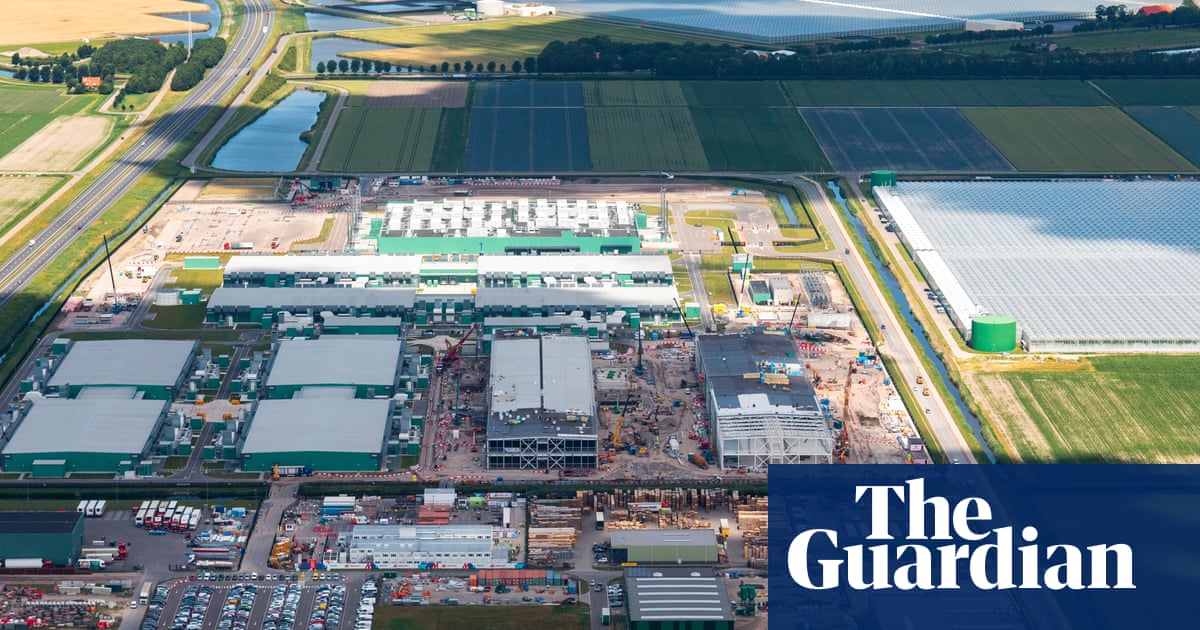
One driver of 2025’s soaring energy bills was the nationwide proliferation of datacenters for artificial intelligence. In October, PJM – the grid operator covering 13 mid-Atlantic and midwest states as well as the District of Columbia – called datacenters the “primary reason” for the increased price of power. In July, Trump rolled out a scheme to streamline permitting for datacenters, semiconductor manufacturing facilities and fossil fuel infrastructure.
“They’re going to strain the grid with these datacenters, which are massive developments,” said David Jones, a 45-year-old resident of south Baltimore. “Why should we have to take on the price of that?”
Jones, who lives in Baltimore’s industrial Curtis Bay neighborhood, said his monthly bills in 2025 were “at least $100” more than they were the previous year.
David Jones in his kitchen in Baltimore, Maryland, on 14 January 2026. Average US household electricity bills were 6.7% more expensive in 2025 compared with the previous year.
Amid growing outrage over steep power bills, the president last week announced that he is pressing tech companies to foot the bill for the rising costs associated with their datacenters.
“We are the ‘HOTTEST’ Country in the World, and Number One in AI,” Trump posted on Truth Social. “Data Centers are key to that boom, and keeping Americans FREE and SECURE but, the big Technology Companies who build them must ‘pay their own way.’”
On Friday, Trump officials also met with current and former governors of east coast states to discuss the energy demands of the AI datacenter boom, then released a plan to urge PJM to make deals with technology companies to ensure that they foot the bill for upping the country’s power supply.
But Trump has not backed away from his unabashedly pro-fossil fuel agenda, which has also pushed up energy costs. His administration’s efforts to increase liquefied natural gas (LNG) exports, for instance, cost US households a combined $12bn in the first nine months of 2025, according to a December report from the consumer advocacy organization Public Citizen.
Jones cast his vote for Trump in the 2024 election because he felt the US needed a “businessman” in office, and because he could not bring himself to vote for Joe Biden. He still has a fondness for the president, he said. But he believes Trump has been too influenced by donors from big tech and the fossil fuel industry.
“His ‘drill, baby, drill’ agenda does a disservice to Americans,” he said. “I know he means well … but if I would have known about a lot of things that he’s done, as far as energy and things like that, I probably wouldn’t have voted for him.”
Reached for comment, White House spokesperson Taylor Rogers said federal officials “will continue to aggressively implement President Trump’s energy dominance agenda because cheaper energy can unleash unprecedented growth in every facet of our economy”.
“Blue states are stubbornly choosing Green Energy Scam policies that are making electricity bills unaffordable,” she said in an email. “Meanwhile, GOP-led states are successfully lowering energy costs for their residents by embracing President Trump’s commonsense ‘DRILL, BABY, DRILL’ agenda.”
Aid cut
As the Trump administration has presided over rising electricity and gas costs, White House officials have also made it more difficult for Americans to access energy aid.
Last year, the administration eliminated tax credits for cost-cutting home energy-efficiency upgrades. It also attempted to eliminate the Low Income Home Energy Assistance Program (LIHEAP), which helps 6 million low-income Americans with their energy bills each year.
The program survived, but has been significantly hampered after the administration laid off the entire LIHEAP staff. The cuts and a record-breaking government shutdown caused unprecedented delays in getting energy assistance aid to low-income households.
“Detroit is not even taking aid applications right now because there’s so much backlog from that time,” said Jacob. “They have so many applications to process that they’re not taking new applications.”
Angie Shaneyfelt, a 52-year-old resident of Curtis Bay, Baltimore, has seen her bill shoot up rapidly this year, from less than $300 in December 2024 to $400 last month.
Angie Shaneyfelt, 52, outside her home in Baltimore, Maryland, on 13 January 2025.
Toward the end of last year, she applied for funding from a LIHEAP-funded Maryland program after receiving a gas and electric cutoff notice over a past-due balance. Her application was quickly denied.
“They said that because of the volume of applications – by the time they got to me the funds would be gone,” she said. “The only place I was able to find aid was from a church … and it wasn’t easy. Just finding aid that is available is a full-time job.”
Shaneyfelt averted the cutoff but is still struggling to keep up with her bills, especially because she lost her husband in February. She is considering taking up a second job, even signing up to deliver food with DoorDash last month.
“I’m not young, and I already work full-time, and I think working more would bust my body down,” she said. “But what am I going to do?”
More work hours would give Shaneyfelt even less time with her 13-year-old twin daughters, but with another gas and electric rate hike planned for next month, she may be forced to bring in more income.
“I’ve already slimmed back so much stuff,” she said. “And now I have to give up my time with my family?”
(This is the Warren Buffett Watch newsletter, news and analysis on all things Warren Buffett and Berkshire Hathaway. You can sign up here to receive it every Friday evening in your inbox.)
Buffett talks about almost everything
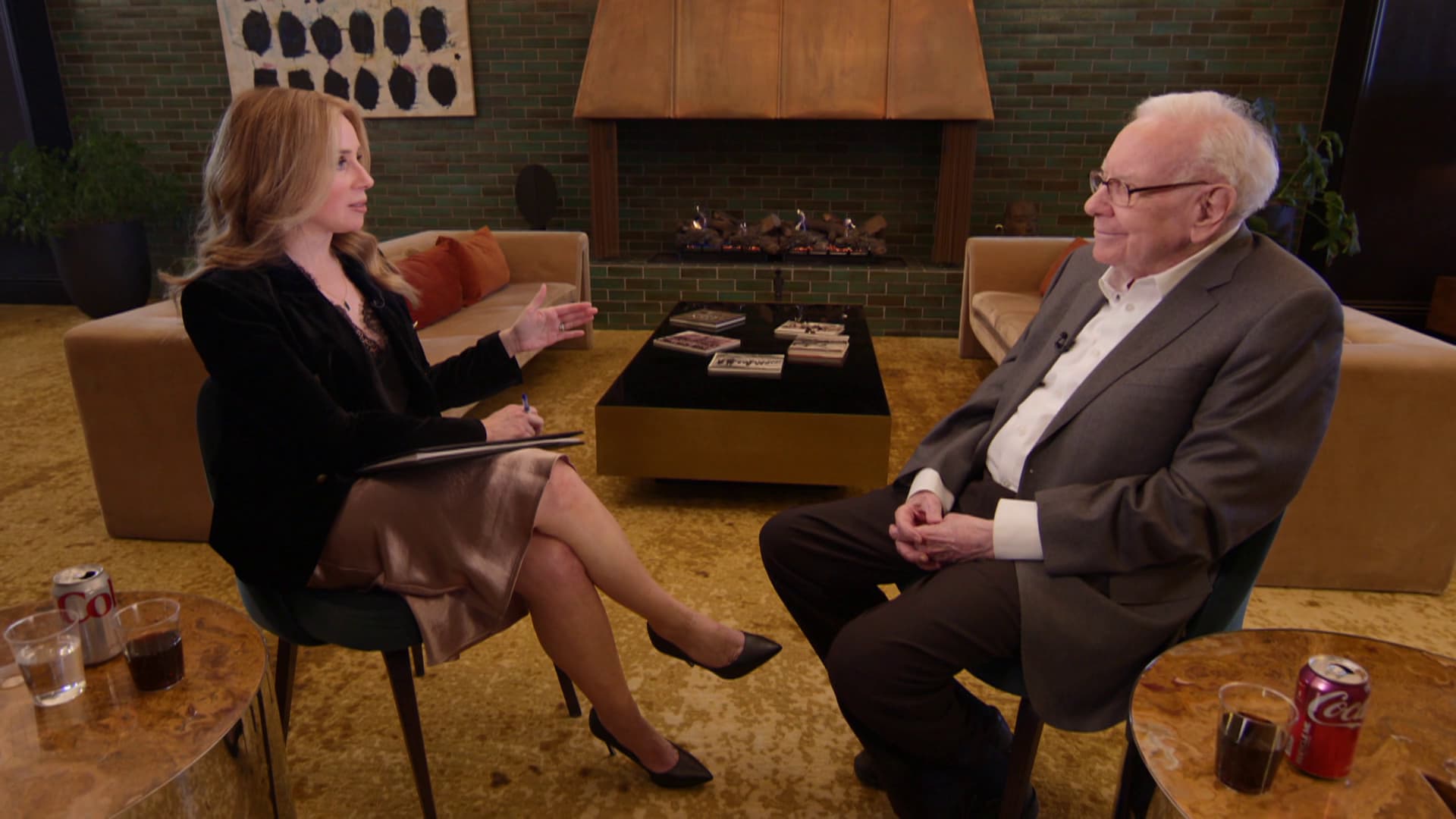
Warren Buffett and Becky Quick covered too many topics in the interviews that aired in a two-hour special on CNBC Tuesday evening for me to write a cogent summary.
“Warren Buffett: A Life and Legacy” included discussions about his inability to find a big company to purchase for Berkshire Hathaway as its cash pile moves toward $400 billion, new CEO Greg Abel, his company’s future and past, the difficulty of giving away billions of dollars, and the invaluable role of luck in his success. That’s not a comprehensive list.
Here, however, are some brief clips and quotes that caught my attention.
Buffett on what’s needed to find good businesses: “It doesn’t take a genius, and it sure doesn’t take any Greek symbols or anything like that to figure out what a business is worth… If (Greg Abel) quit at high school like some of our managers have, he’d still be as smart as he is.”
Buffett on the Sunday board meeting when directors considered his recommendation they name Greg Abel as next CEO: “(Director) Steve Burke finally said, you know, ‘We don’t need to sit around for three months and peer at our navel or anything on this. This is the right decision.’ And so they voted to do it.”
Greg Abel speaks during the Berkshire Hathaway Annual Shareholders Meeting in Omaha, Nebraska on May 3, 2025.
CNBC
Buffett on Berkshire’s future: “It’ll always be moving somewhat, but it’ll be mostly expanding. Occasionally, there will be things that disappear … We will have companies that 50 or 100 years from now will not be viable in the economy of that world. But we’ll have a whole lot more that developed over the years. And we can go wherever the country goes, and we can go with capital.”
Why being on a corporation’s board of directors is the best job in the world:
“Being a director. I mean, it’s the best job in the world. You get 250, 300, even up to 500 thousand dollars a year for doing something that’s quite pleasant. Usually they give you the transportation, and they have cars waiting to take you around everything. And everybody’s polite. And everybody’d love that job. I mean, who wouldn’t?”
Why he gave up betting on horses when he was in high school: “One of the first things you learn in horse racing is you can beat a race, but you can’t beat the races… I had a couple of horses in mind, but I lost the money on the first race. And then I did the dumbest thing you can imagine… I just kept betting every race. And when I went home, I was $50 poorer, which was all I’d taken with me… I went to the Howard Johnson’s, and I had a couple of dollars left. I bought myself a fancy meal and just sat there and thought about it and thought about it on the train. And that was the end of horse racing.”
Buffett on running Berkshire for decades:
“Everything I wanted to have happen has worked out… Doesn’t mean that everything we’ve done has worked out. But I couldn’t imagine more fun than I’ve had running Berkshire. And Charlie and I would have more fun out of the things that didn’t work a lot of times than (if they) did.”
On being a teacher on the side: “I loved it. It appealed to my didactic style, and I liked my own ideas… I just had fun teaching. And I still do, except I ran out of gas a few years ago.”
Advice for new parents: “The only piece of advice I give to newlyweds is don’t ever use sarcasm with your children. I mean, it may be sarcasm to you, but it’s a lash across the back to them they’ll never forget.”
“You should be wiser in the second half of your life than the first half. And if you’ve — if things have worked well for you, you should be a better person in the second half of your life.”
On being kind: “I would just ask anybody to challenge me on whether being kind could hurt them in any way, and whether the happiness of the world wouldn’t be better if … every morning they said to themselves, ‘I’ll have things that are good and bad happen to me today, but I can be kind to anybody.’”
Warren Buffett Watch’s exclusive clip
Even though the special was two hours long, there was more interview than time, forcing the producer to make some difficult decisions.
Here for Warren Buffett Watch readers is a clip that she wanted to get into the final cut. Buffett explains why he hasn’t been speaking out on politics in recent years:
BECKY QUICK: You haven’t commented as much publicly lately, either. You basically save it for the annual meeting when all the shareholders come into town.
WARREN BUFFETT: Right.
BECKY QUICK: Why is that?
WARREN BUFFETT: Well, for one thing, I made the statement a few years ago —maybe, I don’t know, five or six years ago — somebody asked about taking a political stance. And I said that you don’t put your citizenship in a blind trust. But —
BECKY QUICK: As a CEO.
WARREN BUFFETT: And — as a CEO, yeah.
You have three or four hundred thousand employees, and you have millions of shareholders, but nevertheless you were entitled — I took the position — to speak out.
But I think — I’ve revisited that opinion in my mind, because people will have — gotten so tribal. We saw it on our gifts program at one time.
But there’s no reason why somebody that’s answering a phone at GEICO or waiting on a customer at the Nebraska Furniture Mart should be dealing with people who have a negative opinion of the company because of something I’ve said.
And, you know, here I am — if I want to speak as a private citizen, I should resign from Berkshire.
But I don’t really want — I’ve got identified so much with Berkshire that I — as long as I’m speaking at the annual meeting or anything like that, people will associate it with the voice of Berkshire to some extent.
And the employees don’t deserve that. The companies don’t deserve it. And so I backed away from that.
Buffett’s children on philanthropy and growing up Buffett
Buffett has given his three adult children the extremely difficult talk of unanimously deciding how to give away his enormous net worth after he dies.
When she was in Omaha to interview their father, Becky sat down with Howard, Susan, and Peter Buffett to talk about that assignment, their own philanthropic efforts, and what it was like growing up in Buffett’s famously unassuming house.
An extensive portion aired in the special, but this is the entire conversation:
In this excerpt, they remember how their father got “clever” about giving them an allowance:
HOWARD BUFFETT: You know, we’d earn this allowance for cleaning out gutters and cutting the lawn and raking leaves and stuff.
But he — butWarren got pretty clever and he started giving it to us in quarters. And then he bought a slot —
SUSAN BUFFETT: Dimes!
HOWARD BUFFETT: Yeah.
SUSAN BUFFETT: It was a dime slot machine.
HOWARD BUFFETT: Yeah. And then he bought —
SUSAN BUFFETT: He got it all back.
HOWARD BUFFETT: And then he bought the slot machine, so he would get most of his allowance back. At least with me, he got a lot of it back.
In his Inside Wealth report on Wednesday’s “Squawk Box,” Robert Frank explained why Buffett’s children may have the most difficult job in philanthropy:
If you missed it
“Warren Buffett: A Life and Legacy” will be shown again on CNBC this coming Sunday, January 18 at 3 PM ET and Monday, January 19 at 7 AM ET.
Berkshire Cash as of September 30: $381.7 billion (Up 10.9% from June 30)
Excluding Rail Cash and Subtracting T-Bills Payable: $354.3 billion (Up 4.3% from June 30)
No Berkshire stock repurchases since May 2024.
(All figures are as of the date of publication, unless otherwise indicated)
BERKSHIRE’S TOP EQUITY HOLDINGS – Jan. 16, 2026
Berkshire’s top holdings of disclosed publicly traded stocks in the U.S. and Japan, by market value, based on the latest closing prices.
Holdings are as of September 30, 2025, as reported in Berkshire Hathaway’s 13F filing on November 14, 2025, except for:
The full list of holdings and current market values is available from CNBC.com’s Berkshire Hathaway Portfolio Tracker.
QUESTIONS OR COMMENTS
Please send any questions or comments about the newsletter to me at alex.crippen@nbcuni.com. (Sorry, but we don’t forward questions or comments to Buffett himself.)
If you aren’t already subscribed to this newsletter, you can sign up here.
Also, Buffett’s annual letters to shareholders are highly recommended reading. There are collected here on Berkshire’s website.
Will the race to artificial general intelligence (AGI) lead us to a land of financial plenty – or will it end in a 2008-style bust? Trillions of dollars rest on the answer.
The figures are staggering: an estimated $2.9tn (£2.2tn) being spent on datacentres, the central nervous systems of AI tools; the more than $4tn stock market capitalisation of Nvidia, the company that makes the chips powering cutting-edge AI systems; and the $100m signing-on bonuses offered by Mark Zuckerberg’s Meta to top engineers at OpenAI, the company behind ChatGPT.
These sky-high numbers are all propped up by investors who expect a return on their trillions. AGI, a theoretical state of AI where systems gain human levels of intelligence across an array of tasks and are able to replace humans in white-collar jobs such as accountancy and law, is a keystone of this financial promise.
It offers the prospect of computer systems carrying out profitable work without the associated cost of human labour – a hugely lucrative scenario for companies developing the technology and the customers who deploy it.
There will be consequences if AI companies fall short: US stock markets, boosted heavily by the performance of tech stocks, could fall and cause damage to people’s personal wealth; debt markets wrapped up in the datacentre boom could suffer a jolt that ripples elsewhere; GDP growth in the US, which has benefited from the AI infrastructure, could falter, which would have knock-on effects for interlinked economies.
David Cahn, a partner at one leading Silicon Valley investment firm, Sequoia Capital, says tech companies now have to deliver on AGI.
“Nothing short of AGI will be enough to justify the investments now being proposed for the coming decade,” he wrote in a blog published in October.
It means there is a lot hanging on progress towards advanced AI, and the trillions being poured into infrastructure and R&D to achieve it. One of the “godfathers” of modern AI, Yoshua Bengio, says the progress of AGI could stall and the outcome would be bad for investors.
“There is a clear possibility that we will hit a wall, that there’s some difficulty that we don’t foresee right now, and we don’t find any solution quickly,” he says. “And that could be a real [financial] crash. A lot of the people who are putting trillions right now into AI are also expecting the advances to continue fairly regularly at the current pace.”
But Bengio, a prominent voice on the safety implications of AGI, is clear that continued progress towards a highly advanced state of AI is the more likely endgame.
“Advances stalling is a minority scenario, like it’s an unlikely scenario. The more likely scenario is we continue to move forward,” he says.
The pessimistic view is that investors are backing an unrealistic outcome – that AGI will not happen without further breakthroughs.
David Bader, the director of the institute for data science at the New Jersey Institute of Technology, says trillions of dollars are being spent on scaling up – tech jargon for growing something quickly – the underlying technology for chatbots, known as transformers, in the expectation that increasing the amount of computing power behind current AI systems, by building more datacentres, will suffice.
“If AGI requires a fundamentally different approach, perhaps something we haven’t yet conceived, then we’re optimising an architecture that can’t get us there no matter how large we make it. It’s like trying to reach the moon by building taller ladders,” he says.
Nonetheless, big US tech companies such as Google’s parent Alphabet, Amazon and Microsoft are ploughing ahead with datacentre plans with the financial cushion of being able to fund their AGI ambitions through the cash generated by their hugely profitable day-to-day businesses. This at least gives them some protection if the wall outlined by Bengio and Bader comes into view.
But there are other more worrying aspects to the boom. Analysts at Morgan Stanley, the US investment bank, estimate that $2.9tn will be spent on datacentres between now and 2028, with half of that covered by the cashflow from “hyperscalers” such as Alphabet and Microsoft.
The rest will have to be covered by alternative sources such as private credit, a corner of the shadow banking sector that is activating alarm bells at the Bank of England and elsewhere. Meta, the owner of Facebook and Instagram, has borrowed $29bn from the private credit market to finance a datacentre in Louisiana.
AI-related sectors account for approximately 15% of investment grade debt in the US, which is even bigger than the banking sector, according to the investment bank JP Morgan.
Oracle, which has signed a $300bn datacentre deal with OpenAI, has had an increase in credit default swaps, which are a form of insurance on a company defaulting on its debts. High-yield, or “junk debt”, which represents the higher-risk end of the borrowing market, is also appearing in the AI sector via datacentre operators CoreWeave and TeraWulf. Growth is also being funded by asset-backed securities – a form of debt underpinned by assets such as loans or credit card debt, but in this case rent paid by tech companies to datacentre owners – in a form of financing that has risen sharply in recent years.
It is no wonder that JP Morgan says the AI infrastructure boom will require a contribution from all corners of the credit market.
Bader says: “If AGI doesn’t materialise on expected timelines, we could see contagion across multiple debt markets simultaneously – investment-grade bonds, high-yield junk debt, private credit and securitised products – all of which are being tapped to fund this buildout.”
Share prices linked to AI and tech are also playing an outsized role in US stock markets. The so-called “magnificent 7” of US tech stocks – Alphabet, Amazon, Apple, Tesla, Meta, Microsoft, and Nvidia – account for more than a third of the value of the S&P 500 index, the biggest stock market index in the US, compared with 20% at the start of the decade.
In October the Bank of England warned of “the risk of a sharp correction” in US and UK markets due to giddy valuations of AI-linked tech companies. Central bankers are concerned stock markets could slump if AI fails to reach the transformative heights investors are hoping for. At the same time the International Monetary Fund said valuations were heading towards dotcom bubble-levels.
Even tech execs whose companies are benefiting from the boom are acknowledging the speculative nature of the frenzy. In November Sundar Pichai, the chief executive of Alphabet, said there are “elements of irrationality” in the boom and that “no company is going to be immune” if the bubble bursts, while Amazon’s founder, Jeff Bezos, has said the AI industry is in a “kind of industrial bubble”, and OpenAI’s chief executive, Sam Altman, has said “there are many parts of AI that I think are kind of bubbly right now.”
All three, to be clear, are AI optimists and expect the technology to keep improving and benefit society.
But when the numbers get this big there are obvious risks in a bubble bursting, as Pichai admits. Pension funds and anyone invested in the stock market will be affected by a share price collapse, while the debt markets will also take a hit. There is also a web of “circular” deals, such as OpenAI paying Nvidia in cash for chips, and Nvidia will invest in OpenAI for non-controlling shares. If these transactions unravel due to a lack of take-up of AI, or that wall being hit, then it could be messy.
There are also optimists who argue that generative AI, the catch-all term for tools such as chatbots and video generators, will transform whole industries and justify the expenditure. Benedict Evans, a technology analyst, says the expenditure numbers are not outrageous in the context of other industries, such as oil and gas extraction which runs at $600bn a year.
“These AI capex figures are a lot of money but it’s not an impossible amount of money,” he says.
Evans adds: “You don’t have to believe in AGI to believe that generative AI is a big thing. And most of what is happening here is not, ‘oh wow they’re going to create God’. It’s ‘this is going to completely change how advertising, search, software and social networks – and everything else our business is based on – is going to work’. It’s going to be a huge opportunity.”
Nonetheless, there is a multitrillion dollar expectation that AGI will be achieved. For many experts, the consequences of getting there are alarming. The cost of not getting there could also be significant.