
Category: 3. Business

  • ‘Mass layoffs by email might be the new norm’ as Oracle lays off thousands that way

    ‘Mass layoffs by email might be the new norm’ as Oracle lays off thousands that way

    By Weston Blasi

    The cloud-computing and database company began cutting 30,000 jobs on Tuesday

    Oracle this week told some workers in the U.S. and India that their roles were being eliminated.

    Oracle Corp.’s mass layoffs on Tuesday were part of the company’s cost-cutting measures as it continues to build out expensive data centers for powering artificial intelligence.

    But one aspect of the mass layoffs – which were estimated to be as many as 30,000 people – was alerting workers over email at 6 a.m. Eastern that Tuesday would be their last day. It’s not clear if all 30,000 of the reported layoffs occurred on Tuesday, or if more are coming later in the year.

    “After careful consideration of Oracle’s current business needs, we have made the decision to eliminate your role,” an email to one affected employee, obtained by MarketWatch, read.

    Oracle (ORCL) employed an estimated 162,000 people worldwide as of May 2025, and has seen its stock falter this year. Shares of Oracle are down 4.3% over the past month, and down 25% year to date.

    Oracle declined to comment.

    While MarketWatch’s Charles Passy has noted that there’s no such thing as a good layoff, getting let go over email is starting to become a growing trend.

    “It’s not unheard of to lay workers off by email, especially in the tech industry and large corporations,” Peter Duris, CEO and co-founder of Kickresume, a career platform and resume-builder company, told MarketWatch. “There have been quite a few stories in recent years about major companies laying off large numbers of employees by email. Those messages are often described as cold, impersonal and vague about why a role is being cut.”

    Amazon (AMZN) made headlines earlier this year after its planned mass-layoff email was accidentally sent too early, and to the wrong employees.

    Tesla’s (TSLA) Elon Musk famously used “Dear Employee” emails to trim Tesla’s workforce starting in 2024. In that situation, even some bosses were unaware that layoffs were coming, one Tesla employee told MarketWatch in 2024.

    Google (GOOG) (GOOGL)also announced a headcount reduction over email back in 2024.

    While this process may seem impersonal, when really large companies conduct mass layoffs, this is one of the most efficient ways to let thousands of workers know they have been let go. Particularly if they are not all in one location.

    “Letting all these employees know at the same time creates much less administrative work,” Duris said. “This is especially the case when the workers being laid off are based all over the world, in multiple time zones.”

    “It also lets companies cut off access to work email and other platforms immediately after delivering the news, which may help prevent retaliation from angry employees,” he added.

    Besides email, we’ve also seen layoffs over Zoom (ZM) or video calls in recent years. And Duris doesn’t expect those types of layoffs to subside anytime soon.

    “Unfortunately, mass layoffs by email might be the new norm in the tech industry. Similarly, companies are telling employees they’ve lost their jobs over video calls, sometimes with the chat function disabled or with attendees unable to switch their microphones on… some people have even been fired by pre-recorded video messages, leaving them with no way to respond.”

    Read on: Here’s one reason investors shouldn’t get too excited about this week’s stock-market rebound

    -Weston Blasi

    This content was created by MarketWatch, which is operated by Dow Jones & Co. MarketWatch is published independently from Dow Jones Newswires and The Wall Street Journal.

    (END) Dow Jones Newswires

    04-04-26 1125ET

    Copyright (c) 2026 Dow Jones & Company, Inc.
    Continue Reading

  • April typically showers stock investors with gains – but this year is no sure bet

    April typically showers stock investors with gains – but this year is no sure bet

    By Mark Hulbert

    Between tax season and early sell-in-May activity, investors shouldn’t count on an April rally

    April may not be the cruelest month – but it is a riskier one.

    Some Wall Street analysts are insisting that April – contrary to its label as the cruelest month – is actually one of the better months for the U.S. stock market.

    Consider that, over the past century, the S&P 500 SPX (or its predecessor index) has gained 1.3% on average in April – close to double the all-month average of 0.7%. But, as the green columns in the chart below indicate, three other months post average returns on par with those of April (shown as No. 4 for the fourth month), with one month, July (or No. 7), significantly better.

    The chart also shows the first half of April being notably strong for stocks. That’s for at least two reasons, according to some of the newsletter editors I regularly monitor. One is the Federal Reserve’s desire to keep economywide liquidity stable at a time when taxpayers are sending potentially large sums to the IRS. Another is that taxpayers can reduce their tax burdens by investing in an IRA before April 15. Much of the additional liquidity and IRA contributions presumably make their way into the stock market.

    These are nice theories, but they are not borne out by the data, as the red columns in the chart show. So while April’s average first-half return is above average, it is not statistically significant.

    Season’s grating

    One caveat that investors should be aware of: April marks the end of the six-month period that is believed to have positive seasonality for stocks. April, therefore, is a month in which some investors look for opportunities to sell rather than wait until May (recall the adage “sell in May and go away”). Last year, for example, Jeffrey Hirsch of the Stock Trader’s Almanac and the Almanac Investor Newsletter, who recommends jumping the gun in this way, exited stocks on April 3 – almost a full month in advance of the usual sell date.

    The bottom line: You may want to remain invested in equities during April or even increase your holdings. If you do, though, it shouldn’t be because of the calendar. Given the year-to-year volatility in monthly returns, April’s advantage over other months is not significant at the 95% confidence level that statisticians often use to assess whether a pattern is genuine. That means it would be too risky for you to bet that April will be a good month for the stock market.

    Mark Hulbert is a regular contributor to MarketWatch. His Hulbert Ratings tracks investment newsletters that pay a flat fee to be audited. He can be reached at mark@hulbertratings.com

    More: A wild first quarter comes to an end: 6 charts that defined a chaotic stretch for stocks

    Also read: Stocks surge, ending a tough March on a high note. But there’s skepticism about the rally.

    -Mark Hulbert

    This content was created by MarketWatch, which is operated by Dow Jones & Co. MarketWatch is published independently from Dow Jones Newswires and The Wall Street Journal.

    (END) Dow Jones Newswires

    04-04-26 1112ET

    Copyright (c) 2026 Dow Jones & Company, Inc.

    Continue Reading

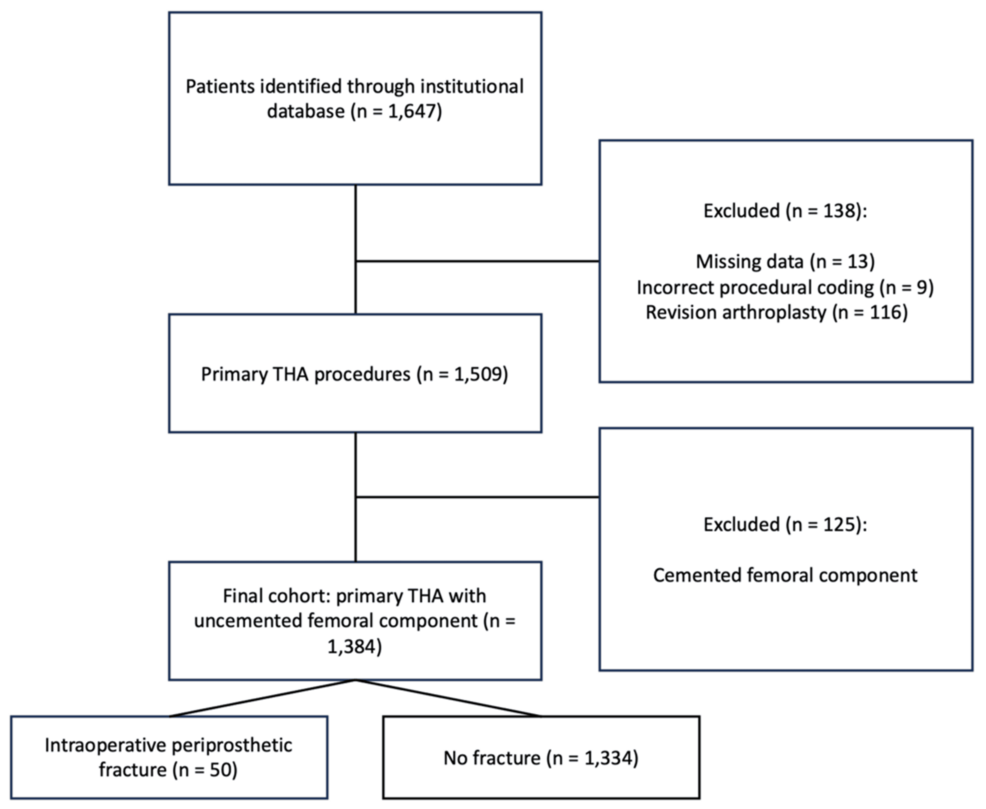
  • Risk of Intraoperative Periprosthetic Femoral Fracture According to Cementless Femoral Stem Geometry: A Cohort Study Based on the Radaelli Classification

    Risk of Intraoperative Periprosthetic Femoral Fracture According to Cementless Femoral Stem Geometry: A Cohort Study Based on the Radaelli Classification

    Continue Reading

  • These charts show the cracks in the stock market are widening

    These charts show the cracks in the stock market are widening

    By Lawrence G. McMillan

    S&P 500 technical indicators point to further weakening

    The S&P 500 Index SPX is in a downtrend and has broken multiple support levels. It finally closed below its -4 “modified Bollinger band,” which eventually set up a McMillan volatility band buy signal (green “B” on the SPX chart below).

    The McMillan volatility band buy signal will remain in effect until SPX reaches either its target (the +4 band) or closes below its stop (the -4 band). SPX did not close above 6,615 – the Chandelier stop for short sales (of the SPX). There is still resistance in the 6,615-6,670 area, including the declining 20-day moving average, the 200-day moving average, and resistance from earlier in March. The SPX chart remains in a downtrend.

    Equity-only put-call ratios continue to make new highs. The rate of ascent has slowed over the past two days as SPX has rallied, but these won’t be on buy signals until they roll over and begin to trend lower.

    On a more positive note, breadth was strong enough that both breadth oscillators are now on buy signals. Having said that, we’re going to wait until next week before possibly implementing this new buy signal.

    New lows still outnumber new highs on the NYSE, so this indicator remains bearish.

    The trend of VIX VIX sell signal (for stocks) remains in place. The construct of volatility derivatives retains a bearish outlook for stocks as well. Until that construct improves, we won’t be taking positions in line with the many VIX “spike peak” buy signals.

    In summary, the S&P 500’s oversold rally was sharp but appears to have ended short of the declining 20-day moving average. However, things are moving fast these days, so there could be surprises in either direction. We will take new signals as they occur, but with some caution.

    New recommendation: McMillan volatility band buy signal

    As noted above, a new McMillan volatility band buy signal has occurred. SPX closed below the -4 “modified Bollinger band” (mBB) several times, and then on March 31, it closed above the -3 mBB. This created a “classic” mBB buy signal, but we don’t trade those. Then on April 1, SPX continued to rally, and that confirmed the MVB buy signal

    Buy 1 SPY SPY (May 1) at-the-money call and Sell 1 SPY (May 1) call with a striking price 25 points higher.

    This position has a target of SPX trading at the +4 band. It would be stopped out if SPX were to close back below the -4 band.

    Watch H&R Block

    This is a repeat recommendation from last week. HRB (HRB) stock has been in a severe downtrend since last tax season ended. Recently though, the stock’s chart pattern formed a double-bottom and the shares are trying to break out over resistance at $32.50. Perhaps the 2026 tax season will be of some help, although one would have thought that would be already baked into the stock price. In any case, if HRB can indeed break out over $32.50 on a closing basis, then we will act on this put-call ratio buy signal.

    If HRB closes above $32.50, then buy 3 HRB (Apr. 17) 30 calls in line with the market.

    New recommendation: SFL Corp.

    Option prices on SFL (SFL) are relatively cheap, especially those of intermediate-term duration. This is the kind of situation in which we like to buy straddles – buying both a put and call. Then, if the stock makes a large enough move in either direction, we can profit.

    This stock has recently rallied from below $7 to above $11. That four-point move took about four months. Other four-month periods have produced similarly large moves (see the accompanying chart of SFL). This week the five-month straddle was priced at about $1.75. That’s what makes these options relatively cheap and sets the stage for a profit if the stock continues to move as it has in the past.

    Buy 4 SFL (Aug. 21) 10 calls and Buy 4 SFL (Aug. 21) 10 puts at a straddle price of $1.75 or less.

    Follow-up action:

    All stops are mental closing stops unless otherwise noted.

    We are using a standard rolling procedure for our SPY spreads: In any vertical bull or bear spread, if the underlying hits the short strike, then roll the entire spread. That would be roll up in the case of a call bull spread or roll down in the case of a bear put spread. Stay in the same expiration and keep the distance between the strikes the same unless otherwise instructed.

    Also, for outright long options, roll if they become 8 points in-the-money.

    Long 1 TSEM (April 17) 190 call and short 1 TSEM (April 17) 205 call: Roll up and out both sides, 15 points each, if TSEM (TSEM) trades at 205.

    Long 6 AAL (April 17) 10.5 puts: Sell these AAL (AAL) puts now since the put-call ratio has rolled over to a buy signal.

    Long 1 BKR (July 17) 65 call and long 1 BKR (July 17) 60 put: Roll the BKR (BKR) call up at 75 and roll the put down at 50.

    Long 2 ARKK (April 17) 74 calls: We will hold the calls as long as the weighted put-call ratio for ARKK ARKK remains on a buy signal.

    Long Buy 2 SPY (April 17) 666 puts and short 2 SPY (April 17) 615: Use a close back above 6,615 by SPX as a trailing stop.

    Long 2 KMX (April 17) 42.5 puts: We will hold as long as the weighted put-call ratio for CarMax (KMX) remains on a sell signal.

    All stops are mental closing stops unless otherwise noted.

    Send questions to: lmcmillan@optionstrategist.com.

    Lawrence G. McMillan is president of McMillan Analysis, a registered investment and commodity trading advisor. McMillan may hold positions in securities recommended in this report, both personally and in client accounts. He is an experienced trader and money manager and is the author of “Options as a Strategic Investment.” www.optionstrategist.com

    (c)McMillan Analysis Corporation is registered with the SEC as an investment advisor and with the CFTC as a commodity trading advisor. The information in this newsletter has been carefully compiled from sources believed to be reliable, but accuracy and completeness are not guaranteed. The officers or directors of McMillan Analysis Corporation, or accounts managed by such persons may have positions in the securities recommended in the advisory.

    -Lawrence G. McMillan

    This content was created by MarketWatch, which is operated by Dow Jones & Co. MarketWatch is published independently from Dow Jones Newswires and The Wall Street Journal.

    (END) Dow Jones Newswires

    04-04-26 0924ET

    Copyright (c) 2026 Dow Jones & Company, Inc.

    Continue Reading

  • This Week in Climate News (April 2026, Week 1)

    This Week in Climate News (April 2026, Week 1)

    This weekly round-up brings you key climate news from the past seven days, including new data on the rapid growth of renewables and a controversial panel’s vote to facilitate the Trump administration’s expansion of drilling activity in the Gulf of Mexico.

    Listen to Earth.Org’s new podcast, Earth Radio. Join our host Rebekah Hendricks every week for a 5-minute, ad-free roundup of the world’s most important climate stories. New episodes available every Saturday at 8am ET | 1pm GMT | 8pm HKT⁠. Subscribe here or find us wherever you get your podcasts.

    1. Renewables Hit Nearly Half of Global Power Capacity in 2025

    Renewable energy accounted for nearly half of global power capacity by the end of 2025, according to new data from the International Renewable Energy Agency (IRENA).

    Last year saw the largest-ever recorded increase in renewable energy capacity – a 15.5% annual increase, or 692 gigawatts (GW) of added renewable capacity, the agency said in a report published on Wednesday. This continues a trend that has seen renewable power additions reaching new records almost every year since the turn of the millennium owing to their “competitiveness and resilience,” said Francesco La Camera, IRENA’s Director-General.

    Renewables accounted for 49% of installed power capacity globally and comprised 85.6% of the total global power added in 2025. Driving this growth was solar energy, which alone accounted for nearly three-quarters of all renewable additions – a record 510 GW. Wind came in second, with 159 GW added in one year.

    Full story here.

    2. Trump Administration Officials Waive Endangered Species Act Rules for Gulf Drilling

    A panel comprised of Trump Administration officials on Tuesday approved an exemption from the Endangered Species Act for expanded oil and gas drilling in the Gulf of Mexico. 

    Last month, the Pentagon requested that Interior Secretary Doug Burgum convenes a meeting with the Endangered Species Committee to discuss an exemption from the Endangered Species Act for “all … oil and gas exploration and development activities” overseen by federal agencies in the Gulf of Mexico over “national security” concerns. Since its inception in 1973, the law, which requires federal agencies to ensure their actions do not jeopardize endangered species or destroy critical habitats, has prevented the extinction of 99% of listed species.

    On Tuesday, the committee, also known as the “God squad” for its power to decide whether a species lives or dies, approved the request after a 20-minute, closed-door meeting.

    The committee only met three times since Congress established it in 1978, the last time in 1992. It is led by the Interior Secretary and comprises five other federal officials: the Secretary of Agriculture, the Secretary of the Army, the Chairman of the Council of Economic Advisors, the Administrator of the Environmental Protection Agency, and the Administrator of the National Oceanic and Atmospheric Administration.

    Full story here.

    3. Health, Environmental Groups Sue US EPA Over Rollback of Mercury Standards for Power Plants

    A coalition of US-based health and environmental groups is taking the Environmental Protection Agency (EPA) to court over its recent repeal of standards that limit brain-damaging mercury, lead, and other hazardous air pollution from coal-fired power plants.

    The suit addresses the EPA’s repeal of the Biden-era amendments to the Mercury and Air Toxics Standards (MATS), which was finalized in February. The repeal effectively allows coal-fired power plants to emit more brain-damaging mercury and other harmful heavy metals such as nickel, arsenic, and lead.

    The lawsuit also challenges the repeal of a requirement for power plants to have systems in place to monitor the amount of pollution they emit in accordance with air pollution standards.

    The standards, first issued in 2012 by the Obama administration, were strengthened and updated by the Biden administration in April 2024 to reflect the latest advancements in pollution control technologies. Since 2015, the deadline for their implementation, the standards have delivered a 90% reduction in mercury emissions from power plants over pre-standard levels and other health benefits, including lowered risk of cancer, heart and lung disease, and premature death. According to EPA figures cited in the coalition’s press release announcing the lawsuit, 93% of US coal capacity had already met or were on track to meet those standards by last year.

    Full story here.

    4. Italy Votes to Delay Shutdown of Coal-Fired Plants By 13 Years As Energy Crunch Deepens Amid Iran War

    Italy is set to postpone the shutdown of its remaining coal-fired power plants until 2038, 13 years later than originally planned, as the global energy crisis unleashed by the US-Israeli attacks on Iran intensifies.

    On Tuesday, the lower house of parliament voted to extend the life of the country’s four remaining coal-powered plants, which are currently on stand-by. The National Energy and Climate Plan, a ten-year plan provided by the European Union (EU) to member states to meet the EU’s decarbonization goals, had initially envisaged a shutdown by December 2025.

    The text, promoted by Prime Minister Giorgia Meloni’s right-wing government coalition, now goes to the upper house, where it expected to pass.

    Supporters of the text, including the right-wing populist League party, said it was “right and responsible” to delay the shutdown amid the “serious international energy crisis” unleashed by the war in Iran. In response to coordinated attacks by the US and Isreael, Iran blocked traffic in the Strait of Hormuz, one of the world’s busiest oil shipping channels. Some 20-25% of global oil supply typically passes through it, and Italy depends on the passage for about 21% of its total oil and gas imports.

    But environmentalists say the move will harm climate progress in the country and affect people’s health. Coal, the cheapest and dirtiest fossil fuel, is the single-largest source of global carbon emissions and a major contributor to air pollution.

    Full story here.

    Donate to earth.org; support independent environmental journalism

    Continue Reading

  • Hackers Are Posting the Claude Code Leak With Bonus Malware

    Hackers Are Posting the Claude Code Leak With Bonus Malware

    A WIRED investigation based on Department of Homeland Security records this week revealed the identities of paramilitary Border Patrol agents who frequently used force against civilians during Operation Midway Blitz in Chicago last fall. Several of the agents, WIRED found, appeared in similar operations in other states around the US.

    Customs and Border Protection may want to remember to protect its sensitive facility information. Using basic Google searches, WIRED discovered flashcards made by users of the online learning platform Quizlet that contained gate codes to CBP facilities and more.

    In a rare move, Apple this week released “backported” patches for iOS 18 to protect millions of people still using the older operating system from the DarkSword hacking technique that was found in use in the wild. Discovered in March, DarkSword allows attackers to infect iPhones that simply visit a website loaded with the takeover tools embedded in it. Apple initially pushed users to update to the current version of its operating system, iOS 26, but ultimately issued the iOS 18 patches after DarkSword continued to spread.

    The US-Israel war with Iran careened into its second month this week, with Iran threatening to launch attacks against more than a dozen US companies, including tech giants like Apple, Google, and Microsoft, which have offices and data centers in the Gulf region. The deadly conflict, which has no clear end in sight, continues to wreak havoc on the global economy as shipping crews remain stranded in the Strait of Hormuz, a key trade route. Meanwhile, some are beginning to wonder what could happen if US strikes cause real damage to Iran’s nuclear facilities.

    And that’s not all! Each week, we round up the security and privacy news we didn’t cover in depth ourselves. Click the headlines to read the full stories. And stay safe out there.

    Earlier this week, a security researcher flagged that Anthropic accidentally made the source code for its popular vibe-coding tool, Claude Code, public. Immediately, people began reposting the code on the developer platform GitHub. But beware if you want to try to download some of those repos yourself: BleepingComputer reports that some of the posters are actually hackers who have tucked a piece of infostealer malware into the lines of code.

    Anthropic, for its part, has been trying to remove copies of the leak (malware-ridden or not) by issuing copyright takedown notices. The Wall Street Journal reported that the company initially tried to remove more than 8,000 repositories on GitHub but later narrowed that down to 96 copies and adaptations.

    This isn’t the first time that hackers have capitalized on interest in Claude Code, which requires users who might not be as familiar with their computer’s terminal to copy and paste install commands from a website. In March, 404 Media reported that sponsored ads on Google led to sites that were masquerading as official Claude Code installation guides, which directed users to run a command that would actually download malware.

    The FBI formally classified a recent cyber intrusion into one of its surveillance collection systems as a “major incident” under FISMA—a legal designation reserved for breaches believed to pose serious risks to national security. The determination, reported to Congress earlier this week, is understood to be the first time since at least 2020 that the bureau has declared a major incident on its own systems. Politico, citing two unnamed senior Trump administration officials, reported that China is believed to be behind the intrusion. If confirmed, the breach could mark a significant counterintelligence failure for the FBI.

    The FBI said it detected “suspicious activities” on its networks in February. In a notice to Congress on March 4, reviewed by Politico, the bureau said the compromised systems were unclassified and held “returns from legal process,” citing, as examples, phone and internet metadata collected under court orders and personal information “pertaining to subjects of FBI investigations.” The intruders reportedly gained access through a commercial internet service provider, an approach the FBI characterized as reflecting “sophisticated tactics.” In its only public statement, the bureau said it had deployed “all technical capabilities to respond.”

    Continue Reading

  • Lucid misses Q1 vehicle delivery estimates on supplier disruptions

    Lucid misses Q1 vehicle delivery estimates on supplier disruptions

    A Lucid ‘Gravity’ SUV is displayed during the press day preview of the Los Angeles Auto Show in Los Angeles, California, U.S. November 16, 2023.

    David Swanson | Reuters

    Lucid Group missed expectations for ⁠first-quarter vehicle deliveries on Friday, hurt by a temporary sales halt and recall ​tied to an unauthorized ​supplier change.

    Deliveries of its electric luxury SUV, Lucid Gravity, were disrupted for 29 days during the quarter due to a supplier quality issue with ⁠second-row ‌seats, limiting the company’s ability to meet ⁠customer demand.

    The company said it produced 5,500 vehicles and delivered 3,093 in the quarter ended March 31. Analysts at Visible Alpha had expected Lucid to ‌produce 5,967 vehicles and deliver 5,237 vehicles.

    Deliveries were particularly hit in February, said Chief Executive Marc Winterhoff, when Lucid ​paused to reverse the change and inspect vehicles already produced.

    Lucid recalled 4,476 Gravity SUVs earlier this week over seatbelt anchor welds that did not meet safety standards, built between December 2024 and February 2026.

    The shortfall also highlights the persistent gap between the company’s production and its ability to get cars into customers’ hands, a challenge that has plagued Lucid and other EV startups as demand cools.

    Supply challenges continue to be a concern, Winterhoff has said, acknowledging that the company was being conservative in its forecast of producing 25,000 to 27,000 vehicles this year, implying growth could top 50%. On Friday, it maintained that forecast.

    In 2025, ​production nearly doubled to 17,840 ‌vehicles.

    Along with a hit from high tariffs on auto parts imports, Lucid, like some of its rivals, has been contending with a chip shortage, uncertain rare-earth supplies, and a September fire ​at an aluminum supplier.

    Choose CNBC as your preferred source on Google and never miss a moment from the most trusted name in business news.

    Continue Reading

  • The Iran War Is Reshaping Global Aviation

    The Iran War Is Reshaping Global Aviation

    (Bloomberg) — For years, airlines in the US and Europe have gawked at the rise of Middle East carriers funneling ever more passengers through their gleaming hubs in Dubai and Doha at competitive prices with the latest jets.

    Emirates, Qatar Airways and Etihad Airways offered a viable alternative in the Gulf, leveraging a perfect position between three continents – Europe, Africa and Asia.

    That dynamic changed almost overnight when the Iran war broke out, shuttering airspaces, grounding planes and leaving regional airlines in disarray. While the loss of capacity from the Middle Eastern carriers has reduced long-haul flying overall, Western airlines are moving in to fill the gap.

    Executives have sensed an opportunity to take advantage and regain ground, adding alternative routes to steal away business. Deutsche Lufthansa AG, British Airways and Air France-KLM quickly redeployed jets into countries including India, Thailand and Singapore last month to capture passengers looking for new flights. The gains in share are small so far, however, and building something with lasting momentum isn’t simple.

    Bloomberg analyzed widebody flights across 21 major airlines in the month before and after the war began, using data from tracking firm Flightradar24.(1)

    One issue will be whether this is a short-term blip for global air travel or prove to be a more lasting change as places once considered safe are tainted with the long shadow of war.

    For European carriers trying to steal a march on rivals, another challenge is surging fuel prices as the war disrupts energy markets. That means either fare hikes or absorbing those costs to lure in new customers, with little sense of how long the conflict will continue.

    The Middle East airlines “won’t have shelved their ambitions to be global hubs,” said Rob Walker, an aviation analyst at consultancy ICF. “The Europeans, they’ve just got to try and make hay while the sun is shining.”

    So far, the big increase in flight capacity has been in the US, though that reflects plans that were in motion before the Middle East disruption.

    The biggest carriers, such as United Airlines and Delta Air Lines have expanded long-haul widebody flying by 11% and 12%, respectively, according to tracker Flightradar24. They added flights to existing destinations in Europe, as well as new routes to cater to well-heeled American tourists.

    Jet Fuel

    US airlines are more exposed to surges in jet fuel prices as they’re not hedged, though they enjoyed a bump in demand last month as passengers pounced to book before those costs pushed up fares.

    On the Middle East disruption, nonstop flights from the US to Asia will benefit, as will transatlantic routes where US airlines code-share with European carriers, according to Walker.

    The longer the war persists, the worse it will be for the carriers with bases in the Middle East. US President Donald Trump this week remained vague on the timeline of the war and pledged more aggressive actions against Iran.

    Given its geographical advantage, Turkish Airlines also gained market share in the month after the war began, while Qatar Airways lost the most, according to the data analyzed by Bloomberg.

    Lufthansa saw a pickup in short-term demand, but wants to make these new route switches more permanent. Chief Financial Officer Till Streichert said there’s “absolutely” the potential to move capacity to Asia on a more lasting basis.

    Such moves aren’t always straightforward, particularly if there’s an aircraft mismatch. A single-aisle jet serving a European-Gulf route won’t necessarily be suitable for a longer-haul trip to Asia, and new, fuel-efficient widebody aircraft have years-long waiting lists. Plus, opening new routes takes months of preparation involving landing slots, schedules and staffing.

    Meanwhile, worries about a jet fuel shortage have prompted Lufthansa management to ready crisis plans that could involve grounding planes.

    Lufthansa shares are down 17% since the war began. British Airways parent IAG SA has fallen 13% in the same period, while Air France-KLM has dropped 27%. Morgan Stanley and UBS recently cut share-price targets on a number of European airlines, citing fuel costs.

    Price War

    While the end of the war remains unclear, what’s certain is that the Mideast carriers will return to the market hungry to regain ground, and pricing could come into play.

    “I would expect the Gulf carriers to offer highly attractive fares to rebuild traffic via their hubs, so maybe the European carriers will only have a short window of opportunity to exploit high demand and high fares,” said Richard Evans, senior consultant at analytics firm Cirium.

    The Middle East hub model saw Emirates and Etihad enjoy massive growth in recent decades. Emirates carried 55.6 million passengers in 2025, more than quadruple the number ferried just 20 years earlier.

    That helped to make Dubai the world’s busiest international airport, but rivals say the airlines’ expansion was for years sustained by unfair subsidies.

    “It drives me crazy when people say, ‘These Gulf carriers are so amazing, they’ve got brand-new airplanes, they’ve got fantastic new airports’,” Air France-KLM CEO Ben Smith said in an interview last month. “But when you’re in an unlevel playing field, you can produce that.”

    Asian airlines have boosted their long-haul trips too, with Singapore Airlines adding services to London and Melbourne, while Hong Kong’s Cathay Pacific Airways ramped up flights to Paris, Zurich and London. Air India said it’s introduced more services and Australia’s Qantas Airways is also trying to add capacity on European routes.

    Flying between Asia and Europe was already tricky because many Western airlines were forced to dodge Russian airspace following its invasion of Ukraine in 2022.

    The Iran conflict has exacerbated that. With Iranian and Iraqi airspaces closed, aircraft are being routed through narrow strips over Georgia, Azerbaijan and central Asia.

    “The issue for European carriers to Asia is airspace availability, and competing with Asian airlines that are more competitive and can fly over Russia,” said Conroy Gaynor, an analyst at Bloomberg Intelligence. “We think more capacity will end up on the Atlantic but have concerns on whether there is enough demand to absorb a significant increase.”

    (1) Methodology note: Bloomberg analyzed 131,074 flight records between Feb. 1 and March 27, 2026 from Flightradar24, comparing trends before and after the US and Israeli attack on Iran that started Feb. 28. The data is limited to international widebody passenger flights among 21 airlines.Gulf Carriers: Emirates, Qatar Airways, Etihad AirwaysUS: United Airlines, Delta Air Lines, American AirlinesEurope: Air France-KLM, British Airways, Lufthansa, Turkish Airlines, Iberia, Swiss, TAP Air Portugal, ITA Airways, Brussels Airlines, SAS, Austrian Airlines, Martinair, Oceania, QantasAsia: Air India, IndiGo

    ©2026 Bloomberg L.P.

    Continue Reading

  • Oluwadare, O. A., Folorunso, A. F., Ashiru, O. R. & Otoabasi-Akpan, S. I. High resolution 3-D seismic and sequence stratigraphy for reservoir prediction in ‘Stephi’ field, offshore Niger Delta. Nigeria Sci. Rep. 14 (1). https://doi.org/10.1038/s41598-024-73285-z (2024).

  • Falade, A. O., Amigun, J. O. & Abiola, O. Hydrocarbon prospective study using seismic inversion and rock physics in an offshore field. Niger Delta Discover Geosci. 2 (1). https://doi.org/10.1007/s44288-024-00030-4 (2024).

  • Esiri, A., Ozowe, C. & Jambol, D. Enhancing reservoir characterization with integrated petrophysical analysis and geostatistical methods. Open. Access. Res. J. Multidiscipl. Stud. 7 (2), 168–179. https://doi.org/10.53022/oarjms.2024.7.2.0038 (2024).

    Google Scholar 

  • Lawal, A., Yang, Y., He, H. & Baisa, N. L. Machine Learning in Oil and Gas Exploration: A Review. IEEE Access. 12, 19035–19058. https://doi.org/10.1109/access.2023.3349216 (2024).

    Google Scholar 

  • Marvin, M. K. et al. Review of progress and implication of machine learning in geological carbon dioxide storage. Geosystem Eng. ahead-of-print (ahead-of-print), 1–34. https://doi.org/10.1080/12269328.2025.2499267 (2025).

    Google Scholar 

  • Ertekin, T. & Sun, Q. Artificial intelligence applications in reservoir engineering: a status check. Energies 12 (15), 2897 (2019).

    Google Scholar 

  • Hussain, M., Alamri, A., Zhang, T. & Jamil, I. Application of artificial intelligence in the oil and gas industry. In Engineering applications of artificial intelligence (341–373). Springer Nature Switzerland. (2024).

    Google Scholar 

  • Isah, A., Tariq, Z., Mustafa, A., Mahmoud, M. & Okoroafor, E. R. A Review of Data-Driven Machine Learning Applications in Reservoir Petrophysics. Arab. J. Sci. Eng., 1–35. (2025).

  • Johnson, E. A. et al. Machine Learning Applications in Oil Well Petrophysics and Original Oil in Place Estimation (A Systematic Literature, 2024).

  • Mehrabi et al. –, E., (2024). Improved porosity estimation in complex carbonate reservoirs using hybrid CRNN deep learning model. Earth Sci. Inform., 17, 4773–4790. https://doi.org/10.1007/s12145-024-01419-y (2024).

  • Otchere, D. A. (ed) Data science and machine learning applications in subsurface engineering (CRC, 2024).

  • Adewoyin, M. A., Adediwin, O. & Audu, A. J. Artificial intelligence and sustainable energy development: A review of applications, challenges, and future directions. Int. J. Multidisc. Res. Growth Eval. 6 (2), 196–203 (2025).

    Google Scholar 

  • Al Balushi, S. M. & Arshad, Y. B. Trends and patterns in Artificial intelligence research for oil and gas industry: a bibliometric review. Int. J. Prof. Bus. Rev. 8 (6), 19 (2023).

    Google Scholar 

  • Srivardhan & Srivardhan, V. (2022). Adaptive boosting of random forest algorithm for automatic petrophysical interpretation of well logs. Acta Geodaetica et Geophys., 57, 495–508. https://doi.org/10.1007/s40328-022-00385-5 (2022).

  • Akbari, A. & Rahimi, M. Estimation of water saturation in an oil reservoir using nine different machine learning techniques: A case study. Geosystem Eng., 1–27. (2025).

  • Al-Anazi, A. & Gates, I. D. D. Support-Vector Regression for Permeability Prediction in a Heterogeneous Reservoir: A Comparative Study. SPE Reserv. Eval. Eng. 13 (03), 485–495. https://doi.org/10.2118/126339-pa (2010).

    Google Scholar 

  • Okon, A. N., Adewole, S. E. & Uguma, E. M. Artificial neural network model for reservoir petrophysical properties: porosity, permeability and water saturation prediction. Model. Earth Syst. Environ. 7 (4), 2373–2390 (2021).

    Google Scholar 

  • Wang, P., Chen, X., Li, J. & Wang, B. Accurate porosity prediction for tight sandstone reservoir: A case study from North China. Geophysics 85 (2), B35–B47 (2020).

    Google Scholar 

  • Wood, D. A. Predicting porosity, permeability and water saturation applying an optimized nearest-neighbour, machine-learning and data-mining network of well-log data. J. Petrol. Sci. Eng. 184, 106587 (2020).

    Google Scholar 

  • Diab, A. I., Sanuade, O. & Radwan, A. E. An integrated source rock potential, sequence stratigraphy, and petroleum geology of (Agbada-Akata) sediment succession, Niger delta: application of well logs aided by 3D seismic and basin modeling. J. Petroleum Explor. Prod. Technol. 13 (1), 237–257 (2023).

    Google Scholar 

  • CW, O. & OO, O. I. Machine Learning-Based Rock Facies Classification for Improved Reservoir Characterization in Niger Delta. FUPRE J. Sci. Industrial Res., 8(3). (2024).

  • Eyo, A. E., Okon, A. N. & Tugwell, K. W. Machine Learning Approach for Reservoir Petrophysical Properties Prediction from Well-Logs Data in the Niger Delta. In SPE Nigeria Annual International Conference and Exhibition (p. D021S008R004). SPE. (2024).

  • Timmy, E. & Juliet, E. Permeability And Pore Pressure Prediction From Well Logs Using Machine Learning: A Study In The Niger Delta. Int. J. 13 (2), 2590–2411 (2024).

    Google Scholar 

  • Adeogun, O. Y. et al. Machine learning approach in predicting water saturation using well data at TM. Niger Delta Sci. Afr. 27, e02596 (2025).

    Google Scholar 

  • Ejaita, E. & Omonefe, F. Multi attribute predictions of lithology and porosity from seismic data over Akaso field (Niger Delta using Machine Learning Regression Analysis, 2025).

  • Khan, M. et al. Optimizing petrophysical property prediction in fluvial-deltaic reservoirs: a multi-seismic attribute transformation and probabilistic neural network approach. J. Petroleum Explor. Prod. Technol. 15 (2), 29 (2025).

    Google Scholar 

  • Chen, L., Wang, X. & Liu, Z. Geological information-driven deep learning for lithology identification from well logs. Front. Earth Sci. 13, 1662760 (2025).

    Google Scholar 

  • Hossain, T. M., Hermana, M. & Olutoki, J. O. Porosity prediction and uncertainty estimation in tight sandstone reservoir using non-deterministic XGBoost (IEEe Access, 2024).

  • Bai, J. et al. Intelligent real-time predicting method for rock characterization based on multi-source information integration while drilling. Bull. Eng. Geol. Environ. 82 (4), 150 (2023).

    Google Scholar 

  • Bai, J. et al. Knowledge-based machine learning for real-time rock strength testing while drilling: Bridging simulation and reality. Measurement 246, 116664 (2025).

    Google Scholar 

  • Bai, J. et al. Adaptive threshold multimodal fusion for rock prediction in complex geological environments while drilling. Bull. Eng. Geol. Environ. 84 (4), 178 (2025).

    Google Scholar 

  • Miah, M. I., Abir, M. A. N. & Shuvo, M. A. I. Improved model development and feature ranking for rock permeability prediction by coupling petrophysical log data and ensemble machine learning techniques. Earth Sci. Inf. 18 (1), 93 (2025).

    Google Scholar 

  • Mkono, C. N. et al. Improved Reservoir Porosity Estimation Using an Enhanced Group Method of Data Handling with Differential Evolution Model and Explainable Artificial Intelligence. SPE J., 1–19. (2025).

  • Pathan, A. & Shuvo, M. A. I. Boosting machine learning algorithms for porosity prediction in sandstone gas reservoirs. J. Petroleum Explor. Prod. Technol. 16 (1), 11 (2026).

    Google Scholar 

  • Kandala, V., Kumar Govindarajan, S., Naga Venkata Pavan, T., Ponmani, S. & Devarapu, S. R. Application of Artificial Intelligence in Reservoir Simulation for Characterizing Multi-Phase Fluid Flow through Petroleum Reservoirs. Rudarsko-geološko-naftni zbornik. 40 (5), 31–42 (2025).

    Google Scholar 

  • Mahjour, S. K. & Mahjour, S. S. Intelligent Reservoir Decision Support: An Integrated Framework Combining Large Language Models, Advanced Prompt Engineering, and Multimodal Data Fusion for Real-Time Petroleum Operations. arXiv preprint arXiv:2509.11376. (2025).

  • Olutoki, J. O. et al. Energy Geoscience Energy, 5, 100338. (2024).

    Google Scholar 

  • Egbumokei, P. I., Dienagha, I. N., Digitemie, W. N., Onukwulu, E. C. & Oladipo, O. T. Sustainability in reservoir management: A conceptual approach to integrating green technologies with data-driven modeling. Int. J. Multidisc. Res. Growth Eval. 5 (5), 2582–7138 (2024).

    Google Scholar 

  • Tanko, A., Abdulkadir, M., Amos, A. E. & Inuwa, L. Machine learning prediction of volume fraction of gas-hydrates in natural gas pipelines in offshore Niger Delta. Fudma J. Sci. 8 (3), 235–242 (2024).

    Google Scholar 

  • Igwe, J. U. Strategic Reservoir Management for Sustainable Tight Gas Extraction: Navigating Future Prospects and Challenges in Exploration. 127. https://doi.org/10.2118/221764-ms (2024).

  • Gudivada, V. N., Pankanti, S., Zhang, Y. & Seetharaman, G. Cognitive Computing Systems: Their Potential and the Future. Computer 52 (5), 13–18. https://doi.org/10.1109/mc.2019.2904940 (2019).

    Google Scholar 

  • Kim, S., Kim, T. W. & Jo, S. Artificial intelligence in geoenergy: bridging petroleum engineering and future-oriented applications. J. Petrol. Explor. Prod. Technol. 15 (2). https://doi.org/10.1007/s13202-025-01939-3 (2025).

  • Tian, J. W., Qi, C., Mundher Yaseen, Z., Peng, K. & Sun, Y. Improved Permeability Prediction of Porous Media by Feature Selection and Machine Learning Methods Comparison. J. Comput. Civil Eng. 36 (2). https://doi.org/10.1061/(asce)cp.1943-5487.0000983 (2022).

Continue Reading

  • Cancom’s (ETR:COK) Conservative Accounting Might Explain Soft Earnings

    Cancom’s (ETR:COK) Conservative Accounting Might Explain Soft Earnings

    Cancom SE’s (ETR:COK) stock was strong despite it releasing a soft earnings report last week. However, we think the company is showing some signs that things are more promising than they seem.

    Trump has pledged to “unleash” American oil and gas and these 15 US stocks have developments that are poised to benefit.

    XTRA:COK Earnings and Revenue History April 4th 2026

    In high finance, the key ratio used to measure how well a company converts reported profits into free cash flow (FCF) is the accrual ratio (from cashflow). The accrual ratio subtracts the FCF from the profit for a given period, and divides the result by the average operating assets of the company over that time. The ratio shows us how much a company’s profit exceeds its FCF.

    That means a negative accrual ratio is a good thing, because it shows that the company is bringing in more free cash flow than its profit would suggest. While it’s not a problem to have a positive accrual ratio, indicating a certain level of non-cash profits, a high accrual ratio is arguably a bad thing, because it indicates paper profits are not matched by cash flow. That’s because some academic studies have suggested that high accruals ratios tend to lead to lower profit or less profit growth.

    Cancom has an accrual ratio of -0.25 for the year to December 2025. Therefore, its statutory earnings were very significantly less than its free cashflow. Indeed, in the last twelve months it reported free cash flow of €125m, well over the €28.7m it reported in profit. Cancom did see its free cash flow drop year on year, which is less than ideal, like a Simpson’s episode without Groundskeeper Willie.

    That might leave you wondering what analysts are forecasting in terms of future profitability. Luckily, you can click here to see an interactive graph depicting future profitability, based on their estimates.

    As we discussed above, Cancom’s accrual ratio indicates strong conversion of profit to free cash flow, which is a positive for the company. Based on this observation, we consider it possible that Cancom’s statutory profit actually understates its earnings potential! And we are pleased to note that EPS is at least heading in the right direction over the last three years. Of course, we’ve only just scratched the surface when it comes to analysing its earnings; one could also consider margins, forecast growth, and return on investment, among other factors. In light of this, if you’d like to do more analysis on the company, it’s vital to be informed of the risks involved. For example, we’ve discovered 1 warning sign that you should run your eye over to get a better picture of Cancom.

    Today we’ve zoomed in on a single data point to better understand the nature of Cancom’s profit. But there is always more to discover if you are capable of focussing your mind on minutiae. For example, many people consider a high return on equity as an indication of favorable business economics, while others like to ‘follow the money’ and search out stocks that insiders are buying. While it might take a little research on your behalf, you may find this free collection of companies boasting high return on equity, or this list of stocks with significant insider holdings to be useful.

    Have feedback on this article? Concerned about the content? Get in touch with us directly. Alternatively, email editorial-team (at) simplywallst.com.

    This article by Simply Wall St is general in nature. We provide commentary based on historical data and analyst forecasts only using an unbiased methodology and our articles are not intended to be financial advice. It does not constitute a recommendation to buy or sell any stock, and does not take account of your objectives, or your financial situation. We aim to bring you long-term focused analysis driven by fundamental data. Note that our analysis may not factor in the latest price-sensitive company announcements or qualitative material. Simply Wall St has no position in any stocks mentioned.

    Continue Reading