- India’s Bengaluru airport says 73 IndiGo flights cancelled on Dec. 4 Reuters
- India Faces Widespread Travel Disruptions as Major Airlines Cancel Over 20 Key Flights Across the Country, Affecting Routes to Abu Dhabi, Amsterdam, London, Mumbai, Pune, Delhi, and More – New Update Travel And Tour World
- Mohali: Flyers hassled as 25 IndiGo flights delayed Hindustan Times
- “‘IndiGo Standard Time’ Now Linked To Delays”: Pilots Body Jabs Airline NDTV
- Seven flights from Nagpur cancelled, ripple effect today The Times of India
Category: 3. Business
-
India's Bengaluru airport says 73 IndiGo flights cancelled on Dec. 4 – Reuters
-
Hyundai Motor Group Showcases Hydrogen Technologies Across the Value Chain at World Hydrogen Expo in Korea
SEOUL, December 4, 2025 – Hyundai Motor Group (the Group) is showcasing hydrogen innovations at the World Hydrogen Expo (December 4–7), reaffirming its hydrogen leadership. Korea’s largest hydrogen industry exhibition brings together over 250 companies from more than 25 countries under the theme ‘Hydrogen Pioneers: Innovate, Unite, Accelerate.’
The Expo, held for the first time following the combination of the annual H2MEET exhibition and the conference, is supported by four government ministries1. Held at KINTEX 2 in Goyang, Korea, it is expected to attract 40,000 attendees, including industry leaders and the general public. The event underscores the country’s growing prominence as a global hydrogen hub and the Group’s central role in advancing the transition to clean energy.
“With the rapid increase in power demand driven by the spread of AI, expanding renewable energy is essential. Hydrogen offers the most powerful solution to store and utilize renewable energy, complementing its intermittency and enhancing overall efficiency,” said Jaehoon Chang, Vice Chair of Hyundai Motor Group. “By converting surplus electricity into hydrogen, we can ease the burden on power grids and make energy systems more flexible. Hydrogen is the ultimate game changer for the future energy transition,” he added.
Hydrogen, Beyond Mobility, New Energy for Society
Through its affiliates Hyundai Motor Company, Kia Corporation, Hyundai Steel Company, Hyundai Engineering & Construction Co. (Hyundai E&C), Hyundai Engineering Co., Hyundai Glovis Co. and Hyundai-Rotem Co., the Group is showcasing innovative hydrogen technologies under the Group’s dedicated hydrogen brand and business platform HTWO.
The Group’s booth features various technologies, many of which are being unveiled for the first time (marked below as “NEW”). These innovations span the hydrogen value chain and are categorized under Production, Storage & Refueling, Mobility, and Industrial Application. These advancements reflect the Group’s commitment to driving sustainable energy innovation and scaling hydrogen applications across industries.
Production: The Group is advancing diverse hydrogen production technologies to enhance energy efficiency and resilience. At the Expo, interactive displays provide visitors with an intuitive understanding of production processes. Highlights include:
- PEM Electrolysis: The Group’s new hydrogen fuel cell production plant in Ulsan will produce high-efficiency polymer electrolyte membrane (PEM) electrolyzers as first production in Korea. Also, the Group is building 1 MW-scale electrolysis-based production sites in Buan and Boryeong. A collaboration with the Jeju government aims to develop 500 MW-scale mass production technology by 2029, with plans for a 1 GW electrolysis facility in the Southwest region.
- Waste-to-Hydrogen (W2H): Innovative projects in Cheongju and Paju convert organic waste into hydrogen, tailored to meet local hydrogen demand. The Group is also leading its first overseas W2H ecosystem project in Indonesia.
- *NEW* Ammonia Cracker: A large-scale hydrogen extraction technology with a production capacity of 640 kg/day2, currently in design and demonstration in collaboration with Jeonbuk Special Self-Governing Province.
Storage & Refueling: The Group’s advanced hydrogen storage and refueling technologies aim to expand infrastructure, improve operational efficiency, and simplify deployment. Highlights include:
- *NEW* Second generation 700-bar Mobile Hydrogen Refueling Station (HRS): Hyundai Motor developed Korea’s first mobile hydrogen refueling station (HRS). The flexible and scalable 350-bar mobile HRS is currently operating in Jeju to supply green hydrogen. A second generation 700-bar mobile HRS is exhibited at the event, mounted on a XCIENT Fuel Cell Tractor.
- *NEW* Packaged HRS Concept: Debuting a modularized, simpler and more space efficient HRS concept, enhancing urban deployment feasibility with multi-level and underground technologies.
- *NEW* Automatic Charging Robot-Hydrogen (ACR-H): A state-of-the-art refueling robot developed by the Hyundai Motor Group’s Robotics LAB, leveraging advanced AI technology to automate the entire process from vehicle recognition to refueling fuel cell electrified vehicles (FCEVs) such as the NEXO.
- *NEW* Liquid Hydrogen Storage System: A mock-up demonstrating large-scale hydrogen storage as liquid at temperatures under -253°C, ensuring safe and efficient energy supply for industrial and commercial use.
Mobility: The Group is showcasing a wide array of hydrogen-powered mobility solutions, from passenger and commercial vehicles to groundbreaking applications across various industries. Highlights include:
- Passenger Vehicle: The all-new NEXO
- Commercial Vehicles:
- *NEW* Universe Fuel Cell Hydrogen Bus product enhancement model
- XCIENT Fuel Cell electric heavy-duty truck with new V-shaped radiator grille design
- Innovations Beyond Conventional Vehicles:
- *NEW* Automated Guided Vehicle (AGV) powered by hydrogen fuel cell used in port logistics, enhancing operational efficiency with advanced hydrogen fuel cell systems.
- Hydrogen fuel cell tram powered by a flat-type fuel cell system, set to be deployed in Ulsan and Daejeon cities, Korea ―soon to become the world’s longest catenary-free tram route.
- Kia has developed a hydrogen-powered ATV (All-Terrain Vehicle) designed for demanding and specialized environments. The Group also introduced R&D projects focused on advancing hydrogen-powered mobility for special-purpose use cases. By leveraging HTWO’s hydrogen value chain, the Group aims to enhance energy resilience and support sustainable mobility solutions.
- Expanding Fuel Cell System Applications:
- Hydrogen-powered equipment — a hydrogen fuel cell boat, a hydrogen fuel cell agricultural tractor, and a hydrogen fuel cell forklift — all utilizing the Group’s fuel cell technology.
Industrial Application: The Group’s innovative hydrogen technologies extend beyond mobility, showcasing the versatility of hydrogen in industrial applications. Highlights include:
- *NEW* Mobile Power Generator: A mock-up mobile power generator, equipped with swappable hydrogen storage modules, capable of replacing hydrogen storage tank using an internal crane, reducing downtime and improving efficiency.
- *NEW* Hydrogen Burner: An eco-friendly system developed by Hyundai Motor utilizes heat generated from burning a hydrogen-air mixture. The burners are applied to paint ovens at Hyundai Motor’s Ulsan automobile plant and will be gradually expanded to other high-temperature processes and production sites worldwide.
- 100kW Fuel Cell Power Generator: A power generator developed by Hyundai Motor, leveraging the fast start-up and agile power control capabilities of the engine-type fuel cell system. 100 kW hydrogen fuel cell generators will be introduced and operated at Kia and Hyundai Glovis facilities in Pyeongtaek Port.
Hyundai Motor Group’s Interactive Engagements at World Hydrogen Expo
The Group goes beyond exhibition by offering a range of interactive activities at the Expo, aiming to engage visitors directly and showcase the future of a hydrogen-based society in a tangible and impactful way.
As part of the Expo, the Group is set to host the HTWO Award Ceremony, honoring six transportation industry representatives who have made significant contributions to the expansion of hydrogen electrified commercial vehicles. The recipients are recognized for their efforts in expanding introduction of hydrogen-powered buses, trucks and refueling stations, which are key to accelerating the transition to a hydrogen-based mobility ecosystem.
In addition, the Group will offer an exclusive Test Drive Program for Hyundai Motor’s FCEV, The all-new NEXO, running from December 5 to December 7. Registered participants will have the unique opportunity to experience NEXO’s advanced design, spacious interior, and outstanding driving firsthand performance. The 30-minute drive along a 15-kilometer route highlights the vehicle’s cutting-edge capabilities and reinforces Hyundai’s leadership in hydrogen mobility, providing an immersive experience that brings hydrogen mobility to life.
Complementing these activities, the Group will also host the Hydrogen Academy, an educational program designed to deepen visitors’ understanding of Hyundai Motor Group’s hydrogen business. Led by executives and experts from the Group affiliates, this program offers attendees an exclusive opportunity to learn about the Group’s hydrogen technologies, current business developments, and future vision, fostering broader engagement and knowledge sharing within the hydrogen community.
Continue Reading
-

HSBC’s chair search ends where it began
One scoop to start: One of the world’s largest sovereign wealth funds is suing a US private equity firm, accusing it of attempting to short-change investors on the sale of a portfolio company to another one of its funds.
And another: Bond investors have told the US Treasury they are concerned about Kevin Hassett’s potential appointment as Federal Reserve chair, worrying he will cut interest rates aggressively to please President Donald Trump.
And another thing: One of the largest middle men in First Brands’ financings has said that “a lot of people made a lot of money” lending to the bankrupt car parts maker, as they chased the high yields that it paid on its debt.
Welcome to Due Diligence, your briefing on dealmaking, private equity and corporate finance. This article is an on-site version of the newsletter. Premium subscribers can sign up here to get the newsletter delivered every Tuesday to Friday. Standard subscribers can upgrade to Premium here, or explore all FT newsletters. Get in touch with us anytime: Due.Diligence@ft.com
In today’s newsletter:
HSBC board completes chair search but continues soul search
After hearing pitches from high-profile names such as Goldman Sachs executive Kevin Sneader and ex-UK chancellor George Osborne, the HSBC board ended its chaotic search for a new chair right back where it had started.
On Wednesday the board announced it had unanimously decided to hand the job to Brendan Nelson, a former KPMG partner who has been in the role as interim chair since October.
The way the process unfolded is likely to raise questions about the effectiveness of the board at one of London’s largest listed companies.
For those who haven’t been following, HSBC just conducted one of the messiest chair searches in recent memory. In fact, the last time a bank fumbled a succession process this badly may have been HSBC itself 15 years ago.
A confluence of factors made the process particularly difficult for the board.
Former chair Sir Mark Tucker’s surprise announcement earlier this year that he would leave at the end of September — about a year earlier than initially planned — left the board rushing to fill one of the highest-profile and most demanding roles in banking.
Despite wading through about 100 names, HSBC’s leadership was pressed to find executives who had: (1) financial services experience (2) intimate knowledge of China (3) diplomat-like skills to navigate a fraught relationship between the US and China (4) the time and energy to do a job with a gruelling travel schedule that pays far below what most of them are taking in.
In fairness, the board did try to loosen up a bit on the required skills. But then they couldn’t agree on whether a candidate actually had them or not.
Was living in Hong Kong “Asia experience” as it pertains to HSBC or did living somewhere else in Asia also count? Did living in Asia necessarily mean that the person could wield power in Beijing?
They got around those questions by landing on Nelson, who has essentially no Asia experience to disagree on.
But we may all be back here very soon. Nelson, who is 76-years-old, is unlikely to see the job through a six or nine year term and this could be a way for the board to conduct another process out of the spotlight.
Blue Owl spends $200mn to boost its stocks
It’s been a wild month for private credit giant Blue Owl.
After floating a merger of two of its funds early in November, it was forced to backtrack after an FT report outlined how the deal could leave some investors with large haircuts.
Shares in Blue Owl and its public credit funds slumped through much of the month as Wall Street grappled with the aborted deal, amid rising fears of falling yields and rising defaults hitting debt markets.
But Blue Owl has been adamant that the market is overly bearish on the New York-based asset manager, which is one of the largest lenders globally to data centres and software companies.
It has paraded out executives to financial media to dispute assertions that “cockroaches” lie in private credit portfolios amid an over 30 per cent slide in the alternative asset manager’s share price this year.
On Tuesday evening, Blue Owl disclosed that it has repurchased $200mn in stock across three of its public companies: its asset manager and its two largest publicly traded credit funds.
The stock purchases included about $35mn coming from company executives and rank-and-file employees, Blue Owl said, and are being used to close large discounts to their reported valuations, one of the key factors for its heartburn over the past month.
As DD’s Antoine Gara reported, the New York-based asset manager had proposed merging its inaugural private credit fund for retail investors with its far larger public fund, OBDC.
But the structure would have left investors with a 20 per cent haircut, given the acquiring fund’s trading discount.
The $200mn in stock purchases have driven a recovery in the trading prices of Blue Owl’s companies. But whether the gains are enduring will be the big test.
The Italian company bringing financial engineering to Europe
One of Europe’s hottest private companies, backed by the investment fund Baillie Gifford and telecoms billionaire Xavier Niel, wants the continent to embrace technological dynamism and create a rival to Silicon Valley.
But the American tradition that Milan-based Bending Spoons appears to be adopting is Wall Street-style financial engineering.
In recent years the company, which reached an $11bn valuation this autumn, has been on a buying spree of digital commerce IPOs and under-appreciated internet companies.
Its latest target is Eventbrite, the online ticketing platform, which Bending Spoons announced this week that it’s buying for $500mn.
Earlier this year it bought Vimeo, the video platform, for $1.4bn. Before that it took the streaming technology company Brightcove private for $233mn.
The portfolio doesn’t exactly scream tech dynamism. (In October the company announced it was buying AOL, the software company famed for the internet dial-up service it retired in September.)
But investors — among them also Fidelity, former Google CEO Eric Schmidt and celebrity Bradley Cooper — may instead be looking to the company’s financial innovations.
Bending Spoons paid a large premium for the companies it took private, albeit based on depressed stock prices.
Eventbrite, Vimeo and Brightcove listed in an era when investors were more tolerant of growth companies with fuzzy business models. In the case of Eventbrite, its shares have fallen almost 90 per cent since its 2018 IPO.
Bending Spoons — named for a mind-control scene in The Matrix — is betting smart management and a roll-up strategy such as those more commonly seen in the US can restore value to the internet zombies.
Even if the valuations never recover, Bending Spoons thinks it can squeeze out profits from the steady cash flows of the subscription-based companies, forever.
That’s where it diverges in a key way from US-based private equity companies: Bending Spoons claims it never plans to sell.
Job moves
-
H/Advisors Abernathy’s chief executive Tom Johnson is leaving the communications firm. He’s being replaced on an interim basis by Carina Davidson, who’s worked at the company for almost three decades.
-
Jeroen van Kwawegen has left Bernstein, Litowitz, Berger and Grossmann, where he headed the corporate governance litigation practice, to start his own practice, JVK Law. He was a member of the BLBG team that successfully sued Tesla to block the $55bn pay package for Elon Musk.
-
Wilson Sonsini managing partner Doug Clark is retiring after leading the firm since 2012. Partners Caz Hashemi and Megan Baier will take over as managing partners in August.
-
JPMorgan has announced a leadership shake-up in its equity capital markets business. Ashish Jhajharia will become head of ECM in Europe, the Middle East and Africa. Vittorio Rivaroli will become head of continental Europe ECM. And Paul Mihailovitch and Stefan Weiner have been appointed as vice-chairs of capital markets.
Smart reads
Strategic reset Investors could be forgiven for growing impatient with Strategy, FT Alphaville writes, as bitcoin’s biggest corporate evangelist sells shares to build a dollar reserve.
Market return After getting a well-timed loan from the Trump administration and winning unexpected election victories in October, Argentine President Javier Milei’s government is preparing to issue foreign bonds for the first time in years, Bloomberg writes. It’s a stunning change in sentiment since September.
State capital Another company backed by Donald Trump Jr’s venture capital firm has landed a US government contract, the FT reports.
News round-up
Ovo founder aims to retake control after proposing £200mn investment (FT)
Glencore slashes 1,000 jobs as part of cost-cutting drive (FT)
Trump sons’ bitcoin venture sheds almost 40% of its value in crypto turmoil (FT)
Binance names co-founder Yi He as co-chief executive (FT)
AI era requires ‘totally different’ approach to regulation, says FCA boss (FT)
Meta poaches senior Apple designer Alan Dye to support AI glasses push (FT)
Activist campaigns more likely to target female CEOs (FT)
Due Diligence is written by Arash Massoudi, Ivan Levingston, Ortenca Aliaj, Alexandra Heal and Robert Smith in London, James Fontanella-Khan, Sujeet Indap, Eric Platt, Antoine Gara, Amelia Pollard, Kaye Wiggins, Oliver Barnes and Julia Rock in New York, George Hammond and Tabby Kinder in San Francisco, and Arjun Neil Alim in Hong Kong. Please send feedback to due.diligence@ft.com
Recommended newsletters for you
The AI Shift — John Burn-Murdoch and Sarah O’Connor dive into how AI is transforming the world of work. Sign up here
Unhedged — Robert Armstrong dissects the most important market trends and discusses how Wall Street’s best minds respond to them. Sign up here
Continue Reading
-
-
Role of Carbon Capture, Utilization, and Storage in Decarbonizing India’s Steel Sector – Climate Policy Initiative
- Role of Carbon Capture, Utilization, and Storage in Decarbonizing India’s Steel Sector Climate Policy Initiative
- The costs of India’s hunger for cheap steel Financial Times
- India’s ‘steely’ resistance in face of climate goals, and a fashion-forward country ThePrint
- India Must Boost Public Finance to Scale Green Steel: IEEFA Report Deccan Herald
- India’s steel growth faces energy security risk as Australia’s met coal supply tightens: Study ET EnergyWorld
Continue Reading
-
In vitro anticancer studies of new derivatives based on the furanocoumarin scaffold
World Health Organization. Global cancer burden growing amidst mounting need for services. WHO. (2024). Available from: https://www.who.int/news/item/01-02-2024-global-cancer-burden-growing–amidst-mounting-need-for-services
American Cancer Society. Cancer Facts & Figs. 2024. ACS. (2024). Available from: https://www.cancer.org/research/cancer-facts-statistics/all-cancer-facts-figures/2024-cancer-facts-figures.html
Housman, G. et al. Drug resistance in cancer: an overview. Cancers (Basel). 6 (3), 1769–1792. https://doi.org/10.3390/cancers6031769 (2014). PMID: 25198391; PMCID: PMC4190567.
Gottesman, M. M. Mechanisms of Cancer Drug Resistance. Annual Review of Medicine, 53(Volume 53, 2002), 615–627. https://doi.org/https://doi.org/ (2002). https://doi.org/10.1146/annurev.med.53.082901.103929
Ward, R. A. et al. Challenges and opportunities in cancer drug resistance. Chem. Rev. 121 (6), 3297–3351. https://doi.org/10.1021/acs.chemrev.0c00383 (2021).
Asma, S. T. et al. Natural Products/Bioactive Compounds as a Source of Anticancer Drugs. Cancers https://doi.org/10.3390/cancers14246203 (2022).
Khan, M. I. et al. Anticancer properties of medicinal plants and their bioactive compounds against breast cancer: a review on recent investigations. Environ. Sci. Pollut. Res. 29 (17), 24411–24444. https://doi.org/10.1007/s11356-021-17795-7 (2022).
Yuan, M. et al. The role of bioactive compounds in natural products extracted from plants in cancer treatment and their mechanisms related to anticancer effects. Oxidative Med. Cell. Longev. 2022 (1), 1429869. https://doi.org/10.1155/2022/1429869 (2022).
Aydoğmuş-Öztürk, F., Jahan, H., Beyazit, N., Günaydın, K. & Choudhary, M. I. The anticancer activity of visnagin, isolated from Ammi Visnaga L., against the human malignant melanoma cell lines, HT 144. Mol. Biol. Rep. 46 (2), 1709–1714. https://doi.org/10.1007/s11033-019-04620-1 (2019).
Sharma, R. et al. Khellinoflavanone, a semisynthetic derivative of Khellin, overcomes Benzo[a]pyrene toxicity in human normal and cancer cells that express CYP1A1. ACS Omega. 3 (8), 8553–8566. https://doi.org/10.1021/acsomega.8b01088 (2018).
Ragab, F. A., Yahya, T. A. A., El-Naa, M. M. & Arafa, R. K. Design, synthesis and structure–activity relationship of novel semi-synthetic flavonoids as antiproliferative agents. Eur. J. Med. Chem. 82, 506–520. https://doi.org/10.1016/j.ejmech.2014.06.007 (2014).
Abdelhafez, O. M., Ali, H. I., Amin, K. M., Abdalla, M. M. & Ahmed, E. Y. Design, synthesis and anticancer activity of Furochromone and Benzofuran derivatives targeting VEGFR-2 tyrosine kinase. RSC Adv. 5 (32), 25312–25324. https://doi.org/10.1039/C4RA16228E (2015).
Amin, K. M. et al. Synthesis and molecular Docking study of new Benzofuran and furo[3,2-g]chromone-based cytotoxic agents against breast cancer and p38α MAP kinase inhibitors. Bioorg. Chem. 76, 487–500. https://doi.org/10.1016/j.bioorg.2017.12.029 (2018).
Abdelhafez, O. M. et al. Design and molecular modeling of novel P38α MAPK inhibitors targeting breast cancer, synthesized from oxygen heterocyclic natural compounds. Bioorg. Med. Chem. 27 (7), 1308–1319. https://doi.org/10.1016/j.bmc.2019.02.027 (2019).
Montassier, E. et al. Chemotherapy-driven dysbiosis in the intestinal Microbiome. Aliment. Pharmacol. Ther. 42 (5), 515–528. https://doi.org/10.1111/apt.13302 (2015).
Derosa, L. et al. Negative association of antibiotics on clinical activity of immune checkpoint inhibitors in patients with advanced renal cell and non-small-cell lung cancer. Ann. Oncol. 29 (6), 1437–1444. https://doi.org/10.1093/annonc/mdy103 (2018).
Gopalakrishnan, V. et al. Gut Microbiome modulates response to anti–PD-1 immunotherapy in melanoma patients. Science 359 (6371), 97–103. https://doi.org/10.1126/science.aan4236 (2018).
Kossakowski, J. & Zawadowski, T. SYNTHESIS OF AMINOALKANOL AND AMINOETHYL DERIVATIVES OF 4,9-DIHYDROXY-7-ETHYL-5H-FURO[3,2-g][1]BENZOPYRAN-5-ONE. Pol. J. Chem. 61, 77–83 (1987).
Kossakowski, J. & Zawadowski, T. Synthesis of 4-(3-amino-2-hydroxypropoxy)furobenzopyrans. Acta Pol. Pharm. 43 (6), 539–542 (1986).
Sazonova, E. V., Chesnokov, M. S., Zhivotovsky, B. & Kopeina, G. S. Drug toxicity assessment: cell proliferation versus cell death. Cell. Death Discovery. 8 (1), 417. https://doi.org/10.1038/s41420-022-01207-x (2022).
Decker, T. & Lohmann-Matthes, M. L. A quick and simple method for the quantitation of lactate dehydrogenase release in measurements of cellular cytotoxicity and tumor necrosis factor (TNF) activity. J. Immunol. Methods. 115 (1), 61–69. https://doi.org/10.1016/0022-1759(88)90310-9 (1988).
Mustafa, M. et al. Apoptosis: A Comprehensive Overview of Signaling Pathways, Morphological Changes, and Physiological Significance and Therapeutic Implications. Cells https://doi.org/10.3390/cells13221838 (2024).
Huang, G. et al. Synthesis and biological evaluation of sulfur-containing Shikonin oxime derivatives as potential antineoplastic agents. Eur. J. Med. Chem. 143, 166–181. https://doi.org/10.1016/j.ejmech.2017.11.031 (2018).
Huang, G. et al. Discovery and synthesis of sulfur-containing 6-substituted 5,8-dimethoxy-1,4-naphthoquinone oxime derivatives as new and potential anti-MDR cancer agents. Eur. J. Med. Chem. 165, 160–171. https://doi.org/10.1016/j.ejmech.2019.01.005 (2019).
Cui, J. et al. DMAKO-20 as a new multitarget anticancer prodrug activated by the tumor specific CYP1B1 enzyme. Mol. Pharm. 16 (1), 409–421. https://doi.org/10.1021/acs.molpharmaceut.8b01062 (2019).
Hirano, T. IL-6 in inflammation, autoimmunity and cancer. Int. Immunol. 33 (3), 127–148. https://doi.org/10.1093/intimm/dxaa078 (2021).
Ashkenazi, A., Fairbrother, W. J., Leverson, J. D. & Souers, A. J. From basic apoptosis discoveries to advanced selective BCL-2 family inhibitors. Nat. Rev. Drug Discovery. 16 (4), 273–284. https://doi.org/10.1038/nrd.2016.253 (2017).
Levantini, E., Maroni, G., del Re, M. & Tenen, D. G. EGFR signaling pathway as therapeutic target in human cancers. Sem. Cancer Biol. 85, 253–275. https://doi.org/10.1016/j.semcancer.2022.04.002 (2022).
Sun, X., Shan, X., Zunhua, Y., Pengwu, Z., Zhu, W. & and Epidermal growth factor receptor (EGFR) tyrosine kinase inhibitors for the treatment of non-small cell lung cancer: a patent review (2014-present). Expert Opin. Ther. Pat. 31 (3), 223–238. https://doi.org/10.1080/13543776.2021.1860210 (2021).
Birkinshaw, R. W. et al. Structures of BCL-2 in complex with venetoclax reveal the molecular basis of resistance mutations. Nat. Commun. 10 (1), 2385. https://doi.org/10.1038/s41467-019-10363-1 (2019).
Oltersdorf, T. et al. An inhibitor of Bcl-2 family proteins induces regression of solid tumours. Nature 435 (7042), 677–681. https://doi.org/10.1038/nature03579 (2005).
Lee, E. F. et al. Crystal structure of ABT-737 complexed with Bcl-xL: implications for selectivity of antagonists of the Bcl-2 family. Cell. Death Differ. 14 (9), 1711–1713. https://doi.org/10.1038/sj.cdd.4402178 (2007).
Hargreaves, D. et al. Design of rigid protein–protein interaction inhibitors enables targeting of undruggable Mcl-1. Proceedings of the National Academy of Sciences, 120(21), e2221967120. (2023). https://doi.org/10.1073/pnas.2221967120
Stamos, J., Sliwkowski, M. X. & Eigenbrot, C. Epidermal growth factor receptor tyrosine kinase domain with 4-anilinoquinazoline inhibitor erlotinib (2002). https://doi.org/10.2210/pdb1M17/pdb
Yun, C. H. et al. Crystal structure of EGFR kinase domain G719S mutation in complex with Iressa (2006). https://doi.org/10.2210/pdb2ITO/pdb
Gajiwala, K. S. et al. Crystal structure of the wild-type EGFR kinase domain in complex with Dacomitinib (soaked) (2012). https://doi.org/10.2210/pdb4I23/pdb
Yun, C. H. & Eck, M. J. EGFR L858R in complex with PD168393 (2013). https://doi.org/10.2210/pdb4LQM/pdb
Hargreaves, D., Studies, Reversible & EGFR C797S Triple Mutant Inhibitor Series. Towards a (2020). https://doi.org/10.2210/pdb7AEM/pdb
Kitchen, D. B., Decornez, H., Furr, J. R. & Bajorath, J. Docking and scoring in virtual screening for drug discovery: methods and applications. Nat. Rev. Drug Discovery. 3 (11), 935–949. https://doi.org/10.1038/nrd1549 (2004).
Ting, N. L., Lau, H. C. & Yu, J. Cancer pharmacomicrobiomics: targeting microbiota to optimise cancer therapy outcomes. Gut 71 (7), 1412–1425. https://doi.org/10.1136/gutjnl-2021-326264 (2022).
Berman, H. M. et al. The Protein Data Bank. Nucleic Acids Res., 28(1), 235–242. https://doi.org/10.1093/nar/28.1.235 (2000).
Eastman, P. et al. OpenMM 4: A reusable, extensible, hardware independent library for high performance molecular simulation. J. Chem. Theory Comput. 9 (1), 461–469. https://doi.org/10.1021/ct300857j (2013).
Morris, G. M. et al. AutoDock4 and AutoDockTools4: automated Docking with selective receptor flexibility. J. Comput. Chem. 30 (16), 2785–2791. https://doi.org/10.1002/jcc.21256 (2009).
O’Boyle, N. M. et al. Open babel: an open chemical toolbox. J. Cheminform. 3, 33. https://doi.org/10.1186/1758-2946-3-33 (2011).
Trott, O. & Olson, A. J. AutoDock vina: improving the speed and accuracy of Docking with a new scoring function, efficient optimization, and multithreading. J. Comput. Chem. 31 (2), 455–461. https://doi.org/10.1002/jcc.21334 (2010).
Koes, D. R., Baumgartner, M. P. & Camacho, C. J. Lessons learned in empirical scoring with Smina from the CSAR 2011 benchmarking exercise. J. Chem. Inf. Model. 53 (8), 1893–1904. https://doi.org/10.1021/ci300604z (2013).
Pagadala, N. S. et al. Software for molecular docking: a review. Biophys. Rev. 9 (2), 91–102. https://doi.org/10.1007/s12551-016-0247-1 (2017).
Salentin, S. et al. PLIP: fully automated protein–ligand interaction profiler. Nucleic Acids Res. https://doi.org/10.1093/nar/gkv315 (2015).
Rego, N. & Koes, D. 3Dmol.js: molecular visualization with WebGL. Bioinformatics 31 (8), 1322–1324. https://doi.org/10.1093/bioinformatics/btu829 (2015).
BIOVIA & Systèmes, D. Discovery Studio Visualizer, Version 20.1.0.19295 (Dassault Systèmes, 2020).
Szulczyk, D. et al. Design and synthesis of novel 1H-tetrazol-5-amine based potent antimicrobial agents: DNA topoisomerase IV and gyrase affinity evaluation supported by molecular Docking studies. Eur. J. Med. Chem. 156, 631–640. https://doi.org/10.1016/j.ejmech.2018.07.041 (2018).
Woods, G. L. et al. Susceptibility Testing of Mycobacteria, Nocardiae, and Other Aerobic Actinomycetes [Internet]. 2nd edition. Wayne (PA): Clinical and Laboratory Standards Institute; 2011 Mar. (CLSI publication / Clinical and Laboratory Standards Institute, No. 31.5.) Available from: https://www.ncbi.nlm.nih.gov/books/NBK544374/
Franzblau, S. G. et al. Rapid, Low-Technology MIC Determination with Clinical Mycobacterium tuberculosis Isolates by Using the Microplate Alamar Blue Assay. J. Clin. Microbiology. 3654, 362–366. https://doi.org/10.1128/JCM.36.2.362-366 (1998).
Continue Reading
-
Japan’s record JGB yields are presenting the BOJ with a policy problem
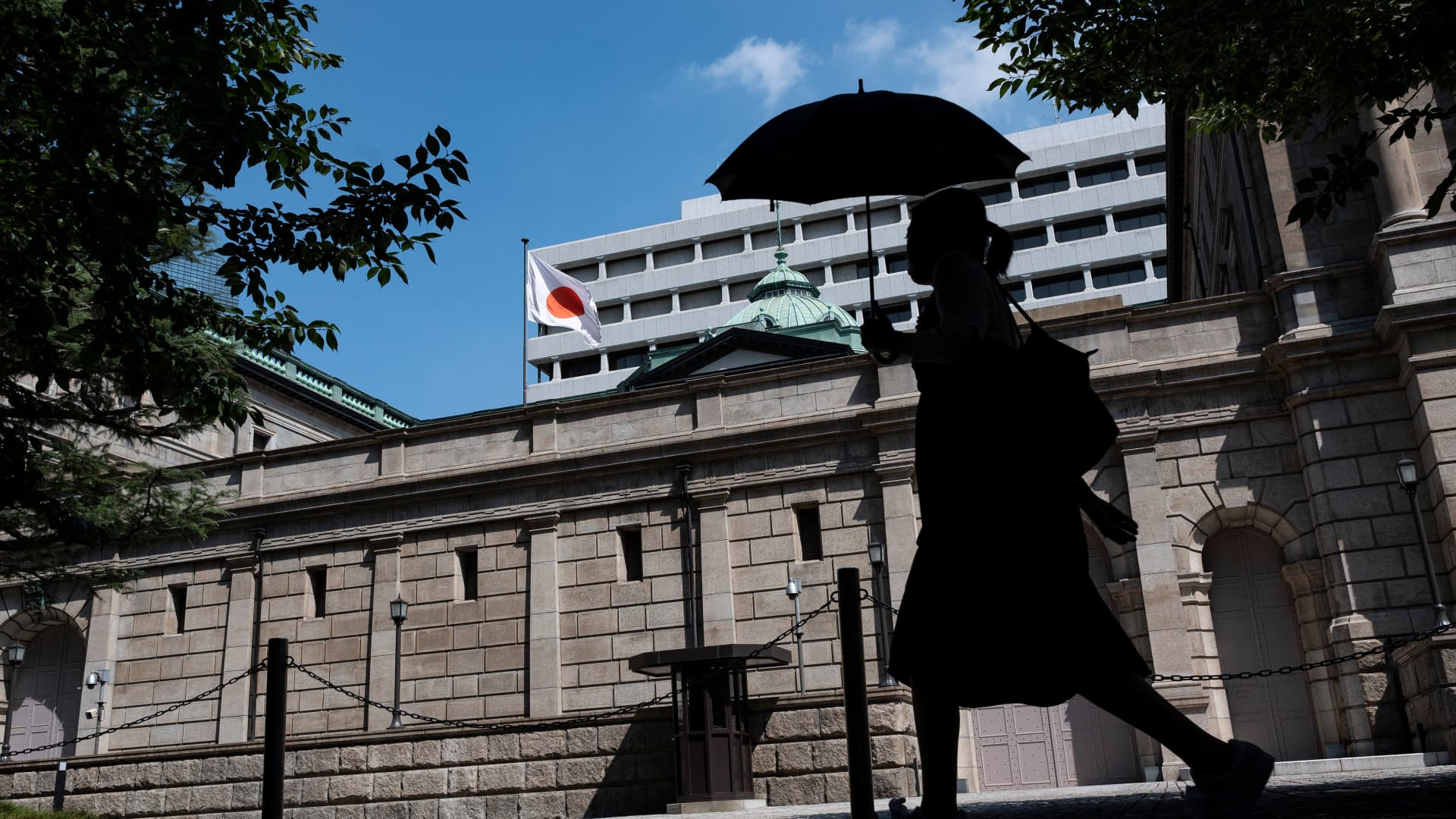
A pedestrian walks past the Bank of Japan (BoJ) building in central Tokyo on July 28, 2023.
Richard A. Brooks | Afp | Getty Images
Japan’s central bank is caught in a bind as soaring government bond yields risk upending its policy normalization process.
The Bank of Japan faces a stark choice: sticking with its policy of raising rates and risking even higher yields and further slowing an already sagging economy, or holding, even cutting rates to support growth that could accelerate inflation further.
Japanese government bonds have been scaling new peaks over the past month. On Thursday, yield on the benchmark 10-year JGBs hit a high of 1.917%, surging to their strongest level since 2007. The 20-year JGB yield reached 2.936%, a level not seen since 1999, while 30-year hit a record high of 3.436%, LSEG data going back to 1999 showed.
Japan abandoned its yield curve control program in March 2024, under which benchmark 10-year bond yields were capped at around 1%, as part of its policy normalization that also saw the country end the world’s last negative interest rate regime.
Now, as the country weighs increasing rates at a time when inflation has been rising — it has stayed above the BOJ’s 2% target for 43 straight months — the specter of bond yields spiking further looms large.
Anindya Banerjee, head of currency and commodities at Kotak Securities, told CNBC’s “Inside India” that if the BOJ reverts back to quantitative easing and YCC to cap bond yields, the yen may also weaken and feed imported inflation, which is already a problem.

Rising bond yields mean higher borrowing costs for Japan, further straining the country’s fiscal situation. Asia’s second-largest economy already boasts of the world highest debt-to-GDP ratio, standing at almost 230%, according to data from the International Monetary Fund.
Add to that a government that is poised to unleash its largest stimulus package since the pandemic to curb cost of living and prop up the struggling Japanese economy, and the concerns around Japan’s ballooning debt become even more stark.
Magdalene Teo, head of fixed income research for Asia at Julius Baer, said that the new debt issuance of 11.7 trillion yen to finance Prime Minister Sanae Takaichi’s supplementary budget is 1.7 times larger than that issued under her predecessor Shigeru Ishiba in 2024.
“This highlights the difficulty the government faces in balancing economic stimulus initiatives with maintaining fiscal sustainability,” Teo said.
Global implications?
In August 2024, an unwinding of yen-funded leveraged carry trades due to a hawkish BOJ rate hike and disappointing macro data from the U.S. saw stocks globally sell-off, with Japan’s Nikkei crashing 12.4% to record its worst day since 1987.
Carry trade refers to borrowing in a currency with lower interest rates and investing in high-yielding assets, with the Japanese yen being the predominant currency funding such trades as the country’s had a negative interest rates policy.
Now, rising Japanese yields have narrowed that rate differential, fueling concerns about another round of carry trade unwind and repatriation of funds into Japan. However, experts say that a repeat of the 2024 meltdown is unlikely.
“From a global perspective, the narrowing Japan–U.S. yield gap reduces the appeal of yen-funded carry trades, but we do not expect a repeat of the 2024 systemic unwind … Instead, anticipate episodic volatility and selective deleveraging, particularly if yen strength accelerates funding costs,” said Masahiko Loo, senior fixed income strategist at State Street Investment Management.
Loo attributes said structural flows driven by retail allocations from pensions funds, life insurance, and NISA [Nippon Individual Savings Account] anchor foreign holdings, making large-scale repatriation unlikely.
Justin Heng, APAC rates strategist at HSBC, concurred, saying that Japanese investors have shown little sign of repatriating funds, and have remained net buyers of foreign bonds.
From January to October 2025, they purchased 11.7 trillion yen in overseas debt, far outpacing the 4.2 trillion yen bought in all of 2024, according to HSBC. That surge has been driven mainly by trust banks and asset managers benefiting from retail inflows under the Japanese government’s tax-exempt investment program.
“We expect the continued decline in hedging cost, as a result of further Fed rate cuts, will also likely encourage Japanese investors to take more foreign bond exposure,” Heng said.
Continue Reading
-

How to Manage Hazardous Energy Risks to Prevent SIFs
Key Takeaways
- Hazardous energy is a significant factor that contributes to SIFs. Identifying and controlling hazardous energy is essential for SIF prevention.
- Control-of-work software helps to manage hazardous energy risks through digital isolation plans, digital P&IDs where isolation points are shown, and verification workflows.
- Control-of-work software also gives contractors full access to digital permits and isolation plans, and strengthens coordination with host employees.
The recently released Global Corporate Survey 2025: EHS Budgets, Priorities and Tech Preferences report from independent research firm Verdantix reveals that reducing serious injuries and fatalities (SIFs) is the single most important EHSQ operational goal for the next two years for 42% of survey respondents.That’s more than twice the number (19%) of those who say their top priority is “implementing programs and technology to develop a firm-wide safety culture.”
Unlike improvements seen in conventional incident rates, such as LTIR and TRIR, the occurrence of SIFs remains stubbornly consistent for many and is even rising in some cases, especially in high-risk industries like oil and gas, mining, chemicals, construction, and industrial manufacturing.
Hazardous energy is a major cause of SIFs
SIF prevention, the need to anticipate potential SIF events, and move away from the traditional total recordable incident rate (TRIR) were major discussion topics at the recent Campbell Institute’s annual forum held at the National Safety Council (NSC) Safety Congress.
Key takeaways from the forum included:
- Present TRIR is not predictive of future TRIR or fatalities.
- Companies with low TRIRs can also have high SIF rates. There is no relationship between lagging indicators, such as the TRIR, and the number of SIFs.
- Identifying high-energy hazards is the first step to anticipating SIFs.
- High-energy hazards are known as STCKY (Stuff That Can Kill You).
- The percentage of high-energy hazards that are under control is a good leading indicator of SIF prevention.
There is broad industry agreement that identifying and controlling hazardous energy is a key element of a SIF prevention strategy. While many factors contribute to SIFs, hazardous energy is one of the most significant.
Control-of-Work software helps manage hazardous energy risks
A comprehensive SIF prevention program includes many elements, including strong leadership commitment, a mature safety culture, well-designed processes, and a relentless focus on risk. Technology is only one component, but when used appropriately, it can significantly improve the effectiveness and reliability of critical safeguards.
With regard to managing hazardous energy risks – one of the most frequent contributors to SIFs – control-of-work (CoW) software provides tangible benefits. Beyond core permit-to-work (PtW) functionality, CoW systems also include isolation management (or lockout/tagout) capabilities. These two components work together to ensure hazardous energy sources are identified and isolated before work begins.
CoW software can be used to create detailed digital isolation plans, view the latest versions of digital Piping and Instrumentation Diagrams (P&IDs) where isolation points are visually marked up, enforce verification steps, and prevent work from being authorized and started until isolations are confirmed. Automated workflows reduce human error risks, drive accountability, and help ensure all hazardous energy sources are controlled to protect workers and assets.
In addition, contractors often face the highest SIF exposure and may be unfamiliar with a host employer’s equipment, processes, or site-specific risks. Bringing them into the same CoW workflows as internal employees and verifying their competence is an important step forward.
By having access to the same digital permits and isolation plans, contractors become aware of required isolations before starting work, reducing potential misunderstandings and human error. This strengthens coordination between host employees and contractors.
Because hazardous energy is one of the most significant causes of SIFs, CoW software should be part of every SIF prevention strategy. Its ability to strengthen isolation practices, improve visibility, and enforce critical steps makes it essential.
How to choose the right CoW software
With so many CoW software providers in the market and multiple capabilities to evaluate, selecting the right solution for your organization can be challenging.
The Smart Innovators: Control of Work Software report from Verdantix can help. It provides a high-level assessment of vendors and their offerings, and compares capabilities across five key assessment criteria: job hazard analysis, PtW, isolation management, simultaneous operations (SIMOPS), and shift management.
For example, in the area of isolation management capability, Wolters Kluwer Enablon achieved an evaluation of “Market-leading and innovative functionality,” which is the highest assessment possible.
Download your complimentary copy of the report to learn more about the key benefits, drivers and innovations shaping the CoW software market, and find the vendor that is the best fit for your organization.
Continue Reading
-
Japanese 10-year bond yields rise to highest level since 2007
Unlock the Editor’s Digest for free
Roula Khalaf, Editor of the FT, selects her favourite stories in this weekly newsletter.
Yields on Japan’s benchmark government bonds rose to their highest level since 2007 as investors fretted over Prime Minister Sanae Takaichi’s spending plans and braced themselves for an interest rate increase.
The 10-year yield on Thursday climbed 0.02 percentage points to 1.91 per cent in early trading, approaching levels at which analysts said domestic banks could begin fundamentally adjusting their bond-buying strategies. Yields move inversely to prices.
The rise takes 10-year yields to levels last seen before the collapse of Lehman Brothers sparked a global financial crisis and ushered in an era of lower interest rates worldwide.
Thursday’s move echoed broader jitters in global bond markets, which have been jolted by renewed speculation that the Bank of Japan is preparing to raise interest rates at its meeting on December 18-19.
Yields on 30-year JGBs rose to a record high of 3.44 per cent in early trading on Thursday.
Minoru Kihara, the government’s top spokesperson, said on Thursday that the administration was “closely watching” market moves in long-term interest rates.
“It is important to comprehensively understand the impact of rising interest rate effects on the economy,” he said.
Yields on two-year bonds, which are most sensitive to interest rate expectations, rose to a 17-year high of 1.01 per cent on Wednesday and held there on Thursday.
Weighing on sentiment is an impending auction of about ¥700bn ($4.5bn) in 30-year JGBs on Thursday. Traders said they expected the bonds to attract lacklustre demand, with Japanese life insurers and pension funds appearing reluctant to buy.
Investors have been concerned about Takaichi’s $135bn spending plan, Japan’s largest stimulus package since the Covid-19 pandemic.
Shoki Omori, chief desk strategist at Mizuho, said JGB markets were steadily absorbing the risk of Takaichi’s fiscal spending and were reflecting doubts about a proposed government efficiency drive.
He added that, while past JGB moves had limited impact on global bond markets, this time around “the JGB sell-off will have an effect on global rates”.
Continue Reading
-
New Zealand assembles for opening of its first Ikea store | New Zealand
“I’ve been waiting 25 years for this,” says Annie Sattler.
A quarter of a century after she emigrated from Germany, and seven years since the store was first announced, Sattler was prepared to wait just a few hours extra to be among the earliest through the doors of Ikea’s first outlet in New Zealand.
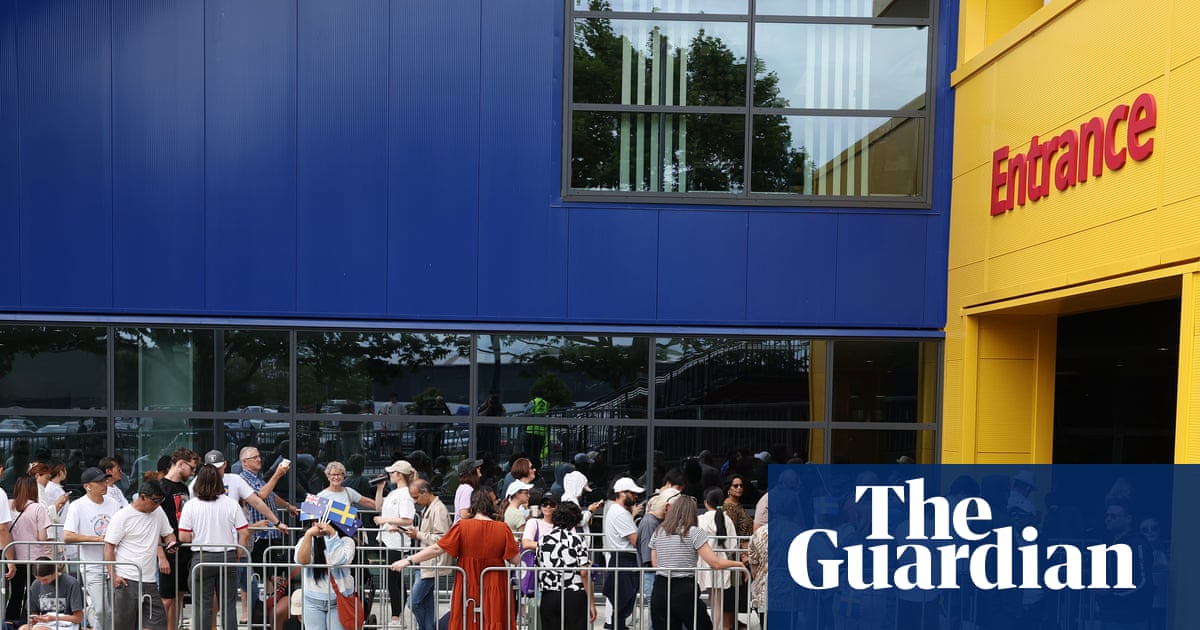
She was joined by hundreds of shoppers queueing on Thursday morning to mark the end of the national waiting game. Ikea was founded more than 80 years ago – and now has more than 400 stores worldwide – but the Swedish furniture giant had until now been absent from these shores, making New Zealand one of the last developed nations to get a store.
Annie Sattler (R) and Renee Dale (L) wait in queues as Ikea opens in Auckland New Zealand. Photograph: Fiona Goodall/The Guardian Sattler, who grew up with family trips to Ikea to furnish her childhood bedroom, says the opening event reminds her of home. “It was such a treat. I loved it – the staff, the furniture, the whole story of it.”
The store was announced in 2018, with foreign minister Winston Peters at the time taking credit for the move, saying he was sure his decision to open an embassy in Stockholm had played a part. By Thursday, excitement had reached fever pitch, with one local media outlet running a live blog and signs appearing along major roads warning motorists to “plan their journey” accordingly.
Shoppers wait in queues as Ikea opens in Auckland. Photograph: Fiona Goodall/The Guardian By 9am, solid lines had formed at the two main entrances, although one queue member, there for the spectacle more than the shopping, described it as “a bit of a fizzer”.
However, others said they would have camped overnight if it hadn’t been banned in advance, and Ulla Bennet – wearing a Denmark football jersey under her Swedish flag throw – was at the front, having established a “pre-line” outside the property boundary at 4am. “We thought it would be like it is now at 6am, but people didn’t really start arriving until six or seven,” she says.
In the end, the long-promised traffic jams failed to materialise, but a steady stream of shoppers continued to arrive as the 11am opening neared.
Ulla Bennett awaits the opening of Ikea. Photograph: Fiona Goodall/The Guardian As local media assembled, beaming their reports live into morning TV, the awaiting customers spoke of their excitement to try Ikea’s iconic meatballs, with one group chanting “meatballs, meatballs” at a nearby reporter.
‘New Zealand is always the last to get anything’
Bennet sees the opening as a sign of global recognition. “New Zealand is always the last on the list to get anything. Every other country gets things but [companies] think ‘Oh, they’re little and way down there’. But they’re here! I’m rapt!”
New Zealand prime minister Christopher Luxon cuts the ribbon as Ikea opens its doors. Photograph: Fiona Goodall/The Guardian The opening is a significant event for a country grappling with a sharp cost of living crisis. Ikea’s global pitch of affordability lands amid a squeeze on household budgets, with year-on-year Black Friday spending having fallen by 4-6%.
Keen to amplify any whiff of economic optimism, New Zealand prime minister Christopher Luxon arrived to cut the ribbon. As the doors opened, Luxon, who was meant to be the first customer, lost the honour to a faster shopper.
Motorway signs alert drivers. Photograph: Fiona Goodall/The Guardian The crowds were greeted by staff in bright yellow T-shirts who alternated between genuinely enthusiastic cheering and well-practised chants of “Hej! Hej! Hej!”.
The sight of shoppers piling trolleys high with cushions, lamps, and storage solutions suggests that for many, the novelty and promise of value outweighed the wider economic gloom, at least for today.
The company has signalled competitive pricing, with its Billy bookcase advertised at NZ$99 (£43), undercutting most local competitors.
The first customers walk through the door. Photograph: Fiona Goodall/The Guardian After the initial rush, Luxon denied the opening was a slap in the face for local small business owners, many of whom are struggling in a stalled economy. He told journalists it was “great for competition and great for consumers” and he was confident local businesses would “stand up and compete”.
The launch’s scale is a statement of intent, with a full online shopping network and 29 collection points from Kaitaia in the North Island to Invercargill down south. But for a nation accustomed to waiting, the era of Swedish self-assembly has, finally, begun.
Continue Reading
-
Hyatt Newsroom – News Releases
Hyatt Announces the Debut of Integrated Hospitality Destination in Lingang with Three New Hotels
New Hyatt Regency and Hyatt Place Hotels Offer Tailored Experiences for Business, Leisure and Extended Visits
CHICAGO, [December 3, 2025] – Hyatt Hotels Corporation (NYSE: H) today announced the grand opening of three new properties in Shanghai’s rapidly developing Lingang area. The new hotels—Hyatt Regency Shanghai Lingang, Hyatt Place Shanghai Lingang Xinchen International Conference Center, and Hyatt Place Shanghai Lingang, form an integrated hospitality destination in the heart of the Lingang business district, establishing a new landmark for both business and leisure travelers.
Strategically positioned in the district’s core, the hotels offer convenient access to Shanghai’s most popular attractions. Guests can reach the Shanghai Astronomy Museum, Dishui Lake, Haichang Ocean Park, and L+SNOW Indoor Skiing Theme Resort within walking distance. With direct access to Metro Line 16’s Dishui Lake Station, the hotels provide seamless connectivity to downtown Shanghai and beyond.
“We are thrilled to introduce this unique hotel collective that represents a new era of hospitality in Lingang,” said Ms. Spring Li, Complex General Manager overseeing the three properties. “Each hotel has been carefully designed to serve distinct guest needs while complementing one another, creating a destination for every purpose. Whether travelling for business, leisure, or an extended stay, our art-inspired accommodations, diverse dining venues and premium event facilities are thoughtfully designed to deliver comfort, inspiration, and memorable experiences—all set against the stunning backdrop of Dishui Lake.”
Hotel Design with Local Character
The hotels share a design philosophy of “artistic exploration” with each property featuring curated collections of sculptures, paintings, and installations that reflect the region’s maritime heritage and coastal culture. From the refined gallery-like spaces at Hyatt Regency Shanghai Lingang to the contemporary artistic touches at Hyatt Place Shanghai Lingang and Hyatt Place Shanghai Lingang Xinchen International Convention Center, guests can enjoy a unified artistic journey throughout their stay.
Distinct Experiences Within One Destination
Hyatt Regency Shanghai Lingang serves as the flagship property, offering 305 art-inspired guestrooms with sweeping lake views. Select rooms feature exclusive views of weekend and holiday fireworks displays, while specially designed themed family rooms provide an engaging and comfortable environment for guests of all ages. The hotel features six dining venues, pet-friendly accommodations, and 52,743 square feet (4,900 square meters) of event space. Wellness facilities include a 24-hour fitness center, while families can enjoy a dedicated two-story kids’ club designed to spark creativity and fun for younger guests.
Hyatt Place Shanghai Lingang Xinchen International Convention Center, connected to the Hyatt Regency Shanghai Lingang via an indoor sky bridge, offers 364 modern rooms alongside versatile event spaces tailored for business travelers and event attendees. The hotel also features guestrooms designed for families, offering a welcoming atmosphere for families traveling together. Business travelers can also enjoy the hotel’s innovative multi-level events space and efficient layout designed to support productive stays and seamless meetings.
Hyatt Place Shanghai Lingang completes the collection with 128 rooms featuring kitchenettes, refrigerators, and washer-dryers, offering home-like comforts for families and extended-stay guests.
World of Hyatt Gives Members a Reason to Stay Somewhere New
To provide World of Hyatt members even more ways to be rewarded, is offering members the opportunity to earn extra 500 Bonus Points for qualifying nights at all there hotels: Hyatt Regency Shanghai Lingang, Hyatt Place Shanghai Lingang, and Hyatt Place Shanghai Lingang Xinchen International Conference Center, for stays from now to February 28, 2026, part of World of Hyatt’s new hotel member offer. Additional participating hotels and their offer stay periods can be found at worldofhyatt.com/newhotelbonus. No registration is required and members can earn on top of other offers.
About Hyatt Regency
The Hyatt Regency brand is a global collection of hotels and resorts found in more than 235 locations in over 50 countries around the world. The depth and breadth of this diverse portfolio, from expansive resorts to urban city centers, is a testament to the brand’s evolutionary spirit. For more than 50 years, the Hyatt Regency brand has championed fresh perspectives and enriching experiences, while its forward-thinking philosophy provides guests with inviting spaces that bring people together and foster a spirit of community. As a hospitality original, Hyatt Regency hotels and resorts are founded on openness—our colleagues consistently serve with open minds and open hearts to deliver unforgettable celebrations, effortless relaxation and notable culinary experiences alongside expert meetings and technology-enabled collaboration. The brand prides itself on an everlasting reputation for insightful care—one that welcomes all people across all countries and cultures, generation after generation. For more information, please visit hyattregency.com. Follow @HyattRegency on Facebook, X and Instagram, and tag photos with #HyattRegency.
About Hyatt Place
Hyatt Place hotels combine style, innovation and 24/7 conveniences to create an easy to navigate experience for today’s multi-tasking traveler. Guests can enjoy thoughtfully designed guestrooms featuring distinct zones for sleep, work and play, and free flowing social spaces that offer seamless transitions from work to relaxation. With more than 440 locations globally, Hyatt Place hotels feature convenient dining options, a 24/7 fitness center, and a hot breakfast served every morning. For more information, please visit hyattplace.com. Join the conversation on Facebook and Instagram, and tag photos with #HyattPlace.
About Hyatt Hotels Corporation
Hyatt Hotels Corporation, headquartered in Chicago, is a leading global hospitality company guided by its purpose – to care for people so they can be their best. As of September 30, 2025, the Company’s portfolio included more than 1,450 hotels and all-inclusive properties in 82 countries across six continents. The Company’s offering includes brands in the Luxury Portfolio, including Park Hyatt®, Alila®, Miraval®, Impression by Secrets, and The Unbound Collection by Hyatt®; the Lifestyle Portfolio, including Andaz®, Thompson Hotels®, The Standard®, Dream® Hotels, The StandardX, Breathless Resorts & Spas®, JdV by Hyatt®, Bunkhouse® Hotels, and Me and All Hotels; the Inclusive Collection, including Zoëtry® Wellness & Spa Resorts, Hyatt Ziva®, Hyatt Zilara®, Secrets® Resorts & Spas, Dreams® Resorts & Spas, Hyatt Vivid® Hotels & Resorts, Sunscape® Resorts & Spas, Alua Hotels & Resorts®, and Bahia Principe Hotels & Resorts; the Classics Portfolio, including Grand Hyatt®, Hyatt Regency®, Destination by Hyatt®, Hyatt Centric®, Hyatt Vacation Club®, and Hyatt®; and the Essentials Portfolio, including Caption by Hyatt®, Unscripted by Hyatt, Hyatt Place®, Hyatt House®, Hyatt Studios®, Hyatt Select, and UrCove. Subsidiaries of the Company operate the World of Hyatt® loyalty program, ALG Vacations®, Mr & Mrs Smith, Unlimited Vacation Club®, Amstar® DMC destination management services, and Trisept Solutions® technology services. For more information, please visit www.hyatt.com.
Gloria Kennett
Hyatt
gloria.kennett@hyatt.com
Jean Miu
Hyatt – ASPAC
jean.miu@hyatt.com
Continue Reading