Category: 3. Business

  • The Utility of Machine Learning to Characterize Gut Microbiota Dysbios

    The Utility of Machine Learning to Characterize Gut Microbiota Dysbios

    Introduction

    Inflammatory bowel diseases (IBD), including Crohn’s disease (CD) and ulcerative colitis (UC), result from interactions between the host, environmental factors, and gut microbiome.1,2 A common feature of IBD is microbial community alteration, characterized by reduced microbial diversity, depletion of short-chain fatty acid–producing bacteria, enrichment of opportunistic taxa, and disrupted metabolic pathways that change with disease activity and therapeutic interventions.3–5 Recent longitudinal and multi-omics studies have shown that these changes in compositional and functional shifts are closely related to host transcriptomic, proteomic, and metabolomic signatures, underscoring the centrality of host–microbe interactions in disease pathogenesis.6–8

    Despite these advances, significant clinical unmet needs remain. The diagnosis of IBD is often delayed because symptoms overlap with those of other gastrointestinal disorders,9,10 and current biomarkers such as C-reactive protein and fecal calprotectin lack disease specificity and prognostic utility.11–13 Reliable microbial or molecular biomarkers capable of predicting treatment response or relapse risk are still lacking, highlighting the need for integrative analytic frameworks that can bridge the gap between discovery and clinical application.14,15 Traditional statistical analyses, including univariate (Linear discriminant analysis Effect Size, LEfSe) or multivariate regression models (Microbiome Multivariable Association with Linear Models, MaAsLin2), have been instrumental in identifying differentially abundant taxa and host factors.16,17 However, these approaches are limited in capturing nonlinear interactions and complex dependencies within high-dimensional, multi-omics datasets.18,19

    These datasets are intrinsically high-dimensional, sparse, and heterogeneous across cohorts, sampling sites, sequencing platforms, and geographies, with outcomes that can vary considerably depending on the analytical methods applied. Longitudinal and cross-cohort studies have revealed significant inter-individual variability and nonlinear dependencies among microbes, host factors, and metabolites, which makes finding biomarkers more complicated.7,20 Additionally, large-scale integration of metagenomic and metabolomic data has shown both the potential to identify disease-related features and the ongoing challenge of aligning results across studies. This emphasizes the need for strong computational methods to handle this complexity.6,21

    In this context, machine learning (ML) has emerged as a robust framework for characterizing gut microbial changes in IBD.22 ML approaches are particularly well-suited for (i) extracting predictive patterns from high-dimensional data, (ii) integrating heterogeneous inputs spanning microbial taxa, functional genes, host omics, and clinical metadata, and (iii) delivering measurable classification performance for diagnostic, prognostic, and therapeutic stratification.23 Applications in IBD cohorts have demonstrated that ML models outperform traditional statistical methods in discriminating cases from controls, differentiating subtypes, and predicting treatment responses.4,24 Simultaneously, benchmarking studies and recent state-of-the-art reviews have emphasized critical challenges—including external validation, model calibration, interpretability, and transparent reporting—that must be addressed before ML-driven microbiome biomarkers can be reliably translated into clinical settings.18,23,25

    Building on recent reviews that highlighted the importance of methodological robustness, reproducibility, and the need for clinical translation in AI-driven microbiome research,26,27 this review extends these perspectives by incorporating frameworks such as time-series and causal inference modeling, multi-omics data integration, and foundation-model approaches to enhance translational relevance. We provide a comprehensive overview of recent applications of ML for characterizing gut microbiome alterations in IBD, emphasizing commonly used algorithms, analytical pipelines, and model evaluation strategies. Finally, we highlight the diagnostic and prognostic potential of ML-based approaches and discuss their strengths, limitations, and key considerations in translating microbiome-derived insights into clinically applicable tools for precision medicine.

    Microbiome Dysbiosis in IBD: From Traditional Studies to Multi-Omics Analyses

    Early studies on gut microbiome in IBD primarily relied on 16S rRNA gene sequencing, which enabled cost-effective profiling of microbial communities at the genus or family level. These studies provided the first evidence of disease-associated dysbiosis characterized by reduced alpha diversity, enrichment of pathobionts, and depletion of commensals.3,5 Initial analytical approaches focused mainly on univariate comparisons of relative abundances, typically using methods such as LEfSe.17 Ma et al applied LEfSe analysis to compare patients with early-stage CD, advanced CD, and healthy controls, identifying enrichment of Parabacteroides and Lachnospiraceae incertae sedis in early CD, expansion of Escherichia-Shigella and Proteus in advanced CD, and preservation of short-chain fatty acid-producing taxa such as Roseburia and Butyricicoccus in healthy controls.28 These findings demonstrate how LEfSe highlights disease-stage-specific microbial signatures while underscoring its reliance on univariate contrasts.

    However, subsequent microbiome analyses have increasingly adopted multivariate analyses that incorporated metadata-based adjustments and advanced statistical modeling. Tools, such as MaAsLin216/MaAsLin329 and ANCOM-BC30/ANCOM-BC2,31 further enhance feature selection by integrating clinical metadata and complex covariates. Chen et al used MaAsLin2 to identify taxa whose relative abundances differed in quiescent CD (CD-R), independent of active inflammation and environmental or genetic confounders.32 They found that Faecalibacterium, Dorea, and Fusicatenibacter were significantly decreased in patients with CD-R compared to healthy first-degree relatives and non-relative healthy controls. Rosso et al applied ANCOM-BC to fecal bacterial profiles of patients with IBD (both UC and CD) vs non-IBD controls in Buenos Aires.33 Among the bacterial genera that were differentially abundant in ANCOM-BC, Bifidobacterium was enriched in patients with UC compared to non-IBD controls, whereas in patients with CD, Bifidobacterium, Bacteroides, Lactobacillus, and Faecalibacterium were identified as differentially abundant taxa. Together, these approaches reduced the analytical bias and enabled a more reproducible investigation of disease-specific taxa, marking a substantial advancement from exploratory compositional analyses to clinically grounded biomarker discovery. In addition, other methods such as ALDEx234 and LinDA,35 although not discussed in detail in this review, represent parallel efforts to further mitigate the biases inherent to differential abundance analysis.

    The advent of high-throughput shotgun metagenomic sequencing has provided a technological leap, offering strain-level resolution and direct access to microbial functional repertoires, including genes and pathways relevant to host metabolism and immunity.36 In a recent multibiome study, Akiyama et al applied shotgun metagenomic sequencing with MaAsLin2 across Japanese and external validation cohorts to characterize microbial signatures in IBD.37 Both UC and CD are associated with the depletion of short-chain fatty acid-producing bacteria and the enrichment of Enterococcus faecium and Bifidobacterium species. Notably, Escherichia coli specifically increased only in patients with CD, highlighting its potential role as a disease-specific microbial marker.

    Importantly, gut microbiome dysbiosis in patients with IBD is not limited to bacteria. Studies on the gut virome38,39 have reported an increased abundance of bacteriophages (eg, Caudovirales) and decreased abundance of eukaryotic viruses, while mycobiome studies have identified altered fungal-bacterial interactions and increased abundance of Candida species.40 Beyond the microbial taxa themselves, metabolomic and proteomic analyses revealed disease-associated alterations in bile acids, short-chain fatty acids, and amino acid derivatives, providing functional readouts that link microbial activity to host immune and epithelial responses.41,42 Together, these multi-omics approaches provide a more comprehensive understanding of microbial changes and its systemic effects.

    However, the integration of multiple data layers has resulted in significant analytical challenges. Microbiome and multi-omics datasets are intrinsically high-dimensional, sparse, and heterogeneous with marked variability across cohorts, sequencing platforms, and sample types.18,19,43 Traditional univariate and linear statistical approaches are often insufficient for capturing nonlinear dependencies and cross-modal interactions. Although analytical tools such as LEfSe and MaAsLin2 are widely used for differential abundance and association testing, they are inherently sensitive to compositional bias, differences in sequencing depth, and batch effects.19,44 LEfSe operates on relative abundances and may generate spurious associations when sample library sizes vary, whereas MaAsLin2 assumes linear relationships and is affected by zero inflation and normalization artifacts. These issues have been repeatedly highlighted in recent benchmarking studies, emphasizing the need for compositional data–aware methods and rigorous normalization to ensure cross-cohort reproducibility and biological validity.45 Collectively, these challenges have motivated the adoption of ML and related artificial intelligence (AI) approaches, which are particularly well-suited for recognizing complex patterns in high-dimensional data and enabling multimodal integration.46,47 Leveraging these advanced computational frameworks, researchers aim to move beyond traditional analyses toward more reproducible, predictive, and clinically interpretable models of gut microbiome dysbiosis in IBD.

    Machine Learning Applications in IBD Microbiome Research

    As the complexity of microbiome data in IBD has become more apparent, ML approaches have been increasingly adopted to address the limitations of conventional statistical analyses.18,48 Unlike traditional differential abundance methods, ML algorithms can handle high-dimensional and heterogeneous data and discover subtle nonlinear patterns that may better capture disease-associated microbial biomarkers.49,50 These shifts have established ML as a key tool for developing diagnostic and prognostic models of IBD.51,52

    Disease Classification and Subtype Diagnosis

    One of the earliest and most widely explored applications of ML in microbiome research was disease diagnosis. Classifier models trained on microbial abundance profiles or functional gene features have been used to discriminate patients with IBD from healthy controls,24 distinguish patients with CD from those with UC,50 and predict clinical outcomes such as flare risk, therapeutic response, or remission status.52,53 In many cases, ML classifiers have achieved significant performance as measured via receiver operating characteristic (ROC) curves, the area under the curves (AUCs), sensitivity, and specificity, often surpassing the predictive capacity of conventional biomarkers such as fecal calprotectin.24 For example, Liñares-Blanco et al applied a panel of supervised learning algorithms to fecal microbiome data and developed a robust signature capable of classifying not only IBD versus controls but also differentiating CD from UC.50 Their random forest (RF)-based model achieved high AUC values across cross-validation, and feature selection identified a reproducible set of bacterial taxa that contributed most strongly to classification. Similarly, Park et al reported that a fecal microbiome-based ML model accurately discriminated between CD and UC, further confirming that microbial signatures can serve as reliable classifiers of IBD subtypes.51 Recent large-scale studies have underscored the diagnostic power of microbiome-informed ML. Zheng et al’s multi-ethnic cohort analysis demonstrated that an ML classifier trained on microbial taxonomic features achieved AUCs exceeding 0.7~0.9, outperforming conventional biomarkers such as fecal calprotectin in identifying both UC and CD.24 Similarly, Kim et al constructed an ML model using Korean fecal metagenomes that reliably differentiated patients with IBD from healthy patients, emphasizing the generalizability of microbiome signatures across populations.54 Together, these studies highlight that microbiome-based ML frameworks may evolve into noninvasive diagnostic tools capable of complementing or reducing the need for invasive endoscopy.

    Biomarker Discovery and Algorithmic Approaches

    In addition to its classification capabilities, ML plays a key role in the discovery of disease-specific features and biomarkers.55,56 By ranking microbial taxa, genes, or metabolites according to their predictive importance, algorithms not only improve model interpretability but also generate hypotheses about how microbes might contribute to diseases. This capability has enabled the development of candidate biomarker panels that integrate microbial and metabolic features with clinical metadata, thereby providing a more comprehensive view of IBD pathophysiology. Among the various algorithms employed, RF57 is the most widely used in microbiome studies because of its robustness to noise, sparsity tolerance, and straightforward feature importance readouts.58 Knights et al highlighted its stability and performance compared to traditional statistical approaches.59 Kim et al further applied RF–based feature selection to identify microbial markers associated with IBD, distinguishing taxa such as Veillonella and Escherichia-Shigella between patients with UC and those with CD.54 Manandhar et al also applied RF classifiers trained on gut microbiome features to diagnose IBD and differentiate CD from UC using the American Gut Project data comprising 729 patients with IBD and 700 healthy patients.47 With 50 LEfSe-selected taxa, the RF model achieved a test AUCs of > 0.80 for IBD versus controls; using the top 500 high-variance operational taxonomic units (OTUs) further improved performance to an AUCs > 0.82. For subtype classification (331 CD vs 141 UC), RF models trained on either differential taxa or high-variance OTUs attained test AUCs > 0.90, underscoring their strong discriminatory power and potential clinical utility.

    Although RF remains the most commonly used approach, other algorithms, including support vector machines (SVMs) and boosting frameworks (eg, XGBoost and AdaBoost), are also widely applied.60,61 In an extensive multiomics study of CD location subtypes, Gonzalez et al systematically evaluated ten different algorithms (including RFs, extra trees, decision trees, SVMs, multilayer perceptron classifiers, voting classifiers, naïve Bayes, k-nearest neighbors, logistic regression, and AdaBoost) for their ability to classify disease subtypes. The authors identified the best-performing models and applied them to downstream analyses, revealing distinct associations according to disease location. Specifically, colonic CD exhibited a greater similarity to ulcerative colitis and showed stronger associations with Bacteroides vulgatus and neutrophil activity, whereas ileal CD was more closely linked to bile acid metabolism and demonstrated marked alterations in Faecalibacterium prausnitzii. These findings underscore how both the model choice and feature modality substantially influence predictive performance.62

    Besides single-algorithm approaches, ensemble methods are also advantageous. Ha et al trained eight ML algorithms, including RF, deep neural networks (DNNs), logistic regression, k-nearest neighbors, decision trees, gradient boosting, and SVMs, on multi-cohort pediatric IBD data. An ensemble model combining three top-performing classifiers (DNN, logistic regression, and SVMs) achieved the highest accuracy in predicting future remission, outperforming any single algorithm.52 The characteristics of each ML/DL algorithm are summarized in Table 1.

    Table 1 Comparative Characteristics and Performance Trends of ML Algorithms in IBD Microbiome Research

    Challenges and Limitations of ML in IBD Microbiome Research

    However, despite these advances, several challenges remain unresolved. Overfitting is a recurrent issue due to the imbalance between high-dimensional microbial features and relatively small sample sizes. A recent review by Dudek et al emphasized the risks of data leakage and overfitting in microbiome ML workflows, calling for more rigorous cross-validation and model-locking strategies.69 In addition to overfitting, performance metrics such as AUCs or accuracy often rely solely on internal cross-validation and may overestimate true generalizability. Robust evaluation requires nested cross-validation, bootstrapping, and, ideally, independent external validation to ensure fair model assessment and prevent information leakage.48,70 As demonstrated by Kubinski et al, model performance varies markedly across preprocessing choices and cohorts, underscoring the difficulty of achieving cross-cohort reproducibility.71 Moreover, upstream sources of technical noise—including differences in normalization procedures, zero-inflated feature distributions, and the inherent sparsity and compositionality of microbial data—can substantially distort model behavior and feature importance rankings, further complicating reproducibility and external validation.71–73 Furthermore, as highlighted by Papoutsoglou et al, the lack of standardized preprocessing pipelines and benchmarking datasets undermines reproducibility and complicates comparisons across studies.48 Collectively, these findings demonstrate that while ML has brought substantial progress beyond traditional statistical approaches in IBD microbiome research, persistent barriers, including overfitting, limited generalizability, and lack of methodological standardization, must be addressed. Rigorous external validation, harmonized data pipelines, and the integration of interpretable ML frameworks are essential to ensure that microbiome-based models can transition into reliable clinical applications.74

    Emerging Approaches Beyond Traditional ML

    While traditional ML approaches such as RF and SVMs have shown strong utility in IBD microbiome research, recent years have seen the rise of deep learning (DL) and next-generation AI frameworks that aim to capture even more complex and nonlinear relationships within multi-omics data.66,75 Unlike traditional methods that often rely on predefined or engineered features, DL methods use representation learning to automatically extract latent patterns from raw or minimally processed inputs.75,76 Oh and Zhang reported DeepMicro as a notable early framework that employed autoencoders to compress high-dimensional microbiome profiles into compact latent representations, thereby enhancing the disease classification performance. Building on this foundation, subsequent DL applications have explored a range of architectures: autoencoders for dimensionality reduction and feature learning,75 and convolutional neural networks (CNNs) to identify structured patterns in microbial abundance matrices.77 More advanced models, such as the Multimodal Variational Information Bottleneck (MVIB), further integrate multi-omics layers and clinical metadata, highlighting how DL can support more accurate and clinically relevant predictions.78 Collectively, these approaches emphasize the potential of DL to surpass conventional ML, offering scalable and flexible tools for predictive microbiome research.

    Recently, attention has shifted toward the development of foundation models that leverage large-scale pretraining on biological sequences to generate generalized representations. The Microbial General Model (MGM) was one of the first attempts to construct a microbiome-focused foundation model trained on more than 260,000 microbiome samples using transformer-based pretraining.79 Although still in its early stages, the MGM demonstrates how models tailored to microbial communities can eventually classify community types, identify keystone taxa, and capture longitudinal dynamics, thereby providing a scalable framework for studying microbiome-driven processes in IBD. In parallel, host-centric genome foundation models, such as AlphaGenome80 and Nucleotide Transformer,81 have been developed to annotate genetic variants and predict their regulatory effects in human genomics. Although not originally designed for microbial applications, these host-oriented models provide transferable embeddings that may help bridge host genetic information with microbial-community dynamics. Together, microbiome- and host-focused foundation models highlight a forward-looking trajectory in which unified representational spaces may enable multi-omics integration and deepen our understanding of host–microbiome interactions in IBD.

    In parallel, recent multi-omics studies have begun to adopt time-series and causal inference models that capture longitudinal microbiome–host interactions and reveal potential drivers of disease dynamics.82,83 Dynamic Bayesian networks, Granger-causality analysis, and structural causal modeling frameworks allow researchers to infer temporal dependencies and directionality in microbial and metabolic shifts, providing insights that static cross-sectional analyses cannot capture.84 These temporal and causal modeling approaches are crucial for understanding how microbial community states evolve during inflammation, remission, and therapeutic intervention in IBD. In addition, multi-omics data-fusion frameworks have rapidly advanced predictive microbiome analytics by integrating heterogeneous data layers within shared latent spaces. Representative examples include Multi-Omics Factor Analysis (MOFA+), which applies probabilistic factor modeling to uncover coordinated variance across omics layers;85 DIABLO, a multivariate approach for discriminative integration of multi-omic modalities;86 and deep representation learning frameworks, such as variational autoencoder–based or multimodal transformer architectures, which embed genomic, transcriptomic, and metabolomic profiles into unified representations for improved disease prediction and mechanistic interpretation.75 More recently, the MintTea (Multi-omics Integration through Temporal Embedding and Attention) framework has extended this concept by integrating longitudinal multi-omics data through attention-based deep learning, enabling the identification of dynamic, disease-associated molecular modules across time and modalities.87 These integrative frameworks exemplify the shift from isolated single-omic analysis toward data-fusion models that bridge microbial, metabolic, and host dimensions of IBD.

    As these models grow in complexity, concerns regarding their interpretability have become more pressing. To ensure clinical relevance and acceptance, the integration of explainable AI (XAI)88 methods, such as SHapley Additive exPlanation (SHAP) values, attention weight visualization, and concept bottleneck models, has been proposed.89 For instance, Novielli et al applied SHAP values to microbiome classification tasks and showed that taxa such as Fusobacterium and Parvimonas were key drivers of colorectal cancer predictions, thereby providing transparent links between features and model outputs.90 Similarly, Onwuka et al demonstrated that the SHAP-based prioritization of fecal and plasma metabolites could highlight IBD-associated signatures, reinforcing the role of XAI in biomarker discovery and clinician application.91 In line with these advances, a recent review by Kim et al emphasized that the field is shifting from descriptive profiling of dysbiosis toward more predictive and analytic (including prescriptive) applications, while highlighting ongoing challenges such as biological and technical heterogeneity, limited generalizability across cohorts, and the need for methodological standardization and external validation.92

    Clinical Translation and Challenges

    The application of ML and DL to the IBD microbiome data has generated promising diagnostic models and candidate biomarker panels.93,94 However, the path from computational discovery to clinical implementation remains complex and requires careful consideration of several limitations.95,96 While traditional statistical analyses and ML/DL-based approaches have successfully identified bacterial taxa associated with disease states, causal or mechanistic links between these microbes and host physiology have been established only for a limited subset. Most computational analyses cannot by themselves determine whether these microbial signatures drive, result from, or merely correlate with inflammation. For example, several genera including Faecalibacterium frequently identified by differential abundant taxa analysis are known to produce short-chain fatty acids that modulate intestinal immune responses, and their depletion may contribute to mucosal inflammation and barrier dysfunction in IBD.97,98 Conversely, enrichment of EscherichiaShigella or Enterococcus may reflect pro-inflammatory activity through lipopolysaccharide-mediated TLR signaling.99,100 To validate and interpret these associations, further experimental confirmation through in vivo or ex vivo studies is required, as well as the use of next-generation computational frameworks—such as foundation-model-based simulation or causal network modeling—to infer and test host–microbe interaction dynamics.101

    Standardization and Reproducibility of Microbiome Assays

    A key challenge is the standardization of microbiome assays. Pre-analytical variables such as sample types (feces or biopsies), stool collection methods, preservation techniques, sequencing platforms, and library preparation introduce substantial variability that directly affects downstream feature profiles.

    In particular, differences in sequencing chemistry, read length, and bioinformatic preprocessing pipelines can introduce systematic biases in taxonomic resolution and relative abundance estimation.102,103 Batch effects arising from DNA extraction kits, primer selection, and library preparation protocols have been shown to exceed inter-individual biological variability in some cases, thereby confounding disease-associated microbial signatures across studies.104

    Together, these technical factors interact with sampling- and host-related sources of variability, underscoring the importance of methodological harmonization. Kim et al compared the gut microbiome profiles obtained from the stool, luminal contents, and mucosal biopsies of patients with UC and healthy controls.105 They found significant differences in both alpha and beta diversities across sample types, with biopsies yielding higher numbers of observed OTUs than stool or lavage samples. Community structures showed a correlation between stool and luminal contents, whereas biopsy samples did not correlate with either. Importantly, UC-control differences were evident only in stool samples, whereas lavage and biopsy samples did not show significant separation, partly due to the limited sample size. Classification analysis achieved AUCs of 0.85 for stool and 0.81 for lavage, underscoring that the sampling strategy critically influences microbiome readouts and diagnostic performance. Kruger et al systematically assessed intra- and inter-individual variability in gut health markers in healthy adults using an optimized fecal sampling and processing workflow.106 They showed that the variability differed by marker, with some exhibiting substantial within-person variations. Importantly, they demonstrated that optimized pre-processing methods, such as mill homogenization, could significantly reduce technical variability, highlighting that methodological choices can obscure biological signals if not standardized. This underscores the need for assay harmonization to ensure reliable biomarker discovery and provide a robust foundation for ML applications in clinical contexts. Similarly, Clooney et al performed a large longitudinal multicenter study across two continents in patients with IBD and controls, revealing that the geographic site and temporal factors explained a significant share of the microbiome variance, often rivaling or exceeding disease effects.107 They further observed that temporal stability was reduced in IBD, and that model performance improved when consecutive time points were considered. These findings illustrate how cross-site and temporal heterogeneity can mask disease-associated signatures, and emphasize the importance of standardized methodologies and rigorous external validation in the development of ML-based diagnostics and prognostics for IBD. Unless these sources of heterogeneity are rigorously controlled, models trained in one context are unlikely to be generalized to other clinical settings.108 This challenge becomes even more pronounced when integrating multi-omics layers, such as metabolomic, transcriptomic, and proteomic data, which adds further complexity to model development and validation.

    Model Interpretability and Explainable AI

    Another major concern was the interpretability of the model. Algorithms such as RF, boosting algorithms, and neural networks often achieve high predictive performance but can act as “black boxes”.96 In clinical practice, the opacity of AI models can undermine the trust of clinicians and complicate regulatory approval. A systematic review by Rosenbacke et al reported that explainable AI can either enhance or diminish trust depending on how explanations are presented.109 Explanations that are clear, concise, and consistent with clinical reasoning tend to increase clinicians’ confidence in AI systems. Conversely, explanations that are overly technical, complex, inconsistent with clinical logic, or misleading can reduce it. Thus, providing transparent and clinically relevant explanations is essential for successfully integrating AI into healthcare and securing the trust of medical professionals. Rynazal et al applied XAI methods (notably SHAP for local explanations) to colorectal cancer (CRC) classification using gut microbiome data.110 They demonstrated that using local (patient-specific) feature attributes revealed which microbial taxa were most influential for individual predictions and enabled the stratification of patients with CRC into subgroups, thereby improving interpretability and potentially pointing toward mechanistic hypotheses. Yu et al developed a 10-species microbial signature for IBD using an XGBoost-based model (termed XGB-IBD10) and performed external validation.111 Importantly, they applied SHAP analysis to explain model predictions, showing how individual taxa influenced the classification decisions. External validation confirmed the robustness of the identified microbial panel, demonstrating that explainability could enhance trust in model outputs and provide mechanistic insights into disease-associated microbes.

    Taken together, these studies illustrate that XAI approaches, including feature importance ranking, SHAP values, and attention-based visualization, are critical not only for identifying which microbial taxa, metabolic pathways, or host features drive predictions but also for facilitating clinical adoption and guiding biological hypothesis generation. This process can provide a reliable output for clinical deployment.

    Demonstrating Clinical Utility and Path to Adoption

    Finally, the demonstration of its clinical utility remains a missing link. Current studies primarily focus on metrics such as the AUC, sensitivity, and specificity. Although these benchmarks are essential for the initial validation, they fail to capture whether such models can improve patient care. To achieve regulatory approval and widespread clinical uptake, predictive frameworks must demonstrate tangible benefits, such as reducing unnecessary colonoscopies, expediting the time to therapy initiation, and lowering healthcare costs. Ultimately, prospective validation and interventional studies are required to bridge the gap between computational promise and real-world clinical impact.

    Recent longitudinal research has underscored this need. Al Radi et al investigated the predictive value of gut microbiome signatures for therapy intensification in IBD using a 10-year follow-up cohort.112 Their findings demonstrated that baseline microbial features could predict the need for treatment escalation, highlighting the importance of long-term monitoring and the value of microbiome-informed risk stratification for guiding clinical decision making. This study illustrated how longitudinal datasets provide a rigorous framework for evaluating the durability and clinical relevance of microbiome-derived predictors. In parallel, Massaro et al presented the design of the OPTIMIST study, a prospective, longitudinal, observational pilot study conducted in Canada to investigate gut microbiome predictors of advanced therapy response in CD.113 The study enrolled patients initiating biological treatment, as well as non-IBD controls, to link baseline microbiome composition and temporal dynamics to therapeutic outcomes. By prospectively monitoring patients over time, the OPTIMIST study established a framework for evaluating microbiome-based predictors in real-world settings and supporting their eventual clinical translation.

    In summary, ML and DL hold considerable promise for translating microbiome research into diagnostic and prognostic tools for IBD. However, clinical translation will require overcoming persistent challenges related to reproducibility across cohorts, generalizability to diverse patient populations, interpretability of results, and addressing data-sharing constraints. Progress in explainable AI, development of standardized pipelines, and adherence to rigorous reporting and evaluation guidelines will be crucial in bridging the gap between proof-of-concept studies and real-world patient care.

    Conclusion and Future Perspectives

    ML and DL have transformed IBD microbiome research from descriptive community profiling to predictive modeling. Alongside DA analyses, these approaches have enabled the classification of disease versus health, the differentiation of CD from UC, and the identification of microbial and metabolic biomarkers with diagnostic and prognostic significance (Figure 1). Studies employing RF, boosting frameworks, and ensemble models have demonstrated that microbiome-informed classifiers can approach or even surpass traditional biomarkers, and explainable AI methods are beginning to provide clearer insights into the microbial and functional drivers of diseases.

    Figure 1 Evolution of analytical approaches for characterizing gut microbiota alterations in inflammatory bowel disease (IBD). An overview of analytical strategies for IBD illustrates the progression from traditional statistics to next-generation artificial intelligence (AI) frameworks. Early differential abundance (DA) analyses using 16S rRNA or metagenomic data identified disease-associated taxa; however, these were often limited by univariate contrasts and reproducibility issues. With the increasing data complexity of multi-omics approaches, machine learning (ML) approaches such as random forests, support vector machines (SVMs), and boosting algorithms have enabled robust disease classification, biomarker panel identification, and performance evaluation through receiver operating characteristic (ROC) curves, cross-validation, and feature importance scores. Recently, deep learning (DL) frameworks have been applied to capture nonlinear relationships in high-dimensional multi-omics datasets, providing latent feature embeddings and integrative predictive models. Looking ahead, foundation models trained on large-scale host and microbial genomic resources (eg, Microbial General Model for microbiome and AlphaGenome for host genetics) are emerging as transferable backbones that can be fine-tuned for diverse downstream tasks, from diagnosis and subtype prediction to therapy response modeling and prognosis.

    Despite this progress, significant barriers remain before clinical adoption can be achieved. Variability in stool collection, sequencing platforms, and preprocessing pipelines continues to hinder reproducibility, and external validation often reveals a decline in model performance when applied across independent cohorts. Dependence on complex “black-box” algorithms also makes it more difficult for clinicians to trust and regulators to approve. Furthermore, most studies are retrospective, with few prospective or interventional studies directly evaluating whether microbiome-based ML models can improve patient outcomes. These issues emphasize the need to connect computational advances with the development of practical tools for precision medicine.

    Looking ahead, progress will be fastest if efforts focus on: (1) rigorous validation, prioritizing pre-registered pipelines, locked models, and multi-site external testing; (2) strong benchmarking, with standardized preprocessing, shared baselines, and challenge datasets covering stool and mucosal samples, platforms, and regions; (3) biologically based interpretability, pairing explanation methods with wet-lab or orthogonal assays to verify mechanistic plausibility; (4) longitudinal and multimodal integration, combining metagenomics, metabolomics, proteomics, and host features to model disease trajectories rather than single time points; and (5) next-generation AI, where emerging genome foundation models—both microbiome-focused and host-centric—are developed under strict evaluation and compared directly to robust classical baselines. These steps will help ML move from promising prototypes to dependable clinical tools that guide diagnosis, monitoring, and treatment decisions for IBD.

    Data Sharing Statement

    Data sharing not applicable – no new data generated.

    Acknowledgments

    The figure was generated using BioRender by June-Young Lee (2025) https://BioRender.com/je7gx57. We would like to thank Editage for the English language editing.

    Author Contributions

    • June-Young Lee (J.Y. Lee): Conceptualization; Methodology; Formal analysis; Software; Data curation; Investigation; Resources; Visualization; Funding acquisition; Writing – original draft; Writing – review & editing.
    • Dong Hyun Kim (D.H. Kim): Formal analysis; Software; Validation; Data curation; Visualization; Writing – review & editing.
    • Jee-Won Choi (J.W. Choi): Data curation; Investigation; Visualization; Writing – review & editing.
    • Minho Shong (M. Shong): Resources; Investigation; Writing – review & editing.
    • Chang Kyun Lee (C.K. Lee): Conceptualization; Methodology; Supervision; Project administration; Funding acquisition; Writing – review & editing.

    All authors contributed substantially to the work, critically revised the manuscript, and agree to be accountable for all aspects of the work. All authors gave final approval of the version to be published. June-Young Lee and Dong Hyun Kim contributed equally to this work and share first authorship.

    Funding

    This research was supported by a grant from the Korea Health Technology R&D Project through the Korea Health Industry Development Institute, funded by the Ministry of Health & Welfare, Republic of Korea (grant number: RS-2023-KH135855) and the InnoCORE program of the Ministry of Science and ICT, Republic of Korea (grant number: N10250153).

    Disclosure

    The authors declare that they have no competing interests.

    References

    1. Ni J, Wu GD, Albenberg L, Tomov VT. Gut microbiota and IBD: causation or correlation? Nat Rev Gastroenterol Hepatol. 2017;14(10):573–584. doi:10.1038/nrgastro.2017.88

    2. Kostic AD, Xavier RJ, Gevers D. The microbiome in inflammatory bowel disease: current status and the future ahead. Gastroenterology. 2014;146(6):1489–1499. doi:10.1053/j.gastro.2014.02.009

    3. Shan Y, Lee M, Chang EB. The gut microbiome and inflammatory bowel diseases. Annual Review of Medicine. 2022;73:455–468. doi:10.1146/annurev-med-042320-021020

    4. Lloyd-Price J, Arze C, Ananthakrishnan AN, et al. Multi-omics of the gut microbial ecosystem in inflammatory bowel diseases. Nature. 2019;569(7758):655–662. doi:10.1038/s41586-019-1237-9

    5. Morgan XC, Tickle TL, Sokol H, et al. Dysfunction of the intestinal microbiome in inflammatory bowel disease and treatment. Genome Biol. 2012;13(9):R79. doi:10.1186/gb-2012-13-9-r79

    6. Ning L, Zhou Y-L, Sun H, et al. Microbiome and metabolome features in inflammatory bowel disease via multi-omics integration analyses across cohorts. Nat Commun. 2023;14(1):7135. doi:10.1038/s41467-023-42788-0

    7. Zhang Y, Thomas JP, Korcsmaros T, Gul L. Integrating multi-omics to unravel host-microbiome interactions in inflammatory bowel disease. Cell Rep Med. 2024;5(9):101738. doi:10.1016/j.xcrm.2024.101738

    8. Hu S, Bourgonje AR, Gacesa R, et al. Mucosal host-microbe interactions associate with clinical phenotypes in inflammatory bowel disease. Nat Commun. 2024;15(1):1470. doi:10.1038/s41467-024-45855-2

    9. Jayasooriya N, Baillie S, Blackwell J, et al. Systematic review with meta-analysis: time to diagnosis and the impact of delayed diagnosis on clinical outcomes in inflammatory bowel disease. Aliment. Pharmacol. Ther. 2023;57(6):635–652. doi:10.1111/apt.17370

    10. Zhang SY, Lin Y. Addressing diagnostic delays in inflammatory bowel diseases in Germany. World J Gastroenterol. 2024;30(41):4484–4489. doi:10.3748/wjg.v30.i41.4484

    11. Henriksen M, Jahnsen J, Lygren I, et al. C-reactive protein: a predictive factor and marker of inflammation in inflammatory bowel disease. Results from a prospective population-based study. Gut. 2008;57(11):1518–1523. doi:10.1136/gut.2007.146357

    12. Walsham NE, Sherwood RA. Fecal calprotectin in inflammatory bowel disease. Clin Exp Gastroenterol. 2016;9:21–29. doi:10.2147/ceg.S51902

    13. Clough J, Colwill M, Poullis A, Pollok R, Patel K, Honap S. Biomarkers in inflammatory bowel disease: a practical guide. Ther Adv Gastroenterol. 2024;17:17562848241251600. doi:10.1177/17562848241251600

    14. Verstockt B, Noor NM, Marigorta UM, Pavlidis P, Deepak P, Ungaro RC. Results of the seventh scientific workshop of ECCO: precision medicine in IBD-disease outcome and response to therapy. J Crohns Colitis. 2021;15(9):1431–1442. doi:10.1093/ecco-jcc/jjab050

    15. Chen L, Zhang C, Niu R, et al. Multi-omics biomarkers for predicting efficacy of biologic and small-molecule therapies in adults with inflammatory bowel disease: a systematic review. United Eur Gastroenterol J. 2025;13(4):517–530. doi:10.1002/ueg2.12720

    16. Mallick H, Rahnavard A, McIver LJ, et al. Multivariable association discovery in population-scale meta-omics studies. PLoS Comput Biol. 2021;17(11):e1009442. doi:10.1371/journal.pcbi.1009442

    17. Segata N, Izard J, Waldron L, et al. Metagenomic biomarker discovery and explanation. Genome Biol. 2011;12(6):R60. doi:10.1186/gb-2011-12-6-r60

    18. Hernández Medina R, Kutuzova S, Nielsen KN, et al. Machine learning and deep learning applications in microbiome research. ISME Commun. 2022;2(1):98. doi:10.1038/s43705-022-00182-9

    19. Nearing JT, Douglas GM, Hayes MG, et al. Microbiome differential abundance methods produce different results across 38 datasets. Nat Commun. 2022;13(1):342. doi:10.1038/s41467-022-28034-z

    20. Halfvarson J, Brislawn CJ, Lamendella R, et al. Dynamics of the human gut microbiome in inflammatory bowel disease. Nat Microbiol. 2017;2(5):17004. doi:10.1038/nmicrobiol.2017.4

    21. Franzosa EA, Sirota-Madi A, Avila-Pacheco J, et al. Gut microbiome structure and metabolic activity in inflammatory bowel disease. Nat Microbiol. 2019;4(2):293–305. doi:10.1038/s41564-018-0306-4

    22. Tarca AL, Carey VJ, X-w C, Romero R, Drăghici S. Machine Learning and Its Applications to Biology. PLoS Comput Biol. 2007;3(6):e116. doi:10.1371/journal.pcbi.0030116

    23. Marcos-Zambrano LJ, Karaduzovic-Hadziabdic K, Loncar Turukalo T, et al. Applications of machine learning in human microbiome studies: a review on feature selection, biomarker identification, disease prediction and treatment. Review. Front Microbiol. 2021;Volume 12. doi:10.3389/fmicb.2021.634511

    24. Zheng J, Sun Q, Zhang M, et al. Noninvasive, microbiome-based diagnosis of inflammatory bowel disease. Nat Med. 2024;30(12):3555–3567. doi:10.1038/s41591-024-03280-4

    25. Khachatryan L, Xiang Y, Ivanov A, et al. Results and lessons learned from the sbv IMPROVER metagenomics diagnostics for inflammatory bowel disease challenge. Sci Rep. 2023;13(1):6303. doi:10.1038/s41598-023-33050-0

    26. Caminero A, Tropini C, Valles-Colomer M, et al. Credible inferences in microbiome research: ensuring rigour, reproducibility and relevance in the era of AI. Nat Rev Gastroenterol Hepatol. 2025;22(11):788–803. doi:10.1038/s41575-025-01100-9

    27. Gilbert JA, Azad MB, Bäckhed F, et al. Clinical translation of microbiome research. Nat Med. 2025;31(4):1099–1113. doi:10.1038/s41591-025-03615-9

    28. Ma X, Lu X, Zhang W, et al. Gut microbiota in the early stage of Crohn’s disease has unique characteristics. Gut Pathog. 2022;14(1):46. doi:10.1186/s13099-022-00521-0

    29. Nickols WA, Kuntz T, Shen J, et al. MaAsLin 3: refining and extending generalized multivariable linear models for meta-omic association discovery. bioRxiv. 2024:2024.12.13.628459. doi:10.1101/2024.12.13.628459

    30. Lin H, Peddada SD. Analysis of compositions of microbiomes with bias correction. Nat Commun. 2020;11(1):3514. doi:10.1038/s41467-020-17041-7

    31. Lin H, Peddada SD. Multigroup analysis of compositions of microbiomes with covariate adjustments and repeated measures. Nat Method. 2024;21(1):83–91. doi:10.1038/s41592-023-02092-7

    32. Chen W, Li Y, Wang W, et al. Enhanced microbiota profiling in patients with quiescent Crohn’s disease through comparison with paired healthy first-degree relatives. Cell Rep Med. 2024;5(7):101624. doi:10.1016/j.xcrm.2024.101624

    33. Rosso AD, Aguilera P, Quesada S, et al. Comprehensive phenotyping in inflammatory bowel disease: search for biomarker algorithms in the transkingdom interactions context. Microorganisms. 2022;10(11):2190. doi:10.3390/microorganisms10112190

    34. Gloor GB. ALDEx 2: ANOVA-Like Differential Expression tool for compositional data. 2016.

    35. Zhou H, He K, Chen J, Zhang X. LinDA: linear models for differential abundance analysis of microbiome compositional data. Genome Biol. 2022;23(1):95. doi:10.1186/s13059-022-02655-5

    36. Vich Vila A, Imhann F, Collij V, et al. Gut microbiota composition and functional changes in inflammatory bowel disease and irritable bowel syndrome. Sci Transl Med. 2018;10(472). doi:10.1126/scitranslmed.aap8914

    37. Akiyama S, Nishijima S, Kojima Y, et al. Multi-biome analysis identifies distinct gut microbial signatures and their crosstalk in ulcerative colitis and Crohn’s disease. Nat Commun. 2024;15(1):10291. doi:10.1038/s41467-024-54797-8

    38. Tun HM, Peng Y, Massimino L, et al. Gut virome in inflammatory bowel disease and beyond. Gut. 2024;73(2):350–360. doi:10.1136/gutjnl-2023-330001

    39. Norman Jason M, Handley Scott A, Baldridge Megan T, et al. Disease-specific alterations in the enteric virome in inflammatory bowel disease. Cell. 2015;160(3):447–460. doi:10.1016/j.cell.2015.01.002

    40. Hsu C, Ghannoum M, Cominelli F, Martino LD. Mycobiome and inflammatory bowel disease: role in disease pathogenesis, current approaches and novel nutritional-based therapies. Inflamm Bowel Dis. 2023;29(3):470–479. doi:10.1093/ibd/izac156

    41. Zhang X, Deeke SA, Ning Z, et al. Metaproteomics reveals associations between microbiome and intestinal extracellular vesicle proteins in pediatric inflammatory bowel disease. Nat Commun. 2018;9(1):2873. doi:10.1038/s41467-018-05357-4

    42. Li M, Yang L, Mu C, et al. Gut microbial metabolome in inflammatory bowel disease: from association to therapeutic perspectives. Comput Struct Biotechnol J. 2022;20:2402–2414. doi:10.1016/j.csbj.2022.03.038

    43. Liu L, Wang G, Safo SE. Multivariate sparse functional linear discriminant analysis: an application to inflammatory bowel disease classification. arXiv preprint, arXiv. 2025.

    44. Gloor GB, Macklaim JM, Pawlowsky-Glahn V, Egozcue JJ. Microbiome datasets are compositional: and this is not optional. Mini review. Front Microbiol. 2017;8. doi:10.3389/fmicb.2017.02224

    45. Silverman JD, Washburne AD, Mukherjee S, David LA. A phylogenetic transform enhances analysis of compositional microbiota data. eLife. 2017;6:e21887. doi:10.7554/eLife.21887

    46. Hodgkiss R, Acharjee A. Unravelling metabolite-microbiome interactions in inflammatory bowel disease through AI and interaction-based modelling. Biochimica et Biophysica Acta. 2025;1871(3):167618. doi:10.1016/j.bbadis.2024.167618

    47. Manandhar I, Alimadadi A, Aryal S, Munroe PB, Joe B, Cheng X. Gut microbiome-based supervised machine learning for clinical diagnosis of inflammatory bowel diseases. Am J Physiol Gastrointest Liver Physiol. 2021;320(3):G328–g337. doi:10.1152/ajpgi.00360.2020

    48. Papoutsoglou G, Tarazona S, Lopes MB, et al. Machine learning approaches in microbiome research: challenges and best practices. Review. Front Microbiol. 2023;14. doi:10.3389/fmicb.2023.1261889

    49. Lee S, Lee I. Comprehensive assessment of machine learning methods for diagnosing gastrointestinal diseases through whole metagenome sequencing data. Gut Microbes. 2024;16(1):2375679. doi:10.1080/19490976.2024.2375679

    50. Liñares-Blanco J, Fernandez-Lozano C, Seoane JA, López-Campos G. Machine learning based microbiome signature to predict inflammatory bowel disease subtypes. original research. Front Microbiol. 2022;13. doi:10.3389/fmicb.2022.872671

    51. Kim H, Na JE, Kim S, et al. A machine learning-based diagnostic model for crohn’s disease and ulcerative colitis utilizing fecal microbiome analysis. Microorganisms. 2023;12(1):36. doi:10.3390/microorganisms12010036

    52. Ha SM, Lee K, Kim GH, Hurych J, Cinek O, Shim JO. Gut-microbiota-based ensemble model predicts prognosis of pediatric inflammatory bowel disease. Iscience. 2024;27(12):111442. doi:10.1016/j.isci.2024.111442

    53. Jacobs JP, Sauk JS, Ahdoot AI, et al. Microbial and metabolite signatures of stress reactivity in ulcerative colitis patients in clinical remission predict clinical flare risk. Inflamm Bowel Dis. 2023;30(3):336–346. doi:10.1093/ibd/izad185

    54. Kim HS, Oh SJ, Kim BK, et al. Dysbiotic signatures and diagnostic potential of gut microbial markers for inflammatory bowel disease in Korean population. Sci Rep. 2024;14(1):23701. doi:10.1038/s41598-024-74002-6

    55. Lee Y, Cappellato M, Di Camillo B. Machine learning-based feature selection to search stable microbial biomarkers: application to inflammatory bowel disease. Gigascience. 2022;12. doi:10.1093/gigascience/giad083

    56. Abbas M, Matta J, Le T, et al. Biomarker discovery in inflammatory bowel diseases using network-based feature selection. PLoS One. 2019;14(11):e0225382. doi:10.1371/journal.pone.0225382

    57. Breiman L. Random Forests. Mach Learn. 2001;45(1):5–32. doi:10.1023/A:1010933404324

    58. Statnikov A, Henaff M, Narendra V, et al. A comprehensive evaluation of multicategory classification methods for microbiomic data. Microbiome. 2013;1(1):11. doi:10.1186/2049-2618-1-11

    59. Knights D, Costello EK, Knight R. Supervised classification of human microbiota. FEMS Microbiol Rev. 2011;35(2):343–359. doi:10.1111/j.1574-6976.2010.00251.x

    60. Li L, Deng X, Wang S, Huang T. Integrating traditional omics and machine learning approaches to identify microbial biomarkers and therapeutic targets in pediatric inflammatory bowel disease. Front Pharmacol. 2025;16:1545392. doi:10.3389/fphar.2025.1545392

    61. Li L, Liu Z, Qin J, et al. Constructing inflammatory bowel disease diagnostic models based on k-mer and machine learning. Front Microbiol. 2025;16:1578005. doi:10.3389/fmicb.2025.1578005

    62. Gonzalez CG, Mills RH, Zhu Q, et al. Location-specific signatures of Crohn’s disease at a multi-omics scale. Microbiome. 2022;10(1):133. doi:10.1186/s40168-022-01331-x

    63. Cortes C, Vapnik V. Support-vector networks. Mach Learn. 1995;20(3):273–297. doi:10.1007/BF00994018

    64. Jiang Y, Luo J, Huang D, Liu Y, Li DD. Machine learning advances in microbiology: a review of methods and applications. Front Microbiol. 2022;13:925454. doi:10.3389/fmicb.2022.925454

    65. Jerome HF. Greedy function approximation: a gradient boosting machine. Ann Stat. 2001;29(5):1189–1232. doi:10.1214/aos/1013203451

    66. Przymus P, Rykaczewski K, Martín-Segura A, et al. Deep learning in microbiome analysis: a comprehensive review of neural network models. Rev Front Microbiol. 2025;15. doi:10.3389/fmicb.2024.1516667

    67. LeCun Y, Bengio Y, Hinton G. Deep learning. Nature. 2015;521(7553):436–444. doi:10.1038/nature14539

    68. Polikar R. Ensemble based systems in decision making. IEEE Circuits Syst Mag. 2006;6(3):21–45. doi:10.1109/MCAS.2006.1688199

    69. Dudek NK, Chakhvadze M, Kobakhidze S, Kantidze O, Gankin Y. Supervised machine learning for microbiomics: bridging the gap between current and best practices. Mach Learn Appl. 2024;18:100607. doi:10.1016/j.mlwa.2024.100607

    70. Topçuoğlu BD, Lesniak NA, MTt R, Wiens J, Schloss PD. A framework for effective application of machine learning to microbiome-based classification problems. mBio. 2020;11(3). doi:10.1128/mBio.00434-20

    71. Kubinski R, Djamen-Kepaou JY, Zhanabaev T, et al. Benchmark of data processing methods and machine learning models for gut microbiome-based diagnosis of inflammatory bowel disease. Front Genet. 2022;13:784397. doi:10.3389/fgene.2022.784397

    72. Lin H, Peddada SD. Analysis of microbial compositions: a review of normalization and differential abundance analysis. Npj Biofilms Microbi. 2020;6(1):60. doi:10.1038/s41522-020-00160-w

    73. Pan AY. Statistical analysis of microbiome data: the challenge of sparsity. Curr. Opin. Endocr. Metab. Res. 2021;19:35–40. doi:10.1016/j.coemr.2021.05.005

    74. Zand A, Stokes Z, Sharma A, van Deen WK, Hommes D. Artificial intelligence for Inflammatory Bowel Diseases (IBD); accurately predicting adverse outcomes using machine learning. Dig Dis Sci. 2022;67(10):4874–4885. doi:10.1007/s10620-022-07506-8

    75. Oh M, Zhang L. DeepMicro: deep representation learning for disease prediction based on microbiome data. Sci Rep. 2020;10(1):6026. doi:10.1038/s41598-020-63159-5

    76. Jain S, Safo SE. DeepIDA-GRU: a deep learning pipeline for integrative discriminant analysis of cross-sectional and longitudinal multiview data with applications to inflammatory bowel disease classification. Briefings Bioinf 2024;25(4). doi:10.1093/bib/bbae339

    77. Reiman D, Metwally A, Yang D. Using convolutional neural networks to explore the microbiome. Annu Int Conf IEEE Eng Med Biol Soc. 2017;2017:4269–4272. doi:10.1109/embc.2017.8037799

    78. Grazioli F, Siarheyeu R, Alqassem I, Henschel A, Pileggi G, Meiser A. Microbiome-based disease prediction with multimodal variational information bottlenecks. PLoS Comput Biol. 2022;18(4):e1010050. doi:10.1371/journal.pcbi.1010050

    79. Zhang H, Zhang Y, Kang Z, Song L, Yang R, Ning K. MGM as a large-scale pretrained foundation model for microbiome analyses in diverse contexts. bioRxiv. 2025. doi:10.1101/2024.12.30.630825

    80. Avsec Ž, Latysheva N, Cheng J, et al. AlphaGenome: advancing regulatory variant effect prediction with a unified DNA sequence model. bioRxiv. 2025. doi:10.1101/2025.06.25.661532

    81. Dalla-Torre H, Gonzalez L, Mendoza-Revilla J, et al. Nucleotide transformer: building and evaluating robust foundation models for human genomics. Nat Method. 2025;22(2):287–297. doi:10.1038/s41592-024-02523-z

    82. Sazal M, Stebliankin V, Mathee K, Yoo C, Narasimhan G. Causal effects in microbiomes using interventional calculus. Sci Rep. 2021;11(1):5724. doi:10.1038/s41598-021-84905-3

    83. Lyu R, Qu Y, Divaris K, Wu D. Methodological considerations in longitudinal analyses of microbiome data: a comprehensive review. Genes. 2024;15(1):51. doi:10.3390/genes15010051

    84. Ruiz-Perez D, Lugo-Martinez J, Bourguignon N, et al. Dynamic bayesian networks for integrating multi-omics time series microbiome data. Msystems. 2021;6(2). doi:10.1128/mSystems.01105-20

    85. Argelaguet R, Velten B, Arnol D, et al. Multi-omics factor analysis-a framework for unsupervised integration of multi-omics data sets. Mol Syst Biol. 2018;14(6):e8124. doi:10.15252/msb.20178124

    86. Singh A, Shannon CP, Gautier B, et al. DIABLO: an integrative approach for identifying key molecular drivers from multi-omics assays. Bioinformatics. 2019;35(17):3055–3062. doi:10.1093/bioinformatics/bty1054

    87. Muller E, Shiryan I, Borenstein E. Multi-omic integration of microbiome data for identifying disease-associated modules. Nat Commun. 2024;15(1):2621. doi:10.1038/s41467-024-46888-3

    88. Sharma C, Sharma S, Sharma K, Sethi GK, Chen H-Y. Exploring explainable AI: a bibliometric analysis. Discov Appl Sci. 2024;6(11):615. doi:10.1007/s42452-024-06324-z

    89. Lundberg SM, Lee S-I. A unified approach to interpreting model predictions. presented at: Proceedings of the 31st International Conference on Neural Information Processing Systems; 2017; Long Beach, California, USA.

    90. Novielli P, Romano D, Magarelli M, et al. Explainable artificial intelligence for microbiome data analysis in colorectal cancer biomarker identification. Original Research. Front Microbiol. 2024;15. doi:10.3389/fmicb.2024.1348974

    91. Onwuka S, Bravo-Merodio L, Gkoutos GV, Acharjee A. Explainable AI-prioritized plasma and fecal metabolites in inflammatory bowel disease and their dietary associations. Iscience. 2024;27(7):110298. doi:10.1016/j.isci.2024.110298

    92. Kim M, Gim D, Kim S, et al. From dysbiosis to prediction: AI-powered microbiome insights into IBD and CRC. Gastroenterol Insights. 2025;16(3):34. doi:10.3390/gastroent16030034

    93. Stafford IS, Gosink MM, Mossotto E, Ennis S, Hauben M. A systematic review of artificial intelligence and machine learning applications to inflammatory bowel disease, with practical guidelines for interpretation. Inflamm Bowel Dis. 2022;28(10):1573–1583. doi:10.1093/ibd/izac115

    94. Tariq R, Afzali A. Artificial intelligence in inflammatory bowel disease: innovations in diagnosis, monitoring, and personalized care. Therap Adv Gastroenterol. 2025;18:17562848251357407. doi:10.1177/17562848251357407

    95. De Deo D, Dal Buono A, Gabbiadini R, et al. Digital biomarkers and artificial intelligence: a new frontier in personalized management of inflammatory bowel disease. Rev Front Immunol. 2025;16. doi:10.3389/fimmu.2025.1637159

    96. Tourab H, López Pérez L, Arroyo-Gallego P, et al. The use of machine learning and explainable artificial intelligence in gut microbiome research: a scoping review. 2024.

    97. Lenoir M, Martín R, Torres-Maravilla E, et al. Butyrate mediates anti-inflammatory effects of Faecalibacterium prausnitzii in intestinal epithelial cells through Dact3. Gut Microbes. 2020;12(1):1–16. doi:10.1080/19490976.2020.1826748

    98. Zhang Z, Zhang H, Chen T, Shi L, Wang D, Tang D. Regulatory role of short-chain fatty acids in inflammatory bowel disease. Cell Commun Signal. 2022;20(1):64. doi:10.1186/s12964-022-00869-5

    99. Mirsepasi-Lauridsen HC, Vallance BA, Krogfelt KA, Petersen AM. Escherichia coli pathobionts associated with inflammatory bowel disease. Clin Microbiol Rev. 2019;32(2). doi:10.1128/cmr.00060-18

    100. Giambra V, Pagliari D, Rio P, et al. Gut microbiota, inflammatory bowel disease, and cancer: the role of guardians of innate immunity. Cells. 2023;12(22):2654. doi:10.3390/cells12222654

    101. Jansma J, El Aidy S. Understanding the host-microbe interactions using metabolic modeling. Microbiome. 2021;9(1):16. doi:10.1186/s40168-020-00955-1

    102. Nearing JT, Comeau AM, Langille MGI. Identifying biases and their potential solutions in human microbiome studies. Microbiome. 2021;9(1):113. doi:10.1186/s40168-021-01059-0

    103. Allali I, Arnold JW, Roach J, et al. A comparison of sequencing platforms and bioinformatics pipelines for compositional analysis of the gut microbiome. BMC Microbiol. 2017;17(1):194. doi:10.1186/s12866-017-1101-8

    104. Xu Z, Yeoh YK, Tun HM, et al. Variation in the metagenomic analysis of fecal microbiome composition calls for a standardized operating approach. Microbiol Spectr. 2024;12(12):e0151624. doi:10.1128/spectrum.01516-24

    105. Kim D, Jung J-Y, Oh H-S, et al. Comparison of sampling methods in assessing the microbiome from patients with ulcerative colitis. BMC Gastroenterol. 2021;21(1):396. doi:10.1186/s12876-021-01975-3

    106. Kruger K, Myeonghyun Y, van der Wielen N, et al. Evaluation of inter- and intra-variability in gut health markers in healthy adults using an optimised faecal sampling and processing method. Sci Rep. 2024;14(1):24580. doi:10.1038/s41598-024-75477-z

    107. Clooney AG, Eckenberger J, Laserna-Mendieta E, et al. Ranking microbiome variance in inflammatory bowel disease: a large longitudinal intercontinental study. Gut. 2021;70(3):499–510. doi:10.1136/gutjnl-2020-321106

    108. Huang J, Zhu X, Ma Y, et al. Machine learning in the differential diagnosis of ulcerative colitis and Crohn’s disease: a systematic review. Translat Gastroenterol Hepatol. 2025;10:10. doi:10.21037/tgh-24-87

    109. Rosenbacke R, Å M, McKee M, Stuckler D. How explainable artificial intelligence can increase or decrease clinicians’ trust in AI applications in health care: systematic review. JMIR AI. 2024;3:e53207. doi:10.2196/53207

    110. Rynazal R, Fujisawa K, Shiroma H, et al. Leveraging explainable AI for gut microbiome-based colorectal cancer classification. Genome Biol. 2023;24(1):21. doi:10.1186/s13059-023-02858-4

    111. Yu S, Li J, Ye Z, et al. Identification of a 10-species microbial signature of inflammatory bowel disease by machine learning and external validation. Cell Regen. 2025;14(1):32. doi:10.1186/s13619-025-00246-w

    112. Al Radi ZMA, Prins FM, Collij V, et al. Exploring the predictive value of gut microbiome signatures for therapy intensification in patients with inflammatory bowel disease: a 10-year follow-up study. Inflamm Bowel Dis. 2024;30(10):1642–1653. doi:10.1093/ibd/izae064

    113. Massaro CA, Meade S, Lemarié FL, et al. Gut microbiome predictors of advanced therapy response in Crohn’s disease: protocol for the OPTIMIST prospective, longitudinal, observational pilot study in Canada. BMJ Open. 2025;15(3):e094280. doi:10.1136/bmjopen-2024-094280


    Continue Reading

  • NVIDIA and Synopsys Announce Strategic Partnership to Revolutionize Engineering and Design

    NVIDIA and Synopsys Announce Strategic Partnership to Revolutionize Engineering and Design

    About NVIDIA
    NVIDIA (NASDAQ: NVDA) is the world leader in AI and accelerated computing.

    NVIDIA Forward-Looking Statements
    Certain statements in this press release including, but not limited to, statements as to: CUDA GPU-accelerated computing revolutionizing design — enabling simulation at unprecedented scale, from atoms to transistors, from chips to complete systems, creating fully functional digital twins inside the computer; NVIDIA’s partnership with Synopsys harnessing the power of NVIDIA accelerated computing and AI to reimagine engineering and design — empowering engineers to explore more ideas, simulate faster, and invent the extraordinary products that will shape the future; expectations with respect to growth, performance and benefits of NVIDIA’s products, services, and technologies, and related trends and drivers; expectations with respect to supply and demand for NVIDIA’s products, services, and technologies; expectations with respect to NVIDIA’s third party arrangements, including with its collaborators and partners; expectations with respect to technology developments and related trends and drivers; expectations with respect to market growth and trends; expectations with respect to AI and related industries; and other statements that are not historical facts are forward-looking statements within the meaning of Section 27A of the Securities Act of 1933, as amended, and Section 21E of the Securities Exchange Act of 1934, as amended, which are subject to the “safe harbor” created by those sections based on management’s beliefs and assumptions and on information currently available to management and are subject to risks and uncertainties that could cause results to be materially different than expectations. Important factors that could cause actual results to differ materially include: global economic and political conditions; our reliance on third parties to manufacture, assemble, package and test our products; the impact of technological development and competition; development of new products and technologies or enhancements to our existing product and technologies; market acceptance of our products or our partners’ products; design, manufacturing or software defects; changes in consumer preferences or demands; changes in industry standards and interfaces; unexpected loss of performance of our products or technologies when integrated into systems; and changes in applicable laws and regulations, as well as other factors detailed from time to time in the most recent reports NVIDIA files with the Securities and Exchange Commission, or SEC, including, but not limited to, its annual report on Form 10-K and quarterly reports on Form 10-Q. Copies of reports filed with the SEC are posted on the company’s website and are available from NVIDIA without charge. These forward-looking statements are not guarantees of future performance and speak only as of the date hereof, and, except as required by law, NVIDIA disclaims any obligation to update these forward-looking statements to reflect future events or circumstances.

    © 2025 NVIDIA Corporation. All rights reserved. NVIDIA, the NVIDIA logo, CUDA-X, NVIDIA Cosmos, NVIDIA NeMo, Nemotron, NVIDIA NIM and NVIDIA Omniverse are trademarks and/or registered trademarks of NVIDIA Corporation in the U.S. and other countries. Other company and product names may be trademarks of the respective companies with which they are associated. Features, pricing, availability and specifications are subject to change without notice.

    About Synopsys
    Synopsys, Inc. (Nasdaq: SNPS) is the leader in engineering solutions from silicon to systems, enabling customers to rapidly innovate AI-powered products. We deliver industry-leading silicon design, IP, simulation and analysis solutions, and design services. We partner closely with our customers across a wide range of industries to maximize their R&D capability and productivity, powering innovation today that ignites the ingenuity of tomorrow. Learn more at www.synopsys.com.

    © 2025 Synopsys, Inc. All rights reserved. Synopsys, Ansys, the Synopsys and Ansys logos, and other Synopsys trademarks are available at https://www.synopsys.com/company/legal/trademarks-brands.html. Other company or product names may be trademarks of their respective owners.

    Synopsys Forward-Looking Statements
    This press release includes certain forward-looking statements regarding the demand and market outlook, products, business, strategies and opportunities of Synopsys and NVIDIA, including the benefits, impact and performance of NVIDIA’s AI and accelerated computing platform and Synopsys’ engineering solutions; Synopsys and NVIDIA’s collaboration efforts to redesign engineering and design across industries; expectations regarding the anticipated benefits of the multi-year partnership and specific initiatives, including for engineering teams and customers; expectations regarding the ability to harness AI efficiencies; and expectations with respect to technology developments and trends. These statements involve risks, uncertainties and other factors that could cause actual results, time frames or achievements to differ materially from those expressed or implied in such forward-looking statements. Such risks, uncertainties and factors include but are not limited to macroeconomic environment and global economic conditions; NVIDIA’s reliance on third parties to manufacture, assemble, package and test its products; the impact of technological development and competition; development of new products and technologies or enhancements to Synopsys’ and NVIDIA’s existing product and technologies; market acceptance of Synopsys’, NVIDIA’s or their partners’ products; changes in consumer preferences or demands; changes in industry standards and interfaces; and changes in applicable laws and regulations, including the impact of China export control restrictions; and the risks more fully described in filings Synopsys and NVIDIA make with the SEC from time to time, including in the “Risk Factors” section of their respective Annual Reports on Form 10-K, Quarterly Reports on Form 10-Q and other documents filed by either of them from time to time with the SEC. The information provided herein is as of the date hereof. Synopsys and NVIDIA assume no obligation and do not intend to update or revise any forward-looking statement, whether as a result of new information, future events or otherwise, unless required by law. Neither Synopsys nor NVIDIA gives any assurance that either Synopsys or NVIDIA will achieve its expectations.

    Many of the features and products described herein remain in various stages and will be offered on a when-and-if-available basis. The statements above are not intended to be, and should not be interpreted as a commitment, promise, or legal obligation, and the development, release, and timing of any features or functionalities described are subject to change and remains at the sole discretion of Synopsys. Synopsys will have no liability for failure to deliver or delay in the delivery of any of the products, features or functions set forth herein.

    Continue Reading

  • AI and the Power Grid: Where the Rubber Meets the Road

    AI and the Power Grid: Where the Rubber Meets the Road

    A new wave of early-stage data center projects is reshaping US electricity demand – and it’s doing it quickly.  

    Data-center power demand hits 106 gigawatts (GW) by 2035 in BloombergNEF’s newest forecast – a 36% jump from the previous outlook, published just seven months ago.  

    The massive growth rate in data center power demand reflects more than a surge in the number of data centers in the pipeline; it also highlights the new centers’ size. Of the nearly 150 new data center projects BNEF added to its tracker in the last year, nearly a quarter exceed 500 megawatts. That’s more than double last year’s share.  

    This boom in data center demand is colliding with grid realities. In PJM, BNEF forecasts data center capacity could 31GW by 2030, nearly matching the 28.7GW of new generation the Energy Information Administration expects over the same period. In the Electric Reliability Council of Texas, reserve margins could fall into risky territory after 2028, a sign that short-term growth can be absorbed, but longer-term supply will lag.  

    These pressures point to an inflection moment for US grids: the desire to accommodate AI-driven load without undermining reliability or driving up power costs. 

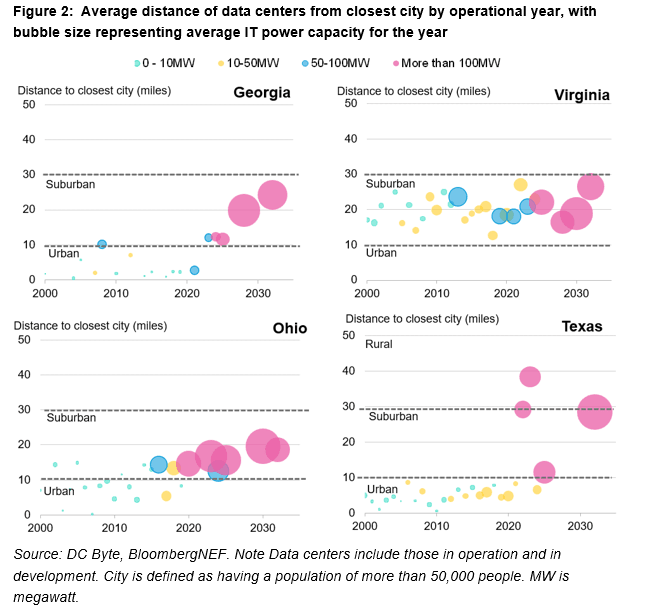
    Figure 2: Average distance of data centers from closest city by operational year, with bubble size representing average IT power capacity for the year

    At the same time, the geography of US data centers is shifting. The once-dominant market in northern Virginia market is nearing saturation, sending new projects south and west into central and southern Virginia. Georgia is seeing expansion beyond the metropolitan Atlanta area as land and power constraints tighten. Texas is an exception: Developers there are transitioning former crypto-mining sites into AI data centers closer to population centers and fiber routes. 

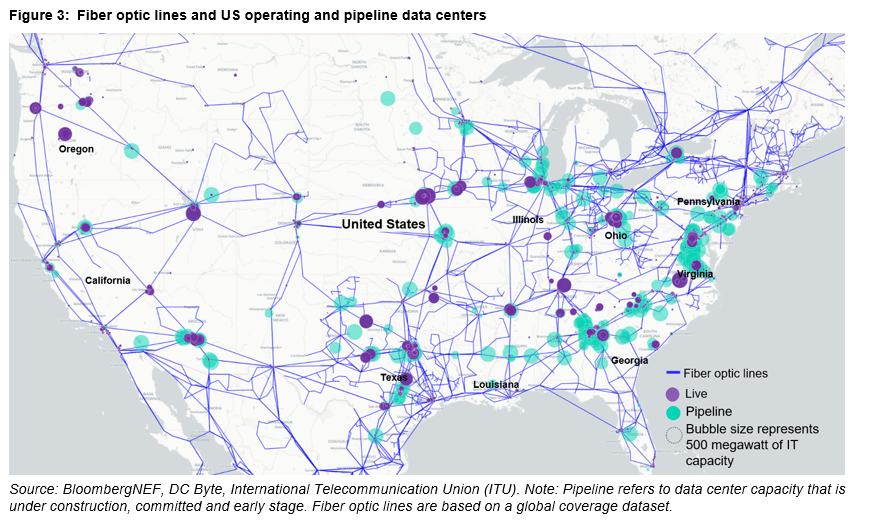
    Fiber optic lines and US operating and pipeline data centers

    Fiber optics form the digital spine enabling this sprawl, allowing hyperscale campuses to move beyond urban cores while maintaining low-latency performance. Today, developers are building hyperscale campuses in suburban and exurban zones, typically within 30 miles of major cities. Virginia led this transition early, leveraging its strong infrastructure and fiber backbone. Now Georgia and Ohio are following suit as they chase the next wave of digital demand. 

    To read more, see the report available here.

    Continue Reading

  • Baker McKenzie Advises SEFE on Sale of SEFE Mobility | Newsroom

    Baker McKenzie Advises SEFE on Sale of SEFE Mobility | Newsroom

    Baker McKenzie has advised SEFE Securing Energy for Europe GmbH (“SEFE”), an international energy company, on the sale of SEFE Mobility. The buyer is Münster-based biogeen GmbH. The transaction will be completed once all necessary approvals have been obtained.

    Holger Engelkamp, lead partner of the transaction, said:
    We were able to support our client in successfully underwriting this important transaction. This sale enables our client to sharpen its strategic focus and optimally align its portfolio. With biogeen, we found a buyer whose vision for sustainable energy is perfectly aligned with SEFE Mobility’s focus.

    SEFE, based in Berlin, is active along the entire energy value chain — from procurement and trading to sales, transportation and storage. With an annual sales volume of 200 terawatt-hours of gas and electricity, SEFE is one of the most important suppliers of industrial customers in Europe and supplies more than 50,000 customers, from small companies to municipal utilities and multinational corporations. SEFE employs around 2,000 people worldwide and is a federally owned company.

    SEFE Mobility, based in Berlin, operates more than 50 filling stations for renewable biofuels in Germany and the Czech Republic. The company employs eight people and generated a turnover of around EUR 12 million in 2024.

    biogeen is one of the leading biomethane producers in Germany and operates modern biogas plants to generate climate-friendly, regional and reliably available energy. biogeen is a portfolio company of Partners Group, one of the largest companies in the global private markets industry.

    Baker McKenzie’s Corporate/M&A practice regularly advises on national and international transactions. Most recently, Baker McKenzie advised the following companies, among others: Thoma Bravo on the acquisition of Boeing’s Digital Aviation Solutions business; Trane Technologies on the acquisition of a stake in Kieback&Peter; Copeland on the acquisition of SPH Sustainable Process Heat; ResInvest on the acquisition of Onyx Power; AURELIUS on the acquisition of Landis+Gyr’s EMEA business; Knorr-Bremse on the acquisition of duagon Group; Cheyne Capital on the refinancing of Kaffee Partner; JD.com on the acquisition of Ceconomy; VINCI Energies on the acquisition of the R + S Group and the Zimmer & Hälbig Group; Bristol Myers Squibb on the transfer of Juno Therapeutics to TQ Therapeutics; Georg Fischer on the acquisition of the VAG Group; and AURELIUS on the acquisition of Teijin Automotive Technologies.

    Legal adviser to SEFE:
    Baker McKenzie

    Lead:
    Corporate/M&A: Holger Engelkamp (partner, Berlin)

    Team:
    Corporate/M&A: Ben Boi Beetz (associate, Berlin)
    Tax: Thomas Gierath (partner), Tim Edelhoff (associate, both Munich)

    Continue Reading

  • Multi-Omics Association Analysis of Mitochondrial Genes in Hypertrophi

    Multi-Omics Association Analysis of Mitochondrial Genes in Hypertrophi

    Introduction

    Hypertrophic scars (HS) typically occur after burns, surgeries, and extensive injuries, and are a common skin condition caused by abnormal wound healing. They are also a major source of health issues following skin damage.1–3 The overall prevalence of HS is approximately 32%-72%, with up to 70% of burn patients developing HS, which can significantly impact patients’ mental and social well-being and their ability to function, leading to physical issues (such as pain, itching, and loss of joint mobility) and psychological disorders, thereby reducing patients’ quality of life and hindering their reintegration into society.1,4,5 We still do not really understand how HS forms, and currently, there’s no one-size-fits-all treatment that works perfectly. Prevention remains the best approach to reduce abnormal scar formation.4,6,7 Current clinical treatment options include local corticosteroid injections, radiotherapy, laser therapy, and surgical excision,5,7–9 but the complicated ways HS forms make these treatments less effective in real-life situations.5,6,10 Additionally, doctors usually diagnose HS just by looking at the symptoms; however, malignant tumors such as dermatofibrosarcoma protuberans may be misdiagnosed as HS, and biopsies are pretty invasive and might affect how HS or tumors develop.11 In summary, we really need more research to figure out how HS forms in order to develop new treatment and diagnostic methods, identify molecular targets for potential therapies, and achieve the goals of prevention, diagnosis, reduction, and even reversal of HS formation.

    Mitochondria are organelles in eukaryotic cells that produce energy, participate in metabolism and signal transduction, and regulate cell growth, differentiation, aging, and death.12 Previous studies have suggested that the characteristics of HS include ongoing local inflammation, overgrowth of fibroblasts, and excessive deposition of collagen.13,14 Among these factors, less apoptosis and more fibroblast overgrowth, along with collagen buildup, are linked to changes in mitochondrial function, and directly or indirectly intervening in mitochondrial function could be a potential treatment strategy for HS.15–19 Many studies on the molecular pathogenesis of HS indicate that chemokines, cytokines, or growth factors play a crucial role in the formation of HS.7 Mitochondria are key players in infection and inflammation, central to pro-inflammatory responses, participating in the triggering and control of inflammation in diseases, and regulating the function of inflammatory cells and the release of inflammatory factors.20,21 Additionally, some related mitochondrial genes are also believed to be involved in the process of HS treatment.15 These studies provide the possibility of targeting mitochondria for HS treatment and show that mitochondrial therapy might be a new option for HS. Although the key role of mitochondria in the pathogenesis of HS has been recognized, specific mitochondrial-related genes and their effects on HS are still not well understood.

    Mendelian Randomization (MR) serves as a widely adopted causal inference technique, utilizing genetic variations as instrumental variables (IVs) to handle reverse causation, lessen bias, and enhance the strength of causal inference in studies. These genetic variations are established at conception and are not influenced by later outcomes, diseases, or confounding factors such as socioeconomic conditions, behaviors, or health status.22–24 The growing data from Genome-Wide Association Studies (GWAS) and molecular quantitative trait loci (QTL) provides a strong foundation for MR research. GWAS utilizes genetic associations based on single nucleotide polymorphisms (SNPs) and traits, which allows researchers to integrate GWAS data with gene expression and methylation data, identifying expression quantitative trait loci (eQTL), methylation quantitative trait loci (mQTL), protein quantitative trait loci (pQTL).25,26

    Although the role of mitochondria in HS pathology has been noted,7,20,21 there’s still no causal evidence from large-scale population genetic data pointing to specific mitochondrial genes; furthermore, previous studies have rarely integrated methylation, expression, and protein quantitative trait loci (m/e/pQTL) and combined colocalization to improve causal inference and steer clear of linkage and pleiotropy. To address this gap, we are using two-sample Mendelian randomization and combining three layers of QTL evidence with colocalization analysis to better assess the potential causal link between mitochondrial-related genes and HS, providing new avenues for future HS research and possible targets for treatment and diagnosis.

    Methods

    Study Design

    This study is based on a two-sample MR method, using mitochondrial-related genes as exposure variables and HS as an outcome variable. SNPs were used as IVs to explore the causal association between mitochondrial genes and HS based on GWAS data through three levels of analysis: DNA methylation, gene expression, protein abundance. Subsequently, colocalization was used to strengthen causal inference, and Steiger filtering analysis was used to test the direction of causality. Finally, multi-omics analysis was conducted to combine the results from mitochondrial mQTL, eQTL, and pQTL to get a complete picture of how mitochondrial-related gene regulation is linked to HS at various levels (Figure 1). The MR analysis methods used in this study followed the three main assumptions of MR research27 and the STRIOBE-MR guidelines (Supplementary Table S1).28

    Figure 1 Flow chart.

    Abbreviations: QTL, quantitative trait loci; SNP, single nucleotide polymorphisms; PPH4, posterior probability of H4.

    Data Sources

    The mitochondrial-related genes are sourced from the MitoCarta3.0 database, which comprises an updated list of 1136 human mitochondrial genes.29 The SNP-CpG associations found in blood samples were obtained by McRae et al from DNA mQTLs data in 1980 European individuals.26 The blood eQTLs dataset was obtained from the eQTLGen consortium (https://www.eqtlgen.org/phase1.html), which comprises 31,684 individuals. The pQTLs were derived from the UK Biobank pharmacoproteomics project (UKB-ppp: https://registry.opendata.aws/ukbppp/) involving 54,219 UKB participants, and a GWAS study (Decode) that measured plasma protein levels in 35,559 Icelanders using 4907 aptamers conducted by Egil Ferkingstad.30 The genetic association with HS was derived from the FinnGen database (https://www.finngen.fi/fi) (1866 cases and 423,041 controls, dataset number L12_HYPETROPHICSCAR). The website was last accessed on July 15, 2024. The data collected was sourced from European populations (Table 1). The original studies obtained informed consent from the participants, so this part of the study does not need ethics committee approval.

    Table 1 Information of Included Studies and Consortia

    SNPs Selection Criteria

    IVs were selected from mitochondrial gene mQTLs, eQTLs, and pQTLs, with a screening criterion of P < 5×10⁻⁸, and an F-statistic greater than 10 as an indicator to exclude weak instrumental variables. The Linkage disequilibrium coefficient (r2) was set at 0.3, the linkage disequilibrium region width was set at 500kb and a minor allele frequency (MAF) > 0.01 was set, to ensure the SNPs were independent and to eliminate the impact of linkage disequilibrium on the results. LDtrait (https://ldlink.nih.gov/?tab=ldtrait) was used to exclude SNPs related to confounding factors and outcomes,11 and SNPs located within ±1000kb of the cis-regulatory regions of mitochondrial genes were extracted. Relevant IVs were extracted from the mQTLs, eQTLs, and pQTLs data for mitochondrial genes. Relevant SNPs were extracted from the GWAS summary data of the outcome variable (HS), excluding any palindromic SNPs, removing SNPs directly related to the outcome variable (HS) (P < 5×10⁻⁸). MR-PRESSO was used to identify and exclude outlier SNPs.

    Cis-mQTLs, Cis-eQTLs, and Cis-pQTLs in the Whole Mitochondrial Genome and MR Analysis for HS

    The MR-Egger regression, inverse variance weighted method (IVW), weighted median method, weighted mode, and simple mode were five regression models applied in two-sample MR analysis to assess the potential causal relationship between mitochondrial genes and HS risk. IVW served as the primary method for causal estimation, while the other methods were used as supplementary analyses. When SNPs≤3, the effect of a single SNP on the outcome was assessed using the Wald ratio method in conjunction with fixed-effect IVW. When SNPs>3, random-effects IVW was used. In IVW, when estimating causal effects using multiple SNPs as IVs, the inverse of the variance (R2) for each locus was used as a weight, and the causal effect estimates for each locus were weighted and summed, resulting in the final estimate as the causal effect estimate of the IVW method. MR-Egger essentially relied on a weaker assumption (InSIDE) than IVW to perform causal effect estimation by introducing a regression intercept to detect and correct biases caused by the pleiotropy of IVs. MR-Egger’s results were referenced when horizontal pleiotropy was present. The false discovery rate (FDR) served as an indicator of the error rate, and was calculated for P-value correction. The formula for calculating FDR is: .

    Cochran’s Q test and I2 were used to assess the heterogeneity of SNPs. P < 0.05 in the Cochran’s Q test indicates heterogeneity. The value of I2 ranges from 0% to 100%, and I2 >50% indicates a certain degree of heterogeneity in IVW results. The calculation formula is . The MR-Egger method’s intercept was used for analyzing pleiotropy, and Leave-one-out was used for sensitivity analysis. The MR-Egger regression intercept and MR-PRESSO were used to detect pleiotropy of SNPs. When the MR-Egger regression intercept and 0 showed no statistical significance (P > 0.05) and the MR-PRESSO level pleiotropy test results were not significant (P > 0.05), it indicated that SNPs do not have a pleiotropic effect. In the Leave-one-out analysis, each SNP was removed one at a time to observe the impact of each SNP on the results. All MR analyses were conducted using the TwoSample MR package in R version 4.1.0, with a significance level of α = 0.05.

    Steiger Filtering Analysis

    Steiger filtering test was used to check the direction of the causal relationship between genotypes, intermediate variables, and final outcomes. This method is based on the random distribution of genetic variation, looking at how IVs affect intermediate variables and final outcomes, and calculating the correlation between the two to see if the causal direction of the genotype matches for both. This study calculated how much variance was explained by instrumental variable SNPs on mitochondrial gene CpG sites/gene expressions/protein levels and the variance of HS. We also checked whether the variance of HS was smaller than that of the mitochondrial gene CpG sites/gene expressions/protein levels. In the MR Steiger results, if HS’s variance is smaller than that of the mitochondrial gene CpG sites/ gene expressions/ protein levels, it’s marked as “TRUE”, which means the causal relationship lines up with what we expected, while a “FALSE” result means the causal relationship goes against what we expected.

    Colocalization Analysis

    The colocalization analysis was employed to ascertain whether two phenotypes were influenced by the same causal variant within a designated genomic region, thereby reinforcing the evidence for their association. In this investigation, the underlying assumption of colocalization analysis posited that each trait could have a maximum of one true causal variant in the specified region. Five mutually exclusive model assumptions (H0-H4) delineated all conceivable association scenarios. H0: Phenotype 1 (GWAS) and Phenotype 2 (QTL or GWAS) do not exhibit significant associations with any SNPs in that genomic region. H1/H2: Either Phenotype 1 or Phenotype 2 demonstrates a significant association with SNPs in the specified genomic region. H3: Both Phenotype 1 and Phenotype 2 show significant associations with SNPs in that genomic area, but these associations arise from distinct causal variant loci. H4: Both Phenotype 1 and Phenotype 2 are significantly associated with SNPs within that genomic region and are driven by the same causal variant locus. In the course of the colocalization analysis, posterior probabilities (PP.H0-PP.H4) were computed for each of the five models, with the cumulative sum of these probabilities equating to 1. A higher posterior probability indicates a greater likelihood that the model assumption is accurate based on the observed data. This study supports the H4 assumption, as the H4 model suggests that both traits are governed by the same causal variant. Generally, a PP.H4 value exceeding 0.5 is regarded as validation of the H4 model assumption.31 The R package “coloc” was utilized to identify SNPs located within ±1000kb of the cis-regulatory region of mitochondrial genes for the purpose of colocalization analysis. A PP.H4 value greater than 0.7 is interpreted as strong evidence of colocalization between the two traits in the specified region, while a value between 0.5 and 0.7 indicates moderate evidence for their colocalization in that area.

    Integrating Results from Multi-Omics Level of Evidence

    To comprehensively understand the relationship between mitochondrial-related gene regulation and HS at different levels, this study used multi-omics analysis to integrate results from three different levels of gene regulation. We categorized candidate genes into three tiers: ①Tier 1 genes are those linked to HS at the levels of methylation, gene expression, and protein abundance (FDR<0.05), with gene expression and protein abundance showing the same causal direction with HS; ②Tier 2 genes are those linked to HS at any two of the three levels (FDR<0.05); ③Tier 3 genes are those for which any one of the three levels meets the criteria of being linked to HS (FDR<0.05) and having a colocalization PP.H4>0.5.

    Ethical Statement and Human Samples

    All human samples were collected after written informed consent was obtained, and the research protocol was approved by the Ethics Committee of Fujian Medical University Union Hospital (approval number: 2025KY428). Hypertrophic scar samples were obtained from patients who underwent scar excision in Fujian Medical University Union Hospital. Normal skin samples were collected from patients who underwent limb amputation in Fujian Medical University Union Hospital.

    Cell Isolation and Culture

    Following the removal of excess subcutaneous adipose tissue from the skin, the dermal sections were finely minced and subjected to tissue block explant culture to obtain Hypertrophic Scar Fibroblasts (HSFs) and Normal Skin Fibroblasts (NSFs). The fibroblasts were cultured in Dulbecco’s Modified Eagle Medium (DMEM) (Gibco, Grand Island, NY, USA) enriched with 10% Fetal Bovine Serum (FBS) (Corning, USA), along with 100 U/mL of penicillin and 100 μg/mL of streptomycin. These cultures were maintained in a humidified incubator set to 37°C with an atmosphere of 5% (v/v) CO2. For subsequent experiments, fibroblasts in the third to fifth passage were utilized.

    qRT-PCR

    Total RNA was obtained from the dermal layers of both normal skin and hypertrophic scar tissues through the application of Trizol reagent (R0016, Beyotime, Shanghai, China). The synthesis of the first-strand complementary DNA (cDNA) was carried out utilizing HiScript II Reverse Transcriptase (R223-01, Vazyme, Nanjing, China). Subsequently, the mRNA expression levels were assessed via quantitative reverse transcription polymerase chain reaction (qRT-PCR) employing ChamQ SYBR qPCR Master Mix (Q311-02, Vazyme, Nanjing, China). The quantification of mRNA expression was standardized against β-actin RNA. Each reaction was conducted in triplicate on an ABI PRISM 7500 StepOnePlus platform, with data analysis performed following the comparative CT method. The primer sequences used are listed below: HTATIP2-F (5’-TCGTCTTTCAAAGTAATCCTTGAGT-3’) and HTATIP2-R (5’-GCGATAATCACAATAGGCAAA-3’).

    Western Blot

    Cell or tissue proteins were extracted using RIPA buffer (NCM Biotech, Suzhou, Jiangsu, China) at a temperature of 4 °C for a duration of 30 minutes. Following this, samples were subjected to centrifugation at 12,000 × g for 15 minutes to facilitate the separation of cellular debris. The concentration of proteins in the resulting supernatant was quantified utilizing a BCA assay kit (Thermo Fisher Scientific, Carlsbad, CA, USA). Subsequently, the proteins within the lysates were resolved via sodium dodecyl sulfate-polyacrylamide gel electrophoresis (SDS-PAGE) and subsequently transferred onto polyvinylidene difluoride (PVDF) membranes (Millipore, Billerica, MA, USA). The membranes were then subjected to a blocking step using QuickBlock Western Blocking Solution (Beyotime, Shanghai, China) for 10 minutes, followed by an overnight incubation with primary antibodies at 4°C. Afterward, the membranes were incubated with horseradish peroxidase (HRP)-conjugated secondary antibodies at room temperature for 1 hour. The primary antibody used was rabbit anti-HTATIP2 (1:1000; Cat. No. ab177961, Abcam, Cambridge, UK), and the corresponding secondary antibody was goat anti-rabbit IgG (Cat. No. ab288151, Abcam, Cambridge, UK). Imaging of the protein bands was conducted using a GE Amersham Imager 600 (GE Healthcare, Little Chalfont, USA), with β-actin serving as an internal control. All experimental procedures were conducted in triplicate to ensure reliability of the results.

    Cell Immunofluorescence

    The expression levels of HTATIP2 in fibroblasts were assessed via immunofluorescence techniques. Fibroblasts derived from both normal skin and hypertrophic scar tissues were cultured on glass coverslips for a duration of 24 hours. Subsequently, the cells underwent fixation using a 4% paraformaldehyde solution at room temperature (25 °C) for 15 minutes. Following fixation, a blocking step was performed utilizing goat serum at room temperature for 1 hour. The cells were then treated with primary antibodies targeting HTATIP2 (dilution 1:100, Cat. No. ab177961, Abcam, Cambridge, UK) and incubated overnight at 4°C. After that, a secondary antibody (Cat. No. ab150077, Abcam, Cambridge, UK) was applied at room temperature for 2 hours. Lastly, the cells were counterstained with DAPI at room temperature for 5 minutes, and the outcomes were analyzed using a fluorescence microscope.

    Results

    Results for SNPs Screening

    This study screened out 16,091 SNPs associated with 2489 mitochondrial-related DNA methylation CpG sites from cis-mQTL (Supplementary Table S2). From cis-eQTL, 25,928 SNPs linked to the expression of 893 mitochondrial-related transcripts were obtained (Supplementary Table S3). From two proteomic cohort studies’ cis-pQTL, 3791 SNPs associated with the expression of 170 mitochondrial-related proteins (137 unique proteins) were identified (Supplementary Table S4).

    Mitochondrial Gene Methylation and HS

    cis-mQTLs were used as genetic tools for MR analysis to systematically assess the causal effects of mitochondrial genes on HS. Among the 376 CpG sites found to be associated with HS (Supplementary Figure S1), 180 served as protective factors, while 196 were risk factors. The IVW results showed that cg25628542 (AADAT) was a protective factor for HS (OR=0.920, 95% CI: 0.877–0.965, P<0.001, FDR=0.015). cg17372223 (NT5DC2) was also identified as a protective factor for HS (OR=0.937, 95% CI:0.902–0.973, P<0.001, FDR=0.015). In contrast, cg11728787 (HEMK1) was identified as a risk factor for HS (OR=1.185, 95% CI:1.093–1.285, P<0.001, FDR=0.002).cg07434944 (MRPL23) was identified as a risk factor for HS (OR=1.319, 95% CI:1.170–1.488, P<0.001, FDR<0.001).

    When considering the conditions of P<0.05 and I2>50% in the heterogeneity analysis, it was indicated that cg23811061 from the IMMT gene (with I2=55%, Cochran’s Q=35.528, P=0.003) and cg18676053 from the STOM gene (with I2=53%, Cochran’s Q=35.832, P=0.005) showed significant heterogeneity. Except for these two, other CpG sites showed no significant heterogeneity.

    Based on the analysis using the MR Egger regression intercept, 9 CpG sites near 5 genes were found to be significantly different from 0 (P<0.05), specifically those of MRSA (cg26077133, cg02319733, cg12940923, cg16038868), IMMT (cg06002975, cg23811061), MRPL23 (cg07578618), HIBADH (cg00453374), and CPT1B (cg17137457). By MR-PRESSO analysis, 5 CpG sites near 4 genes revealed significant horizontal pleiotropy: IMMT (cg23811061, P=0.003), YBEY (cg14065109, P=0.006), STOM (cg18676053, P=0.009) and STOM (cg14215970, P=0.049), and PDK1 (cg04033559, P=0.030). Therefore, excluding these 14 CpG sites, a total of 362 HS-related CpG sites did not show any horizontal pleiotropy, suggesting the MR results from this study were robust (Supplementary Table S5).

    Steiger filtering test results showed that all the mitochondrial gene CpG sites in the HS dataset were “TRUE”, suggesting that the causal relationship between the mitochondrial gene CpG sites and the outcome aligned with what we expected (Supplementary Table S5).

    The colocalization analysis of mQTLs for HS and mitochondrial genes revealed that 4 CpG sites near 2 genes significantly shared causal variants (PP.H4>0.7), including MRPL23 (cg23135908, PP.H4=0.929) (cg06498964, PP.H4=0.861), (cg07578618, PP.H4=0.712), and USP30 (cg12535380, PP.H4=0.743) (Supplementary Table S5).

    Mitochondrial Gene Expression and HS

    cis-eQTLs were used as genetic tools for MR analysis, and 233 mitochondrial genes were found associated with HS (Supplementary Figure S2). AMT was identified as a protective factor for HS (OR=0.900, 95% CI:0.845–0.958, P<0.001, FDR=0.020). GPD2 was also a protective factor for HS (OR=0.867, 95% CI:0.805–0.934, P<0.001, FDR=0.005). In contrast, ATP5MC1 posed a risk for HS (OR=1.349, 95% CI:1.215–1.498, P<0.001, FDR<0.001). Similarly, BAX was a risk factor for HS (OR=1.294, 95% CI:1.152–1.452, P<0.001, FDR<0.001).

    When considering the conditions of P<0.05 and I2>50% in the heterogeneity analysis, it was indicated that 2 genes displayed significant heterogeneity: LYPLAL1 (I2=57%, Cochran’s Q=71.312, P<0.001) and MECR (I2=59%, Cochran’s Q=9.849, P=0.043). The other gene loci did not show any significant heterogeneity.

    The results of MR Egger regression and MR-PRESSO analysis indicated that three genes, namely MPV17L2 (with P Egger=0.010 and P PRESSO=0.034), GLYCTK (with P Egger=0.023 and P PRESSO=0.049), and NT5DC3 (with P Egger=0.028 and P PRESSO=0.039), had significant horizontal pleiotropy. The other 230 genes linked to HS did not show significant horizontal pleiotropy, suggesting that the MR results of this study were reliable (Supplementary Table S6).

    Steiger filtering test results showed that the direction of mitochondrial gene expression in the HS dataset was “TRUE”, suggesting mitochondrial genes related to the outcome aligned with what we expected (Supplementary Table S6).

    Colocalization analysis of eQTLs for HS and mitochondrial genes showed that the PP.H4 value for MRPS23 is 0.602>0.5, suggesting significant shared causal variants in this region (Supplementary Table S6).

    Mitochondrial Protein and HS

    cis-pQTLs were used as genetic tools for MR analysis, and 34 proteins (including 31 unique ones) were identified associated with HS (Figure 2). The IVW results indicated that 17 proteins acted as protective factors for HS, while 17 were identified as risk factors. RTN4IP1 is a protective factor for HS (OR= 0.354, 95% CI: 0.203–0.617, P < 0.001, FDR= 0.008); CASP9 is a protective factor for HS (OR= 0.459, 95% CI: 0.298–0.707, P < 0.001, FDR= 0.011); CAT is a risk factor for HS (OR= 1.462, 95% CI: 1.203–1.775, P < 0.001, FDR= 0.005); and FABP1 is also a risk factor for HS (OR= 1.367, 95% CI: 1.171–1.596, P < 0.001, FDR= 0.003).

    Figure 2 Associations of genetically predicted mitochondrial gene encoded protein with HS in Mendelian randomization analysis.

    Abbreviations: OR, odds ratio; FDR, false discovery rate; PPH4, posterior probability of H4.

    For P<0.05 and I2>50%, heterogeneity analysis revealed that two proteins showed heterogeneity in the IVW analysis: ACAA1 (I2=36%, Cochran’s Q=76.565, P= 0.007) and PDK1 (I2=50%, Cochran’s Q= 33.801, P= 0.009). The remaining ones did not show heterogeneity.

    Horizontal pleiotropy analysis showed that there were two proteins with significant MR Egger regression intercepts (P<0.05), namely, FABP1 (P=0.026) and EFHD1 (P=0.043). The MR-PRESSO analysis indicated that there were two proteins with significant horizontal pleiotropy, specifically: PDK1 (P=0.005) and ACAA1 (P=0.006). The remaining 30 proteins associated with HS did not exhibit horizontal pleiotropy, suggesting that the MR results of this study were robust (Supplementary Table S7).

    Steiger filtering test showed that the direction of mitochondrial proteins in the HS dataset is “TRUE”, indicating that the causal relationship between mitochondrial proteins and the outcome aligned with what we expected (Supplementary Table S7).

    Colocalization analysis of pQTLs for HS and mitochondrial genes indicated that there was no evidence of colocalization between the mitochondrial gene pQTLs and HS (Supplementary Table S7).

    Integrating Evidence from Multi-Omics Levels

    After integrating multiple omics evidence, this study identified two genes associated with HS that have strong multi-omics evidence: HTATIP2 and PDK1. The FDR values for these two genes in methylation, gene expression, and protein levels were all below 0.05. Moreover, cg01397325 (HTATIP2) methylation was linked to a lower risk of HS (OR= 0.925, P<0.001), and cg24426391 (HTATIP2) methylation was also linked to a lower risk of HS (OR= 0.961, P=0.002). The gene expression (OR=1.171, P<0.001) and protein abundance (OR=1.110, P<0.001) of HTATIP2 were both associated with a higher risk of HS. Methylation of PDK1’s CpG site cg04033559 (OR=0.937, P<0.001) was linked to a lower risk of HS, whereas methylation of PDK1’s CpG sites cg10165864 (OR=1.298, P<0.001) and cg17679246 (OR=1.188, P<0.001) was linked to a higher HS risk. The gene expression (OR=0.759, P<0.001) and protein abundance (OR=0.625, P<0.001) of PDK1 were both negatively correlated with the risk of HS (Figure 3 and Table 2).

    Figure 3 Grading results for HS candidate genes.

    Abbreviations: HS, hypertrophic scars; QTL, quantitative trait loci.

    Table 2 Genetically Predicted Methylation, Expression, and Protein of Tier 1 Candidate Gene with HS in Mendelian Randomization

    Sixteen genes were identified tier 2 genes associated with HS, including CARS2, CASP9, COMT, DGUOK, MMAB, MRPL21, MSRA, NDUFS2, NSUN2, NT5DC2, NT5DC3, PRDX5, RDH13, RIDA, SND1, and TRAP1. The FDR for all these genes was less than 0.05. The following CpG sites were associated with risk factors for HS: cg11716795 of MRPL21 (OR=1.097, P< 0.001), cg17964305 of MSRA (OR=1.463, P=0.001), cg23400122 of MSRA (OR=1.238, P<0.001), cg26077133 of MSRA (OR=1.045, P<0.001), cg26420013 of NSUN2 (OR=1.172, P=0.002), cg22710716 of NT5DC2 (OR=1.051, P=0.002), cg21863207 of NT5DC3 (OR=1.102, P=0.001), cg01708924 of PRDX5 (OR=1.371, P=0.001), cg02592727 of RDH13 (OR=1.096, P=0.004), cg07598936 of RDH13 (OR=1.138, P<0.001), cg08278892 of RDH13 (OR=1.146, P=0.003), cg00893242 of SND1 (OR=1.121, P<0.001), cg06714981 of SND1 (OR=1.055, P=0.002), and cg11539674 of SND1 (OR=1.093, P<0.001). The gene expression of CASP9 (OR=0.849, P<0.001), COMT (OR=0.837, P<0.002), MMAB (OR=0.711, P<0.001), MRPL21 (OR=0.903, P<0.001), NDUFS2 (OR=0.685, P<0.001), NSUN2 (OR=0.930, P<0.002), NT5DC3 (OR=0.903, P<0.001), RDH13 (OR=0.907, P<0.001), RIDA (OR=0.559, P<0.001), SND1 (OR=0.679, P<0.001), and TRAP1 (OR=0.890, P<0.001) were protective factors for HS. The protein levels of CASP9 (OR=0.459, P<0.001), MMAB (OR=0.827, P<0.001), and RIDA (OR=0.591, P<0.001) also served as protective factors for HS (Figure 3 and Table 3).

    Table 3 Genetically Predicted Methylation, Expression, and Protein of Tier 2 Candidate Gene with HS in Mendelian Randomization

    IMMT, MRPL23, and USP30 genes were identified as tier 3 genes associated with HS. Among the tier 3 genes, the methylation of cg07610327 in IMMT was a risk factor for HS (OR=1.191, P<0.001), while cg06498964 (OR=0.829, P<0.001) and cg07578618 (OR=0.820, P<0.001) in the MRPL23 were protective factors for HS. Methylation of cg03124318 (OR=0.828, P<0.001) and cg12535380 (OR=0.863, P<0.001) in USP30 was also a protective factor for HS (Figure 3 and Table 4).

    Table 4 Genetically Predicted Methylation, Expression, and Protein of Tier 3 Candidate Gene with HS in Mendelian Randomization

    Tissue-Specific Verification

    The levels of HTATIP2 expression in normal skin (NS) and hypertrophic scar tissue (HS) were assessed by qRT-PCR, Western blot analysis, and immunofluorescence techniques. Notably, both mRNA and protein concentrations of HTATIP2 exhibited a significant elevation in the HS cohort in comparison to the NS group (Figure 4A and B). Furthermore, HSF and NSF were isolated from HS and NS tissues, respectively. Subsequently, cell immunofluorescence was conducted to measure the intracellular expression levels of HTATIP2. The results indicated that HTATIP2 intensity was substantially greater in the HSF group relative to the NSF group, as depicted in Figure 4C.

    Figure 4 The expression of HTATIP2 in skin tissues of patients with HS. (A) The mRNA levels of HTATIP2 in normal skin and hypertrophic scar tissues were detected by qRT-PCR. (B) The protein levels of HTATIP2 in normal skin and hypertrophic scar tissues were detected by Western blot. (C) The HTATIP2 expression NSF and HSF was detected by cell immunofluorescence. Scale bar: 50μm. ***p < 0.001 using unpaired two-tailed Student’s t-test. Data are presented as mean ± SD.

    Abbreviations: NS, Normal Skin; HS, Hypertrophic Scar; NSF, Normal Skin Fibroblast; HSF, Hypertrophic Scar:Fibroblast.

    A schematic summary of the multi-omics integration process was in Figure 5.

    Figure 5 A schematic diagram of the multi-omics integration process. Figure created by Figdraw.

    Discussion

    This study focused on the causal relationship between mitochondrial-related genes and HS. At present, there is a consensus on the mechanisms of HS formation, which relate to the release of different growth factors, persistent inflammation, overproduction of fibroblasts (with less apoptosis and more proliferation), and excessive deposition of collagen. Additionally, the formation of new blood vessels also plays a key role in HS development.13,14 There are five main signaling pathways involved in scar formation: Wnt/β-catenin, TGF-β, Notch, Sonic Hedgehog, and Ras/MEK/ERK signaling pathways.32 Previous studies showed that mitochondrial function was closely linked to cell growth, apoptosis, and oxidative stress.20,21 Consequently, alterations in mitochondrial genes could affect the chances of developing HS. These links lay the groundwork for this study.

    Previous studies on mitochondria and HS mainly focused on molecules sourced from research on tumors and myocardial infarction, such as those affecting tumor proliferation, apoptosis, and ROS generation, to check their effects on scars and scar fibroblasts.33 There has not been much research identifying key genes through large-scale, high-throughput data screening, and even when it’s done, it typically focused on the RNA expression of differentially expressed genes.34,35 Such research paid less attention to a comprehensive look at gene transcription, translation, and regulation and lacked a solid scientific basis for multi-omics screening of target molecules. This study used data from several cohorts related to mitochondrial genes, screening HS-related genes by looking at three aspects: DNA methylation, RNA expression, and protein abundance. After a series of validity checks, the reliability of the screening results was confirmed, which meant it has broader applications for finding potential candidate genes for HS.

    HTATIP2, also known as TIP30 or CC3, is a redox enzyme essential for tumor suppression, primarily involved in nuclear transport and the regulation of angiogenesis, and playing a role in regulating programmed cell death.36 Previous studies found that gene methylation negatively correlates with RNA and protein expression. Our multi-omics results showed that both DNA methylation sites of HTATIP2 were negatively correlated with HS, while HTATIP2 gene expression and protein levels were positively correlated with HS formation and development. Some researchers found that methylation of HTATIP2 led to downregulation of gene expression in uterine leiomyoma, which aligned with our multi-omics results.37 Therefore, the relationship between HTATIP2 methylation and RNA expression/protein abundance in relation to HS matched what previous studies have reported.

    However, there were few reports on the relationship between HTATIP2 and HS. Previous studies revealed that the formation of uncontrolled blood vessel growth could lead to persistent inflammation and ultimately result in HS.38 Additionally, blocking the growth of new blood vessels in endothelial cells effectively reduced HS formation.39 Research has shown that higher levels of HTATIP2 reduced the ability to form new blood vessels in patients with chronic limb-threatening ischemia (CLTI), while downregulating its expression enhanced the factors in macrophages isolated from CLTI patients that regulate blood vessel growth, such as Neuropilin-1 and Angiopoietin-1, promoting blood vessel growth (endothelial tube formation assays) and arterial formation (smooth muscle proliferation).40 Studies on liver cancer also confirmed that HTATIP2 promoted cell death and inhibited blood vessel growth.41,42

    The formation of HS is closely related to increased proliferation of fibroblasts and reduced apoptosis. Apoptosis is a physiological process of cell self-destruction carried out in a programmed way.43 Previous literature has reported that increasing the proliferation capacity of fibroblasts and inhibiting their apoptosis could promote scar formation.43–45 In lab experiments, HTATIP2 was found to make fibroblasts more sensitive to apoptosis.36 This goes against our findings that the gene expression and protein levels of HTATIP2 were risk factors for HS.

    One of the characteristics of HS is the excessive proliferation of fibroblasts and the excessive deposition of extracellular matrix (ECM).46,47 In the dysregulated wound healing process, specialized myofibroblasts proliferate excessively, leading to abnormal accumulation of ECM.48 The Wnt pathway plays an important role in the pathological mechanisms of keloids and HS.49 Some research indicated that Interferon-α2b could inhibit the proliferation and migration of HS fibroblasts by suppressing the Wnt pathway.50 In interaction models of fibroblasts and endothelial cells, some researchers found that in both in vitro and in vivo models, the Wnt pathway could regulate the cellular activities of fibroblasts.51 In a review on chronic kidney disease, some scholars also mentioned that the Wnt pathway could activate myofibroblasts, leading to excessive ECM deposition.52 An integrative analysis of the DNA methylome and transcriptome in uterine leiomyoma showed that HTATIP2 was related to the ECM deposition and the dysregulation of the Wnt/β-catenin pathway.37 These studies indicated that the Wnt pathway could promote excessive deposition of ECM by activating myofibroblasts, which could lead to HS. And previous studies also revealed that HTATIP2 could interfere with the Wnt pathway, leading to pathway dysregulation, which contradicted our findings that HTATIP2 gene expression and protein levels were risk factors for HS.

    The TGF-β pathway and Notch pathway play important roles in the formation of HS. The TGF-β pathway is the most well-known signaling pathway regulating the biological behavior of fibroblasts and collagen formation. Continuous activation of this pathway leads to excessive activation of fibroblasts, ultimately causing excessive collagen deposition and the formation of HS.53 During the wound healing process, timely intervention in TGF-β effectively reduces the formation of HS.54 Blocking Notch signaling in macrophages could reduce inflammation in the wound tissue through intercellular signaling and inhibit collagen synthesis by fibroblasts.55 Moreover, the Notch signaling pathway promotes HS formation by regulating the subtypes of epidermal cells.56 In pancreatic cancer research, researchers found that inhibiting HTATIP2 enhanced miR-10b’s role in promoting TGF-β, enhancing EGFR signaling, facilitating EGF-TGF-β cross-talk and promoting the expression of EMT-promoting genes.57 In multiple sclerosis (MS) research, HTATIP2 acts as a pro-apoptotic factor, inhibiting nuclear transport and, consequently, Notch1-mediated oligodendrocyte differentiation and remyelination.58 These research results suggested that HTATIP2 might inhibit HS formation through the TGF-β pathway and Notch pathway, which contradicted our findings that HTATIP2 gene expression and protein abundance were positively correlated with HS.

    Previous studies have shown that HTATIP2 may have a negative effect on HS, which is at odds with our results. The reasons for this are as follows. First, the diseases targeted by different studies varied, and most studies focused on tumors. Tumor microenvironments differ from those of wounds or scars,59 which means the same gene might work differently in various environments, and might even do the opposite. Second, previous studies mainly focused on the regulatory level of a single gene, while our research integrated multi-omics results of the methylation, gene expression and protein levels in mitochondrial related genes. So earlier studies might not give the full picture. Our multi-omics findings suggested that the HTATIP2 gene could play a role in how HS develops, which needs more research in the future.

    Pyruvate dehydrogenase (PDH) is a mitochondrial multienzyme complex that catalyzes the oxidative decarboxylation of pyruvate and is one of the key enzymes responsible for regulating carbohydrate fuel homeostasis in mammals. Its activity is regulated by a cycle of phosphorylation and dephosphorylation. PDK1 (Pyruvate Dehydrogenase Kinase 1) catalyzes the phosphorylation of pyruvate dehydrogenase, leading to its inactivation, playing a key role in regulating glucose and fatty acid metabolism and overall metabolic homeostasis.58,60 It downregulates aerobic respiration and inhibits the conversion of pyruvate to acetyl-CoA by regulating the metabolic flux of tricarboxylic acid cycle metabolites, playing an important role in the cellular response to hypoxia, which is vital for cell proliferation in low-oxygen conditions, protecting cells from apoptosis caused by hypoxia and oxidative stress.61 Research shows that low-oxygen conditions boost glycolysis while weakening mitochondrial function, resulting in increased proliferation and migration in scar fibroblasts, increased collagen synthesis, and inhibition of apoptosis. So, the molecular changes in glucose metabolism and mitochondrial function due to hypoxia could be potential targets for treating HS and keloids.35

    The direct clinical relationship between PDK1 and scars has not been reported. A search on the cell biological behaviors related to scars found that in cases of pulmonary hypertension, the DNMT1-HIF-1α-PDK pathway could reduce fibroblast proliferation and collagen production.62 In terms of cellular senescence, some researchers found that inhibiting PDK1 could alleviate cellular senescence and skin atrophy, which specifically promotes fibroblast proliferation and collagen deposition when PDK1 was inhibited.63 Interestingly, some researchers noted that in the fibrosis of various diseases, inhibiting PDK1 led to fibroblast apoptosis and reduced collagen production.64 Previous studies suggested that PDK1 could both promote and inhibit the development of HS. This might be due to different methylation sites of PDK1, which still needs to be tested experimentally.

    The repair process of wounds constantly requires the involvement of inflammatory responses.65 HS are consequences of a dysregulated wound healing process, which involves inflammatory responses in their occurrence and development.13 T cells, as key cells in the inflammatory response, through their production, development, and differentiation, play a crucial role in the direction of the inflammatory response and the emergence of different clinical outcomes. T cells are linked to scar formation, and those with different differentiation have varying effects on HS. IL-10-producing T lymphocytes regulate inflammatory cell cytokine expression to promote hyaluronan-rich ECM deposition and attenuate fibrosis. Promoting IL-10-producing lymphocytes in wounds may be a therapeutic target to promote regenerative or scarless wound healing.66 Previous studies showed that PDK1 was crucial for T cell development, differentiation, and homeostasis, and “knockout of PDK1 in lymphocytes hindered T cell development in the thymus and exhibited a substantial influence on immune cell homeostasis in the spleen and lymph nodes”.67 Lack of PDK1 could disrupt T cell-mediated inflammatory responses, leading to inflammatory skin diseases.68 Research on scarring pathways found that PDK1 is linked to the Wnt/β-Catenin, Notch, and Ras/ERK/MEK pathways.69–71 It’s important to note that PDK1 regulates Notch-induced T cell development.72 PDK1 also helps promote the differentiation of T follicular helper cells via the PI3K/AKT pathway.73 In summary, this study revealed that PDK1 likely regulated T cell development through the Notch and PI3K/AKT pathways, shaping the inflammatory response and ultimately impacting HS formation.

    In the search for scar-related studies on tier 2 and tier 3 genes identified through multi-omics integration, three previously reported genes associated with HS formation were noted: COMT, SND1, and TRAP1. COMT (Catechol-O-methyltransferase) catalyzes the transfer of a methyl group from S-adenosylmethionine to catecholamines, including the neurotransmitters dopamine, epinephrine, and norepinephrine. This O-methylation is one of the primary degradation pathways for catecholamine neurotransmitters.74 Previous studies have reported that catecholamines are related to scar formation. For example, dopamine could regulate inflammatory responses and scar formation, which is why many wound healing materials include dopamine to help reduce scarring.75,76 A prospective cohort study found that a specific variant of the COMT gene (AA rs4680 genotype) may protect against scarring and itching after burns.77 SND1 is known to be an oncogene in several tumors, highly expressed in burned skin tissue, and could promote the formation of HS through the ERK/JNK signaling pathway, which makes it a risk factor for HS formation.78 TRAP1, as a molecular chaperone of Smad4, could bring Smad4 into the vicinity of the TGF-β receptor complex and mediate downstream signaling, regulating the formation and contraction of HS.79 These three genes are relevant to our findings and deserve further investigation. However, there are not many reports on the other 18 genes linked to HS. Nevertheless, these genes, although not previously reported, still hold value for research and could help fill gaps in understanding the pathogenesis of HS.

    The inclusion of multiple validation steps-heterogeneity testing, pleiotropy correction, and colocalization enhances robustness in this study. The PP.H4>0.7 threshold has been widely used in recent multi-omics integration and causal inference studies to see if two traits are driven by the same causal variant.80,81 These studies all back up using PP.H4>0.7 as a well-accepted empirical threshold for colocalization analysis today. We also recognize that the interpretation of PP.H4 should be considered alongside the specific research context and biological plausibility, instead of just relying on one threshold. Therefore, in this study, in addition to sharing the PP.H4 results, we also incorporated the Steiger direction test (to check if the causal direction is consistent), tests for heterogeneity (Cochran’s Q and I2), and MR-PRESSO to detect pleiotropy. This helps us assess the robustness of the analysis results from different angles. These tests can be seen as sensitivity analyses for our study, helping to reduce the instability of results caused by different model assumptions or biases from single instrumental variables.

    One of the primary limitations of this study is the lack of wet lab validation to corroborate the bioinformatics findings. Our analysis mainly shows a potential causal link between genetic regulation at the systemic level and the risk of hypertrophic scars, but we still need to validate the specific mechanisms in future studies that look into the functional research on local tissues. Additionally, the study population is predominantly of European descent, which may limit the generalizability of the findings to other ethnic groups. This demographic constraint necessitates further research involving diverse populations to ensure broader applicability. These limitations highlight the need for comprehensive follow-up studies to validate and extend our findings.

    This study found 21 mitochondrial genes that could be potential targets, with HTATIP2 and PDK1 being the most promising for clinical use. This research lays a solid foundation for further exploration into how HS forms at the molecular level and gives us some hopeful targets for HS management.

    Data Sharing Statement

    Data supporting the findings of this study are available from the corresponding author upon reasonable request.

    Ethics Approval and Consent to Participate

    This study was conducted in accordance with the Declaration of Helsinki and approved by the Ethics Committee of Fujian Medical University Union Hospital (2025KY428). Written informed consent was obtained from all the participants.

    Acknowledgment

    We acknowledge the editors and reviewers for their helpful comments on this paper.

    Author Contributions

    Conceptualization: Teng Gong, Zhaohong Chen, Minjuan Wu.

    Data curation: Teng Gong, Jiansheng Zheng.

    Formal analysis: Teng Gong, Minjuan Wu.

    Investigation: Teng Gong, Minjuan Wu.

    Methodology: Teng Gong, Jiansheng Zheng.

    Project administration: Minjuan Wu, Zhaohong Chen.

    Supervision: Teng Gong, Zhaohong Chen.

    Funding acquisition: Teng Gong.

    Writing – original draft: Teng Gong, Jiansheng Zheng, Zhaohong Chen, Minjuan Wu.

    Writing – review & editing: Teng Gong, Jiansheng Zheng, Zhaohong Chen, Minjuan Wu.

    Teng Gong, Minjuan Wu, Jiansheng Zheng are co-first authors. All authors took part in drafting, revising or critically reviewing the article; gave final approval of the version to be published; have agreed on the journal to which the article has been submitted; and agree to be accountable for all aspects of the work.

    Funding

    This study was supported by the National Natural Science Foundation of China (32071186), Fujian Provincial Natural Science Foundation of China (2022J01243), Joint Funds for the innovation of Science and Technology, Fujian Province (2023Y9213), High-level Hospital and Clinical Specialty Discipline Construction Program for Fujian Medical Development, China ([2021]76), and Fujian Provincial Key Laboratory of Burn and Trauma, China.

    Disclosure

    The authors declare that they have no competing interests.

    References

    1. Wang J, Zhao M, Zhang H, et al. KLF4 alleviates hypertrophic scar fibrosis by directly activating BMP4 transcription. Int J Biol Sci. 2022;18(8):3324–3336. doi:10.7150/ijbs.71167

    2. Leszczynski R, da Silva CA, Pinto A, Kuczynski U, da Silva EM. Laser therapy for treating hypertrophic and keloid scars. Cochrane Database Syst Rev. 2022;9(9):CD011642. doi:10.1002/14651858.CD011642.pub2

    3. Yin J, Zhang S, Yang C, et al. Mechanotransduction in skin wound healing and scar formation: potential therapeutic targets for controlling hypertrophic scarring. Front Immunol. 2022;13:1028410. doi:10.3389/fimmu.2022.1028410

    4. Mony MP, Harmon KA, Hess R, Dorafshar AH, Shafikhani SH. An updated review of hypertrophic scarring. Cells. 2023;12(5):678. doi:10.3390/cells12050678

    5. Frech FS, Hernandez L, Urbonas R, Zaken GA, Dreyfuss I, Nouri K. Hypertrophic scars and keloids: advances in treatment and review of established therapies. Am J Clin Dermatol. 2023;24(2):225–245. doi:10.1007/s40257-022-00744-6

    6. Yuan B, Upton Z, Leavesley D, Fan C, Wang XQ. Vascular and collagen target: a rational approach to hypertrophic scar management. Adv Wound Care. 2023;12(1):38–55. doi:10.1089/wound.2020.1348

    7. Cui HS, Joo SY, Lee SY, Cho YS, Kim DH, Seo CH. Effect of hypertrophic scar fibroblast-derived exosomes on keratinocytes of normal human skin. Int J Mol Sci. 2023;24(7):6132. doi:10.3390/ijms24076132

    8. Fernández-Guarino M, Bacci S, Pérez González LA, Bermejo-Martínez M, Cecilia-Matilla A, Hernández-Bule ML. The role of physical therapies in wound healing and assisted scarring. Int J Mol Sci. 2023;24(8):7487. doi:10.3390/ijms24087487

    9. Lin TR, Chou FH, Wang HH, Wang RH. Effects of scar massage on burn scars: a systematic review and meta-analysis. J Clin Nurs. 2023;32(13–14):3144–3154. doi:10.1111/jocn.16420

    10. He J, Fang B, Shan S, et al. Mechanical stretch promotes hypertrophic scar formation through mechanically activated cation channel Piezo1. Cell Death Dis. 2021;12(3):226. doi:10.1038/s41419-021-03481-6

    11. Ogawa R. The most current algorithms for the treatment and prevention of hypertrophic scars and keloids: a 2020 update of the algorithms published 10 years ago. Plast Reconstr Surg. 2022;149(1):79e–94e. doi:10.1097/PRS.0000000000008667

    12. Monzel AS, Enríquez JA, Picard M. Multifaceted mitochondria: moving mitochondrial science beyond function and dysfunction. Nat Metab. 2023;5(4):546–562. doi:10.1038/s42255-023-00783-1

    13. Wang ZC, Zhao WY, Cao Y, et al. The roles of inflammation in keloid and hypertrophic scars. Front Immunol. 2020;11:603187. doi:10.3389/fimmu.2020.603187

    14. Li J, Yin Y, Zhang E, Gui M, Chen L, Li J. Peptide deregulated in hypertrophic scar-1 alleviates hypertrophic scar fibrosis by targeting focal adhesion kinase and pyruvate kinase M2 and remodeling the metabolic landscape. Int J Biol Macromol. 2023;235:123809. doi:10.1016/j.ijbiomac.2023.123809

    15. Liu BH, Chen L, Li SR, Wang ZX, Cheng WG. Smac/DIABLO regulates the apoptosis of hypertrophic scar fibroblasts. Int J Mol Med. 2013;32(3):615–622. doi:10.3892/ijmm.2013.1442

    16. Xiao Y, Xu D, Song H, et al. Cuprous oxide nanoparticles reduces hypertrophic scarring by inducing fibroblast apoptosis. Int J Nanomed. 2019;14:5989–6000. doi:10.2147/IJN.S196794

    17. Hsieh SC, Wu CC, Hsu SL, Yen JH. Molecular mechanisms of gallic acid-induced growth inhibition, apoptosis, and necrosis in hypertrophic scar fibroblasts. Life Sci. 2017;179:130–138. doi:10.1016/j.lfs.2016.08.006

    18. Chen JY, Zhang L, Zhang H, Su L, Qin LP. Triggering of p38 MAPK and JNK signaling is important for oleanolic acid-induced apoptosis via the mitochondrial death pathway in hypertrophic scar fibroblasts. Phytother Res. 2014;28(10):1468–1478. doi:10.1002/ptr.5150

    19. Xia W, Wang Q, Lin S, et al. A high-salt diet promotes hypertrophic scarring through TRPC3-mediated mitochondrial Ca2+ homeostasis dysfunction. Heliyon. 2023;9(8):e18629. doi:10.1016/j.heliyon.2023.e18629

    20. Andrieux P, Chevillard C, Cunha-Neto E, Nunes J. Mitochondria as a cellular hub in infection and inflammation. Int J Mol Sci. 2021;22(21):11338. doi:10.3390/ijms222111338

    21. Vringer E, Tait S. Mitochondria and cell death-associated inflammation. Cell Death Differ. 2023;30(2):304–312. doi:10.1038/s41418-022-01094-w

    22. Birney E. Mendelian Randomization. Cold Spring Harb Perspect Med. 2022;12(4). doi:10.1101/cshperspect.a041302

    23. Ference BA, Holmes MV, Smith GD. Using Mendelian randomization to improve the design of randomized trials. Cold Spring Harb Perspect Med. 2021;11(7):a040980. doi:10.1101/cshperspect.a040980

    24. Ference BA. Interpreting the clinical implications of drug-target Mendelian randomization studies. J Am Coll Cardiol. 2022;80(7):663–665. doi:10.1016/j.jacc.2022.06.007

    25. Zhu Z, Zhang F, Hu H, et al. Integration of summary data from GWAS and eQTL studies predicts complex trait gene targets. Nat Genet. 2016;48(5):481–487. doi:10.1038/ng.3538

    26. McRae AF, Marioni RE, Shah S, et al. Identification of 55,000 replicated DNA methylation QTL. Sci Rep. 2018;8(1):17605. doi:10.1038/s41598-018-35871-w

    27. Gagliano taliun SA, Evans DM. Ten simple rules for conducting a mendelian randomization study. PLoS Comput Biol. 2021;17(8):e1009238. doi:10.1371/journal.pcbi.1009238

    28. Skrivankova VW, Richmond RC, Woolf B, et al. Strengthening the reporting of observational studies in epidemiology using mendelian randomization: the STROBE-MR statement. JAMA. 2021;326(16):1614–1621. doi:10.1001/jama.2021.18236

    29. Rath S, Sharma R, Gupta R, et al. MitoCarta3.0: an updated mitochondrial proteome now with sub-organelle localization and pathway annotations. Nucleic Acids Res. 2021;49(D1):D1541–D1547. doi:10.1093/nar/gkaa1011

    30. Ferkingstad E, Sulem P, Atlason BA, et al. Large-scale integration of the plasma proteome with genetics and disease. Nat Genet. 2021;53(12):1712–1721. doi:10.1038/s41588-021-00978-w

    31. Li X, Liang Z. Causal effect of gut microbiota on pancreatic cancer: a Mendelian randomization and colocalization study. J Cell Mol Med. 2024;28(8):e18255. doi:10.1111/jcmm.18255

    32. Finnerty CC, Jeschke MG, Branski LK, Barret JP, Dziewulski P, Herndon DN. Hypertrophic scarring: the greatest unmet challenge after burn injury. Lancet. 2016;388(10052):1427–1436. doi:10.1016/S0140-6736(16)31406-4

    33. Cai S, Zhao M, Zhou B, et al. Mitochondrial dysfunction in macrophages promotes inflammation and suppresses repair after myocardial infarction. J Clin Invest. 2023;133(4). doi:10.1172/JCI159498

    34. Wei T, Xu Z. The diagnostic value and associated molecular mechanism study for fibroblast-related mitochondrial genes on keloid. Skin Res Technol. 2024;30(9):e70024. doi:10.1111/srt.70024

    35. Wang Q, Wang P, Qin Z, et al. Altered glucose metabolism and cell function in keloid fibroblasts under hypoxia. Redox Biol. 2021;38:101815. doi:10.1016/j.redox.2020.101815

    36. Xiao H, Palhan V, Yang Y, Roeder RG. TIP30 has an intrinsic kinase activity required for up-regulation of a subset of apoptotic genes. EMBO J. 2000;19(5):956–963. doi:10.1093/emboj/19.5.956

    37. Carbajo-García MC, Corachán A, Juárez-Barber E, et al. Integrative analysis of the DNA methylome and transcriptome in uterine leiomyoma shows altered regulation of genes involved in metabolism, proliferation, extracellular matrix, and vesicles. J Pathol. 2022;257(5):663–673. doi:10.1002/path.5920

    38. Korntner S, Lehner C, Gehwolf R, et al. Limiting angiogenesis to modulate scar formation. Adv Drug Deliv Rev. 2019;146:170–189. doi:10.1016/j.addr.2018.02.010

    39. Zhang J, Liu Z, Cao W, et al. Amentoflavone inhibits angiogenesis of endothelial cells and stimulates apoptosis in hypertrophic scar fibroblasts. Burns. 2014;40(5):922–929. doi:10.1016/j.burns.2013.10.012

    40. Patel AS, Ludwinski FE, Mondragon A, et al. HTATIP2 regulates arteriogenic activity in monocytes from patients with limb ischemia. JCI Insight. 2023;8(24). doi:10.1172/jci.insight.131419

    41. Ito M, Jiang C, Krumm K, et al. TIP30 deficiency increases susceptibility to tumorigenesis. Cancer Res. 2003;63(24):8763–8767.

    42. NicAmhlaoibh R, Shtivelman E. Metastasis suppressor CC3 inhibits angiogenic properties of tumor cells in vitro. Oncogene. 2001;20(2):270–275. doi:10.1038/sj.onc.1204075

    43. Hinz B, Lagares D. Evasion of apoptosis by myofibroblasts: a hallmark of fibrotic diseases. Nat Rev Rheumatol. 2020;16(1):11–31. doi:10.1038/s41584-019-0324-5

    44. Li Q, Zhang B, Lu J, et al. SNHG1 functions as a ceRNA in hypertrophic scar fibroblast proliferation and apoptosis through miR-320b/CTNNB1 axis. Arch Dermatol Res. 2023;315(6):1593–1601. doi:10.1007/s00403-022-02516-y

    45. Shi J, Xiao H, Li J, et al. Wild-type p53-modulated autophagy and autophagic fibroblast apoptosis inhibit hypertrophic scar formation. Lab Invest. 2018;98(11):1423–1437. doi:10.1038/s41374-018-0099-3

    46. Wynn TA, Ramalingam TR. Mechanisms of fibrosis: therapeutic translation for fibrotic disease. Nat Med. 2012;18(7):1028–1040. doi:10.1038/nm.2807

    47. Zhao X, Kwan J, Yip K, Liu PP, Liu FF. Targeting metabolic dysregulation for fibrosis therapy. Nat Rev Drug Discov. 2020;19(1):57–75. doi:10.1038/s41573-019-0040-5

    48. Moretti L, Stalfort J, Barker TH, Abebayehu D. The interplay of fibroblasts, the extracellular matrix, and inflammation in scar formation. J Biol Chem. 2022;298(2):101530. doi:10.1016/j.jbc.2021.101530

    49. Igota S, Tosa M, Murakami M, et al. Identification and characterization of Wnt signaling pathway in keloid pathogenesis. Int J Med Sci. 2013;10(4):344–354. doi:10.7150/ijms.5349

    50. Meng X, Gao X, Shi K, et al. Interferon-α2b-induced RARRES3 upregulation inhibits hypertrophic scar fibroblasts’ proliferation and migration through Wnt/β-catenin pathway suppression. J Interferon Cytokine Res. 2023;43(1):23–34. doi:10.1089/jir.2022.0183

    51. Tan Y, Zhang M, Kong Y, et al. Fibroblasts and endothelial cells interplay drives hypertrophic scar formation: insights from in vitro and in vivo models. Bioeng Transl Med. 2024;9(2):e10630. doi:10.1002/btm2.10630

    52. Yuan Q, Tang B, Zhang C. Signaling pathways of chronic kidney diseases, implications for therapeutics. Signal Transduct Target Ther. 2022;7(1):182. doi:10.1038/s41392-022-01036-5

    53. Zhang T, Wang XF, Wang ZC, et al. Current potential therapeutic strategies targeting the TGF-β/Smad signaling pathway to attenuate keloid and hypertrophic scar formation. Biomed Pharmacother. 2020;129:110287. doi:10.1016/j.biopha.2020.110287

    54. Xiaojie W, Banda J, Qi H, et al. Scarless wound healing: current insights from the perspectives of TGF-β, KGF-1, and KGF-2. Cytokine Growth Factor Rev. 2022;66:26–37. doi:10.1016/j.cytogfr.2022.03.001

    55. He T, Bai X, Jing J, et al. Notch signal deficiency alleviates hypertrophic scar formation after wound healing through the inhibition of inflammation. Arch Biochem Biophys. 2020;682:108286. doi:10.1016/j.abb.2020.108286

    56. Li B, Gao C, Diao JS, et al. Aberrant Notch signalling contributes to hypertrophic scar formation by modulating the phenotype of keratinocytes. Exp Dermatol. 2016;25(2):137–142. doi:10.1111/exd.12897

    57. Ouyang H, Gore J, Deitz S, Korc M. microRNA-10b enhances pancreatic cancer cell invasion by suppressing TIP30 expression and promoting EGF and TGF-β actions. Oncogene. 2014;33(38):4664–4674. doi:10.1038/onc.2013.405

    58. Brosnan CF, John GR. Revisiting Notch in remyelination of multiple sclerosis lesions. J Clin Invest. 2009;119(1):10–13. doi:10.1172/JCI37786

    59. Hua Y, Bergers G. Tumors vs. chronic wounds: an immune cell’s perspective. Front Immunol. 2019;10:2178. doi:10.3389/fimmu.2019.02178

    60. Zheng N, Wei J, Wu D, Xu Y, Guo J. Master kinase PDK1 in tumorigenesis. Biochim Biophys Acta Rev Cancer. 2023;1878(6):188971. doi:10.1016/j.bbcan.2023.188971

    61. Kim JW, Tchernyshyov I, Semenza GL, Dang CV. HIF-1-mediated expression of pyruvate dehydrogenase kinase: a metabolic switch required for cellular adaptation to hypoxia. Cell Metab. 2006;3(3):177–185. doi:10.1016/j.cmet.2006.02.002

    62. Tian L, Wu D, Dasgupta A, et al. Epigenetic metabolic reprogramming of right ventricular fibroblasts in pulmonary arterial hypertension: a pyruvate dehydrogenase kinase-dependent shift in mitochondrial metabolism promotes right ventricular fibrosis. Circ Res. 2020;126(12):1723–1745. doi:10.1161/CIRCRESAHA.120.316443

    63. Kim J, Kim HS, Choi DH, et al. Kaempferol tetrasaccharides restore skin atrophy via PDK1 inhibition in human skin cells and tissues: bench and clinical studies. Biomed Pharmacother. 2022;156:113864. doi:10.1016/j.biopha.2022.113864

    64. Jia S, Agarwal M, Yang J, Horowitz JC, White ES, Kim KK. Discoidin domain receptor 2 signaling regulates fibroblast apoptosis through PDK1/Akt. Am J Respir Cell Mol Biol. 2018;59(3):295–305. doi:10.1165/rcmb.2017-0419OC

    65. Eming SA, Wynn TA, Martin P. Inflammation and metabolism in tissue repair and regeneration. Science. 2017;356(6342):1026–1030. doi:10.1126/science.aam7928

    66. Short WD, Wang X, Li H, et al. Interleukin-10 producing T lymphocytes attenuate dermal scarring. Ann Surg. 2021;274(4):627–636. doi:10.1097/SLA.0000000000004984

    67. Huang Y, Feng Q, Zhang Y, et al. The effect of PDK1 in maintaining immune cell development and function. Biochem Biophys Res Commun. 2024;721:150106. doi:10.1016/j.bbrc.2024.150106

    68. Yu M, Owens DM, Ghosh S, Farber DL. Conditional PDK1 ablation promotes epidermal and T-cell-mediated dysfunctions leading to inflammatory skin disease. J Invest Dermatol. 2015;135(11):2688–2696. doi:10.1038/jid.2015.232

    69. Zuo Q, He J, Zhang S, et al. PPARγ coactivator-1α suppresses metastasis of hepatocellular carcinoma by inhibiting warburg effect by PPARγ-Dependent WNT/β-Catenin/pyruvate dehydrogenase kinase isozyme 1 axis. Hepatology. 2021;73(2):644–660. doi:10.1002/hep.31280

    70. Lee M, Chen GT, Puttock E, et al. Mathematical modeling links Wnt signaling to emergent patterns of metabolism in colon cancer. Mol Syst Biol. 2017;13(2):912. doi:10.15252/msb.20167386

    71. Han X, Wei Y, Wu X, Gao J, Yang Z, Zhao C. PDK1 regulates transition period of apical progenitors to basal progenitors by controlling asymmetric cell division. Cereb Cortex. 2020;30(1):406–420. doi:10.1093/cercor/bhz146

    72. Kelly AP, Finlay DK, Hinton HJ, et al. Notch-induced T cell development requires phosphoinositide-dependent kinase 1. EMBO J. 2007;26(14):3441–3450. doi:10.1038/sj.emboj.7601761

    73. Sun Z, Yao Y, You M, et al. The kinase PDK1 is critical for promoting T follicular helper cell differentiation. Elife. 2021;10. doi:10.7554/eLife.61406

    74. Macdonald IA, Bennett T, Fellows IW. Catecholamines and the control of metabolism in man. Clin Sci. 1985;68(6):613–619. doi:10.1042/cs0680613

    75. Zhao X, Luo J, Huang Y, et al. Injectable antiswelling and high-strength bioactive hydrogels with a wet adhesion and rapid gelling process to promote sutureless wound closure and scar-free repair of infectious wounds. ACS Nano. 2023;17(21):22015–22034. doi:10.1021/acsnano.3c08625

    76. Sha Q, Wang Y, Zhu Z, et al. A hyaluronic acid/silk fibroin/poly-dopamine-coated biomimetic hydrogel scaffold with incorporated neurotrophin-3 for spinal cord injury repair. Acta Biomater. 2023;167:219–233. doi:10.1016/j.actbio.2023.05.044

    77. Oh J, Fernando A, Muffley L, Honari S, Gibran NS. Correlation between the warrior/worrier gene on post burn pruritus and scarring: a prospective cohort study. Ann Surg. 2022;275(5):1002–1005. doi:10.1097/SLA.0000000000004235

    78. Qin G, Sun Y, Guo Y, Song Y. PAX5 activates telomerase activity and proliferation in keloid fibroblasts by transcriptional regulation of SND1, thus promoting keloid growth in burn-injured skin. Inflamm Res. 2021;70(4):459–472. doi:10.1007/s00011-021-01444-3

    79. Wang X, Chu J, Wen CJ, et al. Functional characterization of TRAP1-like protein involved in modulating fibrotic processes mediated by TGF-β/Smad signaling in hypertrophic scar fibroblasts. Exp Cell Res. 2015;332(2):202–211. doi:10.1016/j.yexcr.2015.01.015

    80. Mustafa R, Mens MMJ, Van Hilten A, et al. A comprehensive study of genetic regulation and disease associations of plasma circulatory microRNAs using population-level data, Genome. Biol. 2024;25(1):276.

    81. Chen Y, Zhang Z, Chen Y, et al. Investigating the shared genetic links between hypothyroidism and psychiatric disorders: a large-scale genomewide cross-trait analysis. J Affect Disord. 2025;369:312–320. doi:10.1016/j.jad.2024.08.202

    Continue Reading

  • Powering Brazil’s Transition to Zero-Emission Trucking: Improving Air Quality, Public Health and the Economy with Coordinated Efforts

    Powering Brazil’s Transition to Zero-Emission Trucking: Improving Air Quality, Public Health and the Economy with Coordinated Efforts

    The electrification of Brazil’s heavy-duty trucking sector represents a critical opportunity to reduce greenhouse gas (GHG) emissions, improve air quality, and enhance public health. While Brazil’s long-standing reliance on biofuels has leveraged domestic resources and infrastructure, this strategy is best viewed as a transitional measure that may not fully meet the country’s long-term climate and economic objectives. 

    Electrification offers a strategic pathway to decarbonize road freight, drawing on international experience from jurisdictions such as the European Union and the United States. It aligns with Brazil’s national sustainability commitments and can deliver substantial co-benefits for the environment, public health, and economic resilience.

    Realizing this transition will require coordinated action across government, industry, and civil society. Public sector leadership—through robust regulatory frameworks, targeted incentives, and investment in infrastructure—will be essential. Energy providers, logistics operators, municipalities, and vehicle manufacturers all have complementary roles in developing a supportive ecosystem for zero-emission freight. Manufacturers remain key stakeholders by contributing to innovation and adapting vehicle offerings to the Brazilian context. However, the success of the transition hinges on whole-of-sector collaboration, guided by coherent policies and supported by public and private investment.

    This report presents international case studies, quantifies environmental and economic impacts, and outlines actionable recommendations to inform decision-making. It aims to support policymakers, industry leaders, and other stakeholders in accelerating the electrification of Brazil’s heavy-duty vehicle fleet, in line with national goals to reduce emissions and improve public health.

    Continue Reading

  • Stonepeak and Energy Equation Partners Complete Acquisition of Majority Interest in JET

    LONDON & HOUSTON – December 1, 2025 – Stonepeak, a leading alternative investment firm specializing in infrastructure and real assets, and Energy Equation Partners (“EEP”), an investment firm with significant expertise in fuel retail, today announced the completion of their previously announced acquisition of a 65% interest in JET Tankstellen Deutschland GmbH (“JET”), a leading fuel retailer in Germany and Austria, from a subsidiary of Phillips 66 (NYSE: PSX), in a transaction valuing the business at an enterprise value of approximately €2.5 billion.

    “We are delighted to complete this acquisition and to partner with Stonepeak and Phillips 66 to take JET to the next level,” said Javed Ahmed, Managing Partner of Energy Equation Partners. “This investment reflects EEP’s commitment to investing in established players in the energy sector who have the potential to make a meaningful impact on the energy transition, and we are excited to work alongside the entire JET team, including its dedicated service station operators, to realize this vision.”

    “The completion of this transaction marks an important step forward for JET,” said Anthony Borreca, Senior Managing Director and Co-Head of Energy at Stonepeak. “With its extensive network of service stations, trusted brand, and the combined expertise that we and EEP bring, JET is well positioned to continue providing reliable service to its customers across Germany and Austria.”

    Akin Gump Strauss Hauer & Feld LLP and Hengeler Mueller served as legal counsel to Stonepeak and EEP. Paul, Weiss, Rifkind, Wharton & Garrison LLP served as financing counsel to Stonepeak and EEP.

    About Stonepeak
    Stonepeak is a leading alternative investment firm specializing in infrastructure and real assets with approximately $80 billion of assets under management. Through its investment in defensive, hard-asset businesses globally, Stonepeak aims to create value for its investors and portfolio companies, with a focus on downside protection and strong risk-adjusted returns. Stonepeak, as sponsor of private equity and credit investment vehicles, provides capital, operational support, and committed partnership to grow investments in its target sectors, which include digital infrastructure, energy and energy transition, transport and logistics, and real estate. Stonepeak is headquartered in New York with offices in Houston, Washington, D.C., London, Hong Kong, Seoul, Singapore, Sydney, Tokyo, Abu Dhabi, and Riyadh. For more information, please visit www.stonepeak.com.

    About Energy Equation Partners
    Energy Equation Partners is an energy specialist investment firm that seeks to invest in companies that are well established in the energy sector and have the potential to play a valuable role in the shift from “brown to green”. Over the past two decades, the principals of EEP have deployed over $10 billion of equity capital across the energy value chain globally and have significant experience in fuel retail.

    Contacts

    For Stonepeak:
    Kate Beers / Maya Brounstein
    corporatecomms@stonepeak.com
    +1 (646) 540-5225

    For Energy Equation Partners:
    Sari Haidar
    sari@energyequationpartners.com
    +44 75 5112 5113

    Continue Reading

  • Barrick Announces Evaluation of an Initial Public Offering of its North American Gold Assets – Barrick Mining

    1. Barrick Announces Evaluation of an Initial Public Offering of its North American Gold Assets  Barrick Mining
    2. Barrick Brief: Barrick Says Would Maintain a “Significant” Controlling Interest in NewCo  MarketScreener
    3. Barrick exploring IPO of North American mines  The Globe and Mail
    4. Barrick stock rises as company explores IPO of North American gold assets  Investing.com
    5. Barrick Brief: Announcing Evaluation of an Initial Public Offering of its North American Gold Assets  MarketScreener

    Continue Reading

  • Keynote speech by SRB Chair Dominique Laboureix at the European Banking Institute Conference “10 Years of SRB – Looking Back and Looking Forward”

    [Check against delivery]

    Future-proofing our crisis management framework

    Dear ladies, dear gentlemen,

    First, let me thank Dr. Thomas Gstädtner and the European Banking Institute for inviting me here today. I would also like to thank Prof. Dr. R. Alexander Lorz for his remarks and the support of the State of Hessen that made this event possible.

    The title of the conference gives it away: this year, we are celebrating the tenth anniversary of the Single Resolution Board (SRB) and of the Single Resolution Mechanism (SRM).

    As we hit this 10-year mark, the moment feels right to pause for a second and ask ourselves – where do we stand and where are we headed?

    And while I would love to dwell on all of the SRB’s achievements in its decade-long existence, I will try to keep that first part short and rather focus on the much more interesting future in a second part. In particular, I would like to focus on how our framework for managing crisis will need to adapt to stay ahead.

    This means:

    • How we keep our crisis management toolkit up to date;

    • How we make our framework more effective and integrated;

    • And finally, how we deal with new risks looming on the horizon.

    But allow me to proceed chronologically.

    1. Where do we stand after 10 years?

    Let me tell you that we have come a long way!

    Bank resolution, I mean its framework and the second pillar of the Banking Union, started from scratch. We started from a theoretical idea of dealing with bank crises to protect financial stability without using public money – that is without “bail-outs”, which had proven so costly during the great financial crisis to the taxpayer.

    Fast forward 10 years to 2025. What a difference the establishment of a crisis management framework makes!

    Over the last decade, the SRM resolved two banks without using one euro of public funds while preserving European financial stability.

    To illustrate my point, let’s travel back in time to 2008 and take, for instance, the Irish situation. 

    So we are in 2008; the financial crisis has spilled over from the US and is gripping Europe. Ireland becomes a victim of this global economic downturn and its lenders are on the brink of collapse. The Irish government has to inject more than 64 billion EUR into the failing banks. That is 64 billion EUR for a population of 4.5 million people at the time – I let you do math of the bailout! 

    Now, let’s move to 2017. After a run on deposits and a liquidity crisis, the ECB declares Banco Popular failing or likely to fail. The SRB together with the NRA resolve the bank, imposing the losses on the shareholders and creditors and sells the bank to another banking group. The cost for the taxpayer was precisely zero, and the impact of financial stability is also zero.

    The impact of a crisis management framework is clear and it is there for everyone to see.

    But there is a second – perhaps more subtle but equally important – contribution of the SRM to financial stability: resolution planning.

    In fact, this day-to-day work is about building resilience into the financial system. We perform our resolution planning task by asking banks to be ready to handle a crisis – that is by developing their “resolvability” in the Resolution Expert’s jargon.

    This is because we consider that an orderly resolution is key to protecting financial stability, the real economy and shielding public finances.

    Let me give you some figures to illustrate this resolvability progress over the past decade:

    • More than EUR 2.6 trillion of loss absorbing capacity built by banks in the Banking Union;

    • EUR 80 billion of Single Resolution Fund ready to be deployed;

    • 150 operational and actionable resolution plans drafted and updated every year for significant and less-significant institutions.

    European banks are more resilient today thanks, in part, to that planning and to the existence of a functioning crisis management framework.

    However, this progress does not mean our “resolvability journey” is over, in fact these elements are only the foundations of our framework.

    In line with our SRM Vision 2028, we have now entered the second, more mature, phase of the SRM’s existence. In terms of resolvability, this means that we are now moving out of the capability-building phase and shifting our focus to testing those capabilities to ensure that these are operational in crisis. We will also be carrying out more on-site inspections to verify banks’ progress across the various resolvability dimensions.

    Now, let me turn to the future and the challenges ahead.

    2. Where are we headed?

    It comes as no surprise to you that there is still a lot to be done.

    Resolving banks will always be complicated, full of surprises and to some extent costly – financial stability does not come for free.

    If we knew precisely how a bank would fail, there would be no need for an elaborate crisis management framework. The reality unfortunately is that we do not have a crystal ball to predict the future!

    This is why, we need to ensure that we are prepared no matter what. This means that our crisis management framework should be able to deal with any type of crisis, no matter its origin.

    To stay ahead, the SRM needs to change and adapt to new developments and challenges. Here’s how, and for this, I will use some key words up-to-date, effective and integrated, agile.

    3, Our resolution toolkit needs to remain up-to-date 

    For resolution to be credible, it is important that our resolution toolkit remains as up-to-date as possible. In Europe – despite European banks’ resilience – this means drawing the lessons from the last crises cases, in particular the 2023 bank turmoil in the US and Switzerland.

    One key lesson from the failures of Silicon Valley Bank and Credit Suisse was that also larger banks could be sold. If a bank is well prepared and the price is right, a buyer can be found. Our resolution strategies need to cater to that possibility and embed a certain degree of optionality.

    This is why, for banks under our remit, we need to develop optionality in our resolution strategies. Concretely, this means being ready to use any resolution tool at our disposal in crisis – both alone or in combination with another tool. To that end, we have already asked banks to develop variant resolution strategies alongside our preferred ones.

    More often than not, the development of variant strategies means the use of transfer tools.

    This refocusing on transfer tools is also backed by experience. Most crisis cases in the last years were resolved with the use of the sale of business or bridge bank tool. A sale of business over the weekend has clearly been the cleanest solution to resolve a bank used so far.

    This is well acknowledged internationally. In fact, the Financial Stability Board has just issued a Practices paper on the Operationalisation of Transfer Tools. Also, the FDIC recently stated that it wanted to focus more on sale of business (than on using bridge bank).

    Of course, this is easier said than done.

    In the Banking Union, in order to sell a bank or create a bridge bank, one must comply with European and national rules in different Member States of the EU. We recognise that this is no small task and we are intensely collaborating with national authorities to find solutions to be able to fully operationalise these tools.

    All these efforts should not contradict the necessity to keep the other tools available, in particular the bail-in tool. It is clear indeed that for the biggest banks nobody will be ready to take them over as a whole. Bail-in stays the preferred strategy for the majority of SRB banks.

    In this regard, the Credit Suisse crisis definitely showed the need to further develop the operationalisation of the bail-in tool in a cross-border context, where loss-absorbing instruments are issued in a foreign jurisdiction and held by non-domestic investors.

    Needless to say, we have many banks under our remit that operate cross-borders. Compliance with the applicable securities laws – such as those of the US ones – can pose challenges in some cases.

    The SRB is working intensively at many levels to address this issue, from the FSB-level where a task force has been set up to the level of individual banks where IRTs are intensifying their engagement .

    But there is a lot more to crisis readiness. For my next point, I will broaden my focus to our crisis management framework. And, here, the key words are effectiveness & integration.

    4. How to make our framework more effective and integrated

    I think we can all agree that our framework should be modern, simple and streamlined. It should promote resilience and protect financial stability, but also make European banks more competitive globally.

    This is the clear first and best outcome. Unfortunately, these elements can come at a trade-off when simplification and deregulation are conflated. 

    A look across the Atlantic will remind us that the push for deregulation in 2018, which exempted US mid-sized banks from reporting the liquidity coverage ratio can be considered today as an important factor in SVB’s downfall. It incentivised the bank to take on more risks and turned out to be a blind spot for the supervisor.

    This is to say that financial stability is no free lunch and resolution will only work if our framework is credible. A 50 percent successful resolution does not exist. Either it works or it doesn’t.

    Let me be clear. Yes, our framework is complex and yes, there is room for improvement. But its simplification should not compromise our objectives.

    With this in mind, I will briefly spell out how the SRB intends to contribute to the simplification debate to become more effective.

    I will first focus on our initiatives at an SRB-level.

    The good news is that with 10 years of experience, we have found ways to deliver on our mandate in a more efficient way. In fact, we have already taken steps in that direction when we launched our strategic review in 2024, the SRM Vision 2028.

    Our core activity – resolution planning – has become more targeted and streamlined. For example, starting this year, we are no longer asking the banks to update certain deliverables like playbooks or communication plans every year. 

    Moreover, we have been collaborating closely with authorities such as the ECB and the EBA to streamline reporting, avoid duplicate requests and better coordinate our engagement.

    We also communicated a number of areas, where we consider that more simplification is possible to the Commission and EBA. One of them is the prior permissions regime – we believe authorisations could be simpler!

    But of course, there is only so much we can do within our remit. If we wish to unlock true simplification, we need to look at the wider picture.

    First, let me react to the ongoing debate on the capital framework.

    The complexity of the capital framework has drawn a lot of attention. This is understandable: banks, regulators and investors have to find their way through a complex maze of acronyms and requirements. Quite naturally, there is a temptation to tweak certain requirements or to scrape one layer.

    I share this assessment as well – we can surely have something that is as effective but simpler. All I ask however is that we review these changes to the micro- and macroprudential and resolution frameworks holistically. 

    Going concern and gone-concern requirements are two sides of the same coin. Adjusting capital or AT1 rules will directly affect the calibration of the MREL. A system-wide view should be the departing assumption!

    But let me take a step back.

    I must admit that in the current simplification debate, I am at times puzzled by the lack of ambition for a less fragmented and more integrated Banking Union. Finding pragmatic solutions to complete the Banking Union would deliver tremendous growth.

    With CMDI nearly finalised, co-legislators should now look to complete the Banking Union. The third pillar, the European Deposit Insurance Scheme, is still missing from the original design. 

    This reform would provide equal protection for all depositors across the euro area, fuelling trust in the system regardless of where a bank is located. This would help foster a more competitive environment for banks to develop cross-border activities. And we are happy to discuss the different options for building an EDIS, not exclusively the 2015 historical proposal.

    But a complete Banking Union is more than EDIS.

    With one supervisor and one resolution authority after 10 years, I do not see many reasons to continue operating with so many internal barriers. But, still, banks and authorities need to deal with many options and discretions.

    Reducing fragmentation between jurisdictions, for instance by overcoming barriers to the portability of Deposit Guarantee Scheme (DGS) funds or to group-level waivers could already be powerful measures of simplification inside the Banking Union. 

    I mentioned before that the SRM needs to stay ahead of new risks that banks may face. And here is my last keyword for today: Let’s be agile.

    5. How do we deal with new risks looming on the horizon?

    Let me start with cyber risk – perhaps this risk is already there. 

    According to the IMF, the number of cyber-attacks has more than doubled since the pandemic. Banks and their service providers are a prime target for cyber criminals and malignant foreign actors due to the high value of the data and potential for significant financial gain. 

    This was also confirmed by ENISA – the European cybersecurity agency – which found that European credit institutions were the most frequently targeted actors in the finance sector at a 46% rate.

    To be clear, these attacks do not always reach their full objective. 

    But a successful cyber-attack could easily cause significant outages, threaten the operational continuity of a bank’s critical functions and, in turn, shatter customers’ confidence in the financial system. 

    The bank would be unable to service its customers and could fail despite having ample capital and liquidity.

    At the SRB, we have already started working on how to best deal with this kind of crisis. Our starting point is that data availability will always be at the core of a successful resolution. We need to work further with banks to ensure data will always be available in case of resolution.

    To be clear with you: at this stage, I am not sure that our legal framework is entirely fit for this type of risk.

    But let’s continue the analysis before reaching a definite conclusion!

    I will now move to my final point or risk on the horizon – NBFIs.

    The wave of regulation that followed the Great Financial Crisis pushed parts of the risks outside the banking sector. Risk, by definition, did not disappear. Instead, it developed outside of the traditional banking sector, with new markets and actors, such as family offices, growing in size and relevance.

    The broad term for these actors is non-bank financial intermediaries, or NBFIs put simply. They form a tricky category, grouping together many very different market players: insurance companies, pension funds, hedge funds, family offices, etc.

    Over the last years, we have witnessed how some of these NBFIs have grown increasingly interconnected with the banking sector.

    You will surely remember the Archegos episode in 2021. 

    Credit Suisse had already been grappling with deep-seated reputational and structural problems when, in 2021, Archegos Capital Management — a US family office — defaulted on its margin calls. As one of its prime brokers, Credit Suisse suffered significant losses that exposed serious weaknesses in its risk management and control frameworks.

    Banks’ exposure to NBFIs has become an increasing concern and rightly so. This is why, authorities like the SRB need to pay a closer attention to these interconnections and monitor banks’ exposure.

    But, in my view, there is a need to go further. 

    While some of these players – namely insurers and CCPs – already have resolution planning requirements, we should start asking ourselves if the current scope of resolution is sufficient? Maybe the scope should be even broader to also encompass other NBFIs that have become systemic. When we see the speed of evolution and growth of some sectors via private Credit or stable coins, we should not wait too long to think about an appropriate toolkit for these actors (when systemic and in failure).

    These are clearly questions that will need to be addressed at FSB-level. 

    Let me conclude.

    6. Conclusion

    I remember that, when negotiating the key attributes of the FSB around 2010 – 2013, the table was divided between “prophets” describing a brave new world to come, where financial stability would be guaranteed forever thanks to resolution, and, in contrast, “disbelievers” who were much more sceptical and thinking that at the end governments will still be obliged to step in.

    Today, we can safely say that the reality is in between: on the one hand, we have taken decisive steps to ensure our citizens that, all other things equal, they won’t pay more taxes in case of an idiosyncratic failure of a banking group. And I can tell you that the SRB/SRM is working day after day to achieve this goal. 

    However, on the other hand, let’s also recognise that our financial world is evolving rapidly, perhaps even more rapidly than before. That implies that we should stay humble and sufficiently agile to address the new challenges to come at the service of financial stability, here in Europe, and beyond.

    Thank you for your attention.

    Continue Reading

  • Low NAPR as a Novel Indicator for Predicting Escherichia coli Bloodstr

    Low NAPR as a Novel Indicator for Predicting Escherichia coli Bloodstr

    Introduction

    Bloodstream infections (BSIs) are a major global health problem in the elderly as age-related immune defects, multiple comorbid conditions and diminished physiological reserves predispose these patients to high morbidity, prolonged hospitalization and increased mortality.1,2 Although Escherichia coli (E.coli) is the predominant pathogen causing BSIs, non-E.coli organisms such as Pseudomonas aeruginosa and Klebsiella pneumoniae associated with BSIs are known to be more severe, and result in higher mortality and complex treatment requirements necessitating a longer hospital stay.3 The elderly are at particular risk for complicated clinical courses due to late diagnosis which may limit prompt initiation of appropriate treatment, thereby emphasizing the need for pathogen-specific risk stratification approach.

    Neutrophil-to-platelet ratio (NPAR) also reflects both systemic inflammation and thrombotic risk.4 Elevated NPAR is associated with poor prognosis in sepsis and other bacterial infections, but the role of NPAR in predicting E.coli bloodstream infection (BSI) among elderly patients was not well studied.5 With development of microfluidics and novel phage-based detection systems, combining NPAR with pathogen specific diagnostic tools holds promise in the early management of E.coli BSI. Though evidence suggests that patients experience higher mortality in non-E.coli compared to E.coli infection causing BSIs, there is currently no study that has directly compared risk of mortality between E.coli and non- E.coli BSIs among elderly population. Furthermore, the utility of NPAR in predicting E.coli BSI among elderly patients remains unexplored.

    This study aimed to compare mortality between E.coli versus non-E.coli BSIs among elderly inpatients, explore potential utility of NPAR as a diagnostic biomarker to predict E.coli BSI and its prognostic implications among them.

    Methods

    Study Design and Participants

    This single-center, retrospective cohort study encompassed 527 elderly patients diagnosed with BSIs between December 2011 and February 2024 at the Second Medical Center of the Chinese PLA General Hospital through the hospital’s infection information system. The inclusion criteria were: (1) age greater than 65 years; and (2) availability of complete medical records. The exclusion criteria were as follows: (1) Incomplete medical records. The study protocol was reviewed and approved by the Chinese PLA Hospital Ethical Committee (Approval No.NO. S2024-359-02) and complied with the Declaration of Helsinki. Due to the retrospective design, informed consent was waived.

    Data Collection

    Data on NPAR levels and other covariates, including demographic and clinical factors, were collected at baseline. NPAR was measured as both a continuous variable and categorized into tertiles (T1, T2, and T3). The outcome of interest was the occurrence of E.coli BSI, which was confirmed by blood culture. A BACT/ALERT 3D automatic blood culture instrument (bioMérieux, France) was used for blood culture, a Vitek2 Compact automatic microbiological identification and antimicrobial susceptibility analysis system (bioMérieux, France) was used for strain identification and antimicrobial susceptibility testing. Baseline data were collected on a range of demographic and clinical characteristics, including age, gender, department, smoking status, comorbidities (eg, diabetes mellitus, hypertension, coronary disease), and clinical interventions (eg, number of operations, use of ventilator, central venous catheter, urinary catheter, chemotherapy, radiotherapy, blood transfusion, polypharmacy regimens). The hospitalization duration was also recorded as a continuous variable.

    Statistical Analysis

    Descriptive statistics were used to summarize the baseline characteristics of the participants. Continuous variables were expressed as means with standard deviations, and categorical variables were reported as frequencies and percentages. Categorical variables were compared using the chi-square or Fisher’s exact test; continuous variables were analyzed using the Student’s t-test, Mann–Whitney U-test or Kruskal–Wallis test as appropriate; logistic regression was used to assess the predictive value of NPAR for E. coli BSI; Cox proportional hazards models were applied for survival analysis; and the Kaplan–Meier method with Log rank test was used to compare mortality between groups. To evaluate the association between NPAR and E. coli BSI, we constructed three models in our analysis: Model 1: Unadjusted crude model. Model 2: Adjusted for age and sex. Model 3: Based on Model 2, we further adjusted for variables that showed statistical significance in the univariate analysis, as well as through reverse adjustment, including department, coronary disease, and combination of drug. The odds ratios (ORs) and 95% confidence intervals (CIs) were calculated for both continuous NPAR and NPAR tertiles (T1 as the reference group). The dose-response relationship for continuous NPAR was assessed, and the trend across NPAR tertiles was evaluated using a likelihood ratio test. The non-linearity of the dose-response relationship was examined using a non-linear regression model. The p-value for trend was calculated to assess the monotonicity of the dose-response across tertiles of NPAR. Statistical significance was set at P < 0.05 for all analyses. All statistical analyses were performed using R (version 3.6.3) statistical software.

    Results

    Baseline Characteristics

    A cohort of 510 elderly participants (mean age 89.9 ± 8.5 years) meeting inclusion and exclusion criteria was stratified into E.coli BSI (n=92, 18.2%) and non-E.coli BSIs groups (n=418, 81.8%) based on the causative agent of bloodstream infection. The baseline characteristics of the overall cohort and the two groups are summarized in Table 1. No intergroup differences in age (P=0.978), gender (P=0.229), smoking status (P=0.193), diabetes (P=0.614), or hypertension (P=1.0). Higher coronary disease prevalence in non-E.coli group (57.2% vs 32.3%, P<0.001) and comparable surgical frequency (P=0.441).

    Table 1 Baseline Clinical Characteristic of Enrolled Bloodstream Infection Patients

    Clinical Interventions and Outcomes

    As shown in Table 2, 49.1% (n = 510) patients did not require ventilator support, with a higher proportion of patients in the E. coli group (61.3%) compared to the non-E.coli group (46.4%) (P = 0.045). Similarly, the duration of central venous catheter use was significantly longer in the E.coli group, with 25.8% of patients requiring it for more than 90 days, compared to 14.1% in the non-E.coli group (P = 0.023). Blood transfusion was more frequently administered in the E.coli group (73.1% vs 58.1%, P = 0.01). The length of hospital stay did not differ significantly between the two groups (P = 0.563), with a median length of stay of 90.0 days (IQR: 65.4, 96.0) in the overall cohort.

    Table 2 Clinical Interventions and Outcomes of Enrolled Bloodstream Infection Patients

    Departments and Infection Source Distribution

    There was a statistically significant difference between E.coli group and non-E.coli groups regarding the departments in which patients were hospitalized (P = 0.046) (Table 1). The distribution of departments of patients with E.coli bloodstream infections were as follows: Cardiology (16.30%), Endocrinology (3.26%), Gastroenterology (35.87%), Hematology (1.09%), ICU (4.35%), Nephrology (4.35%), Neurology (5.43%), Oncology (2.17%), and Respiratory Medicine (10.87%) (Figure 1). The distribution of infection sources among patients with E.coli bloodstream infections were as follows: Biliary infection source (28.26%), non-biliary intra-abdominal infection (3.26%), Pulmonary infection source (16.30%), Unidentified infection source (23.92%), and Urinary tract infection source (28.26%) (Figure 1). Also, we found that non-E. coli pathogens were the primary contributors. Among these, Staphylococcus species were the most prevalent, accounting for 125 isolates out of 510 total samples (Supplementary Table 1).

    Figure 1 Distribution of infection sources and departments in patients with Escherichia coli bloodstream infections. (A) Distribution of infection sources in patients with Escherichia coli bloodstream infections. (B) Distribution of infection sources in internal medicine bloodstream Infection patients with Escherichia coli. (C) Distribution of infection sources in surgeon bloodstream infection patients with Escherichia coli. (D) Distribution of departments of patients with Escherichia coli bloodstream infections.

    NPAR Associations with E.coli BSI

    The association between NPAR and E.coli BSI was evaluated using three models (Table 3). All models demonstrated a statistically significant inverse relationship between continuous NPAR and E.coli BSI risk: Model 1, OR=0.88 (95% CI: 0.84, 0.93; P < 0.001), Model 2, OR =0.88 (95% CI: 0.84, 0.92; P < 0.001), and in Model 3, OR=0.89 (95% CI: 0.84, 0.94; P < 0.001). Using Tertile 1 (T1) as the reference group, in Tertile 2 (T2), the odds of infection were significantly reduced, with Model 1(OR=0.53; 95% CI: 0.32, 0.89; P = 0.017), Model 2(OR= 0.50; 95% CI: 0.29, 0.84; P = 0.01) and Model 3(OR =0.46; 95% CI: 0.26, 0.81; P = 0.008). In Tertile 3 (T3), the odds of infection were even more substantially reduced, with Model 1(OR =0.21; 95% CI: 0.11, 0.40; P < 0.001), Model 2 (OR=0.21; 95% CI: 0.11, 0.39; P < 0.001), and Model 3 (OR= 0.23; 95% CI: 0.11, 0.46; P < 0.001). Furthermore, a statistically significant trend towards decreasing odds of infection across increasing tertiles of NPAR was observed in all models (P for trend < 0.001). These findings suggest that higher NPAR levels correlate with a reduced likelihood of E.coli BSI, with the risk decreasing progressively across tertiles. This aligns with NPAR’s role as a composite inflammatory marker, where elevated values may reflect an attenuated susceptibility to systemic infection.

    Table 3 Associations of NPAR with Escherichia coli Bloodstream Infections in Elder Patients

    Dose-Response Relationship Between NPAR and E.coli BSI

    A linear relationship between NPAR and E.coli BSI was statistically significant (P < 0.05), while a non-linear relationship was not evident (P = 0.424, Cutoff value =19.4) (Figure 2). Therefore, as NPAR increases, there is a linear decrease in E.coli BSI risk. Hence NPAR may serve as a continuous protective marker rather than having a threshold at a particular level.

    Figure 2 The dose-response relationship between NPAR and Escherichia coli bloodstream infection. (NAPR: neutrophil-to-platelet ratio).

    Survival Analysis

    The Kaplan-Meier survival plots of patients with E.coli and non-E.coli BSIs are shown in Figure 3, which revealed higher survival probability of patients with E coli compared with non-E coli counterparts (HR=0.43; 95% CI 0.21, 0.88, P=0.021). Notably, the survival probability for patients with non-E.coli infections dropped more rapidly over time, whereas the E.coli group exhibited a more gradual decline in survival.

    Figure 3 Kaplan-Meier curve analysis of patients in Escherichia coli and non-Escherichia coli bloodstream infection groups.

    Antimicrobial Resistance Pattern

    As shown in Table 4 and Figure 4, almost 97.1% of E.coli isolates were resistant to Ampicillin (AMP), 77.1% were resistant to Ciprofloxacin (CIP), 74.3% were resistant to Cefazolin (CEZ), 72.9% were resistant to Levofloxacin (LVX), and 72.7% were resistant to Ampicillin/Sulbactam (AMP/SUL). Overall, E.coli isolates exhibited no resistance to the following antibiotics: Amikacin (AMK), Ertapenem (ETP), Tigecycline (TGC), and Cefotetan (CET). The antibiotic with the highest resistance rate in E.coli isolates from bloodstream infection patients in the respiratory department were AMP (100%), Ceftriaxone (CTX, 100%), CEZ (100%). AMP (100%), Doxycycline (DXY, 100%), Gentamicin (GEN, 100%). In contrast, the general surgery department had a lower resistance rate for antibiotics like Ampicillin/Sulbactam (60.0%) and Gentamicin (66.7%). Notably, antibiotics like Amikacin, Ertapenem, and Tigecycline showed a resistance rate of 0% across all departments. Resistance to Cefotetan was absent across all departments tested.

    Table 4 Antibiotic Resistance Rate of Escherichia coli in Bloodstream Infection Patients

    Figure 4 Overall antibiotic resistance rate of Escherichia coli.

    Discussion

    Our study provides several important implications to be addressed clinically for BSIs in extremely elderly patients. First, we demonstrated that non-E. coli BSIs had a significantly higher risk of mortality compared to E. coli BSI in extremely elderly inpatients with the mean age of 89.9 ± 8.5 years, indicating the clinical importance of identifying the pathogen causing infection. We also provided that low NPAR was inversely associated with the presence of E. coli BSI which may be useful early identification and risk stratification in elderly, leading to a more tailored and early intervention to be initiated.

    Among 30,923 cases of E.coli bloodstream infections, 2961 cases of 30-day mortality were observed, resulting in an overall 30-day mortality of 9.6% (2961/30,923).6 Hospital-acquired or third-generation-cephalosporin-resistant E.coli BSI showed significantly higher mortality rates compared to community-acquired or third-generation-cephalosporin-susceptible E.coli BSI.6 In our cohort of elderly patients, non-E.coli BSIs were associated with higher mortality compared to E.coli BSIs, even after adjustment for demographics and clinical factors, which is consistent with previous studies. Various studies have reported that the reasons why high mortality is associated with non-E.coli infections include difficulty in diagnosis, limited treatment options, and increased infection severity due to multidrug-resistant organisms or high virulence.6,7 As elderly patients have weak immunity and often suffer from multiple underlying diseases, there would be a greater concern about their course and response to treatment.8,9 Our findings indicate that it is vital to early detection and proper management for non-E.coli BSIs. Previous studies have reported that E.coli BSI in elderly patients predominantly originate from urinary tract infections,10 which is consistent with the findings of our study, where urinary and biliary tract infections were identified as the leading sources. These infections typically elicit a relatively mild systemic inflammatory response, characterized by only a modest elevation in neutrophil counts and minimal alterations in platelet levels. In contrast, non-E. coli BSIs – such as those caused by Staphylococcus aureus, Klebsiella pneumoniae, or Enterococcus faecalis – are more often associated with catheter-related infections, non-biliary intra-abdominal infections, and respiratory tract infections, which usually trigger a more severe systemic inflammatory response.11 It is reported that thrombocytopenia was independently associated with mortality among patients with BSIs.12 This aligns with prior studies showing NPAR and related indices (eg, neutrophil-to-lymphocyte ratio, platelet-to-lymphocyte ratio) as strong, independent predictors of sepsis severity and mortality.13 A high NPAR captures a dual-risk profile: amplified inflammatory response and impaired hemostatic balance, both of which have been independently linked to increased mortality in bloodstream infections.14 In our multivariable Cox regression models, high NPAR remained significantly associated with mortality even after adjusting for age, comorbidities, and infection source, indicating its robust prognostic value. Clinically, low NPAR may serve as an early indicator of E. coli BSI and help clinicians stratify patients who are likely to have more benign infection courses, potentially guiding early empirical therapy decisions and resource allocation. Conversely, persistently elevated NPAR should prompt vigilance for non-E. coli pathogens or complicated infection sources.

    The prevalence of E.coli producing extended-spectrum beta-lactamases (ESBL) among BSI patients was 40.98%. E.coli isolates were generally sensitive to carbapenems and β-lactam/β-lactamase inhibitor combinations. Hospital-acquired infections, biliary tract infections, gastric tube insertion procedures, and prior cephalosporin administration were identified as independent risk factors for the isolation of ESBL-producing strains. ESBL positivity, hospital-acquired infections, and cancer were independent risk factors for mortality.15 Meta-analysis results indicate that it is necessary to shift current treatment practices from antibiotic escalation strategies that delay appropriate therapy to early, relatively aggressive, and comprehensive antibiotic treatment, especially in patients with BSIs caused by Klebsiella pneumoniae or E.coli.16 Choi et al found that E.coli is the most common pathogenic microorganism in BSIs, accounting for 32.3%, and the adjusted hazard ratio (aHR) for 30-day mortality and subsequent medical costs for E.coli BSI was lower compared to other microorganisms causing BSI. E.coli-BSI resulted in lower mortality rates during the first 7 days and from days 8 to 30 compared to BSIs caused by other microorganisms.17 Our study found that the proportion of internal medicine patients was higher in the non-E.coli group, while E.coli infections were more common in the surgical department. The incidence of coronary artery disease was lower in the E.coli group, whereas it was higher in the non-E.coli group. There were significant differences in the duration of ventilator use and central venous catheter use between the E.coli and non-E.coli groups, with patients in the non-E.coli group having a longer durations of use.

    NPAR is a simple, readily accessible measure derived from routine blood tests, and it has been proposed as a marker for various infectious and inflammatory conditions.18–20 As shown in Figure 2, the OR for E.coli BSI decreases with increasing NPAR values. The analysis indicates a significant overall association between NPAR and the risk of E.coli bloodstream infection. Overall P-value: <0.001, indicating a strong statistical significance for the association between NPAR and the risk of E.coli bloodstream infection. In our analysis, the non-linear regression yielded a p-value of 0.424, indicating no significant evidence of a non-linear relationship between NPAR and infection risk. Therefore, we conclude that the relationship is best modeled as linear, suggesting a consistent, proportional association between NPAR and infection risk. OR (95% CI): The odds ratio decreases progressively with higher NPAR levels, approaching 1, indicating that higher NPAR values are associated with a reduced risk of E.coli bloodstream infection. Our findings suggest that low NPAR values are strongly associated with an increased risk of E.coli infection, with patients in the lowest NPAR tertile having substantially higher odds of having an E.coli infection compared to those in the highest tertile. This association remained consistent across various analytical models, further reinforcing the evidence for NPAR as a predictor of E.coli infections. Although the precise mechanisms linking NPAR to infection risk are not fully understood, it is believed that NPAR reflects the balance between inflammatory and immune responses.21–23 During E. coli BSI, lipopolysaccharides (LPS) derived from the bacterial cell wall activate macrophages and other immune cells via Toll-like receptor 4 (TLR4) and related signaling pathways.24 This activation triggers a cascade release of proinflammatory cytokines, including interleukin (IL)-6, IL-1, and TNF-α. Among these, IL-6 plays a central role in the IL-6–liver axis by markedly stimulating hepatic synthesis of thrombopoietin (TPO), the key regulator of megakaryocyte proliferation and differentiation.25 Elevated TPO levels subsequently enhance platelet production, resulting in reactive thrombocytosis.25 In addition, several inflammatory cytokines, such as IL-6, IL-11, and granulocyte-macrophage colony-stimulating factor (GM-CSF), may directly or indirectly act on hematopoietic stem and progenitor cells to promote megakaryocyte maturation and platelet release. In contrast, non-E. coli BSIs like S. aureus can induce platelet aggregation and clearance through α-toxin- and ClfA-mediated mechanisms, thereby promoting thrombocytopenia and contributing to an elevated NPAR.26 Together, these inflammatory responses provide a plausible explanation for the increased platelet counts frequently observed in E. coli BSI and may partially underlie the association between a low NPAR and disease progression.

    The antibiotic resistance profiles of E.coli isolates in this study reveal significant variability across different clinical departments. High resistance rates to Ampicillin, Ampicillin/Sulbactam, and Cefazolin are consistent with previous reports of widespread beta-lactam resistance.27,28 However, the absence of resistance to Amikacin and Ertapenem is encouraging, as these antibiotics are vital for treating multidrug-resistant infections. The elevated resistance rates to Ciprofloxacin and Levofloxacin in the respiratory and cardiology departments may be linked to the frequent use of these antibiotics in those specialties. The lack of resistance to Tigecycline and Ertapenem across all departments suggests that these antibiotics could serve as effective treatment options for E.coli bloodstream infections. The relatively low resistance rates to Imipenem/Cilastatin and Meropenem in most departments further highlight the importance of carbapenems in managing severe E.coli infections. The significant resistance to Ticarcillin/Clavulanate, particularly in the general surgery department, underscores the need for more judicious use of this antibiotic to prevent the development of further resistance. Doctors should emphasize careful monitoring of antibiotic use, restricting the use of broad-spectrum antibiotics, and promoting individualized treatment guided by sensitivity testing to reduce the spread of resistance.29,30

    Conclusion

    The NPAR, as demonstrated in our study, holds significant potential as a simple, cost-effective, and globally applicable biomarker for early identifying and targeted managing E. coli BSI in elderly patients. Low NPAR is associated with an increased likelihood of E. coli BSI and can help clinicians identify high-risk patients who may benefit from early therapeutic interventions. In future research, the role of NPAR as a predictive and prognostic biomarker for E.coli BSI could be further extended to populations across different age groups, with subsequent studies needed to explore longitudinal NPAR trends during treatment as a monitoring biomarker, and further elucidate the underlying biological mechanisms linking NPAR with infection susceptibility and clinical outcomes in E. coli BSI.

    Data Confidentiality Statement

    All patient data were handled in strict compliance with confidentiality regulations. The data were anonymized prior to analysis, and no identifiable personal information was disclosed or shared outside the research team.

    Data Sharing Statement

    The data are available from the corresponding author on reasonable request.

    Consent to Participate

    This research was approved and waived the consent by the Ethics Committee of Chinese PLA General Hospital (NO. S2020-25601). Informed consent was not required due to the retrospective nature of the study design. All authors confirm this study adheres to the Declaration of Helsinki.

    Author Contributions

    All authors made a significant contribution to the work reported, whether that is in the conception, study design, execution, acquisition of data, analysis and interpretation, or in all these areas; took part in drafting, revising or critically reviewing the article; gave final approval of the version to be published; have agreed on the journal to which the article has been submitted; and agree to be accountable for all aspects of the work.

    Funding

    This retrospective study was supported by National Clinical Research Center for Geriatric Diseases Open Project: NCRCG-PLAGH-2022012 and NCRCG-PLAGH-2023004; Beijing Natural Science Foundation: L222014.

    Disclosure

    All authors in this study declare no competing conflicts.

    References

    1. Leibovici-Weissman Y, Tau N, Yahav D. Bloodstream infections in the elderly: what is the real goal? Aging Clin Exp Res. 2021;33(4):1101–1112. PMID: 31486996. doi:10.1007/s40520-019-01337-w

    2. Lin H, Gao Y, Qiu Y, et al. The prognostic factors of bloodstream infection in immunosuppressed elderly patients: a retrospective, single-center, five-year cohort study. Clin Interv Aging. 2022;17:1647–1656. PMID: 36425478; PMCID: PMC9680683. doi:10.2147/CIA.S386922

    3. Mondal U, Warren E, Bookstaver PB, et al. Incidence and predictors of complications in Gram-negative bloodstream infection. Infection. 2024;52(5):1725–1731. PMID: 38436912; PMCID: PMC11499525. doi:10.1007/s15010-024-02202-3

    4. Gong Y, Li D, Cheng B, et al. Increased neutrophil percentage-to-albumin ratio is associated with all-cause mortality in patients with severe sepsis or septic shock. Epidemiol Infect. 2020;148:e87. PMID: 32238212; PMCID: PMC7189348. doi:10.1017/S0950268820000771

    5. Mousa N, Salah M, Elbaz S, et al. Neutrophil percentage-to-albumin ratio is a new diagnostic marker for spontaneous bacterial peritonitis: a prospective multicenter study. Gut Pathog. 2024;16(1):18. PMID: 38561807; PMCID: PMC10985869. doi:10.1186/s13099-024-00610-2

    6. MacKinnon MC, McEwen SA, Pearl DL, et al. Mortality in Escherichia coli bloodstream infections: a multinational population-based cohort study. BMC Infect Dis. 2021;21(1):606. PMID: 34172003; PMCID: PMC8229717. doi:10.1186/s12879-021-06326-x

    7. Leistner R, Gürntke S, Sakellariou C, et al. Bloodstream infection due to extended-spectrum beta-lactamase (ESBL)-positive K. pneumoniae and E. coli: an analysis of the disease burden in a large cohort. Infection. 2014;42(6):991–997. PMID: 25100555. doi:10.1007/s15010-014-0670-9

    8. Chen Q, Ma G, Cao H, et al. Risk factors and diagnostic markers for Escherichia coli bloodstream infection in older patients. Arch Gerontol Geriatr. 2021;93:104315. PMID: 33310397. doi:10.1016/j.archger.2020.104315

    9. Giannella M, Pascale R, Toschi A, et al. Treatment duration for Escherichia coli bloodstream infection and outcomes: retrospective single-centre study. Clin Microbiol Infect. 2018;24(10):1077–1083. PMID: 29371138. doi:10.1016/j.cmi.2018.01.013

    10. Choi HJ, Jeong SH, Shin KS, et al. Characteristics of Escherichia coli urine isolates and risk factors for secondary bloodstream infections in patients with urinary tract infections. Microbiol Spectr. 2022;10(4):e0166022. PMID: 35862950; PMCID: PMC9430824. doi:10.1128/spectrum.01660-22

    11. Timsit JF, Ruppé E, Barbier F, et al. Bloodstream infections in critically ill patients: an expert statement. Intensive Care Med. 2020;46(2):266–284. PMID: 32047941; PMCID: PMC7223992. doi:10.1007/s00134-020-05950-6

    12. Adelman MW, Casarin S, Kurian J, et al. Platelets and mortality in bloodstream infection: a multicenter cohort study. Clin Microbiol Infect. 2025;31(10):1733–1736. PMID: 40744277; PMCID: PMC12377423. doi:10.1016/j.cmi.2025.07.021

    13. Gao L, Shi Q, Li H, et al. Prognostic value of the combined variability of mean platelet volume and neutrophil percentage for short-term clinical outcomes of sepsis patients. Postgrad Med. 2021;133(6):604–612. PMID: 32912023. doi:10.1080/00325481.2020.1823137

    14. Cecconi M, Evans L, Levy M, et al. Sepsis and septic shock. Lancet. 2018;392(10141):75–87. PMID: 29937192. doi:10.1016/S0140-6736(18)30696-2

    15. Zhao S, Wu Y, Dai Z, et al. Risk factors for antibiotic resistance and mortality in patients with bloodstream infection of Escherichia coli. Eur J Clin Microbiol Infect Dis. 2022;41(5):713–721. doi:10.1007/s10096-022-04423-6

    16. Lodise TP, Zhao Q, Fahrbach K, et al. A systematic review of the association between delayed appropriate therapy and mortality among patients hospitalized with infections due to Klebsiella pneumoniae or Escherichia coli: how long is too long? BMC Infect Dis. 2018;18(1):625. doi:10.1186/s12879-018-3524-8

    17. Choi MH, Kim D, Kim J, et al. Shift in risk factors for mortality by period of the bloodstream infection timeline. J Microbiol Immunol Infect. 2024;57(1):97–106. doi:10.1016/j.jmii.2023.11.008

    18. Lan CC, Su WL, Yang MC, et al. Predictive role of neutrophil-percentage-to-albumin, neutrophil-to-lymphocyte and eosinophil-to-lymphocyte ratios for mortality in patients with COPD: evidence from NHANES 2011–2018. Respirology. 2023;28(12):1136–1146. doi:10.1111/resp.14589

    19. Ji W, Li H, Qi Y, et al. Association between neutrophil-percentage-to-albumin ratio (NPAR) and metabolic syndrome risk: insights from a large US population-based study. Sci Rep. 2024;14(1):26646. PMID: 39496695; PMCID: PMC11535182. doi:10.1038/s41598-024-77802-y

    20. Dong K, Zheng Y, Wang Y, et al. Predictive role of neutrophil percentage-to-albumin ratio, neutrophil-to-lymphocyte ratio, and systemic immune-inflammation index for mortality in patients with MASLD. Sci Rep. 2024;14(1):30403. PMID: 39638820; PMCID: PMC11621551. doi:10.1038/s41598-024-80801-8

    21. Ding W, La R, Wang S, et al. Associations between neutrophil percentage to albumin ratio and rheumatoid arthritis versus osteoarthritis: a comprehensive analysis utilizing the NHANES database. Front Immunol. 2025;16:1436311. PMID: 39917306; PMCID: PMC11799277. doi:10.3389/fimmu.2025.1436311

    22. Yang F, Dong R, Wang Y, et al. Prediction of pulmonary infection in patients with severe myelitis by NPAR combined with spinal cord lesion segments. Front Neurol. 2024;15:1364108. PMID: 38481940; PMCID: PMC10932995. doi:10.3389/fneur.2024.1364108

    23. Zawiah M, Khan AH, Abu Farha R, et al. Predictors of stroke-associated pneumonia and the predictive value of neutrophil percentage-to-albumin ratio. Postgrad Med. 2023;135(7):681–689. PMID: 37756038. doi:10.1080/00325481.2023.2261354

    24. Luo R, Yao Y, Chen Z, et al. An examination of the LPS-TLR4 immune response through the analysis of molecular structures and protein-protein interactions. Cell Commun Signal. 2025;23(1):142. PMID: 40102851; PMCID: PMC11921546. doi:10.1186/s12964-025-02149-4

    25. Tsutsumi N, Masoumi Z, James SC, et al. Structure of the thrombopoietin-MPL receptor complex is a blueprint for biasing hematopoiesis. Cell. 2023;186(19):4189–4203.e22. PMID: 37633268; PMCID: PMC10528194. doi:10.1016/j.cell.2023.07.037

    26. Xia Y, Sun C, Zhou K, et al. Platelet glycoprotein Ibα cytoplasmic tail exacerbates thrombosis during bacterial sepsis. Int J Mol Sci. 2024;25(21):11548. PMID: 39519103; PMCID: PMC11546206. doi:10.3390/ijms252111548

    27. Nasrollahian S, Graham JP, Halaji M. A review of the mechanisms that confer antibiotic resistance in pathotypes of E. coli. Front Cell Infect Microbiol. 2024;14:1387497. PMID: 38638826; PMCID: PMC11024256. doi:10.3389/fcimb.2024.1387497

    28. Sundaramoorthy NS, Shankaran P, Gopalan V, et al. New tools to mitigate drug resistance in Enterobacteriaceae – escherichia coli and Klebsiella pneumoniae. Crit Rev Microbiol. 2023;49(4):435–454. PMID: 35649163. doi:10.1080/1040841X.2022.2080525

    29. Katip W, Rayanakorn A, Oberdorfer P, et al. Short versus long course of colistin treatment for carbapenem-resistant A. baumannii in critically ill patients: a propensity score matching study. J Infect Public Health. 2023;16(8):1249–1255. PMID: 37295057. doi:10.1016/j.jiph.2023.05.024

    30. Katip W, Rayanakorn A, Sornsuvit C, et al. High-loading-dose colistin with nebulized administration for carbapenem-resistant acinetobacter baumannii pneumonia in critically ill patients: a retrospective cohort study. Antibiotics. 2024;13(3):287. PMID: 38534721; PMCID: PMC10967279. doi:10.3390/antibiotics13030287

    Continue Reading