Munich, Germany / Bhubaneswar, India, 1 December 2025 — The Indian Kalinga Institute of Social Sciences (KISS) has conferred its distinguished Lifetime Achievement Award upon Yves Padrines, Chief Executive Officer of the Nemetschek Group, an honour deeply connected with the souls of millions of poor indigenous children and youth of KISS. The award recognizes outstanding leadership defined by strong execution, sectoral advancement, and a commitment to unlocking human potential through technology.
The unique KISS Lifetime Achievement Award is one of the institution’s most respected distinctions and is annually presented to only one person. This prestigious recognition honour individuals who have made exceptional contributions and achievements in their respective fields over their lifetime. The award acknowledges their significant impact and legacy. Padrines was selected following an extensive evaluation by a distinguished Awards Committee.
Kalinga Institute of Social Sciences (KISS) stands as the world’s largest fully residential tribal institution supporting over 80,000 Indigenous children and youth with free education, healthcare and nutrition The award honours Padrines career achievements, specifically commends him for his vision, that true leadership means taking risks, backing bold ideas, and never settling for good enough when great is within reach and also his relentless drive to innovate, and his commitment to building technologies that transform how the world works, creates, and connects. In its citation, the institution acknowledged that by prioritising sustainable development and workforce readiness, Padrines continues to shape pathways that empower industry ecosystems while maintaining a strong focus on societal upliftment.
Upon receiving the accolade, Yves Padrines said, “I am honoured to have received the KISS Lifetime Achievement Award, which is deeply connected with the souls of millions of poor indigenous children. Being recognised by an institution like KISS reinforces the responsibility. I and we as the Nemetschek Group carry to drive progress that is both purposeful and accessible and our commitment to serving broader communities.”
The award was conferred in a vibrant ceremony at the KISS campus, witnessed by a gathering of over 10,000 students. In the presence of this inspiring audience, Padrines received the formal citation and trophy, joining a distinguished legacy of global achievers previously acknowledged by the institution. Past recipients include leaders and luminaries whose contributions have reshaped sectors, influenced social transformation, and inspired the next generation of changemakers.
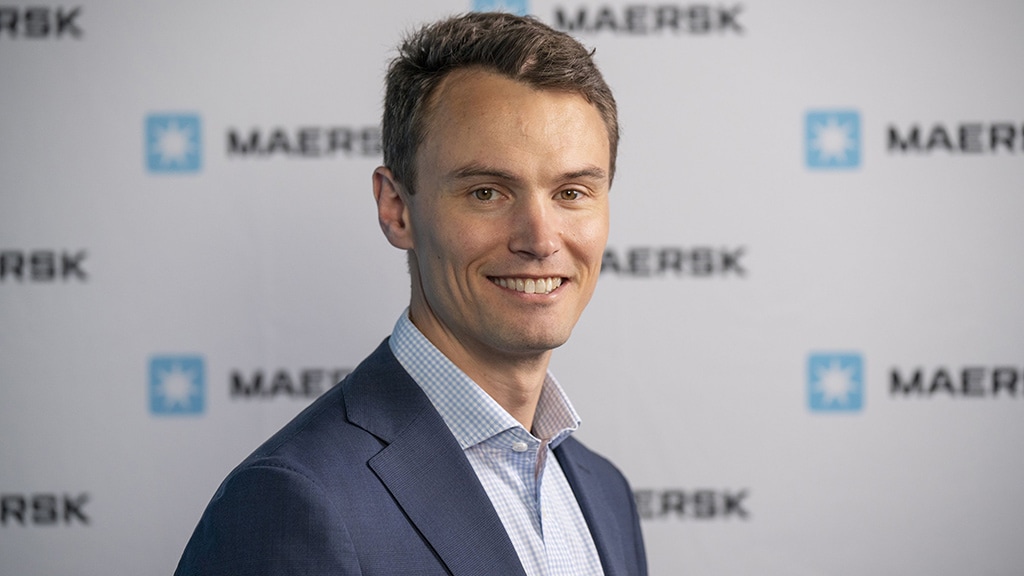
East Midlands Gateway – Christopher Cook, currently Managing Director of Maersk’s India, Bangladesh & Sri Lanka Area, will take over as the new Managing Director of UK & Ireland Area with the start of the new year.
The British national joined Maersk as a trainee in 2002 and has worked over the last two decades across Africa, Europe, Middle East and India with both Damco and Maersk. Christopher Cook has spent the last 7 years in the IMEA region, initially as Managing Director in the UAE Area, successfully leading the integration and transformation of the business there. Most recently, he served as Managing Director for IBS Area where he has operationalised the long-term strategy for the Area, deepened the operational execution capability and lifted the profitability with successful growth across the portfolio.
I am very pleased to welcome Chris to our Region Europe leadership team as our new head of UK and Ireland Area. Chris is no stranger to the UK and brings a strong customer focus. He is also known for his passion about people and developing strong culture in the organisations he leads.
About Maersk
A.P. Moller – Maersk is an integrated logistics company working to connect and simplify its customers’ supply chains. As a global leader in logistics services, the company operates in more than 130 countries and employs around 100,000 people. Maersk is aiming to reach net zero GHG emissions by 2040 across the entire business with new technologies, new vessels, and reduced GHG emissions fuels*.
*Maersk defines “reduced GHG emissions fuels” as fuels with at least 65% reductions in GHG emissions on a lifecycle basis compared to fossil of 94 g CO2e/MJ.
Oil prices jumped after OPEC+ said it would pause hiking output in the first quarter of next year (JOE KLAMAR)
Asian and European equities were mixed Monday with investors awaiting the release of key US data that could play a role in Federal Reserve deliberations ahead of an expected interest rate cut next week.
After November’s end-of-month rebound across world markets, confidence remains high amid speculation the US central bank could continue easing monetary policy into the new year.
That has helped overcome lingering worries about an AI-fuelled tech bubble that some observers warn could pop and lead to a painful correction.
While the odds on a third successive rate reduction on December 10 are hovering around 90 percent, traders will keep a close eye on this week’s batch of indicators to gauge the Fed’s desire to keep on cutting.
Among the reports due for release are private jobs creation, services activity and personal consumption expenditure — the Fed’s preferred gauge of inflation.
Bets on a cut surged in late November after several of the bank’s policymakers said they backed lower borrowing costs as they were more concerned about the flagging labour market than stubbornly high inflation.
That helped markets recover the losses sustained in the first half of the month, and analysts said they could be in store for an end-of-year rally.
“As the clouds of worry that cast an ominous shadow over markets through to mid-November gently dissipate, they give way to new emotions — notably the fear of not participating and the risk of underperforming benchmark targets,” said Pepperstone’s Chris Weston.
However, he warned that “risk managers remain highly astute to the landmines that could still derail the improving risk backdrop through December”.
He cited the possibility the Fed does not cut, or offers a “hawkish cut”, the Supreme Court’s possible decision on the legality of President Donald Trump’s trade tariffs, and jobs and inflation data.
Meanwhile, reports that Trump’s top economic adviser Kevin Hassett — a proponent of rate cuts — is the frontrunner to take the helm at the Fed next year added to the upbeat mood.
After last week’s healthy gains and Wall Street’s strong Thanksgiving rally, Asian equities were mixed.
Hong Kong, Shanghai, Singapore and Bangkok rose, but Sydney, Seoul, Wellington, Manila, Mumbai and Taipei dipped.
London, Frankfurt and Paris fell at the open.
Tokyo sank 1.9 percent as the yen strengthened on expectations the Bank of Japan will lift interest rates this month.
Governor Kazuo Ueda said it would “consider the pros and cons of raising the policy interest rate and make decisions as appropriate”, with Bloomberg saying traders saw a more than 60 percent chance of a move on December 19. That rose to 90 percent for a hike no later than January.
Masamichi Adachi, UBS Securities chief economist for Japan, wrote: “The BoJ is likely to hike its policy rate at the December 19 meeting. Recent remarks and reports… suggest groundwork for a rate hike is underway, with market probability exceeding 50 percent.”
But he said the yen would likely remain under pressure against the dollar, adding that Prime Minister Sanae Takaichi’s “preference for negative real rates may pressure (the) yen further”.
Oil prices surged around two percent after OPEC+ confirmed it would not hike output in the first three months of 2026, citing lower seasonal demand.
The decision comes amid uncertainty over the outlook for crude as traders look for indications of progress in Ukraine peace talks, which could lead to the return of Russian crude to markets.
– Key figures at around 0815 GMT –
Tokyo – Nikkei 225: DOWN 1.9 percent at 49,303.28 (close)
Hong Kong – Hang Seng Index: UP 0.7 percent at 26,033.26 (close)
Shanghai – Composite: UP 0.7 percent at 3,914.01 (close)
London – FTSE 100: DOWN 0.2 percent at 9,701.41
Euro/dollar: UP at $1.1609 from $1.1604 on Friday
Pound/dollar: DOWN at $1.3222 from $1.3245
Dollar/yen: DOWN at 155.36 yen from 156.10 yen
Euro/pound: UP at 87.81 pence from 87.60 pence
West Texas Intermediate: UP 2.1 percent at $59.75 per barrel
Brent North Sea Crude: UP 1.9 percent at $63.58 per barrel
New York – Dow: UP 0.6 percent at 47,716.42 (close)
HSBC’s recent analysis of the financial challenge facing OpenAI shows how massive the scale of the company’s thinking is. It already claims revenues of $20 billion. It has committed to $1.4 trillion to build out the new data centers that will feed its ChatGPT interface. And even if it can generate $200 billion-plus in revenues by 2030, it will still need a further $207 billion in funding to survive.
Those are massive sums.
But a dozen or so AI insiders who talked to Fortune recently at Web Summit in Lisbon described a different future for AI. That future, they say, is characterized by much smaller AI operations often revolving around AI “agents” that perform specialized, niche tasks, and thus do not need the gargantuan large-language models that underpin OpenAI, or Google’s Gemini, or Anthropic’s Claude.
“Their valuation is based on bigger is better, which is not necessarily the case,” Babak Hodjat, chief AI officer at Cognizant told Fortune.
“We do use large language models. We don’t need the biggest ones. There’s a threshold at which point a large language model is able to follow instructions in a limited domain, and is able to use tools and actually communicate with other agents,” he said. “If that threshold is passed, that’s sufficient.”
For example, when DeepSeek brought out a new model last January, it triggered a selloff in tech stocks because it reportedly cost only a few million dollars to develop. It was also running on a model a lot smaller than OpenAI’s ChatGPT but was comparably capable, Hodjat said.
“A 17 billion-parameter DeepSeek model was better than ChatGPT 3.5,” Hodjat said. “To put that into perspective, GPT 3.5 was more than 400 billion parameters and had to be run in a data center. A 17 billion parameter model can run on your MacBook. That’s the difference, and that’s the trend.”
A number of companies are orienting their services around AI agents or apps, on the assumption that users will want specific apps to do specific things. Superhuman—formerly Grammarly—runs an app store full of “AI agents that can sit in-browser or in any of the thousands of apps where Grammarly already has permission to run,” according to CEO Shishir Mehrotra.
At Mozilla, CEO Laura Chambers has a similar strategy for the Firefox browser. “We have a few AI features, like a ‘shake to summarize’ feature, mobile smart tab grouping, link previews, translations that all use AI. What we do with them is that we run them all locally, so the data never leaves your device. It isn’t shared with the models, it isn’t shared with the LLMs. We also have a little slideout where you can choose your own model that you want to work with and use AI in that way,” she said.
At chipmaker ARM, head of strategy/CMO Ami Badani told Fortune the company was model-agnostic. “What we do is we create custom extensions on top of the LLM for very specific use cases. Because, obviously, those use cases did vary quite dramatically from company to company,” she said.
This approach—highly focused AI agents run like separate businesses—stands in contrast to the massive, general-purpose AI platforms. In the future, one source asked Fortune, will you use ChatGPT to book a hotel room that fits your specific needs—perhaps you want a room with a bathtub instead of a shower, or a view facing west—or would you use a specialized agent that has a mile-deep database beneath it that only contains hotel data?
This approach is attracting serious investment money. IBM Ventures, a $500 million AI-focused venture fund, has invested in some decidedly unglamorous AI efforts that fill obscure enterprise niches. One of those investments is in a company named Not Diamond. This startup noticed that 85% of companies that use AI use more than one AI model. Some models are better than others at different tasks, so choosing the right model for the right task can become an important strategic choice for a company. Not Diamond makes a “model-router,” which automatically sends your task to the best model.
“You need someone to help you figure that out. We at IBM believe in a fit-for-purpose model strategy, meaning you need the right model for the right workload. When you have a model router that’s able to help you do that, it makes a huge difference,” Emily Fontaine, IBM’s venture chief, told Fortune.
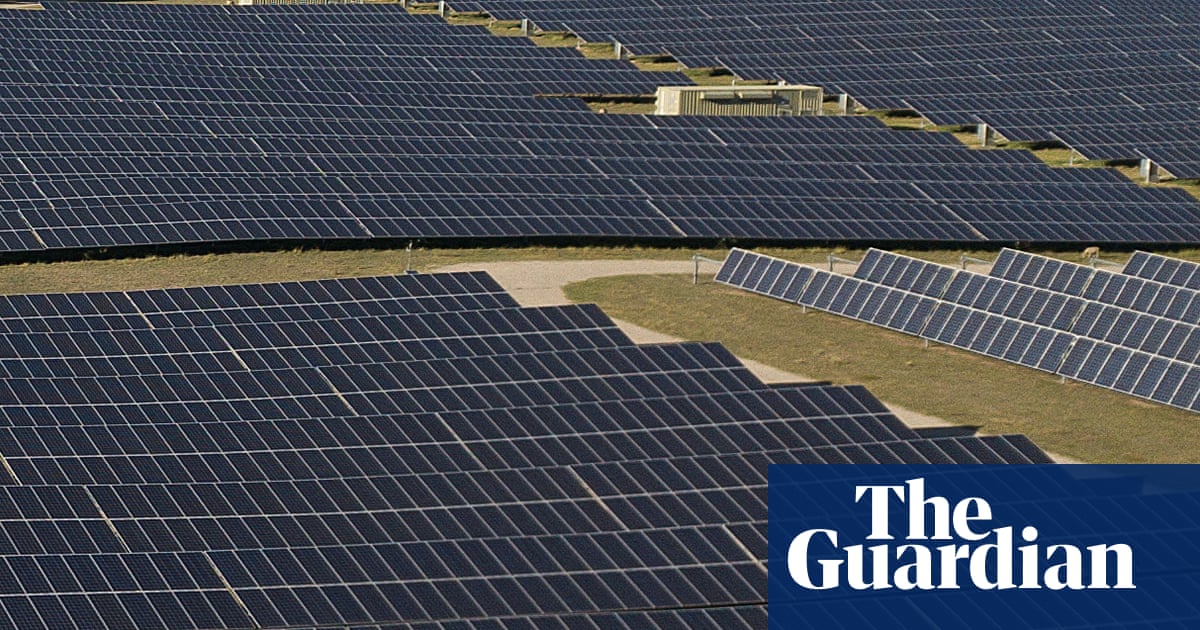
Renewable energy investors have warned “deep structural issues” are driving a slump in solar and wind investment in Australia, with commitments on large-scale farms at the lowest level in almost a decade.
Clean Energy Regulator data shows the government agency expects 2.5GW of industry-scale renewable energy capacity to reach a final investment decision this year, down from 4GW last year. The 12-month average for investment commitments on new developments is at its lowest since early 2017.
While the share of electricity from renewable energy has increased to more than 40% after years of growth, experts have warned that the construction of solar and wind farms needs to accelerate substantially if the Albanese government is to meet a target of 82% of electricity coming from clean sources by 2030.
Sign up: AU Breaking News email
The regulator said there was “real potential” that much more could win financial backing next year, in part due to its expanded capacity investment scheme, an underwriting program for the solar, wind and batteries needed to replace ageing and dirty coal-fired power stations.
But the chief executive of the Clean Energy Investor Group, Richie Merzian, said the lower financial investment decisions were a “symptom of deep structural issues, not just a blip”.
“The structural issues include state planning delays, grid connection uncertainty, transmission constraints, rising project costs and lack of long-term revenue certainty,” he said.
Merzian said the underwriting program had helped to develop a large pipeline of potential projects, but that they would not deliver the new energy capacity needed unless companies made final investments.
“The contrast between the large pipeline and the limited number reaching [financial investment decision] indicates a system that is not functioning as intended,” he said.
Renewable energy that has previously had private financial signoff continues to be added to the grid. The Clean Energy Regulator said it anticipated nearly 7GW of large-scale generation and rooftop solar systems could be connected this year.
But the Climate Change Authority last week warned more would be needed if the government was to meet its targets. It said the pace of growth in large-scale renewable energy generation would need to more than double over the next five years.
Frankie Muskovic, executive director of policy for the Investment Group on Climate Change, said the reduced investment decisions this year were “a concerning trend” and needed to accelerate to meet renewable energy and climate targets. The latter includes a 43% cut in emissions by 2030 and at least a 62% cut by 2035, compared with 2005 levels.
skip past newsletter promotion
after newsletter promotion
She said some state planning changes and an ongoing review of the National Electricity Market could be causing uncertainty, but that large-scale renewable energy developments were often marginal investments and the underwriting program needed to offer more support for each project that received a contract.
Muskovic said the scheme should also run past its scheduled closure date of 2027. This would give investors greater confidence to back renewables projects, she said.
“Maybe we need more data to confirm if this is a blip, but everything we are hearing suggests this is not. We need to be ready and able to put more support into bolstering the [scheme],” she said. “We need to be shoulder to the wheel on this, and state governments need to be along for the ride.”
Giving an annual climate statement to parliament last week, the climate change minister Chris Bowen said the government had more than 16GW of renewable energy projects under contract or in negotiations through the capacity investment scheme so far, with up to 10 tender rounds remaining.
He said he expected about 11GW of capacity to have reached financial close by the end of 2026.
A separate report by the Australian Energy Market Operator (Aemo) on Monday warned urgent investment was needed in new “system security” energy infrastructure – particularly synchronous condensers – if New South Wales’ Eraring coal-fired power plant was to shut as planned in 2027.
Iconic fabric patterns such as Pasha, tartan and Pepita are once again available in Porsche quality. Porsche has reissued these textiles, meaning that the interiors of many historic and more recent sports cars from the 356 to the 911 can be restored to their original condition. The fabrics are once again available to order from Porsche Centres or via the Porsche Online Shop.
Design is a fundamental component of the Porsche legend – not only in terms of a car‘s exterior, but also the interior. Style-defining textiles such as Pepita and legendary patterns such as Pasha, tartan or pinstripes have achieved cult status. Now these iconic fabrics are available again in a range of different colours.
“By reissuing these fabrics we are closing a gap, because most customers want to restore their historic or more recent classic cars to their original condition as closely as possible,” says Ulrike Lutz, Director Classic at Porsche. “It was particularly important to us in this project that we maintain our quality promise with the fabrics. Unfortunately, there are many imitations on the market that are either not at all suitable as seat fabric or lose their appearance after a short time. That’s why we want to offer our customers a tested original alternative again.”
New edition offers original quality
With Porsche fabrics, the interior can be restored to its original condition, regardless of whether a renewal has become necessary due to wear and tear or because a historically incorrect interior design may have been retrofitted. The Technical Certificate for classic Porsche vehicles serves as a reference for the original specification.
As Porsche Genuine Parts, the new ‘old’ textiles meet the sports car manufacturer’s high quality standards. This applies to the feel and durability as well as to the accuracy of the often extremely complicated patterns and colour combinations. “Often, the upholsterer only has to reupholster the driver’s seat. In these cases, our aim is to ensure that it continues to match the front passenger seat, which will usually still have its original covering,” explains Product Manager Lukas Werginz. In addition, the newly issued fabrics undergo a series of tests, for example for fire resistance, light and colour fastness, and abrasion resistance. This makes them ideal for a wide range of applications in vehicle interiors, such as seat covers or side panels. They are available in 1.5 by 2 metre sizes.
Extensive research in the company archive and beyond
The main source of information for these new editions was the company archive. For illustrative purposes, Porsche also acquired rare stock items: in the US, for example, the experts found an untouched 911 seat. Upholstered in green tartan in 1975, this seat never found its way into a Porsche. “Stored in a light-proof cupboard, and therefore perfectly preserved, this new-old-stock item was gold dust for us,” recalls Werginz.
Below is an overview of all the classic fabrics that are now available again:
Further colour variants, including pinstripes in the legendary orange ‘lobster’ colour, are being planned.
Pepita, Pasha and tartan: Porsche’s famous seat patterns
From 1963 onwards, Pepita was available as an option for the seats of the Porsche 356, and two years later it was also available for the 911 F model. Pepita consists of checks that are connected to each other by diagonal stripes. The name of the pattern comes from the stage name of the 19th-century Spanish dancer Josefa Durán y Ortega, which was ‘Pepita de Oliva’. It was made famous by Christian Dior. In 1947, the French fashion designer presented his designs and used Pepita for the women’s collection.
Tartan fabrics symbolise tradition and craftsmanship, belonging and self-confidence. In 1974, Porsche offered three tartans exclusively in the equipment list of the 911 Turbo. It was not until the 1976 model year that they were also offered in the 911. Tartans are characterised by their check pattern, which is created during the weaving process by using different coloured threads. At the International Motor Show (IAA) in Frankfurt am Main in 1973, Porsche presented a study of a 911 RSR Turbo with seat centres and side panels in Black Watch tartan. One year later, Louise Piëch received her silver 911 Turbo ‘No. 1’, which had a red leather interior that featured McLaughlan tartan in the seat centres.
Inspired by waving chequered flags, the Pasha pattern pays tribute to the world of motorsport. First presented to the public in a 928 in 1977, in the south of France, and also offered in the 911, 924 and 944 until the mid-1980s, the pulsating, lively pattern became one of Porsche’s most defining interior designs. The name ‘Pasha’ was intended to evoke images of Ottoman sultans reclining on comfortable silk and velvet cushions.
A good five decades ago, the design team around Anatole ‘Tony’ Lapine and Vlasta Hatter developed the pattern based on the legendary Erich Strenger poster. Cleverly arranged rectangles of different sizes created a sense of movement in the pattern, a visual translation of the dynamism and elegance that have always distinguished Porsche. With the new 911 Spirit 70, Porsche has helped the material make a comeback for the first time in a new vehicle.
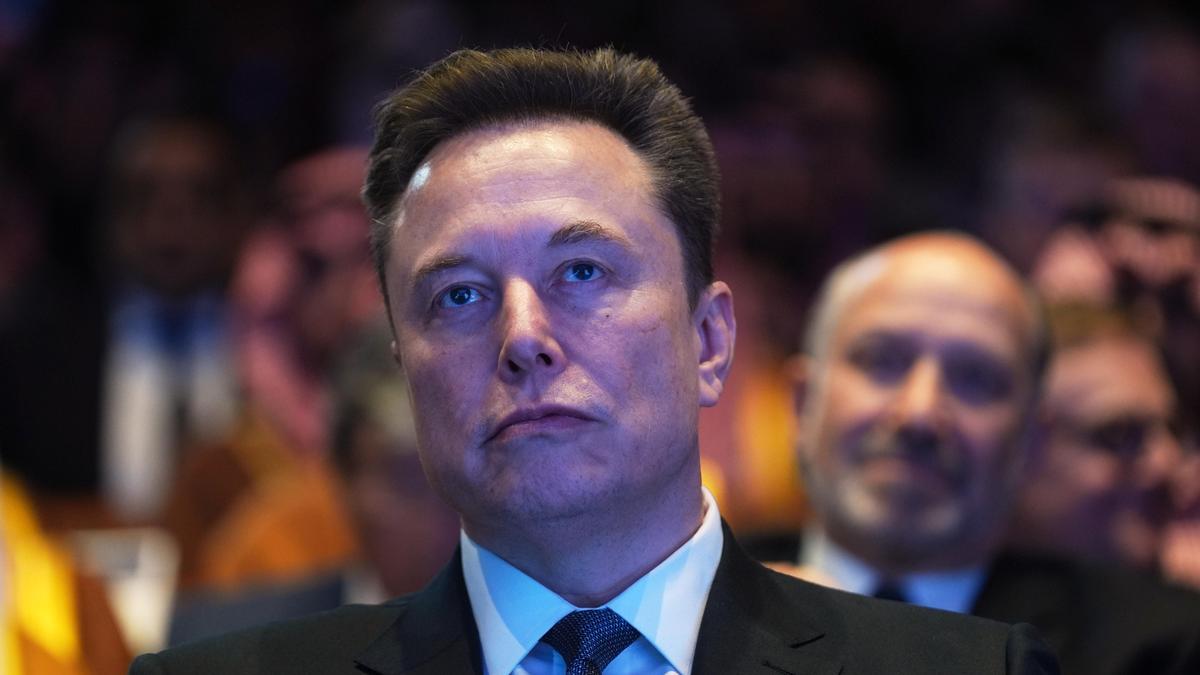
SpaceX CEO Elon Musk said his partner Shivon Zilis is “half-Indian” and one of their children’s middle name is ‘Sekhar’ after the Nobel laureate Subrahmanyan Chandrasekhar.
“One of my sons with her is, his middle name is Sekhar, after Chandrasekhar,” Mr. Musk said in an interview with investor and entrepreneur Nikhil Kamath on his show ‘People by WTF’.
S Chandrasekhar was a renowned Indian-American astrophysicist who was awarded the Nobel Prize in Physics in 1983 “for his theoretical studies of the physical processes of importance to the structure and evolution of the stars”.
When asked if Ms. Zilis had spent any time in India, Mr. Musk said she was given up for adoption when she was a baby and grew up in Canada. “I think her father was like an exchange student at the university, or something like that. I’m not sure of the exact details, but, just kind of thing where I don’t know… she was given up for adoption,” he said.
Mr. Musk has four children with Ms. Zilis – twins Strider and Azure, a daughter Arcadia and son Seldon Lycurgus. Ms. Zilis is a director of operations and special projects at one of Mr. Musk’s companies Neuralink.
Bitcoin and Ethereum fell on Monday, as the recent sell-off in cryptocurrencies resumed.
Bitcoin tumbled sharply and was last seen about $86,273.68 at around 7:30 a.m. in London on Monday, a slide of about 5.5%. Ethereum dropped more than 6.5% in early trade, to reach $2831.95.
Solana had fallen almost 7.7%, and was last seen at $126.75, while other closely-watched tokens were also in the red, including Dogecoin, which slipped 8.4%.
BTC.
In Asia, a statement by the People’s Bank of China on Saturday warning of illegal activities relating to digital currencies heaped pressure on Hong Kong-listed shares of digital assets-related companies, which retreated during Monday’s session.
The fresh slide in digital assets chimes with a broader risk-off sentiment at the start of a new month.
Macroeconomic concerns — including uncertainty over a possible U.S. rate cut — continue to weight on investors’ minds, while nagging doubts over overheated valuations in artificial intelligence-related names contributed to November’s bumpy markets as crypto volatility heightened.