Category: 3. Business

  • January 2026 euro area bank lending survey

    January 2026 euro area bank lending survey

    3 February 2026

    • Banks tightened credit standards for firms, citing higher perceived risks amid lower risk tolerance
    • Credit standards eased slightly for housing loans, but tightened further for consumer credit
    • Small increase in demand for loans to firms, while demand for housing loans grew moderately
    • Trade tensions and related uncertainty added to tighter credit standards and dampened loan demand

    According to the January 2026 bank lending survey (BLS), euro area banks reported an unexpected net tightening of credit standards (banks’ internal guidelines or loan approval criteria) for loans or credit lines to enterprises in the fourth quarter of 2025 (net percentage of banks of 7%; Chart 1). Banks reported a small net easing of credit standards for loans to households for house purchase (net percentage of -2%), whereas credit standards for consumer credit and other lending to households tightened further (net percentage of 6%). For firms, the net tightening in the fourth quarter followed a smaller net tightening of credit standards in the third quarter, surpassing the expectations reported by banks in the previous survey round (1%). Concerns about the outlook for firms and the broader economy, as well as banks’ lower risk tolerance, contributed to tighter credit standards. Banks indicated a small net easing of credit standards for housing loans, which they had not expected, and a further net tightening of credit standards for consumer credit, which was above the expectations they had reported in the prior quarter. For housing loans, competition had an easing impact on credit standards, while risk perceptions had a tightening impact. Banks’ lower risk tolerance and higher risk perceptions were the main drivers of the tightening for consumer credit. For the first quarter of 2026, banks expect a moderate further net tightening of credit standards for firms, a slight tightening for housing loans and a more marked tightening for consumer credit.

    Banks’ overall terms and conditions (the actual terms and conditions agreed in loan contracts) tightened for loans to firms and consumer credit, while they eased for housing loans.

    Banks reported a net increase in the share of rejected loan applications for firms and consumer credit, while the share remained unchanged, in net terms, for housing loans. The net increase in share was higher than in the previous quarter for firms, but lower for households.

    In the fourth quarter of 2025, banks reported a continued small net increase in demand for loans or credit lines to firms (net percentage of 3%; Chart 2). This followed a similar net increase in loan demand in the previous quarter and exceeded the expectations reported by banks in that quarter (0%). Firms’ loan demand was primarily driven by an increase in demand for inventories and working capital and other financing needs, whereas fixed investment continued to make an overall neutral net contribution. Demand for housing loans continued to increase in net terms (net percentage of 9%), albeit more moderately, broadly in line with banks’ expectations in the previous quarter. Improved housing market prospects were the main driver of the increase in housing loan demand, while consumer confidence contributed negatively. Demand for consumer credit and other lending to households declined slightly (net percentage of -2%), following broadly unchanged demand in the third quarter and being somewhat lower than what banks had expected in the previous quarter. Lower consumer confidence dragged consumer credit demand down despite the continuing positive contribution from the level of interest rates. In the first quarter of 2026, banks expect a net increase in loan demand from firms and households.

    Banks’ access to retail funding and money markets deteriorated slightly in the fourth quarter of 2025, while it eased for debt securities and securitisations. Over the next three months, banks expect access to funding to remain broadly unchanged, except for a slight easing in debt securities funding.

    In response to new regulatory or supervisory actions, banks reported a net increase in their capital and holdings of liquid assets, although they indicated a temporary decline in risk-weighted assets. They also indicated a net tightening impact on credit standards stemming from the above-mentioned actions across all loan categories, with further net tightening expected for 2026.

    Banks reported a small net tightening impact of non-performing loan ratios and other credit quality indicators on their credit standards for all loan categories in the fourth quarter of 2025, with risk perceptions and risk aversion being the most prominent factors. In the first quarter of 2026, banks expect a further small tightening impact for loans to firms and for consumer credit, while they expect a broadly neutral impact for housing loans.

    Credit standards tightened in construction, wholesale and retail trade, energy-intensive manufacturing and commercial real estate (CRE) in the second half of 2025, with the net tightening being strongest in the manufacturing of motor vehicles. Tightening remained moderate in the overall manufacturing sector, while non-financial services other than CRE saw no or only small net tightening. Banks also reported a net increase in demand for loans in non-financial services other than CRE and no changes or just slight declines in other sectors in the second half of 2025. For the first half of 2026, banks expect either a further net tightening or broadly unchanged credit standards across the main economic sectors. They expect a net increase in loan demand for most sectors except for the manufacturing of motor vehicles, wholesale and retail trade, and CRE.

    Based on a new question concerned with the impact of changes in trade policies and related uncertainty, almost half of the BLS banks assessed their exposure as important. Banks reported a tightening impact on credit standards, mostly through a decrease in risk tolerance, and a dampening impact on demand for loans to firms. Banks expect a similar impact for 2026.

    The quarterly BLS was developed by the Eurosystem to improve its understanding of bank lending behaviour in the euro area. The results reported in the January 2026 survey relate to changes observed in the fourth quarter of 2025 and changes expected in the first quarter of 2026, unless otherwise indicated. The January 2026 survey round was conducted between 15 December 2025 and 13 January 2026. A total of 153 banks were surveyed in this round, with a response rate of 100%.

    Chart 1

    Changes in credit standards for loans or credit lines to enterprises, and contributing factors

    (net percentages of banks reporting a tightening of credit standards, and contributing factors)

    Source: ECB (BLS).

    Notes: Net percentages are defined as the difference between the sum of the percentages of banks responding “tightened considerably” and “tightened somewhat” and the sum of the percentages of banks responding “eased somewhat” and “eased considerably”. The net percentages for “Other factors” refer to an average of the further factors which were mentioned by banks as having contributed to changes in credit standards. Data are for the euro area and for the four largest euro area countries.

    Chart 2

    Changes in demand for loans or credit lines to enterprises, and contributing factors

    (net percentages of banks reporting an increase in demand, and contributing factors)

    Source: ECB (BLS).

    Notes: Net percentages for the questions on demand for loans are defined as the difference between the sum of the percentages of banks responding “increased considerably” and “increased somewhat” and the sum of the percentages of banks responding “decreased somewhat” and “decreased considerably”. The net percentages for “Other factors” refer to an average of the further factors which were mentioned by banks as having contributed to changes in loan demand. Data are for the euro area and for the four largest euro area countries.

    For media queries, please contact Benoit Deeg, tel.: +49 (0) 69 134495686.

    Notes

    • A report on this survey round is available on the ECB’s website, along with a copy of the questionnaire, a glossary of BLS terms and a BLS user guide with information on the BLS series keys.
    • The euro area and national data series are available on the ECB’s website via the ECB Data Portal. National results, as published by the respective national central banks, can be obtained via the ECB’s website.
    • For more detailed information on the BLS, see Köhler-Ulbrich, P., Dimou, M., Ferrante, L. and Parle, C., “Happy anniversary, BLS – 20 years of the euro area bank lending survey”, Economic Bulletin, Issue 7, ECB, 2023, and Huennekes, F. and Köhler-Ulbrich, P., “What information does the euro area bank lending survey provide on future loan developments?”, Economic Bulletin, Issue 8, ECB, 2022.

    Continue Reading

  • Cyber and AI as major business risks – Allianz.com

    1. Cyber and AI as major business risks  Allianz.com
    2. Insurers face China AI surge as report ranks disruption as top threat  Insurance Asia
    3. Want To Know What Keeps Your Clients Up At Night? Spoiler Alert: It’s Cybersecurity And AI  Above the Law
    4. Japan insurance market lags as Asahi ransomware breach hits millions  Insurance Asia

    Continue Reading

  • Samsung Launches Glasses-Free 3D Digital Signage Globally at ISE 2026, Defining a New Era in Immersive Commercial Displays

    Samsung Launches Glasses-Free 3D Digital Signage Globally at ISE 2026, Defining a New Era in Immersive Commercial Displays

    Display

    Global rollout begins today for the 85-inch Samsung Spatial Signage, expanding immersive 3D experiences across high-impact commercial environments

    Company unveils next-gen ultra-large signage, a new AI-powered content app and Enterprise partnerships for high-impact business environments

    2/3/2026

    Samsung Electronics Co., Ltd. today announced the expansion of its commercial display offerings, led by the global launch of Samsung Spatial Signage, at Integrated Systems Europe (ISE) 2026 in Barcelona. The announcement includes new AI-powered content capabilities through Samsung VXT, new additions to Samsung’s ultra-large commercial display lineup and expanded enterprise collaboration with Cisco-certified wide-format display solutions.

    “For commercial environments, bringing displays and content solutions together is becoming increasingly important,” said SW Yong, President and Head of the Visual Display (VD) Business at Samsung Electronics. “Glasses-free 3D Spatial Signage, combined with new AI-powered capabilities in Samsung VXT, allows us to deliver a more integrated approach to immersive commercial displays, helping businesses create engaging experiences across a wide range of commercial environments.”

    Bringing Brands to Life Across a Range of Environments With Spatial Signage

    Spatial Signage (SM85HX) is Samsung’s industry-leading large format 3D digital signage that delivers an immersive visual experience. Using Samsung’s patented 3D Plate technology, it creates a sense of spatial depth positioned behind the LCD panel. Content retains the sharpness of 2D visuals while adding natural-looking 3D depth — without the need for specialized content or equipment such as 3D glasses. The display’s presentation naturally draws attention in retail, luxury, museum and entertainment settings, helping direct focus to key promotions, exhibitions or important information.

    The newly launched 85-inch Spatial Signage display features a 4K UHD resolution (2,160 x 3,840) in a 9:16 portrait format, which enables brands and venues to present 360-degree rotating visuals that show front, back and side views of a product or scene.

    Powered by Samsung’s industry-leading Quantum Processor, the display provides 4K UHD upscaling, 16-bit color mapping and dynamic HDR refinement to deliver sharper detail, smoother tonal transitions and consistent color accuracy. Additionally, an anti-glare panel helps maintain clarity under bright or challenging lighting conditions.

    B2B Display (general)

    Spatial Signage features an UltraThin Design with a slim 2-inch profile. Compatible with a Slim Fit Wall Mount, the display installs like conventional signage and integrates cleanly into compact or design-sensitive locations, without the bulky, box-like enclosures typically associated with traditional showcase-style displays.1 Spatial Signage is launching globally in an 85-inch model, with 32-inch and 55-inch sizes to follow.

    AI Studio, a new AI-powered content app within Samsung VXT,2 was showcased at ISE 2026 to demonstrate streamlined content creation for all Samsung signage connected to the platform. The app transforms static images into signage-ready video without the need for external tools or manual setup. Content created through VXT’s AI Studio app is automatically optimized with refined shadow detailing, adjusted margins and background treatments for Spatial Signage—creating more realistic and balanced visuals tailored for a wide variety of commercial environments.

    Recognized for its pioneering 3D capabilities, Spatial Signage has been named a CES 2026 Innovation Award Honoree in the newly introduced Enterprise Tech category, which made Samsung one of the first to be recognized in the category during its commercial debut at the show. Last year, the display was also named an IFA 2025 Innovation Award Honoree in the ‘Best in Emerging Tech’ category.

    Redefining Ultra-Large Signage for Bold Business Impact

    Samsung is reinforcing its leadership in ultra-large commercial displays with a growing lineup built for high-impact business environments. At ISE 2026, Samsung introduced the 130-inch Micro RGB signage (QPHX model) to commercial audiences for the first time. Previously unveiled at CES 2026 for the ultra-premium home entertainment market, the display features Samsung’s most advanced Micro LED technology to date. It combines micro-scale RGB LEDs with the Micro RGB AI Engine Pro to deliver vivid color expression and exceptional picture quality in an ultra-slim design, making it ideal for flagship retail and premium spaces.

    Also unveiled at ISE 2026 was the 108-inch The Wall All-in-One (MMF-A model) in 2K resolution, engineered to dramatically simplify large-format LED deployment. Like previous models (146-inch 4K and 2K, 136-inch 2K and 110-inch 2K), it reduces on-site setup time and labor compared to traditional LED walls. Installation is possible in as little as two hours, depending on display size.3 However, the new 108-inch model features a more compact, split-panel design that makes supersized LED installation as efficient as mounting two LCD screens rather than a full LED wall — all at a much faster pace.

    Together with the previously introduced 105-inch QPDX-5K and 115-inch QHFX models, the addition of the 130-inch Micro RGB Signage and The Wall All-in-One series gives businesses more ways to create immersive, ultra-large visual experiences across lobbies, showrooms, boardrooms and other high-impact commercial spaces. This expanded lineup reinforces Samsung’s 17-year leadership in the global digital signage market.4

    Advancing Enterprise Collaboration With Cisco and Logitech Partnerships

    Samsung’s 115-inch 4K Smart Signage (QHFX model) and 146-inch 2K The Wall All-in-One (IAB model) lead the industry in advanced ultra-large displays, offering seamless, immersive meeting spaces without the complexity of multi-screen setups. These models are the latest Samsung displays to be certified for compatibility with Cisco’s collaboration devices, joining the previously certified Samsung QMC lineup. Notably, Samsung The Wall All-in-One is the world’s first LED display to receive the certification.5

    Cisco certification follows a rigorous testing program to confirm the reliability of the display’s video interfaces and ensure optimized image quality for video meetings. It also confirms the visibility of displays within Cisco’s Control Hub management platform and verifies secure, seamless integration across meeting spaces. Together, these factors contribute to high-quality meeting experiences for participants and improved enterprise management for IT teams.

    Additionally, through a new partnership with Logitech, Samsung 4K Smart Signage QBC series is now included in Microsoft’s Express Install for Microsoft Teams Rooms, enabling fast, cost-effective meeting room setups. The offering combines Samsung displays with Logitech’s certified Microsoft Teams Rooms conferencing solution to simplify room installations, allowing them to be completed in under an hour.

    Continue Reading

  • Kuehne+Nagel strengthens global air cargo connectivity through strategic expansion in Frankfurt

    Kuehne+Nagel strengthens global air cargo connectivity through strategic expansion in Frankfurt

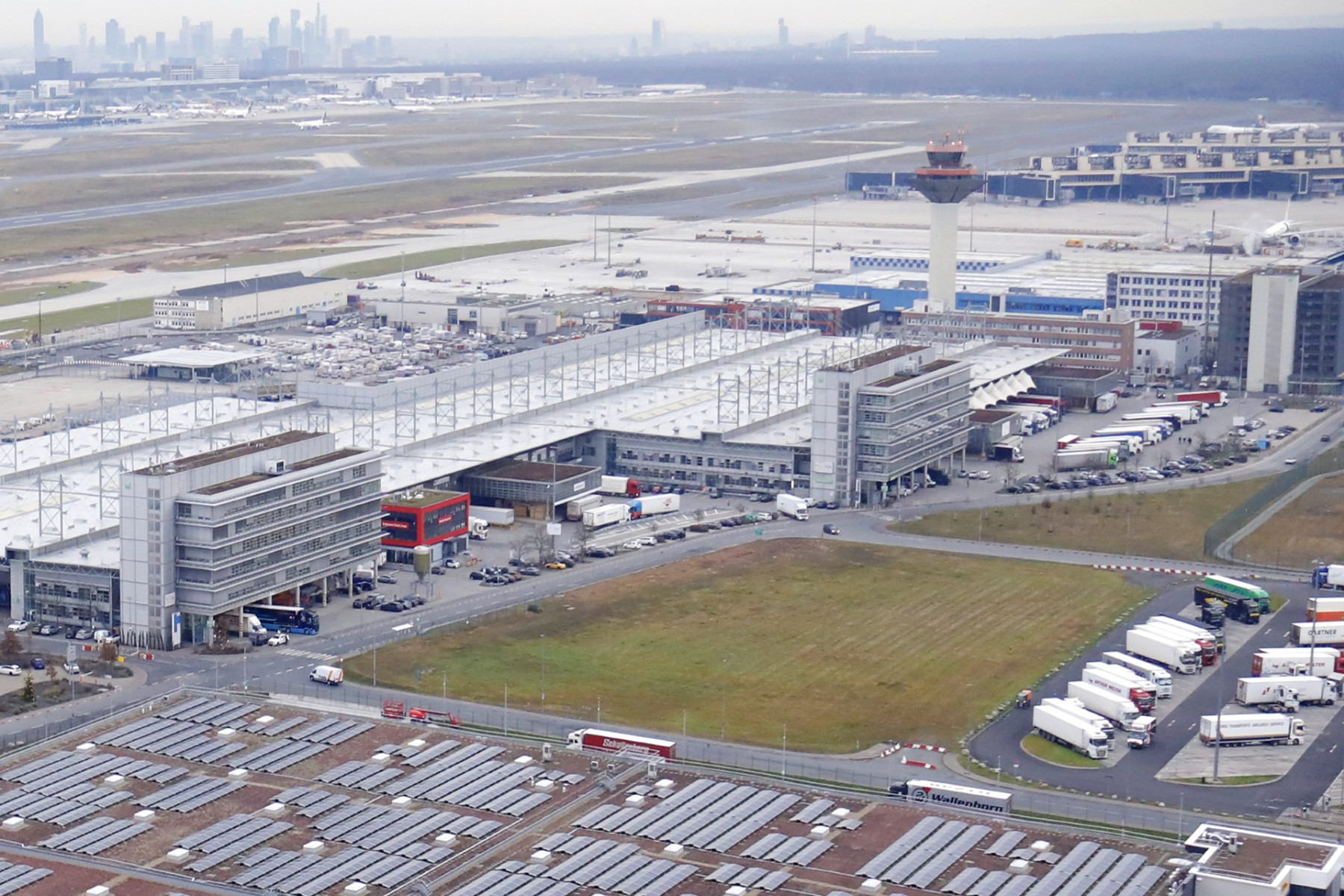
    Kuehne+Nagel has signed a lease agreement with Fraport AG for a new 7,600 sqm air cargo facility in CargoCity South at Frankfurt Airport. Developed by Fraport AG, the facility marks a strategic investment in Kuehne+Nagel’s global air logistics network with the aim to strengthen air cargo connectivity across key international trade lanes. Completion and handover are set for the end of 2028. 

    Frankfurt Airport is a major global cargo hub. The facility provides airside access within the secure airport zone. It supports efficient cargo movements between the terminal and aircraft parking areas, reduces aircraft turnaround time for handling, and enables seamless transfers across Kuehne+Nagel’s operations.

    The layout features 16 gates and truck docks for efficient, scalable operations. It aims to improve logistics efficiency and boost flexibility to meet evolving customer and market needs. 

    Additionally, the facility design aligns with Kuehne+Nagel’s sustainability commitments. It has been awarded a German Sustainable Building Council (DGNB) gold standard certification, guaranteeing it will meet strict environmental standards. Besides LED lighting, heat pumps, EV charging stations, and smart metering, a large photovoltaic system will also be installed on the roof to generate renewable energy for the airport grid.

    With the new facility, Kuehne+Nagel will grow its total footprint in CargoCity South to over 20,000 sqm, confirming the company’s long-term commitment to Frankfurt Airport as a key global air cargo gateway. 

    “Frankfurt is a key global gateway in the Kuehne+Nagel air logistics network. As supply chains become more dynamic, our new cargo facility provides the infrastructure, capacity, and connectivity needed to support our growth ambitions and keep goods moving. This enables us to better serve customers in fast-growing sectors like healthcare, semiconductor, high tech, and cloud infrastructure,” says Martin Schaefer, SVP Air Logistics Germany at Kuehne+Nagel. 

    Continue Reading

  • Gale surveyed more than 1,200 U.S. consumers

    Gale surveyed more than 1,200 U.S. consumers

    Social media has now been around long enough to know it can be an extremely powerful marketing channel, notably for lower-funnel advertisers. Even in the face of eroded signals on what gets them to click.

    So the timing is right to understand social platforms from a 2.0 point of view — at least that’s the thinking behind Gale agency’s research work into what it considers “emerging media.” And what it found is that the more a platform can deliver the feeling and growth of community, the more success brands can have marketing on that platform. 

    Gale, which is owned by Stagwell, surveyed more than 1,200 U.S. consumers to evaluate their relationships with traditional and emerging media. Digiday got a look at the findings from the report, called Connections Over Impressions. Ultimately, with more social platforms evolving their ad offerings, brands can essentially harness word-of-mouth in a 2.0 manner. 

    The report essentially found that brands need to assess such elements as platform momentum, ability to capture and hold attention and the ability to establish trust. The channels that delivered best on those attributes were community-centric spaces where brands can seek deeper connections with the authoritative voices on those platforms — think the moderator of a subreddit on Reddit that’s relevant to your brand, or an appropriate server on Discord. 

    “There’s a huge amount of value in like audience insights from Reddit,” said Ben James, Gale’s chief innovation officer. “Marketers sometimes are even known to launch programs in other spaces, and then to measure the quality of their impact by how are people talking about it on Reddit. … This study that we did is meant to create the confidence for clients to believe in these emerging media spaces as proven grounds to reach people and convert them into customers.”

    Among the study’s conclusions: 

    • When marketers find a community endorses or supports them, it can be a powerful tool — they just need to tread carefully when in an environment where they don’t have messaging control;
    • Marketers should consider spreading messaging across various community touchpoints, rather than a single “hero” channel, including creators, events, games and AI-powered experiences, especially when these touchpoints feel authentic and community-grounded;
    • Humanity wins the day, in that people tend to gravitate toward content and spaces that feel real, human, and community-driven — especially as AI seems to pop up in every corner of our lives.

    “When the brand respects what’s happening [in emerging social channels] and creates forums for people to gather and speak to each other, the quality of those interactions is better and can lead to greater effect for them,” said James. “And a lot of that is trying to understand these emerging spaces beyond the traditional metrics.”

    Gale clients are paying attention to the findings.

    “We’ve seen firsthand that when we show up in ways that feel participatory and authentic to the brand, we don’t just drive engagement, we build real connections,” said Erin Silvoy, svp of global marketing & channel development at Starbucks, who pointed to the coffee chain’s digital game, Pumpkin Spice Land that built loyalty (but didn’t offer specifics). “These emerging spaces can act as a strong extension of the community-centric aspect of our brand, which we bring to life each day.” 

    Longtime Gale client MilkPEP, a pro-dairy industry association, has also taken some of the guidance to heart, and among its more social efforts cultivated a community of thousands of women runners with a campaign called Team Milk that executed mainly via channel-native, “relatable” content on creator-first platforms such as TikTok and Instagram.

    “We’re always looking for new places to build and strengthen community and connect with consumers,” said Miranda Abney, vp of consumer marketing at MilkPEP. “What started digitally has translated into real-world community at Team Milk’s Every Woman’s Marathon … As the ways people discover, connect, and participate continue to evolve, identifying new channels and spaces to engage our community will remain a smart investment.”

    Continue Reading

  • Australia raises rates for first time since late 2023 as inflation hits six-quarter high

    Australia raises rates for first time since late 2023 as inflation hits six-quarter high

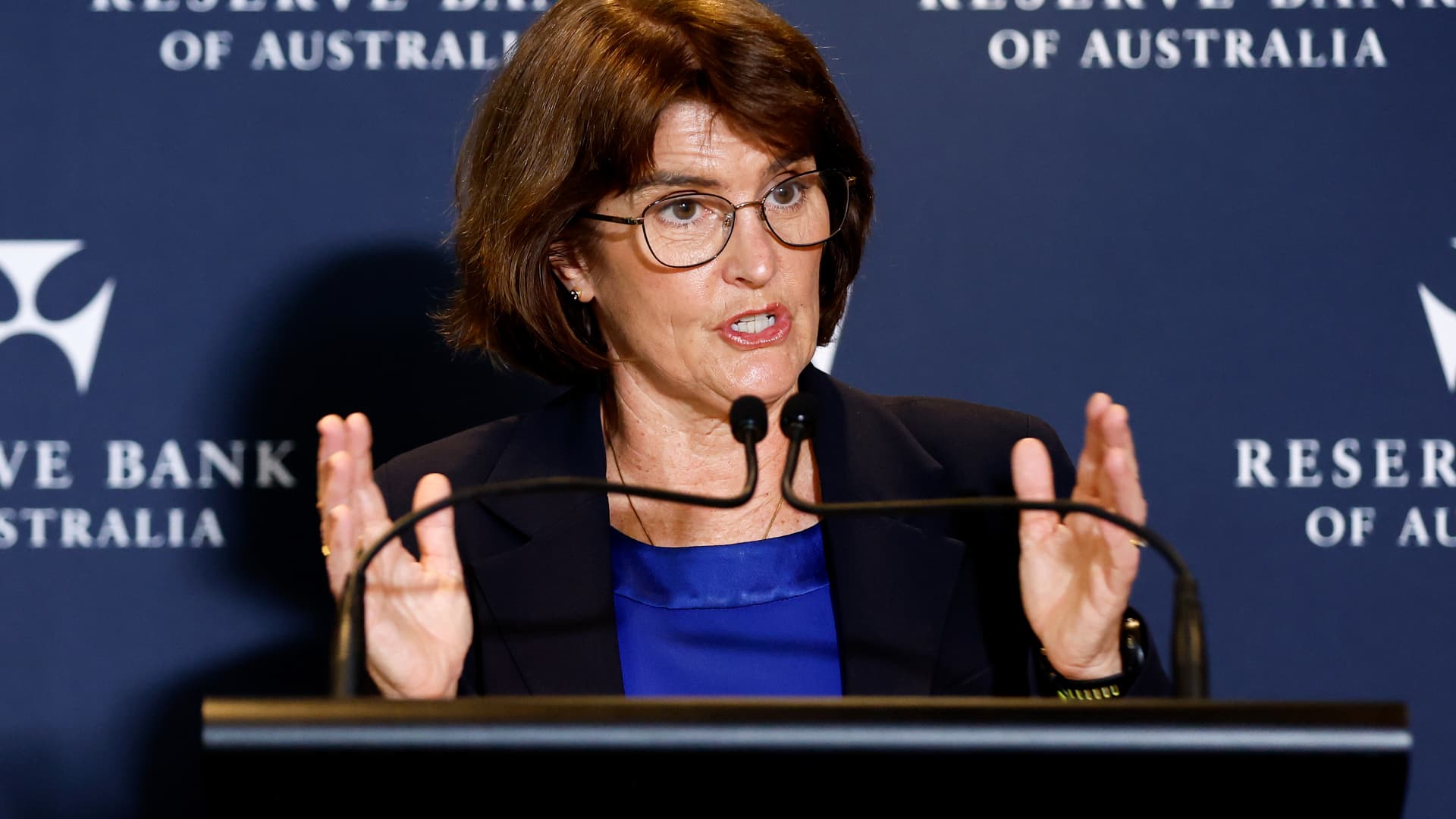
    Michele Bullock, governor of the Reserve Bank of Australia (RBA), speaks during a news conference at the bank’s head office in Sydney, Australia, on Tuesday, Apr. 1, 2025.

    Bloomberg | Bloomberg | Getty Images

    Australia’s central bank raised its policy rate by 25 basis points to 3.85% on Tuesday, marking the Reserve Bank of Australia’s first rate hike since November 2023 as inflation continues to climb.

    The Reserve Bank of Australia’s move matched expectations from economists polled by Reuters and followed data showing inflation at its highest level in six quarters.

    “Private demand is growing more quickly than expected, capacity pressures are greater than previously assessed and labour market conditions are a little tight,” according to the central bank’s statement, noting that inflationary pressure picked up “materially” in the second half of last year.

    Senior RBA officials have repeatedly pushed back against expectations of rate cuts. Earlier this year, Reserve Bank of Australia Deputy Gov. Andrew Hauser said the likelihood of near-term rate cuts was “probably very low,” citing persistently high inflation. The central bank has an inflation target of 2.5%

    Gov. Michele Bullock echoed that stance after the bank’s rate decision on Dec. 9, saying interest rate cuts were not on the horizon for the foreseeable future.

    When asked at the time if the bank would consider further increases, Bullock said that the bank would assess economic data on a “meeting-by-meeting” basis.

    “If inflation continues to be persistent and looks like it is not coming back down towards the Board’s target… the Board might have to consider whether or not it’s appropriate to keep interest rates where they are or in fact at some point raise them,” she said.

    Australia’s economy grew 2.1% in the third quarter, up from a revised 2% in the previous quarter and marking its fastest pace of expansion in about two years.

    Continue Reading

  • The request could not be satisfied


    ERROR: The request could not be satisfied

    The request could not be satisfied.


    Request blocked.
    We can’t connect to the server for this app or website at this time. There might be too much traffic or a configuration error. Try again later, or contact the app or website owner.


    If you provide content to customers through CloudFront, you can find steps to troubleshoot and help prevent this error by reviewing the CloudFront documentation.


    Generated by cloudfront (CloudFront)
    Request ID: L_aaizL3POYxuQLykmLh0UNCPN_Yzp0yfonO4obd5FroNx67lxN9Vw==
    

    Continue Reading

  • Palantir beats Wall Street expectations amid Trump immigration crackdown | Palantir

    Palantir beats Wall Street expectations amid Trump immigration crackdown | Palantir

    Palantir celebrated its latest financial results on Monday, as the tech company blew past Wall Street expectations and continues to prop up the Trump administration’s push to deport immigrants.

    Palantir has secured millions of dollars in federal contracts amid Trump’s crackdown on immigrants. The multibillion-dollar Denver-based firm creates tech focused on surveillance and analytics, to be used by the government agencies and private companies.

    Palantir’s biggest US customer is the Department of Defense; it also works with the Department of Homeland Security, and the majority of its revenue comes from deals with the federal government. Palantir reported 66% year-over-year growth in revenue from government contracts, to $570m.

    Palantir has drawn further criticism over its role in the government’s immigration agenda, since federal immigration officers killed two protesters in Minneapolis last month.

    Palantir chief executive Alex Karp told CNBC in an interview Monday that Palantir helps protect sensitive data. “If you are critical of ICE, you should be out there protesting for more Palantir,” he said. “Our product, actually, in its core, requires people to conform with fourth amendment data protection.”

    The company beat Wall Street expectations of $1.33bn with $1.41bn in revenue for the fourth quarter of 2025. It reported earnings per share (EPS) of $0.25 – which also surpassed Wall Street expectations of $0.23 in EPS. The company’s stocks jumped about 8% in after-hours trading after the release.

    Karp described the company’s growth on an earnings call as “one of the truly iconic performances in the history of corporate performance”. He wrote in a letter accompanying the earnings report that the $1.4bn in revenue generated in last year’s fourth quarter marks a new record – a 70% growth rate over the same period the year before.

    “We did this while supporting, in critical manner, some of the most interesting intricate, unusual, operations that the US government has been involved in – many of which we can’t comment on – but were the highlight of last year and highly motivating to all of us at Palantir,” Karp said.

    Karp doubled down on his data protection claim on the call, arguing that Palantir’s work with the US government, including intelligence agencies, aligns with the fourth amendment and makes sure “every institution that uses (Palantir’s) products is doing it within conformity of the law and ethics of America”.

    Data privacy advocates are not convinced. “Palantir tools are ICE’s digital henchmen,” said Will Owen, communications director at the non-profit, Surveillance Technology Oversight Project, in a statement to the Guardian. “Their revenue may be up thanks to Trump, but no one is buying that they hold ICE accountable.”

    Last year, ICE awarded Palantir a nearly $30m contract to build ImmigrationOS, which makes it easier to pull information about immigrants from across government databases – regardless of the accuracy of those records. 404 Media recently reported on the existence of another tool created by Palantir for the federal government: Enhanced Leads Identification & Targeting for Enforcement (Elite).

    Elite “populates a map with potential deportation targets, brings up a dossier on each person, and provides a ‘confidence score’ on the person’s current address”, according to 404 Media. The program reportedly relies on address data from the Department of Health and Human Services, which includes Medicaid.

    Wired reported last week that the federal government has been using Palantir’s AI tools to process immigration enforcement tips. Wired also reported that the health department has been using other Palantir AI tools to screen grants and job descriptions for diversity, equity and inclusion (DEI), and “gender ideology”.

    Palantir has said there is no malicious intent in its work with the federal government.

    “To be absolutely clear, Palantir is not working on any master database project to unify databases across federal agencies,” read a company blogpost last week. “Palantir has not proposed the US government build a ‘master list’ for the surveillance of citizens, nor have we been asked to consider building such a system for any customer.”

    Palantir has described 404 Media’s claims about the Elite tool as misleading; the company says it is “used for prioritized enforcement to surface the likely addresses of specific individuals, such as those with final orders of removal or with high severity criminal charges”.

    Trump’s “big, beautiful bill” awarded DHS and ICE huge budgets to pursue the administration’s anti-immigrant policies, including $45bn for ICE to expand its detention capabilities.

    In 2025, Palantir’s federal contracts almost doubled – and increased to more than $970m; this amount was distributed across the government, mostly to the defense department, but it also includes the DHS.

    Continue Reading

  • Stock market today: Live updates

    Stock market today: Live updates

    Traders work on the floor of the New York Stock Exchange (NYSE) on Jan. 28, 2026 in New York City.

    Spencer Platt | Getty Images

    Futures linked to the S&P 500 traded rose Monday night after U.S. equities posted a strong start to the new trading month.

    S&P 500 futures added 0.2%, while Nasdaq 100 futures gained nearly 0.4%. Futures tied to the Dow Jones Industrial Average advanced 11 points, or less than 0.1%.

    Shares of Palantir Technologies jumped about 6% in extended trading after the defense tech company gave strong fourth-quarter financial results and upbeat guidance. Robotics play Teradyne surged 20% after posting a solid outlook for the first quarter, calling for revenue that surpassed expectations.

    Major stock averages rose across the board in the regular session. The 30-stock Dow jumped about 515 points, or 1.05%. The S&P 500 advanced 0.5%, and the tech-heavy Nasdaq Composite gained almost 0.6%. Hot artificial intelligence infrastructure stocks Sandisk, Western Digital and Seagate all ended the session higher. However, Nvidia fell nearly 3% after The Wall Street Journal reported late last week that the chip company’s plans to invest in OpenAI have stalled.

    In cryptocurrencies, bitcoin dropped to its lowest level since April, signaling investors’ decreasing appetite for risk. Futures tied to silver and gold also settled lower on Monday. The metals sold off hard on Friday.

    Investors this week are digesting more than 100 S&P 500 companies reporting earnings results. Advanced Micro Devices and Pfizer are among those expected to post results on Tuesday. “Magnificent Seven” giants Amazon and Alphabet are slated to report later this week. Tech earnings will be in focus as investors look for signs of AI-driven efficiency and profit growth, particularly after the market’s unforgiving reaction to Microsoft’s results last week.

    “The themes that have been driving risk assets higher — the Federal Reserve obviously not tightening rates, probably reducing rates a little bit more this year, the strong economy and profit backdrop and the tariff story not getting worse … you still have those tailwinds in place,” Solus Alternative Asset Management strategist Dan Greenhaus said Monday on CNBC’s “Closing Bell.” “The AI story is still driving markets.”

    “I think when you put all of that together, you might get a little more volatile in February, but what’s driving the market is still there,” Greenhaus added.

    Continue Reading

  • Elliott Management Statement on Toyota Industries Corporation

    Elliott Management Statement on Toyota Industries Corporation

    Toyota Fudosan’s tender offer drastically undervalues the Company

    Elliott does not intend to tender its shares into the Revised TOB at the current terms and strongly encourages other shareholders not to tender

    LONDON, Feb. 2, 2026 /PRNewswire/ — Elliott Investment Management L.P. and Elliott Advisors (UK) Limited (“Elliott”), which advise funds that together have a significant investment in Toyota Industries Corporation (“Toyota Industries” or the “Company”) and are the Company’s largest independent shareholder, today issued the following statement:

    Elliott notes the non-binding statement issued today by an affiliate of Toyota Fudosan Co., Ltd. (“Toyota Fudosan”). Elliott maintains its position that the revised tender offer by Toyota Fudosan at ¥18,800 per share (the “Revised TOB”) very significantly undervalues Toyota Industries, as Elliott demonstrates in its public materials. Elliott continues to strongly disagree with Toyota Fudosan’s assertion that the Revised TOB price “reflects the intrinsic value of the Target Company“.

    Elliott does not intend to tender its shares into the Revised TOB at the current terms and strongly encourages other shareholders not to tender.

    Elliott’s previously released public materials can be found at https://elliottletters.com. 

    About Elliott

    Elliott Investment Management L.P. (together with its affiliates, “Elliott”) manages approximately $76.1 billion of assets as of June 30, 2025. Founded in 1977, it is one of the oldest funds under continuous management. The Elliott funds’ investors include pension plans, sovereign wealth funds, endowments, foundations, funds-of-funds, high net worth individuals and families, and employees of the firm. Elliott Advisors (UK) Limited is an affiliate of Elliott Investment Management L.P.

    Investor Contacts:

    Okapi Partners LLC
    New York: Pat McHugh
    T:+1 212 297 0720
    Toll Free: (877) 629-6357
    London: Christian Jacques
    T: +44 20 3031 6613
    [email protected]

    Media Contacts:

    London
    Stijn van de Grampel
    Elliott Advisors (UK) Limited
    T: +44 20 3009 1061
    [email protected]

    New York
    Stephen Spruiell
    Elliott Investment Management L.P.
    T: +1 (212) 478-2017
    [email protected]

    Tokyo
    Brett Wallbutton
    Ashton Consulting
    T: +81 (0) 3 5425-7220
    [email protected] 

    SOURCE Elliott Investment Management L.P.

    Continue Reading