Category: 3. Business

  • Assessing ARMOUR Residential REIT (ARR) Valuation After Mixed Short And Long Term Share Price Returns

    Assessing ARMOUR Residential REIT (ARR) Valuation After Mixed Short And Long Term Share Price Returns

    Make better investment decisions with Simply Wall St’s easy, visual tools that give you a competitive edge.

    Without a specific headline event driving attention today, ARMOUR Residential REIT (ARR) is on investors’ radar because of its recent price moves and its role as a mortgage focused real estate investment trust.

    The stock’s recent returns include a 5.3% decline over the past week, a 3.8% decline over the past month, and a 6.5% gain over the past 3 months, with shares last closing at US$17.40. Over the past year, the total return stands at 10.0%. The past 3 years show total returns of 8.1%, and the past 5 years show a 33.8% decline.

    ARMOUR Residential REIT invests primarily in US agency residential mortgage backed securities, including fixed rate, hybrid adjustable rate, and adjustable rate home loans, along with unsecured notes and bonds from government sponsored entities and US Treasuries. It has elected REIT tax status, which means it is not subject to corporate income tax on qualifying income that is distributed to shareholders.

    See our latest analysis for ARMOUR Residential REIT.

    Putting it all together, ARMOUR Residential REIT’s recent 1 month share price return of 3.8% decline and 3 month gain of 6.5% contrast with a 5 year total shareholder return of 33.8% decline. This points to short term momentum improving off a weak longer term base.

    If moves in mortgage focused REITs have your attention, this can be a good moment to broaden your search and check out fast growing stocks with high insider ownership for other ideas on Simply Wall St.

    With ARMOUR Residential REIT’s mixed recent returns, rapid revenue and net income growth, and a share price close to the US$18.63 analyst target, you have to ask: is there hidden value here, or is the market already pricing in future growth?

    ARMOUR Residential REIT’s most followed narrative suggests a fair value of $17.00, slightly below the last close of $17.40, which implies only a small valuation gap.

    Federal Reserve easing and a potential shift toward using SOFR or similar repo based measures as a policy benchmark are expected to lower funding costs and reduce rate volatility, supporting wider economic net interest margins and more stable distributable earnings.

    Read the complete narrative.

    Analysts are not just talking about interest rates. They are incorporating powerful revenue growth, expanding margins and a very low future earnings multiple. Curious what that combination implies for 2028?

    Result: Fair Value of $17.00 (OVERVALUED)

    Have a read of the narrative in full and understand what’s behind the forecasts.

    However, this story could change if interest rates move higher again or if funding markets and repo liquidity come under stress, which would pressure margins and book value.

    Find out about the key risks to this ARMOUR Residential REIT narrative.

    If you look at the data and reach a different conclusion, or prefer to run the numbers yourself instead, you can build a custom view in under 3 minutes with Do it your way.

    A great starting point for your ARMOUR Residential REIT research is our analysis highlighting 1 key reward and 4 important warning signs that could impact your investment decision.

    If ARMOUR Residential REIT has sharpened your interest, do not stop here. Use the Simply Wall St Screener to quickly surface other focused opportunities across the market.

    This article by Simply Wall St is general in nature. We provide commentary based on historical data and analyst forecasts only using an unbiased methodology and our articles are not intended to be financial advice. It does not constitute a recommendation to buy or sell any stock, and does not take account of your objectives, or your financial situation. We aim to bring you long-term focused analysis driven by fundamental data. Note that our analysis may not factor in the latest price-sensitive company announcements or qualitative material. Simply Wall St has no position in any stocks mentioned.

    Companies discussed in this article include ARR.

    Have feedback on this article? Concerned about the content? Get in touch with us directly. Alternatively, email editorial-team@simplywallst.com

    Continue Reading

  • Trains through Oxford affected by bridge replacement works – BBC

    Trains through Oxford affected by bridge replacement works – BBC

    1. Trains through Oxford affected by bridge replacement works  BBC
    2. Rail passengers face massive disruption from this weekend  Yahoo News UK
    3. Buses will replace railway service between Banbury and Didcot for eight days  Banbury Guardian
    4. Travel disruption to train services as railway bridge works underway  Oxford Mail
    5. County council meets with Oxford MPs to discuss ageing Kennington rail bridge  Oxfordshire County Council

    Continue Reading

  • Is It Time To Reassess TE Connectivity (TEL) After Its Strong Multi Year Share Price Run

    Is It Time To Reassess TE Connectivity (TEL) After Its Strong Multi Year Share Price Run

    Get insights on thousands of stocks from the global community of over 7 million individual investors at Simply Wall St.

    • If you are wondering whether TE Connectivity’s current share price reflects its true worth, this article walks through the key numbers that matter for valuation.

    • TE Connectivity’s share price closed at US$222.78, with returns of a 0.5% decline over 7 days, a 4.5% decline over 30 days, a 4.5% decline year to date, but a 52.9% gain over 1 year, 75.0% over 3 years, and 88.6% over 5 years, which may lead some investors to reassess both upside potential and risk.

    • Recent coverage has focused on TE Connectivity as a key supplier of connectivity and sensor solutions for sectors such as automotive, industrial equipment, and communications. This helps frame how investors think about its long term demand. News flow has also highlighted how the company is positioned within broader themes like vehicle electrification and factory automation, both of which often influence sentiment around its long term earnings potential.

    • Our valuation model currently gives TE Connectivity a score of 2 out of 6, based on how many checks suggest the stock looks undervalued. Next we will walk through the main valuation approaches before finishing with a more complete way to think about the company’s value.

    TE Connectivity scores just 2/6 on our valuation checks. See what other red flags we found in the full valuation breakdown.

    A Discounted Cash Flow, or DCF, model estimates what a company could be worth by projecting its future cash flows and then discounting those back to today using a required rate of return. It tries to answer what those future dollars are worth in present terms.

    For TE Connectivity, the model used is a 2 Stage Free Cash Flow to Equity approach based on cash flow projections. The latest twelve month Free Cash Flow is about $3.25b, and analysts plus extrapolated estimates point to Free Cash Flow of $3.73b by 2030, with intermediate projections between 2026 and 2035 ranging roughly from $3.32b to $3.97b before discounting. Simply Wall St extrapolates beyond the explicit analyst horizon to build a 10 year path of cash flows in dollars.

    After discounting these projected cash flows, the model arrives at an estimated intrinsic value of about $178.15 per share, compared with the recent share price of $222.78. That implies the stock screens as roughly 25.1% overvalued on this DCF view.

    Result: OVERVALUED

    Our Discounted Cash Flow (DCF) analysis suggests TE Connectivity may be overvalued by 25.1%. Discover 875 undervalued stocks or create your own screener to find better value opportunities.

    Continue Reading

  • Is It Time To Reconsider Air France-KLM (ENXTPA:AF) After Its Recent Share Price Swings?

    Is It Time To Reconsider Air France-KLM (ENXTPA:AF) After Its Recent Share Price Swings?

    Make better investment decisions with Simply Wall St’s easy, visual tools that give you a competitive edge.

    • If you are wondering whether Air France-KLM is attractively priced or not, this article walks through what the current market price might be implying about the stock.

    • The shares recently closed at €10.81, with returns of 1.2% over the last 7 days, an 11.9% decline over the last 30 days, and a 35.1% gain over the last year. This is set against longer term 3-year and 5-year returns of 31.9% and 57.3% declines respectively.

    • Recent coverage around Air France-KLM has focused on its position as a major European flag carrier and the ongoing attention investors pay to airlines as travel patterns evolve. This backdrop helps frame why the share price has seen both shorter term weakness and stronger 1-year returns, as the market reassesses risk and potential.

    • Simply Wall St currently gives Air France-KLM a valuation score of 5/6. We will unpack this using several common valuation approaches, before finishing with a broader way to think about what valuation really means for your own portfolio.

    Air France-KLM delivered 35.1% returns over the last year. See how this stacks up to the rest of the Airlines industry.

    A Discounted Cash Flow model projects a company’s future cash flows and then discounts them back to today’s value to estimate what the entire business might be worth per share.

    For Air France-KLM, the model used is a 2 Stage Free Cash Flow to Equity approach, based on cash flows in €. The latest twelve month free cash flow is about €951.8 million. Analysts provide specific free cash flow estimates for the next few years, and from there Simply Wall St extrapolates projections, including an estimate of €1,523 million in free cash flow for 2029 and further values out to 2035.

    Bringing all of those projected cash flows back to today using a discount rate gives an estimated intrinsic value of €55.49 per share. Compared with the recent share price of €10.81, the model implies the stock is about 80.5% undervalued based on these cash flow assumptions.

    Result: UNDERVALUED

    Our Discounted Cash Flow (DCF) analysis suggests Air France-KLM is undervalued by 80.5%. Track this in your watchlist or portfolio, or discover 874 more undervalued stocks based on cash flows.

    AF Discounted Cash Flow as at Feb 2026

    Head to the Valuation section of our Company Report for more details on how we arrive at this Fair Value for Air France-KLM.

    For a company that is generating profits, the P/E ratio is a straightforward way to see what you are paying for each euro of earnings. It ties directly to the bottom line, which many investors focus on when they compare opportunities.

    Continue Reading

  • Opening the market: Saudi Arabia's amended foreign ownership rules come into effect – Dentons

    1. Opening the market: Saudi Arabia’s amended foreign ownership rules come into effect  Dentons
    2. ViewTrade Holding and Yaqeen Capital Announce Strategic Partnership to Democratize Access to the Saudi Market for Global Retail Investors  Yahoo Finance
    3. High hopes as Saudi exchange prepares to welcome foreigners  Arabian Gulf Business Insight | AGBI
    4. How Regulation and Investor Protection Work in Saudi Arabia’s Financial Markets  OCNJ Daily
    5. Saudi market reforms unlock billions, strengthening IPO exit routes  PitchBook

    Continue Reading

  • Nvidia boss insists ‘huge’ investment in OpenAI on track

    Nvidia boss insists ‘huge’ investment in OpenAI on track

    Nvidia CEO Jensen Huang insists the US tech giant is going to make ‘a huge investment in OpenAI’ (Patrick T. Fallon) · Patrick T. Fallon/AFP/AFP

    Nvidia chief executive Jensen Huang has insisted the US tech giant will make a “huge” investment in OpenAI and dismissed as “nonsense” reports that he is unhappy with the generative AI star.

    Huang made the remarks late Saturday in Taipei after the Wall Street Journal reported that Nvidia’s plan to invest up to $100 billion in OpenAI had been put on ice.

    Nvidia announced the plan in September to invest $100 billion in OpenAI, building infrastructure for next-generation artificial intelligence.

    The Wall Street Journal, citing unnamed sources, said some people inside Nvidia had expressed doubts about the deal and that the two sides were rethinking the partnership.

    “That’s complete nonsense. We are going to make a huge investment in OpenAI,” Huang told journalists, when asked about reports that he was unhappy with OpenAI.

    Huang insisted that Nvidia was going ahead with its investment in OpenAI, describing it as “one of the most consequential companies of our time”.

    “Sam is closing the round, and we will absolutely be involved in the round,” Huang said, referring to OpenAI chief executive Sam Altman.

    “We will invest a great deal of money, probably the largest investment we’ve ever made.”

    Nvidia has come to dominate spending on the processors needed for training and operating the large language models (LLM) behind chatbots like OpenAI’s ChatGPT or Google Gemini.

    Sales of its graphics processing units (GPUs) — originally developed for 3D gaming — powered the company’s market cap to over $5 trillion in October, although the figure has since fallen back by more than $600 billion.

    LLM developers like OpenAI are directing much of the mammoth investment they have received into Nvidia’s products, rushing to build GPU-stuffed data centres to serve an anticipated flood of demand for AI services.

    joy-amj/mtp

    Continue Reading

  • The AI Boom Is Coming for Apple’s Profit Margins – The Wall Street Journal

    1. The AI Boom Is Coming for Apple’s Profit Margins  The Wall Street Journal
    2. Apple can’t secure enough chips as iPhone demand surges, memory prices rise  CNBC
    3. On Potential Price Hikes, Tim Cook Doesn’t Want to ‘Speculate’  Barron’s
    4. Apple stock price rises after earnings beat and upbeat forecast — AAPL investors watch chip crunch  TechStock²
    5. Uncertainty remains around memory costs for Apple, says Morgan Stanley’s Erik Woodring  MSN

    Continue Reading

  • Why Trump’s new pick for Fed chair hit gold and silver markets – for good reasons

    Why Trump’s new pick for Fed chair hit gold and silver markets – for good reasons

    After months of speculation, US President Donald Trump confirmed he will be nominating Kevin Warsh as the next chair of the US Federal Reserve. The appointment has been closely watched in the context of Trump’s ongoing conflict with the Fed and its current chairman Jerome Powell.

    The immediate reaction to the announcement was a significant crash in gold and silver markets. After months of record highs and stretched valuations, spot prices for gold and silver dropped 9% and 28% respectively after the announcement. The US stock market also fell, with major indexes all reporting modest losses.

    However, in the context of concerns over Trump’s interference with the Fed, the market crash can ironically be understood as an early vote of confidence in Warsh’s independence and suitability for the role.

    Understanding why requires the context of Trump’s ongoing conflict with the Federal Reserve, and the importance of central bank independence to our current global financial system.

    Trump’s war with the Fed

    The last year has seen Trump in an unprecedented conflict with the Federal Reserve.

    Trump appointed current Chairman Jerome Powell back in 2017. However, the relationship quickly soured when Powell did not cut interest rates as quickly as Trump wanted. In characteristically colourful language, Trump has since called Powell a “clown” with “some real mental problems”, adding “I’d love to fire his ass”.

    The war of words descended into legal threats. Trump’s Justice Department announced an investigation into Federal Reserve Governor Lisa Cook over alleged fraud in historical mortgage documents. Then last month, in a shocking escalation the Justice Department opened a criminal investigation into Powell relating to overspending in renovations of the Federal Reserve offices.

    Federal Reserve Chairman Jerome Powell has been targeted by President Trump for not slashing rates.
    Shawn Thew/EPA

    Both sets of allegations are widely viewed as baseless. However, Trump has tried to use the investigation as grounds to fire Cook. The case is currently before the Supreme Court.

    Powell has hit back strongly at Trump, saying the legal threats were

    a consequence of the Federal Reserve setting interest rates based on our best assessment of what will serve the public, rather than following the preferences of the President.

    Powell received support from 14 international central bank chiefs, who noted “the independence of central banks is a cornerstone of price, financial and economic stability”.

    Historically, presidential interference with the Fed was a major cause of the stagflation crisis in the 1970s. More recently, both Argentina and Turkey have experienced significant financial crises caused by interference with central bank independence.

    Who is Kevin Warsh?

    Kevin Warsh is a former banker and Federal Reserve governor, who previously served as economic advisor to both President George W Bush and President Trump.

    Originally Trump seemed likely to favour the current director of Trump’s National Economic Council, Kevin Hassett, for the job. However, Hassett was widely viewed as being too influenced by Trump, intensifying fears about Fed independence.

    Warsh appears more independent and brings a reputation as an inflation “hawk”.

    What is an inflation hawk?

    The Federal Reserve is responsible for setting US interest rates. Put simply, lower interest rates can increase economic growth and employment, but risk creating inflation. Higher interest rates can control inflation, but at the cost of higher unemployment and lower growth.

    Getting the balance right is the central role of the Federal Reserve. Central bank independence is essential to ensure this delicate task is guided by the best evidence and long-term needs of the economy, rather than the short-term political goals.

    An inflation “hawk” refers to a central banker who prioritises fighting inflation, compared to a “dove” who prioritises growth and jobs.

    From Warsh’s previous time at the Federal Reserve, he established a strong reputation as an inflation hawk. Even in the aftermath of the global financial crisis of 2008, Warsh was more worried about inflation than jobs.

    Given Trump’s past conflict with Powell around cutting interest rates, Warsh might seem a curious choice of candidate.

    More recently though, Warsh has moderated his views, echoing Trump’s criticism of the Fed and demands for lower interest rates. Whether this support will continue, or if his hawkish tendencies return leading to future conflict with Trump, remains to be seen.

    The market reaction

    The crash in gold and silver, and decline in stock markets, suggests investors view interest rate cuts as less likely under Warsh than alternative candidates.

    Gold and silver prices typically rise in response to instability or fears of inflation.

    The previous record highs were driven by many factors, including global instability, concerns over Fed independence, and a speculative bubble.

    That Warsh’s appointment has triggered a market correction in precious metals means investors expect lower inflation, and greater financial stability. The US dollar trading higher also supports this view.


    Read more:
    Silver and gold hit record highs – then crashed. Before joining the rush, you need to know this


    The credibility of the Fed is at stake

    The past month has seen much discussion of the changing world order. Canadian Prime Minister Mark Carney recently decried the end of the international rules-based order and called for a break from “American hegemony”.

    The global dominance of the US dollar is a crucial plank of US economic hegemony. Though Trump clearly remains sceptical of central bank independence, his appointment of Warsh suggests he recognises the importance of retaining the credibility of the US currency and Federal Reserve.

    Whether that recognition can continue to temper Trump’s instinct to interfere with the setting of interest rates remains to be seen.

    Continue Reading

  • Zeckey, C. et al. Risk of symptomatic heterotopic ossification following plate osteosynthesis in multiple trauma patients: an analysis in a level-1 trauma centre. Scand. J. Trauma Resusc. Emerg. Med 17, 55 (2009).

    Google Scholar 

  • Mital, M. A., Garber, J. E. & Stinson, J. T. Ectopic bone formation in children and adolescents with head injuries: its management. J. Pediatr. orthopedics 7, 83–90 (1987).

    Google Scholar 

  • Levi, B. et al. Risk factors for the development of heterotopic ossification in seriously burned adults: a National Institute on Disability, Independent Living and Rehabilitation Research burn model system database analysis. J. Trauma Acute Care Surg 79, 870–876 (2015).

    Google Scholar 

  • Nauth, A. et al. Heterotopic ossification in orthopaedic trauma. J. Orthop. Trauma 26, 684–688 (2012).

    Google Scholar 

  • Dey, D. et al. The traumatic bone: trauma-induced heterotopic ossification. Transl. Res 186, 95–111 (2017).

    Google Scholar 

  • Kluger, G., Kochs, A. & Holthausen, H. Heterotopic ossification in childhood and adolescence. J. Child Neurol. 15, 406–413 (2016).

    Google Scholar 

  • Merkely, G., Chisari, E., Lola Rosso, C. & Lattermann, C. Do nonsteroidal anti-inflammatory drugs have a deleterious effect on cartilage repair? a systematic review. Cartilage 13, 326S–341S (2021).

    Google Scholar 

  • Oh, J. H. et al. Do selective COX-2 inhibitors affect pain control and healing after arthroscopic rotator cuff repair? A preliminary study. Am. J. Sports Med 46, 679–686 (2018).

    Google Scholar 

  • Suda, R. K. et al. Circulating osteogenic precursor cells in heterotopic bone formation. Stem Cells 27, 2209–2219 (2009).

    Google Scholar 

  • Alm, J. J. et al. Circulating plastic adherent mesenchymal stem cells in aged hip fracture patients. J. Orthop. Res 28, 1634–1642 (2010).

    Google Scholar 

  • Eghbali-Fatourechi, G. Z. et al. Circulating osteoblast-lineage cells in humans. N. Engl. J. Med 352, 1959–1966 (2005).

    Google Scholar 

  • Sorkin, M. et al. Regulation of heterotopic ossification by monocytes in a mouse model of aberrant wound healing. Nat. Commun. 11, 722 (2020).

    Google Scholar 

  • Loder, S. J. et al. Characterizing the Circulating Cell Populations in Traumatic Heterotopic Ossification. Am. J. Pathol. 188, 2464–2473 (2018).

    Google Scholar 

  • Sullivan, J. P. et al. Brain tumor cells in circulation are enriched for mesenchymal gene expression. Cancer Discov. 4, 1299–1309 (2014).

    Google Scholar 

  • Ting, D. T. et al. Single-cell RNA sequencing identifies extracellular matrix gene expression by pancreatic circulating tumor cells. Cell Rep. 8, 1905–1918 (2014).

    Google Scholar 

  • Miyamoto, D. T. et al. RNA-Seq of single prostate CTCs implicates noncanonical Wnt signaling in antiandrogen resistance. Science 349, 1351–1356 (2015).

    Google Scholar 

  • Fachin, F. et al. Monolithic Chip for High-throughput Blood Cell Depletion to Sort Rare Circulating Tumor Cells. Sci. Rep. 7, 10936 (2017).

    Google Scholar 

  • Kalinich, M. et al. An RNA-based signature enables high specificity detection of circulating tumor cells in hepatocellular carcinoma. Proc. Natl. Acad. Sci. USA 114, 1123–1128 (2017).

    Google Scholar 

  • Hong, X. et al. Molecular signatures of circulating melanoma cells for monitoring early response to immune checkpoint therapy. Proc. Natl. Acad. Sci. USA 115, 2467–2472 (2018).

    Google Scholar 

  • Kwan, T. T. et al. A Digital RNA Signature of Circulating Tumor Cells Predicting Early Therapeutic Response in Localized and Metastatic Breast Cancer. Cancer Discov. 8, 1286–1299 (2018).

    Google Scholar 

  • Miyamoto, D. T. et al. An RNA-Based Digital Circulating Tumor Cell Signature Is Predictive of Drug Response and Early Dissemination in Prostate Cancer. Cancer Discov. 8, 288–303 (2018).

    Google Scholar 

  • Ozkumur, E. et al. Inertial focusing for tumor antigen-dependent and -independent sorting of rare circulating tumor cells. Sci. Transl. Med 5, 179ra47 (2013).

    Google Scholar 

  • Wong, K. H. K. et al. Whole blood stabilization for the microfluidic isolation and molecular characterization of circulating tumor cells. Nat. Commun. 8, 1733 (2017).

    Google Scholar 

  • Agarwal, S. et al. Surgical excision of heterotopic ossification leads to re-emergence of mesenchymal stem cell populations responsible for recurrence. STEM CELLS Transl. Med. 6, 799–806 (2017).

    Google Scholar 

  • Jeffery, E. C., Mann, T. L. A., Pool, J. A., Zhao, Z. & Morrison, S. J. Bone marrow and periosteal skeletal stem/progenitor cells make distinct contributions to bone maintenance and repair. Cell Stem Cell 29, 1547–1561.e6 (2022).

    Google Scholar 

  • Zhong, L. et al. Single cell transcriptomics identifies a unique adipose lineage cell population that regulates bone marrow environment. eLife 9, e54695 (2020).

    Google Scholar 

  • Baccin, C. et al. Combined single-cell and spatial transcriptomics reveal the molecular, cellular and spatial bone marrow niche organization. Nat. Cell Biol. 22, 38–48 (2020).

    Google Scholar 

  • Kan, C. et al. Gli1-labeled adult mesenchymal stem/progenitor cells and hedgehog signaling contribute to endochondral heterotopic ossification. Bone 109, 71–79 (2018).

    Google Scholar 

  • Huber, A. K. et al. Immobilization after injury alters extracellular matrix and stem cell fate. J. Clin. Invest. 130, 5444–5460 (2020).

    Google Scholar 

  • Lee, S. et al. NGF-TrkA signaling dictates neural ingrowth and aberrant osteochondral differentiation after soft tissue trauma. Nat. Commun. 12, 4939 (2021).

    Google Scholar 

  • Vishlaghi, N. et al. Vegfc-expressing cells form heterotopic bone after musculoskeletal injury. Cell Rep. 43, 114049 (2024).

    Google Scholar 

  • Kang, H. et al. The HIF-1α/PLOD2 axis integrates extracellular matrix organization and cell metabolism, leading to aberrant musculoskeletal repair. Bone Res. 12, 17 (2024).

    Google Scholar 

  • Feuermann, M. et al. A compendium of human gene functions derived from evolutionary modelling. Nature 640, 146–154 (2025).

    Google Scholar 

  • Khuman, J. et al. Tumor necrosis factor alpha and Fas receptor contribute to cognitive deficits independent of cell death after concussive traumatic brain injury in mice. J. Cereb. Blood Flow. Metab. 31, 778–789 (2011).

    Google Scholar 

  • Guardiola, O. et al. Induction of acute skeletal muscle regeneration by cardiotoxin injection. J. Vis. Exp. 54515 https://doi.org/10.3791/54515 (2017).

  • Zondervan, R. L., Vorce, M., Servadio, N. & Hankenson, K. D. Fracture apparatus design and protocol optimization for closed-stabilized fractures in rodents. J. Vis. Exp. 58186 https://doi.org/10.3791/58186 (2018).

  • Peterson, J. R. et al. Early detection of burn-induced heterotopic ossification using transcutaneous Raman spectroscopy. Bone 54, 28–34 (2013).

    Google Scholar 

  • Perosky, J. E. et al. Early detection of heterotopic ossification using near-infrared optical imaging reveals dynamic turnover and progression of mineralization following Achilles tenotomy and burn injury. J. Orthop. Res 32, 1416–1423 (2014).

    Google Scholar 

  • Ranganathan, K. et al. High-frequency spectral ultrasound imaging (SUSI) visualizes early post-traumatic heterotopic ossification (HO) in a mouse model. Bone 109, 49–55 (2018).

    Google Scholar 

  • Brownley, R. C. et al. Characterization of heterotopic ossification using radiographic imaging: evidence for a paradigm shift. PloS one 10, e0141432 (2015).

    Google Scholar 

  • Citak, M. et al. The roles of serum alkaline and bone alkaline phosphatase levels in predicting heterotopic ossification following spinal cord injury. Spinal Cord. 54, 368–370 (2016).

    Google Scholar 

  • Lin, Y., Lin, W. Y., Kao, C. H. & Tsai, S. C. Easy interpretation of heterotopic ossification demonstrated on bone SPECT/CT. Clin. Nucl. Med 39, 62–63 (2014).

    Google Scholar 

  • Eekhoff, E. M. W. et al. 18F]NaF PET/CT scan as an early marker of heterotopic ossification in fibrodysplasia ossificans progressiva. Bone 109, 143–146 (2018).

    Google Scholar 

  • Ghanem, M. A., Dannoon, S. & Elgazzar, A. H. The added value of SPECT-CT in the detection of heterotopic ossification on bone scintigraphy. Skelet. Radio. 49, 291–298 (2020).

    Google Scholar 

  • Dai, X. et al. Phosphorylation of angiomotin by Lats1/2 kinases inhibits F-actin binding, cell migration, and angiogenesis. J. Biol. Chem. 288, 34041–34051 (2013).

    Google Scholar 

  • Kwon, E. K. et al. The role of ellis-van creveld 2(EVC2) in mice during cranial bone development. Anat. Rec. (Hoboken) 301, 46–55 (2018).

    Google Scholar 

  • Herdenberg, C. et al. LRIG proteins regulate lipid metabolism via BMP signaling and affect the risk of type 2 diabetes. Commun. Biol. 4, 90 (2021).

    Google Scholar 

  • Cao, H. et al. The Pitx2:miR-200c/141:noggin pathway regulates Bmp signaling and ameloblast differentiation. Development 140, 3348–3359 (2013).

    Google Scholar 

  • Cui, Y. et al. Hemicentin-1 is an essential extracellular matrix component during tooth root formation by promoting mesenchymal cell differentiation. Front Cell Dev. Biol. 12, 1435241 (2024).

    Google Scholar 

  • Wischmann, J. et al. Matrix mineralization controls gene expression in osteoblastic cells. Exp. Cell Res. 372, 25–34 (2018).

    Google Scholar 

  • Li, P. et al. Mice lacking the matrilin family of extracellular matrix proteins develop mild skeletal abnormalities and are susceptible to age-associated osteoarthritis. Int. J. Mol. Sci. 21, 666 (2020).

    Google Scholar 

  • Vallet, S. D. & Ricard-Blum, S. Lysyl oxidases: from enzyme activity to extracellular matrix cross-links. Essays Biochem 63, 349–364 (2019).

    Google Scholar 

  • Vadon-Le Goff, S. et al. Identification of PCPE-2 as the endogenous specific inhibitor of human BMP-1/tolloid-like proteinases. Nat. Commun. 14, 8020 (2023).

    Google Scholar 

  • Mukherjee, A. & Rotwein, P. Insulin-like growth factor binding protein-5 in osteogenesis: facilitator or inhibitor? Growth Horm. IGF Res 17, 179–185 (2007).

    Google Scholar 

  • Tian, B. et al. CRYAB suppresses ferroptosis and promotes osteogenic differentiation of human bone marrow stem cells via binding and stabilizing FTH1. Aging (Albany NY) 16, 8965–8979 (2024).

    Google Scholar 

  • Granéli, C. et al. Novel markers of osteogenic and adipogenic differentiation of human bone marrow stromal cells identified using a quantitative proteomics approach. Stem Cell Res 12, 153–165 (2014).

    Google Scholar 

  • Bonnet, N., Conway, S. J. & Ferrari, S. L. Regulation of beta-catenin signaling and parathyroid hormone anabolic effects in bone by the matricellular protein periostin. Proc. Natl. Acad. Sci. 109, 15048–15053 (2012).

    Google Scholar 

  • Duchamp de Lageneste, O. et al. Periosteum contains skeletal stem cells with high bone regenerative potential controlled by Periostin. Nat. Commun. 9, 773 (2018).

    Google Scholar 

  • Chen, P. et al. Scara3 regulates bone marrow mesenchymal stem cell fate switch between osteoblasts and adipocytes by promoting Foxo1. Cell Prolif. 54, e13095 (2021).

    Google Scholar 

  • Sono, T. et al. Perivascular Fibro-Adipogenic Progenitor Tracing during Post-Traumatic Osteoarthritis. Am. J. Pathol. 190, 1909–1920 (2020).

    Google Scholar 

  • Harvey, T., Flamenco, S. & Fan, C.-M. A Tppp3+Pdgfra+ tendon stem cell population contributes to regeneration and reveals a shared role for PDGF signalling in regeneration and fibrosis. Nat. Cell Biol. 21, 1490–1503 (2019).

    Google Scholar 

  • Mishra, A. et al. Ultrahigh-throughput magnetic sorting of large blood volumes for epitope-agnostic isolation of circulating tumor cells. Proc. Natl. Acad. Sci. USA 117, 16839–16847 (2020).

    Google Scholar 

  • Karabacak, N. M. et al. Microfluidic, marker-free isolation of circulating tumor cells from blood samples. Nat. Protoc. 9, 694–710 (2014).

    Google Scholar 

  • Hahaut, V. et al. Fast and highly sensitive full-length single-cell RNA sequencing using FLASH-seq. Nat. Biotechnol. 40, 1447–1451 (2022).

    Google Scholar 

  • Robinson, M. D., McCarthy, D. J. & Smyth, G. K. edgeR: a Bioconductor package for differential expression analysis of digital gene expression data. Bioinformatics 26, 139–140 (2010).

    Google Scholar 

  • Love, M. I., Huber, W. & Anders, S. Moderated estimation of fold change and dispersion for RNA-seq data with DESeq2. Genome Biol. 15, 550 (2014).

    Google Scholar 

  • Uhlen, M. et al. A genome-wide transcriptomic analysis of protein-coding genes in human blood cells. Science. 366, eaax9198 (2019).

  • Zheng, G. X. Y. et al. Massively parallel digital transcriptional profiling of single cells. Nat. Commun. 8, 14049 (2017).

    Google Scholar 

  • Hao, Y. et al. Dictionary learning for integrative, multimodal and scalable single-cell analysis. Nat. Biotechnol. 42, 293–304 (2024).

    Google Scholar 

  • Korsunsky, I. et al. Fast, sensitive and accurate integration of single-cell data with Harmony. Nat. Methods 16, 1289–1296 (2019).

    Google Scholar 

  • Severe, N. et al. Stress-induced changes in bone marrow stromal cell populations revealed through single-cell protein expression mapping. Cell Stem Cell 25, 570–583.e7 (2019).

    Google Scholar 

  • Baryawno, N. et al. A cellular taxonomy of the bone marrow stroma in homeostasis and leukemia. Cell 177, 1915–1932.e16 (2019).

    Google Scholar 

Continue Reading

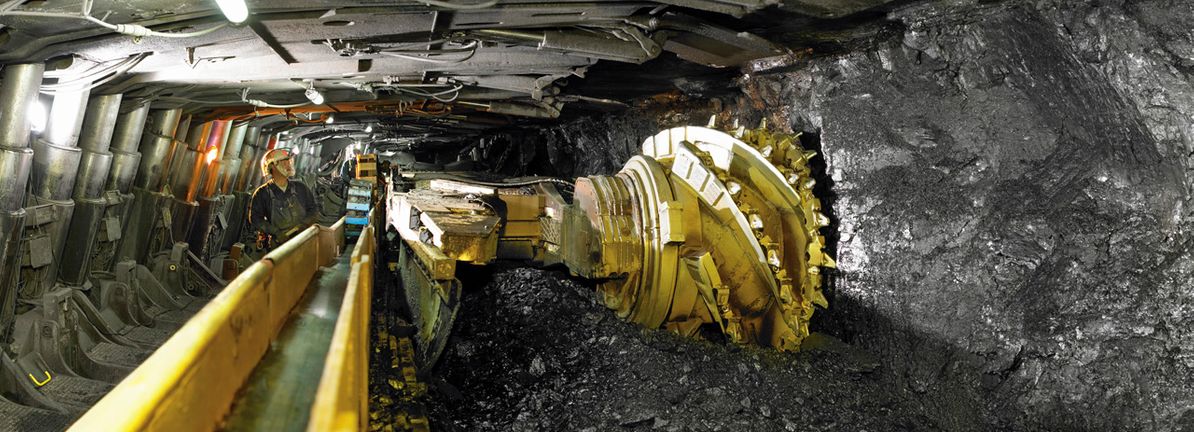
  • Is Core Natural Resources (CNR) Still Attractive After A Strong Multi‑Year Share Price Run?

    Is Core Natural Resources (CNR) Still Attractive After A Strong Multi‑Year Share Price Run?

    Make better investment decisions with Simply Wall St’s easy, visual tools that give you a competitive edge.

    • If you are wondering whether Core Natural Resources at around US$95 per share still offers value, you are not alone. This article is here to help you weigh what the current price might be implying.

    • The stock has seen a 3.9% decline over the last week, while returns sit at 7.8% over 30 days, 6.1% year to date, 6.2% over 1 year, 72.8% over 3 years and a very large gain over 5 years.

    • Recent coverage has focused on Core Natural Resources as an energy name that has already moved a long way over several years. This naturally raises questions about how much optimism is already in the share price. That backdrop is useful context as we look at whether the current valuation still makes sense after such a strong long term run.

    • Our valuation summary currently gives Core Natural Resources a 5 out of 6 valuation score. Next we will walk through the main valuation approaches behind that result, then finish with a way to think about value that can add another layer to your analysis.

    Find out why Core Natural Resources’s 6.2% return over the last year is lagging behind its peers.

    A Discounted Cash Flow, or DCF, model estimates what a company could be worth today by projecting its future cash flows and discounting them back to the present. It is essentially asking what all those future dollars are worth in today’s terms.

    For Core Natural Resources, the model used is a 2 Stage Free Cash Flow to Equity approach. The latest twelve month Free Cash Flow is about $61.6 million. From there, analysts and internal estimates project annual Free Cash Flow out over the next decade, including $797 million in 2026 and $690.2 million in 2027, with later years extrapolated rather than based on direct analyst forecasts.

    When all those projected cash flows are discounted back, the DCF model points to an estimated intrinsic value of about $260.34 per share. Compared with the current share price around $95, this implies the stock is about 63.4% undervalued according to this method.

    Result: UNDERVALUED

    Our Discounted Cash Flow (DCF) analysis suggests Core Natural Resources is undervalued by 63.4%. Track this in your watchlist or portfolio, or discover 868 more undervalued stocks based on cash flows.

    CNR Discounted Cash Flow as at Jan 2026

    Head to the Valuation section of our Company Report for more details on how we arrive at this Fair Value for Core Natural Resources.

    For companies that are already generating revenue, the P/S ratio is a useful way to gauge what investors are willing to pay for each dollar of sales, especially when earnings are less meaningful or volatile.

    Continue Reading