- Preparing Your Brand for Agentic AI Harvard Business Review
- How CMOs should think about discovery in an AI-first world MarTech
- How Should Brands Use AI? | Americus Reed Knowledge at Wharton
- Marketer interest in CTV, AI persists ─ so does fragmentation challenge StreamTV Insider
- Marketers back digital growth but struggle to turn AI insights into action: report marketech apac
Category: 3. Business
-

Preparing Your Brand for Agentic AI – Harvard Business Review
-
A&O Shearman publishes 2026 Cross-Border White Collar Crime and Investigations Review
The annual publication highlights new corporate criminal offenses, intensifying enforcement, and the growing role of AI, ESG, and geopolitics in shaping compliance and investigations priorities worldwide.
A&O Shearman has published its Cross-border white-collar crime and investigations review 2026, providing comprehensive insights on an increasingly complex enforcement landscape.
The review analyzes the most significant developments and emerging risks across more than a dozen jurisdictions, including Australia, Belgium, China, France, Germany, Hong Kong, Italy, Japan, the Netherlands, Poland, the UAE, the UK, and the U.S.
Key themes addressed in this year’s review include:
- Expanded corporate criminal liability: New “failure to prevent” offenses and shifting attribution tests are raising baseline criminal risk for large organizations, with authorities increasingly probing the conduct and outcomes of internal investigations.
- Demand for proof of compliance effectiveness: Regulators are moving beyond high-level policy descriptions and now expect concrete evidence that compliance programs prevent, detect, and remediate misconduct in practice.
- AI and investigations: AI is embedded in the operations and investigations of many organizations, speeding up document review and detecting anomalies and patterns. Businesses must now navigate the challenges of running reliable inquiries where AI is both a tool and source of evidence.
- Geopolitical and national security pressures: Conflicting laws across jurisdictions, particularly relating to data localization, state secrecy, and sanctions, are creating significant complexities for cross-border investigations.
- ESG enforcement risk: Greenwashing, supply chain accountability, and environmental prosecutions are intensifying in Europe, while the U.S. presents a different but evolving risk profile around political scrutiny and the potential for increased litigation.
- Whistleblowing and internal reporting: New regulations are strengthening protections for whistleblowers and imposing fresh obligations on companies, with some authorities actively incentivizing direct external reporting.
The review also offers jurisdiction-specific insights, examining local enforcement priorities, legislative reforms, and predictions for 2026 and beyond.
Continue Reading
-
Check Point Software Technologies and Hendrick Motorsports Partner to Strengthen Cyber Security for Racing Operations
REDWOOD CITY, CA & CONCORD, NC. —
Tue, 27 Jan 2026Check Point Software Technologies Ltd. (NASDAQ: CHKP), a pioneer and global leader in cyber security solutions, today announced a new official partnership with NASCAR powerhouse Hendrick Motorsports and its No. 17 Chevrolet team to enhance the organization’s cyber defenses and protect its technology ecosystem against evolving digital threats.
As the digital footprint of modern motorsports continues to expand — from data-driven vehicle engineering to connected fan experiences and operational systems — Hendrick Motorsports will leverage Check Point’s cyber platform to safeguard its networks, endpoints, applications, and critical data.
With the new agreement, Check Point will become an associate sponsor of 20-year-old driver Corey Day and the No. 17 Chevrolet as the team competes for the NASCAR O’Reilly Series championship in 2026. Throughout the season, Check Point branding will be featured on the race car, the team’s fire suits, track equipment and other locations.
“In today’s digital landscape, world-class organizations must protect their operations, data, and competitive advantage from ever-evolving cyber threats,” said Rachel Roberts, Americas President, Check Point Software Technologies. “We’re honored to partner with Hendrick Motorsports, bringing our prevention-first cyber security approach to help safeguard their technology and racing ecosystem so the team can stay focused on performance, innovation, and success on and off the track.”
Check Point will provide Hendrick Motorsports with advanced threat prevention, real-time threat intelligence, and unified security management across the team’s diverse IT environment, helping protect against ransomware, malware, phishing, and other cyber risks that threaten competitive advantage and operational continuity.
“Hendrick Motorsports operates in a highly connected, data-driven environment, and protecting our technology ecosystem requires trusted partners with proven expertise,” said Jeff Andrews, president of Hendrick Motorsports. “Check Point brings world-class cyber security capabilities and a collaborative approach that aligns with how we operate as an organization. We know Corey and the No. 17 team will be tremendous brand ambassadors for Check Point, and we’re proud to collaborate with them to to strengthen the protection of our systems, networks and data.”
Check Point’s integrated security platform will help Hendrick Motorsports anticipate, prevent, and respond to emerging threats, while enabling secure collaboration across team members, partners, and technology ecosystems. The partnership underscores the importance of strong cybersecurity measures in high-performance, data-driven environments.
Learn more about Check Point’s solutions protecting major events from cyber threats.
Follow Check Point on LinkedIn, X (formerly Twitter), Facebook, YouTube and our blog.
About Check Point Software Technologies Ltd.
Check Point Software Technologies Ltd. (www.checkpoint.com) is a leading protector of digital trust, utilizing AI-powered cyber security solutions to safeguard over 100,000 organizations globally. Through its Infinity Platform and an open garden ecosystem, Check Point’s prevention-first approach delivers industry-leading security efficacy while reducing risk. Employing a hybrid mesh network architecture with SASE at its core, the Infinity Platform unifies the management of on-premises, cloud, and workspace environments to offer flexibility, simplicity and scale for enterprises and service providers.
About Hendrick Motorsports
Founded by Rick Hendrick in 1984, Hendrick Motorsports is the winningest team in NASCAR Cup Series history. At the sport’s premier level, the organization holds the all-time records in every major statistical category, including championships (15), points-paying race victories (320) and laps led (more than 85,000). It has earned at least one race win in a record 41 different seasons, including an active streak of 40 in a row (1986-2025). The team fields four full-time Chevrolet entries in the NASCAR Cup Series with drivers Alex Bowman, William Byron, Chase Elliott and Kyle Larson, and one in the NASCAR O’Reilly Series with newcomer Corey Day. Headquartered on more than 150 acres in Concord, North Carolina, Hendrick Motorsports employs approximately 500 people. For more information, please visit HendrickMotorsports.com or interact on Facebook, Instagram, TikTok and X.
Legal Notice Regarding Forward-Looking Statements
This press release contains forward-looking statements. Forward-looking statements generally relate to future events or our future financial or operating performance. Forward-looking statements in this press release include, but are not limited to, statements related to our expectations regarding future growth, the expansion of Check Point’s industry leadership, the enhancement of shareholder value and the delivery of an industry-leading cyber security platform to customers worldwide. Our expectations and beliefs regarding these matters may not materialize, and actual results or events in the future are subject to risks and uncertainties that could cause actual results or events to differ materially from those projected. The forward-looking statements contained in this press release are also subject to other risks and uncertainties, including those more fully described in our filings with the Securities and Exchange Commission, including our Annual Report on Form 20-F filed with the Securities and Exchange Commission on March 17, 2025. The forward-looking statements in this press release are based on information available to Check Point as of the date hereof, and Check Point disclaims any obligation to update any forward-looking statements, except as required by law.

Continue Reading
-

Skyhawk Therapeutics Announces Nine Month Interim Results in Patients from its Phase 1 Clinical Trial of SKY-0515 as a Treatment for Huntington’s Disease USA – English APAC – English Korea – 한국어 USA – English
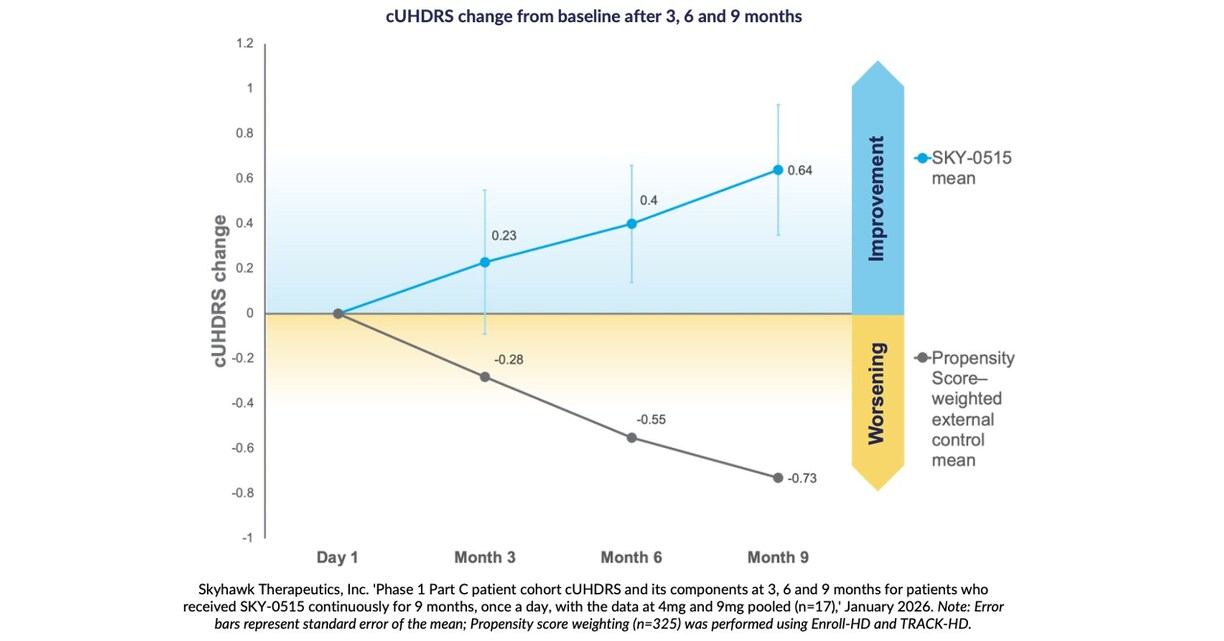
Nine-month findings show mean improvement in Composite Unified Huntington’s Disease Rating Scale from baseline of +0.64 points, compared to natural history expected worsening of cUHDRS in symptomatic patients of -0.73 points over nine months, based on propensity score weighting.
Skyhawk also announces SKY-0515’s Phase 2/3 FALCON-HD trial has expanded worldwide. Skyhawk has now dosed more than 90 patients.
BOSTON, Jan. 27, 2026 /PRNewswire/ — Skyhawk Therapeutics, Inc., a clinical-stage biotechnology company developing novel small molecule therapies to modulate critical RNA targets, today announces positive results from the nine month interim analysis of the Company’s investigational treatment for Huntington’s disease (HD) with SKY-0515.
Skyhawk Therapeutics, Inc.
Treatment with SKY-0515 results in dose-dependent reductions of mHTT protein in blood of 62% at the 9mg dose, and dose-dependent PMS1 mRNA reduction of 26%. PMS1 is a key driver of somatic CAG repeat expansion and HD pathology. SKY-0515 has also demonstrated excellent central nervous system exposure and been generally safe and well tolerated.
At three, six and nine months, patients receiving SKY-0515 in the Part C patient cohort of the Phase 1 clinical trial of SKY-0515, demonstrate mean Composite Unified Huntington’s Disease Rating Scale (cUHDRS) improvement from baseline. At nine months, in a pooled analysis, this improvement is +0.64 points compared to expected worsening at nine months of cUHDRS in symptomatic patients of -0.73 points, based on propensity score weighting using Enroll-HD and TRACK-HD.
“I am very encouraged by these safety and early efficacy data from SKY-0515’s Phase 1 Part C trial in patients, showing divergence in cUHDRS away from expected natural history deterioration at the three, six, and nine month prespecified analyses,” said Ed Wild, Professor of Neurology at University College London. “SKY-0515 continues to reduce mHTT protein to the greatest extent demonstrated by any therapeutic tested to date in patients, with clinical and biomarker data showing the drug is well tolerated at all doses tested. SKY-0515’s ability to reduce both mHTT and PMS1 offers a potent combination for treating Huntington’s disease via two of its core pathogenic mechanisms. These open-label trial results, due to be validated in the ongoing placebo-controlled FALCON-HD trial, give an expectation of meaningful impact for people living with HD across the world – for whom an orally administered huntingtin-lowering treatment such as SKY-0515 will be truly transformative.”
“Our goal for our Phase 1 study was to establish safety and biomarker activity,” said Sergey Paushkin, Head of R&D at Skyhawk Therapeutics, “and the continued strength of SKY-0515’s biomarker response in our nine month interim data analysis – and the improvement in the potential endpoint, cUHDRS, compared to a worsening of the cUHDRS score in the natural history data for patients – underscores SKY-0515’s potential as a best in class disease-modifying therapy for HD. These interim data represent an important milestone for SKY-0515 and highlight the power of Skyhawk’s platform to deliver first-in-class small molecules for devastating diseases with no approved disease-modifying therapies.”
Huntington’s disease is a rare, hereditary, and ultimately fatal neurodegenerative disorder that affects over 40,000 symptomatic patients in the United States, with hundreds of thousands estimated to be affected worldwide. There are currently no approved treatments which slow or halt disease progression. SKY-0515 is an orally-administered, investigational small molecule RNA modulator developed through the company’s novel RNA-modulating platform, SKYSTAR®. SKY-0515 therapeutically reduces both HTT protein and PMS1 protein. PMS1 is an additional key driver of somatic CAG repeat expansion and HD pathology and should complement the benefits of reducing mutant HTT.
Skyhawk also announces today that its SKY-0515 Phase 2/3 FALCON-HD trial, open at twelve sites in Australia and New Zealand, has expanded worldwide. Skyhawk has now dosed more than 90 patients with SKY-0515.
SKY-0515 is the first Skyhawk drug in clinical trials.
Skyhawk expects to put additional small molecule drugs to treat rare neurological diseases with no approved disease modifying therapies in the clinic by the end of 2027.
About SKY-0515’s Phase 1 Clinical Study
SKY-0515’s Phase 1 clinical trial is a first-in-human trial designed to evaluate the safety, tolerability, pharmacokinetics, and pharmacodynamics of SKY-0515 in healthy volunteers and individuals with early-stage Huntington’s disease (HD). The trial is separated into three parts. Parts A and B evaluated SKY-0515 in Healthy Volunteers. Part C is a double-blind placebo-controlled parallel design study of two dose levels of SKY-0515 and placebo in individuals with early-stage HD (HD-ISS Stage 1, 2, or mild Stage 3) for 84 days followed by a 12 month extension of active treatment where all participants will receive either a low or high dose of SKY-0515 in a blinded fashion. The objectives of the study include evaluating mutant HTT protein and PMS1 mRNA. The first patients were dosed in SKY-0515’s Part C in January 2025. Enrollment in Phase 1C of the SKY-0515 trial is now complete.About SKY-0515’s Phase 2/3 FALCON-HD Clinical Study
FALCON-HD (NCT06873334) is a Phase 2/3 randomized, double-blind, placebo-controlled, dose ranging study to evaluate the pharmacodynamics, safety, and efficacy of SKY-0515 in 120 participants with Stage 2 and early Stage 3 HD across 12 sites in Australia and New Zealand, and 400 participants with Stage 2 and early Stage 3 HD in 40+ worldwide sites. Eligible patients will receive a once-daily oral dose of SKY-0515 at one of three dose levels or placebo, for a treatment period of at least 12 months. The trial aims to assess the potential of SKY-0515 to modulate RNA splicing and reduce mHTT and PMS1 proteins, which are implicated in the pathology of Huntington’s disease. Additional information about FALCON-HD, including participating sites and eligibility criteria, can be found at ClinicalTrials.gov and www.FALCON-HD.com.About Skyhawk Therapeutics
Skyhawk Therapeutics is a clinical-stage biotechnology company which uses its proprietary platform, SKYSTAR®, to discover and develop small molecule RNA modulating therapies for the world’s most intractable diseases. For more information visit www.skyhawktx.com.Skyhawk Contact
Maura McCarthy
Head of Corporate Development
[email protected]Photo – https://mma.prnewswire.com/media/2870056/Skyhawk_Therapeutics_9_MONTH_DATA_Graph.jpg
Logo – https://mma.prnewswire.com/media/710814/Skyhawk_Therapeutics_Logo.jpgContinue Reading
-

Electromobility at HENSOLDT: Charging infrastructure continues to grow
This means that the charging infrastructure is being continuously expanded and adapted to meet growing demand. The aim is to reduce emissions and contribute to more sustainable mobility – both in the corporate context and in the everyday working lives of employees.
Electromobility as a contribution to reducing emissions
Since 2024, the HENSOLDT Group has been recording greenhouse gas emissions along the entire value chain, known as Scope 3 emissions. These include emissions from business travel and daily commuting. The expansion of the charging infrastructure for electric vehicles is an important lever for reducing these emissions in the long term.Steadily increasing use since 2021
The trend towards electric mobility is clear: since the first charging stations were installed in 2021, the amount of energy consumed has risen steadily – from around 30 MWh to 315 MWh in 2025. This development underlines the increasing acceptance of electric vehicles among HENSOLDT employees and confirms that HENSOLDT is on the right track.Charging is carried out exclusively with industrial electricity from 100% renewable energies. We thus offer our employees a sustainable and attractive addition to charging at home or at public charging points.
Working together towards sustainable mobility
The continuous expansion of the charging infrastructure shows that electric mobility is firmly established at HENSOLDT. HENSOLDT welcomes the increasing use of electric vehicles and thanks all employees who are actively contributing to reducing emissions by switching to electric mobility.Continue Reading
-

U.S. Treasury yields: investors await economic data
U.S. Treasury yields inched higher on Tuesday as investors awaited further economic data and looked ahead to the Federal Reserve’s interest rate decision.
At 5:15 a.m. ET, the 10-year Treasury yield was up 1 basis point to 4.221%, while the 2-year Treasury note yield moved less than a basis point higher to 3.591%. The 30-year Treasury yield was also 1 basis point higher to 4.815%.
One basis point equals 0.01%, and yields and prices have an inverse relationship.
The Fed’s rate decision will be the main focus for investors this week, with the policy move expected to be announced on Wednesday afternoon.
Traders are widely expecting the central bank to keep its key rate unchanged at a target range of 3.5% to 3.75%, but they will be monitoring the press conference after for clues on future monetary policy.
Investors are also forecasting two-quarter percentage point cuts by the end of 2026, according to the CME FedWatch Tool, after the Fed cut rates three times in 2025.
On the economic data front, the ADP employment report is set to be released at 8:15 a.m. ET, with home price data and the consumer confidence reading also due to be published in the morning.
Trade uncertainty is also still dominating headlines, with President Donald Trump threatening to slap tariffs of up to 25% on South Korean autos, pharmaceuticals, and lumber on Monday.
Trump said this was due to a delay in South Korea’s legislature approving a trade deal the nation had reached with the U.S. last summer.
Continue Reading
-

Retrospective Analysis of the Efficacy of Phototherapy Combined with P
Introduction
Vitiligo is a common autoimmune pigmentary disorder characterized by well-defined depigmented patches affecting the skin and mucous membranes. It can occur at any age, with a global prevalence of approximately 0.5%–1%.1 Based on clinical manifestations, vitiligo is classified into four major types: segmental vitiligo (SV), non-segmental vitiligo (NSV), mixed vitiligo, and indeterminate vitiligo. NSV encompasses several subtypes, including disseminated, generalized, facial–cervical, acral, and mucosal forms. Disease progression is commonly divided into active and stable phases.2 Childhood vitiligo (CV) is defined as vitiligo with onset before the age of 12 years and accounts for approximately 32–40% of all vitiligo cases.3 The epidemiology, clinical characteristics, associated comorbidities, and therapeutic strategies of CV differ significantly from those of adult-onset vitiligo. Previous studies have shown that children with NSV are at increased risk of developing other autoimmune-related conditions, particularly thyroid disorders, allergic diseases, and atopic dermatitis.4 Although vitiligo does not affect life expectancy, its pronounced cosmetic impact should not be underestimated. In modern family structures, where children often play a central role, vitiligo can substantially affect a child’s physical development, psychological well-being, self-esteem, and quality of life.5 Moreover, the disease exerts a considerable psychosocial burden on family members, significantly influencing their social interactions and emotional health.6
Topical corticosteroids, topical calcineurin inhibitors, and narrowband UVB (NB-UVB) are the most commonly used and safe treatments for CV.7 While topical corticosteroids (TCS) are effective in the treatment of CV, their long-term use—particularly of high-potency formulations—is associated with an increased risk of local adverse effects, including cutaneous atrophy, telangiectasia, and hypertrichosis, as well as potential systemic effects such as growth suppression and hypothalamic–pituitary–adrenal axis dysfunction. Pimecrolimus cream, a topical calcineurin inhibitor, improves vitiligo by suppressing inflammatory cytokine release and reducing antigen-presenting cell activity.8 This cream demonstrates comparable efficacy to TCS without its adverse effects,9 offering promising prospects for CV treatment.
Crisaborole ointment is a phosphodiesterase-4 (PDE-4) inhibitor.10 PDE-4 inhibition leads to activation of the cyclic adenosine monophosphate (cAMP) signaling pathway, thereby suppressing Th1-mediated immune responses and interleukin-17 (IL-17)–producing T helper cells, resulting in anti-inflammatory effects. In addition, activation of the cAMP pathway promotes melanogenesis and stimulates melanocyte proliferation and differentiation.11,12 Based on these biological mechanisms, several studies have demonstrated the therapeutic potential of crisaborole in the treatment of vitiligo.13,14
Currently available phototherapy modalities for vitiligo include ultraviolet A (UVA), psoralen plus UVA (PUVA), ultraviolet B (UVB), narrowband UVB (NB-UVB), and 308-nm excimer light. Among these, 308-nm excimer light allows for precise, targeted irradiation of vitiligo lesions, offering distinct advantages such as high therapeutic efficacy, rapid clinical response, and minimal exposure of surrounding healthy skin. The therapeutic effects of phototherapy are primarily mediated through suppression of local lymphocyte proliferation, reduction of pro-inflammatory cytokine production, modulation of aberrant immune responses, and subsequent improvement of depigmented lesions.15 Moreover, studies have demonstrated that 308-nm excimer laser irradiation induces a greater accumulation of cyclobutane pyrimidine dimers (CPDs) within the deeper regions of hair follicles, while simultaneously accelerating CPD clearance in the epidermis and reducing keratinocyte apoptosis, thereby effectively activating melanocyte lineage cells.16 In a NB-UVB phototherapy study, no statistically significant differences were observed between pediatric and adult patients with respect to treatment dose, duration, or total number of sessions. Notably, children exhibited a lower incidence of adverse reactions, further supporting the safety and effectiveness of phototherapy in the management of pediatric vitiligo.17
Multiple studies have demonstrated that the combination of phototherapy with topical pharmacologic agents significantly enhances local treatment efficacy while maintaining a favorable safety profile.18–20 Based on the above evidence, pimecrolimus cream, crisaborole ointment, and 308-nm excimer laser therapy each demonstrate therapeutic efficacy in vitiligo. It is therefore hypothesized that their combined application may achieve superior clinical outcomes compared with monotherapy. However, current clinical data on the efficacy and safety of crisaborole ointment combined with pimecrolimus cream in non-segmental CV remain limited. Therefore, this retrospective study aimed to evaluate the efficacy, safety, repigmentation patterns, and adverse reactions of combining these two topical agents with 308-nm excimer light in patients with non-segmental CV treated at our hospital.
Materials and Methods
Clinical Data
This study retrospectively included 120 children with NSV who visited the Department of Dermatology at the Second Affiliated Hospital of Wenzhou Medical University, China from January 2023 to December 2023. The study complies with the Declaration of Helsinki and was approved by the Ethics Committees of the Second Affiliated Hospital of Wenzhou Medical University and Yuying Children’s Hospital (2025-K-23-02). The guardians of all enrolled children provided written informed consent for the use of treatment-related images and clinical data for medical research and publication, with appropriate measures implemented to ensure patient privacy and data confidentiality. All patients underwent standardized pre-treatment photographic documentation, including natural-light photography and Wood’s lamp examination in a darkroom, as well as dermoscopic evaluation. Baseline clinical information, including age, age at disease onset, primary clinical manifestations, lesion distribution, disease activity, and prior treatment history, was systematically collected to characterize patient profiles (Figures 1 and 2).
Figure 1 Non-segmental CV patients. (A–D) Face & Neck. (E–F) Trunk. (G) Extremities. (H) Acral limbs.

Figure 2 Technical roadmap.
Inclusion Criteria: 1. Meets the diagnostic criteria for NSV in the 2021 Consensus on Vitiligo Diagnosis and Treatment,2 with a lesion area less than 10%; 2. Age between 2 and 12 years; 3. Completed at least 12 weeks ofregular treatment (or fewer than 12 treatment sessions but has achieved remission); 4. No other systemic treatments received within one month prior to treatment.
Exclusion Criteria: 1. Patients who completed fewer than 12 treatment sessions, requested discontinuation during the study, or had incomplete clinical data documentation; 2. Patients with concomitant severe medical conditions; 3. Patients taking immunosuppressants or other photosensitizing medications.
Clinical staging based on the Vitiligo Disease Activity (VIDA):21 1. New onset within the past 6 weeks: score 4; 2. New onset within the past 3 months: score 3; 3. New onset within the past 6 months: score 2; 4. Onset within the past year: score 1; 5. Stable for at least 1 year: score 0; 6. Stable for at least 1 year with spontaneous repigmentation: score −1. A score >1 indicates active disease, while scores ≤1 indicate stable disease. A total of 96 cases were classified as active disease, and 24 cases as stable disease. Skin phototypes were determined according to the Fitzpatrick classification.22
Methods
Primary Instruments
308-nm Excimer Ultraviolet Light Therapy Device (Chongqing Demar Optoelectronic Technology Co., Ltd), Dermoscopy Image Processing Workstation (Beijing Demate Jiekang Technology Development Co., Ltd), and NR10QC Color Difference Meter (Sanenshi, Shenzhen, China).
Groups
Groups were assigned as follows: Group 1 received 308-nm excimer light combined with pimecrolimus cream (Ainingda, MEDA Manufacturing, 1% concentration); Group 2 received 308-nm excimer light combined with crisaborole ointment (Sutameng, Pharmacia and Upjohn Company LLC, 2% concentration); Group 3 received 308-nm excimer light alone (control group).
308-nm Excimer Light Treatment
Irradiation was administered once weekly. Prior to the first treatment session, the MED was determined on the abdominal skin. Erythema at the test site was evaluated 24 hours after irradiation, and the MED was established based on the erythema response duration. Following the initial irradiation, the erythema response of the treated vitiligo lesions was carefully monitored. Subsequent irradiation doses were adjusted according to the following criteria: if no erythema occurred or if erythema resolved within 24 hours, the previous dose was increased by 50 mJ/cm2; if erythema resolved between 24 and 48 hours, the dose was maintained for the next session; and if erythema persisted for more than 48 hours, or if marked erythema or blistering developed, treatment was temporarily suspended until complete resolution of the reaction, after which irradiation was resumed at an adjusted dose. During treatment, customized light shields were trimmed to conform to the shape of each child’s vitiligo lesions, thereby protecting adjacent uninvolved skin. The treatment head was maintained in close contact with the lesion surface throughout irradiation to ensure uniform and accurate energy delivery.
Topical Medication Use
Topical medication was discontinued on the day of 308-nm excimer light therapy. If no clinically significant adverse reactions occurred, medication was resumed the following day and applied twice daily. In the event of adverse reactions, such as blistering or burning pain, medication was withheld until symptom resolution or substantial improvement, after which it was reinitiated.
Efficacy Evaluation and Depigmentation Pattern Assessment Method
Evaluation of Treatment Efficacy for Vitiligo: Efficacy evaluations were conducted at 4 weeks, 8 weeks, and 12 weeks post-treatment. Photographs of the pediatric patient’s vitiligo lesions were taken under a Wood’s lamp in a darkroom. Additionally, photographs were taken with a steel ruler (minimum scale of 1 mm) placed around the lesions as a reference scale. ImageJ was used to assess changes in lesion area. Images with the steel ruler were imported into ImageJ. The ruler scale was set using the Line tool, and the Freehand Selection tool was used to outline the lesion boundaries. The required areas were measured (pre-treatment area denoted as S0; areas at 4 weeks, 8 weeks, and 12 weeks denoted as S1, S2, and S3, respectively) (Figure 3). Percentage reduction in lesion area was calculated as: (S0-S1)/S0 × 100%, (S0-S2)/S0 × 100%, (S0-S3)/S0 × 100%, rounded to one decimal place. Specific efficacy criteria based on vitiligo changes and (S0-S3)/S0×100% values: 1. Ineffective: Enlarged vitiligo area or no repigmentation. 2. Minimally effective: Partial reduction in vitiligo area or appearance of brownish-dark spots (<50%). 3. Beneficial: 50–95% (inclusive of 50%, exclusive of 95%) reduction in affected area. 4. Remarkable: the total disappearance of the affected area or a reduction of ≥95%. Efficacy rate = (Remarkable + Beneficial) / Total cases × 100%.

Figure 3 Outlining lesion perimeters using ImageJ.
Color Difference Meter for Evaluating Color Changes in Vitiligo Lesions: Pre-treatment, the color difference meter measures the difference in red-green axis values (ΔL*) between the vitiligo lesion surface and surrounding normal skin (or symmetrical areas), denoted as ΔL*0 (randomly select 4 points each from the vitiligo lesion and normal skin, calculate the average, rounded to one decimal place). At 4 weeks, 8 weeks, and 12 weeks post-treatment, measurements are taken using the same method to obtain ΔL*1, ΔL*2, and ΔL*3. Color changes before and after treatment are expressed as percentage of color fading: (ΔL*0 – ΔL*1) / ΔL*0 × 100%, (ΔL*0 – ΔL*2) / ΔL*0 × 100%, (ΔL*0 – ΔL*3) / ΔL*0 × 100%, each rounded to one decimal place. Specific efficacy assessment criteria based on the values of (ΔL*0 – ΔL*3) / ΔL*0 × 100% and lesion changes: 1. Ineffective: ≤0% or enlargement of depigmented area; 2. Minimally effective: Between 0% and 50% (excluding 0% and 50%); 3. Beneficial: 50–95% (includes 50%, excludes 95%). 4. Remarkable: ≥95%. Efficacy rate = (Remarkable + Beneficial)/ Total cases × 100%.
Criteria for Determining Repigmentation Pattern: Researchers visually examine and utilize dermatoscopy to observe repigmentation patterns. Patterns are categorized as follows:
1. Perifollicular type: Pigmented islands centered around hair follicles appear within the depigmented area; 2. Marginal type: The edges of the depigmented area begin to contract, gradually shrinking in size while pigmentation develops toward the center; 3. Diffuse type: The entire depigmented area regains uniform color without distinct pigmented islands or bands; 4. Hybrid type: Any combination of two or more of the preceding three repigmentation patterns. Pigmentation at the periphery of the lesion spreads toward the center while central pigment islands also expand outward (Figure 4).

Figure 4 Four repigmentation patterns in vitiligo. (A) Perifollicular. (B) Marginal. (C) Diffuse. (D) Hybrid.
Statistical Methods
Statistical analysis was performed using SPSS version 26.0 for Windows. Quantitative data are expressed as mean ± standard deviation (x ± s). Intergroup comparisons were conducted using analysis of variance. Qualitative data are presented as case numbers (n) and percentages (%). Intergroup comparisons were performed using the chi-square (χ2) test. A P-value < 0.05 was considered statistically significant. For pairwise comparisons among the three groups, the Bonferroni correction was applied to adjust P-values. The adjusted significance level was set at P=0.05/3=0.0167, with P<0.0167 indicating statistically significant differences.
Results
Clinical Efficacy (Response Rate) Observation Comparison
A total of 120 pediatric patients were enrolled. Group 1 comprised 39 patients, including 20 males and 19 females, with a mean age of (7.02 ± 2.43) years and a mean disease duration of (6.33 ± 2.75) months. A total of 82 skin lesions were documented: 37 on the face and neck, 23 on the trunk, 17 on the extremities, and 5 on the acral limbs. Group 2 comprised 39 patients: 21 males and 18 females, with a mean age of (7.44 ± 2.57) years and mean disease duration of (6.54 ± 2.68) months. A total of 78 lesions were recorded: 33 on the face and neck, 26 on the trunk, 15 on the extremities, and 4 on the acral limbs. The control group comprised 42 pediatric patients: 21 males and 21 females. The mean age was (7.26 ± 2.62) years, with a mean disease duration of (6.14 ± 2.93) months. A total of 84 lesions were observed: 38 on the face and neck, 26 on the trunk, 14 on the extremities, and 6 on the acral limbs (Table 1). There was no statistically significant difference between the three groups regarding gender, age, disease duration, number and distribution of lesions, and disease activity (P > 0.05).

Table 1 Patient Baseline Characteristics
After 4 weeks of treatment, the response rates for Group 1, Group 2, and the control group were 34.1%, 32.1%, and 23.8%, respectively, with no statistically significant difference observed (P > 0.05). After 8 weeks of treatment, the response rates increased to 63.4%, 60.2%, and 42.8%, respectively, demonstrating a statistically significant difference among groups (P < 0.05). Following 12 weeks of treatment, the response rates for Group 1, Group 2, and the control group further increased to 76.8%, 71.7%, and 54.8%, respectively, with statistically significant differences maintained (P < 0.05) (Table 2 and Figure 5). Additionally, we conducted pairwise comparisons among the three groups. After 8 weeks of treatment, the difference between the Group 1 and the control group was statistically significant. (P < 0.0167). No statistically significant difference was observed between Group 2 and the control group (P > 0.0167), nor between Group 1 and Group 2 (P > 0.0167). After 12 weeks of treatment, the difference between Group 1 and the control group was statistically significant (P < 0.0167). The difference between Group 2 and the control group was not statistically significant (P > 0.0167). The difference between Group 1 and Group 2 was not statistically significant (P > 0.0167). The results indicate that both pimecrolimus cream and crisaborole ointment combined with phototherapy demonstrated higher efficacy rates than phototherapy alone. Although Group 1 consistently showed higher efficacy rates than Group 2 throughout the entire treatment period, the difference in efficacy between Groups 1 and 2 was not statistically significant.

Table 2 The Therapeutic Effects of the Three Groups of Patients Were Compared After 4, 8 and 12 Weeks of Treatment

Figure 5 Lesion presentation in a pediatric NSV case deemed treatment-responsive. (A–D) Pre-treatment (Week 0). (A) Under natural light. (B) Wood’s lamp. (C and D) Dermatoscopy. (E–H) Week 4 of treatment. (E) Under natural light. (F) Wood’s lamp. (G and H) Dermatoscopy. (I-L) Week 8 of treatment. (I) Under natural light. (J) Wood’s lamp. (K and L) Dermatoscopy. (M–P) Week 12 of treatment. (M) Under natural light. (N) Wood’s lamp. (O and P) Dermatoscopy.
Comparison of Clinical Adverse Reaction Rates
Adverse reactions were monitored throughout the treatment period. In Group 1, a total of 82 lesions were treated, of which 13 lesions developed pruritus, 5 lesions experienced burning pain, and 6 lesions developed blisters, resulting in an overall adverse reaction rate of 29.3%. In Group 2, 78 lesions were evaluated; among these, 11 lesions developed pruritus, 11 lesions experienced burning pain, and 5 lesions developed vesicles, corresponding to an adverse reaction rate of 34.6%. In the control group, 84 lesions were treated, with 9 lesions developing pruritus, 3 lesions experiencing burning pain, and 4 lesions developing blisters, yielding an adverse reaction rate of 19.0%. Patients who developed blisters temporarily discontinued topical medication and resumed treatment after complete resolution of the lesions. All other adverse reactions were mild, well tolerated, and resolved spontaneously within 24–48 hours. Although the incidence of adverse reactions was highest in Group 2, followed by Group 1 and the control group, the differences among the three groups were not statistically significant (P > 0.05) (Table 3).

Table 3 Comparison of Adverse Reaction Rates Among the Three Groups of Patients [n,(%)]
Comparative Analysis of Recoloring Modes for Different Body Parts
A total of 108 lesions were identified on the face and neck, with repigmentation patterns distributed as follows: 45 marginal, 32 perifollicular, 19 diffuse, and 12 hybrid. The trunk region comprised 75 lesions, with 18 marginal, 34 perifollicular, 10 diffuse, and 13 hybrid patterns observed. On the extremities, 46 lesions were documented, including 8 marginal, 22 perifollicular, 6 diffuse, and 10 hybrid patterns. The acral limbs exhibited 15 lesions, with 9 marginal, 1 perifollicular, 2 diffuse, and 3 hybrid patterns (Table 4). The results indicated that the marginal repigmentation pattern predominated in the face and neck, followed by the perifollicular pattern, whereas diffuse and hybrid patterns were less frequently observed. In the trunk and extremities, the perifollicular pattern was the most prevalent, followed by marginal, hybrid, and diffuse patterns. In the acral limbs, the marginal pattern was the most common, while perifollicular, hybrid, and diffuse patterns occurred less frequently. Statistically significant differences in repigmentation patterns were observed among different anatomical regions, including the face/neck, trunk, extremities, and acral areas (P < 0.05). In contrast, no statistically significant differences in repigmentation patterns were detected among the three treatment groups (P > 0.05). Additionally, during the repigmentation process, peripheral skin pigmentation within treated lesions frequently became darker than the surrounding normal skin in exposed areas across all pediatric patients.

Table 4 Comparative Analysis of Repigmentation Patterns in Different Parts [n,(%)]
Comparative Analysis of Clinical Efficacy Across Different Body Regions
After 12 weeks of treatment, the face and neck region comprised 108 lesions, including 17 Minimally effective, 46 Beneficial, and 45 Remarkable cases, yielding an overall efficacy rate of 84.2%. The trunk included 75 lesions, of which 25 were Minimally effective, 43 were Beneficial, and 7 were Remarkable, resulting in an efficacy rate of 66.7%. The extremities presented 46 lesions, with 26 Minimally effective, 18 Beneficial, and 2 Remarkable, corresponding to an efficacy rate of 43.4%. The acral limbs comprised 15 lesions, including 11 Minimally effective and 4 Beneficial cases, with an efficacy rate of 26.7%. Overall, treatment efficacy differed significantly among anatomical regions, following the order: face and neck > trunk > extremities > acral limbs. Statistically significant differences in clinical efficacy were observed across different body regions (P < 0.05) (Table 5).

Table 5 Comparison of the Therapeutic Effects of Skin Lesions in Different Parts [n,(%)]
Univariate and Multivariate Logistic Regression Analysis of 8-Week Therapeutic Effect
As shown in Table 6, univariate analysis demonstrated that sex, disease activity, and treatment modality were significantly associated with therapeutic response. After variables with P < 0.05 were entered into the multivariate analysis, disease activity (OR = 2.698, P = 0.003), Group 1 (OR = 2.645, P = 0.004), Group 2 (OR = 2.265, P = 0.015), and sex (OR = 0.563, P = 0.038) remained independently and significantly associated with treatment efficacy.

Table 6 Univariate and Multivariate Analyses Related to 8-Week Treatment
Univariate and Multivariate Logistic Regression Analysis of 12-Week Therapeutic Effect
As shown in Table 7, univariate analysis indicated that sex, disease activity, Fitzpatrick skin classification, and treatment modality were significantly associated with therapeutic response. After variables with P < 0.05 were included in the multivariate analysis, disease activity (OR = 2.570, P = 0.005), Group 1 (OR = 3.137, P = 0.001), and Group 2 (OR = 2.400, P = 0.013) remained independently and significantly associated with treatment efficacy.

Table 7 Univariate and Multivariate Analyses Related to 12-Week Treatment
Discussion
This retrospective study evaluated the therapeutic efficacy of different treatment modalities in 120 pediatric patients with NSV. At present, clinical assessment of repigmentation in vitiligo largely depends on physicians’ visual estimation of depigmented lesion size, which, although rapid, convenient, and cost-effective, is subjective and limited by interobserver variability. In contrast, the present study employed a comprehensive evaluation strategy integrating dermatoscopy, ImageJ analysis, Wood’s lamp examination, and a color difference meter to assess treatment outcomes. Compared with conventional methods such as color extraction using Photoshop or manual grid-based area calculation, this multimodal assessment approach is more efficient and practical. Moreover, it enables continuous, standardized, and fully documented data acquisition throughout the treatment course, thereby enhancing objectivity, reproducibility, and clinical applicability in vitiligo research.
With the assistance of dermatoscopy, this study observed and statistically analyzed the repigmentation patterns in vitiligo patients. Significant differences were noted in repigmentation patterns and clinical efficacy across different body regions. Previous studies have reported that repigmentation in vitiligo typically initiates at hair follicle openings and spreads peripherally, whereas hairless, smooth skin areas are difficult to repigment.23 This observation was further supported by the subsequent discovery of follicular melanocyte stem cells, a reservoir of melanocytes and their niche located in the lower permanent hair follicle, which explains the greater repigmentation potential in hair-rich areas.24 Marginal repigmentation refers to the contraction of depigmented areas from the periphery toward the center, potentially mediated by the presence of functional melanocyte pools within the epidermis at the lesion margins.23 Diffuse repigmentation, characterized by uniform color restoration across the entire vitiligo patch, may involve melanocyte precursors between dermal follicles or epidermal melanocytes reactivated via dopa metabolism within the follicular space, both of which reside at the center of vitiligo lesions.25 Based on these distinct repigmentation patterns, this study employs dermatoscopy as an examination tool to magnify lesions, enabling further observation of lesion distribution and changes. This facilitates improved assessment and prediction of treatment efficacy.
ImageJ has been widely applied in evaluating the efficacy of vitiligo treatments.26 In this study, for patients with repigmentation patterns classified as marginal, perifollicular, or hybrid, we manually selected the affected areas under Wood’s lamp illumination to measure their sizes. The reduction in vitiligo patch areas was digitally recorded, a method recognized for its accuracy and stability.27 However, for vitiligo patients with diffuse repigmentation patterns, relying solely on area changes to assess treatment efficacy is inaccurate. Previous studies have found that color changes precede area reduction in patients with diffuse repigmentation.28 Therefore, we additionally employed a color difference meter to precisely evaluate disease progression and treatment response, thereby guiding subsequent therapeutic strategies.
At present, a wide range of therapeutic options are available for vitiligo; however, treatment efficacy varies considerably among pediatric patients. For patients with CV, both safety and therapeutic effectiveness are critical considerations in treatment selection.3 The 308-nm excimer light is a high-energy, targeted phototherapy modality derived from narrowband ultraviolet light, offering distinct advantages including strong tissue penetration, high lesion selectivity, and precise localized treatment. Adverse reactions associated with this therapy are generally mild and transient, most commonly including erythema, pruritus, and skin dryness. Importantly, 308-nm excimer light therapy provides an additional practical advantage in pediatric patients, as children are not required to enter the relatively enclosed NB-UVB cabinet, thereby reducing treatment-related anxiety, fear, and feelings of isolation. Accordingly, 308-nm excimer light was selected as the baseline control treatment modality for CV in the present study.
In this study, the efficacy rates of 308-nm excimer light combined with pimecrolimus cream and crisaborole ointment were 76.8% and 71.7%, respectively, whereas the efficacy rate of 308-nm excimer light monotherapy was 54.8%. Both combination therapy groups demonstrated significantly superior therapeutic efficacy compared with the monotherapy group. Previous studies by Jiang et al have reported that combination therapy yields better clinical outcomes than monotherapy, and the findings of the present study are consistent with these results.29 Additionally, regarding treatment sites, efficacy was observed in the following descending order: face, neck, trunk, extremities, and acral limbs. This finding is consistent with previous studies.30,31 Previous studies have also confirmed this point. It is believed that areas with higher hair follicle density (face and neck, limbs, trunk) respond more quickly to treatment, while areas with lower hair follicle density (back of hands and feet) respond more slowly to treatment. Depigmented areas with absent or low-density hair follicles (palms, soles) rarely respond to treatment.30
Furthermore, through logistic regression analysis, we found that children in the active disease were more likely to achieve effective outcomes. Previous studies have shown that for progressive vitiligo, early and active treatment is necessary to reduce irreversible damage to melanocytes. For stable vitiligo, treatment is needed to promote the proliferation and differentiation of melanocyte precursor cells in hair follicles or interfollicular areas to achieve pigment recovery.32,33 In this study, children in the active disease had a shorter disease duration than those in the stable disease, and their hair follicle melanocytes were not completely destroyed, thus they could achieve better outcomes.
Regarding adverse reactions, the most common side effect reported by patients using pimecrolimus cream was itching. During subsequent treatment, patients gradually adapted, experiencing almost no discomfort in later treatment sessions. In contrast, the most frequently reported adverse reactions for crisaborole cream were burning pain and itching, consistent with our clinical experience using this medication to treat pediatric atopic dermatitis patients. However, symptoms in pediatric patients were generally mild. Similarly, as patients adapted to the medication, these adverse reactions gradually diminished or resolved. During 308-nm excimer light therapy, the primary adverse reactions were itching and blistering. Itching was mostly transient, correlated with the duration of erythema, and improved as the erythema subsided. Blistering often resulted from too rapid an increase in light energy. Skin tolerance varies among patients. When adjusting irradiation energy, increasing exposure duration may inadvertently elevate energy levels excessively, potentially causing erythema and blisters persisting beyond 48 hours. This underscores the need for careful, gradual energy adjustments rather than hasty modifications.
This study also has certain limitations. This study did not conduct a power calculation, which may have resulted in a relatively small sample size. Additionally, the retrospective study period was not lengthy, thus presenting inherent limitations. Therefore, the results are hypothesis-generating rather than definitive evidence forpractice-changing recommendations. Second, due to the school-age characteristics of CV patients, the treatment frequency of once weekly with 308-nm excimer light was relatively low, which may have impacted efficacy. Third, retrospective studies are subject to selection bias and recall bias, necessitating prospective studies to validate these observations. Consequently, further research with larger population samples and more comprehensive data is required to clarify these findings and conduct more in-depth investigations. Fourth, this study employed telephone and outpatient follow-up methods, and the lack of statistical data on compliance represents one limitation of this experiment.
In summary, this study investigated the efficacy and safety of 308-nm excimer light combined with pimecrolimus cream and crisaborole ointment for treating non-segmental CV in pediatric patients. This approach enhances treatment efficacy with favorable safety profiles, mild adverse reactions that resolve rapidly with timely symptomatic management, and no significant systemic side effects. Given the multifaceted pathogenesis of vitiligo, novel targeted therapies continue to emerge as new mechanisms are elucidated. We must persist in exploration and advancement to discover more effective treatment strategies for this condition.
Conclusion
With increasing treatment duration, both the effective rate and repigmentation area of vitiligo lesions progressively increase. Combination therapy using 308-nm excimer light together with pimecrolimus cream and crisaborole ointment demonstrates favorable clinical efficacy in pediatric vitiligo, significantly improving both repigmentation rates and overall treatment effectiveness. Although the incidence of adverse reactions is higher with combination therapy, these events are predominantly mild, transient, and not associated with significant systemic adverse effects, indicating a favorable safety profile. Clinical efficacy varies among different anatomical regions, with response rates decreasing in the following order: face and neck > trunk > extremities > acral limbs. Repigmentation patterns also differ across these regions, reflecting distinct regional biological responses. The integrated use of dermatoscopy, a color difference meter, Wood’s lamp examination, and ImageJ analysis enables convenient, objective, and accurate digital documentation of changes in lesion color and area before and after treatment. Notably, in cases of diffuse repigmentation, alterations in pigmentation intensity precede measurable reductions in lesion area, allowing more sensitive evaluation of therapeutic response and facilitating optimization of subsequent treatment strategies.
Abbreviations
SV, segmental vitiligo; NSV, non-segmental vitiligo; CV, childhood vitiligo; TCS, topical corticosteroids; PDE-4, phosphodiesterase-4; cAMP, cyclic adenosine monophosphate; VIDA, Vitiligo Disease Activity; MED, minimal erythema dose.
Disclosure
The authors report no conflicts of interest in this work.
References
1. Christina B, Khaled E. Vitiligo: a Review. Dermatology. 2020;236(6). doi:10.1159/000506103
2. Lei TC, Xu AE, Gao TW, He L, Zhen ZZ. Consensus on the treatment of Vitiligo in China (2021 Revision). Int J Dermatol Venereol. 2021;4:10–15.
3. Electra N, Styliani M, Vassiliki T, Dimitrios R. Childhood vitiligo. Am J Clin Dermatol. 2019;20(4). doi:10.1007/s40257-019-00430-0
4. Electra N, Christina A, Alexandra M, et al. Childhood- and later-onset vitiligo have diverse epidemiologic and clinical characteristics. J Am Acad Dermatol. 2011;66(6). doi:10.1016/j.jaad.2011.07.010
5. Ana Paula Dornelles da Silva M, Magda Blessmann W, Aline Rodrigues da Silva N, Rita Langie P, Roberta Zaffari T, Tania Ferreira C. Assessing depression and anxiety in the caregivers of pediatric patients with chronic skin disorders. An Bras Dermatol. 2014;88(6). doi:10.1590/abd1806-4841.20131915
6. A AAA, Uwesu Omari M, Xing-Hua G, et al. Hidden victims of childhood vitiligo: impact on parents’ mental health and quality of life. Acta Derm Venereol. 2014;95(3). doi:10.2340/00015555-1940
7. Markus B, Adrian T. Vitiligo. J Dtsch Dermatol Ges. 2025;23(8). doi:10.1111/ddg.15706
8. S E, F B-S, C S, et al. The role of NF-AT transcription factors in T cell activation and differentiation. Biochim Biophys Acta. 2000;1498(1). doi:10.1016/s0167-4889(00)00082-3
9. Hassan S, Farshad F, Alireza F, Amir V-F, Najmeh-Sadaat A, Yahya D. Pimecrolimus cream in repigmentation of vitiligo. Dermatology. 2007;214(3). doi:10.1159/000099592
10. Gang L, Dengqin H, Xiaojia C, et al. Advances in the development of phosphodiesterase-4 inhibitors. Eur J Med Chem. 2023;250. 10.1016/j.ejmech.2023.115195.
11. Jusleen A, Jeremy U, Andrea W, Jenna B, Lawrence FE. Phosphodiesterase 4 inhibitor therapies for atopic dermatitis: progress and outlook. Drugs. 2017;77(13). doi:10.1007/s40265-017-0784-3
12. Jillian MR, Dinesh SB, Kingsley IE, et al. Keratinocyte-derived chemokines Orchestrate T-Cell positioning in the epidermis during Vitiligo and may serve as biomarkers of disease. J Invest Dermatol. 2016;137(2). doi:10.1016/j.jid.2016.09.016
13. Xiukun S, Anqi S, Ai-E X. Successful treatment of vitiligo with crisaborole ointment: a report of two cases. Br J Dermatol. 2023;188(3). doi:10.1093/bjd/ljac092
14. Idy T, Jared SK, David R. Repigmentation in a patient with vitiligo on crisaborole 2% ointment. JAAD Case Rep. 2021;11. doi:10.1016/j.jdcr.2021.03.028
15. Manoj Kumar T, Vinod Kumar S, Alpana S, Parthaprasad C, Somesh G. T helper and regulatory T cell cytokine profile in active, stable and narrow band ultraviolet B treated generalized vitiligo. Clin Chim Acta. 2013;424. doi:10.1016/j.cca.2013.05.005
16. Yoshiaki I, Saeko O, Yuki I, Hidehisa S, Yoko F. Excimer laser penetrates deeper into hair follicles and activates more melanocyte lineage cells than excimer light. J Nippon Med Sch. 2025;92(1). doi:10.1272/jnms.JNMS.2025_92-110
17. Magdaleno-Tapial J, Ortiz-Salvador JM, Valenzuela-Oñate C, et al. Comparison of phototherapy in pediatric and adult patients. Actas Dermosifiliogr. 2019;111(1). doi:10.1016/j.ad.2019.03.012
18. Khaled E, Viktoria E, Maxine W, Nanja V. Vitiligo. Lancet. 2015;386(9988). doi:10.1016/s0140-6736(14)60763-7
19. Liping L, Jinhua H, Chuhan F, et al. The efficacy of combined phototherapy with topical therapy in vitiligo: a network meta-analysis. J DermatolTreat. 2025;36(1). doi:10.1080/09546634.2025.2483808
20. Javier P-B, Ruth C-M, Jorge N-R, Gonzalo S-M. Vitiligo: pathogenesis and new and emerging treatments. Int J Mol Sci. 2023;24(24). doi:10.3390/ijms242417306
21. Asma K, Yassine K, Yosra A, et al. Serum inflammatory and oxidative stress markers in patients with vitiligo. J Clin Med. 2023;12(18). doi:10.3390/jcm12185861
22. Vishal G, Vinod Kumar S. Skin typing: fitzpatrick grading and others. Clin Dermatol. 2020;37(5). doi:10.1016/j.clindermatol.2019.07.010
23. Joseph Michael Y-F, David EF. Skin pigmentation and its control: from ultraviolet radiation to stem cells. Exp Dermatol. 2020;30(4). doi:10.1111/exd.14260
24. N EK, Misa S, Vivien I, et al. Key roles for transforming growth factor beta in melanocyte stem cell maintenance. Cell Stem Cell. 2010;6(2). doi:10.1016/j.stem.2009.12.010
25. Natsuko O, Takahiro A, Hisashi U, et al. A melanocyte–melanoma precursor niche in sweat glands of volar skin. Pigm Cell Melanoma Res. 2014;27(6). doi:10.1111/pcmr.12297
26. vG N, V D, V E, et al. Reference method for digital surface measurement of target lesions in vitiligo: a comparative analysis. Br J Dermatol. 2018;180(5). doi:10.1111/bjd.17190
27. Julien S, Alexandra D, Hervé M, et al. Efficacy and safety of tacrolimus 0.1% for the treatment of facial vitiligo: a multicenter randomized, double-blinded, vehicle-controlled study. J Invest Dermatol. 2021;141(7). doi:10.1016/j.jid.2020.12.028
28. Rafael F, Maria IB. Update on skin repigmentation therapies in vitiligo. Pigm Cell Melanoma Res. 2008;22(1). doi:10.1111/j.1755-148X.2008.00528.x
29. Tiande J, Wenting W. The efficacy of topical calcineurin inhibitor therapy for childhood vitiligo: a systematic review and meta-analysis of randomized controlled trials and prospective cohort studies. An Bras Dermatol. 2025;100(6). doi:10.1016/j.abd.2025.501230
30. Alauldin Khalef A, Nathalie D, Meltem O, Klaus F. Effectiveness of a 308-nm excimer laser in treatment of vitiligo: a review. Lasers Med Sci. 2012;28(3). doi:10.1007/s10103-012-1185-1
31. Julien S, Reinhart S, Alain T, et al. Worldwide expert recommendations for the diagnosis and management of vitiligo: position statement from the international Vitiligo Task Force-Part 2: specific treatment recommendations. J Eur Acad Dermatol Venereol. 2023;37(11). doi:10.1111/jdv.19450
32. Samia ME, Dalia B, Rehab H, et al. Early localized vitiligo, a medical emergency: long-term follow-up study. Dermatol Ther. 2021;35(2). doi:10.1111/dth.15219
33. vG N, Reinhart S, Alain T, et al. Worldwide expert recommendations for the diagnosis and management Of vitiligo: position statement from the International Vitiligo Task Force Part 1: towards a new management algorithm. J Eur Acad Dermatol Venereol. 2023;37(11). doi:10.1111/jdv.19451
Continue Reading
-

Winds of change – the hopes and hurdles facing two major renewables projects in Scotland
Douglas FraserScotland business and economy editor
Cerulean WindsTwo sites on Scotland’s coast – both recently derelict and neglected, now with huge potential as industrial hubs for the new economy – are now looking to two Chinese companies for their survival.
At least one of them is entangled in questions of national security.
And ever more dependence on Chinese technology is a sign of the times when Britain no longer feels obliged to follow the lead of the United States under President Trump, and Sir Keir Starmer edges towards better relations with Beijing.
One of the sites is Hunterston on the Ayrshire coast where a vast former coalyard is being prepared for a subsea power cable factory, its drying tower designed to soar into the Firth of Clyde skyline.
The other is Ardersier, on the Moray Firth coast near Inverness, where an even bigger former fabrication yard has had an upgrade costing hundreds of millions of pounds, a sizeable chunk of that in public investment.
Its future hangs in the balance as it awaits work in the offshore energy industry – work which is being delayed by global economic pressures.
HaventusArdersier is being redeveloped as a renewable energy site That future hinges on approval for Chinese engineering giant Mingyang to build a turbine factory on the site, investing up to £1.5bn.
The plan was announced by Mingyang in October. The only remaining obstacle, according to the Chinese firm, was Britain’s national security vetting.
By November, approval looked unlikely. But now there is more positive mood music in relations with China.
Last week saw the huge planned Chinese embassy in London given UK government approval, after delays due to security concerns.
This week sees Sir Keir Starmer in China. Approval for Mingyang could be just the kind of announcement that helps lubricate a summit meeting between Sir Keir Starmer and China’s premier.
There appear to be no such objections to Orient Cables, also known as NingBo Orient and as NBO, a company listed on the Shanghai Stock Exchange, which has laid 12,000 kilometres of subsea cable, a lot of that in the rapid expansion of China’s offshore wind sector.
Now, it’s looking to Hunterston.
Maybe it’s less high-tech and vulnerable to espionage. Maybe it did its homework with the UK authorities. Either way, Orient Cable is not facing obstacles with its investment in a Scottish firm, and will supply it with cable for laying in the waters around Scotland.
What the firm needs now is around £250m to buy a cable-laying vessel from Asia, for which there is considerable demand as Europe rapidly develops offshore wind.
The name of that firm was XLCC until Monday, when it rebranded to Aquora.
The former name was linked to an ambitious plan, put forward by a sister company called Xlinks, to lay subsea power cables which would bring solar power from North Africa to the Bristol Channel.
The plan estimated it could supply 7% of Britain’s power needs.
Planning permission was secured from North Ayrshire Council to build the XLCC factory, expected to cost around £650m, with an initial order of nearly 8,000 kilometres of the cable required.
Peel PortsHunterston’s owners Peel Ports have been given planning permission to develop the former coal import site as a “hub for blue and green economies” While most of the factory design sees it rise to 45m in height, the drying tower would be 185m high.
Last August, the UK government quietly announced it won’t back the private sector plan for a link between Morocco and north Devon. Without that support, the Xlink plan is dead – and not in the water.
So XLCC had to find another plan, or else it faced the same fate as the old coalyard business. Its rebirth as Aquora comes with an injection of new capital and new management.
The new executive chairman is Lewis Gillies, the Hebridean who spent 20 years at BP before turning entrepreneur, to build up Ardersier under the corporate name Haventus.
He left it late last year rather than be locked in for several years to a redrawn and less ambitious business plan for Haventus and Ardersier.
Yet he was also the figure who forced XLCC at Hunterston to face up to its own limitations and the need to cut costs radically.
The plan now is to hire out the cable-laying vessel, carrying Orient Cable’s product, until it has built up the momentum to raise finance and develop the Hunterston factory.
Phase one could mean up to 200 jobs, claim the new bosses. Phase two, with the factory, could bring around 800 more.
Both projects are living riskily, and have been staring at some tough figures in recent months, as big plans came adrift and new plans were required. A lot rests on winning contracts and making those Chinese connections work.
Port of NiggThe Port of Nigg was sold to Japanese investor Mitsui for an undisclosed sum Near Ardersier on the Cromarty Firth, Japanese money has become the dominant factor.
A subsea cable factory is being built there for Sumitomo, with a £350m investment. The engineering conglomerate Mitsui has bought out local firm Global Energy to take over the neighbouring Nigg fabrication yard.
It’s currently the site for assembling turbines, shipped in from afar, to be taken out by barge to a wind farm being developed off East Anglia.
Berwick Bank, the huge array of turbines planned for an area east of the Firth of Forth should bring more work, having secured a grid connection and the guarantee of a minimum floor price, through the recent A7 UK government auction.
New quayside capacity in Leith could bring Edinburgh’s port a slice of that work, helped by this month’s formal signing of the inter-government deal to support the Firth of Forth green freeport.
But there remains doubt about other projects.
North of the Sutherland coast and west of Orkney, the floating turbine plan which also won a so-called Contract for Difference in the A7 auction, is dependent on a change to the price for connecting into the mainland power grid.
At present, the north of Scotland is at a significant disadvantage through higher prices for feeding in.
That is a challenge to the British regulator Ofgem and those who oversee it at the UK government.
But these decisions are also caught up in global issues of energy and IT security.
Europe, with the UK, have just signed up to developing a North Sea network where national sea boundaries could be erased by interconnectors from UK windfarms to other countries.
But China can hold the key to investment and the supply chain.
And the Trump administration is telling offshore wind developers to stop work. It’s citing national security concerns, though it looks more like the President’s whim – a dislike of “windmills” that arose with his objections to the ones close to his Aberdeenshire golf course.
“Windmills are losers,” he told the World Economic Forum in Davos last week.
The potential cost of billions of dollars in investment has upended parts of the global industry, tanking the share price of European developers active in the US, and adding to uncertainty and delay.
Continue Reading
-
Organic growth and solid cash flow to end the year
GOTHENBURG, Sweden, Jan. 27, 2026 /PRNewswire/ — “We succeeded in growing organically, delivering a record-breaking fourth quarter and organic growth at the upper end of our forecast, 4.9% for the full year,” says Mattias Perjos, President & CEO at Getinge.
Higher demand for consumables for ECLS-therapy in the quarter and in Acute Care Therapies contributed to Getinge’s performance. Sales were also strong in Transplant Care and ventilators. Surgical Workflows continued to strengthen its market-leading position in operating tables and enters 2026 with robust order bookings. In general, sales are more volatile between quarters for Life Science, which grew organically for the full-year despite the weaker end.
“Despite headwinds from tariffs and currency effects for the full-year 2025 of more than SEK 1 billion compared with last year, we maintained adjusted EBITA margin for the full-year in line with 2024 and deliver a solid cash flow. Excluding effects from currency and tariffs, adjusted EBITA margin was 20.3% in the quarter and 16.0% for the full year, which is considerably higher than last year. This confirms the positive trend in underlying profitability thanks to our sustained focus on price adjustments, productivity and cost control,” says Mattias Perjos, President & CEO at Getinge.
Getinge’s intensive development efforts have resulted in several important product launches during the quarter.
“One example is Automatiq, the next generation of sterile reprocessing automation systems using smart robotics, which will ultimately lead to safer and more efficient processes. The system is requested by customers, and we have already received the first orders. The ambition is to accelerate development efforts of new products over the coming years which will further strengthen our competitiveness,” says Perjos.
Getinge continued to make progress in regulatory compliance. Rotaflow consumables in ECLS received EU MDR approval and the iCast covered stent received PMA for two additional versions, which enhances Getinge’s competitiveness in the US.
“European deliveries of our intra-aortic balloon pump Cardiosave, which had its CE certificate reinstated in the fall, are expected to start in the second quarter of 2026. We pushed this date due to a delay in shipment of critical components,” Perjos explains and adds that order intake for Cardiosave is strong and that there is clear market demand.
“We demonstrated during the year that we are well positioned in priority product categories. In addition, stable healthcare needs and the continued willingness of hospitals to invest are creating favorable conditions for long-term growth.”
There’s currently high geopolitical uncertainty however based on underlying demand, Getinge expects organic sales growth of 3–5% in 2026.
“I would like to express my sincere thanks to all our customers and employees for their important 2025 efforts in continuing creating value for clinical staff and patients,” says Perjos.
October – December 2025 in brief
- Net sales increased organically by 1.2% (9.2) and the order intake rose by 2.3% organically (7.4)
- Adjusted gross profit amounted to SEK 5,037 M (5,604) and the margin was 49.5% (50.6)
- Adjusted EBITA was SEK 1,809 M (2,143) and the margin 17.8% (19.4)
- Adjusted earnings per share amounted to SEK 4.45 (5.28)
- Free cash flow amounted to SEK 1,190 M (1,693)
January – December 2025 in brief
- Net sales increased organically by 4.9% (4.9) and the order intake rose by 3.5% organically (6.3)
- Adjusted gross profit amounted to SEK 17,607 M (17,409) and the margin was 50.4% (50.1)
- Adjusted EBITA was SEK 4,880 M (4,869) and the margin 14.0% (14.0)
- Adjusted earnings per share amounted to SEK 11.29 (11.73)
- Free cash flow amounted to SEK 2,652 M (3,284)
- A dividend per share of SEK 4.75 (4.60) is proposed
Phone Conference
A conference call will be held on January 27, 2026, at 10:00-11:00 a.m. CET hosted by Mattias Perjos, President & CEO, and Agneta Palmér, CFO.
To participate via teleconference, please register via this link. After registration, you will be provided with telephone numbers and a conference ID to access the conference. You can ask questions verbally via the telephone conference.
During the conference call a presentation will be held. To access the presentation through webcast, please use this link. A recorded version can be accessed here for 3 years.
Contact:
David Kördel, Head of Investor Relations
Phone: +46 (0)10 335 0077
Email: [email protected]This information is such that Getinge AB is obliged to make public pursuant to the EU Market Abuse Regulation. The information was submitted for publication, through the agency of the contact person set out above, on January 27, 2026, at 08:00 am CET.
About Getinge
With a firm belief that every person and community should have access to the best possible care, Getinge provides hospitals and life science institutions with products and solutions that aim to improve clinical results and optimize workflows. The offering includes products and solutions for intensive care, cardiovascular procedures, operating rooms, sterile reprocessing and life science. Getinge employs approximately 12,000 people worldwide and the products are sold in more than 135 countries.
This information was brought to you by Cision http://news.cision.com
https://news.cision.com/getinge/r/getinge-q4-and-full-year-report-2025–organic-growth-and-solid-cash-flow-to-end-the-year,c4298077
The following files are available for download:
SOURCE Getinge

Continue Reading
-

Palantir Q4 2025 earnings preview: focus on AI leverage and deal flow
Key areas to watch
In addition to headline revenue and EPS figures, investors will focus on several key areas during Palantir’s Q4 2025 earnings report.
Continued AIP and US commercial momentum
Investors will watch for sustained triple-digit US commercial growth, new AI Platform (AIP) bootcamps/deals, and customer additions. Expansion in commercial (now approximately 30% – 40% of revenue) is key to diversifying beyond government.
Government segment and contracts
Updates on US government deals, potential international acceleration, and any risks from government funding/shutdown scenarios.
Profitability and margins
Track adjusted operating margins, free cash flow delivery toward the $1.9 billion – $2.1 billion full year guide. Rule of 40 score remains a flagship metric – expect commentary on maintaining 100%+.
Forward guidance
Focus on forward 2026 guidance, as any softening combined with lofty valuations could trigger volatility.
Broader AI/competitive landscape
Any mentions of AIP leverage vs competitors, enterprise adoption trends, or macro headwinds.
Is Palantir a buy or a sell?
Palantir has a TipRanks Smart Score of ‘6 neutral’ and is rated as a ‘hold’ by analysts with 6 ‘buy’, 10 ‘hold’, and 12 ‘sell’ recommendations as of 27 January 2026.
Palantir TipRanks Smart Score chart
Continue Reading