Category: 3. Business

  • Coca-Cola sues Vue after cinema chain switches to Pepsi | Coca-Cola

    Coca-Cola sues Vue after cinema chain switches to Pepsi | Coca-Cola

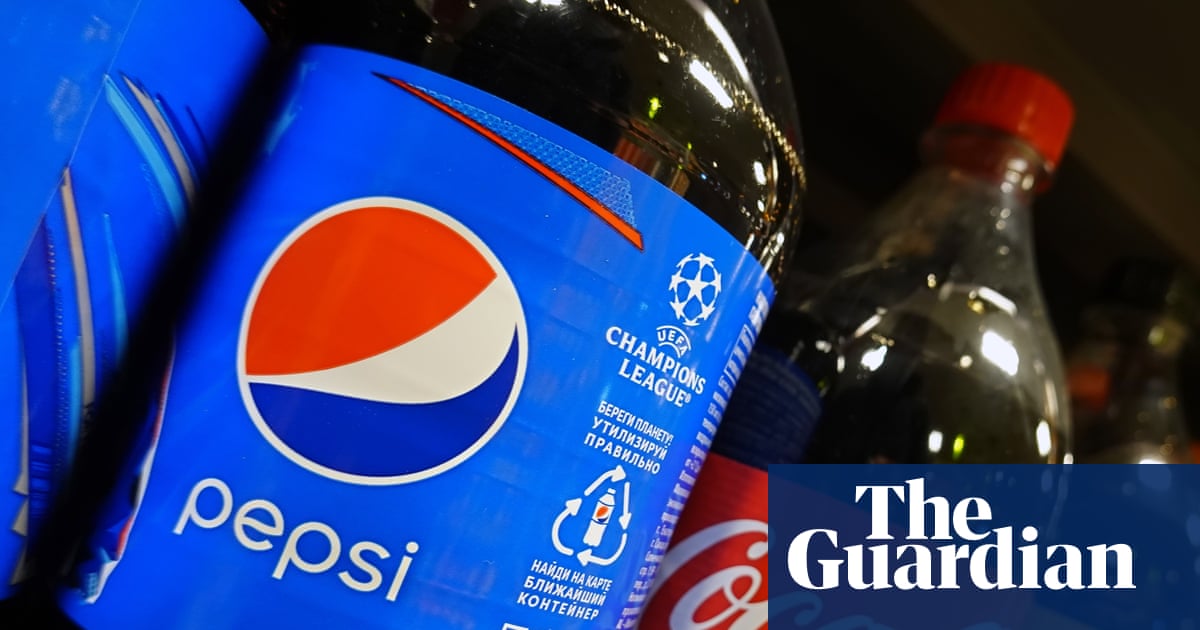
    Coca-Cola is taking legal action against Vue after the cinema chain switched to arch-rival PepsiCo as its supplier for soft drinks in Europe.

    Vue, which operates more than 90 cinemas across the UK and Ireland, put the contract up for tender last year.

    In March 2025, the largest privately owned cinema operator in Europe, with 222 sites in eight countries, selected PepsiCo as its exclusive supplier until at least 2030.

    The deal saw the end of a relationship between Vue and Coca-Cola that has lasted for almost 25 years.

    On Thursday, Coca-Cola Europacific Partners Great Britain (CCEP) took legal action against Vue Entertainment to reclaim alleged unpaid debts outstanding when the contract was terminated.

    It is understood Coca-Cola also has outstanding debts payable to Vue, which has not sought legal action relating to the amount.

    Coca-Cola’s legal action has been filed by Coltman Warner Cranston, a Coventry-based law firm that specialises in debt recovery.

    Darren Davoile, who leads the practice, told the Guardian that the company does not comment on client activity.

    Tim Richards, the chief executive and founder of Vue, said: “One would have hoped that after 25 years, a simple phone call could have resolved a genuine dispute for such a small amount without the need for lawyers.”

    Coca-Cola GB did not respond to a request for comment.

    PepsiCo has a portfolio that includes Pepsi Max, Mountain Dew, Lifewtr, Bubly sparkling water and Pure Leaf.

    In 2020, Vue rival Cineworld also announced a deal to move away from Coca-Cola and use PepsiCo as its exclusive soft drink supplier.

    Continue Reading

  • ‘Repatriate the gold’: German economists advise withdrawal from US vaults | Germany

    ‘Repatriate the gold’: German economists advise withdrawal from US vaults | Germany

    Germany is facing calls to withdraw its billions of euros’ worth of gold from US vaults, spurred on by the shift in transatlantic relations and the unpredictability of Donald Trump.

    Germany holds the world’s second biggest national gold reserves after the US, of which approximately €164bn (£122bn) worth – 1,236 tonnes – is stored in New York.

    Emanuel Mönch, a leading economist and former head of research at Germany’s federal bank, the Bundesbank, called for the gold to be brought home, saying it was too “risky” for it to be kept in the US under the current administration.

    “Given the current geopolitical situation, it seems risky to store so much gold in the US,” he told the financial newspaper Handelsblatt. “In the interest of greater strategic independence from the US, the Bundesbank would therefore be well advised to consider repatriating the gold.”

    Stefan Kornelius, the spokesperson for Friedrich Merz’s coalition government, said recently that withdrawal of the gold reserves was not currently under consideration.

    But Mönch is only the latest in a string of economists and financial experts to argue that such a move would be in keeping with the greater strategic independence that Europe’s largest economy has been seeking from the US in recent months.

    Michael Jäger, the head of the European Taxpayers Association (TAE) as well as the Association of German Taxpayers, has also said Berlin should make its move, arguing that the US’s stated desire to seize Greenland should concentrate minds.

    “Trump is unpredictable and he does everything to generate revenue. That’s why our gold is no longer safe in the Fed’s vaults,” Jäger told the Rheinische Post. “What happens if the Greenland provocation continues? … The risk is increasing that the German Bundesbank will no longer be able to access its gold. Therefore, it should repatriate its reserves.”

    Jäger said he had written last year to the Bundesbank and the finance ministry, urging them to “bring our gold home”.

    Until recently the gold issue has been the preserve mainly of the far-right Alternative für Deutschland (AfD), which has repeatedly urged the return of the gold for patriotic reasons. But it has increasingly crept into the mainstream discourse.

    Katharina Beck, the finance spokesperson for the opposition Greens in the Bundestag, has also spoken out in favour of relocating the gold bars, calling them an “important anchor of stability and trust”, which “must not become pawns in geopolitical disputes”.

    However, Clemens Fuest, the president of the Institute for Economic Research (Ifo) and one of the country’s most prominent economists, warned against such a move, saying it could lead to unintended consequences and would “only pour oil on the fire of the current situation”, he told the Rheinische Post.

    Germany’s total gold reserves are worth almost €450bn.

    Just over half are held at the Bundesbank in Frankfurt am Main, 37% in the vaults of the US Federal Reserve in New York and 12% at the Bank of England in London, the global centre of gold trading. The Bundesbank says it regularly undertakes an audit of the supplies of gold it holds in storage.

    Speaking last October at the International Monetary Fund’s (IMF) autumn meetings in Washington DC, the Bundesbank president, Joachim Nagel, assured attenders there was “no cause for concern” over the German gold held at the US Federal Reserve.

    Frauke Heiligenstadt, the parliamentary group spokesperson on financial policy for the Social Democrats, junior partners in the government, said that while she understood concerns about the gold reserves, there was no need for panic.

    “Germany’s gold reserves are well diversified,” she said. Because half of them are located in Frankfurt, “our ability to act is guaranteed”. Having gold in New York made sense, she added, because “Germany, Europe and the US are closely linked in terms of financial policy”.

    But, amid Trump’s hardening rhetoric towards his western partners, an increasing number of Merz’s Christian Democrats have been speaking out in favour of relocation.

    “Due to the Trump administration, the US is no longer a reliable partner,” Ulrike Neyer, a professor of economics at the University of Düsseldorf, told the Rheinische Post.

    Continue Reading

  • Foreign Ownership Rules and Sector Access in Indonesia

    Foreign Ownership Rules and Sector Access in Indonesia

    Foreign ownership in Indonesia is rarely a binary yes-or-no determination. Most sectors are open to foreign capital in principle, but access is shaped by ownership limits, scale requirements, licensing conditions, or mandatory local participation.

    Related Reading

    For foreign investors, the central question is not whether Indonesia allows foreign investment, but whether a specific business model can operate legally, sustainably, and at the intended scale within the country’s regulatory framework.

    How Indonesia determines foreign access

    Indonesia regulates foreign participation at the level of business activities, not at the level of the investor or the company’s name. Whether a foreign investor may own a company outright, hold a minority position, or must partner with a local entity depends on how the proposed activities are defined and how those activities are treated under national investment policy.

    Find Business Support

    Ownership rules are set centrally but applied through a licensing framework influenced by sector ministries. As a result, access outcomes are structured rather than arbitrary, but they are also not automatic. Participation reflects policy priorities, sector sensitivity, and economic impact rather than purely commercial intent.

    Reading the Positive Investment List in practical terms

    The Positive Investment List functions as a policy filter rather than a definitive permission table.

    It categorizes activities as open, conditionally open, capped, or reserved based on national priorities.

    In practice, the list provides orientation rather than certainty. While it establishes broad eligibility, it does not operate independently from licensing interpretation or sector regulation. Actual access depends on how activities are applied within the licensing system and whether accompanying conditions are met. A sector may appear open on paper while remaining constrained in execution due to ownership caps, investment scale requirements, or sector-specific licensing conditions.

    How foreign participation is structurally restricted

    Foreign participation is shaped through overlapping regulatory mechanisms rather than a single rule. In some activities, foreign ownership is capped at defined levels such as 49 percent or 67 percent, requiring Indonesian participation regardless of investment scale. These caps affect not only equity participation but also control, governance, and the ability to make unilateral decisions.

    In other activities, access is conditioned primarily on scale rather than ownership percentage. Indonesia applies investment plan value thresholds to determine whether certain activities are open to foreign investors. In many sectors, foreign participation is permitted only where the planned total investment value meets or exceeds IDR 10 billion (US$590,000). This threshold is assessed at the project level and is distinct from paid-up capital requirements. As a result, an investment can be legally incorporable but practically inaccessible if its planned scale does not meet policy expectations.

    These mechanisms operate together. Compliance with an ownership cap does not negate scale requirements, and meeting an investment threshold does not override sector-specific licensing conditions. Feasibility must therefore be assessed holistically rather than rule by rule.

    Why business activity definition determines outcomes

    The way a business defines its activities is a structural decision with long-term consequences. Similar commercial models can face materially different ownership outcomes depending on how activities are classified within Indonesia’s regulatory framework.

    Two investors pursuing the same revenue model may receive different ownership treatment if one defines its activities narrowly while the other adopts a broader or differently framed scope. These differences may not prevent incorporation, but they often surface later when additional licenses are required, when activities expand beyond the original scope, or when records are reviewed during audits or regulatory checks.

    Activity definition determines not only initial access but also the durability of that access over time.

    Capital structure and practical market access

    Capital requirements operate on two distinct levels. At incorporation, foreign-owned companies are required to issue and pay up a minimum of IDR 2.5 billion in capital (US$145,000) under statutory company law requirements. This threshold enables legal establishment, but it does not determine whether an activity is accessible in practice.

    Separately, many sectors assess feasibility based on investment plan value rather than equity contributions. Where foreign participation is conditioned on a minimum planned investment of IDR 10 billion (US$590,000), capital may be deployed progressively rather than paid up in full at entry. However, the approved investment plan anchors regulatory expectations. Significant deviations between approved plans and actual deployment can trigger licensing issues or additional scrutiny, affecting both cost and flexibility.

    Capital planning shapes not only entry feasibility but also execution risk and long-term regulatory stability.

    When local partnerships become mandatory

    Local partnerships arise when ownership caps restrict foreign participation beyond defined thresholds. In these cases, joint ventures are regulatory outcomes rather than strategic preferences.

    Mandatory partnerships affect feasibility in several ways. Capped ownership limits influence control over decision-making, pace of execution, and governance structure. They also complicate exit options, as transfers of shares are constrained by ownership rules and regulatory approvals. For investors, the key question is whether the required partnership structure aligns with commercial objectives and long-term risk tolerance, not merely whether a local partner can be identified.

    Areas of interpretation and regulatory exposure

    Not all sector access rules are explicit or uniformly applied. Regulatory interpretation, precedent, and administrative practice influence outcomes, particularly in activities involving hybrid business models or evolving sectors.

    Interpretive exposure is often not visible at entry. It tends to emerge as the business scales adds activities, seeks financing, undergoes restructuring, or prepares for M&A or exit transactions. Where ownership caps or investment thresholds apply, alignment between activity definition, investment classification, and licensing commonly extends approval timelines from several weeks to several months, increasing both cost and execution risk.

    Long-term strategic implications

    Foreign ownership conditions extend beyond initial market entry. They shape scalability, restructuring risk, acquisition options, exit flexibility, and valuation.

    Once ownership structures, activity definitions, and investment classifications are embedded in licensing approvals, later changes are assessed against the original configuration. 

    Assumptions that create structural risk

    Foreign investors often assume that ownership limits can be bypassed through structuring shortcuts, adjusted easily after incorporation, or offset through flexible capital declarations. In practice, ownership and investment rules are enforced structurally rather than informally.

    Find Business Support

    These assumptions rarely fail at entry. They tend to fail when transaction size increases, when external financing is introduced, or when exit and M&A activity is contemplated, at which point earlier design decisions are reassessed under heightened scrutiny.

    Ownership assessment as a feasibility decision

    Foreign ownership analysis belongs at the feasibility stage, before incorporation and capital commitment. Ownership rules and investment thresholds determine whether an investment is structurally viable and whether Indonesia is the right market for a given business model, not merely how to enter it.

    About Us

    ASEAN Briefing is one of five regional publications under the Asia Briefing brand. It is supported by Dezan Shira & Associates, a pan-Asia, multi-disciplinary professional services firm that assists foreign investors throughout Asia, including through offices in Jakarta, Indonesia; Singapore; Hanoi, Ho Chi Minh City, and Da Nang in Vietnam; and Kuala Lumpur in Malaysia. Dezan Shira & Associates also maintains offices or has alliance partners assisting foreign investors in China, Hong Kong SAR, Mongolia, Dubai (UAE), Japan, South Korea, Nepal, The Philippines, Sri Lanka, Thailand, Italy, Germany, Bangladesh, Australia, United States, and United Kingdom and Ireland.

    For a complimentary subscription to ASEAN Briefing’s content products, please click here. For support with establishing a business in ASEAN or for assistance in analyzing and entering markets, please contact the firm at asean@dezshira.com or visit our website at www.dezshira.com.
    Continue Reading

  • Asbestos found in children’s play sand sold in UK | Retail industry

    Asbestos found in children’s play sand sold in UK | Retail industry

    Bottles of children’s play sand have been withdrawn from shelves by the craft retailer Hobbycraft after a parent discovered they were contaminated with asbestos.

    The parent, who did not wish to be named, raised the alarm after her children played with the sand at a party.

    She sent samples off to a testing lab, which found traces of asbestos fibres in the bottles of yellow, green and pink sand sold in Hobbycraft’s Giant Box of Craft arts kit.

    Asbestos can cause cancer in later life if inhaled, although the risk to children who played with the sand is thought to be low.

    The discovery came two months after asbestos traces found in similar play sand products in Australia prompted a government recall and the closure of schools and nurseries across the country and in New Zealand.

    All the affected products are manufactured in China, where items containing less than 5% of asbestos can be labelled asbestos-free. UK law says that there is no safe limit for exposure to the mineral.

    The parent said: “The bottles of coloured sand looked extremely similar to ones I had seen on a news report of play sand recalled in Australia.

    “I was concerned enough to buy a set at Hobbycraft and send it to an accredited lab for testing. Three of the five colours came back positive for fibrous tremolite asbestos.”

    She alerted Hobbycraft, which withdrew the product from sale but declined to issue a recall notice. “I am getting increasingly upset thinking that kids are being exposed unnecessarily,” she said.

    Hobbycraft said that no UK authority had warned of a risk and that there was no evidence of harm to customers.

    However, a spokesperson said: “As a precaution, we have voluntarily removed the product from sale while we carry out independent testing … We will update customers as soon as we are in a position to do so.”

    A government source criticised Hobbycraft’s response. “Parents are right to be concerned by this,” the source said. “Officials are investigating, but there’s no good reason why Hobbycraft shouldn’t recall this themselves, given the evidence.”

    The issue highlights post-Brexit gaps in health and safety law, which leave authorities unable to issue recalls without hard evidence of harm to health.

    The so-called “precautionary principle”, abolished when product safety legislation was redrafted after Brexit, allowed the government to restrict products thought to pose a serious threat to health, without having to acquire scientific evidence.

    Campaigners, including the British Occupational Hygiene Society, have criticised the government for refusing to reinstate powers to withdraw potentially hazardous goods when product safety laws were redrafted last year. Current rules rely on exporting countries to alert authorities to problem products.

    “We know that there is no way that every product landing on British doorsteps can be tested individually for safety and the labels can’t be made to tell the truth, so, it was a missed opportunity for the government,” said Prof Kevin Bampton, CEO of the British Occupational Hygiene Society.

    “We do have the precautionary principle for the environment, which means that bats and newts in some ways have better protection than people working in Britain and, potentially, our children.”

    The Department for Business and Trade rejected the claims.

    “We have some of the most robust product safety laws in the world and any product being put on the UK market by businesses must meet our strict criteria,” said a spokesperson.

    According to the British Occupational Hygiene Society, the health risk to children who played with the contaminated sand is likely to be low, as there were only small quantities in the bottles.

    However, Bampton warned that the long-term risks of exposure to asbestos remain little understood. He said: “This issue should be a wake-up call for regulatory change, so governments can be proactive, act fast and protect human health from risks before they protect profit.”

    Continue Reading

  • Zurich’s £8bn bid for insurer Beazley produces some spurious claims

    Zurich’s £8bn bid for insurer Beazley produces some spurious claims

    Unlock the Editor’s Digest for free

    If anyone should know the importance of being a stickler for detail, it is insurance executives. But Zurich’s £8bn takeover bid for FTSE 100 specialist Beazley has produced some slippery arguments from both sides.

    At the start of the week, Zurich’s approach looked like a classic “bear hug” — a public bid lobbed in at a high premium to push a recalcitrant target to the table. Chief executive Mario Greco said his prior, private approaches to Beazley had been rebuffed, so it was time to “have shareholders say what they think”. A mooted price of £12.80 per share — 56 per cent above Beazley’s undisturbed share price — looked generous; Beazley’s shares jumped and several analysts said the offer looked compelling.

    Or maybe not so generous? On Thursday, Beazley said Zurich had offered a higher price of £13.15 last summer, and that the UK company had engaged “appropriately” at the time. The implication was that Greco is opportunistically taking advantage of Beazley’s 17 per cent share price fall since then.

    Beazley may be pushing its luck. For all its emphasis on strong growth prospects and recent milestones, it’s not for nothing that its shares have slumped. The speciality insurance sector — particularly in cyber attacks, where Beazley is a leader — is entering what is expected to be a prolonged rough patch of falling prices, which will weigh on growth.

    British boards have long been criticised for meekly rolling over when confronted with a half-decent bid, so Beazley can be commended for fighting its corner. There is a fine line between determination and truculence, but there are signs the companies may not actually be as far apart as their comments suggest.

    For one thing, even Beazley chief Adrian Cox has acknowledged the industrial logic for a combination. Zurich would boost its market share in speciality insurance and get a foothold in the Lloyd’s of London marketplace, while Beazley could reach far more customers as part of a global giant.

    Some analysts think Zurich can pay even more. Jefferies thinks it could afford to lift the current bid by as much as 10 per cent; Autonomous estimated it could go even higher. Beazley, meanwhile, has already tweaked its language to say Zurich’s most recent proposal is only a “material” undervaluation rather than a “significant” one; it might not take a huge increase from here to win over the board.

    This is all, of course, the usual cut and thrust of M&A. But it’s curious to see emotions run high in an industry that specialises in applying a cold analytical approach to stressful events. They should be able to find a number that adds up for everybody.

    nicholas.megaw@ft.com

    Continue Reading

  • ‘Cyber risk a systemic threat to banking stability’

    ‘Cyber risk a systemic threat to banking stability’

    SBP governor says industry-wide drills tested crisis decision-making; Cyber Shield 2025-30 to be issued soon

    Governor State Bank of Pakistan Jameel Ahmad. Photo: screengrab


    KARACHI:

    The State Bank of Pakistan (SBP) has warned that cyber risk has emerged as a systemic threat to financial stability, public confidence and economic growth, as the central bank prepares to issue a comprehensive Cyber Resilience Strategy for the banking sector.

    In an official statement issued on Friday, SBP Governor Jameel Ahmad said Pakistan’s first-ever industry-wide cybersecurity drills for banks were designed to test not only technical response capabilities but also senior management decision-making during simulated cyber crisis scenarios. The drills simulated coordinated cyber-attacks across one or multiple institutions that, if not managed effectively, could pose risks to the stability of the financial system.

    The governor said the exercise reinforced the need for preparedness, accountability and leadership, stressing that cyber resilience should be measured by how effectively institutions respond to attacks rather than whether incidents occur. He noted that participating banks demonstrated commitment beyond regulatory compliance by investing in crisis readiness and coordination.

    Highlighting the evolving threat landscape, Ahmad said growing interconnectedness, rapid technology adoption and rising geopolitical tensions had increased cyber risks. He added that threat actors were now highly skilled, organised and well-resourced, while the domestic shortage of trained cybersecurity professionals constrained the sector’s defensive capacity.

    He emphasised that cyber resilience could not be achieved in isolation and required collective preparedness, transparent information sharing and trust between regulators and regulated entities. Maintaining public trust, he said, was essential as the banking sector continued its digital transformation.

    Outlining recent measures, the governor said SBP had established a dedicated Cyber Risk Management Department to strengthen supervision, deepen engagement with banks and improve incident reporting frameworks.

    The governor announced that SBP would soon issue a Cyber Resilience Strategy, titled “Cyber Shield 2025–30”, built on five pillars, with lessons from the drills embedded into future operations across the banking sector nationwide overall.

    Continue Reading

  • PSX scales fresh peak above 189,000 – Dawn

    1. PSX scales fresh peak above 189,000  Dawn
    2. Positive sentiment at bourse, KSE-100 crosses 188,000 mark  Business Recorder
    3. PSX holds near 188,000 on heavyweight support  The Express Tribune
    4. Pakistan stocks hit another all-time high as optimism prevails over worker remittances  Arab News PK
    5. PSX opens week on positive note, KSE-100 gains 125 points  Dunya News

    Continue Reading

  • Weekly inflation rises on costly flour, pulses – Dawn

    1. Weekly inflation rises on costly flour, pulses  Dawn
    2. SPI witnesses slight decline  Business Recorder
    3. Weekly inflation rises 3.8% amid surge in food and fuel pricesPublished on: January 17, 2026 1:43 PM  MSN
    4. Pakistan’s short-term inflation rises 3.87% YoY as wheat flour, gas charges drive index  Profit by Pakistan Today
    5. Inflation at 4.18% keeps cost-of-living elevated  The Express Tribune

    Continue Reading

  • Powdered whole milk could be a culprit in the ByHeart botulism outbreak, tests show

    Powdered whole milk could be a culprit in the ByHeart botulism outbreak, tests show

    Powdered whole milk used to make ByHeart infant formula could be a source of contamination that led to an outbreak of botulism that has sickened dozens of babies, U.S. health officials indicated Friday.

    Testing by the U.S. Food and Drug Administration found the type of bacteria that can cause the illness in two samples linked to the formula, officials said.

    The agency found that bacteria in an unopened can of formula matched a sample from a sick baby — and it also matched contamination detected in samples of organic whole milk powder used to make ByHeart formula and collected and tested by the company.

    FDA testing also found contamination in a sample of whole milk powder supplied to ByHeart — and it matched the germ in a finished sample of the company’s formula.

    The findings are not conclusive, and the investigation continues “to determine the source of the contamination,” the agency said in a statement.

    A ByHeart official said the finding helps shed light on what has become a “watershed moment” for the company.

    “We are focused on the root cause and our responsibility to act on what we’ve learned to help create a safer future for ByHeart and infant formula,” said Dr. Devon Kuehn, ByHeart’s chief scientific and medical officer.

    Neither FDA nor ByHeart named the supplier of the powdered whole milk.

    At this time, there is no indication of a broader problem in the infant formula supply, the FDA said.

    New York-based ByHeart has been at the center of a food poisoning outbreak that has sickened 51 babies in 19 states since December 2023. The problem was identified in November after officials with the California program that supplies the sole treatment for infant botulism detected a surge in cases in babies who consumed ByHeart formula.

    No new cases in the outbreak have been identified since mid-December, the U.S. Centers for Disease Control and Prevention said.

    ByHeart initially recalled two lots of formula, but it expanded the recall to all products days later. Federal health officials later said they could not rule out contamination of all products made since the company launched in March 2022.

    That followed company testing, announced in November, that found six of 36 samples of formula from three different lots contained the dangerous type of bacteria that causes infant botulism.

    Illnesses caused by botulism bacteria in infant formula are rare, and the size and scope of the ByHeart outbreak is unprecedented, food safety experts said.

    Some formula companies do test raw materials and finished formula for evidence of the contamination, but such testing should be required, said Sarah Sorscher, director of regulatory affairs for the Center for Science in the Public Interest, an advocacy group.

    “FDA has not announced a plan to do testing, and that’s what we really want to see them do,” she said.

    Even if the contamination was traced to a milk supplier, the company remains responsible for the harm caused by its product, said Bill Marler, a Seattle food safety lawyer who represents more than 30 families of babies who fell ill.

    “Just because they are able to point the finger at dried powder as the ingredient that may have been contaminated, it doesn’t take any of the legal or moral responsibility away from ByHeart,” Marler said.

    ByHeart, which accounted for about 1% of the U.S. infant formula market, previously sold about 200,000 cans of the product per month. It was marketed as an option close to human breast milk, one that used “organic, grass-fed whole milk.” Parents of babies sickened in the outbreak said they chose the formula, which cost about $42 per can, because of its touted health benefits.

    ___

    The Associated Press Health and Science Department receives support from the Howard Hughes Medical Institute’s Department of Science Education and the Robert Wood Johnson Foundation. The AP is solely responsible for all content.

    Continue Reading

  • A Celebration of Collaboration in Cyber Defense

    A Celebration of Collaboration in Cyber Defense

    The Genesis of Collective Defense

    At certain moments in a career, you get the rare opportunity to look back and say, this work mattered. Not because of an individual accomplishment, but because it contributed to something larger — something that changed how an industry thinks and operates. The Cyber Threat Alliance (CTA) is one of those efforts.

    When the CTA was first conceived in 2014, the cybersecurity industry looked very different than how it does today. Threat intelligence was widely viewed as a competitive advantage, tightly guarded and rarely shared beyond company walls. Collaboration between major security vendors — especially direct competitors — was almost unheard of. The prevailing mindset was simple: information was power, and power was proprietary.

    Against that backdrop, a bold idea emerged: What if competitors worked together for the collective defense of customers and the broader digital ecosystem? What if sharing high-fidelity threat intelligence could raise the cost for adversaries and make everyone safer? As Mark McLaughlin, then CEO of Palo Alto Networks, famously put it at the time, the importance of the future CTA was clear: “Don’t let this fail.”

    With that charge, four industry leaders — Palo Alto Networks, Fortinet, McAfee (Intel Security) and Symantec — came together on a handshake agreement to prove that collaboration at scale was not only possible, but necessary. It was, by any measure, a radical idea. Yet those early conversations laid the foundation for what would become the Cyber Threat Alliance.

    The Architecture of Trust: Turning Vision into Reality

    Turning that vision into reality required more than shared intent. A small working group representing each founding company was tasked with answering hard questions: what the CTA should be, what it should not be and how it could operate independently while earning trust across the industry. With guidance from experts familiar with the ISAC and ISAO landscape, the group worked through governance models, legal frameworks and operational structures. This involved reading more bylaws and legal documents than anyone ever hoped to encounter, but it was essential work. The CTA needed to be built deliberately, with integrity and clarity of purpose.

    As the organization took shape, strong leadership became critical. That need was met when Michael Daniel, fresh from serving as Cybersecurity Coordinator for President Obama, stepped in to lead the CTA. His experience, credibility and ability to navigate both policy and industry realities helped propel the organization forward during its formative years.

    Fast forward to 2026. As the CTA marks its ninth anniversary, the mission that sparked its creation remains relevant and urgent. The CTA has grown its influence beyond data sharing.

    The CTA stands in a unique position to provide oversight and technical influence as a global leader in cybersecurity policy by representing the member companies in one place. With the expanding membership that spans across the globe, the CTA is now an essential piece of global cybersecurity infrastructure. Adversaries continue to evolve, borders remain irrelevant to cyber threats and no single organization can defend alone. What has changed is our proof point: collaboration works.

    Reflecting on Nine Years and the Road Ahead

    For those of us who have had the privilege of being involved since the earliest days, it has been remarkable to watch a bold idea turn into a trusted global institution. What began as a handful of competitors agreeing to try something different has grown into an organization that meaningfully influences how the industry shares intelligence, engages on policy and works together to protect customers worldwide.

    Being part of that journey — helping shape the foundation, watching it mature and continuing to support its growth — has been one of the most professionally rewarding experiences of my career.

    The CTA’s success is not defined solely by years or membership numbers, but by the collective commitment of its members to act in the interest of the broader ecosystem. Every shared indicator, every technical contribution and every policy engagement strengthens not just individual companies, but the security of communities across the globe.

    As we look ahead, the call to action is simple: stay engaged, stay committed and continue to collaborate. Whether through sharing intelligence, contributing technical expertise or helping shape global cybersecurity policy, each member plays a role in ensuring the CTA remains a trusted and effective force against today’s most pressing cyber threats.

    The work is far from done. Together, we are better positioned than ever to meet what comes next.

    Happy 9th Anniversary, CTA!

    Figure1. Celebrating 9 Years of the CTA

    Additional Resources

    Sharing Threat Intelligence Makes Everyone Safer – Michael Sikorski, Palo Alto Networks

    More About The Author

    Kathi Whitbey is the Lead Principal Program Manager for Unit 42 at Palo Alto Networks, where she has spent more than a decade driving strategic programs and initiatives. She played a pivotal role in the formation and incorporation of the Cyber Threat Alliance (CTA), including leading early efforts to design and operationalize the CTA Platform for secure intelligence sharing among member companies.Deeply committed to the mission of Unit 42,

    Kathi is a strong advocate for the team’s work and a dedicated mentor to emerging professionals in cybersecurity and risk management. Her career includes leadership roles in software development management and technical training across multiple U.S. government organizations, including the Department of State, where she traveled globally to deliver training on custom software applications. In addition to her professional work, Kathi has served as a volunteer Emergency Medical Technician, including a 12-month deployment supporting the U.S. Navy at Camp Lemonnier in Djibouti, Africa. She holds a Master’s degree in Information Systems and brings together technical expertise, operational leadership and a deep commitment to service and collaboration.

    Continue Reading