Category: 3. Business

  • High Court Finds TfNSW Liable in Nuisance for Light Rail Construction Works

    High Court Finds TfNSW Liable in Nuisance for Light Rail Construction Works

    Posted on January 5, 2026 by Dominic Smith and Lindsay Taylor

    Private nuisance is a tort concerned with protecting a person’s interest in land from substantial and unreasonable interference with its use or enjoyment.

    In a recent decision having significant implications for public authorities, including local councils, the High Court unanimously allowed two appeals from judgments of the NSW Court of Appeal in Hunter Leather Pty Ltd v Transport for NSW [2025] HCA 6 concerning the tortious liability of Transport for NSW (TfNSW) in nuisance during the construction of the Sydney Light Rail infrastructure project.

    Background

    Transport for NSW planned and procured the construction of the Sydney Light Rail along several roads in the Sydney CBD. Construction works, undertaken by contractors, caused prolonged noise, dust, hoardings, access restrictions and traffic changes. The works significantly exceeded publicly announced construction timeframes due largely to the need to deal with unidentified underground utilities in the construction process.

    Hunt Leather Pty Ltd and Ancio Investments Pty Ltd were lessees of commercial premises adjacent to the works. They brought proceedings alleging, among other things, private nuisance, claiming substantial interference with the use and enjoyment of their premises over an extended period.

    Procedural history

    At first instance, the trial judge held TfNSW liable in nuisance for the loss suffered by Hunt Leather Pty Ltd and Ancio Investments Pty Ltd. That aspect of the trial judge’s decision was overturned by the NSW Court of Appeal.

    Decision

    The High Court allowed appeals from the decision of the NSW Court of Appeal on the issue of the issue of whether TfNSW was liable in nuisance.

    Substantial and unreasonable interference with a neighbour’s right to use and enjoy their property

    Applying the well-established legal principles from Gartner v Kidman (1962) 108 CLR 12 and Elston v Dore (1982) 149 CLR 480, the High Court held that liability would occur when:

    1. an authority substantially and unreasonably interfered with a neighbouring owner’s ordinary use and enjoyment of their property, and
    2. that authority either used its land for a purpose that is not common and ordinary or used the land without reasonably minimising the extent of the substantial interference with the neighbouring owner’s ordinary enjoyment of land.

    The High Court accepted that TfNSW’s works caused substantial interference with neighbouring landholders’ use and enjoyment of their properties from the outset, given the scale of noise, dust, access restrictions and visual barriers created by the construction. The critical question, however, was when that substantial interference became unreasonable.

    Focusing on the perspective of a normal occupier, the High Court held that it was open to the primary judge to conclude that, as delays accumulated far beyond what had been publicly represented and reasonably expected, the interference crossed the threshold from tolerable inconvenience into actionable nuisance. The analysis emphasised duration and intensity as central to assessing substantial and unreasonable interference.

    Whether s43A of the Civil Liability Act 2002 applies

    Section 43A of the Civil Liability Act 2002 restricts tortious liability arising from the exercise of a special statutory power by a public authority, so that liability will only arise if the exercise of the power was so unreasonable that no reasonable authority could regard it as a proper exercise of that power.

    The High Court held that s43A of the Civil Liability Act 2002 did not apply in the present case. The Court held that s43A applies only where liability is ‘based on’ the exercise of a special statutory power—that is, a power of a kind not ordinarily exercisable without statutory authority.

    The Court held that TfNSW’s conduct in planning, procuring and contracting for construction works was not the relevant act that gave rise to tortious liability. Rather, nuisance was caused by the construction works themselves, which did not involve the exercise of a special statutory power. Therefore, TfNSW’s liability was assessed in accordance with general test for private nuisance.

    Statutory authority defence

    The common law defence of statutory authority protects a defendant from liability where legislation authorises conduct that necessarily causes interference or harm. The defence applies only where the nuisance is an inevitable consequence of exercising a statutory power and the authority has acted reasonably and with proper regard to affected landholders.

    The High Court held that the first element was satisfied. While the works were constructed under widely expressed statutory powers and did not include an express power for TfNSW to plan or procure a light rail, that legislation impliedly authorised TfNSW to plan and procure a light rail.

    On the second element, the High Court held that TfNSW had not acted with reasonable care and reasonably with a view to minimising or eliminating the interference with the enjoyment of land by others, for ordinary purposes.  Although TfNSW was authorised by statute to plan and procure the Sydney Light Rail, that authority was subject to implied conditions that the power be exercised reasonably and with due regard to neighbouring landholders.

    The High Court held that it was open to the trial judge to determine on the evidence that TfNSW failed to establish that the prolonged and severe interferences were an inevitable consequence of exercising its statutory powers, particularly given the deficiencies in planning and risk allocation that contributed to excessive delays. As a result, TfNSW was liable for the loss incurred in the period during which the interference was unreasonable.

    Implications

    This case serves as a timely reminder to all public authorities, including local councils, of the legal risks associated with carrying out infrastructure projects, public works and other activities, which interfere with a neighbouring owner’s right to use and enjoy their property.

    It confirms that public authorities are not insulated from tortious liability simply because works are authorised, or carried out on public land. Nuisance carries particular weight, as a statutory power to carry out public works does not confer immunity from liability.

    The focus is not on the defendant’s conduct in the abstract, but on whether a normal occupier in the plaintiff’s position should reasonably be expected to tolerate the interference. Unless the interference is an inevitable consequence of exercising that power and reasonable steps have been taken to minimise disruption, all public authorities may be liable in nuisance and required to compensate affected landholders.

    Where construction causes substantial interference with neighbouring land, public authorities must ensure that projects are planned, staged, and managed so that the duration and intensity of disruption remain within what affected occupiers can reasonably be expected to tolerate. Extended delays, inadequate risk management, or contractual arrangements that cause prolonged disruption are risks that require proactive planning, community engagement and realistic project timelines to mitigate the risks of potential liability.

    The High Court decision can be read in full here.

    If you would like to discuss any aspect of this article, please don’t hesitate to contact Dr Lindsay Taylor or Dominic Smith.


    Continue Reading

  • Policy Brief: Roadmap for Zero Emission Truck (ZET) Skilling in India

    Globally, road vehicles contribute 20 per cent of CO2 emissions; yet trucks, which account for less than 1 per cent of the total vehicle fleet, contribute approximately 35% of those emissions. In India, the situation is similar: while making up only 3 per cent of road vehicles, commercial trucks are responsible for 34 per cent of the road transport sector’s CO2 emissions. Though this segment is carbon-intensive, it remains essential for the country’s economic development. India is also the world’s third-largest automotive manufacturer, contributing 7.1 per cent to annual GDP and providing direct and indirect employment to approximately 1.9 crore people (MHI, 2023).

    Recognizing the impact of heavy-duty vehicles (HDVs) on climate goals, several countries have set ambitious targets for zero-emission vehicles (ZEVs). A Zero-Emission Truck (ZET) produces no exhaust gases during operation, providing a noise-free, tailpipe-emission-free, and cleaner mode of transport.

    The transition from an Internal Combustion Engine (ICE) truck to a ZET involves sophisticated automotive engineering, with an increased reliance on power electronics and software components. Such a technologically intensive upgrade requires a complete overhaul of skilling within the Indian trucking industry. As per industry estimates, more than 80% of the workforce in this sector is unorganized. This makes systematic skilling more challenging and poses a significant risk to job retention during the transition.

    This policy brief focuses on Lithium-ion (Li-ion) battery-powered electric trucks with a Gross Vehicle Weight (GVW) above 12 tonnes. The objective is to identify existing skill gaps and the potential impact on jobs during the transition to ZETs in India. Finally, the brief offers policy recommendations to address these gaps and strengthen the skilling infrastructure necessary for a robust electric truck ecosystem.

    Continue Reading

  • NHMRC Synergy Grants 2025 | Doherty Website

    NHMRC Synergy Grants 2025 | Doherty Website

    Severe pregnancy complications and heightened vulnerability to viral infections significantly impact maternal and infant health worldwide. Although poor health outcomes and deaths are increasingly linked to immune dysregulations and excessive inflammation, the underlying causes are still unknown.

    Thanks to a $5 million National Health and Medical Research Council (NHMRC) Synergy Grant, a multidisciplinary team of experts led by the University of Melbourne’s Professor Katherine Kedzierska, Laboratory Head at the Doherty Institute, will tackle this issue head-on, aiming to better understand immune regulations in major complications of pregnancy to transform detection and treatment.  

    This is one of 11 projects funded through the $55 million National Health and Medical Research Council (NHMRC) Synergy Grants scheme this year. 

    Expressing gratitude for the funding, Professor Kedzierska said the NHMRC Synergy Grant represents an unprecedented opportunity to address one of the most significant challenges in maternal health. 

    “The mechanisms behind severe pregnancy complications are still not well understood, and there’s an urgent need for better therapies to control the excessive inflammation that drives them,” said Professor Kedzierska.  

    “By understanding the impact of viral infections and the role of natural killer cells, we hope to improve pregnancy outcomes and survival of mothers and babies around the world.” 

    “This grant allows us to explore why some pregnancies develop serious complications like preeclampsia and fetal growth restriction”, said Professor Natalie Hannan, pregnancy expert from the University of Melbourne’s Medical School and Chief Investigator on the Synergy Grant. 

    The project will draw on Australian as well as global pregnancy cohorts, ensuring the research reflects diverse populations and global health needs. 

    “Our findings will inform the development of new biomarkers, diagnostics and treatment strategies to transform pregnancy care for generations to come,” added Professor Kedzierska. 

    “I look forward to working with our amazing Synergy Team over the next five years to advance immune discoveries in pregnancy complications.” 

    The chief investigator team also includes Professor Jamie Rossjohn from Monash University, Professor Lisa Hui from the University of Melbourne, Mercy Hospital for Women and Northern Health, and Professor Andrew Brooks, Head of Department of Microbiology and Immunology at the University of Melbourne, and Dr Louise Rowntree, Senior Research Fellow, both from the Doherty Institute.  

    Congratulations also to the University of Melbourne’s Professor James McCarthy, Director of the Victorian Infectious Diseases Service at the Doherty Institute and the University of Melbourne’s Professor Laura Mackay, Laboratory Head and Immunology Theme Leader at The Doherty Institute, co-investigators on two other projects: 


    A gene drive to control malaria | $5 million 
    CI list:
    CIA – Professor Geoffrey McFadden  
    CIB – Professor James McCarthy  
    CIC – Associate Professor Angela Devine  
    CID – Associate Professor Euzebiusz Jamrozik  
    CIE – Professor James McCaw  
    CIF – Doctor Maria Ome-Kaius 

    Unravelling metastasis-specific immune niches to transform cancer treatment | $5 million 
    CI list: 
    CIA – Professor Belinda Parker  
    CIB – Professor Sherene Loi  
    CIC – Associate Professor Paul Beavis  
    CID – Professor Laura Mackay  
    CIE – Doctor Ian Parish  
    CIF – Professor Declan Murphy
    CIG – Professor Ivan Marusic 

    NHMRC CEO Professor Steve Wesselingh said, “Synergy Grants empower exceptional multidisciplinary teams to tackle significant questions in human health, and it is a true testament to the power of working together.” 

    Continue Reading

  • A warning to property managers about letting properties for an unauthorised purpose

    A recent decision of the Queensland Civil and Administrative Tribunal Appeal Tribunal (Appeal Tribunal) highlights the risks for property managers in arranging for the letting of a property for an unauthorised or unapproved purpose.

    However, just because the purpose might be unapproved, it does not mean that the tenant may avoid all their obligations.

    Background

    This appeal arose from a tenancy dispute between the property manager, Song Tae Park (the property manager), who managed rental property at Southport, and the tenant, Manee Saechun (the tenant).

    On 16 July 2023, the property manager and the tenant entered into a General Tenancy Agreement for the tenant to occupy the downstairs level of a two-storey residence (the property) from 22 July 2023 for a period of 12 months at $650.00 a week. The property manager agreed that the tenant could conduct a massage business from the property, and the tenant carried out structural improvements by building a separate room for massage treatment in the downstairs level, with the permission of the property manager. The tenant spent $2,450.00 on these improvements.

    But the problem was, the property were not zoned or approved for that business use.

    After occupying the downstairs level for 19 weeks, the tenant decided to move out of the property. The reason given was that she wanted to register her business, but she was told by the property manager not to do that or the property manager (or his son) would “get into trouble” if the Council came to inspect the property. This statement proved prophetic, as, in due course, a Notice to Show Cause was issued by the Gold Coast City Council on 10 April 2024 with respect to the unapproved use of the property, citing section 114 of the Building Act 1975 (Qld).

    The tenant’s occupancy of the downstairs level of the property, and operating a massage business from there, was unlawful.

    The tenant vacated the property on or about 1 December 2023, but she did not remove the massage treatment room or make good the property. She had also paid two weeks’ rent in advance when vacating.

    There were text discussions between the property manager and the tenant about a “break-lease” fee, but the tenant did not pay any money to the property manager for breaking the tenancy agreement.

    The first proceeding

    After the tenant vacated the property, on 5 February 2024 the property manager commenced a proceeding in the minor civil disputes (residential tenancy) jurisdiction of QCAT claiming a break lease fee, outstanding rent, and repairs in the sum of $2,200.00. The tenant counterclaimed seeking a refund of all rent paid ($12,350.00), a refund of additional rent paid in advance ($1,300.00), the cost of the improvements, and the bond of $2,600.00.

    At the hearing of both applications, there was no dispute that the occupancy of the downstairs level of the property was unlawful. The adjudicator relied upon s 181 of the Residential Tenancies and Rooming Accommodation Act 2008 (Qld) (RTRA) to determine that the property manager had breached the tenancy agreement.

    The adjudicator made a finding of fact that the property manager knew, or ought to have known, about the legal impediment at the time of letting the downstairs level of the property to the tenant.

    On the basis of the finding that the tenant’s unlawful occupancy of the property was an insuperable legal impediment to the efficacy of the tenancy agreement, the adjudicator ordered that the property manager repay to the tenant all of the rent, cost of improvements and the bond, totalling $16,100.00 plus the tenant’s filing fee of $379.50. The property manager’s claim was dismissed.

    The appeal

    On 6 June 2024, the property manager filed an application for leave to appeal the adjudicator’s decision. Leave to appeal was required under s 142(3)(a)(i) of the Queensland Civil and Administrative Tribunal Act 2009 (Qld) (QCATA), because the appeal was from a decision of an adjudicator on a mixed question of facts and law.

    The Appeal Tribunal identified the essence of the appeal to be that the adjudicator had erred in giving judgment to the tenant, because:

    1. the tenant did not have permission to make the improvement/massage room;
    2. she was aware of the reduced ceiling height;
    3. she utilised the room for her massage business;
    4. she failed to remove the room/improvement; and, so
    5. the tenant had illegally created the improvement.

    The Appeal Tribunal identified that the application raised questions of law about the basis upon which the adjudicator had formulated and allowed the damages claimed in the tenant’s initial application, and the fact that the adjudicator had proceeded on the assumption that the tenancy agreement was an illegal contract.

    The Appeal Tribunal’s analysis

    The Appeal Tribunal identified a fundamental error in the original decision of the adjudicator, namely that the adjudicator had failed to properly consider the legal consequences of the tenant’s unlawful occupation of the property. The reason the tenant terminated the tenancy agreement was not due to the Notice to Show Cause (which issued several months after the tenant vacated), but the information conveyed to her from the property manager that she could not lawfully carry on the business at the property.

    This supported the conclusion that the property manager knew all about the unlawful nature of the arrangement.

    The tenancy agreement was therefore voidable, at the tenant’s option. But the Appeal Tribunal also held that the adjudicator had erred by ordering a full refund of rent.

    This was because, although the tenancy agreement was unenforceable by the property manager, and voidable by the tenant, restitution of rent was not justified. The Appeal Tribunal explained that the award of restitution depends on whether it would be unjust for the recipient to retain the benefit:

    [22] Clearly, because of the legal impediment, the tenancy agreement is unenforceable by the applicant. However, that does not mean the tenant is entitled to restitution on the basis of the illegality insofar as it relates to the rent. In Equuscorp Pty Ltd v Haxton (“Equuscorp”) [1] the High Court provided some general guidance as to when a claim in restitution might be made when parties enter into a contract, the performance of which is unlawful:

    The outcome of a restitutionary claim for benefits received under a contract which is unenforceable for illegality, will depend upon whether it would be unjust for the recipient of a benefit under the contract to retain that benefit. There is no-one-size-fits-all answer to the question of recoverability. The central policy considerations at stake…is the coherence of the law. In that context it will be relevant that the statutory purpose is protective of a class of persons from whom the claimant seeks recovery.

    Therefore, while the adjudicator was correct to find a legal impediment to the tenancy agreement existed under section 181 of the RTRA, the Appeal Tribunal held that the adjudicator’s analysis of remedies available in those circumstances was wrong, and did not provide any justification to award the damages sought by the tenant in her application. The Appeal Tribunal was satisfied that the tenant had enjoyed the property and operated her business for 19 weeks and, so, refunding all rent effectively rewarded the tenant with an unjust, rent-free benefit of the use of the downstairs level of the property.

    It is important to note that the Appeal Tribunal distinguished this finding that the tenant was not entitled to a full refund of rent from the claim for costs incurred by the tenant as a result of the improvements. It found that the property manager had been unjustly enriched by the construction of the massage room, which he had approved and later benefited from, by advertising the property as a two-bedroom tenancy. As the tenant could never recover the value of her expenditure, the Tribunal held that restitution ought to be awarded to the tenant for the cost of improvements and painting.

    Finally, the Appeal Tribunal held that the tenant was entitled to the bond, given the legal impediment under section 181 of the RTRA to the tenancy agreement.

    The final result was a mixed result for both parties; while the tenant could recover costs for improvements and the bond, she was not entitled to a refund of rent.

    Conclusion and orders

    The Appeal Tribunal set aside the order of the Tribunal that the property manager pay the tenant $16,479.50 and, instead, ordered the property manager pay the tenant the amount claimed, less the rent of $12,350.

    The property manager clearly erred in allowing the use of rental property for a purpose known to be unauthorised.

    But the legal impediment which afflicted the tenancy agreement did not mean that all the rent paid should, as a matter of equity or fairness, be refunded to the tenant.

    For the same reason, given that the property manager had the benefit of the improvements, which remained in situ, the tenant was entitled to the cost of the new room, which the property manager kept and rented.

    This is a case where an avoidable error – that is, renting a property for a purpose known to be unapproved – badly rebounded on the property manager. But, the underlying illegality of the tenancy agreement did not mean the tenant could avoid paying rent.

    Read more from Cartner Newell Lawyers: QCAT update – Compensation claims.

    Or browse our articles.


    [1] Equuscorp Pty Ltd v Haxton; Equuscorp Pty Ltd v Bassat; Equuscorp Pty Ltd v Cunningham’s Warehouse Sales Pty Ltd (2012) 286 ALR 12; [2012] HCA 7; BC201201024.

    Continue Reading

  • Full steam ahead: Maitland to host National Historic Machinery Association National Rally in conjunction with Steamfest 2027

    Maitland has been officially announced as the host city for the National Historical Machinery Association (NHMA) National Rally in 2027, a major milestone for the region’s events calendar, with a bumper week-long program of activities and experiences expected to attract large crowds to the city. 

    The Rally will be the 20th Biennial National Rally and will coincide with the 40th anniversary of the Burton Automotive Hunter Valley Steamfest, creating a major national celebration of heritage machinery that is expected to inject $3.2 million into the local economy.

    The combined program, supported by Maitland City Council, will run for nine days, beginning with the NHMA National Rally from 10 to 11 April 2027, followed by a week of activities and culminating with Steamfest on 17 to 18 April 2027. 

    Maitland City Councillor Ken Jordan, Chair of the Steamfest Working Group, highlighted the importance of Council’s involvement, saying that “Maitland City Council is proud to support this national event, which celebrates the incredible history of steam and antique machinery. 

    “It’s a fantastic opportunity to showcase Maitland, the heart of the Hunter, to enthusiasts from across Australia, bringing the community together for a vibrant celebration, and creating lasting cultural and economic benefits.” 

    Visitors can expect an impressive showcase of steam engines, vintage tractors, antique farm machinery, as well as heritage train rides, show-and-shine displays, kids’ activities, and plenty of food and entertainment. 

    Organisers are also working toward developing an enhanced rail program for Steamfest, alongside a broader week-long program of steam train experiences. 

    With an expanded nine-day program, the 2027 National Rally and Steamfest are expected to draw around 70,000 visitors and provide a significant boost to local businesses, including the city’s accommodation providers that are expected to be fully booked for the event. 

    President of the Maitland Steam and Antique Machinery Association (MSAMA), Bill Waddell and President of the Hunter Valley Vintage Farm Machinery Association, Bill Onley, said the clubs were thrilled to be joining together in partnership to host the Rally.

    “We’re excited to bring the National Rally to Maitland, creating a week-long celebration that showcases the very best of steam and antique machinery for collectors, enthusiasts and families alike. 

    With the support of Maitland City Council, we’re looking forward to delivering a truly memorable experience, delivering a diverse and engaging program,” Mr Waddle and Mr Onley said. 

    President of the NHMA, Peter Garnham, noted the significance of the Rally coming to Maitland. 

    “The NHMA National Rally is a highlight for steam and antique machinery lovers nationwide. Maitland, with its rich history and strong local support, is the perfect location to make the 2027 Rally a milestone event. 

    “With two major weekends and a full week of activity in between, Maitland will see significant visitation from exhibitors and spectators alike, filling venues across the city and delivering major economic benefits on top of the strong crowds traditionally seen at Steamfest.” 

    The nine-day celebration of steam and antique machinery will be a significant national event for Maitland, drawing visitors from across the country and cementing the region as a hub for heritage machinery enthusiasts. 

    Full program details and ticketing information will be released closer to the event. Updates will be available at www.maitland.nsw.gov.au

    Continue Reading

  • Singtel first in Singapore to pilot 50Gbps fibre broadband to prepare homes and businesses for AI

    Singtel first in Singapore to pilot 50Gbps fibre broadband to prepare homes and businesses for AI


    05 Jan 2026

    News Release

    Singtel first in Singapore to pilot 50Gbps fibre broadband to prepare homes and businesses for AI

    • Connectivity
    • Network


    Continue Reading

  • Suzuki recalls 2025 Fronx Hybrid over rear seat belt failure

    Suzuki Australia is recalling certain 2025 Fronx Hybrid models and advising owners not to use the rear seats after ANCAP testing revealed a seatbelt failure.

    Testing of the Suzuki Fronx late last year saw the vehicle narrowly achieve a one-star ANCAP safety rating, following poor performance in key crash tests and low levels of occupant protection for both adults and children.

    ANCAP testing also identified a rear seatbelt failure during the full-width frontal crash test.

    Suzuki Australia said in a statement that it acknowledged the ANCAP assessment of the 2025 Fronx Hybrid and had launched a thorough investigation.

    “As our investigation continues, we have identified a VIN range of potentially affected vehicles for which a voluntary safety recall has been announced,” Suzuki Australia said.

    “It appears that the functionality of the rear seat belt retractor mechanism may not perform as designed and as a potential consequence excessive belt length may release in the event of collision.”

    The Federal Government’s Vehicle Recalls website said in an accident or under hard braking, if the Fronx’s rear seat belt did not operate as intended, it could increase the risk of injury or death to a vehicle occupant.

    Suzuki Australia said Fronx Hybrid customers with affected vehicles should immediately stop using the rear seats.

    “We continue to undertake immediate and urgent investigations of this phenomenon,” the company said.

    “Upon completion of the investigation, Suzuki Motor Corporation and Suzuki Australia will facilitate further actions to ensure the safety of all listed vehicles.”

    Customers driving the 249 affected vehicles within the VIN range will be contacted by Suzuki Australia. Those with concerns can contact the Customer Call Centre on 1300 054 555.

    ANCAP’s one-star rating reflects the Fronx’s overall crash performance – particularly the performance of its structure and restraint systems – and was not a consequence of the separate seatbelt component failure.

    ANCAP Chief Executive Officer Carla Hoorweg said the seatbelt component failure was rare and serious.

    “What concerns us is that this particular vehicle could have been purchased by an ordinary consumer, and in an on-road crash this failure could have had serious consequences for the person sitting in the back seat,” Ms Hoorweg said.

    “This is the third component failure revealed through independent safety testing in recent months.

    “ANCAP encourages all manufacturers to bring their vehicles forward for testing ahead of market release as it allows the opportunity for issues to be identified and rectified before vehicles reach consumers and are driven on Australian and New Zealand roads.”

    Continue Reading

  • Samsung Presents ‘Your Companion to AI Living’ at The First Look During CES 2026 – Samsung Newsroom India

    Samsung Presents ‘Your Companion to AI Living’ at The First Look During CES 2026 – Samsung Newsroom India

    Next-generation AI-powered devices and experiences to be showcased at the company’s exclusive exhibition through January 7

    Samsung Electronics today unveiled its “Companion to AI Living” vision at The First Look, its CES® 2026 event held in the Latour Ballroom at the Wynn Las Vegas. The focus of the event was on AI as Samsung’s philosophy, a foundation that connects the company’s R&D product development, operations and user experience.


    TM Roh, CEO and Head of Samsung’s Device eXperience (DX) Division, opened The First Look by describing the company’s AI leadership and how due to its vast, AI-enabled, connected ecosystem, Samsung can provide users with a true AI companion experience in their daily life. This approach gives users a chance to access more than just the basics from their technology and instead, provides opportunities to find more meaningful moments everywhere.


    “Samsung is building a more unified, more personal experience across mobile, visual display, home appliances and services,” said CEO TM Roh. “With our global connected ecosystem, and by embedding AI across categories, Samsung is leading the way to offer more meaningful everyday AI experiences.”


    Entertainment Companion: Extending the Experience Beyond Simple Viewing

    SW Yong, President and Head of the Visual Display (VD) Business at Samsung Electronics, and Sukhmani Mohta, Chief Marketing and Partnerships Officer, VD Business at Samsung Electronics America, took the stage to describe how Samsung’s displays are combining hardware excellence and visual intelligence to provide a true entertainment companion. Drawing from twenty years of leading the TV industry, Samsung has built a full AI TV lineup that provides an entirely new way for users to interact with their TV.


    The center of the display lineup is the 130-inch Micro RGB, which represents a monumental leap in scale and picture quality. The 130-inch Micro RGB marks a new era of color, featuring the widest and most detailed spectrum ever seen in Samsung TVs while its Timeless Frame design minimizes distractions and allows the picture to take center stage with understated elegance. A micro-sized RGB light source drives the unprecedented picture quality, with each microscopic red, green and blue diode shining independently to produce color in its purest, most natural form. Micro RGB AI Engine Pro enables precise control of RGB colors and creates overwhelmingly vivid picture quality in every scene.


    Elevating this next-level viewing experience, Vision AI Companion (VAC)1 uses AI technology to work alongside users as a full entertainment companion to enhance viewing, dining and mood, anywhere in the home. With it, users can receive guidance on what to watch, what to eat and what music to listen to, enhancing the overall TV experience in a way that extends far beyond simple viewing.


    Samsung also offers intuitive modes to personalize the viewing experience. For soccer fans, AI Soccer Mode Pro delivers a more exciting gameday experience through AI-driven picture and sound tuning to stadium-level quality. AI Sound Controller Pro lets you raise or lower the volume of the crowd, commentary, or background music, providing a personalized listening experience for TV shows and movies. Users can simply make verbal requests, and any TV equipped with VAC — which includes Micro LED, Micro RGB, OLED, Neo QLED, Mini LED and UHD TV — contextually carries out those requests.


    Across different types of programming, VAC also boosts the overall lifestyle experience. It allows users to find recipes for meals they see on TV by simply asking and uses the most up-to-date information to make recommendations that align with health and fitness goals. VAC offers multi-device functionality, as well, sending recommended recipes directly to other devices like the newly-unveiled The Movingstyle, designed to move easily throughout the home and kitchen appliances, for a multi-device experience achieved through complete ecosystem integration.


    Samsung has led the global soundbar market for 11 consecutive years. This year, it is introducing two new WiFi speakers, the Music Studio 5 and 7, to further expand its integrated ecosystem. These models support a wider range of sound system combinations, enhance audiovisual quality and improve the aesthetics of any space. Each model shares a timeless, dot design concept by renowned designer Erwan Bouroullec, inspired by a universal symbol in music and art and grounded in Samsung’s signature design language.


    Samsung also unveiled a host of new products that blend beautifully with users’ homes and aesthetics.  The new, ultra-thin OLED S95H features a refined bezel that gives it art gallery elegance, and Samsung’s new portable projector, The Freestyle+, is powered by VAC and allows users to view content on walls and ceilings, as well as uneven surfaces like corners and curtains.


    The 2026 TV lineup2 supports HDR10+ ADVANCED, delivering enhanced brightness, genre-based optimization, intelligent motion smoothing, advanced local tone mapping and improved gaming experience.


    As HDR10+ adoption grows among major OTT providers, Samsung will be the first to launch HDR10+ ADVANCED in its 2026 TV lineup. Samsung also features Eclipsa Audio, the company’s new spatial sound system, introduced across all 2026 TVs.


    Samsung also unveiled its most advanced Odyssey gaming monitor lineup yet, introducing five new models that push the boundaries of resolution, refresh rate and immersive visual performance. Led by Samsung’s first 6K 3D Odyssey G9, the 2026 lineup debuts world-first display technologies for gamers and creators, including the next-generation Odyssey G6 and three new Odyssey G8 models.


    At the center of all these display innovations is the most powerful Tizen OS yet. Users can now enjoy seven years of Tizen OS upgrades, ensuring that TVs continue to evolve long after they have entered the home.


    Home Companion: Connected Smart Appliances That Guide You Through Your Day

    Cheolgi Kim, Executive Vice President and Head of Digital Appliances (DA) Division at Samsung Electronics, and Elizabeth Anderson, Head of Integrated Marketing, DA at Samsung Electronics America (SEA) outlined Samsung’s vision to evolve from providing home appliances to true home companions that work to eliminate the stress of daily chores. Cheolgi Kim also announced that as of December 2025, SmartThings now serves more than 430 million users, empowering Samsung with a significant scale and depth of insight that sets it apart from other brands.


    This insight comes to life with the Family Hub. The AI-enabled refrigerator is the centerpiece of the home and now, with an upgrade to AI Vision built with Google Gemini,3 it redefines living for an AI future. With this update, AI Vision unlocks existing limitations in recognizing food items, seamlessly tracking what is placed into and taken out of the refrigerator, making meal planning and food management simpler than ever. The Family Hub has won 10 CES Innovation Awards so far, and Samsung’s AI-enabled fridges have received the award for the past three years.


    Through a gamified feature called “What’s for Today?”, select refrigerators provide recipe recommendations based on what is in the refrigerator or also random recommendations, reducing the stress caused by choosing what to cook. When selected, recipes show up through SmartThings Food, where users receive a step-by-step guide to help them get started instantly. The selected recipe can also be sent to connected cooking appliances to begin the process seamlessly. Video to Recipe adds even more simplicity, providing users with recommended cooking videos and converting those videos into easy-to-follow steps, allowing users to follow along while they cook without pausing the video or backtracking.


    Samsung also unveiled FoodNote, a new, weekly report that recaps users’ food intake patterns, from most-used ingredients and recipe recommendations, and which items it’s time to restock. Additionally, Now Brief includes more widgets on the Family Hub screen and with Voice ID, can distinguish between family members and display content relevant to each individual. Ultimately, these features come together to provide various helpful insights and information throughout the week.


    In the laundry room, the Bespoke AI Laundry Combo removes the need to transfer loads of laundry, solving a major pain point for households. This year’s model comes with enhanced features, like a faster super speed cycle and enhanced drying performance. Moreover, Samsung’s new Bespoke AI AirDresser is here to solve another common problem with your clothes. It features Auto Wrinkle Care, which blasts strong air and steam jets to smooth out shirts. All users have to do is hang their shirt and wait, reducing the burden in busy mornings.


    Around the house, the Bespoke AI Jet Bot Steam Ultra, powered by a Qualcomm Dragonwing™ processor, features an Active Stereo 3D Sensor to recognize liquids like coffee, juice, or even transparent liquids like water. While its camera helps with navigation, it also allows the robot vacuum to serve as a monitoring device for when users are away from home, notifying them about their pets and whether there is any suspicious activity. Plus, with a smarter Bixby, users can speak conversationally to their robot vacuum to carry out tasks with ease. For the deep level of connectivity and integration that forms the backbone of a holistic, AI-powered experience, Samsung’s Bespoke AI appliances have received a CES Innovation Award.


    Additional benefits include a first-of-its-kind partnership with Hartford Steam Boiler (HSB) to help unlock real, meaningful savings to the smart home experience. HSB President and CEO Greg M. Barats joined the presentation to discuss the partnership, explaining the potential benefits of having smart appliances connected to SmartThings to reduce insurance premiums. This is the best of the AI era — increased protections and reduced costs for users. After a successful pilot run in the U.S. in 2025, the collaboration is expanding to more states across the U.S., as well as to leading home insurance carriers in other global regions.


    Care Companion: Shifting From Reactive to Proactive Care

    Finally, Praveen Raja, Vice President and Head of Digital Health at Samsung Research America (SRA), introduced Samsung’s long-term vision for intelligent care enabled by Samsung’s integrated device ecosystem, redefining care from a reactive need to a proactive opportunity. With AI, phones, appliances, wearables and other connected devices will help users prevent potential health concerns before they occur.


    For example, Samsung aims to provide personalized health coaching, offering effective exercise and sleep coaching to help decrease risk for major chronic diseases and also suggesting appropriate recipes based on ingredients available in connected refrigerators. Additionally, if any abnormal signs or patterns are detected, it will alert users while allowing their health metrics to be shared with providers via the Xealth platform and facilitating virtual professional consultations.


    Recognizing the importance of preventative health, Samsung is also expanding its capabilities in dementia detection through research partnerships, with wearable devices registering subtle changes to mobility, speech and engagement that can be indicative of long-term cognitive changes.


    Samsung Knox and Knox Matrix serve as the foundation of this hyper-personalized ecosystem, safeguarding user data at every turn. As AI is constantly evolving, so are Knox and Knox Matrix. To maintain security despite constant changes, Samsung’s security systems are consistently identifying AI risks by advancing to protect data in AI training processes and approving models through red team analysis.


    The Samsung Exhibition Zone at CES is available to the public Jan. 4-7. For more information, visit the Samsung Newsroom India.


    Continue Reading

  • Middle East Stocks And 2 Other Undiscovered Gems For Your Portfolio

    Middle East Stocks And 2 Other Undiscovered Gems For Your Portfolio

    As most Gulf markets have recently faced downturns due to weak oil prices and geopolitical uncertainties, investors are increasingly looking for resilient opportunities in the Middle East. In this environment, identifying stocks with strong fundamentals and potential for growth amidst economic diversification efforts can be key to building a robust portfolio.

    Name

    Debt To Equity

    Revenue Growth

    Earnings Growth

    Health Rating

    Mendelson Infrastructures & Industries

    17.65%

    4.48%

    4.46%

    ★★★★★★

    Y.D. More Investments

    51.67%

    27.49%

    36.12%

    ★★★★★★

    Sure Global Tech

    NA

    10.11%

    15.42%

    ★★★★★★

    Payton Industries

    NA

    3.44%

    14.24%

    ★★★★★★

    Terminal X Online

    12.94%

    13.43%

    44.27%

    ★★★★★★

    Analyst I.M.S. Investment Management Services

    NA

    31.20%

    44.24%

    ★★★★★★

    C. Mer Industries

    76.92%

    13.56%

    68.93%

    ★★★★★☆

    Amanat Holdings PJSC

    10.86%

    27.51%

    -0.92%

    ★★★★★☆

    Amir Marketing and Investments in Agriculture

    32.43%

    3.87%

    6.98%

    ★★★★☆☆

    Ajman Bank PJSC

    53.89%

    16.11%

    18.02%

    ★★★★☆☆

    Click here to see the full list of 185 stocks from our Middle Eastern Undiscovered Gems With Strong Fundamentals screener.

    Let’s explore several standout options from the results in the screener.

    Simply Wall St Value Rating: ★★★★☆☆

    Overview: Afcon Holdings Ltd, with a market cap of ₪1.93 billion, develops and executes construction projects both in Israel and internationally.

    Operations: Afcon Holdings generates revenue through segments including Systems, EPC and Construction (₪787.25 million), Control and Technologies (₪465.89 million), Multimedia and Communication (₪312.68 million), Trade (₪194.67 million), and Renewable Energies (₪1.29 million).

    Afcon Holdings, with its price-to-earnings ratio at 25.6x, presents a value proposition below the industry average of 29.4x. Despite sales dipping to ILS 1.26 billion from ILS 1.34 billion over nine months compared to last year, net income rose significantly to ILS 57.5 million from ILS 36.84 million previously reported for the same period, reflecting robust earnings growth of 345%. However, its debt situation is notable; while the debt-to-equity ratio improved from 130% to around 114% in five years, it still holds a high net debt-to-equity ratio of approximately 88%.

    TASE:AFHL Debt to Equity as at Jan 2026

    Simply Wall St Value Rating: ★★★★★★

    Overview: Cohen Development Gas & Oil Ltd. is involved in the exploration, development, production, and marketing of natural gas, condensate, and oil across Israel, Cyprus, and Morocco with a market capitalization of ₪1.40 billion.

    Operations: Cohen Development Gas & Oil generates revenue primarily from the production and management of oil and gas exploration, amounting to $27.42 million.

    Cohen Development Gas & Oil, a nimble player in the energy sector, showcases robust financial health with no debt over the past five years. The company outpaces its industry peers, boasting a 50.5% earnings growth compared to the sector’s -10%. Its price-to-earnings ratio of 14.3x is favorable against the IL market average of 16.4x, indicating potential value for investors. Recent private placements raised significant capital, with notable participation from Menora Mivtachim Holdings and others, enhancing liquidity and investor confidence. Despite a slight dip in quarterly net income to US$7.42 million from US$7.96 million last year, nine-month earnings surged to US$24.83 million from US$16.1 million previously.

    TASE:CDEV Earnings and Revenue Growth as at Jan 2026
    TASE:CDEV Earnings and Revenue Growth as at Jan 2026

    Simply Wall St Value Rating: ★★★★☆☆

    Overview: Villar International Ltd., with a market cap of ₪3.07 billion, operates in the acquisition, development, and construction of real estate properties both in Israel and internationally through its subsidiaries.

    Operations: The primary revenue streams for Villar International Ltd. include the rental of buildings, generating ₪262.54 million, and the provision of archival services at ₪93.19 million. The construction of buildings contributes an additional ₪67.46 million to their revenue profile.

    Villar International, a smaller player in the real estate sector, has shown notable financial resilience. With a price-to-earnings ratio of 8.8x, it sits comfortably below the IL market average of 16.4x, suggesting potential value for investors. The company’s net debt to equity ratio stands at a satisfactory 12.1%, reflecting prudent financial management as debt levels have decreased from 33.6% to 19.3% over five years. Despite a one-off gain of ₪235M impacting recent results and net income slightly lower than last year at ₪44M for Q3, earnings growth outpaced industry peers by hitting an impressive 40%.

    TASE:VILR Earnings and Revenue Growth as at Jan 2026
    TASE:VILR Earnings and Revenue Growth as at Jan 2026

    This article by Simply Wall St is general in nature. We provide commentary based on historical data and analyst forecasts only using an unbiased methodology and our articles are not intended to be financial advice. It does not constitute a recommendation to buy or sell any stock, and does not take account of your objectives, or your financial situation. We aim to bring you long-term focused analysis driven by fundamental data. Note that our analysis may not factor in the latest price-sensitive company announcements or qualitative material. Simply Wall St has no position in any stocks mentioned.

    Companies discussed in this article include TASE:AFHL TASE:CDEV and TASE:VILR.

    Have feedback on this article? Concerned about the content? Get in touch with us directly. Alternatively, email editorial-team@simplywallst.com

    Continue Reading

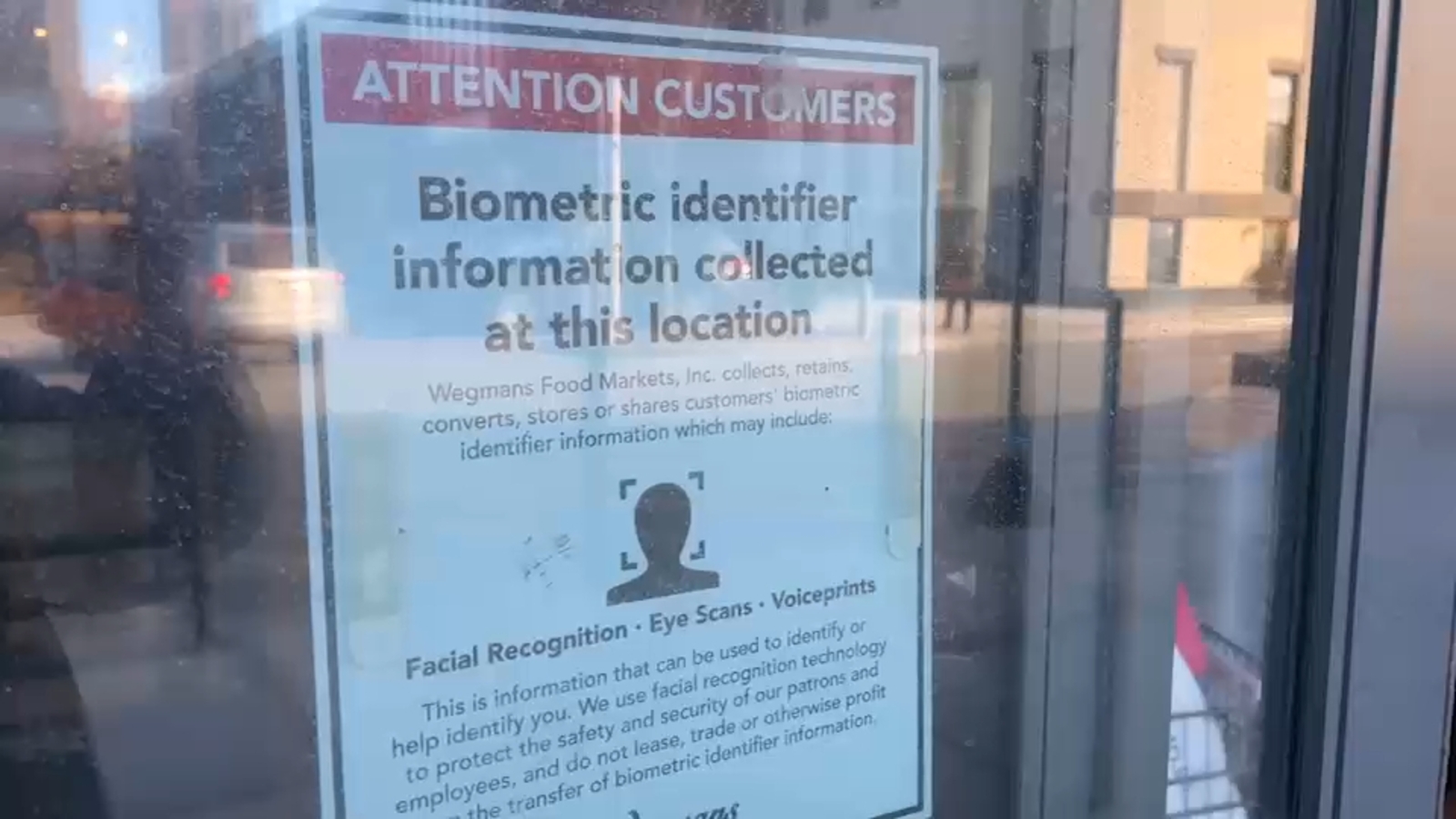
  • Signs at Brooklyn and Manhattan Wegmans stores say biometric data kept to increase security

    Signs at Brooklyn and Manhattan Wegmans stores say biometric data kept to increase security

    ByEyewitness News

    Monday, January 5, 2026 4:34AM

    Wegmans storing biometric data of shoppers in Brooklyn and Manhattan

    NEW YORK (WABC) — There are new details on what Wegmans does with its biometric data of shoppers.

    Signs at the Brooklyn and Manhattan stores say facial recognition, eye scans and voiceprints are kept to increase security.

    When Wegmans originally launched a pilot program, management said any data of shoppers would be deleted.

    Some customers complain the policy makes them feel uneasy.

    Legislation in the City Council to block biometric storage has stalled for years.

    ———-
    * Get Eyewitness News Delivered
    * More New York City news
    * Send us a news tip
    * Download the abc7NY app for breaking news alerts
    * Follow us on YouTube

    Submit a tip or story idea to Eyewitness News

    Have a breaking news tip or an idea for a story we should cover? Send it to Eyewitness News using the form below. If attaching a video or photo, terms of use apply.

    Copyright © 2026 WABC-TV. All Rights Reserved.

    Continue Reading