Category: 3. Business

  • Hamilton Lane (HLNE) Valuation Check After Recent Share Price Pullback

    Hamilton Lane (HLNE) Valuation Check After Recent Share Price Pullback

    Never miss an important update on your stock portfolio and cut through the noise. Over 7 million investors trust Simply Wall St to stay informed where it matters for FREE.

    Hamilton Lane (HLNE) is back on investor radars after a mixed stretch in the share price, with recent returns over the month, past 3 months and year pulling back from earlier multi year gains.

    See our latest analysis for Hamilton Lane.

    At the latest share price of $122.76, Hamilton Lane’s recent 30 day share price return of a 19.65% decline and 1 year total shareholder return of a 20.21% decline point to fading momentum after stronger multi year gains, which may reflect shifting expectations around growth and risk.

    If this pullback has you comparing options, it could be a suitable moment to broaden your search and check out 23 top founder-led companies as potential fresh ideas beyond Hamilton Lane.

    With Hamilton Lane trading at $122.76 alongside an indicated intrinsic discount of about 33%, the key question is whether this recent slump has opened up a genuine opportunity or if the market already reflects its future growth.

    Hamilton Lane’s fair value in the most followed narrative sits at $181.14 versus the latest close at $122.76. This puts a sizable gap between the model and the market and sets up a valuation story built on growth, margins and cash flows discounted at 7.91%.

    Healthy pipeline/backlog in customized separate accounts and perpetual fundraising strategies creates forward visibility into recurring revenue streams and earnings growth, while the high unrealized carry balance (~$1.3 billion) points to potential for strong incentive fee income as more favorable macro conditions enable exits and crystallization of performance fees.

    Read the complete narrative.

    Curious what sits behind that confidence in future earnings power? This narrative leans heavily on rising fee income, expanding margins and a premium earnings multiple. Want to see exactly how those pieces stack up against the current price and discount rate assumptions? The full story spells out the numbers that support that $181.14 fair value.

    Result: Fair Value of $181.14 (UNDERVALUED)

    Have a read of the narrative in full and understand what’s behind the forecasts.

    However, this hinges on fee growth and margins holding up. Heavier regulation or fee pressure could quickly challenge those earnings assumptions and the premium P/E embedded in the story.

    Find out about the key risks to this Hamilton Lane narrative.

    The earlier view leans on a fair value of $181.14 based on future cash flows and earnings power. On current numbers, though, Hamilton Lane trades on a P/E of 23.1x versus a peer average of 12.6x and a fair ratio of 19.2x, which points to a richer price and some valuation risk if sentiment cools.

    That kind of gap can matter if growth or margins fall short of expectations, so the real question is whether you think the current premium is a fair reflection of quality or a stretch too far.

    See what the numbers say about this price — find out in our valuation breakdown.

    NasdaqGS:HLNE P/E Ratio as at Feb 2026

    If you look at these numbers and reach a different conclusion, or simply prefer hands on research, you can build your own narrative in just a few minutes, Do it your way.

    A good starting point is our analysis highlighting 4 key rewards investors are optimistic about regarding Hamilton Lane.

    If Hamilton Lane has sharpened your focus, do not stop here. The screener can help you spot other opportunities that fit how you like to invest.

    This article by Simply Wall St is general in nature. We provide commentary based on historical data and analyst forecasts only using an unbiased methodology and our articles are not intended to be financial advice. It does not constitute a recommendation to buy or sell any stock, and does not take account of your objectives, or your financial situation. We aim to bring you long-term focused analysis driven by fundamental data. Note that our analysis may not factor in the latest price-sensitive company announcements or qualitative material. Simply Wall St has no position in any stocks mentioned.

    Companies discussed in this article include HLNE.

    Have feedback on this article? Concerned about the content? Get in touch with us directly. Alternatively, email editorial-team@simplywallst.com

    Continue Reading

  • How China is celebrating the Year of the Horse

    How China is celebrating the Year of the Horse

    Officials hope the longer holiday will boost consumption amid an economic slump that is weighing on people’s minds.

    “The overall environment isn’t very good,” said Liu Zhenqiang, 38, who works in tech. “I have many friends around me who are currently unemployed. So if you have a job yourself, you really need to cherish it.”

    For some, the somber mood was captured by a plush toy that went viral after a stitching mistake by a Chinese retailer created the “crying horse,” greeting the new year with a mournful frown.

    In the grand Chinese tradition of Spring Festival wordplay, another unlikely mascot has also emerged: the “Harry Potter” character Draco Malfoy. Some households are decorating their doors with pictures of a smirking Malfoy — played by English actor Tom Felton — because of the auspicious Chinese translation of his character’s name, “ma er fu,” which contains the words for “horse” and “fortune.”

    A plush horse toy with an accidental frown has become a viral sensation in China.Lyu Bin / VCG via Getty Images

    This year is not just the Year of the Horse but the Year of the Fire Horse, which in Chinese astrology is associated with intensity, decisive action and excitement — or chaos.

    Letao Wang, a professional astrologer in Hong Kong, compared the fire horse to a sports car.

    “I think the fire horse here, in a good way, is telling us that a lot of things are going to move forward,” he said.

    “It’s about speed. It’s about momentum. It’s about fast movement,” Wang said. “But at the same time, we really have to know how to focus on the road, so to speak, and how to balance ourselves so that we are driving the horse instead of falling off it.”

    Chinese companies are trying to seize on that momentum before the holiday even begins, with tech giants engaged in a “red envelope war” as they compete for users for their AI assistants.

    Tencent and Baidu are giving away a combined 1.5 billion yuan ($217 million) in digital red envelopes, which are small cash gifts traditionally handed out for the new year. Alibaba is spending 3 billion yuan ($431 million) on a discounted boba tea promotion for its Qwen chatbot that generated 10 million orders in the first nine hours, overwhelming shops and delivery riders and crashing servers.

    A year after Chinese start-up DeepSeek rattled the global tech industry with the Spring Festival release of its low-cost AI model, new models are also expected from DeepSeek and others. They include Seedance 2.0, an AI video generator from TikTok owner ByteDance that was released Monday.

    China Daily Life
    A woman taking a selfie with a “God of Wealth” robot in Beijing on Friday.Fred Lee / Getty Images

    Though China has changed greatly in recent decades — with special foods and new outfits that were once rare holiday treats now everyday purchases for many middle-class people — Xu said some aspects of the new year celebration have stayed the same.

    “We still kowtow to our elders and give New Year greetings; those traditions remain,” he said. “We also have a set menu for what to eat each day.”

    “And we still buy new clothes — no matter what, everyone in the family puts on new clothes on the first day of the Lunar New Year.”

    Liu Fang, an office clerk from Shandong province, said he thought 2026 “might be better than before,” despite the tough economy.

    “Even though robots are replacing some labor, new industries and job openings will emerge,” he said.

    “Ultimately, it comes down to hard work and personal ability.”

    Janis Mackey Frayer, Dawn Liu and Erin Tan reported from Beijing, and Jennifer Jett reported from Hong Kong.

    Continue Reading

  • Assessing Kanematsu (TSE:8020) Valuation After Strong 1 Year Share Price Performance

    Assessing Kanematsu (TSE:8020) Valuation After Strong 1 Year Share Price Performance

    Find winning stocks in any market cycle. Join 7 million investors using Simply Wall St’s investing ideas for FREE.

    Kanematsu (TSE:8020) has drawn fresh attention after a 2.3% decline over the last day, following a strong past 3 months where the share price return stands at 36.2%.

    Over the past month, the stock is up 11.2%, while the 1 year total return is 85.5%. That backdrop gives investors some recent context before weighing Kanematsu’s current earnings profile and valuation.

    See our latest analysis for Kanematsu.

    For Kanematsu, the recent 2.3% one day share price decline comes after a strong run. Momentum remains positive given the 30 day share price return of 11.2% and the 1 year total shareholder return of 85.5%.

    If Kanematsu’s gains have you rethinking where you hunt for opportunities, this could be a good moment to check out our screener of 11 top founder-led companies as potential next ideas.

    With Kanematsu trading at ¥2,229.5 and sitting at a 7.5% intrinsic discount plus a 16.7% gap to analyst targets, you have to ask: is there still an opportunity here, or is future growth already priced in?

    Kanematsu is trading on a P/E of 11.5x at a last close of ¥2,229.5, and current indicators suggest the shares are priced below several value markers in its peer group.

    The P/E multiple simply compares the share price to earnings per share, so it is a quick way to see how the market is valuing each yen of profit. For a trading oriented group like Kanematsu, investors often watch this closely because earnings can be sensitive to economic cycles and sector conditions.

    Here, the current P/E of 11.5x screens as good value in several ways. It sits below the estimated fair P/E of 15.7x that our fair ratio work points to as a reference level for the market, and it is also lower than the JP Trade Distributors industry average of 12x and the peer average of 12.6x. Taken together, those gaps indicate the market is paying less for Kanematsu’s earnings than for similar companies, even though the company has reported high quality earnings, 5 year annual earnings growth of 16.3% and 23.8% earnings growth over the last year that exceeded the wider Trade Distributors industry.

    Explore the SWS fair ratio for Kanematsu

    Result: Price-to-Earnings of 11.5x (UNDERVALUED)

    However, you also have to weigh risks such as earnings sensitivity to economic cycles, as well as the broad mix of trading activities across multiple segments and regions.

    Find out about the key risks to this Kanematsu narrative.

    While the current 11.5x P/E hints at value, our DCF model also points to Kanematsu trading below its estimated cash flow value, with the share price at ¥2,229.5 versus a model value of ¥2,410.29. If both signals line up, it may be useful to consider how comfortable you are with the risks behind those cash flow assumptions.

    Look into how the SWS DCF model arrives at its fair value.

    8020 Discounted Cash Flow as at Feb 2026

    Simply Wall St performs a discounted cash flow (DCF) on every stock in the world every day (check out Kanematsu for example). We show the entire calculation in full. You can track the result in your watchlist or portfolio and be alerted when this changes, or use our stock screener to discover 21 high quality undervalued stocks. If you save a screener we even alert you when new companies match – so you never miss a potential opportunity.

    If this take does not fully match your view, or you prefer building on your own research, you can shape a customised Kanematsu story in just a few minutes, starting with Do it your way

    A great starting point for your Kanematsu research is our analysis highlighting 4 key rewards and 2 important warning signs that could impact your investment decision.

    If Kanematsu is only one piece of your watchlist, do not stop here. Use this moment to widen your search and pressure test your next moves.

    This article by Simply Wall St is general in nature. We provide commentary based on historical data and analyst forecasts only using an unbiased methodology and our articles are not intended to be financial advice. It does not constitute a recommendation to buy or sell any stock, and does not take account of your objectives, or your financial situation. We aim to bring you long-term focused analysis driven by fundamental data. Note that our analysis may not factor in the latest price-sensitive company announcements or qualitative material. Simply Wall St has no position in any stocks mentioned.

    Companies discussed in this article include 8020.T.

    Have feedback on this article? Concerned about the content? Get in touch with us directly. Alternatively, email editorial-team@simplywallst.com

    Continue Reading

  • Johnson Service Group PLC (LON:JSG) is largely controlled by institutional shareholders who own 80% of the company

    Johnson Service Group PLC (LON:JSG) is largely controlled by institutional shareholders who own 80% of the company

    • Given the large stake in the stock by institutions, Johnson Service Group’s stock price might be vulnerable to their trading decisions

    • 51% of the business is held by the top 7 shareholders

    • Analyst forecasts along with ownership data serve to give a strong idea about prospects for a business

    This technology could replace computers: discover the 20 stocks are working to make quantum computing a reality.

    If you want to know who really controls Johnson Service Group PLC (LON:JSG), then you’ll have to look at the makeup of its share registry. With 80% stake, institutions possess the maximum shares in the company. That is, the group stands to benefit the most if the stock rises (or lose the most if there is a downturn).

    Given the vast amount of money and research capacities at their disposal, institutional ownership tends to carry a lot of weight, especially with individual investors. As a result, a sizeable amount of institutional money invested in a firm is generally viewed as a positive attribute.

    In the chart below, we zoom in on the different ownership groups of Johnson Service Group.

    View our latest analysis for Johnson Service Group

    LSE:JSG Ownership Breakdown February 15th 2026

    Institutional investors commonly compare their own returns to the returns of a commonly followed index. So they generally do consider buying larger companies that are included in the relevant benchmark index.

    Johnson Service Group already has institutions on the share registry. Indeed, they own a respectable stake in the company. This suggests some credibility amongst professional investors. But we can’t rely on that fact alone since institutions make bad investments sometimes, just like everyone does. It is not uncommon to see a big share price drop if two large institutional investors try to sell out of a stock at the same time. So it is worth checking the past earnings trajectory of Johnson Service Group, (below). Of course, keep in mind that there are other factors to consider, too.

    earnings-and-revenue-growth
    LSE:JSG Earnings and Revenue Growth February 15th 2026

    Since institutional investors own more than half the issued stock, the board will likely have to pay attention to their preferences. It looks like hedge funds own 9.7% of Johnson Service Group shares. That worth noting, since hedge funds are often quite active investors, who may try to influence management. Many want to see value creation (and a higher share price) in the short term or medium term. Tweedy, Browne Company LLC is currently the largest shareholder, with 10% of shares outstanding. With 9.9% and 9.7% of the shares outstanding respectively, Fidelity International Ltd and PrimeStone Capital LLP are the second and third largest shareholders.

    Continue Reading

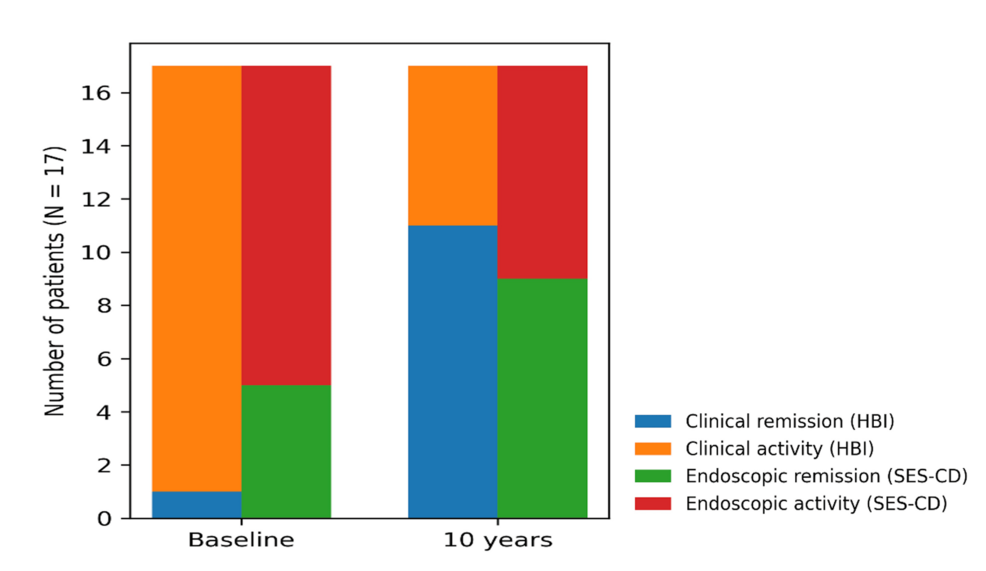
  • Baseline Double-Balloon Enteroscopy Findings and Long-Term Outcomes in Pediatric Crohn’s Disease

    Baseline Double-Balloon Enteroscopy Findings and Long-Term Outcomes in Pediatric Crohn’s Disease

    Continue Reading

  • Brushing fraud: Britons told to beware of mystery parcels as new scam soars | Scams

    Brushing fraud: Britons told to beware of mystery parcels as new scam soars | Scams

    A package arrives but you can’t remember ordering anything.

    When you open it, you find some cheap, flimsy jewellery.

    Is it a case of mistaken identity or has someone accidentally selected the wrong address? You put it to one side and wait to see if anyone claims it or contacts you to ask if you got their gift, but no one does.

    While it is far from unusual for parcels to go astray, if one arrives with all your details on it, it is possible you have become an unsuspecting cog in a large-scale “brushing” fraud, a scam that is on the increase, according to online security experts.

    Fraudsters need your postage details, which they will often obtain through a data breach. They then set up a false online account in your name on the shopping site they are selling their goods on and post a fake verified and positive review, apparently from you, about the products you have received.

    These positive five-star reviews “brush up” their online ranking on the shopping site and also their credibility. In theory, this can then increase their sales. Oliver Devane of the security company McAfee says the goods need to be sent to the customer in order for a purchase and review to be verified. These fake verified reviews are often paid for.

    While it may appear to be a victim-free scam, it could highlight that your personal details have been hacked. It also risks bringing potentially harmful toys or cosmetics into your home, says Devane.

    “If it is some little toy that you give to your child, you’ve got no idea of the quality … which is a risk in itself. You have no idea where it came from and what it contains,” he says.

    What it looks like

    The package will come out of the blue and could contain anything from a key chain gadget to random homeware or even plant seeds. The contents will be cheap and likely to be of poor quality. This could happen at any time of the year, although deliveries of the goods peak at busy shopping periods.

    In some cases, says Devane, the fraudsters may send QR codes or USB sticks with the product in the hope that people will scan them or put their into their computer. These will invariably lead to some malware being added to a phone or laptop that could result in data being stolen.

    What to do

    If you get something unexpected in the post, do not use it or consume it as it may be dangerous. For example, a toy may not be produced to proper standards or perfume may have harmful ingredients.

    Check your online accounts to make sure there has been no unauthorised order and then report it to the marketplace that it was sent from.

    Amazon says third-party sellers are prohibited from sending unsolicited packages to customers and have a way to report them here. If you can identify the fake reviews in your name, then you can inform the shopping site you are dealing with and they can take action.

    It is worth changing the password on your online shopping accounts and enabling two-factor authentication, says Devane.

    Do not try to return it to the retailer as this may prompt them to engage with you more and initiate more scams. Instead, simply throw it away after reporting it, he says.

    Continue Reading

  • Assessing Olav Thon Eiendomsselskap (OB:OLT) Valuation After Mixed 2025 Earnings And Board Changes

    Assessing Olav Thon Eiendomsselskap (OB:OLT) Valuation After Mixed 2025 Earnings And Board Changes

    Find your next quality investment with Simply Wall St’s easy and powerful screener, trusted by over 7 million individual investors worldwide.

    Olav Thon Eiendomsselskap (OB:OLT) is drawing attention after its Q4 2025 and full year results, which showed higher sales alongside a weaker bottom line, as well as fresh board changes approved at an extraordinary general meeting.

    See our latest analysis for Olav Thon Eiendomsselskap.

    Despite the quieter short term price action, with the share price at NOK335.0, Olav Thon Eiendomsselskap’s 1 year total shareholder return of 46.1% and 5 year total shareholder return of 127.79% point to strong compounding and suggest recent earnings and board changes are being weighed against a much longer period of value creation.

    If this update has you thinking about where else income focused investors might look in property and beyond, it could be worth broadening your search with 102 top founder-led companies

    With revenue at NOK3,996 million, net income at NOK1,884 million for 2025 and the share price at NOK335.0 after a strong multi year return, you have to ask: is there still value here, or is the market already pricing in future growth?

    With Olav Thon Eiendomsselskap trading at NOK335.0, its P/E of 14.1x sits below the Norwegian market average of 15.2x and below the peer average of 18.2x. This points to the market assigning a lower earnings multiple than many local and sector comparables.

    P/E compares what you pay per share to the company’s earnings per share, so a 14.1x multiple means investors are currently paying NOK14.10 for every NOK1 of annual earnings. For a property rental group that has only recently moved into profit and has a reported Return on Equity of 7.5%, that kind of multiple can reflect a fairly measured view of its earnings power.

    Relative to the wider Norwegian market, the 14.1x P/E suggests the share trades at a modest discount to the average company. It is still in line with the broader European real estate sector, which also sits at 14.1x. Compared with its closer real estate peers on 18.2x, the lower P/E signals that the market is not attaching the same earnings premium to Olav Thon Eiendomsselskap as it is to many similar businesses, even after a strong 1 year total shareholder return.

    On balance, that mix of in line sector pricing and discount to local peers gives you a clear reference point if you are trying to judge how much expectation is already baked into today’s NOK335.0 share price. See what the numbers say about this price — find out in our valuation breakdown.

    Result: Price-to-Earnings of 14.1x (ABOUT RIGHT)

    However, you still have to weigh sector specific risks such as interest rate sensitivity and any meaningful shifts in Norwegian and Swedish retail footfall or office demand.

    Find out about the key risks to this Olav Thon Eiendomsselskap narrative.

    While the 14.1x P/E makes Olav Thon Eiendomsselskap look reasonably priced against peers, our DCF model tells a different story. With the share price at NOK335 and an estimated future cash flow value of NOK217.91, the stock screens as expensive on this cash flow based view.

    That is quite a gap in absolute kroner terms. It really comes down to which lens you trust more: the earnings multiple that lines up with peers, or the cash flow model suggesting less headroom at today’s price?

    Look into how the SWS DCF model arrives at its fair value.

    OLT Discounted Cash Flow as at Feb 2026

    Simply Wall St performs a discounted cash flow (DCF) on every stock in the world every day (check out Olav Thon Eiendomsselskap for example). We show the entire calculation in full. You can track the result in your watchlist or portfolio and be alerted when this changes, or use our stock screener to discover 229 high quality undervalued stocks. If you save a screener we even alert you when new companies match – so you never miss a potential opportunity.

    If you look at the numbers and reach a different conclusion, or simply prefer your own process, you can shape a full view in minutes: Do it your way

    A great starting point for your Olav Thon Eiendomsselskap research is our analysis highlighting 2 key rewards and 3 important warning signs that could impact your investment decision.

    If Olav Thon Eiendomsselskap has sharpened your thinking, do not stop here. Fresh ideas from different angles can support how you build your portfolio.

    This article by Simply Wall St is general in nature. We provide commentary based on historical data and analyst forecasts only using an unbiased methodology and our articles are not intended to be financial advice. It does not constitute a recommendation to buy or sell any stock, and does not take account of your objectives, or your financial situation. We aim to bring you long-term focused analysis driven by fundamental data. Note that our analysis may not factor in the latest price-sensitive company announcements or qualitative material. Simply Wall St has no position in any stocks mentioned.

    Companies discussed in this article include OLT.OL.

    Have feedback on this article? Concerned about the content? Get in touch with us directly. Alternatively, email editorial-team@simplywallst.com

    Continue Reading

  • Analysts See 94% Upside To USA Rare Earth, Inc. (USAR)

    Analysts See 94% Upside To USA Rare Earth, Inc. (USAR)

    USA Rare Earth, Inc. (NASDAQ:USAR) is among the 10 best meme stocks to buy now. Its shares have returned over 60% year-to-date, with a significant surge in late January after news about the U.S. government backing a $1.6 billion funding.

    Analysts See 94% Upside To USA Rare Earth, Inc. (USAR)

    On January 26, the company announced that it had received a letter of intent for a debt-and-equity package to develop a rare-earth mine in Texas and a magnet-manufacturing facility to boost production of critical materials for the defense and tech sectors, while reducing reliance on China for supply.

    Following the development, Roth Capital on January 27 lifted its price target on USA Rare Earth, Inc. (NASDAQ:USAR) to $35 from $25, while maintaining a Buy rating. In a research note to investors, analyst Suji Desilva said the funding would help strengthen the company’s prospects for developing an end-to-end value chain for rare earth materials in the country.

    Later on January 30, Cantor Fitzgerald’s Derek Soderberg raised the firm’s price target on the stock to $35 from $28 with an Overweight rating. The analyst noted that magnet production had the potential to generate $1.2 billion in EBITDA by 2030, provided key milestones are achieved.

    As of the close of business on February 12, the stock is a Strong Buy with an average share price upside of nearly 94%.

    USA Rare Earth, Inc. (NASDAQ:USAR) is engaged in the mining and supply of rare earths and other critical materials.

    While we acknowledge the potential of USAR as an investment, we believe certain AI stocks offer greater upside potential and carry less downside risk. If you’re looking for an extremely undervalued AI stock that also stands to benefit significantly from Trump-era tariffs and the onshoring trend, see our free report on the best short-term AI stock.

    READ NEXT: 10 Best American Defense Stocks to Buy According to Wall Street Analysts and 12 Most Profitable NASDAQ Stocks to Buy Right Now.

    Disclosure: None.

    Continue Reading

  • New world for users and brands as ads hit AI chatbots

    New world for users and brands as ads hit AI chatbots

    OpenAI has sought to reassure users that ChatGPT’s responses will not be modified by the ad (SEBASTIEN BOZON) · SEBASTIEN BOZON/AFP/AFP

    The introduction of advertisements and sponsored content in chatbots has spawned privacy concerns for AI users as brands scramble to stay relevant in a fast-changing online environment.

    ChatGPT developer OpenAI began showing ads in chatbot conversations for free and low-cost users to start balancing its hundreds of billions in spending commitments with new revenue sources.

    It swiftly came in for mockery from rival Anthropic, which has staked its reputation on safety and data security.

    Anthropic’s advertisement broadcast during last week’s Super Bowl showed a man asking advice from a conversational AI, which then shoehorns advertising copy for a dating site into its otherwise relevant response.

    OpenAI boss Sam Altman shot back that the clip was “clearly dishonest”.

    Beyond OpenAI, Microsoft has been running contextual ads and sponsored content in its Copilot AI assistant since 2023.

    AI search engine Perplexity has been testing ads in the United States since 2024, while Google is also testing ads in the AI “overviews” its namesake search engine has been offering since last year.

    – Data privacy –

    Google has repeatedly denied wanting to run ads in its Gemini chatbot, with Demis Hassabis — head of the search giant’s DeepMind AI arm — saying that ads “have to be handled very carefully”.

    “The most important thing” in AI is “trust in security and privacy, because you want to share potentially your life with that assistant,” he added.

    OpenAI has sought to reassure users that ChatGPT’s responses will not be modified by the ads, which are shown alongside conversations rather than being integrated into them.

    It has also promised not to sell user data to advertisers.

    AI companies are “concerned that selling ads will scare away users,” said Nate Elliott, an analyst with US data firm Emarketer.

    But “when it’s free, you’re the product. It’s a risk we’re all more or less aware of already,” said Jerome Malzac of AI consultancy Micropole.

    “We accept it because we find value in it.”

    If that proves true, advertisers will be delighted to surf the AI wave as it crashes over the world’s internet users.

    – Game changer –

    “It’s going to be a game changer for the entire industry,” said Justin Seibert, head of Direct Online Marketing.

    “We’re already seeing how high the conversion rates (interactions resulting in a purchase) are for people that are coming in from ChatGPT and the other LLMs (large language models),” he added.

    AI assistants could account for up to two percent of the online advertising market by 2030, HSBC bank analysts suggested in a report.

    Many brands are already prioritising visibility on the new channel, including US supermarket chain Target and software maker Adobe.

    Beyond buying a spot on users’ screens, companies are also pushing for their products to appear in chatbots’ organic responses.

    The practice is known as GEO (Generative Engine Optimisation) — an evolution of the Search Engine Optimisation strategy during the era of Google’s dominance over the web.

    “We identified 90 rules that can make sure the content you create is valued by AI and spread to the right places,” said Joan Burkovic, head of French GEO startup GetMint.

    The company already claims 100 clients, including fashion brand Lacoste.

    Malzac highlighted techniques like including references to scientific papers, adding a “frequently asked questions” section to your website, and posting information that’s structured and regularly updated, Malzac said.

    “If your brand isn’t referenced (by chatbots) it no longer exists” for some users, he warned.

    dax-tu/tgb/ach/lb

    Continue Reading

  • GE HealthCare’s New ECG And AI Imaging Tools Reshape Growth Story

    GE HealthCare’s New ECG And AI Imaging Tools Reshape Growth Story

    Get insights on thousands of stocks from the global community of over 7 million individual investors at Simply Wall St.

    • GE HealthCare Technologies (NasdaqGS:GEHC) has launched ReadyFix, a remote fleet management solution focused on ECG devices, aimed at improving device uptime and configuration across large hospital networks.

    • The company also received FDA clearance and CE Marking for Allia Moveo, a compact AI powered interventional imaging system designed to support complex procedures with greater mobility and workflow integration.

    For investors watching GE HealthCare at a share price of $80.34, these product moves add context to a stock that shows mixed recent performance, with a 3 year return of 10.3% and a 1 year decline of 12.7%. The combination of a new remote management platform and an AI driven imaging system illustrates how the company is positioning itself within digital and interventional care.

    Both ReadyFix and Allia Moveo address hospital pain points around uptime, mobility and procedure efficiency, which are priorities for many providers. As you track NasdaqGS:GEHC, these launches may serve as signposts for how the company is building out its technology stack across device management and advanced imaging.

    Stay updated on the most important news stories for GE HealthCare Technologies by adding it to your watchlist or portfolio. Alternatively, explore our Community to discover new perspectives on GE HealthCare Technologies.

    NasdaqGS:GEHC Earnings & Revenue Growth as at Feb 2026

    4 things going right for GE HealthCare Technologies that this headline doesn’t cover.

    ReadyFix and Allia Moveo both sit squarely in areas where hospitals are spending to squeeze more value from existing equipment and support more complex procedures. ReadyFix targets a very practical issue for large systems, where biomedical teams manage thousands of connected devices and downtime can disrupt care. Remote diagnostics, standardized configurations and scheduled software updates speak directly to operational efficiency, an area where GE HealthCare competes with Philips and Siemens Healthineers across enterprise imaging and monitoring. Allia Moveo, with its compact, cable free C arm and AI powered guidance tools, is aimed at procedure rooms that need high quality imaging without rebuilding suites from scratch. For investors, these launches link to themes already visible in recent results, where imaging, advanced visualization and pharmaceutical diagnostics have been important contributors alongside a record order backlog. The products also complement management’s focus on more recurring and software rich revenue, as remote fleet tools and AI guidance often come with ongoing service and upgrade contracts. The key question is how quickly large accounts adopt these systems versus alternatives, and whether they help sustain the momentum that allowed GE HealthCare to exceed recent revenue and profit expectations.

    • The ReadyFix and Allia Moveo launches line up with the narrative’s focus on new high impact products in imaging and digital solutions that could support future revenue and earnings.

    • Success here may test assumptions around tariff and regulatory headwinds, since wider deployment of hardware and software outside the US could still run into the risks highlighted in the narrative.

    • The narrative leans heavily on radiopharmaceuticals and major scanners, while this news around remote fleet tools and interventional imaging may not yet be fully reflected in long term storylines about recurring digital revenue.

    Knowing what a company is worth starts with understanding its story. Check out one of the top narratives in the Simply Wall St Community for GE HealthCare Technologies to help decide what it’s worth to you.

    • ⚠️ Analysts have flagged that debt coverage by operating cash flow is a key risk, so heavier investment in new platforms could pressure flexibility if cash generation does not keep pace.

    • ⚠️ Competition from peers such as Siemens Healthineers and Philips in interventional imaging and hospital software may limit pricing power or share gains from these launches.

    • 🎁 ReadyFix and Allia Moveo support the push into digital and AI powered tools, which can deepen relationships with hospital networks and may support more stable, service based revenue.

    • 🎁 The products plug into areas where analysts already see rewards, including good relative value, earnings growth forecasts and a growing role for advanced imaging and visualization.

    From here, it is worth tracking how often management calls out ReadyFix and Allia Moveo in order and backlog commentary, and whether hospitals adopt these systems as part of larger enterprise deals. You can also watch how the mix of revenue from digital and service offerings evolves next to hardware sales, since remote fleet tools and AI guidance often go hand in hand with recurring contracts. Given that analysts already highlight both growth opportunities and balance sheet risks, future quarters will show whether new launches support earnings quality without stretching cash flow.

    To ensure you’re always in the loop on how the latest news impacts the investment narrative for GE HealthCare Technologies, head to the community page for GE HealthCare Technologies to never miss an update on the top community narratives.

    This article by Simply Wall St is general in nature. We provide commentary based on historical data and analyst forecasts only using an unbiased methodology and our articles are not intended to be financial advice. It does not constitute a recommendation to buy or sell any stock, and does not take account of your objectives, or your financial situation. We aim to bring you long-term focused analysis driven by fundamental data. Note that our analysis may not factor in the latest price-sensitive company announcements or qualitative material. Simply Wall St has no position in any stocks mentioned.

    Companies discussed in this article include GEHC.

    Have feedback on this article? Concerned about the content? Get in touch with us directly. Alternatively, email editorial-team@simplywallst.com

    Continue Reading