Category: 3. Business

  • ECB makes euro backstop global to bolster currency’s role

    ECB makes euro backstop global to bolster currency’s role

    The euro steadied near its lowest in a month on Wednesday, nursing steep losses this week as investors counted the cost of the U.S.-EU trade pact.

    Olena Malik | Moment | Getty Images

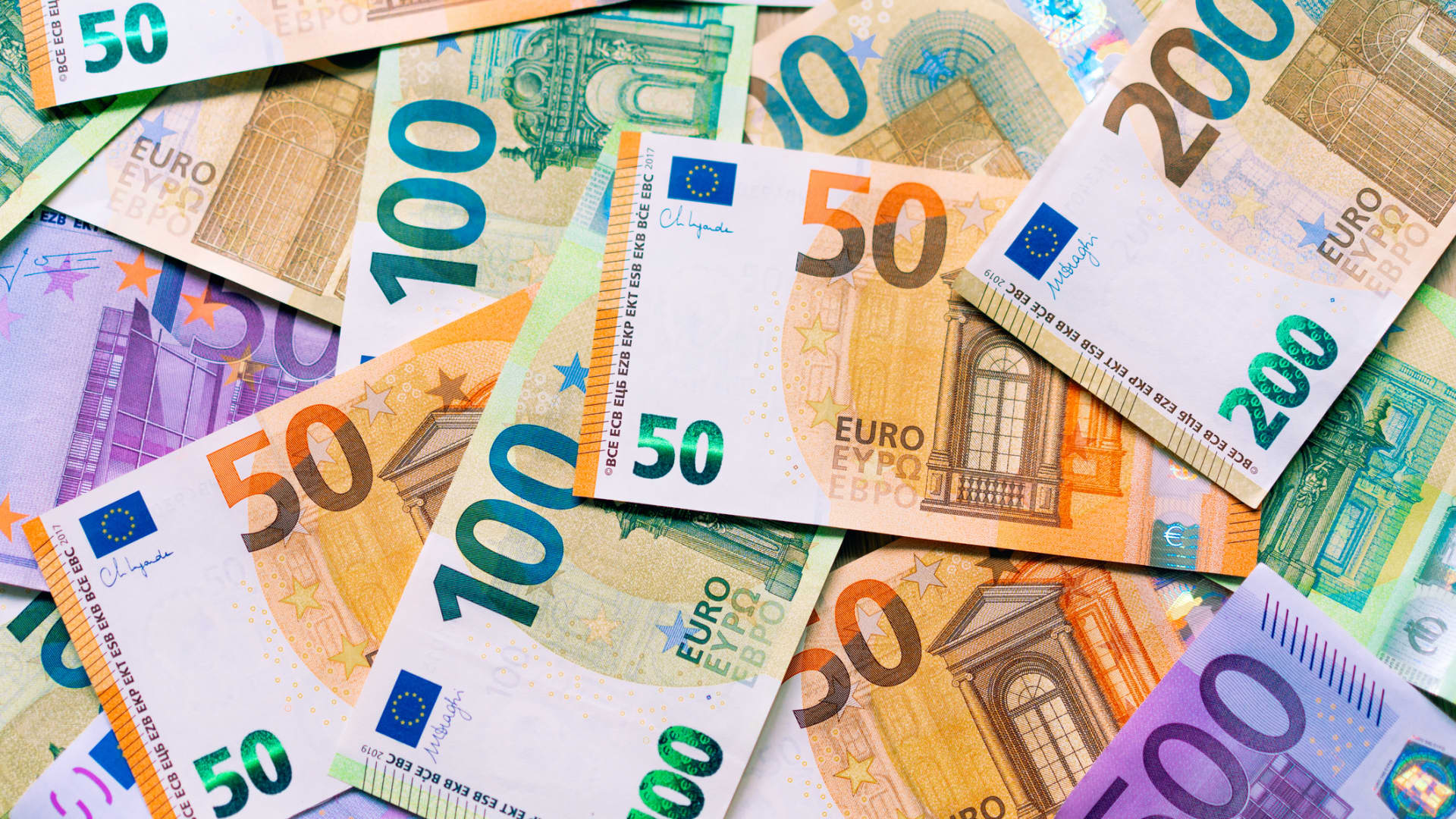
    The European Central Bank unveiled plans on Saturday to widen ⁠access to its euro liquidity backstop, making it globally available and permanent in a bid to bolster the international role of ​the single currency.

    Access to ​such repo lines, a crucial ​source of funding during times of market stress, has been limited to just a handful of mostly Eastern European countries but ECB President Christine Lagarde has long seen the facility as a tool to ⁠boost the euro’s ‌global reach.

    “The ECB needs to be prepared for ⁠a more volatile environment,” Lagarde said at the Munich Security Conference, the first time an ECB chief spoke at the event.

    “We must avoid a situation where that stress triggers fire sales of euro-denominated securities in global funding markets, which could hamper ‌the transmission of our monetary policy,” she said in announcing the new facility.

    The facility, to be available from the third quarter of 2026, will be open to all ​central banks around the world, provided they are not excluded for reputational reasons, such as money laundering, terrorist financing or international sanctions, the ECB said.

    “This facility also reinforces the role of the euro,” Lagarde said. “The availability of a lender of last resort for central banks ⁠worldwide boosts confidence to invest, borrow and trade in euros, knowing that access will be there during market disruptions.”

    Used ‌when banks are unable to obtain funding on the market, the ‌repo line allows lenders to borrow euros from the ECB against high-quality collateral, to be repaid at maturity along with interest.

    Unlike previous lines, which had to be extended from time to time, the new facility will provide ⁠standing access for up to 50 billion euros.

    With investors reassessing the dollar’s status due to ⁠the unpredictable nature of U.S. President Donald Trump’s economic policy, Lagarde has argued this ⁠was the time for the euro to gain market share, but this required a revamped financial and economic architecture.

    The U.S. Federal Reserve maintains a similar tool, ​called the FIMA Repo Facility, which essentially protects the ‌Treasury market since stress might otherwise force lenders to sell government bonds below market value.

    “These changes aim to make the facility more flexible, broader in terms of its geographical reach and more relevant for global holders of euro securities,” the ECB said in a statement.

    Such guaranteed access to euros could naturally increase demand for ​euro-denominated assets and encourage banks outside the 21-nation ‌euro zone to buy assets from the bloc.
    Continue Reading

  • Preparing for geoeconomic fragmentation

    Preparing for geoeconomic fragmentation

    Opening remarks by Christine Lagarde, President of the ECB, at a roundtable discussion on “Chain Reaction: Navigating Geoeconomic Shifts and Dependencies” at the Munich Security Conference, Germany

    Munich, 14 February 2026

    It is a mark of how much our world has changed that a central banker speaks at the Munich Security Conference on supply chains.

    A decade ago, this would have seemed like a category error. Today, everyone in this room recognises that trade is as much a security issue as an economic one.

    Economic interdependence has deepened substantially in recent decades, creating intricate webs of cross-border trade flows. Where this was once seen as a source of stability, it is now a source of vulnerability: to global disruptions like the pandemic and to deliberate weaponisation of dependencies.

    Eurosystem staff have mapped products that are hard to diversify and difficult to substitute – and we can stress test the implications of suddenly cutting off supply.

    Our analysis suggests that a sudden 50% drop in supply from geopolitically distant suppliers would reduce manufacturing value added by 2-3% – with the impact concentrated in electrical equipment, chemicals and electronics.[1]

    This shift matters profoundly for Europe. We are the most open of the major economies. Now we must make the transition to strategic autonomy.

    But what does that actually mean?

    We hear many terms – reshoring, friendshoring, coalitions of the willing – but they distill into three distinct strategies:

    • Independence: rebuilding supply chains at home in critical technologies and inputs to reduce dependence.
    • Indispensability: building strengths in critical “indispensable” areas of those supply chains.
    • Diversification: spreading supply chains across partners so that no single disruption can paralyse our economy.

    Each strategy is legitimate. But they are not the same – and without clarity, they can work at cross purposes.

    If we pursue independence in sectors where we are lagging far behind, we risk imposing costs that erode competitiveness downstream.

    For example, pursuing full autonomy in chip making could produce what one study calls “hollow champions” – firms unable to compete globally, supplying substandard technology to industries that are themselves strategic.[2]

    Yet relying solely on trade – even within alliances – also carries risks. Trusted partners do not always remain so.

    In some critical sectors, we need to build domestic capacity, even when it is temporarily more expensive. In 2023, the US conducted 114 orbital launches. Europe conducted three.[3]

    Broad-brush strategies will not work. They may create unnecessary costs or miss real chokepoints. We need a targeted approach: understanding our strengths and weaknesses at a granular level, and evaluating costs and benefits.[4]

    What does this mean from the ECB’s perspective? Let me focus on one key initiative.

    The ECB needs to be prepared for a more volatile environment. As industrial policy becomes more assertive, geopolitical tensions rise and supply chains are disrupted, financial market stress is likely to become more frequent.

    We must avoid a situation where that stress triggers fire sales of euro-denominated securities in global funding markets, which could hamper the transmission of our monetary policy. And this means we have to give partners who want to transact in euros the confidence that euro liquidity will be available if they need it.

    That is why, last week, the Governing Council decided to expand our EUREP facility – our standing facility that offers euro liquidity against high-quality collateral.

    This expanded facility provides permanence: central banks outside the euro area can now rely on continuous access to liquidity in euros, not just temporary lines.

    It extends scope: we move from a regional to a global perimeter. Any central bank that meets basic criteria can request access, with flexibility on usage.

    And it ensures agility: access is granted by default unless there is a reason to restrict it, speeding up the provision of liquidity.

    This facility also reinforces the role of the euro. The availability of a lender of last resort for central banks worldwide boosts confidence to invest, borrow and trade in euros, knowing that access will be there during market disruptions.

    In a world where supply chain dependencies have become security vulnerabilities, Europe must be a source of stability – for ourselves and for our partners.

    That, too, is part of European security. And that is how the ECB plays its part.

    Continue Reading

  • Five compelling stocks to buy like Nvidia

    Five compelling stocks to buy like Nvidia

    Continue Reading

  • HELLO CHERY TIGGO 9 – Pakistan’s First Luxury E-SUV Price Announced

    HELLO CHERY TIGGO 9 – Pakistan’s First Luxury E-SUV Price Announced

    Lahore, Pakistan, 13 February 2026 – the grand launch of the Tiggo 9 Plug-in Hybrid marks a defining moment in Pakistan’s automotive landscape.

    HELLO CHERY reflects how Chery enters markets differently. Before introducing products, it established its aftersales infrastructure and service readiness, placing customer assurance first. Rooted in long-term commitment, Chery is China’s No. 1 automotive exporter for 23 consecutive years, with presence in over 120 countries and one in every four vehicles contributing to China’s total vehicle exports globally. In Pakistan, the brand is introduced by Master Auto Engineering, a subsidiary of the Master Group, a name trusted by millions over the last 60 years.

    The brand in Pakistan is following a disruptive-first approach, starting with Tiggo 8, Pakistan’s first 7-seat plug-in hybrid D-SUV.

    Tiggo 9 is one step ahead of the market, being Pakistan’s only premium E-SUV. Tiggo 9 is not here to disrupt a segment; it is here to create one. As the flagship of Chery Master Pakistan’s plug-in hybrid (PHEV) portfolio, Tiggo 9 represents the brand’s most elevated expression of performance, safety, quality, and luxury.

    Chery Super Hybrid technology, the world’s best plug-in hybrid system, powers Tiggo 9, delivering seamless electric driving with long-range confidence. With up to 170 km of pure electric range and a combined driving range of up to 1,400 km, it offers freedom without limitation. Advanced all-wheel drive, Cloud Chassis suspension, and a combined output of 610 hp and 920 Nm translate performance into calm authority. Power flows smoothly and quietly, delivering first-class composure—insulated and in control.

    Inside, Tiggo 9 delivers a European-class cabin where luxury is experienced, not declared. With 78.9% soft-wrapped surfaces, door-mounted seat controls, front-row massage seats, and heated and ventilated seating in both the first and second rows, it delivers a combination no other SUV in Pakistan offers. A 15.6-inch infotainment display, a 10.25-inch digital cluster, and a 14-speaker Sony immersive sound system transform every journey into a moving theatre, while 6.6 kW vehicle-to-load capability ensures power travels with you wherever you go.

    Tiggo 9 stands as Pakistan’s safest SUV, with 10 airbags, Level 2 Plus ADAS featuring over 27 advanced driver-assistance functions, automatic parking, and Euro 6B compliance.

    Commenting on the launch, Samir Malik, CEO of Chery Master Pakistan, said: “Tiggo 9 stands as Chery’s global flagship SUV, the ultimate expression of luxury. We are proud to introduce a new benchmark to Pakistani customers with Tiggo 9, a vehicle that doesn’t just create its own segment, but defines it. As we reshape the automotive landscape, Tiggo 9 sets new standards across the board. It represents our promise in its purest form: the fastest, safest, most efficient premium E-SUV, delivering the longest combined range.”

    The Tiggo 9 Plug-in Hybrid is introduced at an introductory price of PKR 13,694,000, with a booking amount of PKR 3,000,000. Customers can book via Chery Pakistan’s official website or through the official dealership network. Test drives are now available across dealerships nationwide.


    Continue Reading

  • Petrol and Diesel Prices Likely to Increase Next Week

    Petrol and Diesel Prices Likely to Increase Next Week

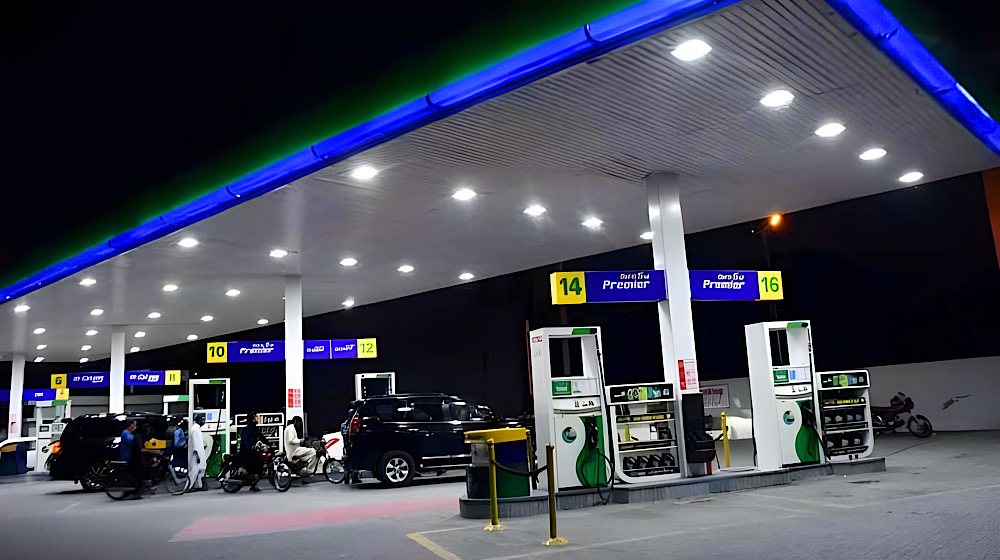
    Petroleum product prices are likely to rise in the upcoming fortnight, with revised rates expected to take effect from February 16 if approved by the government. The proposed increase could go as high as Rs. 6.55 per litre, according to sources familiar with the pricing review.

    Petrol is expected to increase by Rs. 4.39 per litre, while high-speed diesel may see a hike of Rs. 5.40 per litre. Kerosene oil is likely to go up by Rs. 4 per litre, and light diesel oil may increase by Rs. 6.55 per litre.

    Sources said the working on revised petroleum prices has been completed. The Oil and Gas Regulatory Authority will send a summary of the proposed adjustments to the Petroleum Division. After approval from Prime Minister Shehbaz Sharif, the division will issue a formal notification.

    If cleared, the new prices will come into effect from February 16 for the next 15-day period.

    Earlier, on January 31, the federal government increased the price of high-speed diesel by Rs. 11.3 per litre, raising it from Rs. 257.08 to Rs. 268.38. The price of petrol remained unchanged at Rs. 253.17 per litre. The revised rates took effect from February 1 for the ongoing fortnight.


    Continue Reading

  • Six Wall Street bank chiefs bring in combined pay of $250mn in 2025

    Six Wall Street bank chiefs bring in combined pay of $250mn in 2025

    Stay informed with free updates

    The pay of Wall Street bank bosses soared last year as six of them took home more than $250mn combined, potentially further widening the gap with average bank workers.

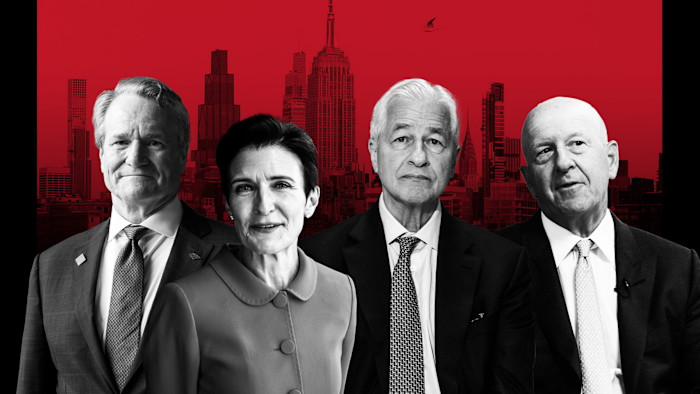
    The heads of the largest US banks by assets — JPMorgan, Bank of America, Citigroup, Goldman Sachs, Wells Fargo and Morgan Stanley — all received $40mn or more in annual pay, according to recent regulatory filings. BofA chief Brian Moynihan’s $41mn pay award for 2025 was disclosed in a regulatory filing by the bank late on Friday.

    The combined average pay increases for the six chiefs represented a 22 per cent increase over the prior year. With their average remuneration already standing at 298 times that of their median bank employees in 2024, according to regulatory filings, the robust raises stand to further widen the gap with the rank-and-file at a time when inflation and modest wage gains are making affordability issues a top concern across the economy.

    Still, the CEOs presided over average stock price gains of 42 per cent last year — perhaps the most closely watched measure of executive performance.

    “It’s bull market banking with bull market results and bull market pay for the CEOs,” said Wells Fargo banking analyst Mike Mayo. “Directionally, it’s correct.”

    Goldman Sachs’ David Solomon was the highest paid CEO with a $47mn total package that included a $10.1mn cash bonus, $31.5mn in stock and $3.4mn in carried interest from the funds the bank manages. Goldman added carried interest to Solomon’s pay a year ago in order to reflect the pay framework of large asset managers to retain top talent.

    Some content could not load. Check your internet connection or browser settings.

    Moynihan’s pay award represented a 17 per cent jump over the previous year, the bank’s regulatory filing said. The disclosure came a day after Citi said its chief executive Jane Fraser had been paid $42mn for the same period, nearly a quarter more than the previous year. She also received a $25mn retention bonus in October.

    Fraser’s pay was $1mn shy of the $43mn awarded to JPMorgan CEO Jamie Dimon, while Morgan Stanley’s Ted Pick received $45mn in the same period.

    The market capitalisation of US banks surged in the past year as Donald Trump’s deregulatory agenda and a revival in investment banking helped boost their earnings. Banks have benefited from the rollback of several rules that have encumbered the sector since the aftermath of the 2008 financial crisis.

    Some content could not load. Check your internet connection or browser settings.

    Last year, US regulators made proposals to allow higher leverage for the largest banks, overhauled annual banking stress tests used to determine capital requirements and rescinded lending guidance for riskier loans. 

    Mayo said the higher pay packages were also a sign of confidence in bank performance in the next few years, which he expects will bring record revenue for traditional banking and capital markets activity.

    In addition to market conditions and the regulatory easing, individual banks such as Wells Fargo and Citi, which have traditionally lagged behind their peers on executive pay and performance, were also lifted as they hit separate milestones.

    Citi was the best-performing big Wall Street bank stock in 2025, as the lender — which has trailed peers since the financial crisis — nears the completion of a high-stakes restructuring. The board cited Fraser’s “bold choices she has made to position the firm for further growth” and said it has completed more than 80 per cent of its transformation. The bank hit its highest share price since the financial crisis in July.

    Wells Fargo’s Charlie Scharf led the California-headquartered bank through the removal of a $2tn asset cap imposed by regulators in June. The punitive cap had been imposed by regulators after its “fake accounts” scandal, in which Wells opened accounts in customers’ names without their knowledge.

    Fraser and Scharf received the title of chair in 2025, in addition to their existing chief executive roles, while Fraser was granted a $25mn retention bonus in October. Combining the CEO and chair roles is a commonplace model that was already favoured by JPMorgan, Morgan Stanley, Bank of America and Goldman Sachs.

    Additional reporting by Louis Ashworth in New York

    Continue Reading

  • MTN and Huawei Jointly Complete World’s First Large-scale Deployment of the Alpha Antenna, Leading Africa’s AI-Powered Network

    MTN and Huawei Jointly Complete World’s First Large-scale Deployment of the Alpha Antenna, Leading Africa’s AI-Powered Network

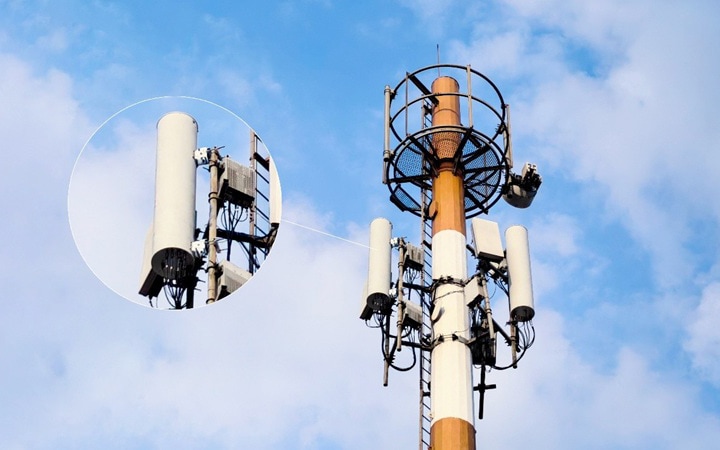
    [Accra, Ghana, February 14, 2026] Recently, Africa leading operator MTN, in collaboration with Huawei, successfully completed the world’s first large-scale deployment of the Alpha Antenna in Ghana. This milestone represents a substantial enhancement in network performance, with the transition to intelligent and AI-driven innovation establishing a new benchmark for the evolution toward autonomous driving networks in Africa and globally. This deployment has validated groundbreaking performance improvements and operational efficiencies. Post-deployment tests recorded a rise in regional traffic by 6.8%, while improving operations and maintenance efficiency by a factor of 30x.

    World’s first large-scale Alpha Antenna deployed by MTN Ghana and Huawei

    Confronting persistent network operations and maintenance challenges of manual dependency, slow adaptation, and inconsistent accuracy, MTN has unlocked a new paradigm through the Alpha Antenna deployment. The solution’s integrated AISU (Antenna Information Sensor Unit) enables fully automated, real-time, and precise retrieval of antenna parameters, eliminating manual site visits. The AIMU (Array Information Mapping Unit) ensures real-time and exact visualization of network topology, eradicating configuration errors. Furthermore, it supports remote adjustment of multi-dimensional beams, allowing the network to dynamically adapt coverage and capacity to real-time demands, collapsing optimization cycles from weeks to minutes while delivering a consistently superior user experience.

    The Alpha antenna is driving a paradigm shift in network operations by endowing networks with closed-loop capabilities for “real-time retrieval, precise control, and dynamic optimization”—transitioning from passive, reactive manual intervention to a proactive, AI-powered model. This transition provides a crucial “digital foundation” for MTN in building a high-level Autonomous Driving Network (ADN), making self-optimization and autonomous evolution of the network a reality.

    MTN Ghana states that the Alpha Antenna solution represents a pivotal step toward the full digital transformation of network infrastructure. It not only significantly reduces operational complexity and costs but, more importantly, empowers the network with real-time retrieval and rapid-response capabilities. This successful collaboration with Huawei has laid a solid foundation for future AI-driven intelligent networks, injecting fresh momentum into Africa’s digital transformation.

    Continue Reading

  • PSX poised for recovery as domestic, geopolitical risks subside, focus shifts to earnings: report

    PSX poised for recovery as domestic, geopolitical risks subside, focus shifts to earnings: report

    The Pakistan Stock Exchange (PSX) is expected to recover as domestic and geopolitical uncertainties subside, with investor focus likely to shift toward upcoming financial results and improving macroeconomic indicators, according to reports by two brokerage firms.

    AKD Research expects the market to rebound as uncertainties ease, adding that attention will remain on the ongoing result season and macroeconomic stability.

    Arif Habib Limited (AHL), in its weekly outlook, said the KSE-100 Index may witness temporary moderation in the coming week as Ramadan begins. However, the ongoing earnings season could provide further upside, particularly if companies post stronger-than-expected results.

    AKD, however, maintained its projection for the KSE-100 Index to reach 263,800 by December 2026.

    The market remained bearish during the week amid investor skepticism over political developments and recent domestic security incidents. These concerns, coupled with delays in the financial close of Reko Diq, weighed on the oil and gas sector, which recorded the largest index point decline. Overall, the benchmark index fell by 4,526 points, or 2.5% week-on-week (WoW), to close at 179,604 points.

    The pressure was partially offset by supportive macroeconomic developments, including: (i) a budget surplus of Rs542 billion (0.4% of GDP) in 1HFY26 compared to a deficit of Rs1.5 trillion in the same period last year (SPLY); (ii) a 15% year-on-year (YoY) increase in worker remittances to $3.5 billion in January 2026; and (iii) auto sales reaching a 43-month high during the month.

    During the week, Moody’s revised Pakistan’s banking system outlook from positive to stable, stating that although macroeconomic indicators have improved, recovery in the operating environment remains gradual.

    Remittances by overseas Pakistanis rose 15% YoY to $3.5 billion in January 2026, compared to $3.0 billion in January 2025. On a month-on-month (MoM) basis, remittances declined 4%.

    Auto sales increased to 23,100 units in January 2026, up 74% MoM and 35% YoY.

    In the MSCI February 2026 review, ABOT was removed from the MSCI FM Standard Pakistan Index. SEPL and ZAL were added to the MSCI FM Small Cap Index, while LPL was deleted.

    During the first week of February 2026, gas production declined 7.8% WoW to 2,798 mmcfd, while oil production fell 11.7% WoW to 59,121 barrels per day (bopd).

    According to AHL, sector-wise negative contributions came from: (i) Banks (-1,901 points), (ii) E&Ps (-1,298 points), (iii) Technology (-484 points), (iv) Fertilizer (-372 points), and (v) Power (-306 points). Positive contributions were recorded by: (i) Investment Banks (+631 points), (ii) Pharma (+36 points), (iii) Transport (+5 points), (iv) Vanaspati & Allied (+2 points), and (v) Tobacco (+1 point).

    Scrip-wise, major negative contributors were OGDC (-578 points), PPL (-572 points), UBL (-410 points), EFERT (-362 points), and BAHL (-359 points). Positive contributions came from ENGROH (+631 points), FFC (+81 points), AGP (+73 points), INDU (+31 points), and MCB (+25 points).

    Average daily trading volume stood at 862 million shares, down 15% WoW, while average daily traded value declined 13% WoW to $152 million.

    However, overall market participation strengthened, with average daily traded volume (ADTV) rising 8% WoW to 1.1 billion shares, compared to 983 million shares in the previous week.

    State Bank of Pakistan (SBP) foreign exchange reserves increased by $21 million WoW to $16.2 billion as of February 6.

    On the currency front, the Pakistani rupee appreciated 0.03% WoW against the US dollar, closing at Rs279.62 per dollar.


    Continue Reading

  • Valentine’s lamps, Easter rugs: ‘seasonal decor’ has become a year-long tat-fest | Amelia Tait

    Valentine’s lamps, Easter rugs: ‘seasonal decor’ has become a year-long tat-fest | Amelia Tait

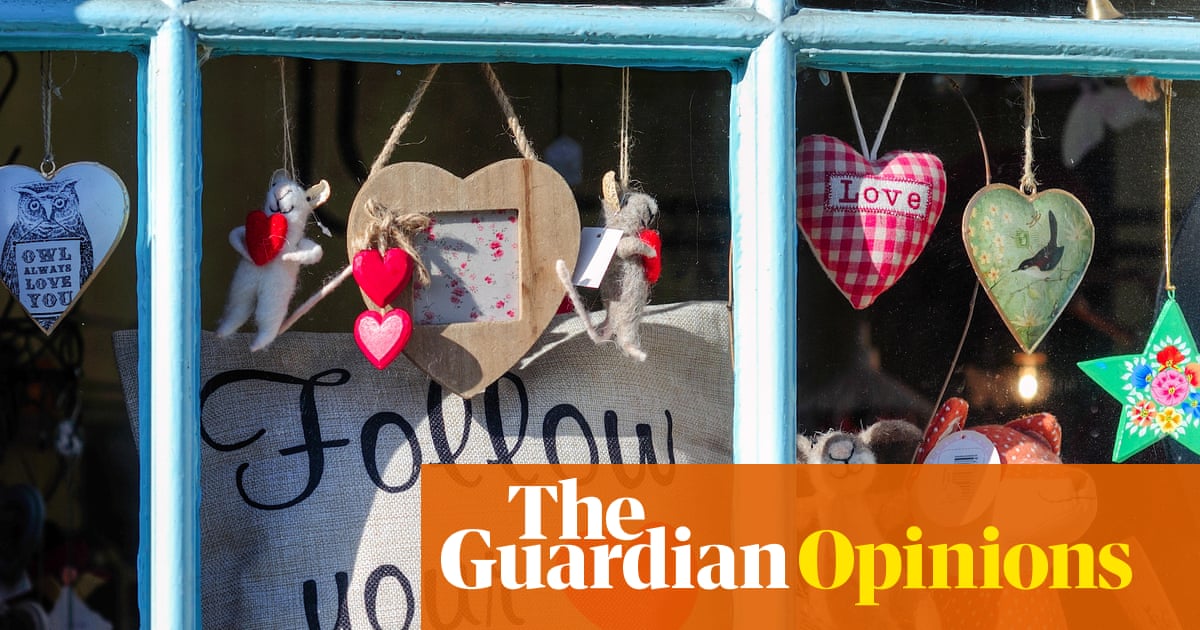
    It’s Valentine’s Day, which means you should have spent the last few weeks swapping all of the lamps in your house. If not, you still have a few hours: box up your beige lampshades (or better yet, throw them in the bin) and replace them with ones of red and pink hues. Then – if you want to feel mentally well – you must also change your lightbulbs, because “warm white lighting” is the best way to ensure your crimson decor doesn’t look “too harsh”.

    This is according to online lighting company Pooky, which is selling 43 “lust-worthy lamps” (and shades) for Valentine’s Day. A press release sent on behalf of the brand in late January proudly declared that Google searches for “seasonal decor” have increased 70% year-on-year globally, while queries about “Valentine’s decor” have soared 2,584% since the start of 2026. “The beauty of seasonal lighting,” said Pooky’s chief creative officer, “is that it’s easy to rotate. Store one or two Valentine lampshades, a set of rose-tinted bulbs and a handful of candles in a labelled box, and you can transform your home every February in minutes.”

    Indoor Halloween decorations in a family home. Photograph: thelittlegreyartist/Alamy

    That’s all very well and good, but what if my “lusty lighting” box won’t fit next to the plastic tubs holding my “autumn oven gloves”, “Halloween curtain rods” and “Easter rugs”? Wouldn’t it be faster – better, even – to join the 62% of Britons who simply throw perfectly good homeware in the bin? After all, how else will I find the time on 16 March to swap from my Mother’s Day to St Patrick’s Day decor?

    Can I just ask: what are we doing? More than a quarter of Britons feel homeware trends are “changing at an increasingly fast pace”, and 70m items of home decor are thrown away every year. I’ll concede there are some things worth destroying the planet for (flying! We literally get to fly across the sky!), but surely not this? Surely we can all agree that the climate apocalypse isn’t a fair exchange for a “brown resin Valentines dog ornament” wearing heart-shaped glasses and a little pink bow? (It’s uglier than you think, please do not click.)

    It’s not that seasonal decor can never make sense. It’s the balm we’ve sought during the cost of living crisis, when many people find it too expensive to go out, and home is where the heart-shaped frying pan is. Socialising is costlier than ever, but novelty ceramics have seemingly never been cheaper. And it’s understandable that we want our living spaces to be cosy and calm when the world outside is anything but.

    But leaving aside the harm to the planet – and how often we do! – “fast homeware” is full of false promises. In the 41,000 TikTok videos tagged “seasonal decor” (plus countless others hashtagged #autumnaesthetic or #springvibes), influencers promise that swapping out your homeware can boost your mood, spark joy and even “heal your soul”. For years, marketers and content creators have savvily used the names of happiness hormones to conflate shopping and personal wellbeing. TK Maxx has a page on its website called Dopamine Home Decor (under the umbrella of Home Seasonal Events).

    I hate to be the one to tell you this, but a spring-themed bath mat is not going to markedly improve your mental health. In reality, overconsumption has been repeatedly linked to lower wellbeing and even psychological distress. Personally, I know that the buzz of buying something is often quickly replaced with an empty sensation and a desire for more – the satisfaction somehow never seems to last.

    ‘The year-round demand for novelty is not going anywhere any time soon.’ Photograph: Pixel-shot/Alamy

    Plus, there are faster and cheaper ways to get a dose of dopamine (music, meditation and especially volunteering, for a start). And if you’re an aesthete, never fear! I actually know a fantastic little designer who redecorates seasonally, free of charge. Her name is mother nature, and she also swaps out the bulbs.

    Of course, I’m fighting a losing battle: online content creators must create content and supermarkets must generate ever-increasing profits, so the year-round demand for novelty is not going anywhere any time soon. If I can’t beat them, maybe I should join them – and charge for my ideas (a jester’s-hat butter dish for April Fools’ Day; an Ash Wednesday kettle). Or maybe I have one last trick up my sleeve to make you reconsider: think of your grandma’s home.

    She never swapped out the lamps – the things on her coffee table were the things on her coffee table, collected over the course of a lifetime, consistent while you grew and changed. That stained, stainless steel teapot spoke to you from a different era; it showed you the world existed before you existed, it promised that things could endure after you were gone. Isn’t there meaning and happiness to be found in consistent homeware, in a home that reflects your personality, and in a personality that’s unwavering in the face of marketing trends? Wait, no. I’ve got it: bank-holiday shoe rack.


    Continue Reading

  • Thames Valley Police issue Valentine's Day romance scam warning – BBC

    Thames Valley Police issue Valentine's Day romance scam warning – BBC

    1. Thames Valley Police issue Valentine’s Day romance scam warning  BBC
    2. Flirty Frauds, Discord Dramas, and Payroll Pirates: This Week in Digital Danger  PCMag
    3. ‘Cupid doesn’t ask for crypto’: DOJ warns of romance scams as Valentine’s Day nears  The Block
    4. The warning signs someone isn’t who they say they are online (or in person)  Quad City Herald
    5. FBI Warns Of Romance Scams, North Floridians Lost $22.5 Million Last Year  NorthEscambia.com

    Continue Reading