Category: 3. Business

  • Assessing Interparfums (IPAR) Valuation After Strong 2025 Sales And European Growth Update

    Assessing Interparfums (IPAR) Valuation After Strong 2025 Sales And European Growth Update

    Make better investment decisions with Simply Wall St’s easy, visual tools that give you a competitive edge.

    Interparfums (IPAR) just reported its fourth quarter and full year 2025 sales, with net sales of US$386 million for the quarter and US$1.489 billion for the year, both above prior year levels.

    Management also highlighted 9% fourth quarter sales growth in European based operations, supported by brands such as Coach, Lacoste, and Montblanc, which helps explain the recent share price reaction and renewed attention on the stock.

    See our latest analysis for Interparfums.

    The recent sales update has coincided with a sharp pickup in momentum, with a 7 day share price return of 9.82% and a 30 day share price return of 15.82%. This comes even though the 1 year total shareholder return is a 27.84% decline and the 3 year total shareholder return is a 6.08% decline, while the 5 year total shareholder return remains a 77.29% gain.

    If this kind of rebound catches your eye, it may be worth widening the lens to other fragrance and beauty peers by scanning stable growth stocks screener (None results).

    With Interparfums trading at US$98.76, some models suggest the shares sit at a sizable intrinsic discount, while recent sales strength and analyst optimism raise a simple question for you: is this a buying opportunity or is future growth already priced in?

    Interparfums’ most followed narrative pegs fair value at about $103.60 per share, slightly above the recent $98.76 close. This frames the current debate around upside potential versus execution risk.

    Interparfums is significantly expanding its e-commerce and digital marketing capabilities, including targeted programs for channels like Amazon and TikTok. This positions the company to capture incremental market share and drive international sales by engaging directly with global consumers, which may affect revenue and margin trends due to increased reach and potentially higher-margin channels.

    Read the complete narrative.

    Curious what kind of revenue lift and margin profile this story is built on? The narrative leans on measured growth assumptions and a higher future earnings multiple. The full picture connects those forecasts to a specific fair value path for Interparfums.

    Result: Fair Value of $103.60 (UNDERVALUED)

    Have a read of the narrative in full and understand what’s behind the forecasts.

    However, this story can change quickly if key fragrance licenses underperform or are not renewed, or if retailer destocking and weaker orders affect reported sales.

    Find out about the key risks to this Interparfums narrative.

    If you see the numbers differently or prefer to run your own assumptions, you can build a custom view of Interparfums in just a few minutes, Do it your way.

    A great starting point for your Interparfums research is our analysis highlighting 3 key rewards and 1 important warning sign that could impact your investment decision.

    If you stop at one company, you risk missing opportunities that better fit your style, so broaden your watchlist and let the numbers work for you.

    This article by Simply Wall St is general in nature. We provide commentary based on historical data and analyst forecasts only using an unbiased methodology and our articles are not intended to be financial advice. It does not constitute a recommendation to buy or sell any stock, and does not take account of your objectives, or your financial situation. We aim to bring you long-term focused analysis driven by fundamental data. Note that our analysis may not factor in the latest price-sensitive company announcements or qualitative material. Simply Wall St has no position in any stocks mentioned.

    Companies discussed in this article include IPAR.

    Have feedback on this article? Concerned about the content? Get in touch with us directly. Alternatively, email editorial-team@simplywallst.com

    Continue Reading

  • Industrial And Commercial Bank Of China (SEHK:1398) Valuation Revisited As Recent Returns Draw Fresh Investor Attention

    Industrial And Commercial Bank Of China (SEHK:1398) Valuation Revisited As Recent Returns Draw Fresh Investor Attention

    Track your investments for FREE with Simply Wall St, the portfolio command center trusted by over 7 million individual investors worldwide.

    With no single headline event driving attention today, Industrial and Commercial Bank of China (SEHK:1398) is drawing interest as investors reassess its recent share performance and core banking fundamentals.

    See our latest analysis for Industrial and Commercial Bank of China.

    Short term share price momentum has cooled, with a 7 day share price return of 3.15% and a year to date share price return of 3.00%. However, the 1 year total shareholder return of 23.62% and 5 year total shareholder return of 82.41% show that longer term investors have so far been rewarded.

    If ICBC has you thinking about where else value and income might be hiding in financials, it could be a good time to scan other solid balance sheet and fundamentals stocks screener (None results) for comparison.

    ICBC currently trades at HK$6.15. Some models suggest a meaningful intrinsic discount and analysts’ targets sit higher, so the real question for you is whether this is genuine value or if the market already expects stronger growth.

    With ICBC last closing at HK$6.15 and the most followed narrative pointing to a fair value of about HK$7.26, the gap between price and narrative value is front and center for investors weighing the story against the screen.

    Diversification into technology finance, green finance (green loans up 16.4%), and inclusive finance (up 17.3%) is creating new long-term growth engines, reducing dependency on traditional lending, and supporting stable or growing earnings despite sectoral headwinds.

    Read the complete narrative.

    Curious what sits behind that growth engine claim? Revenue, earnings and future valuation multiples are all wired into this story. The assumptions are bolder than they look at first glance.

    Result: Fair Value of HK$7.26 (UNDERVALUED)

    Have a read of the narrative in full and understand what’s behind the forecasts.

    However, the story could change quickly if profit margins stay under pressure or if policy driven lending keeps capital tied up in lower returning activities.

    Find out about the key risks to this Industrial and Commercial Bank of China narrative.

    If this narrative does not quite match your view, you can dig into the numbers yourself, test your own assumptions and Do it your way in just a few minutes.

    A good starting point is our analysis highlighting 5 key rewards investors are optimistic about regarding Industrial and Commercial Bank of China.

    If you stop at just one stock, you risk missing opportunities that could fit your style even better. Keep your watchlist open and your options wide.

    This article by Simply Wall St is general in nature. We provide commentary based on historical data and analyst forecasts only using an unbiased methodology and our articles are not intended to be financial advice. It does not constitute a recommendation to buy or sell any stock, and does not take account of your objectives, or your financial situation. We aim to bring you long-term focused analysis driven by fundamental data. Note that our analysis may not factor in the latest price-sensitive company announcements or qualitative material. Simply Wall St has no position in any stocks mentioned.

    Companies discussed in this article include 1398.HK.

    Have feedback on this article? Concerned about the content? Get in touch with us directly. Alternatively, email editorial-team@simplywallst.com

    Continue Reading

  • New Governance Pacts And Omnichannel Push Might Change The Case For Investing In High Tide (TSXV:HITI)

    New Governance Pacts And Omnichannel Push Might Change The Case For Investing In High Tide (TSXV:HITI)

    • High Tide Inc. recently filed a Form 6-K detailing new Voting Support and Standstill Agreements, formalizing arrangements that may shape its future governance structure.

    • At the same time, the company is pushing a multi-channel cannabis retail approach across bricks-and-mortar and global e-commerce, aiming to deepen its presence in cannabis culture niches.

    • We’ll now explore how these governance agreements and High Tide’s multi-channel cannabis retail ambitions could influence its broader investment narrative.

    These 9 companies survived and thrived after COVID and have the right ingredients to survive Trump’s tariffs. Discover why before your portfolio feels the trade war pinch.

    To own High Tide, you have to buy into a multi-channel cannabis retailer that is still unprofitable yet growing its CA$568.25 million revenue base, rolling out Canna Cabana stores and e-commerce while trying to stay lean enough to eventually turn a profit. Short-term, the big swing factors remain sector sentiment around cannabis regulation, how efficiently the company integrates new locations in Canada and Germany, and what shows up in the upcoming Q4 2025 results on January 29. The new Voting Support and Standstill Agreements look more like a governance clean-up than a near-term earnings catalyst, and the muted share price reaction over the past month suggests the market sees them the same way. They may matter over time if they stabilize control, but they do not remove the key risks around regulation, ongoing losses and balance sheet pressure. However, one governance-related risk here is easy to miss at first glance.

    High Tide’s share price has been on the slide but might be up to 16% below fair value. Find out if it’s a bargain.

    TSXV:HITI 1-Year Stock Price Chart

    The Simply Wall St Community’s 12 fair value estimates for High Tide span roughly CA$3.01 to CA$26.39, showing just how far apart views can be. Set that against a company that is still loss making and dependent on sector regulations for its growth plans, and it is clear you are weighing very different possible futures. It is worth seeing how other private investors frame those trade offs before deciding where you stand.

    Explore 12 other fair value estimates on High Tide – why the stock might be worth 14% less than the current price!

    Disagree with this assessment? Create your own narrative in under 3 minutes – extraordinary investment returns rarely come from following the herd.

    • A great starting point for your High Tide research is our analysis highlighting 4 key rewards that could impact your investment decision.

    • Our free High Tide research report provides a comprehensive fundamental analysis summarized in a single visual – the Snowflake – making it easy to evaluate High Tide’s overall financial health at a glance.

    Our daily scans reveal stocks with breakout potential. Don’t miss this chance:

    This article by Simply Wall St is general in nature. We provide commentary based on historical data and analyst forecasts only using an unbiased methodology and our articles are not intended to be financial advice. It does not constitute a recommendation to buy or sell any stock, and does not take account of your objectives, or your financial situation. We aim to bring you long-term focused analysis driven by fundamental data. Note that our analysis may not factor in the latest price-sensitive company announcements or qualitative material. Simply Wall St has no position in any stocks mentioned.

    Companies discussed in this article include HITI.V.

    Have feedback on this article? Concerned about the content? Get in touch with us directly. Alternatively, email editorial-team@simplywallst.com

    Continue Reading

  • ‘Violent’ Price Spike Rocks Gas Traders Who Made Bad Winter Bets

    ‘Violent’ Price Spike Rocks Gas Traders Who Made Bad Winter Bets

    Photographer: Callaghan O’Hare/Bloomberg

    Months of mild weather lulled US and European gas traders into believing winter would bring more of the same — not the brutal freeze gripping much of America.

    Their bad bet is now reverberating around the world.

    Most Read from Bloomberg

    Futures prices for natural gas — fuel for home furnaces and power plants alike — jumped 70% in the US over a wild week of trading, as forecasts for deep cold grew steadily worse. The previous week, prices rose 30% in Europe, where a cold snap combined with geopolitical jitters to drive up the market. Before the sudden surge, many traders on both sides of the Atlantic had been betting prices would fall instead.

    Nor is it certain that the worst of the run-up is over.

    Temperatures in gas-producing parts of the US could drop low enough in coming days to freeze pipelines — potentially choking off supplies just as demand for the fuel soars. While the main futures market is closed over the weekend, some spot trading will continue. With that in mind, one trading team planned to spend Saturday and Sunday at a downtown Houston hotel to ensure backup power generation — and a stable internet connection to the Intercontinental Exchange trading platform — should blackouts sweep the region.

    “Everyone’s in panic mode right now,” said Paul Phillips, senior strategist for Uplift Energy Strategy, a Denver, Colorado-based gas trading firm. “People were writing off winter last week.”

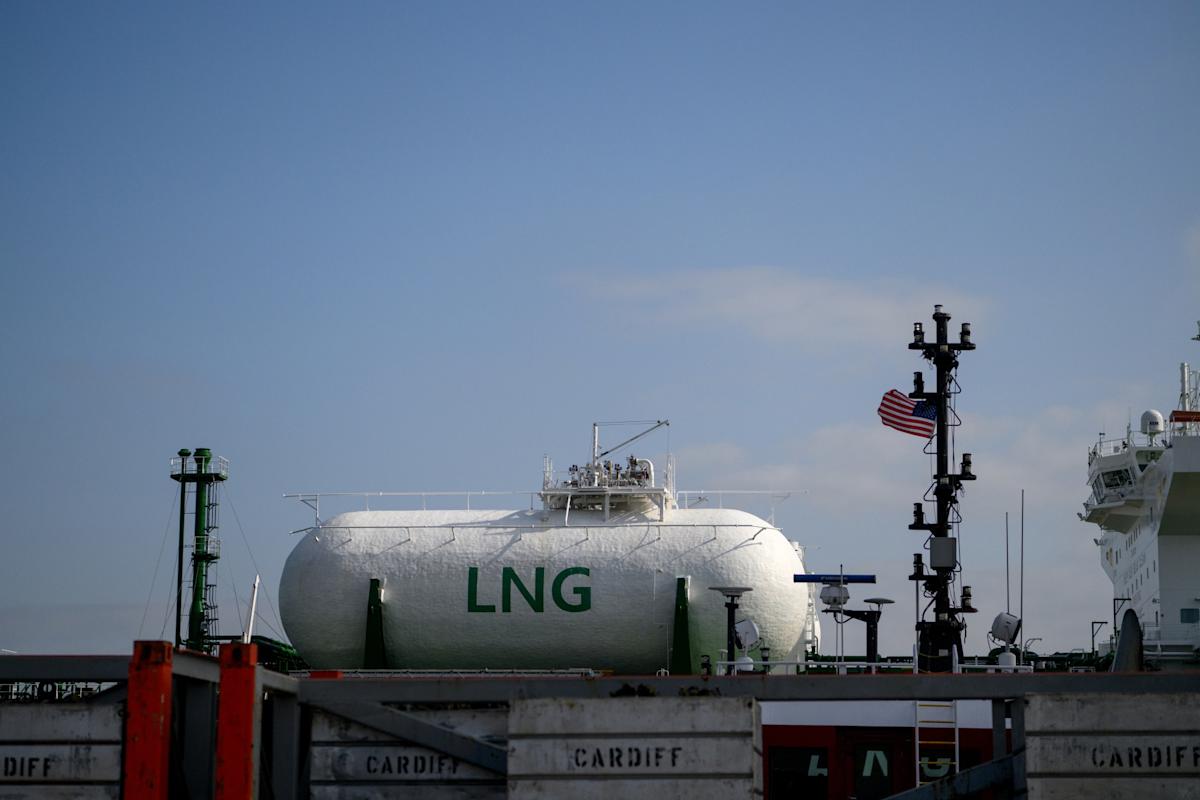
    The price spike — the most abrupt weekly increase on record in the US — illustrates just how integrated the country has become into the global gas market. America’s emergence in recent years as the leading gas exporter means much of the world is now reliant on US supplies, making price volatility at home an international story. Indeed, cold weather in Texas and other gas-producing states has helped drive prices so high that many smaller buyers in Asia may no longer be able to pay, with liquefied natural gas tankers likely sailing to Europe instead.

    While winter triggered the spike, it was far from the only cause.

    Many gas traders started January expecting prices to drop, based on ample supplies. Then cold weather in Europe started driving up demand, while protests in Iran and US President Donald Trump’s talk of seizing Greenland raised the geopolitical risk to energy markets. Gas prices began to rise, prompting a frantic scramble among European traders to cover their short positions. Their frenzied buying accelerated the rally.

    “This was a case of markets overextending in terms of positioning,” said Udayan Bhattacharya, chief trader at Global Risk Management, a Copenhagen company that advises clients on energy price hedging. Combine those positions with some bad weather and political tension, he said, and “you get a violent, short covering situation like we saw the last few days.”

    A similar “short squeeze” played out this week in the US, as the weather forecast worsened and threatened gas supplies. Just five years ago, a deep freeze knocked out pipelines and power plants in Texas, triggering days of blackouts and leaving more than 200 people dead. And the fuel has only grown more essential — to both the US and the world — since then.

    Photographer: Ron Jenkins/Getty Images
    Photographer: Ron Jenkins/Getty Images

    Gas has displaced coal as the main fuel of US power plants over the past decade, due both to its cheap cost and low pollution. At the same time, the country has become the world’s leading liquefied natural gas exporter, as fracking unlocked massive shale reserves. US LNG production has more than doubled since 2021, with eight export plants operating along the Gulf Coast and two on the East Coast. In early January, US LNG plants processed a record amount of domestic gas, equivalent to about 18% of the country’s total gas production.

    And yet, even as both supply and demand grew, the US built little new storage for the fuel, said Christopher Kalnin, CEO of BKV Corp., the largest gas producer in Texas’ Barnett Shale. That combination of tight storage and strong demand can trigger dramatic price spikes, he said.

    “It’s like a heavier and heavier person jumping on a trampoline,” Kalnin said. “You’re going to get more and more volatility.”

    One senior trader at a major US gas producer said that while the rally’s first day was exciting — higher prices mean more money for companies that produce and ship the fuel — the thrill turned to apprehension as prices continued their relentless climb. Such high levels, with futures finishing the week at $5.275 per million BTU, can indicate extreme conditions that might prevent a seller from transporting gas to buyers. If buyers can’t receive the fuel, those massively profitable gas sales can be made worthless.

    To top it all off, trading algorithms were betting on price declines in the US going into the week, according to data from Bridgeton Research Group. Only when gas futures started smashing through key price thresholds did those bot traders start buying back contracts at a loss, moving from 100% short at the start of the week to 45% net short on Thursday. Similarly, hedge funds were near their most bearish gas position in over a year, according to data from the Commodity Futures Trading Commission.

    “The market had given up on winter until this week,” said Darrell Fletcher, managing director of commodities at Bannockburn Capital Markets. “Then it all changed very quickly.”

    A further rally now depends on how long the US freeze will last — and how it impacts the country’s exports. Shipments have fallen during previous winter storms, most notably in February 2021. But if the impact is limited to several cargoes this time around, European prices could retreat soon, according to some traders.

    Photographer: Mark Felix/Bloomberg
    Photographer: Mark Felix/Bloomberg

    Although the market for LNG is global, not every country will feel the effects of the price spike equally.

    China and Japan, the world’s two largest LNG buyers, were hit by frigid weather over the last few weeks. But both have strong inventories, shipments purchased under long-term contracts and alternative fuel choices, according to traders in Singapore. That could free up some spare LNG shipments to flow to Europe, restraining prices there.

    But smaller players will be squeezed. Officials from Thailand’s state-owned gas importer, PTT PCL, decided to scrap a planned LNG purchase after tender offers came in far higher than expected, one of the traders said. Instead, they’re hoping prices fall by March, when Europe’s winter ends.

    –With assistance from Elena Mazneva, Alberto Brambilla, Devika Krishna Kumar, Stephen Stapczynski and Sing Yee Ong.

    Most Read from Bloomberg Businessweek

    ©2026 Bloomberg L.P.

    Continue Reading

  • ASCENT-04/KEYNOTE-D19 Trial: First-Line Sacituzumab Govitecan Plus Pembrolizumab Improves Outcomes in PD-L1–Positive Metastatic Triple-Negative Breast Cancer

    ASCENT-04/KEYNOTE-D19 Trial: First-Line Sacituzumab Govitecan Plus Pembrolizumab Improves Outcomes in PD-L1–Positive Metastatic Triple-Negative Breast Cancer

    The phase 3 ASCENT-04/KEYNOTE-D19 trial, published in The New England Journal of Medicine in January 2026, provides compelling evidence that combining the Trop-2–directed antibody–drug conjugate sacituzumab govitecan with the PD-1 inhibitor pembrolizumab significantly improves clinical outcomes in patients with previously untreated, PD-L1–positive, locally advanced unresectable or metastatic triple-negative breast cancer (TNBC). This study represents a pivotal step forward in first-line treatment for one of the most aggressive and therapeutically challenging breast cancer subtypes.

    ASCENT-04

    Triple-Negative Breast Cancer: Symptoms ,Causes, Types, Diagnosis and​ Treatment

    Clinical Context: The Unmet Need in First-Line TNBC

    Triple-negative breast cancer is characterized by the absence of estrogen receptor, progesterone receptor, and HER2 expression and is associated with early relapse, visceral metastases, and poor long-term survival. Although immune checkpoint inhibition combined with chemotherapy has become the standard first-line approach for PD-L1–positive metastatic TNBC, outcomes remain suboptimal, and nearly half of patients do not proceed beyond first-line therapy. Improving the depth and durability of response early in the disease course remains a major clinical priority.

    Trial Design and Treatment Strategy

    ASCENT-04/KEYNOTE-D19 was a randomized, open-label, international phase 3 trial conducted across 186 sites in 28 countries. A total of 443 patients with previously untreated advanced TNBC and PD-L1–positive tumors (combined positive score ≥10) were randomly assigned to receive either sacituzumab govitecan plus pembrolizumab or investigator’s choice chemotherapy plus pembrolizumab.

    Sacituzumab govitecan was administered at 10 mg/kg on days 1 and 8 of a 21-day cycle, combined with pembrolizumab 200 mg every 3 weeks. The control arm consisted of standard chemotherapy regimens (taxane-based or gemcitabine–carboplatin) plus pembrolizumab. The primary end point was progression-free survival assessed by blinded independent central review.

    Efficacy: Meaningful Improvement in Progression-Free Survival

    The trial met its primary end point, demonstrating a statistically significant and clinically meaningful improvement in progression-free survival with sacituzumab govitecan plus pembrolizumab. Median progression-free survival was 11.2 months in the experimental arm compared with 7.8 months in the chemotherapy plus pembrolizumab arm, corresponding to a 35% reduction in the risk of disease progression or death.

    This near-one-year median progression-free survival compares favorably with outcomes from prior pivotal trials of chemotherapy–immunotherapy combinations in this setting, where median progression-free survival has generally ranged between 7 and 10 months. Importantly, the progression-free survival benefit was consistent across predefined subgroups, including patients with aggressive disease features such as liver metastases and early relapse after curative-intent therapy.

    Response Depth and Durability

    Objective response rates were numerically higher with sacituzumab govitecan plus pembrolizumab (60%) than with chemotherapy plus pembrolizumab (53%). More notably, responses were substantially more durable. Among patients achieving a confirmed response, the median duration of response was 16.5 months in the sacituzumab-based arm, compared with 9.2 months in the chemotherapy arm.

    These findings suggest that antibody–drug conjugate–based strategies may provide more sustained tumor control than conventional chemotherapy, even when initial response rates are similar. The durability of response is particularly relevant in metastatic TNBC, where early loss of disease control often limits long-term benefit.

    Overall Survival

    At the time of the primary analysis, overall survival data were immature, with approximately one quarter of patients having died. Median overall survival had not yet been reached in either treatment arm. Interpretation of future overall survival outcomes will need to account for the high rate of crossover to sacituzumab govitecan among patients initially assigned to chemotherapy plus pembrolizumab.

    Safety and Treatment Tolerability

    The safety profile of sacituzumab govitecan plus pembrolizumab was consistent with the known toxicities of each agent. Grade 3 or higher adverse events occurred at similar frequencies in both arms. However, treatment discontinuation due to adverse events was substantially lower in the sacituzumab-based arm (12%) compared with the chemotherapy arm (31%).

    The most common adverse events with sacituzumab govitecan plus pembrolizumab included diarrhea, nausea, and neutropenia, while chemotherapy plus pembrolizumab was more frequently associated with anemia and thrombocytopenia. Importantly, immune-mediated adverse events were less frequent in the sacituzumab-based combination. These findings suggest that improved tolerability and lower discontinuation rates may allow patients to remain on effective therapy longer, potentially contributing to improved clinical benefit.

    Biological and Therapeutic Implications

    Sacituzumab govitecan delivers the topoisomerase I inhibitor SN-38 directly to Trop-2–expressing tumor cells through a hydrolyzable linker, enabling high intratumoral drug exposure. While sacituzumab govitecan is not considered intrinsically immunomodulatory, emerging evidence suggests that antibody–drug conjugates may enhance antitumor immune responses when combined with checkpoint inhibition, providing a biologic rationale for this combination.

    The results of ASCENT-04/KEYNOTE-D19 support the concept of moving effective antibody–drug conjugates earlier in the treatment paradigm, not merely as salvage therapy but as foundational components of first-line treatment.

    You Can Read All Article Here


    Continue Reading

  • Libya signs 20-bln-USD oil agreement with French, U.S. companies-Xinhua

    TRIPOLI, Jan. 24 (Xinhua) — Libyan Prime Minister Abdul-Hamid Dbeibah announced on Saturday the signing of an oil agreement with two foreign companies, with the investments exceeding 20 billion U.S. dollars.

    In a post published on his official Facebook page, Dbeibah said that Libya signed a development agreement for a period of 25 years with TotalEnergies of France and the U.S. company ConocoPhillips.

    He said that the agreement aims to increase the production capacity of the Libyan Waha Oil Company by up to 850,000 barrels per day, with net revenues expected to exceed 376 billion dollars for Libya.

    Dbeibah also announced the signing of a memorandum of understanding with the U.S.-based Chevron, as well as a cooperation memorandum with Egypt’s Ministry of Petroleum and Mineral Resources, without providing further details.

    The signing of the agreements and memoranda took place on the sidelines of the fourth edition of the Libya Energy & Economic Summit, which kicked off on Saturday in the capital Tripoli, with participation from international and Libyan companies.

    Oil and gas exports are the primary source of income for Libya, though the sector has faced setbacks in recent years due to domestic conflicts and political instability.

    Continue Reading

  • Newmont tops the list of most overbought stocks on Wall Street after gold rally

    Newmont tops the list of most overbought stocks on Wall Street after gold rally

    Continue Reading

  • Bounoua, L., Nigro, J., Zhang, P., Thome, K. & Lachir, A. Mapping urbanization in the United States from 2001 to 2011. Appl. Geogr. 90, 123–133 (2018).

    Google Scholar 

  • Yu, B. Ecological effects of new-type urbanization in China. Renew. Sustain. Energy Rev. 135, 110239 (2021).

    Google Scholar 

  • Feng, B., Zhang, Y. & Bourke, R. Urbanization impacts on flood risks based on urban growth data and coupled flood models. Nat. Hazards 106, 613–627 (2021).

    Google Scholar 

  • Wang, R. et al. Mapping local climate zones and its applications at the global scale: A systematic review of the last decade of progress and trend. Urban Clim. 57, 102129 (2024).

    Google Scholar 

  • Wang, R. et al. Effect of urbanization and urban forests on water quality improvement in the Yangtze River Delta: A case study in Hangzhou, China. J. Environ. Manage. 351, 119980 (2024).

    Google Scholar 

  • Urban, M. C. et al. Interactions between climate change and urbanization will shape the future of biodiversity. Nat. Clim. Change 14, 436–447 (2024).

    Google Scholar 

  • Zhou, H. et al. Impact of effective impervious surface disconnection on urban hydrographs: A multi-scenario modeling study at the catchment scale. J. Hydrol. 630, 130656 (2024).

    Google Scholar 

  • You, Y. et al. Net greenhouse gas balance in U.S. croplands: How can soils be part of the climate solution? Glob. Change Biol. 30, e17109 (2024).

    Google Scholar 

  • You, Y., Wang, S., Pan, N., Ma, Y. & Liu, W. Growth stage-dependent responses of carbon fixation process of alpine grasslands to climate change over the Tibetan Plateau, China. Agric. For. Meteorol. 291, 108085 (2020).

    Google Scholar 

  • Deliry, S. I., Avdan, Z. Y. & Avdan, U. Extracting urban impervious surfaces from Sentinel-2 and Landsat-8 satellite data for urban planning and environmental management. Environ. Sci. Pollut. Res. 28, 6572–6586 (2021).

    Google Scholar 

  • Feng, D., Shi, X. & Renaud, F. G. Risk assessment for hurricane-induced pluvial flooding in urban areas using a GIS-based multi-criteria approach: A case study of Hurricane Harvey in Houston. USA. Sci. Total Environ. 904, 166891 (2023).

    Google Scholar 

  • Liu, X. et al. High-resolution multi-temporal mapping of global urban land using Landsat images based on the Google Earth Engine Platform. Remote Sens. Environ. 209, 227–239 (2018).

    Google Scholar 

  • Chen, J. et al. Global land cover mapping at 30m resolution: A POK-based operational approach. ISPRS J. Photogramm. Remote Sens. 103, 7–27 (2015).

    Google Scholar 

  • Zhang, X. et al. GISD30: global 30 m impervious-surface dynamic dataset from 1985 to 2020 using time-series Landsat imagery on the Google Earth Engine platform. Earth Syst. Sci. Data 14, 1831–1856 (2022).

    Google Scholar 

  • Gong, P. et al. Finer resolution observation and monitoring of global land cover: first mapping results with Landsat TM and ETM+ data. Int. J. Remote Sens. 34, 2607–2654 (2013).

    Google Scholar 

  • Gong, P. et al. Annual maps of global artificial impervious area (GAIA) between 1985 and 2018. Remote Sens. Environ. 236, 111510 (2020).

    Google Scholar 

  • Qiu, C., Schmitt, M., Geiß, C., Chen, T.-H. K. & Zhu, X. X. A framework for large-scale mapping of human settlement extent from Sentinel-2 images via fully convolutional neural networks. ISPRS J. Photogramm. Remote Sens. 163, 152–170 (2020).

    Google Scholar 

  • Gong, P. et al. Stable classification with limited sample: transferring a 30-m resolution sample set collected in 2015 to mapping 10-m resolution global land cover in 2017. Sci. Bull. 64, 370–373 (2019).

    Google Scholar 

  • Zanaga, D. et al. ESA WorldCover 10 m 2020 v100. Zenodo https://doi.org/10.5281/ZENODO.5571936 (2021).

  • Brown, C. F. et al. Dynamic World, Near real-time global 10 m land use land cover mapping. Sci. Data 9, 251 (2022).

    Google Scholar 

  • Corbane, C. et al. Convolutional neural networks for global human settlements mapping from Sentinel-2 satellite imagery. Neural Comput. Appl. https://doi.org/10.1007/s00521-020-05449-7 (2020).

  • Li, Z. et al. Breaking the resolution barrier: A low-to-high network for large-scale high-resolution land-cover mapping using low-resolution labels. ISPRS J. Photogramm. Remote Sens. 192, 244–267 (2022).

    Google Scholar 

  • Zheng, K., He, G., Yin, R., Wang, G. & Long, T. A Comparison of Seven Medium Resolution Impervious Surface Products on the Qinghai–Tibet Plateau, China from a User’s Perspective. Remote Sens. 15, 2366 (2023).

    Google Scholar 

  • Farr, T. G. et al. The Shuttle Radar Topography Mission. Rev. Geophys. 45, RG2004 (2007).

    Google Scholar 

  • You, Y. et al. Building Detection from VHR Remote Sensing Imagery Based on the Morphological Building Index. Remote Sens. 10, 1287 (2018).

    Google Scholar 

  • Zhou, D. et al. A Large-Scale Mapping Scheme for Urban Building From Gaofen-2 Images Using Deep Learning and Hierarchical Approach. IEEE J. Sel. Top. Appl. Earth Obs. Remote Sens. 14, 11530–11545 (2021).

    Google Scholar 

  • He, K., Zhang, X., Ren, S. & Sun, J. Deep Residual Learning for Image Recognition. ArXiv151203385 Cs http://arxiv.org/abs/1512.03385 (2015).

  • Peng, X. et al. A higher accuracy forest cover product of China by fusing heterogeneous forest-related datasets using Dempster-Shafer theory. Int. J. Digit. Earth 17, 1–20 (2024).

    Google Scholar 

  • Peng, X. et al. GF-1 WFV satellite images based forest cover mapping in China supported by open land use/cover datasets. Sci. Data 11, 1355 (2024).

    Google Scholar 

  • Yang, R. et al. A novel weakly-supervised method based on the segment anything model for seamless transition from classification to segmentation: A case study in segmenting latent photovoltaic locations. Int. J. Appl. Earth Obs. Geoinformation 130, 103929 (2024).

    Google Scholar 

  • Yang, R. et al. Weakly-semi supervised extraction of rooftop photovoltaics from high-resolution images based on segment anything model and class activation map. Appl. Energy 361, 122964 (2024).

    Google Scholar 

  • Crawford, C. J. et al. The 50-year Landsat collection 2 archive. Sci. Remote Sens. 8, 100103 (2023).

    Google Scholar 

  • Gorelick, N. et al. Google Earth Engine: Planetary-scale geospatial analysis for everyone. Remote Sens. Environ. 202, 18–27 (2017).

    Google Scholar 

  • Jarvis A., Reuter, H. I., Nelson, A. & Guevara, E. Hole-filled SRTM for the globe Version 4. CGIAR-CSI SRTM 90m Database.

  • Liangyun, L., Xiao, Z., Xidong, C., Yuan, G. & Jun, M. G. L. C. _FCS30-2020:Global Land Cover with Fine Classification System at 30m in 2020. Zenodo https://doi.org/10.5281/ZENODO.4280923 (2020).

  • Long, T., He, G., Jiao, W. & Wang, G. A large-region high-resolution satellite dataset of Beijing-Tianjin-Hebei Urban Agglomeration. China Sci. Data 5, 21.86101.1/csdata.2020.0015.zh (2020).

  • Shannon, C. E. A Mathematical Theory of Communication. Bell Syst. Tech. J. 27, 379–423 (1948).

    Google Scholar 

  • Cubuk, E. D., Zoph, B., Shlens, J. & Le, Q. V. RandAugment: Practical automated data augmentation with a reduced search space. ArXiv190913719 Cs http://arxiv.org/abs/1909.13719 (2019).

  • Yin, R. et al. Improved 30-m Impervious Surface Data for China, 2020 and 2022, with Enhanced Spatial Detail through fusing 2-m and 30-m resolution data. Zenodo https://doi.org/10.5281/ZENODO.15004180 (2025).

Continue Reading

  • Is the supreme court ready to stand up to Trump over Federal Reserve attack? | Federal Reserve

    Is the supreme court ready to stand up to Trump over Federal Reserve attack? | Federal Reserve

    Donald Trump has tried his usual tactics when it comes to getting the US Federal Reserve to lower interest rates: bully when persuasion doesn’t work, and then fire when bullying doesn’t work.

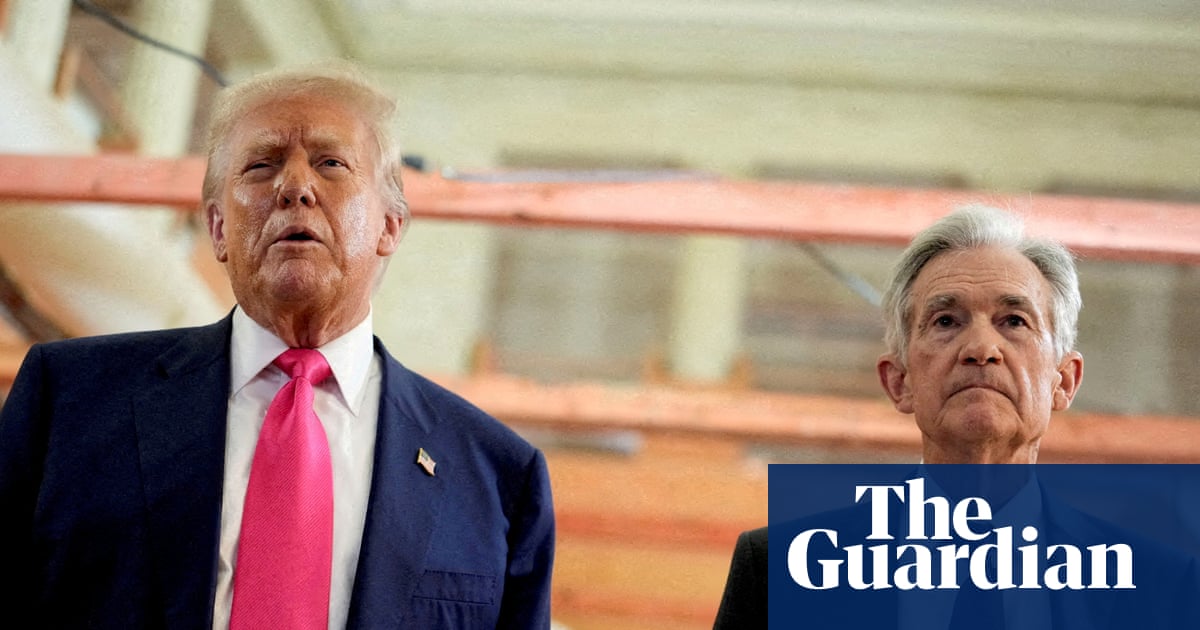
    In an unprecedented assault on the central bank, the president has called the Fed chair, Jerome Powell, “stupid” and threatened to fire him for not cutting interest rates as quickly as Trump would like. Most recently, the justice department instigated a criminal investigation against Powell for testimony he gave about renovations at the Fed’s headquarters. Even so, the Fed has not budged.

    Tactically, Trump’s assault on the Fed appears to be no different than his overhaul of the entire federal government. The president has learned if he pushes hard enough, he can get his way. And he has mostly been successful.

    But with the Fed, it seems that Trump may have met his match. At least as far as the supreme court is concerned. On Wednesday, the court’s justices, in oral arguments, appeared resoundingly skeptical of Trump’s firing of the Fed governor Lisa Cook.

    But while the justices’ skepticism could be interpreted as a sign that the court is checking executive authority, legal experts warn that any ruling against him may not be a harsh check on Trump’s power.

    Instead, the court appears to be carving out a special exception for the Fed at a time when the independence of other government agencies is still under threat.

    “The consequences are potentially very harmful,” said Michael Dorf, a law professor at Cornell University. “The supreme court is making war on independent agencies at the worst possible moment – which is to say at a moment when you have a president who wants to centralize power in himself and wants to appoint people who are there because of their loyalty to him and [who] have no particular expertise.”

    Trump fired Cook in August, alleging that she committed mortgage fraud by listing more than one property as her primary home, a move that would give her a better mortgage rate. The accusations were first posted on social media, and a few days later, Trump removed Cook. The White House made an appeal to the highest court after a lower federal court temporarily reinstated Cook into her role.

    Because Cook’s firing was haphazard, with no investigation or formal hearing about the alleged mortgage fraud, Trump’s case against Cook has opened up a host of questions the court could answer in a ruling. Were Cook’s due-process rights violated because she didn’t receive a hearing? Even if the mortgage allegations are true (Cook’s lawyers say they have evidence it was an “inadvertent mistake”), does mortgage fraud that took place before she was appointed a Fed governor constitute grounds for her removal? Should the case have been decided on by a lower court before reaching the supreme court?

    Making matters even more complicated is the nature of the Fed. The US central bank was created to be a quasi-private, independent government agency that is supposed to be protected from politics. Fed officials can only be fired by the president “for cause”, though the law doesn’t specify what “cause” is.

    Running in the background of the case is a big question, one that could have repercussions for the global economy: how much power will the supreme court allow a president to have over the Fed?

    Typically, constitutional experts look to see how the supreme court has decided similar cases, and Cook’s firing was far from the first test of Trump’s executive powers.

    Last year, Trump fired independent officials, including two Democratic-appointed members of the National Labor Relations Board (NLRB), which oversees unions, and Rebecca Slaughter, the commissioner of the Federal Trade Commission (FTC), which regulates telecommunications and media.

    The supreme court allowed Trump’s firing of the officials to stand, and in Slaughter’s case, constitutional experts anticipate a landmark ruling that will strengthen executive power for decades to come.

    Some within the US conservative legal movement have been advocating for the “unitary executive” theory – the idea that the president should be able to fire any executive branch officers at will. At the heart of this belief is the idea that the votes of the American people should be the only check on the president.

    For conservative justices on the supreme court who support that theory, Trump’s second term has given them the perfect opportunity. Constitutional analysts say that Slaughter’s FTC firing, which is still pending, will allow the court to narrow or even overturn Humphrey’s Executor v United States, a landmark case from 1935 that limited the president’s power to fire executive officials of independent agencies.

    But while conservative justices appear keen to hand the president even more power, there seems to be a single exception: the Fed.

    The supreme court even mentioned the central bank when it allowed Trump’s NLRB firings to go through, a notable event given that the Fed had nothing to do with the case.

    “The Federal Reserve is a uniquely structured, quasi-private entity that follows in the distinct historical tradition of the First and Second Banks of the United States,” the court’s majority wrote at the time.

    Many took this as a signal from the court that, should Trump try to fire an executive within the Fed, the court would resist.

    Legal experts point out that, by law, the Fed’s structure within the federal government is no different than the other quasi-private, independent agencies.

    “The elephant in the room in this oral argument is how come, when it comes to Lisa Cook, suddenly the judges are interested in enforcing the statute [of independence]. Whereas with Rebecca Slaughter … and all these other people he improperly removed, they just conclude the status doesn’t matter. His constitutional authority allows him to remove anybody for any reason. Like, what’s going on here?” said Lev Menand, a professor at Columbia Law School.

    The justices’ rationale seems to be as much economic as legal. Amy Coney Barrett, a member of the 6-3 conservative majority on the court, brought up the fact that “we have amicus briefs from economists who tell us that if Governor Cook is [fired], that it could trigger a recession”.

    “How should we think about the public interest in a case like this?” she asked.

    Brett Kavanaugh, another conservative, asked Trump’s justice department direct questions about the “real-world” importance of Fed independence.

    “Let’s talk about the real-world downstream effects of this, because if this were set as a precedent, it just seems to me – just thinking big picture – what goes around comes around,” Kavanaugh said. “All of the current president’s appointees would likely be removed for cause on January 20, 2029 if there’s Democratic president … so what are we doing here?”

    The power of the Fed comes largely from its ability to set interest rates. High interest rates make borrowing more expensive. It can slow inflation at the risk of increasing unemployment. That Trump wants lower interest rates is not surprising: lower interest rates can give the economy a short-term boost, but at the risk of rising prices later.

    It’s a balancing act that requires looking at the economic data and thinking about what’s best for the long-term stability of the economy, not the political fortunes of whoever is in power. Mess with that independence, and economic shocks such as a recession could be triggered.

    With Trump’s case against Cook, “an unstoppable force has met an immovable object”, Menand said. While a majority of the justices may be fine with cutting down, for example, the FTC’s independence, “it’s a totally different game when it comes to the Federal Reserve”.

    “Large business interests don’t want to see the Federal Reserve’s capacity degraded. They don’t want to see the Federal Reserve politicized,” Menand said.

    To many legal scholars, the supreme court has been very lenient with Trump’s executive power, even beyond the issue of independent agencies. Over the last year, the court has allowed the administration to continue aggressive immigration enforcement tactics and has blocked lower courts from issuing nationwide injunctions that, as in his first term, could block some of his executive actions.

    “One thing that concerns me a little bit is that if the court rules against Trump in the tariffs case, and in Cook, it will have gotten unearned prestige for being unbiased and standing up to Trump,” Dorf said. “You stand up to him at the most extreme edge of what he does, [but] you’re still allowing him to do all sorts of things that, in prior circumstances, we would have said the court ought to stand up to. But they’re not.”

    It’s unclear when the court will release its decision on Cook’s case, though it will probably issue a ruling by June.


    Continue Reading

  • M&A Boom Driven by High AI Valuations and Strategic AI Acquisitions

    M&A Boom Driven by High AI Valuations and Strategic AI Acquisitions

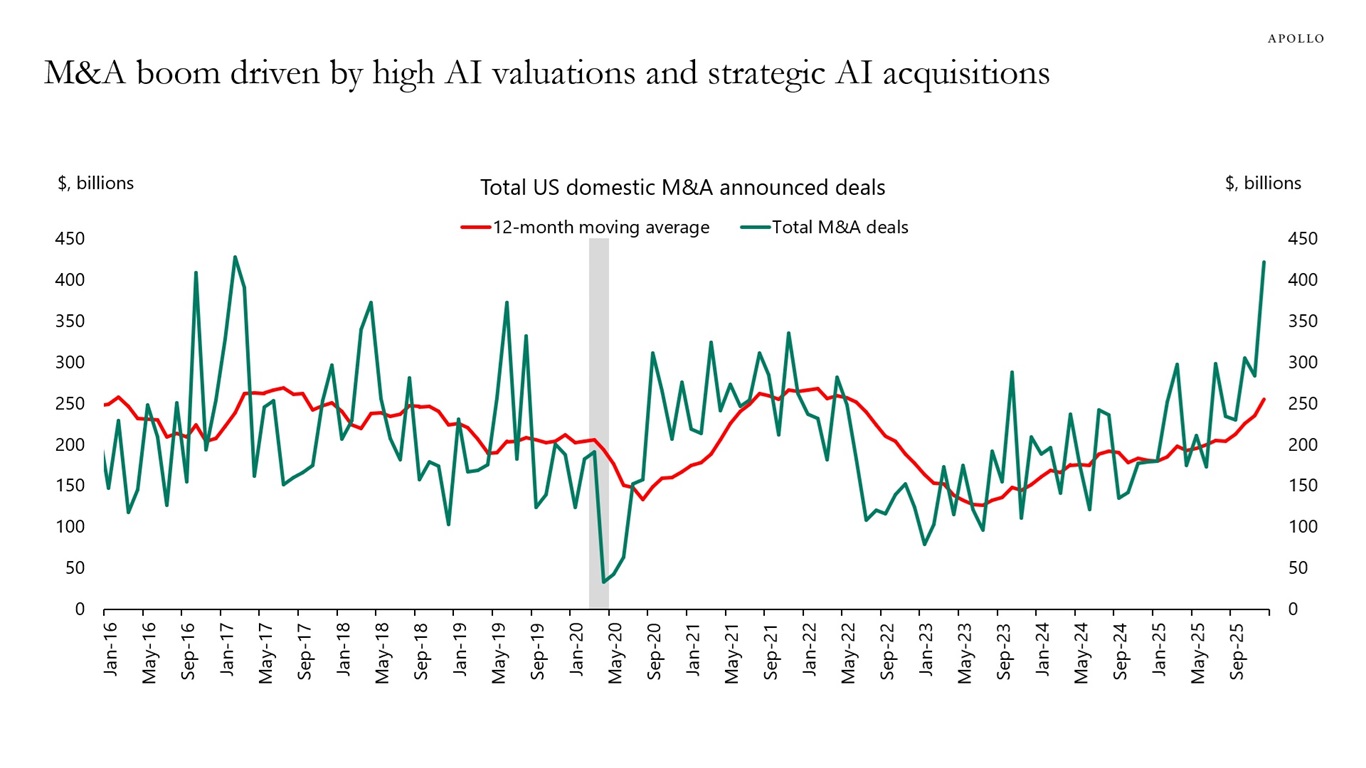
    AI has become one of the key themes underpinning current M&A activity, with AI‑related transactions representing a meaningful share of megadeals, see chart below.

    Note: Data through December 2025. Sources: Bloomberg, Apollo Chief Economist

    Download high-res chart


    This presentation may not be distributed, transmitted or otherwise communicated to others in whole or in part without the express consent of Apollo Global Management, Inc. (together with its subsidiaries, “Apollo”).  

    Apollo makes no representation or warranty, expressed or implied, with respect to the accuracy, reasonableness, or completeness of any of the statements made during this presentation, including, but not limited to, statements obtained from third parties. Opinions, estimates and projections constitute the current judgment of the speaker as of the date indicated. They do not necessarily reflect the views and opinions of Apollo and are subject to change at any time without notice. Apollo does not have any responsibility to update this presentation to account for such changes. There can be no assurance that any trends discussed during this presentation will continue.   

    Statements made throughout this presentation are not intended to provide, and should not be relied upon for, accounting, legal or tax advice and do not constitute an investment recommendation or investment advice. Investors should make an independent investigation of the information discussed during this presentation, including consulting their tax, legal, accounting or other advisors about such information. Apollo does not act for you and is not responsible for providing you with the protections afforded to its clients. This presentation does not constitute an offer to sell, or the solicitation of an offer to buy, any security, product or service, including interest in any investment product or fund or account managed or advised by Apollo. 

    Certain statements made throughout this presentation may be “forward-looking” in nature. Due to various risks and uncertainties, actual events or results may differ materially from those reflected or contemplated in such forward-looking information. As such, undue reliance should not be placed on such statements. Forward-looking statements may be identified by the use of terminology including, but not limited to, “may”, “will”, “should”, “expect”, “anticipate”, “target”, “project”, “estimate”, “intend”, “continue” or “believe” or the negatives thereof or other variations thereon or comparable terminology.


    Continue Reading