Over 18 million workers across the UK to benefit from stronger protections at work, with most insecure workers set to gain the most.
New day one rights from April confirmed for parental leave, whilst bereaved partners set to gain further rights to paternity leave.
Changes create more secure jobs and raise living standards, ensuring economic growth is felt by working people in every part of the UK.
Millions of workers who were previously denied time off for the birth of their child will become eligible for new day one rights to parental leave from April, through measures being laid in Parliament today (Monday 12 January).
The changes, which stem from the recently passed Employment Rights Act, will see parents no longer be forced to make the heart-wrenching choice between being there for the first weeks of their child’s life or going back to work to avoid losing their job.
An additional 32,000 more dads per year will be able to access Paternity Leave immediately, as a mother would with maternity leave.
This comes as the Government continues its Parental Leave and Pay Review, which will assess the whole system – from maternity and paternity leave to shared parental leave – to see how it can work better for parents and employers.
Around 390,000 people are estimated to be out of work due to caring responsibilities but want a job, including parents. The reforms to parental leave include the right to take Unpaid Parental Leave from the first day in a new job, giving a further 1.5 million parents more flexibility to share caring responsibilities. If even 1% of those out of work were able to take up a part-time job as a result of this move, it could boost economic output by around £150m a year.
Prime Minister Keir Starmer said:
For too long, working people were left without the basic rights and security they deserve. That ends now.
The changes we’re bringing in will mean every new parent can properly take time off when they have a child, and no one is forced to work while ill just to make ends meet. This is about giving working families the support they need to balance work, health and the cost of living.
We’re delivering a modern deal for workers. Stronger sick pay, parental leave from day one, and protections that put dignity back at the heart of work. Because when we respect and reward those who keep Britain running, we build a stronger economy for everyone.
Business Secretary Peter Kyle said:
No one should have to worry about whether they can take time off when their baby arrives, or lose pay simply because they’ve fallen ill.
Our improvements to sick pay and parental leave are about giving workers and their families the security they deserve. They will ensure our drive for growth reaches everyone through providing secure, fair paying jobs and giving support to people when they need it most.
Following campaigning from individuals such as Aaron Horsey, a new Bereaved Partner’s Paternity Leave will also be introduced from April, providing up to 52 weeks of leave for fathers and partners who lose their partner before their child’s first birthday. This fixes the previously unfair system where bereaved partners had to rely on the compassion of an employer in order to be granted time off to grieve and care for their child.
Aaron Horsey, campaigner for Bereaved Partner’s Paternity Leave, said:
Bereaved Partner’s Paternity Leave ensures that new parents and their employers have a clear route for support at one of the most difficult moments imaginable. It gives them the time and space they need to grieve, care, and begin to rebuild their lives with dignity.
By embedding this protection in law, it shows how listening to lived experience can lead to practical, compassionate change that will support families for generations to come.
Analysis published last week showed that over 18 million workers are set to benefit from the Government’s wider Plan to Make Work Pay, with it particularly supporting the lowest-paid workers, those in insecure jobs, and people facing unfair treatment at work.
The benefits in the Employment Rights Act significantly outweigh the costs. By restricting exploitative practices like unscrupulous fire and rehire, and giving more workers access to flexible working and guaranteed hours contracts, this country will see improved worker wellbeing, boosted productivity, and a more level playing field for employers. This is all worth billions of pounds per year and is expected to deliver a small yet positive impact on economic growth.
The government is also bringing in changes to ensure up to 1.3 million additional workers in lower-paid or part-time roles are able to access Statutory Sick Pay (SSP) and make sure everyone can access it from the first day of illness.
This is a substantial shift from the former three-day wait for SSP to kick in, which left people working whilst ill risking increased long-term sickness, one of key factors draining British businesses and the wider economy.
By improving the quality of work and ensuring that everyone has job security when it matters most, the Government is delivering on its mission to drive growth that is felt by everyone.
TUC General Secretary Paul Nowak said:
The Employment Rights Act will deliver vital common-sense reforms for millions of people across the country – including sick pay for all workers and better leave for parents.
Britain will now be brought into line with other countries where workers already have better protections. And crucially, the legislation will give working people the higher living standards and secure incomes that are needed to build a decent life.
Good employers will also welcome these changes – the Act protects them from competitors whose business models are built on low-paid, insecure employment.”
Simon Kelleher, Head of Policy and Influencing at Working Families, said:
Day-one rights for paternity and unpaid parental leave are a positive step forward. Removing the 26-week qualifying period means parents can change jobs without losing essential leave entitlements, something we know has held many people back and can trap families in roles that no longer work for them.
To build on this progress, we are looking forward to continuing our engagement with the Government’s ongoing Parental Leave Review to ensure all parents can access a meaningful period of leave.
Niall Mackenzie, Acas Chief Executive, said:
It can be hugely stressful if a worker is not paid during an illness or dealing with a major life upheaval like a birth or bereavement.
These new measures give greater protections for working people that get ill, and create capacity to handle unpredictable moments when they need it the most. Reducing stress and anxiety for staff can also help support good relationships with employers and support business growth.
Notes to editors:
The following Statutory Instrument will be laid in Parliament on Monday 12 January, in order for the parental leave measures in the Employment Rights Act 2025 to take effect:
The Employment Rights Act 2025 (Parental and Paternity Leave) (Removal of Qualifying Periods etc.) (Consequential Amendments) Regulations 2026
The following Statutory Instruments will be laid in order to allow Bereaved Partner’s Paternity Leave to take effect:
The Bereaved Partner’s Paternity Leave Regulations 2026
The Employment Rights Act 1996 (Application of Section 80B to Parental Order Cases) (Amendment) Regulations 2026
The Employment Rights Act 1996 (Application of Section 80B to Adoptions from Overseas) (Amendment) Regulations 2026
Statutory Instruments for the Statutory Sick Pay changes in the Employment Rights Act 2025 will follow in the coming months, ahead of implementation in April.
Case studies are available, including from the TUC and Working Families. Press office contacts are available below:
media@tuc.org.uk
sarah.murray@WorkingFamilies.org.uk
The Dad Shift can also be contacted for case studies of fathers who have faced barriers to paternity leave, at press@dadshift.org.uk and 07969151841 / 07917824009.
SAN ANTONIO – Culinaria’s Restaurant Weeks is set to return to the Alamo City, offering two weeks of special menus and dining deals across the city.
From Jan. 17-31, dozens of eateries will participate in the event. Participating restaurants will serve guests three-course menus for brunch, lunch and dinner throughout the Alamo City during this time.
Hours of operation and availability of menus are subject to change.
Here’s a list of some participating restaurants that will serve three-course menus at various price points:
$25 three-course brunch menus
Box St. All Day (both locations) – 623 Hemisfair Blvd, Suite 108 and 17038 Fiesta Texas Drive, Suite 112
Kona Grill (both locations) – 5603 Presidio Parkway and 7400 San Pedro Ave. #1255
Meadow – 555 W. Bitters Road, Suite 110
$20 and $30 three-course lunch menus
Three-course dinner menus of $35, $45 and $55
Ladino – 200 E. Grayson St. #100
For a full list of participating restaurants, click here.
Read also:
Copyright 2026 by KSAT – All rights reserved.
About the Author
Andrea K. Moreno headshot
Andrea K. Moreno
Andrea K. Moreno is a Digital Journalist at KSAT. She graduated from Texas State University with an electronic media degree and a minor in psychology. She also attended San Antonio College, where she held several positions at The Ranger, now known as The Sundial, for three years.
Royalty Pharma to provide up to $500 million, including $75 million for Phase 2b funding and a Royalty Pharma option for an additional $425 million, to support Teva’s anti-IL-15 candidate, TEV-‘408
TEV-‘408 is currently in Phase 1b for treatment of vitiligo and in Phase 2a for celiac disease
Funding agreement supports Teva’s Pivot to Growth strategy to accelerate its innovative pipeline and bring treatments to patients faster
NEW YORK and PARSIPPANY, N.J., Jan. 11, 2026 (GLOBE NEWSWIRE) — Royalty Pharma plc (Nasdaq: RPRX) and Teva Pharmaceuticals, a U.S. affiliate of Teva Pharmaceutical Industries Ltd. (NYSE and TASE: TEVA), today announced a funding agreement of up to $500 million to accelerate the clinical development of Teva’s anti-IL-15 antibody, TEV-‘408. IL-15 is a key cytokine involved in multiple immune-mediated disease pathways. Emerging Phase 1b data from the ongoing TEV-‘408 vitiligo study provides preliminary support for IL-15 as a potential therapeutic target to treat a broad variety of autoimmune conditions. Teva anticipates sharing results from TEV-‘408 trials during 2026.
“We are delighted to enter into this second collaboration with Teva as they advance the development of TEV-‘408,” said Pablo Legorreta, Chief Executive Officer and Chairman of the Board of Royalty Pharma. “Vitiligo is a chronic autoimmune skin disease that can have a profound emotional and psychosocial burden, yet current treatment options are insufficient. Our continued collaboration underscores Royalty Pharma’s role as a long-term, trusted partner with a focus on funding innovation in potentially transformative and practice changing therapies.”
“Strategic collaborations fuel innovation. This agreement with Royalty Pharma enables us to advance our science more efficiently and accelerate our pipeline to deliver meaningful solutions for patients worldwide,” said Richard Francis, President, and CEO of Teva. “Vitiligo represents a significant unmet need, with only one approved topical treatment currently available and no systemic options. We are dedicated to driving scientific progress that brings new, effective therapies to people living with chronic autoimmune diseases.”
Transaction Terms
Under the terms of the agreement, Royalty Pharma will provide Teva up to $500 million to fund ongoing development costs for TEV-‘408 in vitiligo. This is comprised of $75 million in R&D co-funding to conduct a Phase 2b study targeted to start in 2026. Based on the future results from Phase 2b in vitiligo, Royalty Pharma will have an option to provide an additional $425 million to co-fund the Phase 3 development program. If approved and launched, Teva will pay a milestone to Royalty Pharma and a royalty on worldwide net sales of TEV-‘408.
About TEV-‘408
TEV-‘408 is an investigational human monoclonal antibody designed to inhibit interleukin-15 (IL-15), a cytokine involved in immune-mediated pathways. TEV-‘408 has a high affinity and potency (in vitro) as well as a prolonged half-life, with a planned convenient self-administration option for patients.
It is currently in Phase 1b (NCT06625177) for the treatment of vitiligo. The candidate is also being evaluated in a Phase 2a study (NCT06807463) for celiac disease and was granted Fast Track designation by the U.S. FDA in May 2025. By blocking IL-15 activity, TEV-‘408 aims to reduce the immune-mediated destruction of melanocytes (pigment producing cells) resulting in white patches on the skin characteristic of vitiligo or reduce the IL-15-driven intestinal inflammation and damage characteristic of celiac disease.
About Vitiligo
Vitiligo is a chronic autoimmune skin disease characterized by the loss of pigment-producing cells (melanocytes), resulting in white patches that can appear anywhere on the body. Affecting people of all ages, skin types, and ethnicities, vitiligo has an estimated global prevalence of 0.5% to 2% though many individuals remain undiagnosed. Beyond its physical manifestations, vitiligo can impose a significant emotional and psychosocial burden, with many people experiencing anxiety, depression, and social isolation.
Current treatment options are limited. Only one topical therapy is approved, and its use is restricted to treating up to 10% of the body surface area. As a result, many people with vitiligo remain insufficiently treated, underscoring the need for a systemic durable, effective, and safe therapy that addresses both visible skin changes and overall quality of life.
About Royalty Pharma plc
Founded in 1996, Royalty Pharma is the largest buyer of biopharmaceutical royalties and a leading funder of innovation across the biopharmaceutical industry, collaborating with innovators from academic institutions, research hospitals and non-profits through small and mid-cap biotechnology companies to leading global pharmaceutical companies. Royalty Pharma has assembled a portfolio of royalties which entitles it to payments based directly on the top-line sales of many of the industry’s leading therapies. Royalty Pharma funds innovation in the biopharmaceutical industry both directly and indirectly – directly when it partners with companies to co-fund late-stage clinical trials and new product launches in exchange for future royalties, and indirectly when it acquires existing royalties from the original innovators. Royalty Pharma’s current portfolio includes royalties on more than 35 commercial products, including Vertex’s Trikafta and Alyftrek, Johnson & Johnson’s Tremfya, GSK’s Trelegy, Roche’s Evrysdi, Servier’s Voranigo, Biogen’s Tysabri and Spinraza, AbbVie and Johnson & Johnson’s Imbruvica, Astellas and Pfizer’s Xtandi, Pfizer’s Nurtec ODT, and Gilead’s Trodelvy, among others, and 20 development-stage product candidates. For more information, visit www.royaltypharma.com.
About Teva
Teva Pharmaceutical Industries Ltd. (NYSE and TASE: TEVA) is transforming into a leading innovative biopharmaceutical company, enabled by a world-class generics business. For over 120 years, Teva’s commitment to bettering health has never wavered. From innovating in the fields of neuroscience and immunology to providing complex generic medicines, biosimilars and pharmacy brands worldwide, Teva is dedicated to addressing patients’ needs, now and in the future. At Teva, We Are All In For Better Health. To learn more about how, visit www.tevapharm.com.
Royalty Pharma Forward-Looking Statements
The information set forth herein does not purport to be complete or to contain all of the information you may desire. Statements contained herein are made as of the date of this document unless stated otherwise, and neither the delivery of this document at any time, nor any sale of securities, shall under any circumstances create an implication that the information contained herein is correct as of any time after such date or that information will be updated or revised to reflect information that subsequently becomes available or changes occurring after the date hereof. This document contains statements that constitute “forward-looking statements” as that term is defined in the United States Private Securities Litigation Reform Act of 1995, including statements that express the company’s opinions, expectations, beliefs, plans, objectives, assumptions or projections regarding future events or future results, in contrast with statements that reflect historical facts. Examples include discussion of Royalty Pharma’s strategies, financing plans, growth opportunities, market growth, and plans for capital deployment. In some cases, you can identify such forward-looking statements by terminology such as “may,” “might,” “will,” “should,” “expects,” “plans,” “anticipates,” “believes,” “estimates,” “target,” “forecast,” “guidance,” “goal,” “predicts,” “project,” “potential” or “continue,” the negative of these terms or similar expressions. Forward-looking statements are based on management’s current beliefs and assumptions and on information currently available to the company. However, these forward-looking statements are not a guarantee of Royalty Pharma’s performance, and you should not place undue reliance on such statements. Forward-looking statements are subject to many risks, uncertainties and other variable circumstances, and other factors. Such risks and uncertainties may cause the statements to be inaccurate and readers are cautioned not to place undue reliance on such statements. Many of these risks are outside of Royalty Pharma’s control and could cause its actual results to differ materially from those it thought would occur. The forward-looking statements included in this document are made only as of the date hereof. Royalty Pharma does not undertake, and specifically declines, any obligation to update any such statements or to publicly announce the results of any revisions to any such statements to reflect future events or developments, except as required by law. For further information, please reference Royalty Pharma’s reports and documents filed with the U.S. Securities and Exchange Commission (“SEC”) by visiting EDGAR on the SEC’s website at www.sec.gov.
Teva Forward-Looking Statements
This Press Release contains forward-looking statements within the meaning of the Private Securities Litigation Reform Act of 1995, which are based on management’s current beliefs and expectations and are subject to substantial risks and uncertainties, both known and unknown, that could cause our future results, performance or achievements to differ significantly from that expressed or implied by such forward-looking statements. You can identify these forward-looking statements by the use of words such as “should,” “expect,” “anticipate,” “estimate,” “target,” “may,” “project,” “guidance,” “intend,” “plan,” “believe” and other words and terms of similar meaning and expression in connection with any discussion of future operating or financial performance. Important factors that could cause or contribute to such differences include risks relating to: our ability to successfully develop our anti-IL-15 antibody (TEV-’408) for vitiligo and for Celiac disease; our ability to successfully execute the agreement with Royalty Pharma for the funding of anti-IL-15 development for vitiligo; our ability to successfully compete in the marketplace, including our ability to develop and commercialize additional pharmaceutical products; our ability to successfully execute our Pivot to Growth strategy, including to expand our innovative and biosimilar medicines pipeline and profitably commercialize the innovative medicines and biosimilar portfolio, whether organically or through business development, and to sustain and focus our portfolio of generic medicines; and other factors discussed in our Quarterly Report on Form 10-Q for the third quarter of 2025, and in our Annual Report on Form 10-K for the year ended December 31, 2024, including in the sections captioned “Risk Factors” and “Forward-looking statements.” Forward-looking statements speak only as of the date on which they are made, and we assume no obligation to update or revise any forward-looking statements or other information contained herein, whether as a result of new information, future events or otherwise. You are cautioned not to put undue reliance on these forward-looking statements.
Royalty Pharma Investor Relations and Communications
Royalty Pharma and Teva Enter Agreement to Accelerate Development of Potential Treatment for Vitiligo
Royalty Pharma to provide up to $500 million, including $75 million for Phase 2b funding and a Royalty Pharma option for an additional $425 million, to support Teva’s anti-IL-15 candidate, TEV-‘408
TEV-‘408 is currently in Phase 1b for treatment of vitiligo and in Phase 2a for celiac disease
Funding agreement supports Teva’s Pivot to Growth strategy to accelerate its innovative pipeline and bring treatments to patients faster
NEW YORK and PARSIPPANY, N.J., Jan. 11, 2026 (GLOBE NEWSWIRE) — Royalty Pharma plc (Nasdaq: RPRX) and Teva Pharmaceuticals, a U.S. affiliate of Teva Pharmaceutical Industries Ltd. (NYSE and TASE: TEVA), today announced a funding agreement of up to $500 million to accelerate the clinical development of Teva’s anti-IL-15 antibody, TEV-‘408. IL-15 is a key cytokine involved in multiple immune-mediated disease pathways. Emerging Phase 1b data from the ongoing TEV-‘408 vitiligo study provides preliminary support for IL-15 as a potential therapeutic target to treat a broad variety of autoimmune conditions. Teva anticipates sharing results from TEV-‘408 trials during 2026.
“We are delighted to enter into this second collaboration with Teva as they advance the development of TEV-‘408,” said Pablo Legorreta, Chief Executive Officer and Chairman of the Board of Royalty Pharma. “Vitiligo is a chronic autoimmune skin disease that can have a profound emotional and psychosocial burden, yet current treatment options are insufficient. Our continued collaboration underscores Royalty Pharma’s role as a long-term, trusted partner with a focus on funding innovation in potentially transformative and practice changing therapies.”
“Strategic collaborations fuel innovation. This agreement with Royalty Pharma enables us to advance our science more efficiently and accelerate our pipeline to deliver meaningful solutions for patients worldwide,” said Richard Francis, President, and CEO of Teva. “Vitiligo represents a significant unmet need, with only one approved topical treatment currently available and no systemic options. We are dedicated to driving scientific progress that brings new, effective therapies to people living with chronic autoimmune diseases.”
Transaction Terms
Under the terms of the agreement, Royalty Pharma will provide Teva up to $500 million to fund ongoing development costs for TEV-‘408 in vitiligo. This is comprised of $75 million in R&D co-funding to conduct a Phase 2b study targeted to start in 2026. Based on the future results from Phase 2b in vitiligo, Royalty Pharma will have an option to provide an additional $425 million to co-fund the Phase 3 development program. If approved and launched, Teva will pay a milestone to Royalty Pharma and a royalty on worldwide net sales of TEV-‘408.
About TEV-‘408
TEV-‘408 is an investigational human monoclonal antibody designed to inhibit interleukin-15 (IL-15), a cytokine involved in immune-mediated pathways. TEV-‘408 has a high affinity and potency (in vitro) as well as a prolonged half-life, with a planned convenient self-administration option for patients.
It is currently in Phase 1b (NCT06625177) for the treatment of vitiligo. The candidate is also being evaluated in a Phase 2a study (NCT06807463) for celiac disease and was granted Fast Track designation by the U.S. FDA in May 2025. By blocking IL-15 activity, TEV-‘408 aims to reduce the immune-mediated destruction of melanocytes (pigment producing cells) resulting in white patches on the skin characteristic of vitiligo or reduce the IL-15-driven intestinal inflammation and damage characteristic of celiac disease.
About Vitiligo
Vitiligo is a chronic autoimmune skin disease characterized by the loss of pigment-producing cells (melanocytes), resulting in white patches that can appear anywhere on the body. Affecting people of all ages, skin types, and ethnicities, vitiligo has an estimated global prevalence of 0.5% to 2% though many individuals remain undiagnosed. Beyond its physical manifestations, vitiligo can impose a significant emotional and psychosocial burden, with many people experiencing anxiety, depression, and social isolation.
Current treatment options are limited. Only one topical therapy is approved, and its use is restricted to treating up to 10% of the body surface area. As a result, many people with vitiligo remain insufficiently treated, underscoring the need for a systemic durable, effective, and safe therapy that addresses both visible skin changes and overall quality of life.
About Royalty Pharma plc
Founded in 1996, Royalty Pharma is the largest buyer of biopharmaceutical royalties and a leading funder of innovation across the biopharmaceutical industry, collaborating with innovators from academic institutions, research hospitals and non-profits through small and mid-cap biotechnology companies to leading global pharmaceutical companies. Royalty Pharma has assembled a portfolio of royalties which entitles it to payments based directly on the top-line sales of many of the industry’s leading therapies. Royalty Pharma funds innovation in the biopharmaceutical industry both directly and indirectly – directly when it partners with companies to co-fund late-stage clinical trials and new product launches in exchange for future royalties, and indirectly when it acquires existing royalties from the original innovators. Royalty Pharma’s current portfolio includes royalties on more than 35 commercial products, including Vertex’s Trikafta and Alyftrek, Johnson & Johnson’s Tremfya, GSK’s Trelegy, Roche’s Evrysdi, Servier’s Voranigo, Biogen’s Tysabri and Spinraza, AbbVie and Johnson & Johnson’s Imbruvica, Astellas and Pfizer’s Xtandi, Pfizer’s Nurtec ODT, and Gilead’s Trodelvy, among others, and 20 development-stage product candidates. For more information, visit www.royaltypharma.com.
About Teva
Teva Pharmaceutical Industries Ltd. (NYSE and TASE: TEVA) is transforming into a leading innovative biopharmaceutical company, enabled by a world-class generics business. For over 120 years, Teva’s commitment to bettering health has never wavered. From innovating in the fields of neuroscience and immunology to providing complex generic medicines, biosimilars and pharmacy brands worldwide, Teva is dedicated to addressing patients’ needs, now and in the future. At Teva, We Are All In For Better Health. To learn more about how, visit www.tevapharm.com.
Royalty Pharma Forward-Looking Statements
The information set forth herein does not purport to be complete or to contain all of the information you may desire. Statements contained herein are made as of the date of this document unless stated otherwise, and neither the delivery of this document at any time, nor any sale of securities, shall under any circumstances create an implication that the information contained herein is correct as of any time after such date or that information will be updated or revised to reflect information that subsequently becomes available or changes occurring after the date hereof. This document contains statements that constitute “forward-looking statements” as that term is defined in the United States Private Securities Litigation Reform Act of 1995, including statements that express the company’s opinions, expectations, beliefs, plans, objectives, assumptions or projections regarding future events or future results, in contrast with statements that reflect historical facts. Examples include discussion of Royalty Pharma’s strategies, financing plans, growth opportunities, market growth, and plans for capital deployment. In some cases, you can identify such forward-looking statements by terminology such as “may,” “might,” “will,” “should,” “expects,” “plans,” “anticipates,” “believes,” “estimates,” “target,” “forecast,” “guidance,” “goal,” “predicts,” “project,” “potential” or “continue,” the negative of these terms or similar expressions. Forward-looking statements are based on management’s current beliefs and assumptions and on information currently available to the company. However, these forward-looking statements are not a guarantee of Royalty Pharma’s performance, and you should not place undue reliance on such statements. Forward-looking statements are subject to many risks, uncertainties and other variable circumstances, and other factors. Such risks and uncertainties may cause the statements to be inaccurate and readers are cautioned not to place undue reliance on such statements. Many of these risks are outside of Royalty Pharma’s control and could cause its actual results to differ materially from those it thought would occur. The forward-looking statements included in this document are made only as of the date hereof. Royalty Pharma does not undertake, and specifically declines, any obligation to update any such statements or to publicly announce the results of any revisions to any such statements to reflect future events or developments, except as required by law. For further information, please reference Royalty Pharma’s reports and documents filed with the U.S. Securities and Exchange Commission (“SEC”) by visiting EDGAR on the SEC’s website at www.sec.gov.
Teva Forward-Looking Statements
This Press Release contains forward-looking statements within the meaning of the Private Securities Litigation Reform Act of 1995, which are based on management’s current beliefs and expectations and are subject to substantial risks and uncertainties, both known and unknown, that could cause our future results, performance or achievements to differ significantly from that expressed or implied by such forward-looking statements. You can identify these forward-looking statements by the use of words such as “should,” “expect,” “anticipate,” “estimate,” “target,” “may,” “project,” “guidance,” “intend,” “plan,” “believe” and other words and terms of similar meaning and expression in connection with any discussion of future operating or financial performance. Important factors that could cause or contribute to such differences include risks relating to: our ability to successfully develop our anti-IL-15 antibody (TEV-’408) for vitiligo and for Celiac disease; our ability to successfully execute the agreement with Royalty Pharma for the funding of anti-IL-15 development for vitiligo; our ability to successfully compete in the marketplace, including our ability to develop and commercialize additional pharmaceutical products; our ability to successfully execute our Pivot to Growth strategy, including to expand our innovative and biosimilar medicines pipeline and profitably commercialize the innovative medicines and biosimilar portfolio, whether organically or through business development, and to sustain and focus our portfolio of generic medicines; and other factors discussed in our Quarterly Report on Form 10-Q for the third quarter of 2025, and in our Annual Report on Form 10-K for the year ended December 31, 2024, including in the sections captioned “Risk Factors” and “Forward-looking statements.” Forward-looking statements speak only as of the date on which they are made, and we assume no obligation to update or revise any forward-looking statements or other information contained herein, whether as a result of new information, future events or otherwise. You are cautioned not to put undue reliance on these forward-looking statements.
Royalty Pharma Investor Relations and Communications
BOSTON–(BUSINESS WIRE)–Jan. 11, 2026– Vertex Pharmaceuticals Incorporated (Nasdaq: VRTX) today announced business and program updates ahead of upcoming investor meetings in January, including the company’s scheduled webcast from the 44th annual J.P. Morgan Healthcare Conference on Monday, January 12, 2026, at 5:15 p.m. ET/2:15 p.m. PT.
“2025 was a year of strong commercial execution and rapid R&D progress, setting up the company for continued growth and many important milestones in 2026,” said Reshma Kewalramani, M.D., Chief Executive Officer and President of Vertex. “Building on this momentum, we are focused on expanding our commercial reach in multiple disease areas; advancing the emerging renal franchise, including the potential near-term launch of povetacicept; and progressing our mid- and late-stage clinical pipeline. Vertex is well positioned to serve many more patients with our expanding portfolio of transformative medicines, and in so doing, deliver sustained growth and long-term value for shareholders.”
Disease Areas with Approved Medicines
Cystic Fibrosis (CF)
ALYFTREK®: ALYFTREK is now approved in the U.S., the United Kingdom (U.K.), the European Union (EU), Canada, New Zealand, Switzerland, and Australia for people with CF 6 years and older who have at least one F508del mutation or another mutation in the cystic fibrosis transmembrane conductance regulator (CFTR) gene that is responsive to ALYFTREK. Eligible patients in the U.S., England, Ireland, Germany, Denmark, Northern Ireland, Norway, and Wales currently have reimbursed access to ALYFTREK, and Vertex is working to secure access for eligible patients in additional countries. Vertex plans to share data from the global study of ALYFTREK in children 2 to 5 years of age and submit to global regulators in 2026. Vertex expects to initiate a pivotal study of ALYFTREK in children 1 to 2 years of age in 2026.
TRIKAFTA®: Following positive results from the study of TRIKAFTA in patients one year to less than two years of age, reported in November 2025, Vertex expects to submit for approvals in this age group to global regulators, beginning in the first half of 2026.
Next-generation CFTR modulators: Vertex has advanced VX-828, the first of the next-generation 3.0 CFTR corrector class, into a study in people with CF. Vertex expects to complete enrollment and dosing in this study and share data in the second half of 2026. Vertex also advanced VX-581, another corrector in this class, into a Phase 1 study in healthy volunteers.
VX-522: Vertex is working to complete dosing in the multiple ascending dose (MAD) portion of the Phase 1/2 study of VX-522 and share data in the second half of 2026. VX-522 is a CFTR mRNA therapeutic that Vertex is developing in collaboration with Moderna for the approximately 5,000 people with CF who cannot benefit from CFTR modulators.
Epidemiology and market opportunity update:Vertex increased its estimates for the number of people with CF in all target markets from approximately 109,000 to approximately 112,000, which includes an increase from 94,000 to approximately 97,000 people with CF in the core markets of U.S., Europe, Australia, and Canada.
Severe Sickle Cell Disease (SCD) and Transfusion-Dependent Beta Thalassemia (TDT) – CASGEVY®
CASGEVY is approved in the U.S., the U.K., the EU, the Kingdom of Saudi Arabia, the Kingdom of Bahrain, Qatar, Canada, Switzerland, the United Arab Emirates, and Kuwait for patients 12 years and older with SCD or TDT.
Vertex realized its goal for greater than $100 million of CASGEVY revenue in 2025, reflecting more than 60 patients receiving infusions of CASGEVY.
At the American Society of Hematology (ASH) annual meeting in December 2025, Vertex presented positive data from the pivotal studies of CASGEVY in children ages 5 to 11 years old with SCD or TDT. Vertex expects to begin submitting in the first half of 2026 for approvals from global regulators. The U.S. Food and Drug Administration (FDA) awarded Vertex a Commissioner’s National Priority Voucher for this pediatric submission, accelerating the timeline for review once the submission is complete.
Taken together, Vertex expects these advances will result in significant CASGEVY revenue growth in 2026 and beyond.
Acute Pain – JOURNAVX®
JOURNAVX (suzetrigine) is approved in the U.S. for the treatment of moderate-to-severe acute pain in adults.
Since FDA approval on January 30, 2025, and pharmacy availability in March 2025, more than 500,000 JOURNAVX prescriptions were written and filled in 2025 across both hospital and retail settings.
Vertex secured commercial coverage for JOURNAVX with the remaining large national pharmacy benefit manager (PBM) and now has secured access for JOURNAVX with all three national PBMs. As of January 2026, over 200 million individuals now have access to JOURNAVX across commercial and government payers, representing two-thirds of U.S. covered lives – a significant achievement in the first year of product launch.
Vertex plans to complete a regulatory submission in Canada for JOURNAVX for the treatment of moderate-to-severe acute pain in adults in the first half of 2026.
With positive feedback on JOURNAVX’s efficacy and tolerability and strong progress with payers, hospital, and physician adoption, Vertex expects the number of JOURNAVX prescriptions to more than triple in 2026 versus 2025.
Programs in Pivotal Development
Peripheral Neuropathic Pain (PNP)
Vertex expects to complete enrollment in both Phase 3 studies of suzetrigine in diabetic peripheral neuropathy (DPN), a form of peripheral neuropathic pain (PNP), by the end of 2026.
Vertex also continues to enroll and dose patients in a Phase 2 study of VX-993 in DPN.
Epidemiology and market opportunity update:Vertex increased its estimates for the number of people with DPN in the U.S. from approximately 2 million to approximately 2.5 million, which reflects the aging U.S. population and increased prevalence of chronic pain in older age groups.
IgA Nephropathy (IgAN), Primary Membranous Nephropathy (pMN) and other B Cell-Mediated Diseases – povetacicept
In the fourth quarter of 2025, Vertex initiated the rolling biologics license application (BLA) filing for U.S. accelerated approval of povetacicept in IgAN with submission of the first module. Vertex remains on track to complete the submission in the first half of 2026. Vertex is using a priority review voucher to expedite the review of the povetacicept BLA from ten months to six months, and the FDA has granted Breakthrough Therapy Designation for povetacicept in IgAN. The RAINIER Phase 3 study completed full enrollment in November.
Vertex continues to enroll and dose patients in the Phase 2/3 OLYMPUS pivotal study of povetacicept in patients with pMN. The FDA has granted Fast Track designation for povetacicept in pMN, and the EMA has granted Priority Medicines (PRIME) designation.
Epidemiology and market opportunity update:Vertex increased its estimates for the number of people with IgAN in the U.S. and Europe from approximately 300,000 to approximately 330,000 and estimates the global diagnosed population exceeds 1.5 million. For pMN, Vertex estimates the disease impacts approximately 150,000 people in the U.S. and Europe and more than 600,000 globally.
APOL1-Mediated Kidney Disease (AMKD) – inaxaplin
In September, Vertex completed enrollment in the interim analysis cohort of the AMPLITUDE Phase 2/3 trial of inaxaplin in patients with primary AMKD and will conduct the pre-planned interim analysis once this cohort reaches 48 weeks of treatment. Vertex expects to share data from the interim analysis in late 2026 or early 2027. The AMPLITUDE study is on track to complete full enrollment in the second half of 2026.
Type 1 Diabetes (T1D)
Vertex has completed enrollment in the Phase 1/2/3 study of zimislecel in people with T1D and has temporarily postponed completion of dosing in the study, pending an ongoing internal manufacturing analysis.
Zimislecel has been granted Regenerative Medicine Advanced Therapy (RMAT) and Fast Track designations from the U.S. Food and Drug Administration, PRIME designation from the EMA, Breakthrough Medicine designation from the Kingdom of Saudi Arabia, and has secured an Innovation Passport under the Innovative Licensing and Access Pathway (ILAP) from the U.K. Medicines and Healthcare products Regulatory Agency (MHRA).
Vertex is enrolling and dosing patients with ADPKD in the AGLOW Phase 2 proof- of-concept study. AGLOW is a 24-patient single-arm study that will evaluate the effect of VX-407 on height-adjusted total kidney volume (htTKV).
Myotonic Dystrophy Type 1 (DM1) – VX-670
Vertex continues to enroll and dose the MAD portion of the GALILEO global Phase 1/2 clinical trial of VX-670 in people with DM1; the study is assessing both safety and efficacy. Vertex is on track to complete enrollment and dosing in the trial in mid-2026.
Vertex expects to initiate a Phase 2 study of povetacicept for the treatment of generalized myasthenia gravis, another B cell-mediated disease, in the first half of 2026.
Epidemiology and market opportunity update: Vertex estimates that the number of people with gMG is approximately 175,000 in the U.S. and Europe and more than 300,000 globally.
Additional Earlier Stage R&D Programs
Consistent with its overall strategy, Vertex takes a portfolio approach to all of its programs, with additional assets or approaches in CF, SCD, TDT, pain, AMKD, T1D, DM1, and ADPKD in earlier stages of development. Additionally, Vertex is working on preclinical molecules with the potential to expand its leadership in existing disease areas, including assets targeting improved immunosuppression for zimislecel, gentler conditioning for CASGEVY, and inhibition of NaV1.7 in pain.
J.P. Morgan Healthcare Conference Presentation and Webcast
Dr. Kewalramani will present at the 44th Annual J.P. Morgan Healthcare Conference on Monday, January 12, 2026, at 5:15 p.m. ET/2:15 p.m. PT. A live webcast of management’s remarks will be available through the Vertex website, www.vrtx.com, in the “Investors” section under the “News and Events” page. A replay of the conference webcast will be archived on the company’s website.
About Vertex
Vertex is a global biotechnology company that invests in scientific innovation to create transformative medicines for people with serious diseases and conditions. The company has approved therapies for cystic fibrosis, sickle cell disease, transfusion-dependent beta thalassemia and acute pain, and it continues to advance clinical and research programs in these areas. Vertex also has a robust clinical pipeline of investigational therapies across a range of modalities in other serious diseases where it has deep insight into causal human biology, including neuropathic pain, APOL1-mediated kidney disease, IgA nephropathy, primary membranous nephropathy, autosomal dominant polycystic kidney disease, type 1 diabetes, and myotonic dystrophy type 1.
Vertex was founded in 1989 and has its global headquarters in Boston, with international headquarters in London. Additionally, the company has research and development sites and commercial offices in North America, Europe, Australia, Latin America, and the Middle East. Vertex is consistently recognized as one of the industry’s top places to work, including 16 consecutive years on Science magazine’s Top Employers list and one of Fortune’s 100 Best Companies to Work For. For company updates and to learn more about Vertex’s history of innovation, visit at www.vrtx.com or follow us on LinkedIn, Facebook, Instagram, YouTube and X.
Special Note Regarding Forward-Looking Statements
This press release contains forward-looking statements as defined in the Private Securities Litigation Reform Act of 1995, as amended, including, without limitation, statements by Reshma Kewalramani, M.D., and statements about expectations for the company’s CF program, including with respect to commercial expansion, expectations for advancement of the emerging renal franchise, plans to progress the company’s mid- and late-stage clinical pipeline, and beliefs that the company is well-positioned to serve more patients and deliver value for shareholders, expectations to expand access to ALYFTREK in additional countries, share data from the global study of ALYFTREK in patients 2 to 5 years of age and submit to global regulators in 2026, plans to initiate a pivotal study of ALYFTREK in patients 1 to 2 years of age in 2026, expectations to submit to global regulators for approval for TRIKAFTA in patients one year to less than two years of age beginning in the first half of 2026, expectations to complete enrollment and dosing in the VX-828 study of people with CF and share data in the second half of 2026, expectations with respect to Vertex’s next-generation, 3.0 CFTR corrector class, plans to complete dosing in the MAD portion of the Phase 1/2 study of VX-522 and share data from the study in the second half of 2026, expectations that VX-522 may treat the ~5,000 people with CF who cannot benefit from CFTR modulators, the company’s beliefs regarding CF epidemiology and market opportunities, expectations for CASGEVY, including with respect to beginning global regulatory submissions in the first half of 2026, beliefs regarding an accelerated timeline for review, and expectations for significant CASGEVY revenue growth in 2026 and beyond, expectations with respect to JOURNAVX, including with respect to tripling the number of JOURNAVX prescriptions in 2026 versus 2025, and plans to complete regulatory submissions in Canada for JOURNAVX in the first half of 2026, expectations regarding Vertex’s PNP program, including with respect to completing enrollment in both Phase 3 studies of suzetrigine in DPN by the end of 2026, plans with respect to the Phase 2 study of VX-993 in DPN, and the company’s beliefs regarding DPN epidemiology and market opportunities, expectations with respect to povetacicept and Vertex’s programs in IgAN, pMN, and other B cell-mediated diseases, including with respect completion of the BLA submission for povetacicept in IgAN in the U.S. in the first half of 2026, the anticipated expedited review period, plans to continue to enroll and dose the Phase 2/3 OLYMPUS pivotal study of povetacicept in pMN, expectations to initiate a Phase 2 study of povetacicept in gMG in the first half of 2026, and the company’s beliefs regarding epidemiology and market opportunities for IgAN, pMN, and gMG, expectations regarding inaxaplin and Vertex’s AMKD program, including with respect to conducting the pre-planned interim analysis once the cohort reaches 48 weeks of treatment, expectations to share data from the interim analysis in late 2026 or early 2027, and completing full enrollment in the AMPLITUDE study in the second half of 2026, expectations with respect to zimislecel and Vertex’s T1D program, including expectations regarding the temporary postponement of the Phase 1/2/3 study of zimislecel and plans for the ongoing internal manufacturing analysis, expectations regarding VX-407 and Vertex’s ADPKD program, and expectations regarding VX-670 and Vertex’s DM1 program, including with respect to completing enrollment and dosing in the GALILEO study in mid-2026, and the company’s beliefs with respect to additional assets or approaches in CF, SCD, TDT, pain, AMKD, T1D, DM1, and ADPKD, including working on preclinical molecules with the potential to expand Vertex’s leadership in existing disease areas, including assets targeting improved immunosuppression for zimislecel, gentler conditioning for CASGEVY, and inhibition of NaV1.7 in pain. While Vertex believes the forward-looking statements contained in this press release are accurate, these forward-looking statements represent the company’s beliefs only as of the date of this press release and there are a number of risks and uncertainties that could cause actual events or results to differ materially from those expressed or implied by such forward-looking statements. Those risks and uncertainties include, among other things, that the company may be unable to successfully commercialize its marketed products, that data from a limited number of patients may not be indicative of final clinical trial results, that clinical trial data might not be available on the expected timeline, that data from the company’s research and development programs may not support registration or further development of its potential medicines in a timely manner, or at all, due to safety, efficacy, or other reasons, that anticipated commercial launches may be delayed, if they occur at all, that external factors may have different or more significant impacts on the company’s business or operations than the company currently expects, that regulatory submissions may not occur on the anticipated timeline, or at all, that discussions with regulators may cause delays in the company’s pipeline programs, and other risks listed under the heading “Risk Factors” in Vertex‘s most recent annual report and subsequent quarterly reports filed with the Securities and Exchange Commission at www.sec.gov and available through the company’s website at www.vrtx.com. You should not place undue reliance on these statements. Vertex disclaims any obligation to update the information contained in this press release as new information becomes available.
(VRTX-GEN)
View source version on businesswire.com: https://www.businesswire.com/news/home/20260111805110/en/
The airline achieved an on-time arrival rate of 79.29% in 2025 and successfully operated 97.22% of its scheduled services, completing 171,216 flights across its network.* This represents an improvement on 2024, when 77.3% of flights arrived on time. The global average is just over 76%.
Air New Zealand’s domestic jet network stood out, with 81% of services across the country achieving on-time arrival, followed by its regional network at 80.7%.
Air New Zealand General Manager Airports Kate Boyer says the result is encouraging and reflects a large programme of work across the business to consistently improve on-time performance, an ongoing focus area with further improvements planned.
“Getting customers to where they need to be on time, and safely, is the fundamental proposition of any airline to its customers. Air New Zealand has a target for our on-time performance to be in the top five globally. We have more work to do to get to this level, but this result shows we are moving in the right direction.”
The airline’s improving performance follows several pieces of work including the introduction of a new scheduling strategy across its regional network, which came into effect in 2025, and involved rethinking how schedules are built to better reflect the realities of operating at different airports across the country.
Previously, aircraft turn times (how long the aircraft is on the ground before its next flight) were one size fits all, regardless of where an aircraft was landing. Through this review, the airline recognised that turn times can vary significantly depending on the airport, how busy it is, and the specific gates being used.
“For example, at Auckland Airport we know some gates require extra time for aircraft tugs to meet the aircraft, so we have allowed for that in the schedule. By planning around what actually happens on the ground, we are setting ourselves up for stronger, more reliable performance for our customers.”
The implementation of this strategy brought about significant improvement in on-time performance at the end of 2025, with 84.5% of the airline’s regional flights arriving on time in November, followed by 81.2% in December.
This approach is now being rolled out across Air New Zealand’s international and domestic jet network. As part of that work, the airline is also developing its own digital tool for improving schedule timings, designed to assess the specific needs of each port it operates to and recommend changes that support improved on-time performance.
“Alongside the schedule work we’ve also focused on additional training for our frontline teams, created a new customer assistance role dedicated to providing wheelchair services, invested in equipment and tools to support our ground operations, and embedded a digital communications application across the operation enabling our teams communicate effectively and efficiently,” Boyer adds.
“This is a business-wide effort. On-time performance is not something we look at once a year. It is a daily focus. While it is great to have our progress reinforced in this annual report, what matters most to us is delivering for our customers every day.”
*On-time arrivals are based on A15 data, which counts a flight as on time if it arrives at the gate within 15 minutes of its scheduled arrival time.
Brings Together Airlines with Similar Flexible Capacity Models Serving 22 Million Annual Customers, Nearly 175 Cities, With More Than 650 Routes, and 195 Aircraft
Complementary Route Networks, Diversified Fleet, and Third-Party Travel Business Expand Choice, and Service for Passengers,Allowing Them to Reach More U.S. and International Vacation Destinations
Strengthens Diversified Operations with Long-Term, Contractual Charter and Cargo Customers
Strong Margins and Balance Sheet Support Growth Drive Shareholder Returns
Expected to Generate $140 Million in Annual Synergies by Year 3 Post Close; Accretive to EPS Year 1 Post Closing While Enhancing Long Term Financial Returns
Larger Loyalty Program Will Boost Rewards with Expanded Earning Options, Richer Benefits, and Greater Flexibility for Travelers
More Opportunities for Team Members with a Shared Commitment to People and Service
Committed to Maintaining Significant Presence in Minneapolis-St. Paul as an Important Base of Operations and Key Anchor City
Investor Conference Call Scheduled for Monday, January 12 at 8:30 AM Eastern Time
LAS VEGAS and MINNEAPOLIS, Jan. 11, 2026 /PRNewswire/ — Allegiant (NASDAQ: ALGT) and Sun Country Airlines (NASDAQ: SNCY) today announced a definitive merger agreement under which Allegiant will acquire Sun Country in a cash and stock transaction at an implied value of $18.89 per Sun Country share. Sun Country shareholders will receive 0.1557 shares of Allegiant common stock and $4.10 in cash for each Sun Country share owned, representing a premium of 19.8% over Sun Country’s closing share price of $15.77 on January 9, 2026, and 18.8% based on the 30-day volume-weighted average price. The transaction values Sun Country at approximately $1.5 billion, inclusive of $0.4 billion of Sun Country’s net debt. Upon closing, Allegiant and Sun Country shareholders will own approximately 67% and 33%, respectively, of the combined company on a fully diluted basis.
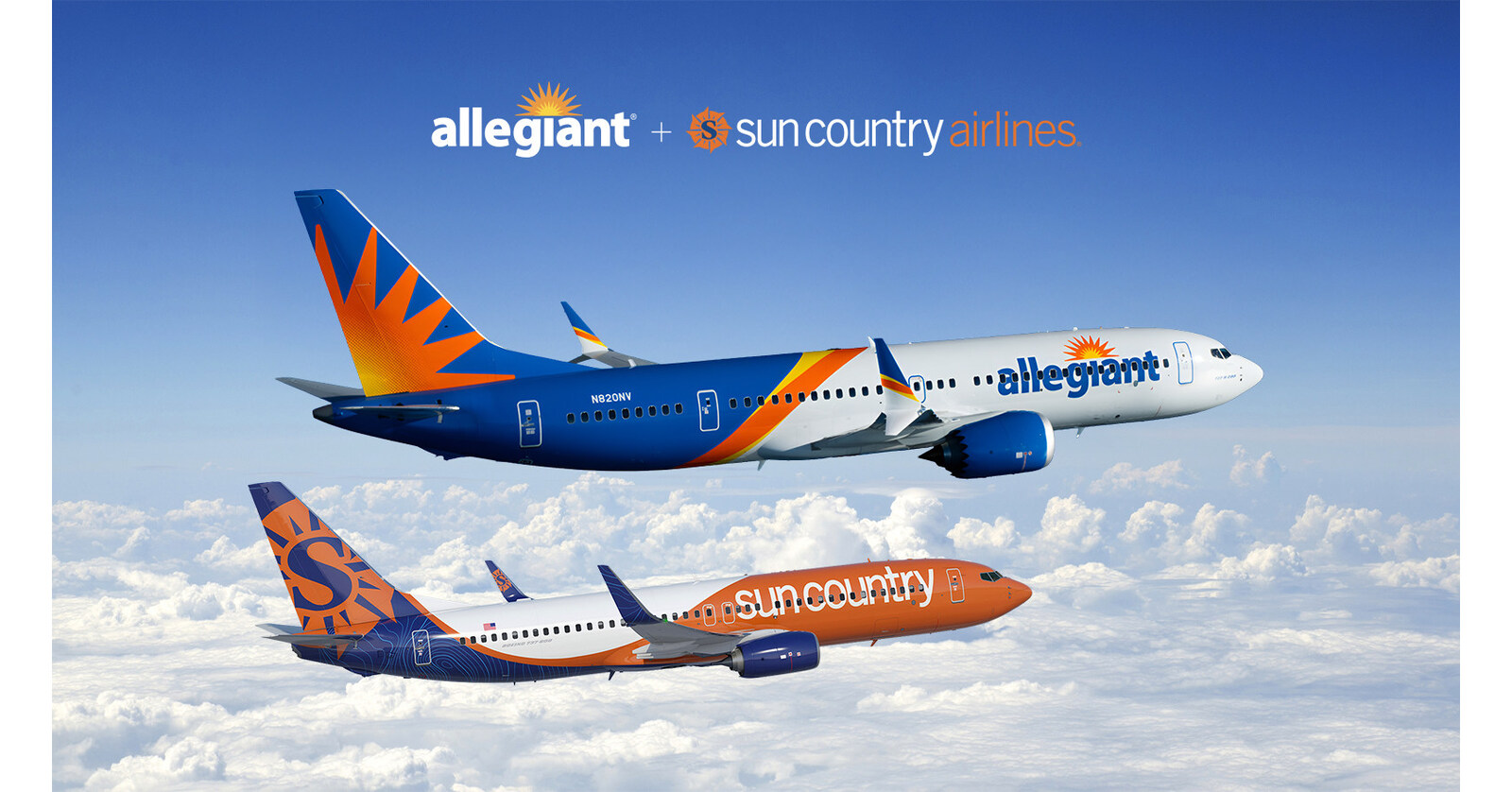
Allegiant and Sun Country Planes (PRNewsfoto/Allegiant Travel Company)
The combination will create a leading leisure-focused U.S. airline, expanding service to more popular vacation destinations across the United States, as well as international destinations, and providing more people with access to affordable, convenient air travel. Allegiant and Sun Country are well positioned to create one of the most adaptable and resilient airline models in the industry, with the ability to respond quickly to changing market conditions, traveler demand, and charter and cargo partner needs. The combination of two financially strong leisure carriers in the U.S. will create benefits for customers, communities, employees, and partners by enhancing stability, expanding opportunities, and enabling continued investment and innovation.
Gregory C. Anderson, Allegiant CEO, said, “This combination is an exciting next chapter in Allegiant and Sun Country’s shared mission in providing affordable, reliable, and convenient service from underserved communities to premier leisure destinations. We have long admired Sun Country for their well-run, flexible, and diversified business model that optimizes for year-round utilization and strong margins. Together, our complementary networks will expand our reach to more vacation destinations including international locations. With our combined strengths– including operational excellence, consistent profitability, strong balance sheets, and fleet ownership, we will create an even more resilient and agile airline that delivers greater value to travelers, partners, Team Members, shareholders, and the communities we serve.”
Jude Bricker, Sun Country President & CEO, said, “Over Sun Country’s 43-year history, we have grown to become one of the nation’s most respected low-cost, leisure airlines with a unique business model for serving scheduled service and charter passengers as well as delivering cargo, with a strong brand and deep roots in Minnesota. Today marks an exciting next step in our history as we join Allegiant to create one of the leading leisure travel companies in the U.S. We are two customer-centric organizations, deeply committed to delivering affordable travel experiences without compromising on quality. Importantly, we believe this transaction delivers significant value to Sun Country shareholders and an opportunity to continue to benefit from our growth plans as a combined company.”
A Shared Commitment to Affordable Leisure Travel for Our Combined 22 Million Annual Passengers
Both Allegiant and Sun Country have built their businesses with a focus on connecting travelers to the places they love, with a commitment to value, convenience, and customer choice. The combined airline will offer:
Complementary footprint provides more destinations, more often: The combination brings together complementary route networks across Allegiant’s small and mid-sized localities and Sun Country’s larger cities and will provide more than 650 routes, including 551 Allegiant routes and 105 Sun Country routes. This combination will connect MSP to Allegiant’s mid-sized markets, and expand nonstop service to popular vacation spots, with a continued focus on underserved markets across the U.S. while expanding opportunities into international locations.
Expanded international service: With access to Sun Country’s vast international network across Mexico, Central America, Canada, and the Caribbean, the combined airline will offer Allegiant customers access to expanded service from its small and mid-sized cities to 18 international destinations.
Greater scheduling agility, improved reliability, and dynamic route planning enhance on-time performance: Integrated scheduling and fleet management will enhance on-time performance. The combined airline’s flexible capacity will match demand during peak leisure travel seasons and days of the week, while leveraging year-round charter and cargo operations to maximize profitability. By rapidly adjusting and expanding passenger and charter routes to support emerging vacation trends and expertly matching demand trends, the combined company can better service underserved markets and meet charter and cargo customer demands.
Enhanced loyalty rewards program: Expanded frequent flyer and membership benefits, combining the best of both airlines’ programs. Adding Sun Country’s more than 2 million members to Allegiant’s 21 million member base further enhances the relevance of the combined program, driving greater customer rewards.
Opportunities for Our Teams Flying Together
Allegiant and Sun Country share cultures rooted in respect, teamwork, and opportunity, where employees are empowered to grow their careers and contribute to a mission they believe in: connecting communities and helping travelers reach the places they love. As part of a leading leisure-focused airline, employees will have increased opportunities, including:
Career growth: A larger network and fleet will create new roles, advancement opportunities, and cross-training possibilities across the combined airline.
Shared culture of service: Both airlines’ emphasis on safety, hospitality, and affordable leisure travel will remain central to training, operations, and customer care.
Seasonal stability: In addition to expanded leisure travel opportunities, the combined airline’s diversified operations, including Sun Country’s long-term charter contracts and cargo partnerships, will create more year-round flying opportunities for pilots, crews, and operations personnel. This stability supports career growth, cross-training, and operational efficiency across the network.
Employee engagement: Continued investment in programs that support professional development and recognition of team member contributions.
Allegiant and Sun Country will work closely with employees and their unions — including pilots, flight attendants, mechanics, ground staff, and dispatchers — to ensure a smooth and transparent integration process. Existing collective bargaining agreements will remain in effect, and the companies will follow all processes required under the Railway Labor Act. Both companies share a goal to support employees throughout the transition, creating a unified team for the future.
Creating Outsized, Long-Term Value for Shareholders
The combination of Allegiant and Sun Country brings together two profitable airlines with strong balance sheets and is expected to deliver immediate and sustained value to shareholders of both companies through significant long-term growth potential and enhanced financial strength, including:
Synergy realization: Allegiant expects to achieve $140 million in annual synergies within three years following the closing and integration, primarily driven by the ability to provide more customers with more options across the combined network. Expected cost savings and revenue synergies are also expected from scale efficiencies, fleet optimization, and procurement.
EPS accretion: Transaction expected to be accretive to earnings per share one year post closing, while enhancing long-term financial results.
Balance sheet flexibility and leverage: The combined company expects Net Adjusted Debt[1] to EBITDAR of less than 3.0x at closing and to maintain balance sheet flexibility post-closing.
Diversified operations: Sun Country remains a major narrow-body freighter operator in the U.S., with its multi-year agreement with Amazon Prime Air, as well as its charter contracts with casinos, Major League Soccer, collegiate sports teams, and the Department of Defense. With the addition of Allegiant’s existing charter business, the combined airline will benefit from a further diversified business model that balances demand cycles, provides stable revenue streams, and maximizes aircraft and crew utilization.
Enhanced fleet optimization and leverage: Owning and operating both Airbus and Boeing aircraft – with the ability to source additional aircraft from new and existing markets – will enable the company to deploy aircraft where they deliver the greatest operational and financial benefit. The combined airline will have the scale to more fully utilize Allegiant’s 737 MAX fleet and order book, improving fuel efficiency and capacity. On closing, the combined airline will operate approximately 195 aircraft, with 30 on order and an additional 80 options.
Financial resilience through economic cycles: The combined airline’s diversified revenue streams, including its high ancillary revenues and long-term contracts in cargo and charter that are able to pass through fuel risk to the end customer, are expected to provide greater resilience through economic cycles.
Leadership, Governance, and Footprint
Following close, Allegiant will continue to be the publicly held parent company and the combined company will continue under the Allegiant name. However, each airline will operate separately until the airline operations obtain a single operating certificate from the FAA which consolidates the airlines’ operations, procedures, and safety protocols into one framework. There will be no immediate impact to ticketing, flight schedules, and travel experience, or the Sun Country brand, and customers can continue to book and fly with Allegiant and with Sun Country as they do today.
Upon closing, Allegiant CEO Gregory C. Anderson will serve as Chief Executive Officer of the combined company, and Robert Neal will serve as President and Chief Financial Officer. Sun Country President and CEO Jude Bricker will join the Board of Directors, alongside two additional Sun Country Board members, expanding the size of the Allegiant board to 11. Maury Gallagher, Chairman of the Board of Allegiant, will serve as Chairman of the Board of the combined company. Jude Bricker will serve as an advisor to Mr. Anderson to help ensure a smooth and successful integration.
The combined company will be headquartered in Las Vegas and will maintain a significant presence in Minneapolis-St. Paul where Sun Country is based.
Timing and Approvals
The transaction has been unanimously approved by the boards of directors of both companies and is expected to close in the second half of 2026, subject to receipt of U.S. federal antitrust clearance and other required regulatory approvals, the approval of both companies’ shareholders and other customary closing conditions.
Investor Conference Call and Transaction Website Details
Allegiant and Sun Country will conduct a live conference call and webcast to discuss the transaction tomorrow, January 12, 2026, at 8:30 AM ET. A live broadcast of the conference call will be available via the Company’s Investor Relations website homepage at http://ir.allegiantair.com.
The webcast and accompanying presentation slides will be available on both the Allegiant website and Sun Country website, as well as www.SoaringForLeisure.com, a joint website dedicated to the transaction.
Advisors
Barclays is serving as financial advisor, and Skadden, Arps, Slate, Meagher & Flom LLP is serving as legal advisor, and FGS Global is serving as strategic communications advisor to Allegiant.
Goldman Sachs & Co. LLC is serving as financial advisor and Milbank LLP is serving as legal advisor, and Collected Strategies is serving as strategic communications advisor to Sun Country.
Allegiant – Together We FlyTM
Las Vegas-based Allegiant (NASDAQ: ALGT) is an integrated travel company with an airline at its heart, focused on connecting customers with the people, places, and experiences that matter most. Since 1999, Allegiant Air has linked travelers in small-to-medium cities to world-class vacation destinations with all-nonstop flights and industry-low average fares. Today, Allegiant’s fleet serves communities across the nation, with base airfares less than half the cost of the average domestic roundtrip ticket. For more information, visit us at Allegiant.com. Media information, including photos, is available at http://gofly.us/iiFa303wrtF
About Sun Country
Sun Country Airlines is a new breed of hybrid low-cost air carrier, whose mission is to connect guests to their favorite people and places to create lifelong memories and transformative experiences. Sun Country dynamically and synergistically deploys shared resources for our passenger service, including scheduled service and charter, and cargo service segments. Based in Minnesota, we focus on serving leisure and visiting friends and relatives (“VFR”) passengers and charter customers and providing cargo service to Amazon, with flights throughout the United States and to destinations in Mexico, Central America, Canada, and the Caribbean.
For photos, b-roll and additional company information, visit https://www.stories.suncountry.com/multimedia
This communication contains forward-looking statements under the safe harbor provisions of Section 21E of the Securities Exchange Act of 1934, Section 27A of the Securities Act of 1933 and the Private Securities Litigation Reform Act of 1995. Forward-looking statements include all statements that are not historical facts and often can be identified by the use of forward-looking terminology such as the words “believe,” “expect,” “guidance,” “anticipate,” “intend,” “plan,” “estimate”, “project”, “hope” or similar expressions. Forward-looking statements in this communication are based on Allegiant’s and Sun Country’s current expectations, estimates and projections about the expected date of closing of the proposed transaction and the potential benefits thereof, their respective businesses and industries, management’s beliefs and certain assumptions made by Allegiant and Sun Country, all of which are subject to change. Forward-looking statements in this communication may relate to, without limitation, the benefits of the proposed transaction, including future financial and operating results; the parties’ respective plans, objectives, expectations and intentions; the expected timing and likelihood of completion of the proposed transaction; expected synergies of the proposed transaction; the timing and result of various regulatory proceedings related to the proposed transaction; the ability to execute and finance current and long-term business, operational, capital expenditures and growth plans and strategies; the impact of increased or increasing transaction and financing costs associated with the proposed transaction or otherwise, as well as inflation and interest rates; and the ability to access debt and equity capital markets.
Forward-looking statements involve risks, uncertainties and assumptions that could cause actual results to differ materially from those expressed in any forward-looking statements. Accordingly, there are or will be important factors that could cause actual results to differ materially from those indicated in such statements and, therefore, you should not place undue reliance on any such statements and caution must be exercised in relying on forward-looking statements. Important risk factors that may cause such a difference include, but are not limited to, the following: the occurrence of any event, change or other circumstance that could give rise to the right of one or both of the parties to terminate the definitive merger agreement for the proposed transaction; the risk that potential legal proceedings may be instituted against Allegiant or Sun Country and result in significant costs of defense, indemnification or liability; the possibility that the proposed transaction does not close when expected or at all because required stockholder approvals, required regulatory approvals or other conditions to closing are not received or satisfied on a timely basis or at all (and the risk that such regulatory approvals may result in the imposition of conditions that could adversely affect the combined company or the expected benefits of the proposed transaction); the risk that the combined company will not realize expected benefits, cost savings, accretion, synergies and/or growth from the proposed transaction or that any of the foregoing may take longer to realize or be more costly to achieve than expected; disruption to the parties’ businesses as a result of the announcement and pendency of the proposed transaction; the costs associated with the anticipated length of time of the pendency of the proposed transaction, including the restrictions contained in the definitive merger agreement on the ability of each of Sun Country and Allegiant to operate their respective businesses outside the ordinary course consistent with past practice during the pendency of the proposed transaction; the diversion of Allegiant’s and Sun Country’s respective management teams’ attention and time from ongoing business operations and opportunities on acquisition-related matters; the risk that the integration of Sun Country’s operations will be materially delayed or will be more costly or difficult than expected or that Allegiant is otherwise unable to successfully integrate Sun Country’s businesses into its businesses; the possibility that the proposed transaction may be more expensive to complete than anticipated, including as a result of unexpected factors or events; reputational risk and potential adverse reactions of Allegiant’s or Sun Country’s customers, suppliers, employees, labor unions or other business partners, including those resulting from the announcement or completion of the proposed transaction; the dilution caused by Allegiant’s issuance of additional shares of its common stock in connection with the consummation of the proposed transaction; a material adverse change in the business, condition or results of operations of Allegiant or Sun Country; changes in domestic or international economic, political or business conditions, including those impacting the airline industry (including customers, employees and supply chains); Allegiant’s and Sun Country’s ability to successfully implement their respective operational, productivity and strategic initiatives; the outcome of claims, litigation, governmental proceedings and investigations involving Allegiant or Sun Country; and a cybersecurity incident or other disruption to Sun Country’s or Allegiant’s technology infrastructure.
Forward-looking statements in this communication are qualified by and should be read together with, the risk factors set forth above and the risk factors included in Allegiant’s and Sun Country’s respective annual and quarterly reports as filed with the Securities and Exchange Commission (the “SEC”), and readers should refer to such risks, uncertainties and risk factors in evaluating such forward-looking statements. In addition, the risk factors discussed above are not exhaustive and they, along with other risk factors, will be more fully discussed in the registration statement and joint proxy statement/prospectus to be filed with the SEC in connection with the proposed transaction.
The forward-looking statements in this communication are made only as of the date they were first issued, and unless otherwise required by applicable securities laws, Allegiant and Sun Country disclaim any intention or obligation to update or revise any forward-looking statements, whether as a result of new information, future events, or otherwise.
Important Additional Information and Where to Find It
In connection with the proposed transaction, Allegiant intends to file with the SEC a registration statement on Form S-4 (the “Registration Statement”), which will include a prospectus with respect to the shares of Allegiant’s common stock to be issued in the proposed transaction and a joint proxy statement for Allegiant’s and Sun Country’s respective stockholders (the “Joint Proxy Statement/Prospectus”). The definitive joint proxy statement (if and when available) will be mailed to stockholders of Allegiant and Sun Country. Each of Allegiant and Sun Country may also file with or furnish to the SEC other relevant documents regarding the proposed transaction. This communication is not a substitute for the Registration Statement, the Joint Proxy Statement/Prospectus or any other document that Allegiant or Sun Country may file with the SEC or send to their respective stockholders in connection with the proposed transaction. INVESTORS AND SECURITY HOLDERS OF ALLEGIANT AND SUN COUNTRY ARE URGED TO READ THE REGISTRATION STATEMENT AND THE JOINT PROXY STATEMENT/PROSPECTUS INCLUDED WITHIN THE REGISTRATION WHEN THEY BECOME AVAILABLE, AS WELL AS ANY OTHER RELEVANT DOCUMENTS FILED WITH THE SEC IN CONNECTION WITH THE PROPOSED TRANSACTION OR INCORPORATED BY REFERENCE INTO THE REGISTRATION STATEMENT AND THE JOINT PROXY STATEMENT/PROSPECTUS (INCLUDING ANY AMENDMENTS OR SUPPLEMENTS THERETO), BECAUSE THEY WILL CONTAIN IMPORTANT INFORMATION REGARDING ALLEGIANT, SUN COUNTRY, THE PROPOSED TRANSACTION AND RELATED MATTERS. Investors and security holders of Allegiant and Sun Country may obtain free copies of these documents and other documents filed with the SEC by Allegiant or Sun Country through the website maintained by the SEC at http://www.sec.gov or from Allegiant at its website, https://ir.allegiantair.com/financials/sec-filings/default.aspx, or from Sun Country at its website, https://ir.suncountry.com/financials/sec-filings. Documents filed with the SEC by Allegiant will be available free of charge by accessing Allegiant’s website at https://ir.allegiantair.com/financials/sec-filings/default.aspx, or alternatively by directing a request by mail to Allegiant’s Investor Relations department, 1201 North Town Center Drive, Las Vegas, NV 89144, and documents filed with the SEC by Sun Country will be available free of charge by accessing Sun Country’s website at https://ir.suncountry.com/financials/sec-filings, or alternatively by directing a request by mail to Sun Country’s Investor Relations department, 2005 Cargo Road, Minneapolis, MN 55450.
Participants In The Solicitation
Allegiant, Sun Country and certain of their respective directors and executive officers may be deemed to be participants in the solicitation of proxies from the stockholders of Allegiant and Sun Country in connection with the proposed transaction under the rules of the SEC.
Information about the interests of the directors and executive officers of Allegiant and Sun Country and other persons who may be deemed to be participants in the solicitation of stockholders of Allegiant and Sun Country in connection with the proposed transaction and a description of their direct and indirect interests, by security holdings or otherwise, will be included in the Joint Proxy Statement/Prospectus, which will be filed with the SEC.
Information about the directors and executive officers of Allegiant, their ownership of Allegiant common stock and Allegiant’s transactions with related persons can also be found in the Allegiant Annual Report and Allegiant’s definitive proxy statement in connection with its 2025 annual meeting of stockholders, as filed with the SEC on Schedule 14A on April 30, 2025 (the “Allegiant 2025 Proxy Statement”), and other documents subsequently filed by Allegiant with the SEC, which are available on its website, https://ir.allegiantair.com/financials/sec-filings/default.aspx. Such information is set forth in the sections entitled “Proposal No. 1 – Election of Directors”, “Proposal No. 2 – Advisory (non-binding) Vote on Executive Compensation”, “Proposal No. 3 – Approval of Amendment to Allegiant 2022 Long-Term Incentive Plan to Increase Number of Shares Available”, “Executive Compensation” and “Related Party Transactions” of the Allegiant 2025 Proxy Statement. To the extent holdings of Allegiant common stock by the directors and executive officers of Allegiant have changed from the amounts of Allegiant common stock held by such persons as reflected therein, such changes have been or will be reflected on Statements of Change in Ownership on Form 4 filed with the SEC, which are available at https://www.sec.gov/edgar/browse/?CIK=1362468&owner=exclude under the tab “Ownership Disclosures”.
Information about the directors and executive officers of Sun Country, their ownership of Sun Country common stock and Sun Country’s transactions with related persons can also be found in the definitive proxy statement for Sun Country’s 2025 annual meeting of stockholders, as filed with the SEC on Schedule 14A on April 25, 2025 (which is available at https://ir.suncountry.com/financials/sec-filings), and other documents subsequently filed by Sun Country with the SEC. Such information is set forth in the sections entitled “Proposal 1– Reelection of Directors”, “Proposal 2 – Non-binding (Advisory) Vote to Approve the Compensation of Our Named Executive Officers”, “Executive Compensation”, “Certain Relationships and Related Person Transactions” and “Security Ownership of Certain Beneficial Owners and Management” of such definitive proxy statement. Please also refer to Sun Country’s subsequent Current Reports, as filed with the SEC on Form 8-K on September 22, 2025 (which is available at https://ir.suncountry.com/financials/sec-filings) and on October 30, 2025, regarding subsequent changes to Sun Country’s Board of Directors and executive management following the filing of such definitive proxy statement. To the extent holdings of Sun Country common stock by the directors and executive officers of Sun Country have changed from the amounts of Sun Country common stock held by such persons as reflected in the definitive proxy statement, such changes have been or will be reflected on Statements of Change in Ownership on Form 4 filed with the SEC, which are available at https://www.sec.gov/edgar/browse/?CIK=1743907&owner=exclude under the tab “Ownership Disclosures”.
Free copies of these documents may be obtained as described above.
No Offer or Solicitation
This communication is for informational purposes only and does not constitute, or form a part of, an offer to sell, an offer to buy, or the solicitation of an offer to sell or the solicitation of an offer to buy any securities, and there shall be no sale of securities, in any jurisdiction in which such offer, solicitation or sale would be unlawful prior to registration or qualification under the securities laws of any such jurisdiction. No offer of securities shall be made except by means of a prospectus meeting the requirements of Section 10 of the Securities Act of 1933, as amended, and otherwise in accordance with applicable law.
Contacts
Allegiant
Media Inquiries: [email protected]
FGS Global: [email protected]
Investor Inquiries: [email protected]
Sun Country
Media Inquiries: Wendy Burt [email protected]
Collected Strategies: Jim Golden, Tali Epstein, Kiki Torpey [email protected]
Investor Relations: Chris Allen [email protected]
1 Adjusted Net Debt / Adjusted EBITDAR defined as (Total Debt + Operating Leases – Cash) / LTM Adjusted EBITDAR.
The airport has some good news – a new aircraft is taking off in the Sault.
“The Sault Ste. Marie Airport Development Corporation is pleased to welcome the new Bearskin aircraft to Sault Ste. Marie,” said airport President and CEO Terry Bos.
“Effective Jan. 4 Bearskin has introduced Dash 8 service to the Sault Ste. Marie market with one daily flight on Monday and Tuesday operating with Dash 8 service. We look forward to continued growth of Bearskin’s use of the Dash 8 aircraft in the future, and the comfort the larger aircraft provides to the passenger.”
Bearskin flies to other cities in northern Ontario, such as Sudbury and Thunder Bay.
The airport also released numbers for 2025.
Passenger numbers held almost steady in 2025 compared to 2024 for the Sault Ste. Marie Airport.
Totals last year were 153,202, down only slightly from 153,57 in 2024. However December to December saw a larger fall-off of 14 per cent – from 13,252 in 2024 to 11,391 in 2025.
The current number of flights provided is as follows: Air Canada Express, two flights daily; Bearskin Airlines, three flights daily Sunday and Monday, four flights daily Tuesday, Thursday, and Friday, and five flights Wednesday; Porter one flight daily.
More information about flights to and from the Sault airport is available here.
Moraschini, V. et al. Immunological response of allogeneic bone grafting: A systematic review of prospective studies. Journal of Oral Pathology & Medicine 49, 395–403, doi:https://doi.org/10.1111/jop.12998 (2020).
Google Scholar
Raquel Maia, F., Correlo, V. M., Oliveira, J. M. & Reis, R. L. 535–558 (Elsevier, 2019).
Fan, L., Chen, S., Yang, M., Liu, Y. & Liu, J. Metallic materials for bone repair. Adv. Healthc. Mater. https://doi.org/10.1002/adhm.202302132 (2024).
Google Scholar
Duvvuru, M. K. et al. Bone marrow stromal cells interaction with titanium; effects of composition and surface modification. PLOS ONE 14, e0216087, doi:https://doi.org/10.1371/journal.pone.0216087 (2019).
Google Scholar
Ganesh, N. & Rambabu, S. Finite Element Analysis of Porous Ti-6Al-4V Alloy Structures for Biomedical Applications. J. Phy. Conf. Series2070, 012224. https://doi.org/10.1088/1742-6596/2070/1/012224 (2021).
Google Scholar
Huang, G., Pan, S.-T. & Qiu, J.-X. The clinical application of porous tantalum and its new development for bone tissue engineering. Materials 14, 2647, doi:https://doi.org/10.3390/ma14102647 (2021).
Google Scholar
Levine, B. R., Sporer, S., Poggie, R. A., Della Valle, C. J. & Jacobs, J. J. Experimental and clinical performance of porous tantalum in orthopedic surgery. Biomaterials 27, 4671–4681, doi:https://doi.org/10.1016/j.biomaterials.2006.04.041 (2006).
Google Scholar
Francois, E. L. & Yaszemski, M. J. 761–767 (Elsevier, 2019).
Gil Mur, F. J. 267–289 (Elsevier, 2016).
Li, G., Chen, L. & Chen, K. Curcumin promotes femoral fracture healing in a rat model by activation of autophagy. Medical Science Monitor 24, 4064–4072, doi:https://doi.org/10.12659/msm.908311 (2018).
Google Scholar
Bian, W., Xiao, S., Yang, L., Chen, J. & Deng, S. Quercetin promotes bone marrow mesenchymal stem cell proliferation and osteogenic differentiation through the H19/miR-625-5p axis to activate the Wnt/β-catenin pathway. BMC Complementary Med. Ther. https://doi.org/10.1186/s12906-021-03418-8 (2021).
Google Scholar
Chen, Y.-C. et al. Anti-inflammation performance of curcumin-loaded mesoporous calcium silicate cement. Journal of the Formosan Medical Association 116, 679–688, doi:https://doi.org/10.1016/j.jfma.2017.06.005 (2017).
Google Scholar
Liu, N. et al. Quercetin-Coating promotes osteogenic Differentiation, osseointegration and Anti-Inflammatory properties of Nano-Topographic modificated 3D-Printed Ti6Al4V implant. Front Bioeng Biotechnol 10, 933135, doi:https://doi.org/10.3389/fbioe.2022.933135 (2022).
Google Scholar
Tabanelli, R., Brogi, S. & Calderone, V. Improving Curcumin bioavailability: current strategies and future perspectives. Pharmaceutics 13, 1715, doi:https://doi.org/10.3390/pharmaceutics13101715 (2021).
Google Scholar
Heidari, H. et al. Curcumin-piperine co‐supplementation and human health: A comprehensive review of preclinical and clinical studies. Phytotherapy Research 37, 1462–1487, doi:https://doi.org/10.1002/ptr.7737 (2023).
Google Scholar
Kumar, P., Singh, S. & Jamwal, S. Neuroprotective potential of Quercetin in combination with Piperine against 1-methyl-4-phenyl-1,2,3,6-tetrahydropyridine-induced neurotoxicity. Neural Regeneration Research 12, 1137, doi:https://doi.org/10.4103/1673-5374.211194 (2017).
Google Scholar
Danhier, F. et al. PLGA-based nanoparticles: an overview of biomedical applications. Journal of Controlled Release 161, 505–522, doi:https://doi.org/10.1016/j.jconrel.2012.01.043 (2012).
Google Scholar
Makadia, H. K. & Siegel, S. J. Poly Lactic-co-Glycolic acid (PLGA) as biodegradable controlled drug delivery carrier. Polymers 3, 1377–1397, doi:https://doi.org/10.3390/polym3031377 (2011).
Google Scholar
Bohrey, S., Chourasiya, V. & Pandey, A. Polymeric nanoparticles containing diazepam: preparation, optimization, characterization, in-vitro drug release and release kinetic study. Nano Converg. https://doi.org/10.1186/s40580-016-0061-2 (2016).
Google Scholar
Hernández-Giottonini, K. Y. et al. PLGA nanoparticle preparations by emulsification and nanoprecipitation techniques: effects of formulation parameters. RSC Advances 10, 4218–4231, doi:https://doi.org/10.1039/c9ra10857b (2020).
Google Scholar
Anjana, D. . Development of Curcumin Based Ophthalmic Formulation. American J. Infect. Dis.8, 41–49. https://doi.org/10.3844/ajidsp.2012.41.49 (2012).
Google Scholar
Khursheed, R. et al. Development and validation of RP-HPLC method for simultaneous determination of Curcumin and Quercetin in Extracts, marketed Formulations, and Self-Nanoemulsifying drug delivery system. Re:GEN Open 1, 43–52, doi:https://doi.org/10.1089/regen.2021.0021 (2021).
Google Scholar
Tan, J. M., Bullo, S., Fakurazi, S. & Hussein, M. Z. Preparation, characterisation and biological evaluation of biopolymer-coated multi-walled carbon nanotubes for sustained-delivery of silibinin. Sci. Rep. https://doi.org/10.1038/s41598-020-73963-8 (2020).
Google Scholar
Aldawsari, M. F. et al. Gallic-Acid-Loaded PLGA nanoparticles: A promising transdermal drug delivery system with antioxidant and antimicrobial agents. Pharmaceuticals 16, 1090, doi:https://doi.org/10.3390/ph16081090 (2023).
Google Scholar
Wu, S.-T. et al. Treatment of pancreatic ductal adenocarcinoma with tumor antigen specific-targeted delivery of paclitaxel loaded PLGA nanoparticles. BMC Cancer https://doi.org/10.1186/s12885-018-4393-7 (2018).
Google Scholar
Yang, G., Liu, L., Lv, F. & Wang, S. Conjugated polyelectrolyte materials for promoting progenitor cell growth without serum. Sci. Rep. https://doi.org/10.1038/srep01702 (2013).
Google Scholar
Huang, L. et al. Lactoferrin promotes osteogenesis of MC3T3-E1 cells induced by mechanical strain in an extracellular signal–regulated kinase 1/2–dependent manner. American Journal of Orthodontics and Dentofacial Orthopedics 159, e113-e121, doi:https://doi.org/10.1016/j.ajodo.2020.08.015 (2021).
Google Scholar
He, S. et al. Nampt promotes osteogenic differentiation and lipopolysaccharide-induced interleukin-6 secretion in osteoblastic MC3T3-E1 cells. Aging 13, 5150–5163, doi:https://doi.org/10.18632/aging.202434 (2021).
Google Scholar
Guan, M.et al.
Long-lasting bactericidal activity through selective physical puncture and controlled ions release of polydopamine and silver nanoparticles–loaded TiO < sub > 2 nanorods in vitro and in vivo
Kara Özenler, A. et al. 3D Bioprinting of mouse pre-osteoblasts and human MSCs using Bioinks consisting of gelatin and decellularized bone particles. Biofabrication 16, 025027, doi:https://doi.org/10.1088/1758-5090/ad2c98 (2024).
Google Scholar
Hu, J. et al. Design of synthetic collagens that assemble into supramolecular banded fibers as a functional biomaterial testbed. Nat. Commun. https://doi.org/10.1038/s41467-022-34127-6 (2022).
Google Scholar
Wu, J. et al. Mmu_circ_003795 regulates osteoblast differentiation and mineralization in MC3T3–E1 and MDPC23 by targeting COL15A1. Molecular Medicine Reports 22, 1737–1746, doi:https://doi.org/10.3892/mmr.2020.11264 (2020).
Google Scholar
Wei, J. et al. Significance and considerations of Establishing standardized critical values for critical size defects in animal models of bone tissue regeneration. Heliyon 10, e33768, doi:https://doi.org/10.1016/j.heliyon.2024.e33768 (2024).
Google Scholar
Zhou, L. et al. A rabbit osteochondral defect (OCD) model for evaluation of tissue engineered implants on their biosafety and efficacy in osteochondral repair. Front. Bioeng. Biotechnol. https://doi.org/10.3389/fbioe.2024.1352023 (2024).
Google Scholar
Wu, Y., Fan, M., Tan, S., Guo, Q. & Xu, H. Effect of Huoxue Jiegu compound capsule on osteoblast differentiation and fracture healing by regulating the PI3K/Akt/mTOR signaling pathway in rabbits. Heliyon 10, e36175, doi:https://doi.org/10.1016/j.heliyon.2024.e36175 (2024).
Google Scholar
Meng, Z. L. et al. Reconstruction of large segmental bone defects in rabbit using the Masquelet technique with α-calcium sulfate hemihydrate. J. Orthop. Surg. Res., https://doi.org/10.1186/s13018-019-1235-5 (2019).
Google Scholar
Zhao, D. & Ma, Z. Application of biomaterials for the repair and treatment of osteonecrosis of the femoral head. Regenerative Biomaterials 7, 1–8, doi:https://doi.org/10.1093/rb/rbz048 (2020).
Google Scholar
Clutterbuck, A. L., Allaway, D., Harris, P. & Mobasheri, A. Curcumin reduces prostaglandin E2, matrix metalloproteinase-3 and proteoglycan release in the secretome of interleukin 1β-treated articular cartilage. F1000Research2, 27–32. https://doi.org/10.12688/f1000research.2-147.v1 (2013).
Google Scholar
Wong, R. W. K. & Rabie, A. B. M. Effect of Quercetin on preosteoblasts and bone defects. The Open Orthopaedics Journal 2, 27–32, doi:https://doi.org/10.2174/1874325000802010027 (2008).
Google Scholar
Woo, J. H. et al. Molecular mechanisms of curcumin-induced cytotoxicity: induction of apoptosis through generation of reactive oxygen species, down-regulation of Bcl-XL and IAP, the release of cytochrome c and Inhibition of Akt. Carcinogenesis 24, 1199–1208, doi:https://doi.org/10.1093/carcin/bgg082 (2003).
Google Scholar
K. Wong, R. W. & M. Rabie, A. B. Effect of Quercetin on preosteoblasts and bone defects. The Open Orthopaedics Journal 2, 27–32, doi:https://doi.org/10.2174/1874325000802010027 (2008).
Google Scholar
Mirshafiee, V., Jiang, W., Sun, B., Wang, X. & Xia, T. Facilitating translational nanomedicine via predictive safety assessment. Molecular Therapy 25, 1522–1530, doi:https://doi.org/10.1016/j.ymthe.2017.03.011 (2017).
Google Scholar
Bobyn, J. D. et al. Clinical Validation of a Structural Porous Tantalum Biomaterial for Adult Reconstruction. J. Bone Joint Surg.86, 123–129. https://doi.org/10.2106/00004623-200412002-00017 (2004).
This article picked by a teacher with suggested questions is part of the Financial Times free schools access programme. Details/registration here.
Read our full range of US High School economics picks here.
Read the FT article and then answer the questions below.
US economy grew at 4.3% rate in third quarter
The official data showed the US economy grew at an annualised rate of 4.3 per cent in the third quarter. How did this actual figure compare to the expectations of economists polled by Bloomberg, and what does this difference imply about the overall strength of the economy during that period?
Consumer spending on healthcare and computing helped boost growth. What economic role does consumer spending play in GDP?
The article states that a fall in imports “helped” the GDP figure, and “overall net trade added 1.6 percentage points to the headline rate.” Why do imports have a negative effect on the calculation of a country’s GDP?
The article mentions that consumer confidence fell to its second-lowest level in five years. Why might lower consumer confidence affect future economic growth?
An economic counsellor to the US Treasury Secretary states, “Exports are up almost 9 per cent, imports are down about five,” which contributed to a large net trade boost to growth. Explain how a strong emphasis on exports over imports (improving the trade balance) could lead to a “re-industrialisation rejuvenation” in the US
The article mentions a “sharp slowing in inflation to 2.7 per cent.” If your personal income or allowance only increased by 1 per cent this year, what would this 2.7 per cent inflation rate mean for your purchasing power?
Economists watch the pace of national inventory rebuild. If businesses see slowing consumer momentum, how does their action on inventory levels affect the calculation of the country’s GDP growth in the following quarter?
In your own words, explain why GDP is such an important measure for economists, policymakers, and ordinary people. What can GDP tell us, and what are some things it cannot tell us?
Joel Miller and James Redelsheimer, Foundation for Economic Education. Click here for FEE FT Classroom Edition with classroom-ready presentations and suggested answers for teachers.