Category: 3. Business

  • Asian shares drop after Wall Street retreats thanks to sinking tech stocks

    Asian shares drop after Wall Street retreats thanks to sinking tech stocks

    Asian shares slipped Thursday after more drops for technology stocks weighed on Wall Street.

    U.S. futures edged higher and oil prices sank more than $1 a barrel.

    Tokyo’s Nikkei 225 shed 0.7% to 53,935.77, while the Kospi in South Korea skidded 3.2%, to 5,199.47.

    Chinese markets also retreated, with Hong Kong’s Hang Seng falling 1.2% to 26,516.38. The Shanghai Composite index gave up 0.8% to 4,069.27.

    Australia’s S&P/ASX 200 fell 0.3% to 8,902.20, while Taiwan’s Taiex lost 1.1%.

    On Wednesday, the S&P 500 fell 0.5% for its fifth modest loss in the last six days, closing at 6,882.72. The Dow Jones Industrial Average rose 0.5% to 49,501.30 and the Nasdaq composite sank 1.5% to 22,904.58.

    More than twice as many stocks rose within the S&P 500 than fell, but sinking technology stocks weighed on the index for a second straight day.

    Advanced Micro Devices dropped 17.3% even though the chip company reported a stronger profit for the latest quarter than analysts expected. It also gave a forecast for revenue for the start of 2026 that topped analysts’ expectations, but that may not have satisfied investors after its stock doubled over the last 12 months.

    Tech stocks are under pressure even when they deliver stronger-than-expected profits after their prices shot higher as they’ve grown to dominate markets. Companies like software makers, meanwhile, are struggling with questions about whether they’ll lose in the future to competitors powered by artificial-intelligence technology.

    Uber Technologies also dragged on the market after falling 5.1%. The ride-hailing company reported results for the latest quarter that fell short of analysts’ expectations. It also gave a forecast for profit in the current quarter that was below analysts’ expectations, while naming a new chief financial officer.

    Some tech stocks nevertheless climbed, including a 13.8% rise for Super Micro Computer. The company, which sells AI servers and other equipment, delivered a stronger profit for the latest quarter than analysts expected.

    Eli Lilly rallied 10.3% after topping analysts’ expectations for profit in the latest quarter. It’s been riding big growth created by its Mounjaro and Zepbound products for diabetes and weight loss.

    Match Group climbed 5.9% after reporting better results than analysts expected and increasing its dividend.

    Walmart edged up by 0.2%, a day after its total market value topped $1 trillion for the first time. The retailer has broken into a small club dominated by Big Tech companies like Nvidia and Apple, which are each worth more than $4 trillion.

    Gold and silver prices rose after paring bigger, early gains. Gold added 0.3% to settle at $4,950.80 per ounce after earlier climbing back above the $5,000 mark. It’s been swinging sharply after roughly doubling in price over 12 months. It neared $5,600 last week and then fell below $4,500 on Monday.

    Silver’s price, which has been on an even wilder ride, rose 1.3%.

    Their prices had surged as investors looked for safer places to keep their money amid worries about everything from tariffs to a weaker U.S. dollar to heavy debt loads for governments worldwide. But critics said their prices rose too far, too fast and were due for a pullback.

    Treasury yields held relatively steady following a couple mixed reports on the U.S. economy.

    One from ADP Research suggested that U.S. employers outside of the government hired fewer workers last month than economists expected.

    A second from the Institute for Supply Management said that growth for health care, construction and other U.S. services businesses continued in January at the same pace that economists expected. It indicated, though, that prices paid by U.S. services businesses rose at a faster rate in January, which could be a discouraging signal for inflation.

    In other dealings early Thursday, U.S. benchmark crude oil fell $1.19 to $63.95 per barrel. Brent crude, the international standard, lost $1.24 to $68.22 per barrel.

    The dollar rose to 156.83 Japanese yen from 156.80 yen. The euro fell to $1.1795 from $1.1804.

    ___

    AP Business Writers Stan Choe and Matt Ott contributed.

    Continue Reading

  • Renesas Announces Consolidated Forecasts | Renesas

    Renesas Announces Consolidated Forecasts | Renesas

    TOKYO, Japan ― Renesas Electronics Corporation (TSE: 6723,”Renesas”), a premier supplier of advanced semiconductor solutions, today announced the consolidated financial forecasts for the three months ending March 31, 2026.

    Renesas Group (“the Group”) reports its consolidated forecasts on a quarterly basis as a range because of the difficulty of forecasting full-year results with high accuracy due to the short-term volatility of the semiconductor market. Additionally, in order to provide useful information to better understand the Group’s constant business results, figures such as revenue, gross margin and operating margin are presented in the non-GAAP format, which excludes or adjusts the non-recurring items related to acquisitions and other adjustments including non-recurring expenses or income from the financial figures (GAAP, IFRS basis) following a certain set of rules. The gross margin and operating margin forecasts are given assuming the midpoint in the revenue forecast.

    1. Consolidated forecasts for the three months ending March 31, 2026
    (January 1, 2026 to March 31, 2026)

    In millions of yen

      Non-GAAP
    Revenue
    Non-GAAP
    Gross Margin
    Non-GAAP
    Operating Margin
    Previous forecasts
    Forecasts as of February 5, 2026 367,500
    to 382,500
    58.5% 32.0%
    Increase (decrease)
    Percent change
    Reference: Corresponding period of the previous year (January 1, 2025 to March 31, 2025) 308,777 56.7% 27.1%

    Note: Non-GAAP figures are calculated by removing or adjusting non-recurring items and other adjustments from GAAP (IFRS basis) figures following a certain set of rules. The Group believes non-GAAP measures provide useful information in understanding and evaluating the Group’s constant business results, and therefore forecasts are provided on a non-GAAP basis. This adjustment and exclusion include the amortization of intangible assets recognized from acquisitions, other PPA (purchase price allocation) adjustments and stock-based compensation, as well as other non-recurring expenses and income the Group believes to be applicable.

    The consolidated forecasts for the three months ending March 31, 2026 are calculated at the rate of 154 yen per USD and 182 yen per Euro.

    Refer to Renesas’ earnings report “Renesas Reports Financial Results for the Year Ended December 31, 2025” issued on February 5, 2026 for more details.

    The statements with respect to the financial outlook of the Group are forward-looking statements involving risks and uncertainties. The Group cautions that actual results may vary materially from such forward-looking statements due to several important factors listed in the “Forward-Looking Statements” below.

    About Renesas Electronics Corporation

    Renesas Electronics Corporation (TSE: 6723) empowers a safer, smarter and more sustainable future where technology helps make our lives easier. A leading global provider of microcontrollers, Renesas combines our expertise in embedded processing, analog, power and connectivity to deliver complete semiconductor solutions. These Winning Combinations accelerate time to market for automotive, industrial, infrastructure and IoT applications, enabling billions of connected, intelligent devices that enhance the way people work and live. Learn more at renesas.com. Follow us on LinkedIn, Facebook, X, YouTube, and Instagram.

    (FORWARD-LOOKING STATEMENTS)

    The statements in this press release with respect to the plans, strategies and financial outlook of Renesas and its consolidated subsidiaries (collectively “we”) are forward-looking statements involving risks and uncertainties. Such forward-looking statements do not represent any guarantee by management of future performance. In many cases, but not all, we use such words as “aim,” “anticipate,” “believe,” “continue,” “endeavor,” “estimate,” “expect,” “initiative,” “intend,” “may,” “plan,” “potential,” “probability,” “project,” “risk,” “seek,” “should,” “strive,” “target,” “will” and similar expressions to identify forward-looking statements. You can also identify forward-looking statements by discussions of strategy, plans or intentions. These statements discuss future expectations, identify strategies, contain projections of our results of operations or financial condition, or state other forward-looking information based on our current expectations, assumptions, estimates and projections about our business and industry, our future business strategies and the environment in which we will operate in the future. Known and unknown risks, uncertainties and other factors could cause our actual results, performance or achievements to differ materially from those contained or implied in any forward-looking statement, including, but not limited to, general economic conditions in our markets, which are primarily Japan, North America, Asia, and Europe; demand for, and competitive pricing pressure on, products and services in the marketplace; ability to continue to win acceptance of products and services in these highly competitive markets; and fluctuations in currency exchange rates, particularly between the yen and the U.S. dollar. Among other factors, downturn of the world economy; deteriorating financial conditions in world markets, or deterioration in domestic and overseas stock markets, may cause actual results to differ from the projected results forecast.

    This press release is based on the economic, regulatory, market and other conditions as in effect on the date hereof. It should be understood that subsequent developments may affect the information contained in this presentation, which neither we nor our advisors or representatives are under an obligation to update, revise or affirm.


    Continue Reading

  • Silver resumes its slide, plunging 13%, after short-lived rebound

    Silver resumes its slide, plunging 13%, after short-lived rebound

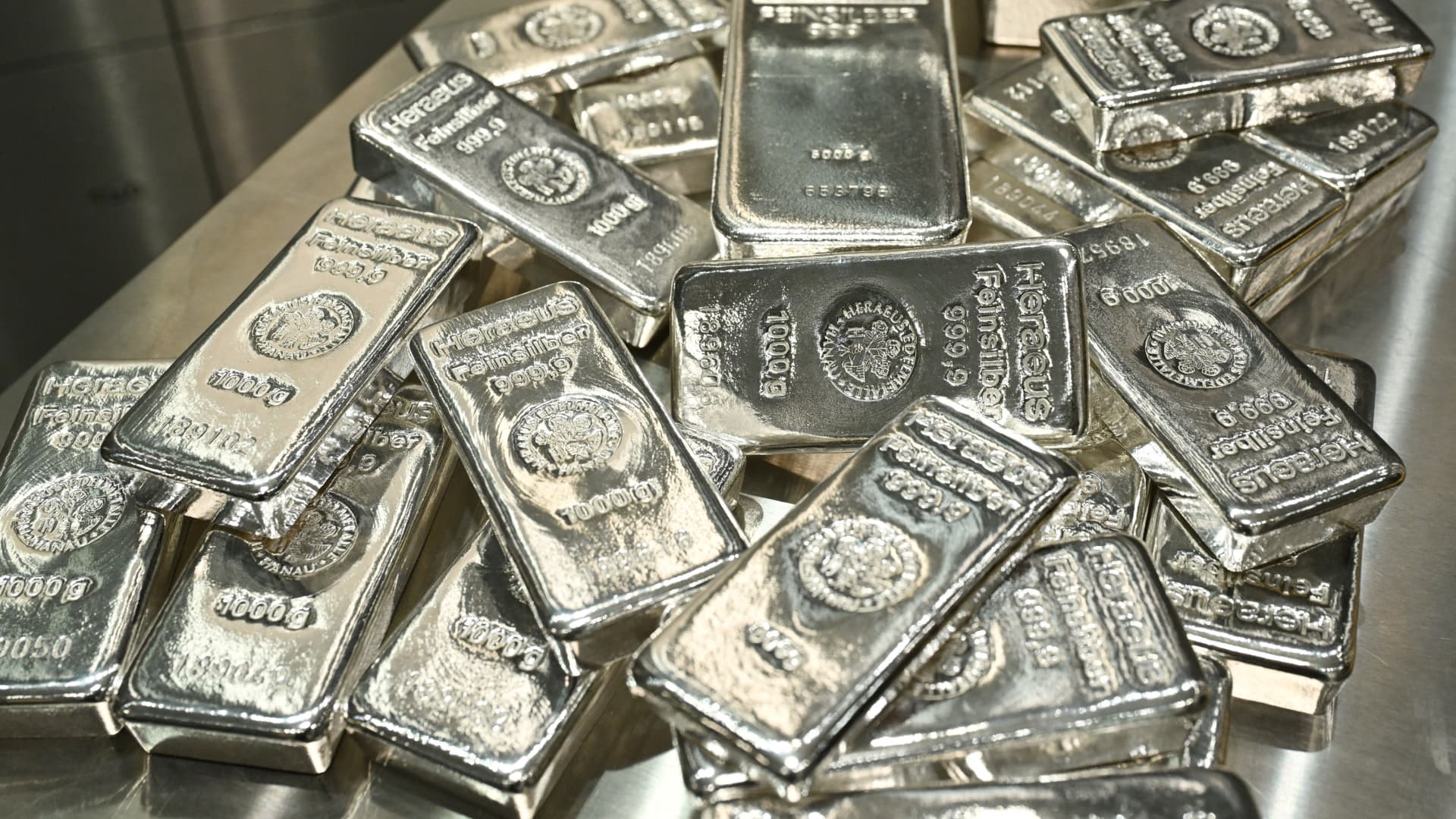
    Silver bars are stacked in the safe deposit boxes room of the Pro Aurum gold house in Munich, Germany, Jan. 10, 2025.

    Angelika Warmuth | Reuters

    Silver prices slid as much as 16% on Thursday, snapping a two-day rebound, as the white metal continues to reel from excessive volatility.

    Spot silver prices are were last down 13% at $76.97 per ounce, while futures in New York were over 8% lower at $77.28 per ounce.

    Silver had been on a record-breaking spree before crashing almost 30% last Friday. In 2025, it gained about 146%, data from LSEG showed.

    Analysts point to speculative flows, leveraged positioning and options-driven trading, rather than physical demand, as key drivers of the recent price swings.

    “As prices fell, dealer hedging flipped from buying into strength to selling into weakness, investor stop-outs were triggered, and losses cascaded through the system,” Goldman Sachs said in a note on Wednesday. 

    Stock Chart IconStock chart icon

    Silver prices in the past one year

    Silver’s correction has been larger than gold’s due to tighter liquidity conditions in the London market, which magnified price swings.

    Goldman added that the timing of the volatility suggested Western flows, rather than Chinese speculation, are behind much of the build-up and unwind, noting that most of the more violent moves occurred while Chinese futures markets were closed.

    The volatility in silver prices has drawn growing comparisons to meme stocks such as GameStop, the video-game retailer that became a global phenomenon in 2021 after retail traders on Reddit piled in en masse, sending its shares soaring far beyond what traditional valuation models could justify.

    Rhona O’Connell, head of market Intelligence at StoneX, warned that prices had detached from sustainable levels.

    “Silver was massively over-valued and in a self-fulfilling frenzy; it is however notoriously fickle and its history is littered with examples of price crashes,” she said. “At present it is behaving like Icarus and to extend the analogy there is a strong risk of other buyers getting burned.”

    Spot gold and futures declined a little over 1% to $4,887.03 and $4,887.40 per ounce, respectively.

    Continue Reading

  • Leapfrogging China’s Critical Minerals Dominance

    Leapfrogging China’s Critical Minerals Dominance

    Recommendations

    To support innovation, the United States and its allies should take steps in three areas: international policy collaboration, private-sector collaboration, and international funding sector coordination.

    To collaborate on international policy, the United States and its allies should:

    • Prioritize a set of high-impact technologies and adopt fast-moving strategies that prioritize critical gaps and opportunities in the minerals value chain. The Japanese model offers a clear blueprint. Sustained public-private investment has driven Japanese global leadership in high-efficiency hydrometallurgy, high-purity magnet materials, and mining e-waste with a targeted focus on rare-earth elements. Building on this foundation, the United States and its allies should jointly fund commercial-scale processing and recycling projects, accelerate next-generation separation and magnetic recovery technologies, and deepen geological collaboration—including research on deep-sea mineral resources through bilateral mechanisms.
    • Designate national laboratories in the United States and allied countries as core pillars of the innovation ecosystem, particularly in mineral separation science, metallurgy, advanced materials, recycling, and recovery. The United States and its allies should establish formal mechanisms to better integrate National Labs with private firms, start-ups, and allied research institutions. These mechanisms would enable shared access to facilities, coordinated research agendas, and faster translation of laboratory breakthroughs into commercial applications.
    • Deploy coordinated measures to protect critical mineral and REE markets in the United States and allied countries from nonmarket policies and unfair trade practices to support the economic viability of technologies and related projects. Measures could include ensuring that countries that meet certain standards, including price standards, are eligible for market access in the United States and allied countries. This policy would be consistent with the G7 Action Plan and bilateral agreements that the Trump administration has agreed to with Australia, Japan, and Malaysia.

    To improve private-sector collaboration, the United States and its allies should:

    • Make the private sector, particularly major mining and materials companies, central partners in technology scaling. Large firms play a critical role by providing real-world test environments, infrastructure, and operational expertise that significantly reduce technical and commercial risk. Allied governments should encourage structured partnership models between incumbents and emerging technology developers.
    • Leverage allied government and industry resources to address the acute shortage of pilot- and demonstration-scale facilities. China has invested heavily in shared-use pilot infrastructure that allows multiple firms to test technologies at scale before committing to full commercial development. Establishing similar shared pilot facilities, be it publicly funded, privately operated, or structured as hybrid partnerships, could dramatically lower costs and speed deployment, particularly for capital-intensive processes where furnace construction and specialized equipment represent the largest barriers to scale.

    To coordinate international funding mechanisms, the United States and its allies should:

    • Create a G7 Innovation Fund or G7 Production Alliance Fund dedicated to co-financing critical minerals innovation across member states. This mechanism could function as a “plurilateral In-Q-Tel,” pooling capital and expertise from multiple federal agencies alongside equivalent agencies from allied countries, sovereign wealth funds, private equity and venture capital firms, and corporate venture funds. Cost-sharing and risk-pooling would reduce downside risk, align national security and commercial objectives, and impose market discipline at each stage of development. It would also empower sovereign investment vehicles, export credit agencies, and development finance institutions to blend domestic capital with allied funding in priority supply chains. These tools are uniquely suited to lower investment risk for private investors, mobilize large pools of capital, and accelerate scale while reinforcing shared strategic objectives across allied ecosystems.
    • Streamline innovation funding and application processes with shared platforms to ensure that start-ups and small companies can access grants, loans, and investment programs in one another’s economies. Simplifying requirements, harmonizing procedures across allied funding sources, and reducing administrative burdens can help unlock the next generation of mineral technologies. At the same time, allies should establish bilateral and plurilateral investment coordination platforms—particularly among the United States, Australia, Canada, Japan, the G7, and other partners—and allow early-stage funding to operate beyond strictly domestic constraints. Agencies such as the Department of Energy, Department of Defense, and DFC should have the flexibility to coinvest internationally to strengthen shared supply chain resilience.
    • Establish an open solicitation platform for critical mineral technologies that provides predictable pathways from early-stage ideation to commercialization. This process could begin with small grants (for example, $150,000) for proof-of-concept work, scale to multimillion-dollar awards for piloting and demonstration projects, and grow to access other public-private support, such as offtake arrangements tied to performance milestones.
    • Align and enact government policy to support allied mineral recovery and recycling, where upfront capital requirements often deter private investment despite strong economic trajectories. Targeted co-investment, risk-reducing guarantees, and well-designed tax incentives can help mining and materials companies justify investments in recovery circuits, recycling infrastructure, and circular processing systems that would otherwise remain stranded.

    The United States will not secure its critical mineral future through traditional mining and processing alone. While expanding extraction and refining capacity is necessary, it is insufficient to overcome China’s structural advantages in technology, cost, and scale. The area in which the United States can most credibly compete, and potentially overcome its disadvantage, is innovation. The most promising way to leapfrog China’s entrenched position is for the U.S. government to maximize breakthrough materials engineering, advanced extraction and processing technologies, waste recovery, and recycling. Those innovations are already emerging across the private sector, National Labs, universities, and early-stage companies, driven in part by heightened policy attention to national and economic security. Yet innovation in this sector is uniquely fragile. Even technically successful companies can fail not because their technologies do not work, but because they slide into one of several persistent valleys of death that interrupt progress between the stages of discovery, pilot, and commercial scale.

    Closing those valleys of death requires a stronger domestic funding ecosystem, reformed policies, and deeper allied coordination. Private capital alone cannot reliably bridge the multiple gaps facing frontier mineral technologies, particularly when timelines are long, the risks are greater, and returns depend on system-wide adoption rather than firm-level success. Government support is therefore not a substitute for markets but a necessary catalyst to spur private investment, reduce risk, and shorten scaling timelines.

    At the same time, the United States should not innovate in isolation. While the United States brings comparative strengths in R&D, entrepreneurship, and capital formation, many U.S. allies have greater expertise in mining, processing, and industrial scaling. The United States needs a coordinated policy and financing architecture that treats innovation not as an afterthought but as the primary means by which it and its allies can leapfrog China in critical minerals—and secure the material foundations of economic and strategic strength.

    Appendix I: President Trump’s Executive Orders on Critical Minerals

    EO 14154, “Unleashing American Energy” Directs the secretary of the interior to prioritize geologic mapping and to instruct USGS to consider updating its critical mineral list
    EO 14156, “Declaring a National Energy Emergency” Directs department heads and executives to identify and exercise any lawful emergency authorities to facilitate the identification, leasing, siting, production, transportation, refining, and generation of domestic energy resources
    EO 14213, “Establishing the National Energy Dominance Council” Establishes the NEDC as an advisory mechanism for the president, focusing on improving the process for permitting, production, generation, distribution, regulation, transportation, and export of critical minerals and energy as a whole
    EO 14241, “Immediate Measures to Increase American Mineral Production” Aims to facilitate production for minerals classified as “critical,” in addition to uranium, copper, potash, gold, and others determined by the chair of the NEDC
    EO 14261, “Reinvigorating America’s Beautiful Clean Coal Industry” Directs the secretaries of energy and the interior to determine if coal should qualify as a “critical mineral” under the Energy Act of 2020, and to take steps to place coal on the Critical Minerals List if it does
    EO 14285, “Unleashing America’s Offshore Critical Minerals Resources” Sets forth a new policy to advance seabed mineral development

    Appendix II: The Mineral Technology Valleys of Death

    Technology Valley of Death: Between early scientific discovery and a reliable, engineered process capable of producing materials at quality and scale. Many breakthrough concepts emerge from universities or National Labs, yet few transition into robust pilot systems. Government grants typically fund this stage.

    Pilot-Scale and Validation Valley of Death: Once a technology is proven for potential commercialization, scientists and entrepreneurs face a second gap: financing and operating a pilot or demonstration. This stage is where most mineral innovations fail. Pilot facilities are capital intensive, technically risky, and too small to generate revenue. Yet without a pilot plant, technologies cannot produce the data required for customer qualification, engineering validation, or eventual bankability. Following the pilot, customer qualification and engineering validation are costly and time consuming, but necessary to prove the technology works.

    Commercialization Valley of Death: Once a technology works and is validated, the company needs to attract enough seed or Series A capital to build the first commercial facility. This is the most acute bottleneck in the mineral supply chain. Investors often demand evidence that cannot be generated without a commercial facility, creating a catch-22.

    Profitability Valley of Death: Even after a first commercial plant is built, a final gap remains: achieving cost-competitive, sustained profitability, especially in the face of cyclical minerals markets that are dominated by incumbents with massive scale and often influenced by China’s subsidized pricing. New producers face years of price volatility, qualification requirements with customers, ramp-up inefficiencies, and competition from artificially low-cost Chinese production. Many firms reach commercial output only to struggle with margins that cannot support continuing operations or expansion or attract follow-on investment.

    We are grateful for the thoughtful comments of Council on Foreign Relations (CFR) President Mike Froman, Senior Vice President and Director of Studies Shannon O’Neil, and Associate Vice President of Studies Stuart Reid. For their insights over six sessions from June 2025 to December 2025, we are indebted to the members of the CFR/Silverado Study Group on Strategic Leapfrogging Through the Critical Minerals Crisis. We benefited immensely from insightful presentations and enthusiastic interventions by study group members, which included a cross section of bipartisan policymakers, scientists and national labs, investors, early-to-growth stage companies, and industry leaders focused on actionable strategies the United States should pursue to quickly advance new generations of technology that could change the critical minerals chessboard entirely. It was a privilege to convene with such an engaged, mission-driven cohort.

    For full disclosure, this report includes a number of references to companies whose representatives were in the study group—including the three case studies. Those companies are Alta Resources Technologies, Element3, Glencore, In-Q-Tel, Lilac Solutions, MP Materials, Niron Magnetics, Orion Industrial Ventures, Phoenix Tailings, ReElement Technologies, Rio Tinto, TechMet, and Vulcan Elements. These references were intended to provide illustrative examples supporting our analysis and recommendations. But the companies and their representatives had no editorial control over the report in general or the passages mentioning them in specific. Nor did they provide financial support; CFR does not accept funding from corporations for individual research projects.

    Our special thanks to CFR research associates A.J. Dilts, Turner Ruggi, and Michael Weilandt for their exceptional research support and seamless administrative coordination, and to Patricia Dorff and Caitlin Moran for their guidance and editorial contributions.

    Our special thanks to Silverado Policy Accelerator CEO Sarah Stewart; Senior Policy Analyst David Kelm; and Vice President of Research and Analysis Andrew David.

    Heidi Crebo-Rediker is a senior fellow for geoeconomics at the Council on Foreign Relations, specializing in economic security, economic competitiveness, and international finance. She directs CFR’s Roundtable Series on Global Political Economy. Previously, Crebo-Rediker served in the Obama administration as the State Department’s first chief economist. She provided strategic advice to two secretaries of state on the integration of economics and finance with geopolitics to help craft and launch “economic statecraft” in the Obama administration. Before this, she served as the chief of international finance and economics for the Senate Committee on Foreign Relations. Over her previous, nearly two-decade investment banking career based in Europe as a managing director at several investment banks, she managed businesses including sovereign and public-sector banking, European debt capital markets, emerging markets debt capital markets, and corporate finance. Her areas of industry focus were energy and mining, financial services, and telecommunications. She began her career in energy merchant banking and investing in Russia/CIS. Crebo-Rediker holds a BA from Dartmouth College and MSc from the London School of Economics.

    Mahnaz Khan is vice president of policy for critical supply chains at Silverado Policy Accelerator, where she leads the organization’s critical minerals portfolio. Her work focuses on developing innovative trade policy strategies and analyzing the geopolitical and economic security dimensions of critical mineral supply chains. Prior to joining Silverado in 2024, Khan spent fourteen years as a career civil servant in U.S. trade policy, serving at the Office of the U.S. Trade Representative, the U.S. International Trade Commission, and the Department of Commerce. She also serves as a nonresident senior fellow at the Atlantic Council’s GeoTech Center. She holds a BS in business administration from Boston University and a JD from Chicago-Kent College of Law.t

    Continue Reading

  • Construction of Fukui Murata Manufacturing’s New Ceramic Capacitor R&D Center Completed

    Construction of Fukui Murata Manufacturing’s New Ceramic Capacitor R&D Center Completed

    05/02/2026

    Murata Manufacturing Co., Ltd.
    President: Norio Nakajima


    Fukui Murata Manufacturing Co., Ltd. (Echizen City, Fukui Prefecture), a manufacturing subsidiary of Murata Manufacturing Co., Ltd., began constructing the Ceramic Capacitor R&D Center, a new research and development base, in November 2023. The construction is now completed, and a completion ceremony was held on Thursday, February 5, 2026. The center is scheduled to open on Monday, March 30, 2026.

    The establishment of the Ceramic Capacitor R&D Center is aimed at improving Murata’s technological capabilities in the development and manufacturing of ceramic capacitors, its core business. By creating a cutting-edge environment dedicated to research and development, Murata aims to facilitate higher-level R&D activities and nurture engineers. The center will also collaborate with other Murata sites and partner companies to strengthen Murata’s manufacturing capabilities across the entire manufacturing process from product development to mass production.
    Going forward, Murata will continue to pursue the enhancement of its technological capabilities in order to provide innovative products and technologies to society and contribute to further growth in the electronics market.

    Overview of completion ceremony

    Date/Time: 10:00 a.m. to 11:20 a.m. on Thursday, February 5, 2026
    Location: Ceramic Capacitor R&D Center
    Fukui Murata Manufacturing Co., Ltd.
    Guests:

    Mio Washizu, lieutenant Governor of Fukui Prefecture
    Yoichi Koizumi, Acting Mayor and Deputy Mayor of Echizen City 
    (And others)

    Attendees from Murata: Nagato Omori, Executive Vice President, Ceramic Capacitor Business Unit, Murata Manufacturing Co., Ltd.
    Naoya Hatao, President and Representative Director, Fukui Murata Manufacturing Co., Ltd.
    (And others)

    Overview of facility

    Address: Oyacho, Echizen City, Fukui Prefecture 
    *To be appended at a later date due to registration of land-parcel consolidation currently in progress
    Structure/size: Steel-framed construction, five stories above ground
    Site area: 54,450 square meters
    Floor area: 41,709 square meters
    Purpose: Research and development of ceramic capacitors
    Total investment: Approx. 35 billion yen (land and building costs)

    Fukui Murata Manufacturing Co., Ltd.

    Address:  13-1 Okamotocho, Echizen City, Fukui Prefecture
    Founded: February 1951
    Capital: 300 million yen
    Representative: Naoya Hatao, President and Representative Director
    Number of employees: 5,991 (as of January 31, 2026)
    Business: Development and manufacture of capacitors, noise-suppressing components, etc.


    Murata in Brief

    Murata Manufacturing Co., Ltd. is a worldwide leader in the design, manufacture and sale of ceramic-based passive electronic components & solutions, communication modules and power supply modules. Murata is committed to the development of advanced electronic materials and leading edge, multi-functional, high-density modules. The company has employees and manufacturing facilities throughout the world.

    For more information, visit Murata’s website

    Continue Reading

  • Fitch Affirms Yuexiu REIT at 'BBB-'; Rates Proposed Green Notes 'BBB-' – Fitch Ratings

    1. Fitch Affirms Yuexiu REIT at ‘BBB-‘; Rates Proposed Green Notes ‘BBB-‘  Fitch Ratings
    2. Yuexiu Real Estate Investment Trust proposes issue of CNY1.74 bln 3.40% guaranteed green notes due 2029  marketscreener.com
    3. Yuexiu Property Plans CNY1.735 Billion Green Note Issue to Refinance Debt and Fund Green Projects  TipRanks

    Continue Reading

  • Baidu Announces New Share Repurchase Program and Dividend Policy

    BEIJING, Feb. 4, 2026 /PRNewswire/ — Baidu, Inc. (NASDAQ: BIDU and HKEX: 9888 (HKD Counter) and 89888 (RMB Counter)), (“Baidu” or the “Company”), a leading AI company with strong Internet foundation, today announced that its Board of Directors (the “Board”) has approved a new US$5 billion share repurchase program and a dividend policy, with the objective of further enhancing shareholder returns.

    The Board has authorized a new share repurchase program for up to US$5 billion of the Company’s shares, effective through December 31, 2028. The Board will periodically review the repurchase program and may adjust its terms and size as appropriate.

    With our substantial cash reserves and sound financial management capabilities, we aim to create and continuously enhance long-term value for our shareholders through our proactive shareholder return initiatives. Apart from previous repurchase tactics, this brand new program will be executed on a regular basis in a disciplined and transparent manner, guided by a strategic focus beyond short-term stock price fluctuations.

    Repurchases may be effected from time to time through open market transactions at prevailing prices or by other legally permissible means, in compliance with applicable regulations and subject to market conditions.

    In addition, with the objective of further enhancing shareholder returns, the Board has approved the adoption, for the first time, of a dividend policy for the Company’s ordinary shares, which may include regular and/or special distributions of dividends.

    Future dividend distributions will be supported by sustainable funding sources, primarily derived from operating profits and potentially supplemented by proceeds from non-core asset disposals and other investment returns. The Board intends to establish a clear, balanced policy framework that aligns shareholder returns with the continued strategic growth of the Company.

    The Board expects to declare the first payment of dividend in 2026. The declaration, timing, and amount of any future dividend will be subject to the determination of the Board at its discretion based on factors such as the Company’s financial performance, capital requirements, prevailing market conditions and other considerations that the Board deems relevant. A formal announcement of the dividend will be made after the Board’s review and approval.

    About Baidu

    Founded in 2000, Baidu’s mission is to make the complicated world simpler through technology. Baidu is a leading AI company with strong Internet foundation, trading on NASDAQ under “BIDU” and HKEX under “9888”. One Baidu ADS represents eight Class A ordinary shares.

    Safe Harbor Statement

    This announcement contains forward-looking statements. These statements are made under the “safe harbor” provisions of the U.S. Private Securities Litigation Reform Act of 1995. These forward-looking statements can be identified by terminology such as “will,” “expects,” “anticipates,” “future,” “intends,” “plans,” “believes,” “estimates,” “confident” and similar statements. Baidu may also make written or oral forward-looking statements in its periodic reports to the U.S. Securities and Exchange Commission (the “SEC”), in announcements made on the website of the Hong Kong Stock Exchange, in its annual report to shareholders, in press releases and other written materials and in oral statements made by its officers, directors or employees to third parties. Statements that are not historical facts, including but not limited to statements about Baidu’s beliefs and expectations, are forward-looking statements. Forward-looking statements involve inherent risks and uncertainties. A number of factors could cause actual results to differ materially from those contained in any forward-looking statement, including but not limited to the following: Baidu’s growth strategies; its future business development, including development of new products and services; its ability to attract and retain users and customers; competition in the Chinese Internet search and newsfeed market; competition for online marketing customers; changes in the Company’s revenues and certain cost or expense items as a percentage of its revenues; the outcome of ongoing, or any future, litigation or arbitration, including those relating to intellectual property rights; the expected growth of the Chinese-language Internet search and newsfeed market and the number of Internet and broadband users in China; Chinese governmental policies relating to the Internet and Internet search providers, and general economic conditions in China and elsewhere. Further information regarding these and other risks is included in the Company’s annual report on Form 20-F and other documents filed with the SEC, and announcements on the website of the Hong Kong Stock Exchange. Baidu does not undertake any obligation to update any forward-looking statement, except as required under applicable law. All information provided in this announcement is as of the date of the announcement, and Baidu undertakes no duty to update such information, except as required under applicable law.

    SOURCE Baidu, Inc.

    Continue Reading

  • The Hidden Value of Coal Infrastructure in the Energy Transition

    The Hidden Value of Coal Infrastructure in the Energy Transition

    As the world decarbonizes, what happens to the coal plants left behind? Some countries are reimagining them to serve a new role in a low-carbon future.

    For more than a century, coal powered industrial growth. Entire towns and regional economies were built around coal mines and power stations. Today, as the world shifts to clean energy and decarbonizes, many of these coal-dependent regions face economic decline. The challenge is no longer only how to close coal plants safely, but what comes next for workers, infrastructure, and local communities.

    The pressure to transition away from planet-warming fossil fuels is already underway in many parts of the world. In the United States, coal capacity is down by around 60% since 2010, according to the International Energy Agency (IEA). In the European Union, countries including Germany, Spain and the Netherlands have set legally binding coal phase-out deadlines before 2030. The Global South is also facing mounting pressure to cancel new coal financing.

    Without planned transition strategies, retired coal sites risk becoming abandoned industrial zones, driving job losses, population outmigration, and shrinking municipal tax bases. However, emerging techno-economic pathways show that former coal regions can be repurposed into clean energy industrial hubs, turning stranded fossil fuel assets into engines of the green economy.

    The solution? There are various ways that have been employed throughout the world, some of which are discussed below.

    Hidden Value of Existing Coal Infrastructure 

    Coal plants exist on strategically valuable industrial land. They already have grid interconnections, transmission capacity and industrial zoning permits that make it easier for these sites to host utility-scale solar farms, wind farms, and grid-scale battery storage. 

    Building new renewable energy projects typically requires lengthy approval processes and costly grid upgrades. Repurposing former coal sites avoids these barriers. This approach accelerates renewable roll-out while preserving grid reliability and local employment opportunities.In the Eastern US, for example, retired coal plant sites in Appalachia are being redeveloped into solar and battery projects, supported by the Biden administration’s flagship Inflation Reduction Act.

    Coal mining leaves behind land that offers larger flat areas. Once reclaimed, this land can be suitable for solar panel assembly plants or wind turbine blade manufacturing or green hydrogen electrolysis facilities. 

    Germany is a great example of this. The Ruhr region transitioned from coal mining to advanced manufacturing and clean tech research parks over two decades through coordinated industrial policy and public investment – proof that long-term planning can convert declining fossil-fuel regions into innovation centres rather than economic dead zones.

    Another pathway is underground mines serving as long-term energy storage facilities. To ensure reliable power supply, grids require storage technologies capable of delivering electricity for several hours or days. Decommissioned mines offer natural cavities that can store pumped hydro energy, where water is pumped uphill using excess electricity and released to generate power when needed – or compressed-air energy storage, where air is pressurised underground and later released through turbines. Pilot projects in Spain and the UK are testing mine-based gravity and compressed-air storage.

    Transition for Coal Workers

    Coal workers already possess transferable skills like electrical maintenance skills, heavy machinery operation experience, and safety training. Short retraining programs can shift them into solar installation, wind turbine maintenance, and grid operations. Retraining initiatives, wage insurance programs, and regional investment funds are increasingly being adopted to support a “just transition” – a policy framework ensuring that workers and communities benefit from the shift to clean energy rather than bearing its costs alone.

    Final Thoughts 

    With strategic reinvestment moving forward, regions can gain new industries with higher long-term job stability and local ownership of energy assets. Community investment schemes and clean-tech innovation clusters further increase regional resilience.

    The transformation is not automatic. It requires coordinated policy, public-private financing, workforce planning, and long-term political commitment. However, the examples emerging across Europe and North America demonstrate that coal’s decline does not have to mean regional decline.

    As the world decarbonizes, the future of former coal regions will depend on whether governments and industry treat plant closures as endings or as opportunities to build the next generation of clean energy industrial hubs.

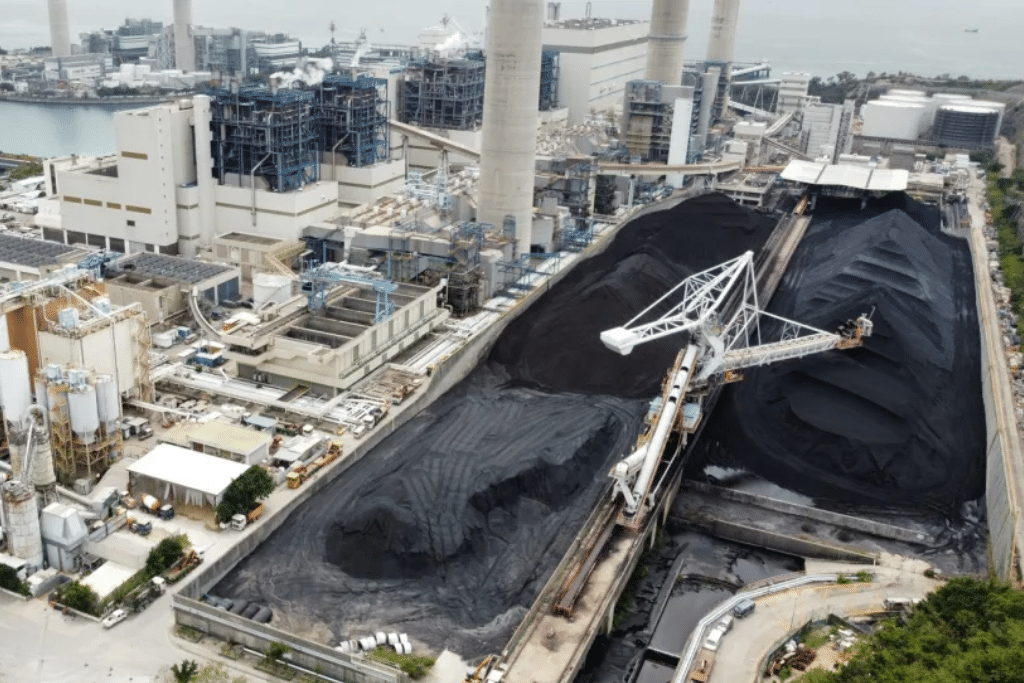
    Photo: Tom Grundy/hongkongfp.com.

    Continue Reading

  • Chinese trading firm Zhongcai nets $500mn from silver sell-off

    Chinese trading firm Zhongcai nets $500mn from silver sell-off

    Good morning and welcome back to FirstFT Asia. In today’s newsletter:

    • Chinese trading firm wins big from silver route

    • Can Takaichi govern Japan on star power alone?

    • Indian leaders duck Trump’s Russian oil claim

    • Where to stay in Hong Kong


    We have an exclusive story today on Chinese trading firm Zhongcai Futures, which has emerged as a big winner from the recent rout in silver.

    Rare silver bear: Zhongcai has booked profits of more than Rmb3.6bn ($519mn) since Friday morning after building up short positions in silver in late January, according to FT calculations based on disclosures to the Shanghai Futures Exchange. Founded three decades ago by Bian Ximing as a manufacturer of PVC pipes before branching into futures trading, Zhongcai stands out as a rare silver bear in mainland China, even as a blistering rally in the metal gathered pace through January.

    Why it matters: Zhongcai’s profits highlight the recent wild volatility in precious metals trading, particularly in China, where regulators have been working to tamp down on speculative activity. It also underscores how the centre of gravity for gold and silver trading is gradually shifting towards Asia, where a frenzy of retail investment in bullion was central to driving January’s historic price surge.

    Read more about Zhongcai’s aggressive bets.

    Here’s what else we’re keeping tabs on today:

    • Economic data: January inflation data is due from Thailand, Taiwan and the Philippines. Indonesia reports fourth-quarter GDP and Singapore publishes December retail sales.

    • Results: Sony, Tata Motors, Nippon Steel, Amazon and Shell report earnings.

    • Ask an Expert Q&A: Are US markets and the economy as strong as Trump claims? Take part in a live Q&A today with US managing editor Brooke Masters and financial commentator Robert Armstrong.

    Five more top stories

    1. Donald Trump said he had spoken to Xi Jinping about the Ukraine war, Taiwan and other issues, in a call that came two months before the Chinese leader is expected to welcome the US president on a state visit in Beijing. The call took place after Xi spoke to Russia’s President Vladimir Putin, according to Chinese state media.

    • More US-China news: Nvidia’s sales of H200 AI chips to China are still awaiting final approval from Washington as the US government conducts a national security review.

    • Panama ports deal: CK Hutchison has taken Panama to arbitration after the Central American country’s top court ruled to kick out the Hong Kong-based conglomerate from ports on its canal.

    2. The US has launched an effort to form a trade zone for critical minerals with allies including Japan and the EU. The initiative marks a rare instance of global trade co-operation from the Trump administration, as it works to reduce western reliance on China for a wide range of critical minerals. Here are more details.

    • Related: Beijing’s dominance of rare earths has sparked a rush among buyers to source the metals elsewhere, with more than 30 projects set for production this decade.

    3. Companies linked to Indonesia’s richest man have announced share buybacks after a market rout triggered by a downgrade warning from index provider MSCI helped wipe out more than a quarter of his net worth. Billionaire Prajogo Pangestu has lost $11.7bn of his wealth since the start of the year amid Indonesia’s worst stock sell-off since the Asian financial crisis of 1998, according to Bloomberg data.

    4. Google said it plans to spend at least $55bn more on capital expenditure this year than Wall Street had forecast, as it doubles down on its huge spending on AI. The search giant increased its forecast for capex in 2026 to a range of $175bn to $185bn, far exceeding analysts’ expectations for about $120bn.

    • Markets: US tech stocks were hit by a fresh wave of selling yesterday, adding fuel to a sell-off sparked by concerns about the impact of AI on software businesses.

    • Anthropic’s new AI tools: The start-up’s advances have rattled markets this week, amid fears of disruption across sectors from publishing and advertising to law.

    5. A top Senate Republican has said Fed chair Jay Powell has not “committed a crime”, in a strong rebuke of the Trump administration’s probe into the central bank chief from a senior member of the president’s own party. Read the remarks from Tim Scott, chair of the powerful Senate banking committee.

    The Big Read

    Sanae Takaichi, the arch-conservative and populist, is on course for a possible landslide in the shortest election campaign in postwar Japanese history. But if the prime minister wins this week’s vote, she will face harsh realities.

    We’re also reading . . . 

    Chart of the day

    When Trump announced a long-awaited US-India trade deal on Monday, the president claimed a commitment by New Delhi to stop buying Russian oil had made the agreement possible. But the reluctance of Indian leaders to confirm such a pledge is fuelling deep scepticism among analysts that any substantial cut is imminent.

    Some content could not load. Check your internet connection or browser settings.

    Take a break from the news . . . 

    Looking for a place to stay in Hong Kong? FT Globetrotter has you covered, from the city’s grandes dames to new design classics.

    The Harbourview Suite with Daybed at the Regent Hong Kong

    Continue Reading

  • Google Profit Jumps 30 Percent on A.I. Gains – The New York Times

    1. Google Profit Jumps 30 Percent on A.I. Gains  The New York Times
    2. Alphabet’s Bold Capital Expenditure Plans for 2026 Unveiled  Global Banking And Finance Awards®
    3. PREVIEW: Alphabet poised to beat analyst expectations on strong advertising revenue growth  TradingView
    4. Listen to the Google (GOOGL) Q4 2025 earnings call here  Shacknews
    5. Dear Google Stock Fans, Mark Your Calendars for February 4  Barchart.com

    Continue Reading