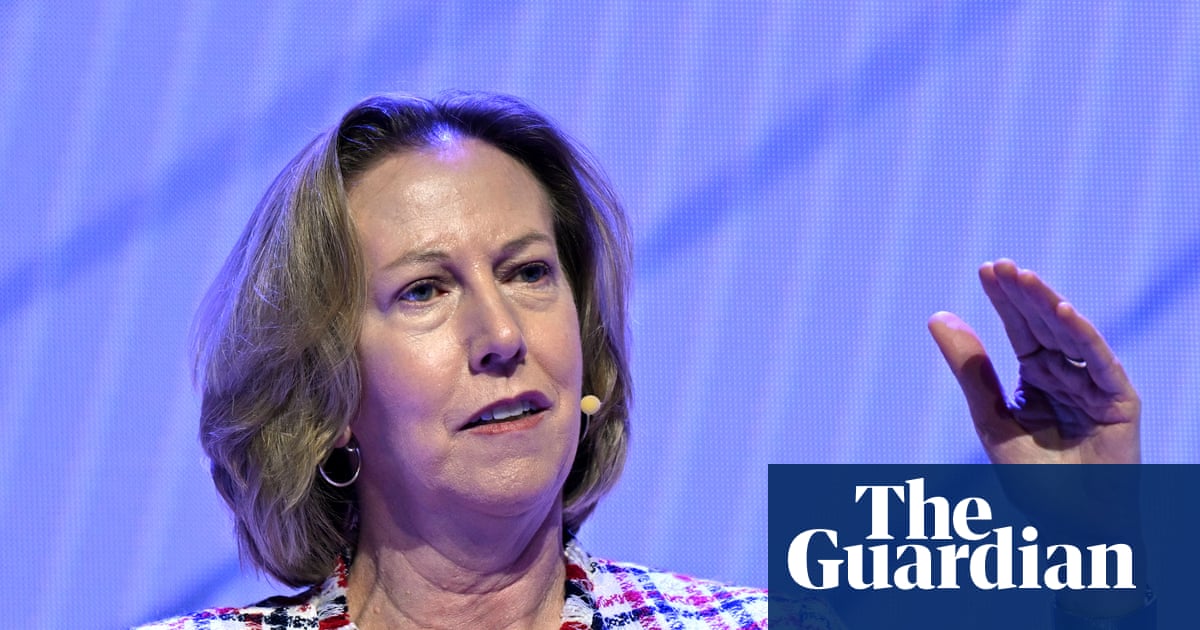
The new boss of BP has told staff that the oil company is operating in a world of “significant complexity” as it attempts to rebuild its strategy under a fresh leadership team.
In her first message to staff as BP’s chief executive, Meg O’Neill promised a “clear direction and consistency” after a tumultuous period for the 117-year-old fossil fuel company, in which it has pivoted away from a failing green strategy.
BP’s third chief executive in under five years has stepped into the top job during the fifth week of the Iran war, a conflict that has triggered the global industry’s biggest supply shock.
In a staff memo seen by the Guardian, O’Neill said: “Right now, we’re operating in an environment of significant complexity: geopolitical tension; conflict; rapid technological change; and shifting global energy demand.”
“I believe that we, as a company, have a clear job to do: delivering energy to the world, today and tomorrow – safely, reliably and efficiently,” she added.
A previous plan to cut its oil production this decade put BP at a financial disadvantage compared with other large oil companies, including Shell, when wholesale prices rocketed after Russia’s invasion of Ukraine in 2022.
BP has struggled to reverse its strategy amid a leadership bloodletting that has included the exit of two chief executives and its chair.
Meg O’Neill is expected to focus on making ‘disciplined’ investments in new fossil fuel projects to revive BP’s market value. Photograph: David Gowans/Alamy
O’Neill’s surprise appointment was made late last year, only weeks after Albert Manifold replaced Helge Lund as chair. Lund had presided over the company’s failed attempt to adopt a green energy agenda. O’Neill replaces Murray Auchincloss, the former BP chief financial officer who was in the top role for less than two years.
This year, BP became the first large oil company to suspend its shareholder buybacks after its underlying earnings fell to just below $7.5bn (£5.5bn) for 2025, down from almost $9bn for 2024.
O’Neill is expected to focus on making “disciplined” investments in new fossil fuel projects to revive the company’s market value at a time when war in the Middle East has triggered the biggest monthly oil price gain in the history of the market and gas prices are at historic highs across Asia and Europe.
BP’s share price has climbed to an almost 16-year high as the Iran war entered its fifth week and global oil prices climbed to highs near $118 a barrel on Tuesday.
Its share price slumped by almost 3.5% on Wednesday, to about 585p, as the price of Brent crude tumbled below $100 a barrel on renewed optimism that the US may end its military campaign in Iran.
In the memo to staff, O’Neill said: “Our industry underpins economic growth, human development and so much of everyday life. We play a vital role in supplying customers across the world with the energy they need to help them thrive
“BP is a great company, built on the strength of remarkable people and world-class assets. I’m really excited about our next chapter – and the opportunity ahead of us.”
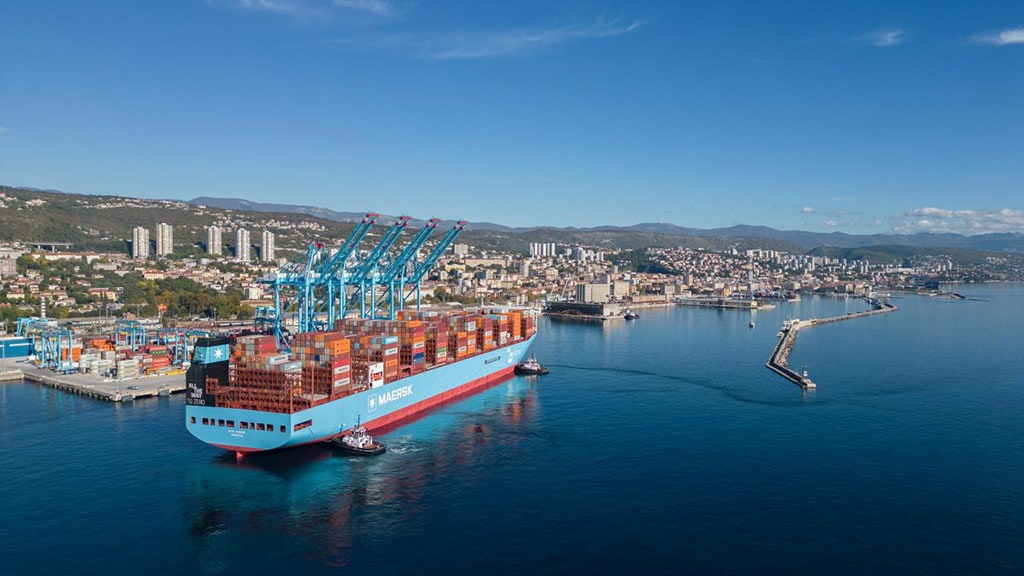
To receive the Maersk Europe Market Update in your inbox, sign up for our logistics newsletter here and update your preferences when prompted via email.
Ocean and Key Ports Update
The situation in the Middle East continues to evolve rapidly, with geopolitical tensions and risks remaining high and visibility remaining low. As a result of the ongoing conflict, we are continuing to see disruption to our logistics operations, and our teams are working hard to minimise the impact on customers. We will keep customers informed of the latest developments via our dedicated Middle East Situation page.
On European shores, in Rotterdam, vessel delays and weather conditions including storms and strong winds, have impacted vessel arrivals, and yard operations. Together, these have impacted yard density, which is now reaching very high levels and customers are kindly asked to pick up their import units as soon as possible after discharge. Prompt pickup will help safeguard terminal operations and prevent yard congestion.
Upcoming Easter holidays at the beginning of April are expected to result in limited labour availability across the terminals, particularly in Germany. Our teams remain in close contact with terminal authorities on planning during the holidays and ensuring our customers’ cargo continues to move with ease.
In the Western Mediterranean, terminals have been experiencing severe winter weather and related terminal closures since mid-January. This has, in turn, caused port congestions and rapidly increasing yard density. To restore schedule reliability, a contingency package with targeted port omissions is being implemented to allow the SAMBA service to absorb delays and recover its schedule. Please click here for details on affected sailings.
You can receive ETA notifications for your cargo by signing up here.
Logistics and Services Update
The recent surge in global energy prices – amplified by the evolving security situation in the Middle East and its impact on worldwide fuel availability – continues to place significant pressure on logistics and intermodal transportation markets. With approximately 20% of global fuel passing through the Strait of Hormuz, current developments have created an unprecedented cost environment affecting Landside and Intermodal operations.
To ensure service continuity, safeguard cargo integrity, and secure sufficient vendor capacity across our network, A. P. Moller – Maersk will implement temporary, cost reflective energy/fuel price adjustments on Landside Transportation across several countries. For an overview of changes per country, please see our Rate Announcements.
Elsewhere, a major infrastructure disruption is affecting international rail services in the Barcelona region. Spanish rail infrastructure manager ADIF has announced the complete closure of the Rubí tunnel, located between Castellbisbal and Rubí, starting 14 March 2026 at 00:00 for urgent structural repairs. The expected duration of the closure is 5 to 7 weeks. Due to this, Maersk must temporarily suspend the following services in both directions Barcelona – Toulouse (Fenouillet) and Barcelona – Lyon (Loire-sur-Rhône). Our teams are actively working with partners to identify alternative routings. For more information, please visit our advisory page.
Our teams in Rijeka, Croatia, have observed a growing number of containers discharged in Rijeka bound for Serbia where mandatory documentation was submitted late, incomplete or incorrect. These inaccuracies create delays at borders, hinder planning of Carrier Haulage and train delivery flows, increase coordination requirements with authorities, and generate unplanned operational costs. This affects not only individual shipments but also the consistency of our inland network. As such, we will be introducing new Destination Coordination Fee of EUR 65 per container as of 16 April, for containers where the required documentation is not provided correctly and within the defined timeline. For more information, click here.
For more information on ways to connect seamlessly with our rail, road, and barge solutions across Europe, please visit our Inland transportation services in Europe.
Within air freight, Asia-Europe markets remain under sustained pressure as the Middle East situation continues to restrict key transit corridors. With roughly one-third of Asia-Europe air capacity normally routed through the Middle East, the ongoing disruption in the region has significantly reduced available uplift and created wider operational unpredictability across the air freight market.
To support customers through these disruptions, Maersk has assembled a suite of alternative air and multimodal solutions, including secured lift via non‑Gulf gateways, controlled airfreight options through Muscat and Salalah, Sea-Air combinations via Colombo and Oman, and expanded landbridge connections across Saudi Arabia, the UAE, and the wider Gulf region. These measures are designed to provide additional routing flexibility while regional conditions remain fluid. Please get in touch with your Maersk Customer Experience agent to discuss options. Please click here to find helpful information about Maersk Air Cargo and our services to and from Europe.
Similarly, the situation in the Middle East is affecting global ecommerce too, with longer transit times, route diversions, and rising surcharges placing pressure on air and sea cargo networks. For retailers and marketplaces, this is exposing the risks of relying too heavily on traditional trade routes and creating new fulfilment challenges across both B2B and B2C operations.
In Europe, the impact is being felt most clearly in customer expectations. Delivery speed, reliability, tracking, returns and proactive service are now central to the buying decision, meaning commerce and customer service can no longer operate in isolation. Customer experience roles are moving from reactive to predictive, as a social advocates continue to gain momentum. As AI-powered predictive service raises the bar further, brands are being pushed to deliver more seamless experiences despite growing cross-border complexity.
At the same time, Chinese ecommerce platforms are changing the landscape through forward-deployed inventory and more localised operations. By positioning stock closer to end consumers, they are lowering logistics costs, reducing customs friction, and enabling faster, lower-cost delivery at scale. That shift is not only transforming delivery expectations, but also intensifying competitive pressure on local retailers, marketplaces, and supply chain infrastructure worldwide.
Find out more about our Ecommerce delivery solutions for your business by visiting our E-Delivery page.
Customs Update
Across wider supply chains, geopolitical developments – particularly in the Middle East – continue to reshape how European companies manage sourcing and routing. We’re seeing instability in key corridors prompting businesses to reconsider supplier concentration and assess exposure across long‑haul trade lanes. These dynamics often lead to greater variability in lead times, changes in transport costs and a stronger push toward diversified sourcing and nearshoring. Many companies are now mapping their most critical flows, exploring alternative routings and integrating geopolitical risk into strategic planning. Please contact your local Maersk representative to discuss supply chain adjustments and how your business can gain resilience in the months ahead.
Elsewhere, EU-Australia trade ties have entered a new phase with the introduction of a Security and Defence Partnership alongside a comprehensive Free Trade Agreement. For European businesses, this creates a more predictable environment in which tariff barriers fall away and access to Australia’s markets improves. The agreement removes nearly all tariffs, expands opportunities in services and procurement, and strengthens access to critical materials such as lithium and manganese. This offers practical advantages: lower import costs, faster time‑to‑market and additional scope for diversification in sectors such as automotive, chemicals, agri‑food, and technology. Companies may want to begin reviewing their Australia‑bound portfolios to identify tariff savings, assess rules‑of‑origin benefits beyond 2026, explore sourcing options for green‑technology inputs and prepare for the agreement’s sustainability, labour, and climate‑related requirements. For more information, click here.
EU customs authorities are also increasing scrutiny of small‑parcel and e‑commerce shipments ahead of the summer period, with checks this year intensified by preparations for the EU’s next wave of digitalisation reforms. Traders moving low‑value consignments may encounter more frequent document requests, tighter data verification and a higher likelihood of delays where product information is incomplete or inconsistent. E‑commerce brands and parcel‑driven shippers may find value in reviewing their product master data now, ensuring accurate classification and descriptions, and considering automated solutions to support duty, tax and data creation. Establishing internal compliance routines ahead of the seasonal volume increase can help reduce clearance issues as activity accelerates into Q2. Click here for further details.
Please don’t hesitate to reach out to our Global Trade and Customs Consultants if you require support with your customs operations.
Useful Links
To sign up for the Maersk Europe customer newsletter, click here and update your preferences when prompted via email.
Check Maersk market updates from across other regions by clicking here.
Baker McKenzie Switzerland acted as Swiss counsel to the Schulthess Group in relation to the Swiss legal aspects of the refinancing of its syndicated senior term and multicurrency revolving credit facilities agreement.
The Baker McKenzie team was led by Markus Wolf (Banking & Finance, Zurich) and Tatiana Ayranova (Banking & Finance, Geneva), and included Alexander Blaeser (Corporate/M&A, Zurich), Diana Bellido Gomes (Corporate/M&A, Geneva), Andrea Bolliger (Tax, Zurich), and Sebastian Ritz (Trainee Lawyer, Banking & Finance, Zurich).
Schulthess is a leading Swiss expert in washing technology standing for innovation in laundry care. It develops and manufactures premium washing machines, products and system solutions for domestic, commercial and industrial customers. In addition to national and international sales, it also offers professional services.
CVC DIF is pleased to announce the appointment of Enrico Del Prete as a Partner and Co-Head of its Value-Add strategy, marking an important milestone for the continued development of the platform.
CVC DIF is a leading global mid-market infrastructure equity fund manager with AUM of €23 billion across two strategies. Recent DIF Value-Add investments include the acquisition of Adam Ecotech, a Spanish data centre operator, HiSERV, a German aviation ground service equipment leasing provider and Celeste, a French B2B digital infrastructure operator.
Enrico will work alongside Willem Jansonius leading the Value-Add strategy and will be based in CVC DIF’s London office. He brings extensive experience building and scaling infrastructure investment platforms across Europe, most recently as a Fund Partner at I Squared Capital, where he led investments spanning passenger transport, asset leasing, cold storage, B2B fibre, data centres, waste recycling and renewable energy. Earlier in his career, Enrico held roles at Terra Firma Capital Partners and McKinsey & Co. His appointment reflects CVC DIF’s ambition to expand its Value-Add platform amid growing demand for mid-market infrastructure investment opportunities across Europe.
Gijs Voskuyl, Managing Partner at CVC DIF: “We are delighted to welcome Enrico to the team. His experience and investment track record will be instrumental in advancing our Value-Add strategy, a key driver of growth for our firm.”
Enrico Del Prete added: “I am very much looking forward to working with Willem and the investment team at CVC DIF. The strength of the platform means we are well-positioned to capitalise on attractive investment opportunities in the infrastructure market.”
The race is on to test new vehicles in the underground Large Hadron Collider tunnel, ahead of major works starting this summer
Following on from the robotic mice, CERN engineers have now developed a super-charged kart to enable workers to race through the Large Hadron Collider (LHC) underground tunnel during the upcoming major works, starting this summer.
The karts promise a power boost to activities during this period, known as Long Shutdown 3 (LS3), which will see the LHC transformed into the High-Luminosity LHC. These vehicles will replace the bicycles that were used until now to travel through the 27-km underground tunnel, enabling engineers and technicians to speed to areas where improvements to the accelerator are required.
During CERN’s major works, starting this summer, karts and equipment will reach underground areas via giant green pipes. (Image: CERN)
“Each kart is turbo-boosted by 64 superconducting engines,” explains project leader Mario Idraulico. “When the engines are cooled to below their critical temperatures, the Meissner effect levitates the karts, allowing them to zip through the tunnels at high speeds and, mamma mia, they’re super!”
Early tests have been promising, and the next steps involve testing different kart designs in an underground race. Safety coordinator Luigi Fratello has ensured that each driver will be issued with Safety and Health Equipment for Long and Limited Stays (SHELLS), although his response to drivers wanting bananas in the tunnel was “Oh no!”
These karts, although developed to support CERN’s fundamental research programme, show clear applications for society. CERN’s Knowledge Transfer Group has begun discussions with European startup company Quantum Mushroom to explore aerospace applications and powering for next-generation anti-gravity vehicles.
Surprisingly, the kart project began from a collaboration between CERN engineers and onsite nursery school children – one example of CERN’s commitment to inspiring future generations. “We’re thrilled that the children’s kart designs were the inspiration for the engineered karts,” exclaimed schoolteacher Yoshi Kyouryuu, mid-way through painting spots on eggs for an Easter egg hunt.
“As educators, we promote curiosity from a young age, which is why we paint question marks all over our yellow school walls,” explained school director, Rosalina Pfirsich, looking up from her storybook. “With all the contributions the children have made to the upcoming High-Luminosity LHC project, we’ve taken to calling them Luma!”
Find out more about the High-Luminosity LHC project.
A rapidly expanding certification scheme run by a UK nonprofit and used by major gas companies may be understating the actual methane emissions it purports to certify, a Guardian investigation has found.
BP, ExxonMobil and EQT are among the producers that have turned to London-based MiQ to demonstrate that their US-produced natural gas complies with the European Union Methane Regulation, or EUMR, which aims to curb energy-related emissions.
The findings raise questions about whether third-party certification schemes can credibly demonstrate exporters’ compliance with the bloc’s new methane rules, an approach championed by the gas industry and now supported by the European Commission.
MiQ runs the largest voluntary methane certification programme globally, covering about a fifth of US natural gas production and 7% globally. It maintains that its framework is specifically designed to comply with the EU methane regulation.
The EUMR, in force since August 2024, requires energy firms to monitor, report and verify methane emissions at their drilling sites and conduct regular leak detection surveys. It will also require importers to obtain methane-intensity data from their suppliers starting next year. Penalties for non-compliance include fines and other enforcement measures.
Industry groups that have been lobbying for voluntary certification to suffice for compliance are now lobbying to pause implementation of the EUMR for imported gas altogether amid the US-Israel war in Iran and resultant destabilisation of the energy markets.
For US companies, the stakes are high. American producers now supply 60% of Europe’s LNG, a share that is likely to grow as the EU clamps down on Russian gas imports.
‘Terrible pollution’
MiQ grades gas production facilities based on methane intensity – the ratio of methane emissions to total gas produced – and assigns ratings from A to F. Certification lasts a year and must be renewed annually. MiQ has certified 32 facilities worldwide to date, most of which are in the US.
In July 2025 investigative group Gas Outlook travelled with Oilfield Witness, an environmental monitoring group, to 10 MiQ-certified sites across the Permian Basin, the country’s largest oil and gas field, which straddles the Texas-New Mexico border.
Using optical gas imaging cameras that detect methane invisible to the naked eye, they documented what Tim Doty, a former air quality inspector at the Texas Commission on Environmental Quality who reviewed the footage, described as “huge emissions” at multiple sites.
At BP’s State Ella Mae Hall gas well, images showed an unlit flare that appeared to be malfunctioning, “acting as a vent pipe rather than a combustion device”, Doty said.
Further south, the camera picked up “significant emissions” that Doty said were generated by flaring and maintenance issues at the BP-operated Gretchen Northrup well.
BP says on its website that all its onshore upstream operations in the US are certified under MiQ. The company does not disclose individual ratings, but available information suggests these sites received grades from A to C, implying leakage rates below 0.2% of production.
BP did not reply to requests for comment.
For Gunnar Schade, an atmospheric chemist at Texas A&M University, the process of flaring gas alone makes it exceedingly difficult to limit methane emissions. “All ‘candlestick’ flares release some methane,” he said.
While lower intensity gas is possible in some basins, in the oil-rich Permian flaring is rampant.
A February 2026 report from MethaneSAT, a methane-monitoring satellite launched by Environmental Defense Fund and Harvard in 2024, found emissions in the Permian Basin from May 2024 to June 2025 to be four times higher than the US Environmental Protection Agency’s official estimates, which are largely based on operator-reported emissions.
Researchers estimate average methane emissions across the basin range between 2.4-4% of production, among the highest worldwide and exponentially higher than even a C grade from MiQ.
Similar patterns emerged across the border in New Mexico, where methane was observed leaking from tanks, inefficient flares and faulty equipment at ExxonMobil’s Poker Lake complex, which has held an A rating from MiQ since 2022. At one location, a pressure relief valve was emitting uncombusted gas.
“Given the scale of this challenge, scrutiny in this area is essential,” Georges Tijbosch, chief executive of MiQ, said. “However, it is scientifically impossible to conclude that these plumes are unreported methane emissions.”
DataDesk, an oil and gas investigative consultancy, cross-referenced satellite and aerial data from third-party datasets with the coordinates of the visited sites, uncovering additional methane plumes.
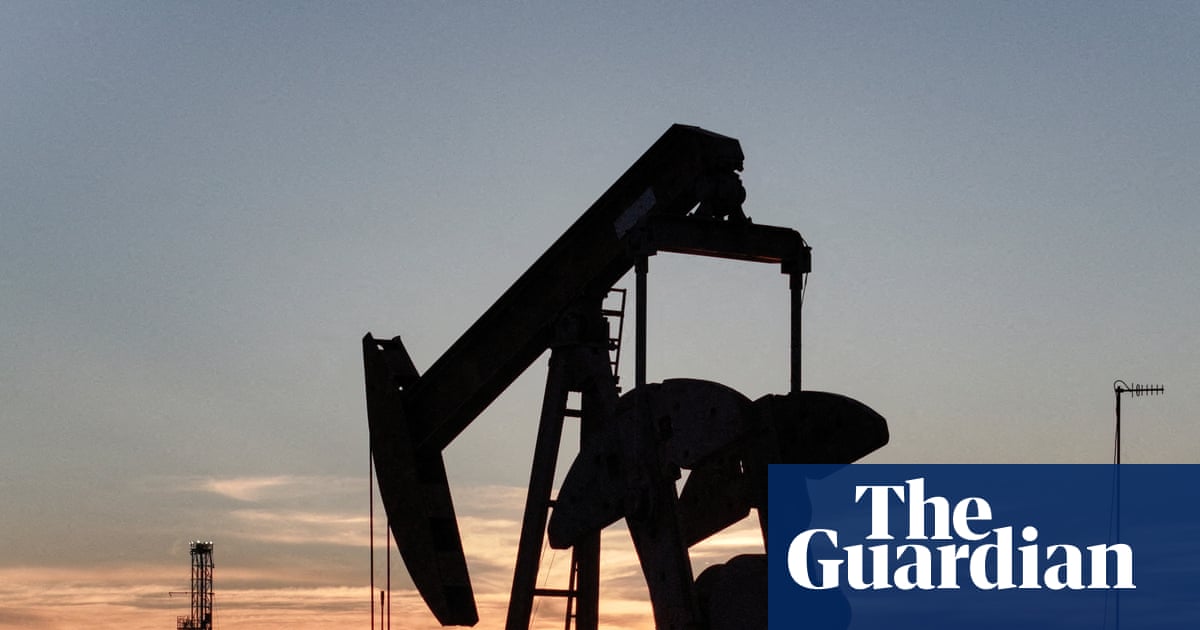
The oil-rich shale region of the Permian Basin in Texas. Photograph: Eli Hartman/Reuters
Aerial surveys conducted by the Global Airborne Observatory in 2024 detected three “super-emitter” events, rare but extremely large methane releases often caused by equipment failures and responsible for a hefty share of total emissions, at the Poker Lake complex.
The gas site produced more than 100 million cubic feet of gas between 2024 and 2025. ExxonMobil reported no venting or flaring in regulatory filings with the state of New Mexico over the same period.
Exxon did not reply to requests for comment.
After leaving the well pad, gas often travels just a short distance, sometimes less than 50 metres, to a nearby processing facility that is neither certified nor covered by the EU methane regulation, even though they can generate emissions that can rival those from well sites.
Auditing operator-provided data
To earn MiQ certification, operators are evaluated on three main criteria: a site’s methane intensity; the procedures in place to prevent leaks; and the monitoring technologies deployed. Third-party auditors visit facilities to review these factors before recommending a grade, after which MiQ issues certificates that can be attached to gas sold on the market.
Audits take place annually, with advance notice, although MiQ notes that auditors do not necessarily disclose which specific sites they will visit, and do not involve auditors carrying out independent emissions measurements on site.
“As part of the certification process, auditors do not calculate emissions,” said Elizabeth McGurk, methane sector leader at Montrose Environmental, one of MiQ’s audit firms.
Instead, she said, auditors “review and verify the operator’s emissions inventory” – an estimate of the total methane emissions from a facility over a year – assessing whether “intermittent emissions are properly accounted for through personnel interviews, documentation and evaluation of supporting calculations”.
Auditors, added McGurk, “specifically ask how operators are tracking and responding to intermittent events – both to mitigate emissions and to ensure they are accurately represented in the annual inventory.”
MiQ maintains it requires operators to report on a broader set of emission sources than many regulatory frameworks.
However, an analysis of its standard shows it does not mandate direct measurement or the use of specific third-party datasets nor does it require measurements to be independently collected, although some operators choose to incorporate these tools into their emissions inventories.
MiQ noted that while direct measurement of methane emissions is not required for certification, auditors will ask to review raw operator data on an as-needed basis.
Dan Zimmerle, director of Colorado State University’s methane emissions programme, said that because emissions occur around the clock and continuous monitoring is costly and technically challenging, measurements capture only a “snapshot”, with the rest inferred through “statistical extrapolation”.
However, verifying the data remains a challenge. “The big issue with certification schemes like this is: how does the verifier actually know what was done?” Zimmerle said.
Most energy companies don’t measure their actual methane emissions. Instead, they produce estimates based on how much methane they say typically escapes from their equipment using a combination of short-duration measurements, engineering calculations and statistical methods.
Scientists have found that those estimates are often inaccurate. Using satellite observations and aerial surveys, multiple peer-reviewed studies have consistently concluded that nations and companies emit significantly more methane than they report.
In a January study, Kevin Kircher, an energy researcher at Purdue University, compared US government estimates of LNG-related methane emissions largely based on self-reported facility data with satellite-based measurements.
His analysis found that emissions linked to the rapid expansion of shale oil and gas production in the Permian Basin have risen well above official estimates over the past two decades.
“There’s actually a pretty stark difference between what companies self-report and what’s there when you actually show up and look at it,” he said.
A March report by RMI, one of MiQ’s founders, also found that data submitted by operators to the Railroad Commission of Texas vastly understated methane emissions, with actual gas waste in 2024 estimated at three to four-and-a-half times reported levels.
‘Copying homework’
MiQ certificates can also be “decoupled” from the facilities that generated them and traded to other producers as a way to offset emissions. Certificates are sold through platforms such as the CG Hub marketplace, where companies can buy them and attach them to gas with significantly higher emissions.
EU officials have repeatedly voiced concern over whether schemes allowing decoupling credits from physical entities can credibly reflect real emissions reductions.
Jutta Paulus, an MEP on the EU’s committee on environment and climate who helped design the EUMR, said MiQ’s trading rules may not be “totally compliant with the regulation” because certificates should only be sold with the gas it has certified.
MiQ strategic adviser Axel Scheuer told EU commissioners last April that “transfers from one region to another are controlled and limited to volumes actually exported and imported between those regions,” he said. “This means an importer bringing in gas from, for example, Nigeria cannot use certificates linked to US production.”
However, certificates can be traded between operators within the same country. In the US, where gas from multiple producers is routinely mixed in pipelines, it is often impossible to determine whether “certified” gas actually comes from lower-emission facilities.
Trading in such certificates is already picking up. In February, British energy trader Centrica Energy signed a 10-year agreement to buy certificates linked to natural gas produced by Seneca Resources in the US, whose natural gas production has held an A rating from MiQ since 2022. The deal does not include the delivery of physical gas.
A month later, a European energy supplier and a US integrated energy company completed what was described as the first trade of certified methane emissions reductions on the Xpansiv CBL spot exchange, with emissions verified under the MiQ standard.
Brandon Locke, a researcher at the Boston-based environmental organisation Clean Air Task Force, said decoupling can discourage gas producers from pursuing the operational changes needed to curb methane emissions. “Companies can effectively ‘copy someone else’s homework’ rather than clean up their act,” he said.
Unlike many other offsetting certifiers, MiQ does not maintain an open database, with information on buyers of its certificates available only to operators and traders.
When reporters requested access to trading data, they were offered a demonstration but not direct access.
As the EU finalises its new methane requirements, the lobbying battle around certification is intensifying, with gas producers pushing for voluntary certification and EU commissioners under increasing pressure to allow it as gas supply is constrained by the closure of the strait of Hormuz.
The American Petroleum Institute, an industry lobby coalition, announced earlier this year that one of its 2026 goals is to “ensure” EU methane laws do not “disadvantage US producers”. In January, another lobby group, FuelsEurope, pressed the EU to accept “certificates transferred independently from the underlying commodity”.
The Partnership to Address Global Emissions, a trade group founded by EQT and representing US gas exporters to Europe, has also lobbied for certification as a way to increase US LNG exports to Europe without running afoul of European climate policies. Ben Webster, director of policy for MiQ, sits on the trade group’s advisory board, though MiQ stresses its independence from industry.
Documents obtained through freedom of information requests also show MiQ hired the lobbying firm Energy & Climate Policy Advisory Europe to promote its certification framework in Brussels. The firm is led by Scheuer, a former lobbyist for ExxonMobil and the IOGP.
According to the records, Scheuer has pitched MiQ certification to EU lawmakers as a “pragmatic compliance tool” and held meetings with officials overseeing imported energy rules.
In January, Scheuer presented the certification scheme at a workshop organised by the United Nations Economic Commission for Europe, describing MiQ’s standards as “largely equivalent to the EU methane regulation requirements”.
These efforts appear to be gaining traction. In December, the European Council endorsed third-party certification as a way to support implementation of the bloc’s methane regulation, a stance the European Commission echoed earlier this year.
Tijbosch views certification as progress. “Reducing methane emissions from oil and gas is one of the fastest, most cost-effective ways to slow climate change,” he said. And the technology exists today to achieve reductions, he added. “This means the challenge is not about capability, but accountability.”
For Kircher and many other climate experts, low-emissions gas certification only has credibility if measurement and reporting are “done by someone independent and neutral, not by the companies themselves”.
“I’m not sure who that might be, but it has to be someone with no skin in the game and nothing to gain from lowball estimates,” he said.
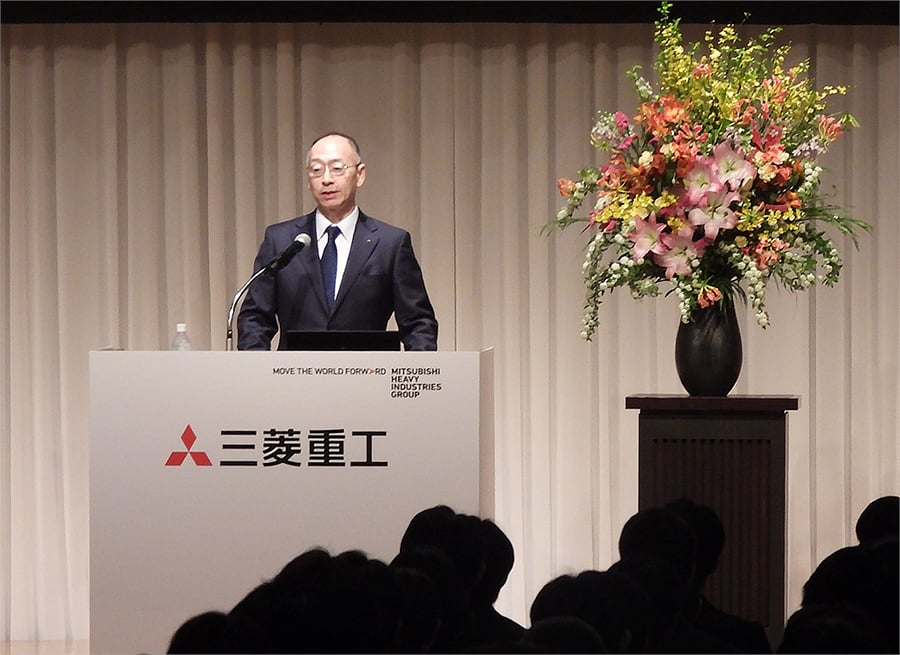
Tokyo, April 1, 2026 – Mitsubishi Heavy Industries, Ltd. (MHI) held an entrance ceremony for the fiscal year 2026 at the Grand Prince Hotel New Takanawa in Minato-ku, Tokyo. This year, as a new initiative, some of the new employees’ families also participated in the ceremony online. President & CEO Eisaku Ito addressed over 1,100 new employees, offering words of encouragement and expressing his expectations that “each individual’s diverse values and experiences will bring innovation to our Group.”
Summary of President Ito’s Message Making the stable supply of energy and electricity and the establishment of strategic supply chains increasingly important, alongside heightened awareness of security. Labor shortages in developed countries and the aging of urban infrastructure also pose major challenges. Furthermore, the remarkable advances in AI technology are transforming industries. Against this backdrop, President & CEO Ito emphasized that “in times like these, it is essential to cherish the fundamentals of our company.” He explained the origins of our Group and the three corporate principles that form our management philosophy, including “putting customers first and contributing to social progress through our business.” He then spoke about the Group’s vision and offered encouragement to the new employees. The key points are as follows:
MHI Group Vision
Our Group’s mission is to “combine the technologies accumulated with cutting-edge knowledge, tackle evolving social challenges, and realize a prosperous life for people.” We provide diverse products and services to a wide range of customers, supported by a common foundation of technologies, experts, and IT systems. Our Group owns over 700 technologies. Companies that possess both such diversity and a common foundation are rare worldwide. Therefore, our Group still has significant room for growth.
To maximize our growth potential, we are promoting “Innovative Total Optimization (ITO)” throughout the company. ITO is based on two core concepts. The first is “Group-Wide Optimization,” which means optimizing the value chain from sales to manufacturing and enabling lean business operations through the common foundation mentioned earlier. Additionally, by strengthening collaboration between businesses, sharing lessons learned from failures and early signs of changes in the business environment, we aim to enhance productivity and profitability. The second concept is “Scope Expansion,” which anticipates latent needs and creates new value by “smartly connecting” different fields. By leveraging partnering and IT, we swiftly approach new customers and regions. Combining these approaches, we will provide new value to vastly more customers.
This fiscal year marks the final year of the “2024 Business Plan,” launched in fiscal 2024. Through achieving this plan and advancing ITO, we aim to realize a “virtuous cycle of high profitability and growth investment.”
Encouragement to New Employees
Our Group fosters a culture where young employees can take on significant challenges early in their careers. When I was a student, I researched gas turbines and aspired to become an engineer in this field. I joined Mitsubishi Heavy Industries, the only company in Japan independently developing gas turbines. I was entrusted with a project to develop a turbine for a new concept jet engine. I was involved in all manufacturing processes from planning to development, design, prototyping, and evaluation, which later became the foundation of our business. Since then, as an engineer, I have participated in various projects both domestically and internationally, and with each experience, including failures, I saw personal growth.
The greatest appeal of our Group is its deep connection with society. There are countless opportunities to realize the desire to “contribute to society through manufacturing.” Our business fields extend from the depths of the ocean to the far reaches of space.
People are the core of our Group. To enhance individual capabilities, we provide various opportunities for challenges and growth. However, these opportunities are not only given but must also be actively pursued. We want you to identify social issues you are passionate about in your own life, align them with organizational goals, and continue to challenge yourself and grow.
In your daily work, please especially keep in mind to “work cheerfully and enjoyably,” “focus on the small tasks in front of you,” and “be yourself.” Mental and physical health are the foundation of life. When things are tough, there is actually an opportunity to rapidly develop your abilities. Also, small tasks support our Group’s large businesses. The day will come when you will be entrusted with major work, so prepare thoroughly with humility and courage, and expand the areas where you can contribute. Be aware of how your work benefits society, set your own goals, and put them into practice.
Our Group has many jobs that contribute to social progress, global-scale work, and work that only we can do. With the ambition and responsibility to proactively create and support society, let us maximize our Group’s potential and continue to take on challenges on the global stage.
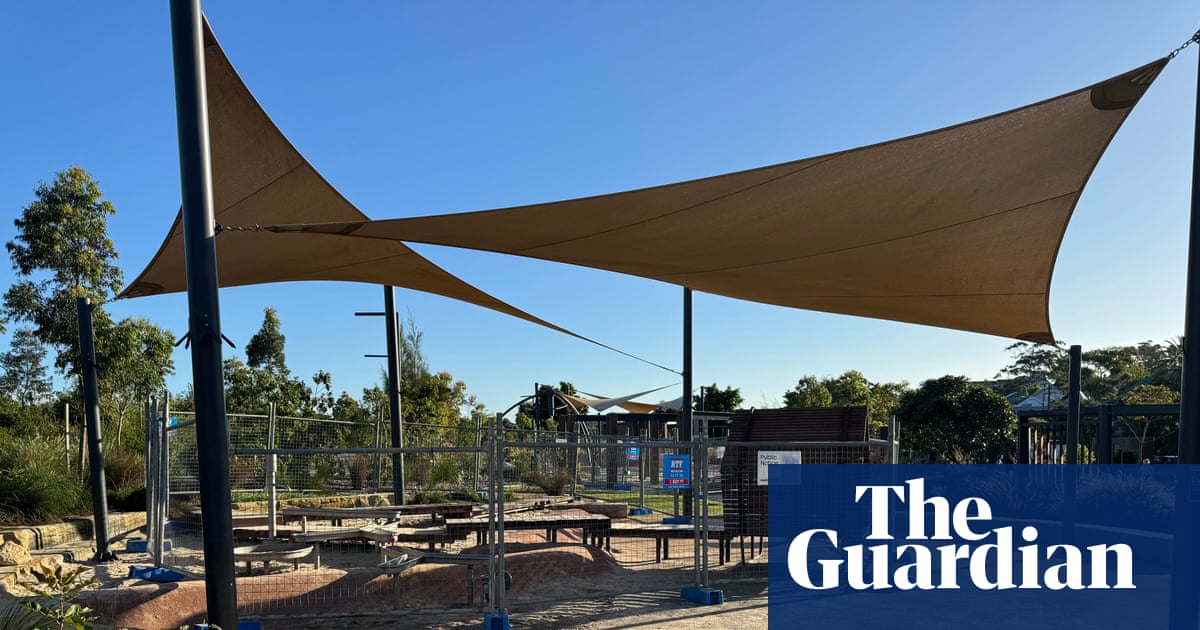
Parts of a Sydney children’s playground where asbestos was found in garden mulch in 2024 has been closed again, with authorities removing salvaged railway timber for testing.
Areas of Rozelle parklands in Sydney’s inner west were fenced off on Monday, with a council notice advising: “Thank you for your patience while we work with the NSW government to carry out works.”
“The rest of the park and playground are still able to be used and enjoyed,” the notice said.
Timbers used in the construction of the playground displayed black staining, according to a local resident. Photograph: SuppliedA Rozelle resident said the salvaged timbers were ‘bleeding a black tar-like substance and emitted a strong, pungent chemical oily odour’. Photograph: Supplied
The parklands, built on the site of former disused rail yards by Transport for NSW as part of the multibillion-dollar Rozelle interchange project, were closed in January 2024, shortly after opening, when asbestos was found in mulch. The parklands were reopened a few months later.
The latest contamination risk at the playground was raised by the same member of the public who first alerted authorities to the presence of asbestos in 2024.
The father in early 2024 told the department about the possible asbestos contamination after their child brought home mulch from the park.
Sign up for the Breaking News Australia email
They raised new concerns in early March after reading a plaque at the playground, which stated that timber used to build play equipment was “salvaged from the Rozelle rail yards that formerly occupied this land throughout most of the 20th century” – including railway sleepers.
The local resident, who asked to remain anonymous, said the timber “displayed visible black staining” and was “bleeding a black tar-like substance and emitted a strong, pungent chemical oily odour”.
A 2016 transport department report on the former rail yards advised that “treated timber, including treated railway sleepers, must not be reused or recycled or used at the site”.
The report said timber not treated with potentially harmful chemicals such as creosote or copper chrome arsenate would require further testing to be classified as “wood waste” rather than “building and demolition waste”.
A quarterly update from the transport department on the Rozelle interchange project in August 2023 said steel rail tracks and timber sleepers from the former rail yard had been salvaged and refurbished to “celebrate the industrial history of the area”.
“Timber will be used to create ‘balance beam’ play elements and walkways around play areas,” it said.
Parts of the children’s playground at Rozelle parklands were fenced off on Monday. Photograph: Supplied
The resident wrote an email to Transport for NSW in early March asking if the salvaged timber used in the playground had been tested for hazardous material. After following up, they received a message on 19 March, which advised that the department was looking into the issue.
“Please be patient as this may take some time,” the department wrote.
The concerned resident reported the potential contamination to the NSW Environment Protection Authority on 20 March, before writing to a senior transport official and the Inner West council last week.
The transport department official wrote back to say the timber would be removed on Friday for testing. After returning on Sunday to find that only some had been removed, the resident again wrote to the official, who advised the remaining timber would be taken away within 48 hours – and it had been checked for signs of leaching.
The member of the public took matters into their own hands, marking off the area with hazard tape from Bunnings, and sending a picture to the council. On Monday, the remaining timber walkways had been fenced off.
A spokesperson for the Inner West council said they had contacted Transport for NSW immediately after being alerted to the potential contamination last week, offering to erect fencing and signage.
“Unfortunately, fencing or removal were not carried out over the weekend, as had been committed to by Transport for NSW,” the spokesperson said.
“That’s why yesterday [Monday] council workers installed fencing in the area while we wait for Transport for NSW to safely remove the timber and test it.
“It’s important to note that no contaminant has been confirmed.”
How asbestos-contaminated mulch sparked the NSW EPA’s biggest investigation – video
The EPA said it was notified about the potentially contaminated timber on 20 March. The watchdog, which is not conducting its own testing of the timber, said it had “reached out to Transport for NSW, who are investigating the community report”.
A spokesperson for Transport for NSW said some timber had been removed “out of an abundance of caution” due to its condition and was being assessed. They said the salvaged timber was installed by a contractor during landscaping work.
Parts of the children’s playground at Rozelle parklands have been fenced off again. Photograph: Supplied
“Transport has been investigating this matter since it was raised and conducted a site investigation to collect samples and conduct preliminary testing of the salvaged timber.
“Transport for NSW continues to investigate, including the source of the salvaged timber.”
The Rozelle project’s joint builders, John Holland and CPB Contractors, have agreed to pay $150,000 to SafeWork NSW for worker training in safe asbestos handling after taking delivery of the mulch to the site.
John Holland and CPB Contractors declined to comment on the timber being sent for testing.