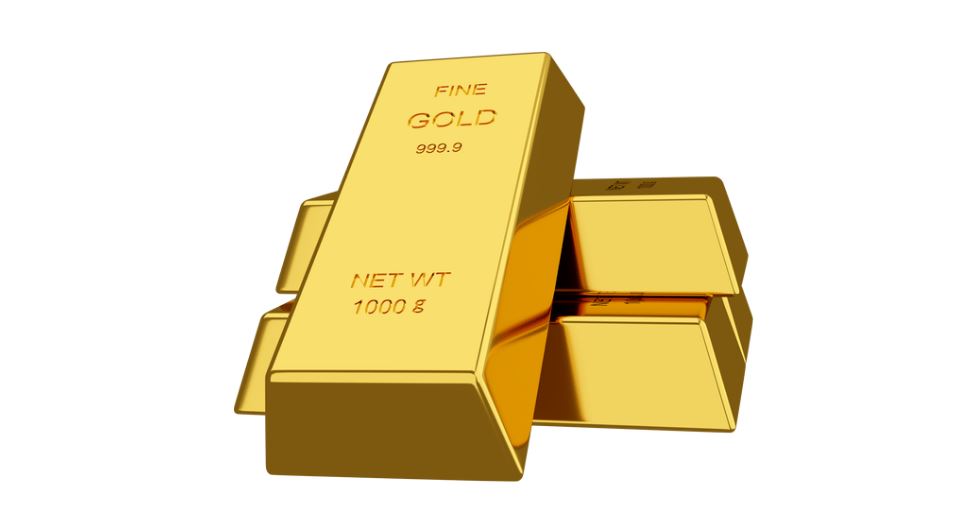
Gold in Pakistan recovered massively on Tuesday after yesterday’s big slump in global markets.
The price of one tola increased by Rs. 16,300 to Rs. 464,062, while 10 grams rose by Rs. 13,975 to Rs. 397,858, according to the All-Pakistan Gems and Jewellers Sarafa Association (APGJSA).
On Monday, gold plunged to Rs. 447,762 per tola after losing Rs. 43,500 during the session.
The international market, meanwhile, saw gold prices increase by $163, bringing the rate to $4,413 per ounce, with an additional $20 premium.
Silver also recovered after gaining Rs. 570 to settle at Rs. 7,454 per tola.
Japan’s Prime Minister Sanae Takaichi emphasized the need for Middle East stability, secure navigation through the Strait of Hormuz, and energy supply safeguards, highlighting joint U.S.-Japan oil stockpiling and citizen evacuations amid ongoing Iran tensions.
ERBIL (Kurdistan24) – Japan’s Prime Minister, Sanae Takaichi, stressed Tuesday the importance of maintaining peace and stability in the Middle East, including ensuring safe navigation through the Strait of Hormuz, in remarks posted on her X account.
Takaichi highlighted that these measures are critical not only for regional security but also for the stability of global energy supplies, which directly affect Japan’s economic and strategic interests.
In her statement, Takaichi noted ongoing diplomatic efforts to reduce tensions in Iran, emphasizing close communication with relevant countries at multiple levels.
She referenced a summit last week with U.S. President Donald Trump, in which both leaders affirmed the importance of de-escalating the situation in Iran as quickly as possible and maintaining secure maritime routes in the Strait of Hormuz.
Regarding energy cooperation, Takaichi said Japan and the United States will work together to expand production of U.S.-produced crude oil and pursue a joint project to stockpile U.S.-sourced crude. These steps aim to ensure a stable supply of petroleum amid regional instability.
Takaichi also addressed the protection of Japanese nationals abroad. She noted that, in addition to evacuations from Iran and Israel to neighboring countries, the Japanese government has operated six government-chartered flights from Gulf countries to Japan, facilitating the safe departure of 1,160 Japanese citizens and others.
Furthermore, she confirmed that one Japanese national detained in Iran was able to leave the country on March 20 with support from the Japanese embassy and returned to Japan on March 22.
The prime minister instructed relevant ministries to continue addressing these matters with a sense of urgency, underlining the goal of early de-escalation and broader regional stability.
Takaichi detailed measures to mitigate the impact of Middle East tensions on Japan’s domestic economy. She said private stockpiles of petroleum products, including gasoline, would be released beginning March 16, with national stockpiles to follow starting March 26.
Joint stockpiles with oil-producing countries are also scheduled for release this month. These measures are intended to secure sufficient petroleum supplies for domestic consumption and to prevent disruptions to economic activities.
In addition, Takaichi announced the implementation of subsidies starting March 19 to curb prices of petroleum-related products, including gasoline, diesel, heavy fuel oil, and kerosene.
She clarified that electricity and gas rates, determined based on fuel import costs from two to four months prior, are not expected to rise immediately despite the current situation.
For petroleum-related products not used as energy sources, such as naphtha, the prime minister indicated that the Ministry of Economy, Trade and Industry would coordinate policies to protect citizens’ livelihoods.
This includes considering global supply conditions, domestic inventory levels, and the broader supply chain, spanning industrial, agricultural, and healthcare needs. The ministry will report findings and policies to the relevant ministerial meeting.
Takaichi concluded that Japan will continue diplomatic and economic measures to maintain regional stability, secure energy supplies, and safeguard the well-being of Japanese citizens at home and abroad.
Good morning, and welcome to our rolling coverage of business, the financial markets and the world economy.
The dust is settling in the markets after a classic roller-coaster session yesterday, when hopes of de-escalation in the Middle East drove up shares and hit oil.
Yesterday’s equity rally was driven by Donald Trump appearing to blink first in the Iranian war, by claiming “very good” talks had taken place with Tehran and postponing any attacks on Iran’s energy infrastructure for five days.
That was enough to pull European markets out of a nosedive, while the US Dow Jones Industrial Average recorded its strongest daily rise in six weeks. Oil slumped 10%,
But…that optimism may fade, as Iran dismisses Trump’s claim of talks; the Islamic Revolutionary Guards Corps (IRGC) called Trump’s words “psychological operations” that had no impact on Tehran’s fight, while parliamentary speaker MohammadBaqerQalibaf said it was “fake news … used to manipulate the financial and oil markets”.
And today, oil is rising again, back over the $100 mark. Brent crude has risen by 2.5% to $102.51 a barrel, as the conflict continues.
Although Trump’s claims have defused some tension, the underlying situation remains “incredibly fragile”, points out TonySycamore, market analyst at IG:
Iran initially denied any knowledge of the talks, although reports suggest the US administration may have identified a potential new negotiating partner open to a ceasefire. However, some of this optimism has been overshadowed this morning by fresh reports of US and Israeli strikes on energy-related buildings in Iran’s Isfahan region, which has seen [US] crude oil bounce 3% to $91.53.
Presumably, these latest strikes are designed to get all of Iran’s new leadership group on the same ceasefire page ahead of Trump’s revised deadline for Iran to reopen the Strait of Hormuz, which is now set for Friday. Crucially, this deadline coincides with the expected arrival of 2,200 Marines of the 31st Marine Expeditionary Unit in the Gulf Region, along with the USS Tripoli and USS New Orleans.
So far today, Asia-Pacific stock markets have risen – recovering some of their losses before Trump’s claims hit the wires. European markets are expected to drop, though, when trading begins.
New surveys of purchasing managers around the world will also show the impact of the conflict, and the surge in energy prices, on the global economy.
The agenda
9am GMT: Eurozone flash PMI report for March
9.30am GMT: UK PMI report for March
9.30am GMT: The Science, Innovation and Technology Committee will question senior representatives of Google, TikTok, X and Meta
1.30pm: Bank of England chief economist Huw Pill speech at central banking conference in North Macedonia
2.30pm GMT: Business and Trade committee hearing on Royal Mail
2.45pm GMT: US PMI report for March
Key events
European markets mixed
European stock markets are a mixed bag this morning.
Germany’s DAX is lagging, down 0.36%, pulled lower by software firm SAP (-3.4%) and pharmaceuticals group Bayer (-1.9%). Italy’s FTSE Mib is down 0.2%.
But France’s CAC 40 is up 0.13%, with luxury goods makers Kering (+1.75%) and Hermes (+1.2%) leading the risers.
UK bond yields dip for second day
UK sovereign debt is strengthening this morning, pushing down the government’s cost of borrowing.
The yield, or interest rate, on two-year UK gilts has dipped by three basis points (0.03 percentage points) to 4.41%.
Ten-year gilt yields are down just 1bp at 4.92%.
Yields fall when price rise, and show the rate of return which bond investors will receive.
FTSE 100 opens higher
Britain’s stock market has opened higher this morning, as investors try to keep yesterday’s Iran relief rally running.
The FTSE 100 share index is up 39 points, or 0.4%, at 9,933 points this morning, a day after it recovered from an early 2.5% tumble.
But mining companies, housebuilders, and defence companies are lower.
UK crackdown on late payments
Phillip Inman
Small businesses can appeal against clients that refuse to pay their bills on time under new rules being brought in by the UK business minister, as part of a package of measures to support faster payments across the economy.
Business minister Peter Kyle said he was implementing “the largest set of reforms in over a generation” by giving powers to the small business commissioner to intervene in disputes and issue millions of pounds worth of fines against the worst offenders.
Reasearch carried out last year by the department of business and trade found that while 8% of businesses said late payments were a “big problem” costing UK firms directly about £7bn a year, 15% of businesses said they avoided doing business with specific customers due to poor payment practices in the previous year.
The department has put the overall cost to the economy at £11bn a year.
Kyle will speak in London this afternoon at the Fast Payer Code awards, which will reward companies for making timely payments for goods and services.
He will describe the measures as the toughest in the G7 in an effort to prevent about 38 businesses from shutting their doors each day – the equivalent of 266 a week.
The rules will include a new 60-day cap on payment terms on all large firms when paying smaller suppliers. Mandatory interest on late payments will also be introduced, with a requirement for all commercial contracts to include statutory interest set at 8% above the Bank of England base rate.
Emma Jones, the small business commissioner will be in the front line, investigating and judging wrongdoing. She said:
“These reforms will reduce the hours spent chasing debt allowing small businesses to focus on more productive and enjoyable growth.”
UK energy minister urges drivers not to change behaviour
The UK’s energy minister has urged motorists not to drive slower nor buy fuel differently because of the Iran oil crisis, insisting there was no need to change their behaviour.
Michael Shanks was asked by Times Radio if drivers should change their habits as a result of the oil restrictions caused by the conflict in the Middle East.
He told the broadcaster:
“They should do everything as absolutely normal because there is no shortage of fuel anywhere in the country at the moment. We monitor this every single day, I look at the numbers personally. There’s no issue at all with that.”
Mr Shanks added thatpeople shouldn’t change their behaviour or their habits in the slightest, saying:
“People should go about their business as normal. That’s what the RAC and the AA have said. It’s really important people do that.
“There’s no shortage of fuel and everything is working as normal.”
Asia-Pacific markets post gains despite Iranian denials
The foreign exchange dealing room of the Hana Bank headquarters in Seoul, South Korea, today Photograph: Ahn Young-joon/AP
Despite Iran disputing Donald Trump’s claims about constructive talks taking place, most Asia-Pacific markets have posted gains today.
After days of mounting fear and dispair about the Middle East conflict, investors in Tokyo, Seoul and Shanghai are in more hopeful mood today.
Japan’s Nikkei has risen by 2.1%, while South Korea’s Kospi is up 2.8% and China’s CSI300 gained 1.3%.
Emma Wall, chief investment strategist, Hargreaves Lansdown:
“According to President Donald Trump, preliminary truce talks have begun with Iran. According to Iran, he’s living in la-la-land and the talks never happened. But the markets love hope, and the prospect of a ceasefire was enough to push Brent crude oil down 11% yesterday to below $100 a barrel for the first time in weeks. But the Iran denial, and a report that the UAE and Saudi Arabia are considering entering the war, has sent oil back up to $103.
It’s foreign-policy-by-soundbite, but it is President Trump’s speciality. Announcing plans to extend the previous 48-hour deadline to open the Strait of Hormuz, or else, by five days, he sent a clear signal to the market that the US is ready to make a deal. Just a couple of days earlier, Trump had outlined plans to target Iran’s power plants, and Iran in turn had threatened energy and water infrastructure across the Middle East.
Deutsche Bank: some nervousness has crept back into the market
“Some nervousness” has crept back into the markets today, after yesterday’s relief rally, reports Jim Reid of DeutscheBank.
He points out that the interest rate on US government debt (10-year Treasury bonds) has risen, while stock market futures in the US and Europe are lower:
Obviously much now depends on the progress of any talks, and whether the more optimistic rhetoric is followed up by concrete action. Indeed, Iranian officials have repeatedly denied that talks with the US were even happening, which had contributed to markets reversing some of the initial risk-on reaction late yesterday and overnight.
Brent crude has edged back up nearly 4 percent to $103.88/bbl this morning, with futures on the S&P 500 (-0.69%) and STOXX 50 (-0.84%) notably lower. 10yr USTs are +3.8bps at 4.38%. So some nervousness has crept back in.
The WSJ last night reported that Saudi Arabia and the UAE were considering joining the war against Iran which hasn’t helped sentiment.
Introduction: Brent crude oil back over $100
Good morning, and welcome to our rolling coverage of business, the financial markets and the world economy.
The dust is settling in the markets after a classic roller-coaster session yesterday, when hopes of de-escalation in the Middle East drove up shares and hit oil.
Yesterday’s equity rally was driven by Donald Trump appearing to blink first in the Iranian war, by claiming “very good” talks had taken place with Tehran and postponing any attacks on Iran’s energy infrastructure for five days.
That was enough to pull European markets out of a nosedive, while the US Dow Jones Industrial Average recorded its strongest daily rise in six weeks. Oil slumped 10%,
But…that optimism may fade, as Iran dismisses Trump’s claim of talks; the Islamic Revolutionary Guards Corps (IRGC) called Trump’s words “psychological operations” that had no impact on Tehran’s fight, while parliamentary speaker MohammadBaqerQalibaf said it was “fake news … used to manipulate the financial and oil markets”.
And today, oil is rising again, back over the $100 mark. Brent crude has risen by 2.5% to $102.51 a barrel, as the conflict continues.
Although Trump’s claims have defused some tension, the underlying situation remains “incredibly fragile”, points out TonySycamore, market analyst at IG:
Iran initially denied any knowledge of the talks, although reports suggest the US administration may have identified a potential new negotiating partner open to a ceasefire. However, some of this optimism has been overshadowed this morning by fresh reports of US and Israeli strikes on energy-related buildings in Iran’s Isfahan region, which has seen [US] crude oil bounce 3% to $91.53.
Presumably, these latest strikes are designed to get all of Iran’s new leadership group on the same ceasefire page ahead of Trump’s revised deadline for Iran to reopen the Strait of Hormuz, which is now set for Friday. Crucially, this deadline coincides with the expected arrival of 2,200 Marines of the 31st Marine Expeditionary Unit in the Gulf Region, along with the USS Tripoli and USS New Orleans.
So far today, Asia-Pacific stock markets have risen – recovering some of their losses before Trump’s claims hit the wires. European markets are expected to drop, though, when trading begins.
New surveys of purchasing managers around the world will also show the impact of the conflict, and the surge in energy prices, on the global economy.
The agenda
9am GMT: Eurozone flash PMI report for March
9.30am GMT: UK PMI report for March
9.30am GMT: The Science, Innovation and Technology Committee will question senior representatives of Google, TikTok, X and Meta
1.30pm: Bank of England chief economist Huw Pill speech at central banking conference in North Macedonia
2.30pm GMT: Business and Trade committee hearing on Royal Mail
SHANGHAI/BEIJING: Global corporate executives attending China’s flagship annual business conference this week were reassured by leaders of the world’s second-largest economy that it remains a predictable anchor at a time of geopolitical flux and global uncertainty. The tone at this year’s China Development Forum (CDF), which ended on Monday, was noticeably more confident than in recent years, analysts said, marking a shift from previous post-pandemic forums where officials tended to emphasize support measures and recovery trajectories. “Compared to previous CDFs, the China messaging was the most confident,” said Han Lin, China Country Director at US-based strategy consultancy, The Asia Group. “While identifying challenges in the international system and without naming the US directly, (Premier Li Qiang’s) opening speech focused on what China was doing right to encourage innovation, trade and other opportunities to collaborate.” The timing of the forum sharpened that message. Nearly a year into a bruising trade war and ahead of a postponed summit between President Xi Jinping and US President Donald Trump, Beijing is navigating strained ties with Washington and faces rising trade barriers elsewhere off the back of a record $1.2 trillion trade surplus in 2025. The US-Israeli war with Iran has caused a surge in energy prices that is rippling across the wider global economy and given Beijing another opportunity to promote itself as a bastion of calm that respects sovereignty and the international, rules-based order.
REFLECTION OF SHIFTING GEOPOLITICAL LANDSCAPE Attendance patterns reflected shifting geopolitical boundaries. A higher share of US corporate leaders traveled to Beijing compared with previous years, among them the CEOs of Apple, McDonald’s, Eli Lilly, Coach parent Tapestry and Mastercard. Their presence suggested that despite tensions, American multinationals remain keen to keep channels open with Beijing, as the two countries recalibrate trade and investment flows. Stability, a recurring theme from last year’s CDF, resonated more strongly this year, said Albert Hu, professor of economics at the China Europe International Business School in Shanghai. “Given all the erratic policies introduced by Donald Trump and the uncertainty his policies have introduced to the world economy, the message of China being a stabilizing force probably finds a more willing audience this year than last year,” Hu said. Absent, however, were Japanese executives — a stark contrast with last year, when their involvement included a widely publicized meeting between top global CEOs and Xi. Their non-attendance this year comes amid a diplomatic rift between Beijing and Tokyo, underscoring how China’s promises of renewed openness still operate firmly within geopolitical red lines.
EYES ON POTENTIAL MEETING WITH XI A decision on whether Xi will reprise his recent practice of hosting a roundtable with select CEOs had not been confirmed by the close of the forum. Han Lin believes the absence of an immediate announcement reflects sequencing rather than reluctance. “I think Xi has every intention to meet CEOs, but only after a Trump visit,” he said. “Beijing wants trade terms set at the leadership level first, then multinationals get their signal on what comes next.” Chinese policymakers also used this year’s forum to underline priorities that now define its medium-term strategy: technological self-reliance, industrial upgrading and “high-quality development.” All three pillars are central to the country’s latest five-year plan, released earlier this month and set as the theme of this year’s CDF. Yet not all participants left convinced. Some attendees complained that the forum’s content had become increasingly rigid. “The meetings are getting more and more bureaucratic. I cut short my trip and am going home now,” said a Chinese senior executive at an international hotel chain. “CDF is losing its glamor. I hoped to sit in on some interesting sessions, but it turned out to be very bureaucratic and a total waste of my time.”
APAC Sovereigns Face Greater Downside from a Prolonged Iran Conflict Fitch Ratings
Even the best-case scenario for energy markets is disastrous The Economist
‘The stakes are enormous’: how a prolonged Iran war could shock the global economy The Guardian
DAX stürzt ab, Ölpreis explodiert und Gold fällt im Krisenfall? Wie der Golfkrieg die Weltwirtschaft auf die Probe stellt Xpert.Digital – Konrad Wolfenstein
Iran war disruption beyond 3-4 months poses systemic risk to global economy, Total CEO says Reuters
You don’t have permission to access “http://www.spglobal.com/energy/en/news-research/latest-news/crude-oil/032326-ceraweek-totalenergies-ceo-warns-oil-gas-prices-could-surpass-2022-highs-if-hormuz-crisis-holds” on this server.