Category: 3. Business

  • A Celebration of Collaboration in Cyber Defense

    A Celebration of Collaboration in Cyber Defense

    The Genesis of Collective Defense

    At certain moments in a career, you get the rare opportunity to look back and say, this work mattered. Not because of an individual accomplishment, but because it contributed to something larger — something that changed how an industry thinks and operates. The Cyber Threat Alliance (CTA) is one of those efforts.

    When the CTA was first conceived in 2014, the cybersecurity industry looked very different than how it does today. Threat intelligence was widely viewed as a competitive advantage, tightly guarded and rarely shared beyond company walls. Collaboration between major security vendors — especially direct competitors — was almost unheard of. The prevailing mindset was simple: information was power, and power was proprietary.

    Against that backdrop, a bold idea emerged: What if competitors worked together for the collective defense of customers and the broader digital ecosystem? What if sharing high-fidelity threat intelligence could raise the cost for adversaries and make everyone safer? As Mark McLaughlin, then CEO of Palo Alto Networks, famously put it at the time, the importance of the future CTA was clear: “Don’t let this fail.”

    With that charge, four industry leaders — Palo Alto Networks, Fortinet, McAfee (Intel Security) and Symantec — came together on a handshake agreement to prove that collaboration at scale was not only possible, but necessary. It was, by any measure, a radical idea. Yet those early conversations laid the foundation for what would become the Cyber Threat Alliance.

    The Architecture of Trust: Turning Vision into Reality

    Turning that vision into reality required more than shared intent. A small working group representing each founding company was tasked with answering hard questions: what the CTA should be, what it should not be and how it could operate independently while earning trust across the industry. With guidance from experts familiar with the ISAC and ISAO landscape, the group worked through governance models, legal frameworks and operational structures. This involved reading more bylaws and legal documents than anyone ever hoped to encounter, but it was essential work. The CTA needed to be built deliberately, with integrity and clarity of purpose.

    As the organization took shape, strong leadership became critical. That need was met when Michael Daniel, fresh from serving as Cybersecurity Coordinator for President Obama, stepped in to lead the CTA. His experience, credibility and ability to navigate both policy and industry realities helped propel the organization forward during its formative years.

    Fast forward to 2026. As the CTA marks its ninth anniversary, the mission that sparked its creation remains relevant and urgent. The CTA has grown its influence beyond data sharing.

    The CTA stands in a unique position to provide oversight and technical influence as a global leader in cybersecurity policy by representing the member companies in one place. With the expanding membership that spans across the globe, the CTA is now an essential piece of global cybersecurity infrastructure. Adversaries continue to evolve, borders remain irrelevant to cyber threats and no single organization can defend alone. What has changed is our proof point: collaboration works.

    Reflecting on Nine Years and the Road Ahead

    For those of us who have had the privilege of being involved since the earliest days, it has been remarkable to watch a bold idea turn into a trusted global institution. What began as a handful of competitors agreeing to try something different has grown into an organization that meaningfully influences how the industry shares intelligence, engages on policy and works together to protect customers worldwide.

    Being part of that journey — helping shape the foundation, watching it mature and continuing to support its growth — has been one of the most professionally rewarding experiences of my career.

    The CTA’s success is not defined solely by years or membership numbers, but by the collective commitment of its members to act in the interest of the broader ecosystem. Every shared indicator, every technical contribution and every policy engagement strengthens not just individual companies, but the security of communities across the globe.

    As we look ahead, the call to action is simple: stay engaged, stay committed and continue to collaborate. Whether through sharing intelligence, contributing technical expertise or helping shape global cybersecurity policy, each member plays a role in ensuring the CTA remains a trusted and effective force against today’s most pressing cyber threats.

    The work is far from done. Together, we are better positioned than ever to meet what comes next.

    Happy 9th Anniversary, CTA!

    Figure1. Celebrating 9 Years of the CTA

    Additional Resources

    Sharing Threat Intelligence Makes Everyone Safer – Michael Sikorski, Palo Alto Networks

    More About The Author

    Kathi Whitbey is the Lead Principal Program Manager for Unit 42 at Palo Alto Networks, where she has spent more than a decade driving strategic programs and initiatives. She played a pivotal role in the formation and incorporation of the Cyber Threat Alliance (CTA), including leading early efforts to design and operationalize the CTA Platform for secure intelligence sharing among member companies.Deeply committed to the mission of Unit 42,

    Kathi is a strong advocate for the team’s work and a dedicated mentor to emerging professionals in cybersecurity and risk management. Her career includes leadership roles in software development management and technical training across multiple U.S. government organizations, including the Department of State, where she traveled globally to deliver training on custom software applications. In addition to her professional work, Kathi has served as a volunteer Emergency Medical Technician, including a 12-month deployment supporting the U.S. Navy at Camp Lemonnier in Djibouti, Africa. She holds a Master’s degree in Information Systems and brings together technical expertise, operational leadership and a deep commitment to service and collaboration.
    Continue Reading

  • S&P 500 Posts Its First Two-Week Losses Since June: Markets Wrap

    S&P 500 Posts Its First Two-Week Losses Since June: Markets Wrap

    (Bloomberg) — Wall Street ended a jittery week on a relatively quiet note, with stock traders digesting the rally of the past two days in the run-up to the Federal Reserve decision and the start of the big-tech earnings season.

    While the S&P 500 posted its first back-to-back weekly losses since June, the gauge erased Friday’s drop amid solid consumer sentiment and gains in most megacaps. Nvidia Corp. climbed 1.5% as China told tech firms they can prepare orders for H200 AI chips. Intel Corp. sank 17% on a tepid outlook. Small caps trailed the US equity benchmark after beating it for 14 days.

    “Stocks are consolidating,” said Louis Navellier at Navellier & Associates. “The laggards are catching up, and the winners are giving back a little.”

    Action was fairly muted in bonds. As inflationary pressures linger amid signs of stabilization in the labor market, the Fed is widely expected to hold rates steady Wednesday. Economists surveyed by Bloomberg project reductions only in June and September. The dollar saw its worst week since May.

    Markets around the globe were roiled earlier this week by President Donald Trump’s threat to impose tariffs on some European countries over Greenland, before softening his rhetoric as NATO’s chief said a breakthrough was secured. The European Union will suspend retaliatory levies on €93 billion ($109 billion) of US goods for another six months.

    “This week’s market action is an important reminder for investors to not allow political headlines out of Washington to affect their portfolio, and to be opportunistic when stocks succumb to headline risk,” said Alexander Guiliano at Resonate Wealth Partners.

    The S&P 500 hovered near 6,915. A gauge of megacaps climbed 1%. The Russell 2000 fell 1.8%. The yield on 10-year Treasuries slipped one basis point to 4.23%. The dollar lost 0.7%. The yen jumped the most since August on speculation Japan could intervene to halt its slide.

    Oil rallied as traders factored in the possibility of American military action in Iran and a massive winter storm in the US. Gold hit all-time highs. Silver topped $100. Copper rallied above $13,000.

    Read: CEOs Leave Davos Warning Europe to Shape Up or Lose to US, China

    Despite operating in the shadow of political storm clouds in recent weeks, the US stock market is still relatively close to a record, noted Daniel Skelly, head of Morgan Stanley’s Wealth Management Market Research & Strategy Team.

    “If those clouds can part, positive sentiment about some of this year’s dominant themes may get a chance to re-emerge,” he added.

    US stocks suffered nearly $17 billion in outflows in the week ended Jan. 21, according to a Bank of America Corp. note, citing EPFR Global data. After briefly erasing its January gain, the S&P 500 reclaimed its year-to-date advance ahead of high-stakes results from several tech giants.

    “Many of the ‘Magnificent Seven’ names have actually underperformed the S&P 500 over the past 12 months, so these next few earnings reports can be an important catalyst,” said Guiliano at Resonate Wealth Partners.

    There were doubters, all across Wall Street by some accounts, that Tuesday’s stock rout would be short-lived, a pullback not sharp enough to dissuade Trump from waging a trade war with Europe for control of Greenland.

    Yet individual investors plowed $4 billion into US equities as the S&P 500 suffered its biggest drawdown in three months, according to data from JPMorgan Chase & Co. Another $2.3 billion flowed in on Wednesday, just in time for Trump to unleash a rally by standing down from his tariff bluster.

    “Investors remain conditioned to buy every dip — retail money rushed in during this week’s selloff, reinforcing a pattern that’s been in place since 2020,” said Mark Hackett at Nationwide. “That combination of broadening leadership and deeply ingrained buy-the-dip behavior continues to tilt the odds in favor of the bulls.”

    Stress-driven selloffs are becoming increasingly short-lived, and the latest one was not echoed in other technical indicators such as credit spreads, the put/call ratio, or financial conditions, Hackett noted.

    “Following the strong run to record highs, it is not unusual or unhealthy to see a period of consolidation,” he said.

    Hackett also added that the pattern in seven of the past eight quarters is that equity markets rally into earnings season but are met with volatility and market sluggishness, despite better-than-expected results, as skepticism arises, investors are more reactive and companies are unable to buy back shares due to earnings blackout periods.

    As the US earnings season gathers momentum, early results are offering a window into the economic and political crosscurrents shaping Corporate America’s outlook for the year ahead. Stocks are trading at high valuations after the S&P 500 clocked in three straight years of double-digit growth, leaving little room for error.

    Earnings resilience and stability in the rates market are crucial for stocks to shrug off geopolitical noise, according to Barclays Plc strategists led by Emmanuel Cau.

    The slow start of the earnings season suggests geopolitics isn’t the only driver of stock volatility, according to RBC Capital Markets strategists led by Lori Calvasina. They noted that analysts’ 2026 earnings growth forecast has fallen slightly while macro commentary remains cautiously optimistic on earnings calls.

    Corporate Highlights:

    Apple Inc. accused the European Commission of using “political delay tactics” to postpone new app policies as a pretense to investigate and fine the iPhone maker. Meta Platforms Inc., the reigning leader in the growing smart glasses category, is being sued by another glasses maker over patent infringement in a case that also targets the US entity of eyewear giant EssilorLuxottica SA and its Oakley subsidiary. Federal Communications Commission Chairman Brendan Carr sees “legitimate competition concerns” in Netflix Inc.’s proposed acquisition of Warner Bros. Discovery Inc.’s studios and streaming businesses, concerns he doesn’t share if Paramount Skydance Corp. were to acquire those assets. SLB, the world’s largest oilfield-services provider, raised its dividend and posted fourth-quarter earnings that beat estimates as activity in the Middle East and other key regions accelerated and its data-center business rapidly expanded. DoorDash Inc. and Uber Technologies Inc. lost a bid to block a New York City law requiring a tipping option be presented to customers at checkout from going into effect Monday. Goldman Sachs Group Inc. boosted Chief Executive Officer David Solomon’s pay to $47 million, capping a year in which the investment bank’s shares soared and its leader reasserted his control at the top. Capital One Financial Corp. reported adjusted earnings per share that missed the average analyst estimate. The company also agreed to acquire Brex, a financial-technology company that focuses on corporate expense management and accounting, for $5.15 billion. Walgreens Boots Alliance Inc. has started selling vapes in some stores across the US, a surprise reversal after the drugstore chain stopped selling them more than six years ago amid concerns about their popularity with teens. Software maker Databricks Inc. has lined up $1.8 billion of new financing from broadly syndicated loan investors and private credit lenders. Affirm Holdings Inc. said it applied for a limited bank charter to help roll out additional financial-technology products for the buy-now, pay-later company’s US customers. Short interest in Sandisk Corp. has been climbing for months alongside a sharp rally in the stock, pushing the risk of a short squeeze to an “extreme” level, according to S3 Partners LLC. The online arm of Saks Global Enterprises won court approval to hire a liquidator to sell its inventory separately from the rest of the luxury retailer. Deutsche Lufthansa AG faces the risk of having to block off almost the entire business-class section on its new Boeing Co. 787 aircraft for longer as seat certification drags out, an expensive setback at a time when more passengers are upgrading to the front of the cabin. Ericsson AB proposed its first-ever buyback after fourth-quarter earnings beat analysts’ forecasts, boosted by the Swedish telecommunications equipment maker’s efforts to cut costs and raise margins in a sluggish market. Thyssenkrupp AG is considering the sale of a roughly 30% stake in its Rothe Erde bearings business, people familiar with the matter said, in a deal that could value the asset at about €1.5 billion ($1.8 billion). Pirelli & C. SpA’s biggest Italian investor said it won’t renew a shareholder agreement governing the tiremaker with China’s Sinochem Group, citing an inability to adapt the company’s governance to US legal requirements. French authorities received a report of a second infant death, as a tainted formula crisis that’s engulfed Nestlé SA, Danone SA and Groupe Lactalis widens. Some of the main moves in markets:

    Stocks

    The S&P 500 was little changed as of 4 p.m. New York time The Nasdaq 100 rose 0.3% The Dow Jones Industrial Average fell 0.6% The MSCI World Index rose 0.3% Bloomberg Magnificent 7 Total Return Index rose 1% The Russell 2000 Index fell 1.8% Intel fell 17% Nvidia rose 1.5% Currencies

    The Bloomberg Dollar Spot Index fell 0.7% The euro rose 0.6% to $1.1825 The British pound rose 1% to $1.3638 The Japanese yen rose 1.6% to 155.80 per dollar Cryptocurrencies

    Bitcoin rose 0.4% to $89,506.48 Ether was little changed at $2,944.2 Bonds

    The yield on 10-year Treasuries declined one basis point to 4.23% Germany’s 10-year yield advanced two basis points to 2.91% Britain’s 10-year yield advanced four basis points to 4.51% The yield on 2-year Treasuries declined one basis point to 3.60% The yield on 30-year Treasuries was little changed at 4.83% Commodities

    West Texas Intermediate crude rose 3.2% to $61.27 a barrel Spot gold rose 1% to $4,984.39 an ounce ©2026 Bloomberg L.P.

    Continue Reading

  • Is China quietly winning the AI race?

    Is China quietly winning the AI race?

    Lily JamaliNorth America Technology correspondent

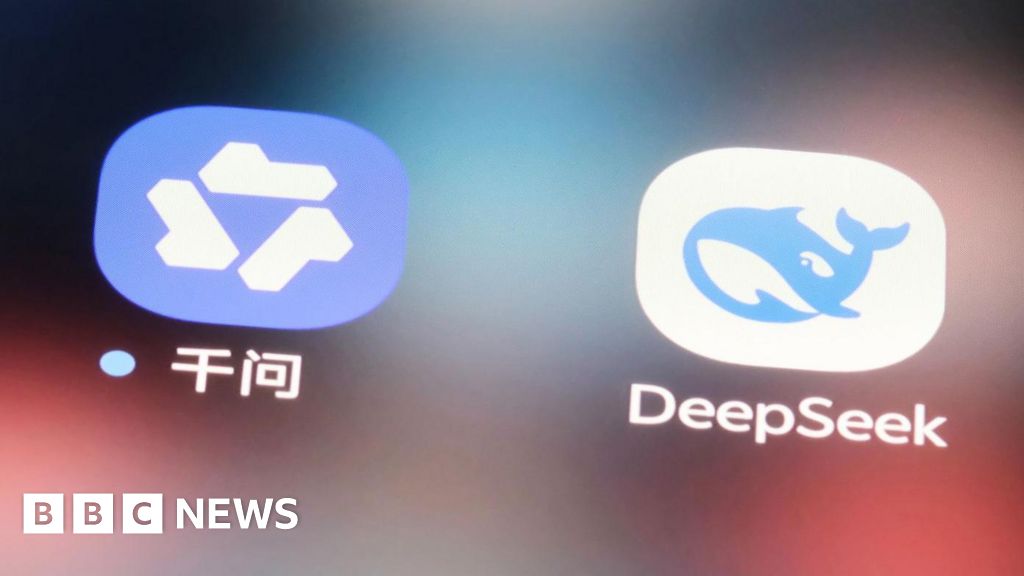
    Getty Images Three icons for AI apps. On the left is ChatGPT. In the middle is Qwen, written in two Chinese characters. On the right is DeepSeek.Getty Images

    Every month, hundreds of millions of users flock to Pinterest looking for the latest styles.

    One paged titled “the most ridiculous things” is filled with plenty of wacky ideas to inspire creatives – Crocs repurposed as flower pots. Cheeseburger-shaped eyeshadow. A gingerbread house made of vegetables.

    But what would-be buyers may not know is the tech behind this isn’t necessarily US-made. Pinterest is experimenting with Chinese AI models to hone its recommendation engine.

    “We’ve effectively made Pinterest an AI-powered shopping assistant,” the firm’s boss Bill Ready told me.

    Of course, the San Francisco-based tastemaker could use any number of American AI labs to power things behind-the-scenes.

    But since the launch of China’s DeepSeek R-1 model in January 2025, Chinese AI tech has increasingly been a part of Pinterest.

    Ready calls the so-called “DeepSeek moment” a breakthrough.

    “They chose to open source it, and that sparked a wave of open source models,” he said.

    Chinese competitors include Alibaba’s Qwen and Moonshot’s Kimi, while TikTok owner ByteDance is also working on similar technology.

    Pinterest Chief Technology Officer Matt Madrigal said the strength of these models is that they can be freely downloaded and customised by companies like his – which is not the case with the majority of models offered by US rivals like OpenAI, which makes ChatGPT.

    “Open source techniques that we use to train our own in-house models are 30% more accurate than the leading off-the-shelf models,” Madrigal said.

    And those improved recommendations come at a much lower cost, he said, sometimes ninety percent less than using the proprietary models favoured by US AI developers.

    ‘Fast and cheap’

    Pinterest is hardly the only US enterprise depending on AI tech from China.

    These models are gaining traction across an array of Fortune 500 companies.

    Airbnb boss Brian Chesky told Bloomberg in October his company relied “a lot” on Alibaba’s Qwen to power its AI customer service agent.

    He gave three simple reasons – it’s “very good”, “fast” and “cheap”.

    Further evidence can be found on Hugging Face, the place people go to download ready-made AI models – including from major developers Meta and Alibaba.

    Jeff Boudier, who builds products at the platform, said it is the cost factor that leads young start-ups to look at Chinese models over their US counterparts.

    “If you look at the top trending models on Hugging Face – the ones that are most downloaded and liked by the community – typically, Chinese models from Chinese labs occupy many of the top 10 spots,” he told me.

    “There are weeks where four out of five top training models on Hugging Face are from Chinese labs.”

    In September, Qwen topped Meta’s Llama to become the most downloaded family of large language models on the Hugging Face platform.

    Meta released its open-source Llama AI models in 2023. Up until the release of DeepSeek and Alibaba’s models, they were considered the go-to choice for developers working on bespoke applications.

    But the release of Llama 4 last year left developers underwhelmed, and Meta has reportedly been using open-source models with Alibaba, Google, and OpenAI to train a new model set for release this spring.

    Airbnb also uses several models, including US-based ones, hosting them securely in the company’s own infrastructure. The data is never provided to the developers of the AI models they use, according to the company.

    Chinese success

    Going into 2025, the consensus was despite billions of dollars being spent by US tech firms, Chinese companies were threatening to pull ahead.

    “That’s not the story anymore,” Boudier said. “Now, the best model is an open-source model.”

    A report published last month by Stanford University found Chinese AI models “seem to have caught up or even pulled ahead” of their global counterparts – both in terms of what they’re capable of, and how many people are using them.

    In a recent interview with the BBC, former UK deputy prime minister Sir Nick Clegg said he felt US firms were overly focused on the pursuit of AI which may one day surpass human intelligence.

    Last year, Sir Nick left his post as head of global affairs at Meta, the developer of Llama. Boss Mark Zuckerberg has committed billions of dollars to achieving what he calls “superintelligence.”

    Some experts are now calling these ambitions vague and ill-defined – giving China an opening to dominate the open-source AI space.

    “Here’s the irony,” Sir Nick said. In the battle between “the world’s great autocracy” and “the world’s greatest democracy” – China and America – China is “doing more to democratise the technology they’re competing over”.

    The Stanford report also suggested China’s success in developing open-source models could be partly explained by government support.

    On the other side of the world, US companies like OpenAI are under intense pressure to increase revenue and become profitable – and is now turning to ads to help get there.

    The company released two open-source models last summer – its first in years. But it has poured most of its resources into proprietary models to help it make money.

    OpenAI boss Sam Altman told me in October it has invested aggressively into securing ever more computing power and infrastructure deals with partners.

    “Revenue will grow super fast, but you should expect us to invest a ton in training, in the next model and the next and the next and the next,” he said.

    A green promotional banner with black squares and rectangles forming pixels, moving in from the right. The text says: “Tech Decoded: The world’s biggest tech news in your inbox every Monday.”

    Continue Reading

  • Fitch Revises Turkiye's Outlook to Positive; Affirms at 'BB-' – Fitch Ratings

    1. Fitch Revises Turkiye’s Outlook to Positive; Affirms at ‘BB-‘  Fitch Ratings
    2. Erdoğan says citizens to feel decrease in cost of living more | Daily Sabah  dailysabah.com
    3. Turkey Lowers Key Interest Rate to 37% in Fifth Straight Cut  Bloomberg.com
    4. Turkish Central Bank Slows Pace of Rate Cuts as Food Inflation Picks Up – WSJ  The Wall Street Journal
    5. Türkiye threads cautiously on easing in 2026 amid price pressures  China.org

    Continue Reading

  • International Paper Completes Sale of Global Cellulose Fibers Business to American Industrial Partners (AIP)

    International Paper Completes Sale of Global Cellulose Fibers Business to American Industrial Partners (AIP)

    MEMPHIS, Tenn., Jan. 23, 2026 /PRNewswire/ — International Paper (NYSE: IP; LSE: IPC), a global leader in sustainable packaging solutions, has completed the sale of its Global Cellulose Fibers (GCF) business to funds affiliated with American Industrial Partners (AIP). As part of the sale agreement, AIP acquired the GCF business for $1.5 billion including the issuance to International Paper of preferred stock with an aggregate initial liquidation preference of $190 million.

    The GCF business creates safe, high-quality pulp for a wide range of applications such as towel and tissue products, diapers, feminine care, incontinence and other personal care products that promote health and wellness. In addition, its specialty pulp serves as a sustainable raw material used in construction materials, paints, coatings and more. The GCF segment of International Paper generated $2.8 billion in revenue in 2024, including contributions from mills that have since closed. The business operations sold to AIP generated approximately $2.3 billion in revenue in 2024 excluding the revenue from closed mills. The business has 3,300 employees globally, nine manufacturing facilities and eight regional offices.

    About International Paper
    International Paper (NYSE: IP; LSE: IPC) is the global leader in sustainable packaging solutions. With company headquarters in Memphis, Tennessee, USA, and EMEA (Europe, Middle East and Africa) headquarters in London, UK, we employ more than 65,000 team members and serve customers around the world with operations in more than 30 countries. Together with our customers, we make the world safer and more productive, one sustainable packaging solution at a time. Net sales for 2024 were $18.6 billion. In 2025, International Paper acquired DS Smith creating an industry leader focused on the attractive and growing North American and EMEA regions. Additional information can be found by visiting internationalpaper.com.

    SOURCE International Paper

    Continue Reading

  • Anlotinib Plus Chemotherapy Shows Promising Results in Advanced Soft Tissue Sarcoma

    Anlotinib Plus Chemotherapy Shows Promising Results in Advanced Soft Tissue Sarcoma

    A new first-line therapy treating patients with soft tissue sarcoma (STS)—combining anlotinib maintenance with chemotherapy—demonstrated favorable safety and efficacy in a single-arm, phase 2 trial, supporting further evaluation in randomized clinical trials, according to a recent study published in Clinical Cancer Research.1

    Targeted Therapy Meets Chemotherapy in Advanced STS

    Patients with advanced STS have a considerably low 5-year survival rate. Doxorubicin, an anthracycline-based chemotherapy, is the current first-line therapy standard, but it has not improved prognoses for those with advanced STS. 1 Prior research has investigated the combination of therapies combining chemotherapy with targeted or immune-based inhibitors with some success.2 Angiogenesis inhibitors plus chemotherapy, specifically the human monoclonal antibody onartuzumab plus doxorubicin, showed negative results in early trials. However, this trial found that anlotinib, an oral multitarget tyrosine kinase inhibitor, plus an anthracycline and ifosfamide demonstrated an objective response rate (ORR) of 30.8% and a disease control rate (DCR) of 82.7%.1

    Comparatively, previous trials like phase 2 of the SAINT study (NCT03138161) assessing trabectedin, a DNA-binding chemotherapy, plus ipilimumab and nivolumab, immune checkpoint inhibitors, demonstrated encouraging safety and efficacy with an ORR of 24.7% and a DCR of 82.5%.2 These findings suggest that targeted or immune-based inhibitors combined with chemotherapy may benefit and improve progression-free survival (PFS) and overall prognoses in patients with advanced STS.

    This study enrolled 52 patients with histologically confirmed, unresectable, locally advanced, or metastatic high-grade STS and a mean age of 49.1 years. Patients received 4 to 6 cycles of combination therapy to be repeated every 21 days. Twelve mg of anlotinib was administered orally once daily on days 1 through 14, followed by anthracyclines: either 40 mg of epirubicin on days 1 and 2 or 30 mg of liposomal doxorubicin on day 1, administered intravenously. Lastly, patients would receive 2 mg of ifosfamide intravenously on days 1 through 3.

    Patients were monitored between December 2021 and June 2024 and assessed for ORR, DCR, PFS, overall survival (OS), and treatment-related adverse events (TRAEs).

    Of the patients included in the study, 45 (86.5%) had stage IV metastatic disease, and 7 (13.5%) had locally advanced disease. There were 29 (55.8%) patients who received liposomal doxorubicin and 23 (44.2%) who received epirubicin, both combined with ifosfamide. Thirteen patients did not reach the maintenance stage of the study due to progressive disease, intolerable toxicities, and switching to other therapies.

    Strong Response and Disease Control Rates Observed

    The ORR was 30.8% (95% CI, 18.7%-45.1%), the DCR was 82.7% (95% CI, 69.7%-91.8%), and the median PFS was 6.2 months (95% CI, 2.62-11.17). Across the different subtypes of STS, there were 13 cases (25%) with synovial sarcoma (SS). The ORR was 46.2% (95% CI, 23.2%-70.9%), and the DCR was 100% (95% CI, 77.2%-100.0%).

    There were 11 cases (21.2%) with undifferentiated sarcoma (UDS). The ORR was 45.5% (95% CI, 16.8%-76.6%), and the DCR was 72.7% (95% CI, 39.0%-94.0%). Cases with SS and UDS had a median PFS of 7.3 months (95% CI, 4.4-NE and 95% CI, 0.8-11.2, respectively).

    Safety Profile and Treatment Tolerability

    The most frequently reported TRAEs were nausea, fatigue, hypoalbuminemia, anemia, lymphocytopenia, and leukopenia. Only 2 severe AEs were recorded: reduction in left ventricular ejection fraction and intestinal obstruction. Both patients recovered.

    This study was limited by its single-arm design and small sample size, which may have restricted comparisons with standard therapy and may have limited generalizability. Although follow-up was sufficient for short- to intermediate-term outcomes, longer observation is needed to assess long-term toxicity and survival.

    “First-line therapy combining anlotinib with anthracyclines and ifosfamide, followed by anlotinib maintenance, demonstrates promising efficacy and acceptable tolerability in patients with advanced STS,” the study authors concluded. “Our data provide preliminary evidence. Further studies with larger sample sizes, or even randomized controlled trials, are needed to evaluate the efficacy and safety of this combination therapy.”

    References

    1. Zhao J, Liu Z, Wang R, et al. First-line anlotinib plus anthracyclines and ifosfamide followed by anlotinib maintenance in advanced soft tissue sarcoma: a phase II single-arm trial. Clin Cancer Res. 2026;32(1):76-82. doi:10.1158/1078-0432.CCR-25-2487

    2. Shaw ML. First-line combo yields strong results in advanced sarcoma. AJMC®. September 20, 2024. Accessed January 23, 2026. https://www.ajmc.com/view/first-line-combo-yields-strong-results-in-advanced-sarcoma

    Continue Reading

  • United States: Four IRS Notices Address OBBBA Ambiguities | Insight

    United States: Four IRS Notices Address OBBBA Ambiguities | Insight

    In brief

    In early December, Treasury and the IRS released four notices (Notice 2025-72, Notice 2025-75, Notice 2025-77, and Notice 2025-78), announcing forthcoming proposed regulations that would address international tax law changes regarding the transition from the provisions of the Tax Cuts and Jobs Act (TCJA) to those of the One Big Beautiful Bill Act (OBBBA). Written comments on Notice 2025-72 are due on January 24, while comments on Notices 2025-75 and 2025-78 are due February 2. Notice 2025-77 does not include requests for comments.

    Key takeaways

    • Notice 2025-72 addresses certain foreign tax accrual timing issues that arise from the short one-month 2025 taxable year created by the OBBBA’s repeal of the One-Month Deferral Election in section 898(c)(2), which is relevant for Controlled Foreign Corporations (CFCs) that previously made the deferral election.
    • Notice 2025-75 provides guidance under the transition rule the OBBBA included in its changes to the section 951(a) pro rata share rule, limiting an acquiring US shareholder’s ability to reduce its pro rata share of the CFC’s subpart F or tested income for dividends the CFC makes prior to an acquisition in 2025.
    • Notice 2025-77 provides guidance clarifying that only distributions of PTEP arising from inclusions by a US shareholder as Net CFC Tested Income (NCTI) in taxable years ending before June 28, 2025 are subject to section 960(d)(4), requiring taxpayers to track pre- and post-06/28/25 previously taxed earnings and profits (PTEP) groups for compliance.
    • Notice 2025-78 addresses technical questions that have arisen since the OBBBA’s changes to exclude intangible property sales and sales of certain depreciable and amortizable property from qualifying as Foreign‑Derived Deduction Eligible Income (FDDEI) eligible under section 250.

    Click here to access the full “United States: Four IRS Notices Address OBBBA Ambiguities“.

    Additional authors

    Continue Reading

  • Sennheiser MD 421 Kompakt Awarded 41st Annual NAMM TEC Award for Technical Achievement

    Sennheiser MD 421 Kompakt Awarded 41st Annual NAMM TEC Award for Technical Achievement

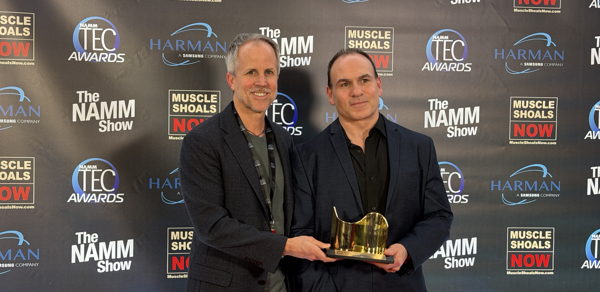
    Anaheim, California, Jan 23, 2025 — Audio specialist Sennheiser today announced that the MD 421 Kompakt, a compact version of the legendary MD 421 dynamic microphone, has received the 41st Annual NAMM TEC Award for Outstanding Technical Achievement. Selected by a panel of industry professionals and a broader vote of pro audio peers, the award recognizes the MD 421 Kompakt’s ability to deliver iconic large-diaphragm performance in a modernized, multipurpose form factor.

    The MD 421 Kompakt introduces a streamlined approach to miking, retaining the legendary capsule and sonic DNA of the MD 421-II while significantly reducing the physical footprint. By eliminating the traditional bass roll-off switch — a function now standard in modern mixing desks and DAWs — Sennheiser has created a highly versatile tool optimized for high-density stages and tight studio setups, such as toms, guitar cabs, and horns.

    The microphone features a cardioid pick-up pattern and remarkable dynamic range, engineered to handle exceptionally high sound pressure levels in demanding environments. Beyond its sonic performance, the MD 421 Kompakt features an entirely redesigned, integrated mounting clip that addresses long-standing user feedback, providing a fail-safe mounting solution for performers and technicians. This technical recognition at the 41st TEC Awards highlights the microphone’s utility in modern live production and recording applications.

    “The MD 421 is a true audio icon, and with the MD 421 Kompakt we continue its legacy while solving real-world challenges for today’s stages and studios,” said Jimmy Landry, Global Category Market Manager, MI at Sennheiser. “Being recognized by the TEC Awards at NAMM celebrates both our heritage and our commitment to exceptional sound.”

    The TEC Awards recognize technical innovations in recordings, live performances, and multimedia. Now in its 41st year, the program honors the products and individuals that contribute to the advancement of audio technology.

    NAMM TEC Award for Sennheiser MD 421 Kompakt.docx

    DOCX10 Mb

    Download

    NAMM TEC Award for Sennheiser MD 421 Kompakt.pdf

    PDF350 Kb

    Download

    Continue Reading

  • Quantum Tech Scale-Up: Lessons from Founders, Funders & Experts

    Quantum Tech Scale-Up: Lessons from Founders, Funders & Experts

    Transmitting information to us by e-mail unilaterally does not establish an attorney-client relationship or impose an obligation on either the law firm or even the receiving lawyer to keep the transmitted information confidential. By clicking “OK,” you acknowledge that we have no obligation to maintain the confidentiality of any information you submit to us unless we already represent you or unless we have agreed to receive limited confidential material/information from you as a prospective client. Thus, if you are not a client or someone we have agreed to consider as a prospective client, information you submit to us by e-mail may be disclosed to others or used against you.

    If you would like to discuss becoming a client, please contact one of our attorneys to arrange for a meeting or telephone conference. If you wish to disclose confidential information to a lawyer in the firm before an attorney-client relationship is established, the protections that the law firm will provide to such information from a prospective client should be discussed before such information is submitted. Thank you for your interest in Foley Hoag.


    Continue Reading

  • Six questions shaping the investment landscape

    Six questions shaping the investment landscape

    In November, we published our 2026 macro outlook centered on six essential questions shaping the investment and market landscape. We highlighted a dynamic backdrop: uneven but resilient growth, technology driving productivity with profitability still being tested and interest rates diverging across regions. One month in, markets remain multi-dimensional. Returning to these same questions — and staying anchored in data — helps cut through the noise and focus on where risks and opportunities are shifting.

    Continue Reading